
HOLIDAY DONATION DRIVE - SUPPORT MSW - DO YOUR PART TO KEEP THIS GREAT FORUM GOING! (Only 64 donations so far out of 49,000 members - C'mon guys!)
×


archnav
-
Posts
121 -
Joined
-
Last visited
Content Type
Profiles
Forums
Gallery
Events
Everything posted by archnav
-
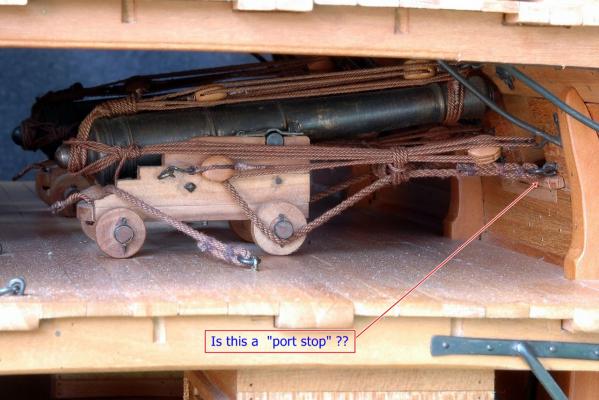
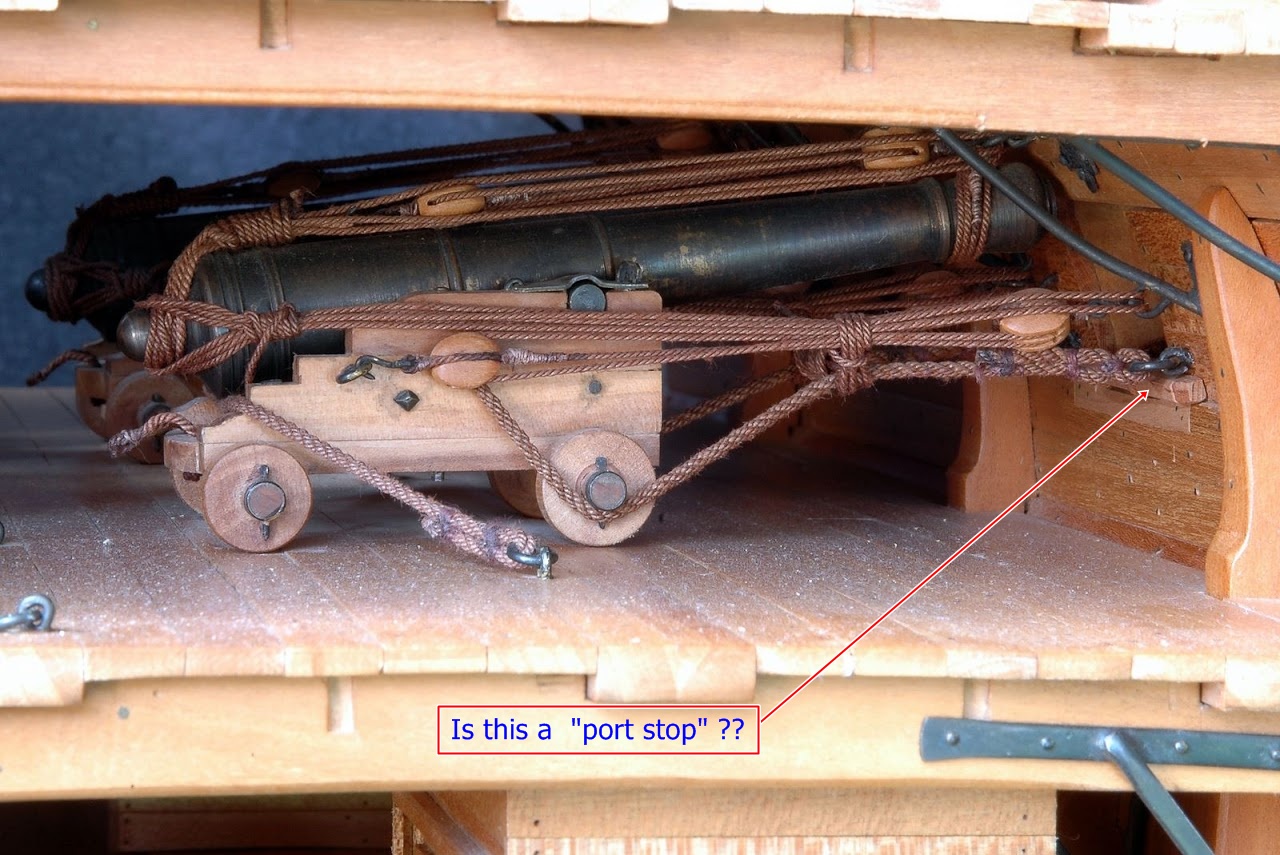
 Hi druxey, Steel refers precisely to the "stops" of the ports to be not less than 3 1/2 inches ! When the lining is the inner layer of the port lid, so why does Steel refers them also precisely to the stops and not to the half port lids (for example) on the upper deck in smaller ships later ? There, the lining is mentioned in combination with the deal boards of the lids and is written in separated brackets. Hi writes: "linings fitted into the stops" - so the linings belonging to the stops and not to the lid, correct ??? So, when the lining is fitted into the stops, how does this arrangement looked like in the ports ? Where were these 3 1/2 inches (minimum) thick pieces installed and where the linings of 1 1/4 inches ? Could it be, that the stops were put on the sides of the port (frames) and the lining on the upper and lower sills ? This would give the port a nearly square form and, reducing the width of an 39 inches wide port to 32 inches is not as dramatic, as installing this arragement different. The problem was and is the heavy pieces that Steel refers to as the STOPS ! When you say, that these stops were fitted into the ports and the lining is the inner layer of the port lids, so the ports themselfes would be reduced to: 26 inches in depth to 32 inches in width ?! This reduction would have been notably visible by looking at the ports. These wide edges would have caused a problem to the handling of the gun barrel, at least for the width up and down ! Also it would have been strikingly visible at models. Here the lining of thinner dimensions is clearly visible and coherent. So the lining (as is your opinion) of 1 1/4 inches thick plank, would make sense and a perfect match. (See models in the NMM as Bellona for example) What is right now, what is wrong ? What did Steel mean ? Can it be, that this is arranged like in the picture above ? At least this would make sense ! Where else could such a massive piece be installed without being clearly visible, 2 1/4 inches bigger than the lining ??? Greets, Tom
 -
I found this Foto in a French online album which shows the gun of La Fleuron (Delacroix) There is a strong piece of square wood shown on the lower edge of the port sill. It seems to be held in Place by two ropes, made fast at the rings of the port lid. This would make sense to hold the lid in place in heavy weather. So maybe this was also practice in England ? Could this be the answer ? Is that what Steel meant with "port stop" ? Then it would really make sense, lining the inside of the port with boards of 1 1/4 inches. This could then be the real "lining". So the "stop" is not a part of the port lid, nor of the port itself. It would be a extra piece of wood to hold the port lid in place. What do you think ? Greets, Tom
-
I wonder about a detail only mentioned by David Steel in 1805 - the "stops" of the ports ! He also talkes about "linings" of the stops. David Antscherl showed these "linings" in TFFM as thin boards, fitted to the inside of the ports timbers (frames and sills) to act as a stop for the port lid (correct ?). Here is, what Steel says: PORT LIDS - Every (in this case) gun-deck port to be fitted with a substantial lid made of English oak - Stops of the ports not less than...........................3 1/2 inches (for an 110 and 98 gun ship as an example) Well-seasoned linings fitted into the stops, thick........................1 1/4 inches Steel gives these spezifications only for ships of two and three decks (110 down to 50 gun ships). No "linings" (mentioned and showed in TFFM) are given for a sloop of war ! The linings there are mentioned in the construction of the half-ports, fitted to such a small vessel (thickness of the deal and it`s lining are given). But no half ports were fitted about 1780. To me as a carpenter this means, that the lining is the line of battens, nailed athwart the deals of the half ports to form this lids as a solid piece like this was done for the regular port lids. So the next question is, can this be the same task for the regular port lids ? The vertical lining of the horizontal oak pieces and not the boards to fill the port holes ? Then the "stops" mentioned by Steel, would make sense, even if they are "not less then 3 1/2 inches" (thickness ???). But this seems too thick. (or not ?) Looking at the width of a port for the three decked ship, Steel gives the following dimensions: deep = 33 inches fore and aft = 39 inches Now, when one would install the "stops" of 3 1/2 inches only to the sides (frames), to act as these are called (stops), this would reduce the width of the port a little bit. But this is only speculation !? The port would become more square. (33 to 32 inches) So where does the lining belong to ??? The sides of the port hole or the port lid ??? And if to the port lid, how is this all arranged ??? The lids with the stops and the lining ? Could not find any drawing, picture or discription ! Hope you have an answer. Tom
-
Hi Udo, how can it be that you got the english version before the end of February ??? I payed two weeks ago and the mail from acre sayes the same: ships after 29th of February ! I wonder how you got this copy ?! Greets from Bavaria, Tom
-
Thanks guys ! I only wondered, because there is no mention of boats or rigging lists in the monograph. Thanks to all of you and merry christmas ! Tom
-
Hi Mark, thanks for your answer. But, which plans did they use for the replica-boats ? Are they available maybe ? I`m going to ask Ancre. This details are as much important as the rigging details ! Are there complete rigging lists with informations like given by Steel 1794 ? "4 strands, cabled", "wormed" ect. ? I hope so ! Otherwise it is difficult. Tom
-
Hello, the HERMIONE will also be my next project but: do anyone of you know something about her boats ? Are there plans drawn and printed in the book ? In the list of plans, they do not exist !!! I do not speak french, so if anyone does, can you ask Ancre ? Would be very important to know. Thanks, and Merry Christmas to all of you all over the world ! Tom
-
Holy Moly Chris ! I do also prefer greater scales for being able to show every detail accurately. I think that the 1/64 scale is a perfect one for all ships with big dimensions. For the smaller ones is 1/32 a perfect scale. Having in mind that this model is huge and you are right when saying that maybe half as much as the Vanguard kit will be sold, many Victory-lovers will take unneeded furniture out of their living roomes to make place for this one All the best, Thomas (from Bavaria, Germany)

Our Emblem ®
