


serikoff
-
Posts
115 -
Joined
-
Last visited
-
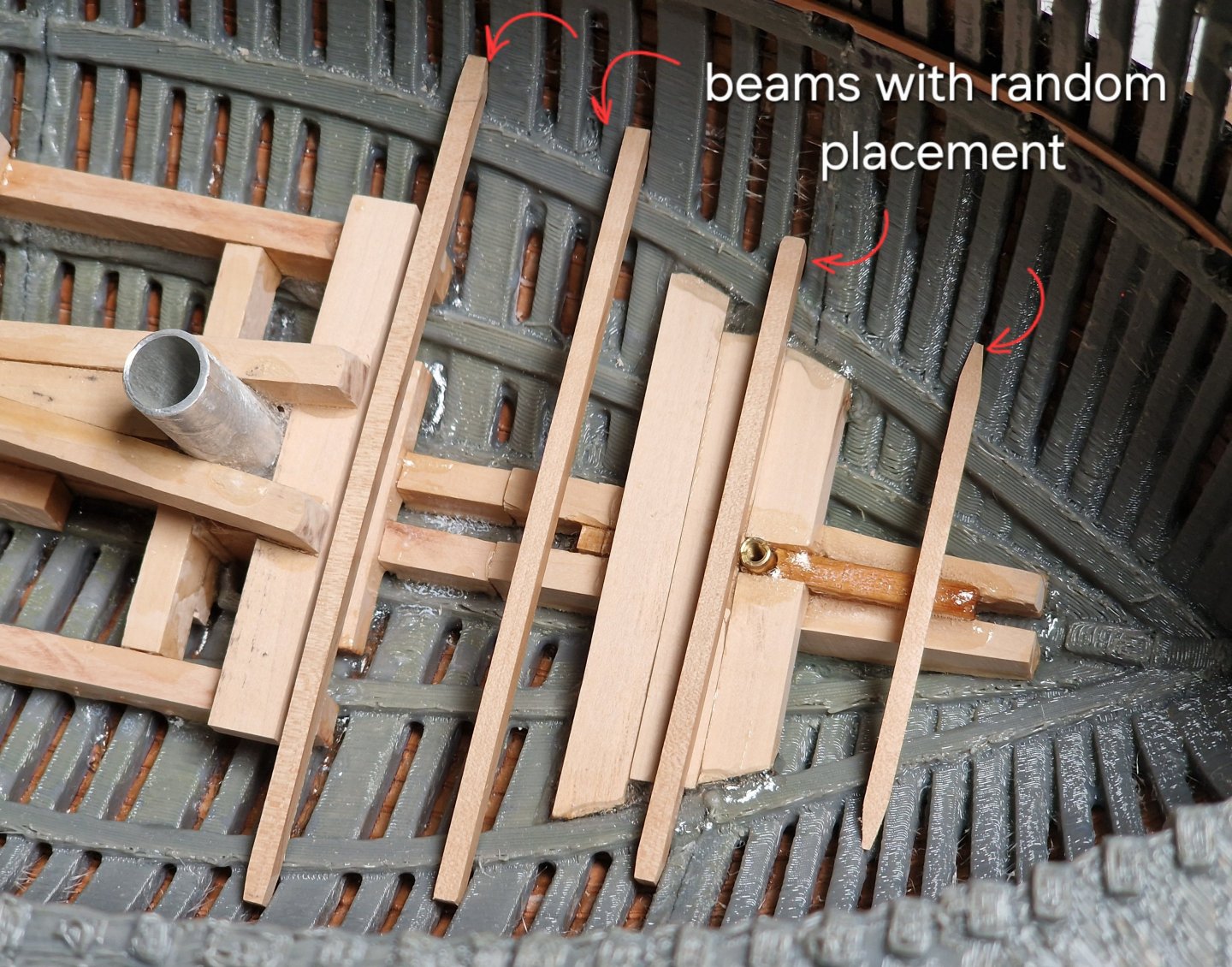
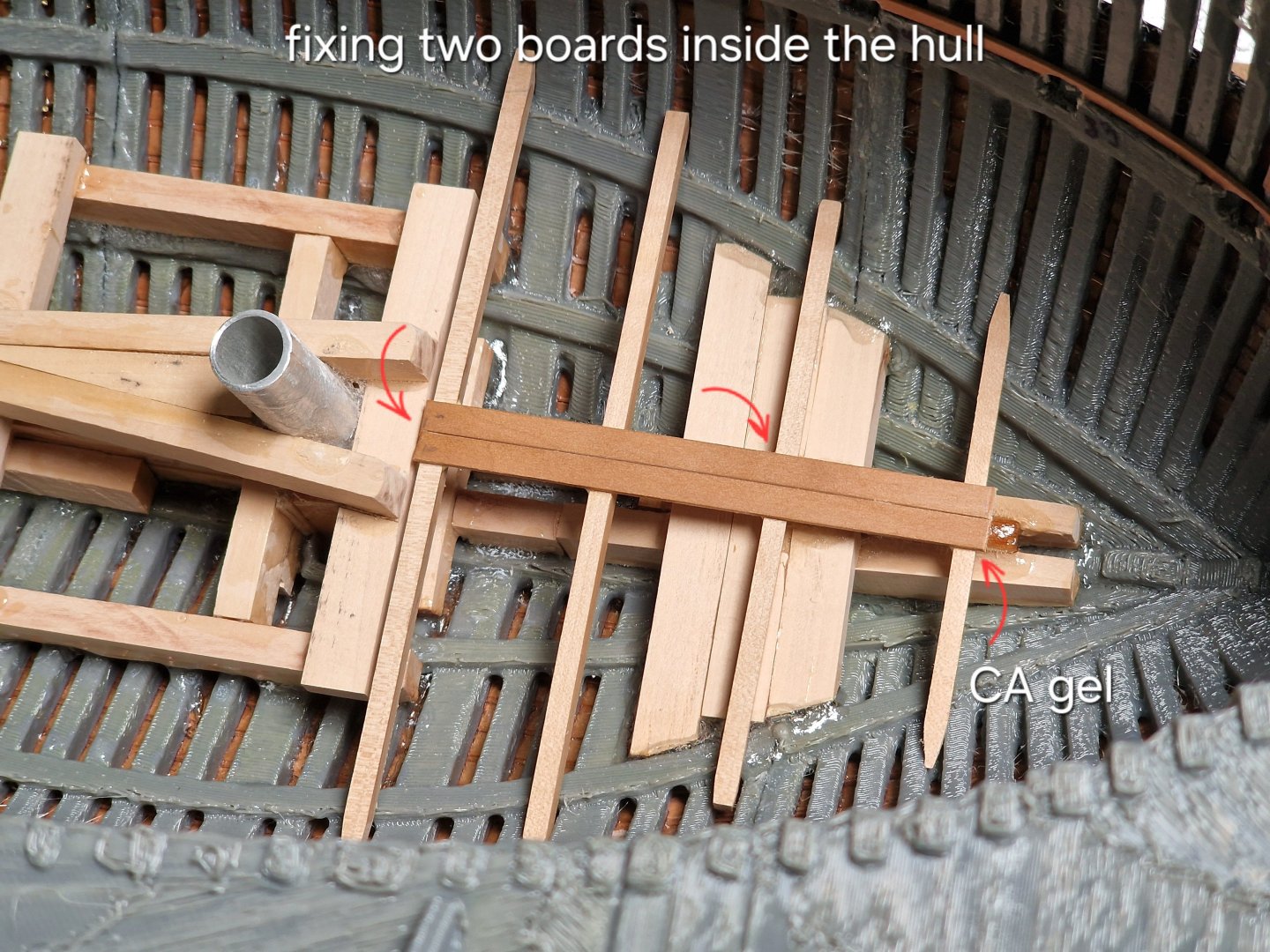
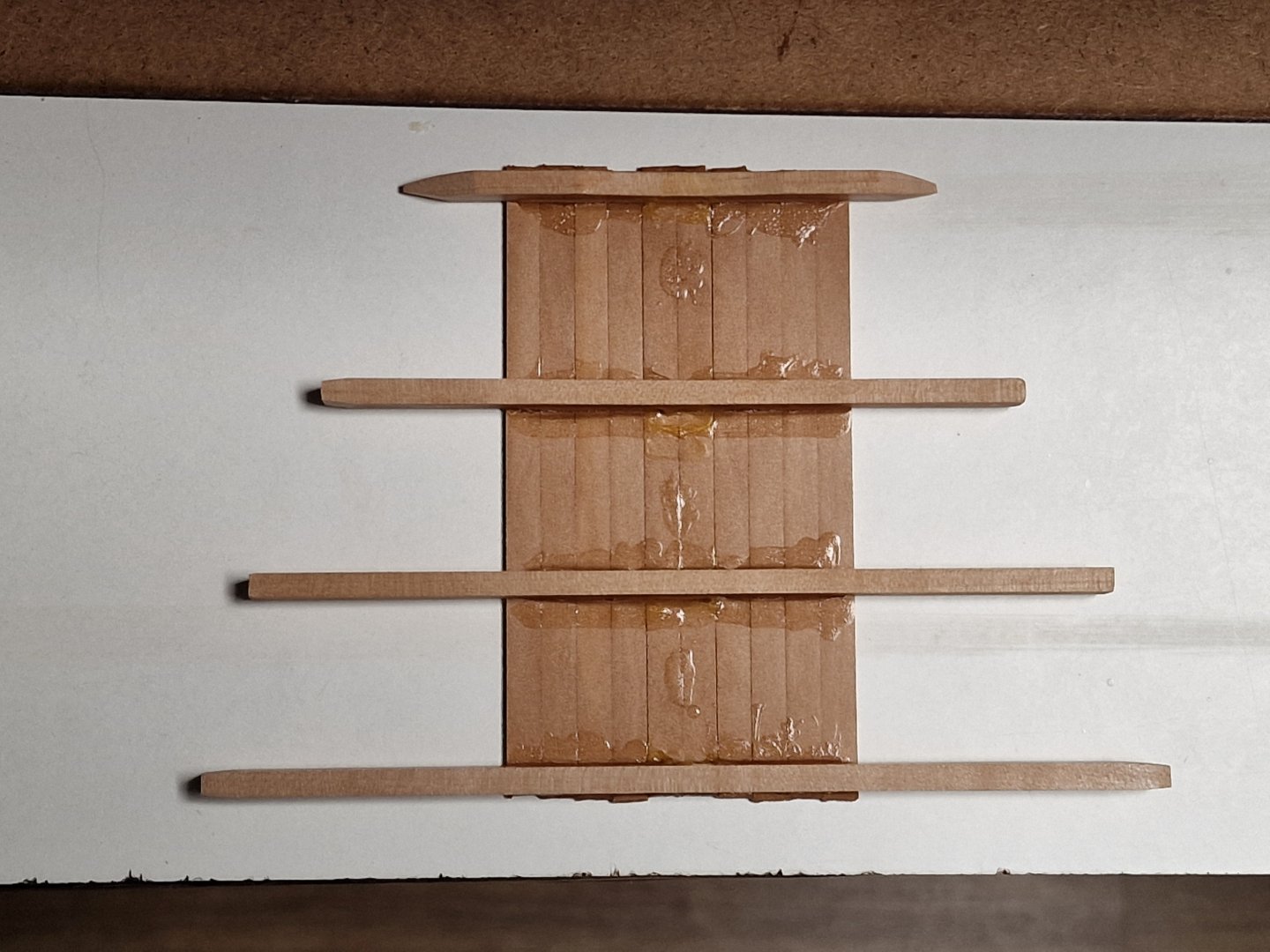
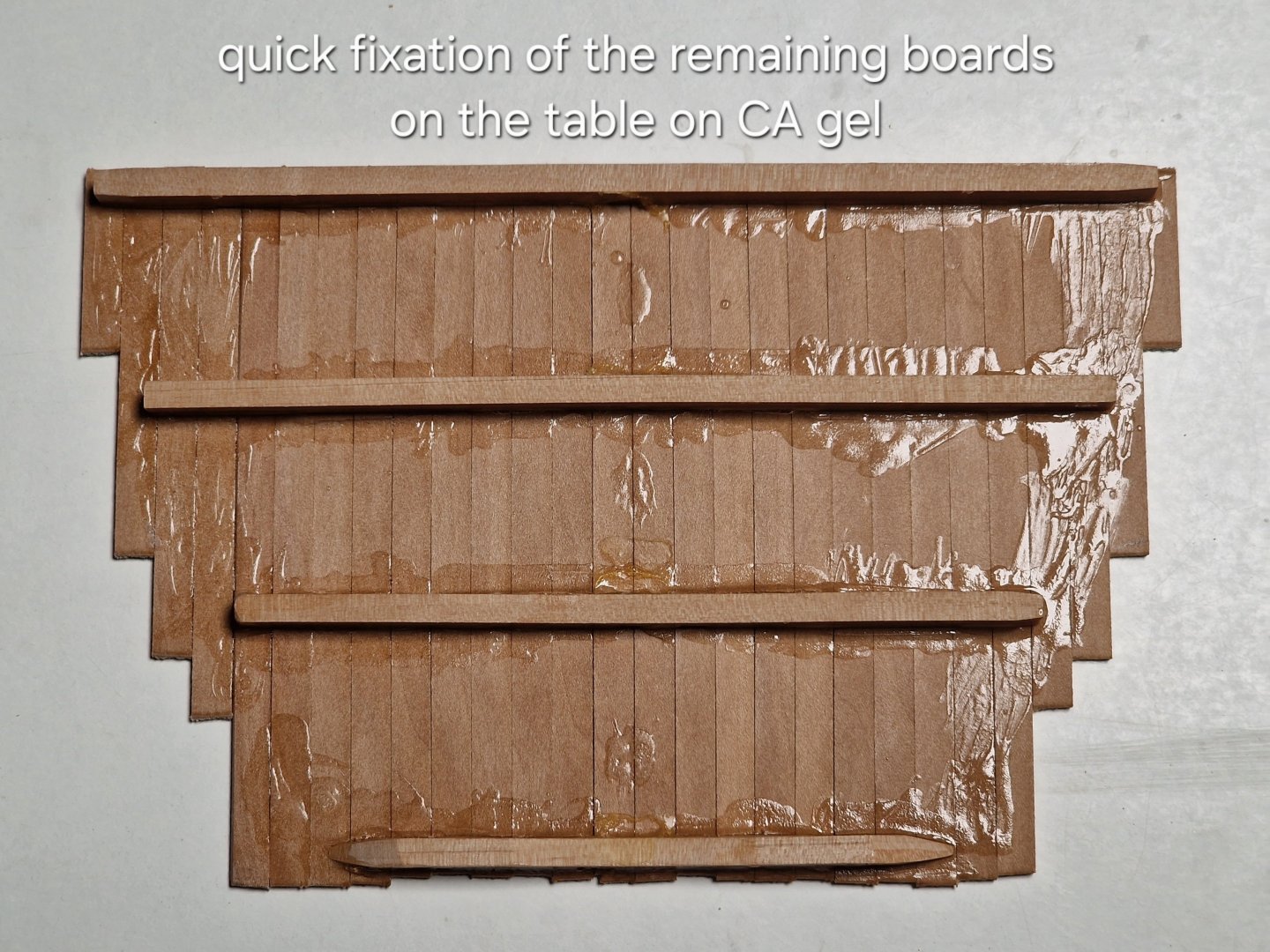
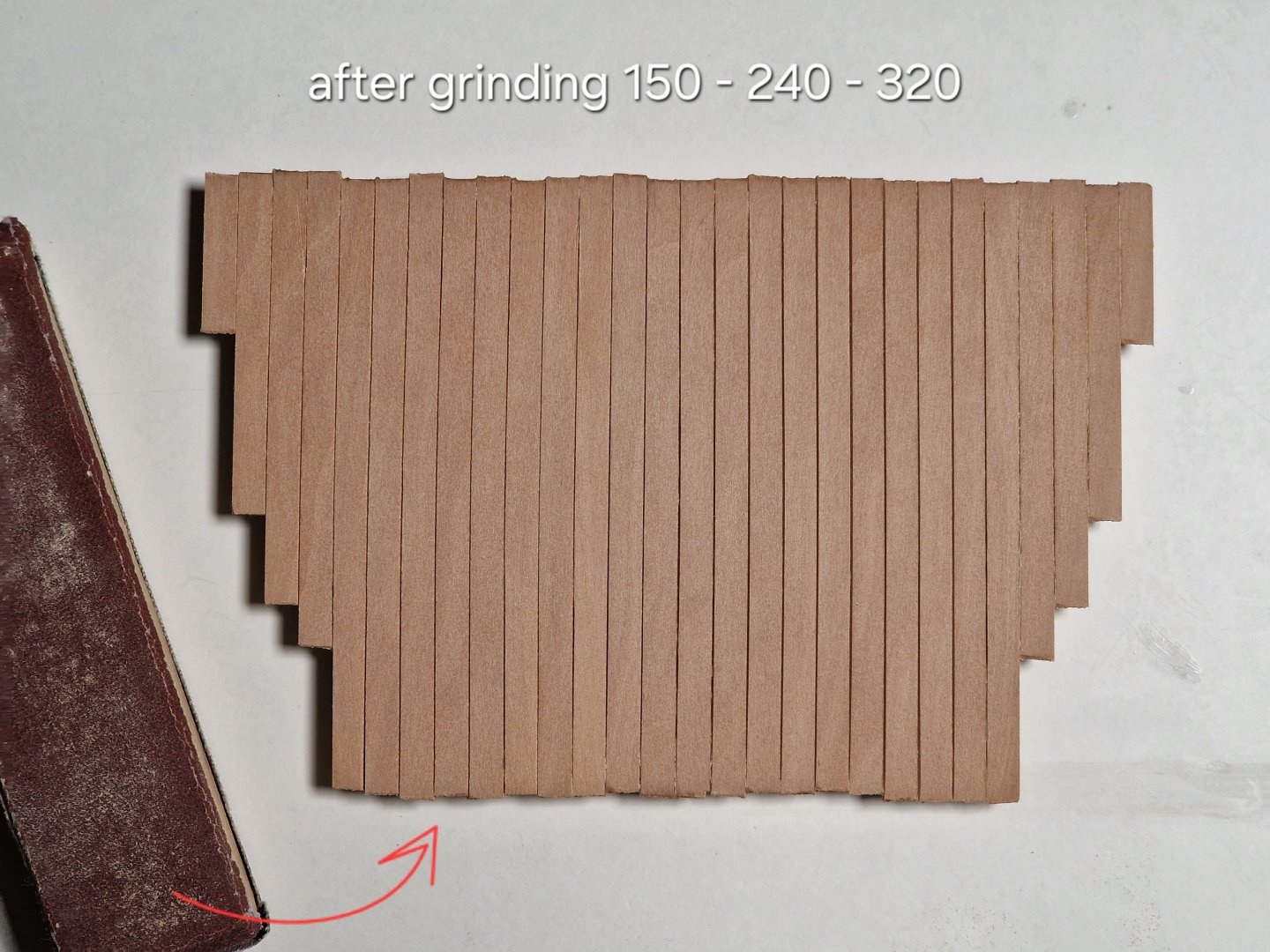
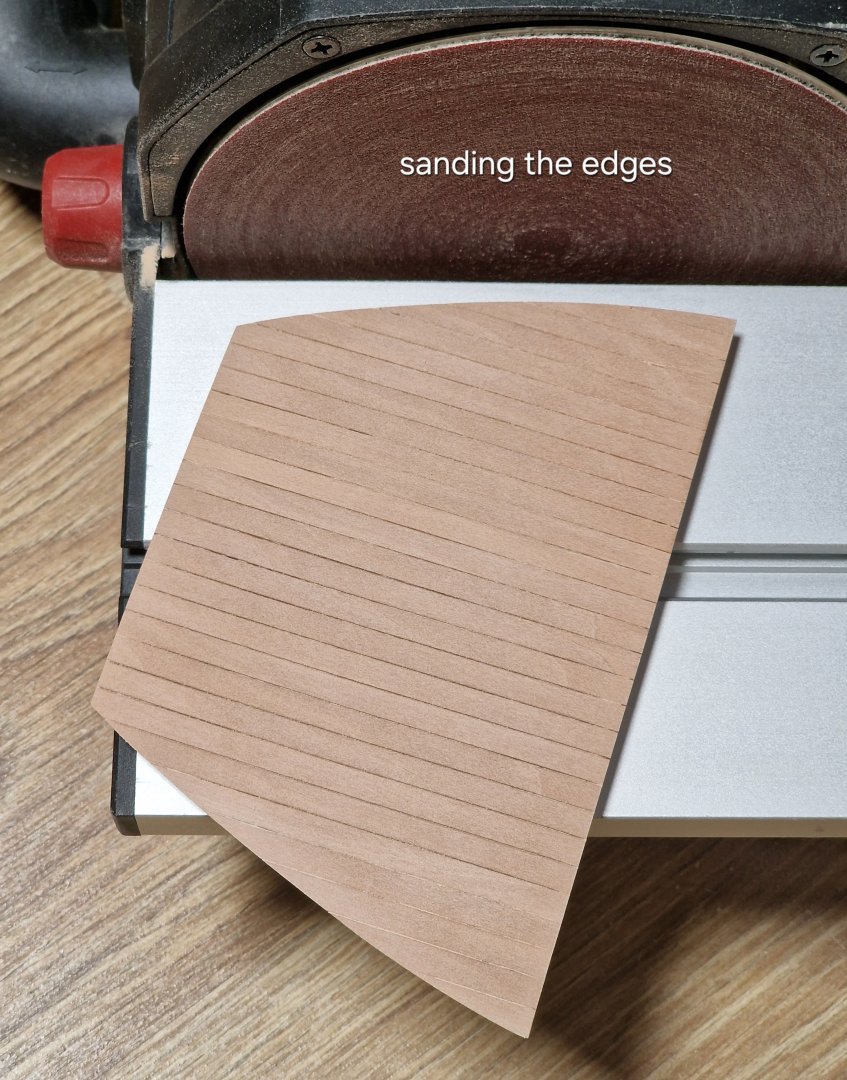
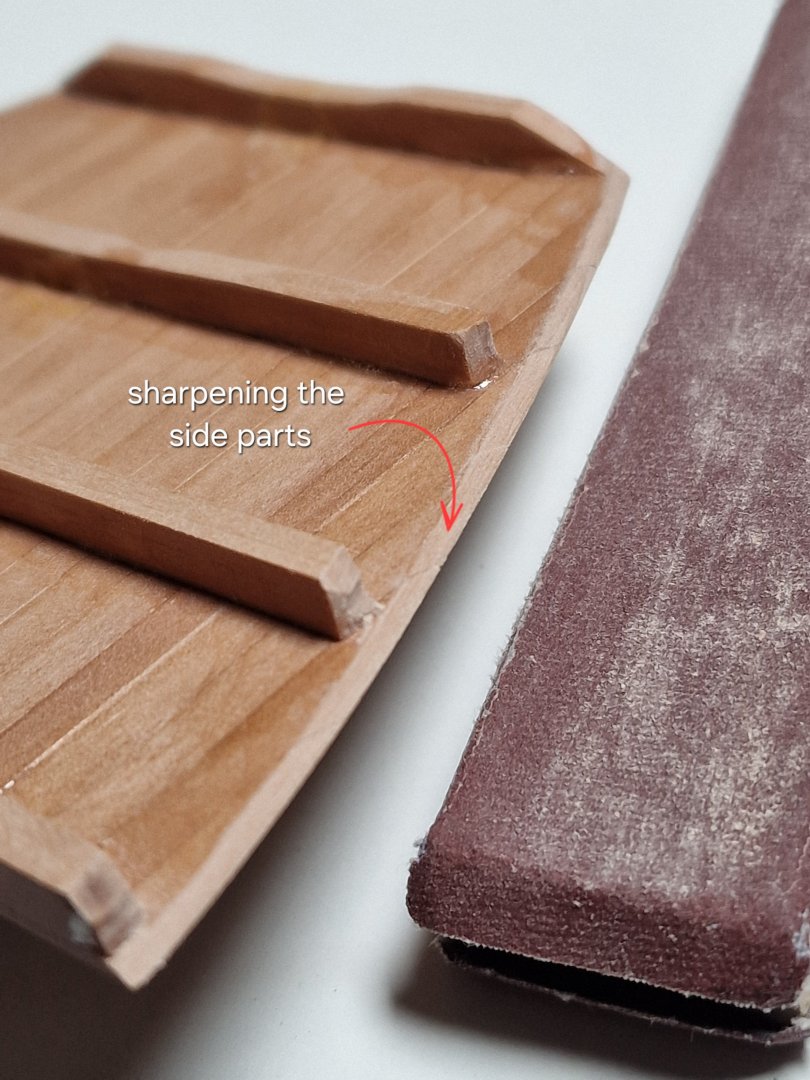
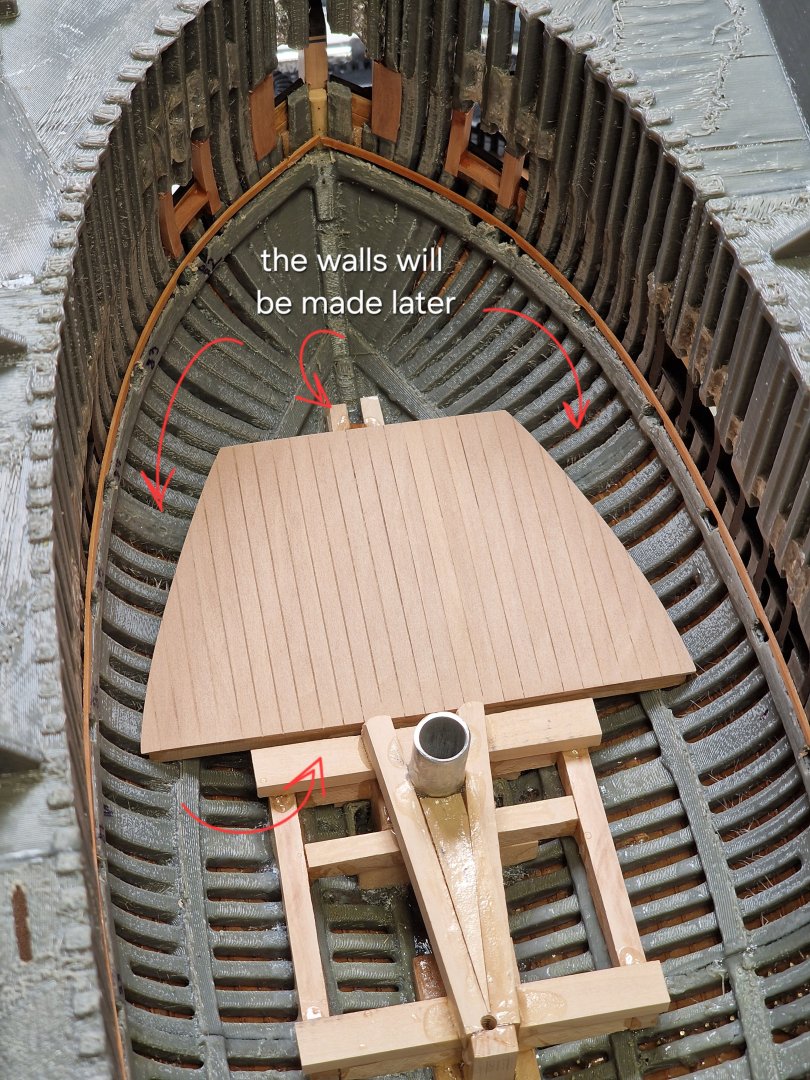
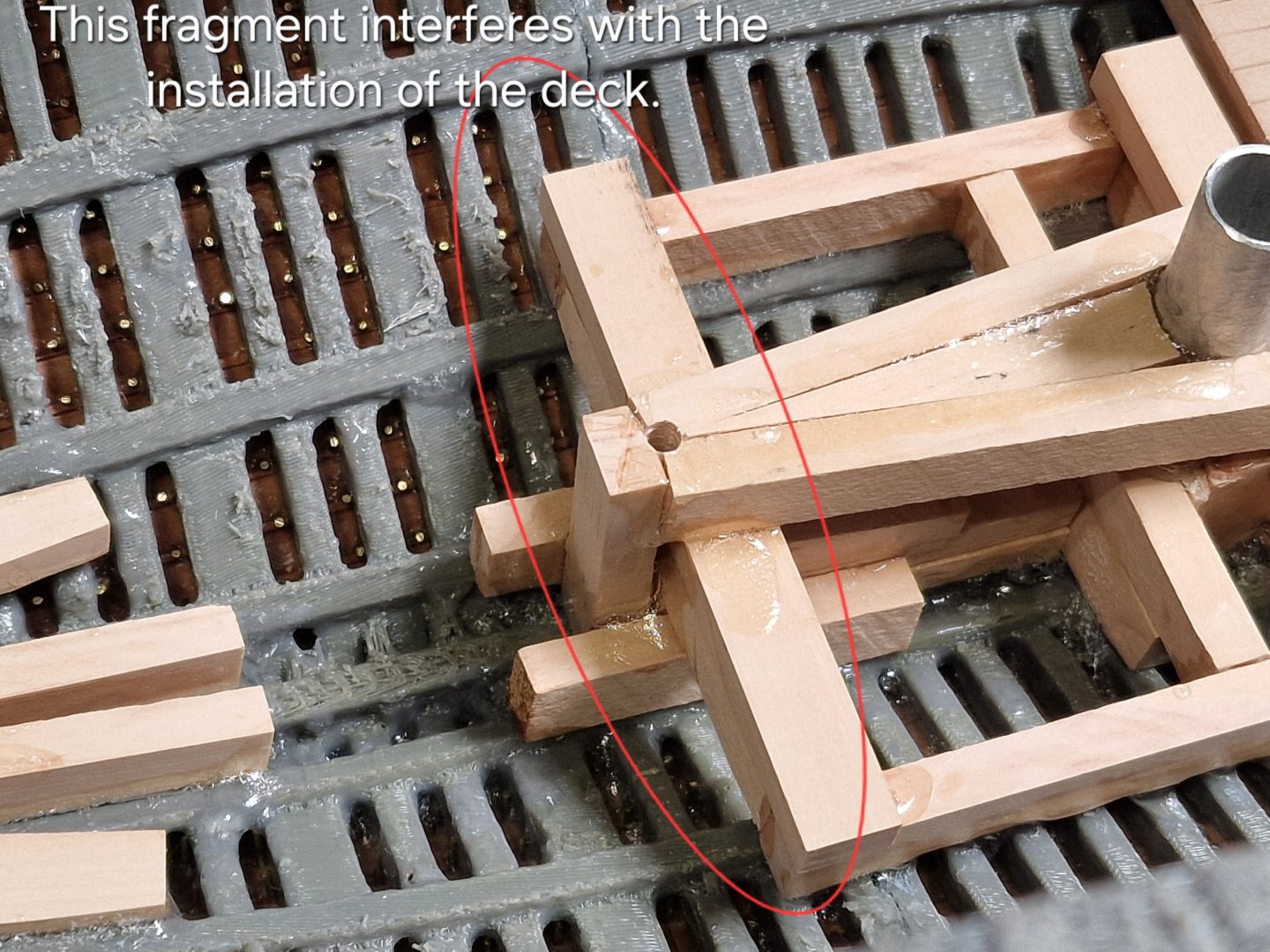
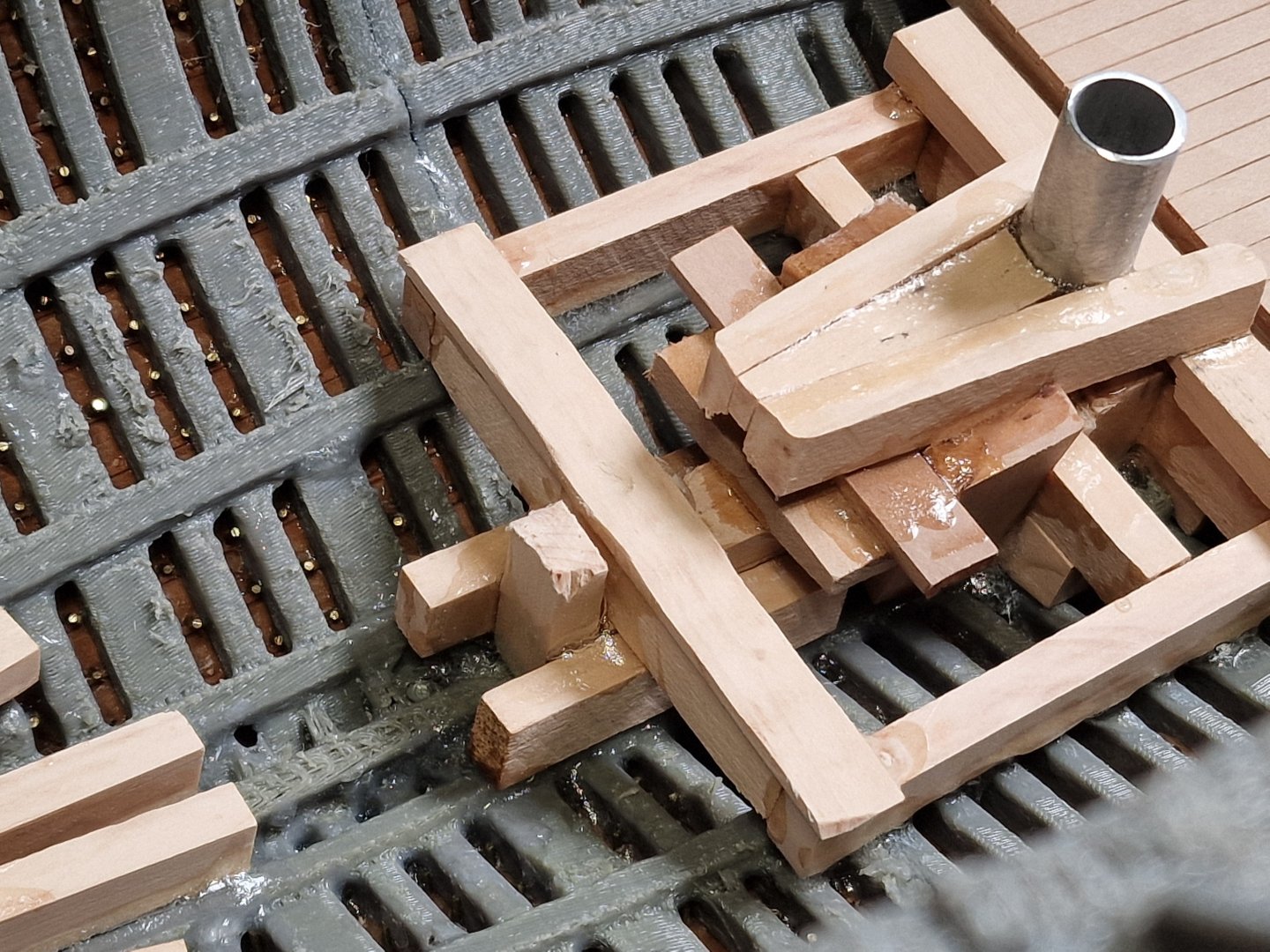
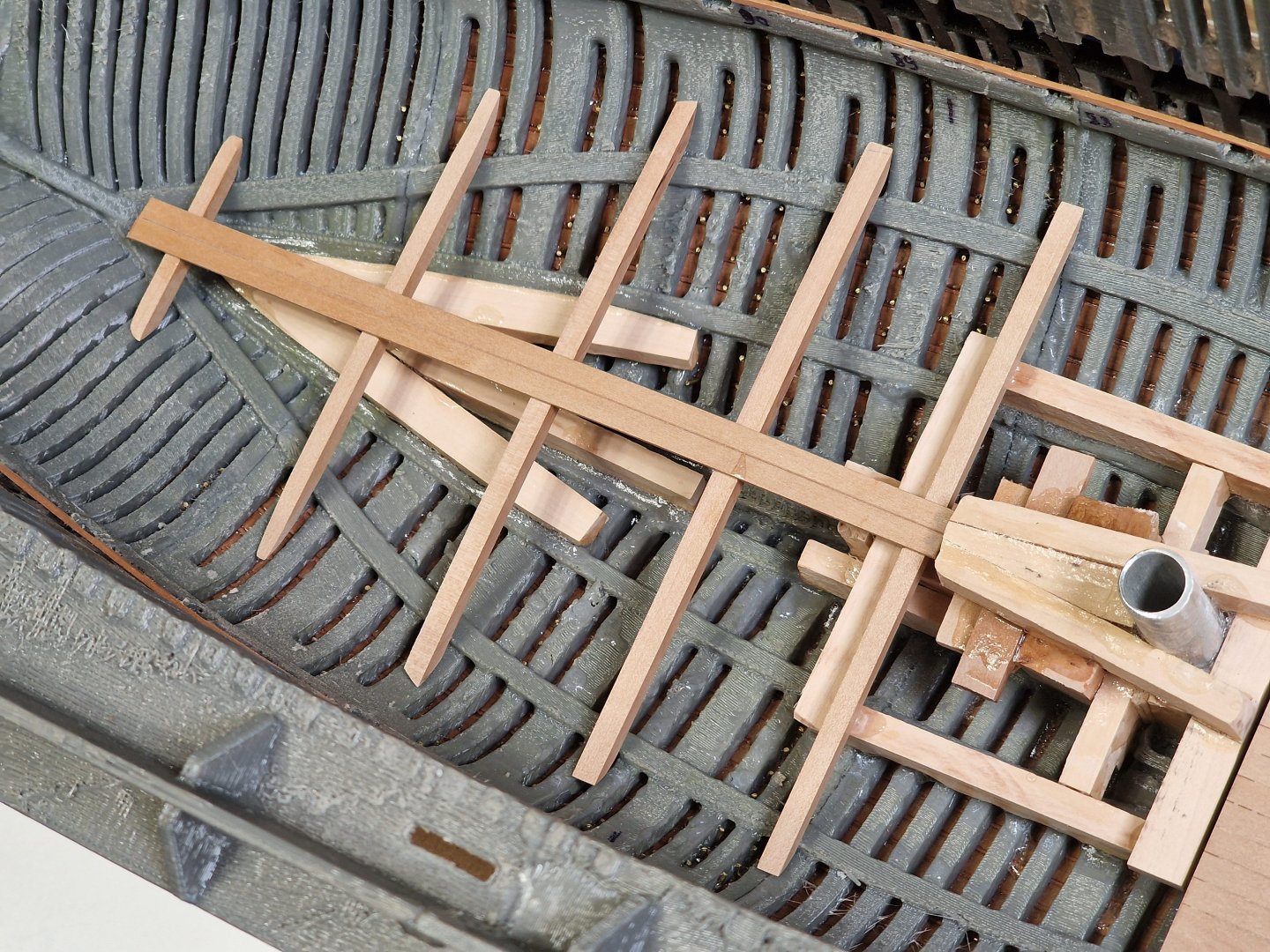
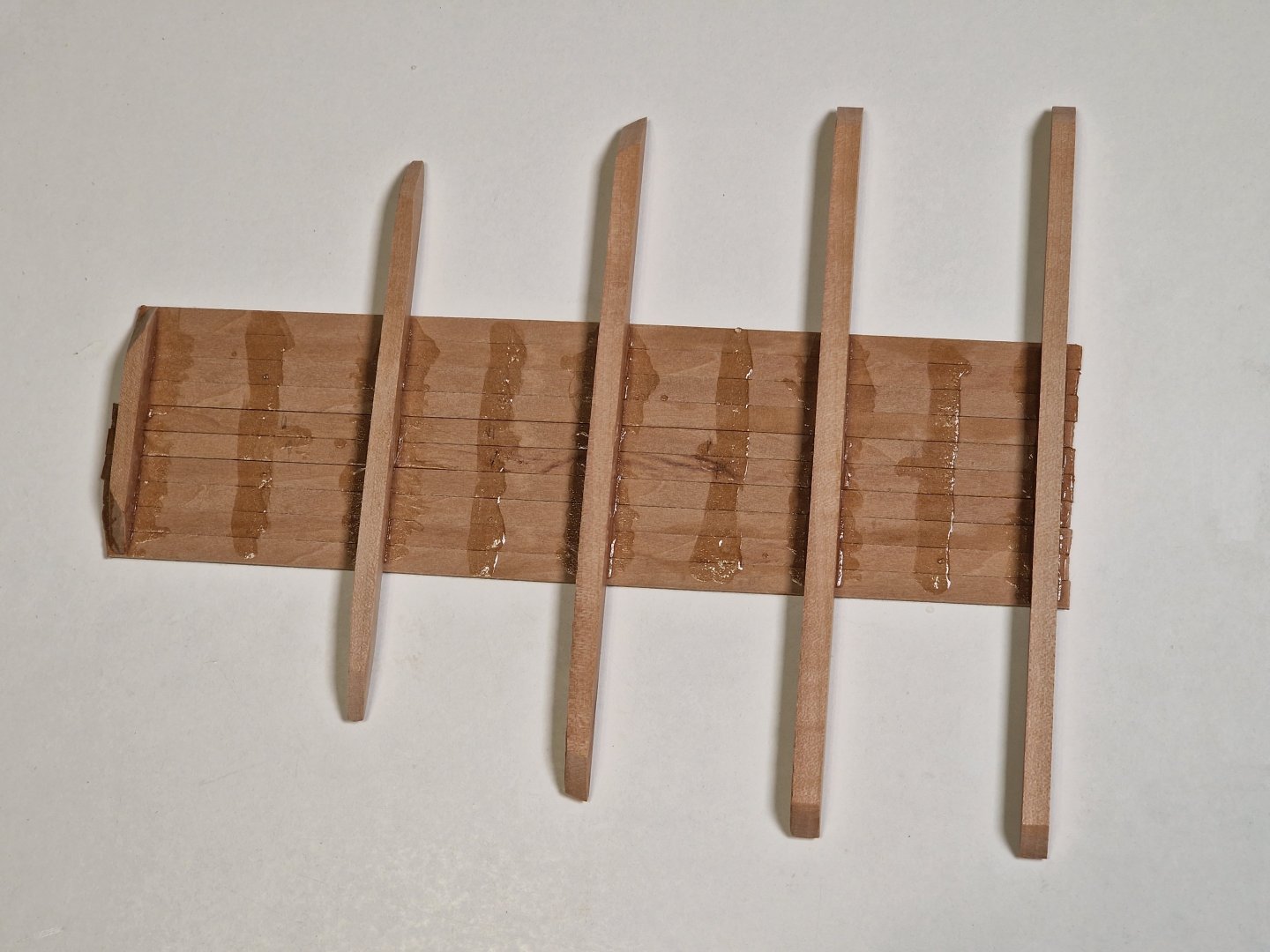
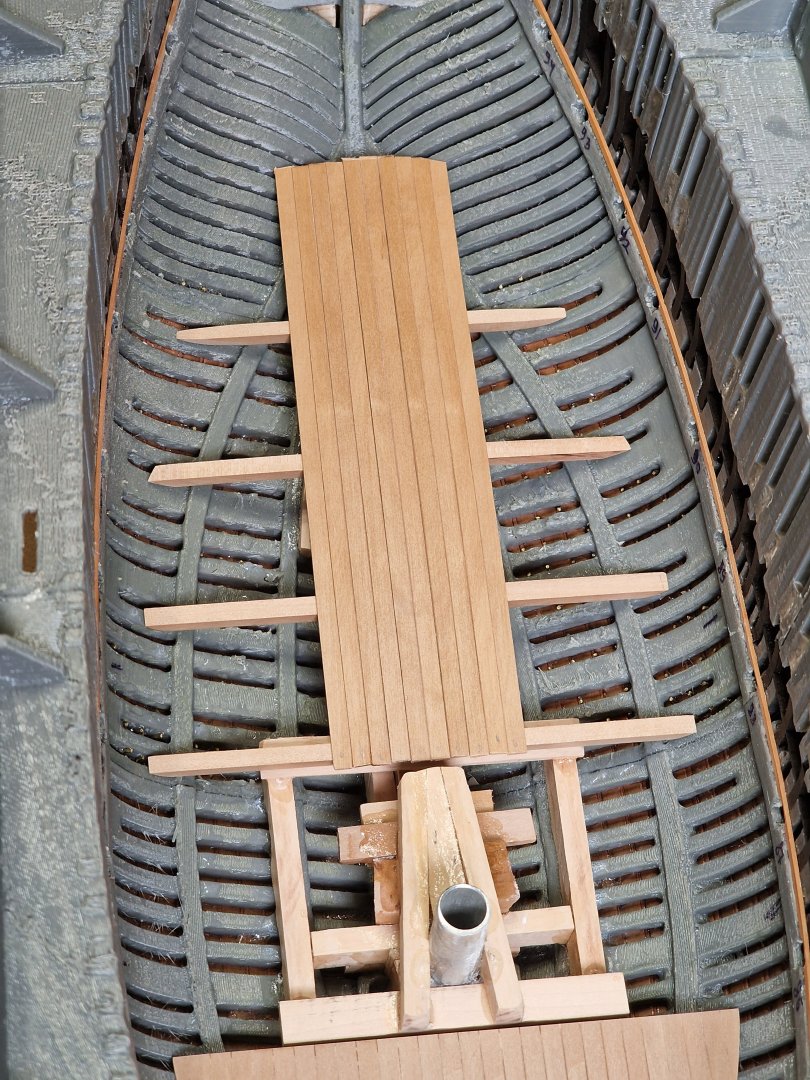
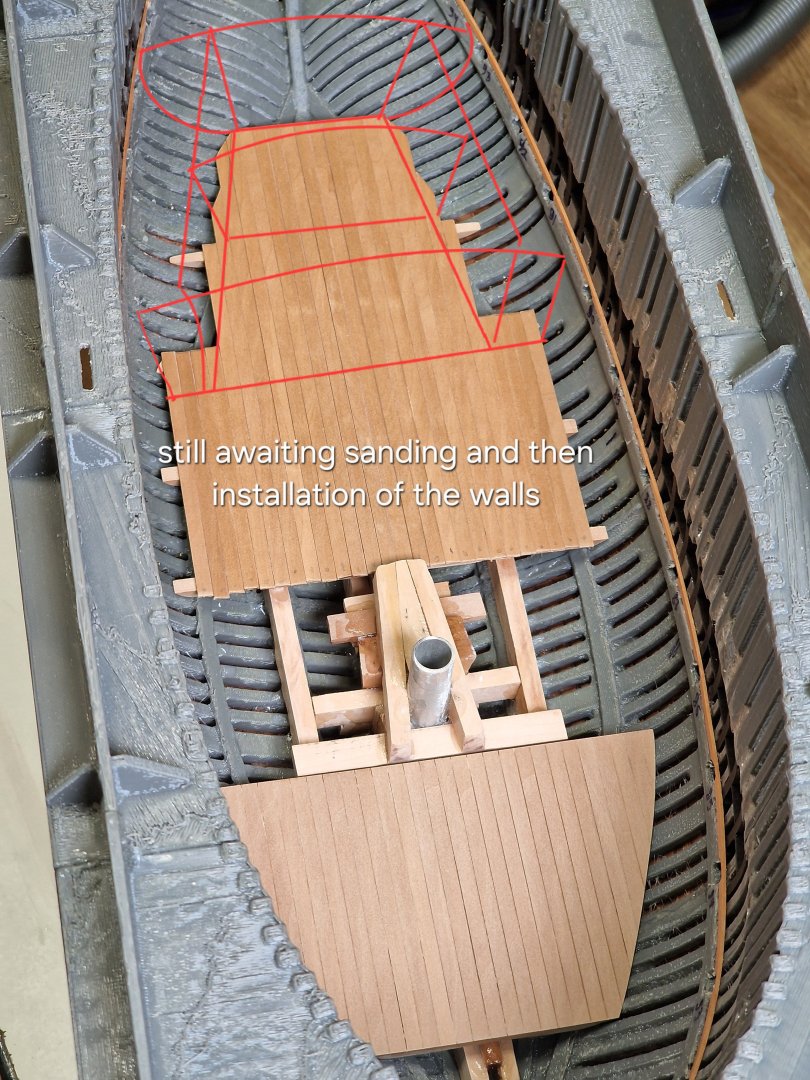
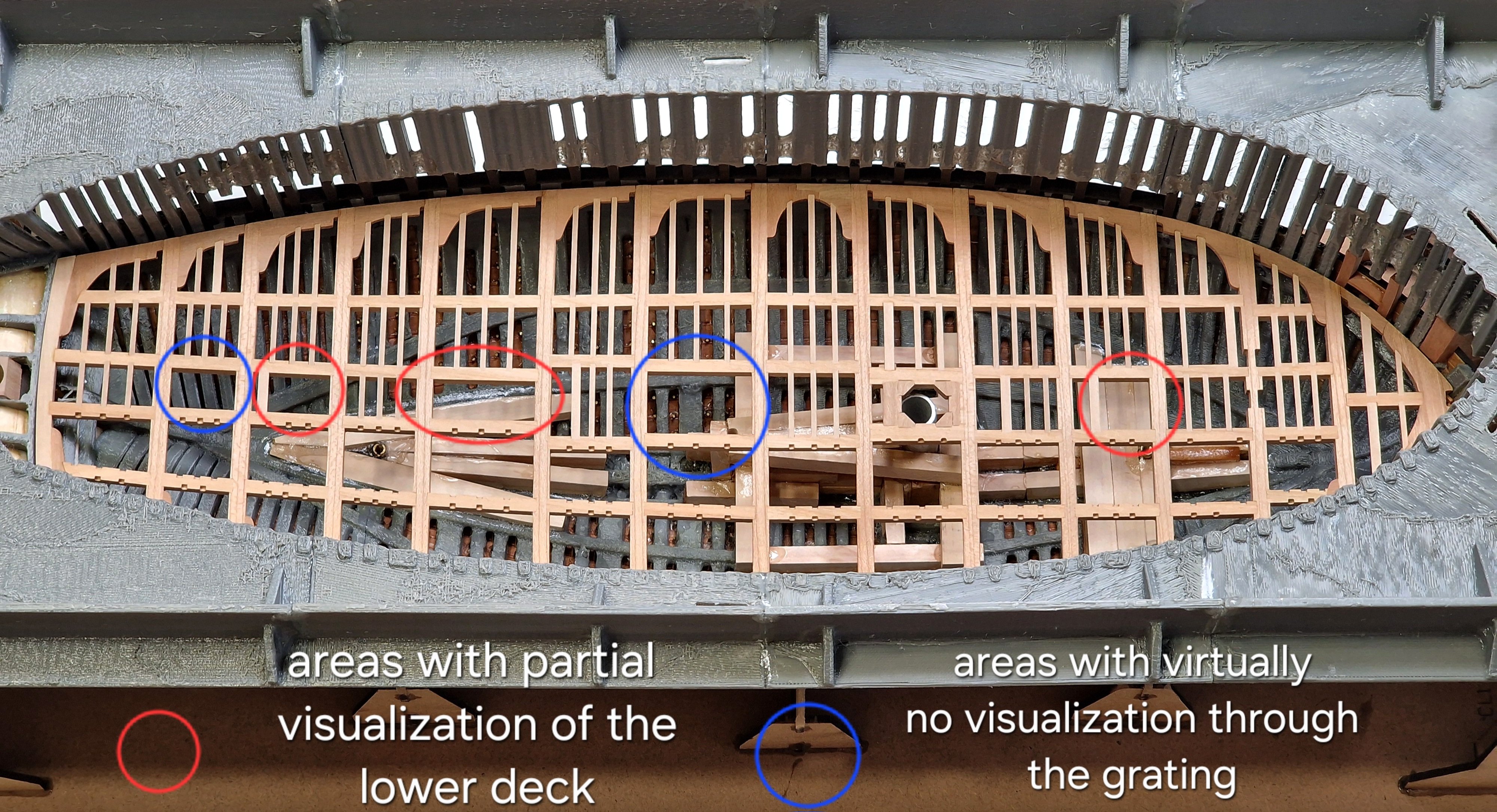
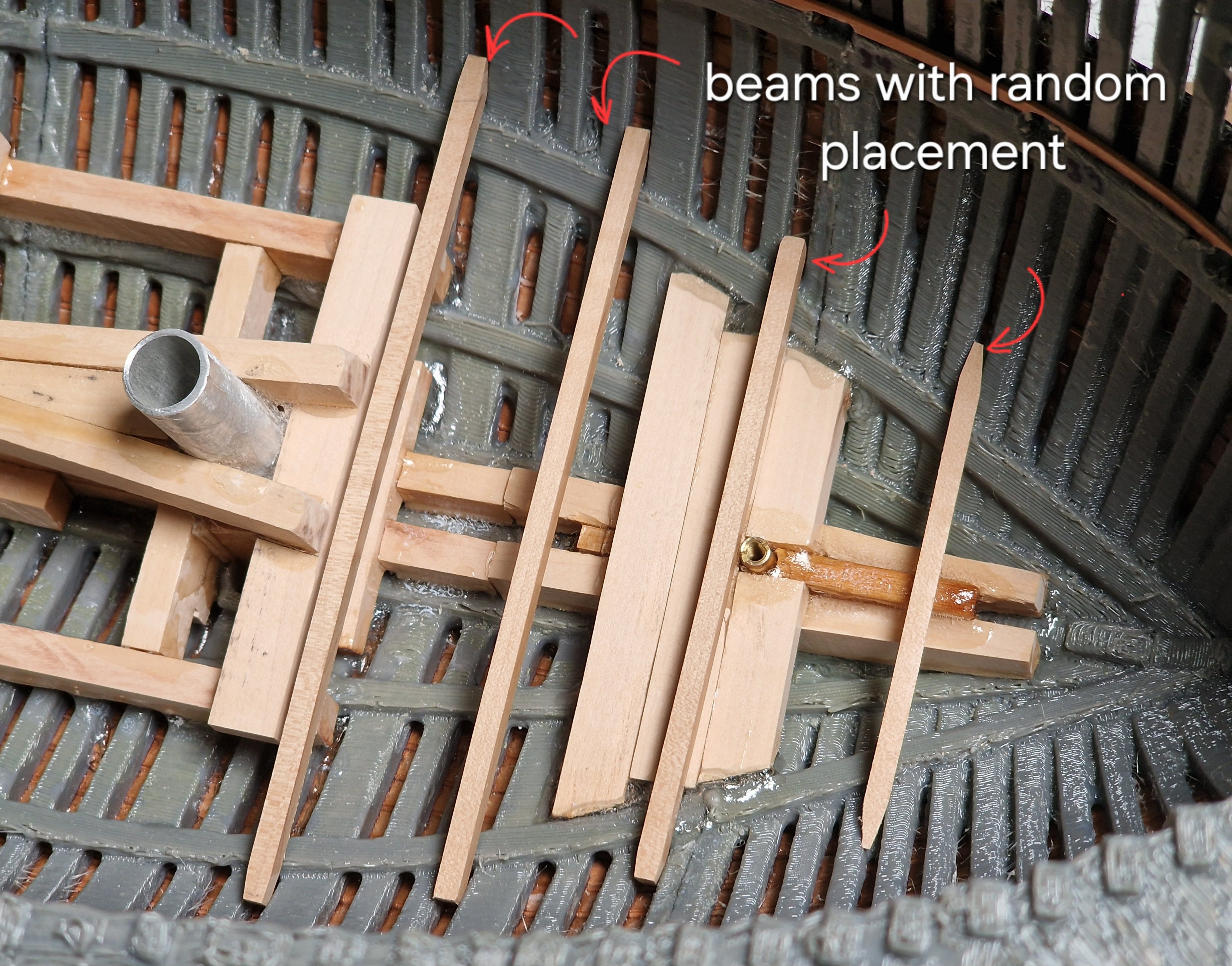
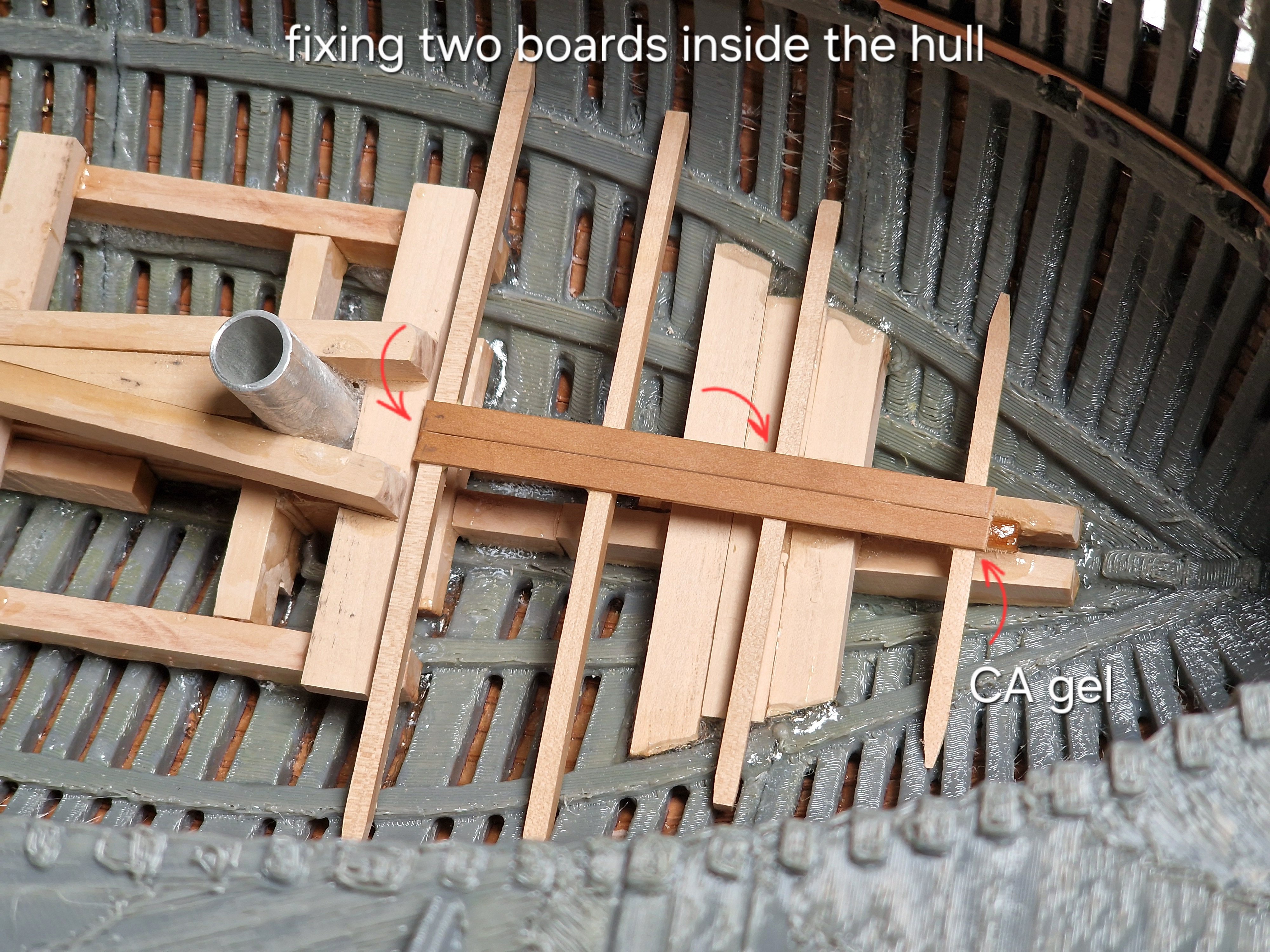
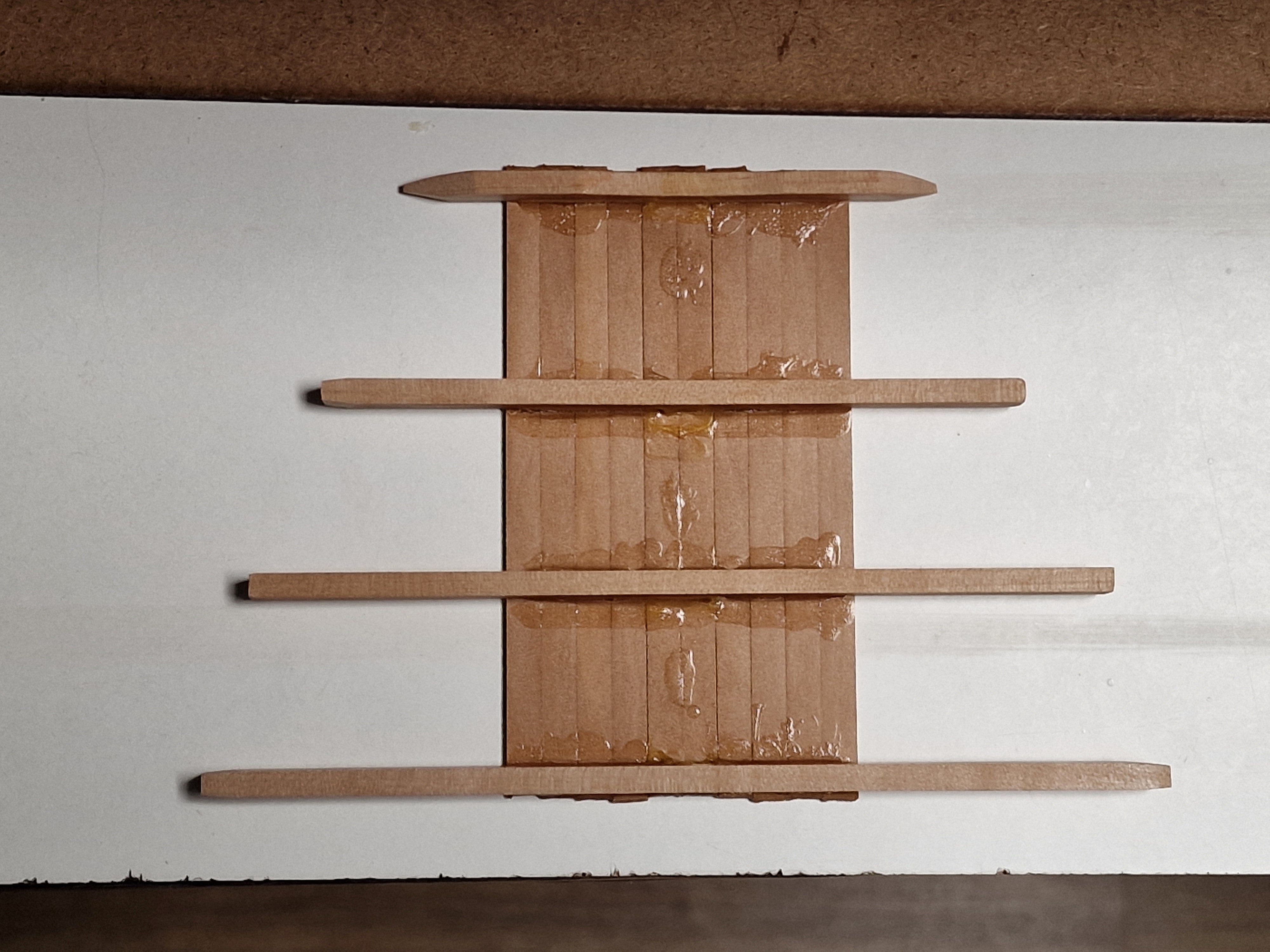
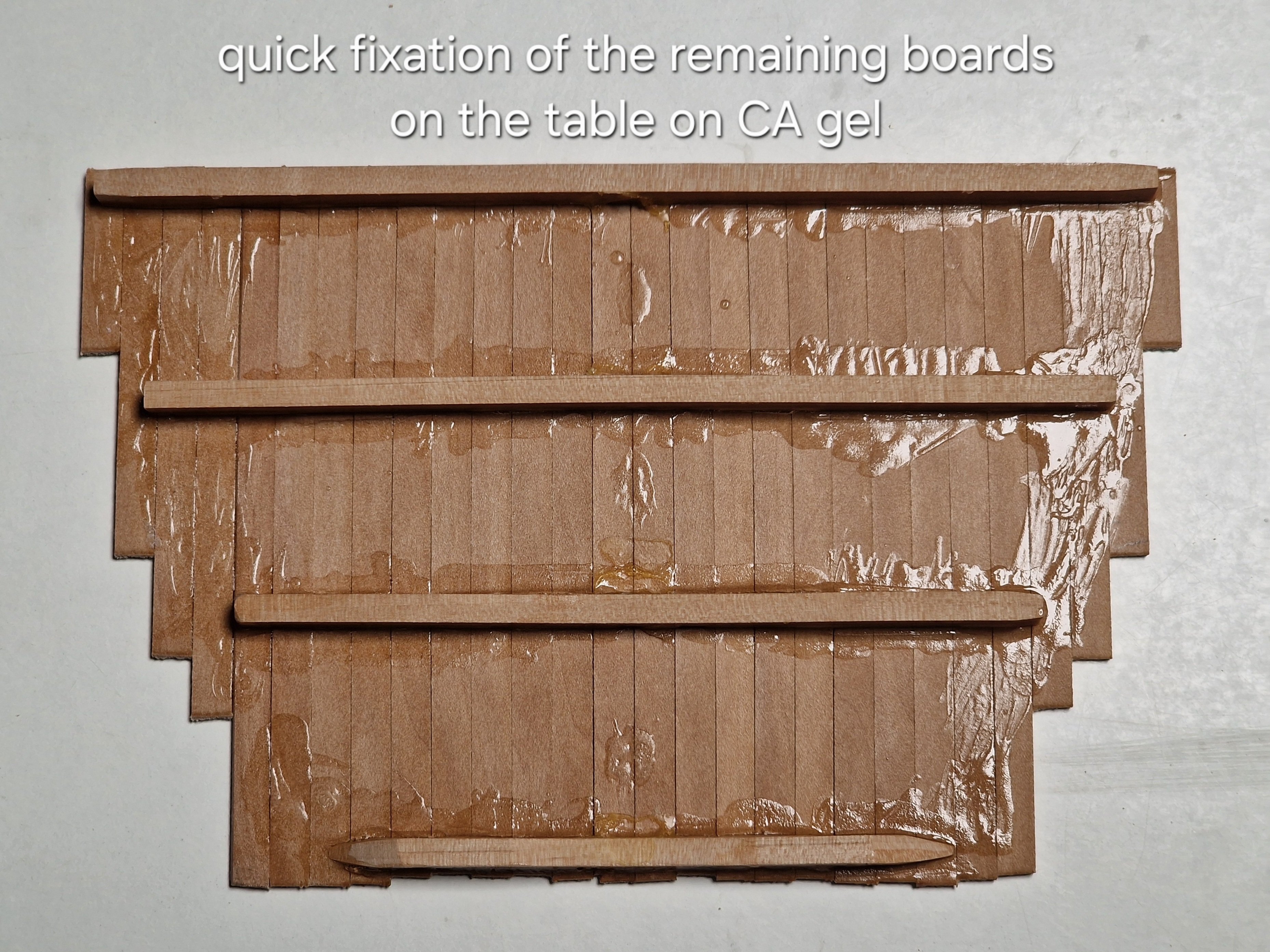
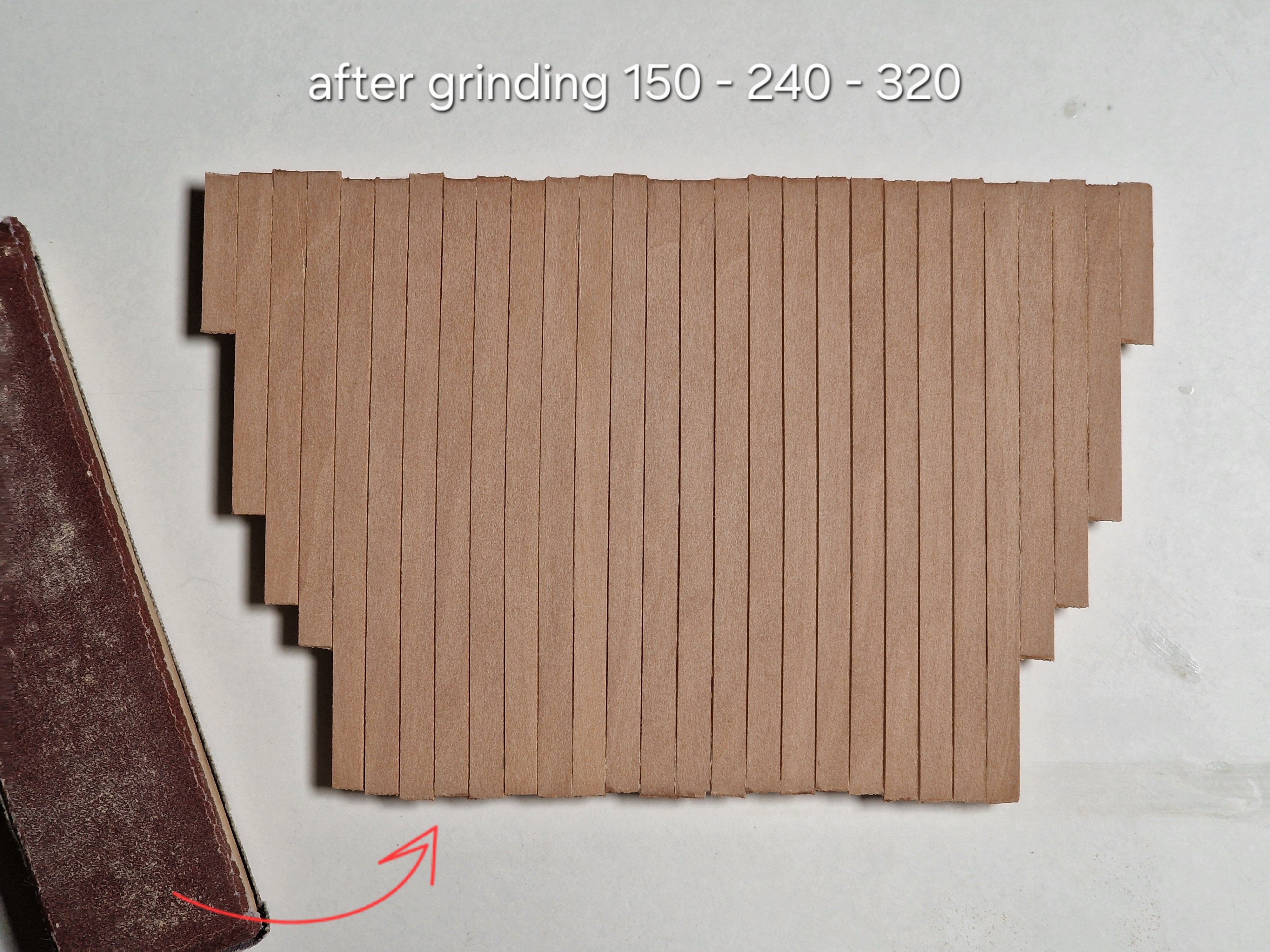
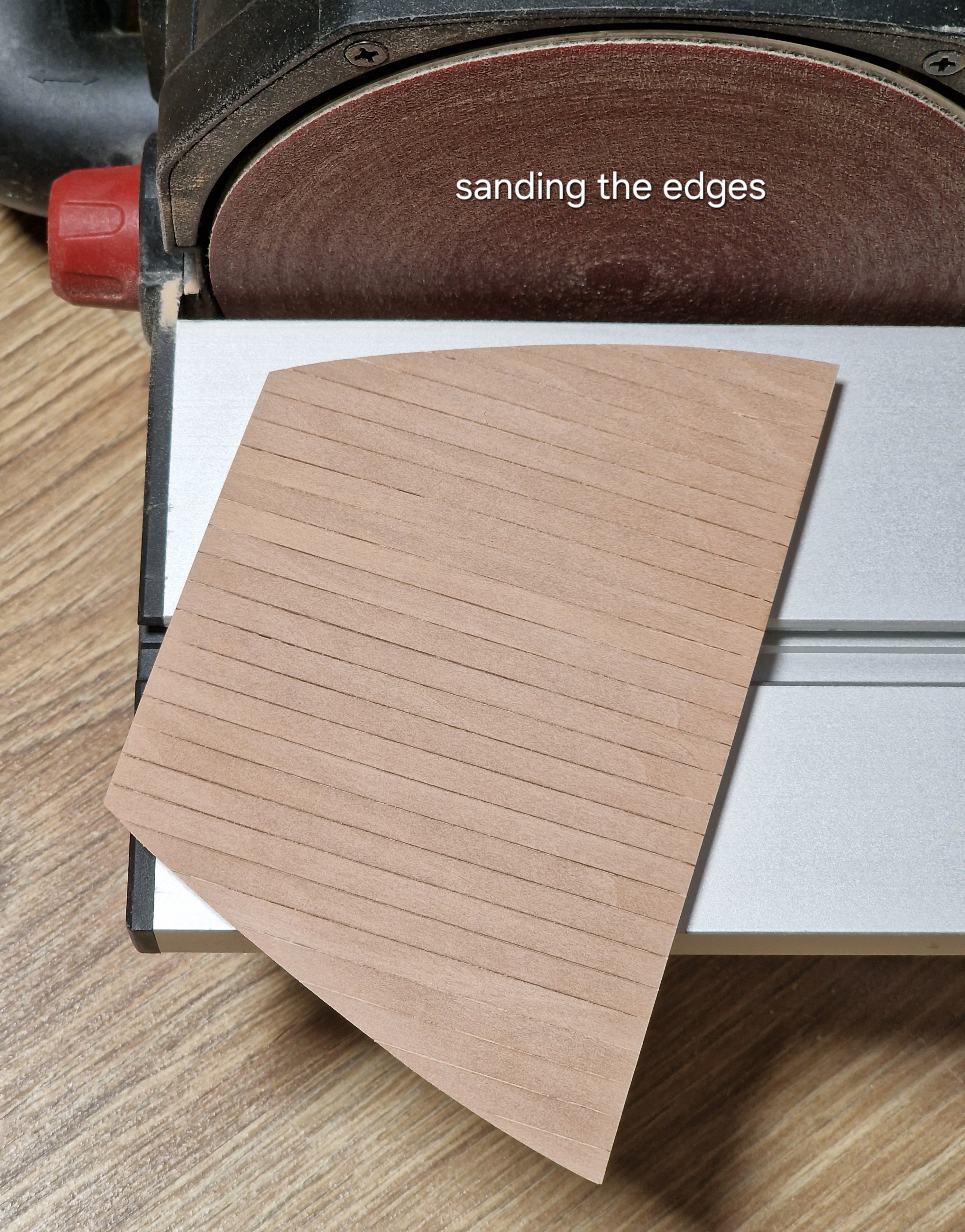
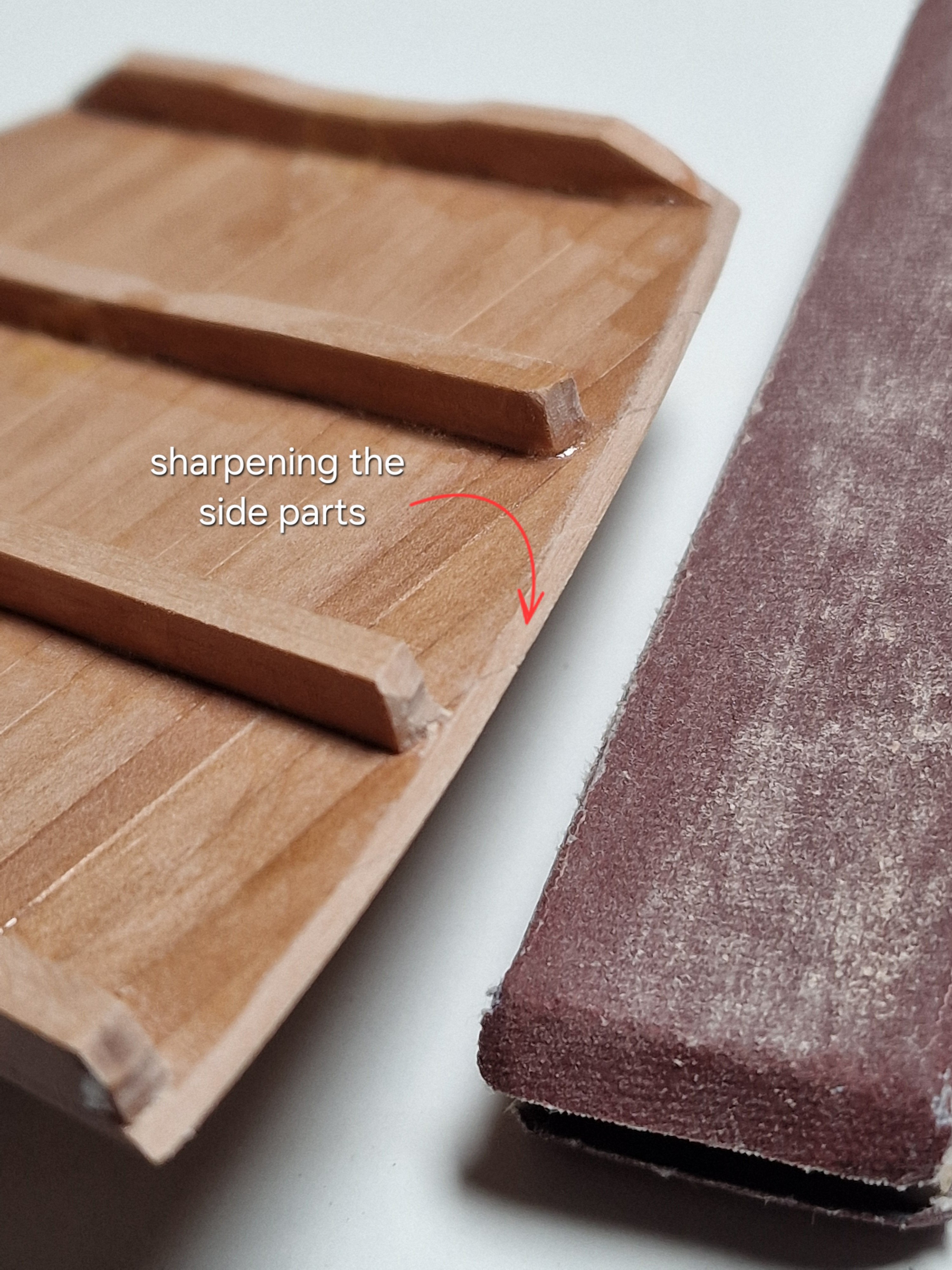
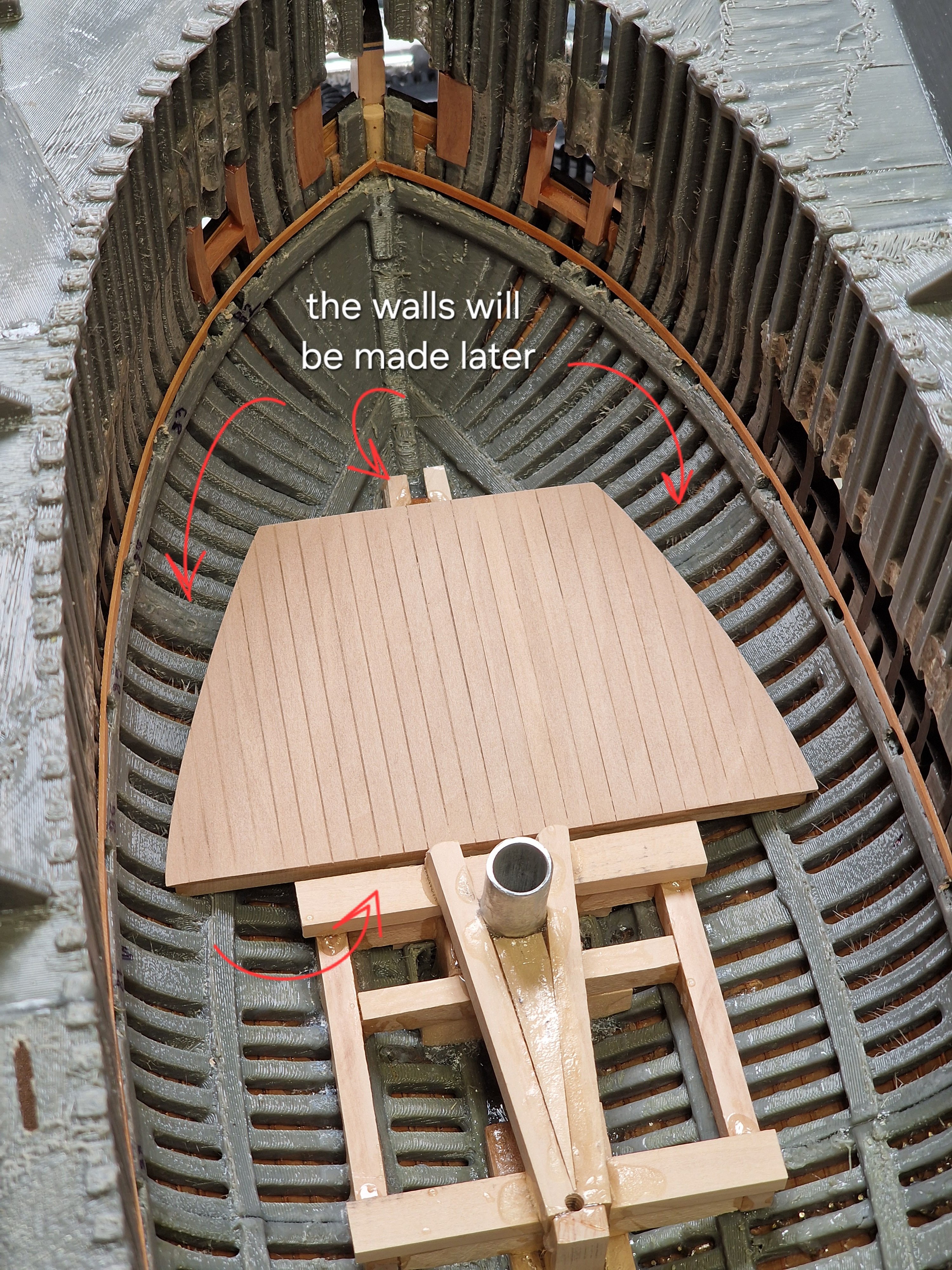
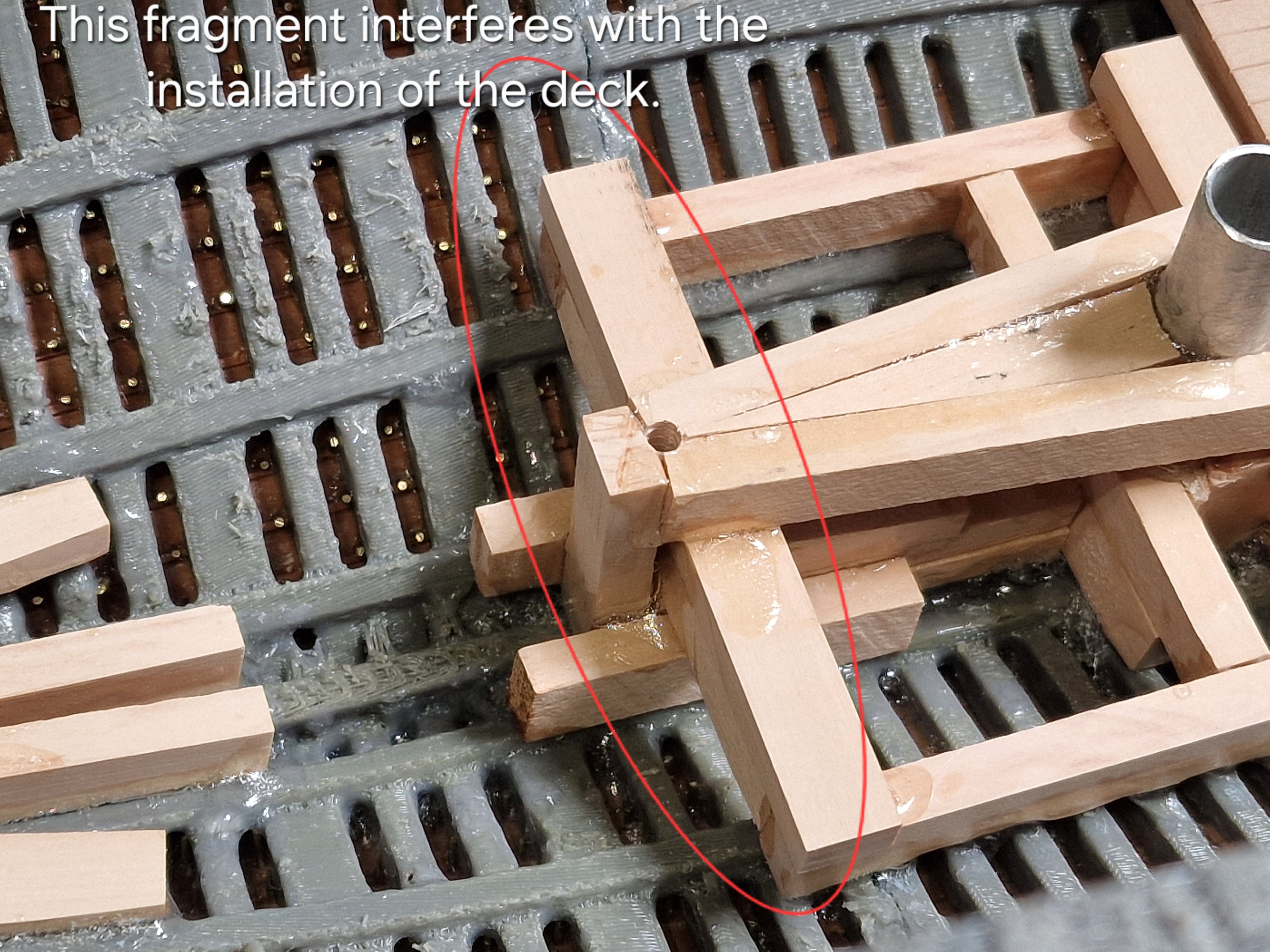
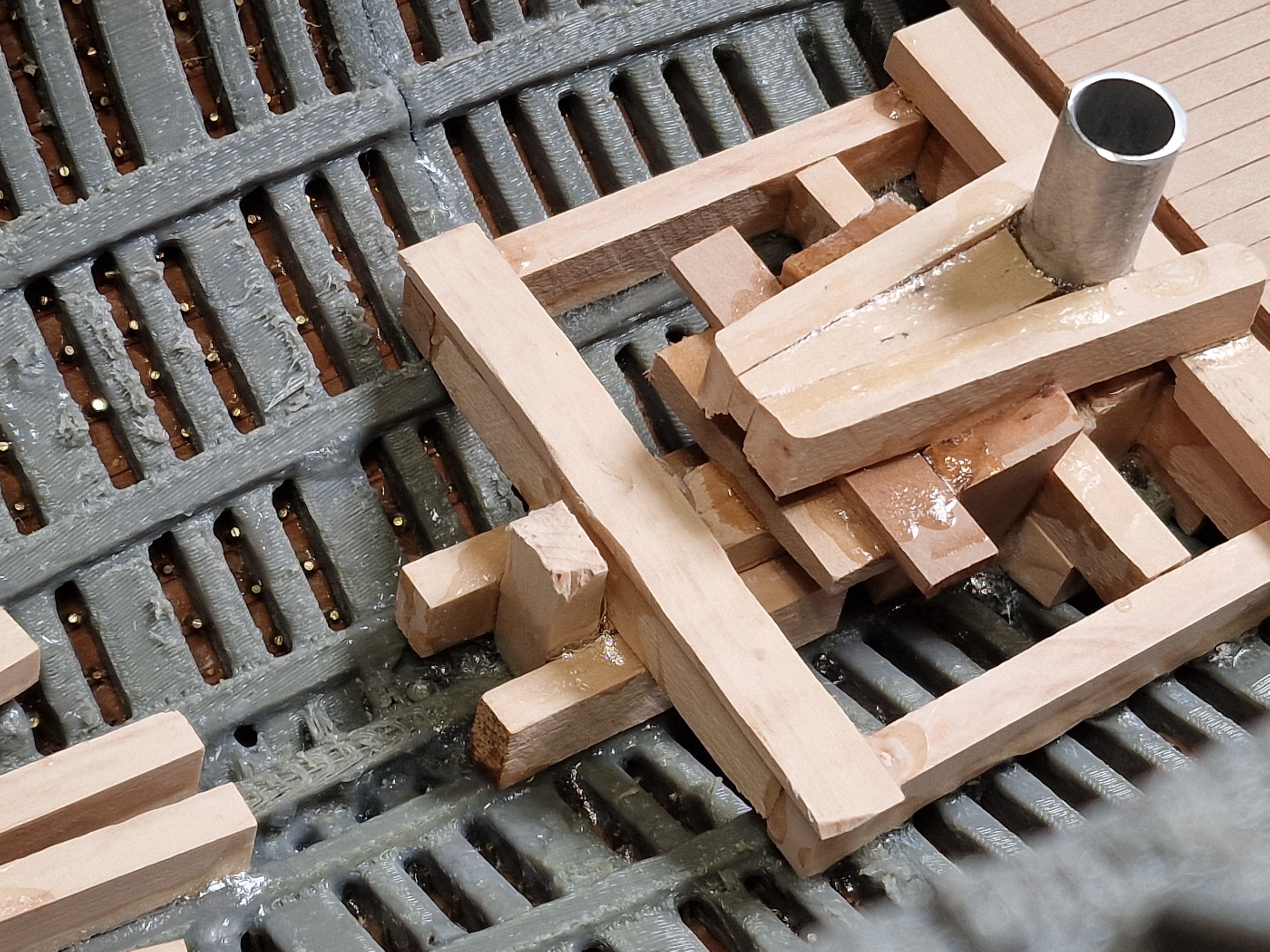
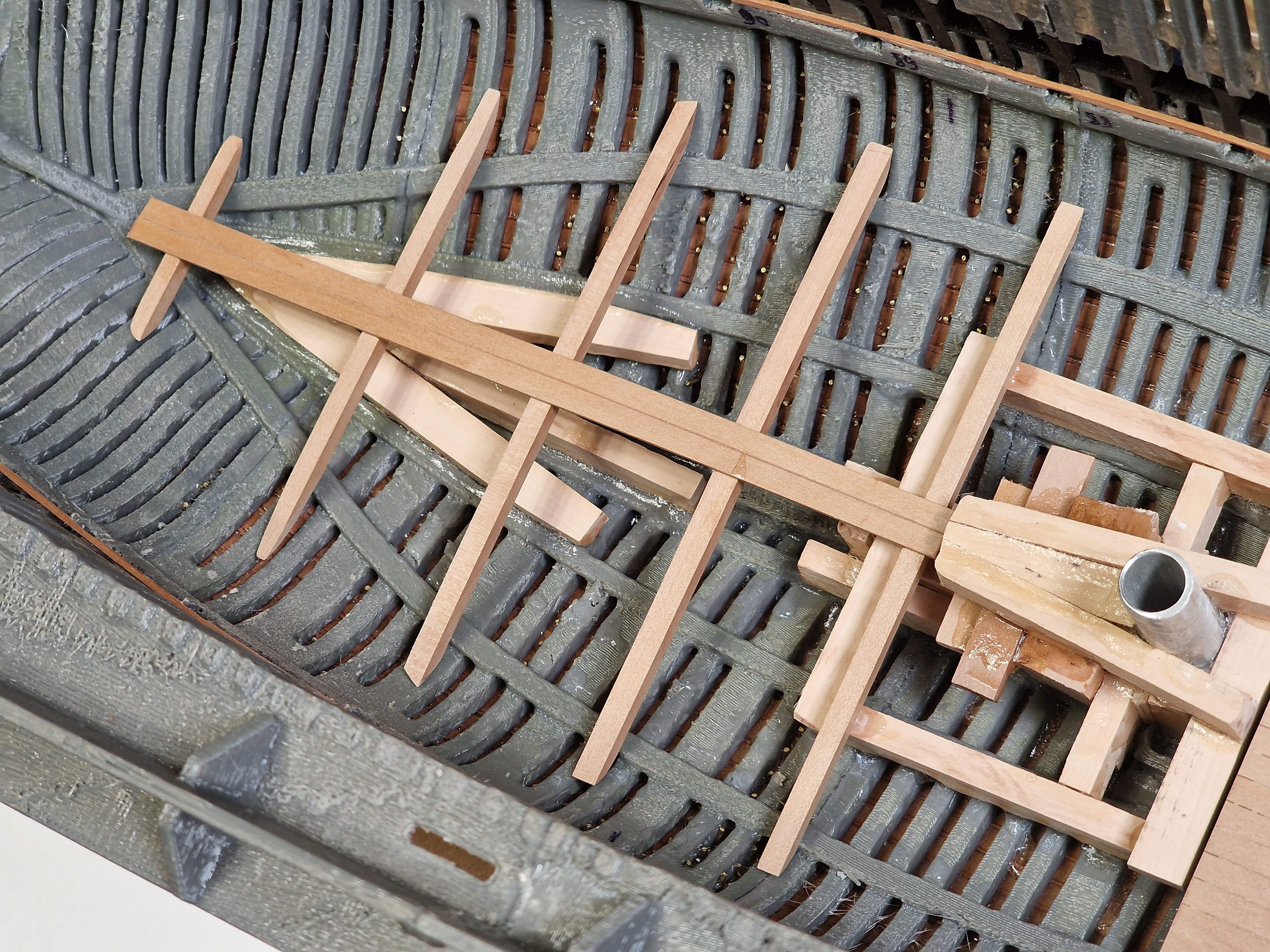
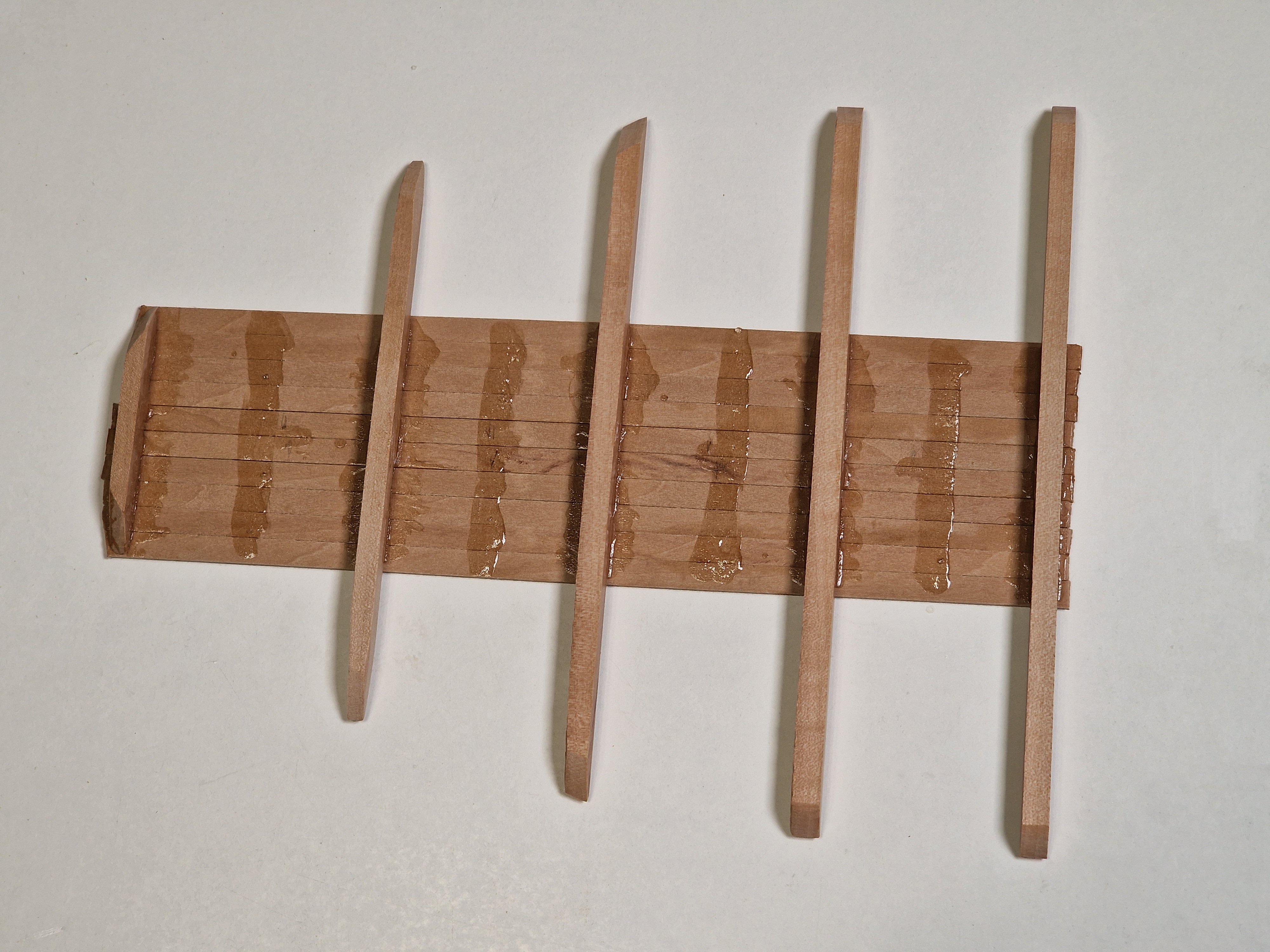
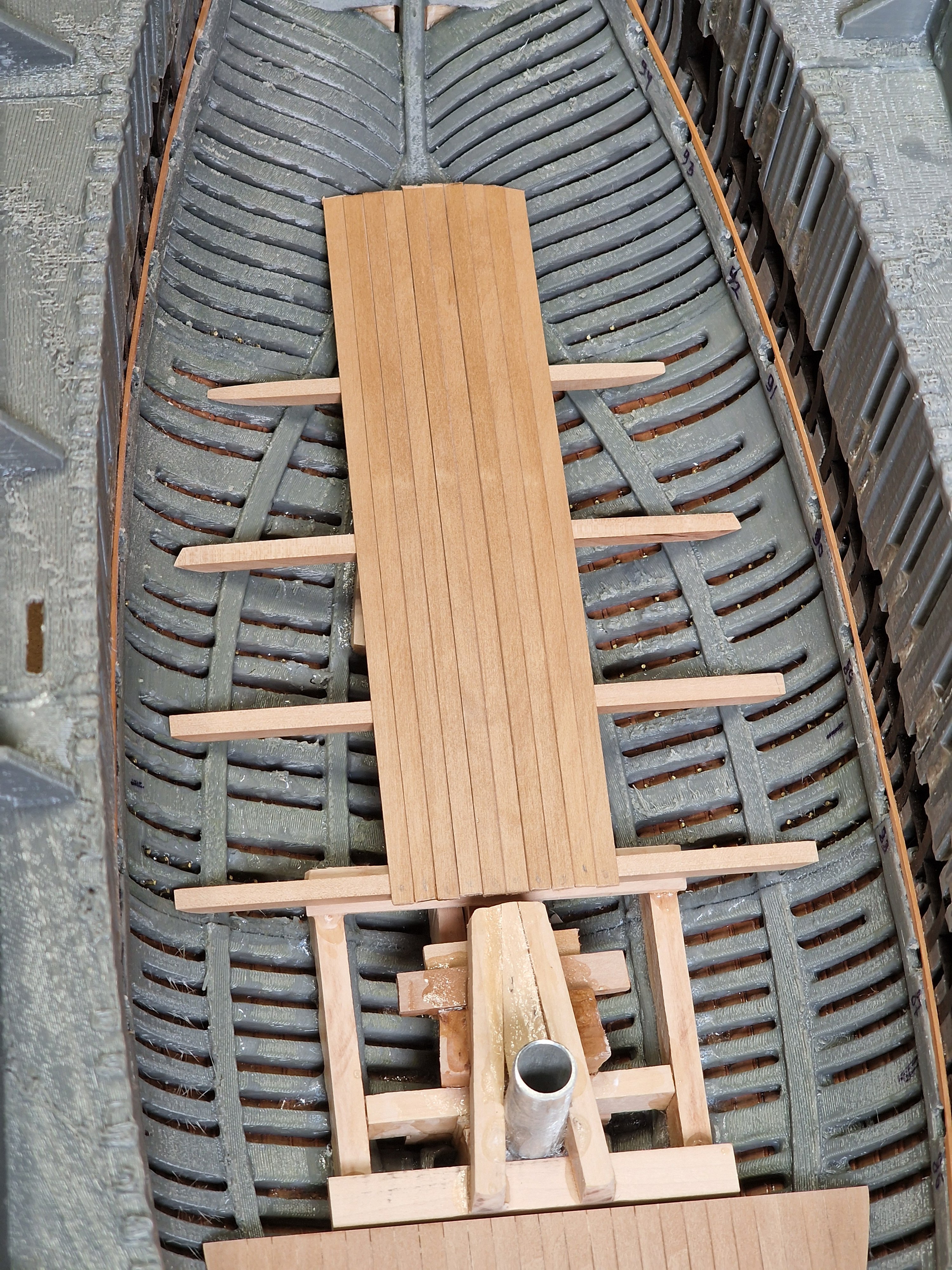
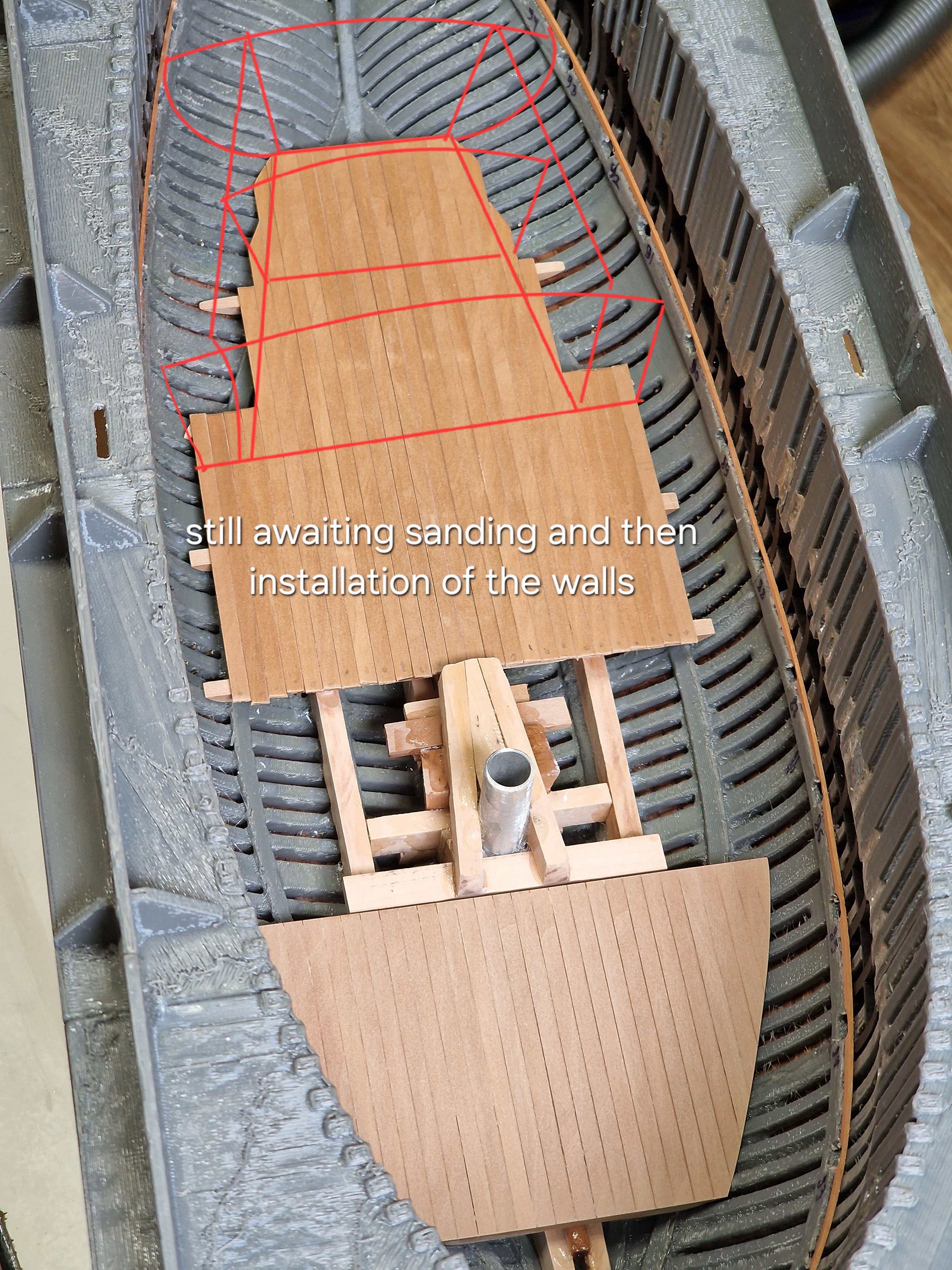
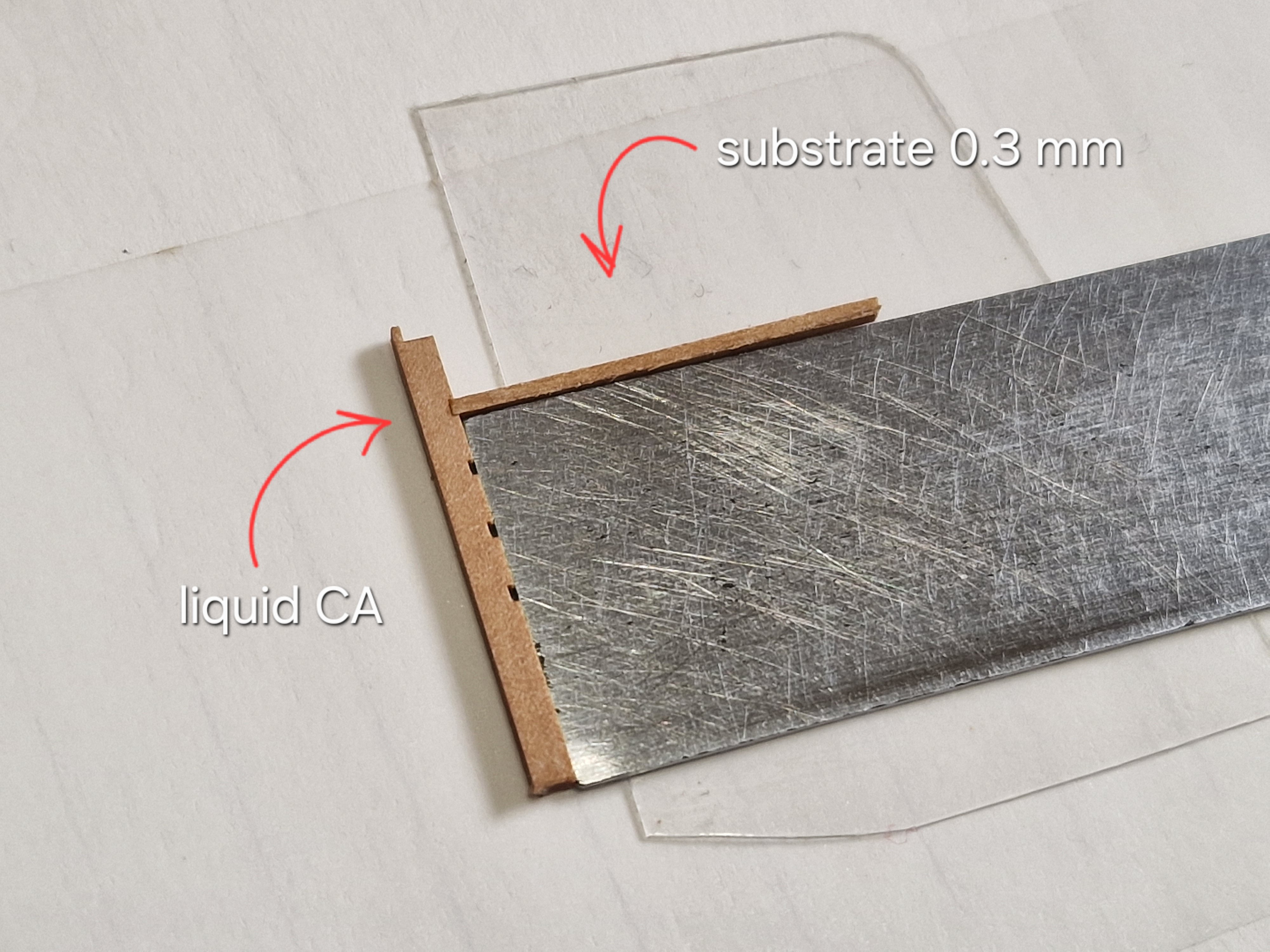
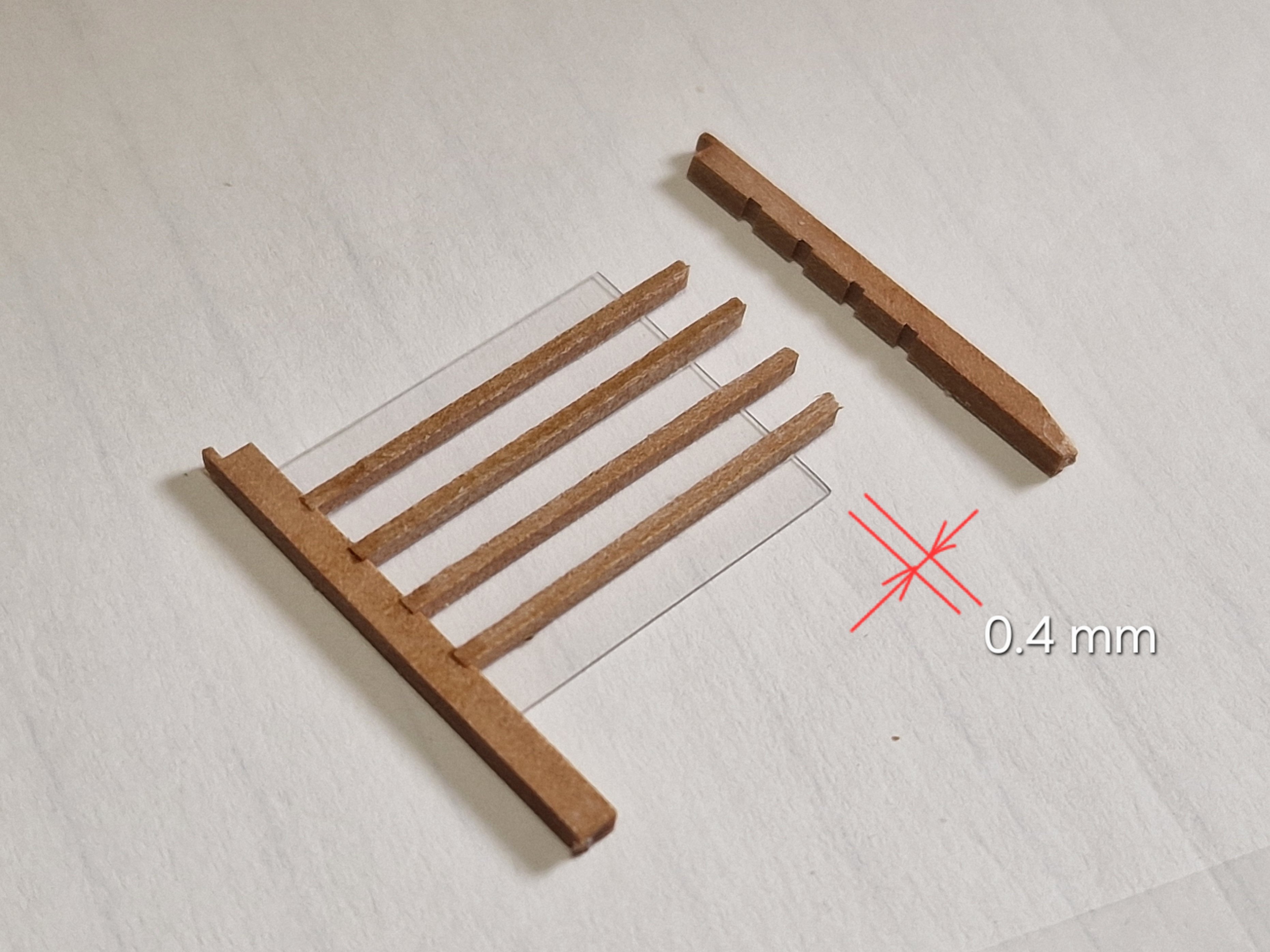
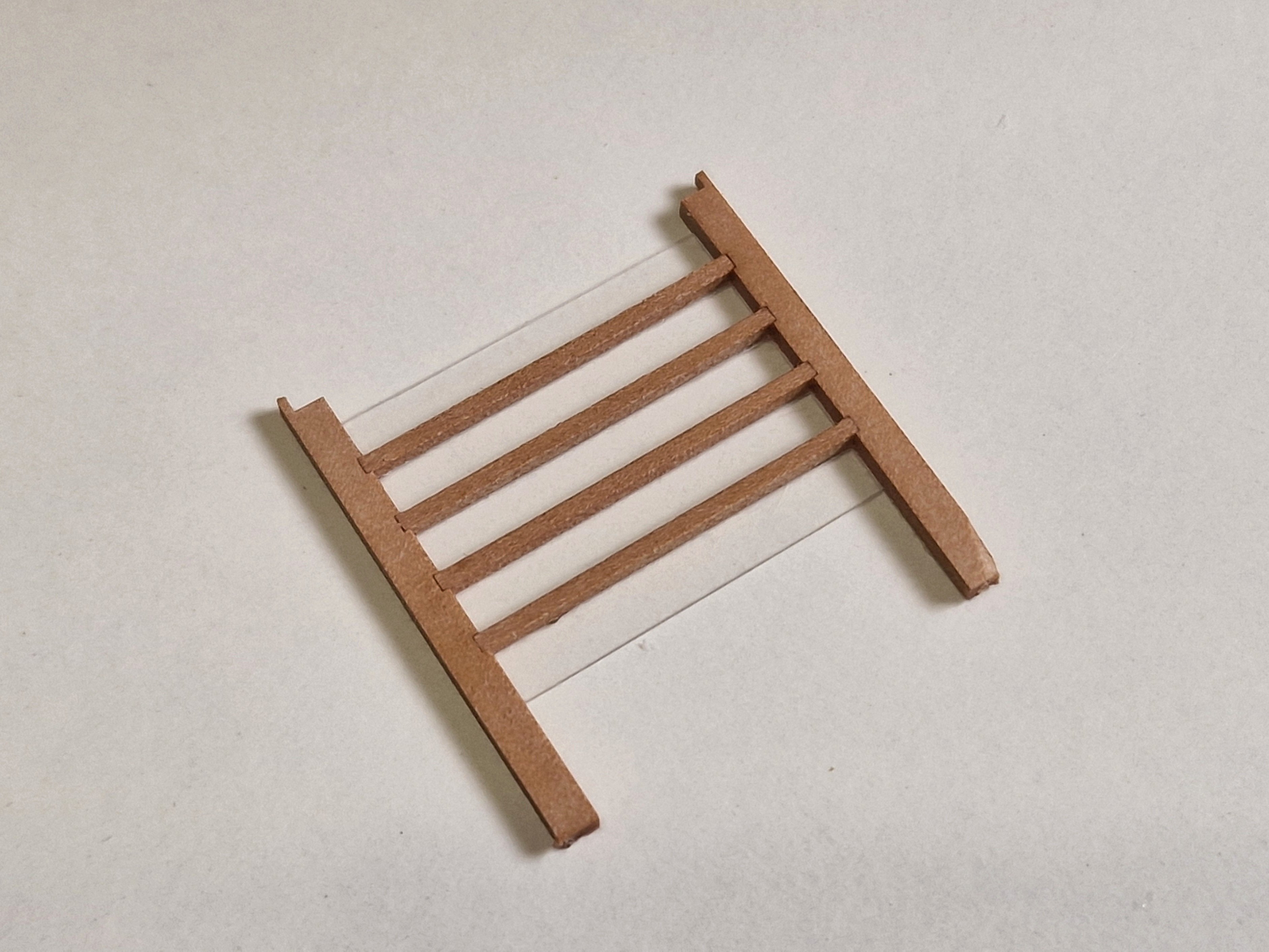
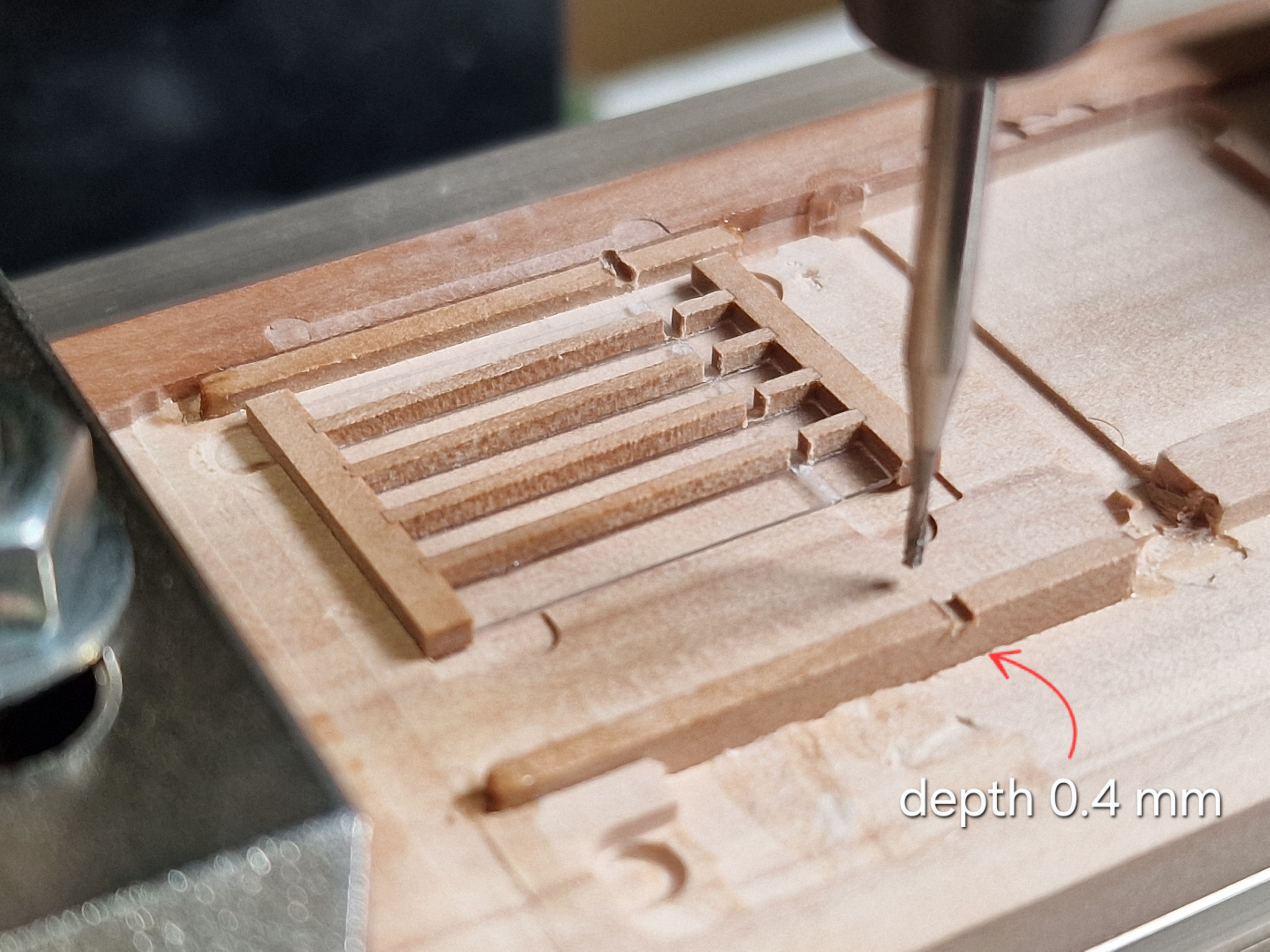
 Lower deck. 1/2 I'm getting a bit tired of bolts, so I decided to switch to the lower deck. When I started the second hull, I wasn't planning on doing a lower deck, but I changed my mind. So I left the forward grate open, the central companionway is also open, and the skylight will also allow me to see everything below. The two remaining grating will be practically invisible, but I'll be making the lower deck a little larger for another reason. I want to practice with bitumen coating; there's plenty of material, and the deck is very quick to build, so here's the first part. The second deck section is almost complete; it just needs sanding. The second part involves building the walls. * Let me reiterate, the lower deck will be virtually invisible and is being constructed primarily for practice with a bitumen coating. Therefore, all the walls and beam positions are approximate; only small fragments of the planks will be visible.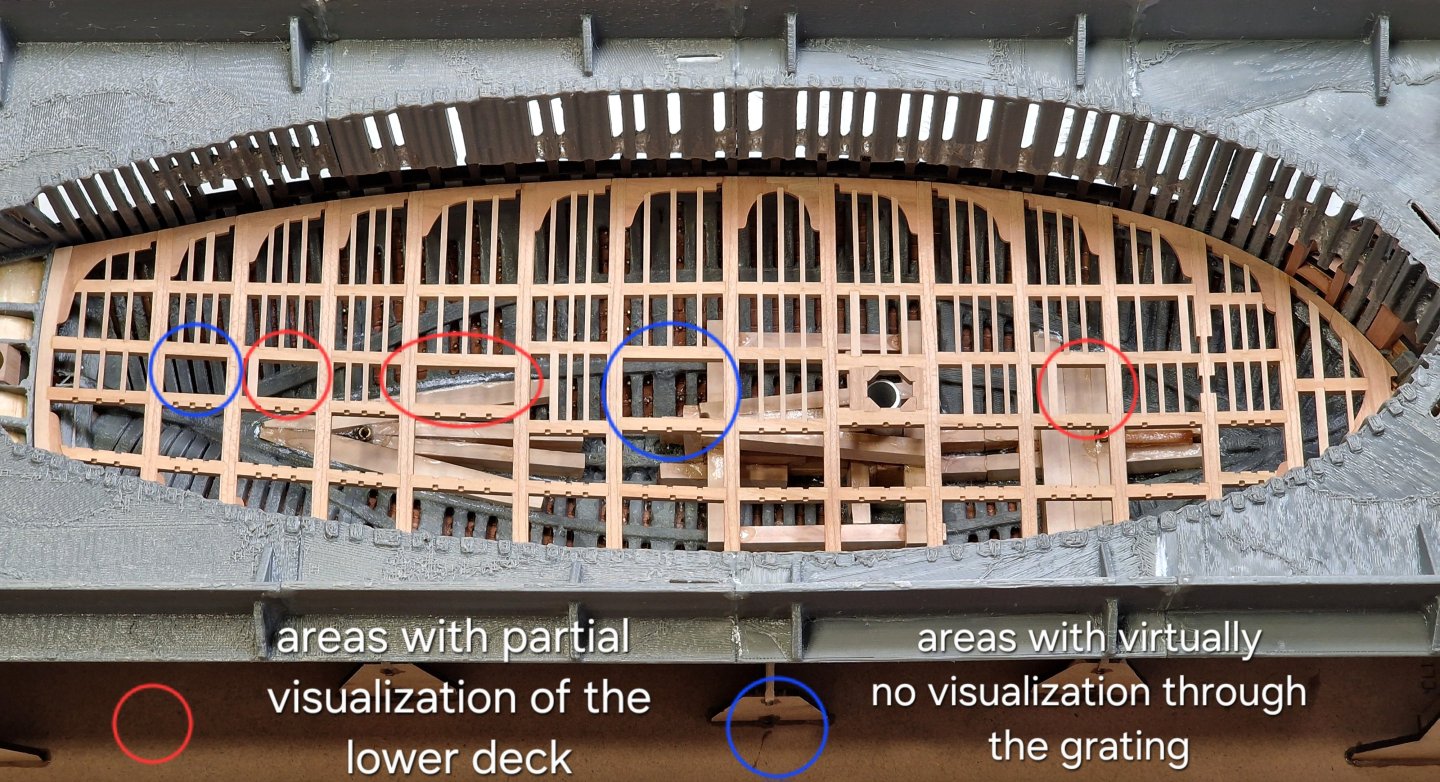
-
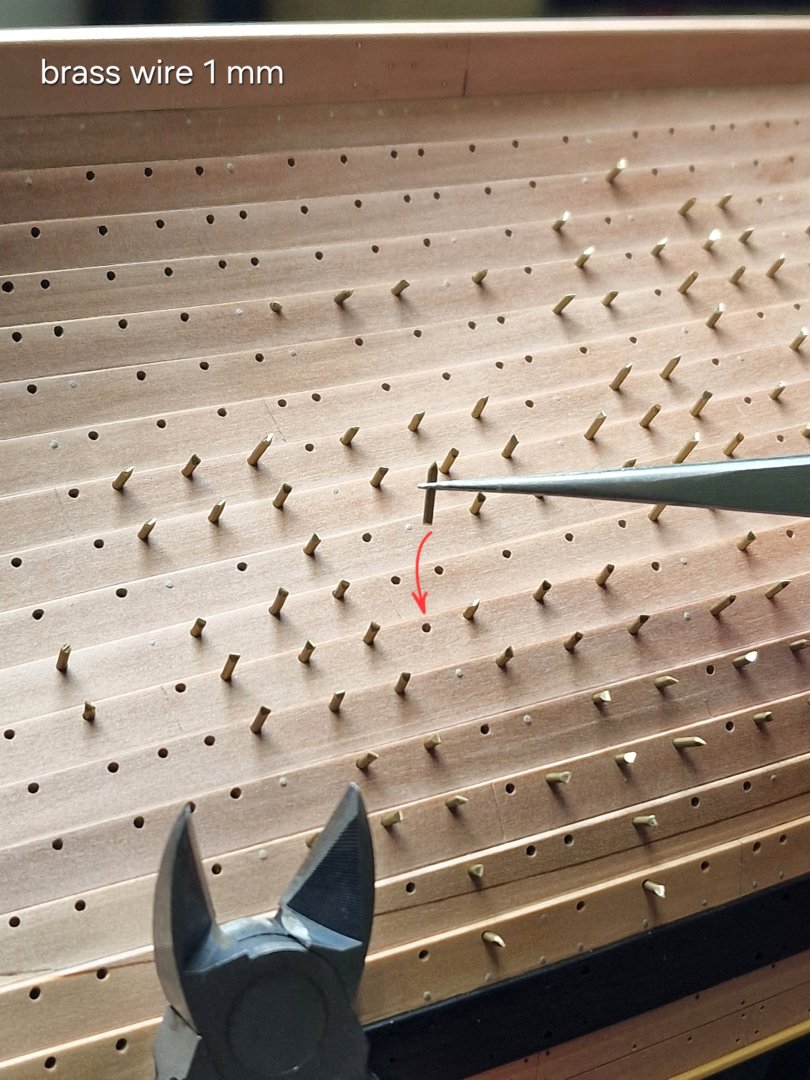
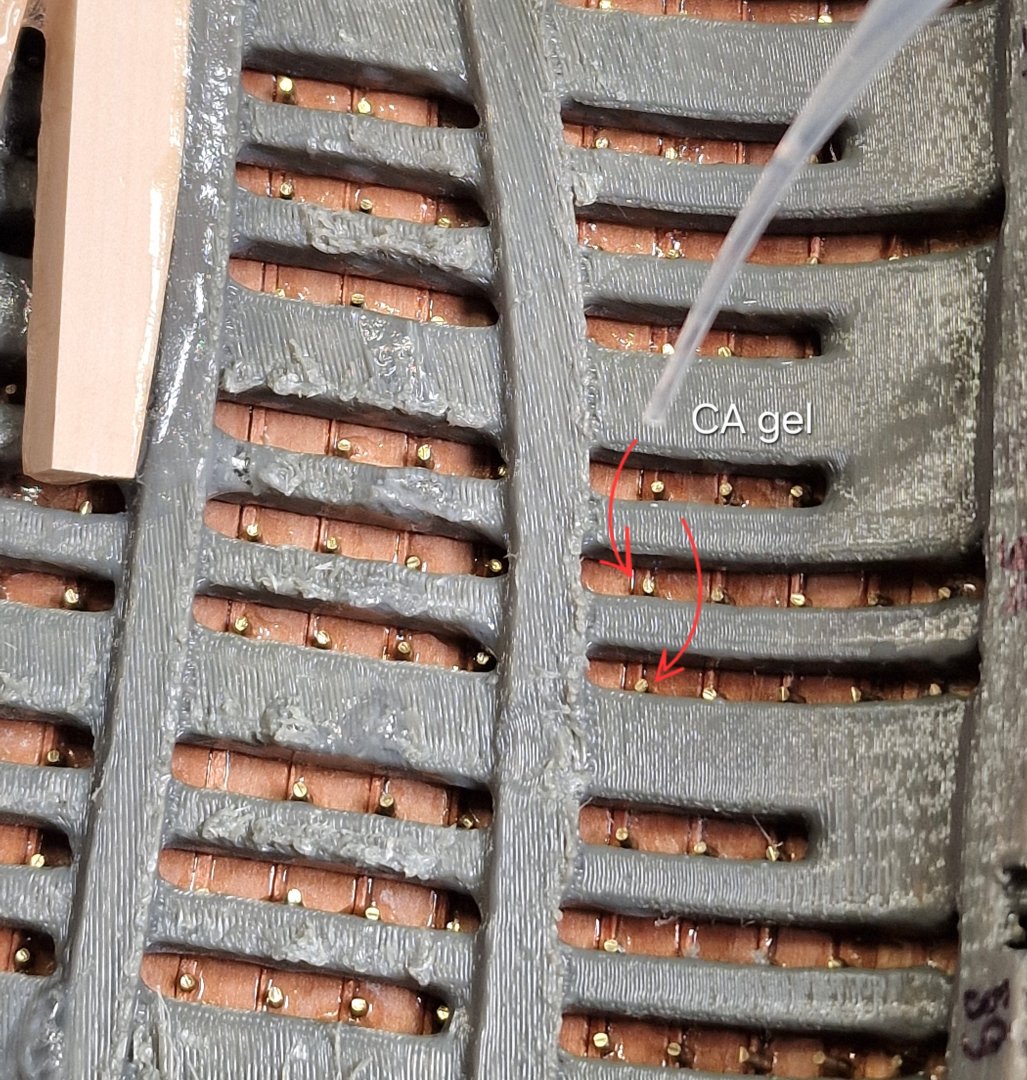
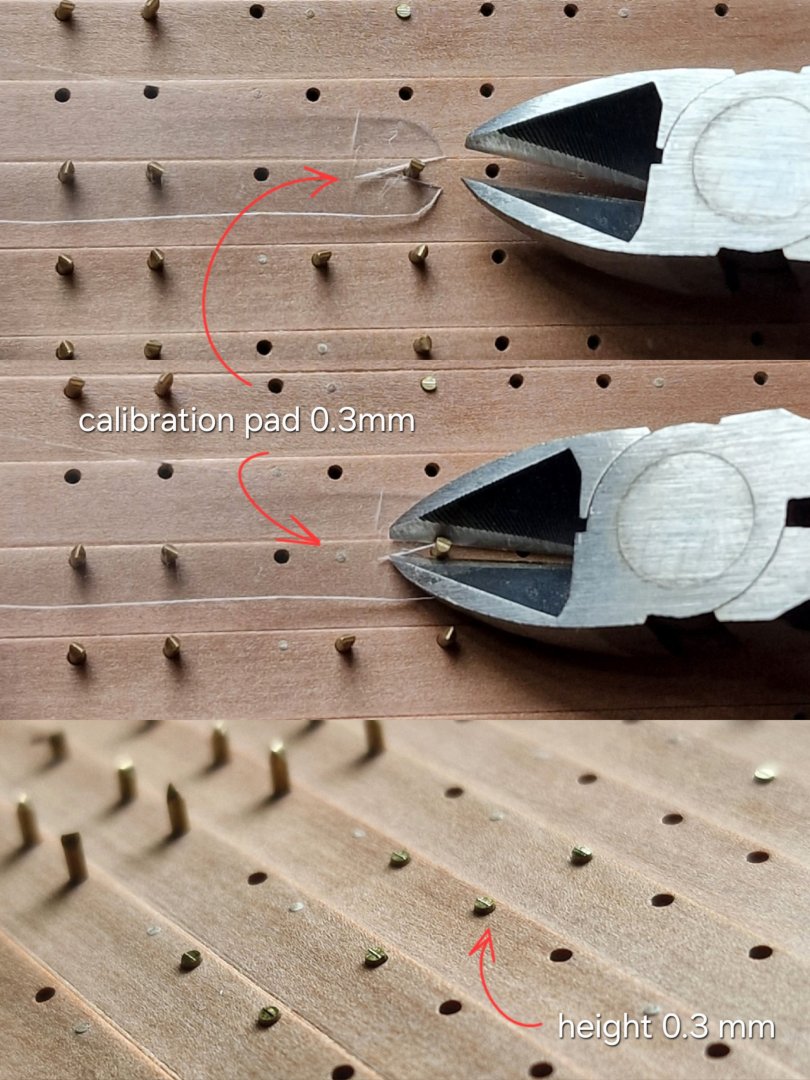
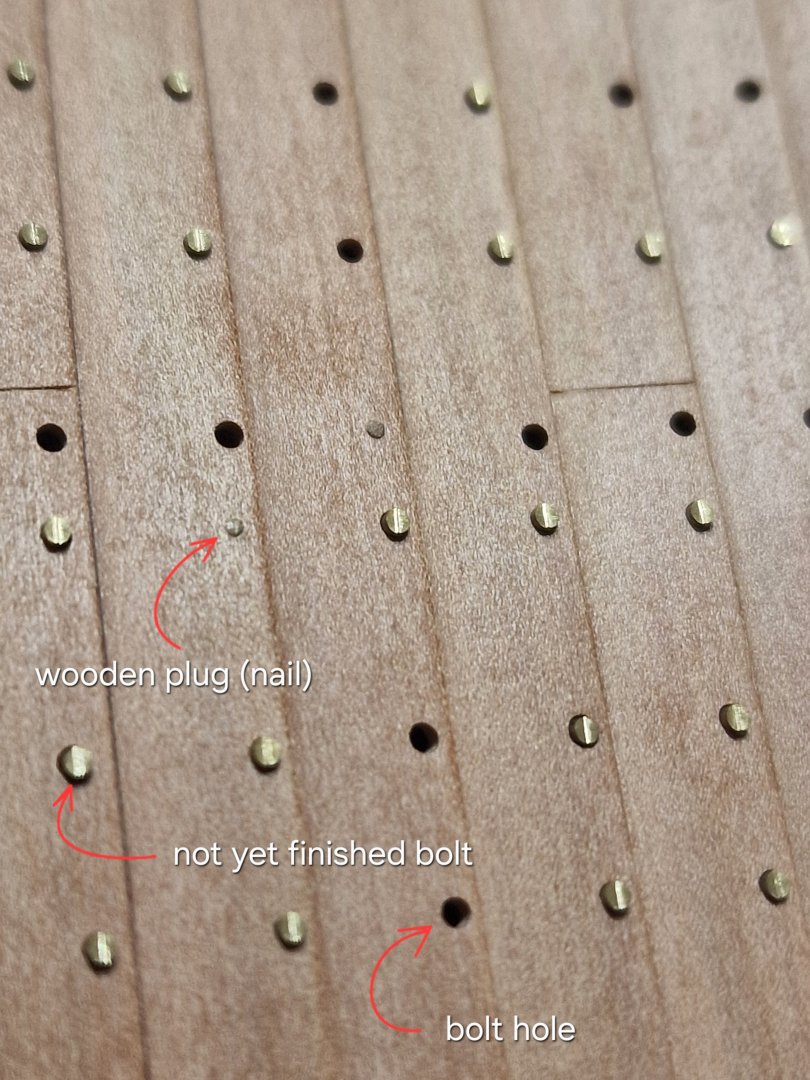
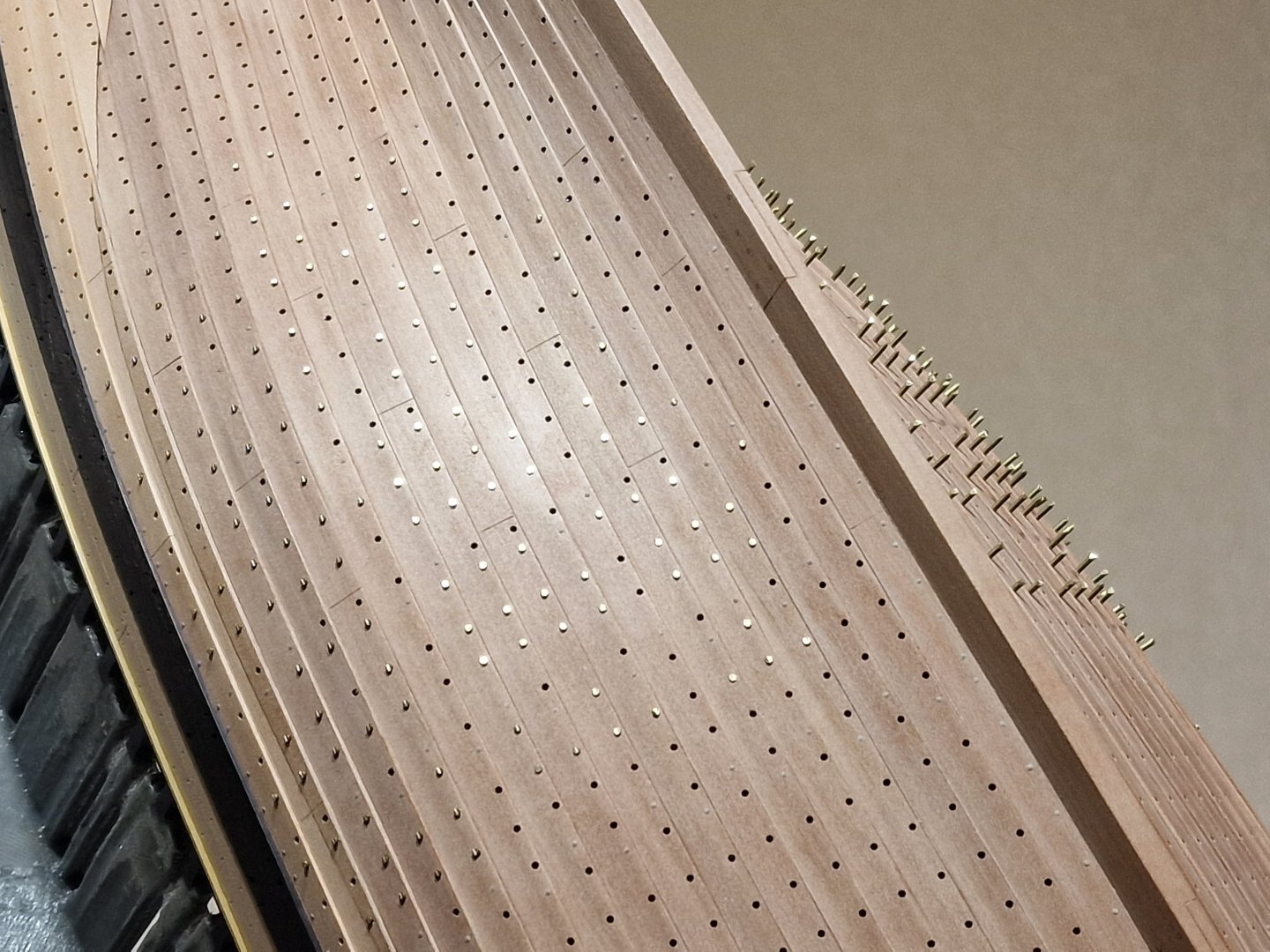
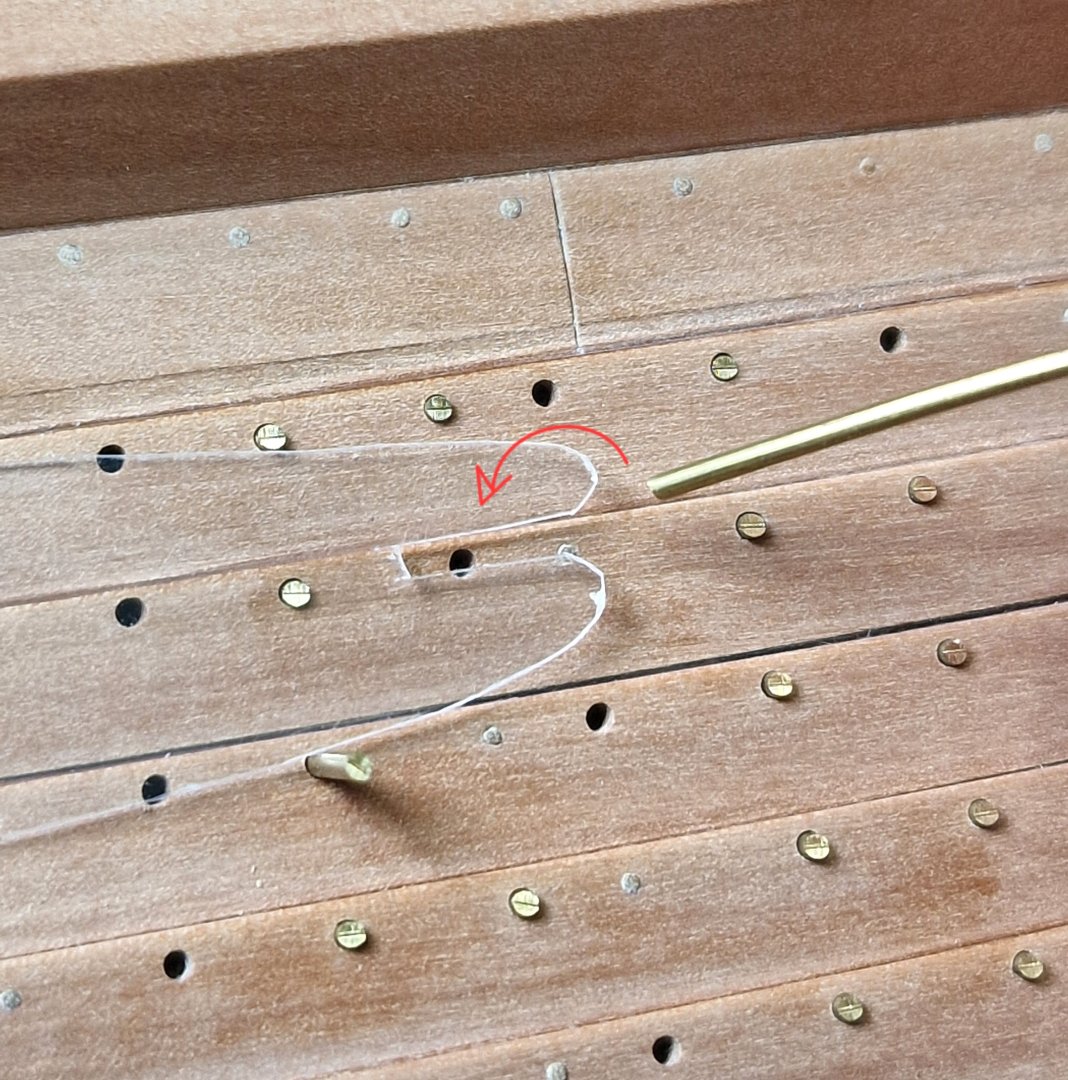
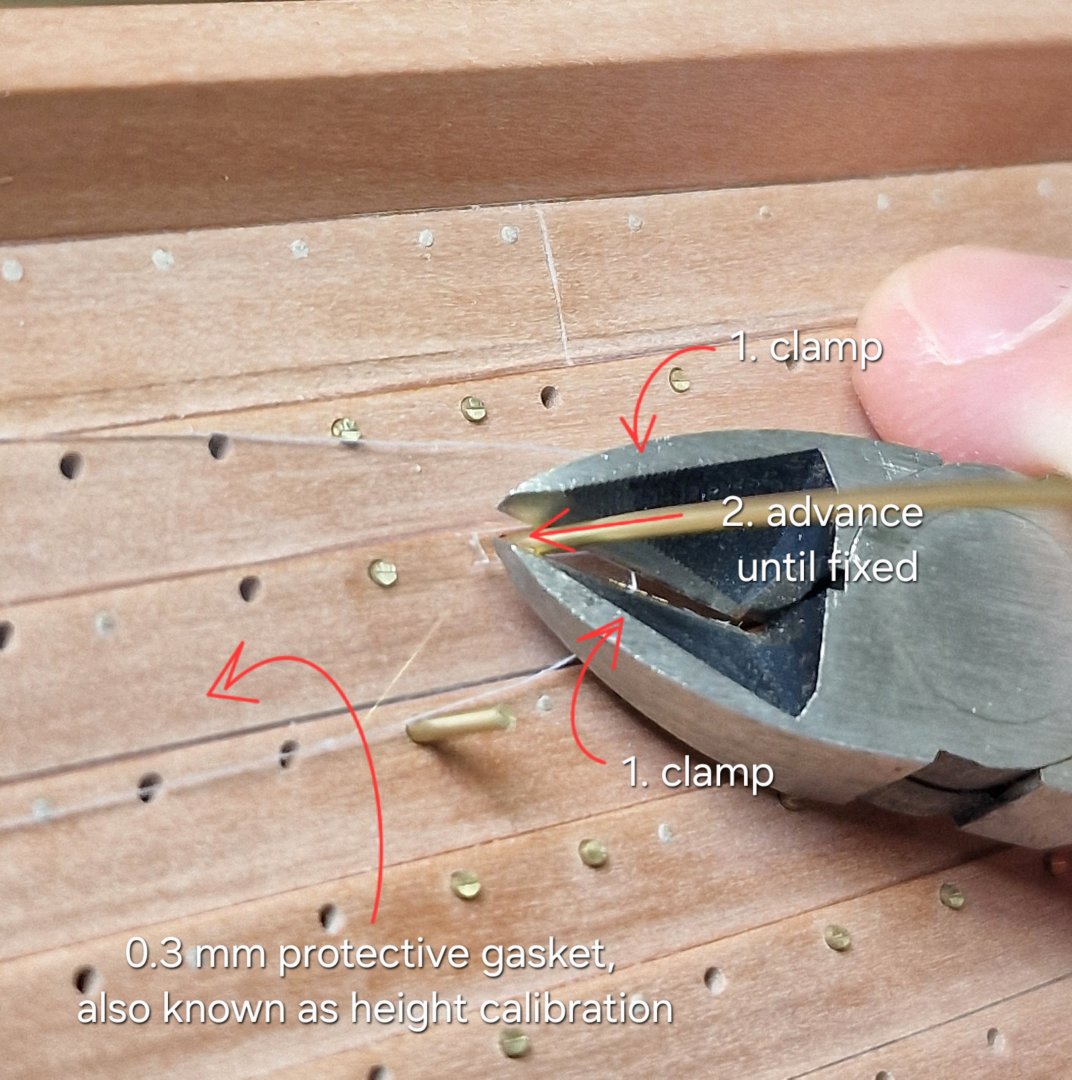
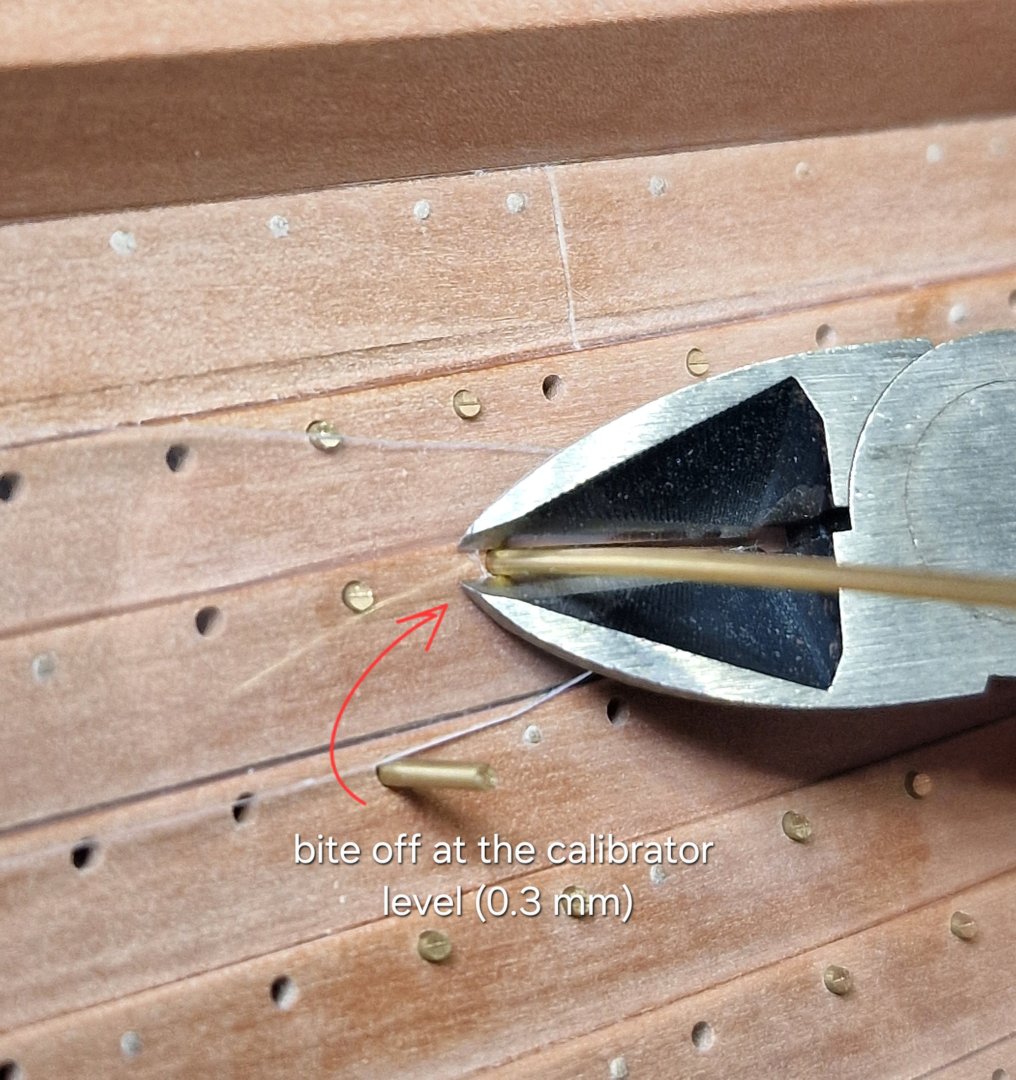
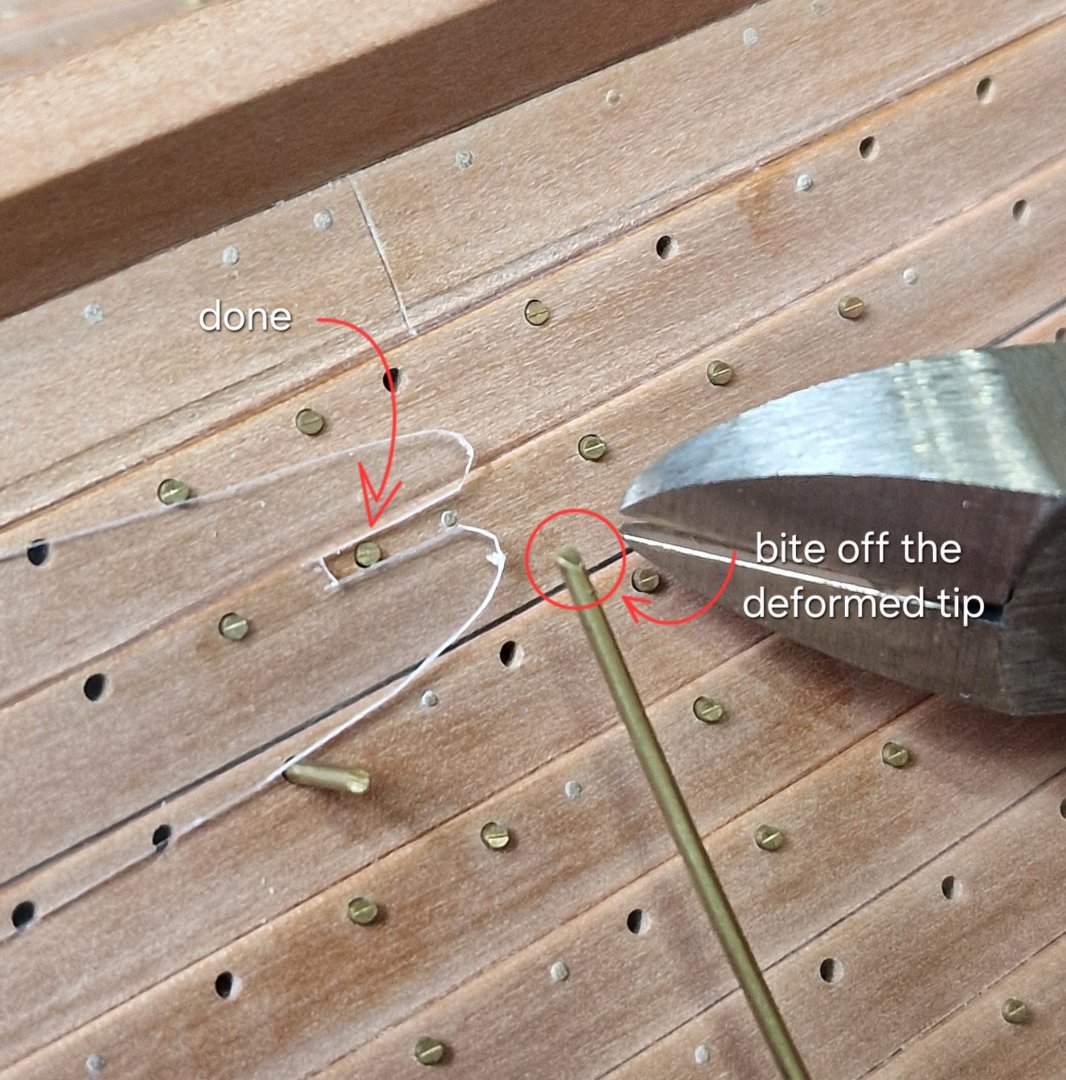
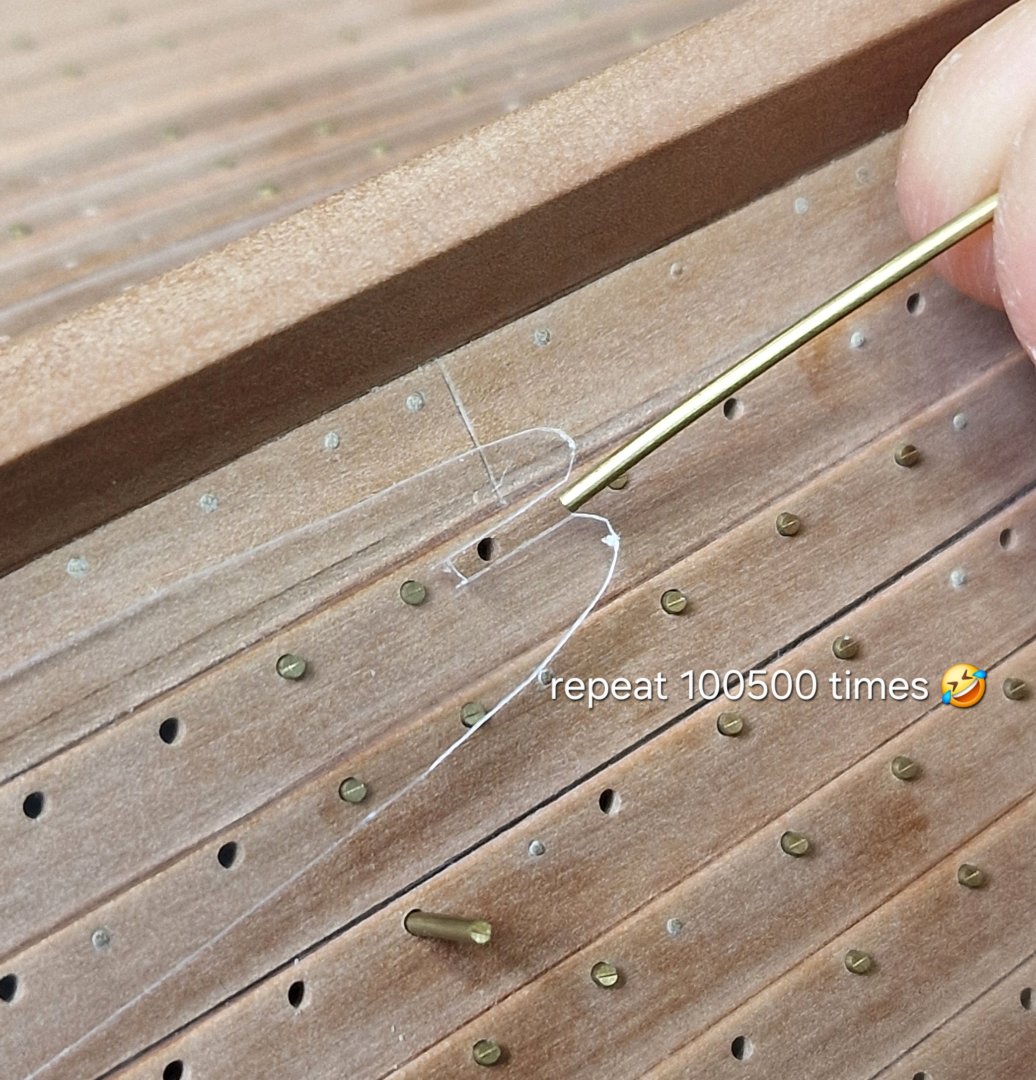
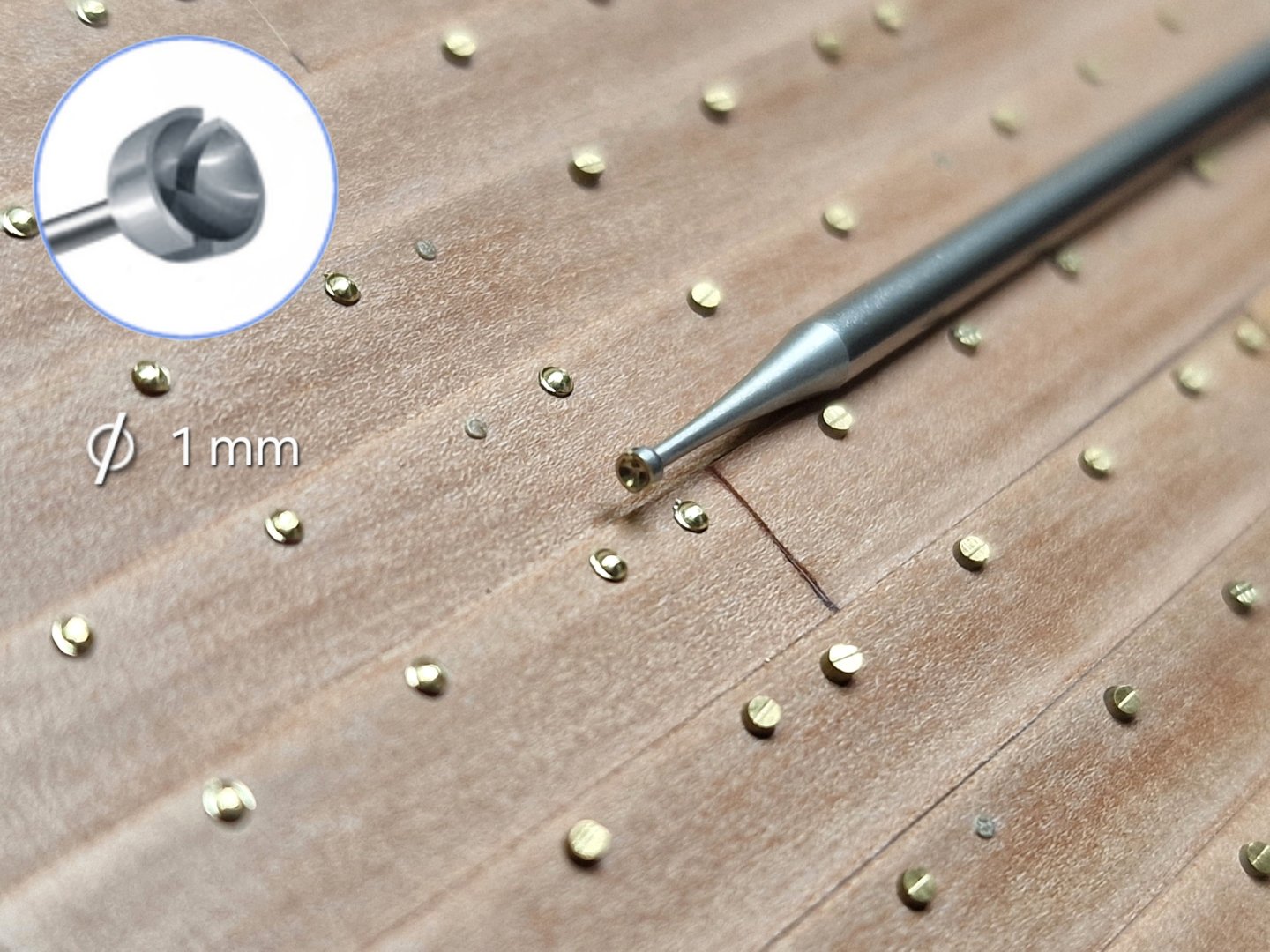
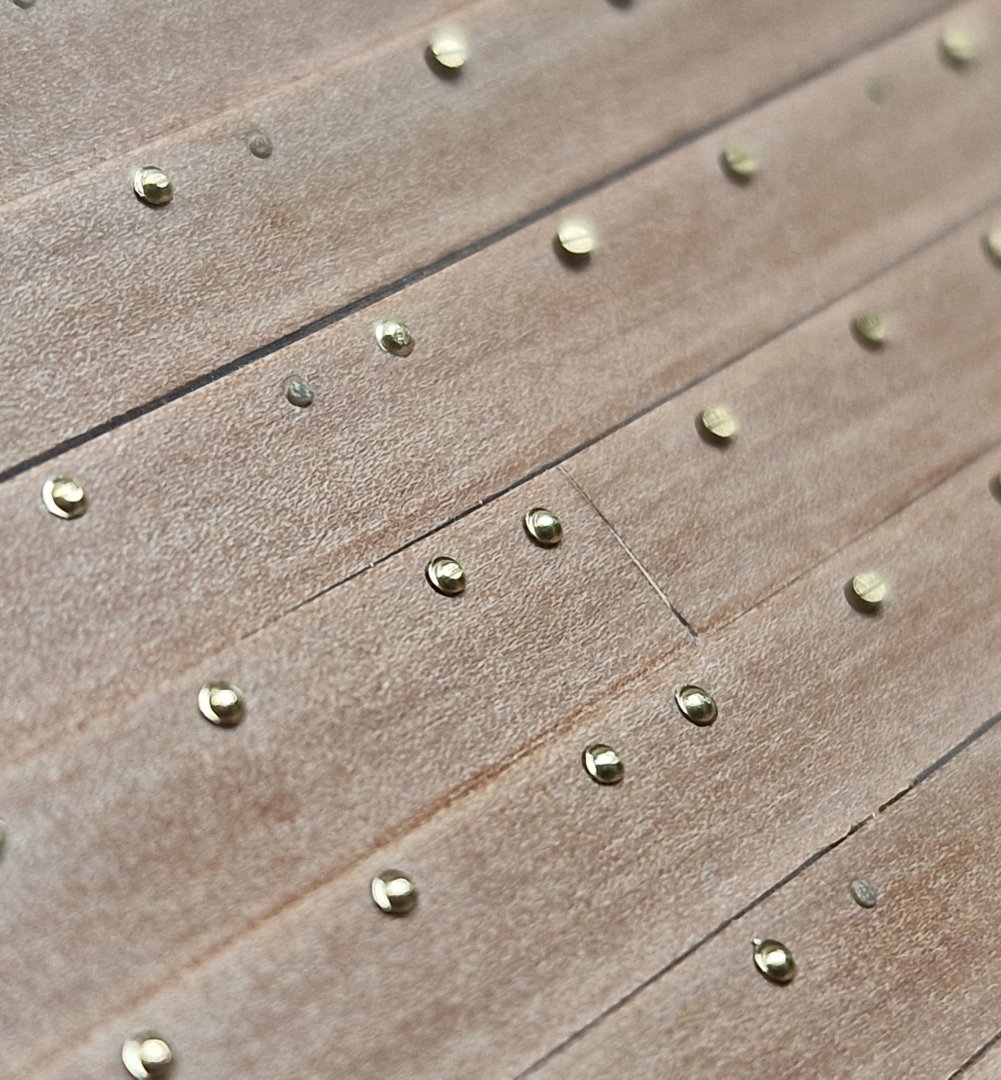
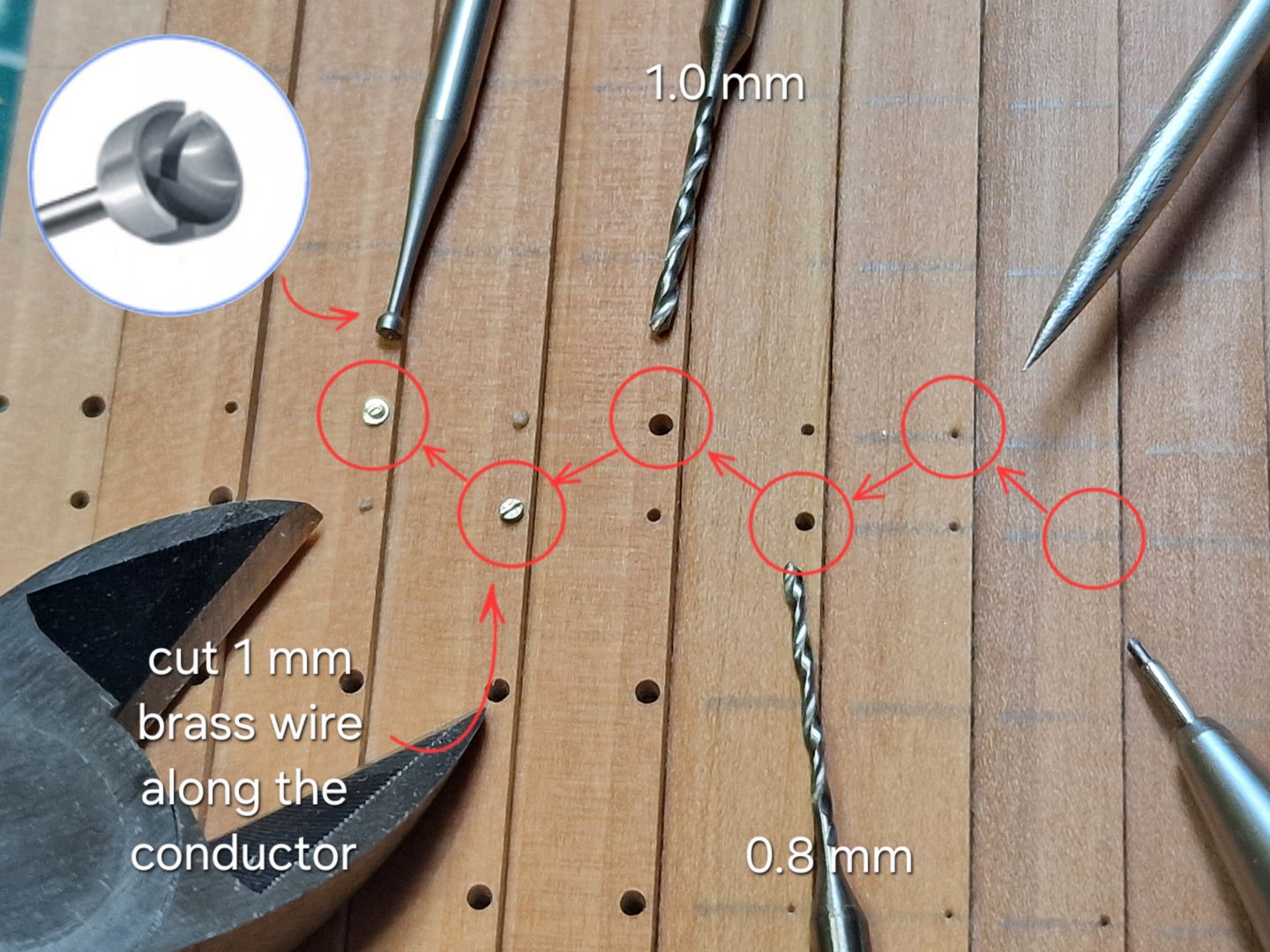
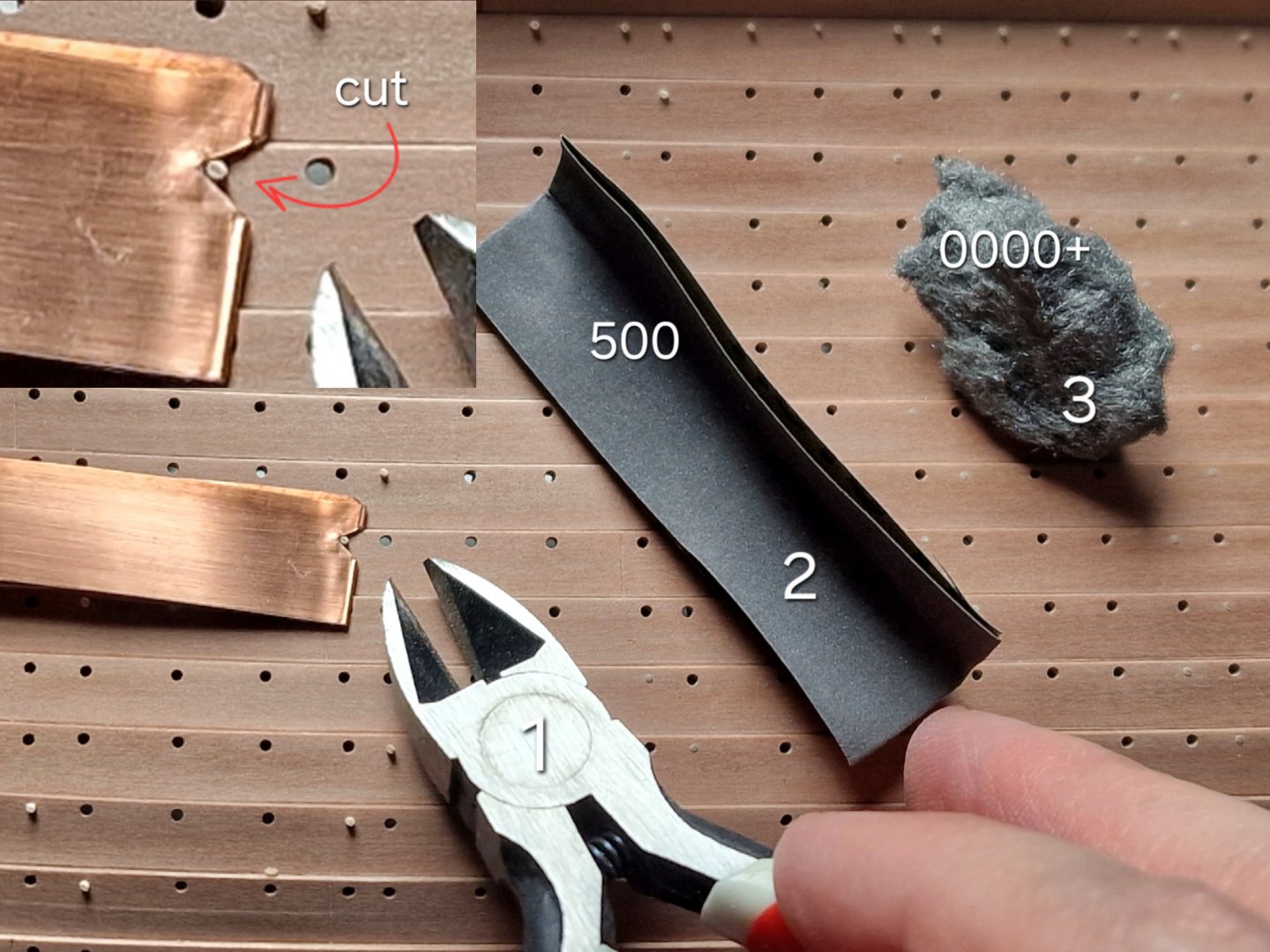
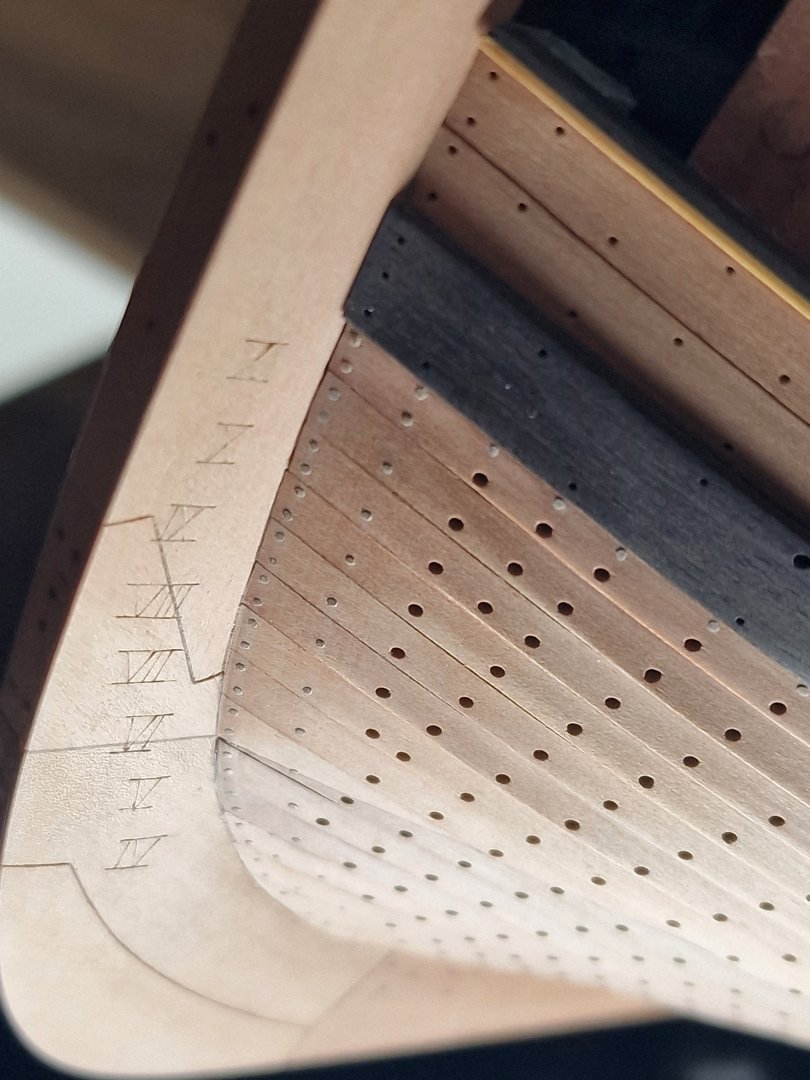
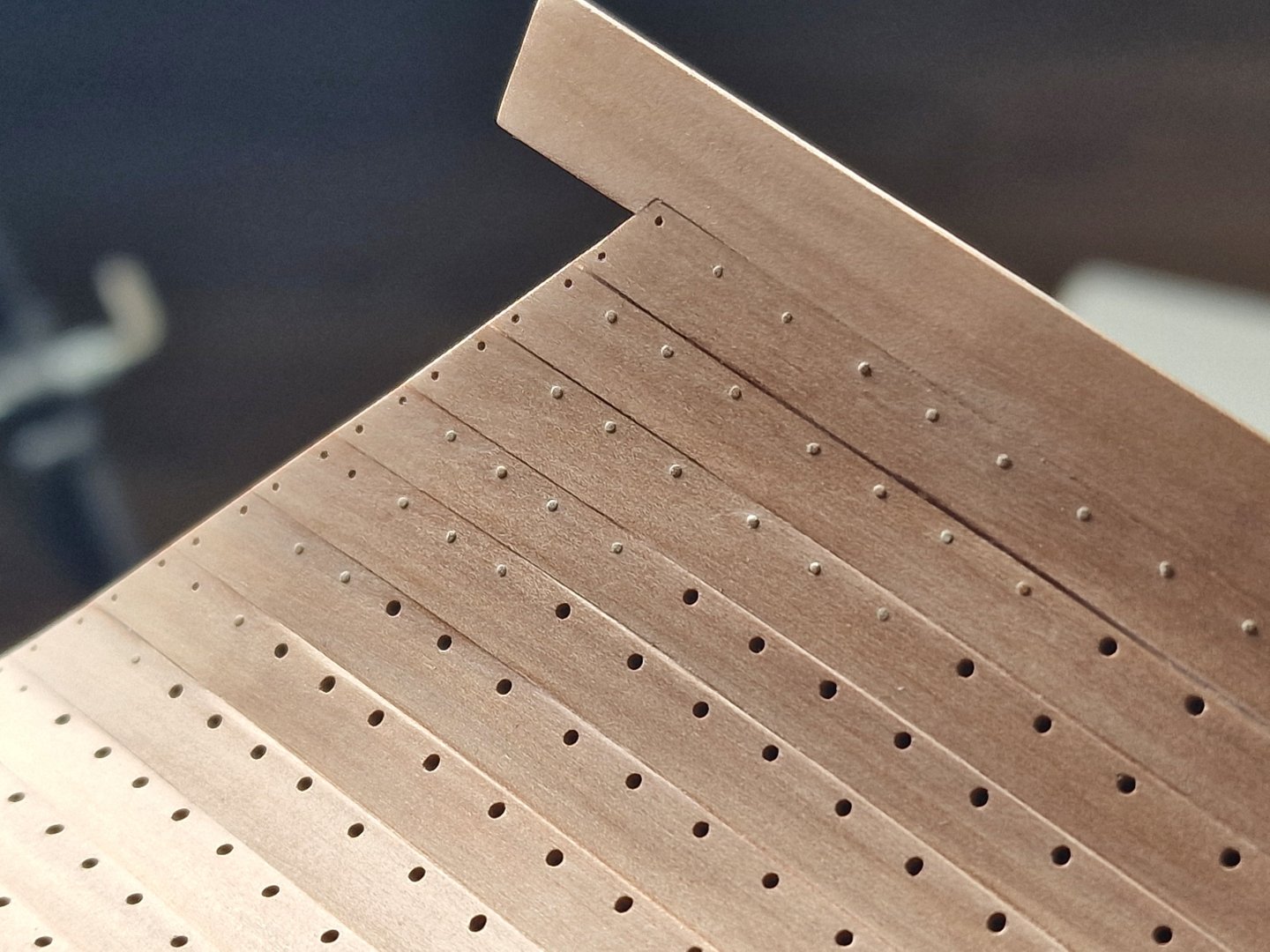
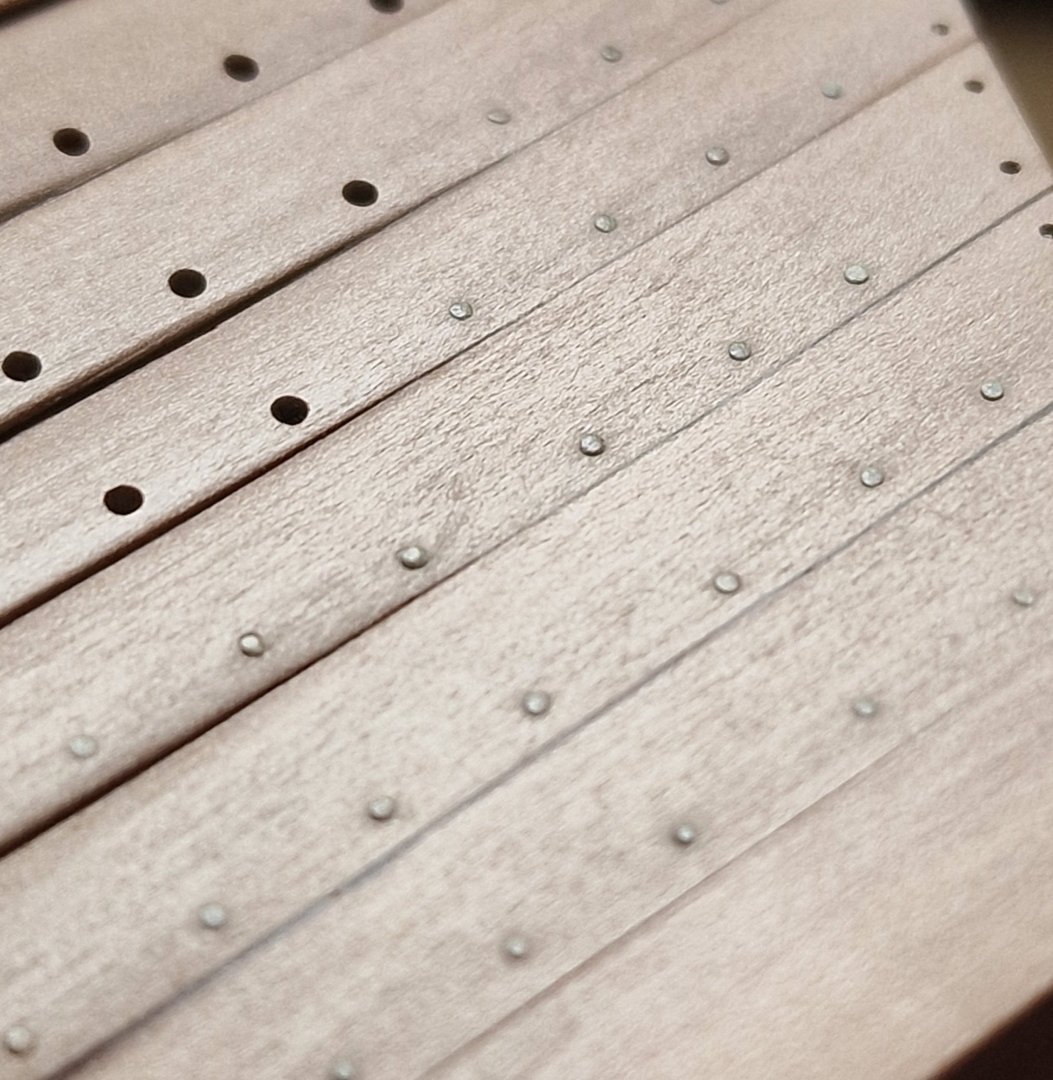
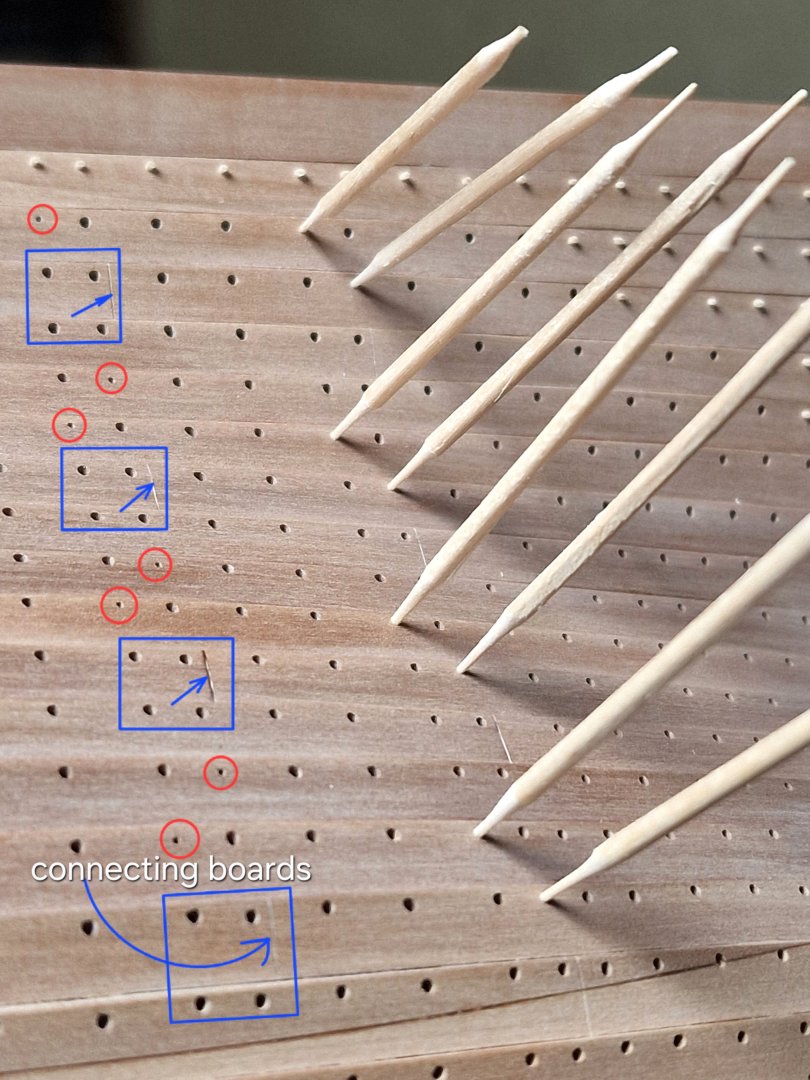
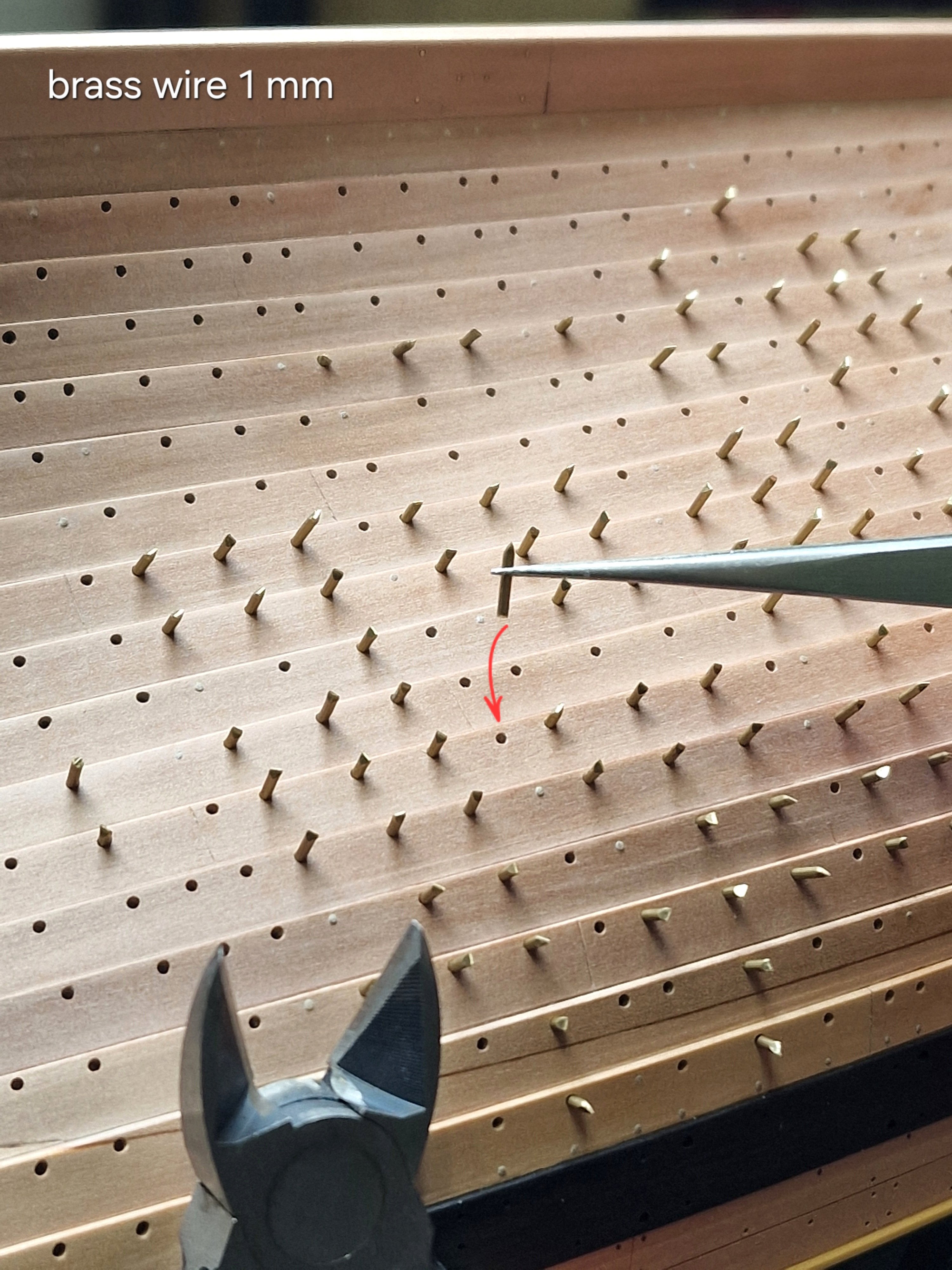
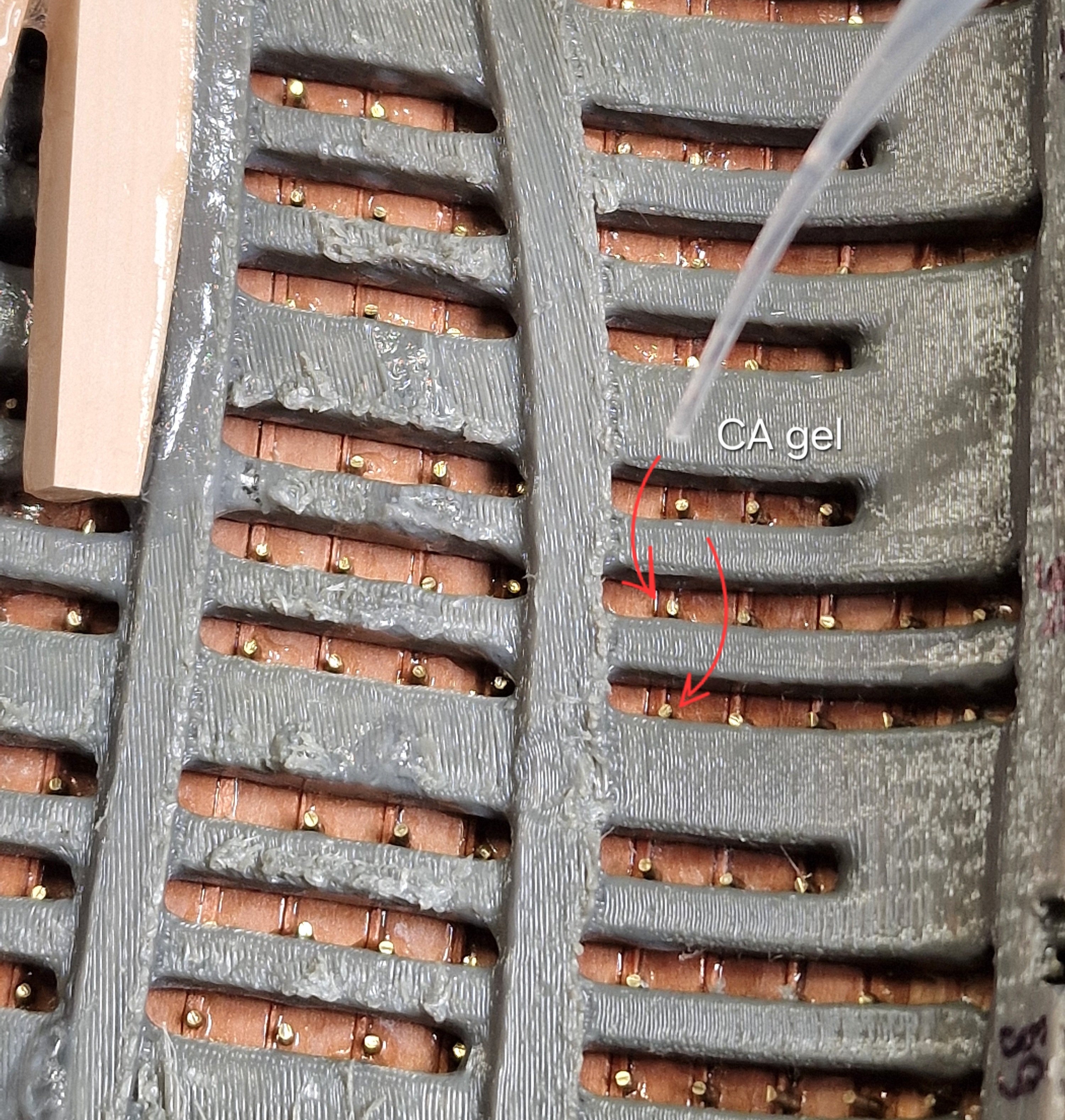
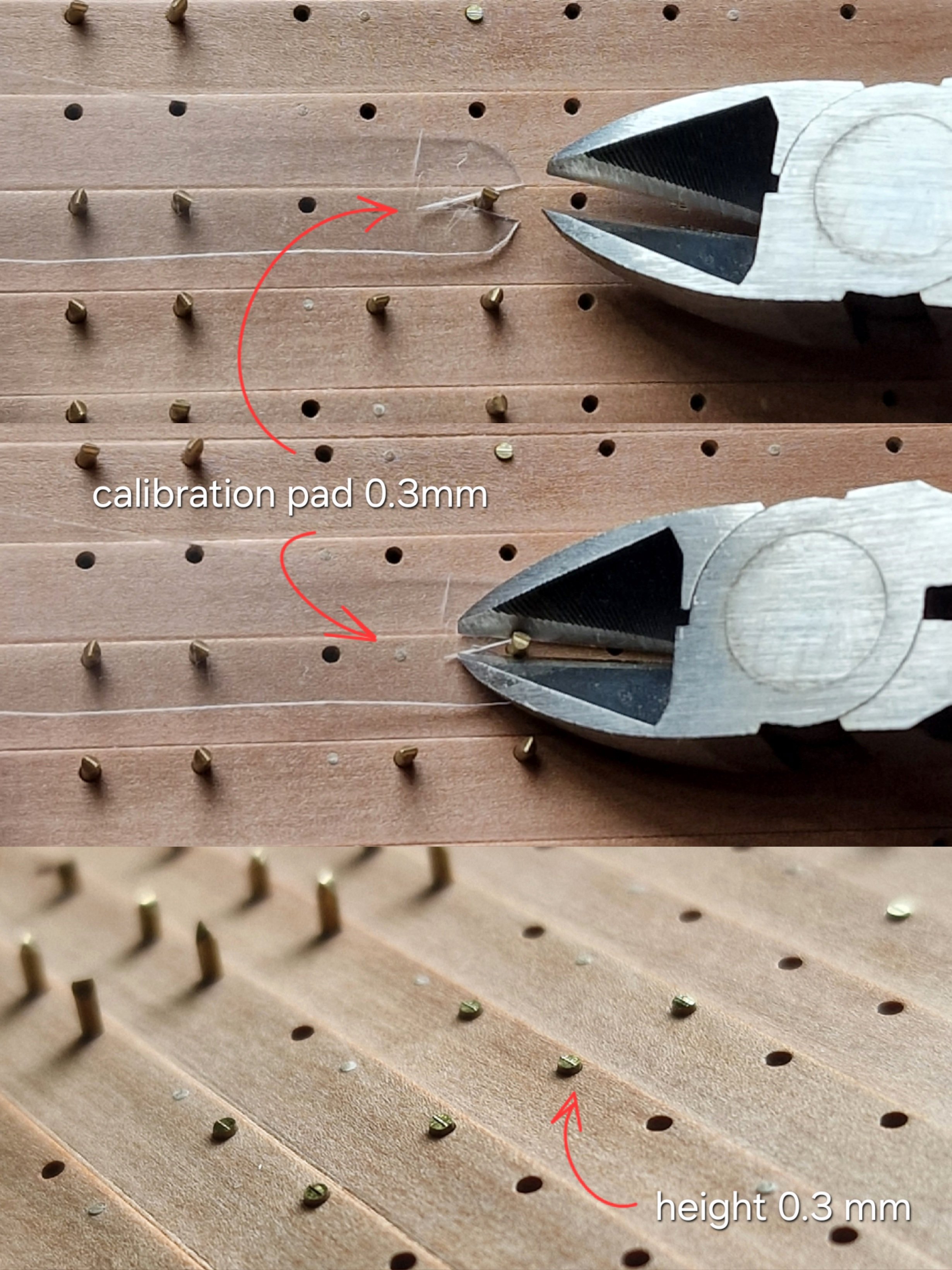
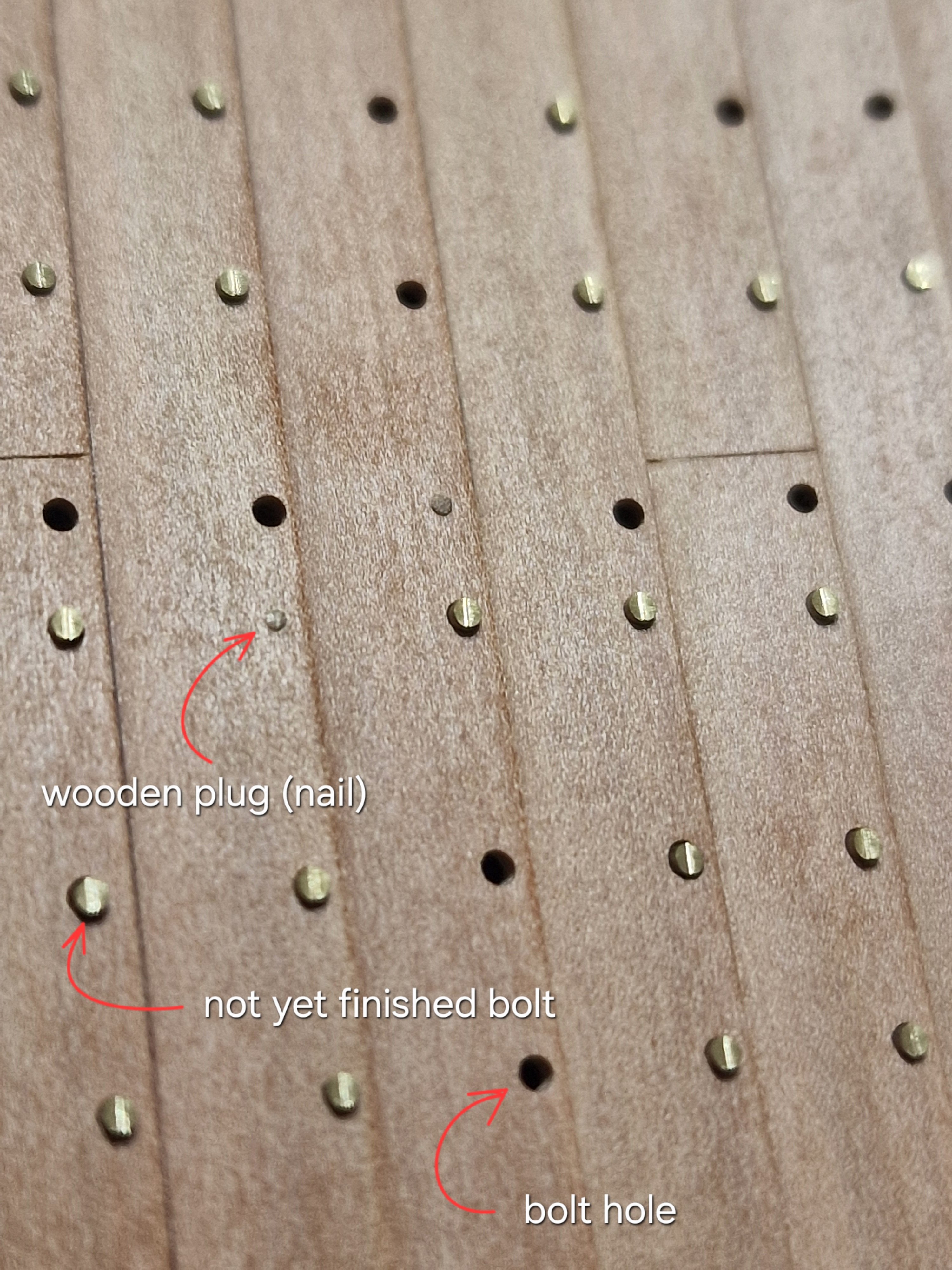
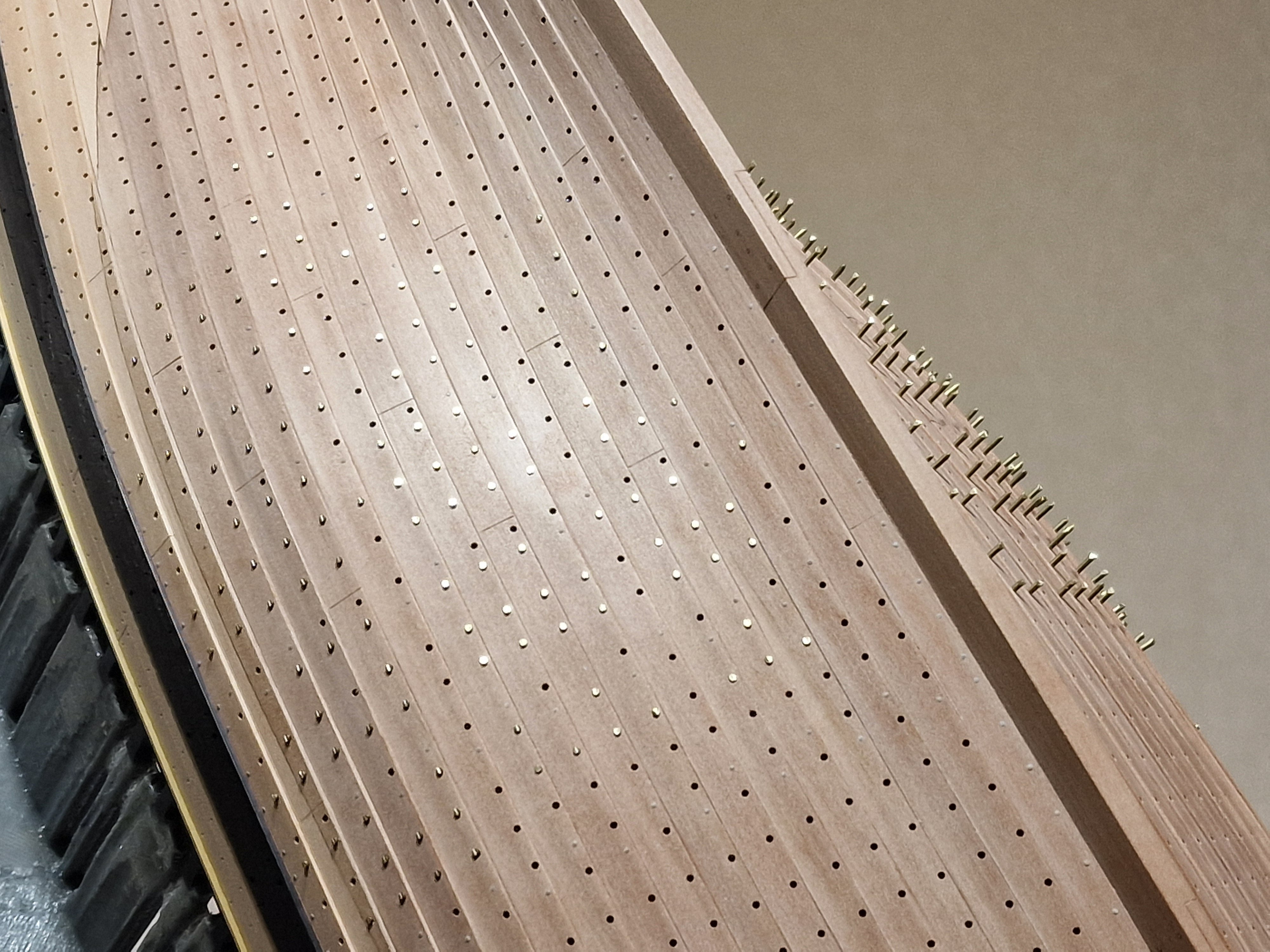
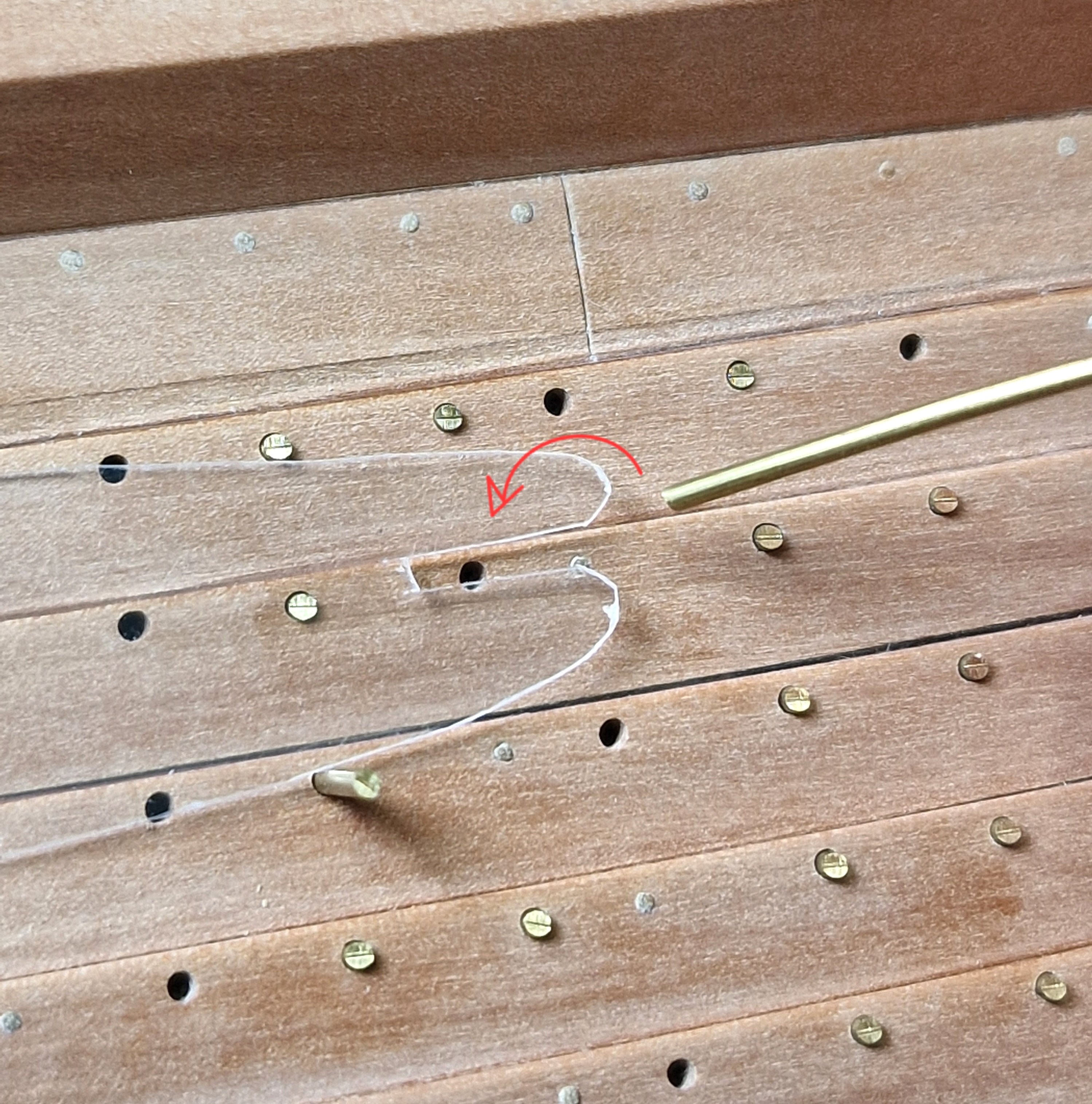
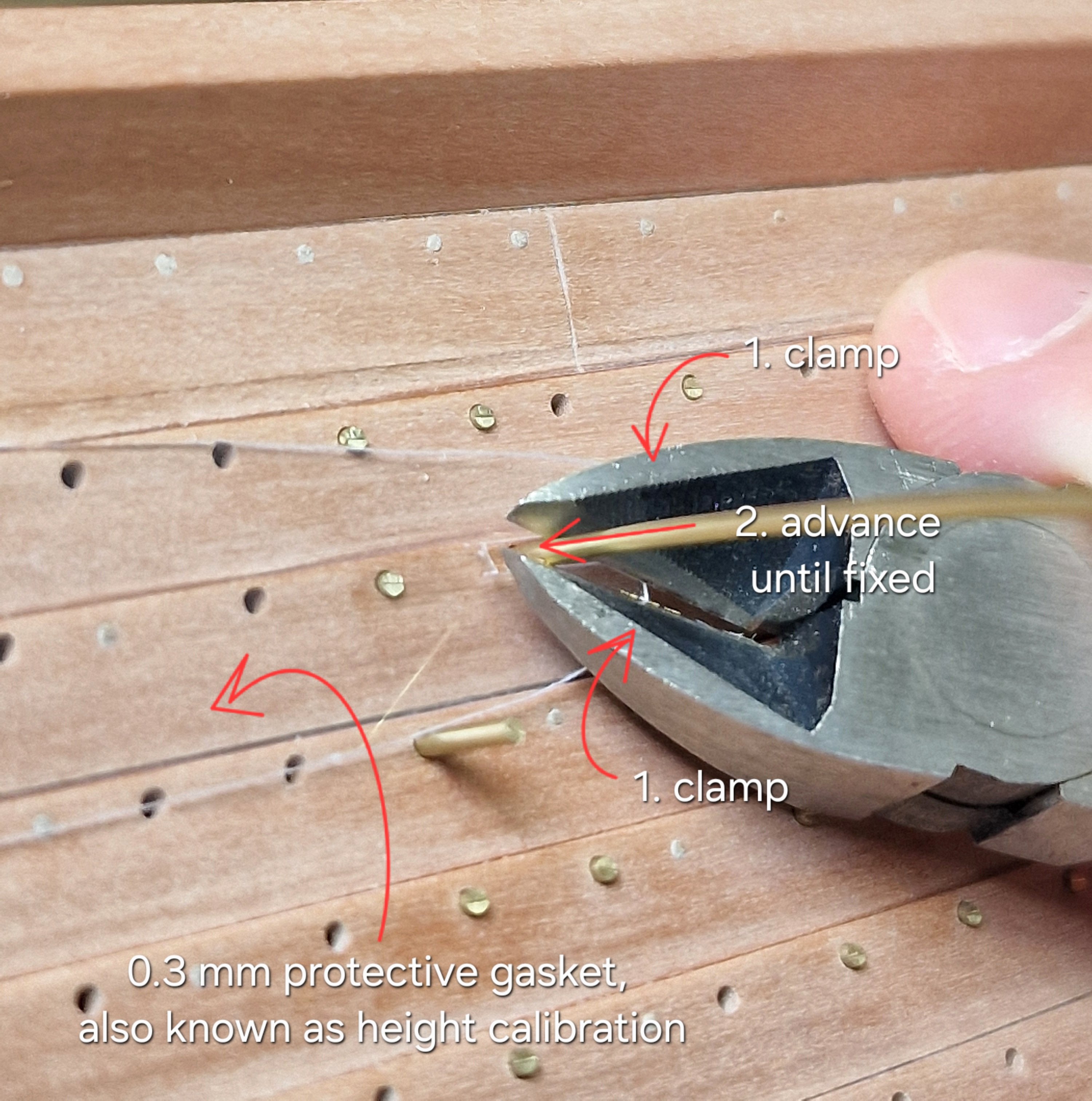
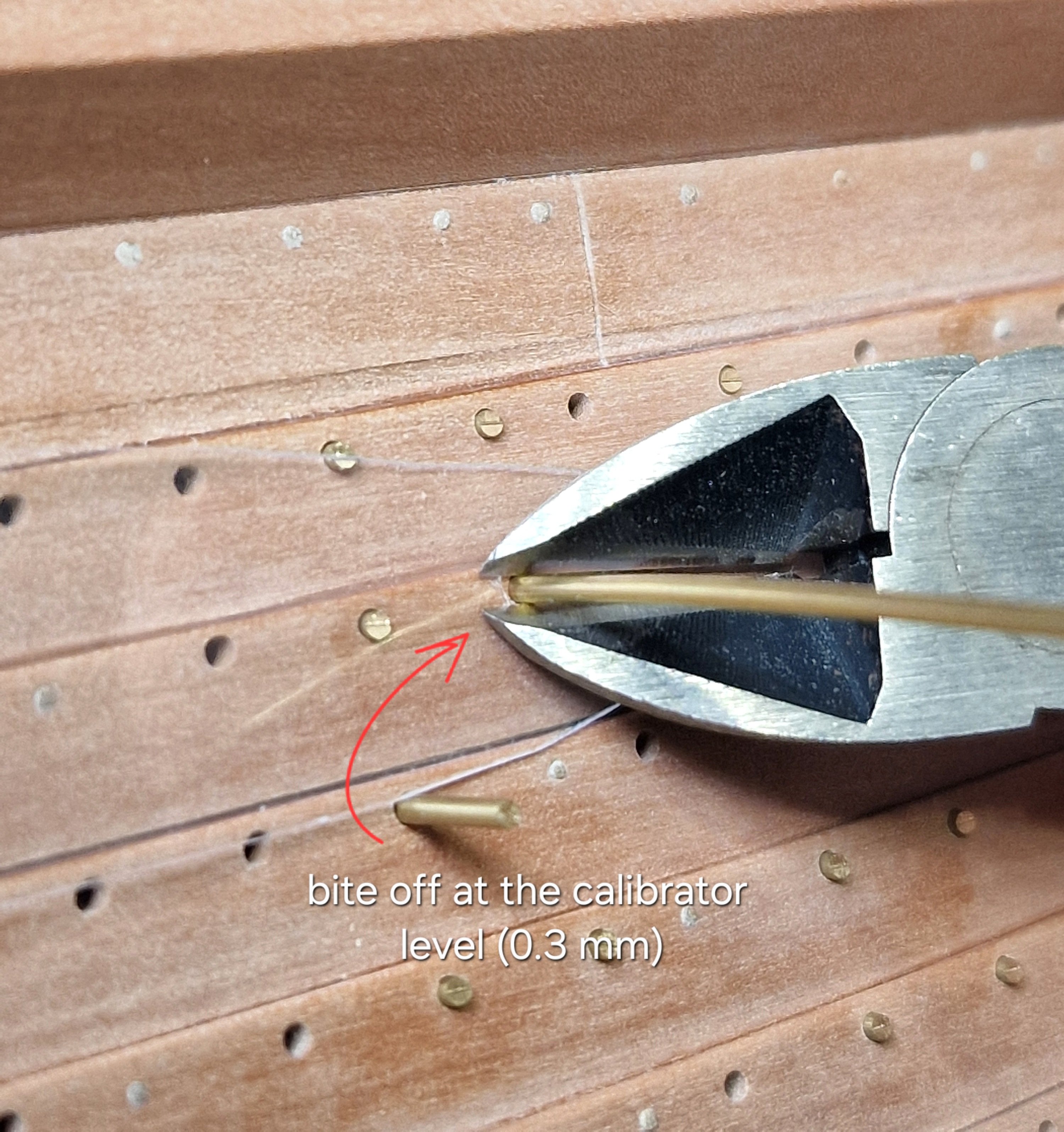
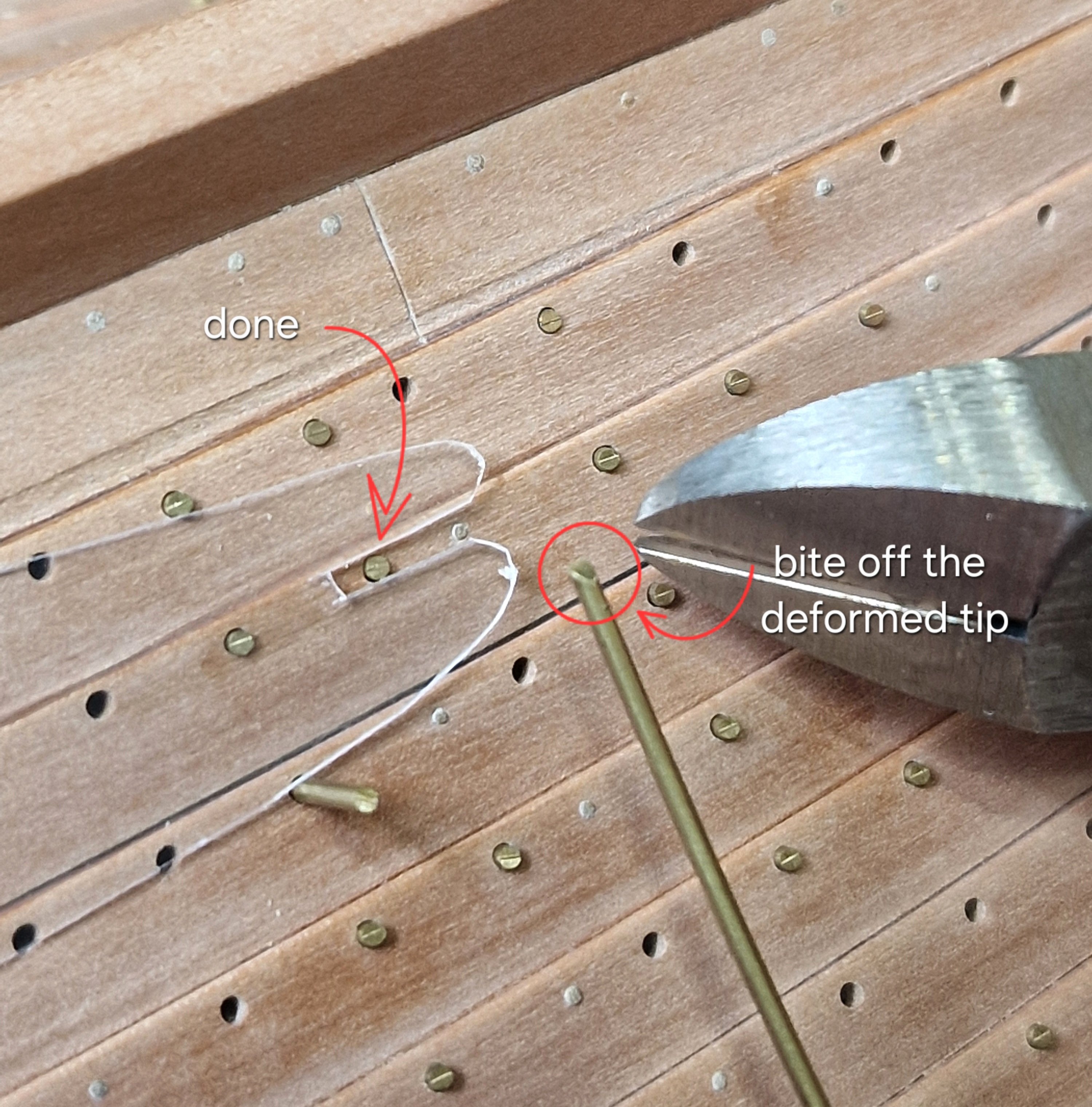
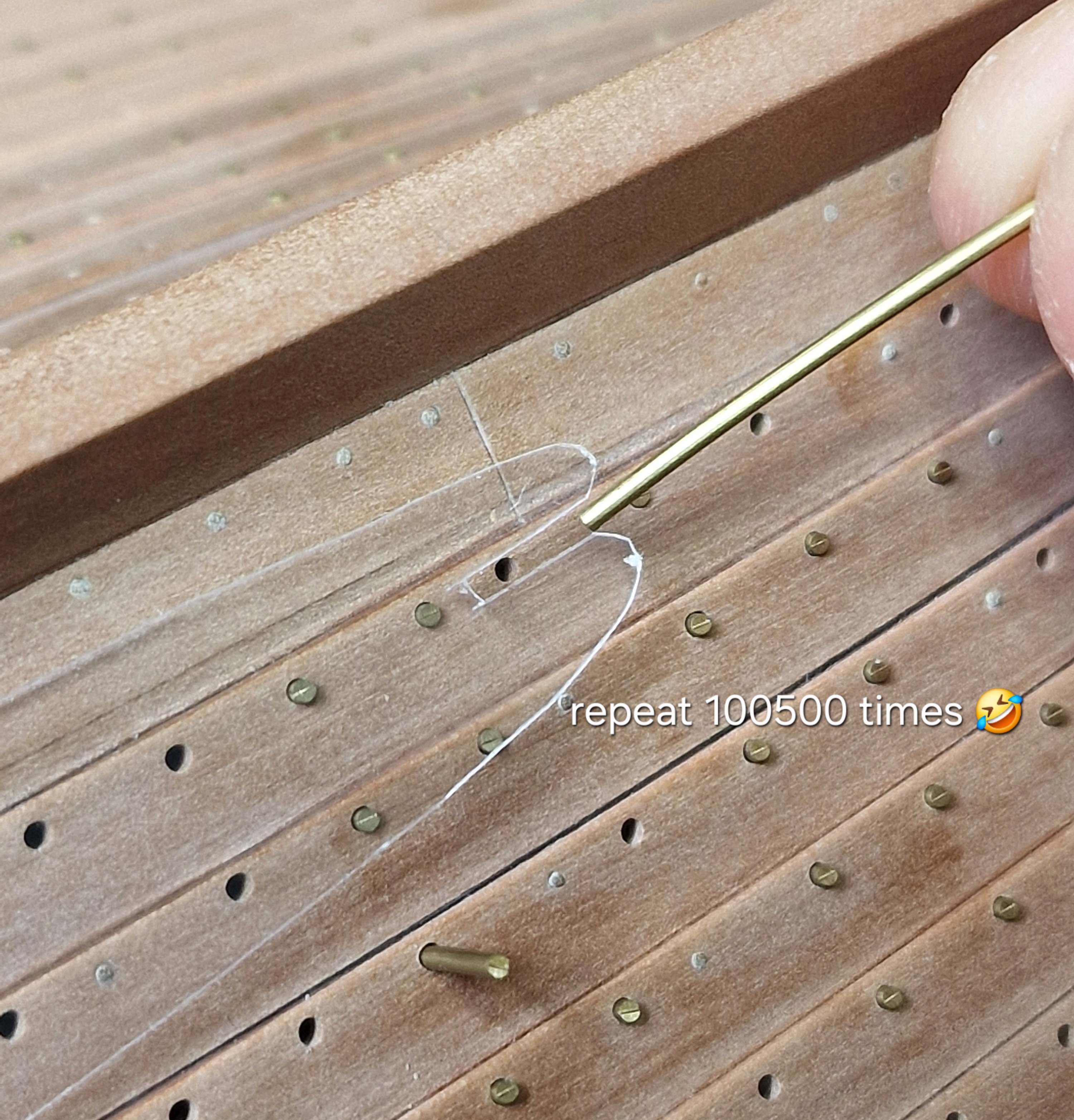
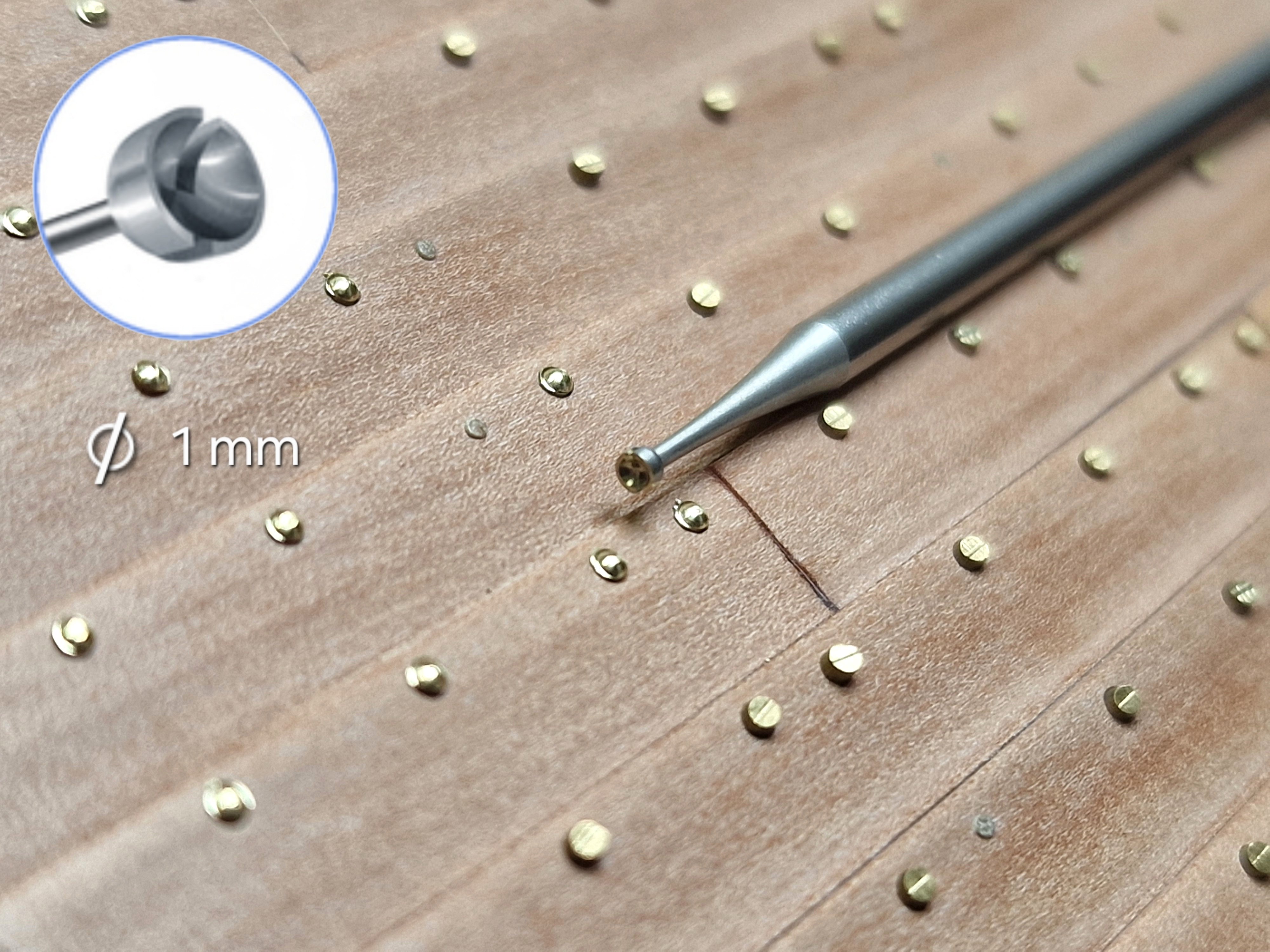
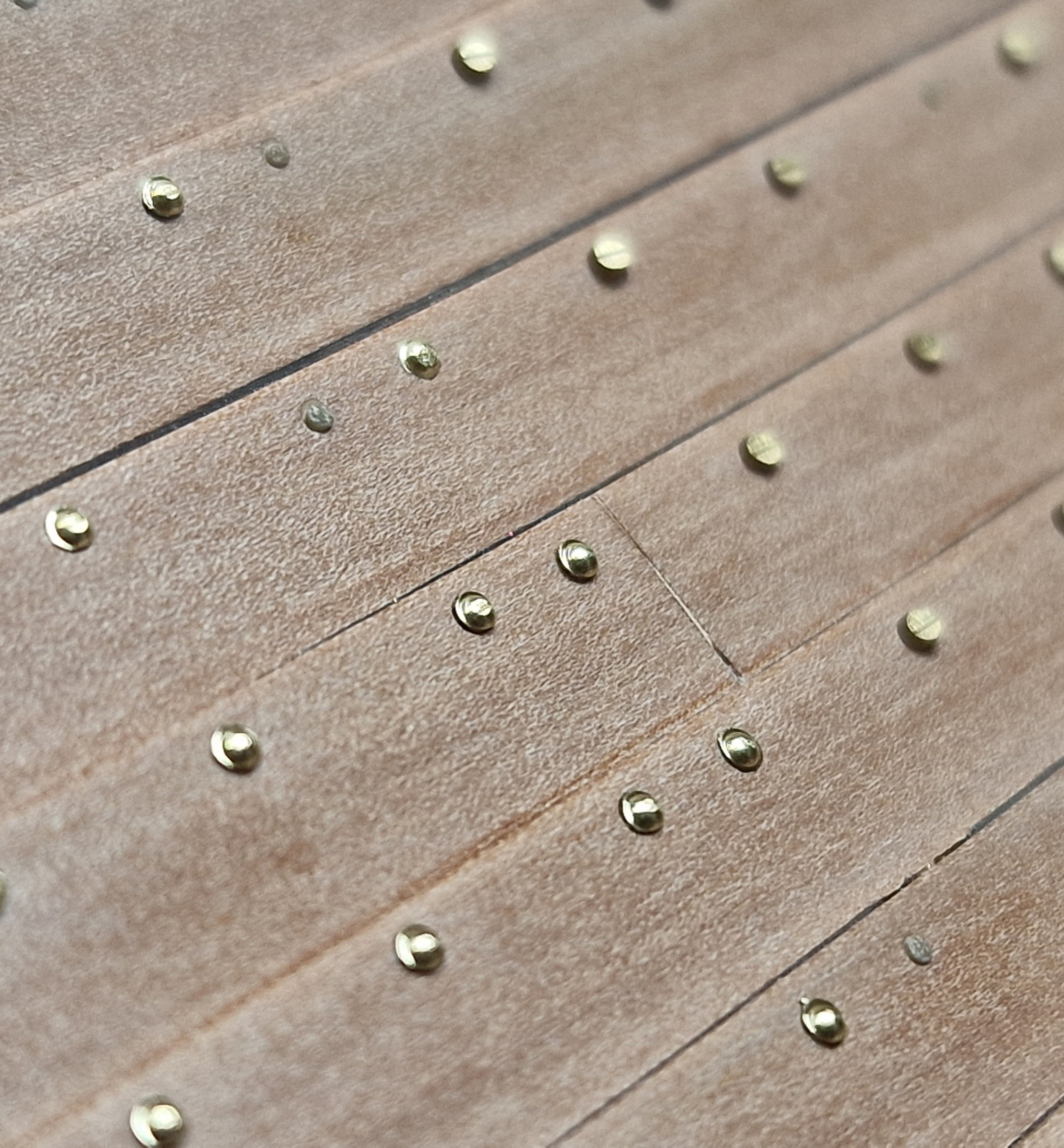
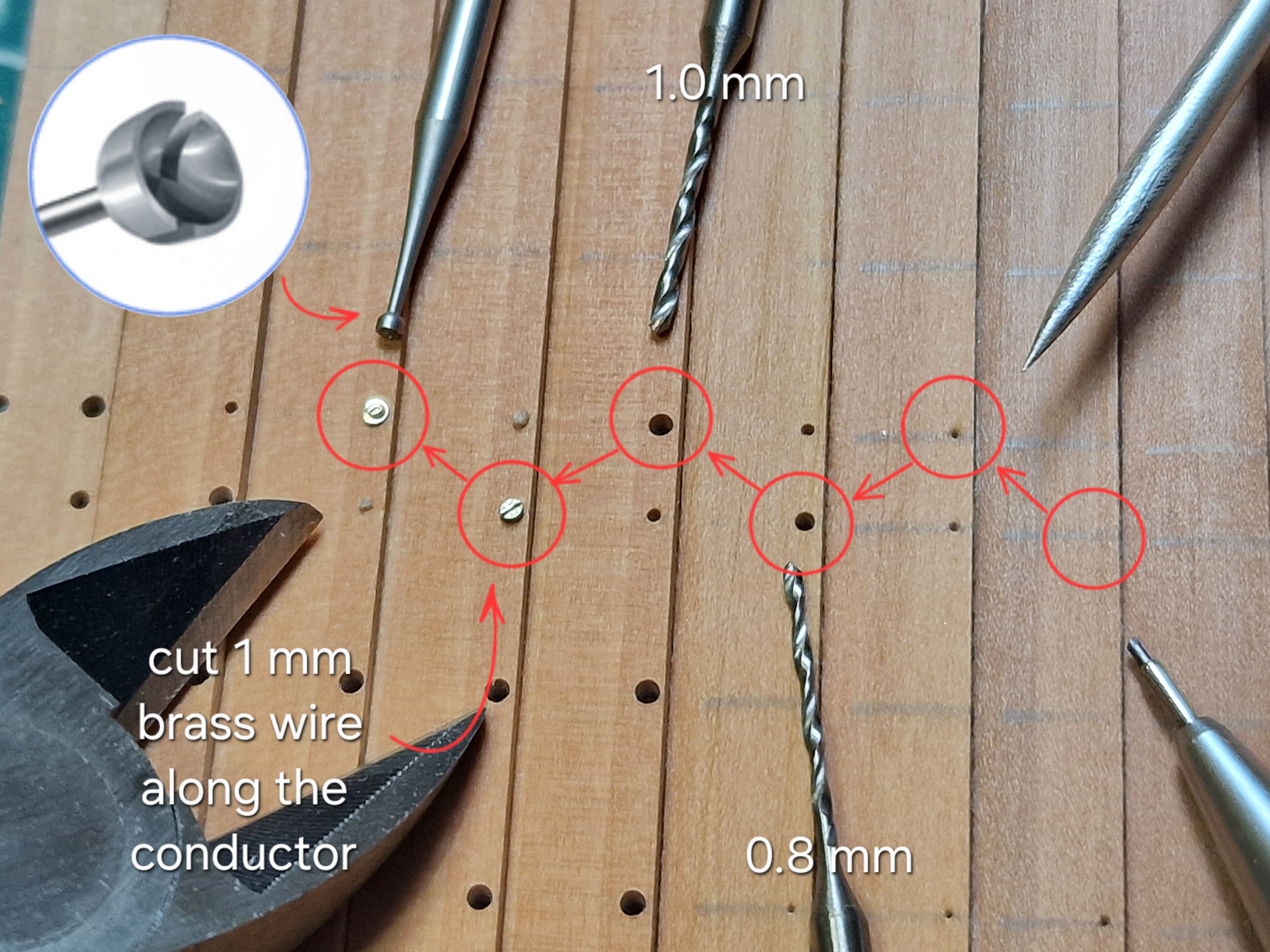
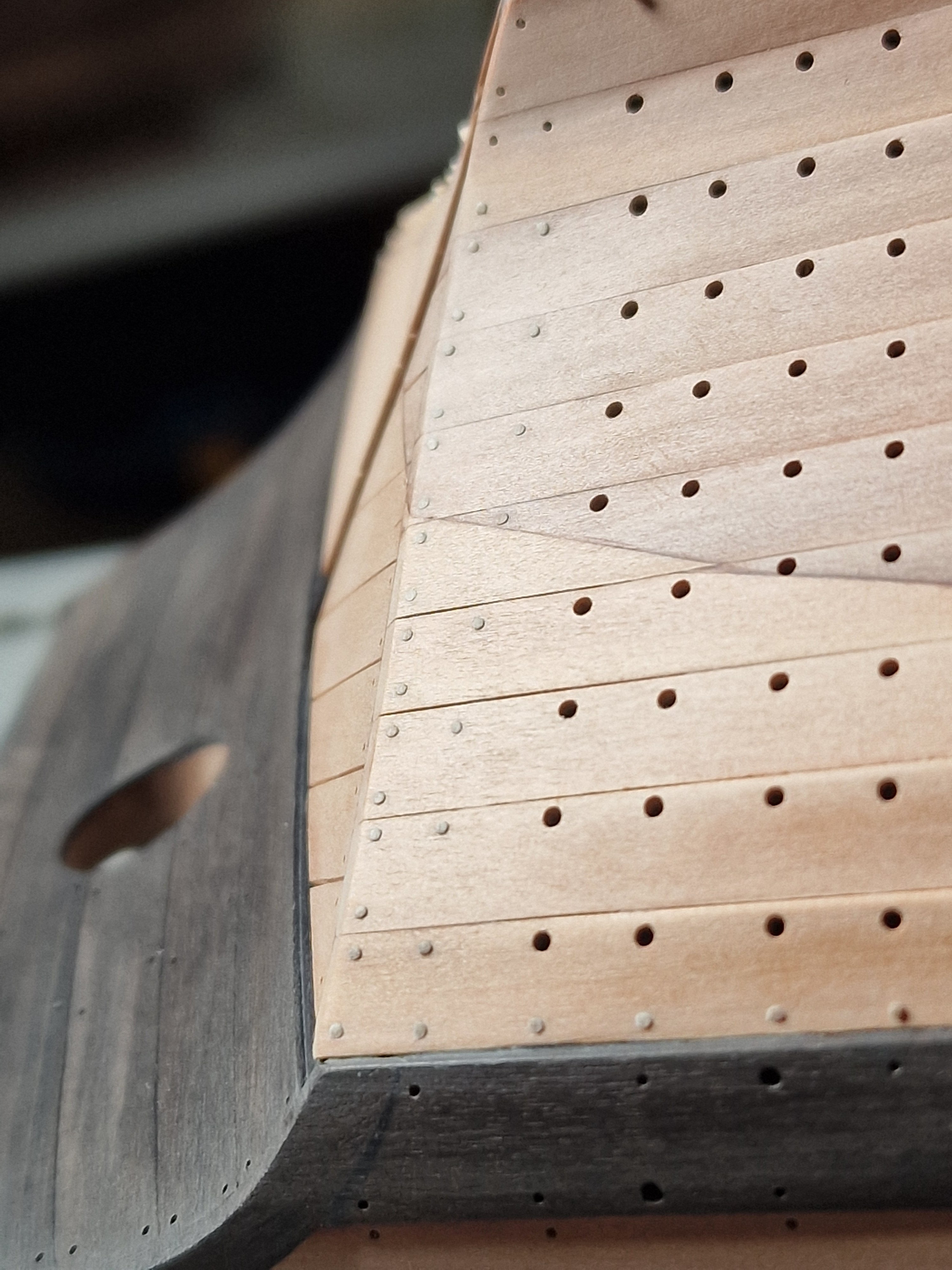
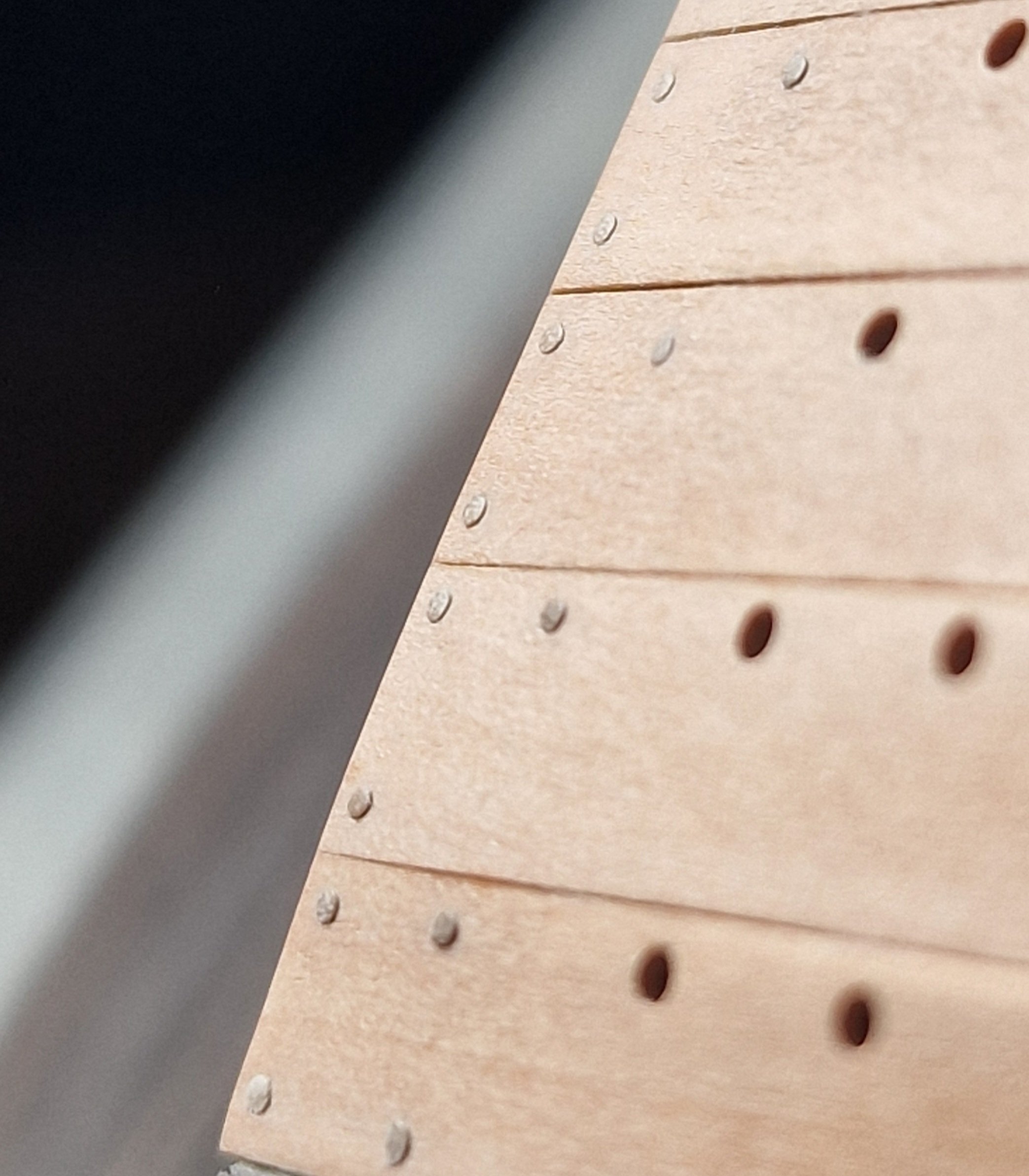
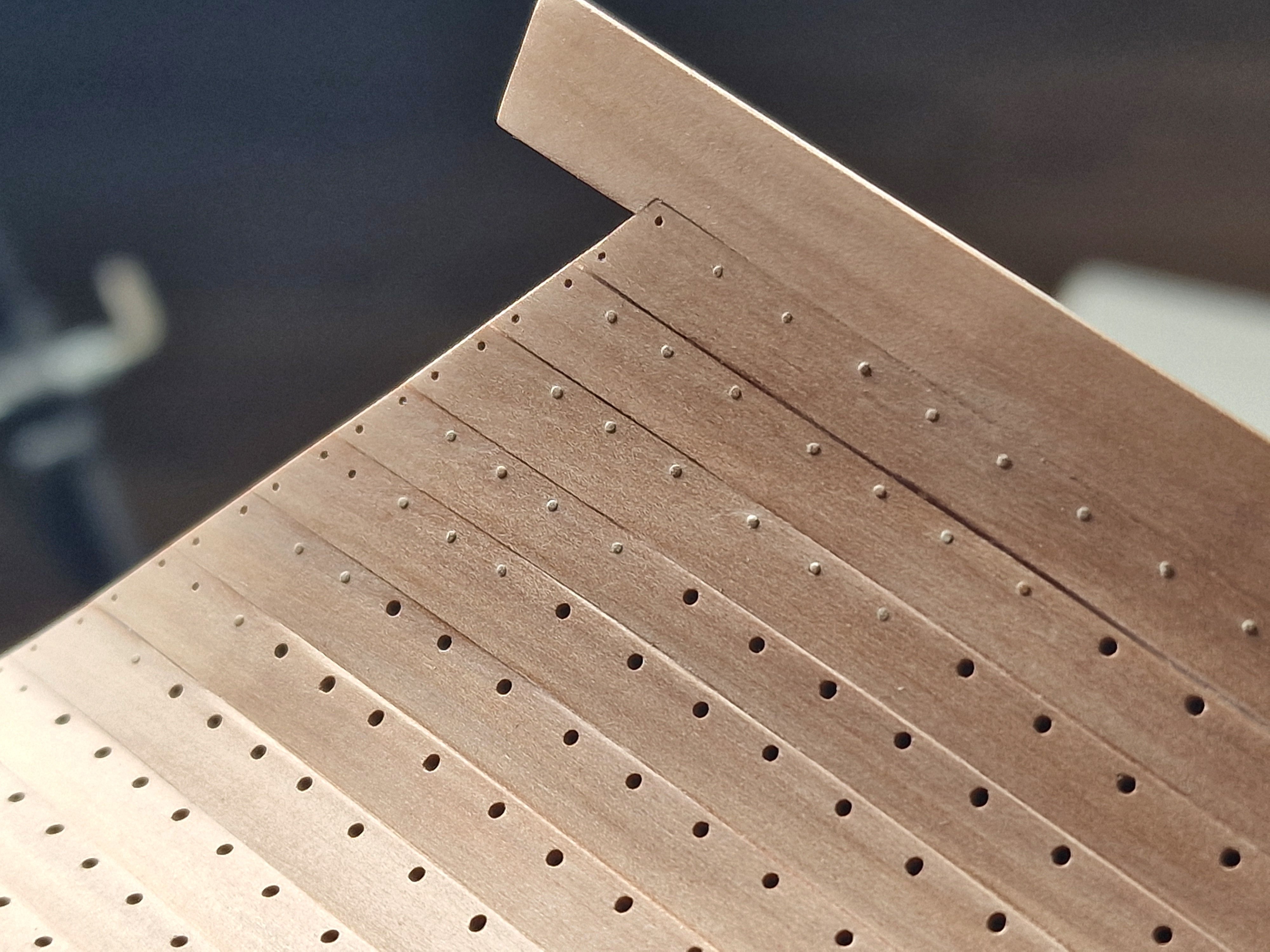
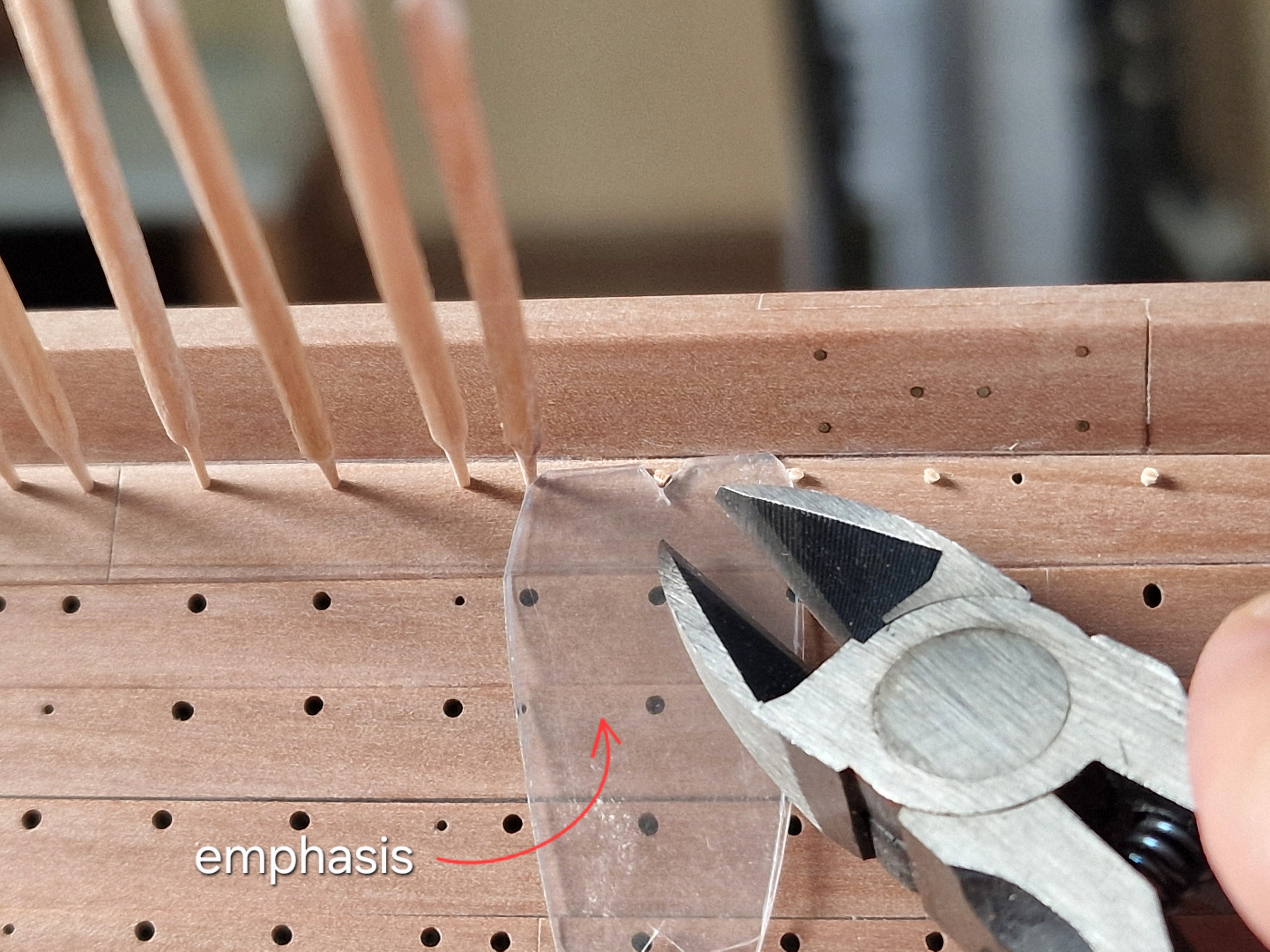
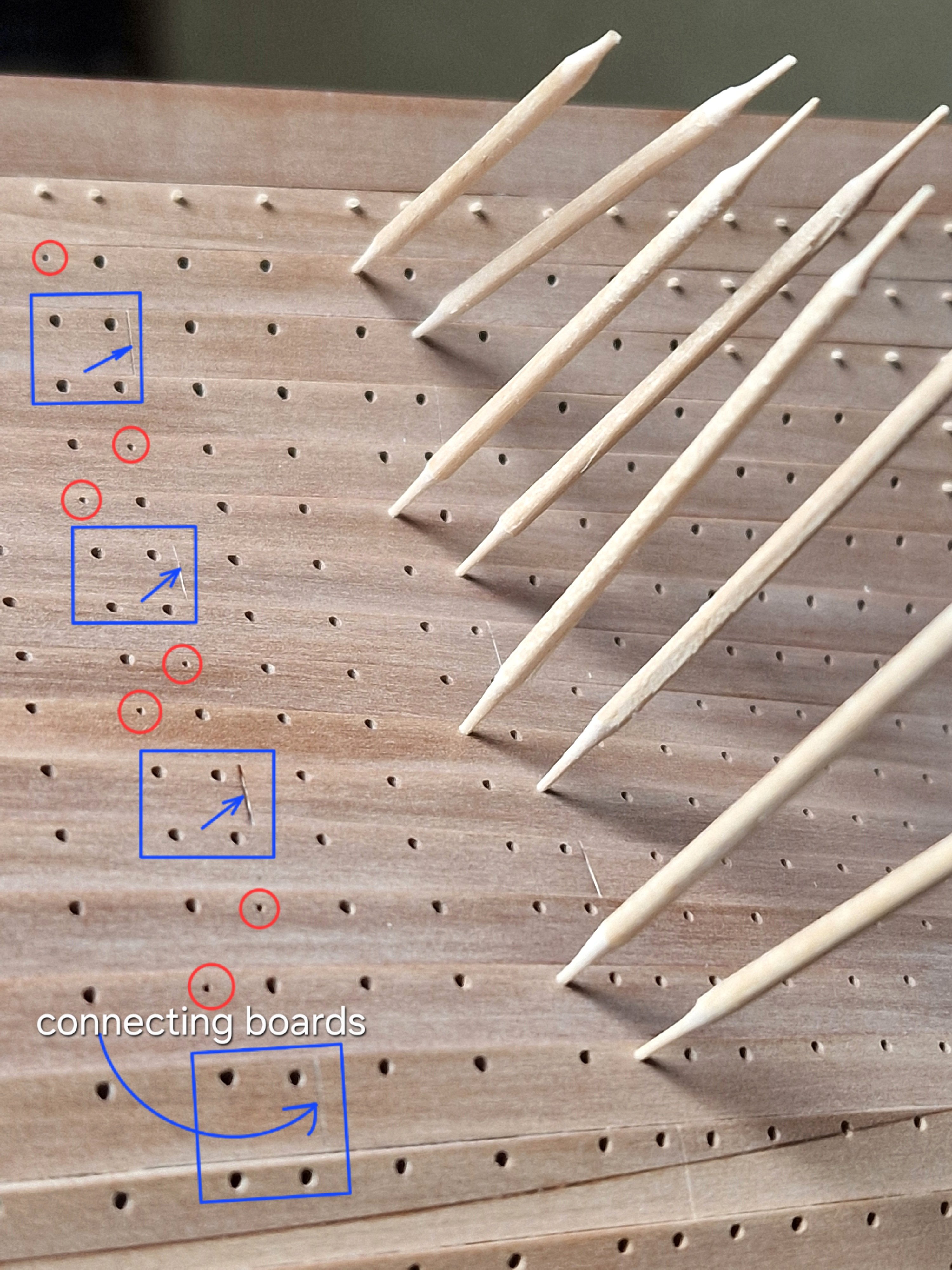
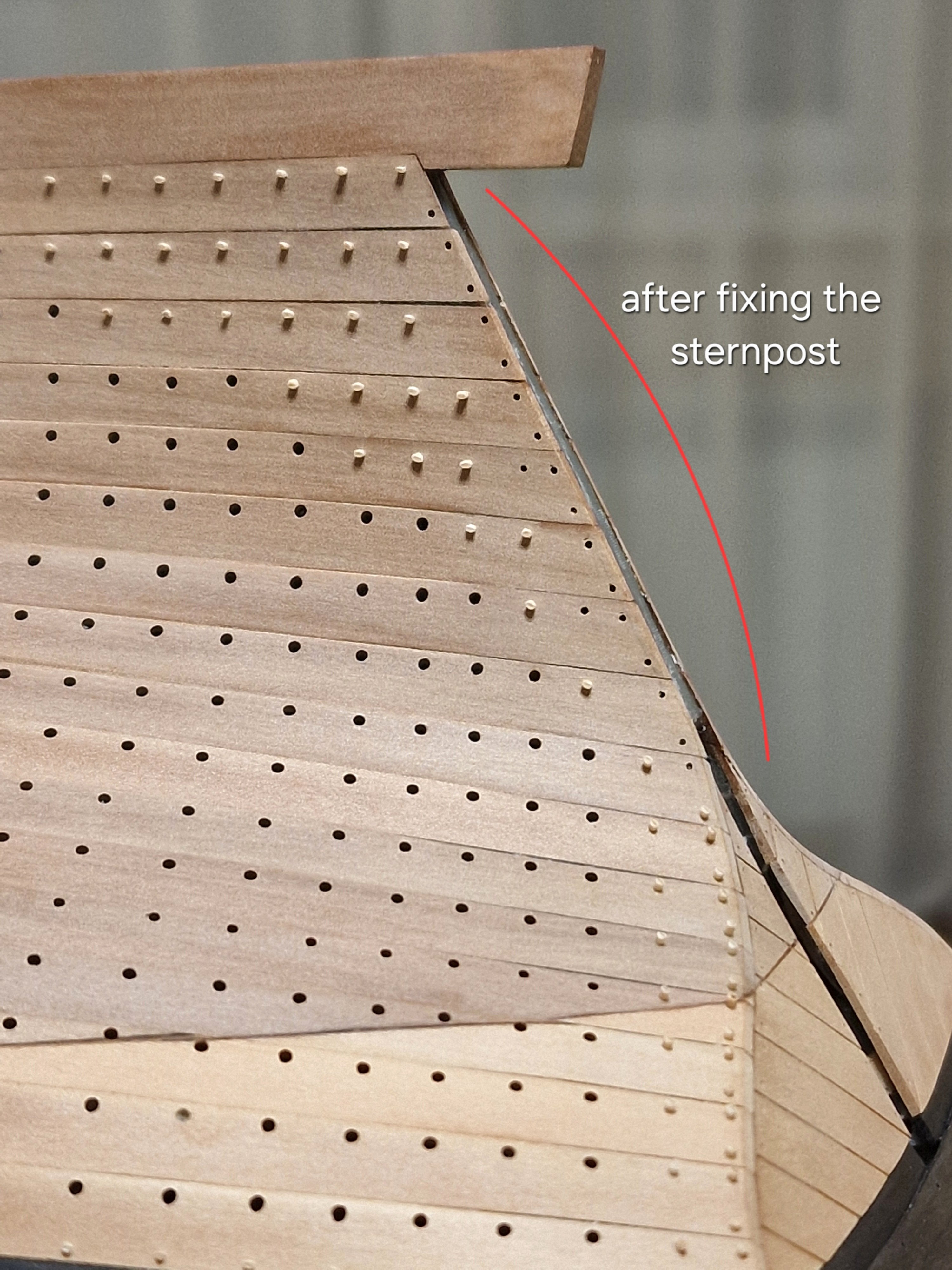
Bolting. I make the bolts from 1 mm brass wire. And as I already mentioned, due to a mistake in the plank joints, I had to slightly shift the bolt alignment on several frames. This won't be noticeable (unless you have access to the interior), but it would be noticeable if the bolts weren't positioned correctly relative to the plank joints. That's why some of the bolts protrude completely from the inside. So, I first cut the wire into small pieces and inserted them into the through holes... ... then from the inside I filled these ends of the СA gel with activator. And then, using a calibration gasket, I bit off the excess so that 0.3 mm remained. And thus all the through holes were filled. But there were some that weren't through... that's the majority... I filled them out like this: I insert the wire into the hole... Then I clamp it with wire cutters and push it until it locks in place. I cover the wood with a protective plastic sizing pad. Then I press the nippers against the calibration gasket and cut off the excess so that 0.3 mm remains. Then you have to bite off the deformed edge so that the new fragment is cylindrical and passes freely through the hole. Then this process is repeated many, many times... I only got a third of it done, but decided to take a break from the monotony and make some bolt heads. As I already mentioned, I make the caps with a special 1mm diameter burr. And... how can I say... the result, unfortunately, isn't the same as the samples... The repeatability is decent, but not as good as when everything is convenient and on a flat surface. The housing is more complicated, so some bolts had to be removed and redone. Naturally, the glued-in ones couldn't be removed, but there were fewer of them, and fortunately, they were more or less OK. The advantage of the simply inserted ones is that they can be removed and redone. But I think that after the bitumen and blackening, all the bolts will look fine even in macro photography, not to mention that it's difficult to spot anything with the naked eye. So my perfectionism is calming down a bit... 🙄
-
 serikoff reacted to a post in a topic:
18th Century Longboat by Ryland Craze - Model Shipways - 1:48
serikoff reacted to a post in a topic:
18th Century Longboat by Ryland Craze - Model Shipways - 1:48
-
serikoff reacted to a post in a topic:
18th Century Longboat by Ryland Craze - Model Shipways - 1:48
-
serikoff reacted to a post in a topic:
18th Century Longboat by Ryland Craze - Model Shipways - 1:48
-
serikoff reacted to a post in a topic:
18th Century Longboat by Ryland Craze - Model Shipways - 1:48
-
serikoff reacted to a post in a topic:
18th Century Longboat by Ryland Craze - Model Shipways - 1:48
-
serikoff reacted to a post in a topic:
18th Century Longboat by Ryland Craze - Model Shipways - 1:48
-
serikoff reacted to a post in a topic:
18th Century Longboat by Ryland Craze - Model Shipways - 1:48
-
serikoff reacted to a post in a topic:
18th Century Longboat by Ryland Craze - Model Shipways - 1:48
-
serikoff reacted to a post in a topic:
18th Century Longboat by Ryland Craze - Model Shipways - 1:48
-
serikoff reacted to a post in a topic:
18th Century Longboat by Ryland Craze - Model Shipways - 1:48
-
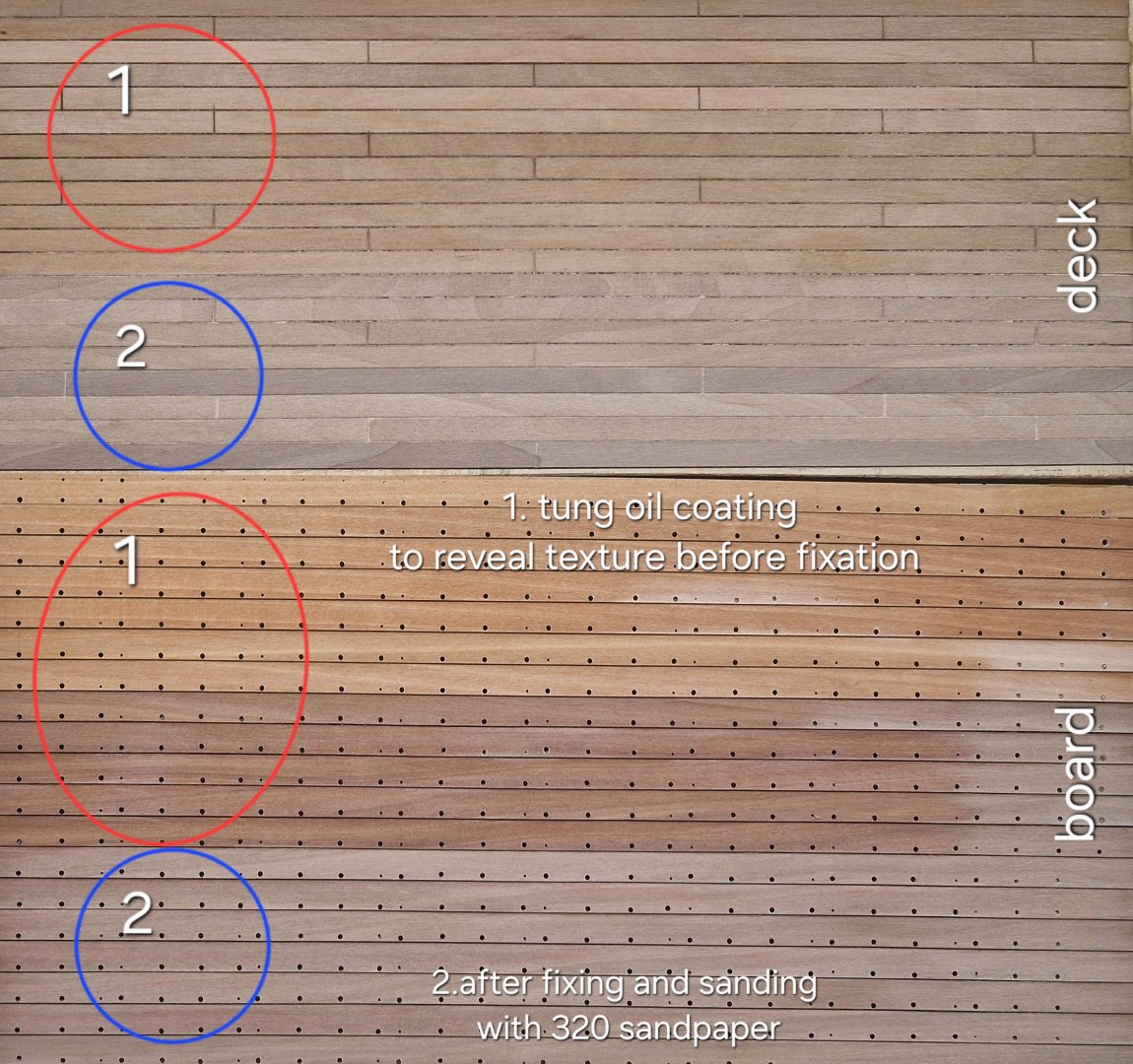
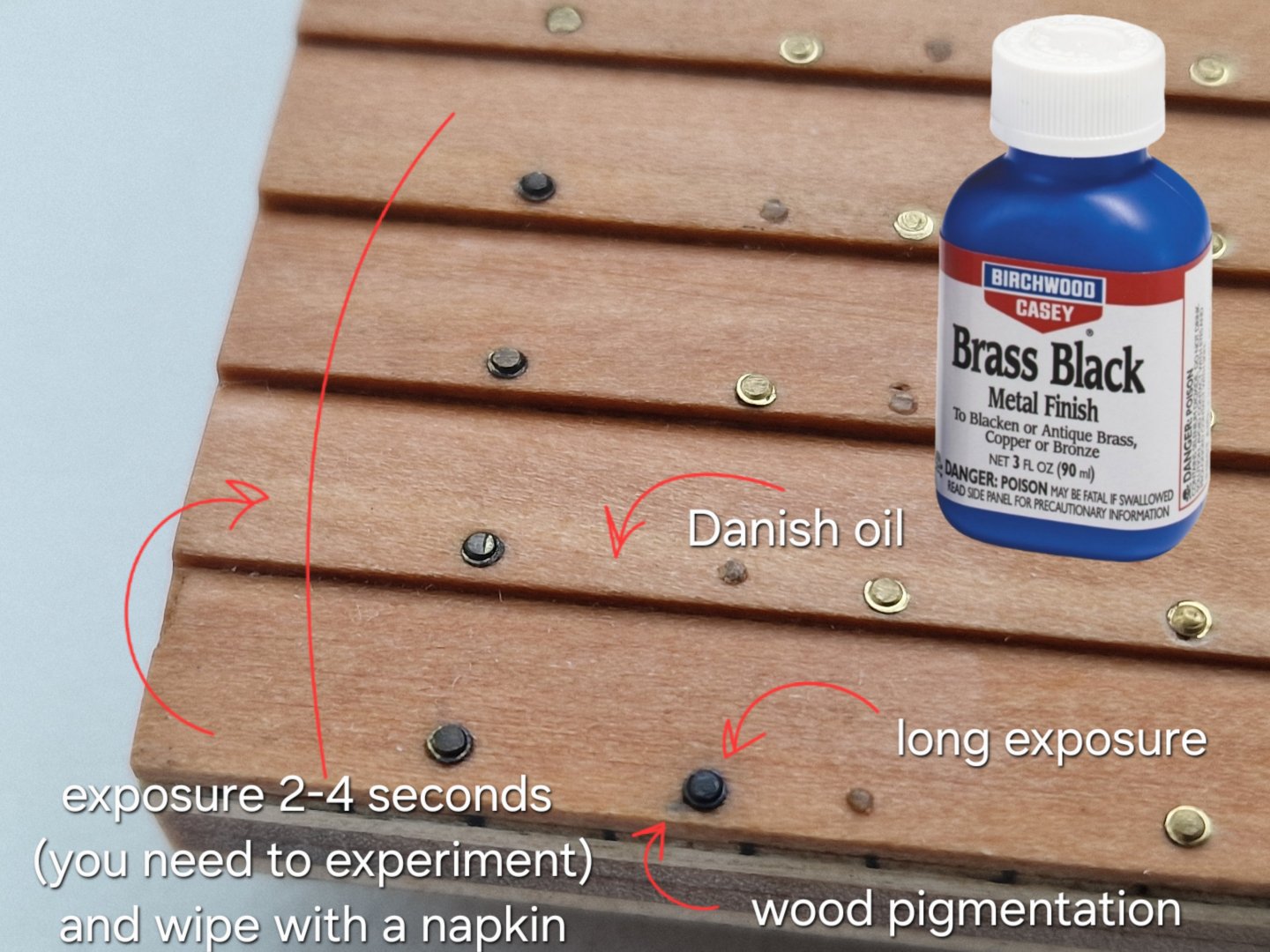
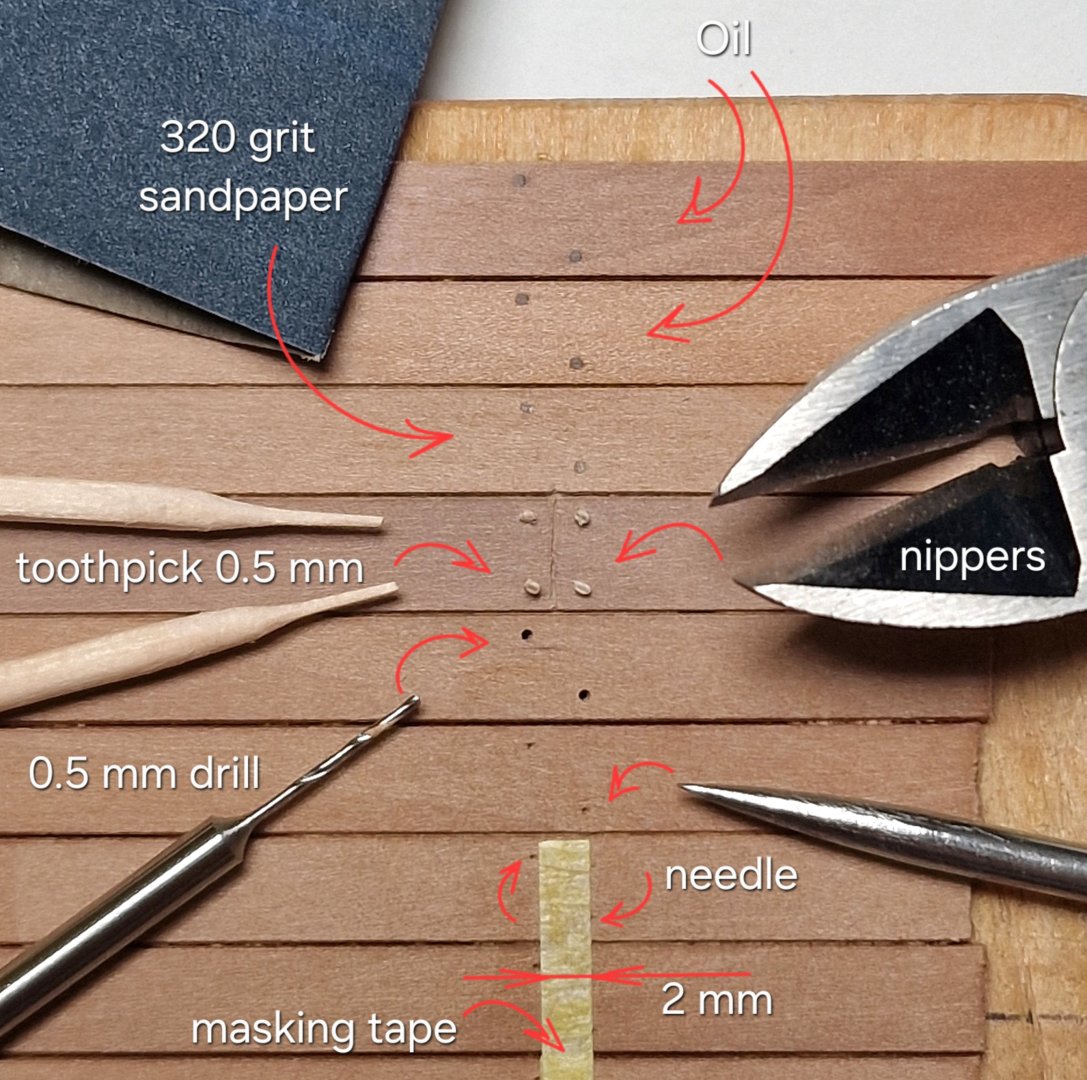
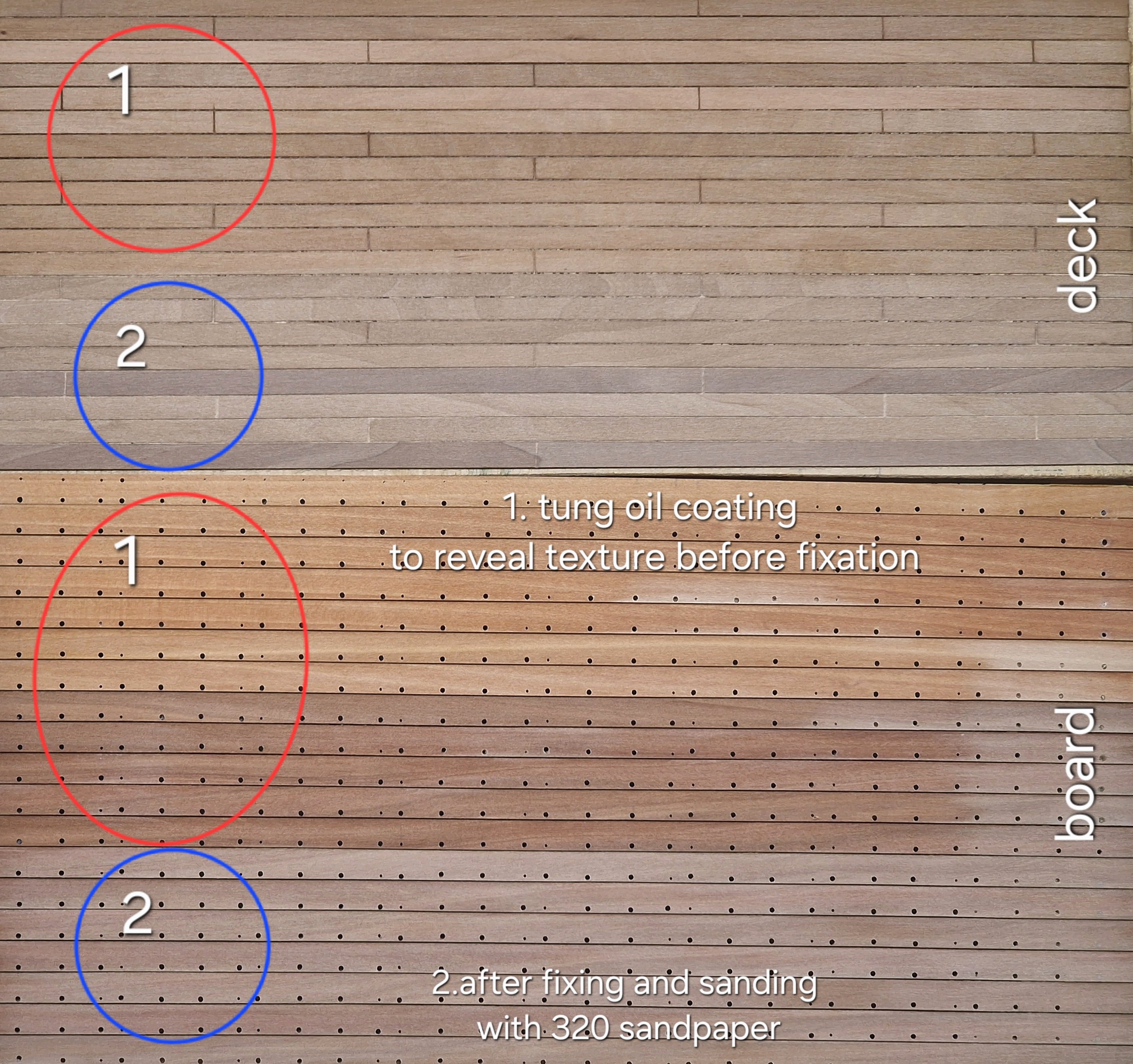
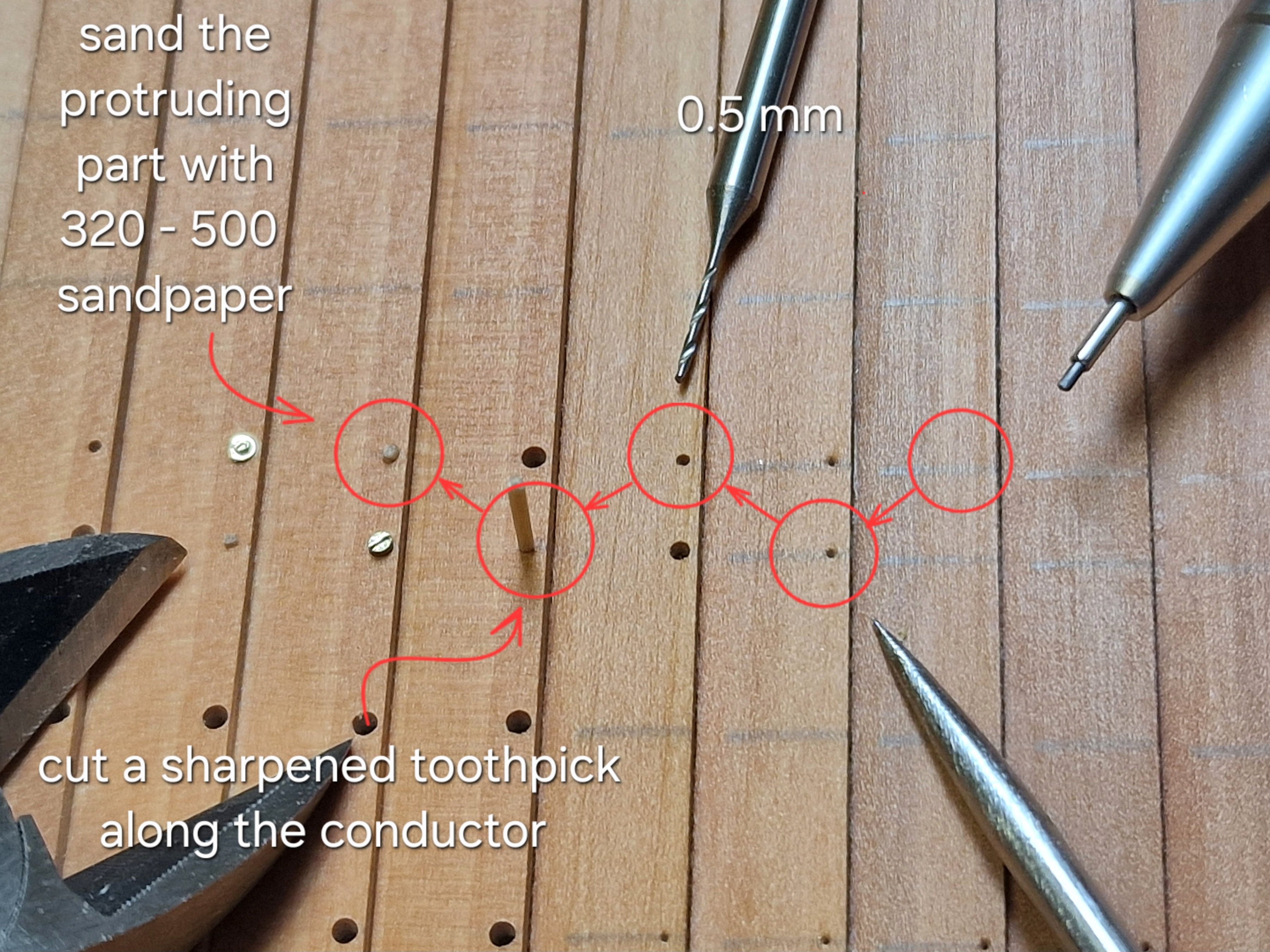
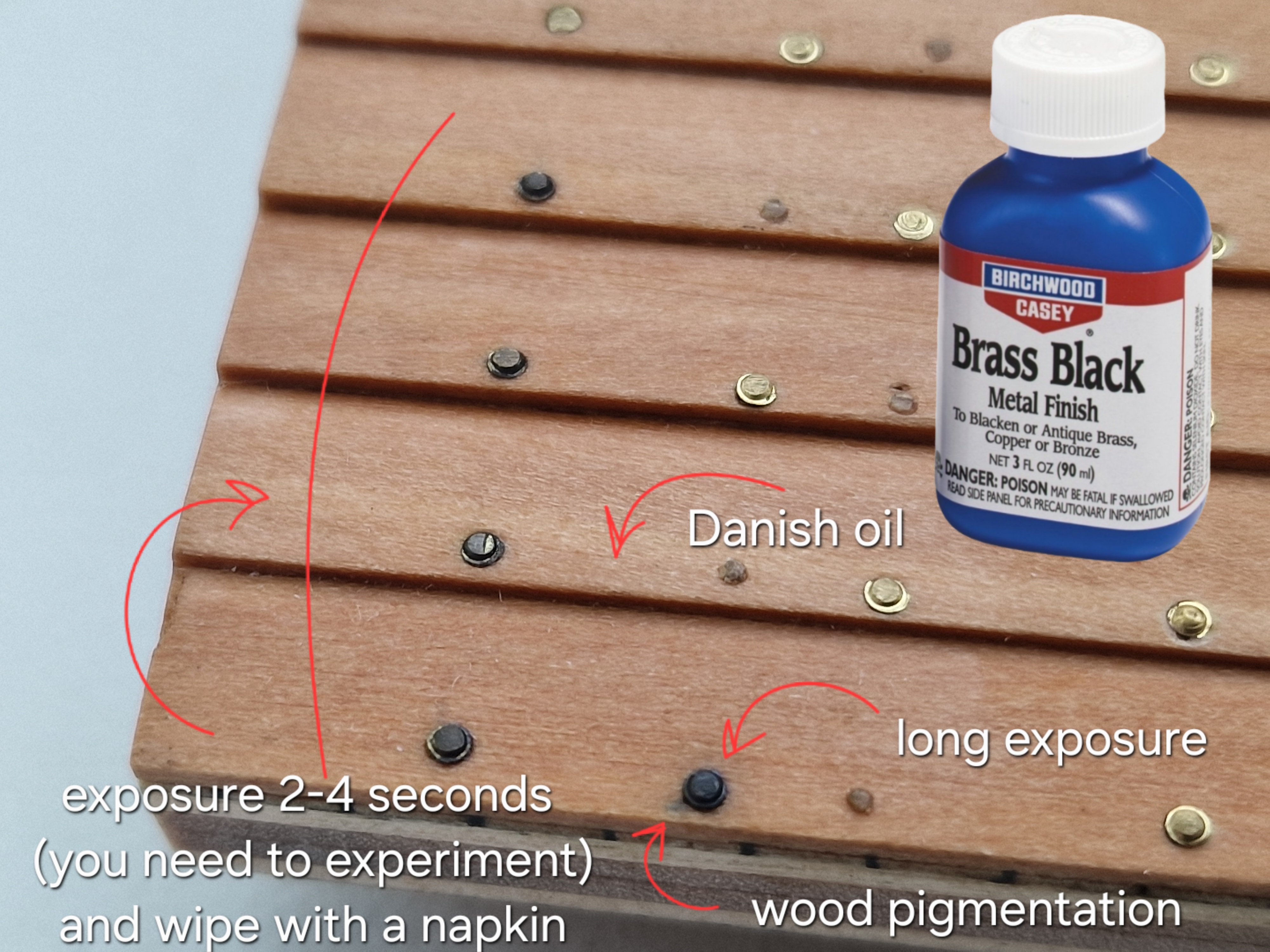
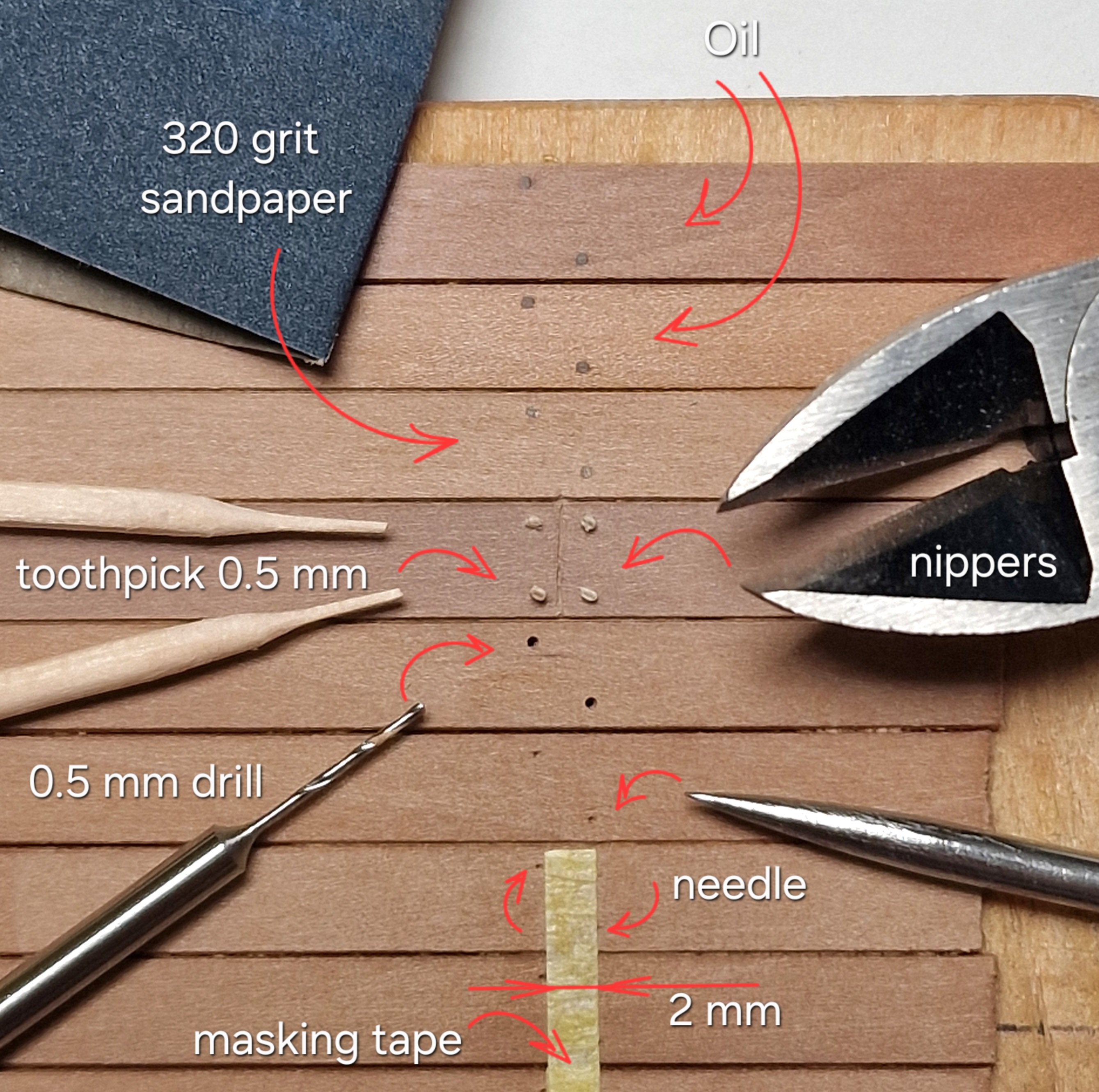
Trials and Experiments. 1/3 And again, this is my least favorite part of the build, but I've never given it up. Making samples and experimenting with them seems like an interesting activity, but it often takes a lot of time, and sometimes it takes weeks or even months to see the results... for example, after applying oil and waiting before applying bitumen, or other moments of waiting for the results. So, I've already shown that I created two large samples of the board and deck. 1. Before gluing, while preparing the material (the planks for the sheathing), I coated the boards with a thin layer of tung oil diluted 2:1 with thinner for oil-based paints. After selecting the right planks, I glued them in the correct order and position... and 2. ... after gluing the planks, I sanded the surface with 320-grit sandpaper. As I already showed, I secured and finished the dowels like this: And I'll make the bolts like this: And I had a dilemma... I will do the bolts before applying oil and bitumen, and I will blacken them after... And I had a question, how will the blackening agent work after oil and bitumen... and here is the answer: ... simple! The blackening agent worked perfectly with the oil (Danish). But there's a point to consider!!! (By the way, I applied it with a special brush used in dentistry for applying bonding agents and adhesives). The bolt at the bottom center had a long exposure time, and during that time, not only did it darken significantly (losing its features, turning into a solid blob), but the wood also became slightly pigmented, which is unacceptable. But! If you apply the blackening agent for 2-4 seconds and immediately blot it with a napkin, not only will the wood be undamaged, but the metal will also be partially blackened, and the bolt's features will still be legible. (You'll need to experiment with the timing to achieve the perfect color. I'll show all this in more detail later.) And the deck isn't difficult either: To make precise markings without using a pencil (which can leave streaks), you can cut 2mm-wide strips of masking tape (in my case) and place drilling holes on both sides. The key is to center the strip along the joints of the boards so the nails are equally spaced on both sides. Then comes the drilling, the toothpicks, and the sanding. And finally, the result after oiling – the top two boards. I'm more than satisfied with the result. This sample will be coated with Danish oil (one and two coats for comparison), and next month it will be coated with bitumen... and I'm already looking forward to it... UPD: I think I'll give up on Danish oil. Its advantage is that it dries quickly and has a pleasant scent, but unfortunately, it doesn't provide the same color change as Tung oil. I previously used Belinka but ordered Rustins Tung oil. So, I'll experiment for now. With the side panel sample, after installing the bolts and applying the oil, I'll also be trying different concentrations of bitumen and blackening the bolts in a month... ah... it's so exciting, but it's better to test everything on samples a hundred times before doing everything on the model, you know... ________________________________________________________________ At this point, the diary has come to an end! And from now on, all updates will be done in real time (which is why posts will appear less frequently and in smaller numbers). Next steps: - securing the bolts (I'm currently working on this). - installing the lower deck (the parts that will be visible through the hatches). - fitting the hatches and gratings to the deck, and then gluing the deck.
-
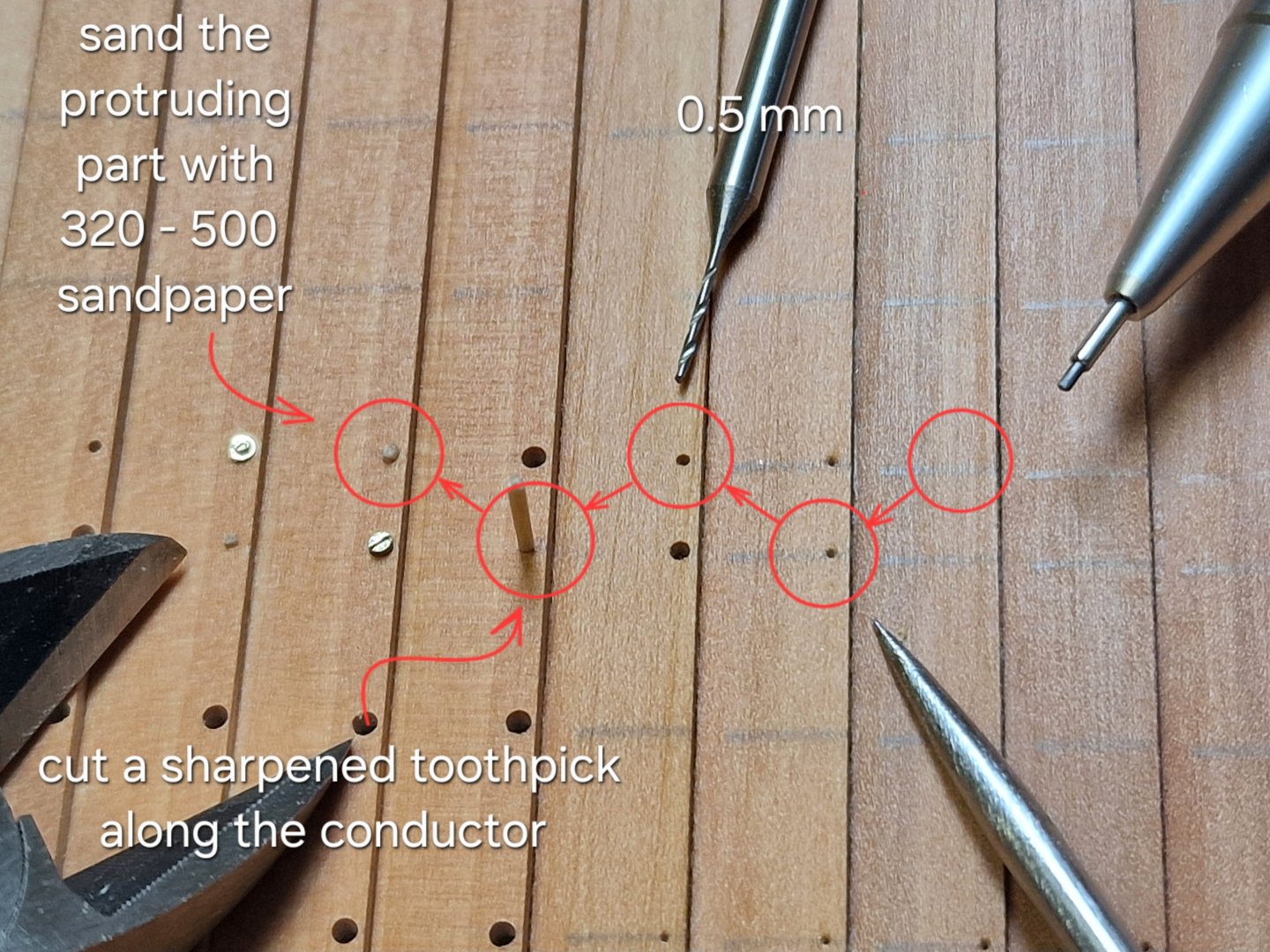
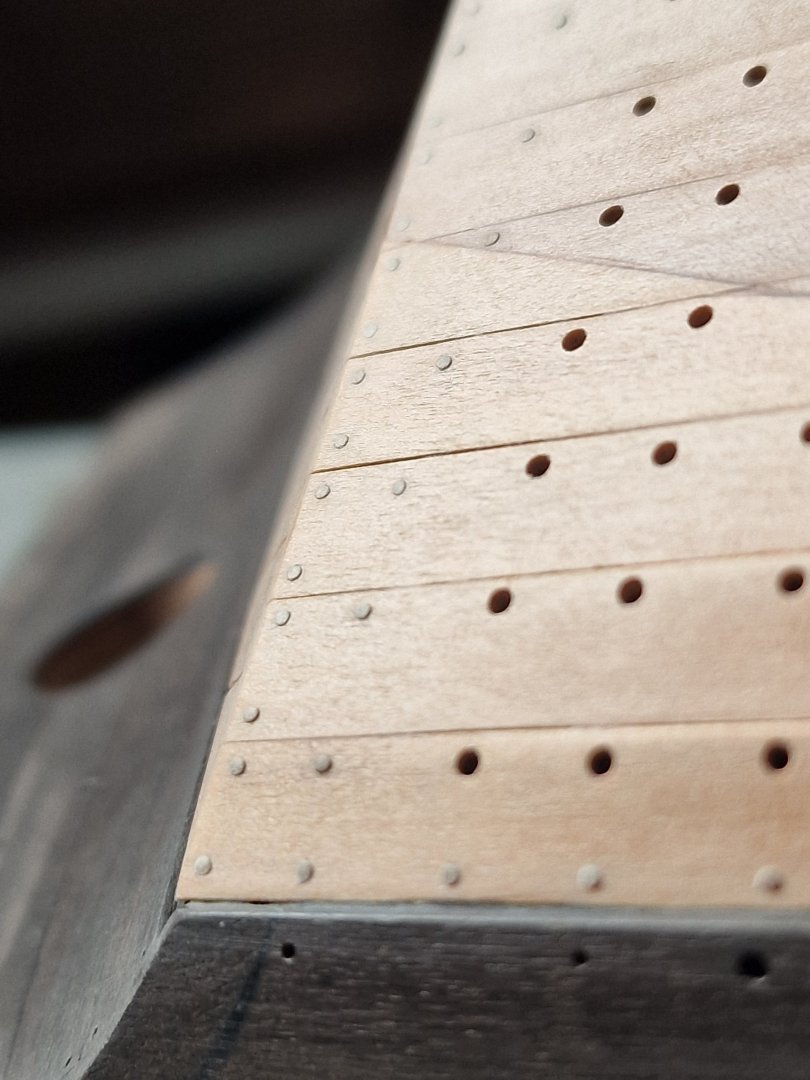
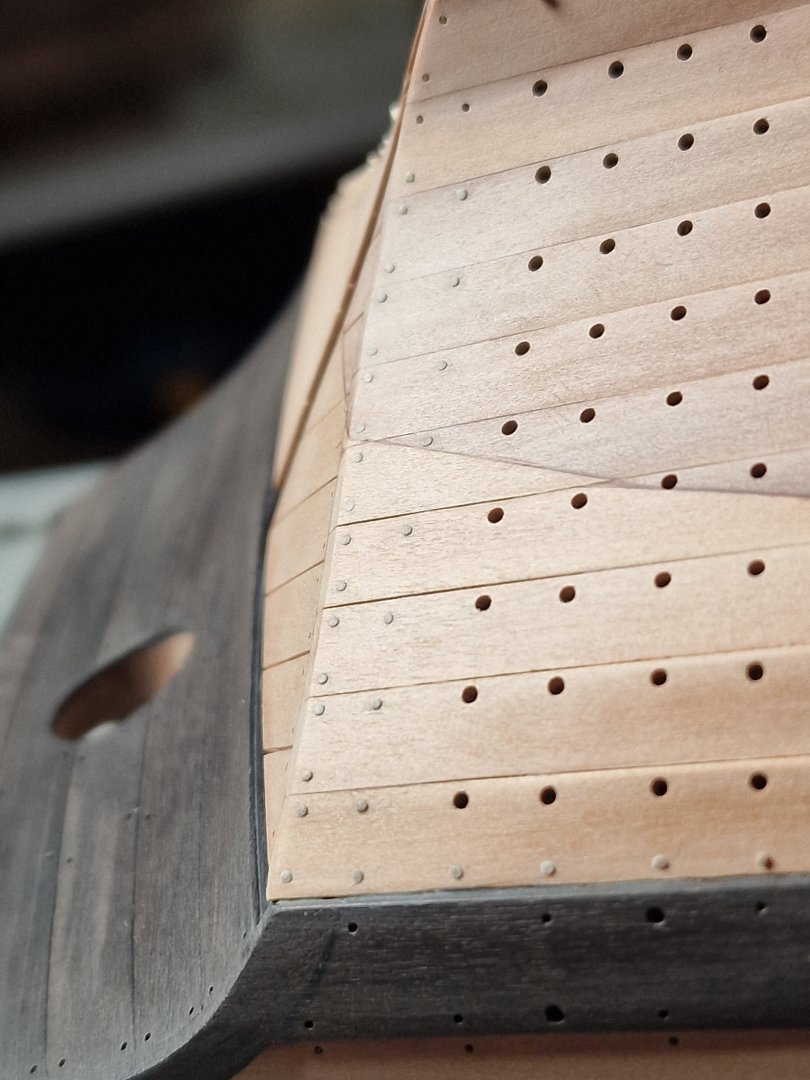
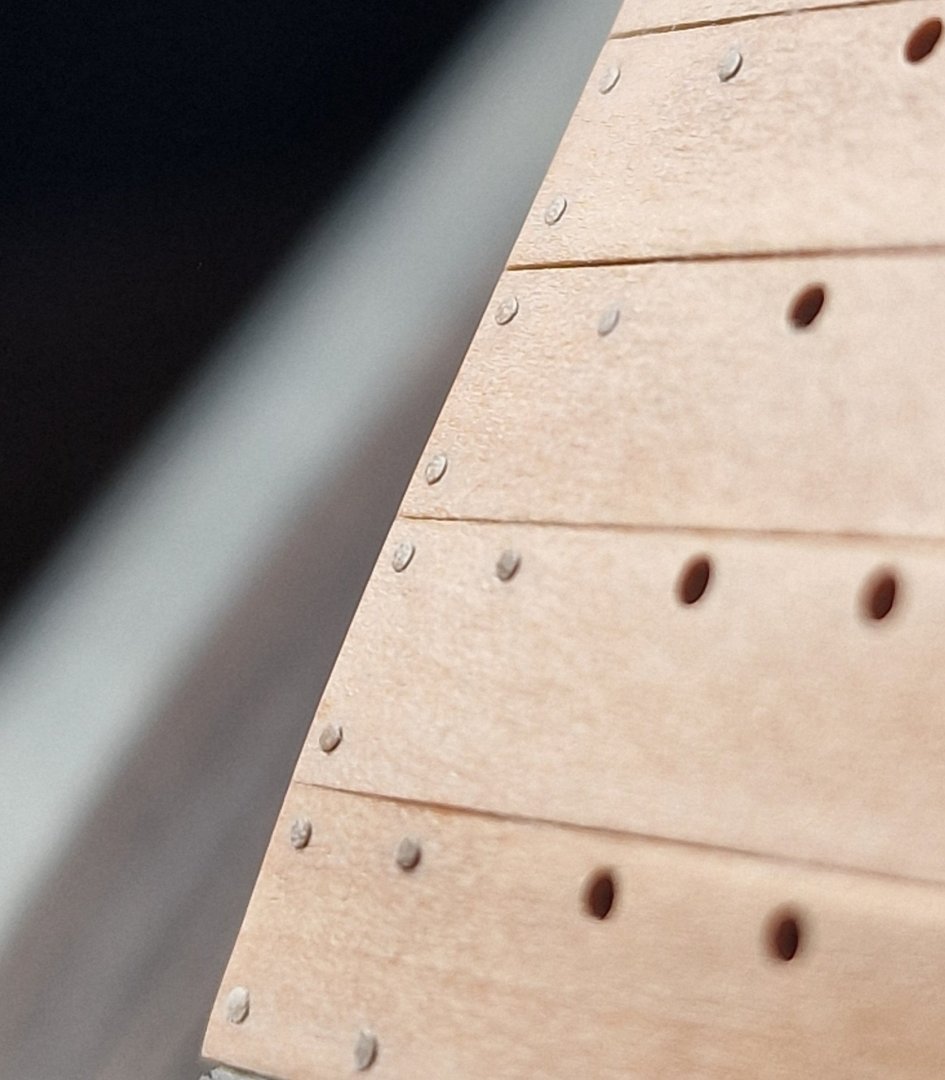
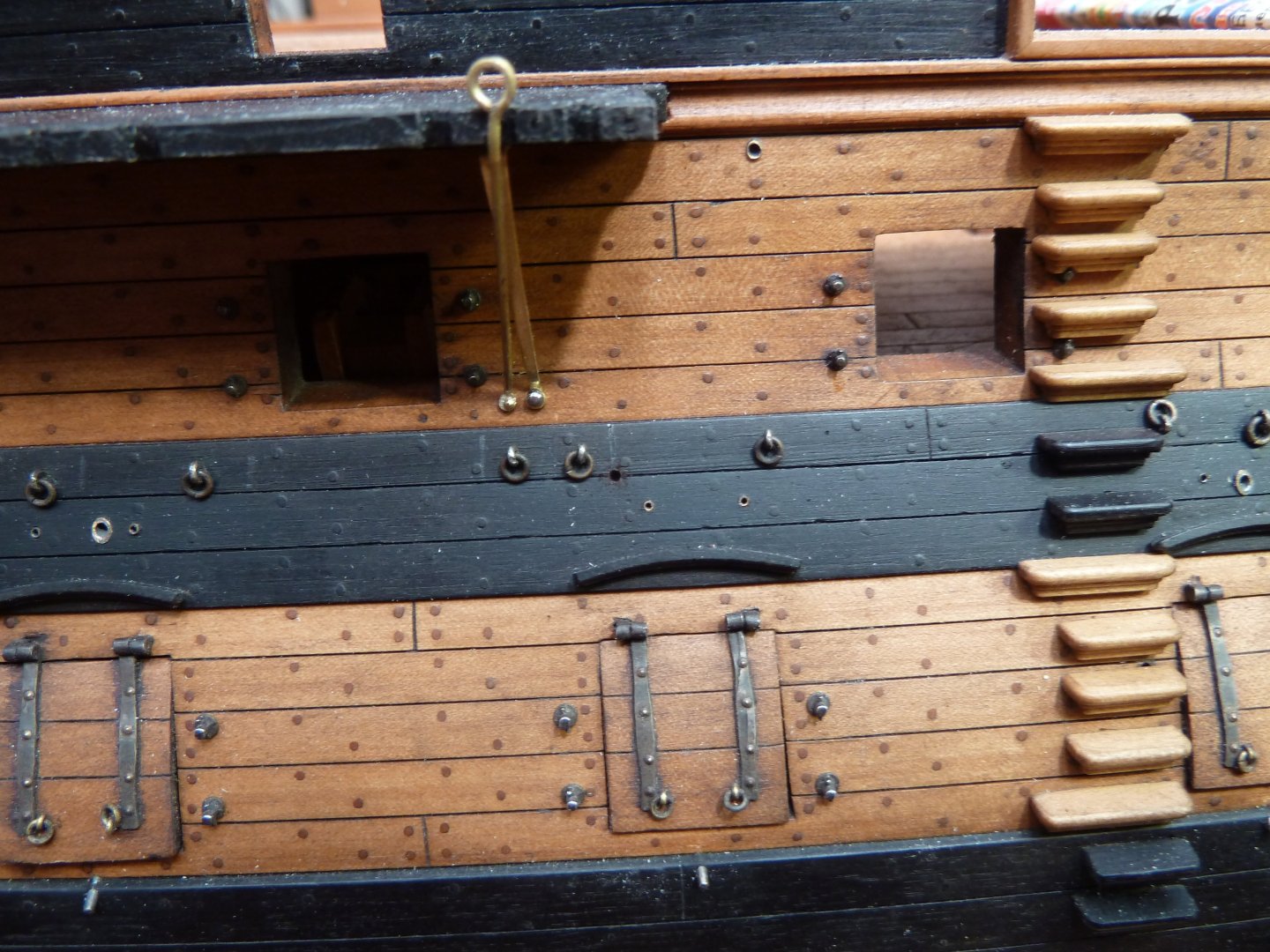
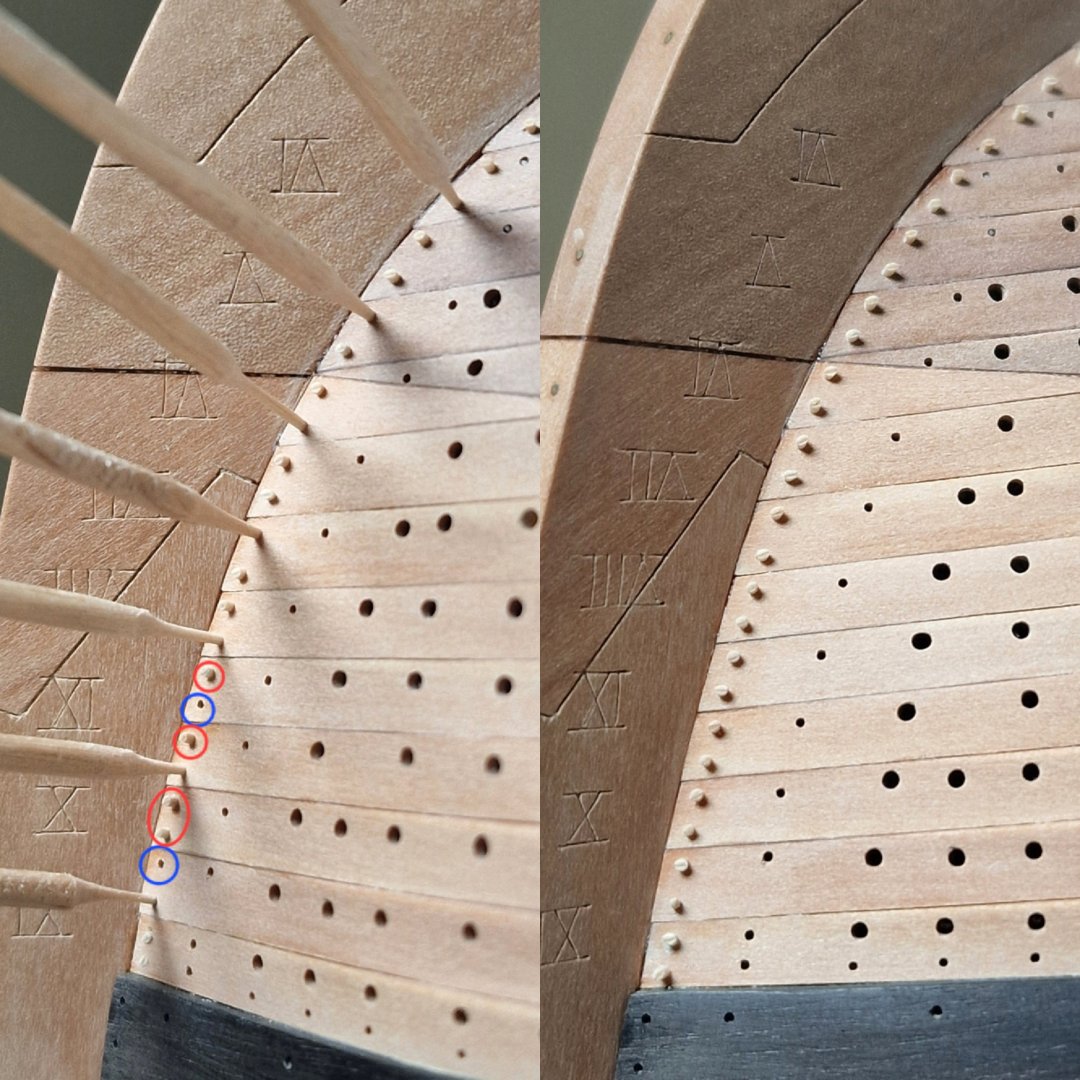
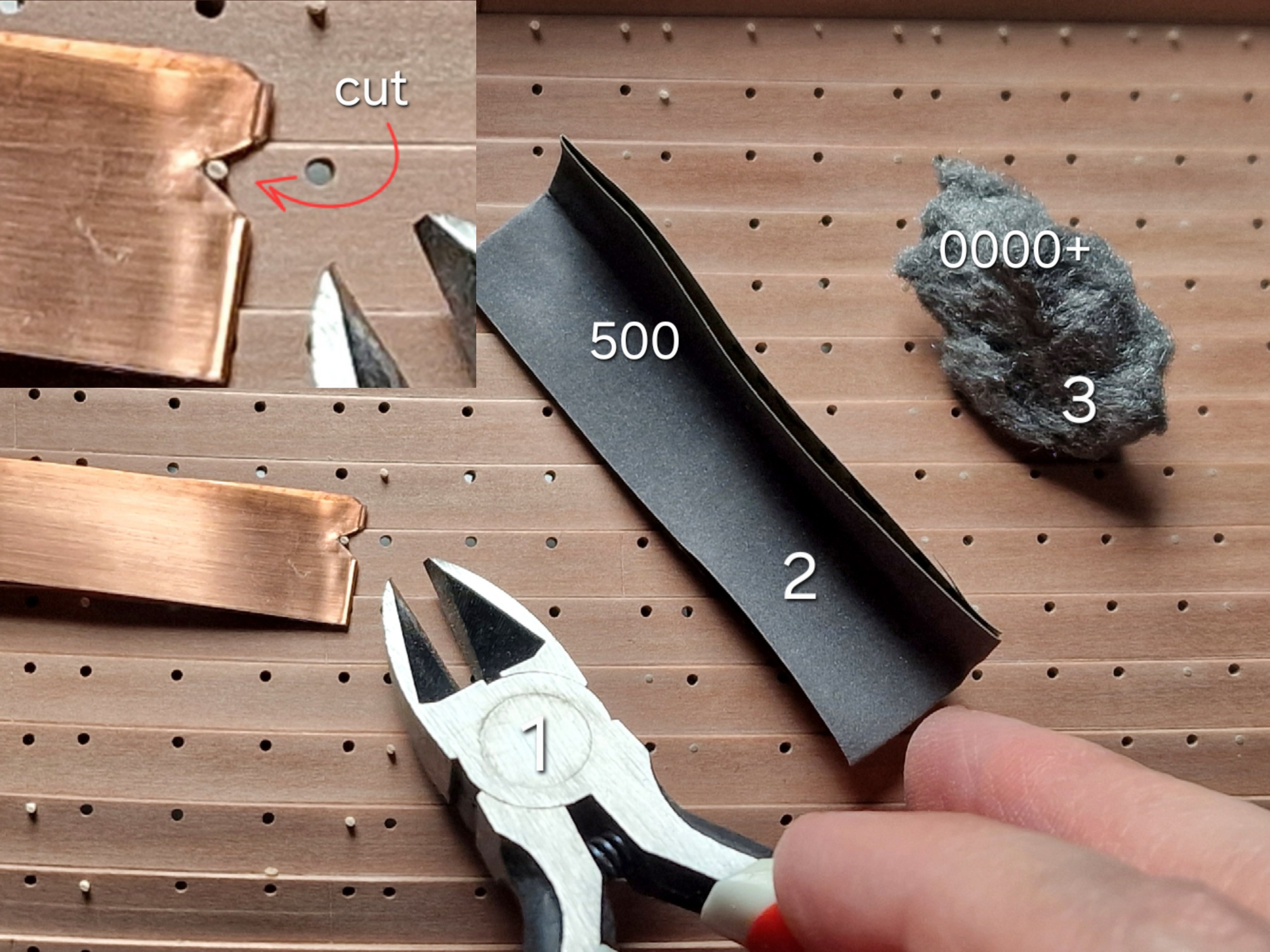
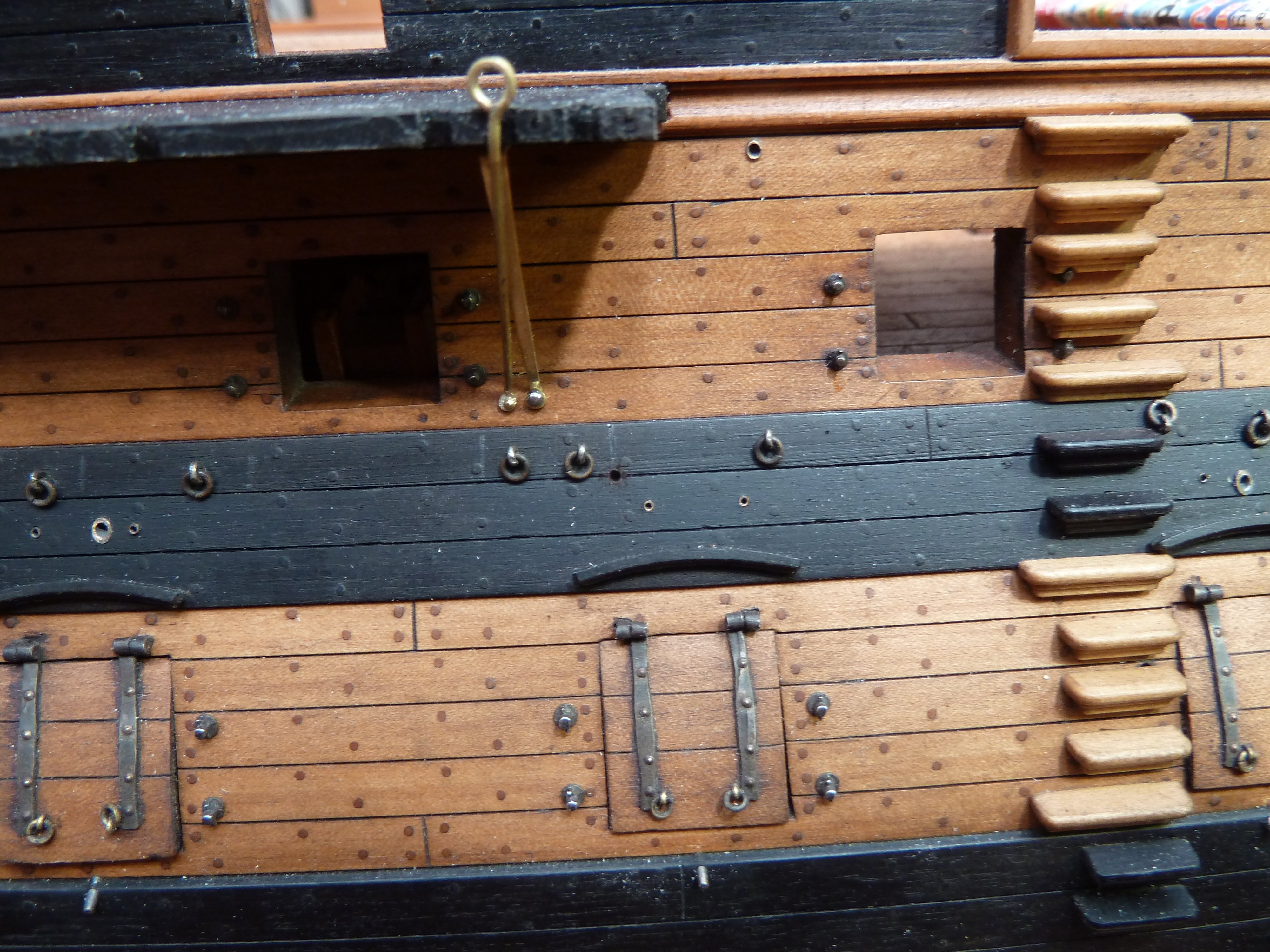
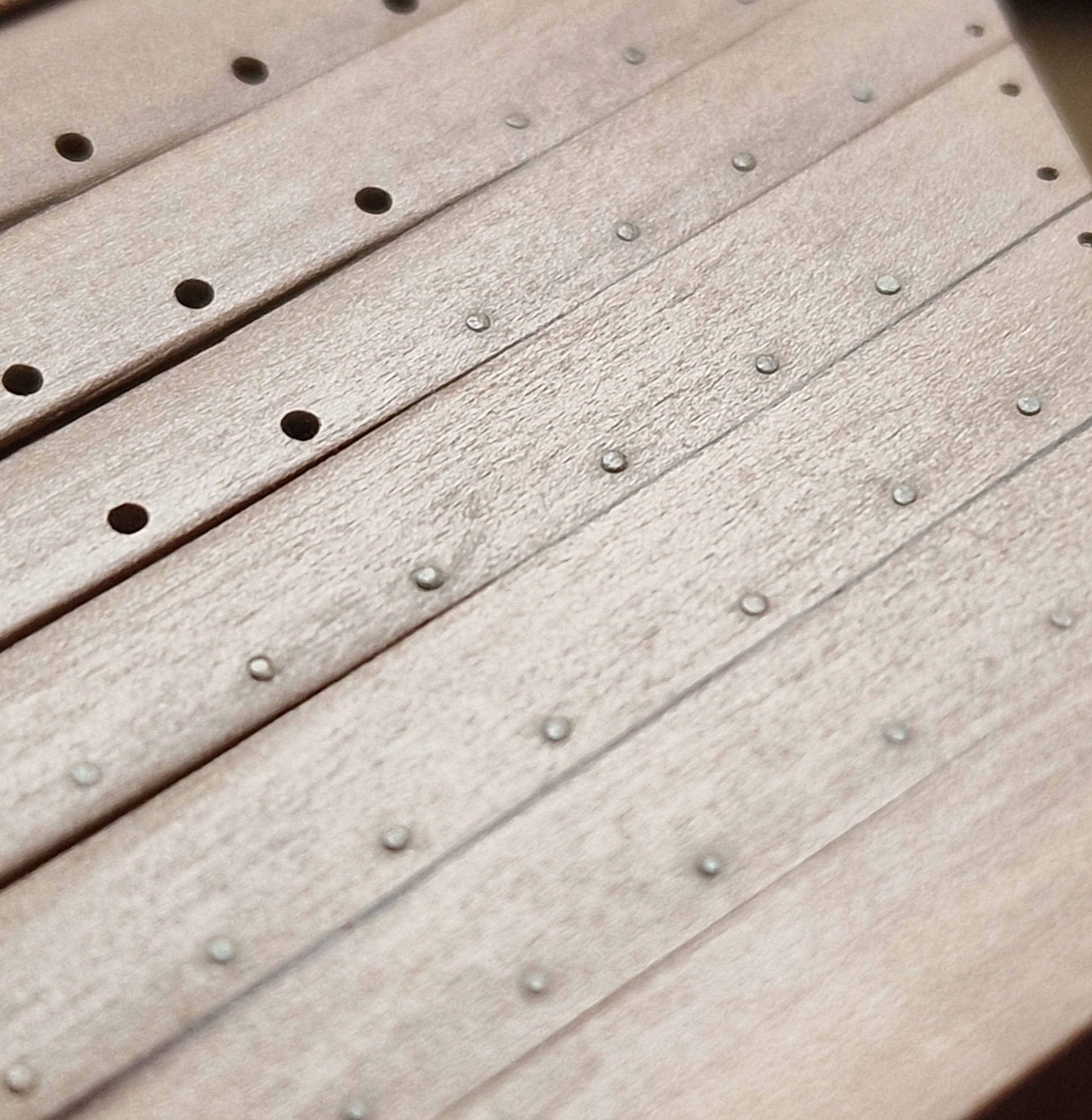
Nailing the side. 2/2 I changed my plan a bit. I'm always looking for faster methods, so I used a drill bit where it was hard to reach, and in smooth areas, I simply trimmed the toothpick a bit more (to fit another gasket), then sanded with 320 - 500-grit sandpaper and then removed the lint with 0000+ steel wool. So, here are the results. Naturally, it's hard to see with the naked eye, especially when dry. After applying oil and bitumen, all those nails will stand out quite a bit. Of course, without all this, I could have done it in a couple of hours, sanding everything down to the level of the boards, but I repeat, I really like Shevelev’s version and I deliberately spent two days on it. Even my laziness is powerless here. 🤣 P.S. my goal is to achieve something like this... eh
-
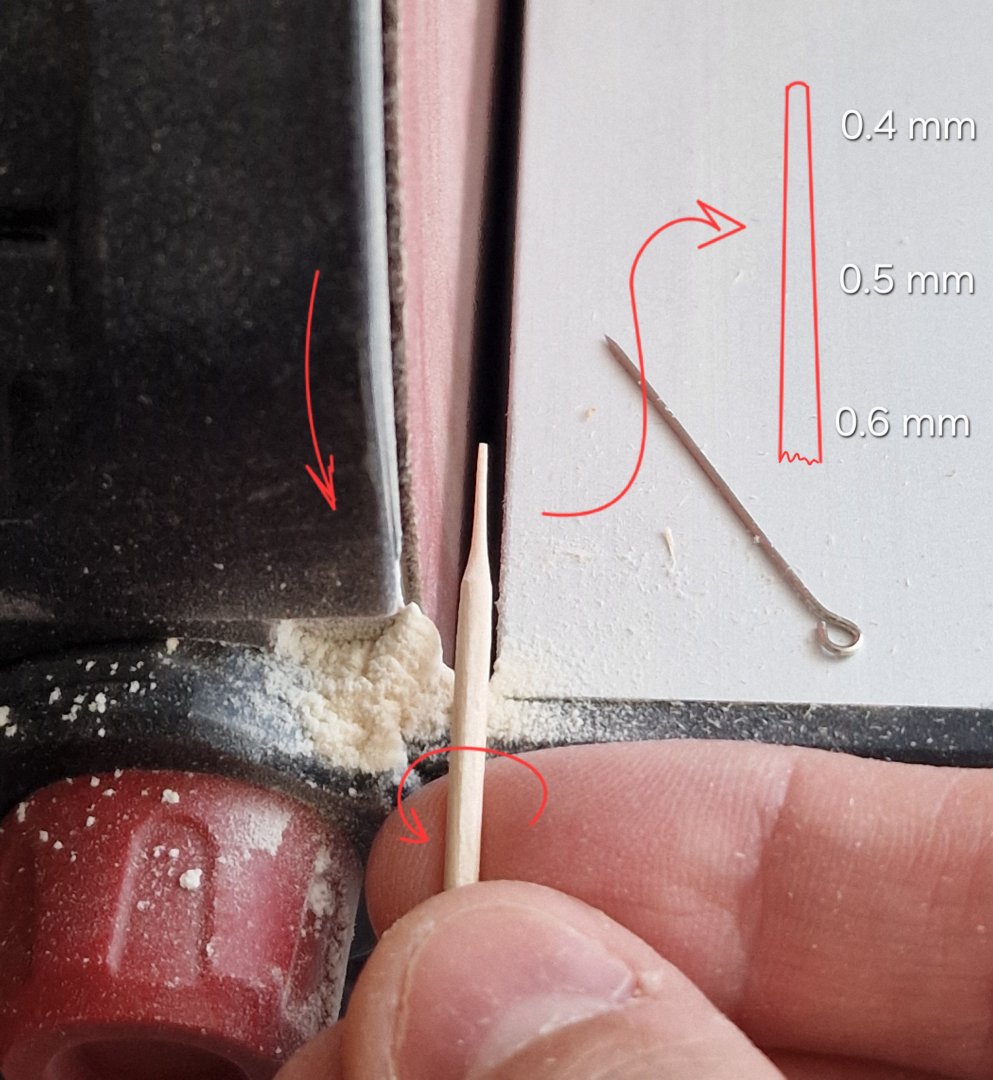
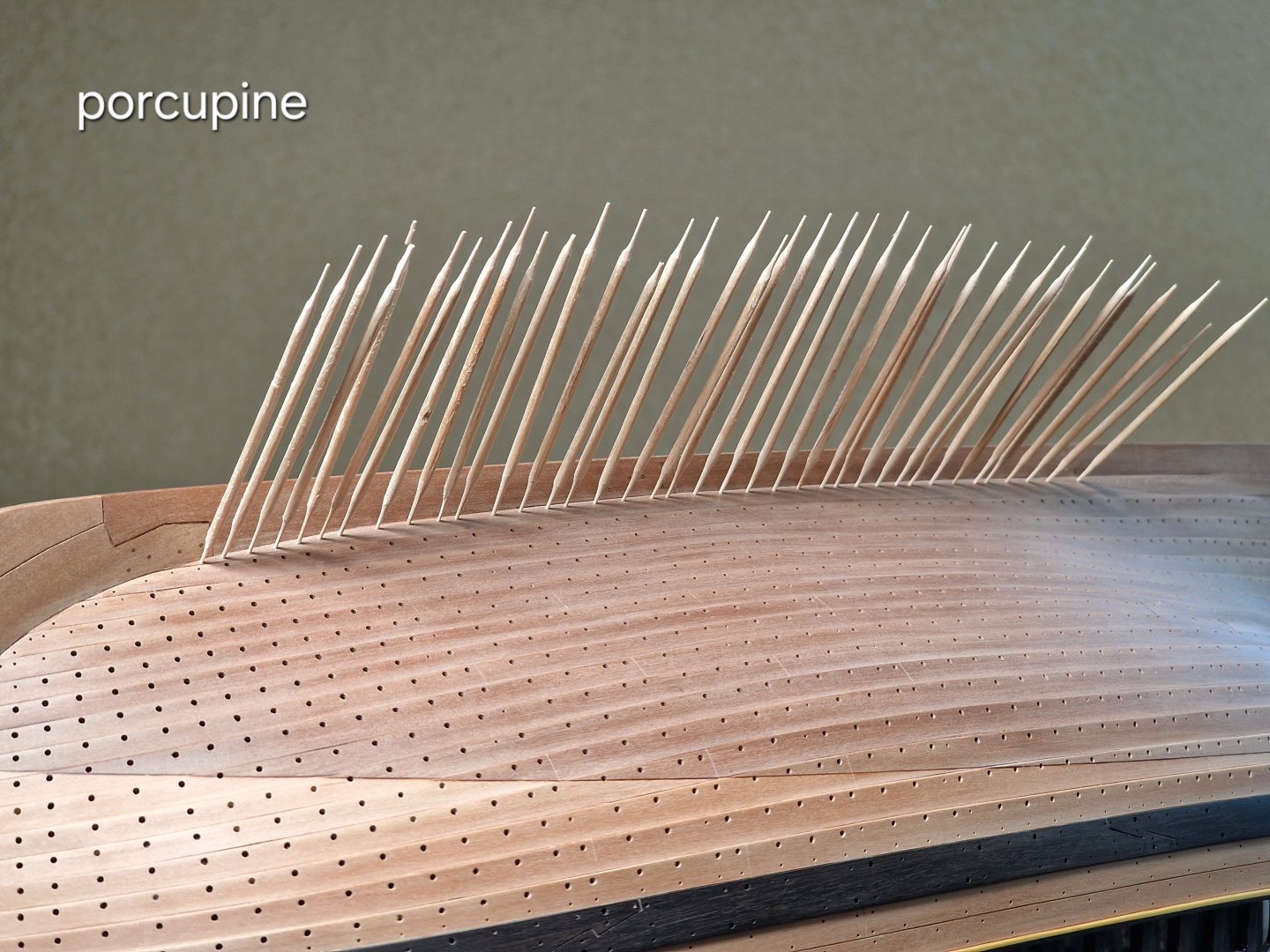
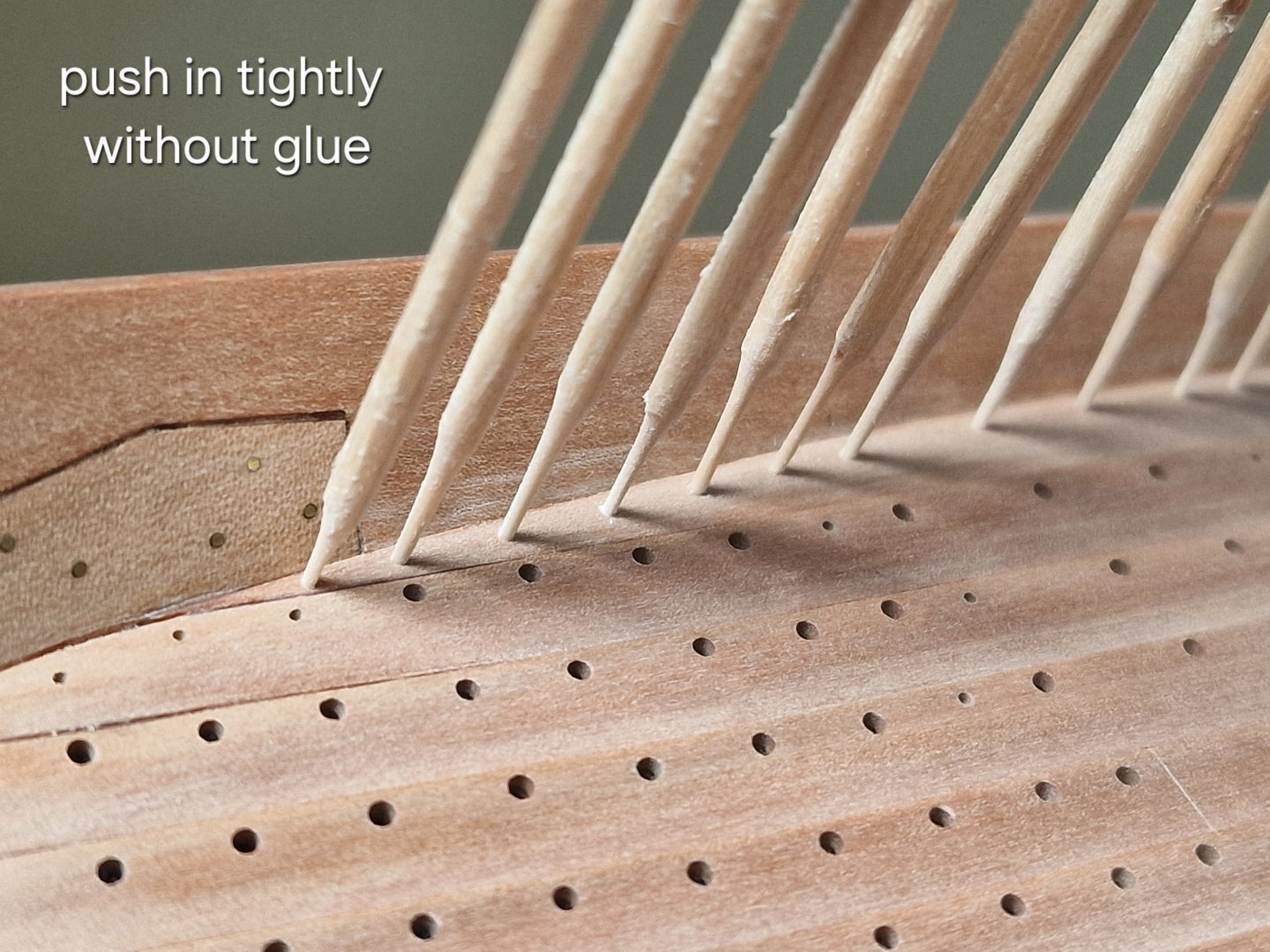
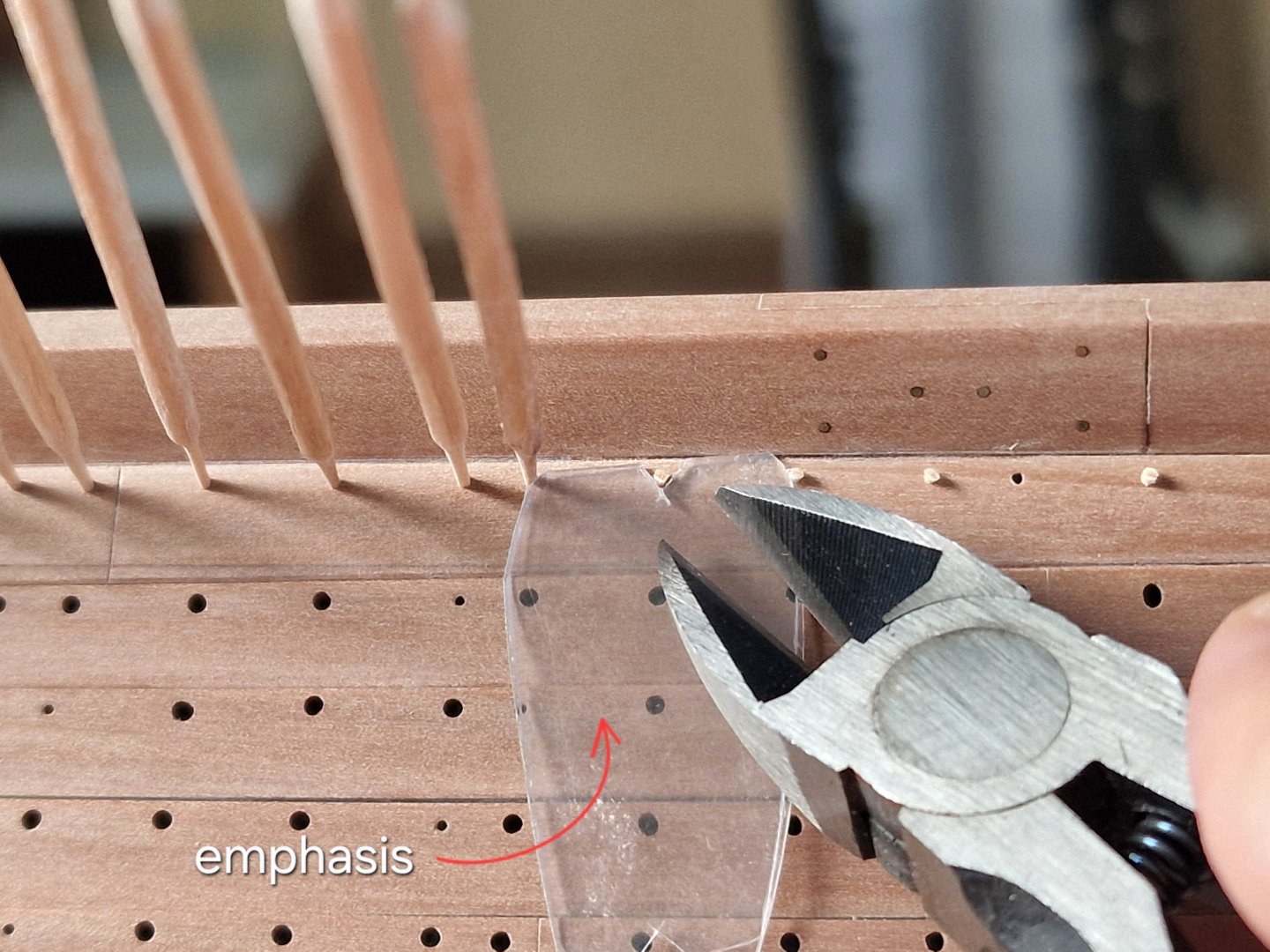
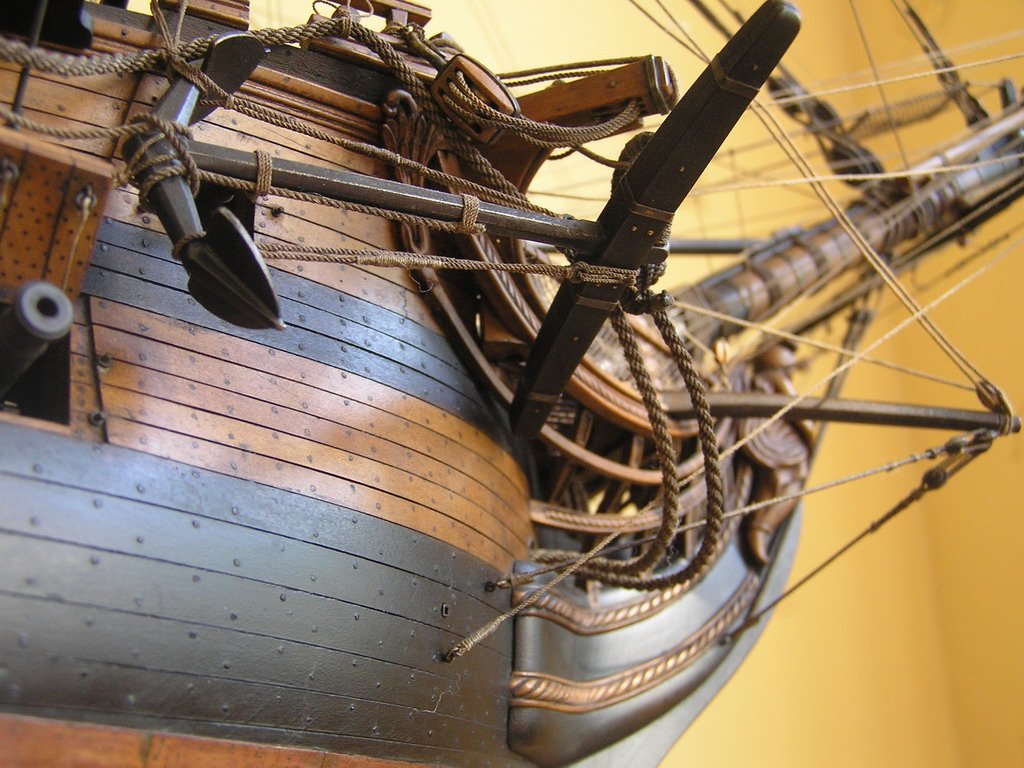
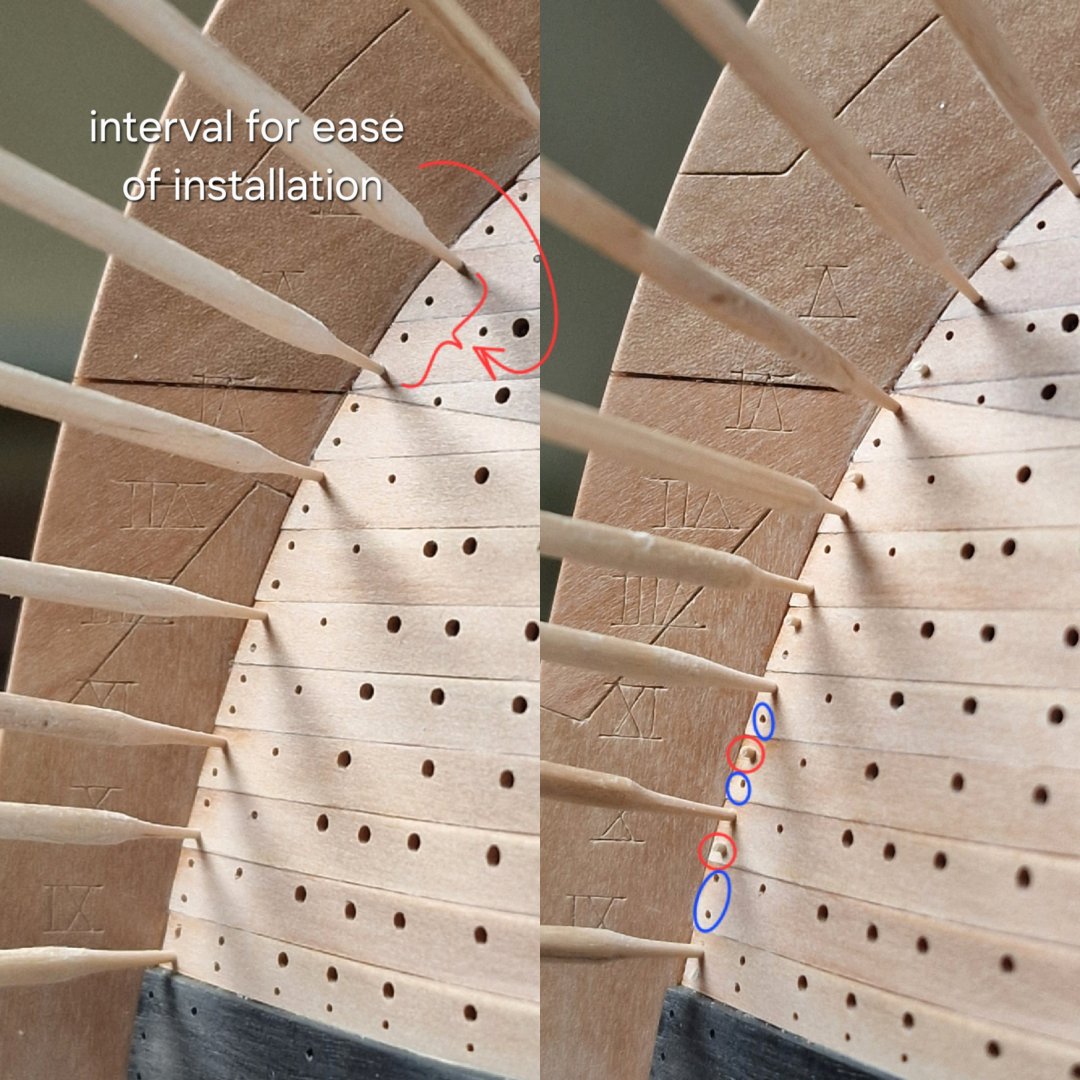
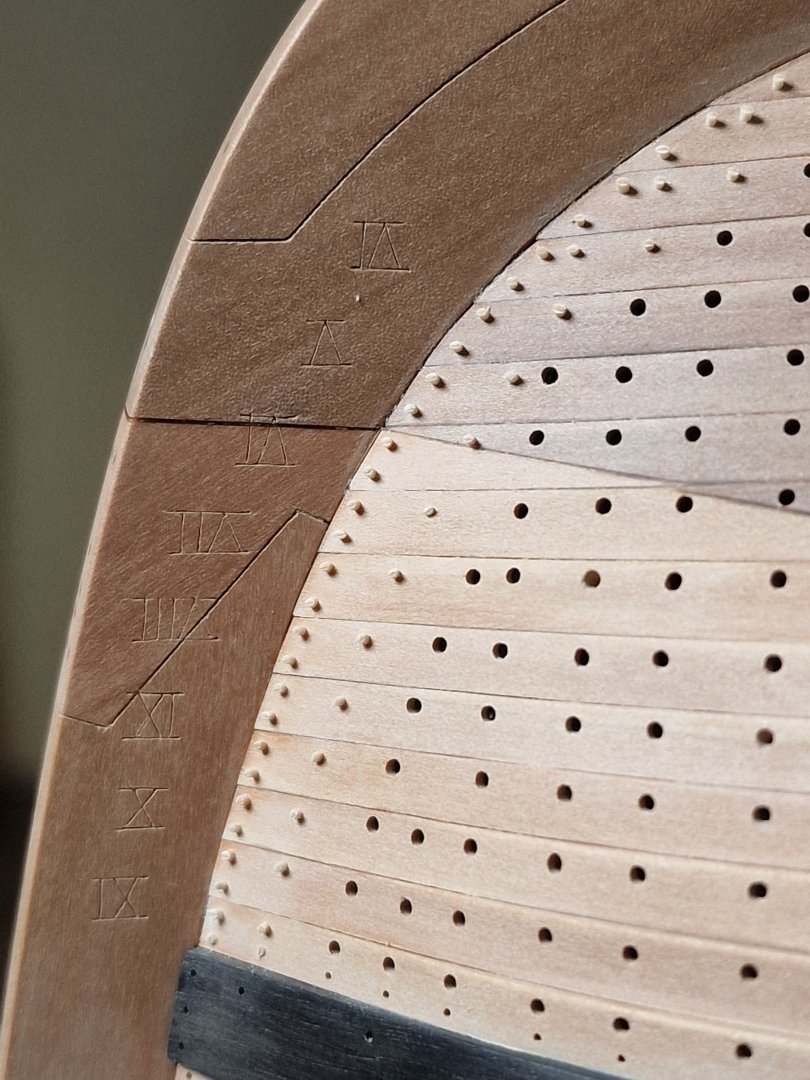
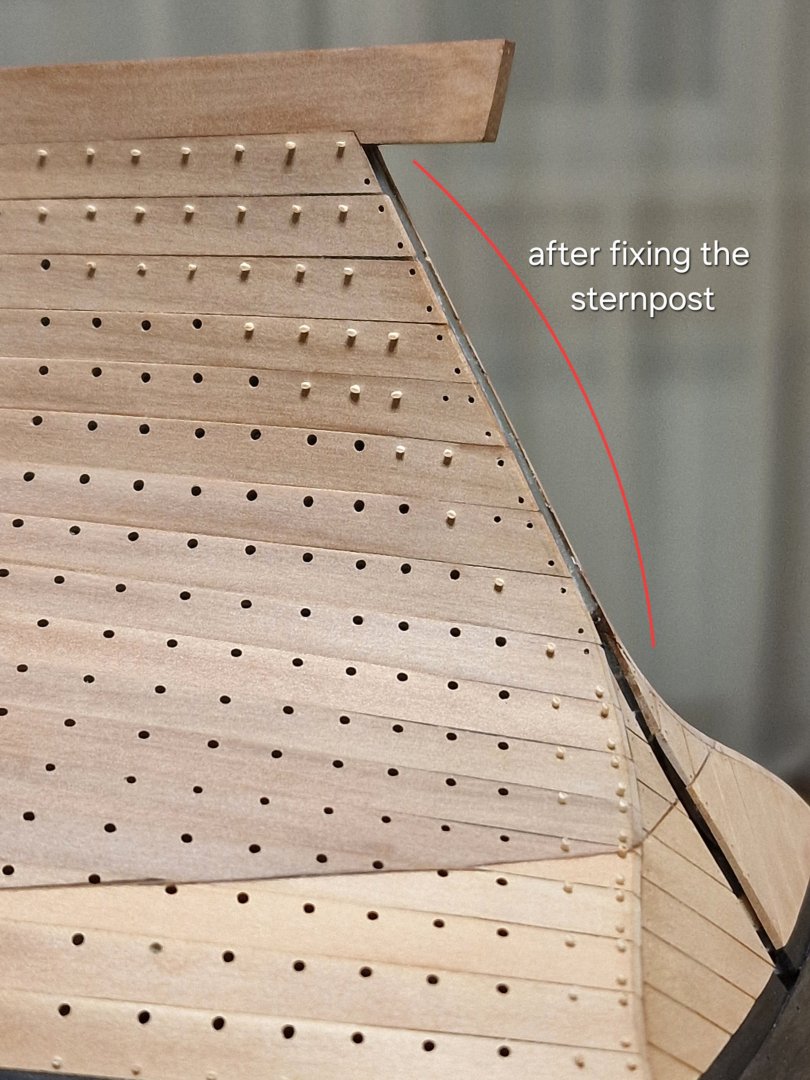
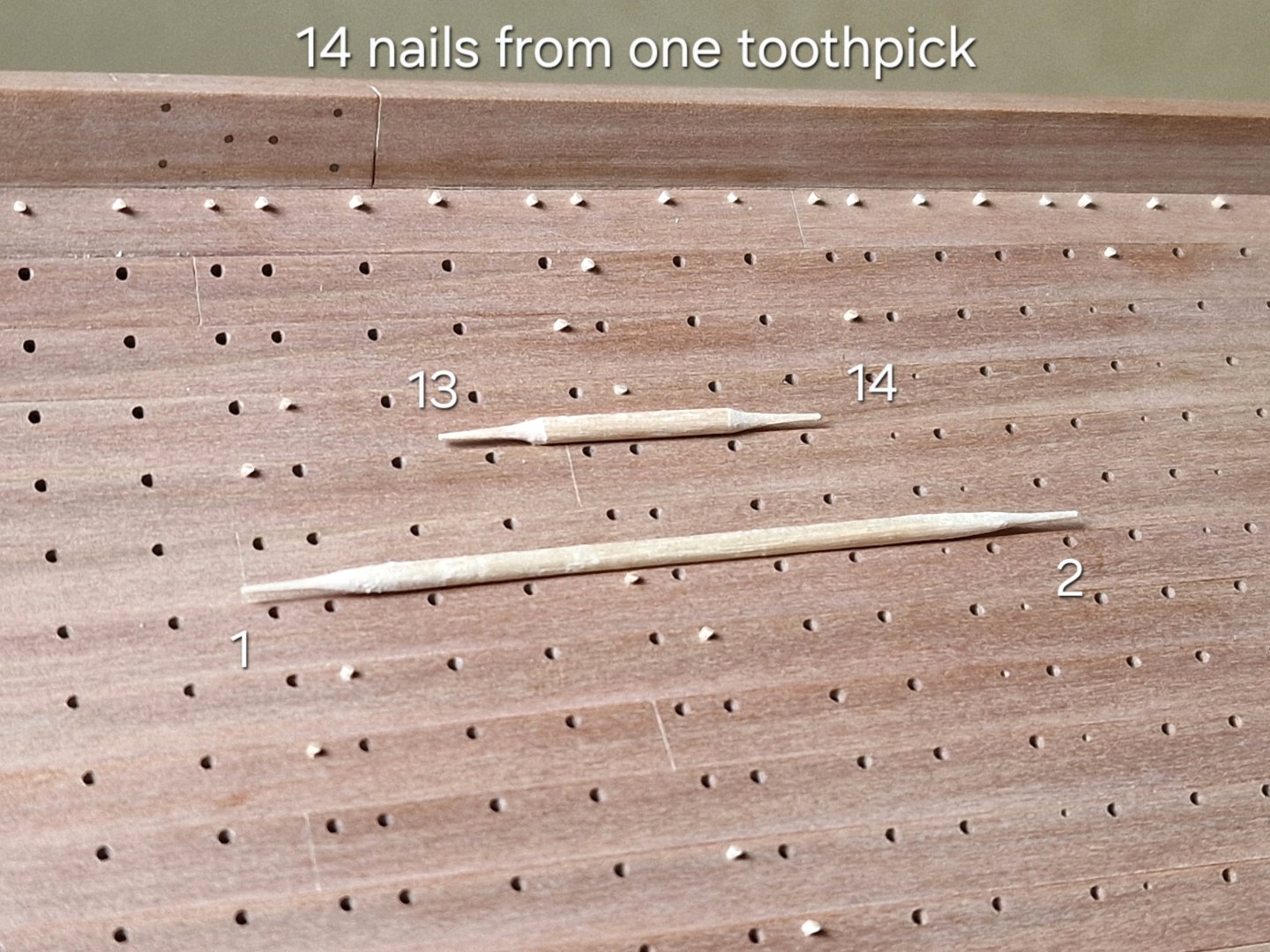
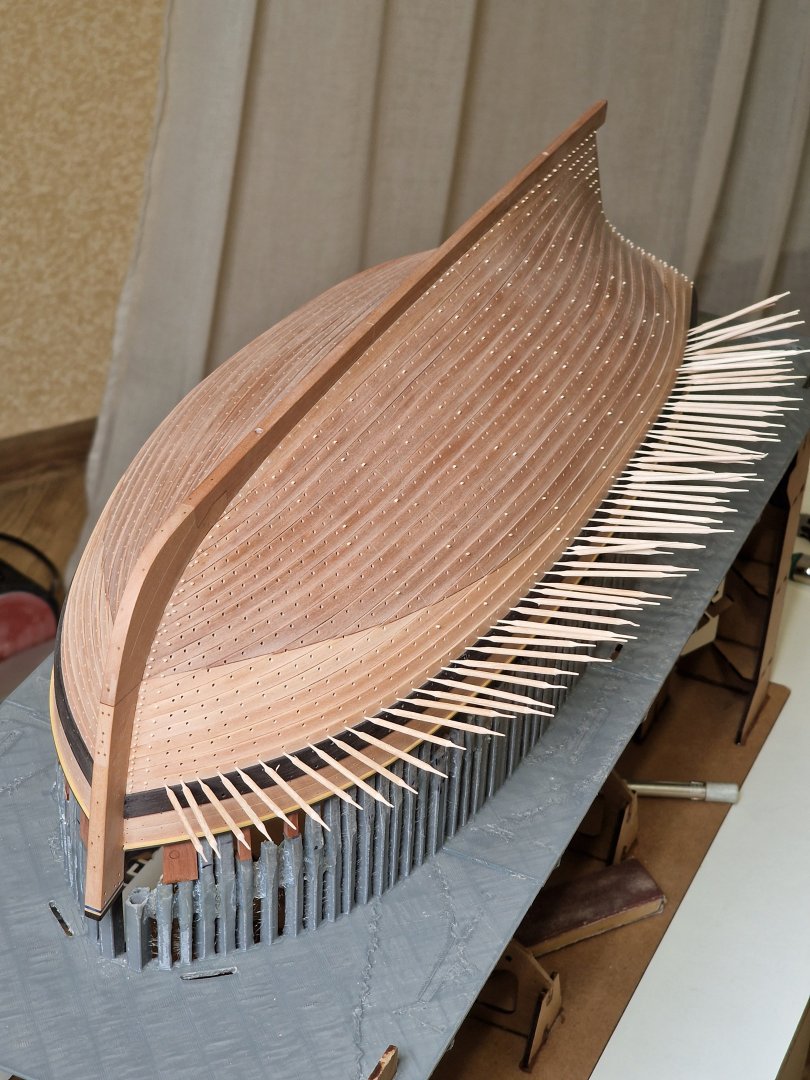
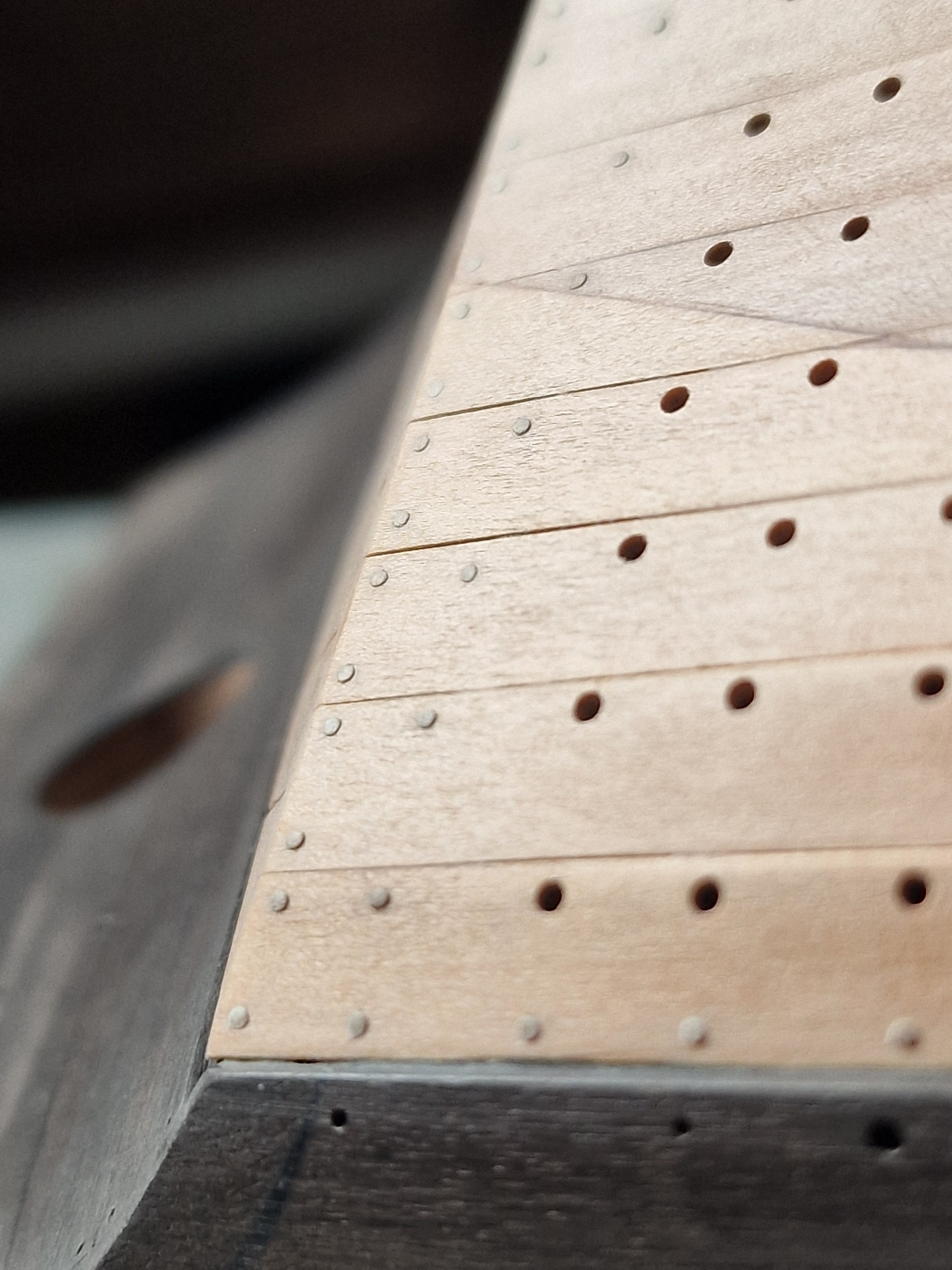
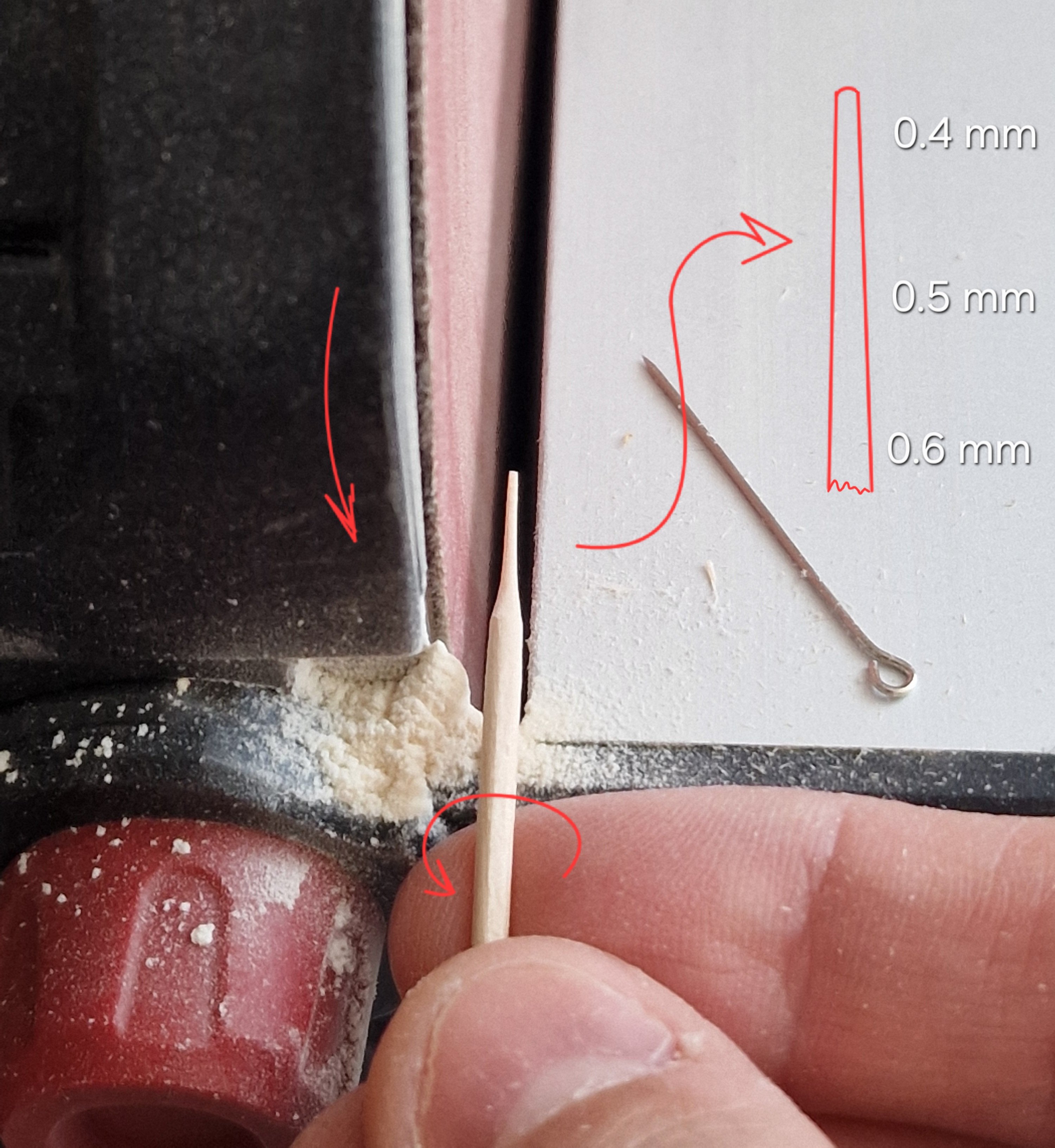
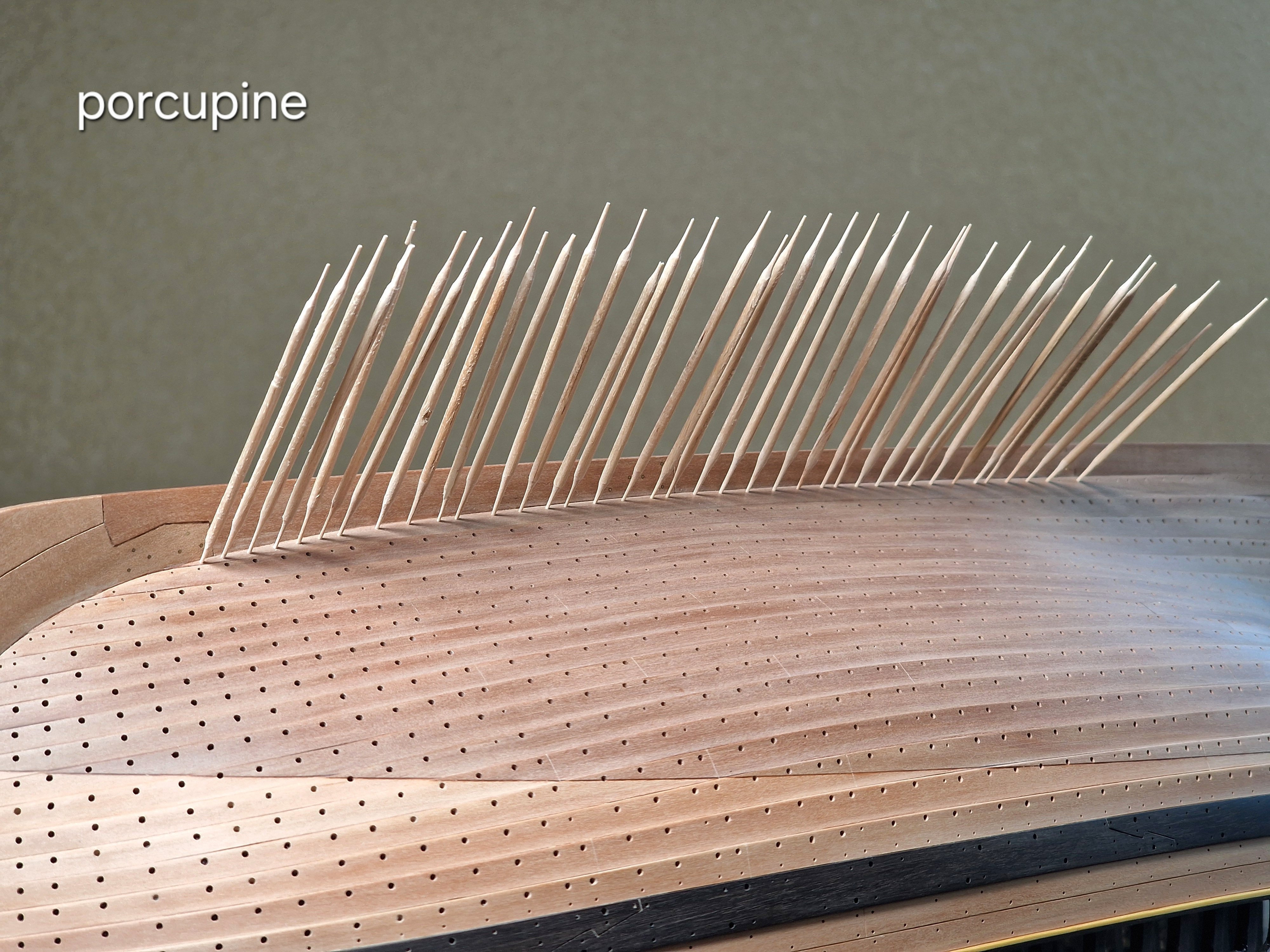
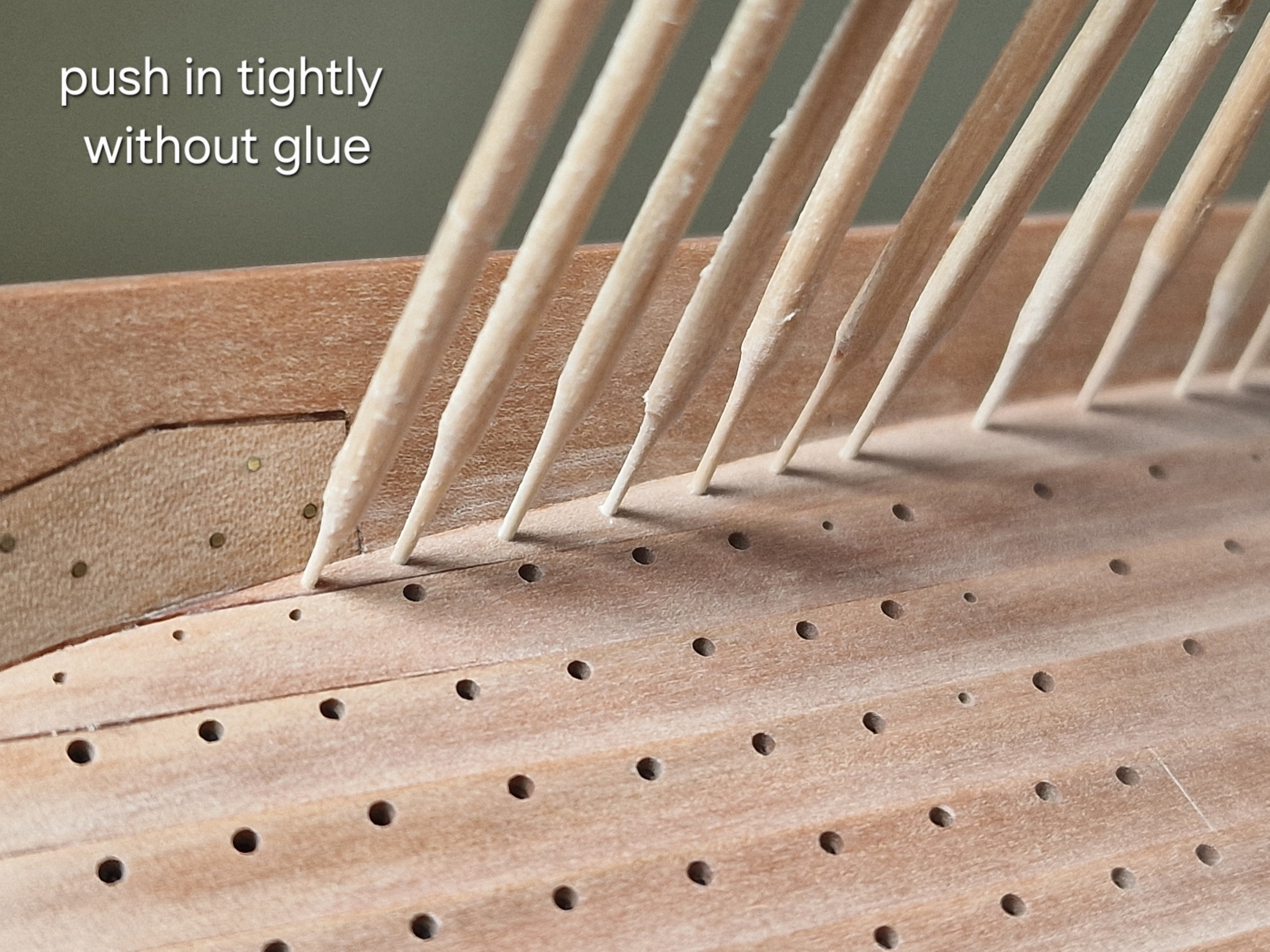
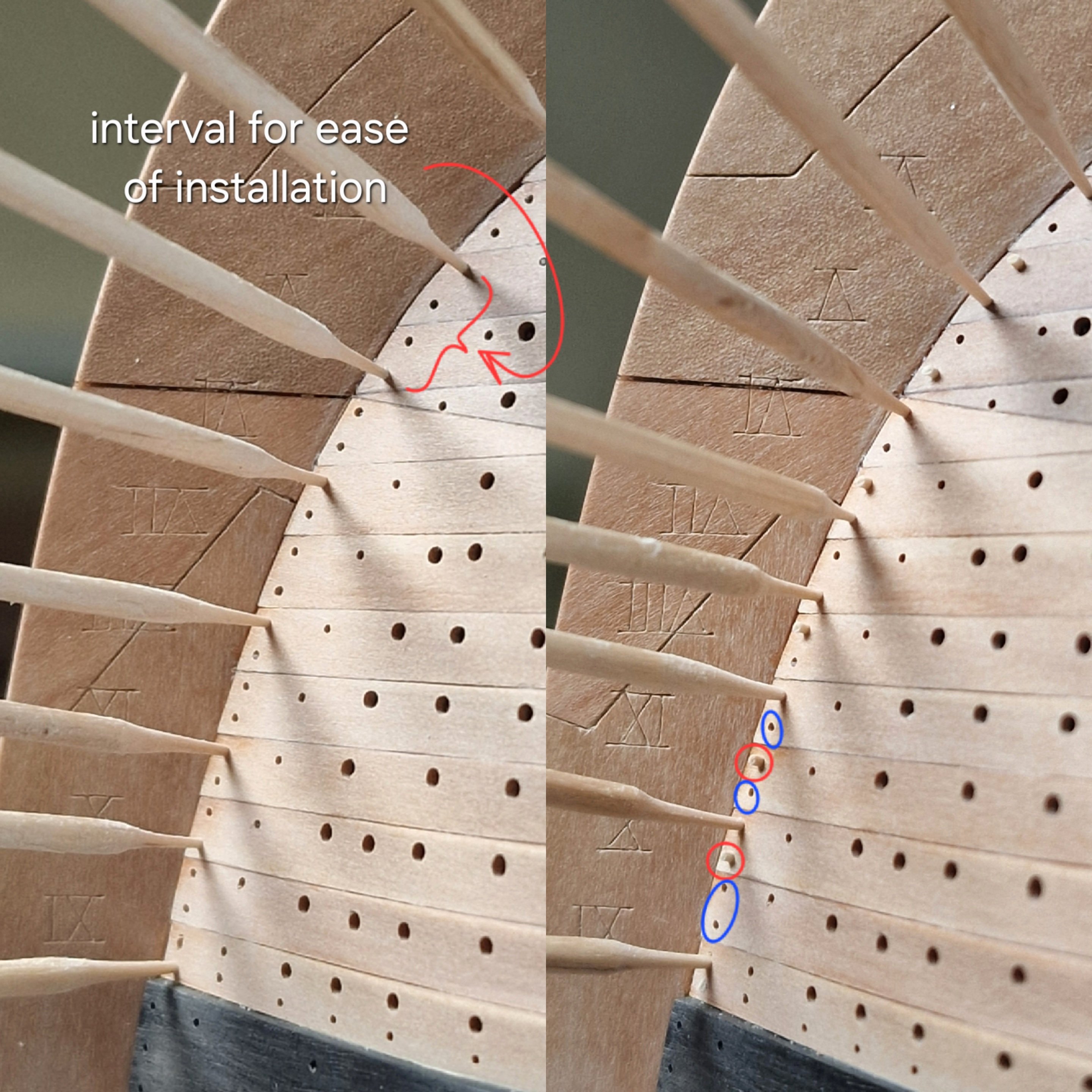
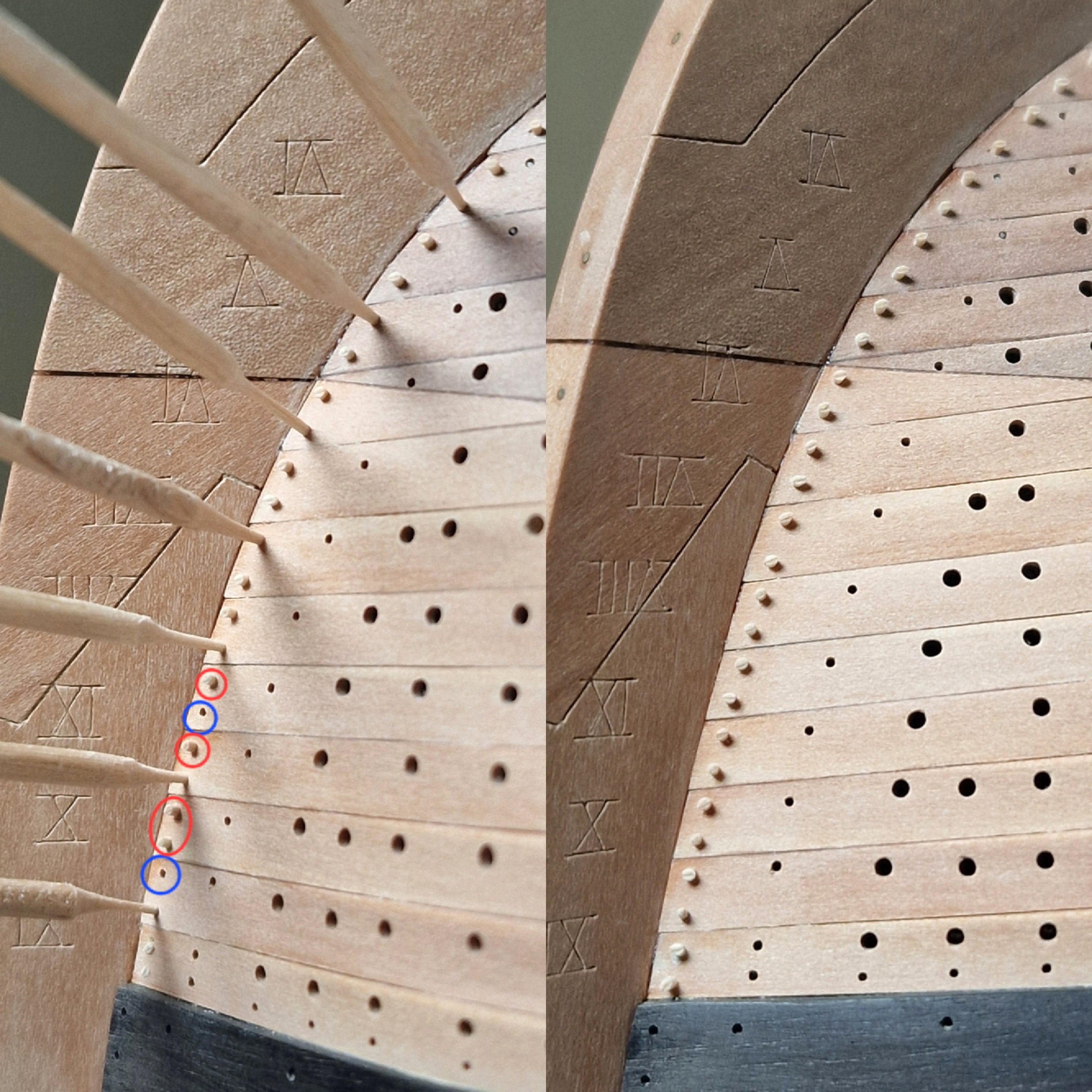
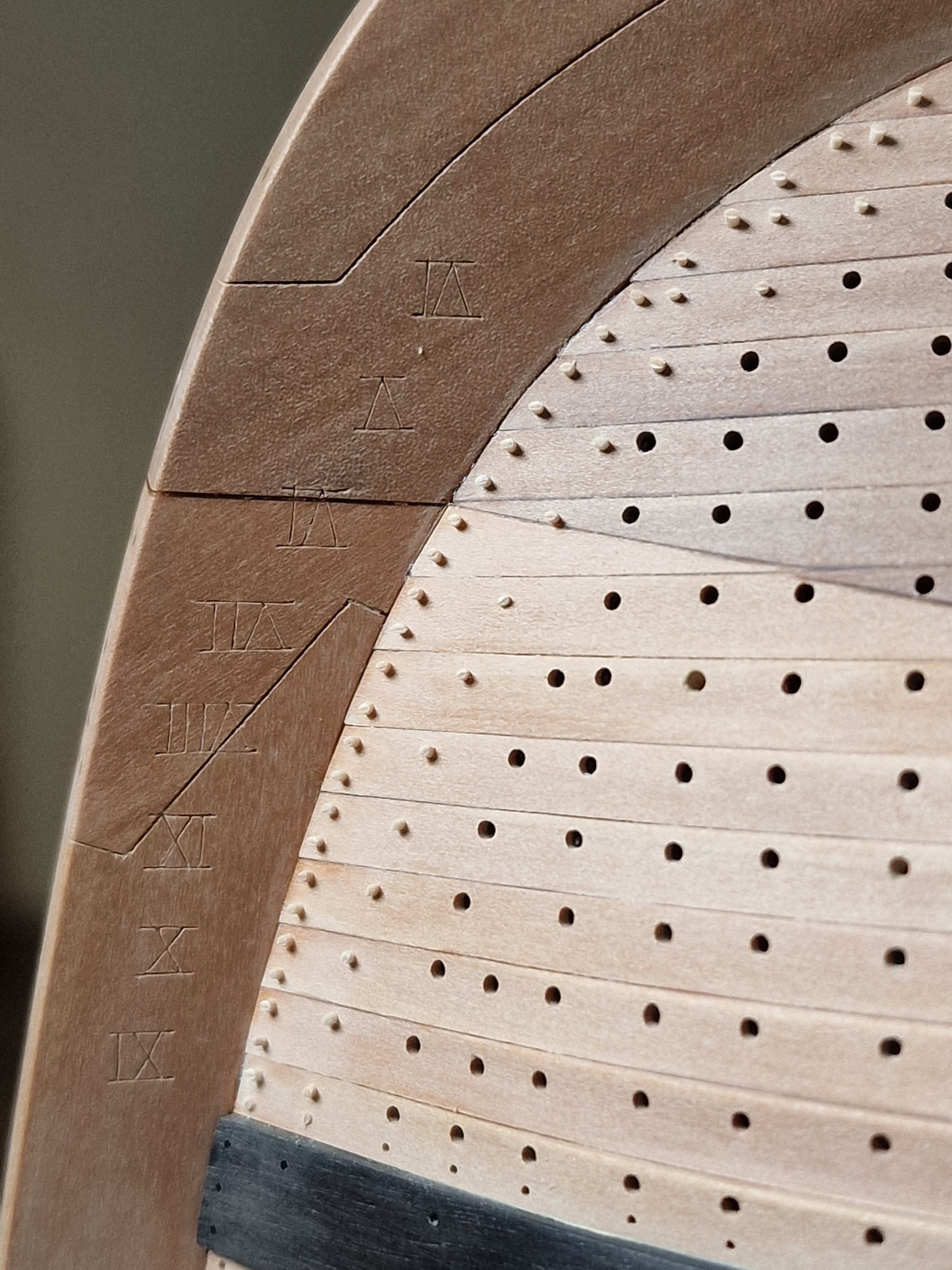
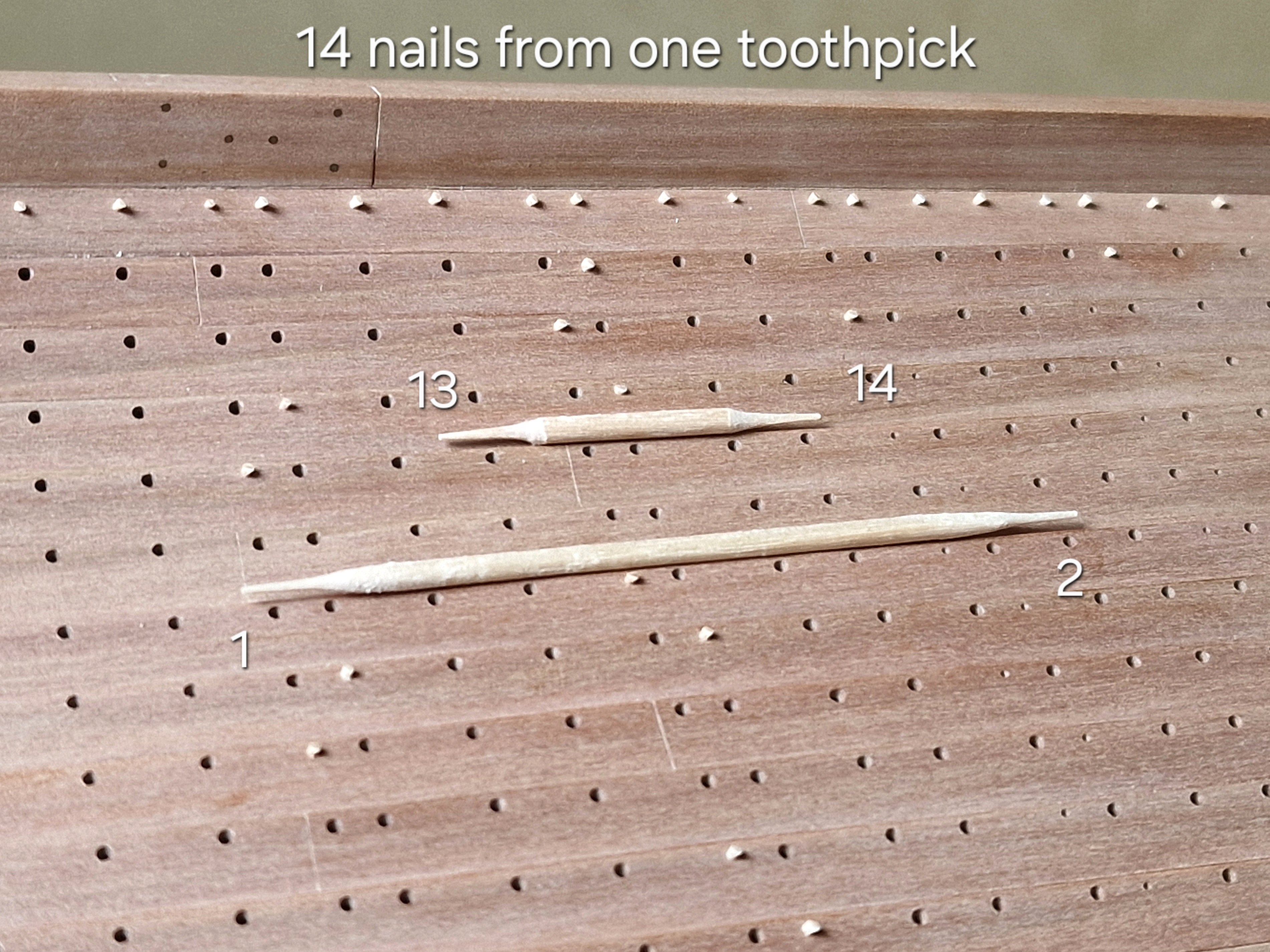
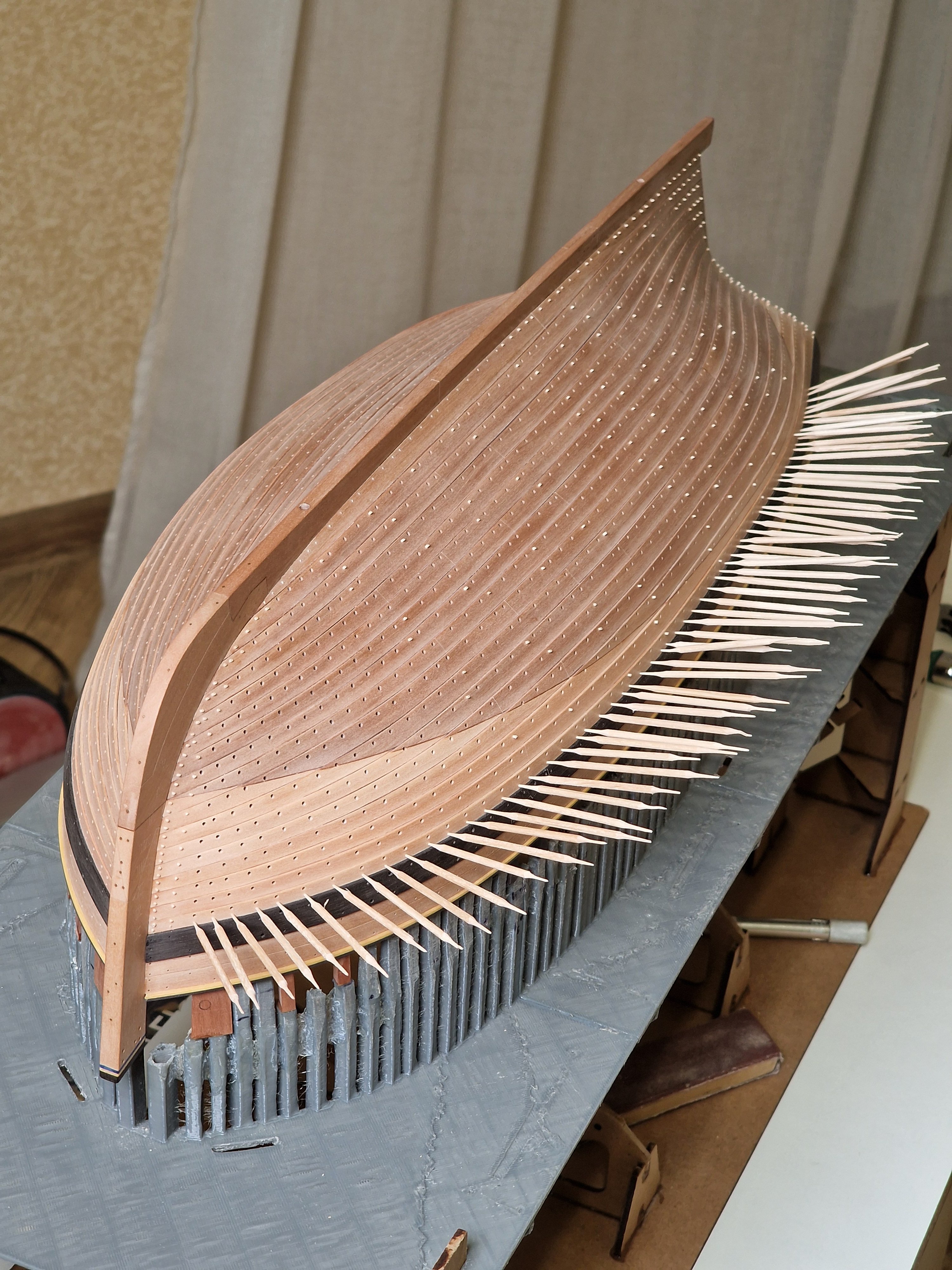
Chapter 7. Nailing and Bolting. Nailing the side. 1/2 As I already mentioned, I use birch toothpicks for nailing, NOT bamboo! I don't recommend them, as the cut edges have very pronounced pores. I liked the birch toothpicks for their color, texture, and comfort (they're round, ready for sharpening, and spin easily in my fingers). I sharpen the toothpicks on both sides to a 0.4-0.6 mm taper, so that where the 0.5 mm thickness is, it fits snugly into the 0.5 mm hole. I don't use glue; I just push it firmly until the toothpick wedges into the board. It's important not to sharpen it too much or widen the hole when inserting it. Visually, the toothpicks appear thicker, but when you pull them out, the part that was inside the board will be thinner, as it has acquired the thickness of the board. Then I cut off the excess through the pad with nippers. The pad gives me an even length. Then I very carefully polish the top with 320 - 500 grit sandpaper and after that I remove all the remaining lint with 0000+ steel wool. But I'll talk about this in the next post. I understand perfectly well that the plug covering the nail was cut flush with the board (in real life), and that's logical, but! This is a model, and we're making it look good first and foremost (at least I am). And I really like Dmitry Shevelev's method. That's why I do it this way. Yes, it's more difficult, takes longer, and you can't polish the hull afterwards (that's why I've already polished it beforehand), but I like the result with the slightly textured plugs (nails). Here's my reference (Dmitry Shevelev's 75-gun ship): In short, I'll show the final result later, but for now I'll continue. On paired frames, nailing alternates with bolting in a staggered pattern (except where the planks are joined, where only bolts are used). For convenience, where the toothpicks are very dense, I insert them at intervals. By the way, one toothpick makes 14 dowels (7 sharpenings). Almost finished both sides, next comes the borax treatment and final polishing to the desired shape... ...faster than it initially seemed, but that's not just the bolts, that's the quantity...
-
My wife has also volunteered to help me with the sails... but that's still a long way off. I like your work, definitely signing up! It's nice to see someone my own age; I'm 40 too. By the way, from wife's photo, I thought we were the same age. Did you, Alert, post the build anywhere? I'd be interested to see what brand the kit was from? I saw links to reviews, but there are no photos ((( I saw that it’s a Trident set, but there are no photos, only a description.
-
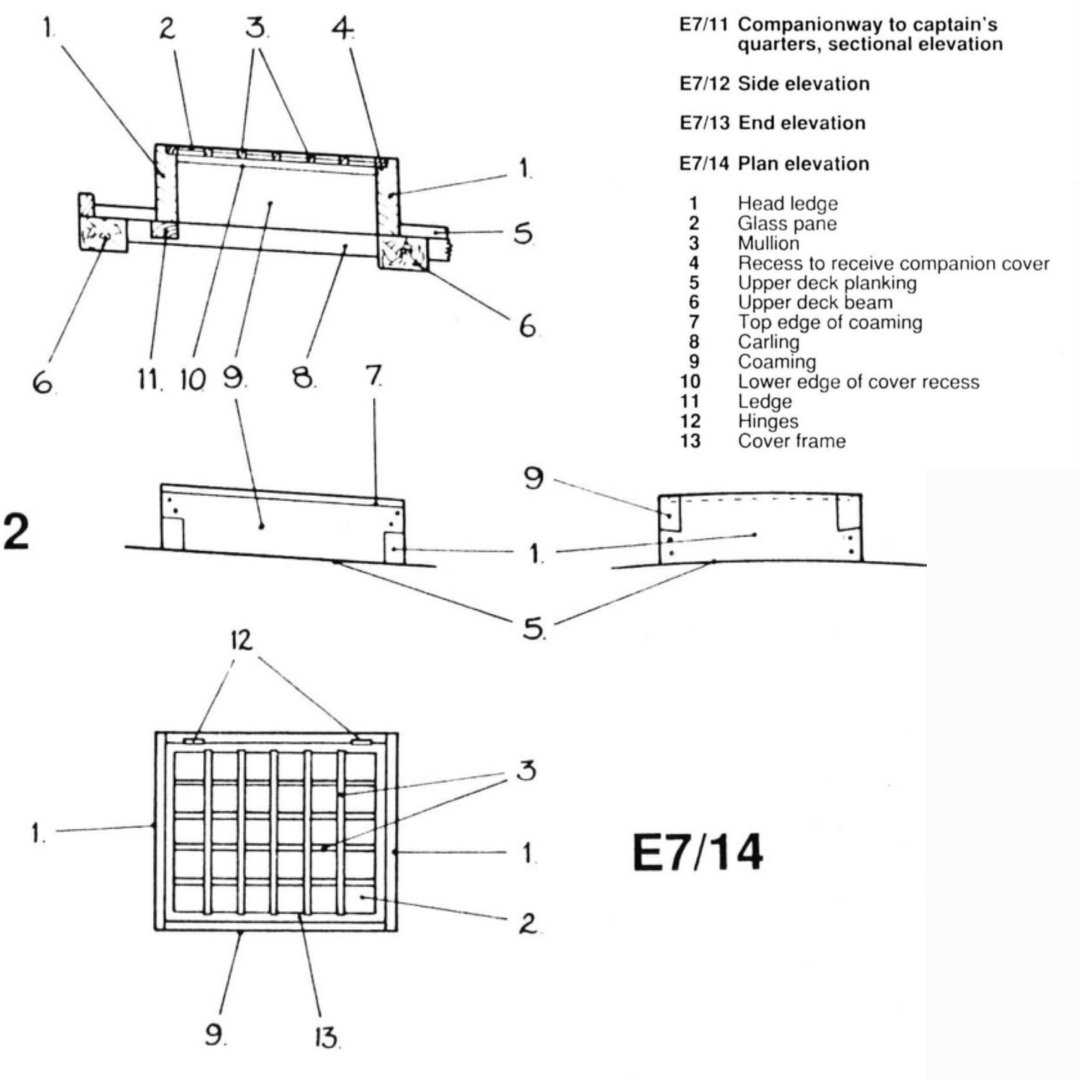
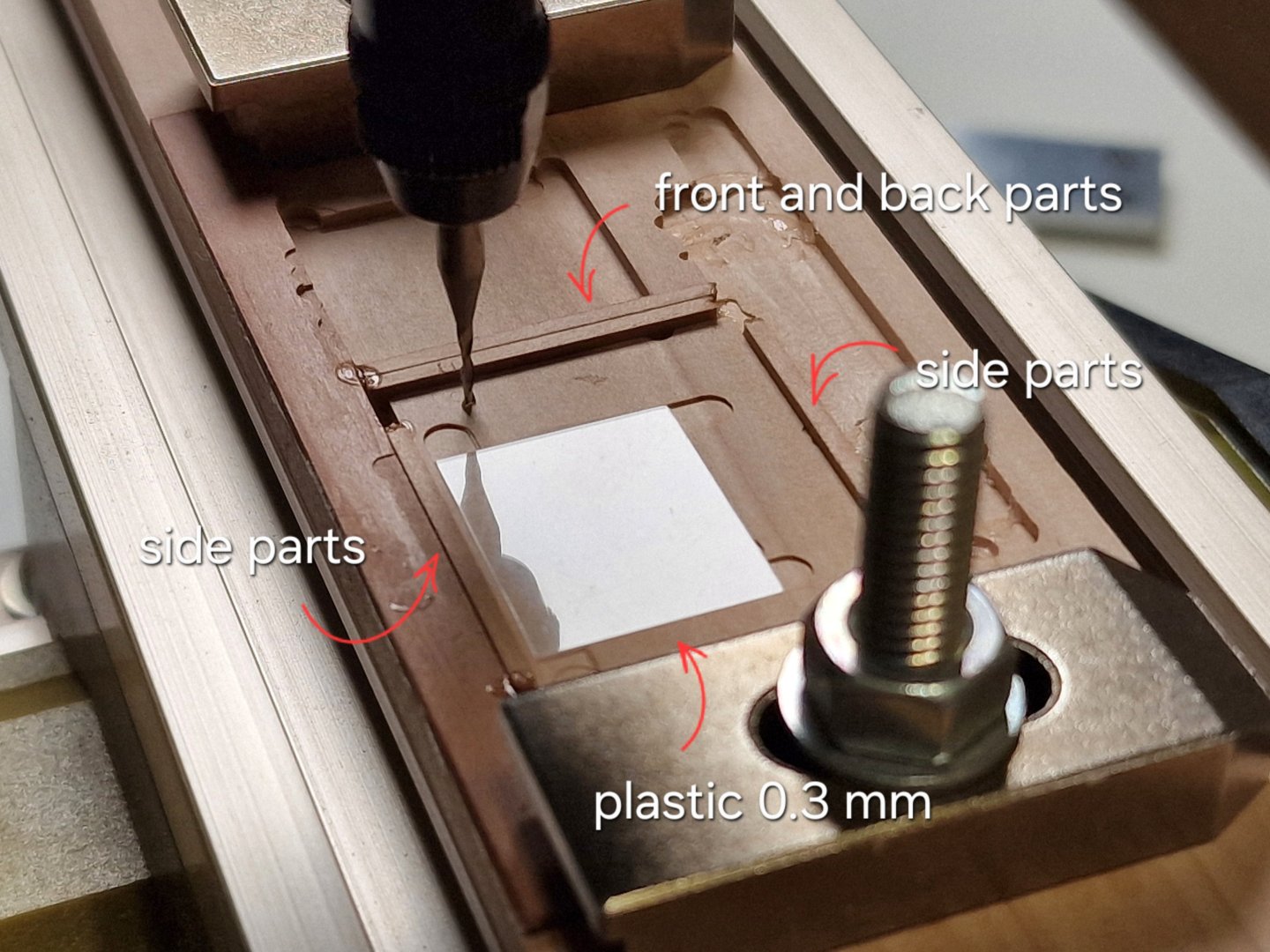
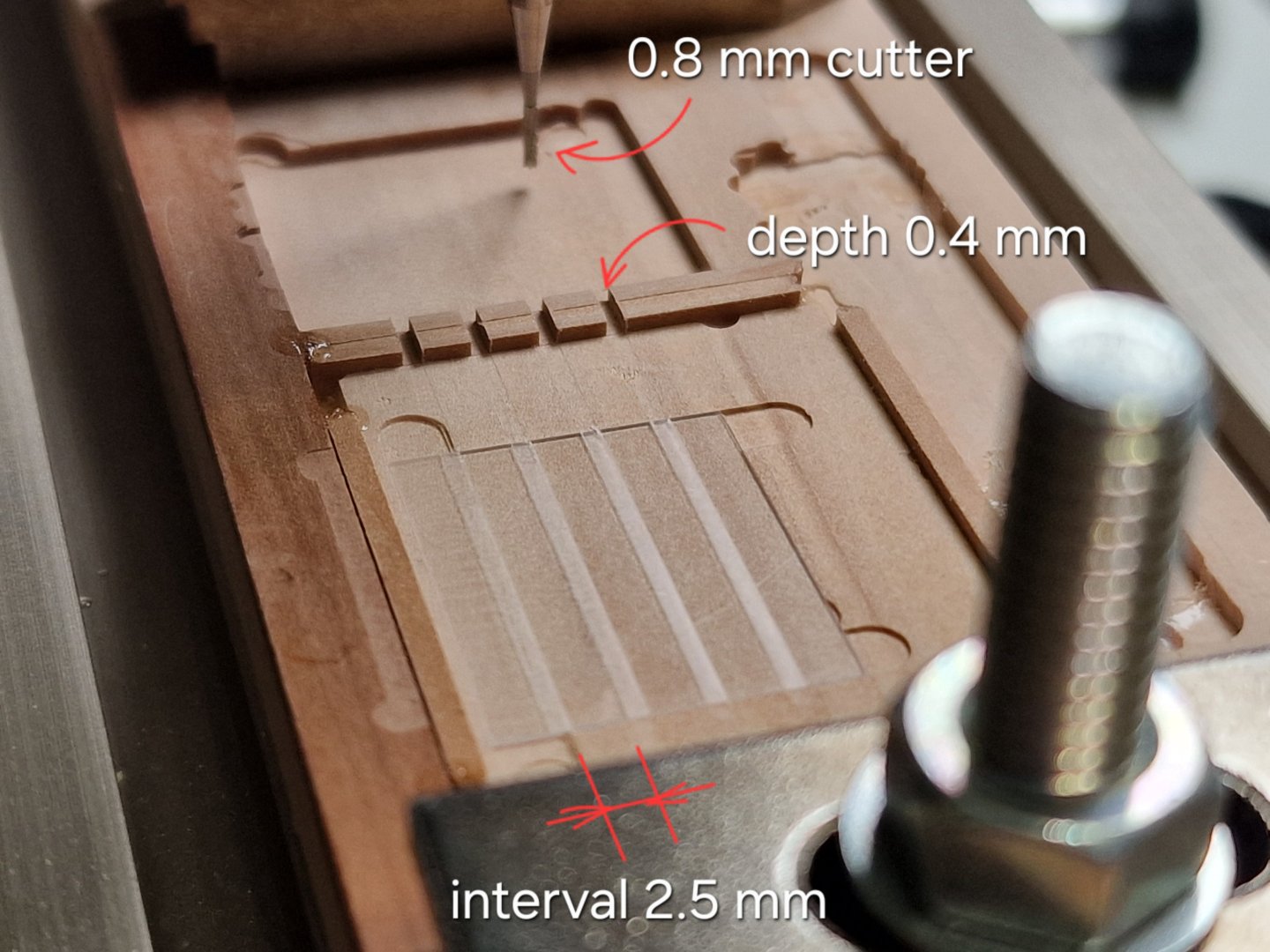
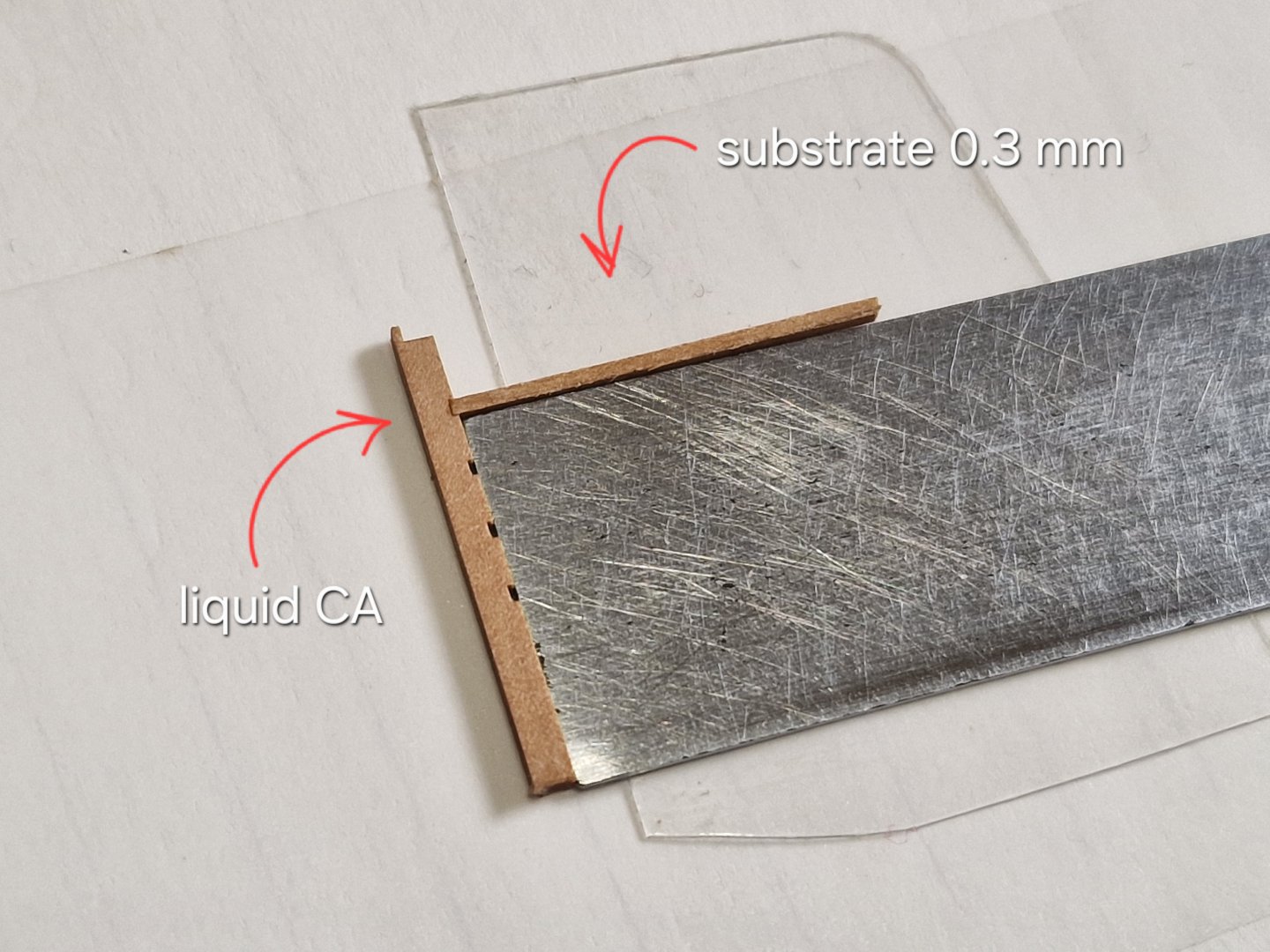
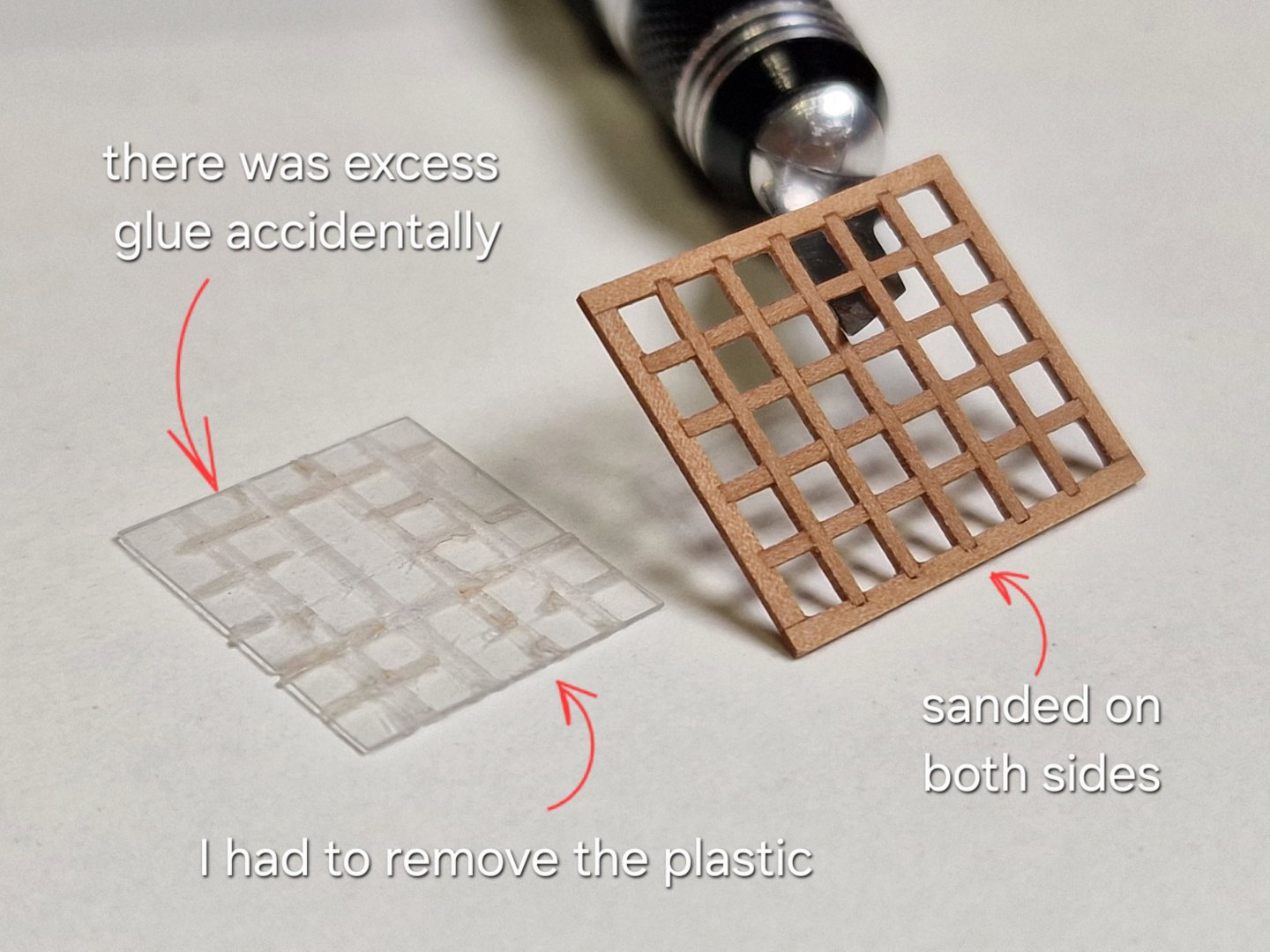
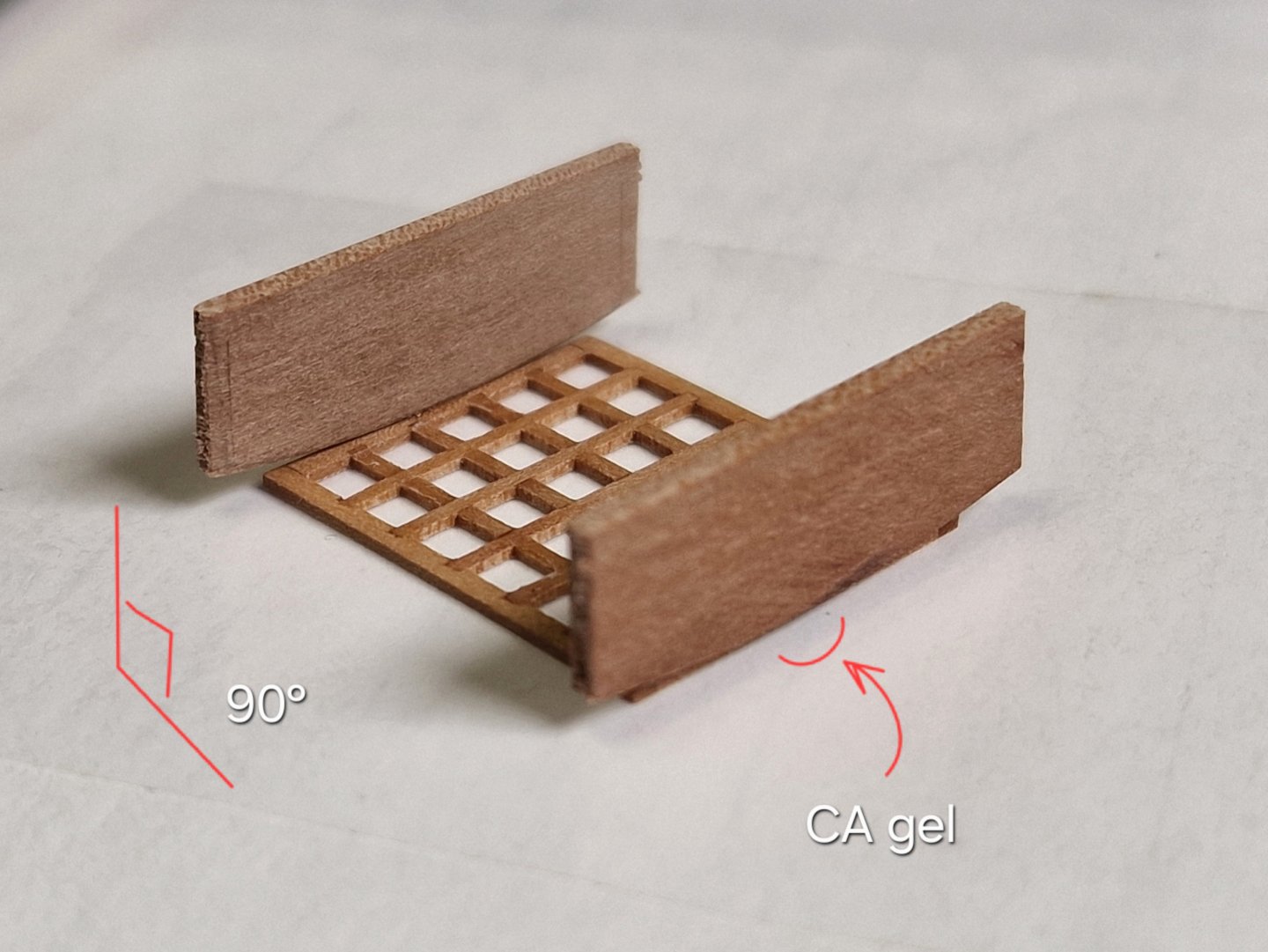
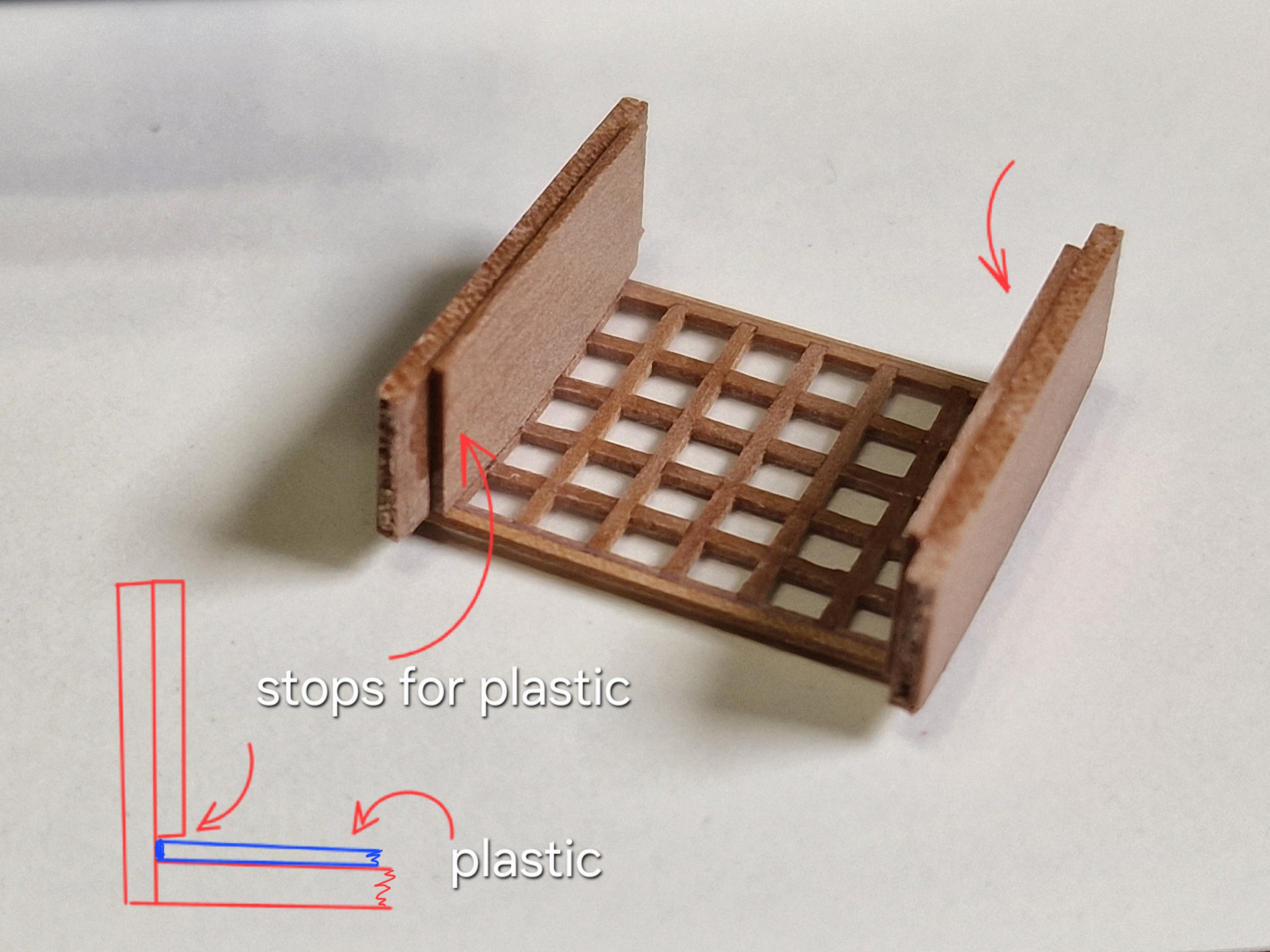
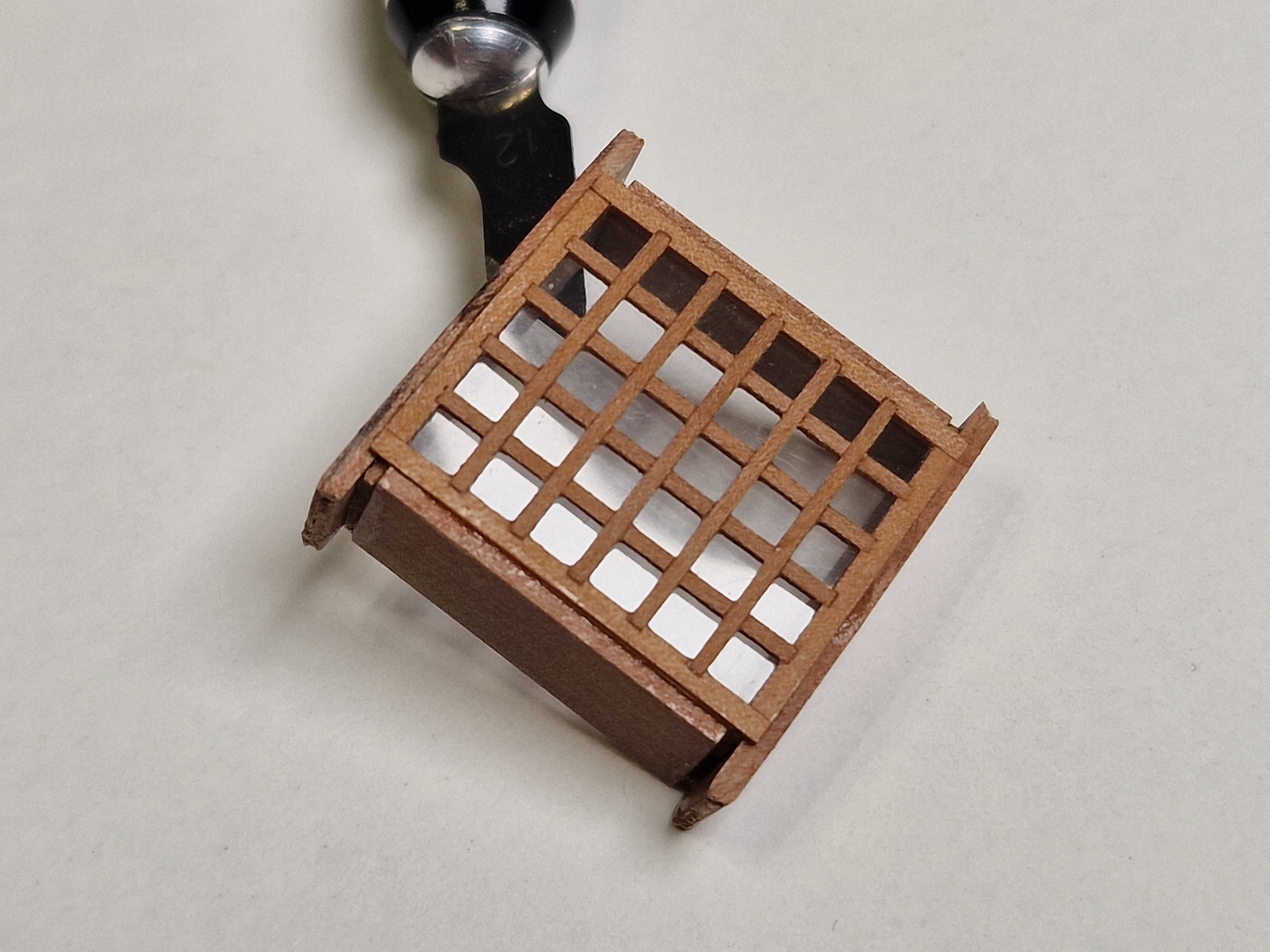
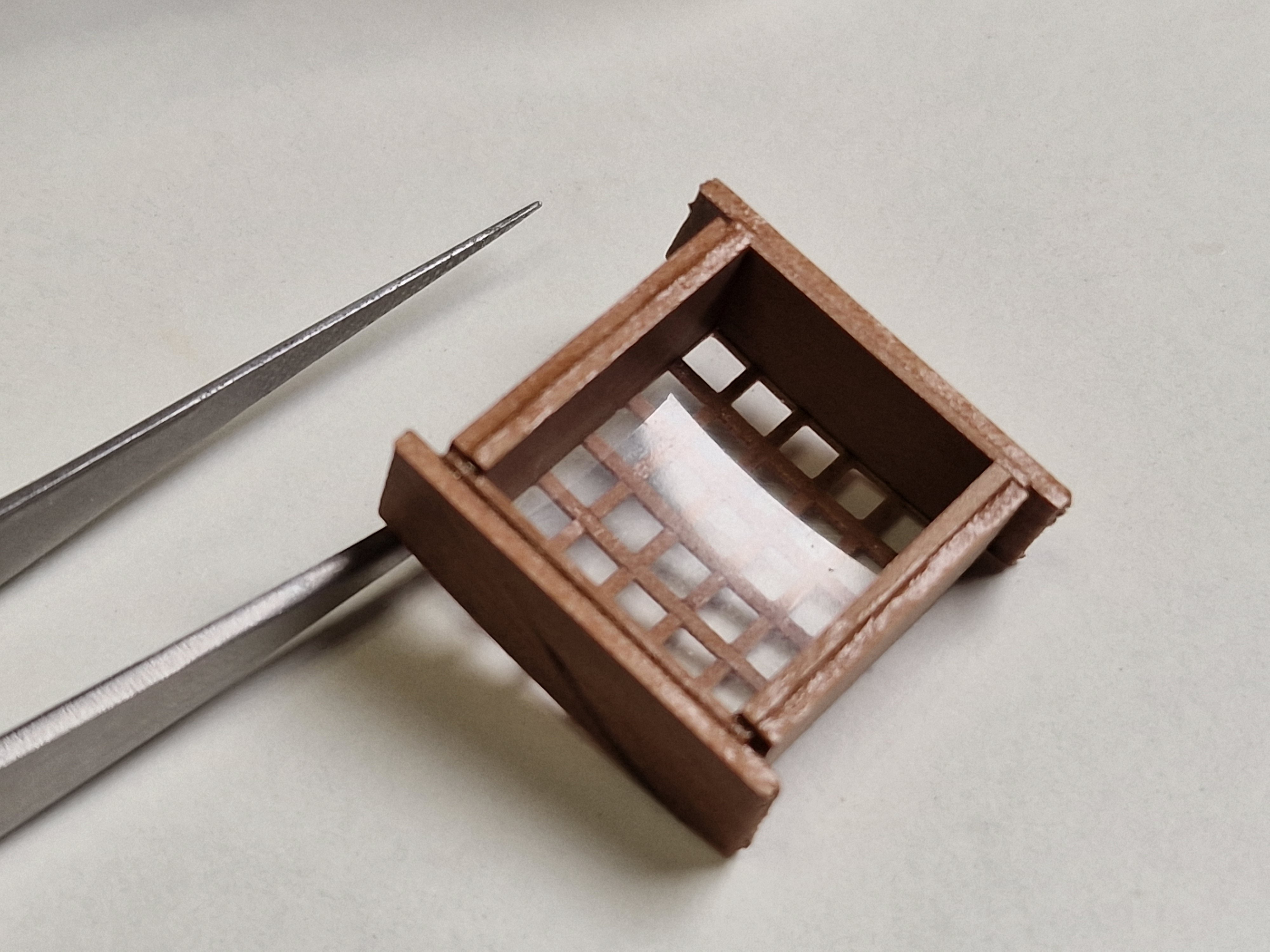
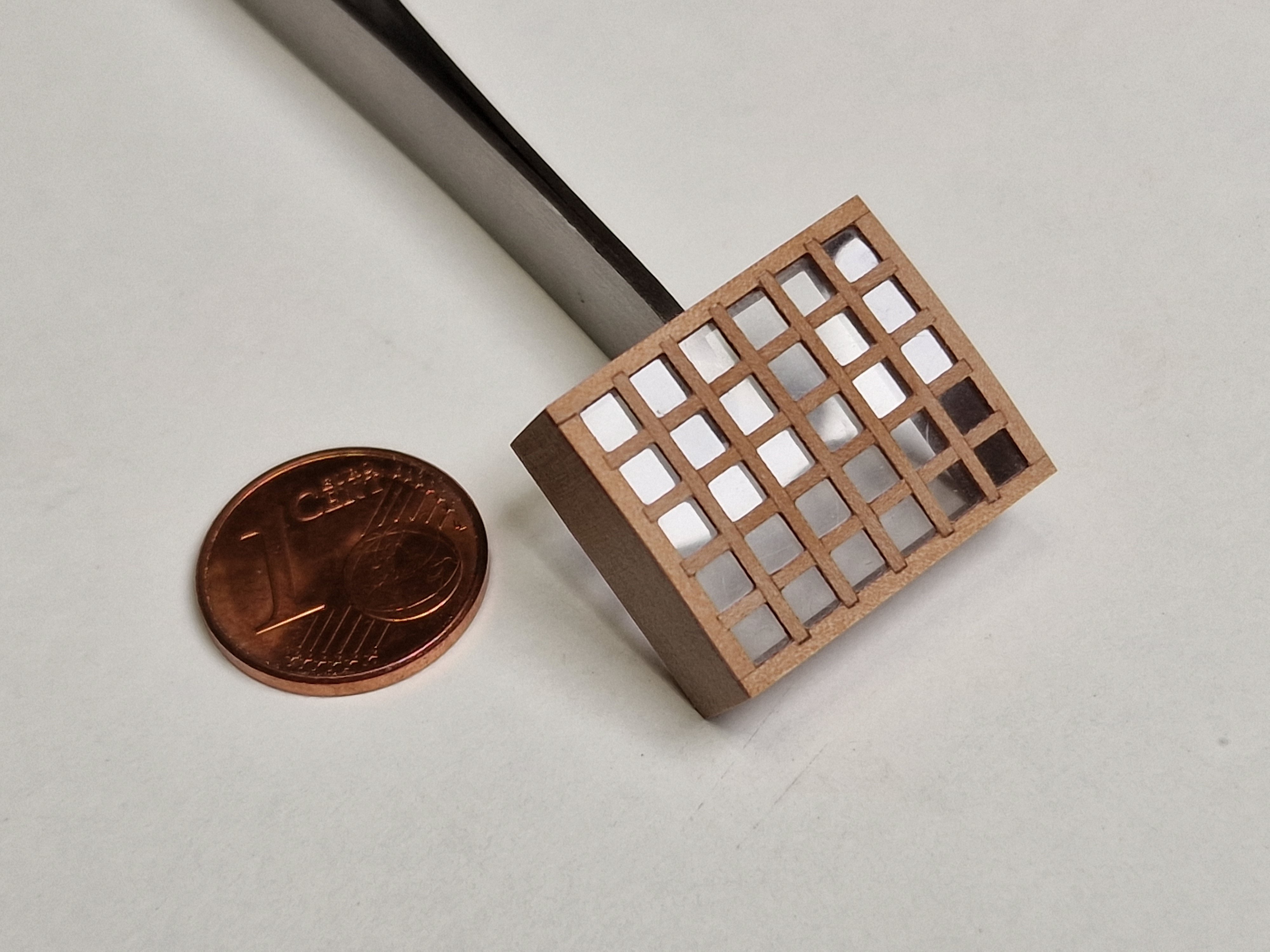
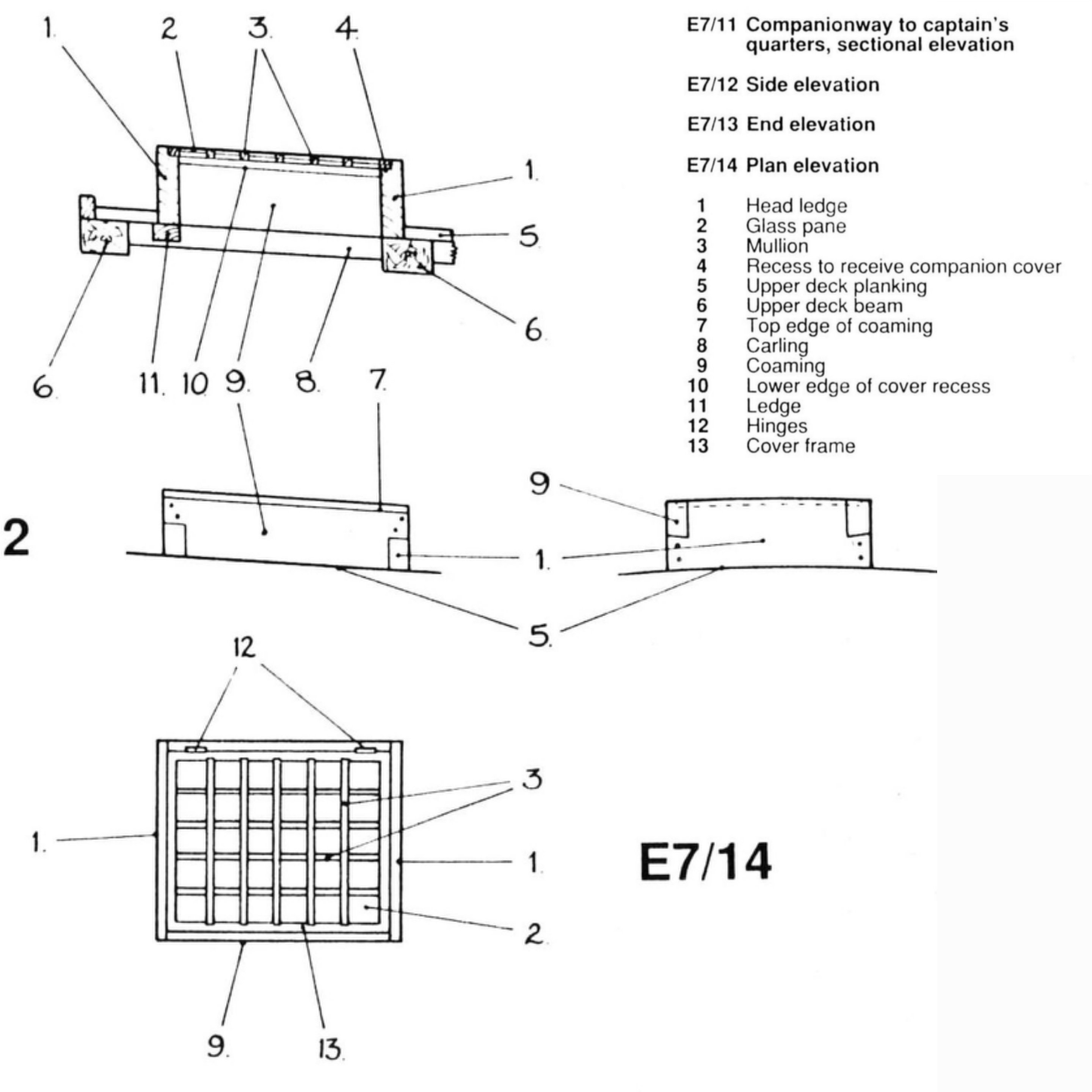
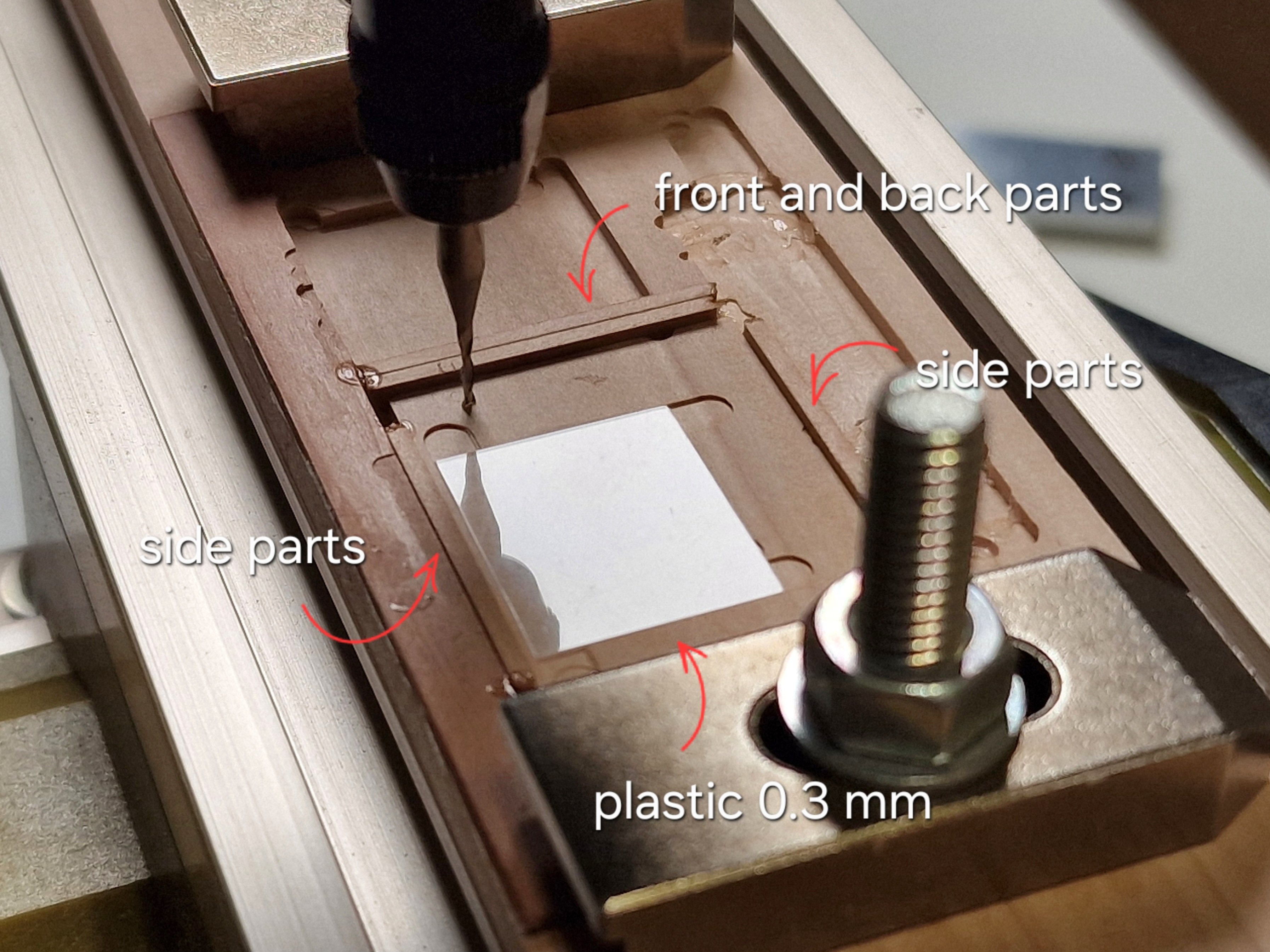
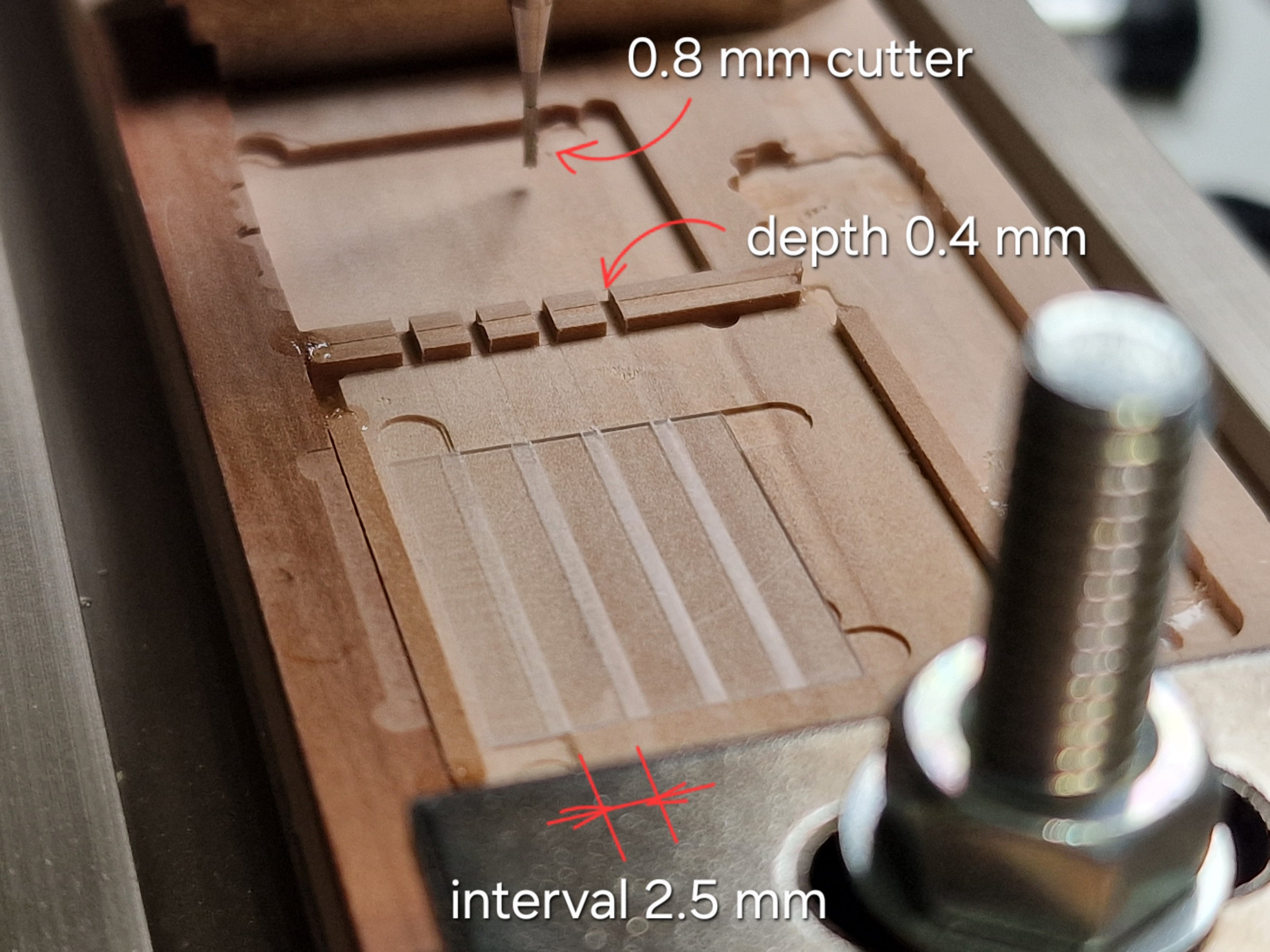
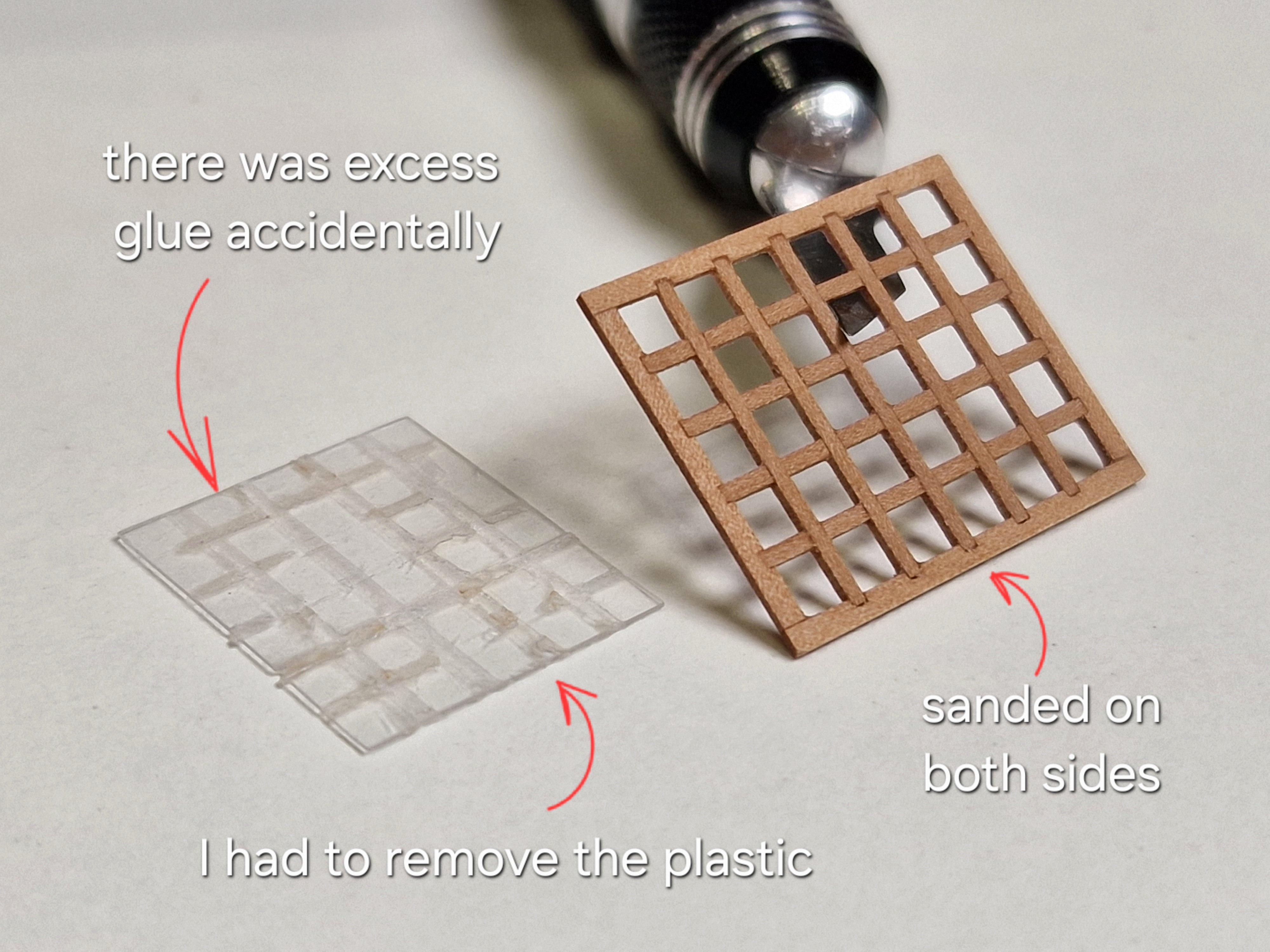
Skylight (companionway to captain`s quarters) 1/3 For glass I used 0.3mm thick plastic. I had to remove the plastic because glue got on it. I finished the grille separately and then secured the plastic to the frame without using glue.
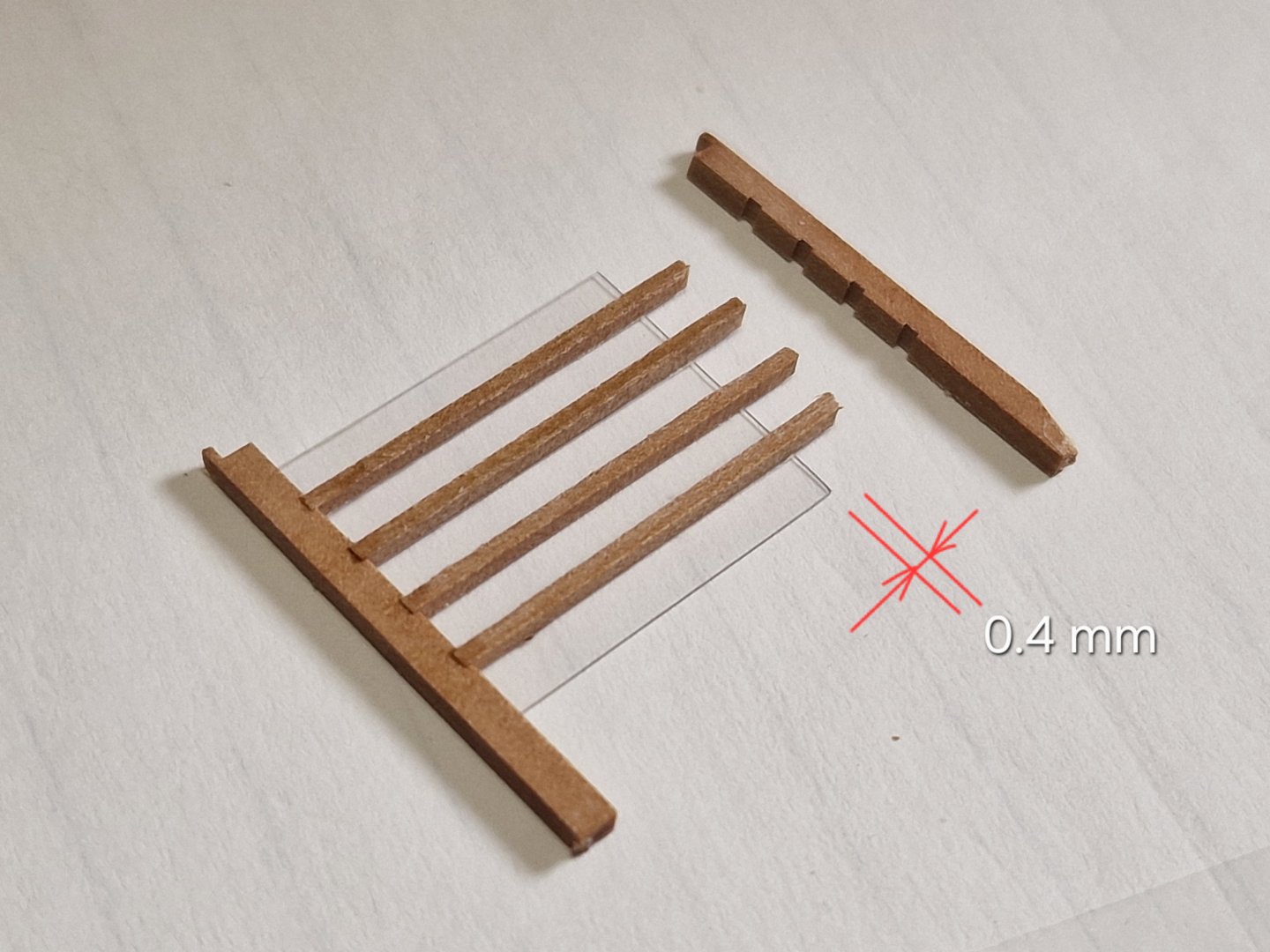
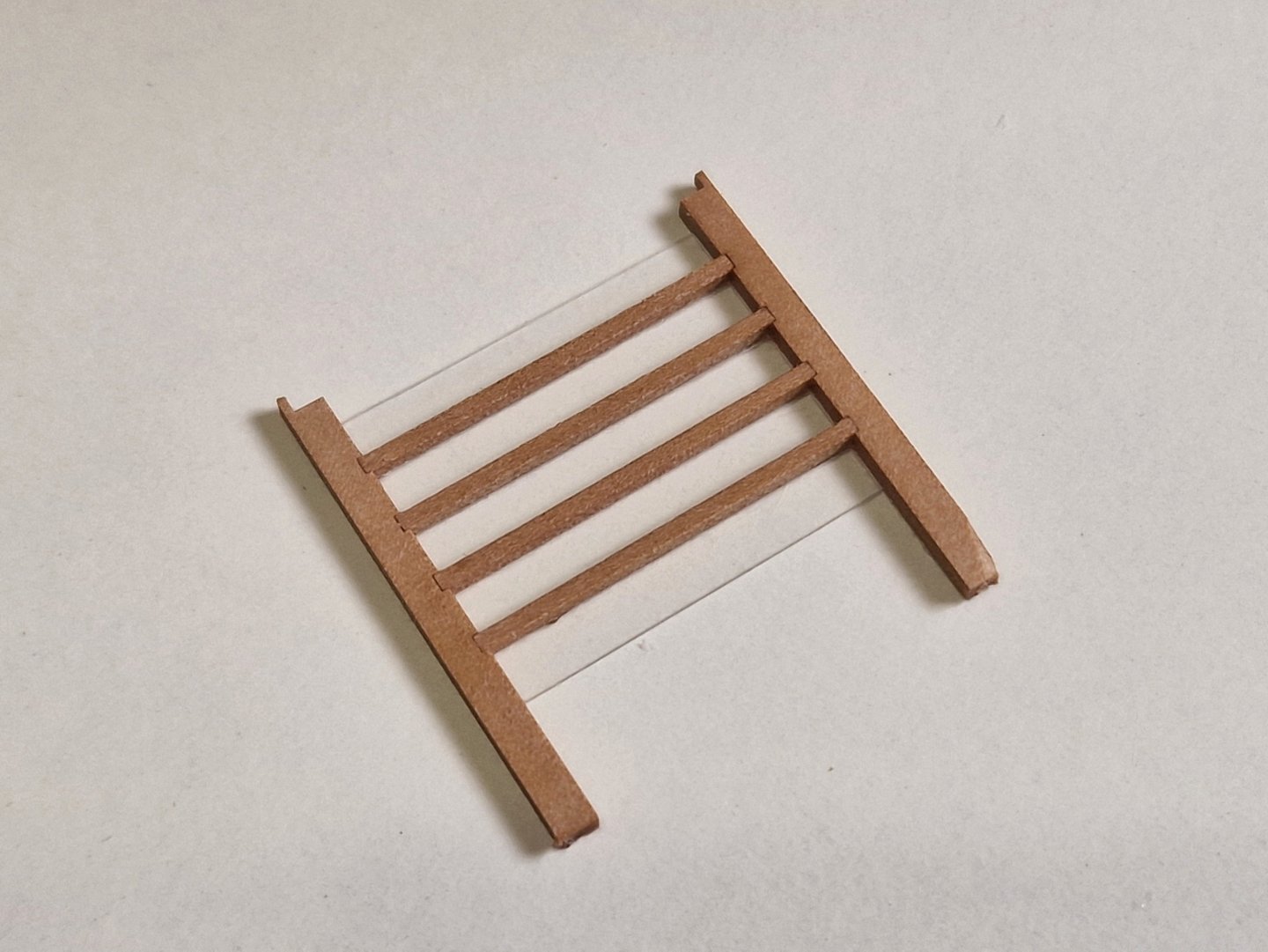
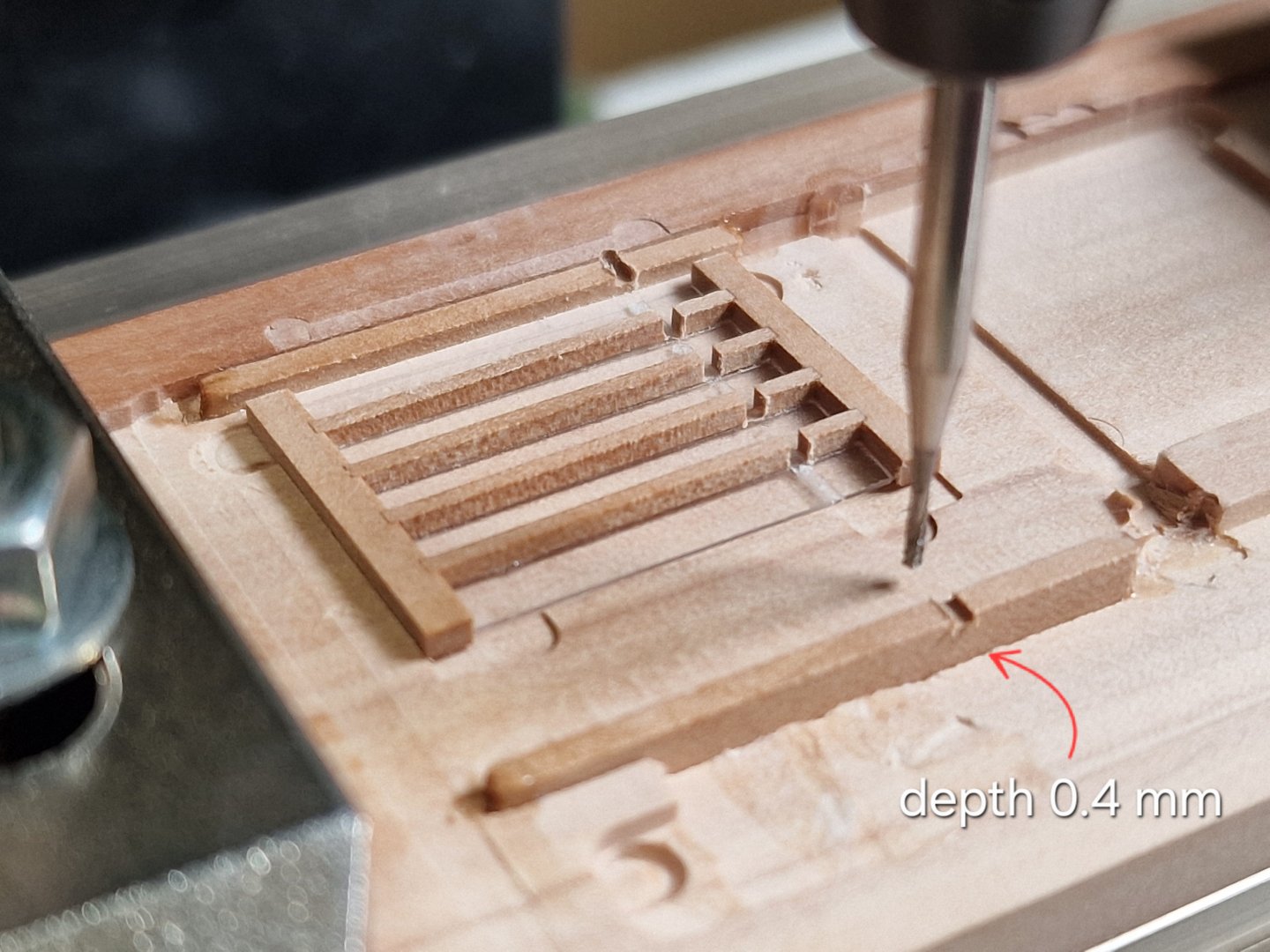
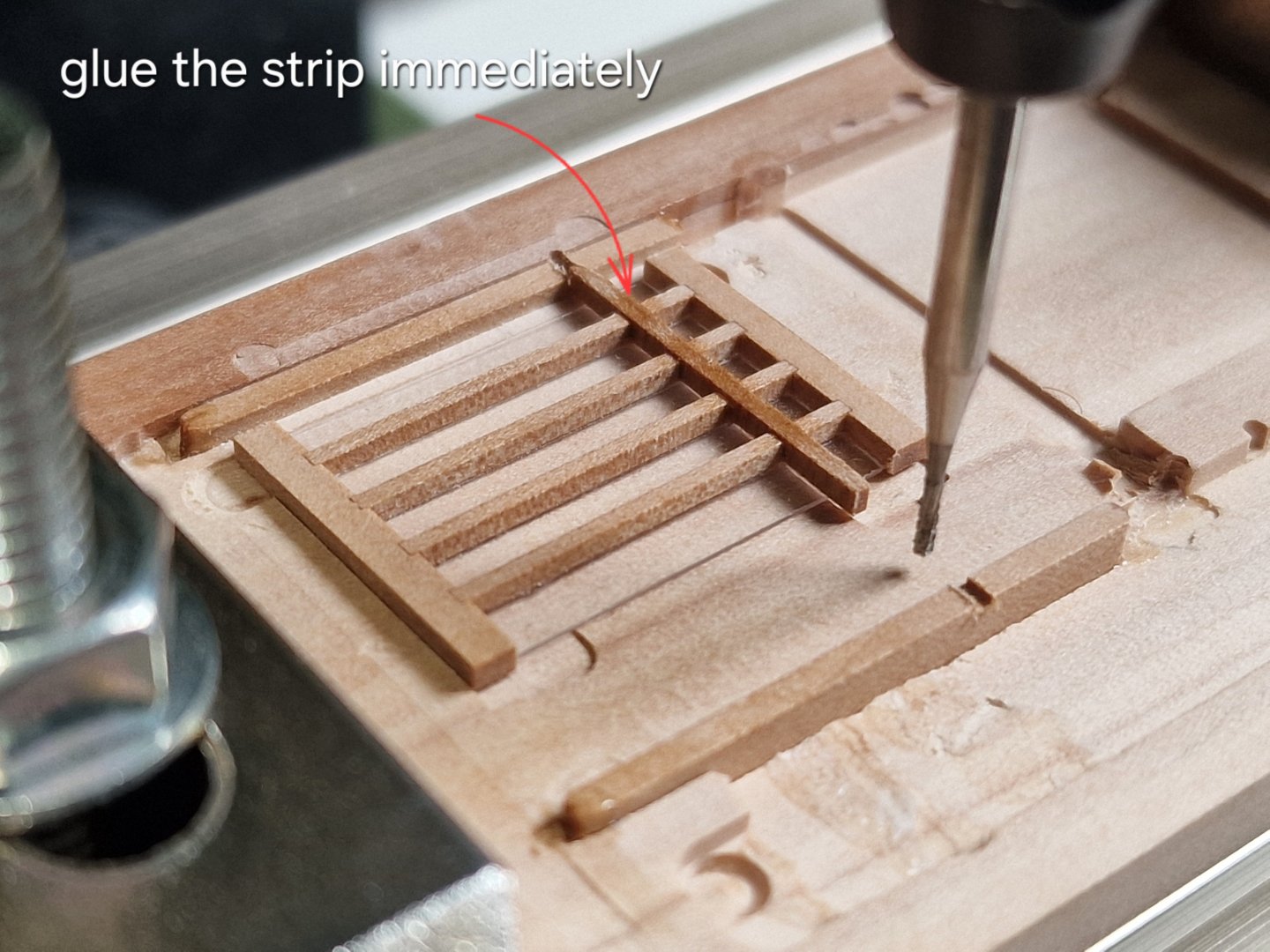
-
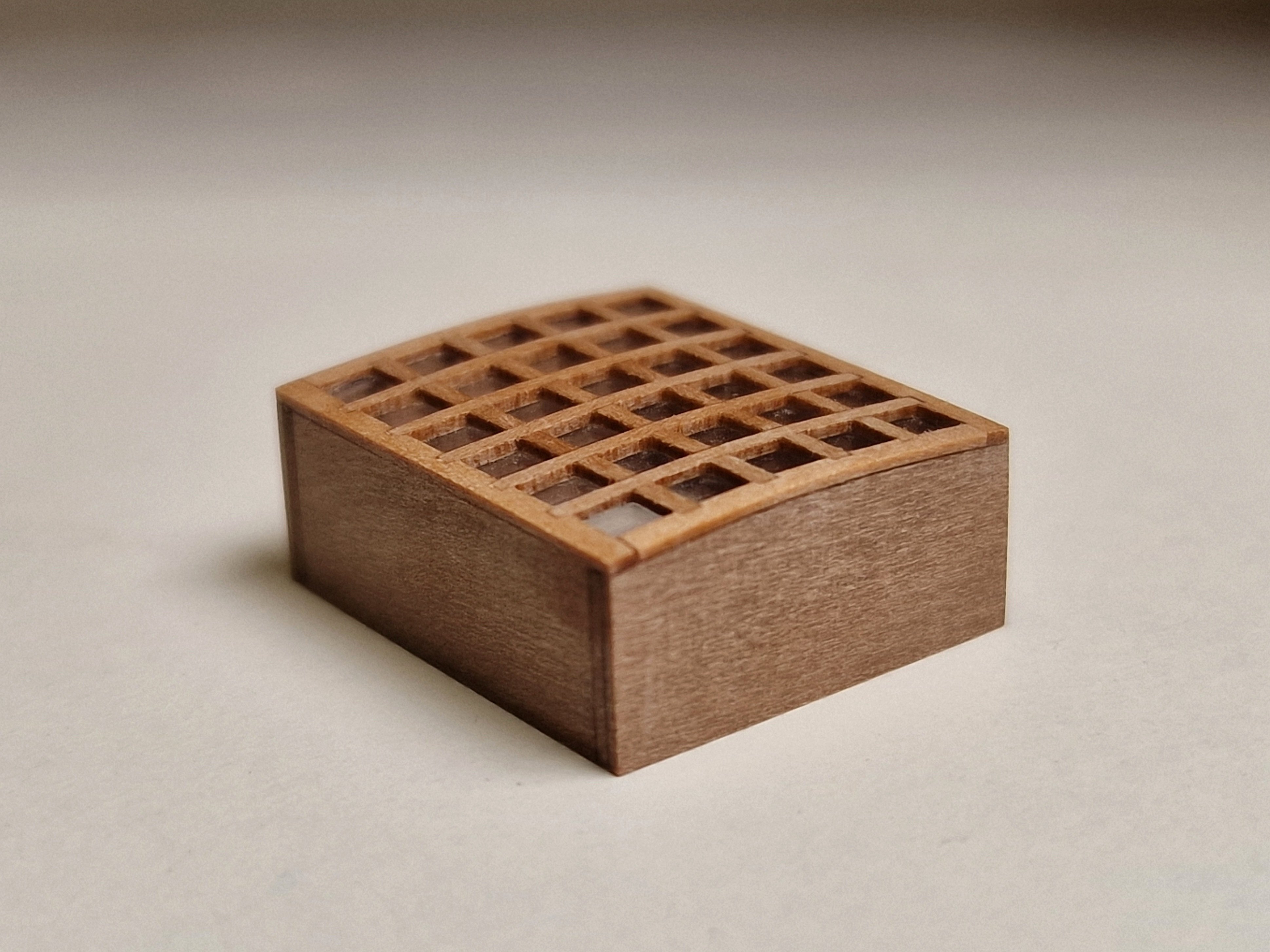
Gangway (companionway to after platform) 4/4 And as I already said, the door is fully functional and can be in any position, both open and closed.


-
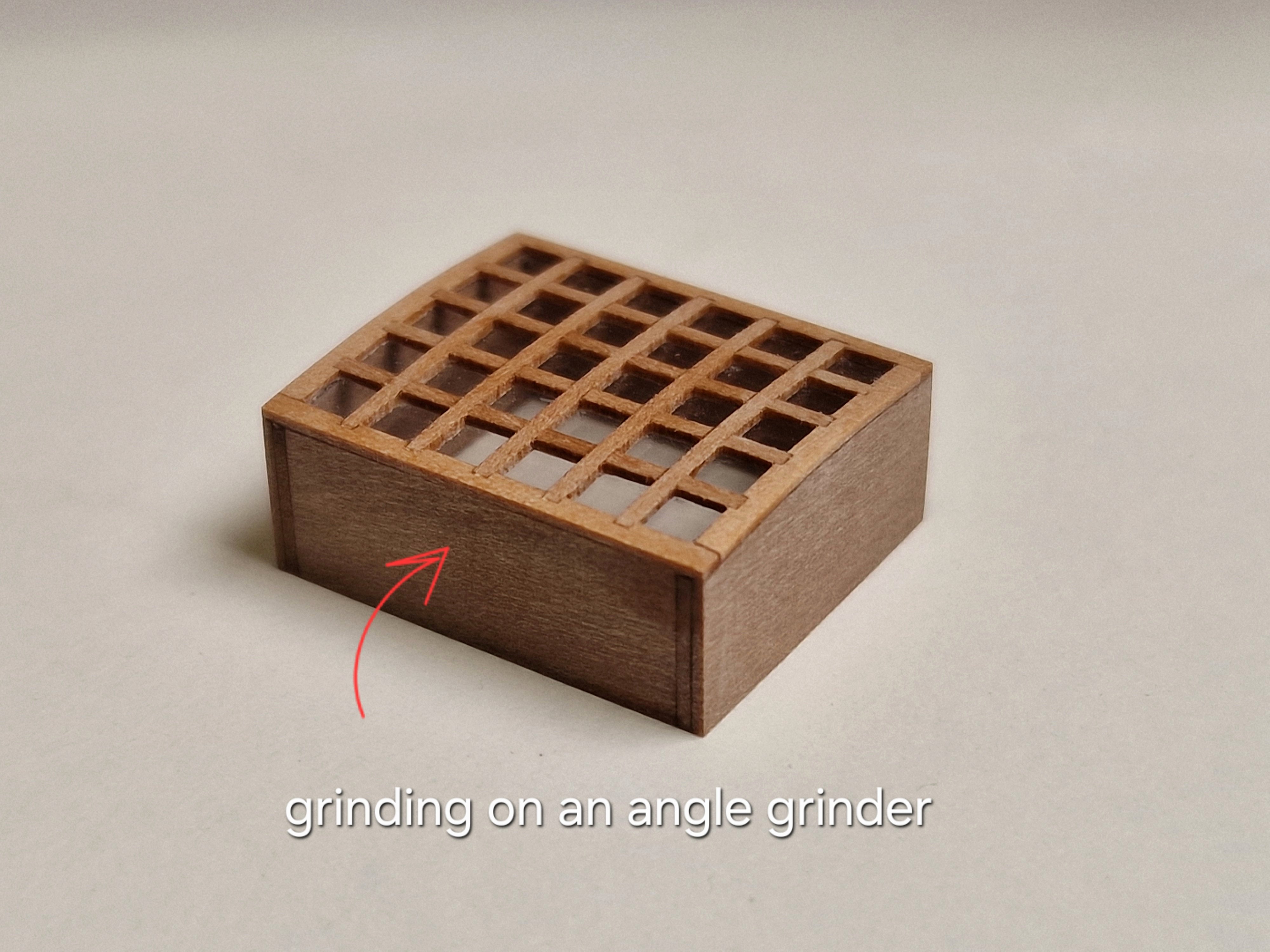
Gangway (companionway to after platform) 3/4 The guides are cut slightly larger than the required size and ground on an angle grinder.


-
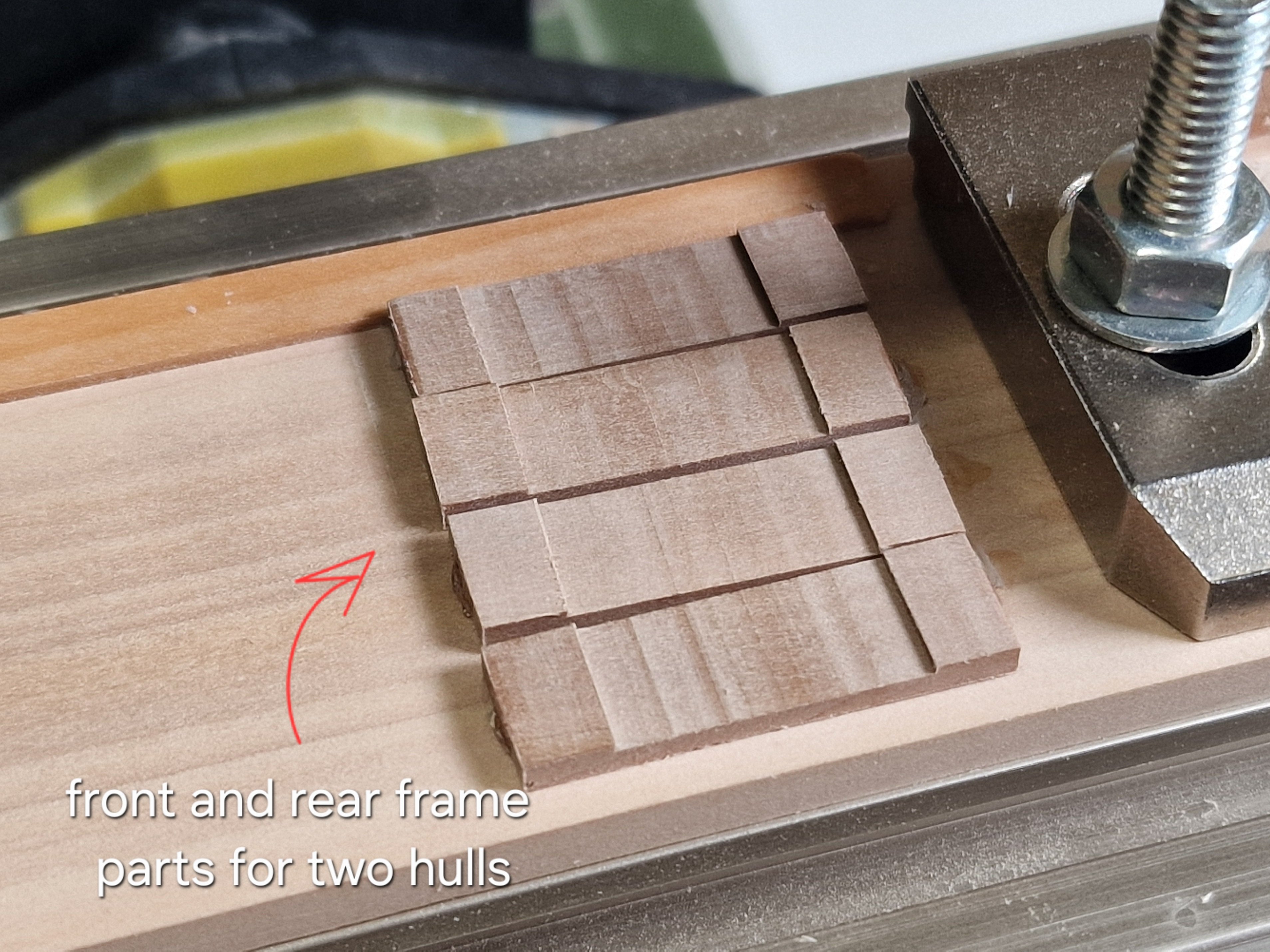
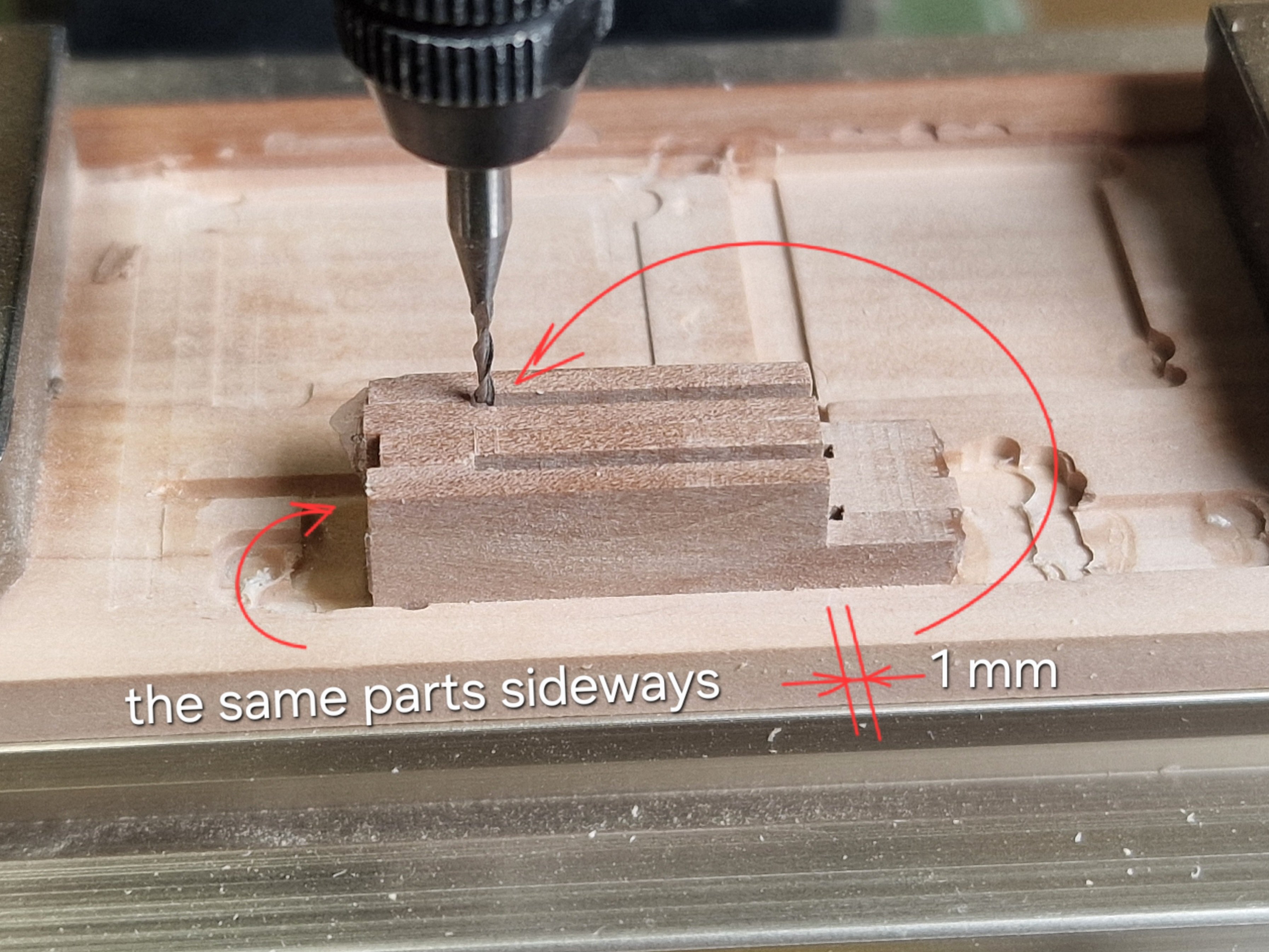
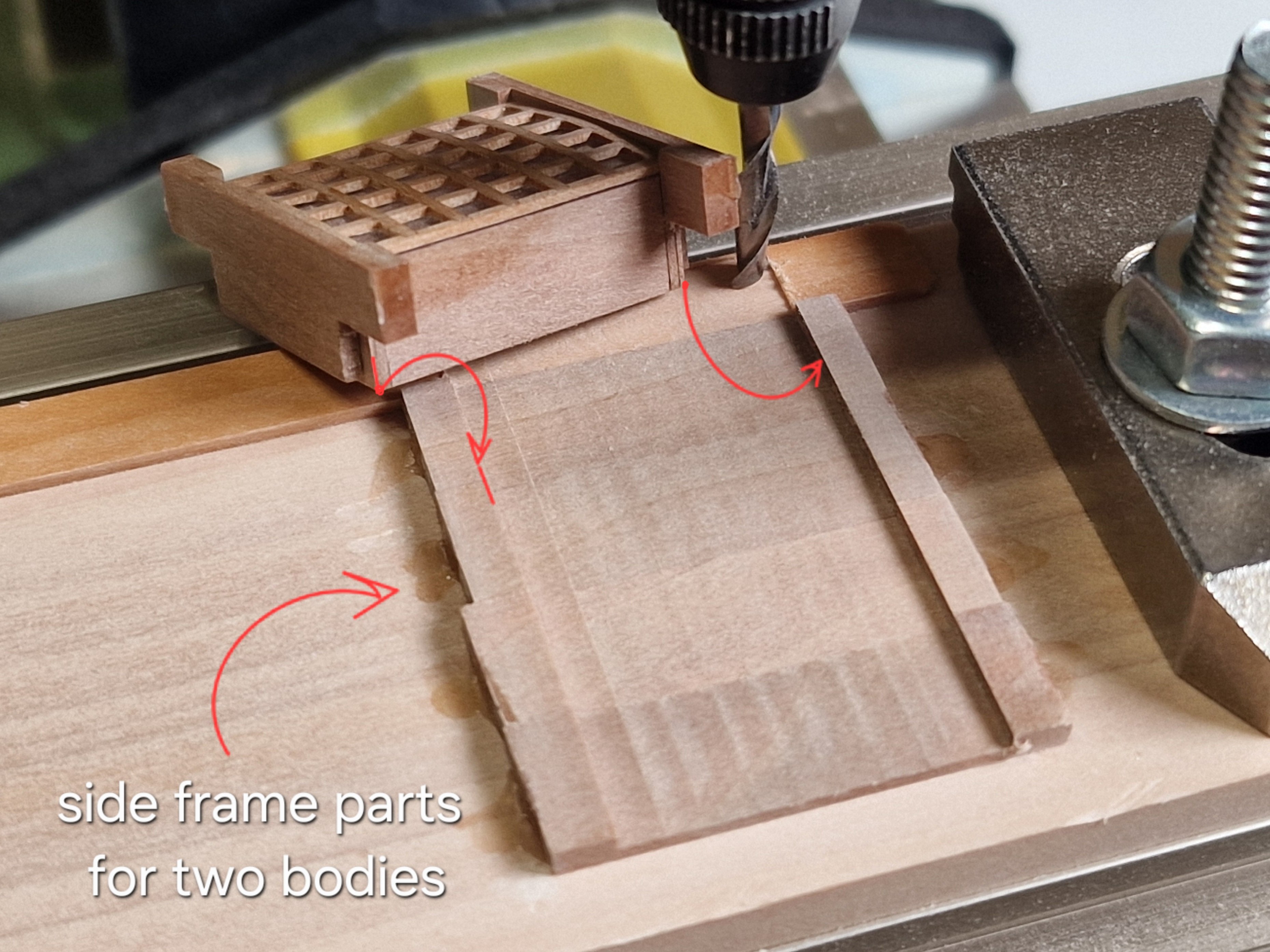
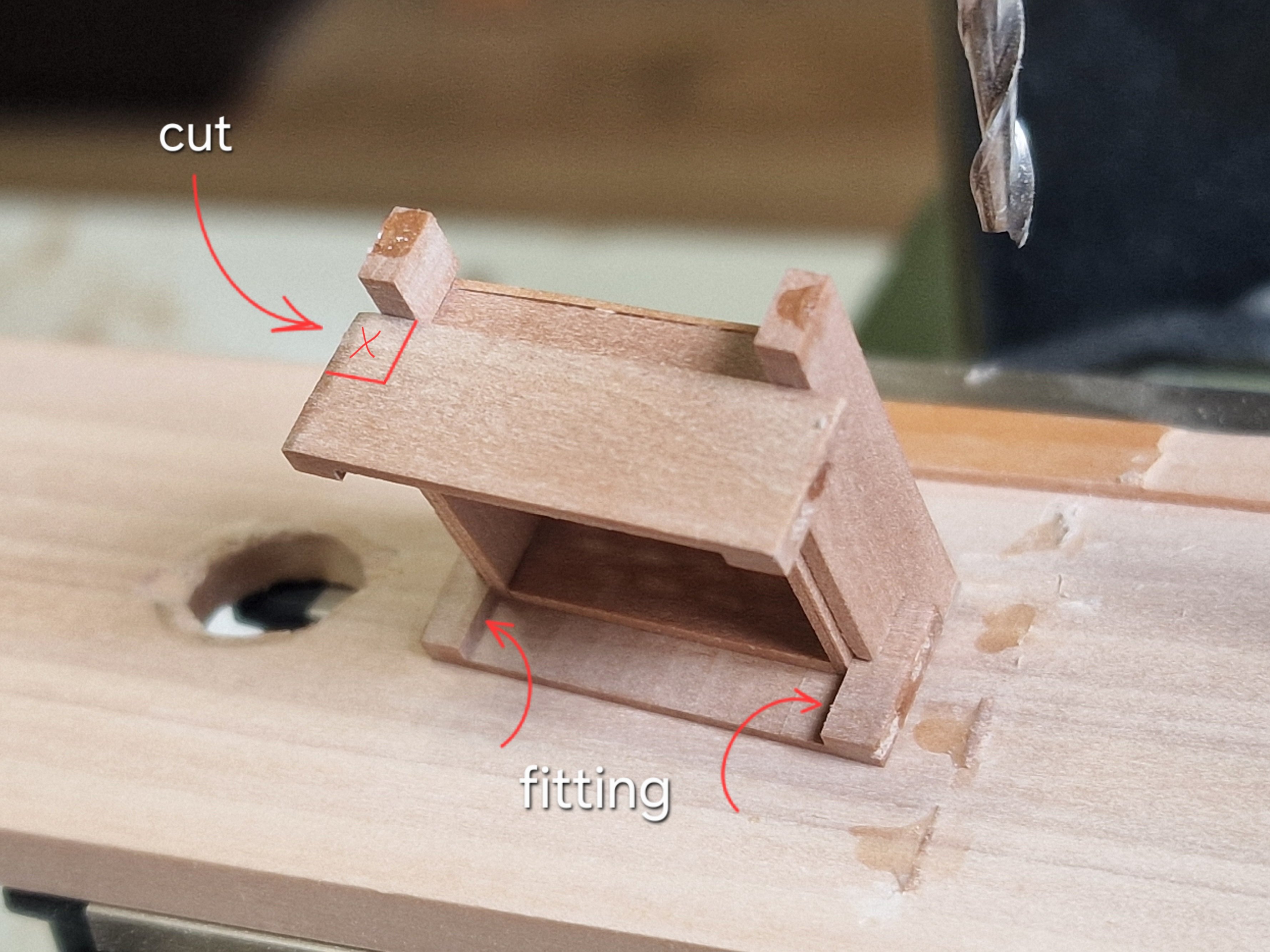
Gangway (companionway to after platform) 1/4 One of the most interesting parts, not as complicated as the previous ones, but there are still some manufacturing challenges. I plan to make the doors slide and be able to be either closed or open, but that's for the next part. In this one: I still make two copies for two ships, but as everywhere there are some differences, but for now everything is unchanged for the two variants. I milled with a 3 mm cutter (for speed), the depth was 1 mm and this is important.


-
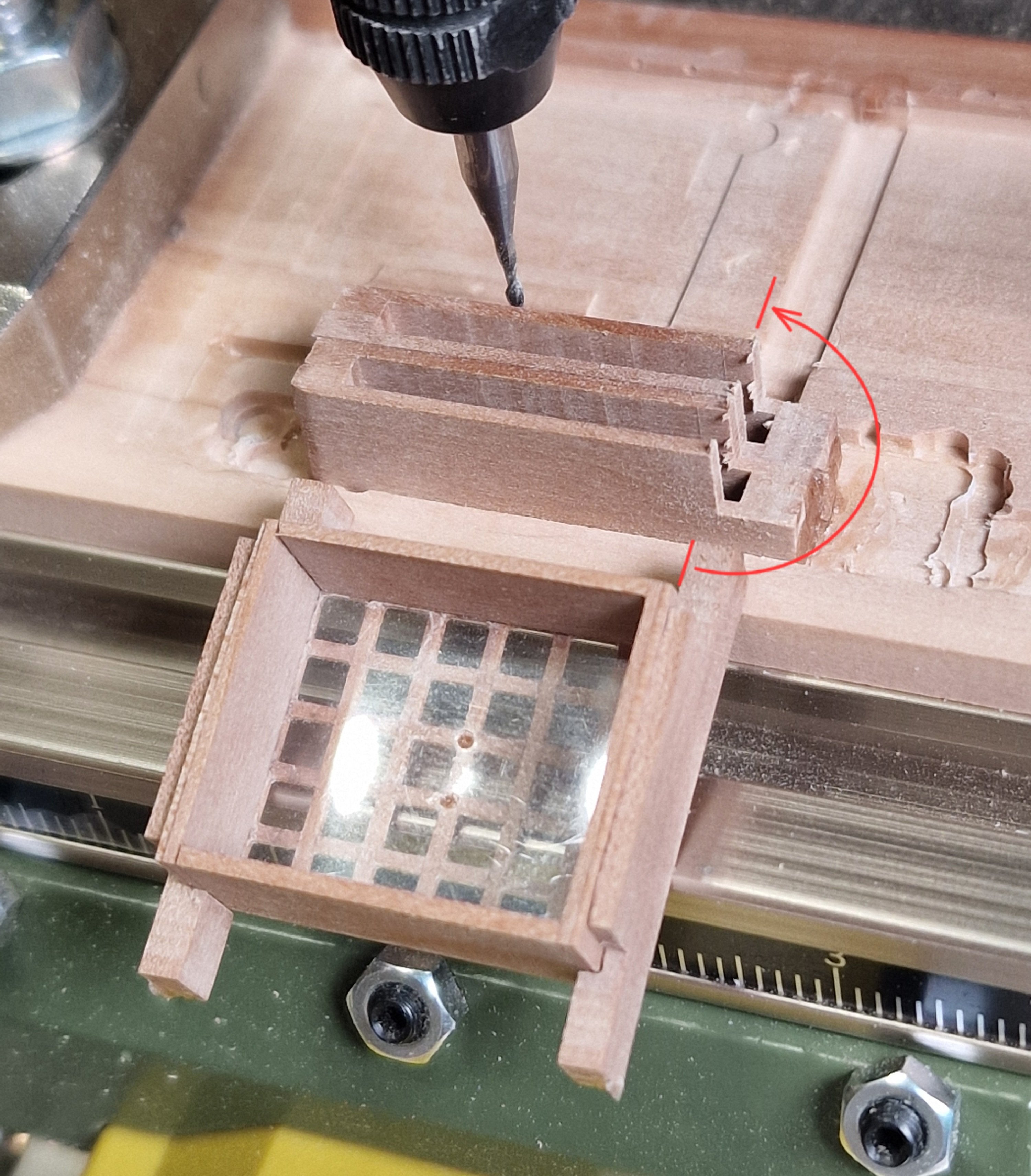
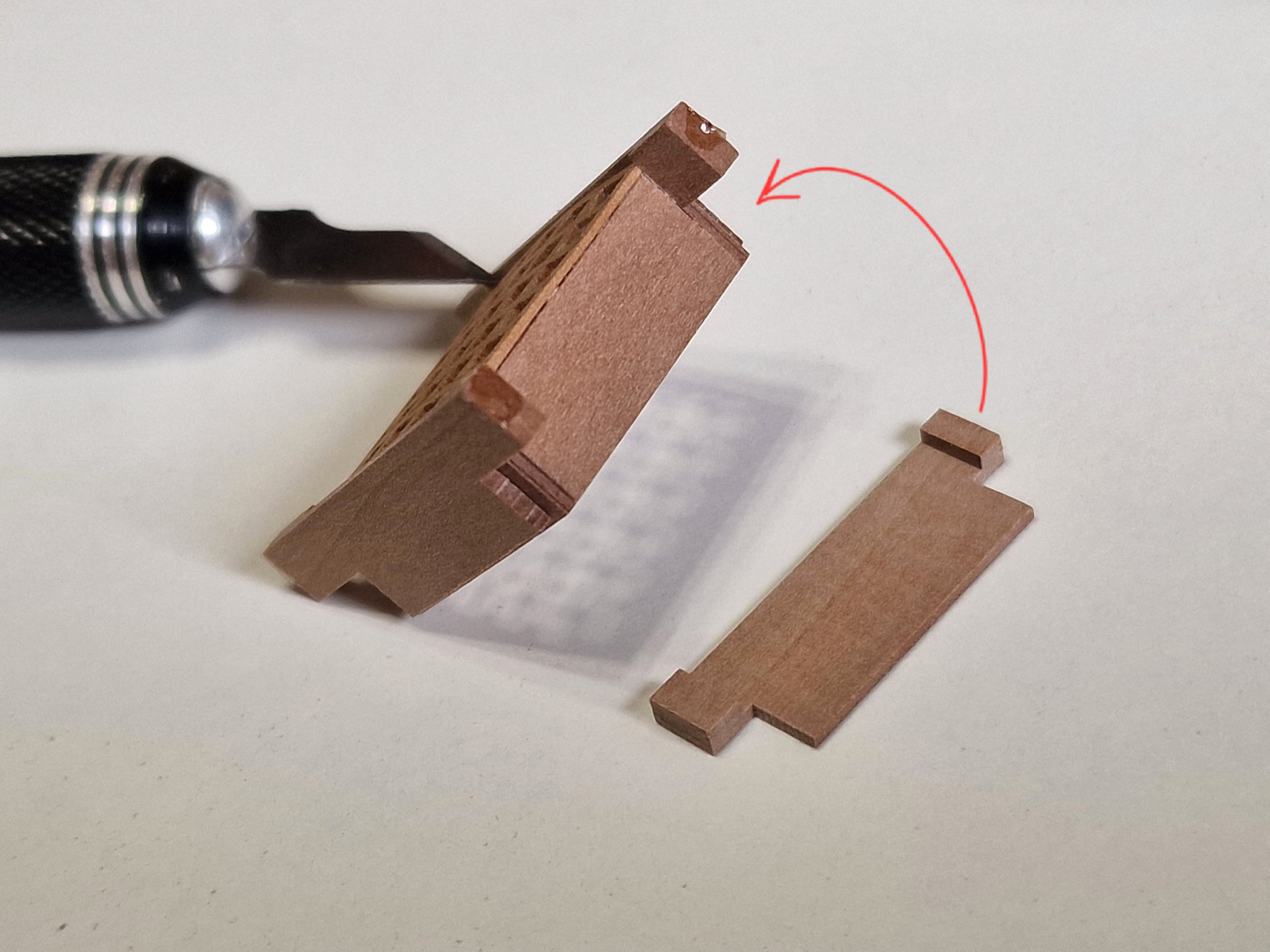
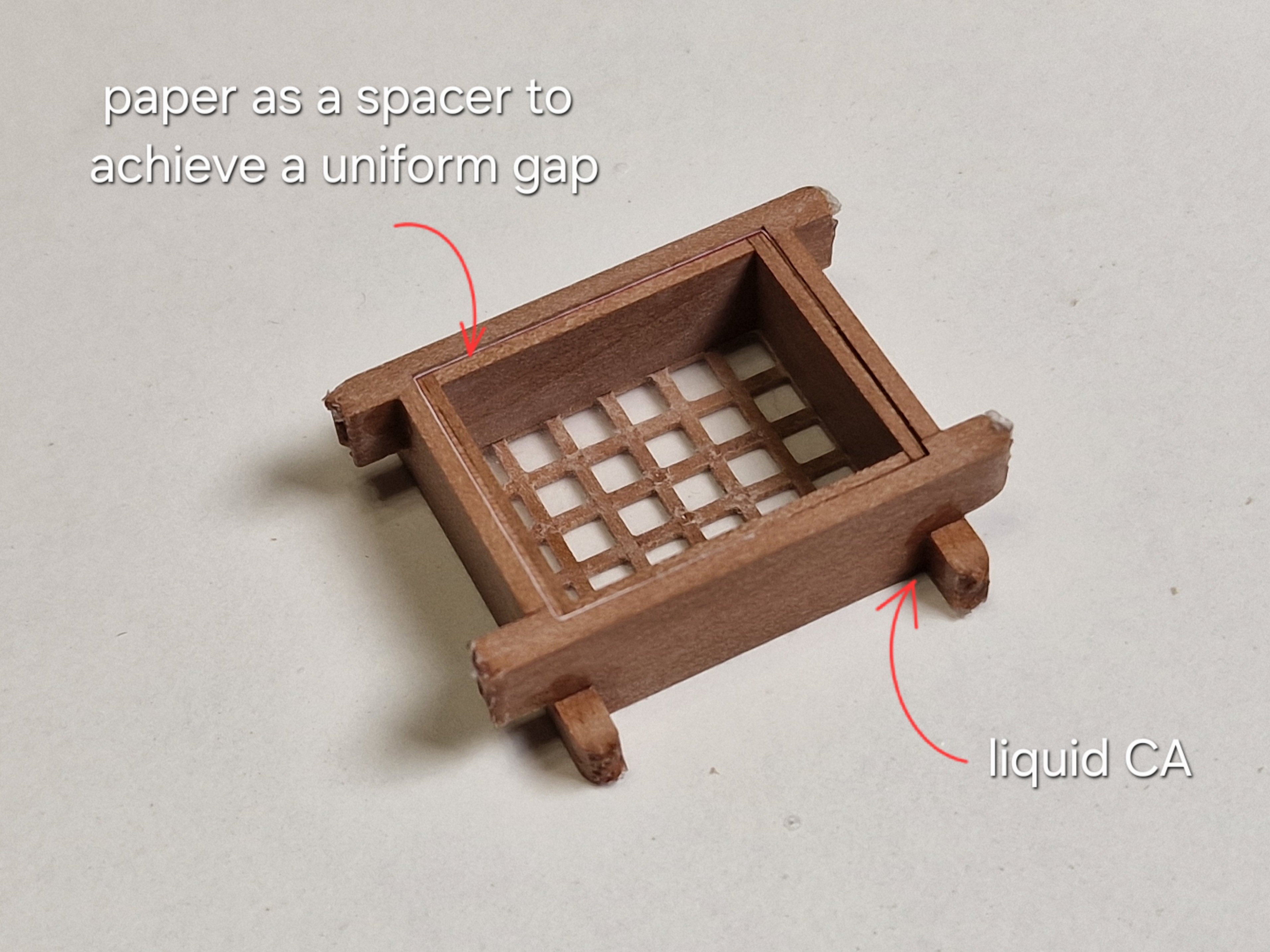
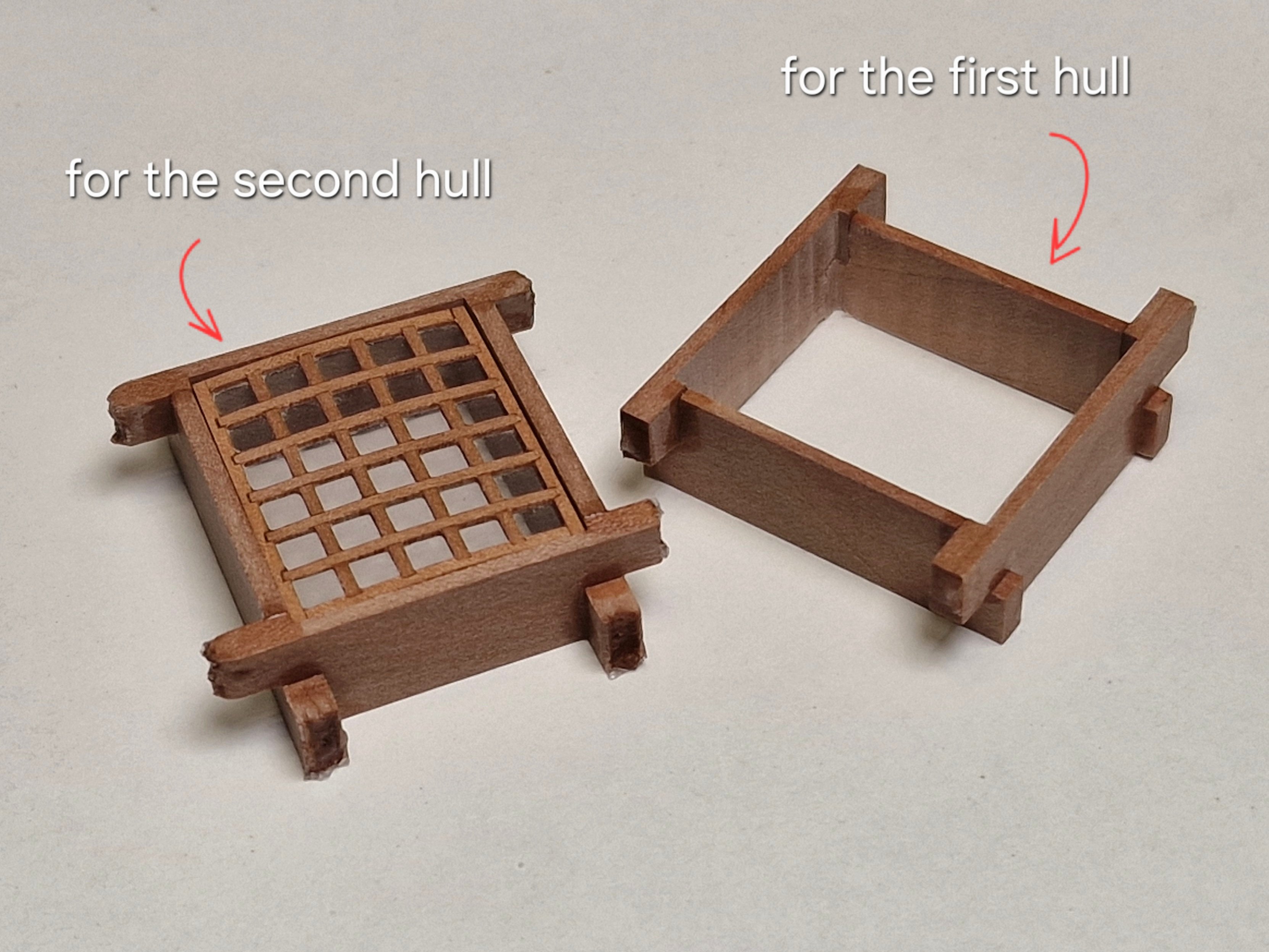
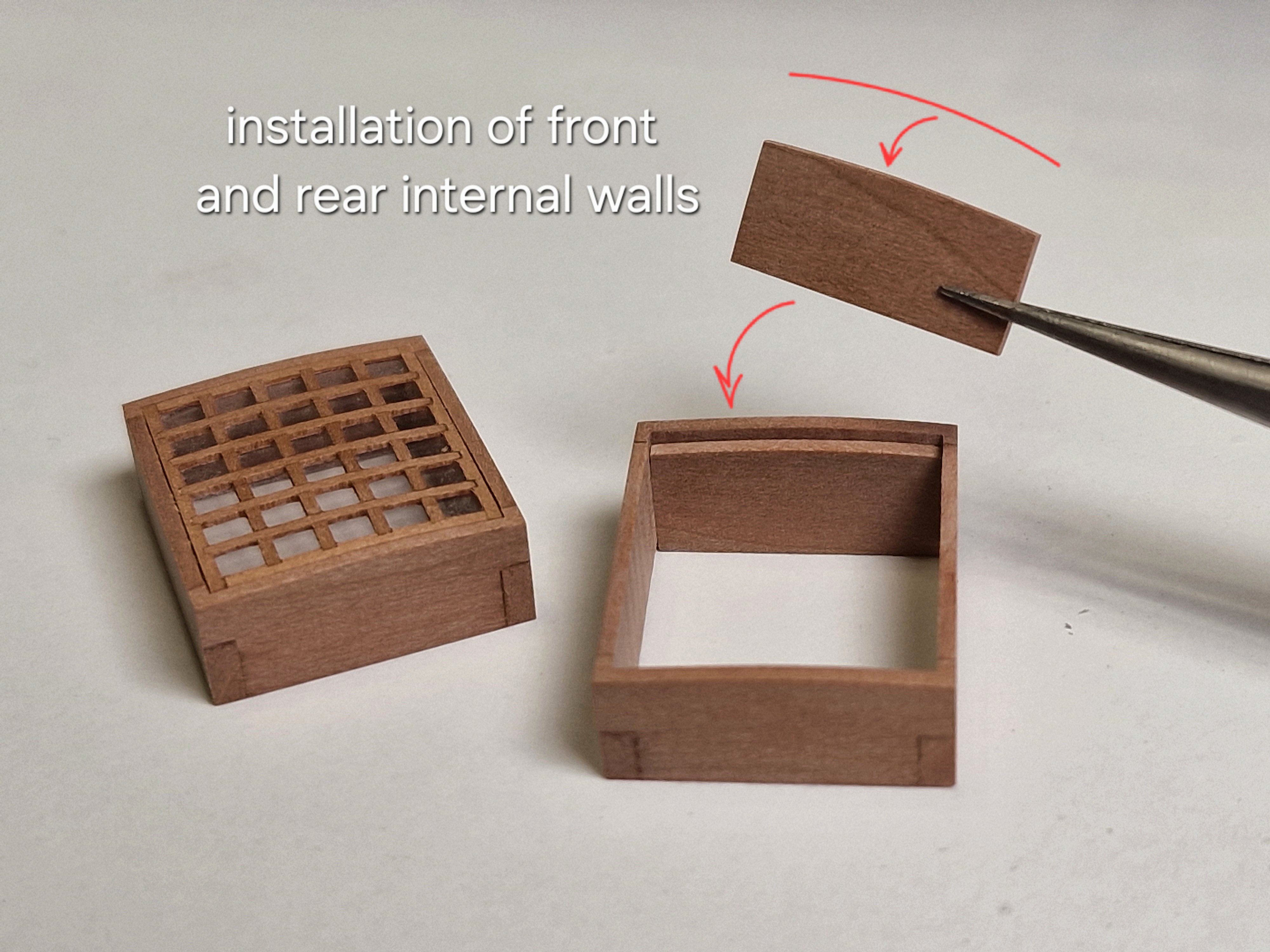
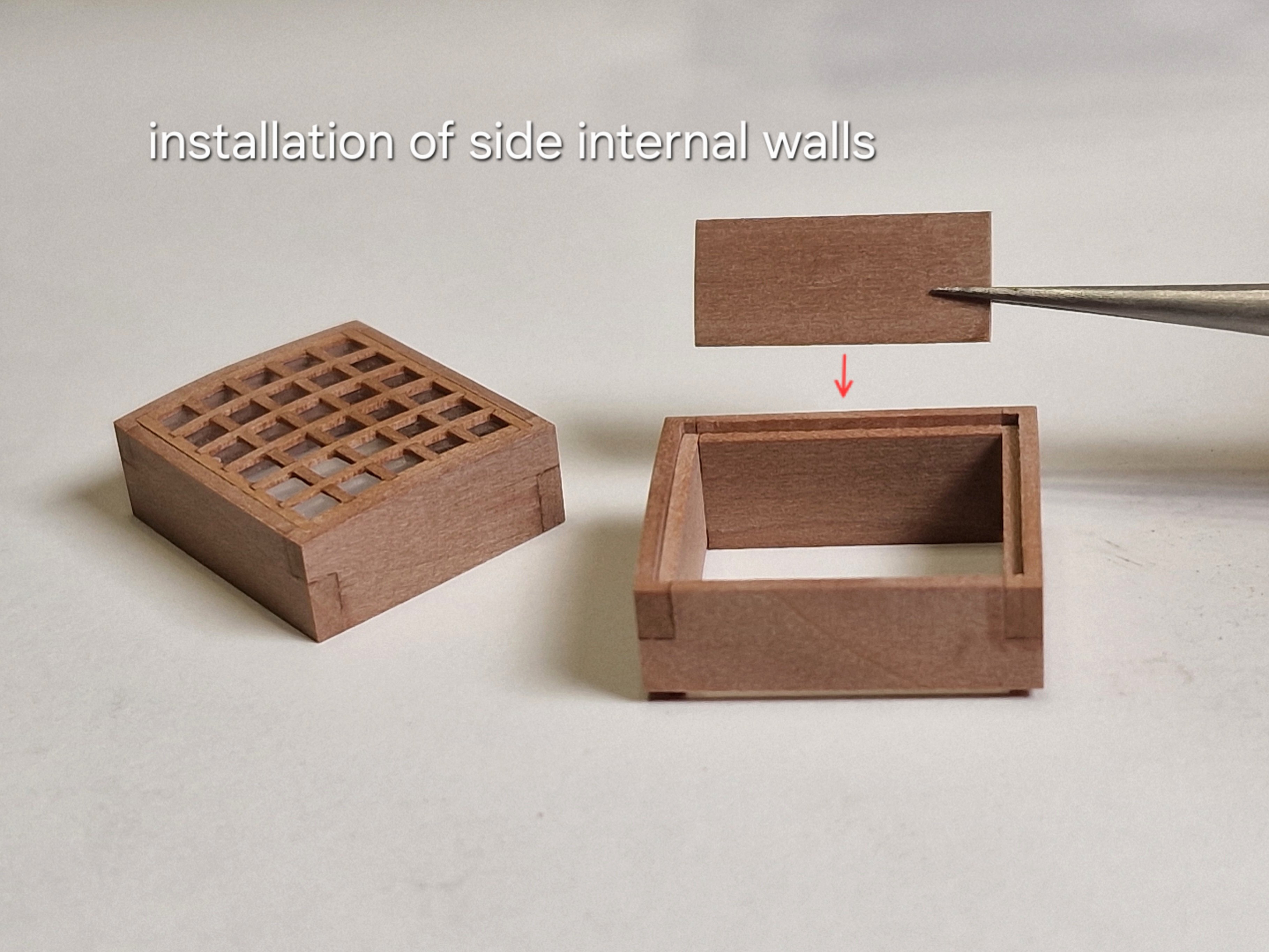
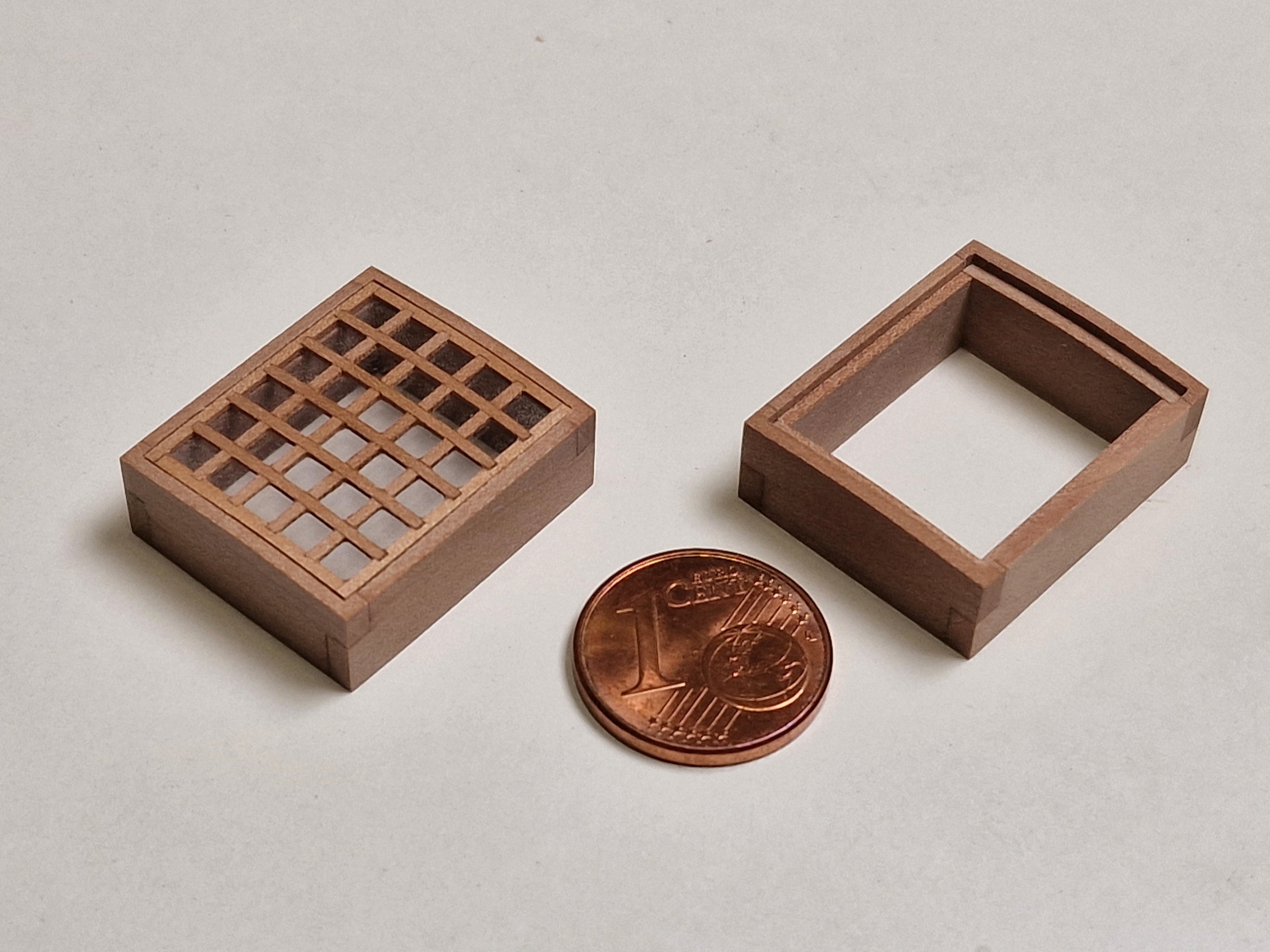
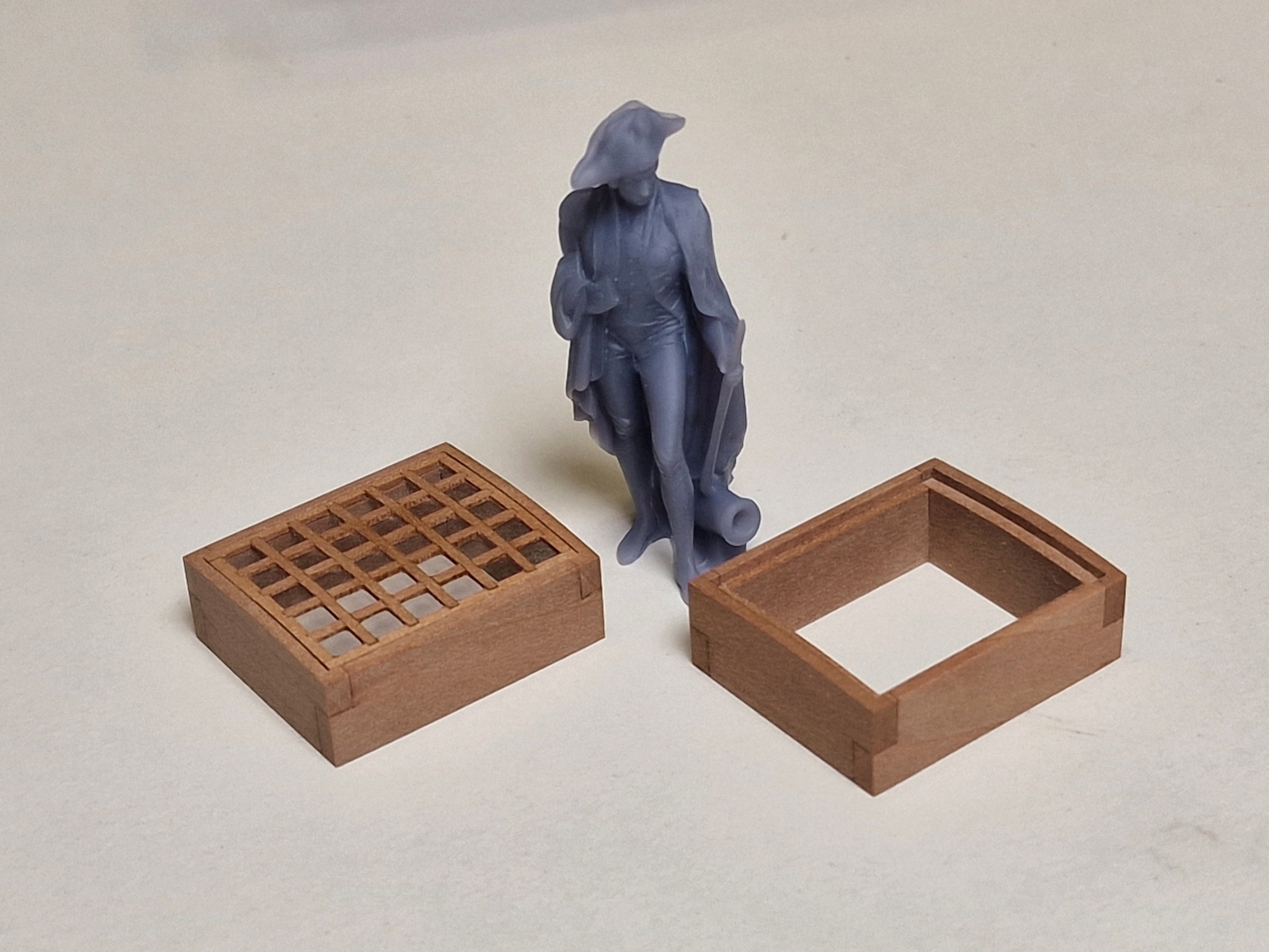
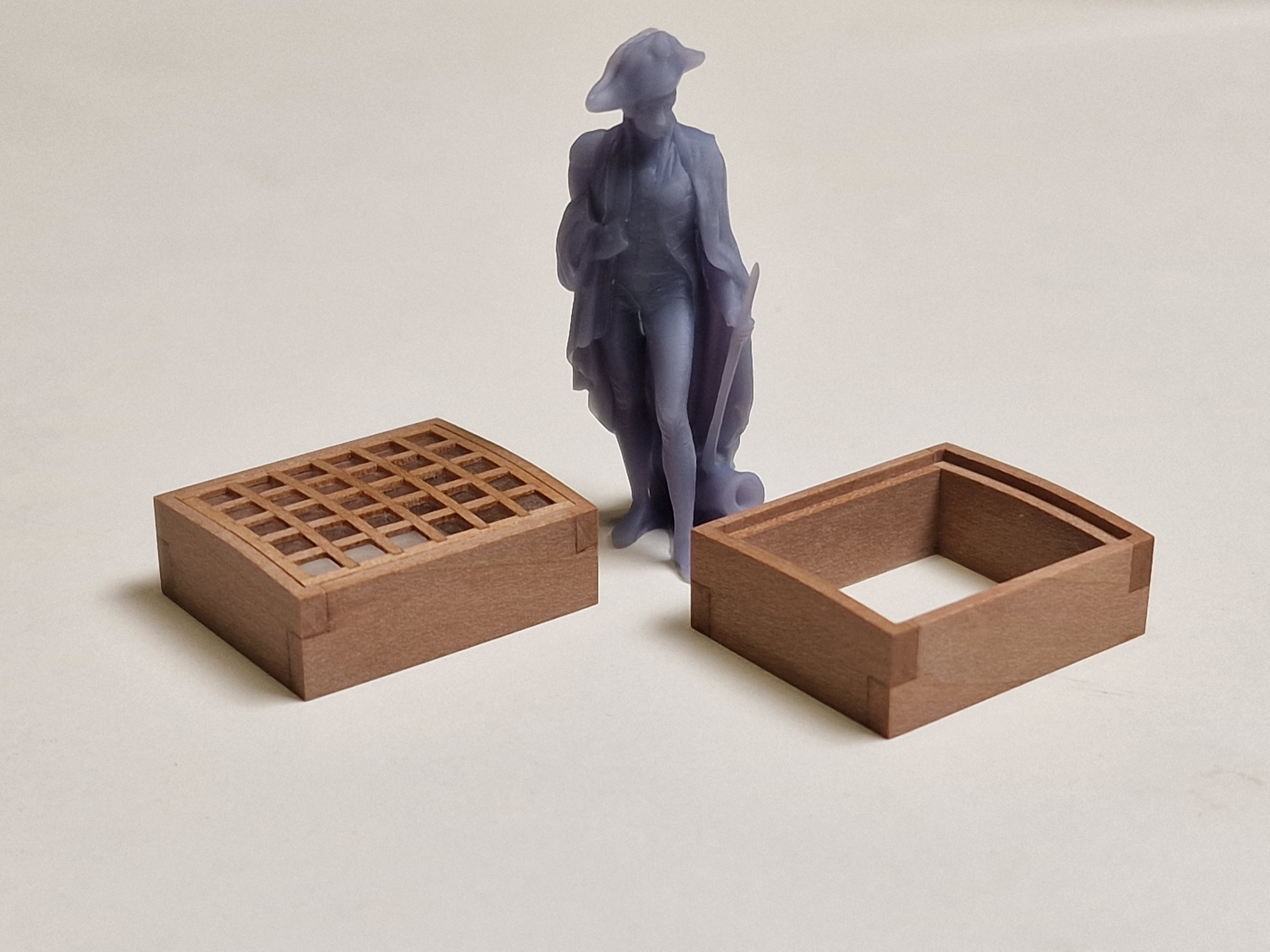
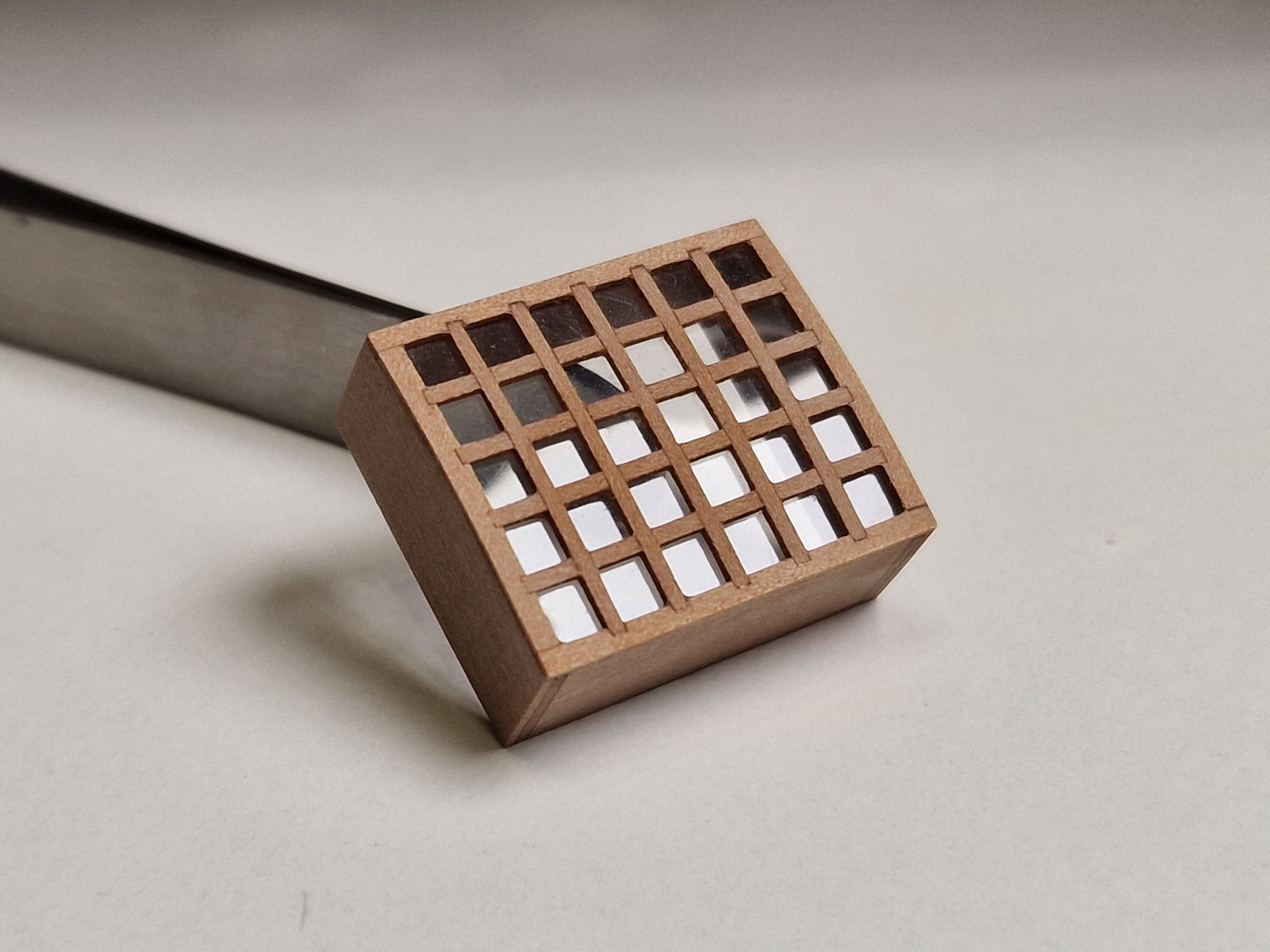
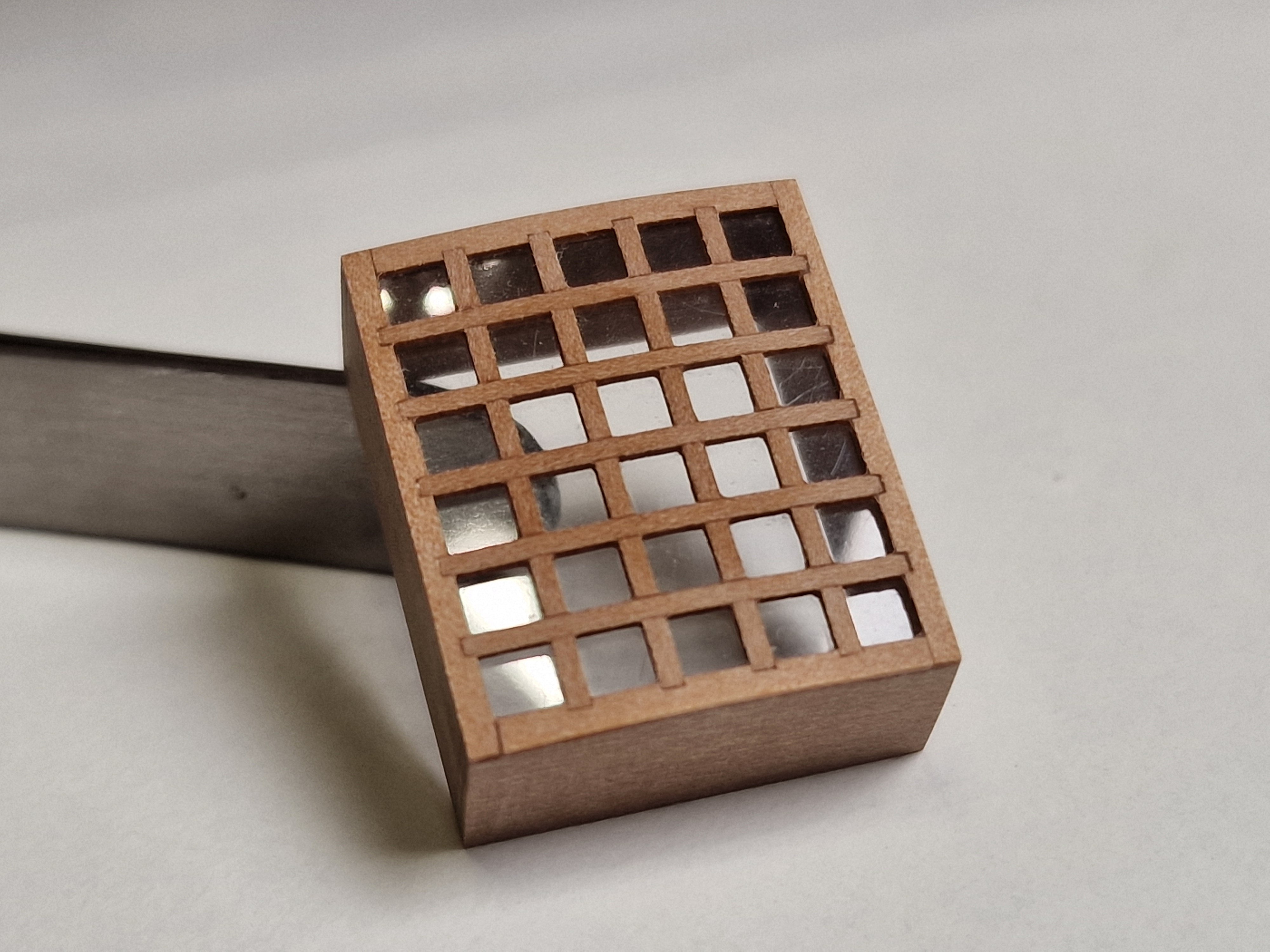
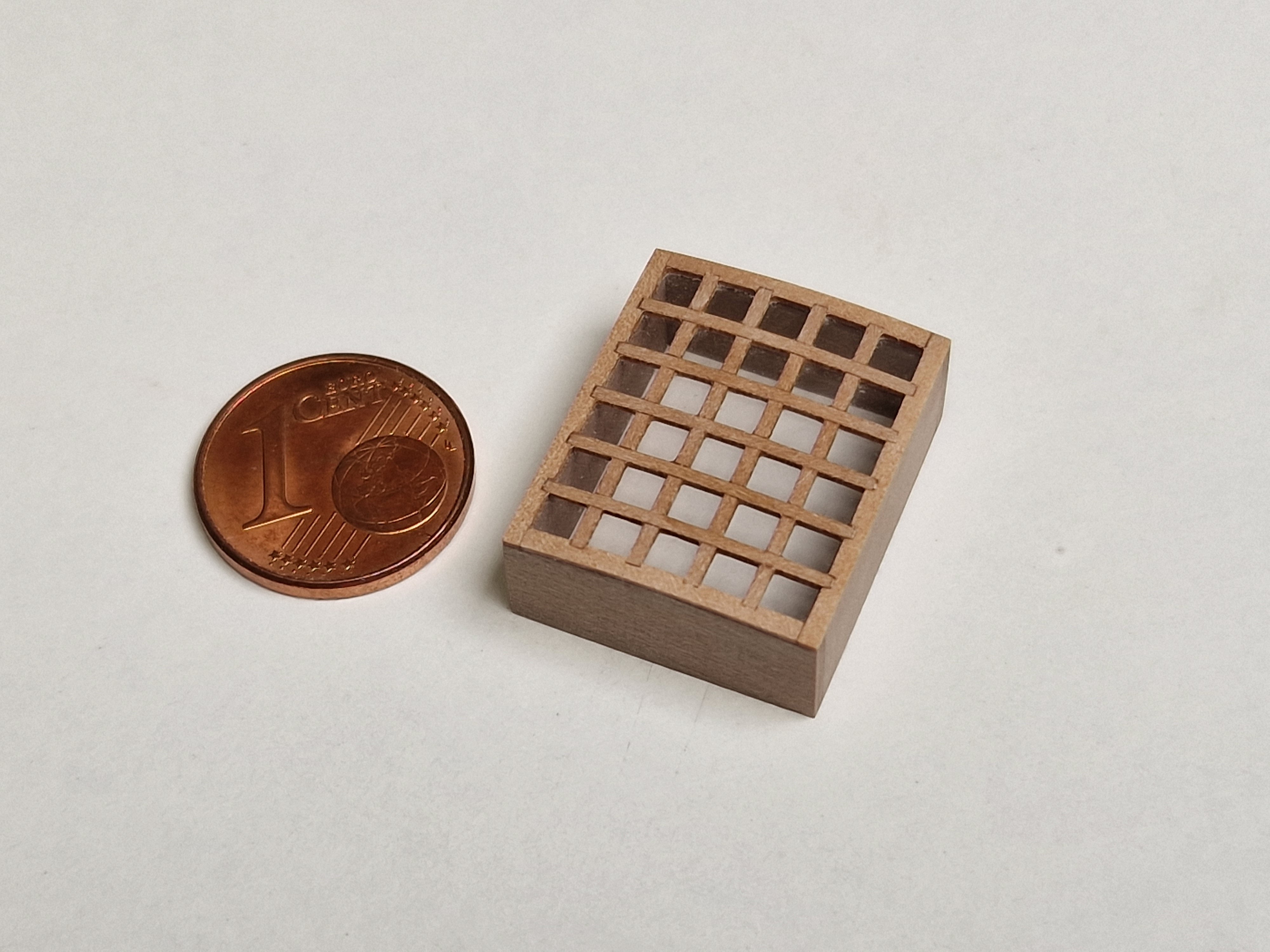
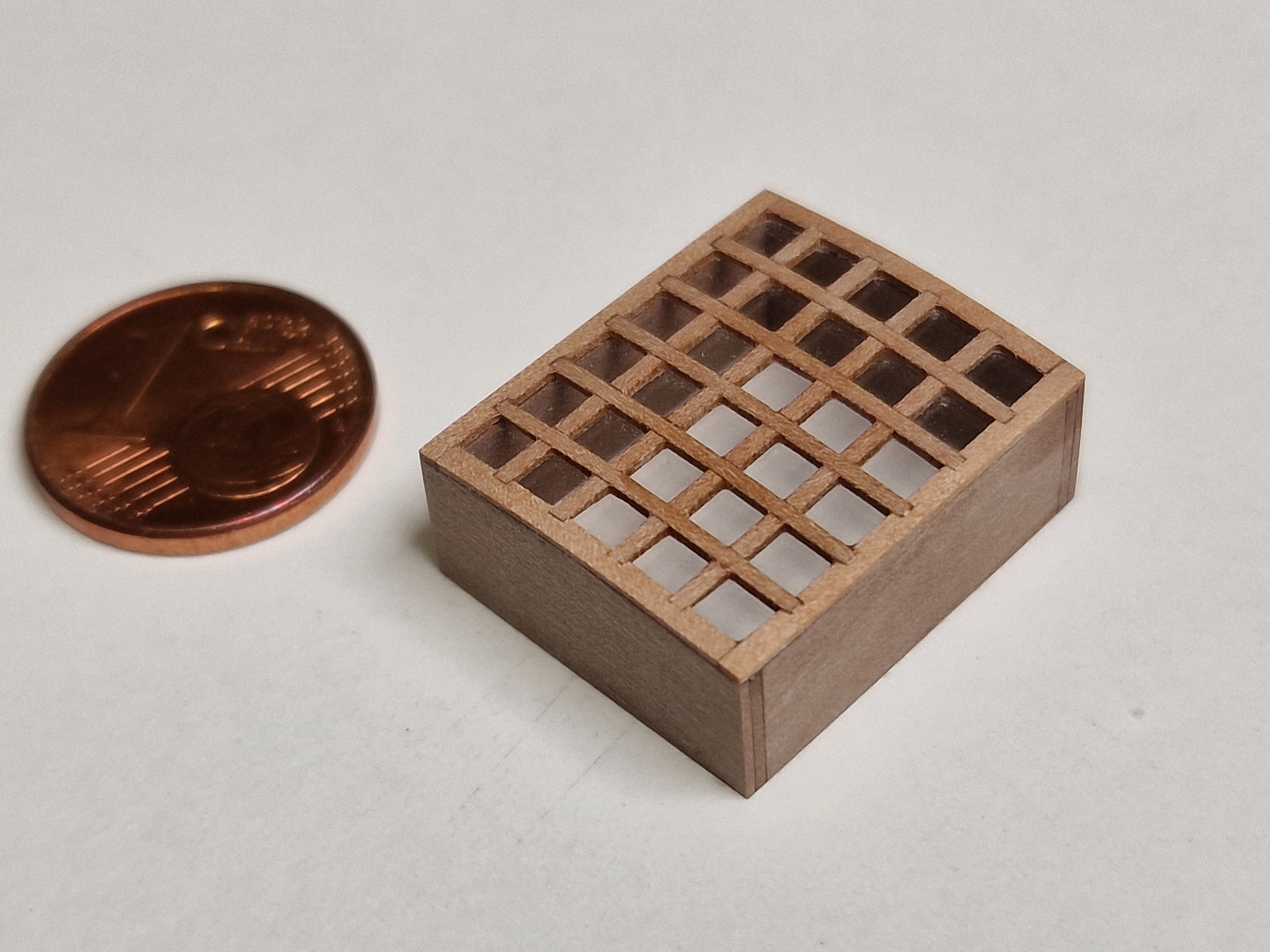
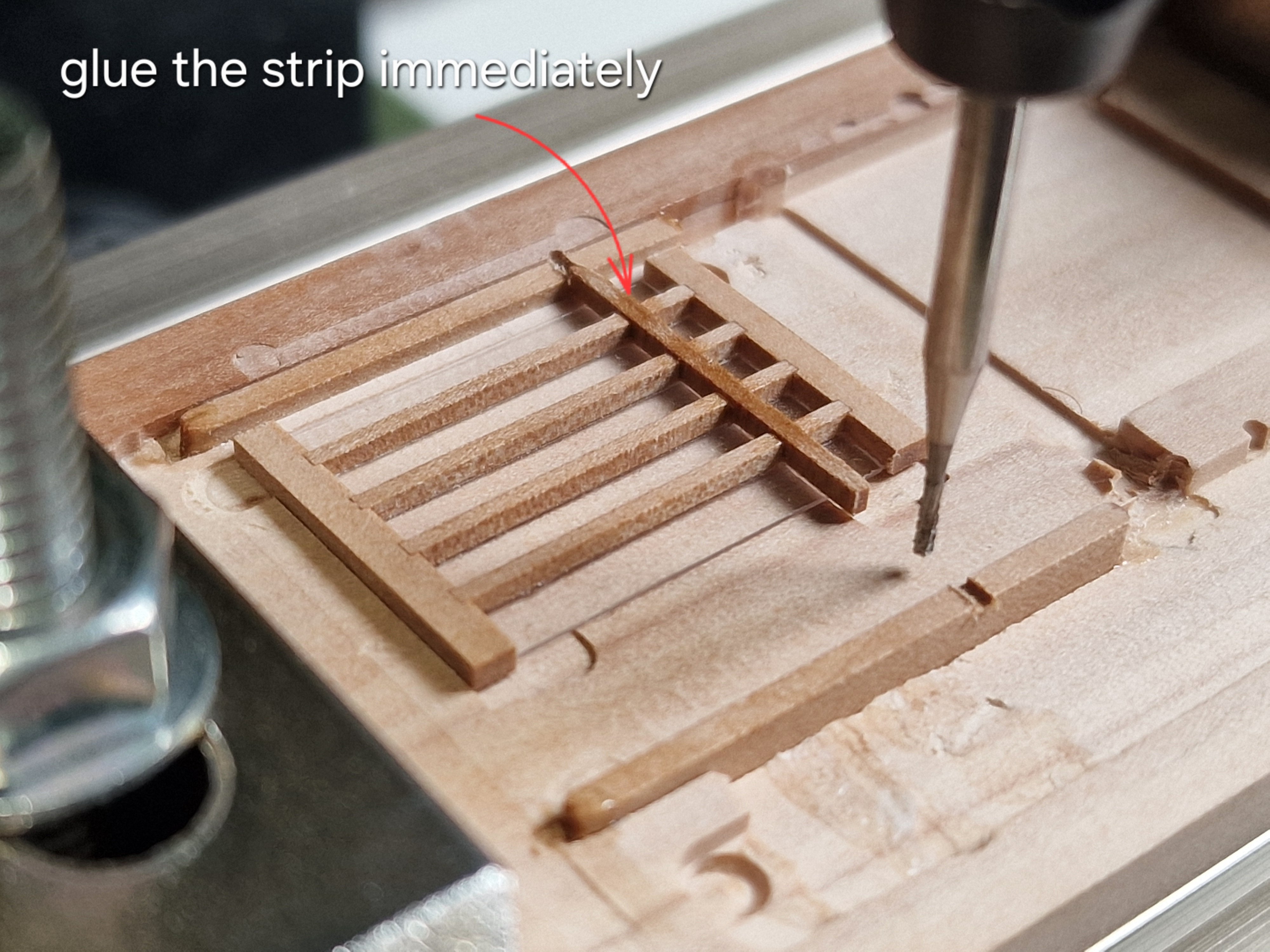
Fore Hatchway. 4/4 Then the final pieces had to be made. It's difficult to explain here, but the photo should make the process clear. The end result was one frame for the first hull, and another for the second, with a partially open grating and supports. Since there's a staircase there, I decided to do it this way to show both the staircase and the internal structure of the ladder. Nelson, as always, inspects the construction progress... Well, almost all the gratings and frames are ready, but! I still need to nail the joints and fake bolts... I haven't decided how I'll do that yet (I'll have to see some samples), but the gratings are 90% ready...


-
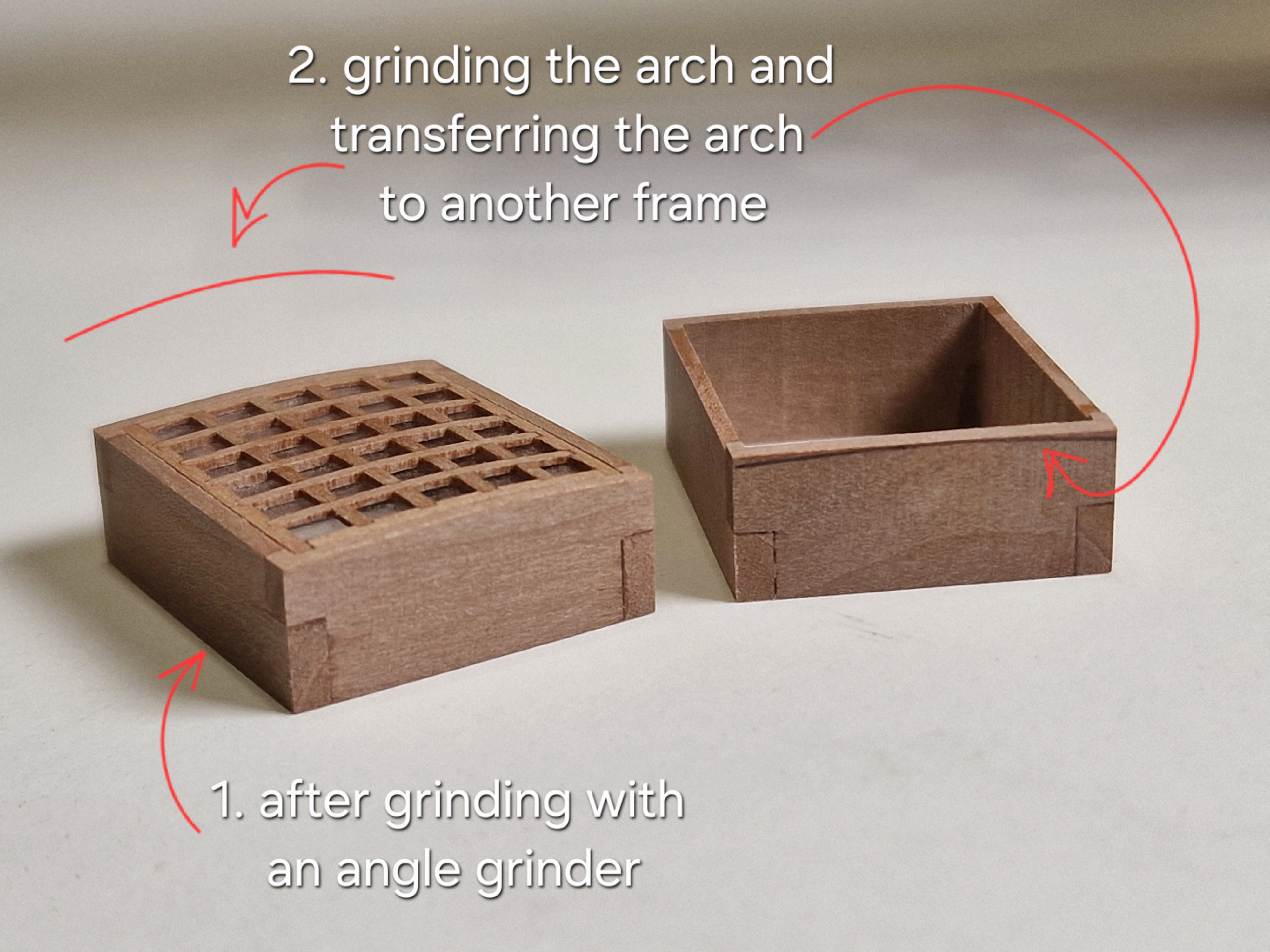
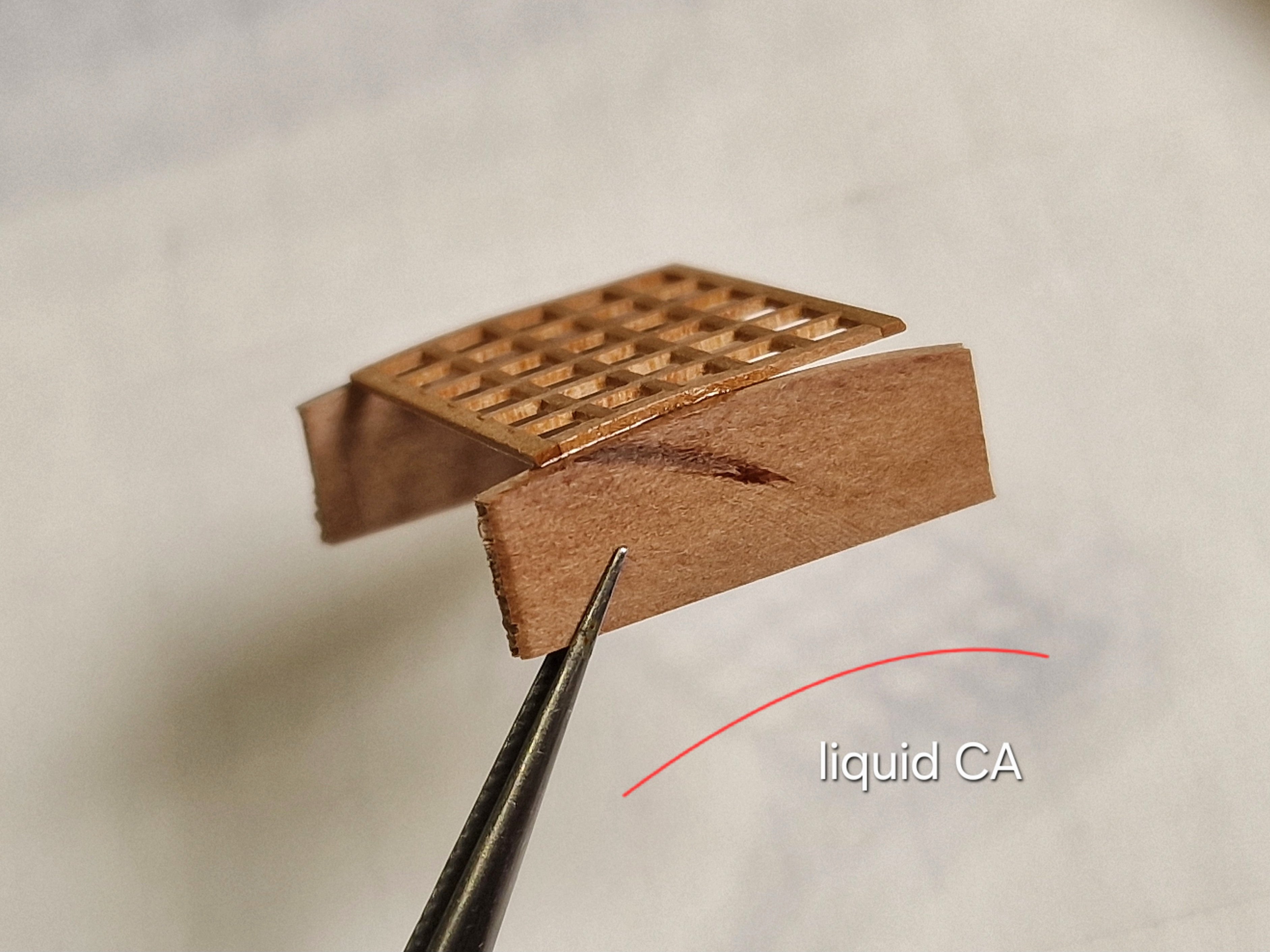
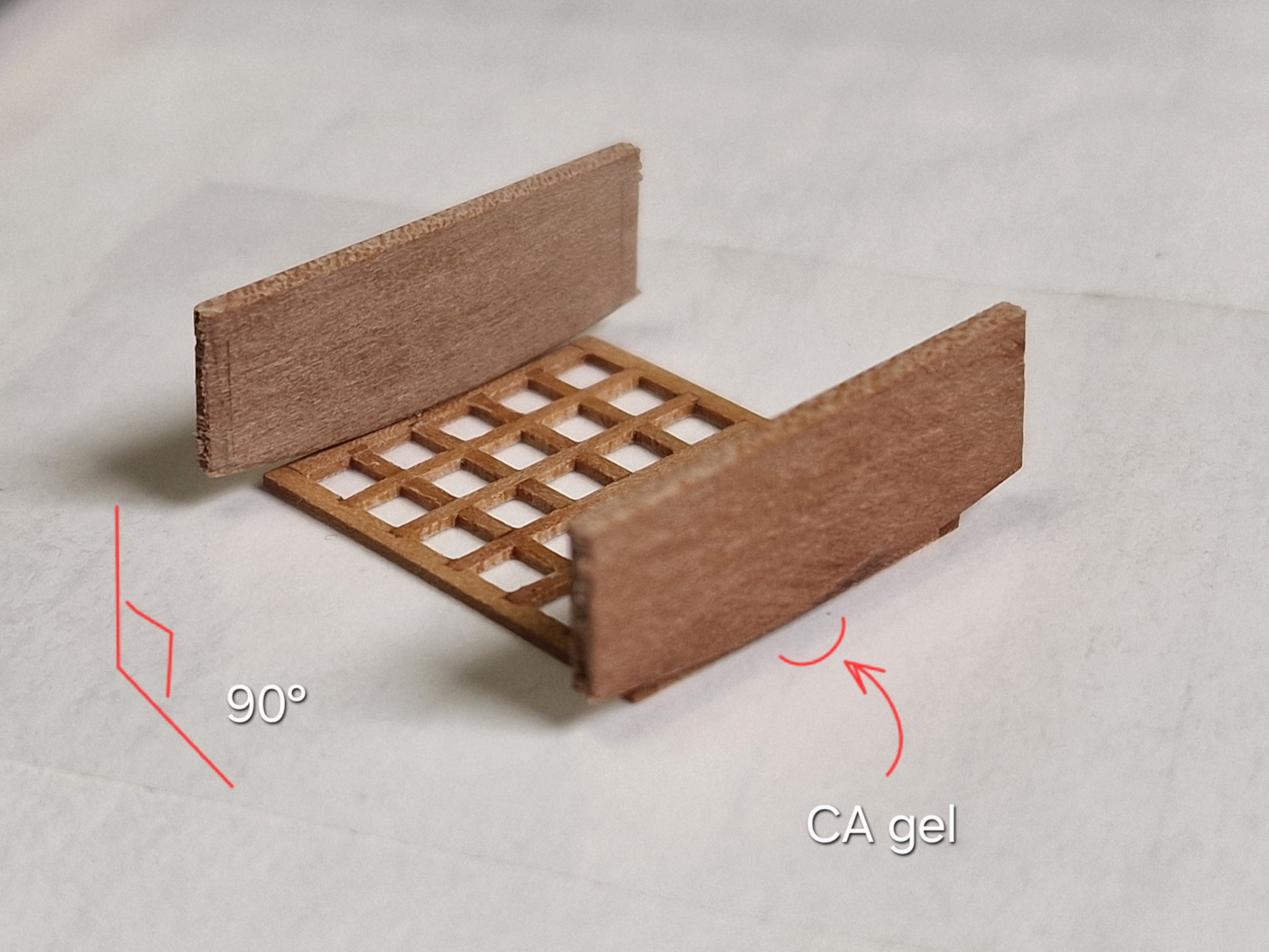
Fore Hatchway. 3/4 Now it was necessary to trim the sides in the side parts and it remains to fix the two parts (but this is in the next part), but for now this is the result I got when I inserted the grating into the frame. Besides that, there are two parts left to glue to the frames, but they still need to be given a semicircular shape, but more on that in the next post. Final touches on the gratings. First, I cut off the excess with a router and then sanded down the arc shape.






Our Emblem ®
