

Martes
-
Posts
981 -
Joined
Content Type
Profiles
Forums
Gallery
Events
Everything posted by Martes
-
3D Brig 'Rose' in Blender 3.3x
Martes replied to 3DShipWright's topic in CAD and 3D Modelling/Drafting Plans with Software
Thats the main pitfall with wooden ships. Lines always show the frames, not planking. It's little, but it is visible. Especially, as I said, around the bow, where the hull curves, and horizontal offset becomes much more pronounced. Without it the ship will appear unnaturally slim. Plus you have a completely distorted area around the keel. And the wale is around twice the plank (midship section plan), so it's 2% already. And because of the irregularity of the plank cover thickness, the external form of the ship is slightly, but visibly different from that of the frame plan - the otherwise totally straight walls would have a light tumblehome, for example. And yes, that's what you get for going to historical modelling forum. I guess 3d artists wouldn't be that whimsical -
3D Brig 'Rose' in Blender 3.3x
Martes replied to 3DShipWright's topic in CAD and 3D Modelling/Drafting Plans with Software
https://commons.wikimedia.org/wiki/File:COLUMBINE_1806_RMG_J5090.png https://commons.wikimedia.org/wiki/File:Diligence_(1795);_Seagull_(1795);_Curlew_(1795);_Harpy_(1796);_Hound_(1796);_Chamelion_(1795)_(alternative_spelling-_Cameleon);_Racoon_(1795);_Kangaroo_(1795)_RMG_J4420.png Check these hi-res plans, and, if you want, try to read all what is written on them to delve into the murky waters of Admiralty bureaucracy. Problem with the brigs is that they were very numerous and had an impossible number of in-service alterations. It's very difficult to track them all. But if you search long enough you will notice that most of the brigs that even don't have some details drawn on the profile, get them on deck/inboard plans, meaning they were added very soon after approval and sometimes even before completion. There was a long discussion of habitability of those ships and they gradually received more and more details. And no, the poop it's not only vantage point. It's also a some cover, and a roof over the cabins. Check the deck. The plans I see have it slightly rise towards the stern. -
3D Brig 'Rose' in Blender 3.3x
Martes replied to 3DShipWright's topic in CAD and 3D Modelling/Drafting Plans with Software
@druxey, the cabins, the poop and the flying forecastle are generally shown on inboard profile plans, and there are lots of them for the class. https://www.rmg.co.uk/collections/objects/rmgc-object-84378 -
3D Brig 'Rose' in Blender 3.3x
Martes replied to 3DShipWright's topic in CAD and 3D Modelling/Drafting Plans with Software
Then double-check the position of the deck. The stern ports are there to fire through them. Ouch. I... Again hate to break it, but the there is a severe problem with the hull. It should not follow the hull lines on the plan, but to envelop them. The lines show the outer shape of the frames, which are then covered with plank. See the midship section https://www.rmg.co.uk/collections/objects/rmgc-object-83745 The difference is not constant. It's larger at the wale, and will generally differ around the bow, as the the hull curves inwards towards the keel, and there you can use the top projection on the main plan to see if the envelope goes right. I saw you did part of the frames, so you have to adjust them, and envelope them with the planking.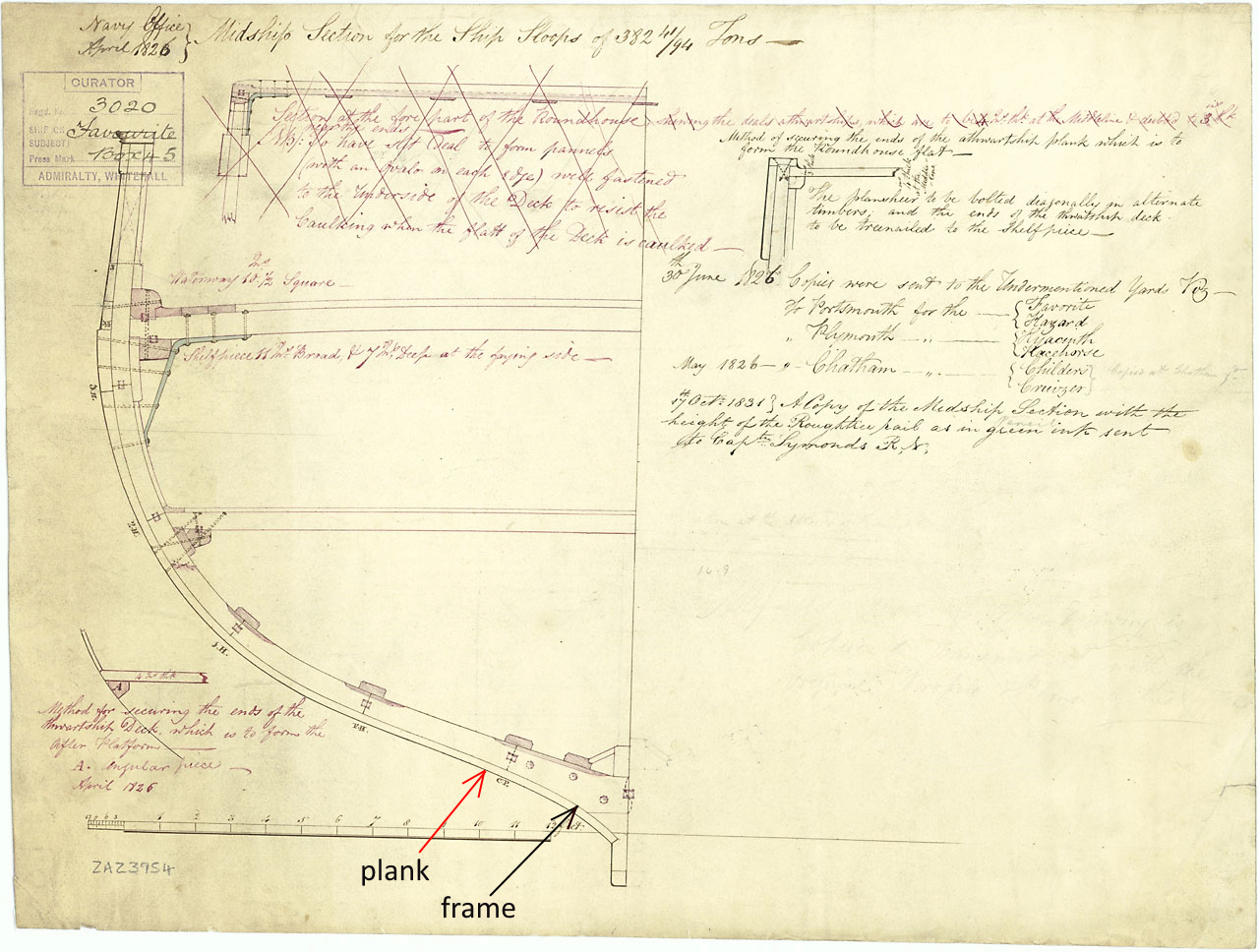
-
3D Brig 'Rose' in Blender 3.3x
Martes replied to 3DShipWright's topic in CAD and 3D Modelling/Drafting Plans with Software
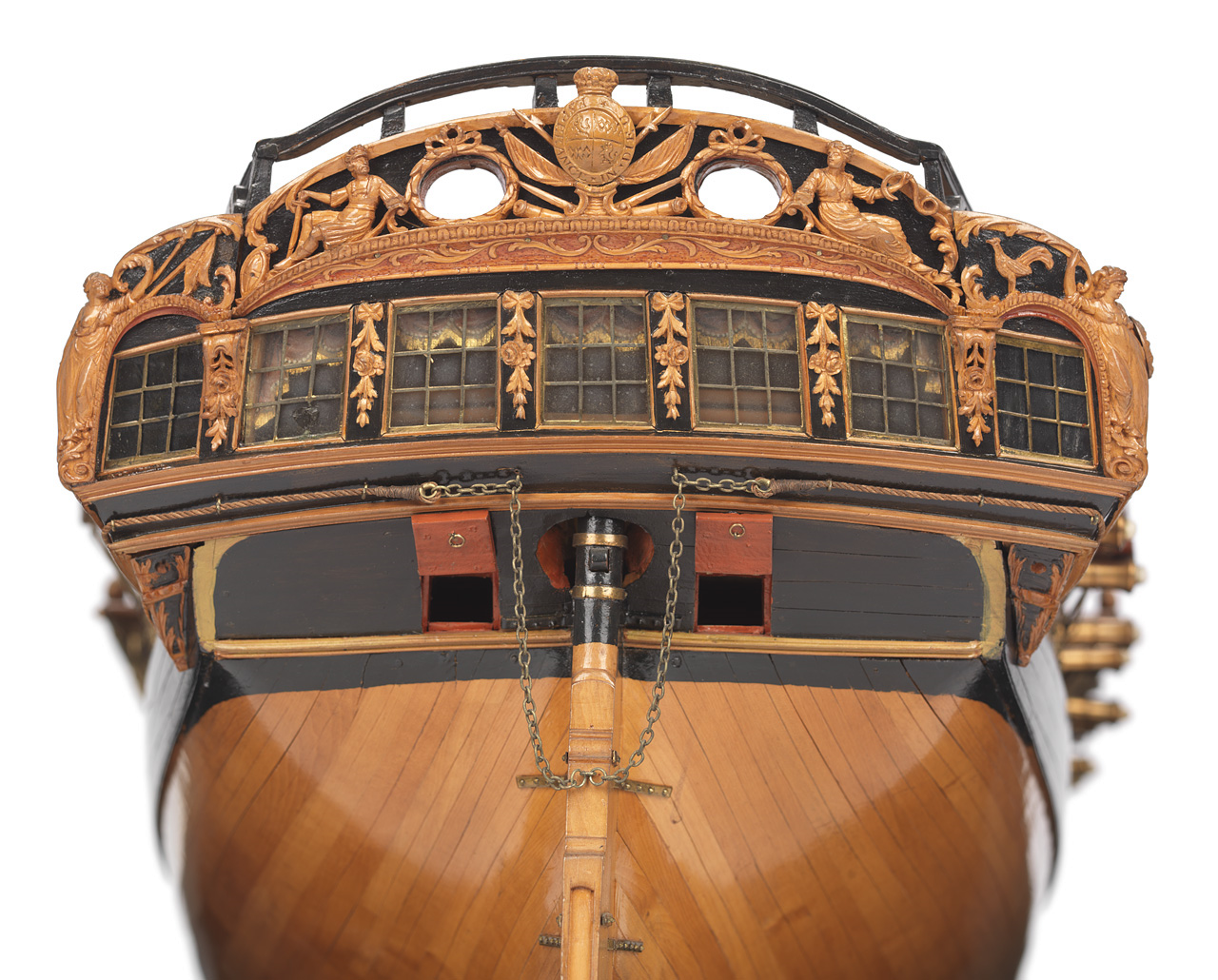
I do have to correct myself about the chains. Technically, they could have been fixed to the hull (the model in fact shows exactly this, it's just barely visible). There are no holes in the tuck. Because, when needed, cables would be fixed to them, and then go into the hull where it would be convenient under the situation: But try to verify the positions of the stern ports, you should be able to fire through them - either carronades or chase guns, if there are any fitted.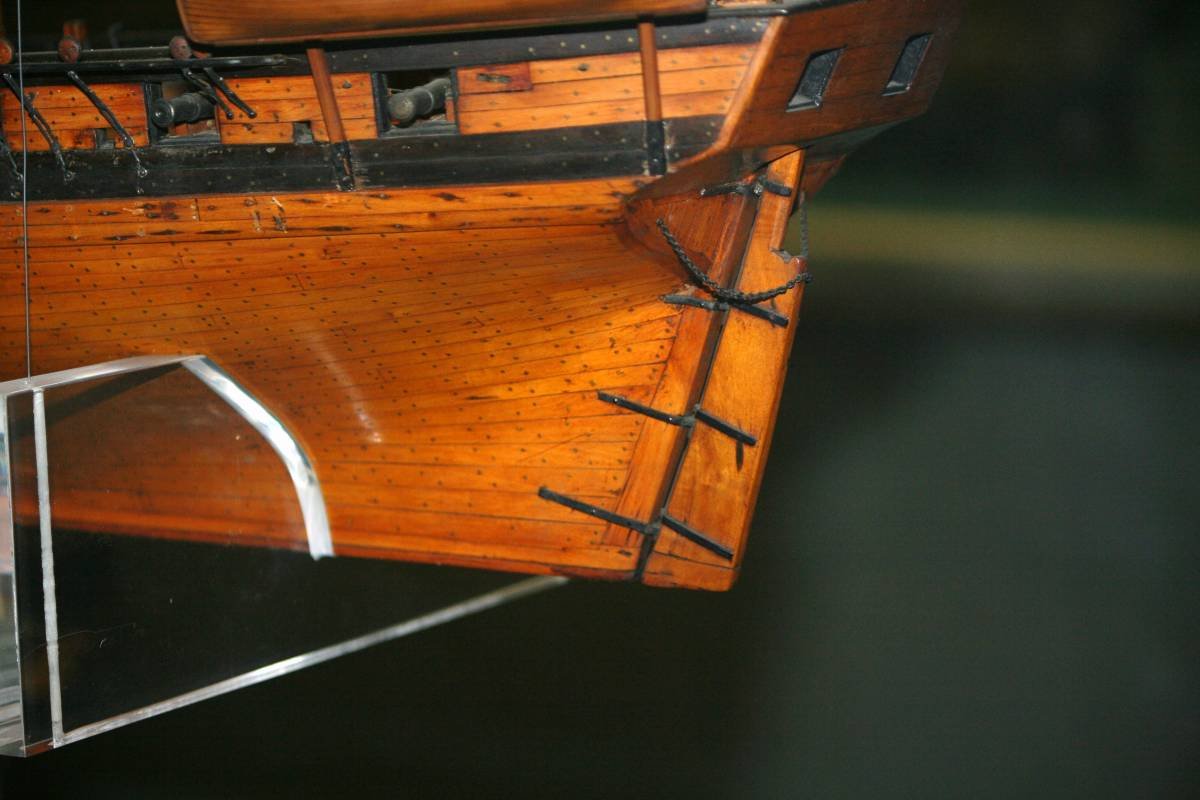
-
3D Brig 'Rose' in Blender 3.3x
Martes replied to 3DShipWright's topic in CAD and 3D Modelling/Drafting Plans with Software
Yes, it definitely should be larger (to fit the closets) or removed at all. -
3D Brig 'Rose' in Blender 3.3x
Martes replied to 3DShipWright's topic in CAD and 3D Modelling/Drafting Plans with Software
You might want to browse this place: https://commons.wikimedia.org/w/index.php?search=brig+rmg&title=Special:MediaSearch&go=Go&type=image but beware, it's a rabbit hole out there. -
3D Brig 'Rose' in Blender 3.3x
Martes replied to 3DShipWright's topic in CAD and 3D Modelling/Drafting Plans with Software
Also, I think you should remove the name from the stern. They appeared on the ships briefly after the american war, but with the start of the french revolutionary war there was an order to remove them to prevent exact identification of the ships, IIRC, and it stayed that way long afterwards. So it would be easier to represent different ships with one model -
3D Brig 'Rose' in Blender 3.3x
Martes replied to 3DShipWright's topic in CAD and 3D Modelling/Drafting Plans with Software
And here is another model, but be careful, it's a modern interpretation, and may be just a little too fancy and slightly more 1840's in style: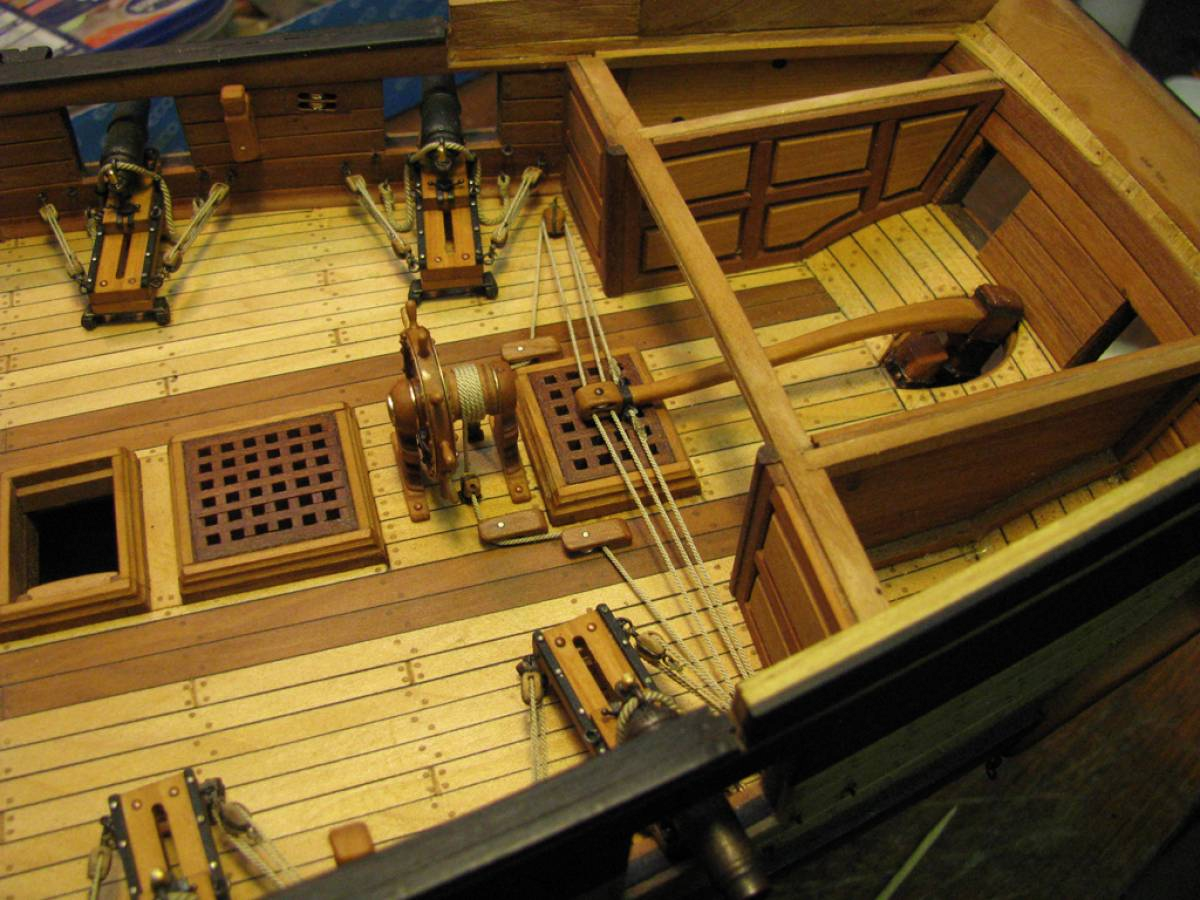
-
3D Brig 'Rose' in Blender 3.3x
Martes replied to 3DShipWright's topic in CAD and 3D Modelling/Drafting Plans with Software
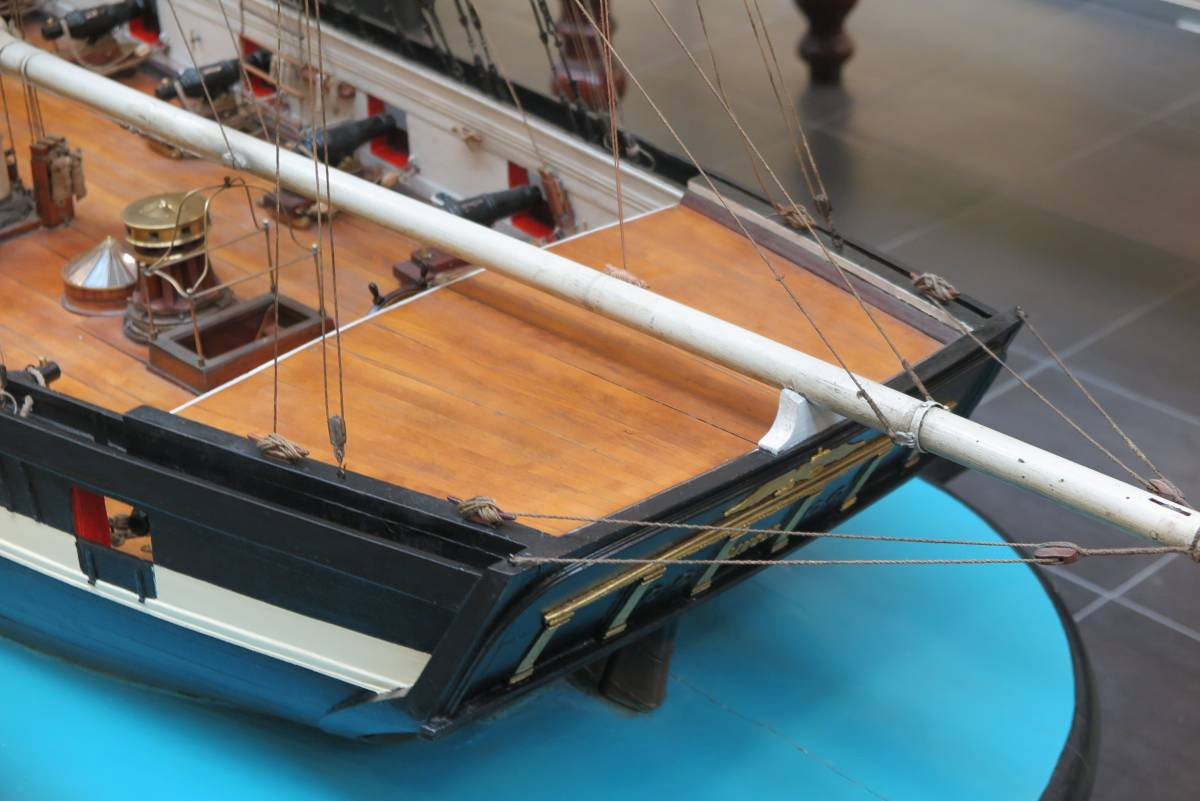
As to the stern, I am afraid you'll have to remove even the lantern (or at least put them to the sides and lower). Did you notice the holder in the center of the sternboard on the model? It's for the spanker boom. Nothing should stick it's head above it.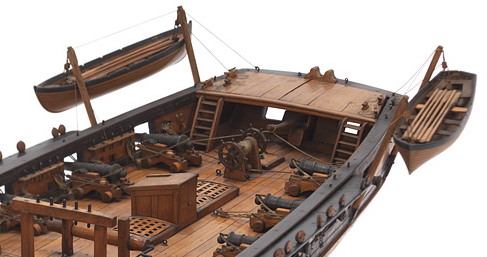
-
3D Brig 'Rose' in Blender 3.3x
Martes replied to 3DShipWright's topic in CAD and 3D Modelling/Drafting Plans with Software
Of course you can! Check my post again https://modelshipworld.com/topic/33504-3d-brig-rose-in-blender-33x/?do=findComment&comment=958183 I said "The tiller should be visible behind the wheel, as there is no place to fit it below the deck:" not "get rid of the wheel" or something. It's just that you can steer using the tiller without a wheel, but not vice versa. "It" in "to fit it" meant the tiller, obviously, since if it's not on the deck, it is invisible, i.e. below the deck, and there is no place there. And the same post has the plans with the tiller quite visibly drawn. And the stern lockers. Note that there were tons of variations in positioning of both, like here, where the initial position of the wheel is before the port, with longer and inclined tiller, and corrected places it aft with shorter and lower tiller. So it's your choice: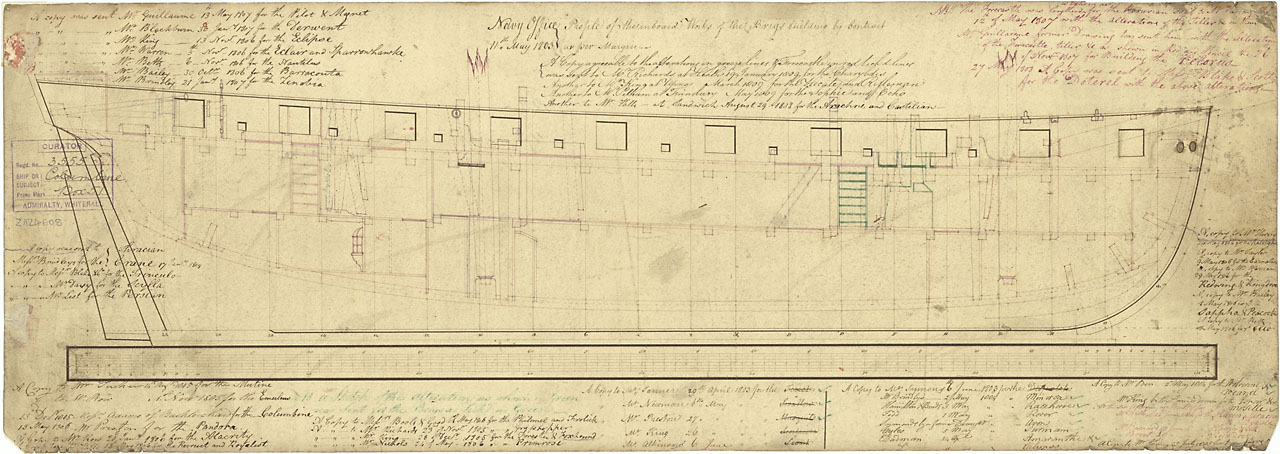
-
3D Brig 'Rose' in Blender 3.3x
Martes replied to 3DShipWright's topic in CAD and 3D Modelling/Drafting Plans with Software
That's exactly what I am trying to tell you, there is no, and cannot be a conflict between the wheel and the tiller. The wheel turns the tiller. The tiller is either on the same deck just after the wheel, or down below, but it is there, you can't do without it. The chains are used as a backup in case the wheel and the tiller are shot out. And the photos I posted are from the same model, two different views. Got that about the rings, I thought they might have represented shut scuttles or something. Anyway, no such rings would appear on ships then. It's something consistent with our times, and I never seen one on any 18-th or 19-th century model or plan. If ever they were used, they would be fitted just prior to docking and removed afterwards, I'd guess. Concerning taffrail, I think it should be somehow decided if this ship represents a period ship or a modern replica of one. At the time no one would fit such rails to military ship, since it's a source of splinters and windage, and generally unnecessary detail. Because it obstructs the spanker boom and requires to restrict the spanker's area, first of all, and you don't need people walking there anyway. It's like you would add propellers and say "but they are fitted on the Surprise". Of course I believe you, but the safety requirements and regulations back in 1800 were very different from those now
-
3D Brig 'Rose' in Blender 3.3x
Martes replied to 3DShipWright's topic in CAD and 3D Modelling/Drafting Plans with Software
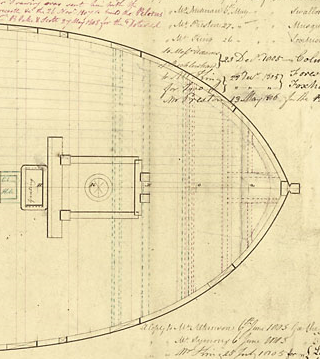
Note that the bowsprit should be locked from the back into a structure, it wouldn't hold in place otherwise:
-
3D Brig 'Rose' in Blender 3.3x
Martes replied to 3DShipWright's topic in CAD and 3D Modelling/Drafting Plans with Software
I'd hate to spoil the fun, but you got everything wrong. First of all, the chains to the rudder have to go somehow (over the side or through a scuttles) inside the hull. Those chains are a backup rudder control system and would be useless as shown. A contemporary model shows that the chains penetrate the hull lower, at the tuck stern level, and the place where you placed the rings is supposed to be the plumbing scuttle: The taffrail is waaay to high for a brig, even if you are going to fit the poop, it would not have wooden carved supports, but likely be done of light temporary metal rods with rope. But it still would be about a half lower. What are those rings evenly spaced on the gunwale?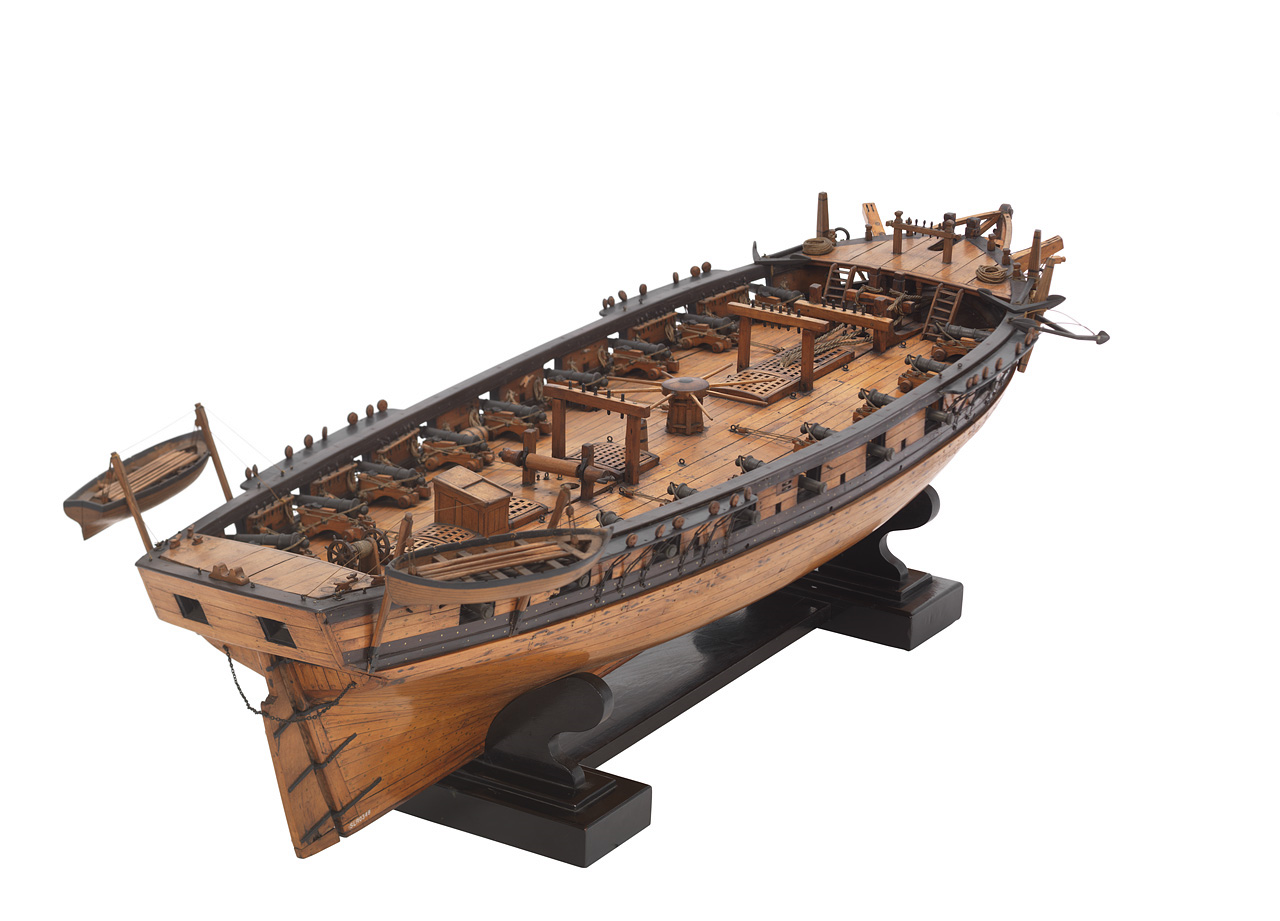
-
2nd rate London 1656 – the art of the shipwright
Martes replied to Waldemar's topic in Nautical/Naval History
Is it normal and would it be visible, or the outside planking would cover this? -
2nd rate London 1656 – the art of the shipwright
Martes replied to Waldemar's topic in Nautical/Naval History
The basic intention, to my understanding, is to extract as much data from these plans as possible. It's not that we have many alternatives. The fact that using the base dimension we get quite round and feasible values for radii of the curves may, possibly, indicate the process might be going the right way. Hopefully, @Waldemar would be able to figure out what is wrong with the sequence of the stations. There were some concerns about the condition and deterioration of the wreck, I vaguely remember. -
2nd rate London 1656 – the art of the shipwright
Martes replied to Waldemar's topic in Nautical/Naval History
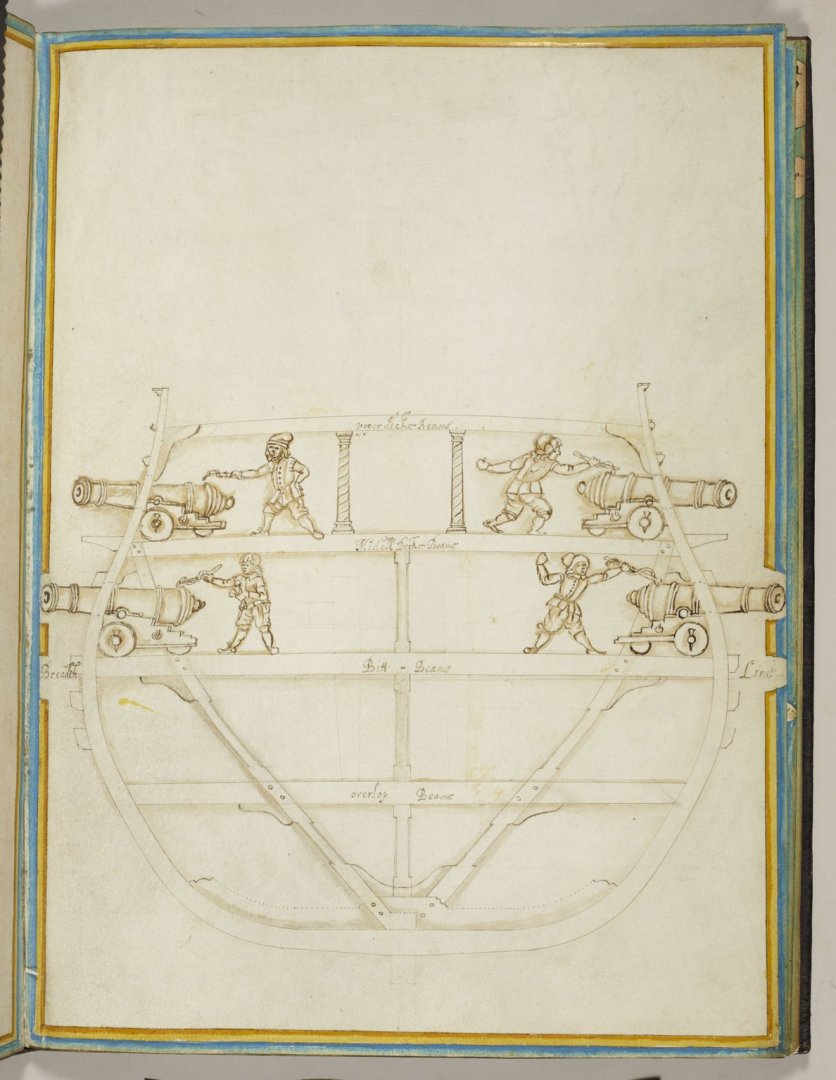
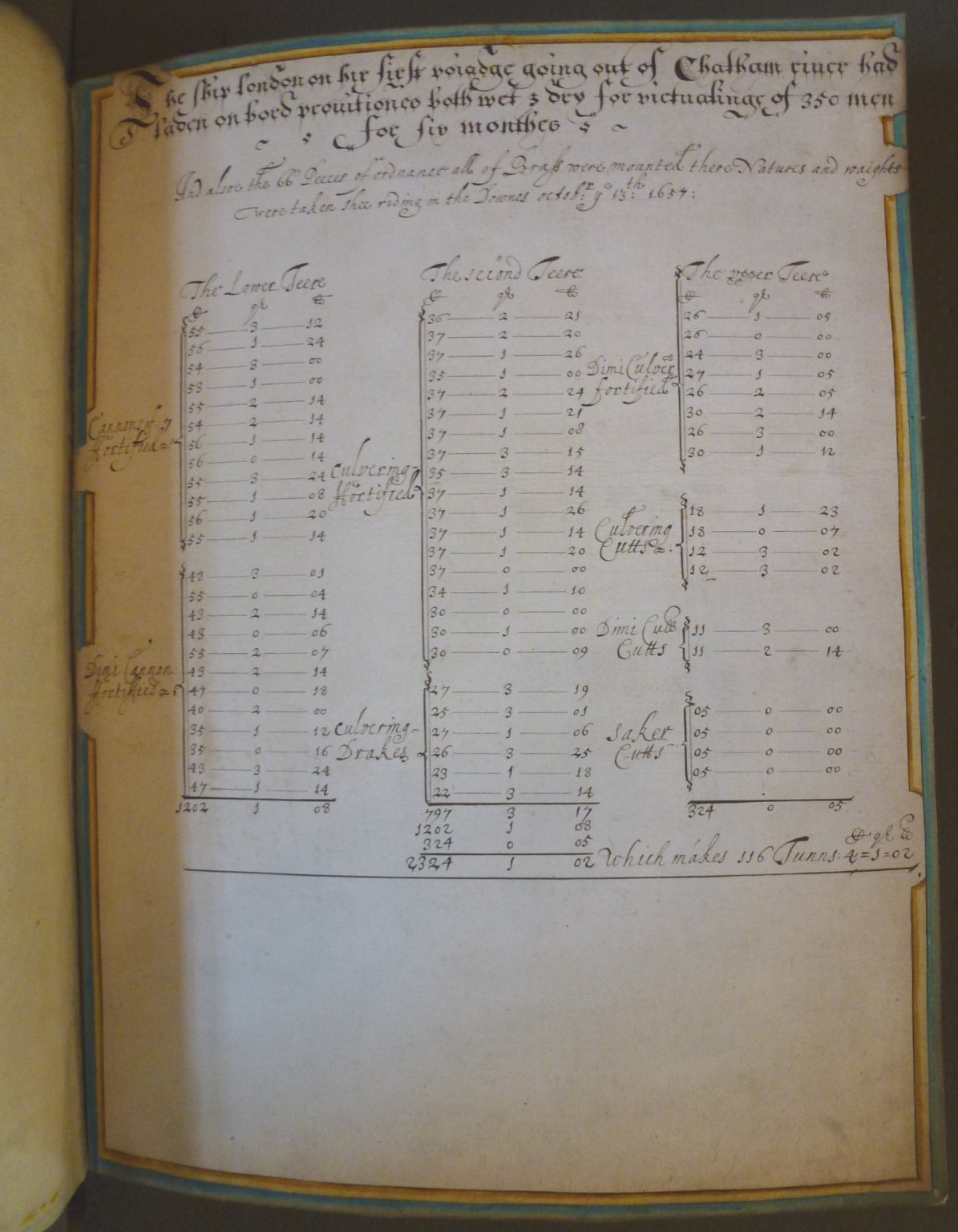
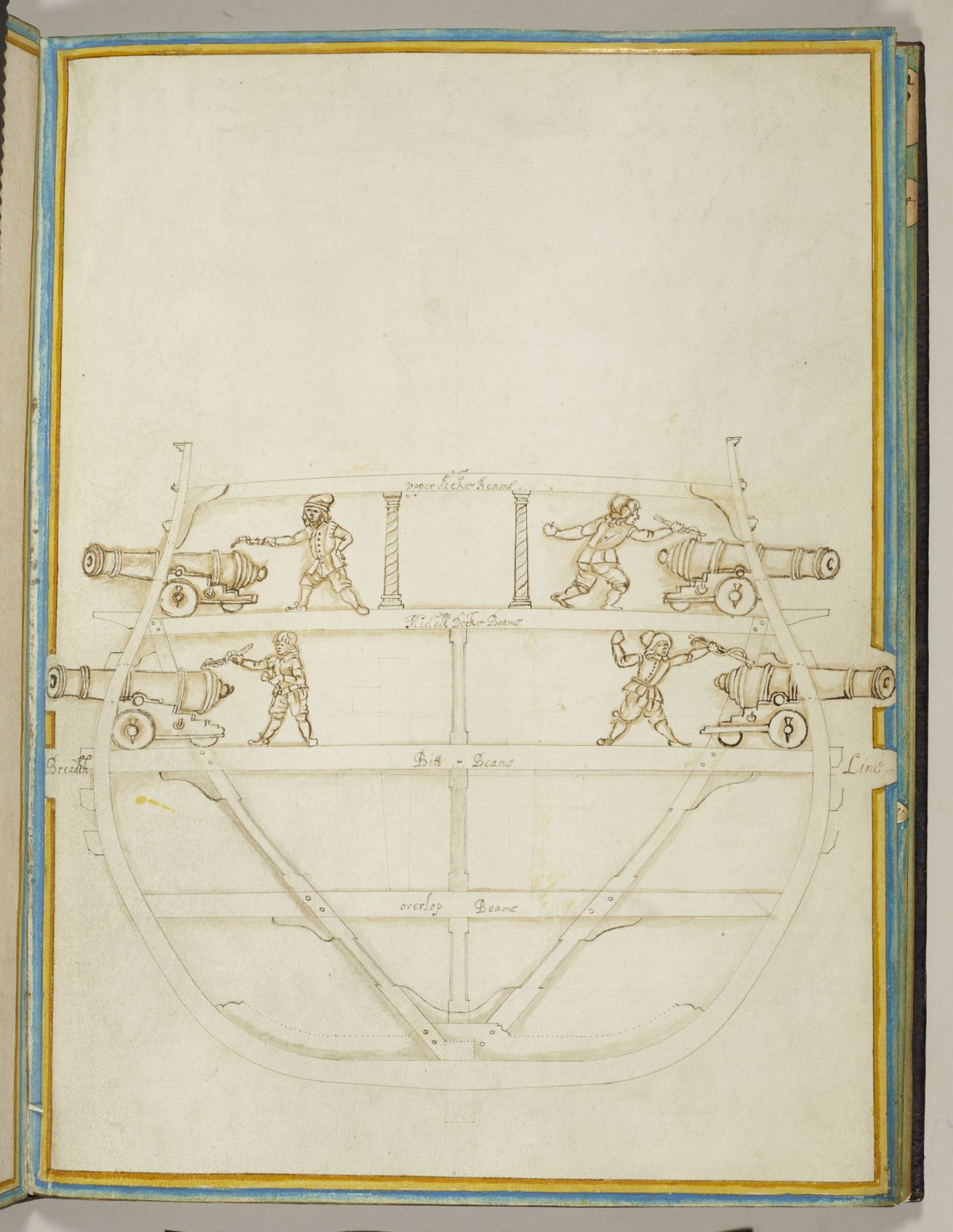
That's the thing, there is no profile. There is only a midship section and ordnance list. The last pair aft are 23 (left) and 24 (right), they are alternating. On the link to RCT London's images are at slightly higher resolution and noticeably sharper. https://www.rct.uk/collection/1047387/the-ship-london-on-her-first-voiadge And direct links to images: https://www.rct.uk/sites/default/files/collection-online/7/2/498611-1418048073.jpg https://www.rct.uk/sites/default/files/collection-online/5/a/498612-1418048122.jpg https://www.rct.uk/sites/default/files/collection-online/6/0/498610-1418048055.jpg https://www.rct.uk/sites/default/files/collection-online/3/b/448394-1393596039.jpg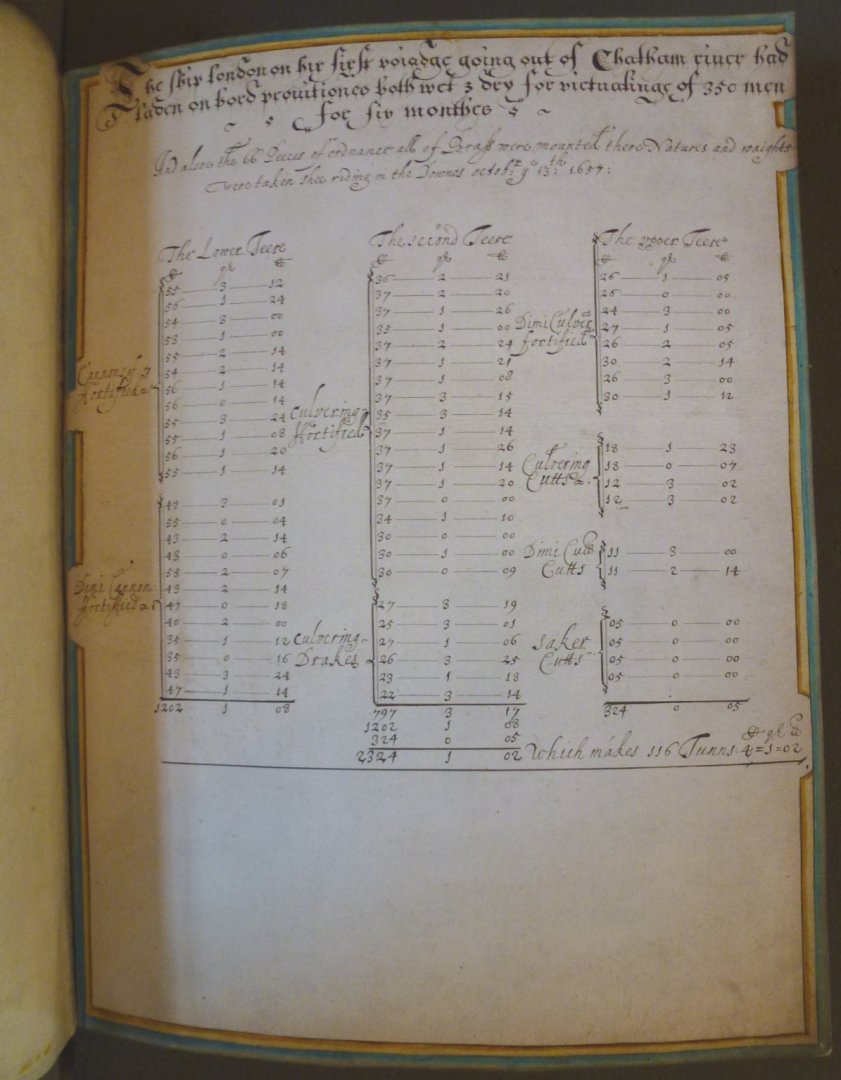
-
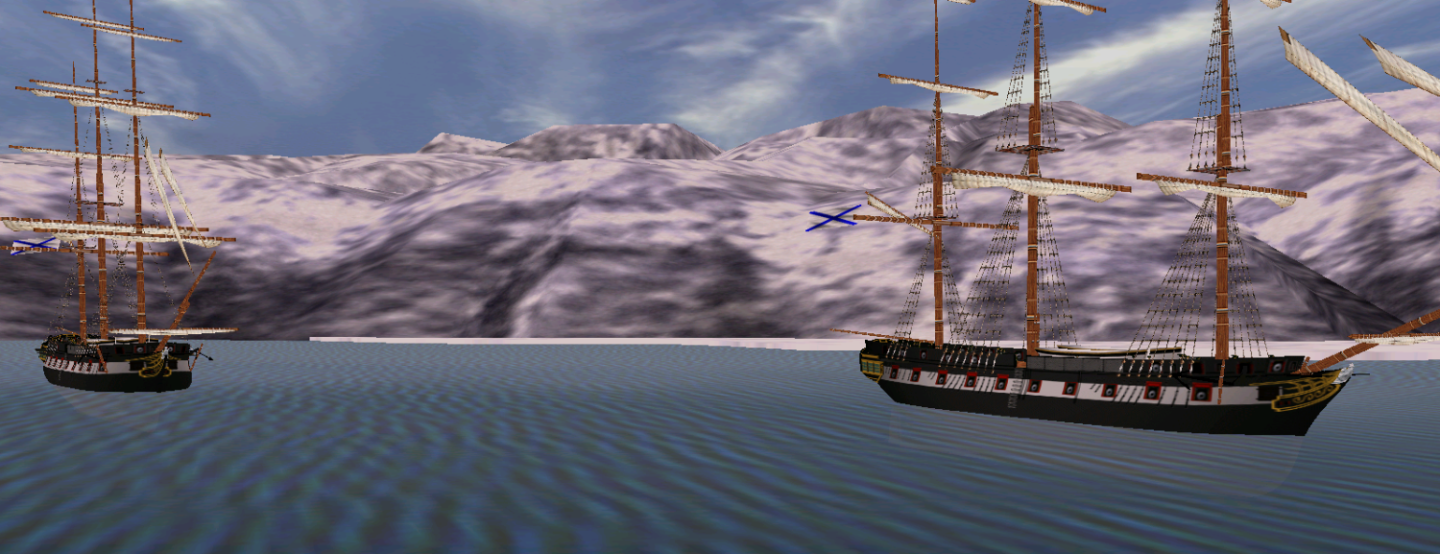
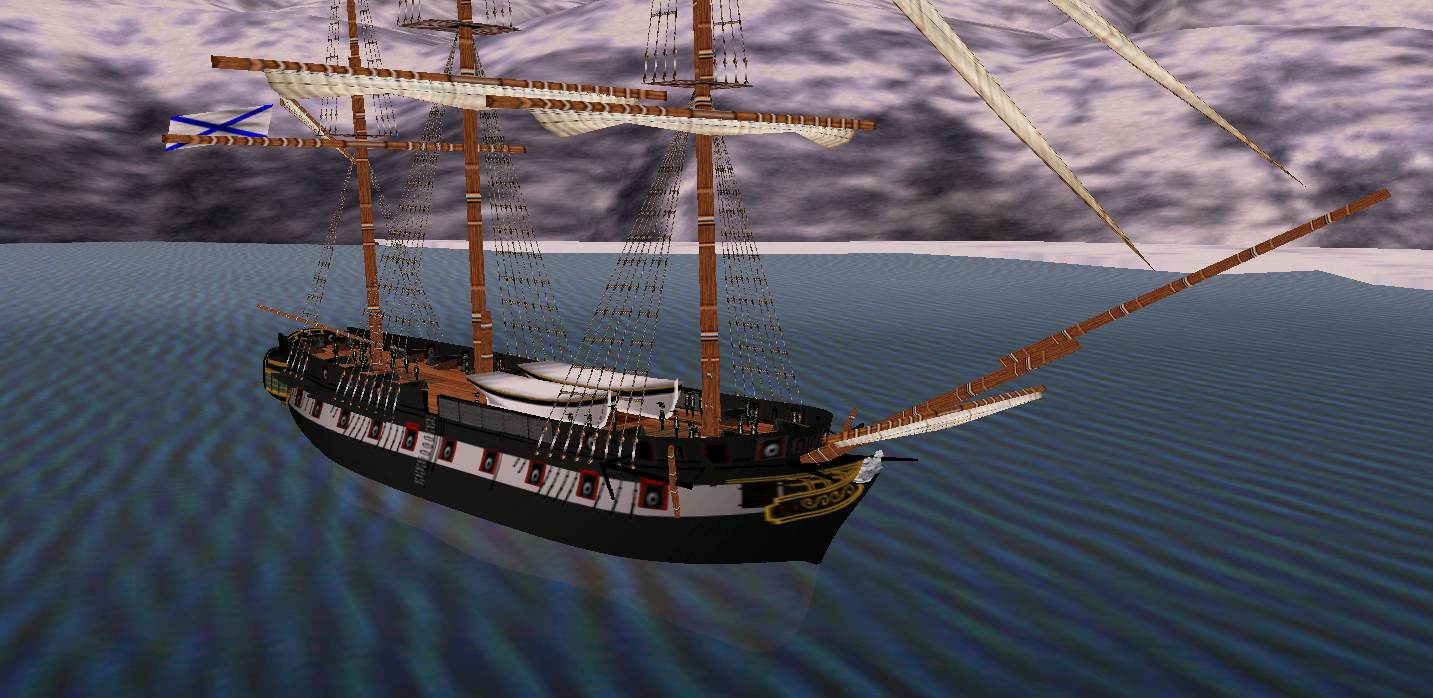
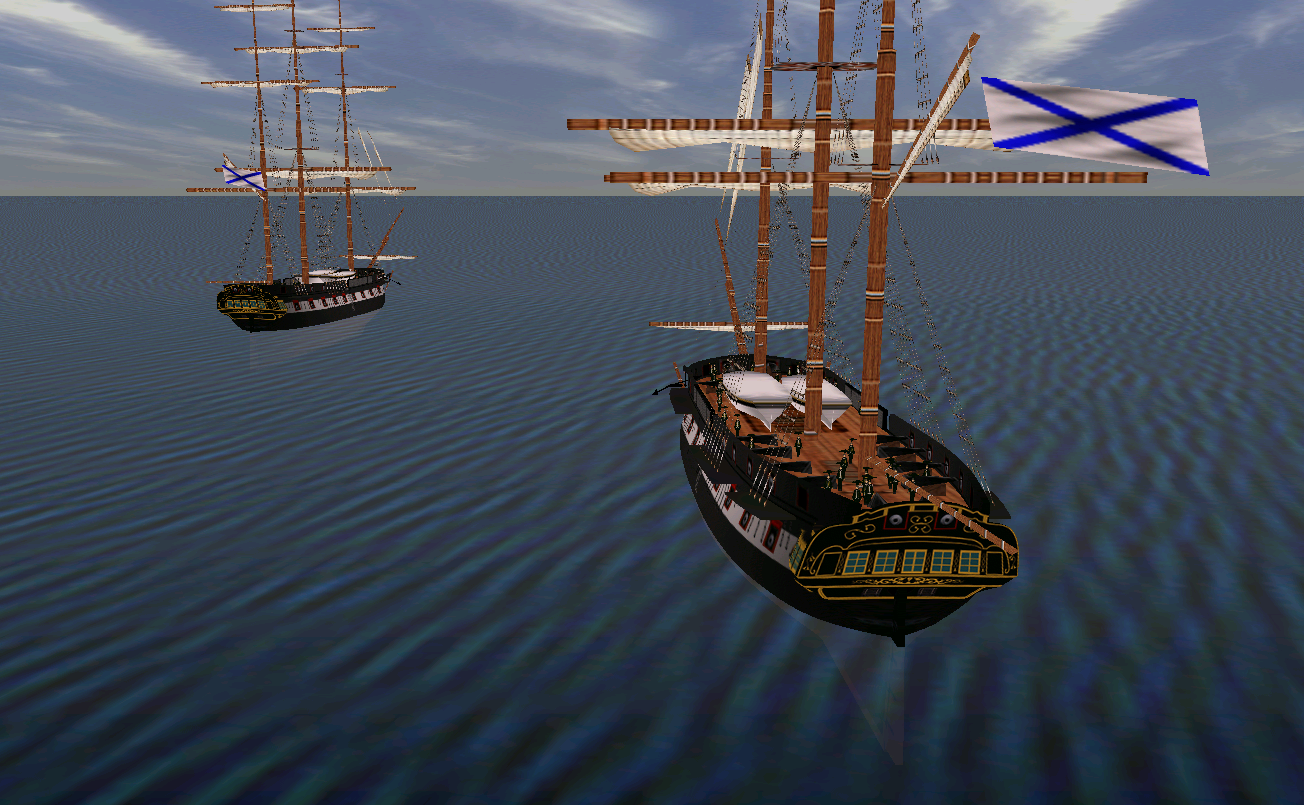
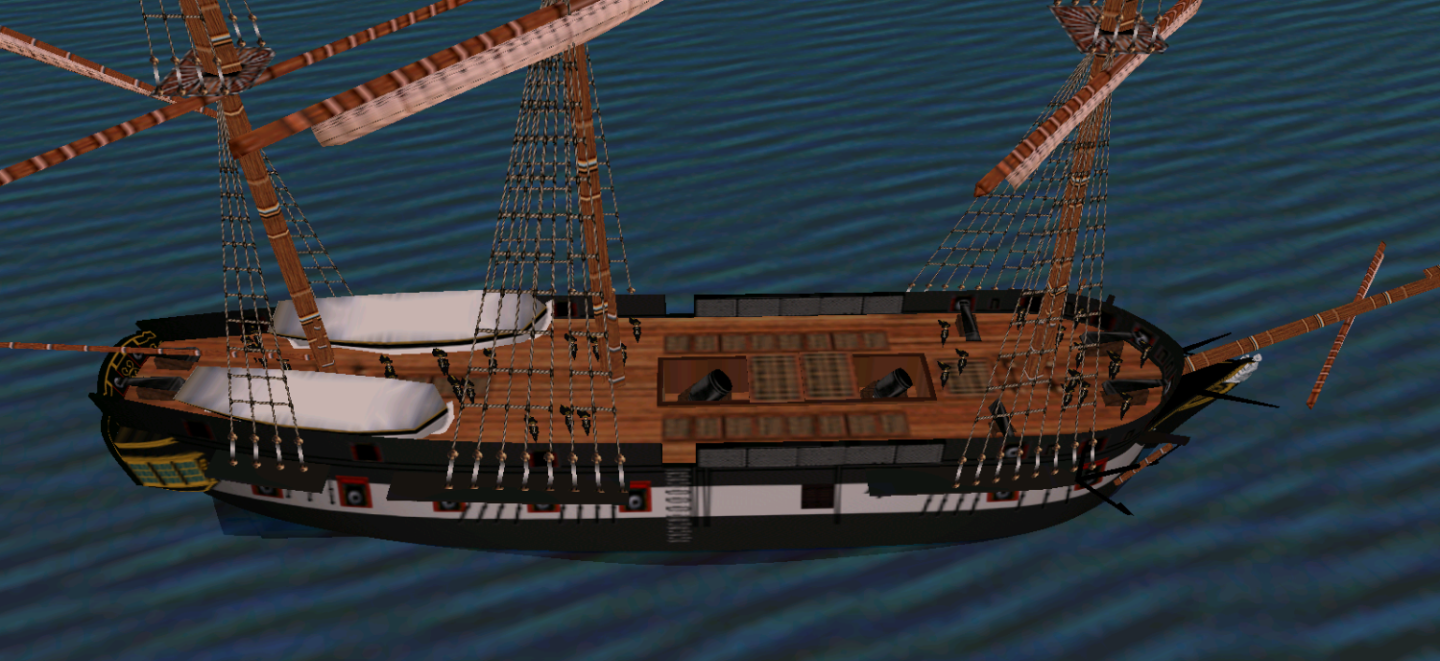
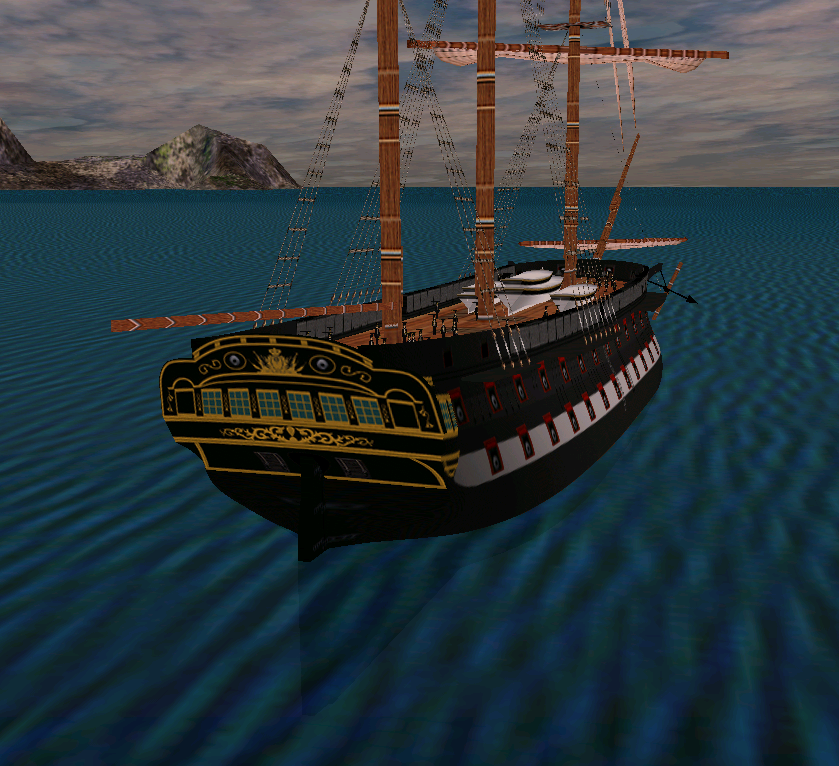
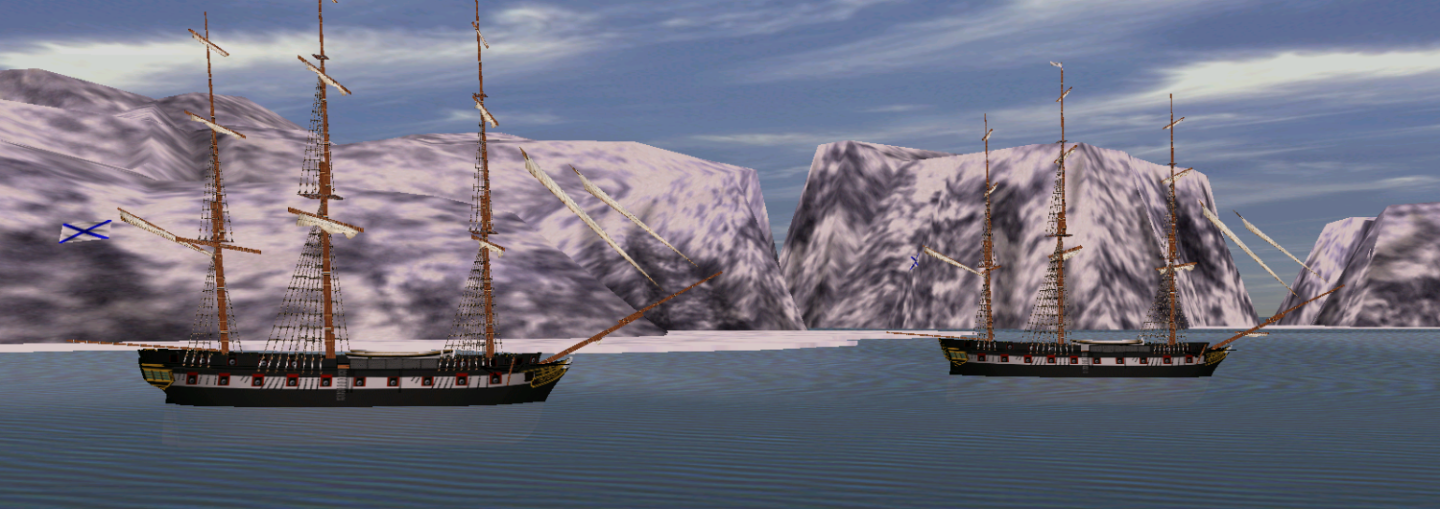
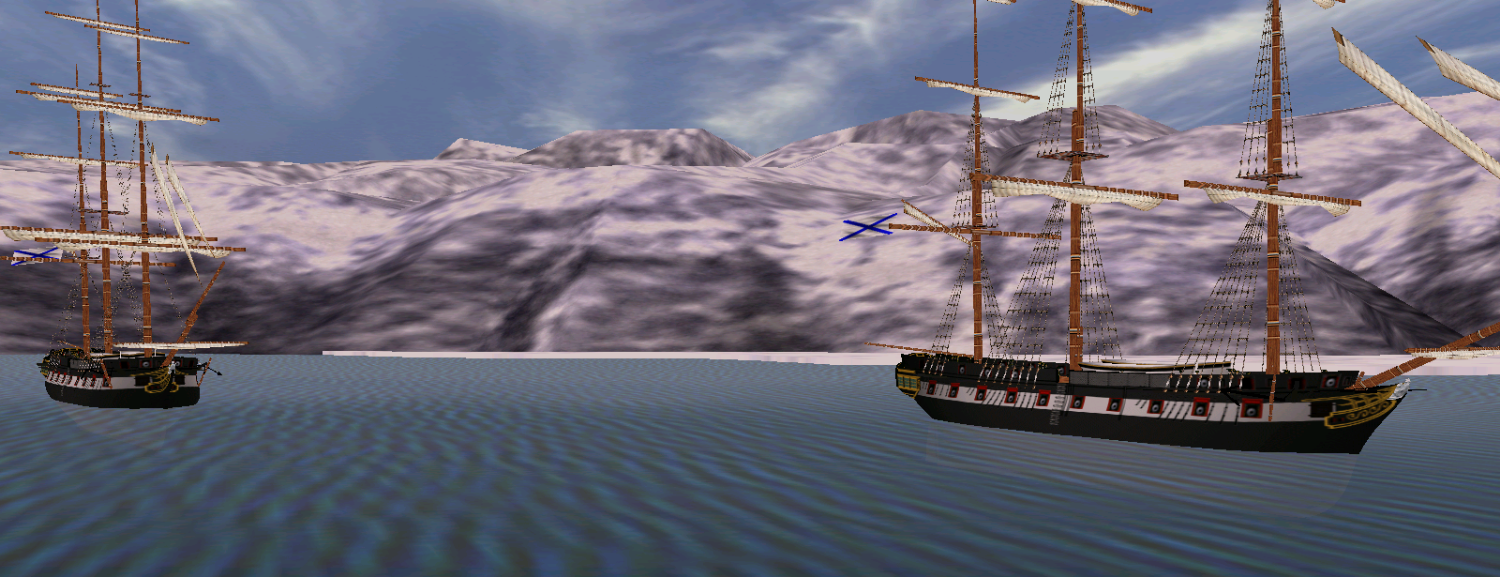
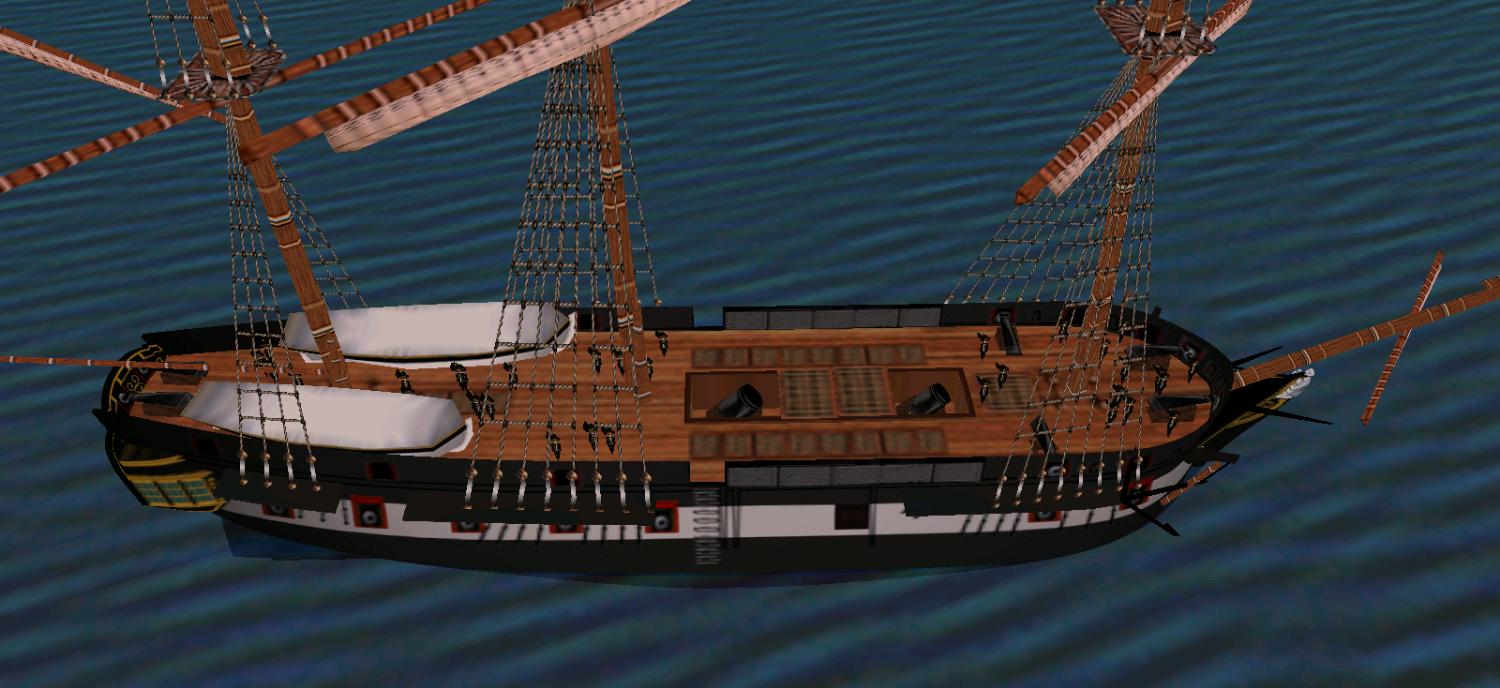
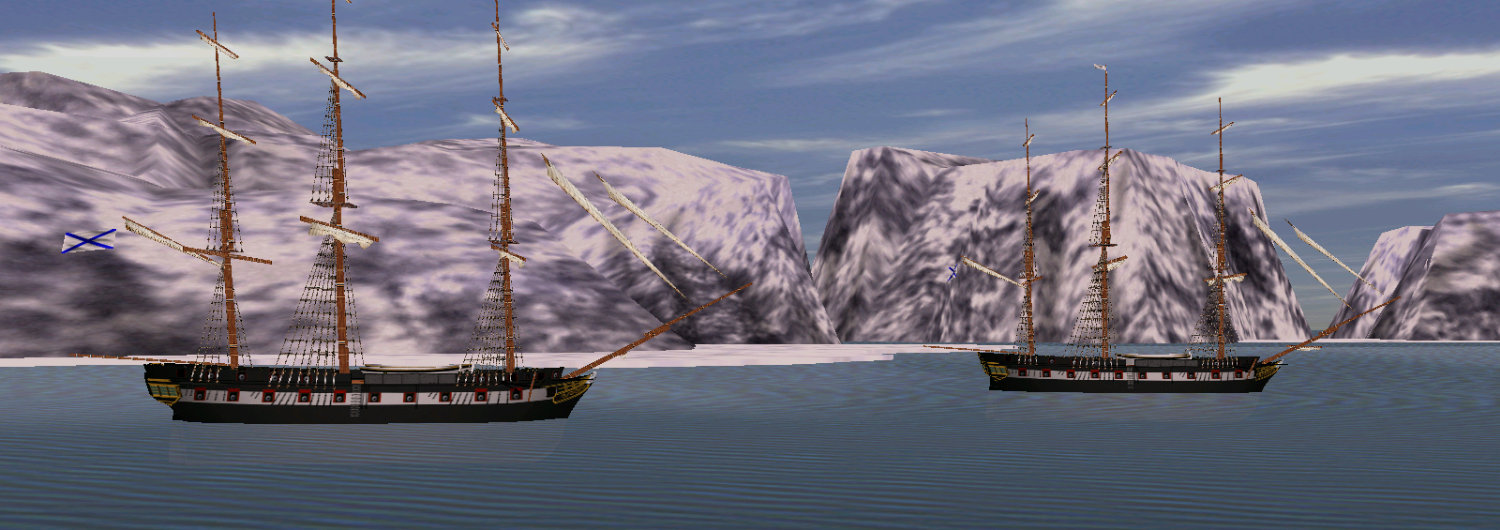
In-game screenshots of the new ships: Russian exploration sloops in polar waters His Majesty's bomb vessels The new Colossus as 74 And as a razee.
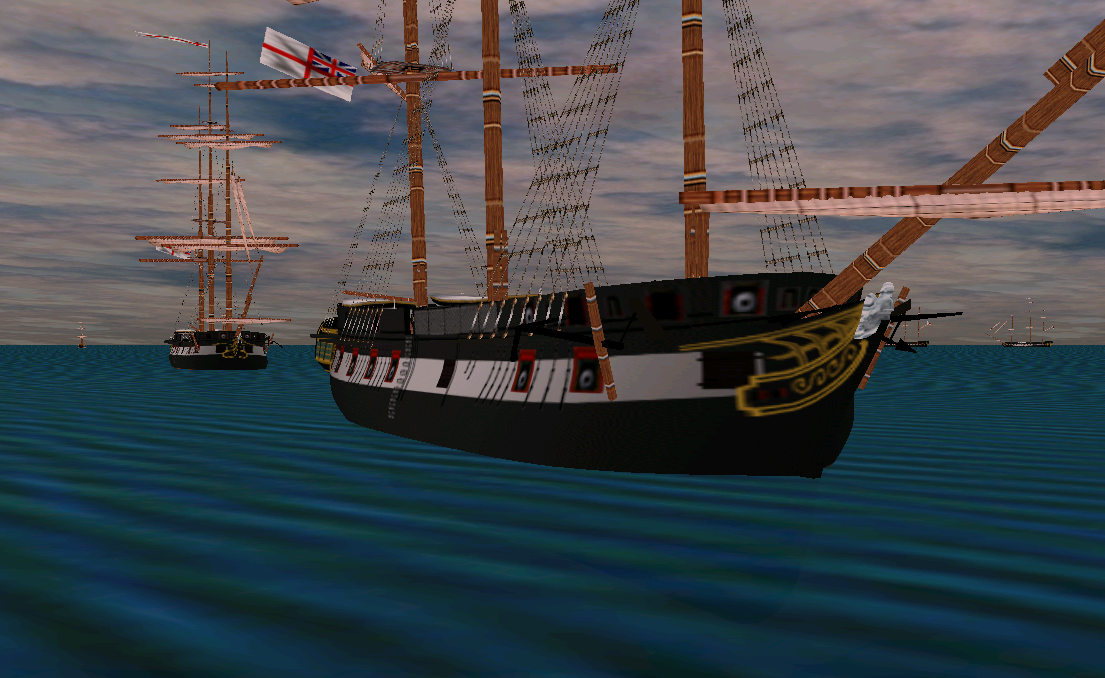
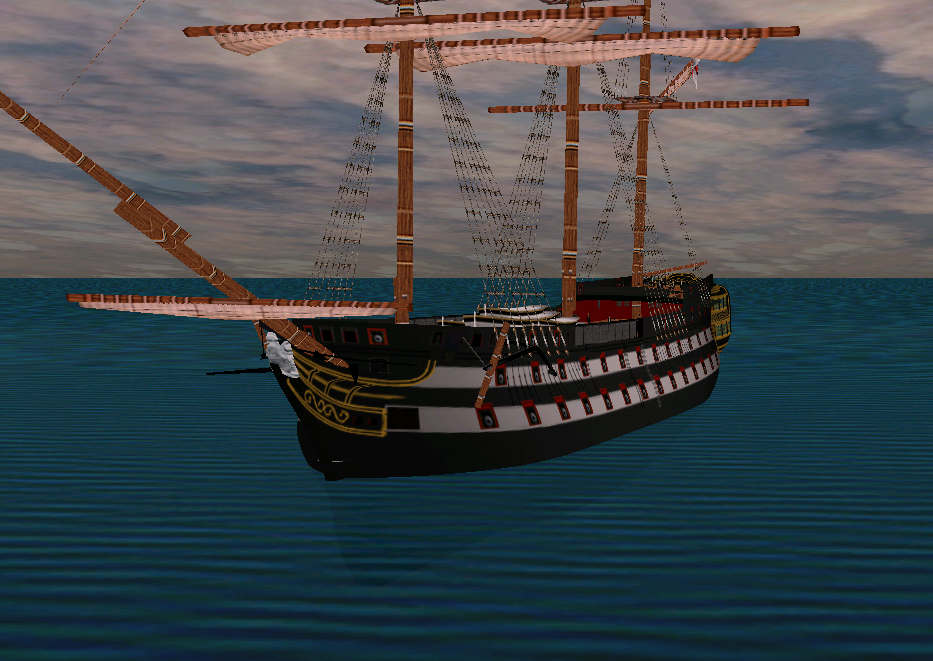
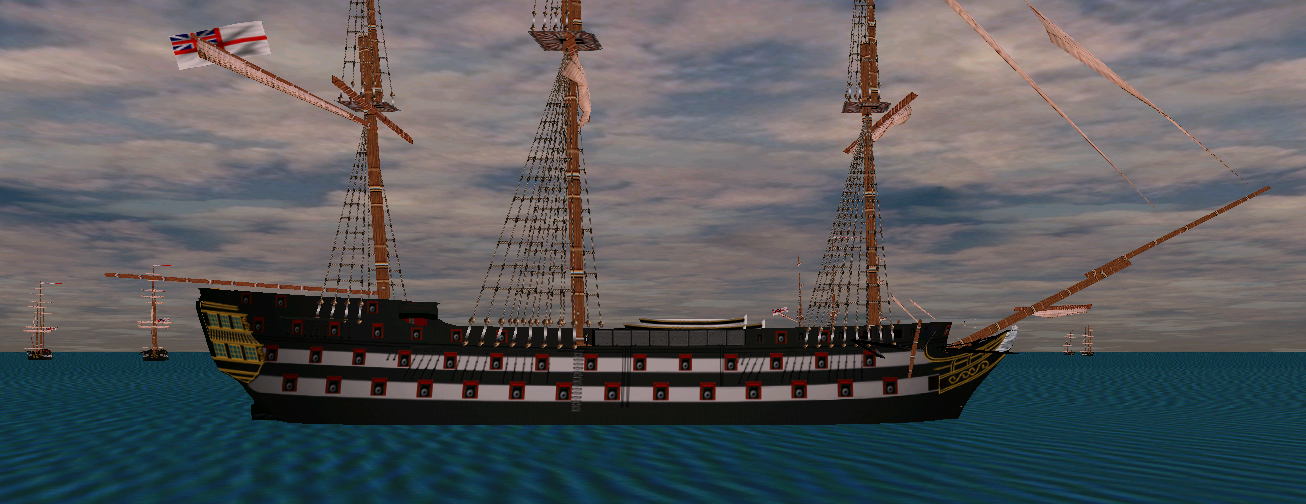
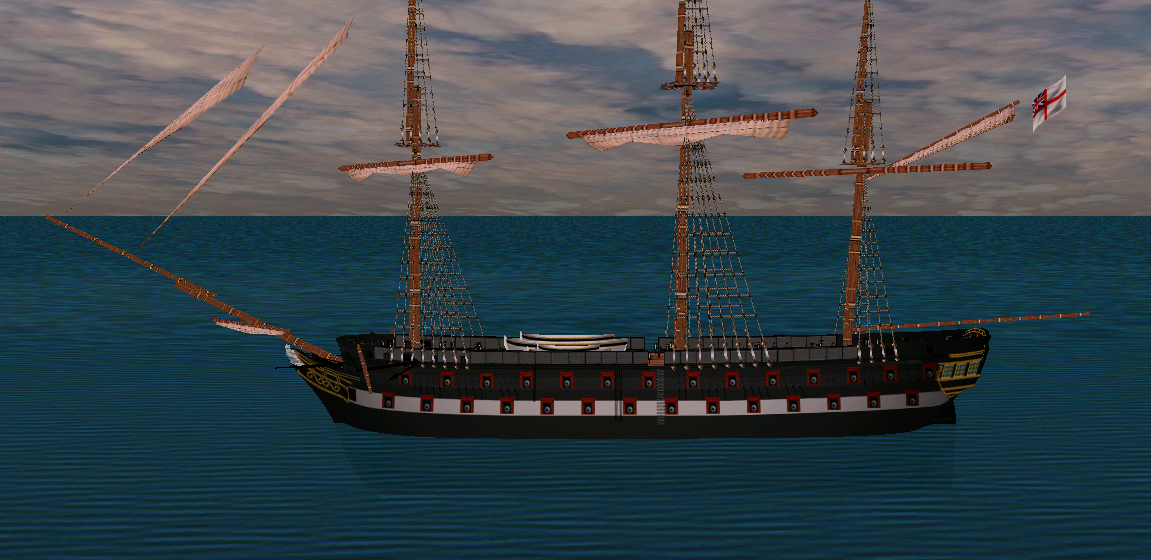
-
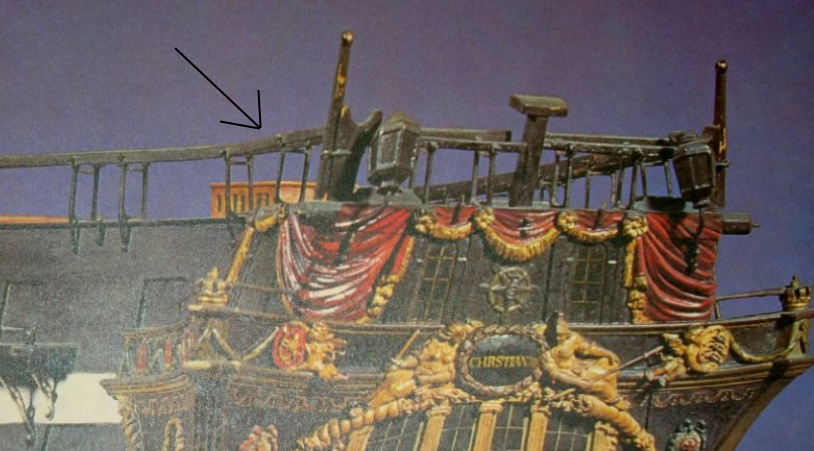
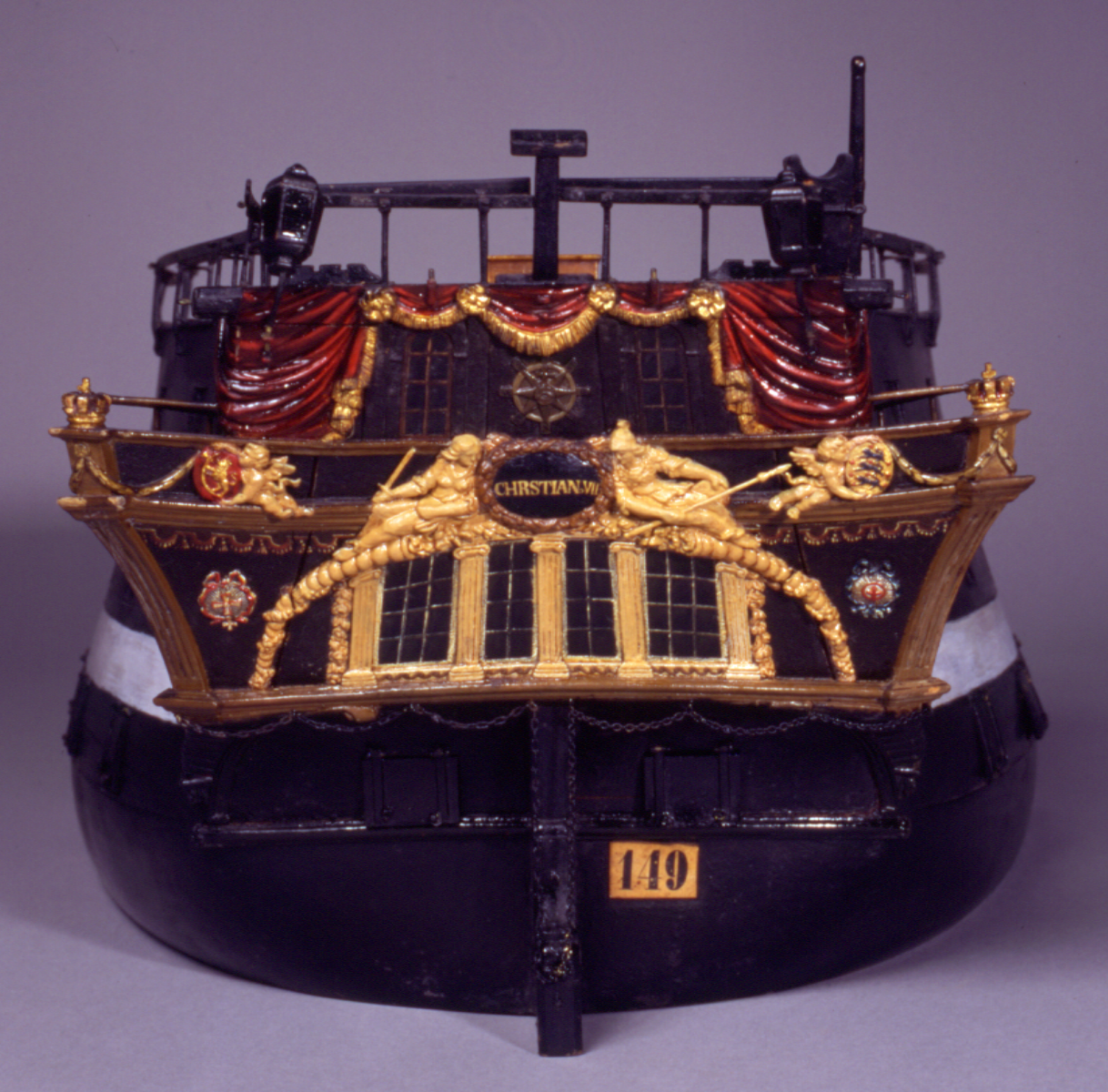
Wow. I didn't pay enough attention, thinking that two images taken from (almost) same point are the same. And they are not. There are two other differences, the removed boom support enables us to see the horizontal positioning of the last netting support, and it is indeed on the quarter gallery (however, there are some questions as to how turn of the deck is executed there), and the image without the starboard chain shows rails on the gallery balcony that go to the aftermost gunport (they are obscured by the crown on the second image, but they are visible on the photos from the book below). And there are two more images of this model, on page 35 of Holck's catalog (1939) (PDF), one of them is side-view.
-
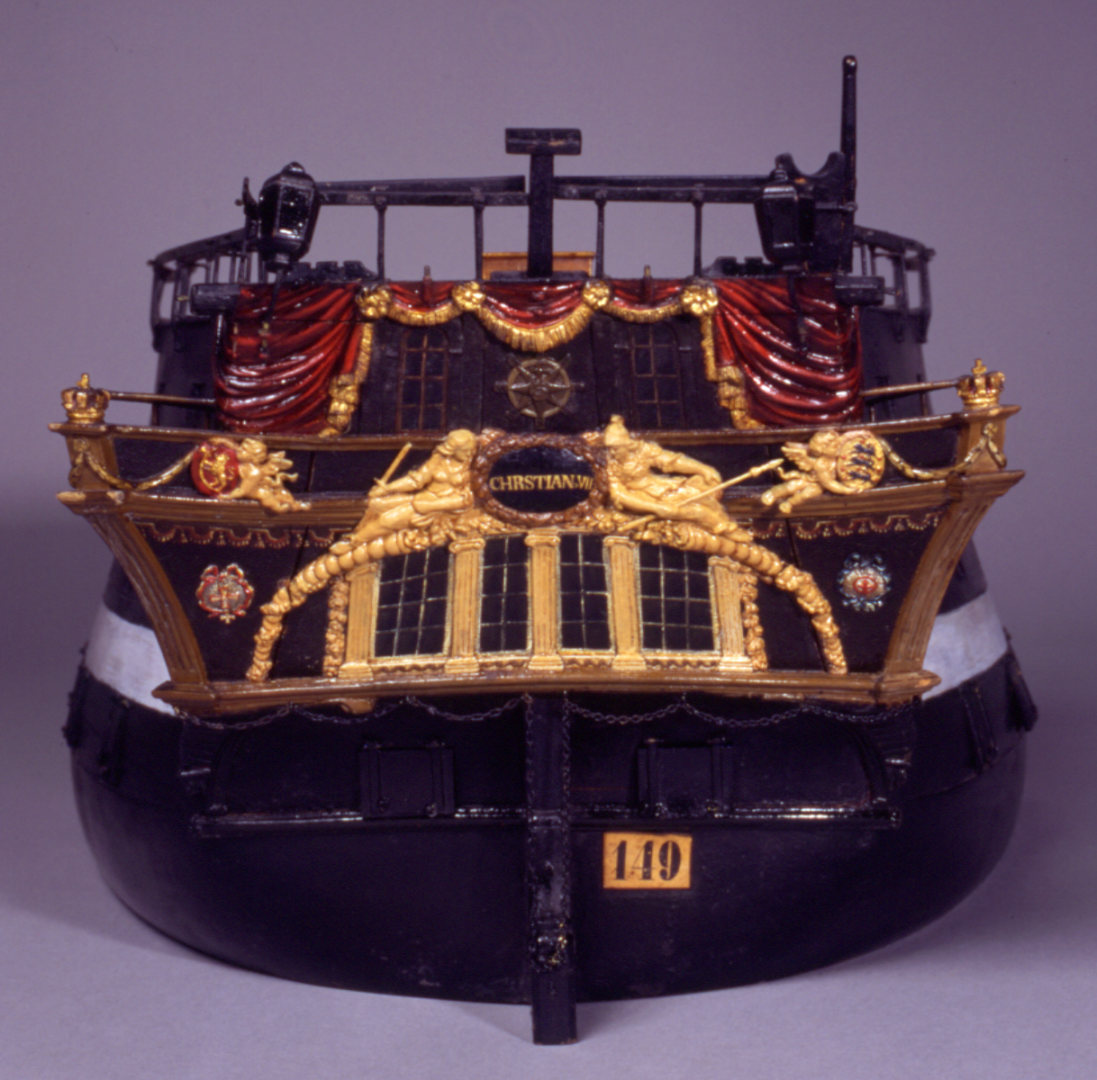
I'll give them some time to go through the storage, but if I'd ever have (or get) to do it myself, it'd be fun. Thanks for the image, I don't have it in that resolution And here is what they sent me - the image above in original and a set of photos of Prince Christian Frederick, which has different config, and is a modern interpretation, but still it's something. And just to note that I do watch your project with great interest. Prins Christian Frederik.zip ChrVII(1803)agterspejl-285-2000.zip
-
Oh, I did! I even explained what I needed exactly, and they found me a photo of that model (numbered 149, the black one) that was not anywhere on the net (I never encountered it, at least - see below), but they still don't know where the model is and if it exists at all. They were extremely nice and helpful, it's the disappearance of the model as a physical object that made me envy you The plans are in the Danish archives and I used them all already Thing is I needed a very specific view of that model (top projection, to verify the rail run on the roundhouse and top tier of the quarter galleries - it is very awkwardly positioned, as if stepping from the edge roundhouse onto the quarter gallery, and how exactly it is done is not drawn anywhere), and without the model it is absolutely impossible. I just wanted to see this curve from above, and the corresponding place on deck - where the roof of the roundhouse ends and where the gallery cover begins. And the fact it could be just lost because they merged two museums is very saddening. Just hope it would turn up during next inventory. I apologize for intruding here, of course, you can remove all three posts if you want to clear the thread.
-
Lucky you. When I asked Danish Kriegsmuseum about the model of Christian VII's stern, they told me it's not in their collection and they don't know where it is. It should have been transferred from the former Maritime museum, but apparently wasn't, or wasn't indexed, anyway, they couldn't find it.
-
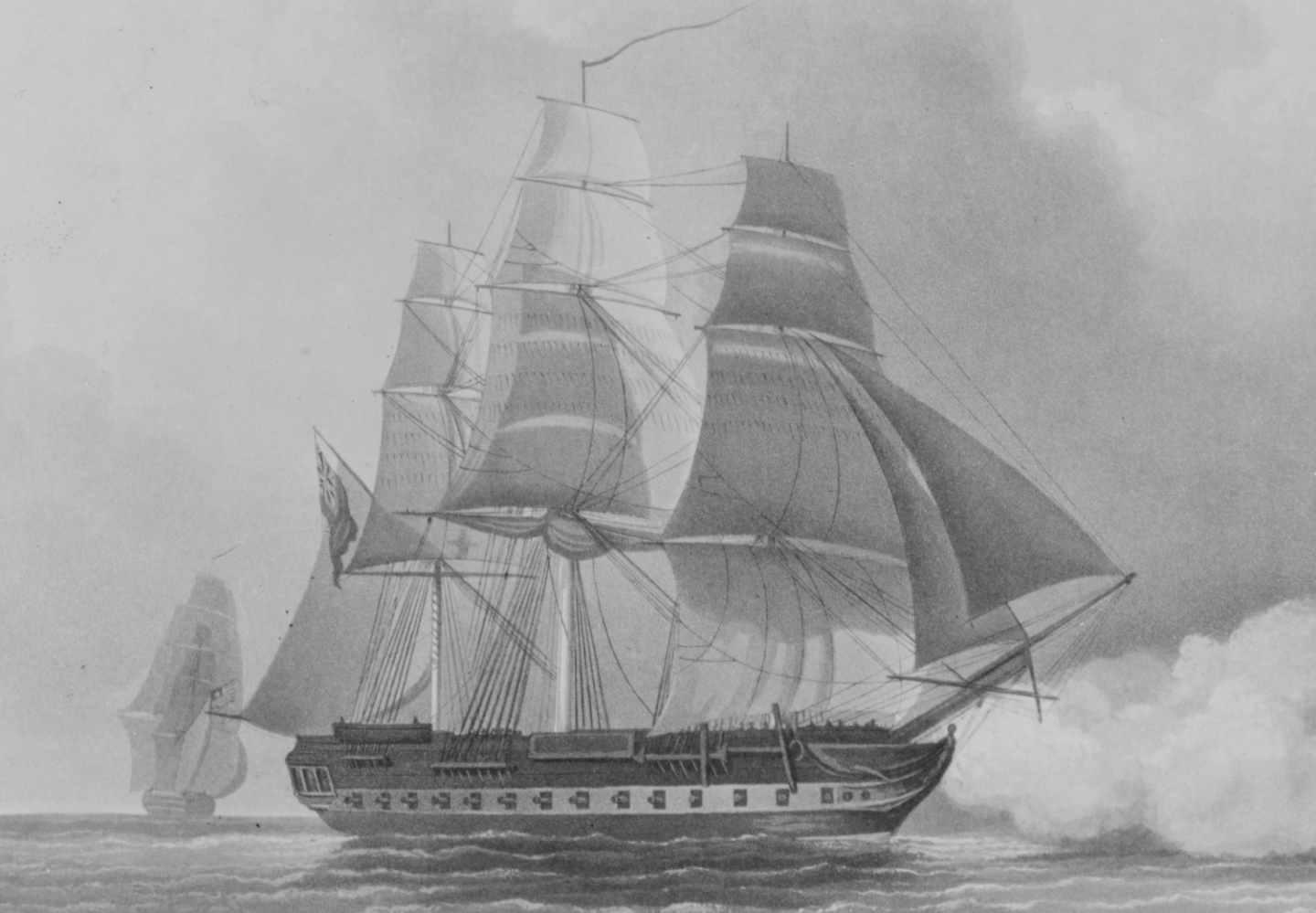
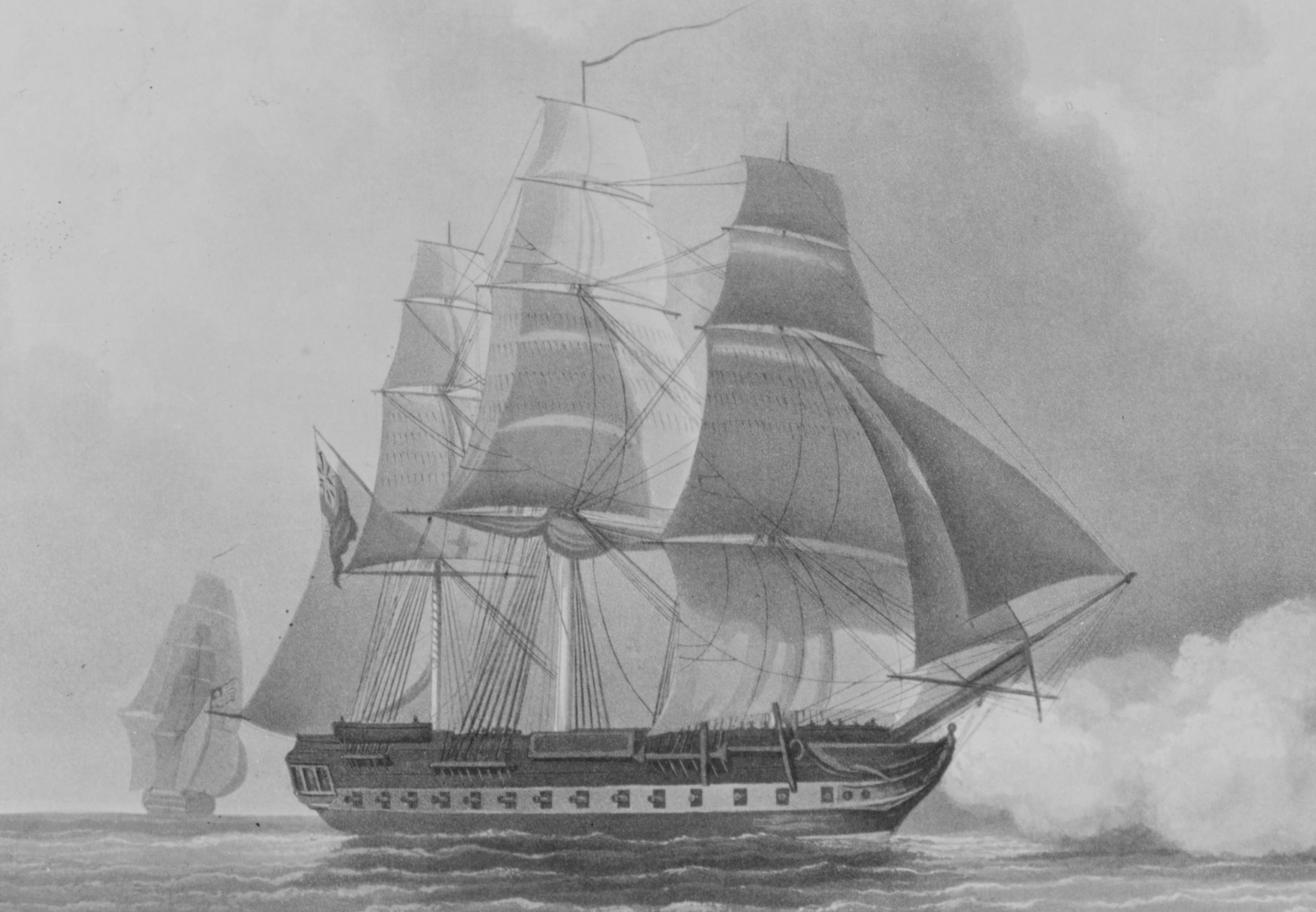
The confusion indeed is enormous, but almost until the last moment I thought of the stripe going between the decks, as on the first picture, as a distinct possibility. However, Gardiner quotes Hayes: her appearance [is] so deceptious that any one would go down to her for a frigate, having much of the appearance of one of the American frigates; I hope more of the small 74-gun ships will be equipped in the same way, these seas requiring no other ships, it would be a great saving. and adds: "Judging by the draught, it is difficult to see much resemblance with an American frigate, although the rasees were said to carry a black-painted cloth to disguise their gangway ports." and this effectively rules out anything but the lower stripe, since black cloth applied to anything else would look totally strange. It is interesting, that despite the inconsistencies in paint schemes, all the artists that drew her from bow-on perspective, display a lower head, not built-up variant appearing on the plans. It looks better, undoubtedly, and I would likely have done it even without such confirmation, but it's still a nice detail. Additionally, using the Elephant layout, with the covered upper deck, makes it possible, with adding the second stripe, adjusting the topsides texture, and adding guns to the spar-deck, to represent a standard 74 built without roundhouse, which I might do later.
-
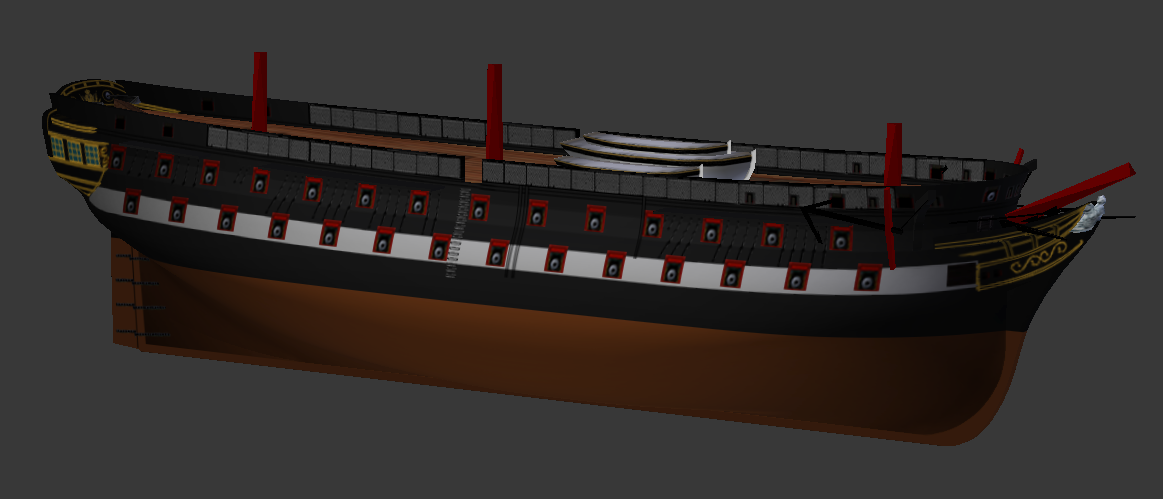
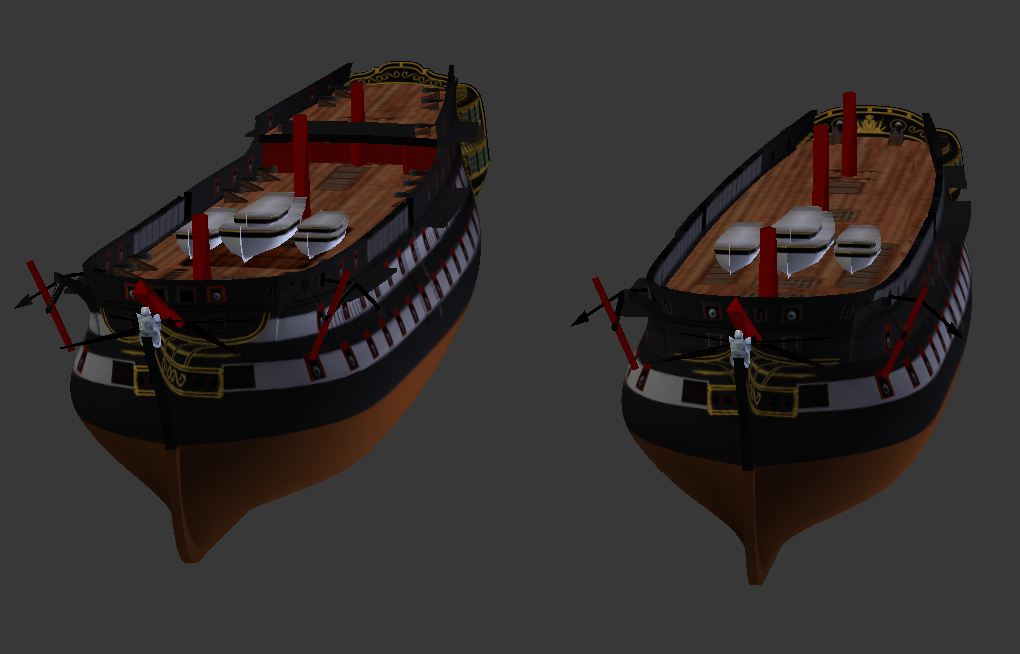
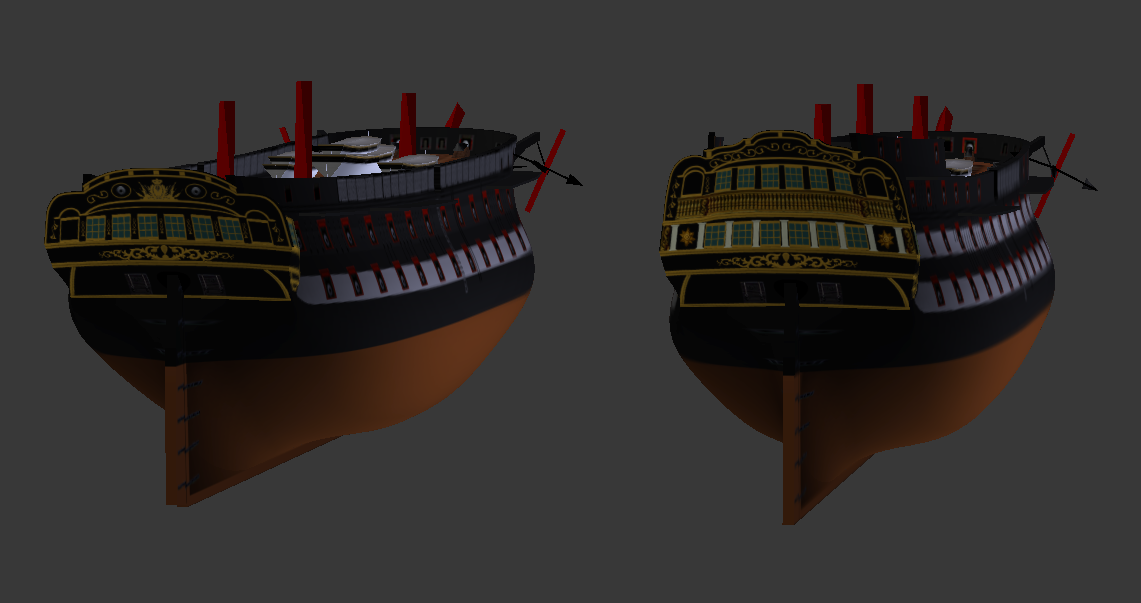
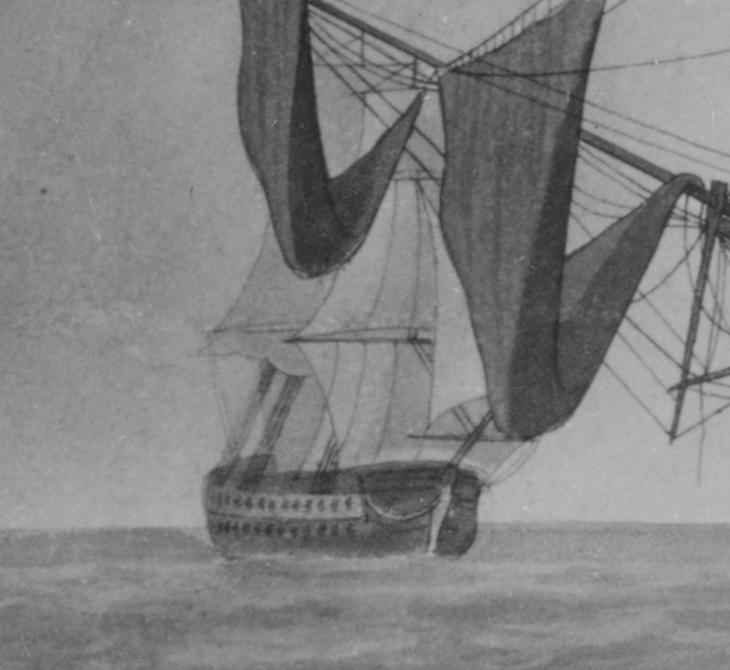
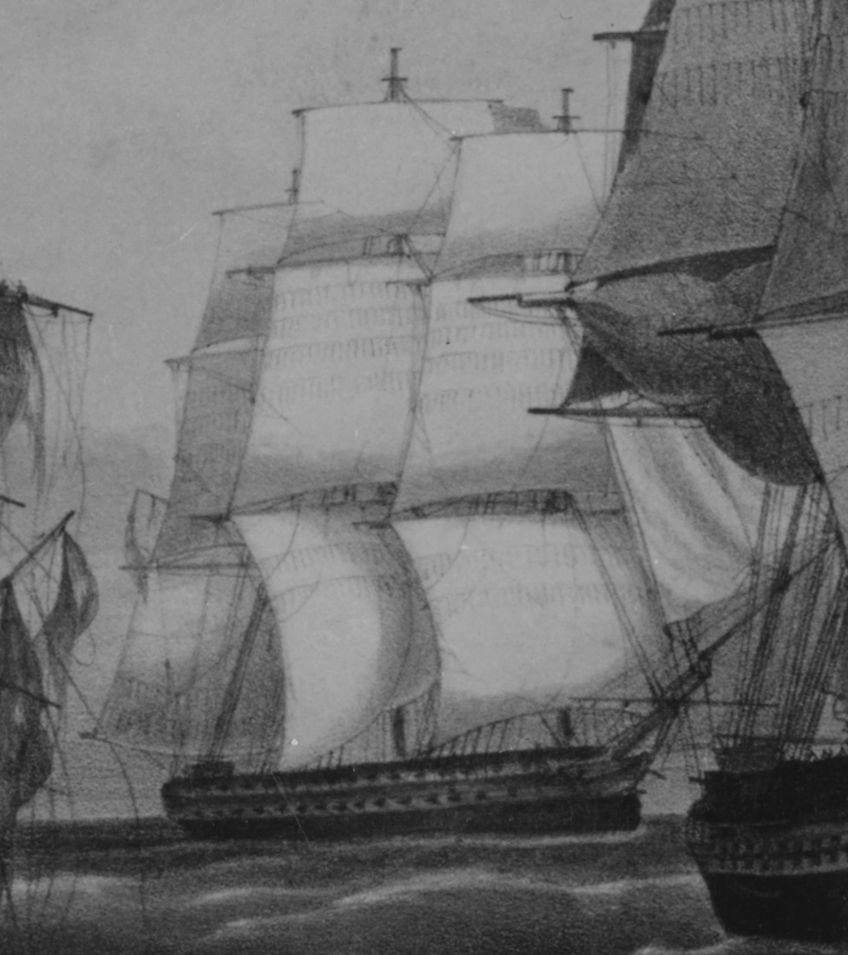
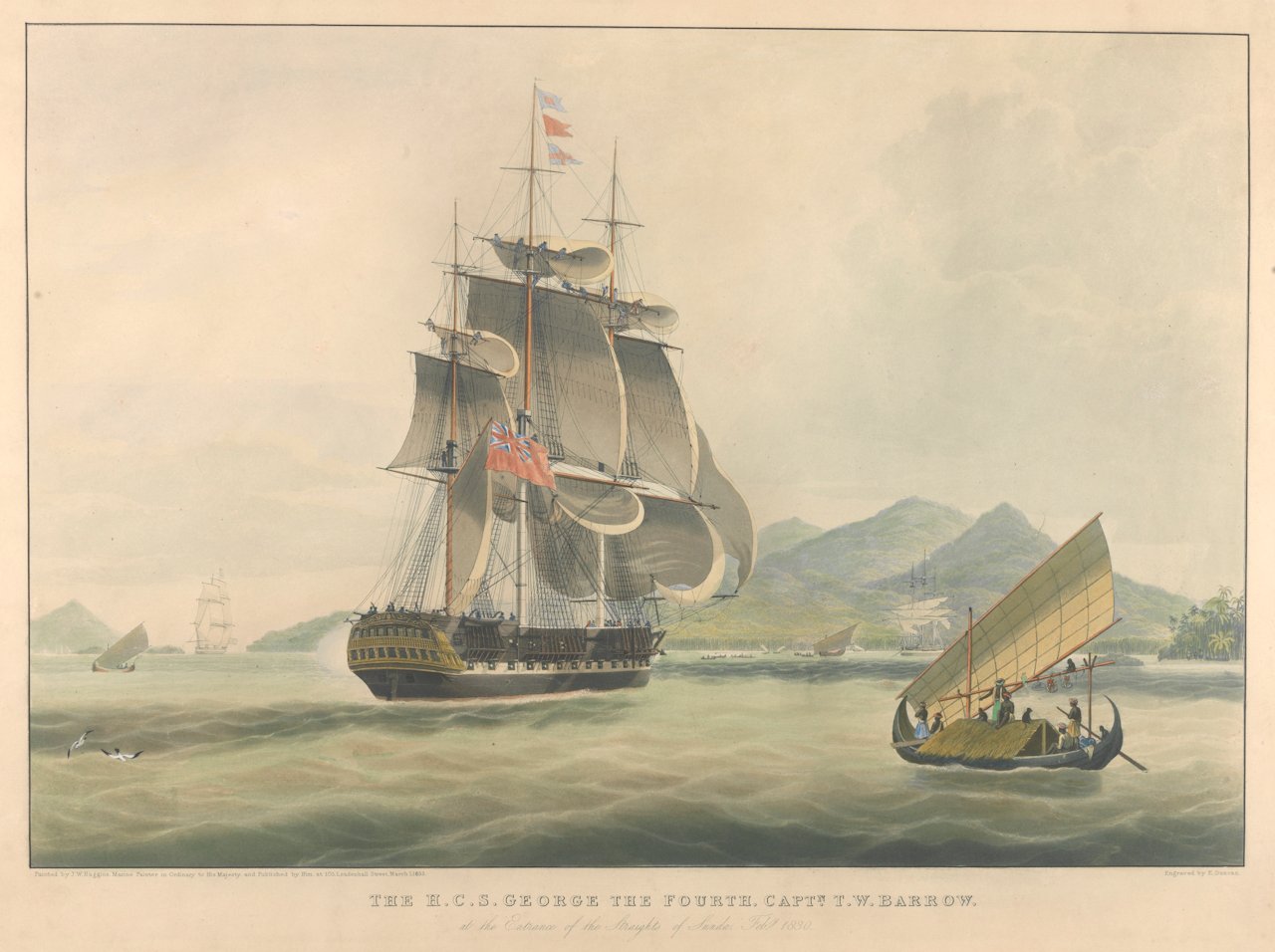
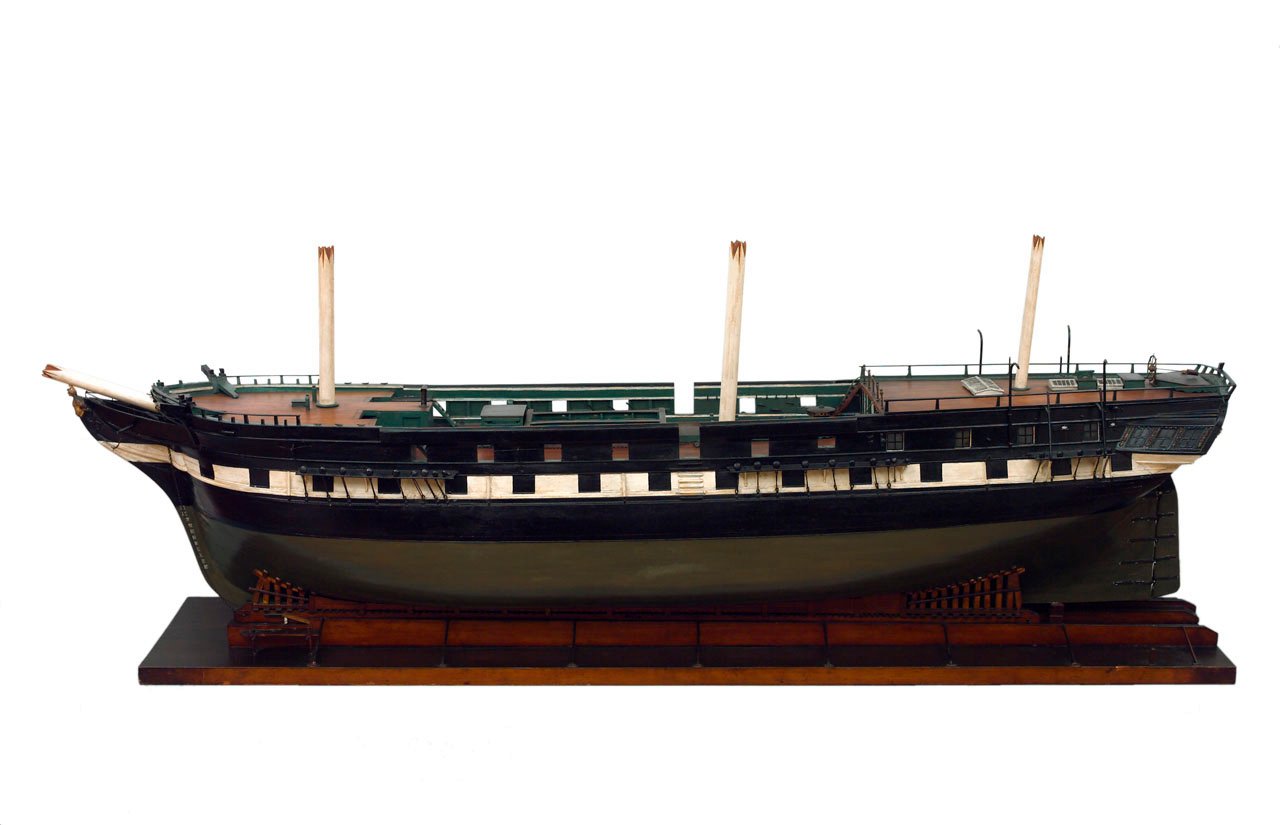
A ready hull of a 74-gun ship, however, opens an attractive venue. It can be razeed. Moreover, it can be razeed in more than one way. It is, of course, an amalgamation of designs - no ships of this class were actually cut down in this particular way, so I took the plans for razeeing the Elephant, with a fully covered upper deck, but I did not change the port configuration of the upper deck, as on earlier ships (Saturn and Majestic), and lower head, as consistent with most depictions of the Majestic. There was, however, a very puzzling question about how to paint her. Majestic is depicted as having: - single wide stripe between decks - single stripe over lower deck - single stripe over upper deck - stripes over both gun decks of which two configurations are attributed to her during a one single engagement, and two others - during the other. Owing to the quote of captain Hayes that she would be easily (?) mistaken for a large frigate, I ruled out the two-stripe configuration, and finally decided to keep the lower stripe bright, as was done on later medium-sized indiamen that were similar in hull configuration: And there is the variant cut down to fully conventional frigate, but it is still under construction:
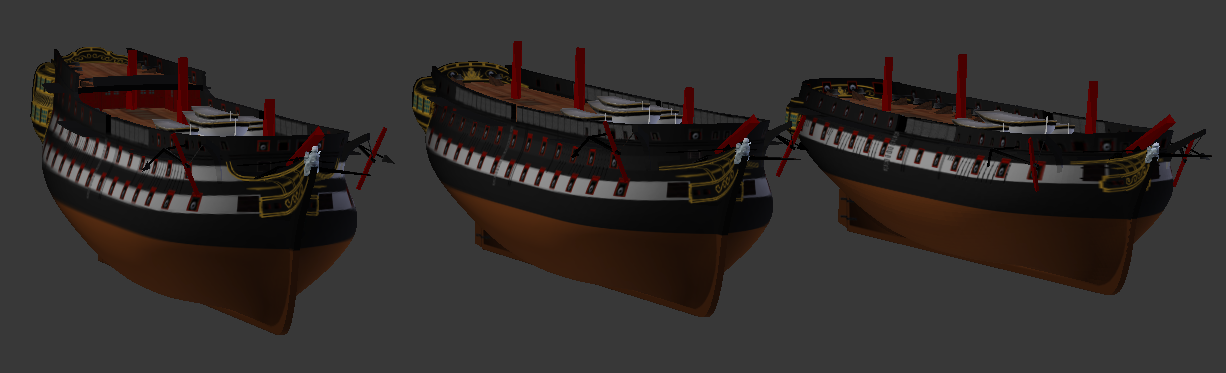
-
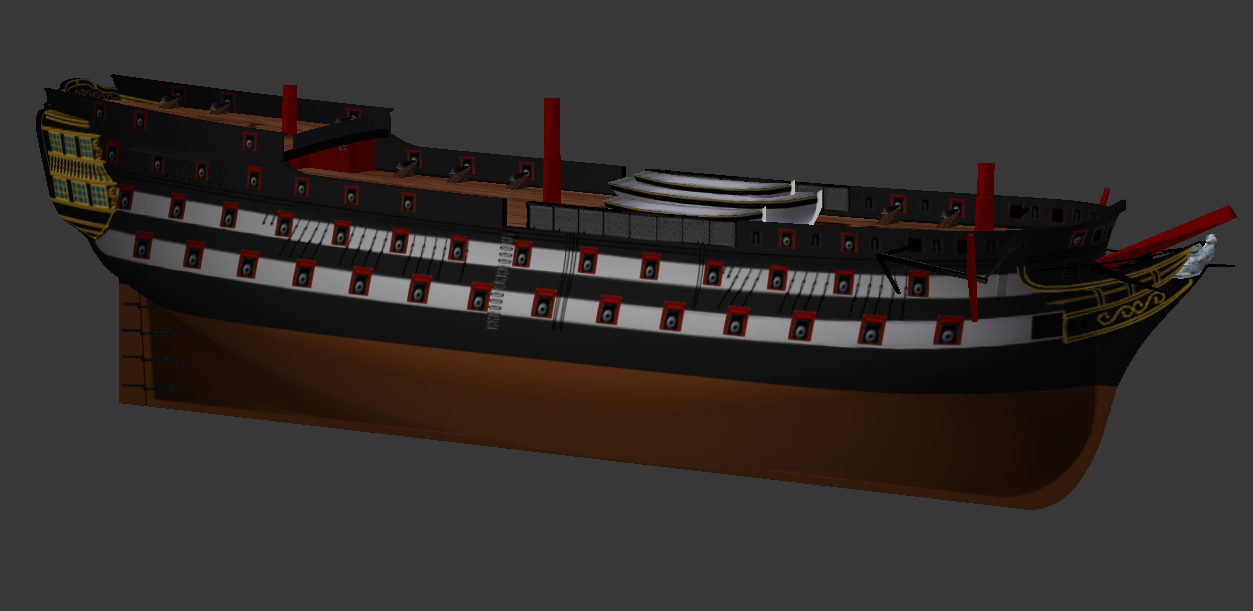
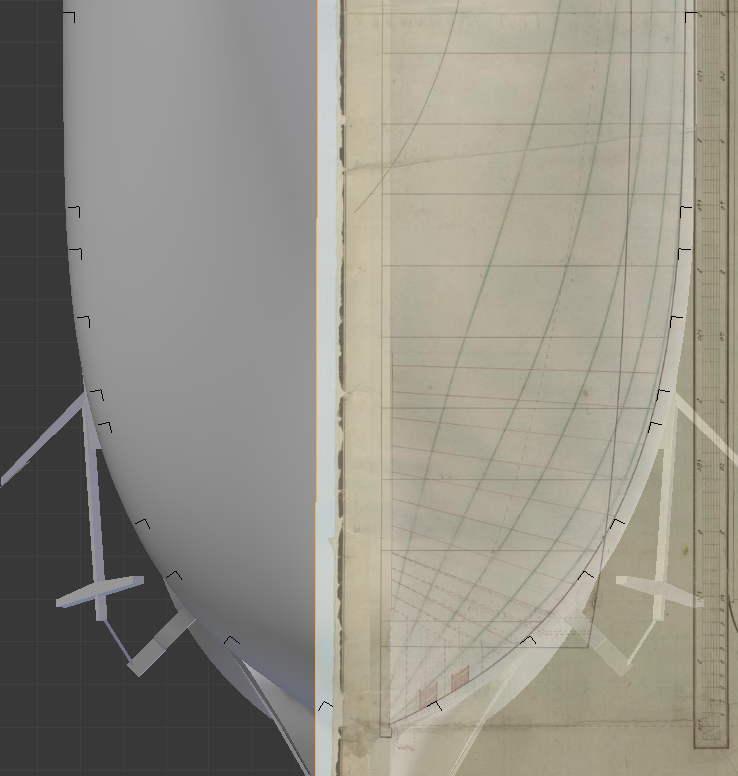
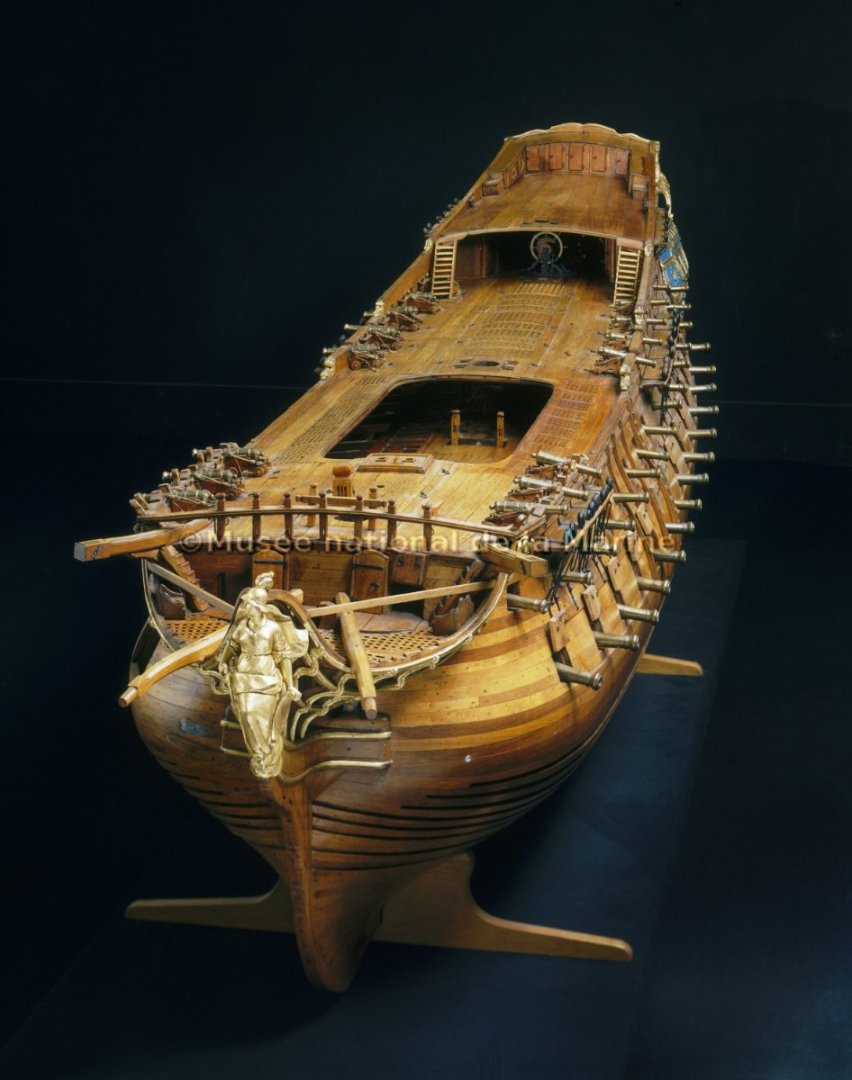
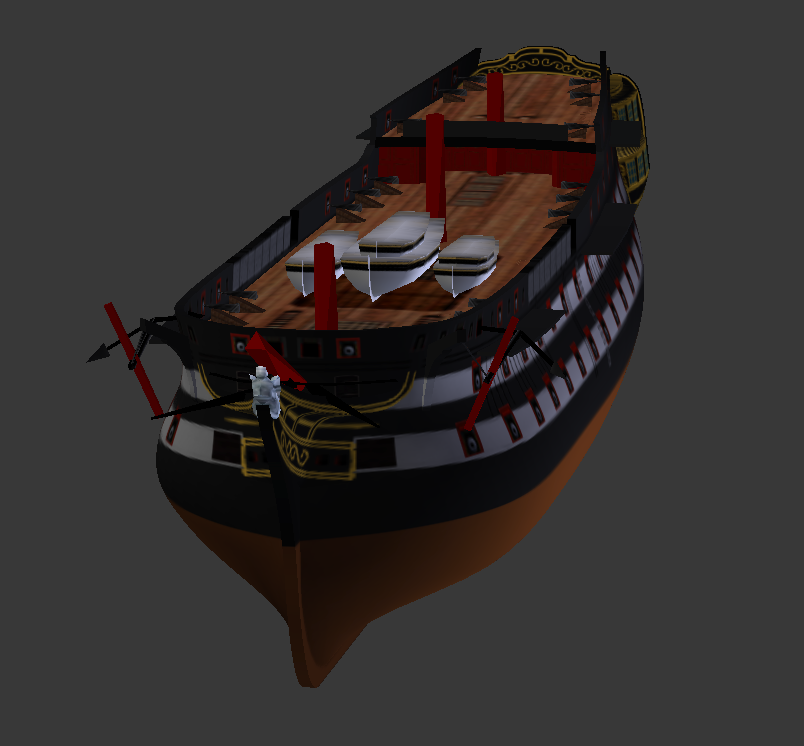
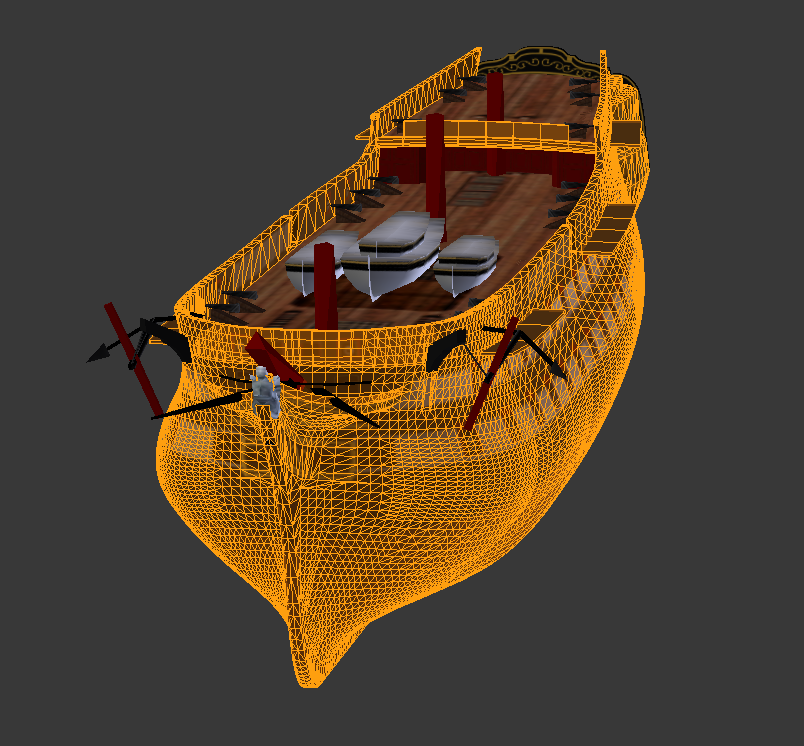
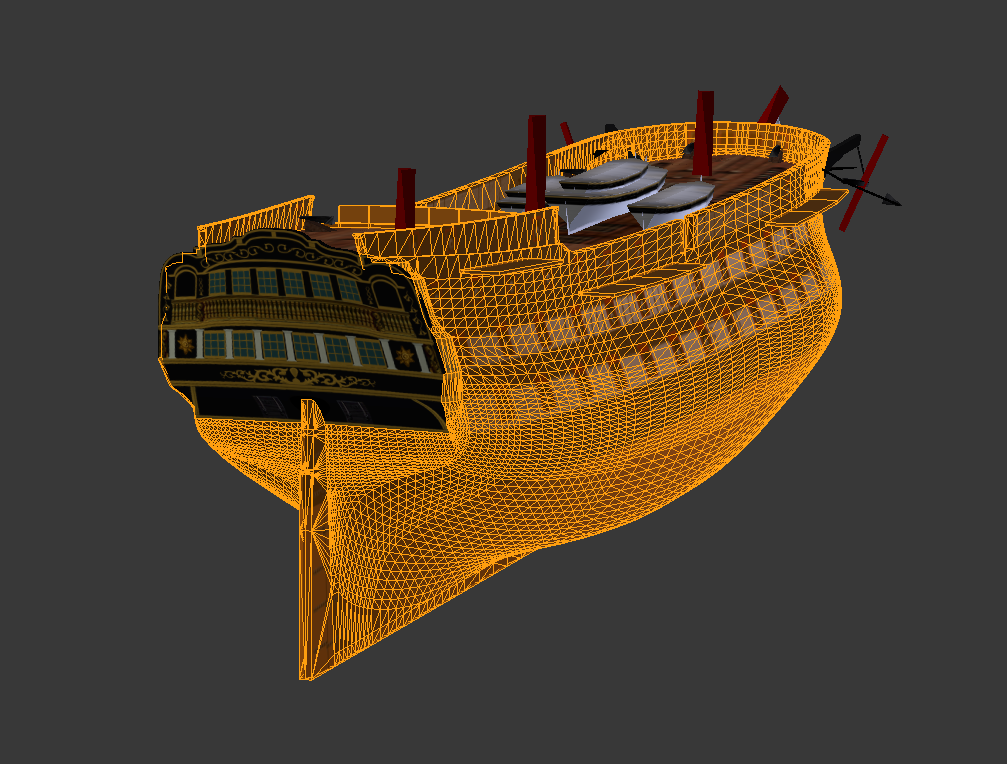
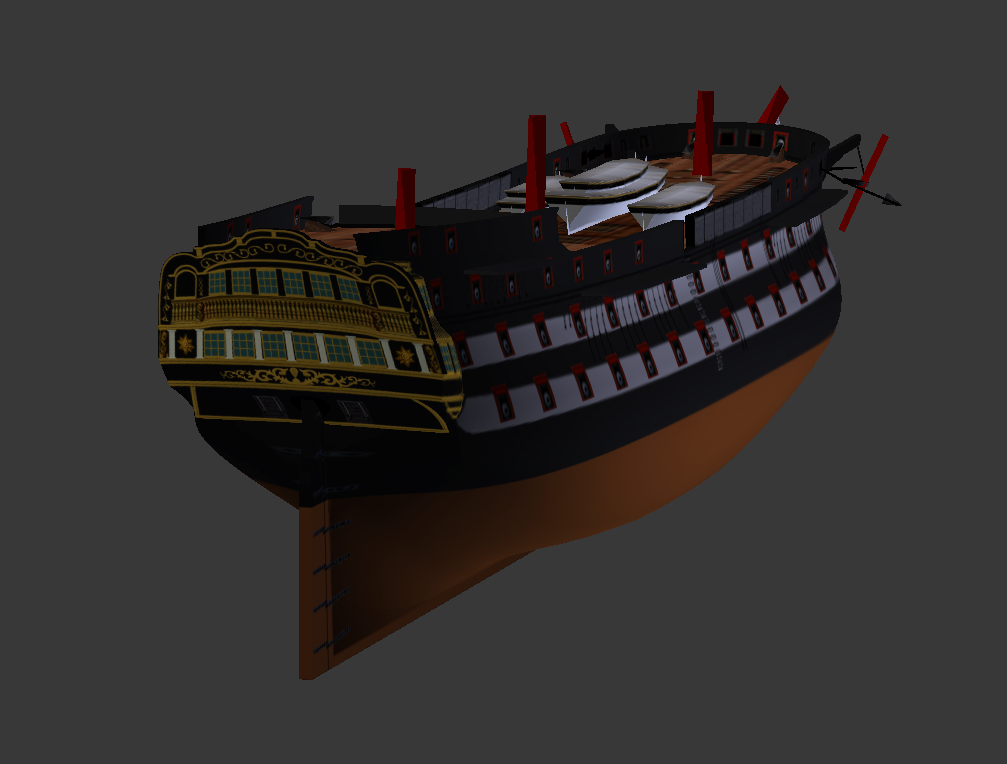
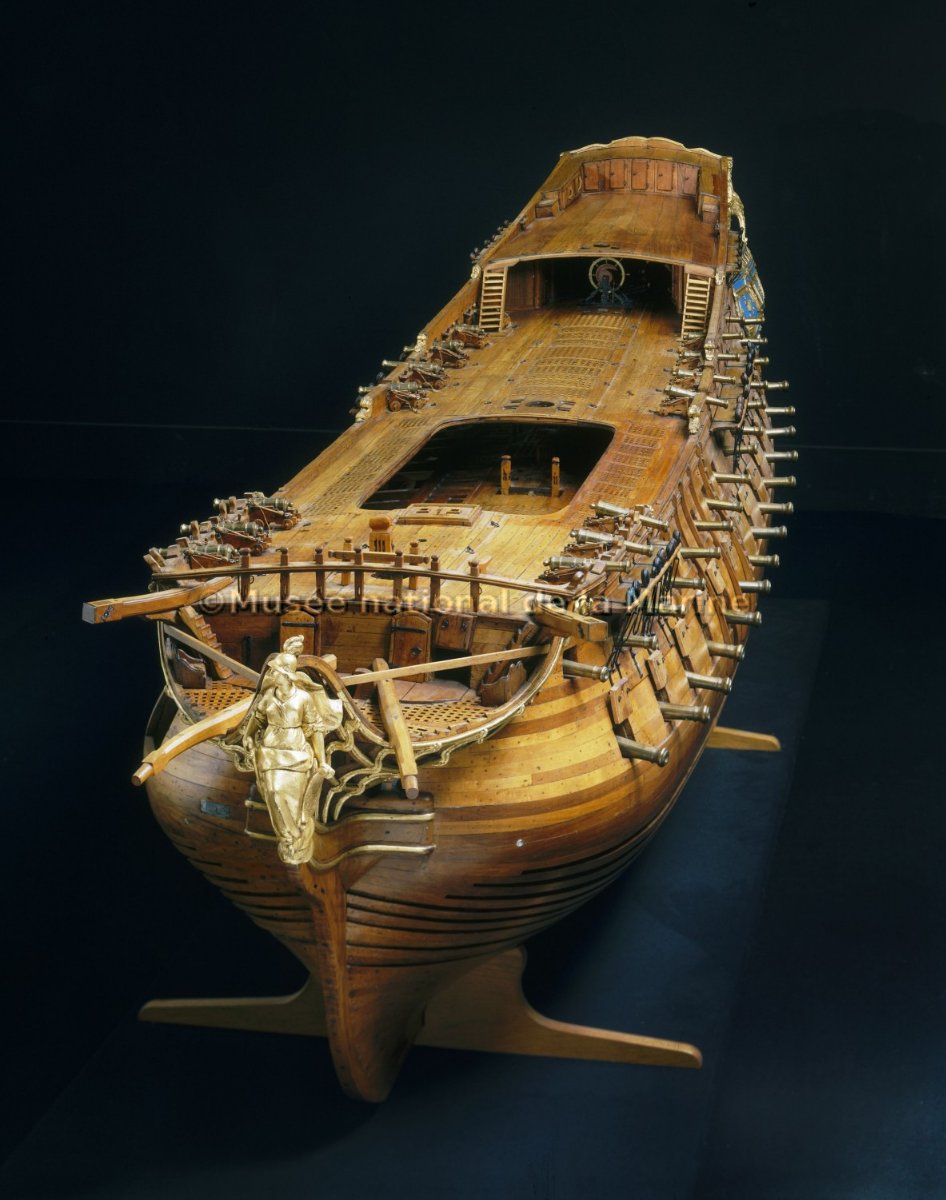
Once again, I rebuilt the Colossus. The model retains the round bow I borrowed from the Tremendous refit of 1810, and has greatly corrected the curves forward, where simply adding plank thickness to stations do not work (I already tested this on several frigates and newer ships and while considering to reapply it to the Colossus thought I'd bring her to standard - with more vertices for the hull and higher-resolution textures): The photographs of a French 74-gun ship model by Mr. Augustine Pic were enormously helpful, as the model has cuts in the exact places that give the idea of plank thickness and difference between the outer shell and the frames (and since the Colossus/Carnatic/Ganges were a copy of Courageux of 1757, a ship very contemporary to the model, the resemblance is not completely coincidental) So as a result I have another example of my favourite principle - a ship of French design of 1750, built for Louis XV, in British Napoleonic coat, serving George III and in certain sense - Louis XVIII.



Our Emblem ®