
HOLIDAY DONATION DRIVE - SUPPORT MSW - DO YOUR PART TO KEEP THIS GREAT FORUM GOING! (Only 13 donations so far - C'mon guys!)
×


roach101761
-
Posts
204 -
Joined
-
Last visited
Content Type
Profiles
Forums
Gallery
Events
Everything posted by roach101761
-
No Ratlines on Revenue Cutter Dallas?
roach101761 replied to RichardG's topic in Masting, rigging and sails
Richard Sorry I am late to party. Still working my way around the site. The responses that advised no ratlines because the sails were worked from the deck are correct. The model Dallas depicts an 79 ton cutter. The other vessels that were referred to were larger vessels. The large square sail (light weather sail) was bent to the yard on deck and raised and guided by a horse. The horse is actually on the Dallas plans on the fore mast. The topsail is a smaller sail and yard than it might appear. It was also bent to the yard on deck and raised from the deck. Therefore no ratlines AND NO foot ropes or jack stays on the yards. This also puzzled me as well. If they needed to go aloft, someone suggested to me that the crew simply climbed the mast hoops/rings. Phil Roach NRG Director President Southwest Florida Ship Modeler's Guild. -
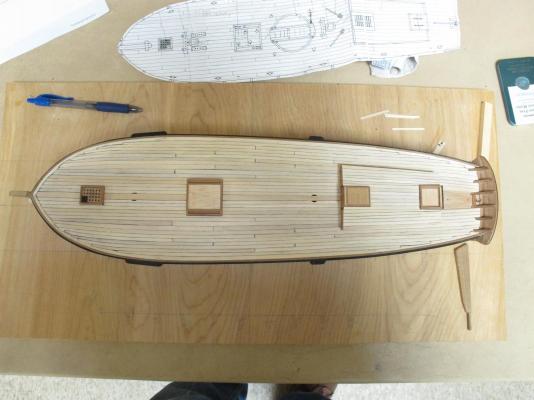
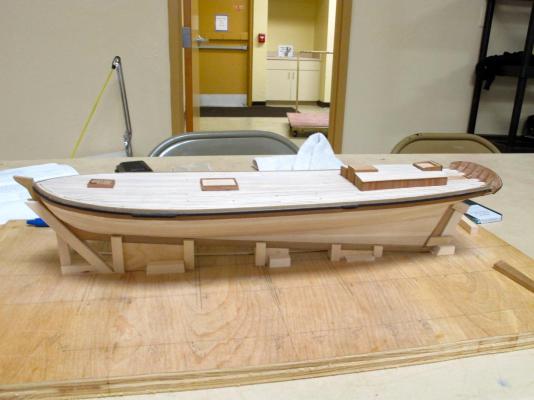
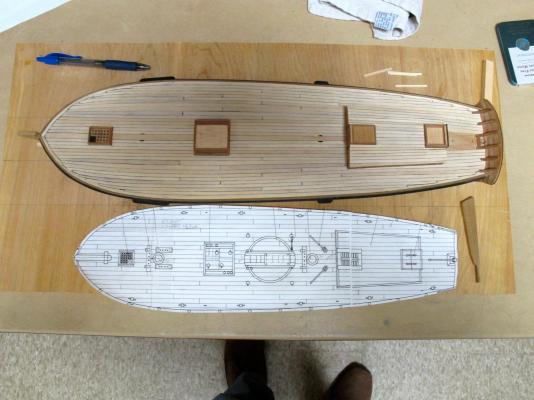
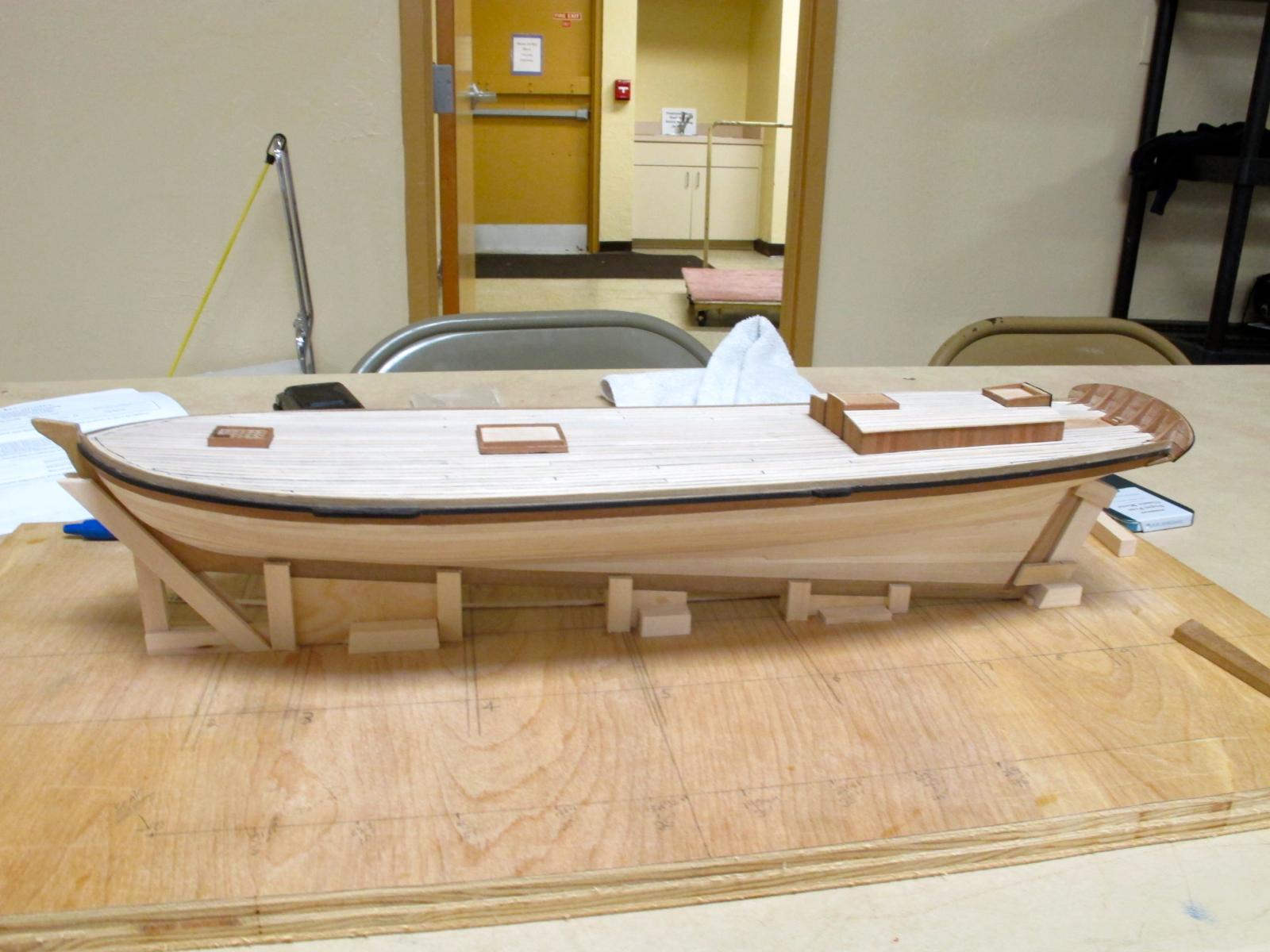
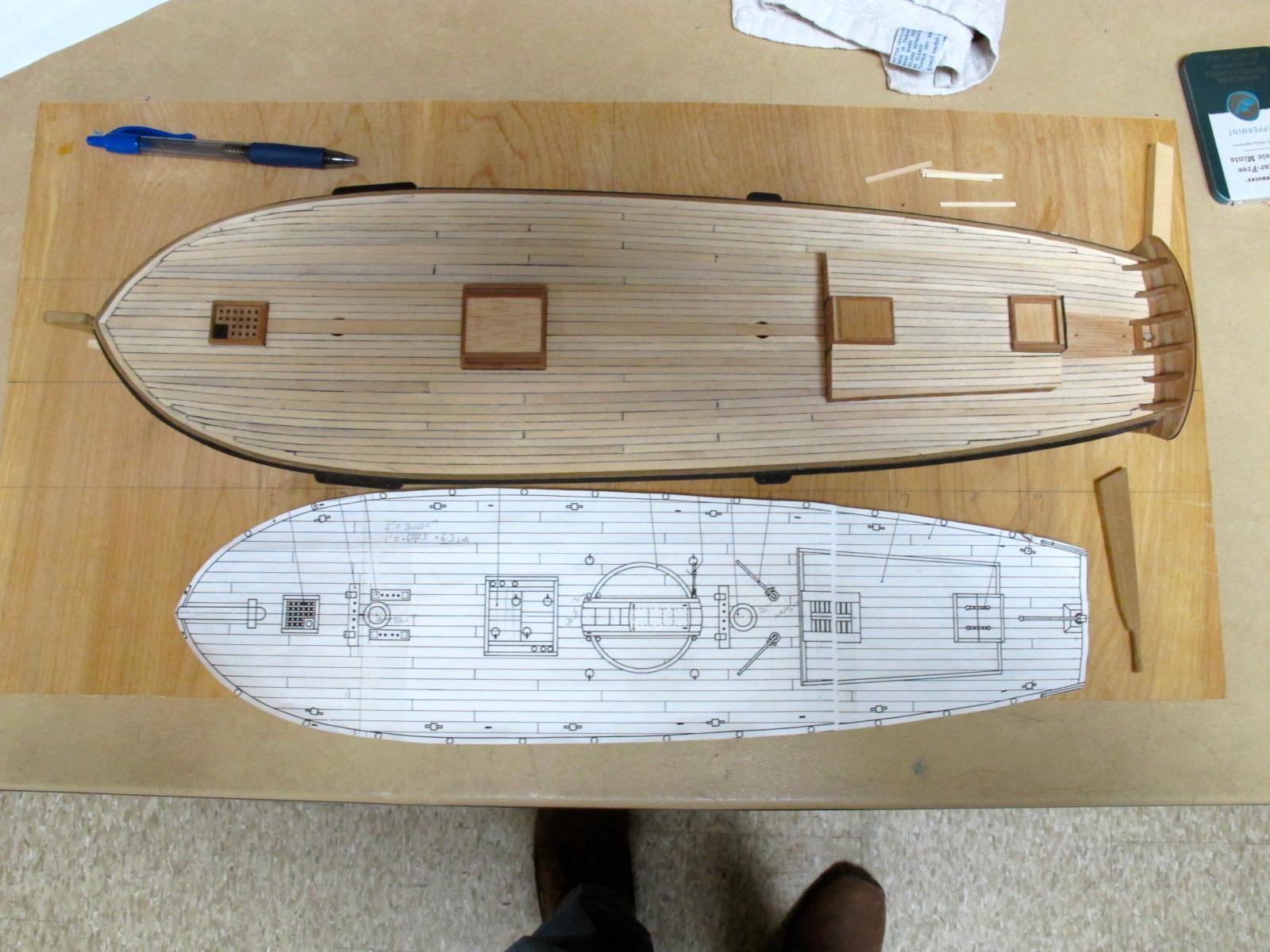
I found a picture or two of the early stages of My ship that is not the Dallas. This shows the deck lay out. I used too much magic marker and it bled. I am still working out a way to get some of it off. I used curved and tapered deck planks. There are only 20 butts in the planking. 10 each port and starboard. The longest plank works out to 42 feet. I do not believe that Americans hacked their pine trees into 20 foot pieces for deck planks. It makes no sense. For a comparison the deck displayed next to the deck plan from the AL kit. You can see the ridiculously short planks have been eliminated. Profile view. Trimmed in Ebony. The stern shows the stern timbers I added in cherry and then planked in cherry and trimmed in ebony. Phil Roach NRG Director President Southwest Florida Ship Modeler's Guild
-
Wayne, Richard and Clare-- Thank you for your responses. Wayne and Richard, Thanks for the math. The Dallas kit does work out to be the large cutter and the Ranger Kit does work out to be the mid size cutter. Some one confirmed that a few years back, but I had lost the math. Thanks for getting it back to me. As to how to build the splash boards, based on your feed back I have decided to do the following. It is unlikely those splash boards were one piece on Port or starboard. They are probably cant frames extended above the deck level with filler pieces added OR they are filler pieces made to extend above the deck and shaped like knight heads with more filler pieces placed between them. Because the hull and deck are fully planked it will not matter which. I also think that the splash boards would not have a flat profile as in those model plans or Chapelle's drawings. Perhaps I will shape them according to the contour of the hull. Therefore I will shape four posts to look like knight heads, drill holes and or carve holes in the margin plank at the bow and insert them in the deck. I may or may not make them with an upward curvature. I will then attach filler pieces to them and shape the assembly to a curvature on the inside or not. I will see. My next problem is what to build them from. I have trimmed the whole boat in ebony. I might do it here. Knight heads with ebony with the filler pieces in cherry. I did figure out the spell check. Still trying to set up my signature block Phil Roach NRG Director President Southwest Florida Ship Modeler's Guild
-
Richard and Clare; Prior to begining my build I collected a lot of research on Dallas. Then one day I was Reading Don Canney's book US Coast Guard and Revenue Cutters and he stated that Dallas and It's sister Suprise were the 51 ton Daughty design cutter. I was shocked. Chapelle says 80 tons. How could this be? So I called him, told him of my shock and requested his source. A few weeks later he called back and directed me to the David Gelston Papers at Mystic Seaport. Gelston was the collector of revenue in NY City. The papers contain the correspondence From Secretary Dallas that orders and directs its building by Adam and Noah Brown. The papers contain the contract and later the certification of the ships mesurements. I began researching more and collected a research partner along the way. YUP 51 tons. No doubt. I am in the process of writting an article or two. I have a very rough draft so far. An other problem is that two vessels were built at the same time. One went to Savanah. The other went to Mass. Not SC. I now call my model the Ship that Is NOT the Dallas. Still looking for data to determine a name for any 80 ton Cutter built to the Daughty large plan. The Ship was contracted for in August of 1815, Launched in Oct 1815, Delivered to its captain in NY City in Dec. 1815 and is reported at Savannah shortly before the end of the year. The ship served until Nov. 1821 when it was sold out by public auction in Charleston SC. I have a complete copy of the Record Of Movements. For the early boats there are a lot of errors and inconsistencies. King just references Chappel. I called him up also and spoke with him. As to a build log, probalbly not. I build SLoooooooooooooooow. It is also at a reletively advanced stage. Masting almost done, deck furniture almost done. I had a lot of modifications. Hull is complete but for coppering. Contract says it was Coppered to the bends. Other contracts for contemporary cutters called for copper plating the hulls. Also have a reference in a letter regaring damage to the copper on the actual boat. Perhaps some pictures, do not know yet. I think that answered all of you questions. If I missed one let me know. However, I have a couple. Where is the spell check on this thing? How were those splash board made? By the way I modified the stern. I added stern timbers, planked it and then trimmed it in Ebony. Phil Roach NRG Director President Southwest Florida Ship Modeler's Guild
-
Sorry I could not post these pictures yesterday. The attachments are a picture of the 80 ton cutter from Chapelle's book History of American Sailing Ships. The second attachment is a page from Corel's Ranger showing the splash boards. I look forward to everyone's contstruction interpretations. Phil Roach NRG Director President Southwest Florida Ship Modeler's Guild. Corel Ranger.pdf Chapelle.pdf
-
I have been Kit bashing the AL Dallas revenue cutter. I have done a lot of research and collected a lot of materials on the Doughty revenue cutters circa 1815. See Chapelle's History of American Sailing Ships, chapter four. By the way, the AL kit is not the Dallas, as it dipicts the 79 ton cutter. The Dallas was the 51 ton Doughty cutter. I have also collected the plans of the the Ranger,(a Corel kit) a non existant ship, which is also a Doughty revenue cutter circa 1815. The Doughty cutters, 31 ton, 51 ton and 79 ton cutters have no bulwarks. The AL kit and the Corel kit also have no bulwarks. However, in the Bows, they have what in the AL kit are termed splash boards. In the the Corel Kit, they are termed element #45. Italian to English. a continuing problem. In the Chapelle plans they are dipictied as solid boards. In both kits they are dipicted as solid boards. All three have 4 knight heads carved into the top of the splash boards. It does not seem correct to me. My question is, In real ship building practice, how are they really built? Are they solid pieces, most likely pine. That would be several feet long and several feet high solid pieces with knight heads carved or set into them, OR------- are the knight heads extensions of the forward cant frames and the splash boards planked like a bulwark? Just how were they built in 1815? Phil Roach Director, Nautical Research Guild President, Southwest Florida Ship Modeler's Guild.

Our Emblem ®
