
HOLIDAY DONATION DRIVE - SUPPORT MSW - DO YOUR PART TO KEEP THIS GREAT FORUM GOING!
×

woodrat
-
Posts
834 -
Joined
-
Last visited
Content Type
Profiles
Forums
Gallery
Events
Everything posted by woodrat
-
 Sliding anchors go way back. This one (Which I copied for Yenikapi 12) was found on the Yassi Ada wreck from the seventh century. But Permanent stock would be fine too. Dick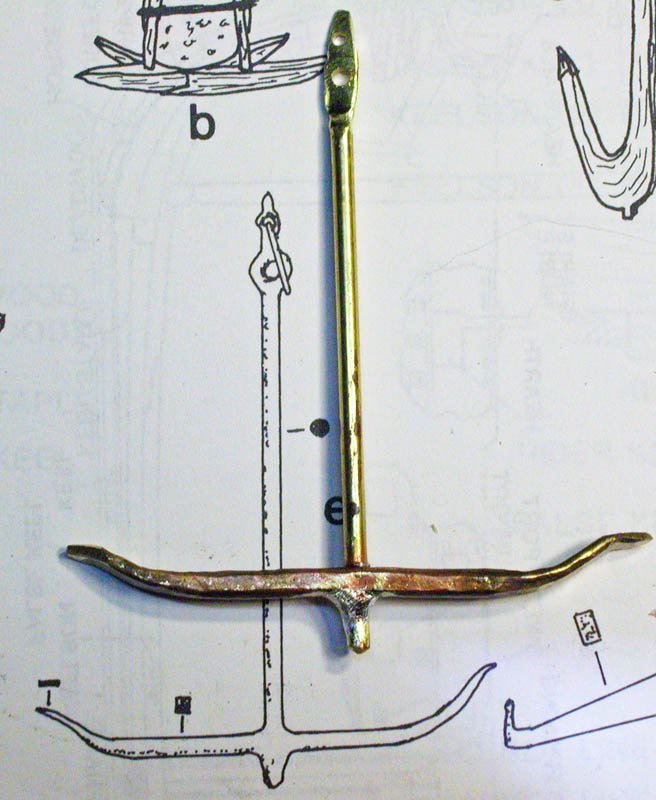
-
Yes I think it would be reasonable to show a sliding metal stock such as this. Please note that the round ship would have anchors at each quarter of the ship and probably a number of spare anchors stored maybe on deck. Dick

-
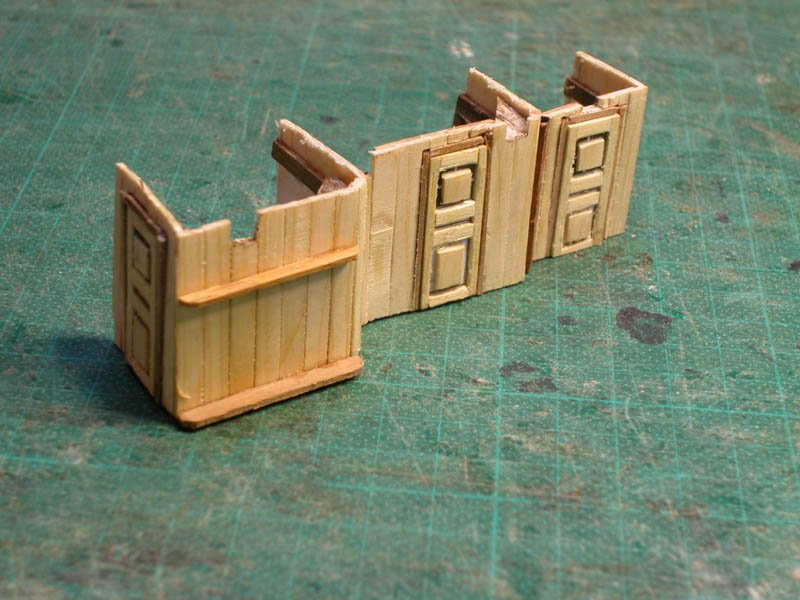
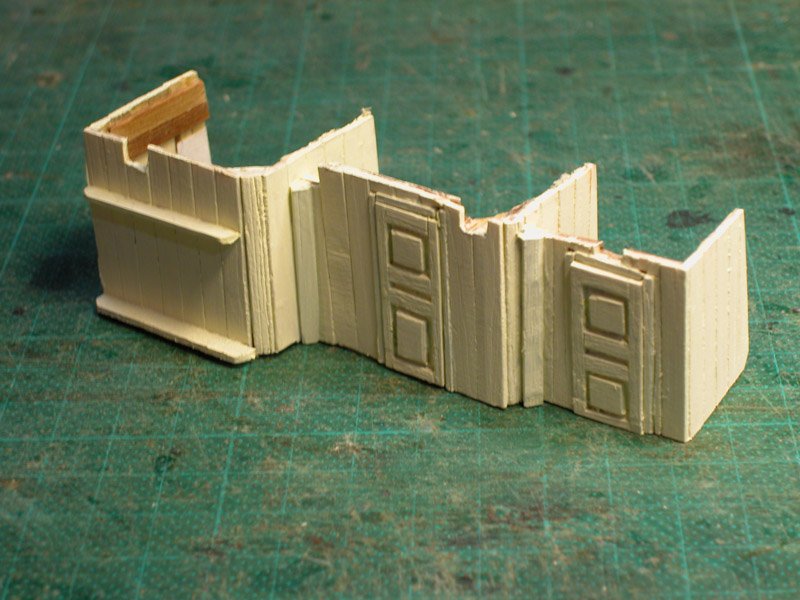
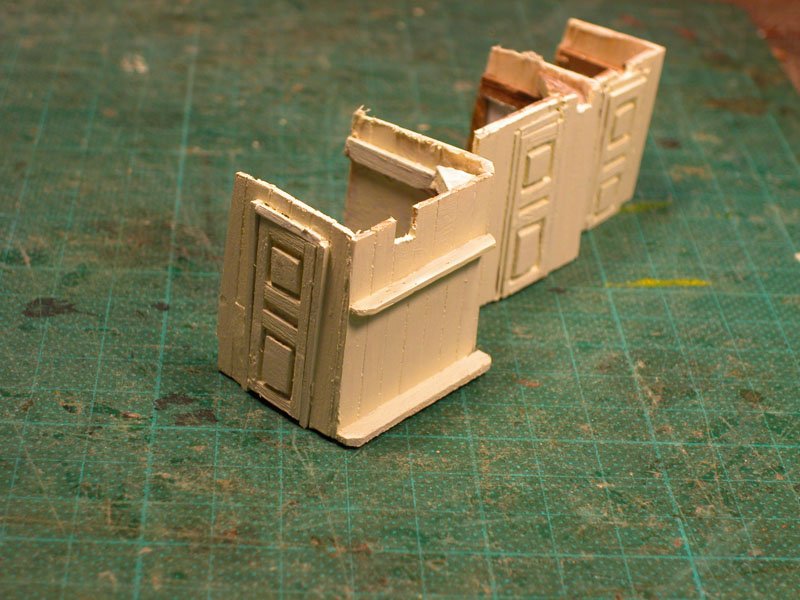
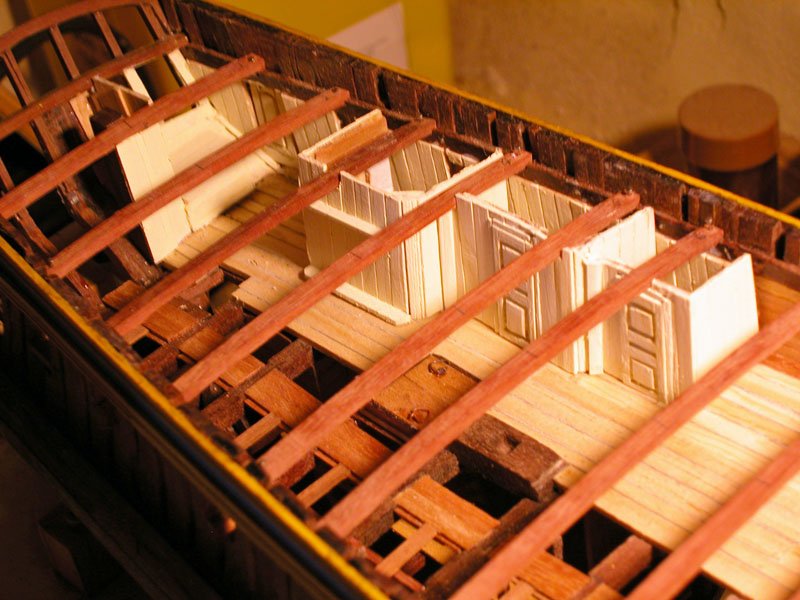
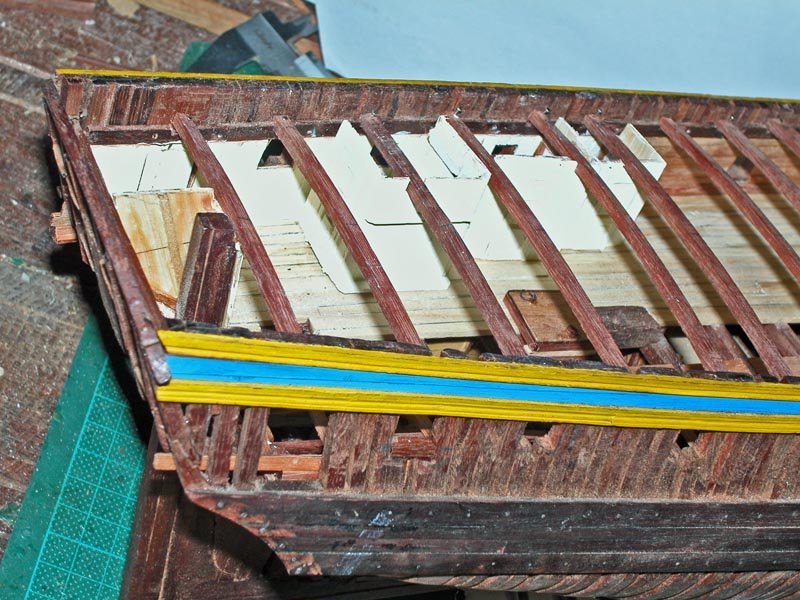
This shows the construction and temporary positioning of the portside accommodation in the great cabin note the panelling surrounding the sternpost and in due course the rudder head on its way to the poop deck Cheers Dick
-
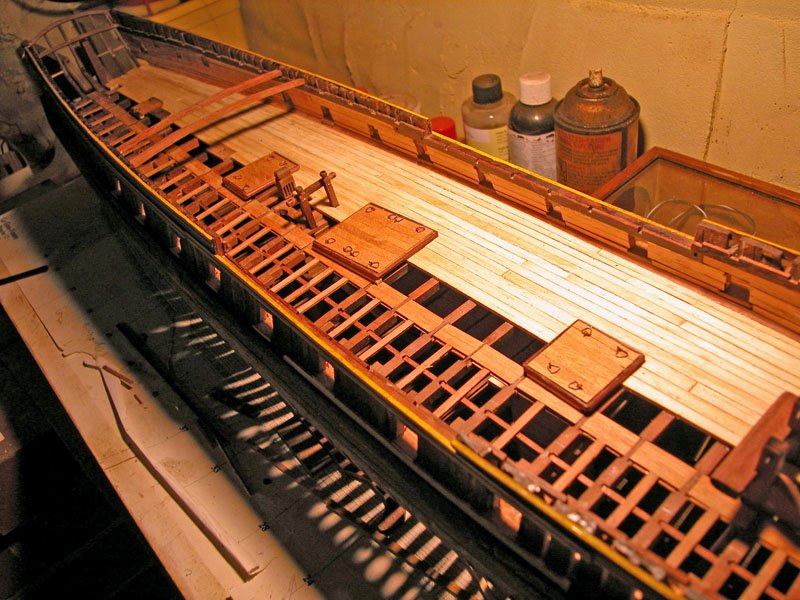
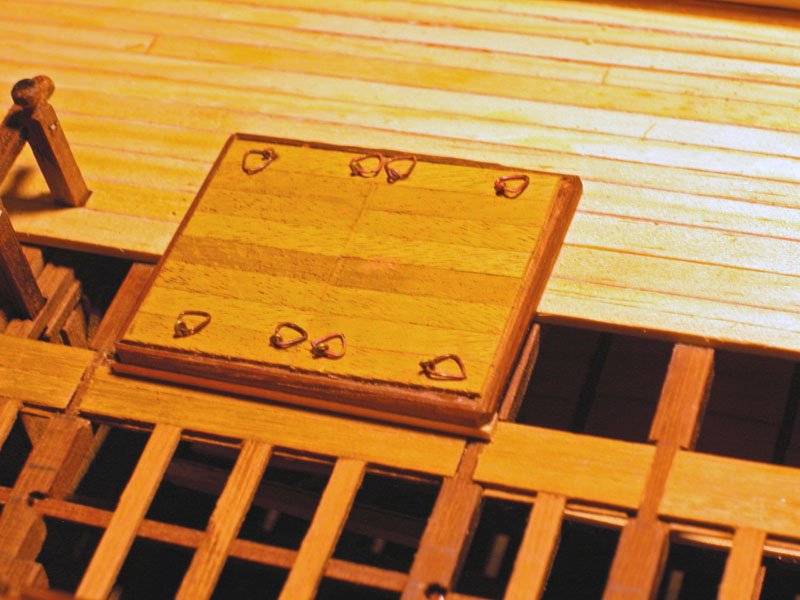
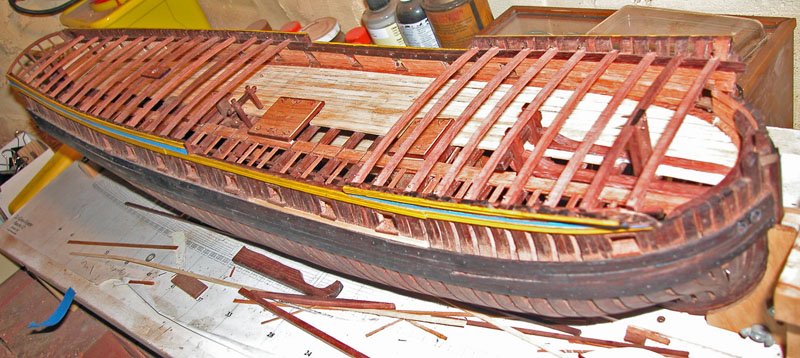
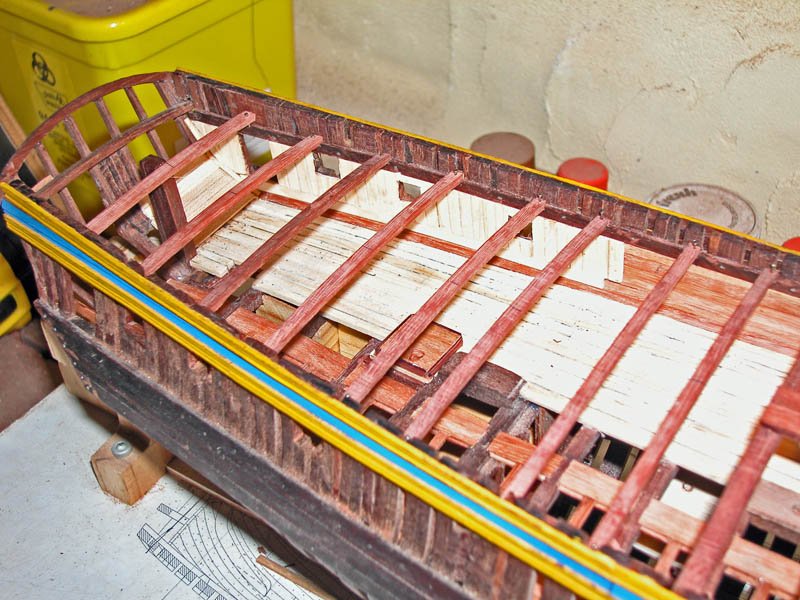
I have added hatch covers and deck beams for half deck and forecastle a start is made on the panelling and cabins of the officers. Port side only. Dick
-
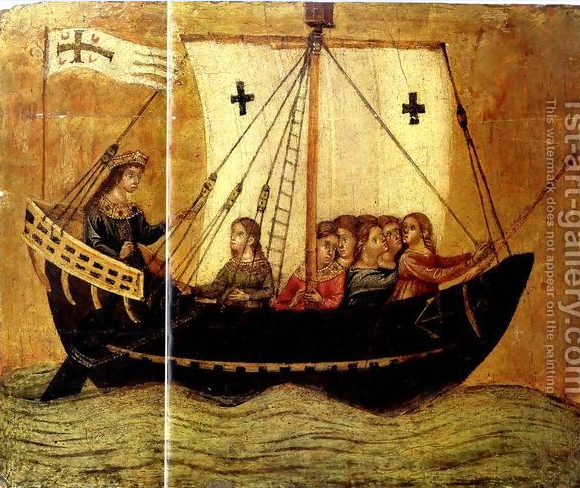
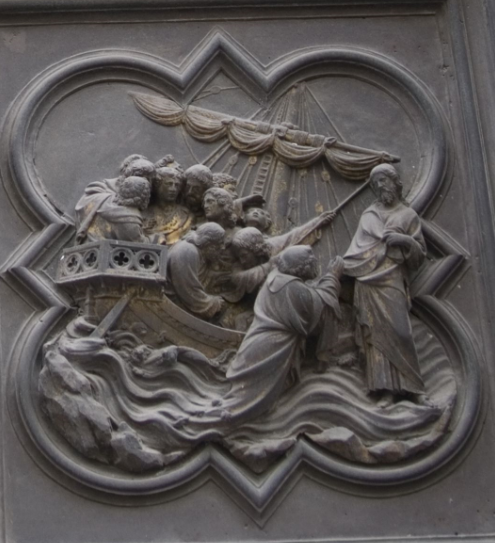
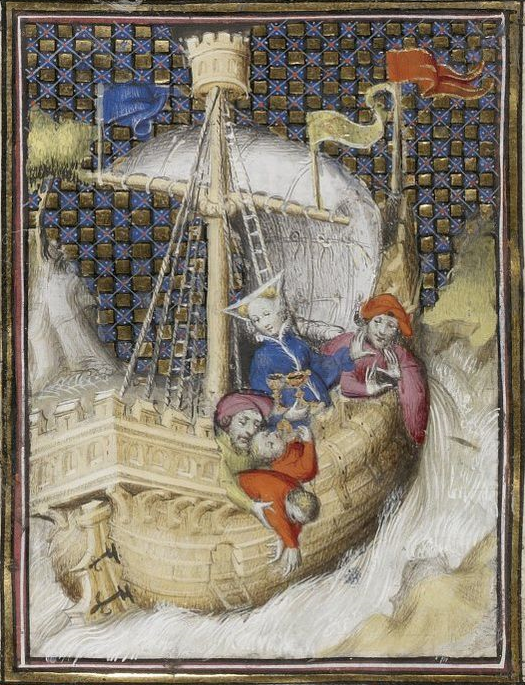
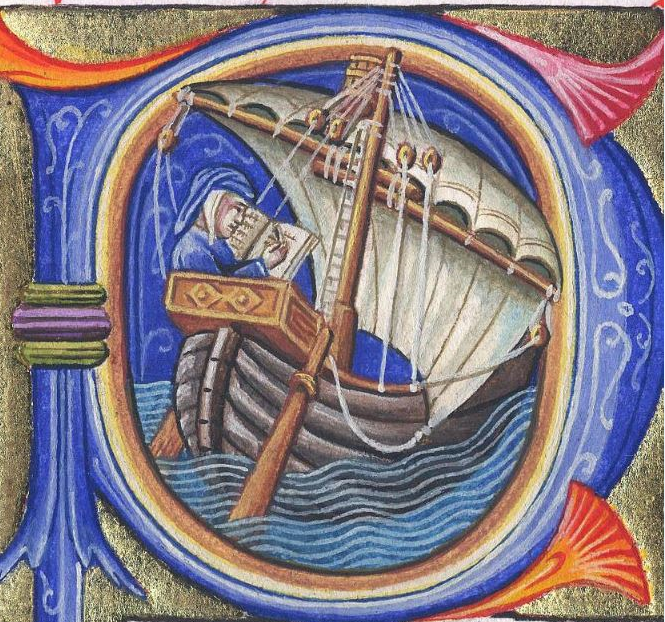
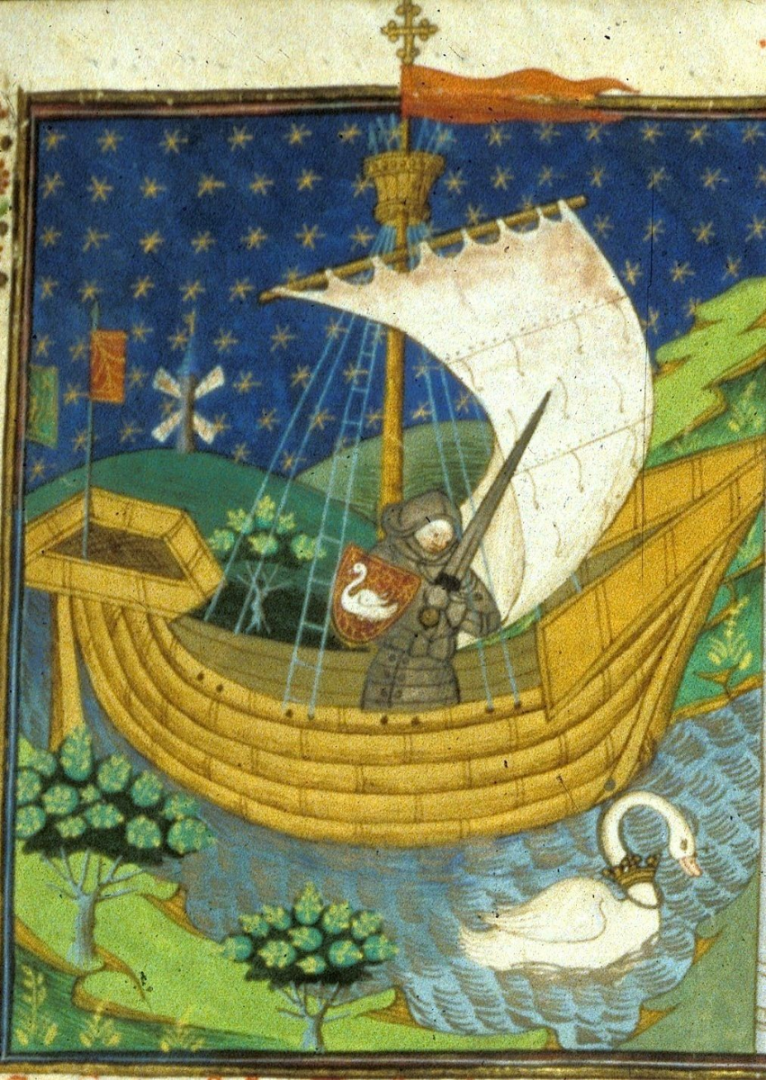
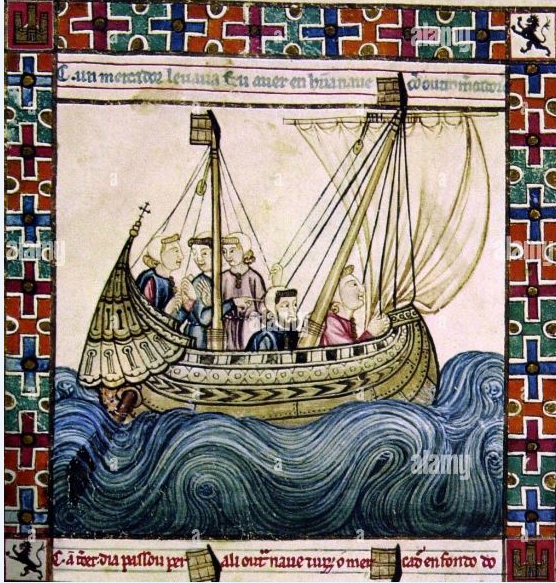
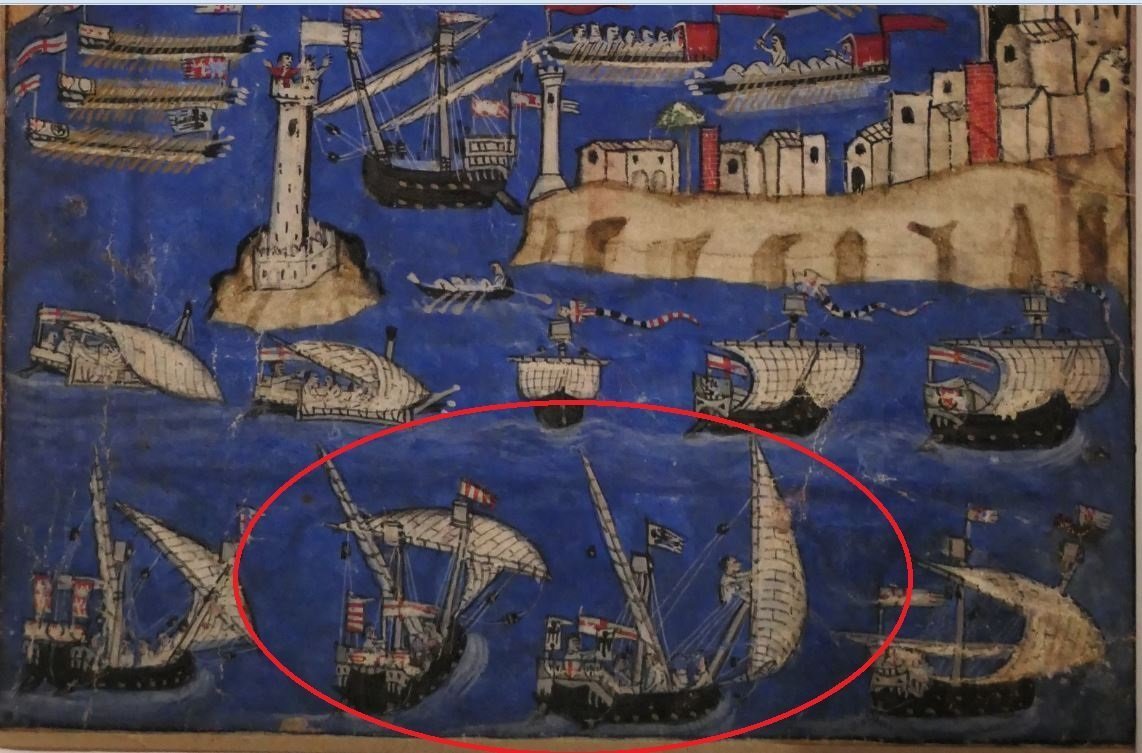
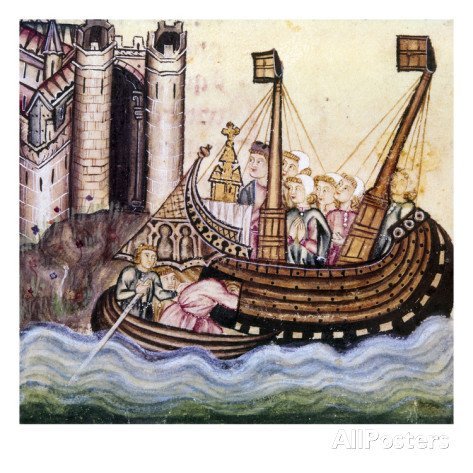
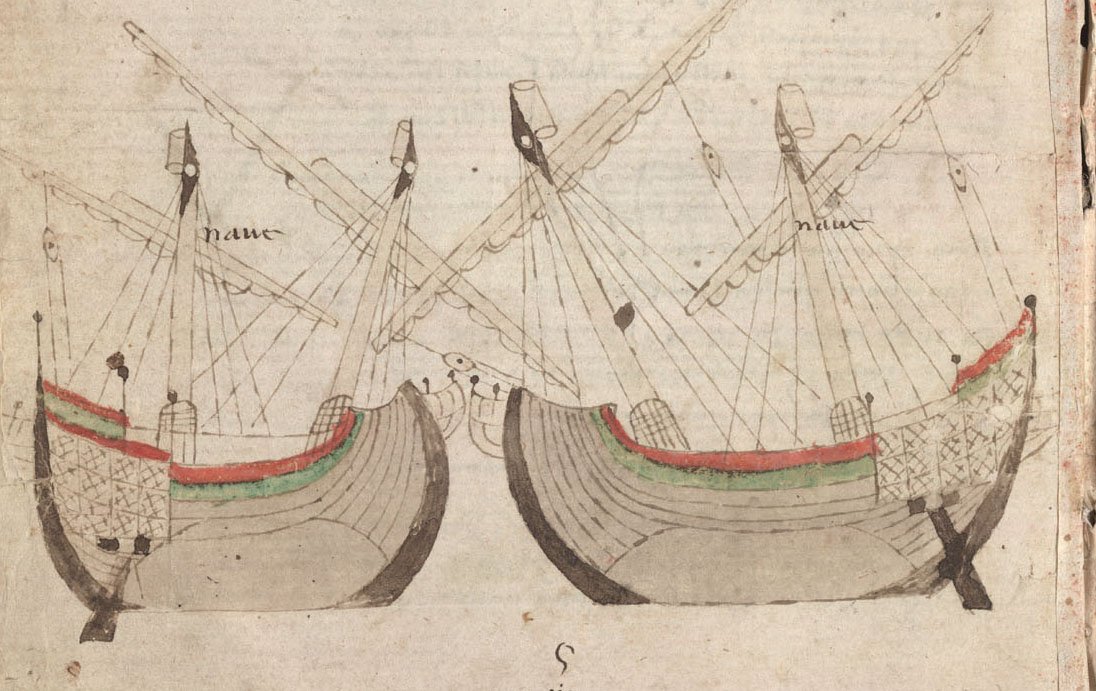
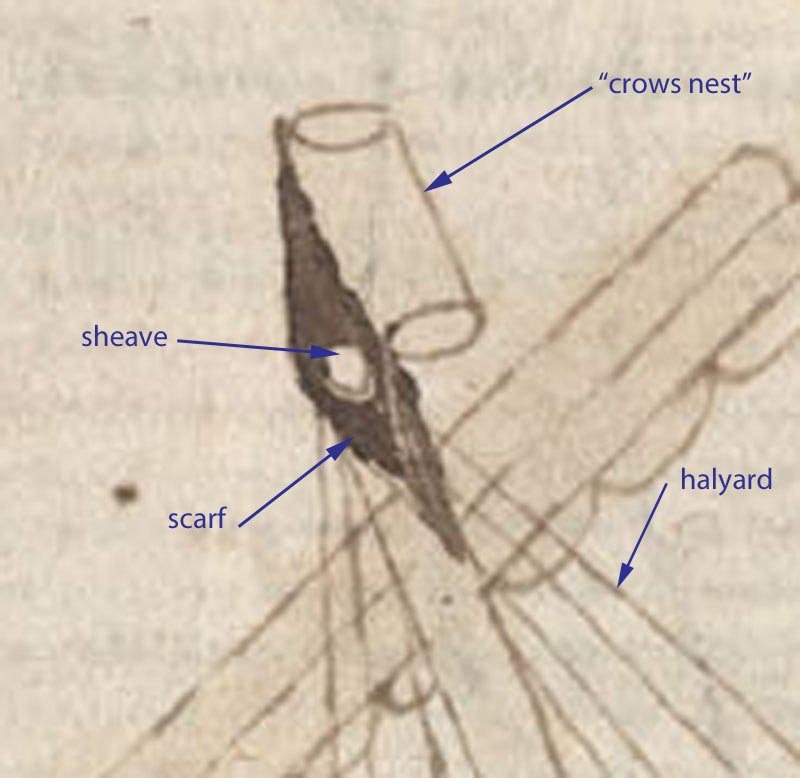
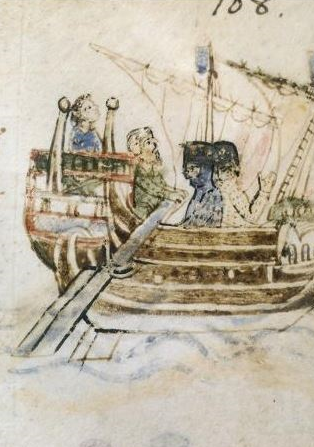
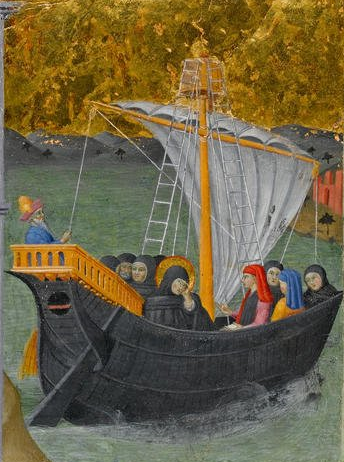
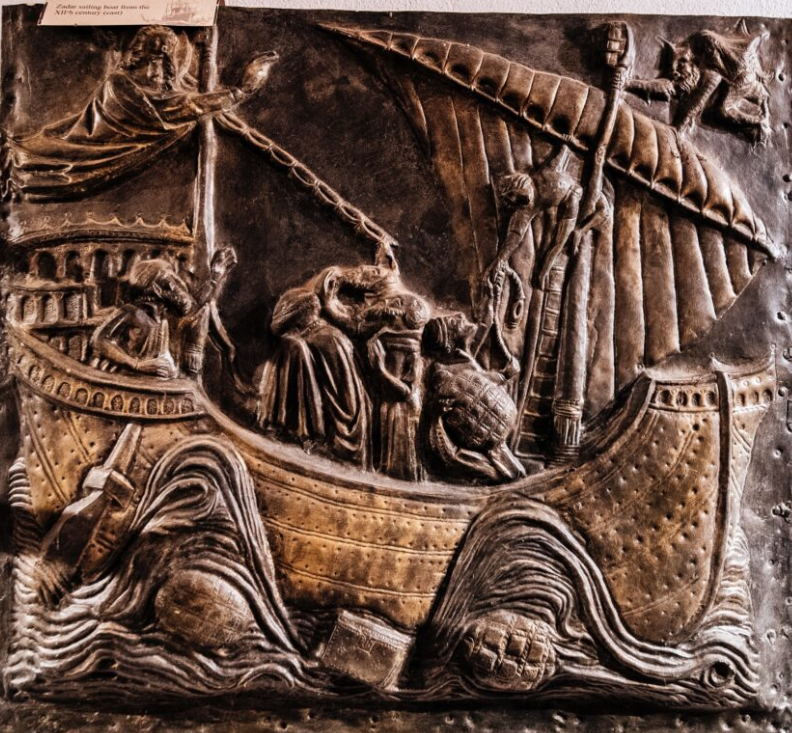
Again I would disagree. This discussion, for that is what it should have been, bears directly on Steven's build and on the whole subject of mediterranean round ships. There is no doubt that there was a diversity of rigs extant in the Mediterranean during the period of the thirteenth through fifteenth century. This ranges from simple lagoonal and riverine vessels with latin rigs and quarter rudders right through to cog-like vessels and the later evolution of the nave quadra with the northern innovation of square rig and stern rudder. To anyone wishing to read an authoritative momnograph on this subject I would refer to the excellent publication: The art and archaeology of venetian ships and boats by Lillian Ray Martin , Chatham Publishing 2001 . ISBN 1-86176-173-2. This was a major resource for my previous round ship reconstruction. I have gone back through the entire log of Steven's build and have extracted all the images which incontrovertibly show a quadrangular sail and looked carefully at all other supplied images for evidence of either square rig or settee rig ( a variant of latin sail in which the forward part of the triangular sail is truncated. This is seen well in dhows). Here are the images of square rig: this is the only image from the Veneziano school (first half 14th C) which shows square rig on a round ship. So it shows that square rig was around and used on some round ships. Most other images in this period show latin rig. This may be square rig or furled latin or settee but it certainly shows a rope ladder. Dont know where this image comes from. This is a northern vessel with stern rudder. Note the reefing points (not seen on latin rig) and the foot of the sail tied into a bundle by the reefing points (See my hulc log for details). This is not a round ship and is probably northern european, Again the sail is quadrangular and probably a settee sail running before the wind. Note the "crows nest aft of the mast and the Jacob's ladder. This is a cog. Nothing to do with round ships. Probably settee also running before the wind To show that latin rig when used on different points of sailing can simulate square rig, here is a section of the 14thC Cocharelli Codex which speaks for itself. So, there is no doubt that settee rig and maybe even square rig was used alongside latin rig in the Mediterranean Middle Ages. But the overwhelming number of rigs were latin. To quote the great Fred Dagg : 'I'll get out of your way now'" Woodrat
-
Not at all Grant. I took it in a humorous vein and replied in a jocular fashion. I thought your comment was most apt. Cheers Dick 😁
-
I am happy to remove the word "dead". The rest I leave to the moderator. This is an open forum and disagreement is allowed as long as it is polite so maybe dead wrong is a poor choice of words. Woodrat
-
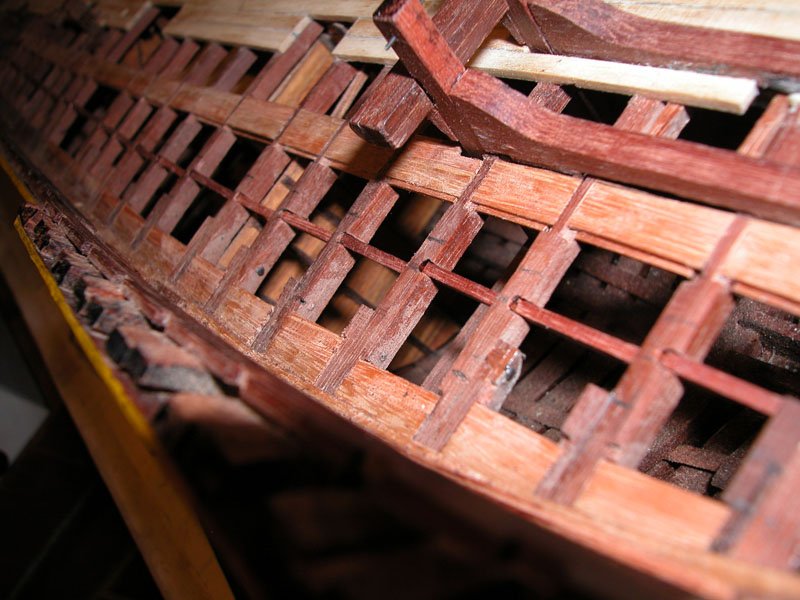
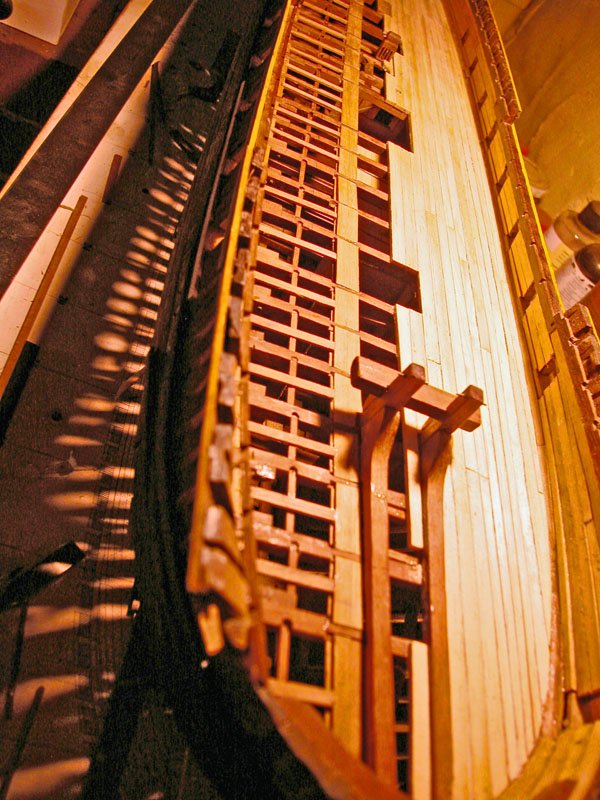
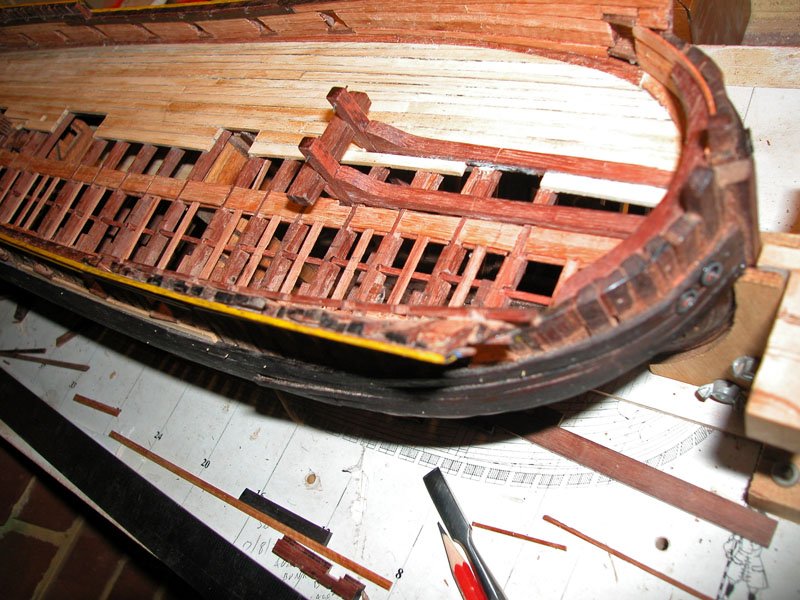
On the undecked starboard side the carlings are installed The carlings support the ledges which in turn support the deck planking This completes main deck framing. Now for deck furniture. Dick
-
I am sorry Tartane but you are wrong on both counts. There is ample iconographic evidence from the Mediterranean middle ages for lateen sails since at least the seventh century CE and there were indeed observation baskets just as Steven has modelled them. The baskets were positioned aft of the masthead so as not to foul the yard when going about. Beg to differ. They certainly didnt have ratlines till much later. Cheers Dick the Woodrat
-
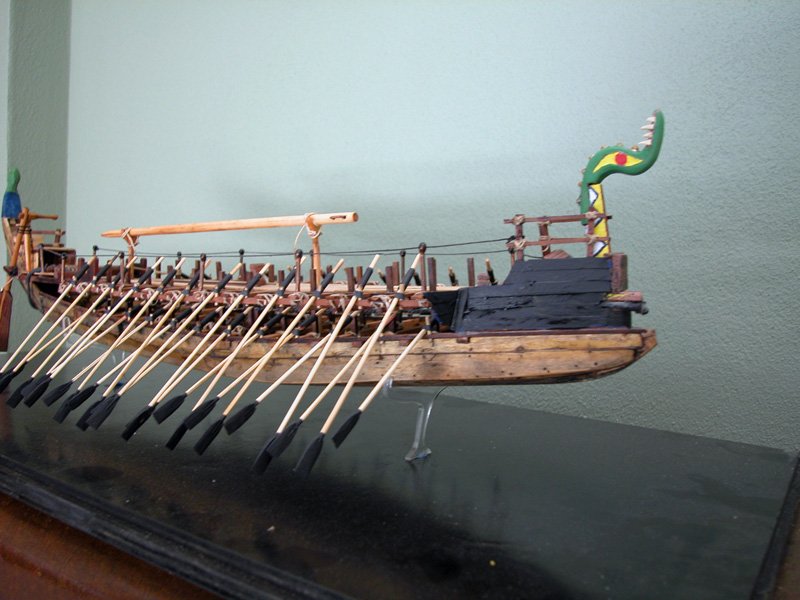
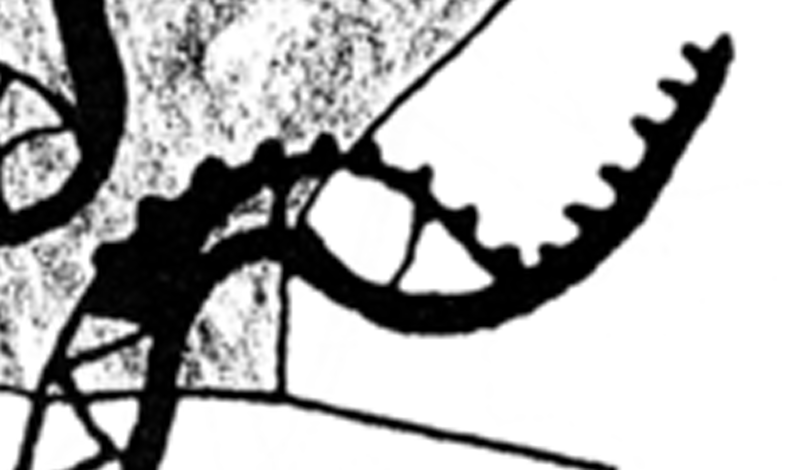
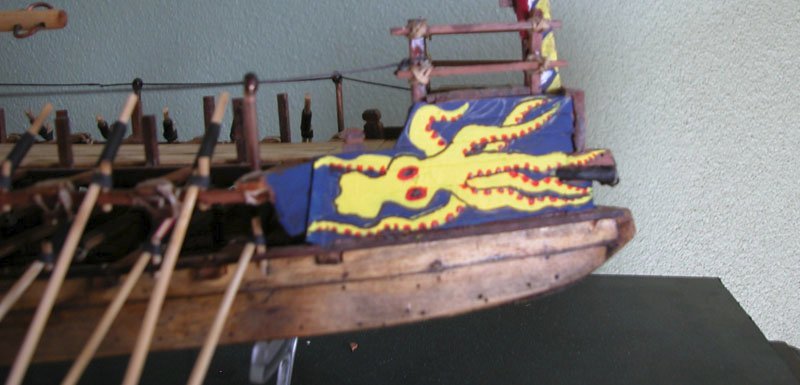
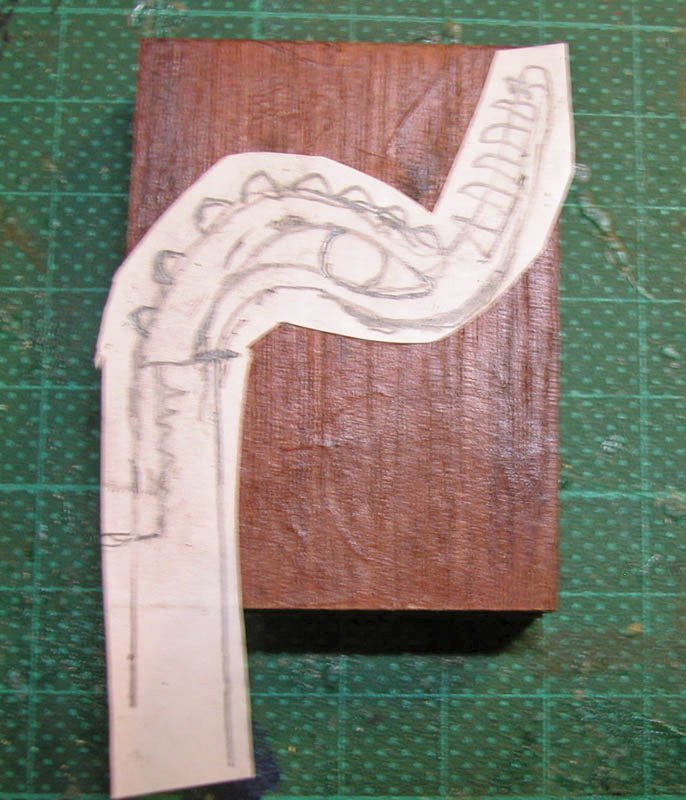
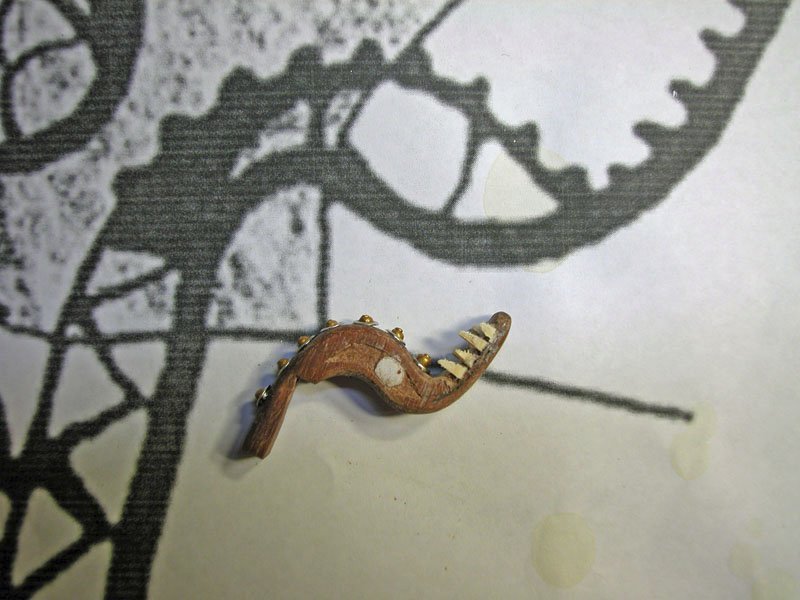
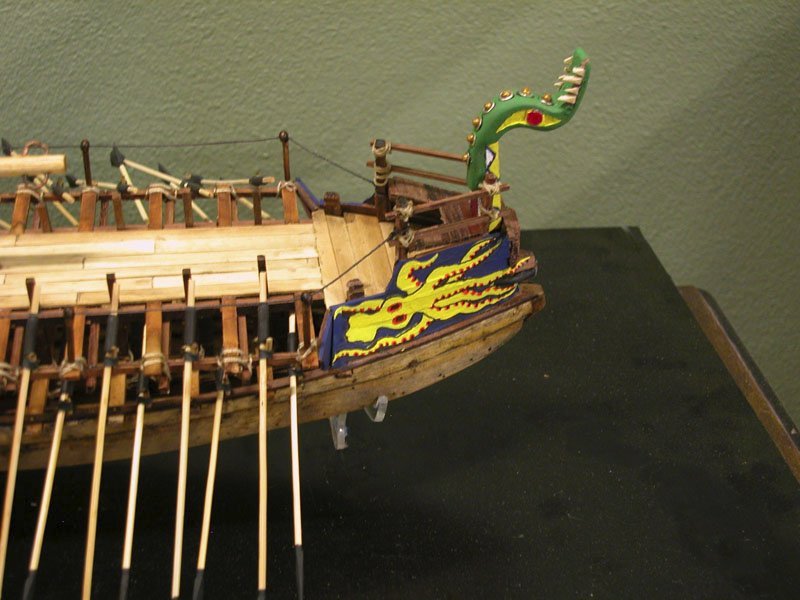
I am really not happy with the octopus. There is no iconographic evidence for its use on galleys or any other ship, so it is gone. I have gone instead for a more austere look. I am happy with the figurehead. Prof Wachsmann has published his thesis that these figureheads reprsent birds' heads and that may be so in most cases but in the case of the Tragana ship the backward curved protuberances on the "beak" resemble no bird I know but would be consistent with a crocodile. Dick
- 142 replies
-
- 11
-

-
Ian. I dont know this block. Where did you come across it? I dont know of any archaeology to back its use in greek or roman craft? Happy to learn more. Dick
-
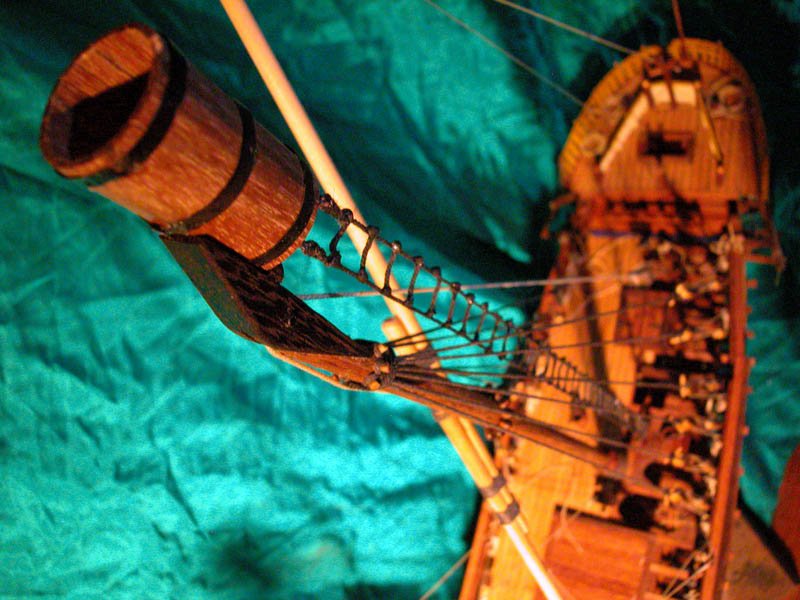
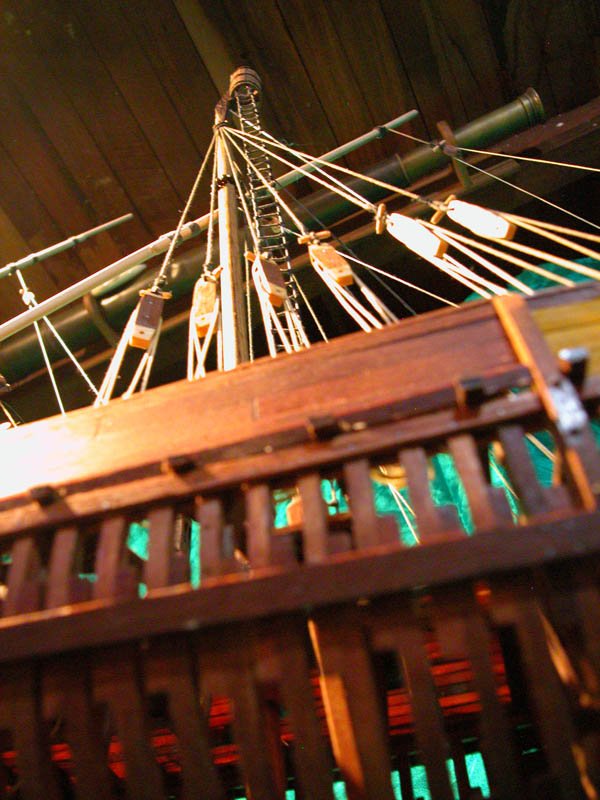
I actually used rope rungs but either way would be OK. I did use wood rungs on my carrack. The lower ends of the ladder are attached to rings in the deck. Dick
-
Just a couple of points about Jacob's ladders in latin ships. Make sure the ladder doesnt foul the yard or its tackle on going about. On my round ship I positioned the rope ladder (with rope rungs) side on to the mast. Anyone who has seen circus performers use a rope ladder knows that they clamber up the side of the ladder. This minimises "bellying out" of the ladder which would be worse if the ladder were climbed face on. Cheers Dick
-
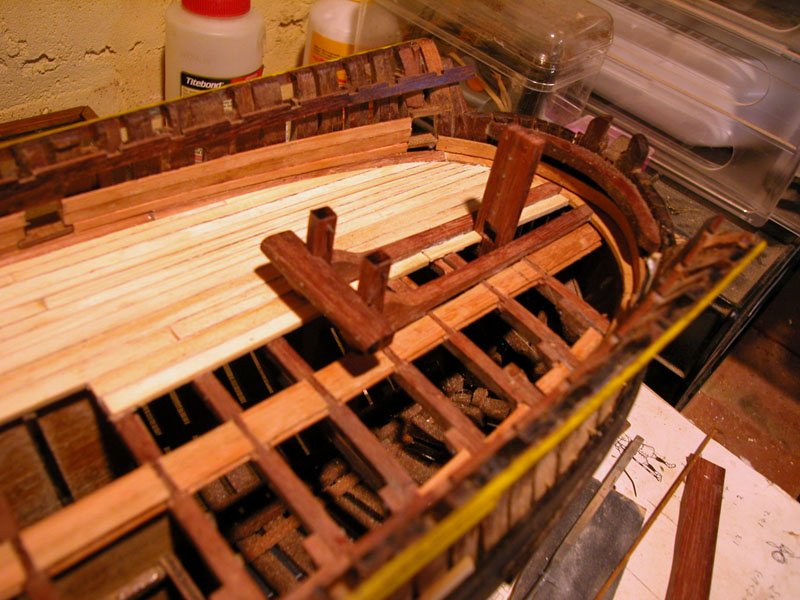
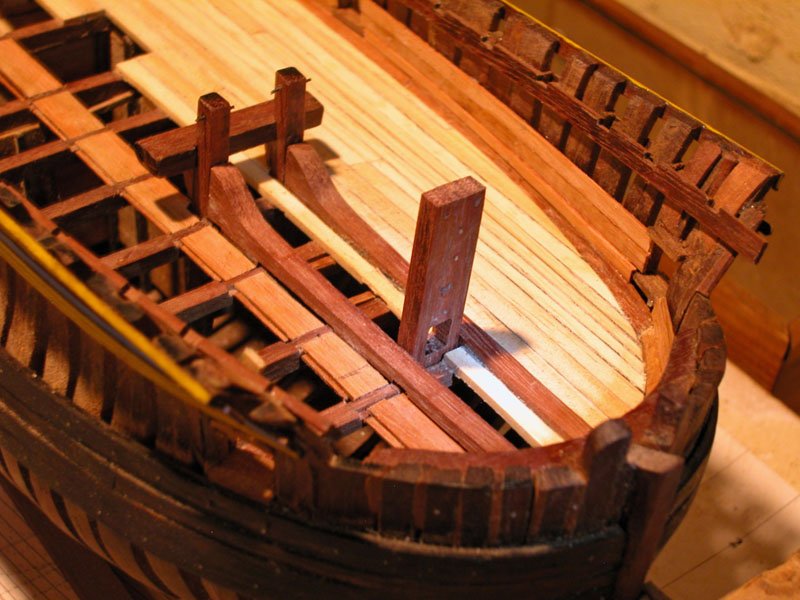
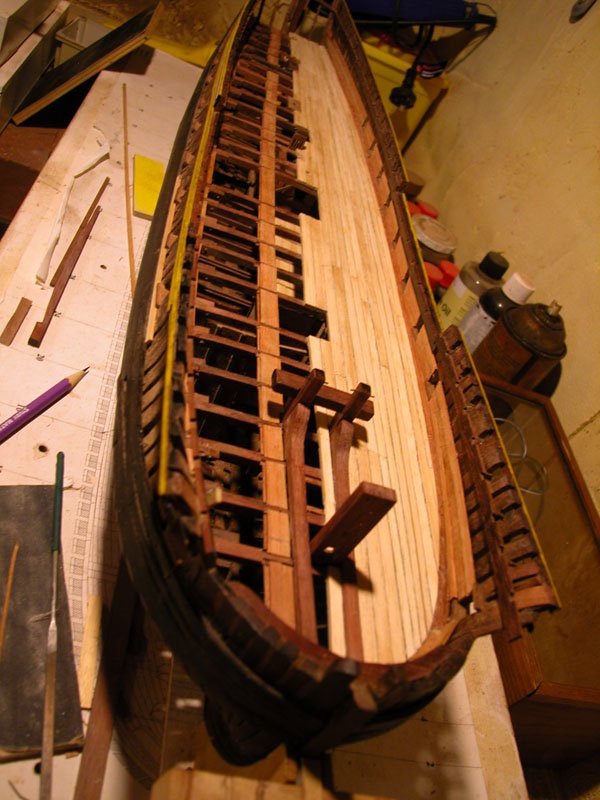
The main deck completed to the midline and the bowsprit step is temporarily installed Dick
-
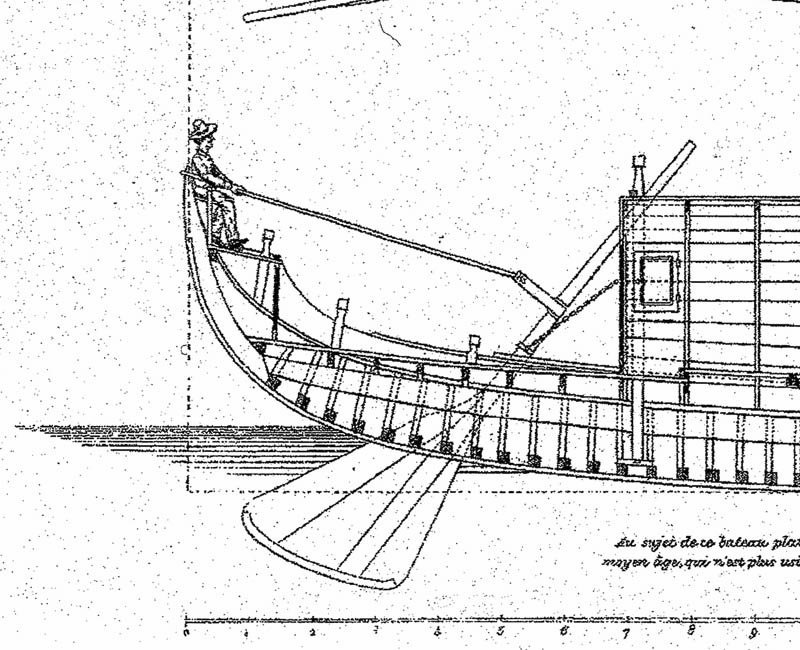
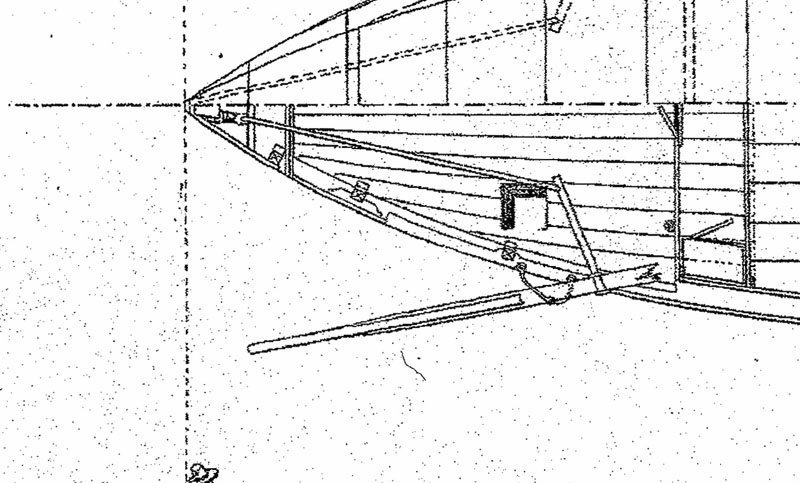
This is just another way to manage a tiller but this time from a distance. It is a rascona from the Po river in italy as depicted by Admiral Paris. Note how the tillerman is seated and effectively has a tiller parallel to the plane of the rudder. Maybe the people who used such tillers did not stand to use them? Cheers Dick
-
Thanks, Steven and Thukydides. The occy is tentacles forward in attack mode so as to intimidate the villagers as the ship roars in. The croc adds to the menace. The mycenaeans were generally not all that nice. They were,after all, pirates. Dick
-
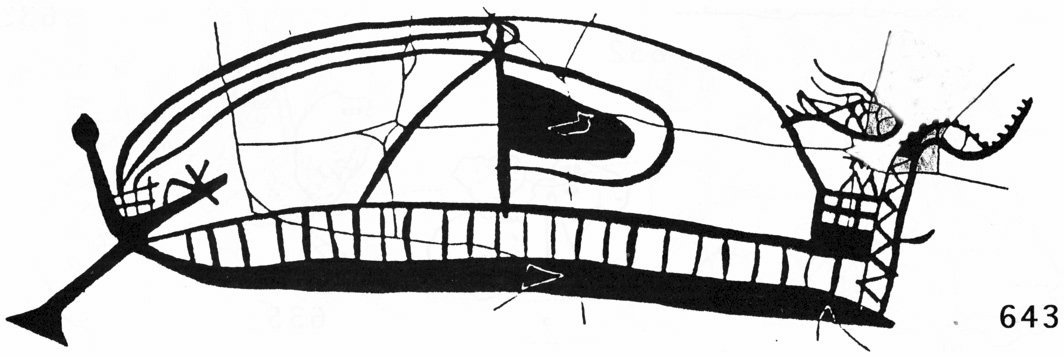
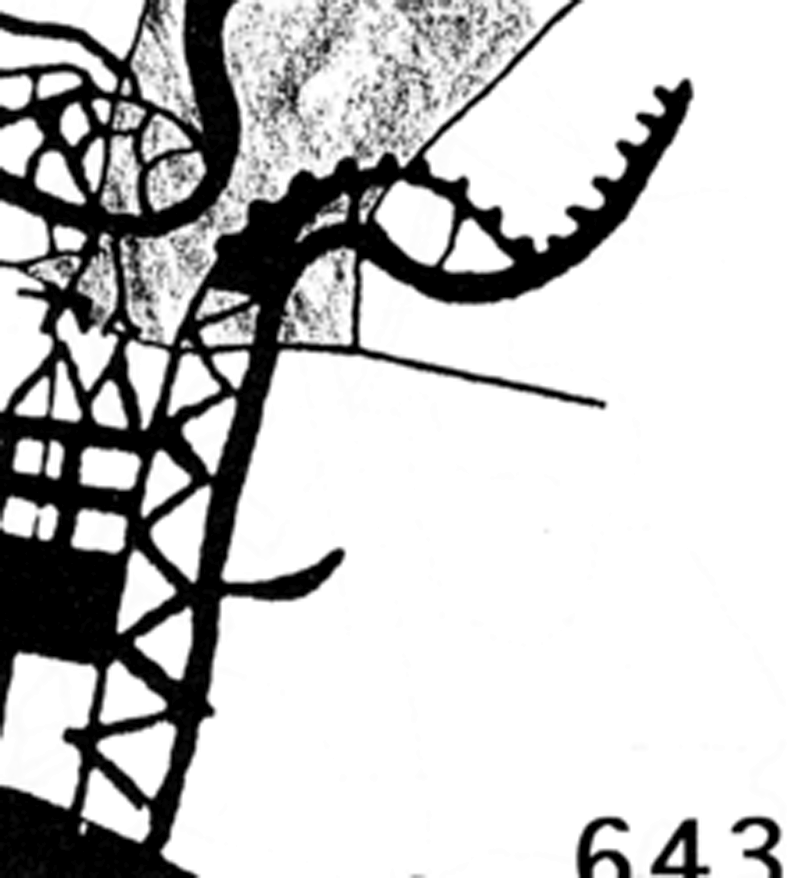
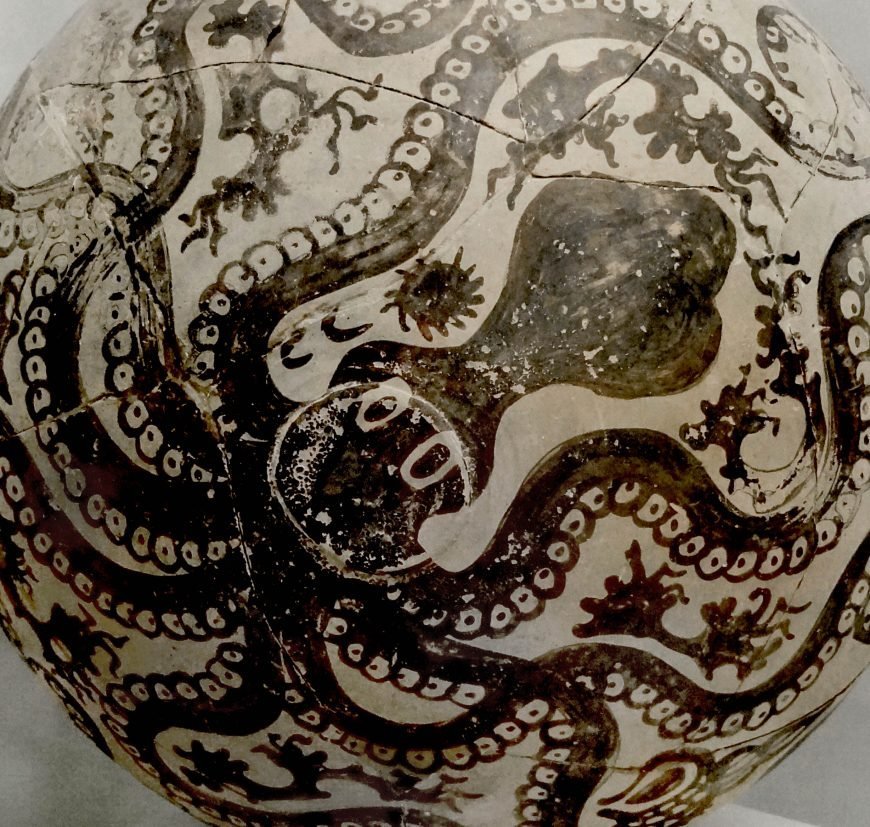
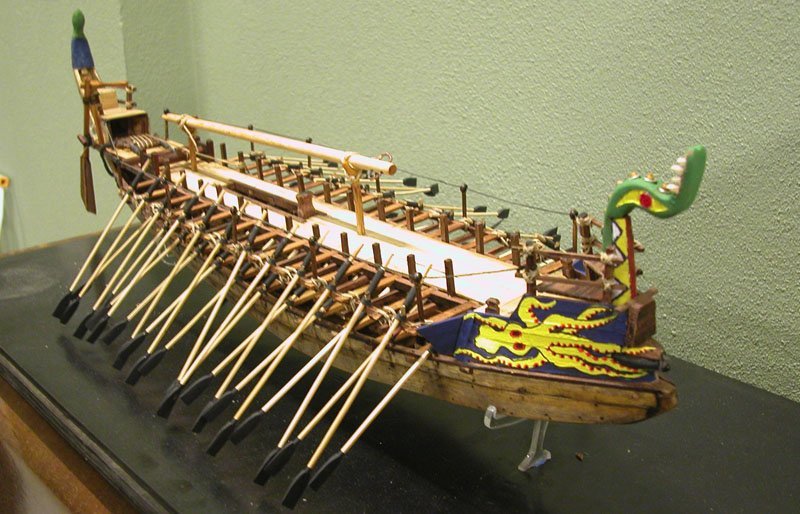
I have never been happy with the figurehead which appeared cartoonish. So I have gone back the original potterry images and found this excellent image of the tragana ship The figurehead I couldnt recognise until I suddenly realised that it was in fact a stylised crocodile head with projecting teeth.. I also have done some nose art using an image of a minoan octopus which was much copied by the mycenaeans The octopus would be an appropriate animal for a ship of Poseidon So the latest figurhead is much more threatening. The crocodile would be familiar to mycenaeans who regularly traded with Egypt. Cheeers Dick
- 142 replies
-
- 10
-
-

-
Thanks, Mark.I believe the planking in a gun deck of a warship would be oak. As this was a merchantman, I would think elm or fir. The thickness of the central plankage was of the order of 90 - 100 mm and the outer planking 70 - 75 mm. Other members may be able to give much more detail on plankage. It is said that the old forests of europe never recovered from the stripping that occurred to make the war armadas of the 16th to 18th centuries. Cheers Dick
-
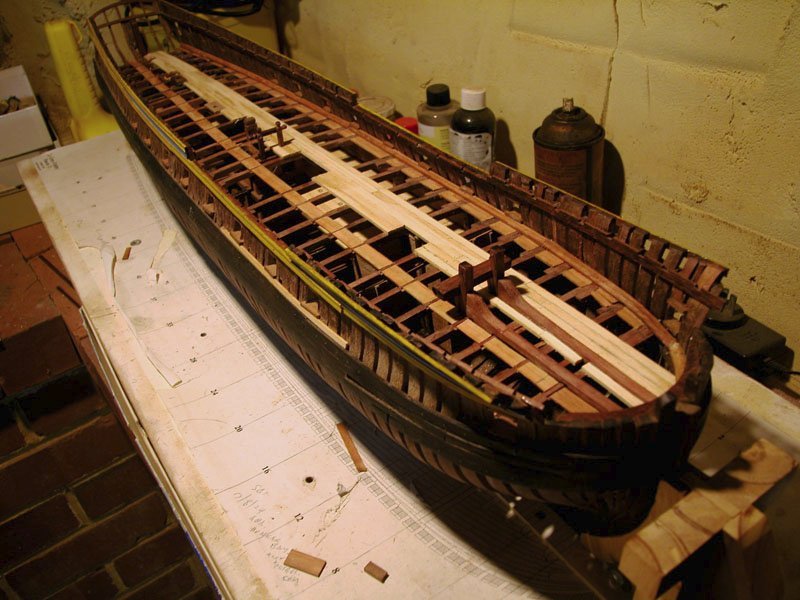
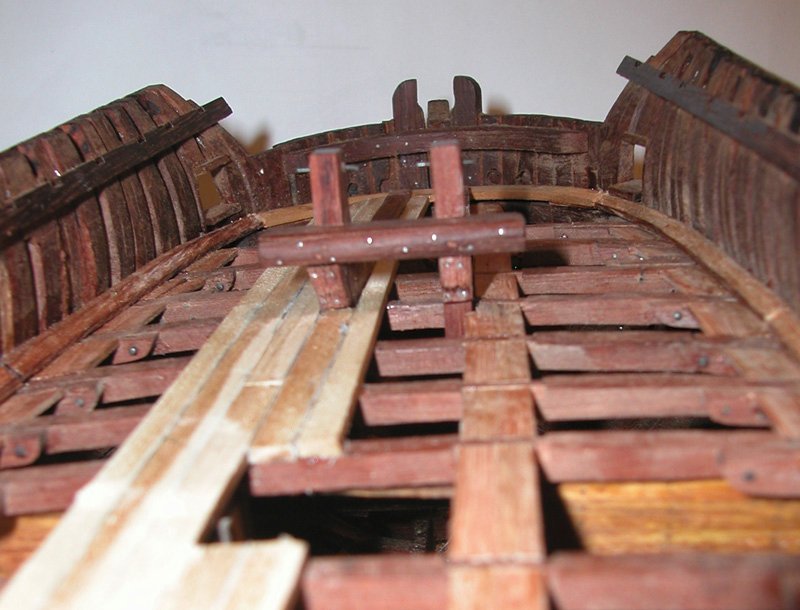
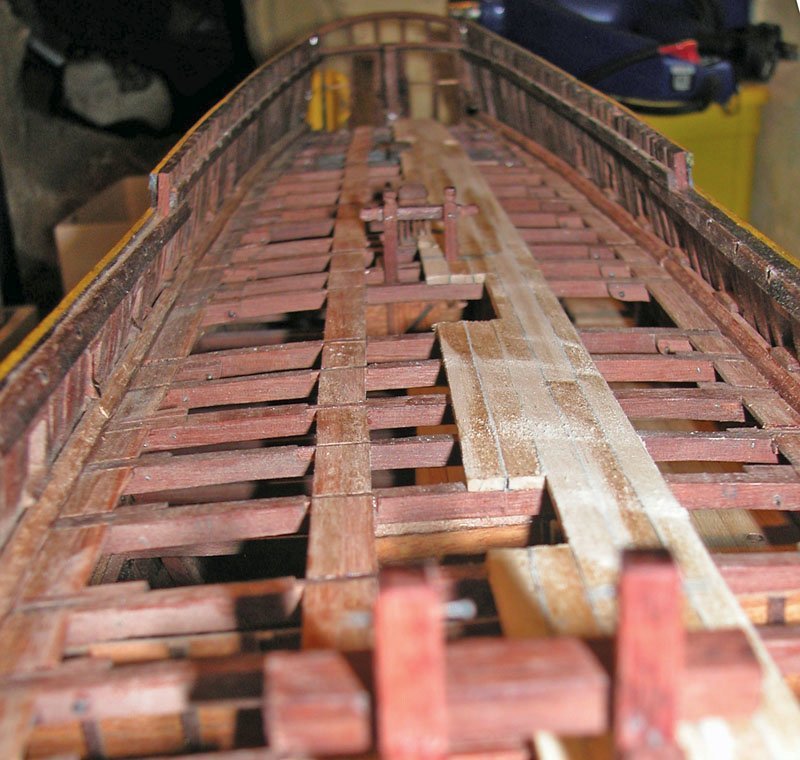
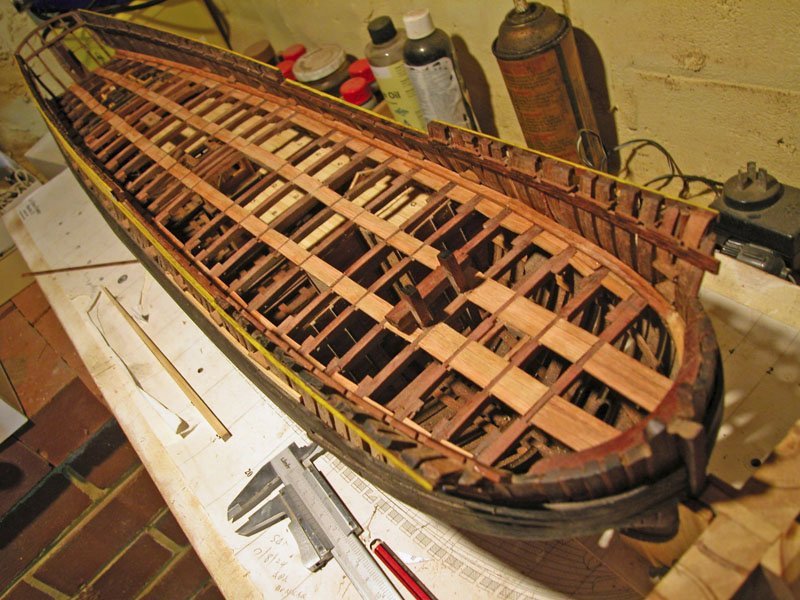
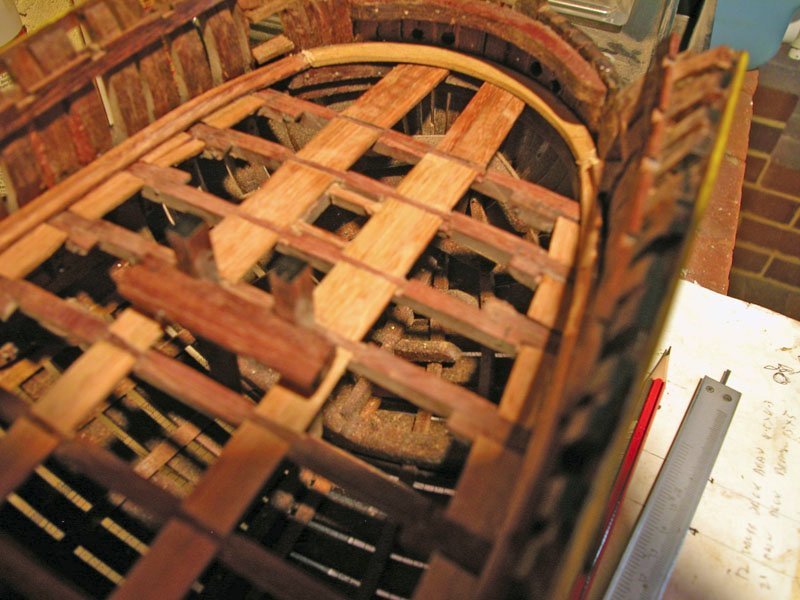
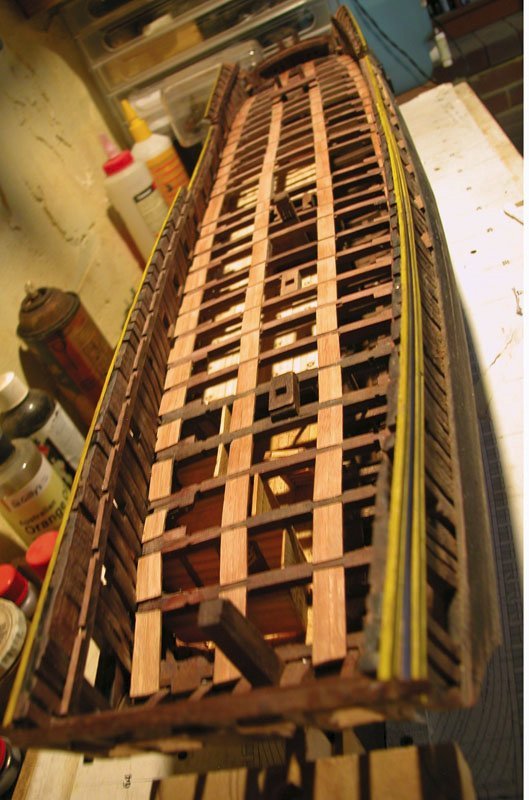
The thick planking has been applied as far as the midline, Dick
-
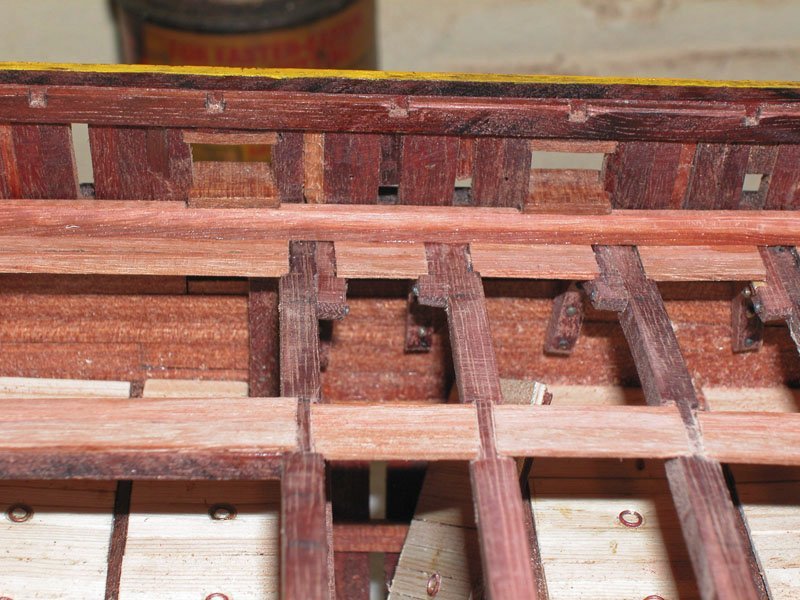
I have installed the waterways both sides. Cheers Dick
-
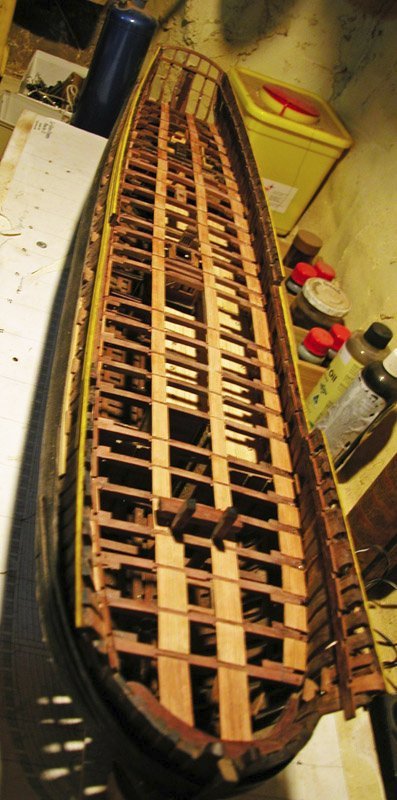
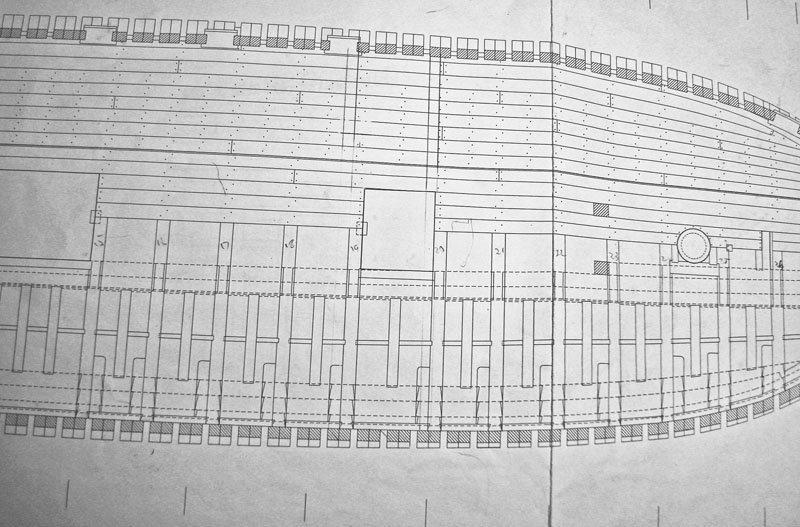
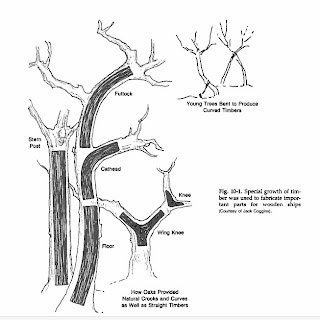
This vessel did not have lodging knees but lodging planking, this would save money. Knees are made from grown compass timber ( this grain follows the shape of the knee) and for a humble merchant vessel would be expensive overkill. Hanging knees however were used and presumably grown. Dick
-
Thanks for showing us Kroum's Video, Steven. Very useful for future builds. Let's hope more preserved wrecks are found and that nondestructive visualisation of buried parts of the hulls and rigs can be achieved with further advances in technology. Dick
-
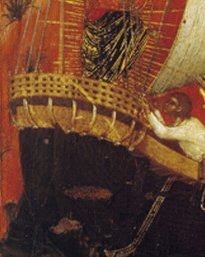
This painting of the stern of Venezianos nave shows somewhat less substantial supports for the stern castle than yours but of course it doesnt project as much as yours either. Dick


Our Emblem ®
