

Harvey Golden
-
Posts
485 -
Joined
-
Last visited
Content Type
Profiles
Forums
Gallery
Events
Everything posted by Harvey Golden
-
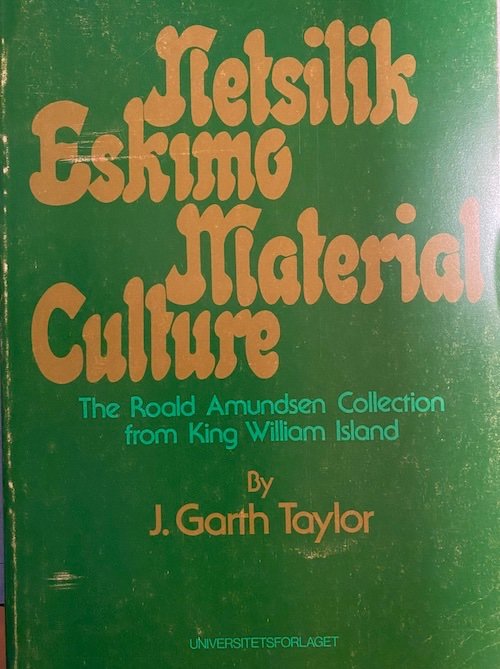
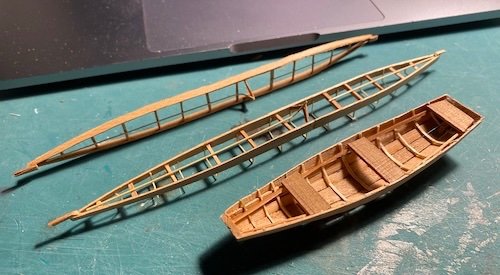
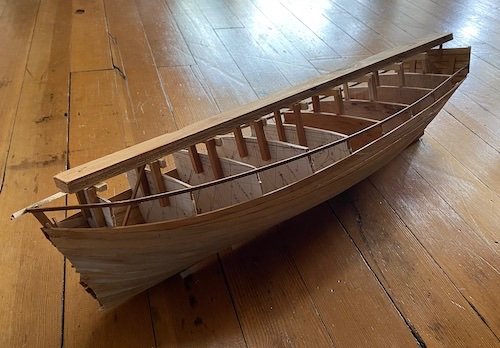
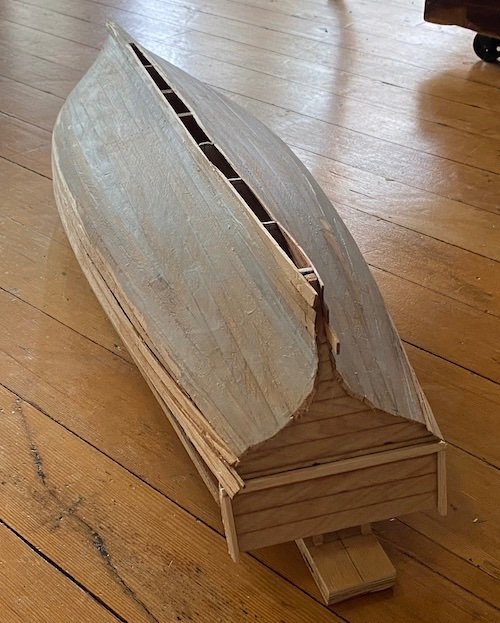
 Just popped the hull off the strong back, and it is looking good-- will plank the rest of the sides and bulwarks next as well as add the keel, stem, and rudder post. The molds gave very nicely faired results-- perhaps dumb-luck! One last shot of the two kayaks and the pram: The pram weathered up nicely (black wash and brown wash-- acrylic), and I've added inwales, knees, and oarlock bases. The kayaks will be covered with tissue to mimic the seal skin covers on the originals. J. Garth Taylor's book on Amundsen's collections will be helpful in modeling the three dog sleds that Amundsen purchased from the Nattilingmiut at Gjøa Harbor-- it has photographs and measurements of each one.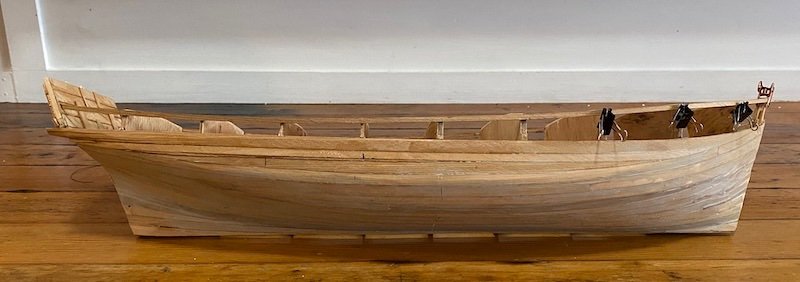
-
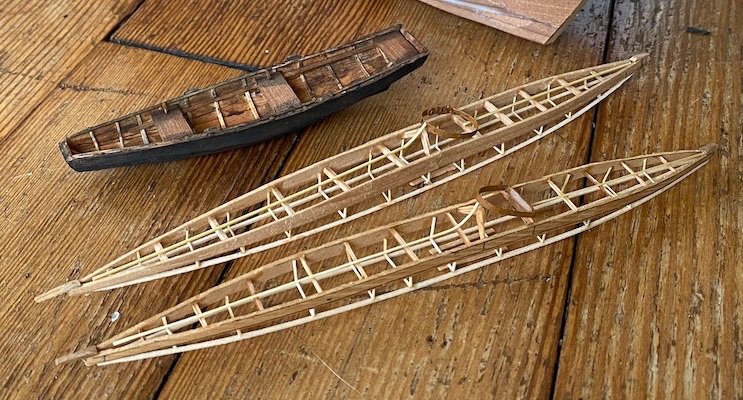
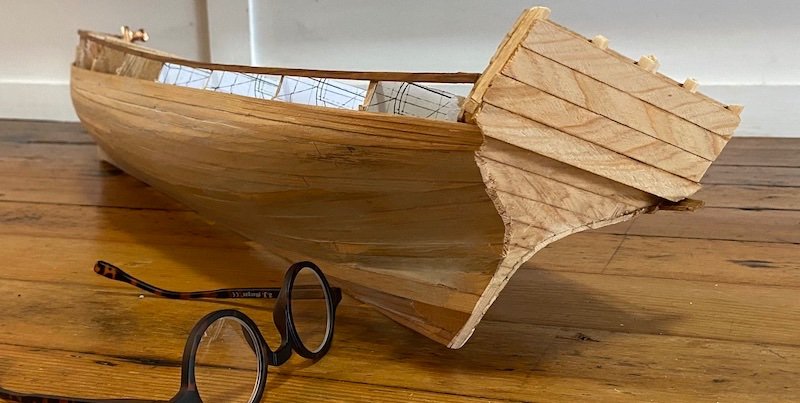
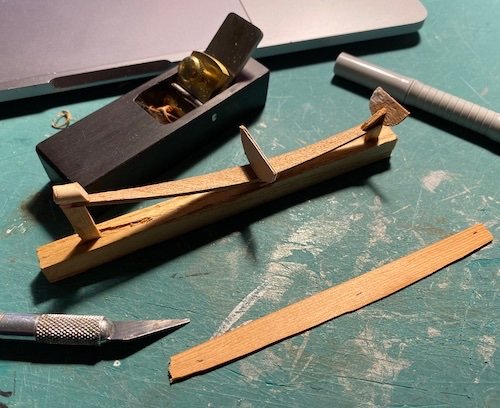
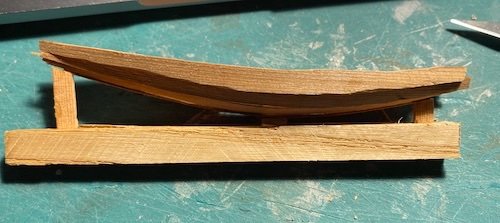
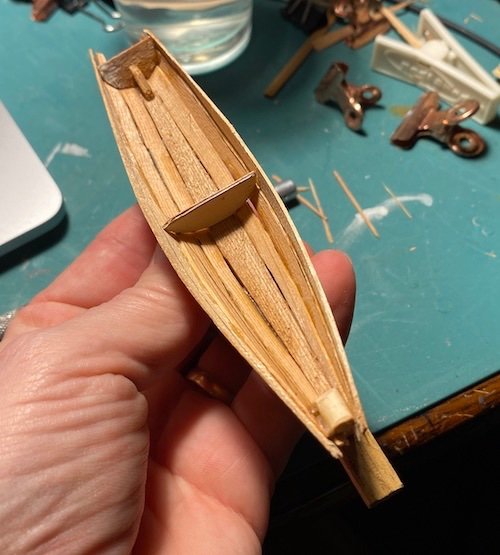
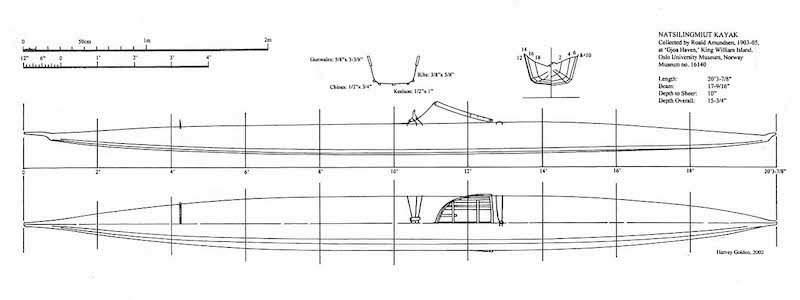
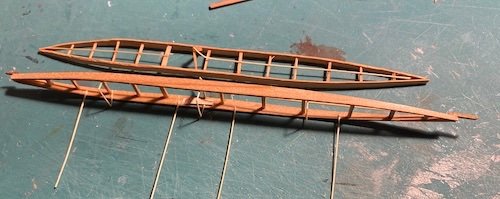
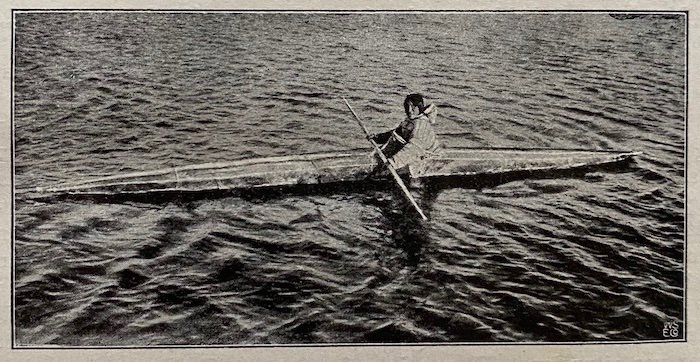
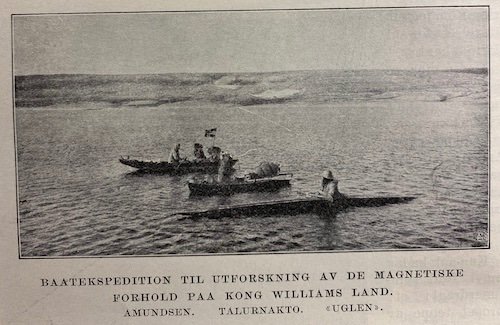
I've started one (or all?) of the Gjøa's prams. First time ever doing lapstrake ... let's just say they'll swell up once its in the water. Photos show the keel propped up, planking underway, and all planks on. Amundsen's Expedition collected three Nattilingmiut kayaks (among many other cultural objects), and I've decided to include these for display on deck. Two of the kayaks were complete, but the third was a partially dismantled frame that may have been cut-down for storage-- I'll model the two intact ones. The kayaks are the oldest preserved examples from this group of Inuit and are at the Oslo University Museum. Here is a scale drawing of one of them, and progress on these--lastly a photo of the nearly finished Pram with the kayaks, still in progress: Historic shot of Ugpik in his kayak, probably one of the ones Amundsen collected:
-
Thanks Bob! Nice to hear a personal story about this ship. I've only seen her once-- in Oslo when she was still out in the weather and looking very rough. I was much more interested in her than the Fram, though the Fram can't disappoint. She's all fixed up and cozy inside now. H-
-
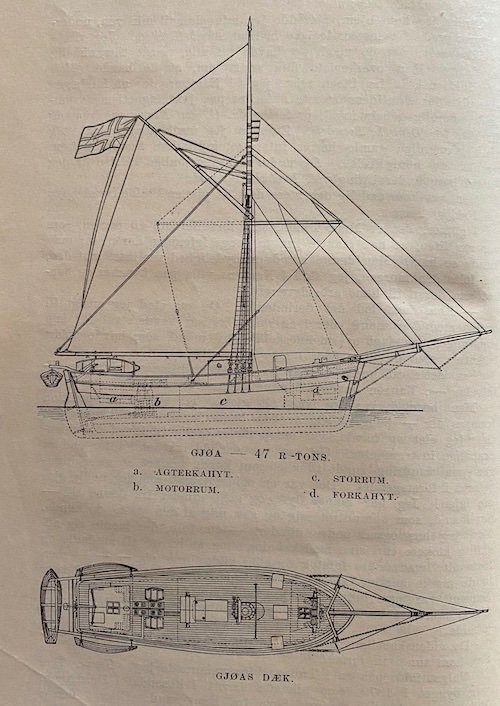
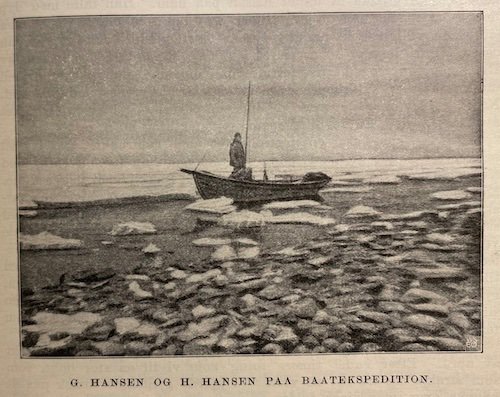
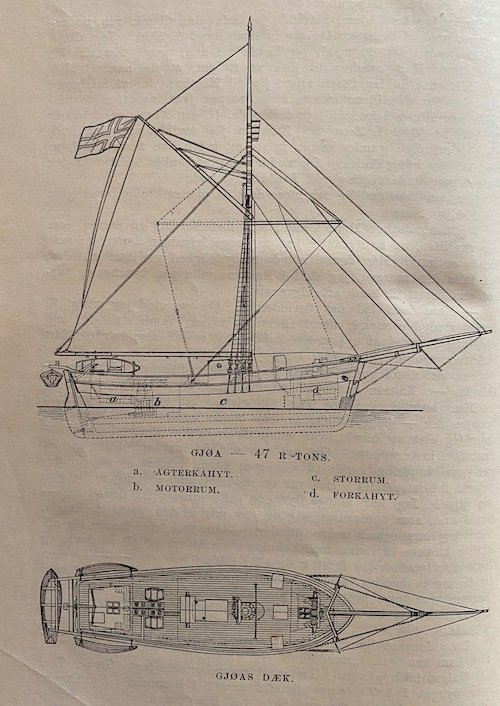
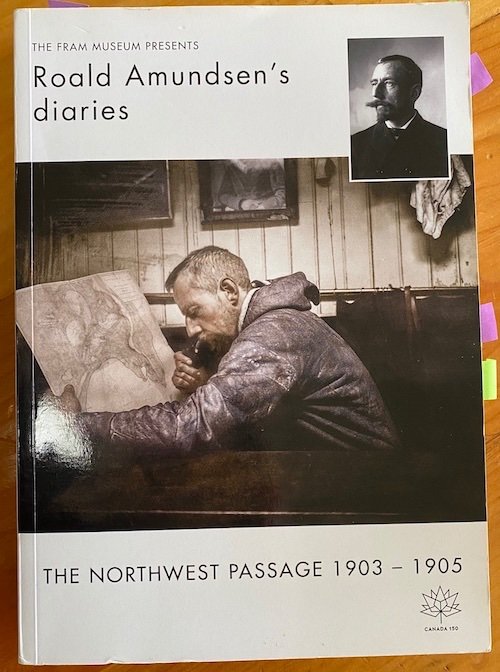
The Gjøa's boats are a bit confounding to me. The drawing I have shows three boats dangling from the davits-- one transomed flat-bottomed vessel (a dory?) about 15' long on the stern, and two shorter ones (~12'?) on the stern quarters. For better or worse, the photos in Amundsen's journals show an elegant long double-ender with "Gjøa" plainly written on it. Of no help is that the same book shows the flat-bottomed vessel (with transom), and also a pram-- Amundsen clearly refers to the pram as a dory in his journal, though this cold be a translation matter. Other photos show a much shorter non-pram rowboat in the water, which Amundsen refers to as "one of the sail-cloth boats"-- possibly a small folding job of the period, or something concocted en-route. In several pictures towards the end of the book, there are whaleboats hoisted on the Gjøa, but it is clear that they are entertaining people from other ships. It's a hunch, but the actual dory and the two pram set up on the HAMMS drawings (which was possibly the source for the kit-plans) was probably gleaned from the plan and elevation drawing in Amundsen's account (1908:4), shown below (the boats may not have even been with the Gjøa when it was surveyed in the 30s. Anyhow. . . not sure if I'll go with the arrangement shown below, or the dory, pram, double-ender as hinted by the historic images. Photo of a pram, a sail-cloth boat (described thus by Amundsen in his recently published journals [see first post]), and an Inuit kayak (pg. 110): The flat-bottomed boat w/transom (1908:111):
-
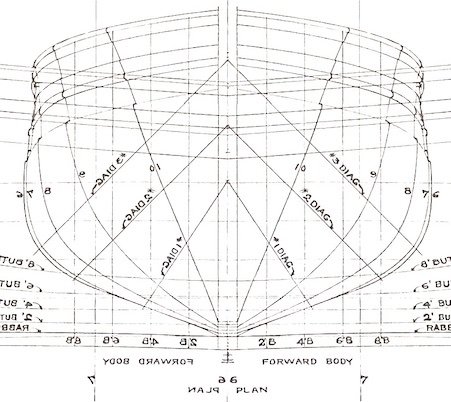
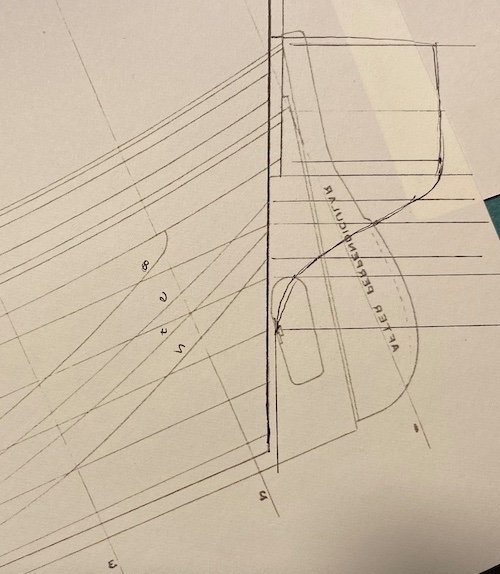
I'm pretty low-tech and don't know my way around fancy CAD programs and the sort, but I have learned to make do with simpler approaches using a computer to scale and print sections/molds. This can be a daunting process, but this is how I've done it for at least 40 ship & small-craft models: 1. Photograph (or scan) the sections. 2. Using Preview (or whatever image app), cut the bow and stern views apart, and flip-copy-paste to get full sections, such that they appear as thus for the bow: 3. Close-crop the sections the widest part (at station 6)-- get the breadth at this point. 4. Drop the image into Microsoft Word, and enlarge/shrink the image so it is as wide as it should be IN-SCALE for printing-- remembering of course to subtract the planking thickness. 5. Ditto for the stern sections, ensuring they are matched size/scale. 6. Print, cut out, and paste to bulkheads. There is of course a bit more to this-- I had to draw the curves of the deck on each station, and I trimmed off mold patterns at the deck. The bulwarks will be built up on false timber heads. The transom of the Gjøa is not 'expanded' (depicted perpendicularly to its rake) in the plans, so I had to loft that out by hand, as shown here-- rough work, for sure, but will be fine-tuned later: This again was photo'd and scaled on Word-- the stations are spaced 7', so scaled they needed to measure 2-5/8" on Word before printing. The breadths of the transom were pulled from the plan-view. Here is progress on the hull so far . . . I do things a little odd, in that I place the keel and stem on later-- this makes the clamping of garboards and adjacent lower planks easier for me (I plank down from about 2/3 the way up the hull). More later!
- 153 replies
-
- 11
-

-
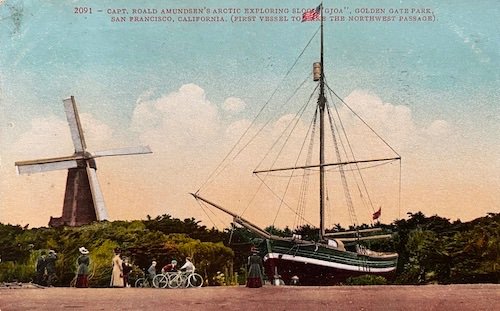
Dear All, I'll be scratch-building a 3/8"=1' scale model of Amundsen's Gjøa from the lines taken for the Historic American Merchant Marine Survey (1936-37) by W. Place and A. Eichler at San Francisco. Supplemental information will come from Amundsen's published accounts, more recently published diaries, and photographs taken during the expedition and ones taken more recently of the Gjøa, which is now on exhibit at the Fram Museum, Oslo. Hope you find this of interest! -Harvey
-
Looking forward to this! It's not much a history, but there are lines and details of a number of Skipjacks (25' to 46'; sail and power) in Harry V. Sucher's "Simplified Boatbuilding: The V-Bottom Boat" (1974).
-
Just think of how many books you can get for eleven hundred dollars! Treat yourself-- you earned it!
-
This is very nice to see! Incredible detail, and beautifully done. The intensive research has paid off, I'd say. I've also built a model of this type, using Van Gaasbeek's book for lines/sections, and on-line photos for details, which were meagre. I look forward to seeing more pics, etc. Best, Harvey
-
Beautifully done! I've also been aboard, and it is a great museum to visit. Did you make any changes to the model post-visit? I like the sled-- was it in the kit? -Harvey
- 8 replies
-
- 1
-
-
- St Roch
- Billing Boats
- (and 1 more)
-
Ah-- that makes so much sense! The social aspects of a technical illustration are easy to overlook. Thank you.
-
Thank you Druxey-- That is an interesting historical record, especially with regards to the non-staggered joints. I can't for the life of me imagine though why such a drawing was made-- seems like a half-paragraph of text would provide all the information needed for the proper sheathing of a ship. Quantity of lead, weight & balance, lining, etc. could all easily be derived by other means. No doubt I'm missing something. Best, Harvey
-
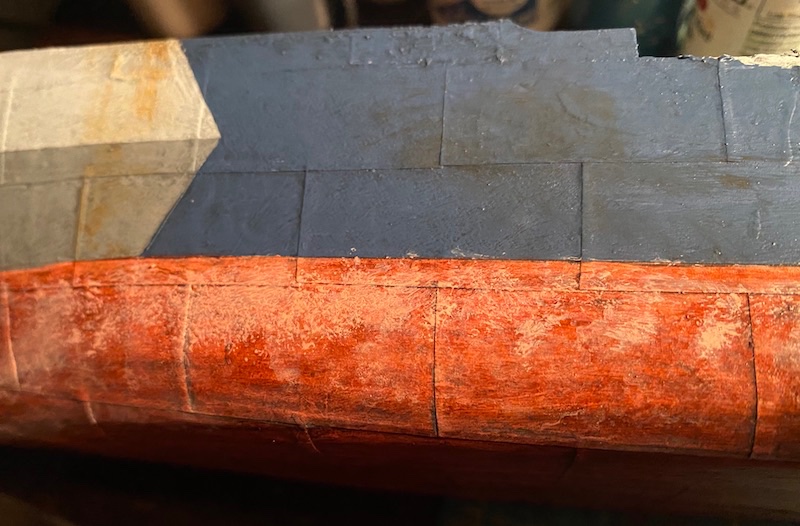
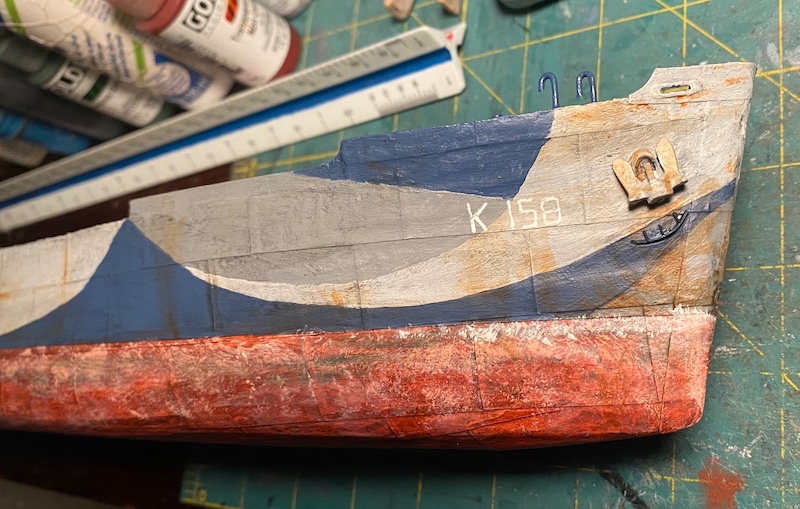
I think it's done-- after the above photo I added some sponged-on pink wash (below), then ran a bit of green over it all with my fingers and sponged a bit of white along the waterline (bottom). It's got one coat of satin clear finish, but could use another. I'm happy with the results, and I may have to give similar treatment to the other ships I've built over the years. The rust was made from thinned-down Golden brand Acrylic Transparent Iron Oxide-- dabbed on by brush, then dragged with my fingers. Never thought those days spent finger painting in pre-school would pay off. Best, H-
-
Thank you Mark! His weathering is outstanding-- much the same look I'm after. H-
-
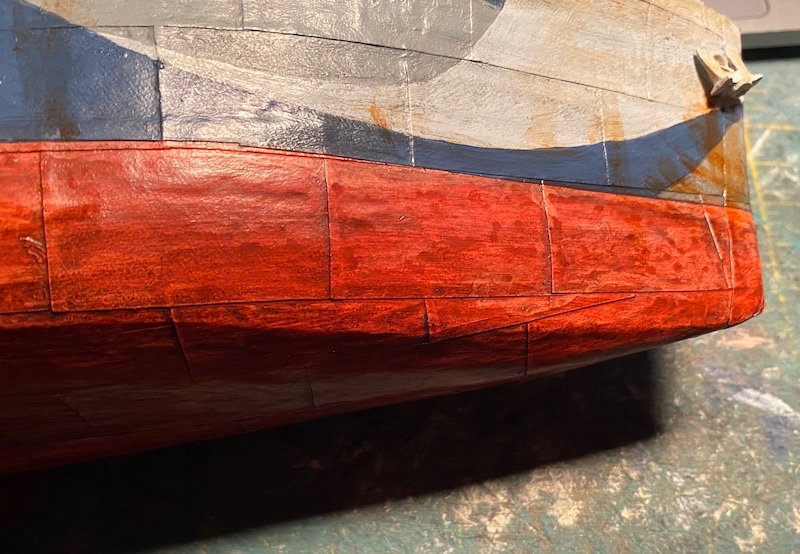
I'm in the ongoing process of getting the bottom paint looking right-- at least to my eyes and intention. Red right out of the can works fine, of course, but after years of poking around the big ships at anchor while in a kayak, there is a lot more going on with a weathered boat. I haven't got any fancy equipment, and just use brushes and liquid acrylics onto paper-sheathed strip hulls. Anyhow, I arrived at the results below and am pretty happy so far. I'll finish it up with some greenish wash and some sponged-on barnacles (and a flat clear-coat). I may sponge some thinned pink on as well-- we'll see. For any interested, the process has been a coral pink opaque primer, and then several washes of heavily watered down red-oxide, followed by a similar wash of brown, and followed by a black wash which I rubbed off by hand. (I also used the black wash above the waterline and also rubbed it off-- the paper and thicker paints really pick it up nicely). I like the been-around-the-block look on models, and I suppose I see a model ship as also being a painting of a ship. Anyhow, would love to see others' methods for this, and I'll eventually post a pic once I've got the floral schmutz and arthropods in place. Best, Harvey
-
The local museum here has a full set: The Columbia River Maritime Museum in Astoria, Oregon. If anyone is in the area, it's a first-rate museum and has a shockingly good library and archives. If you want to see the HAMMS, add an extra day (or two)! Harvey
-
Beautifully done! Truly captures the working boat essence. -Harvey
- 23 replies
-
- 2
-
-
- Smith Island Crab Scraper
- Wye River Models
- (and 1 more)
-
Odd pieces of lead shot that escaped the glue pour (I ballast my models for pics on the water). I've remedied a few of them by drilling small hole, pouring more glue in, and rolling the model around until the loose shot "sticks."
-
a drafting tool or paper weight
Harvey Golden replied to garyshipwright's topic in Modeling tools and Workshop Equipment
I have a set of K&E Spline Weights, but have never used them for drafting. I don't use computers for creating lines either, but I have have found plastic adjustable curves (shown below) to be perfect for inking curved lines. Only downside is having to hold them in place while inking-- not such a hinderance, though. Roger's photo above captures the value of the weights: setting a curve and being able to stand back and assess it.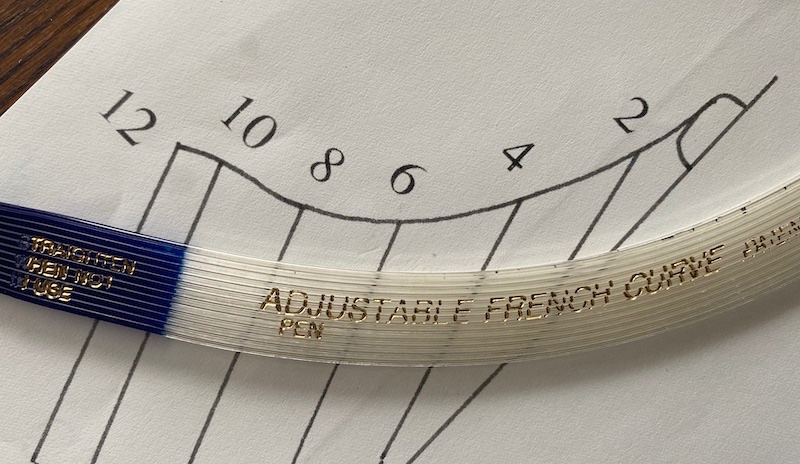
-
a drafting tool or paper weight
Harvey Golden replied to garyshipwright's topic in Modeling tools and Workshop Equipment
Ah-- thank you! I had always thought it was a hunting reference. I suppose it works for both. -
a drafting tool or paper weight
Harvey Golden replied to garyshipwright's topic in Modeling tools and Workshop Equipment
I have always heard them referred to as "ducks" or more formally Spline Weights. Calls to mind the expression about getting all your 'ducks in a row,' but I suspect it's coincidental. -Harvey -
This makes sense, as the paddle drips all over your legs with these long-cockpitted vessels.
- 31 replies
-
- 2
-
-
- Sailing Canoe
- Finished
- (and 1 more)
-
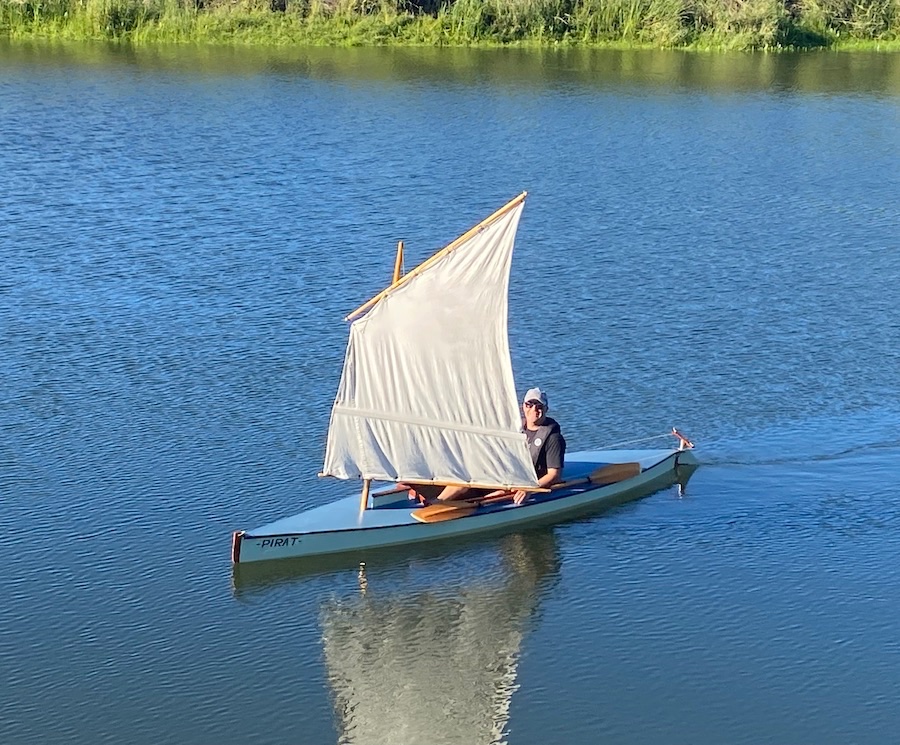
Thank you! The plans are at the top of the thread-- or near it. The book doesn't have a copyright date, but I've seen it noted as 1920 elsewhere, so it is public domain by now. The 1:1 is fine-- had it in 10+ mph winds and light chop just today. I would like a lower seat, i.e. center of gravity, and my steering system has a few kinks to work out, but it is a fun lively sailing canoe, though perhaps better suited to lighter winds. The sail I used is not as-per the original specs. Instead, I used an old poorly-made canvas balanced lug I had laying around-- one that has a batten, and is perhaps a little smaller than the spec'd sail. Here's a buddy in it just the other day: Best, Harvey
- 31 replies
-
- 5
-
-
- Sailing Canoe
- Finished
- (and 1 more)
-
What an interesting design-- it looks very practical, combining advantages of a punt with sailing canoe capabilities. I enjoyed reading of the steering/daggerboard experiments. Thank you!
-
Thank you! That is very interesting. I think there had been a similar derelict across the Columbia from Caterpillar Island (on Sauvies Island), but it could have been pieces of the Cat. Island one (I recall seeing the pieces/wreck about 20 years ago). There's still a few out there, though several have been removed in the last twenty years.

Our Emblem ®
