


woodartist
-
Posts
286 -
Joined
-
Last visited
Content Type
Profiles
Forums
Gallery
Events
Everything posted by woodartist
-
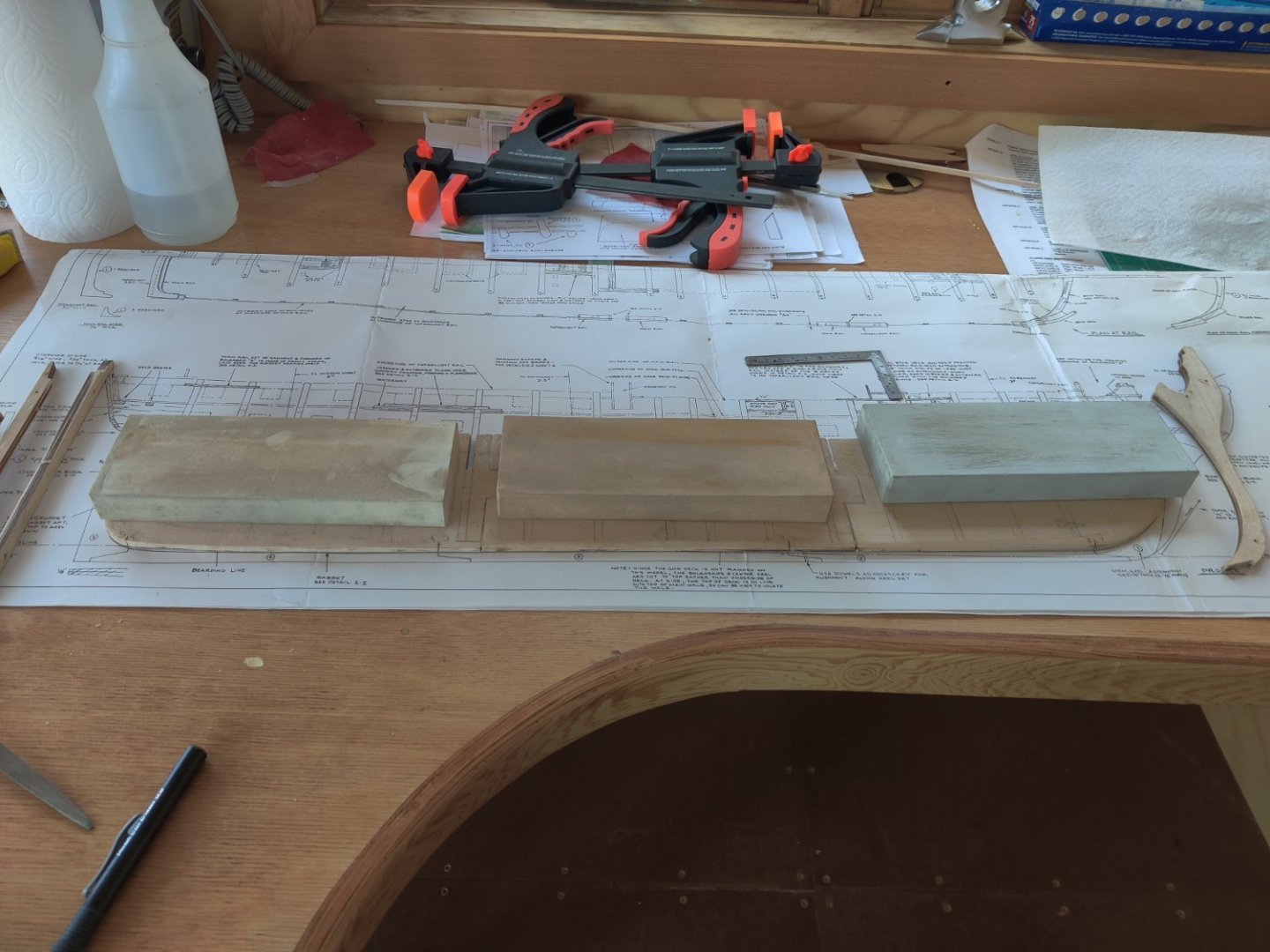
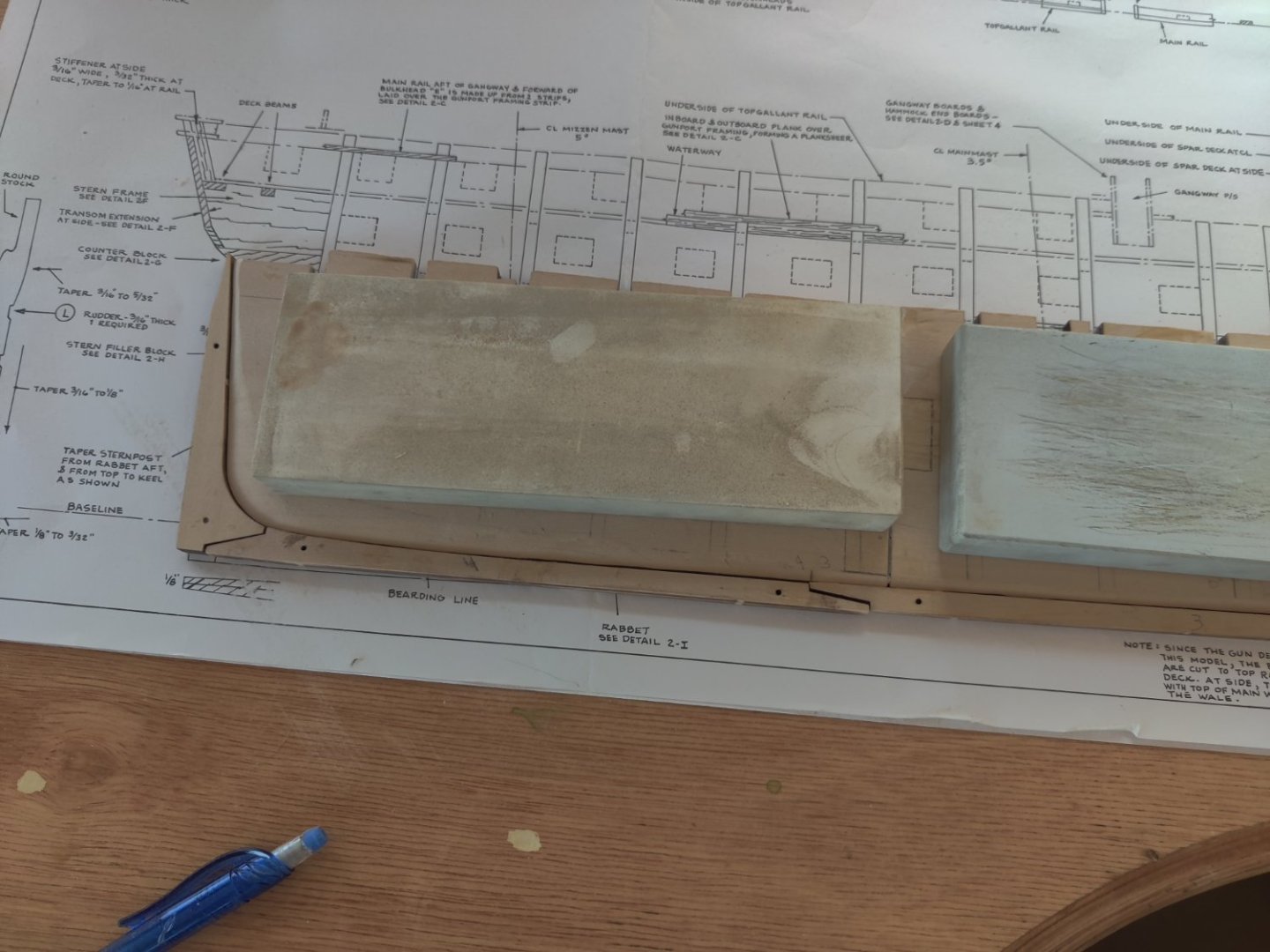
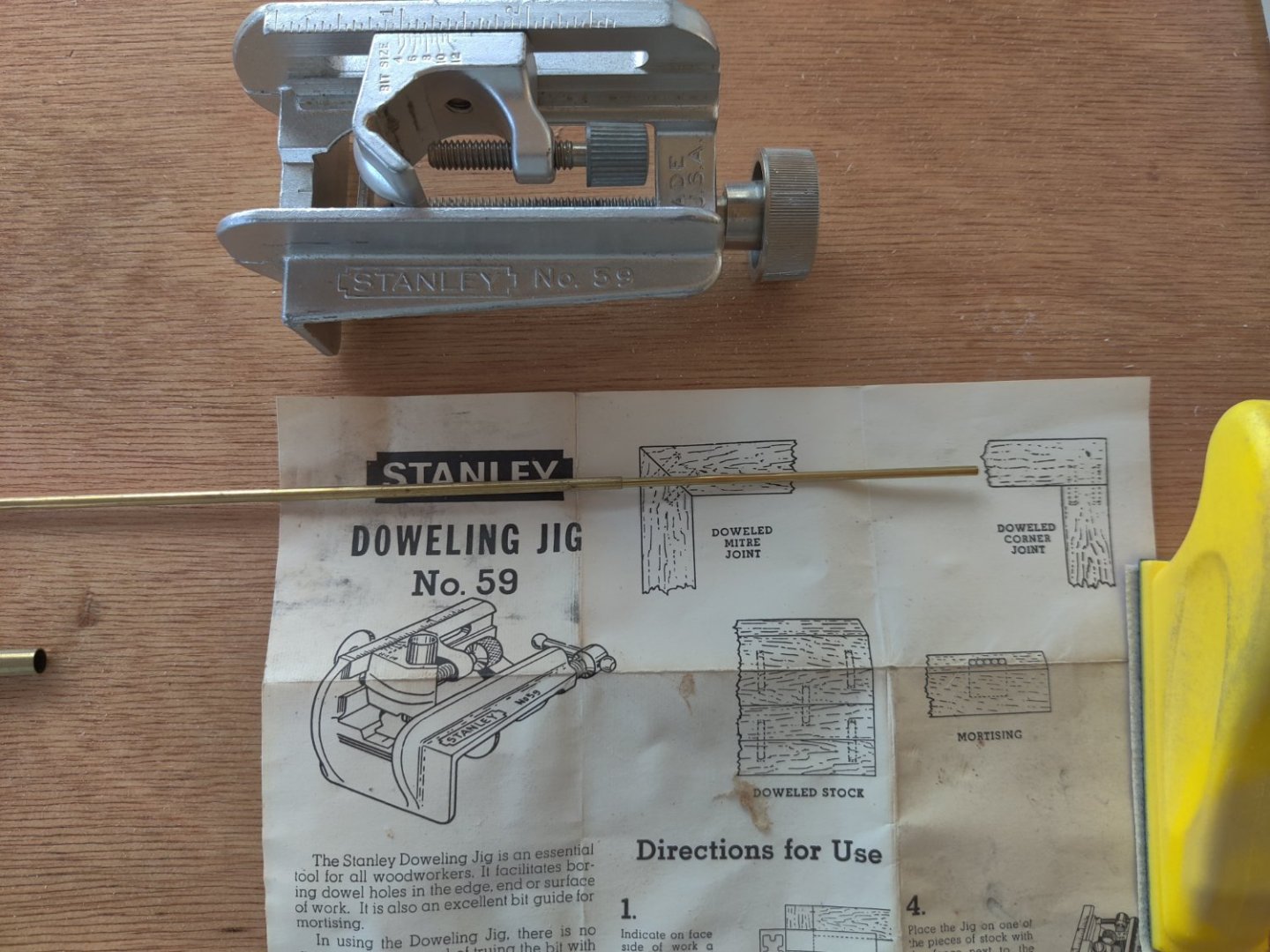
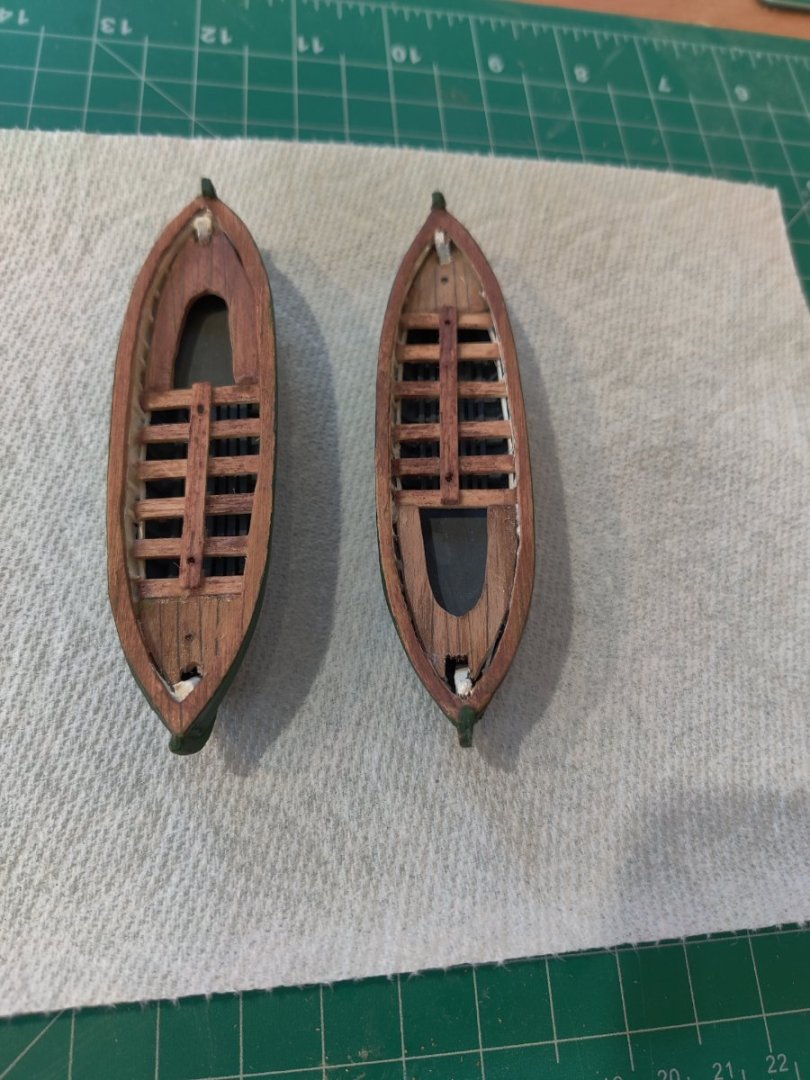
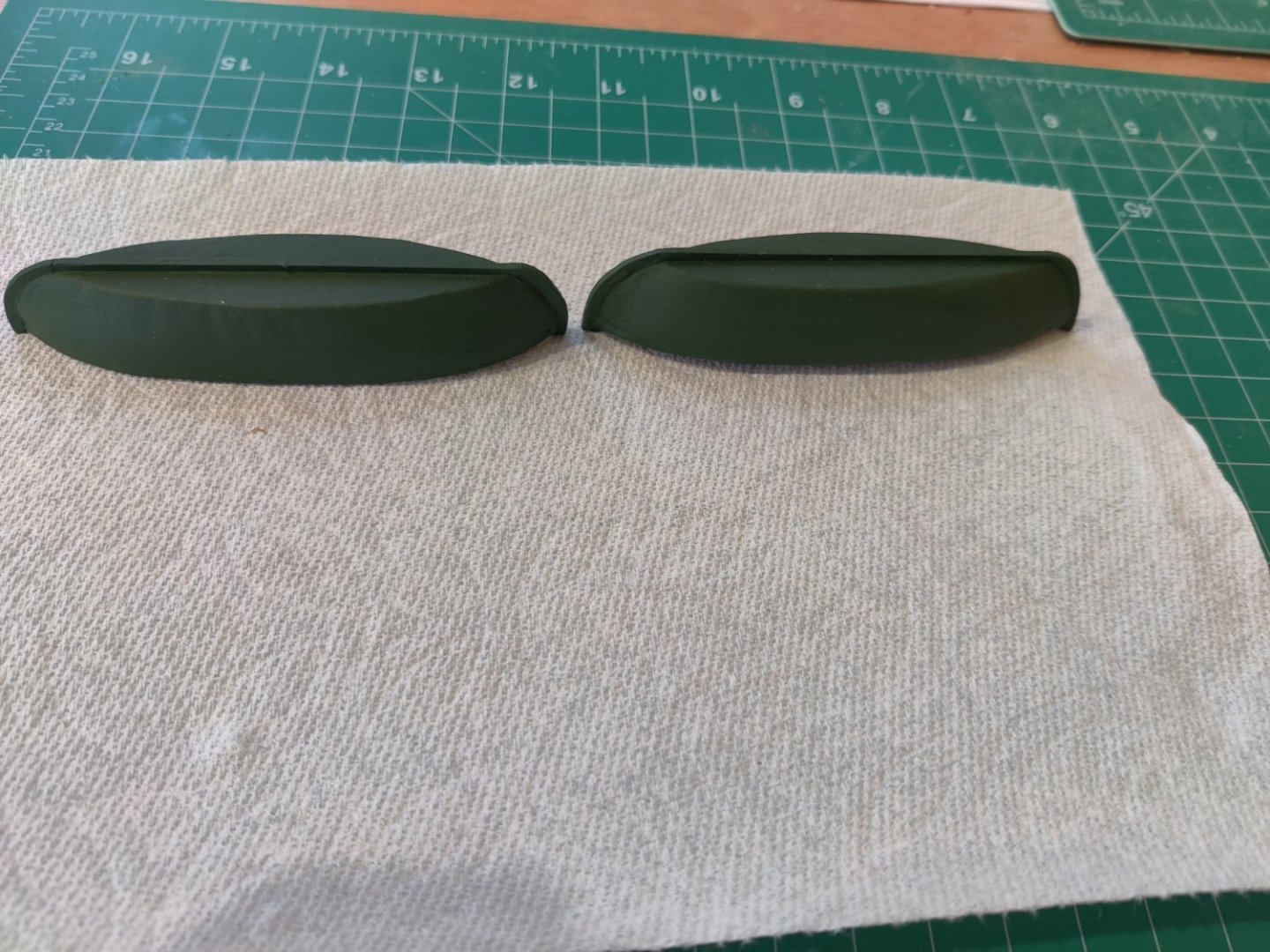
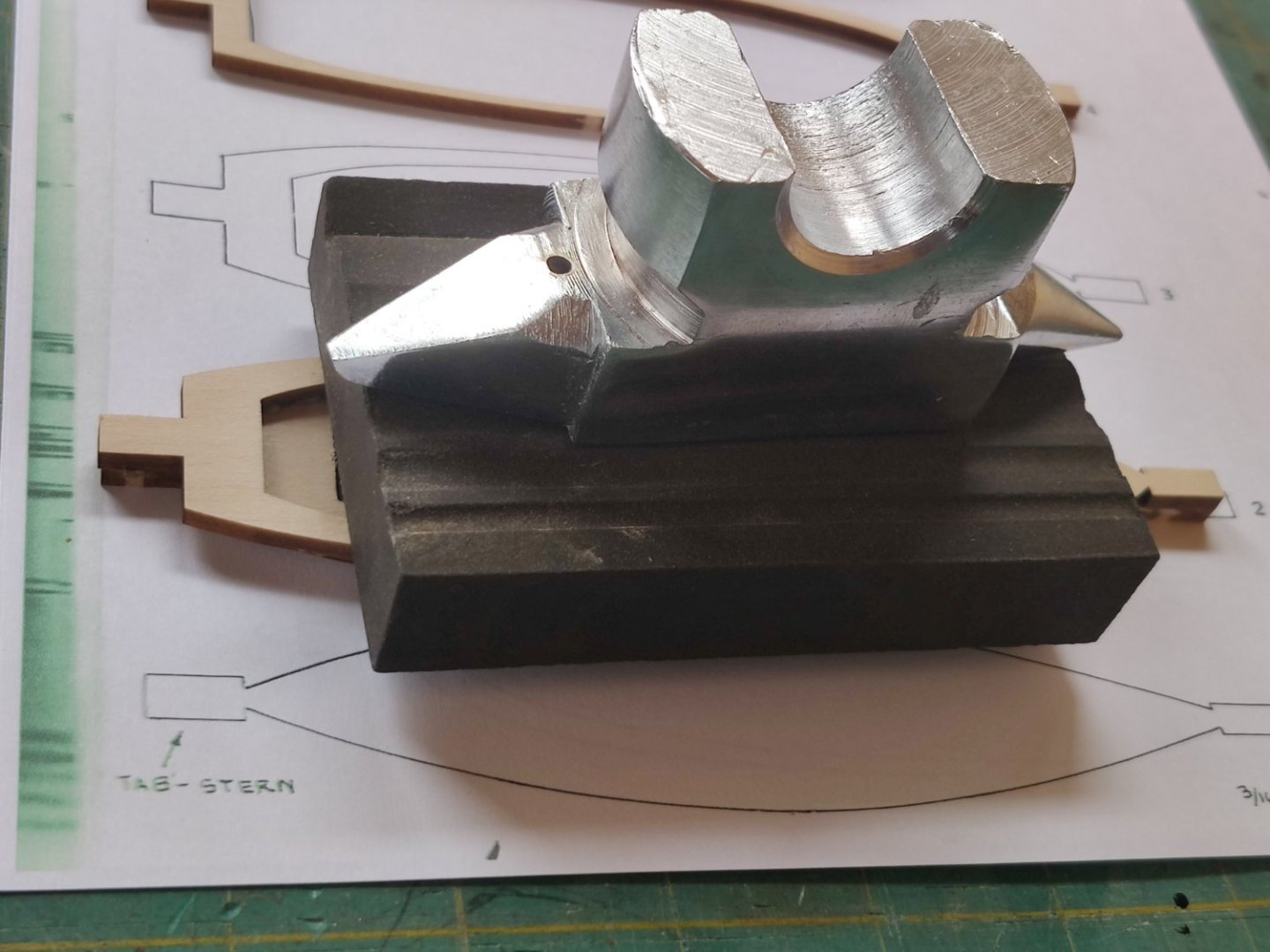
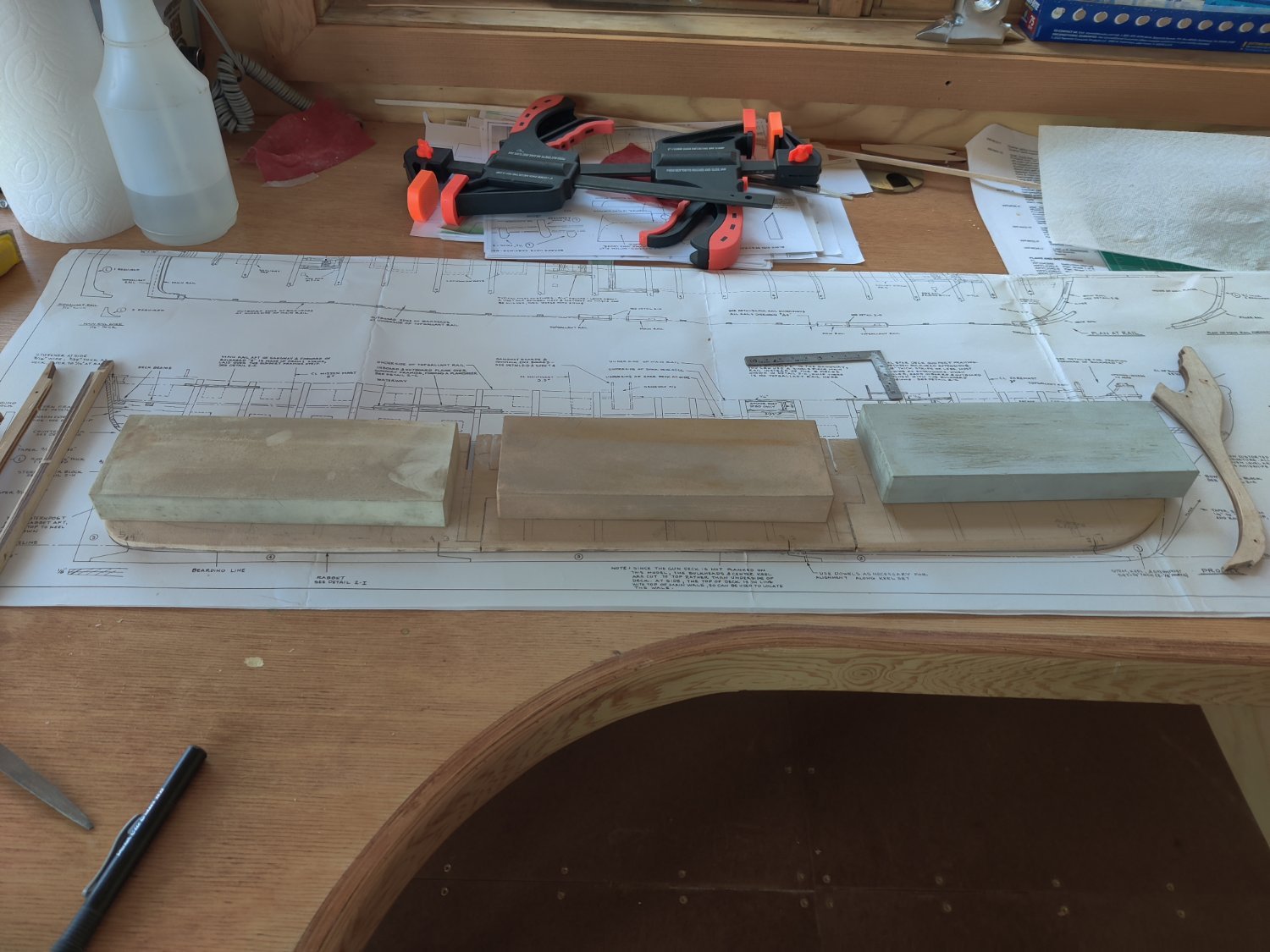
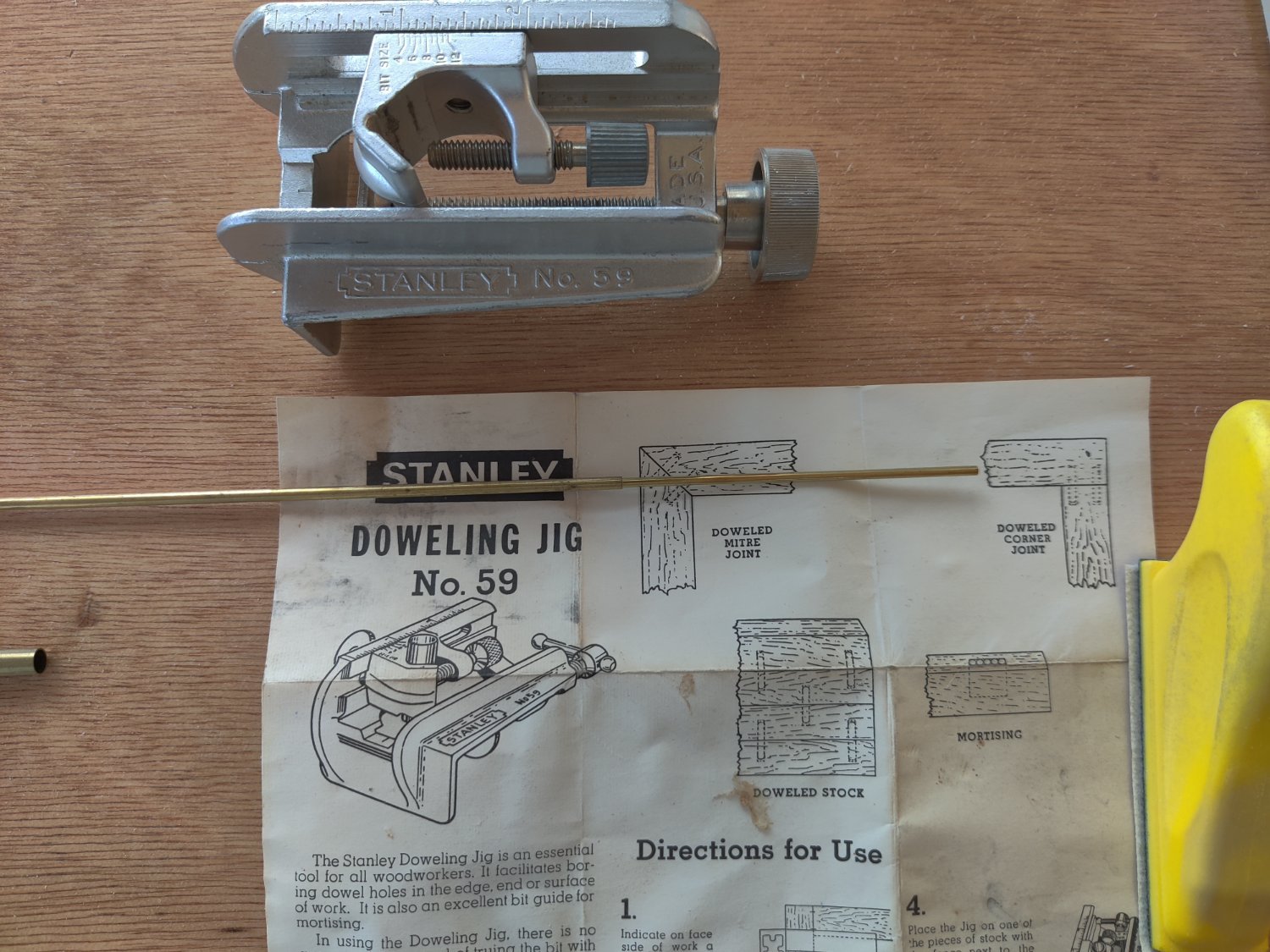
Well the two whalers are as complete as possible until I get some small dowel for the oar locks. So I will move on to the main boat. I finished glue up of the three core pieces and cut in the rabbit. I was fitting the 5 keel pieces on the pattern when I noticed that my rabbit was not deep enough in some areas so I marked those areas on both sides and sanded them until the depth was correct. It was easy to see that they were not deep enough when I laid out the 5 keel pieces next to it. I weighted them down with my sharpening stones. I was thinking about putting dowels in the connection between the keel and the center beam pieces. I saw where others had also installed mounting sleeves in the keel. So i thought about using multiple mounting sleeves as dowels. I do not have a drill press but I have a 30 year old Stanley dowel jig. I was thinking of using the 1/16" bass tube as the sleeve and the solid brass rod that fits inside. I will insert the solid brass rods in the base. i was thinking about using 5 of them. Anyone see any problem issues that could arise from that course of action?
-
Wood carvers, call them stump cutters, and they are listed as such in all the bit/burr catalogues from dealers.
-
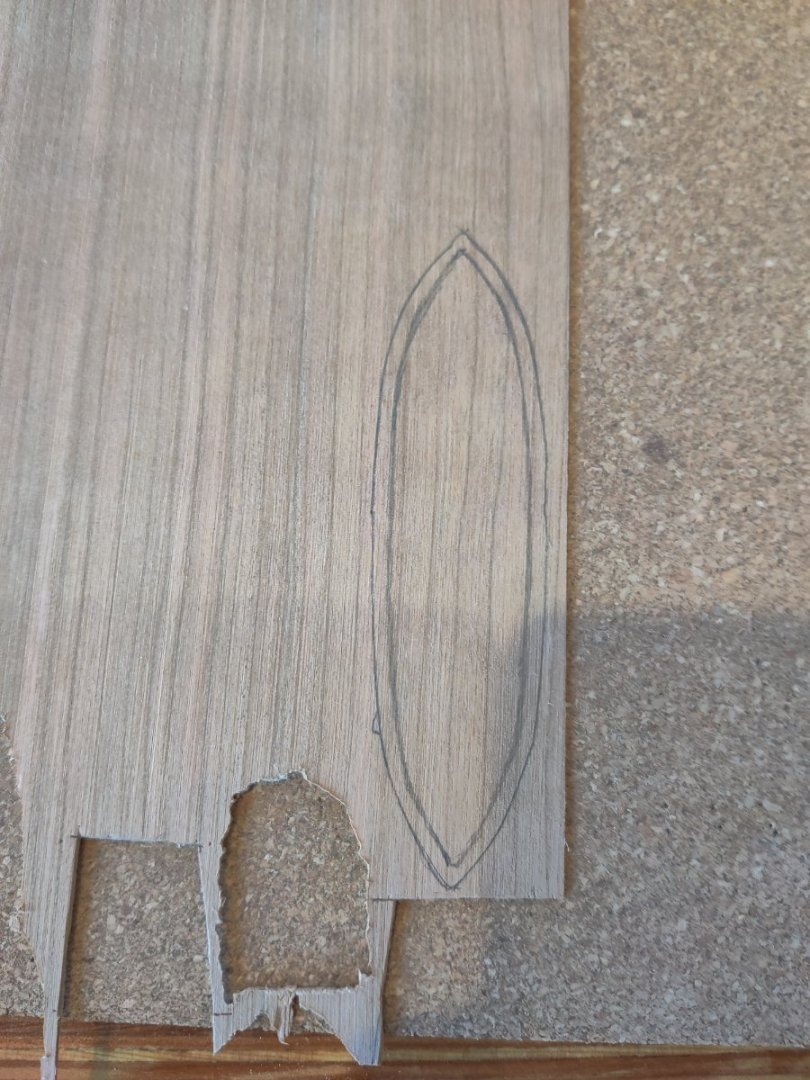
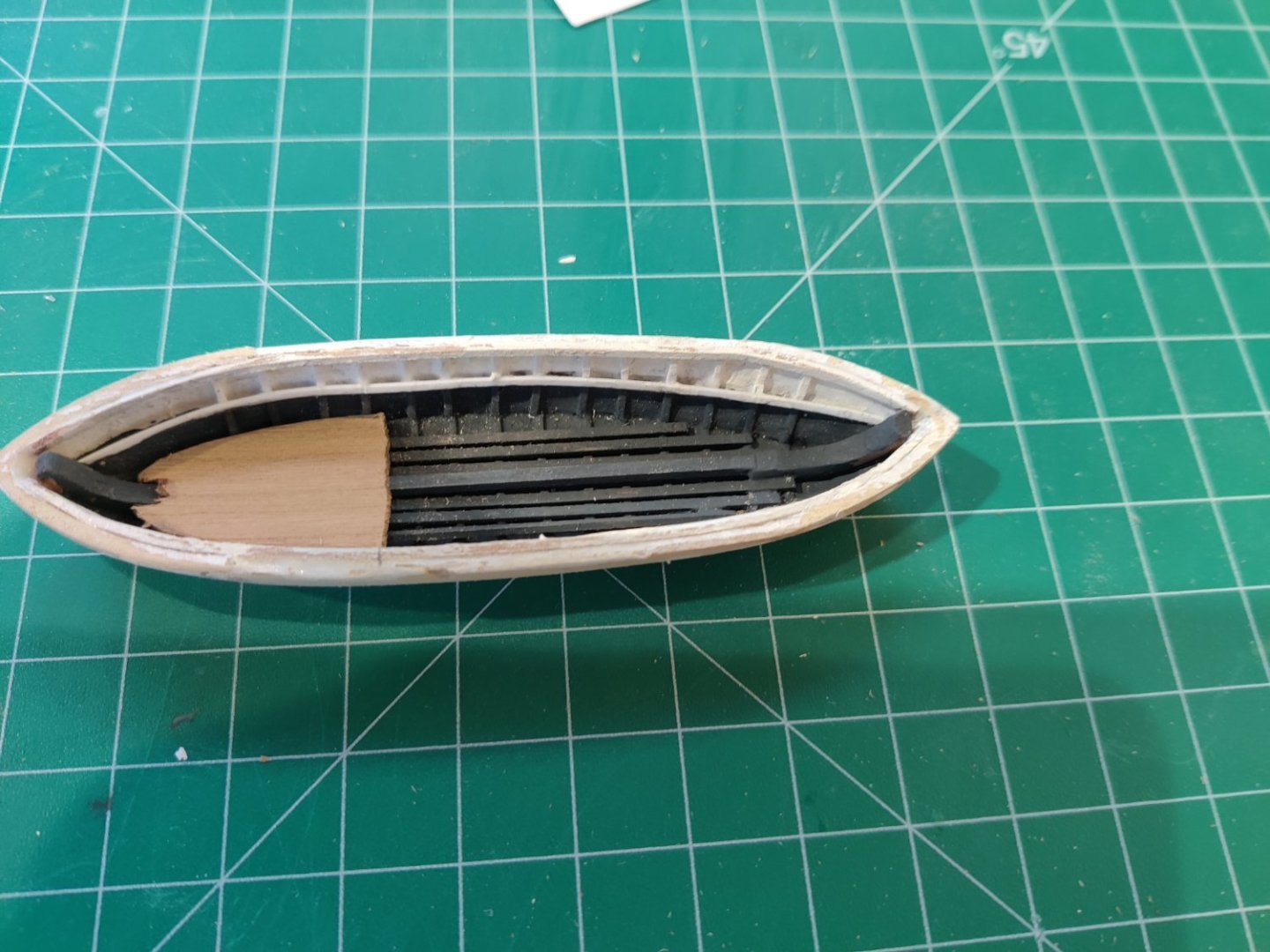
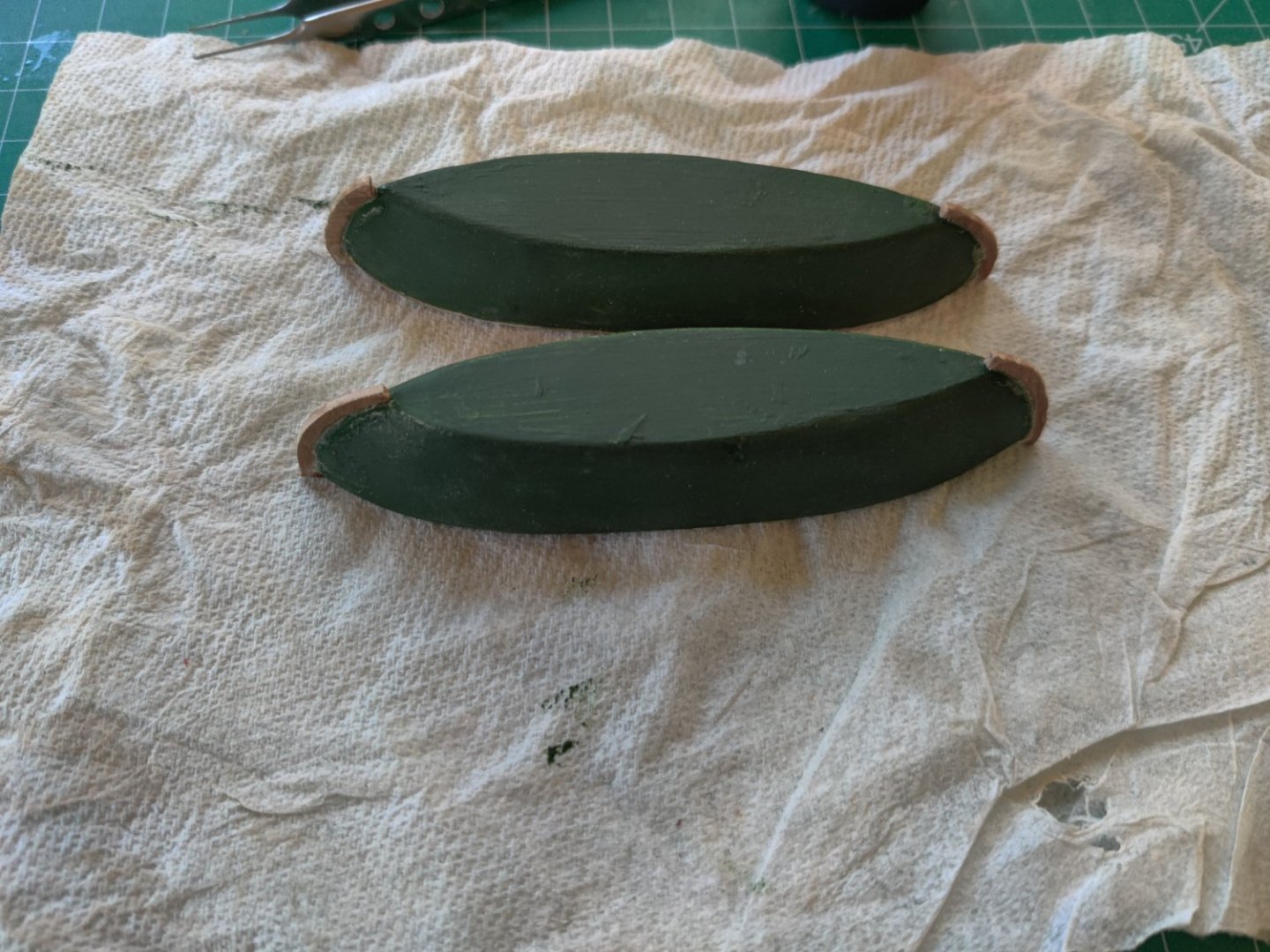
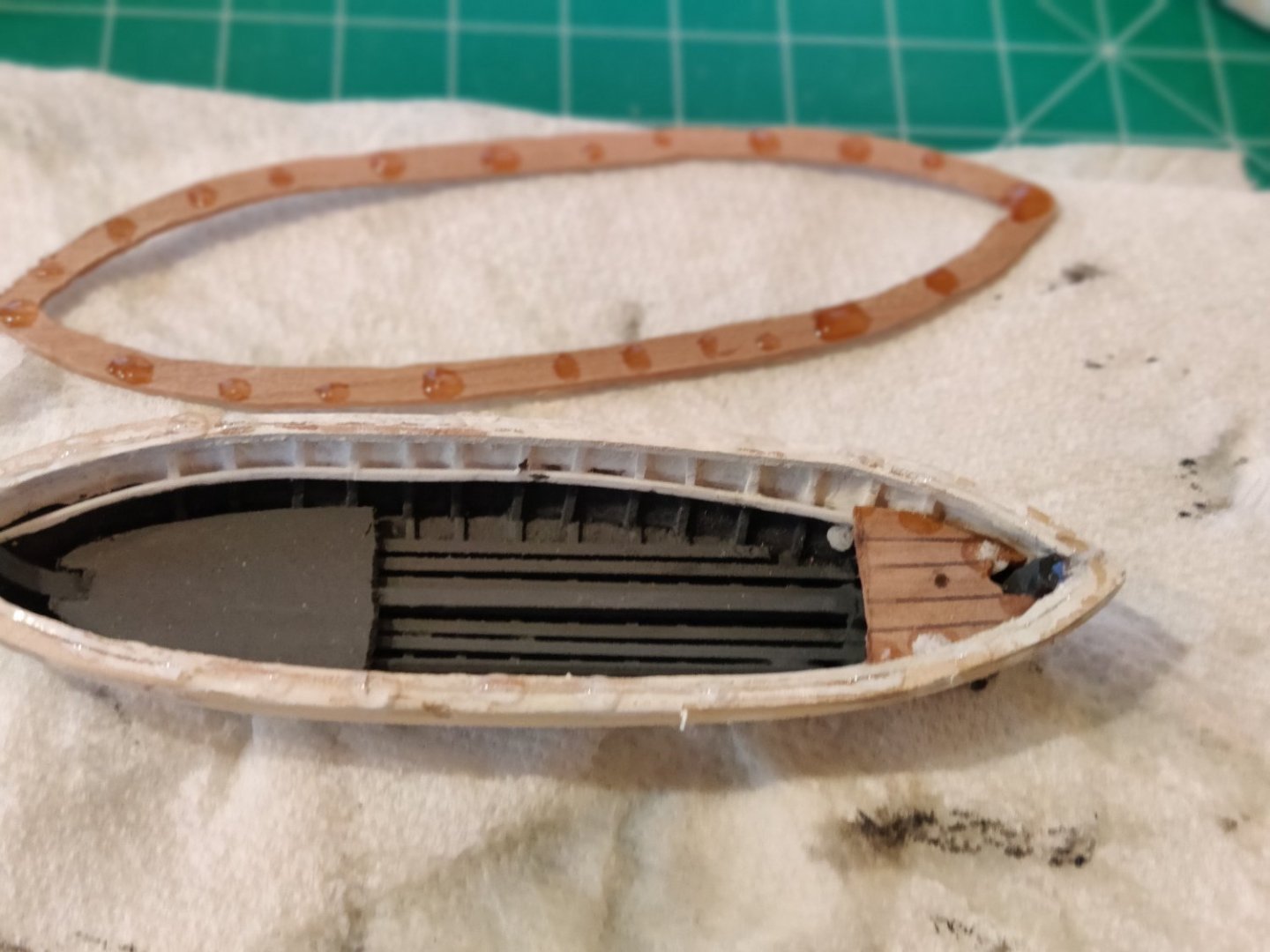
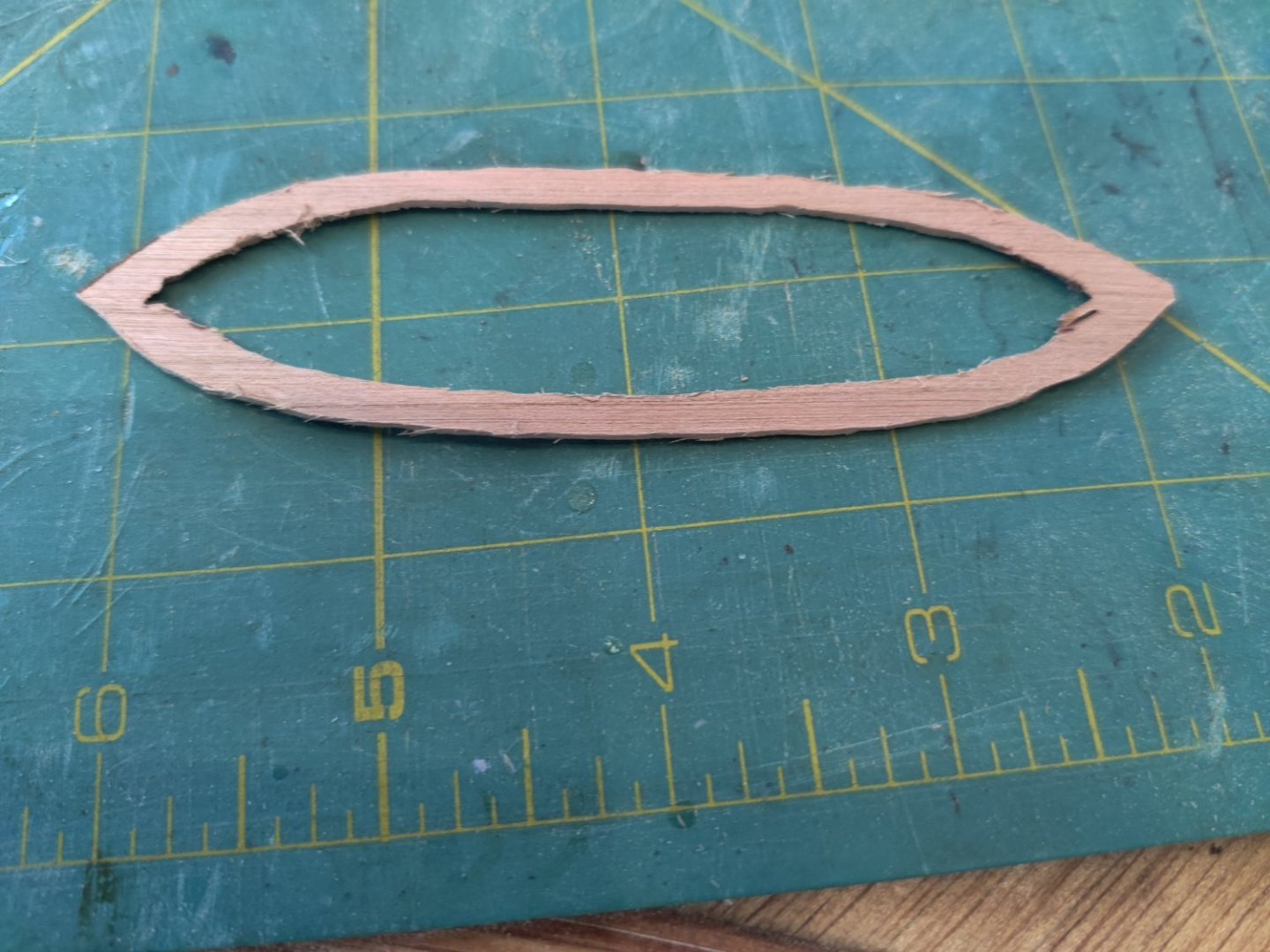
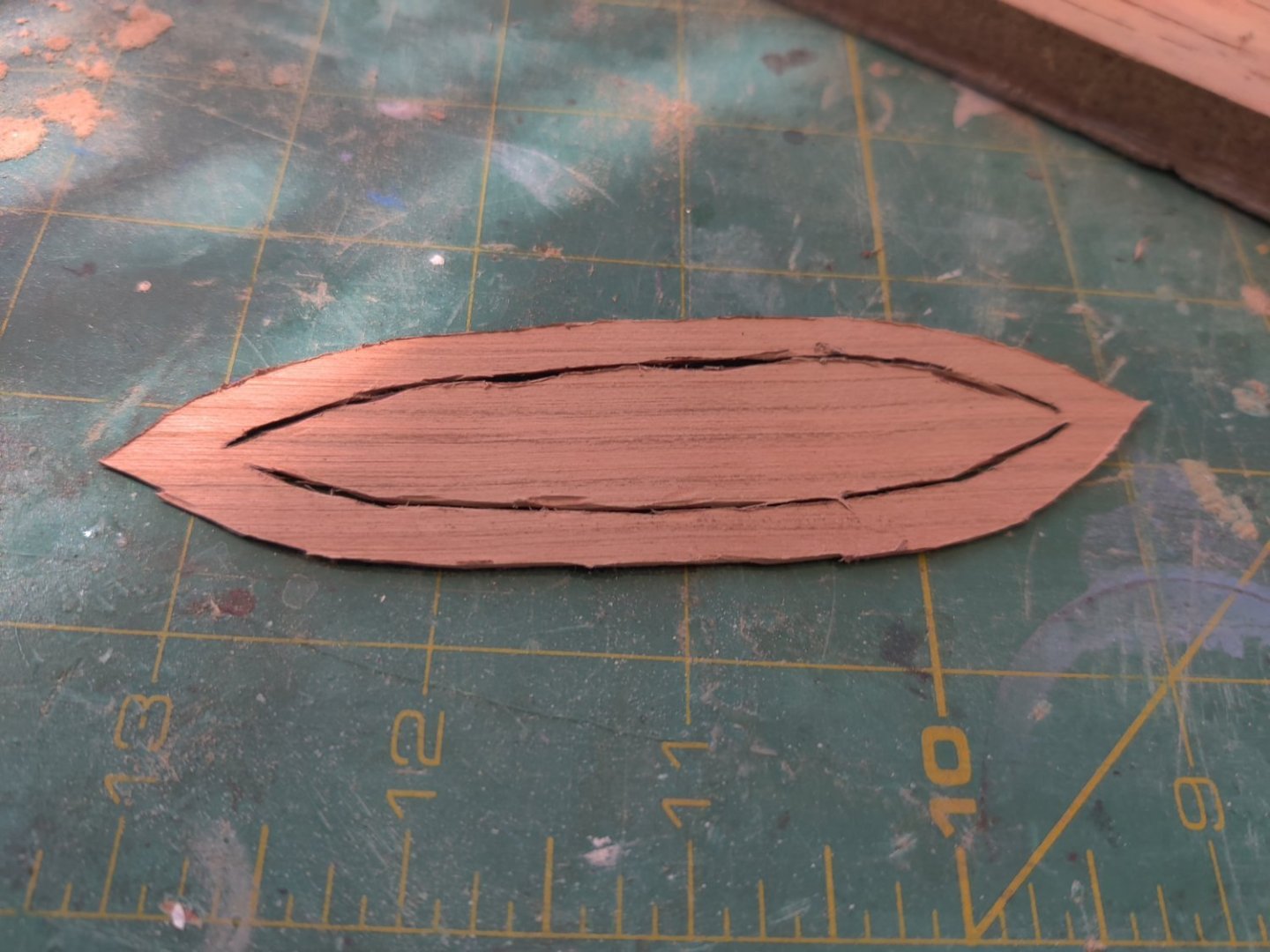
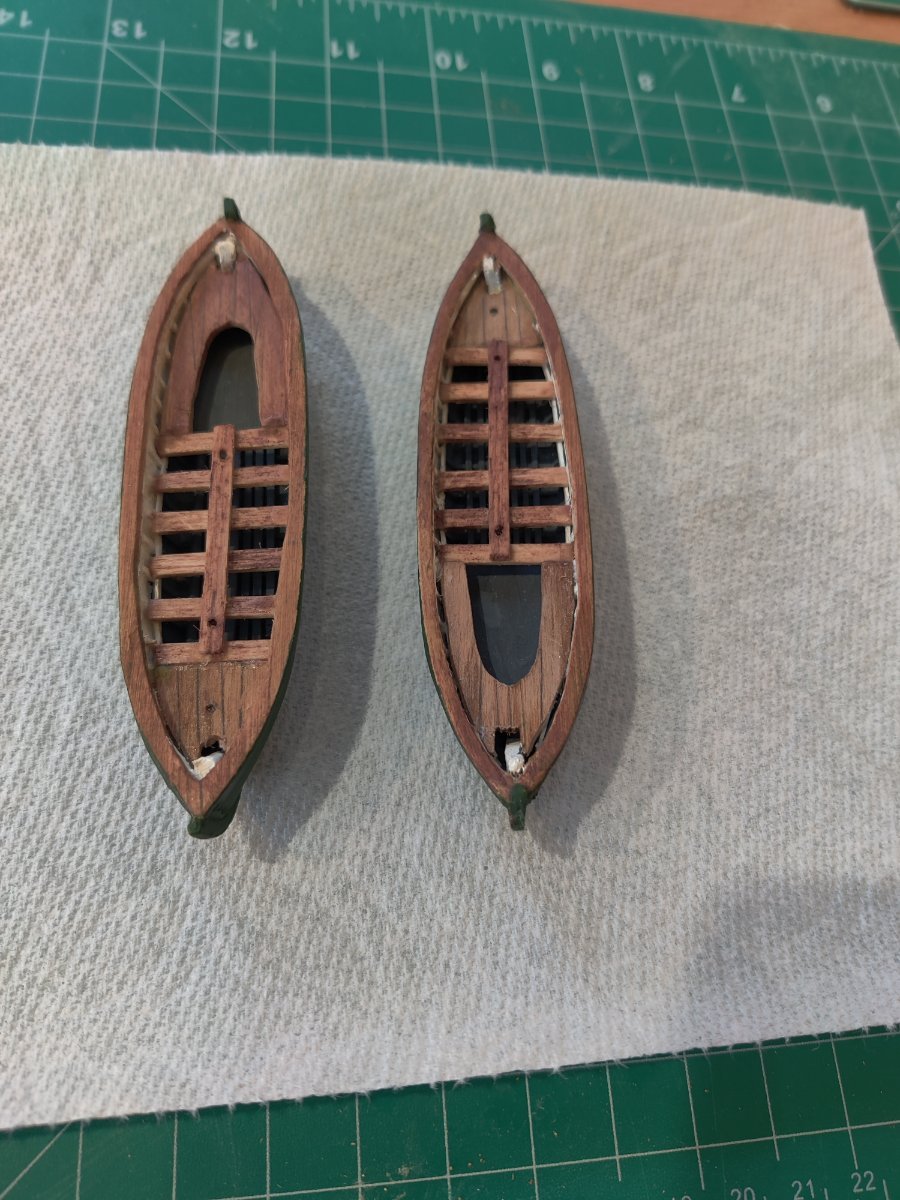
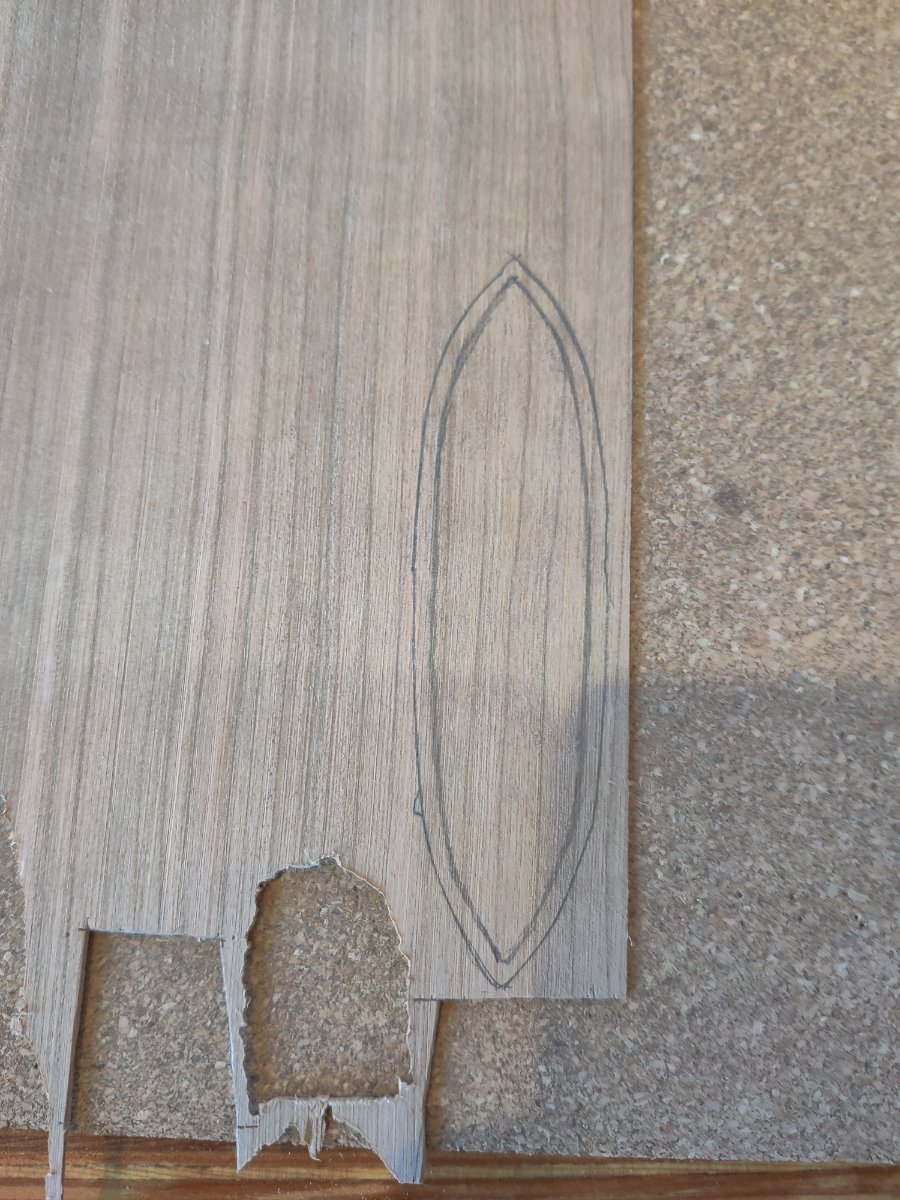
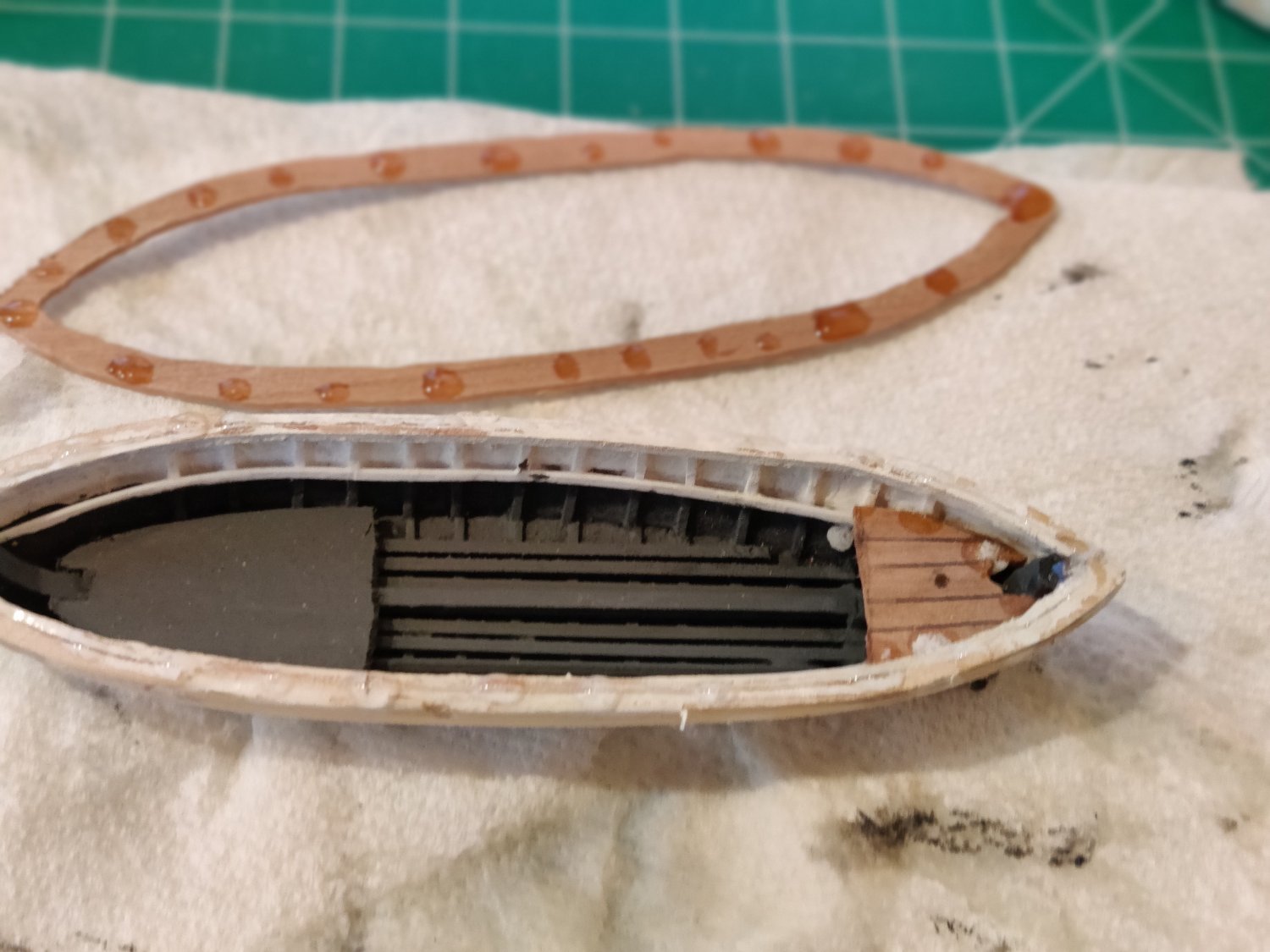
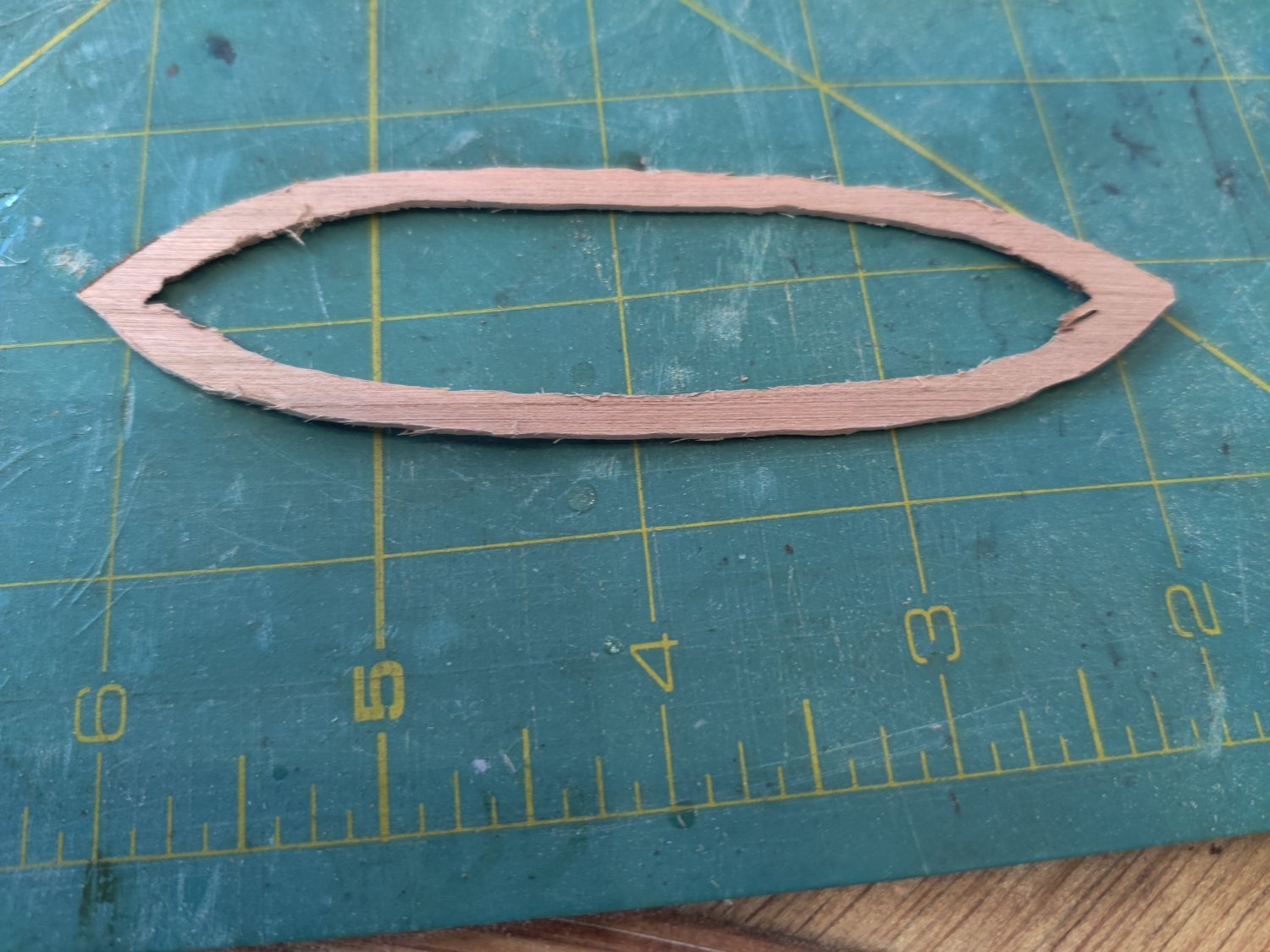
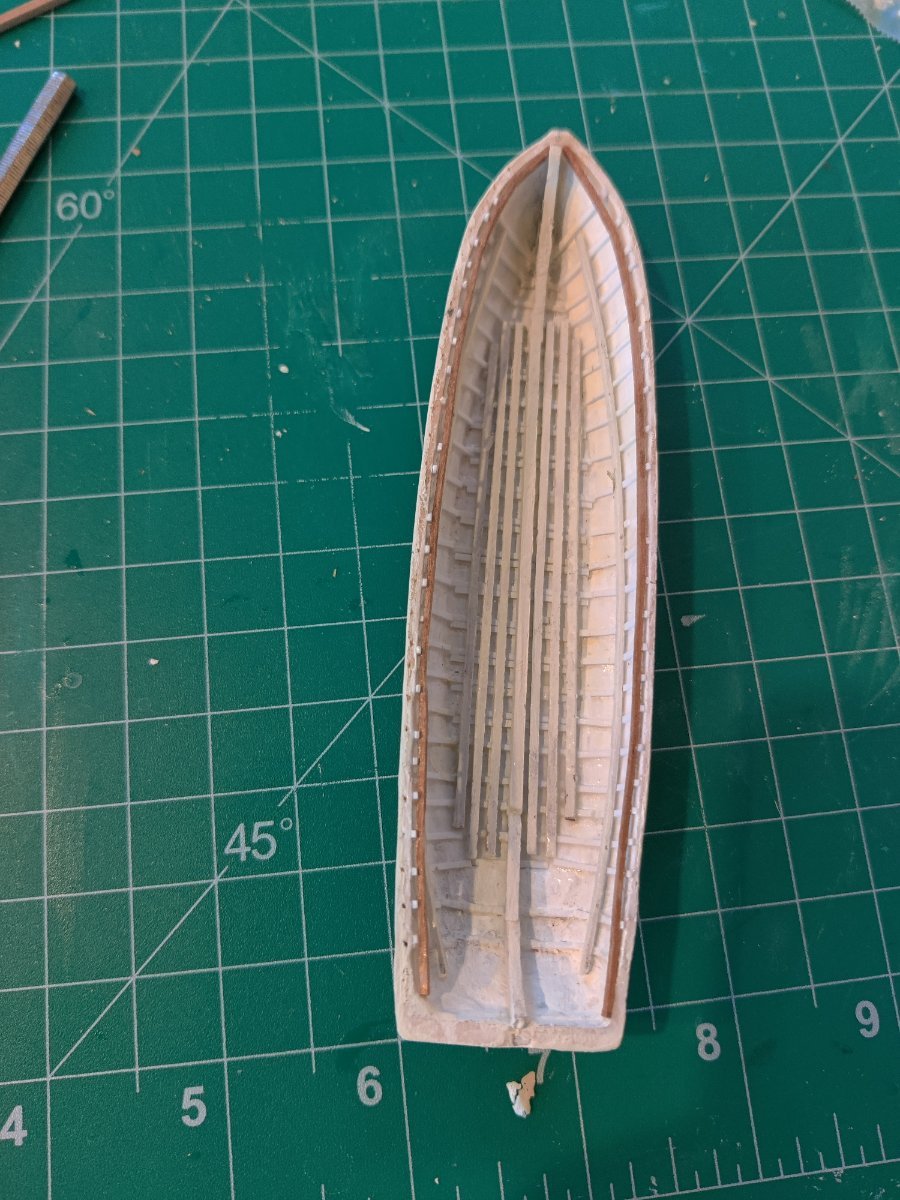
Progress update on the two whalers. I installed ribs and flooring in the same manner as on the gig whaler and the pinnace, although now that I have done it twice it went much smoother and faster. I ran out of the cherry strips that were 3/64" thick that I had used on the pinnace for the cap. However I had a 4" wide sheet of 3/64 cherry. I do not have a table saw to cut strips s I decided to cut the cap out of the sheet. I used the small rotary bit for my power carver to make the rough cut. I then sanded and used round diamond cutter to get the inside and outside edges to size. I glued on the entire cap and and then used a little wood filler where needed so there were no gaps. I cut the the stern and bow knees out of the same sheet of cherry and installed them. The thwarts and gang board are cut to size and I will get them installed tomorrow and get the remainder of the keels inserted. Then I will try and build the oar locks if i ca find a small enough dowel. The dowels supplied with the kit are way to large. I penciled in a line on the cherry at the stern and bow so it appears that two separate pieces of wood were used.
-
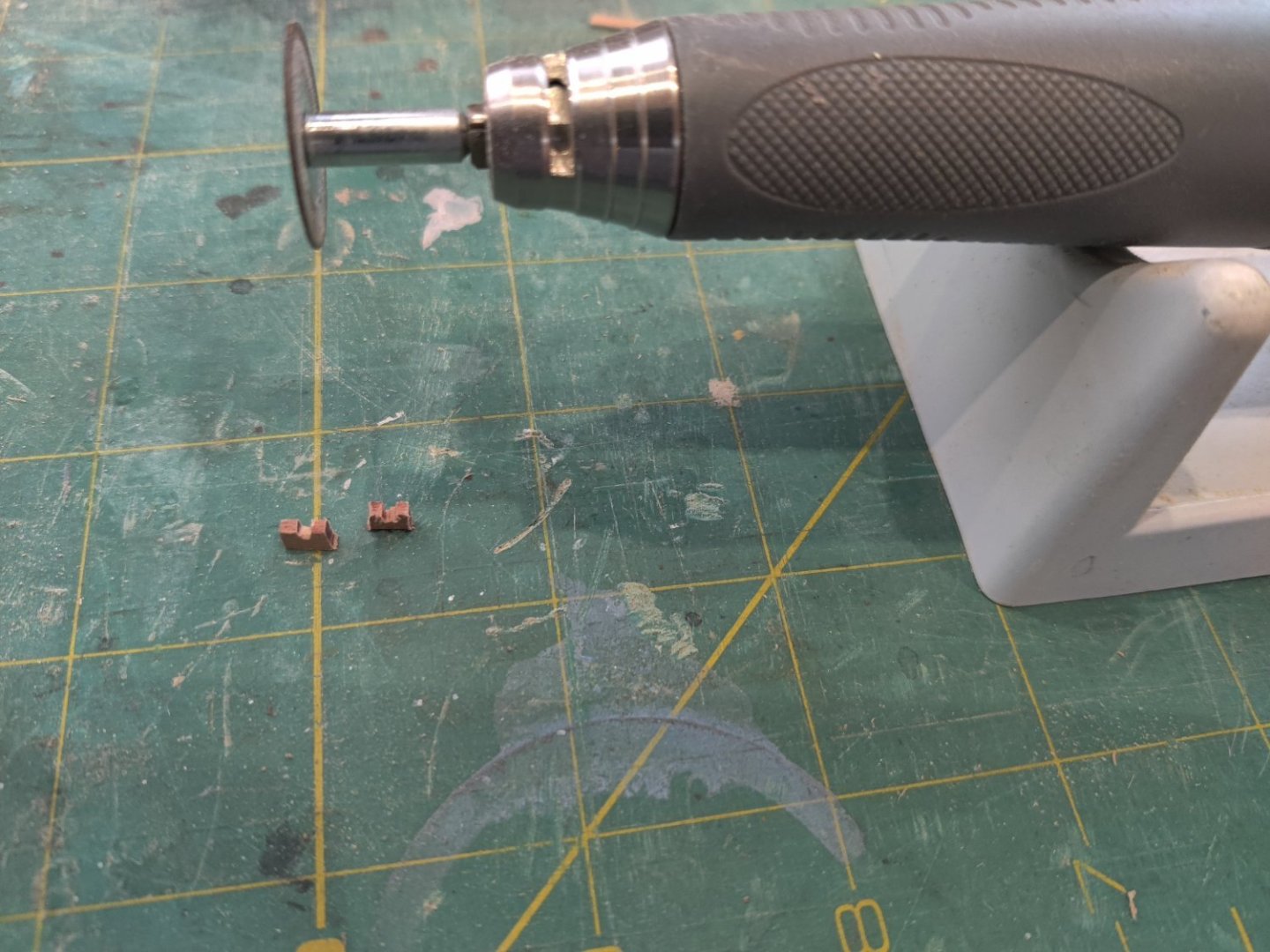
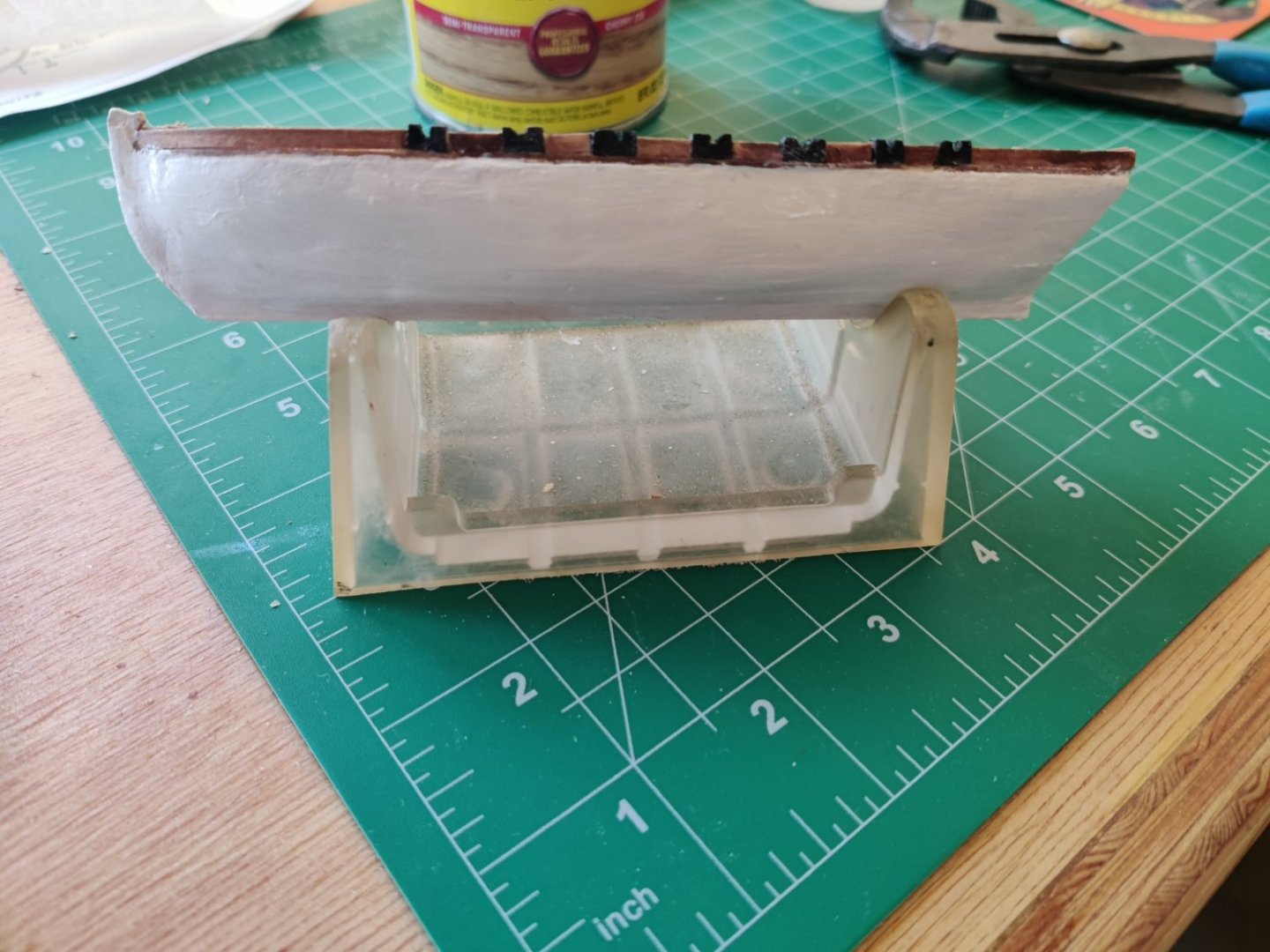
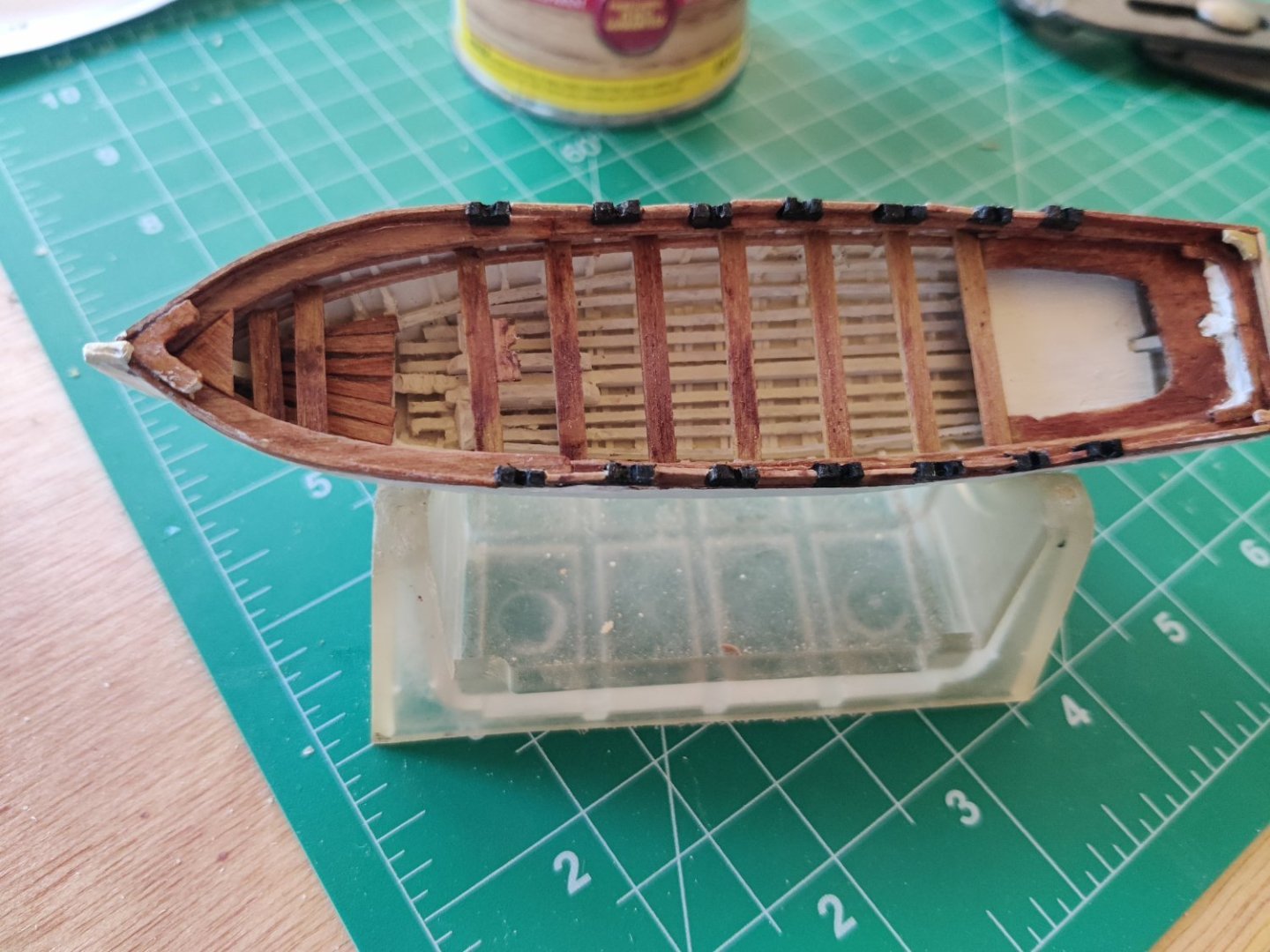
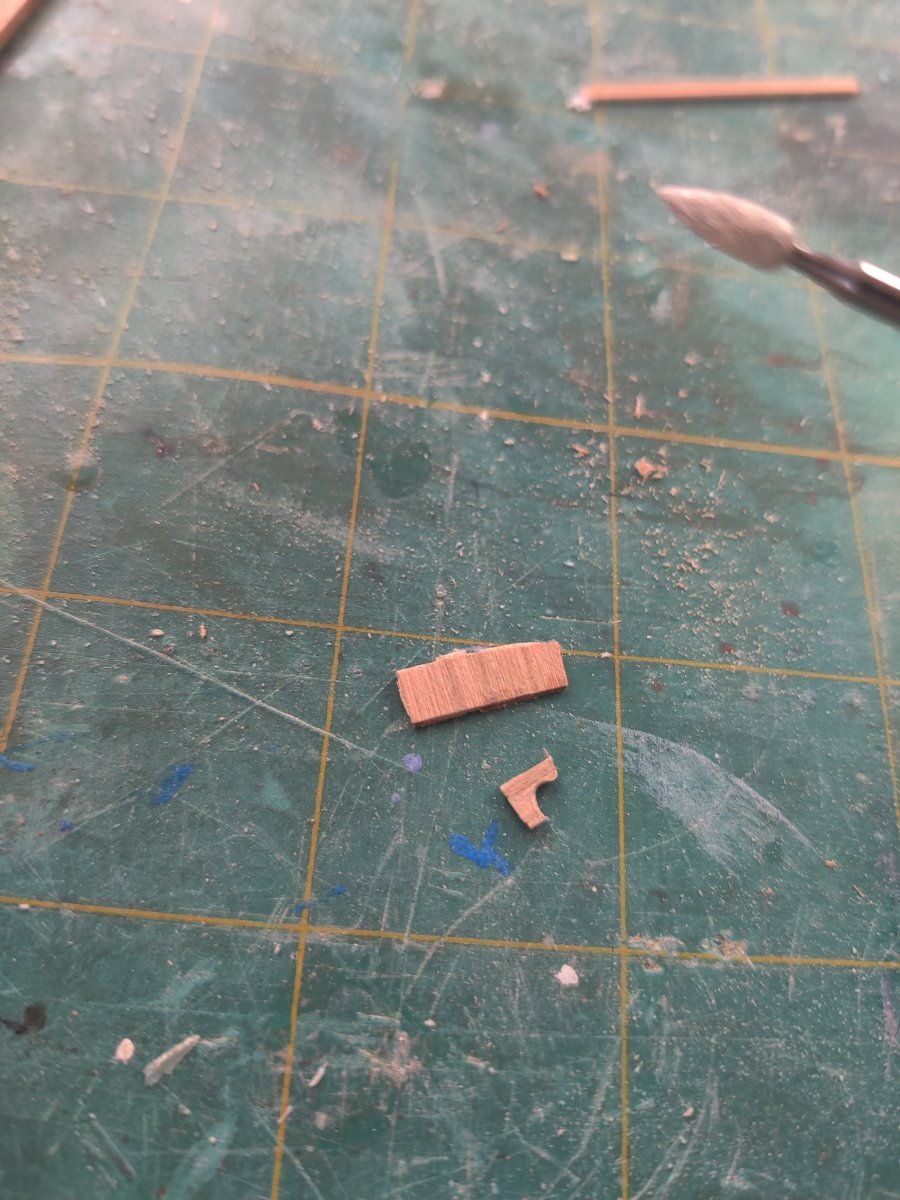
I have finished the pinnace. When it was completed I went back to the gig whaler to fix some problems that I discovered after the last post. when I looked at the pictures, I saw that the keel was not level for its entire length, it was too long on the stern end. So I corrected that and I was not satisfied with the paint on the hull. I took all the hull paint off, re-sanded the hull and repainted with new paint. I used some old paint and the white had yellowed after a few days. I used the same techniques on the pinnace as the gig whaler so I did not document all the same steps. There were some new challenges on the pinnace. The first was how to make the oar locks. JSGerson used a Byrnes table saw to make his. I do not have one so I put a circular cutting bit on my rotary carver and made the small channel in a 1/8 x1/16 cherry wood strip. I put my rotary cutter on its stand and made the channel, then sawed the oar lock off, and then made the next channel. Having a long wood strip to hold onto helped the process. The second challenge was to make the very small corner braces. For this i put a diamond flame bit on my rotary carver and cut a half circle in a piece 1/16" cherry wood and then cut it off with the same cutter bit I used on the oar lock. I have not made the rudders for either boat yet, I will wait and see how the boats fit on the deck before making that decision. I ran out of styrene for the ribs on the remaining 2 whalers. I only ordered 1 package and it had 10 12" strips, I should have ordered 2. I also have not installed the footrests in either boat. Have not figured out how to make them yet. I also have not installed cleats as that metal work is outside my comfort zone.
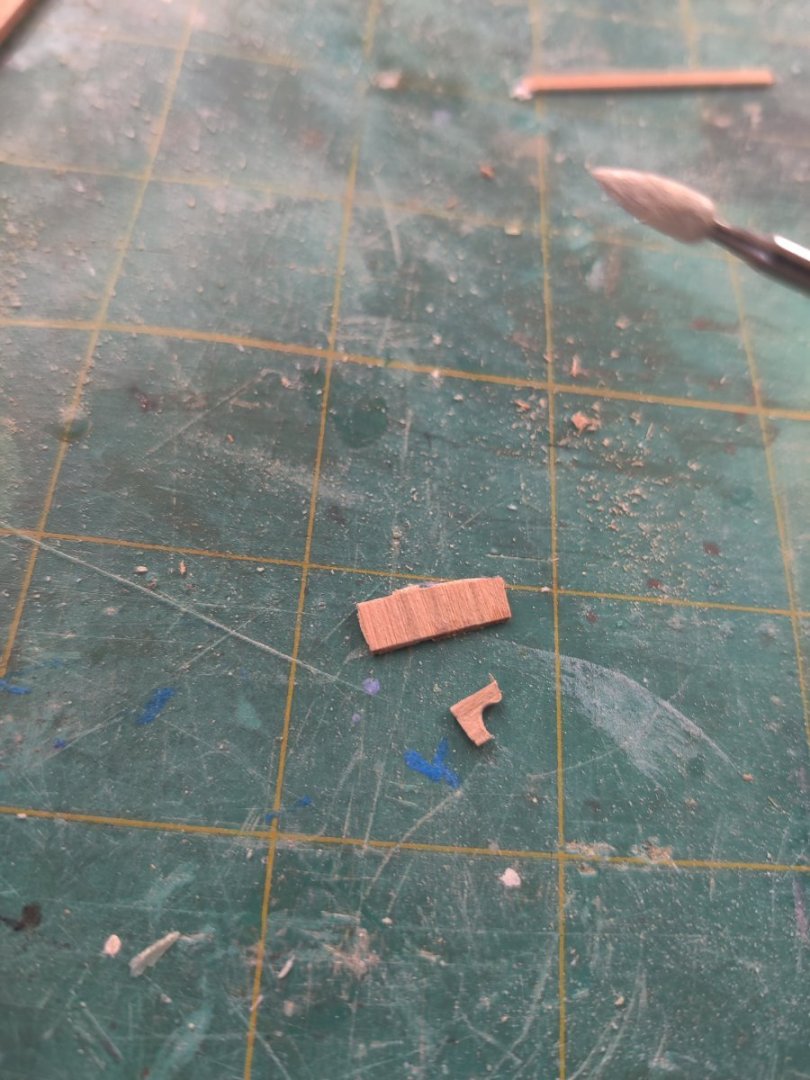
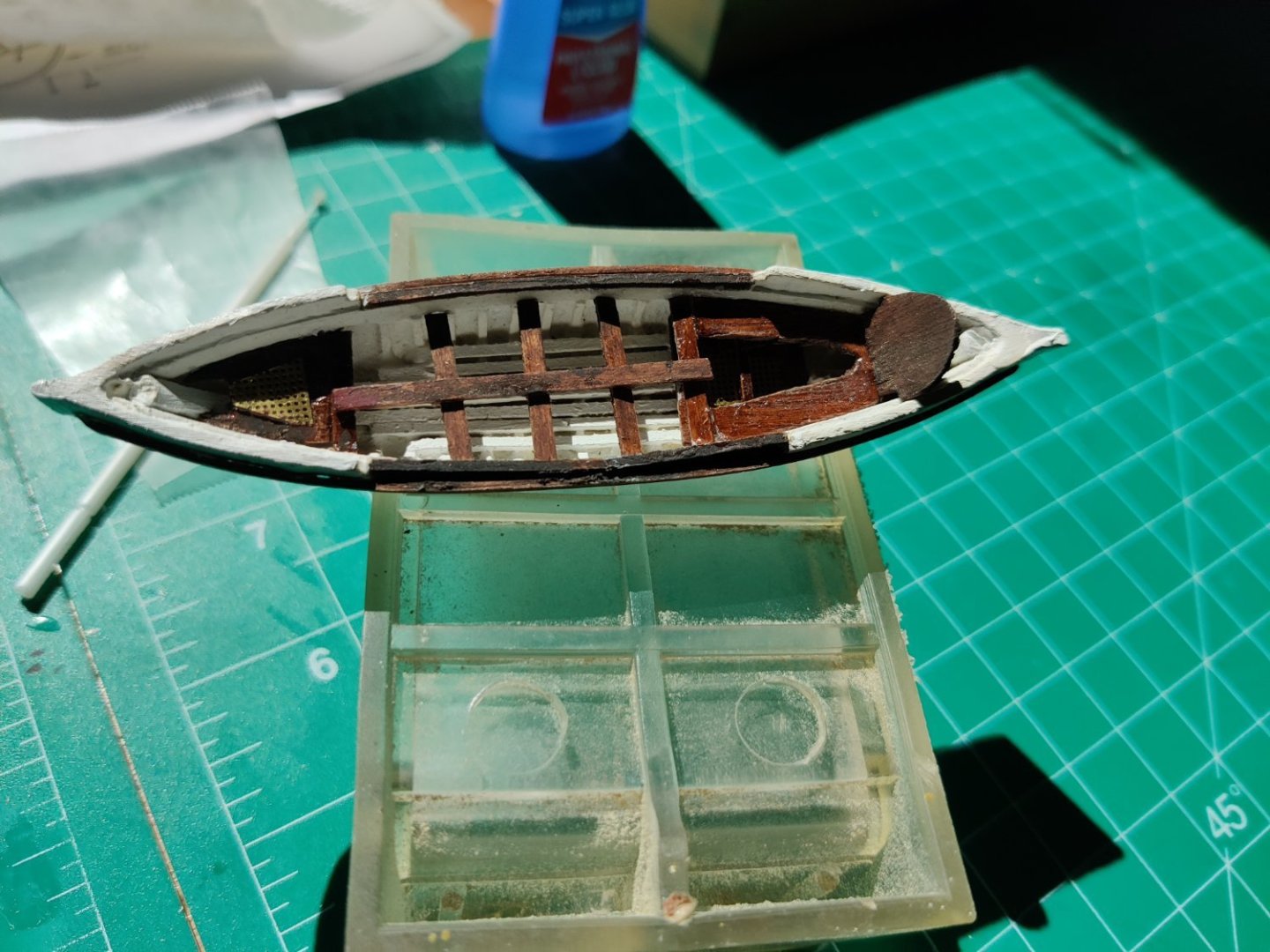
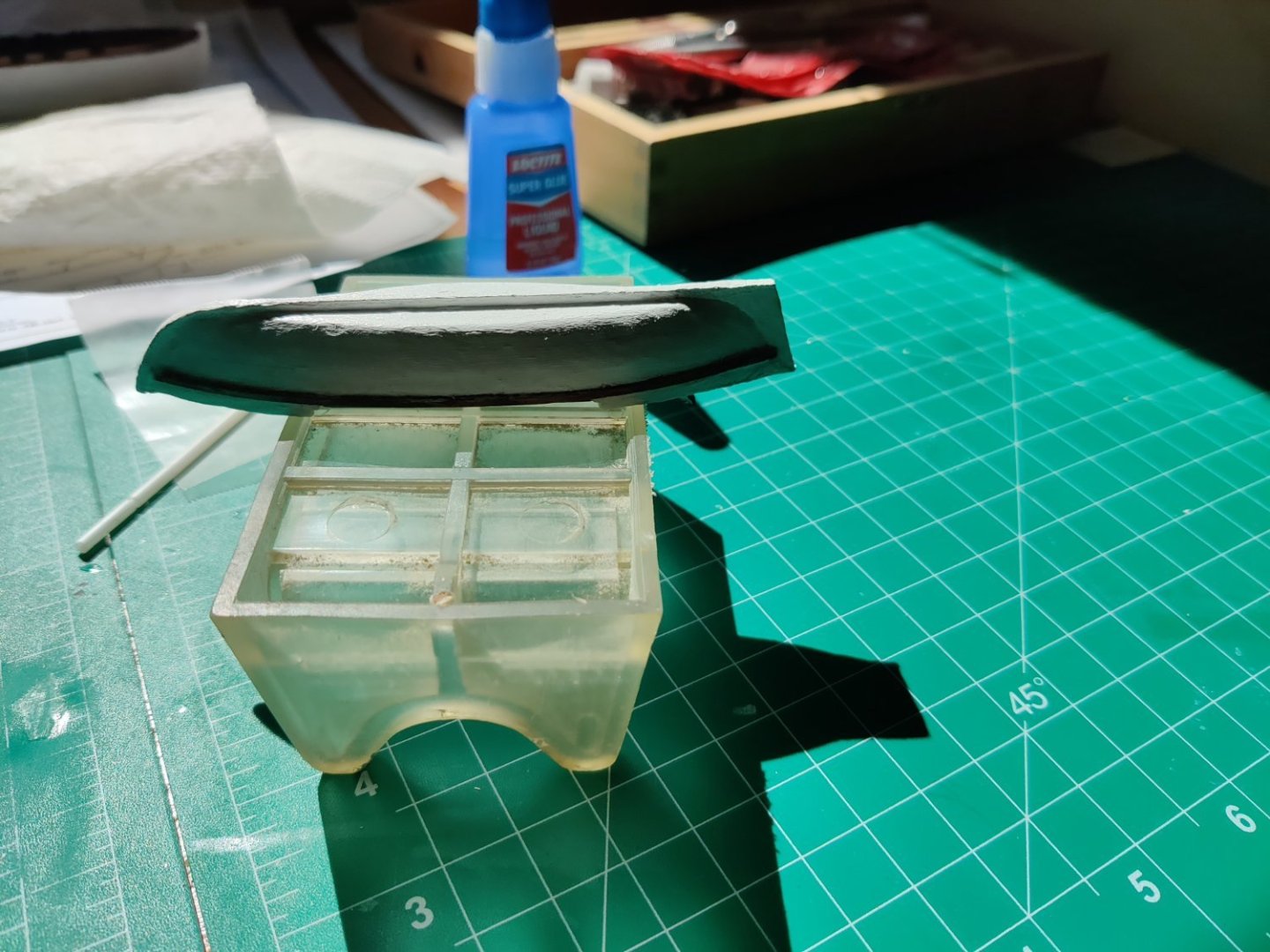
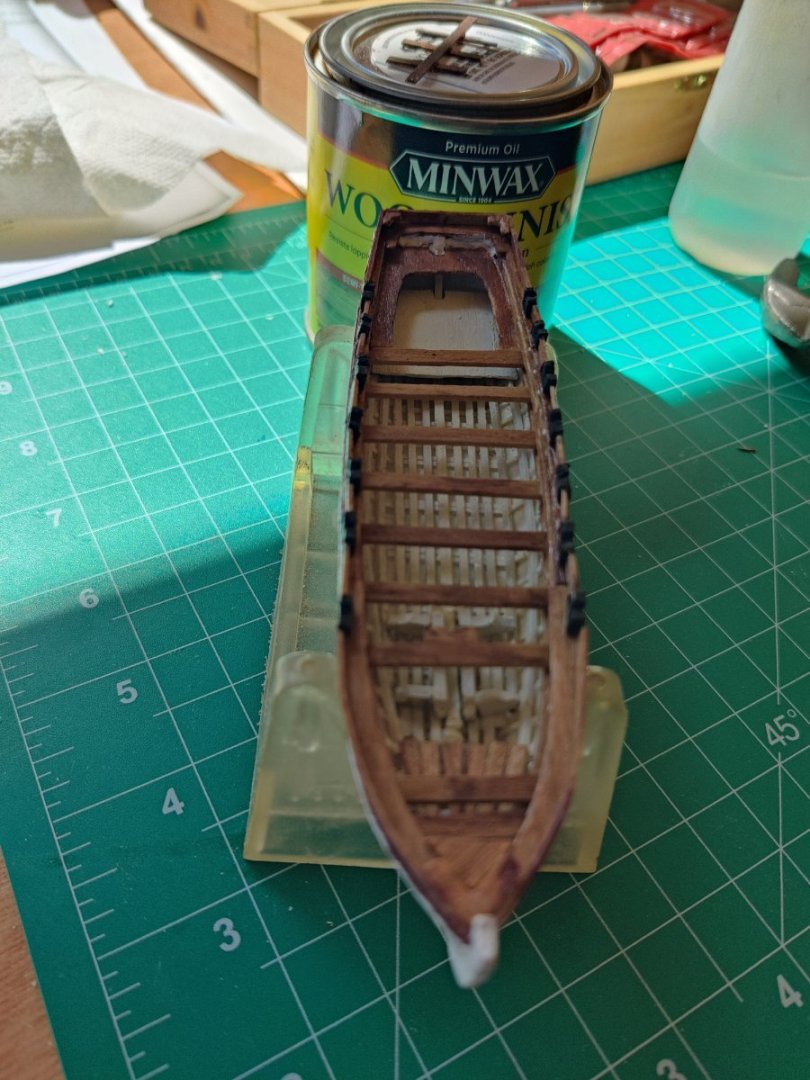
-
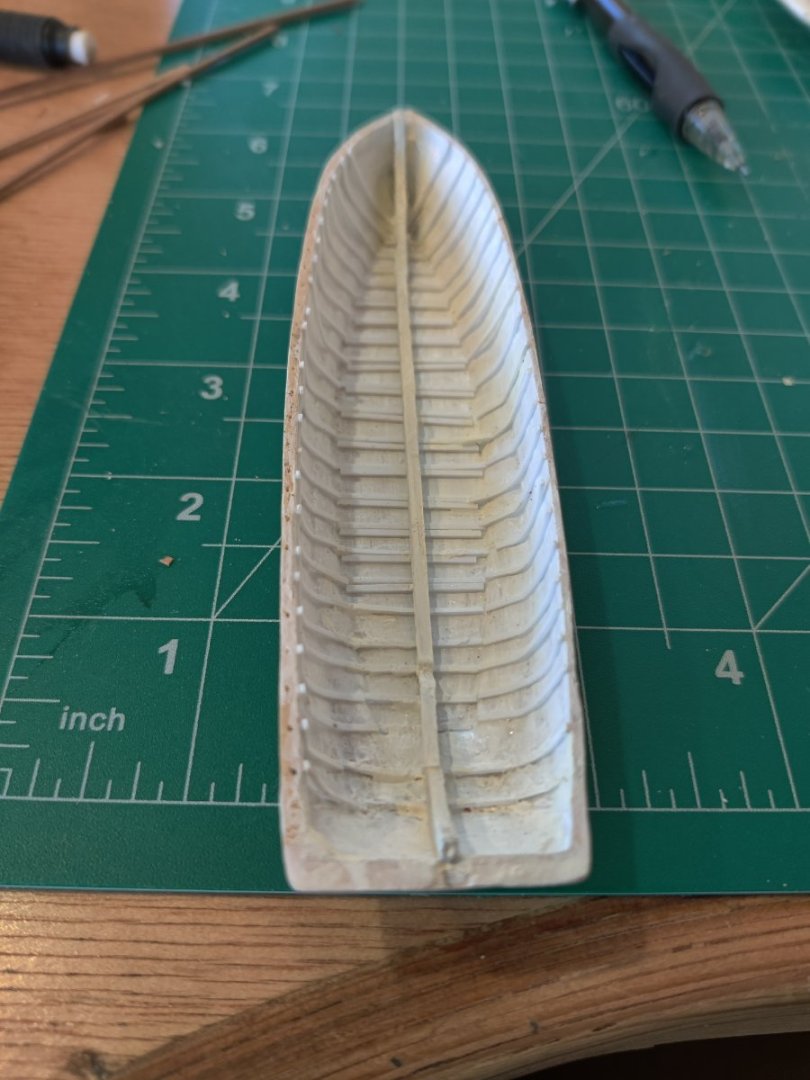
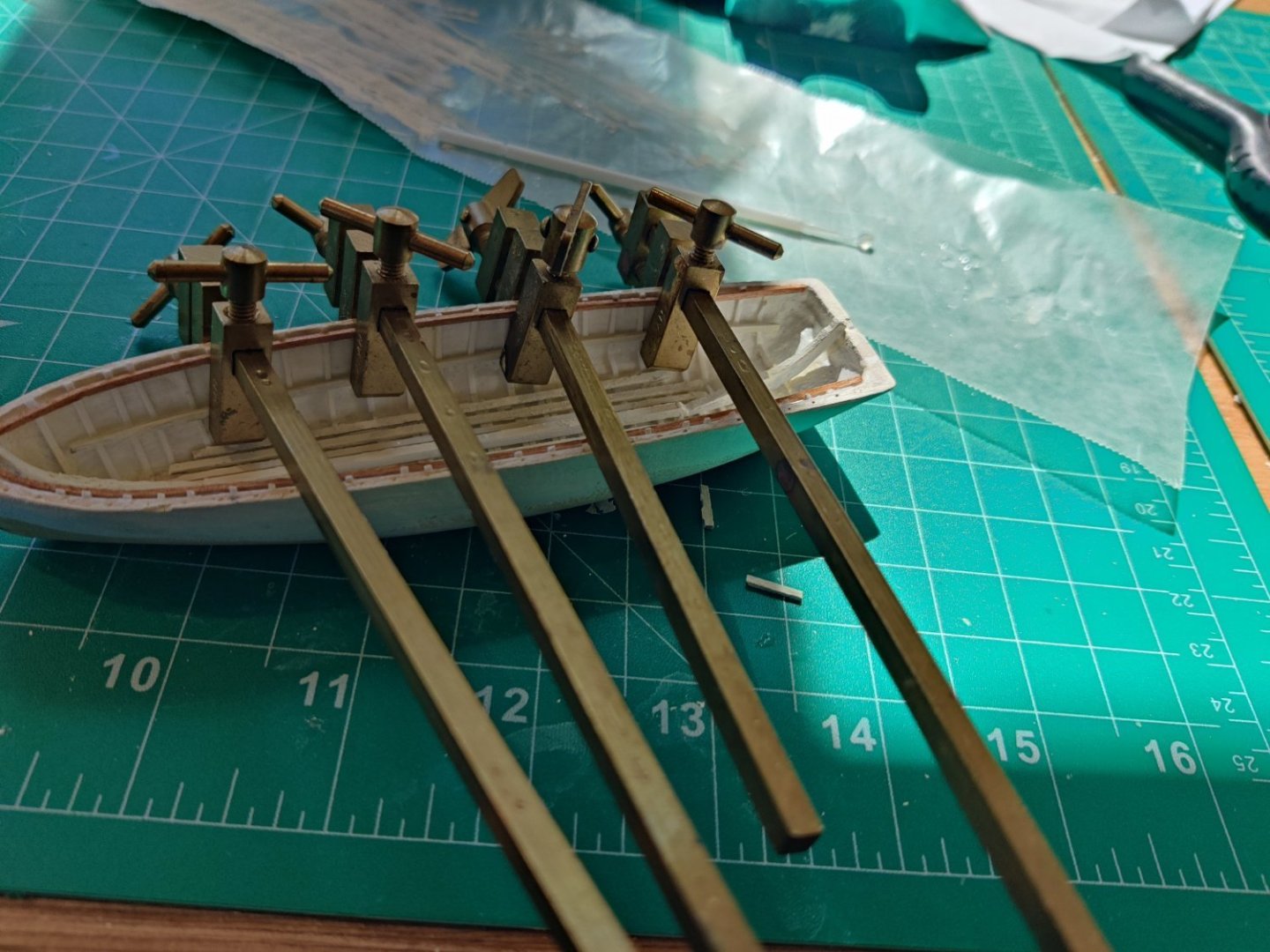
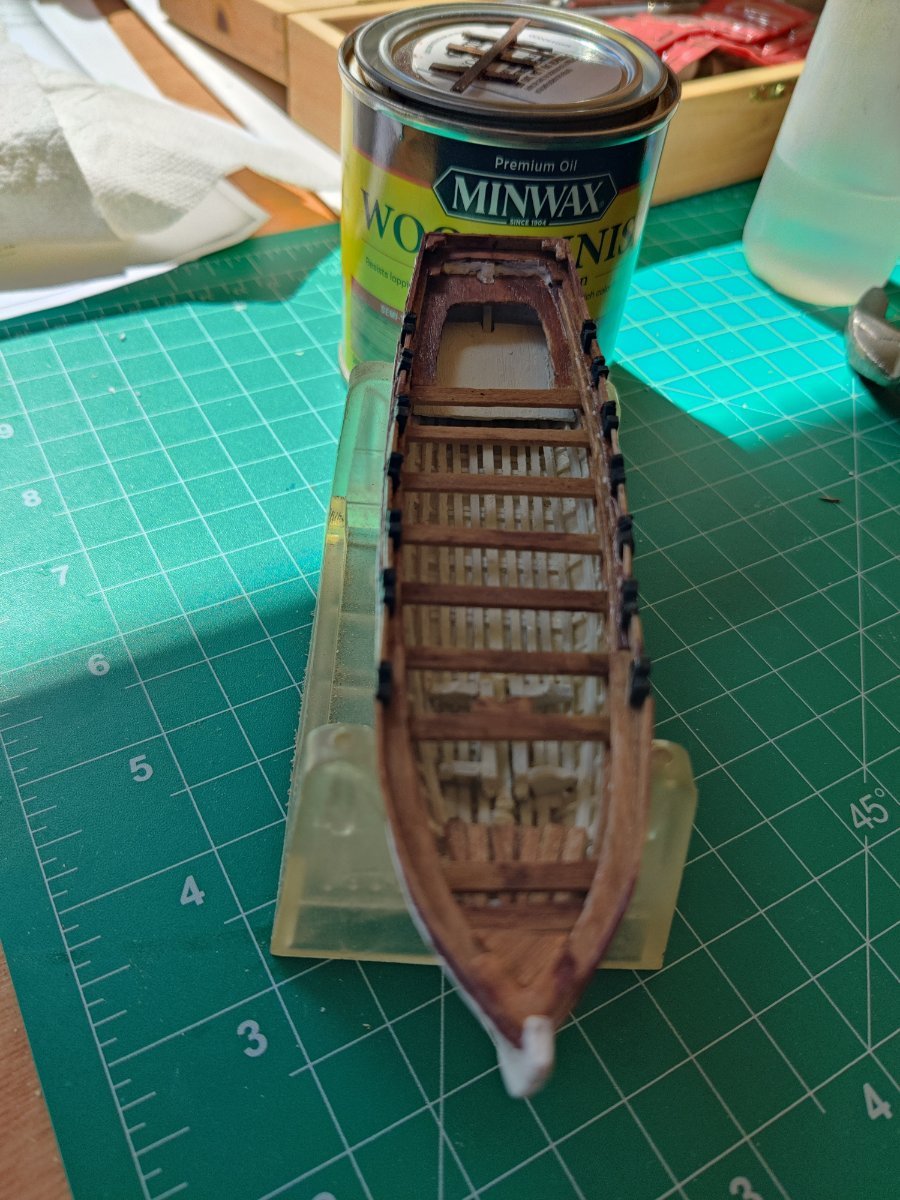
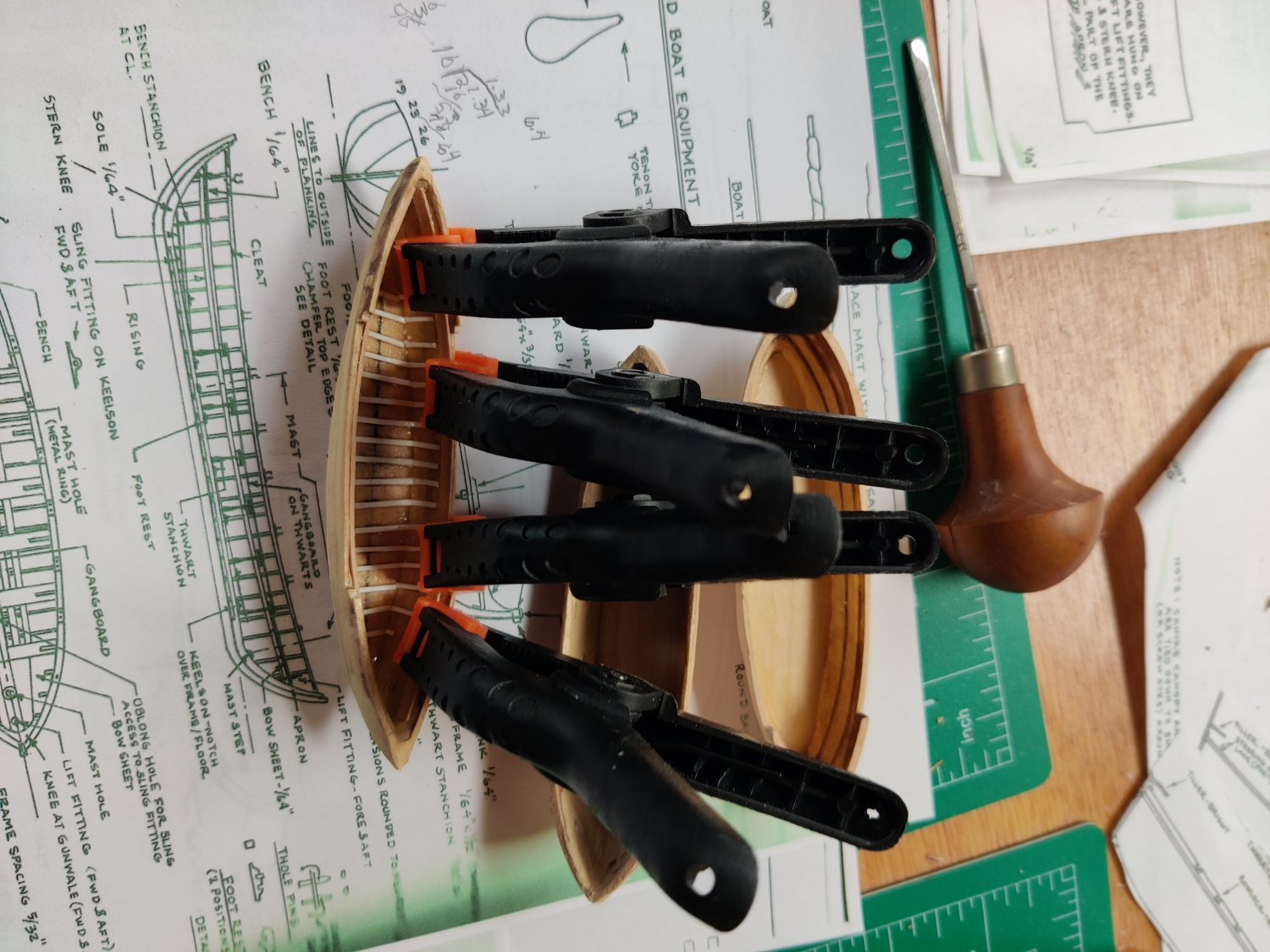
Work is proceeding on the Pinnace. The ribs and footlings have been installed, the keelson was cut out of cherry with my stump cutters and installed. I used the brass bar clamps to install the gunwales and the footing on the sidewall.I learned a lot from doing the gig whaler so the process was faster and and the look cleaner. I used much less glue this time around. Now to install the bench and seating.

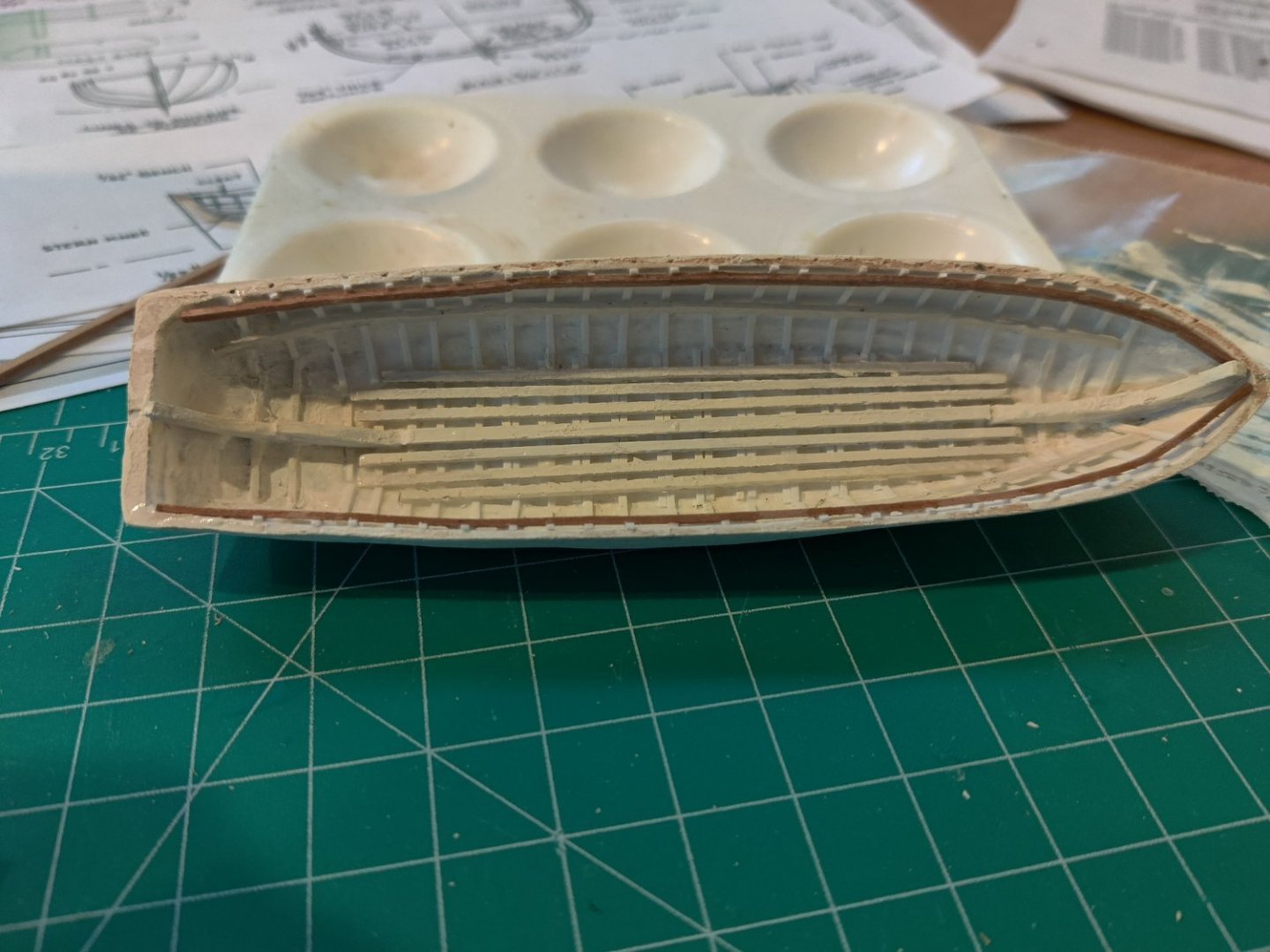
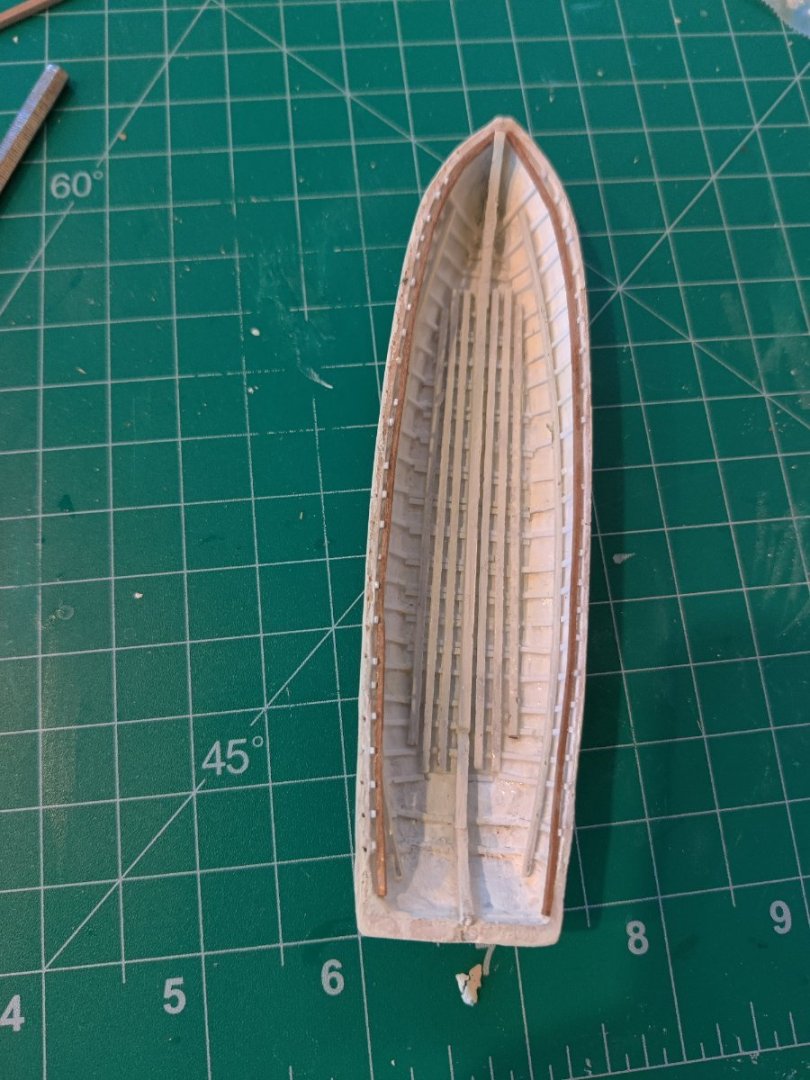
-
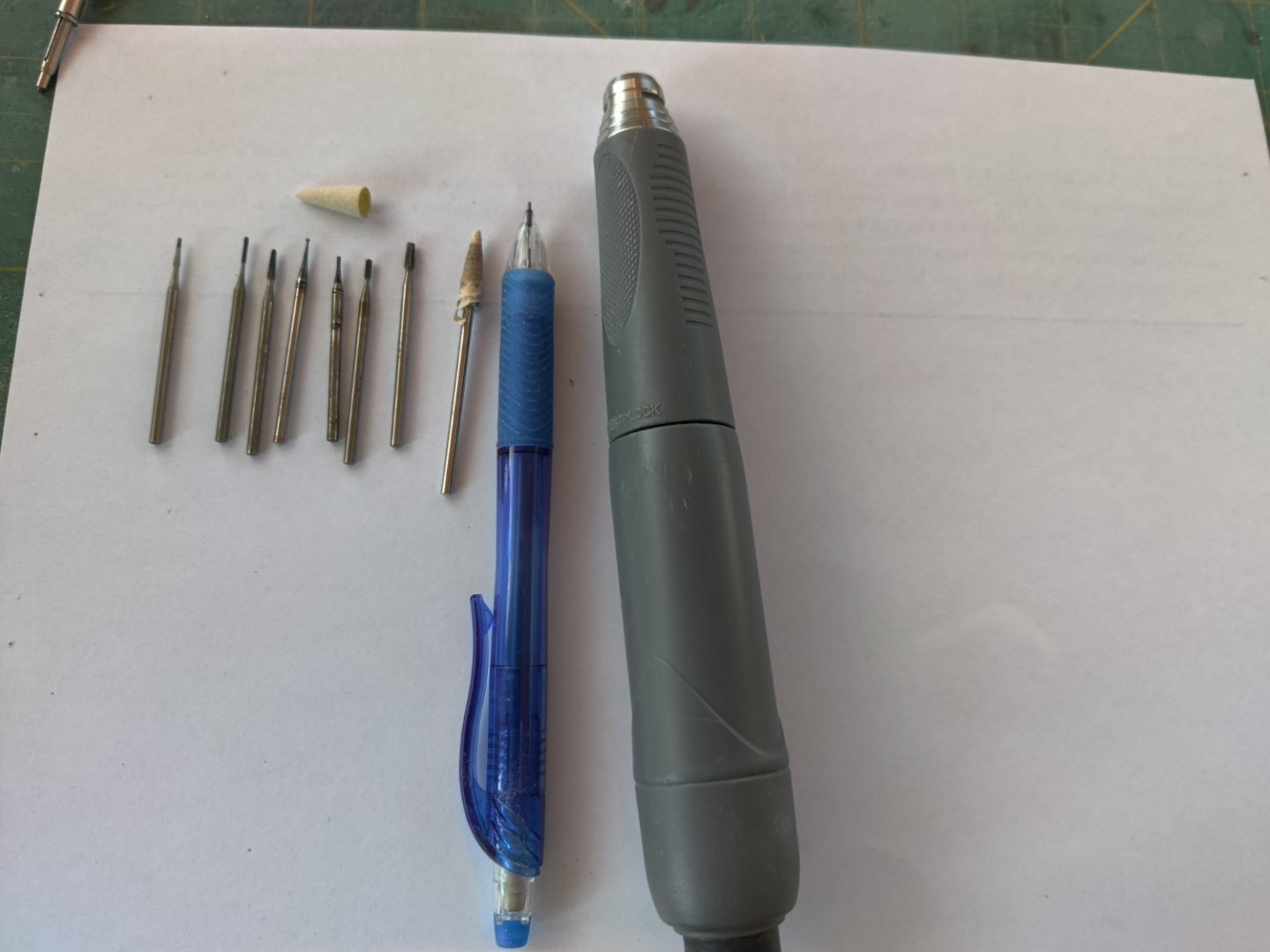
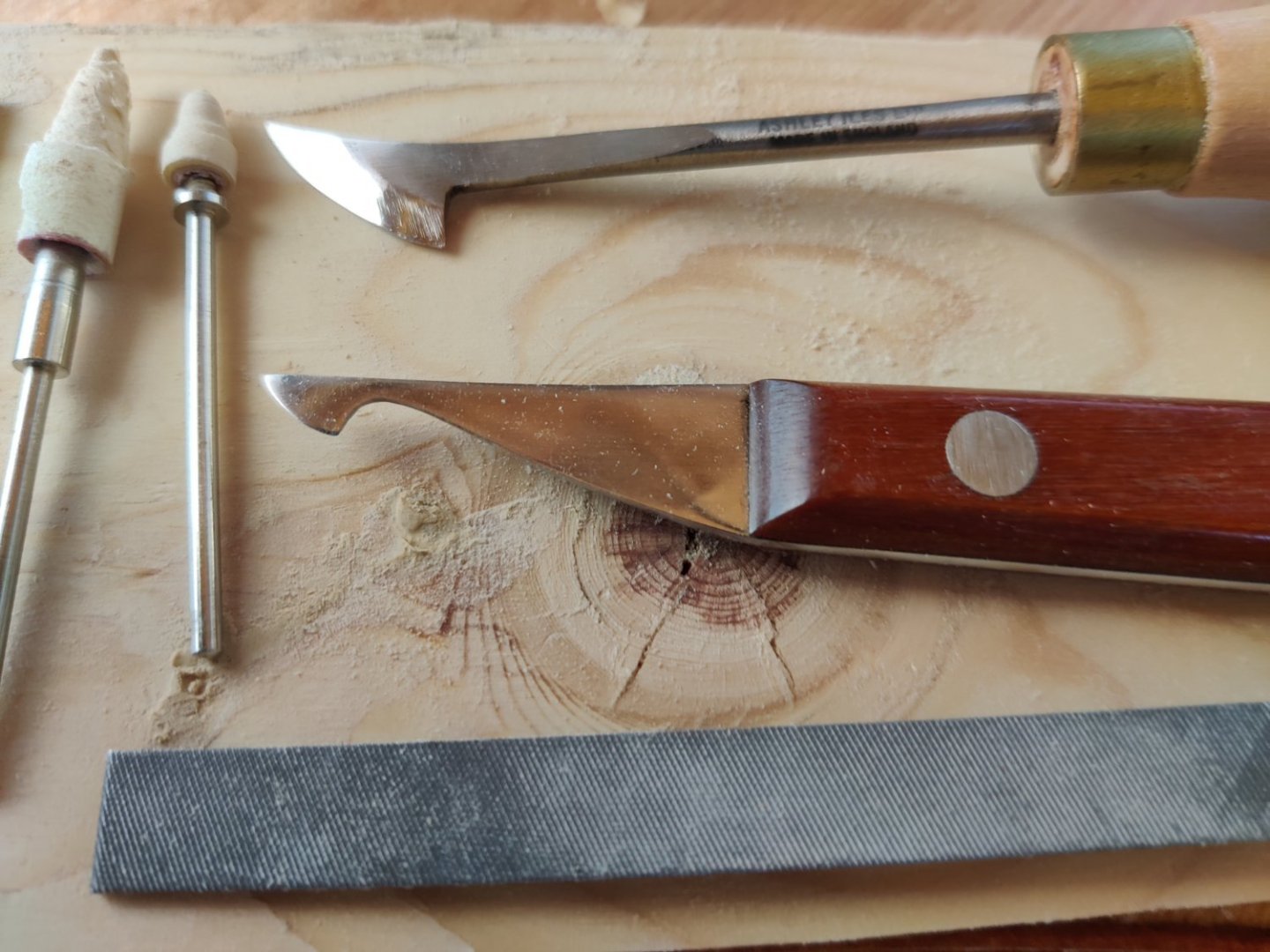
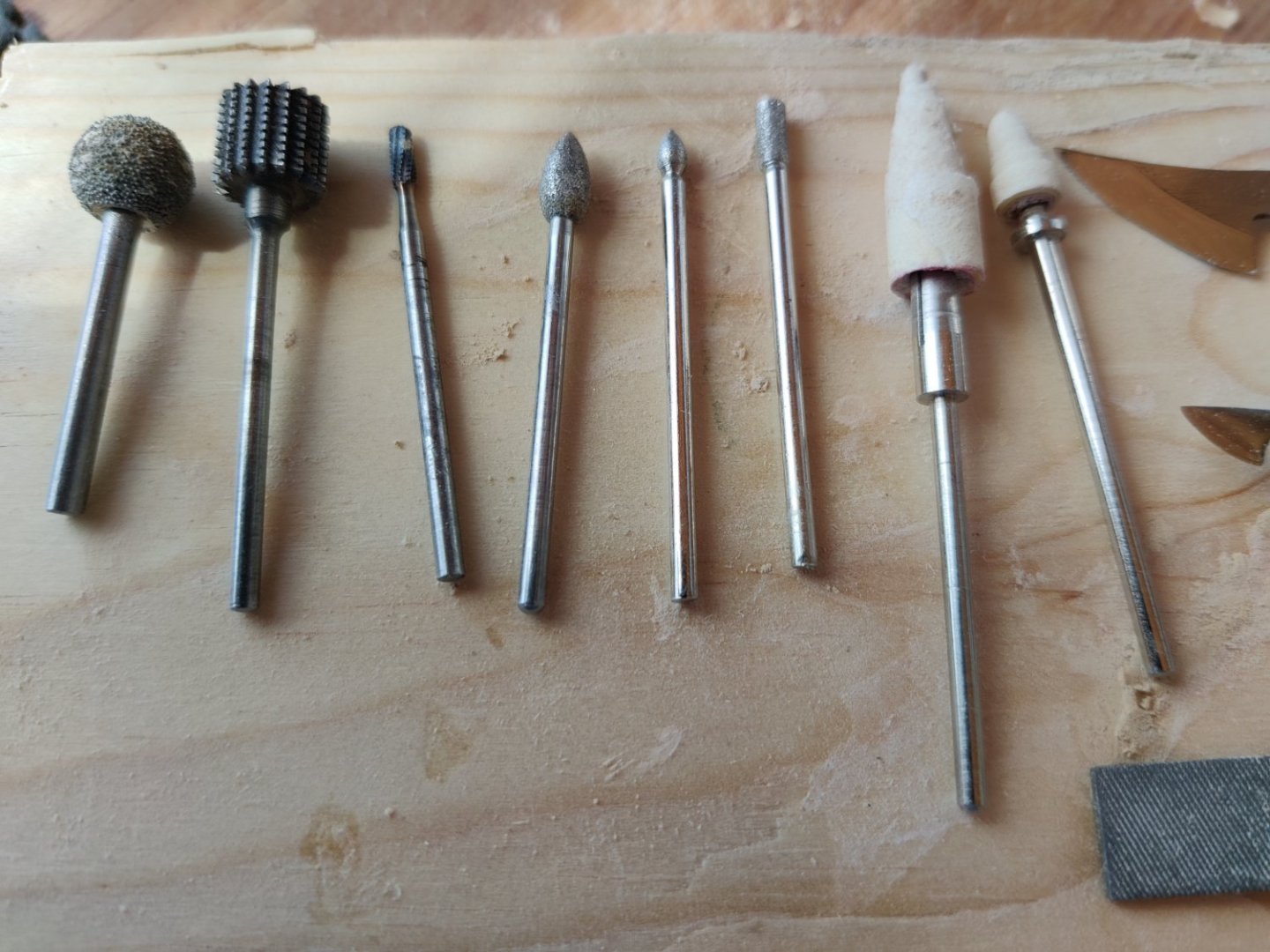
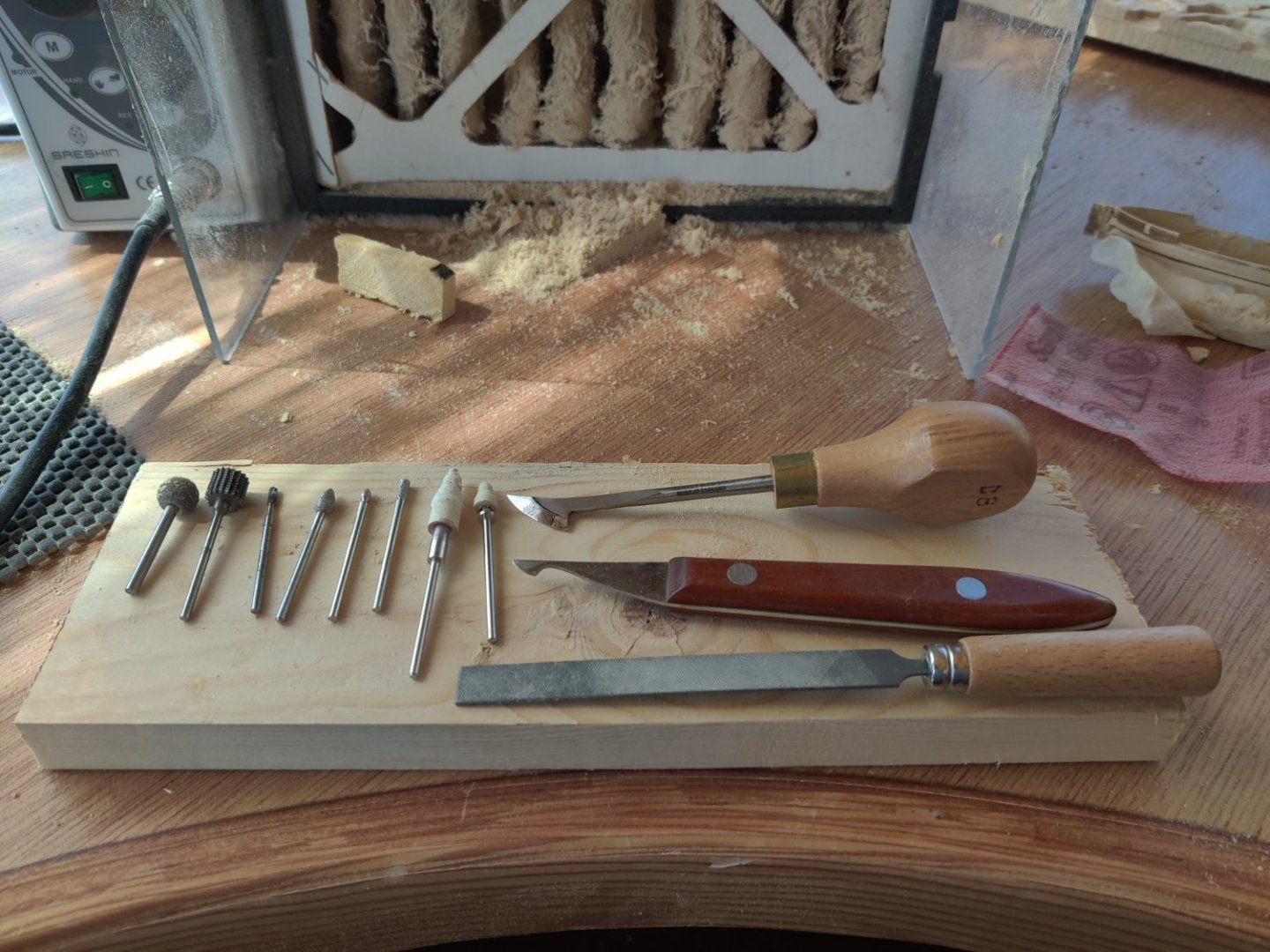
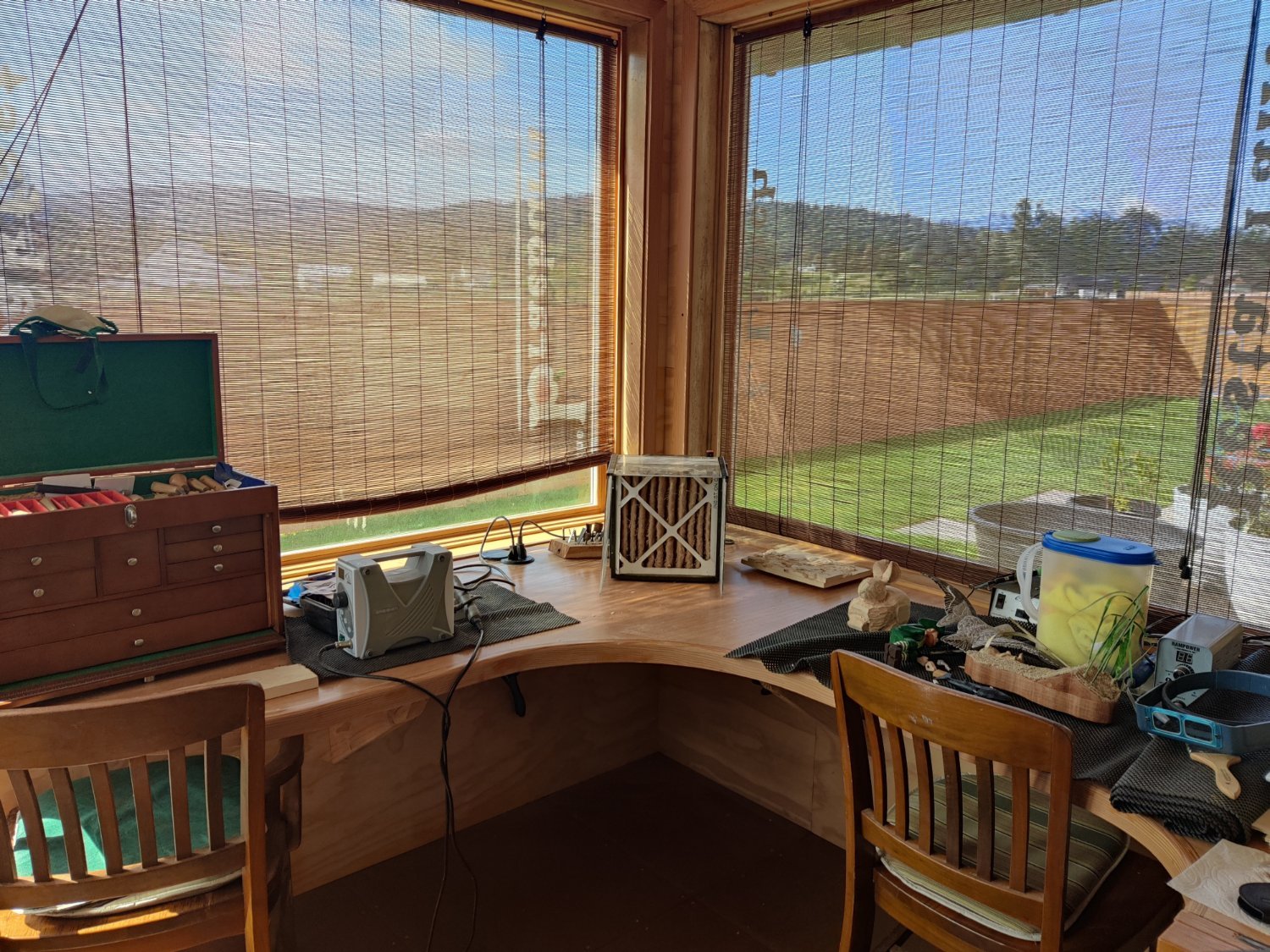
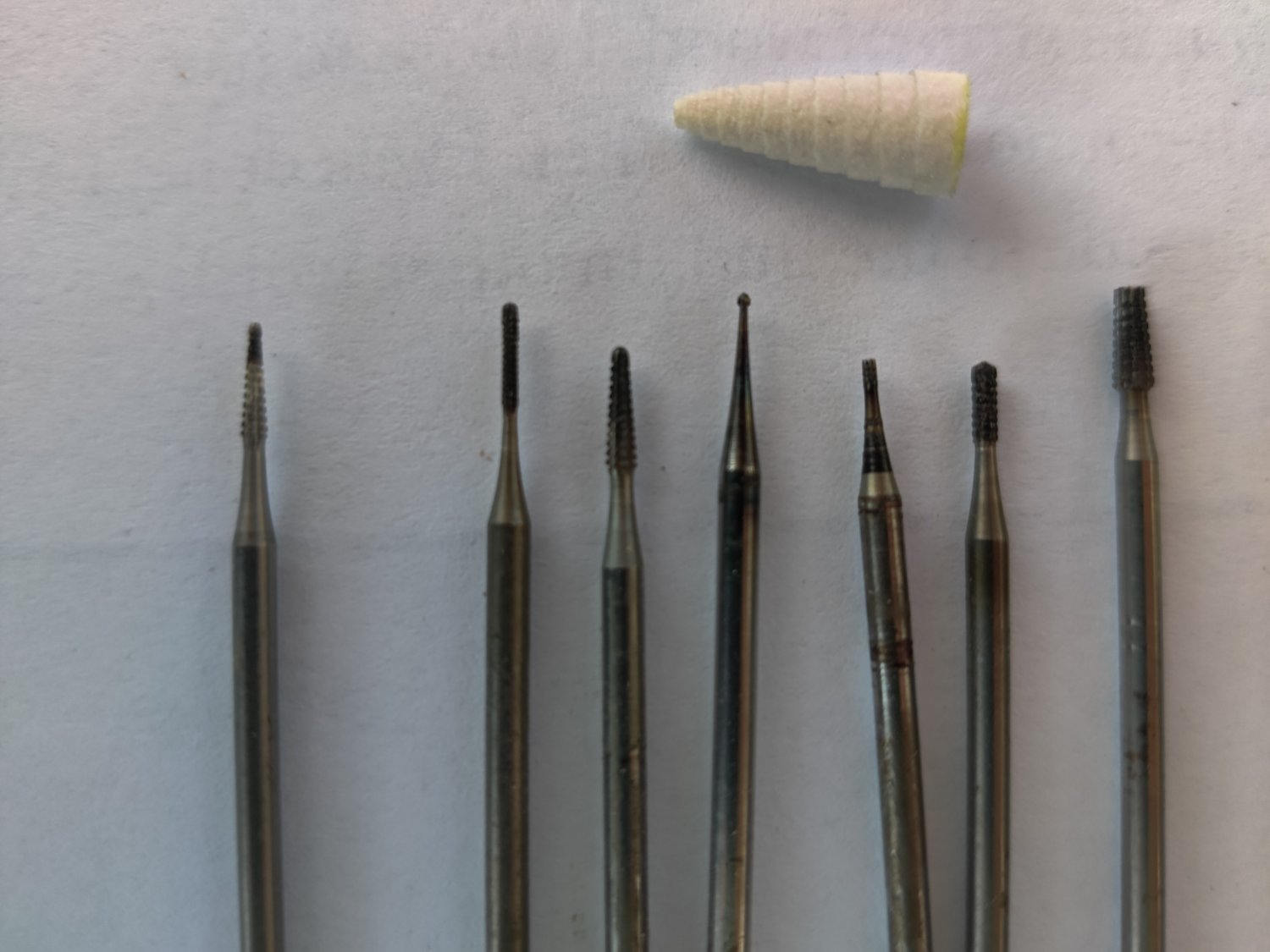
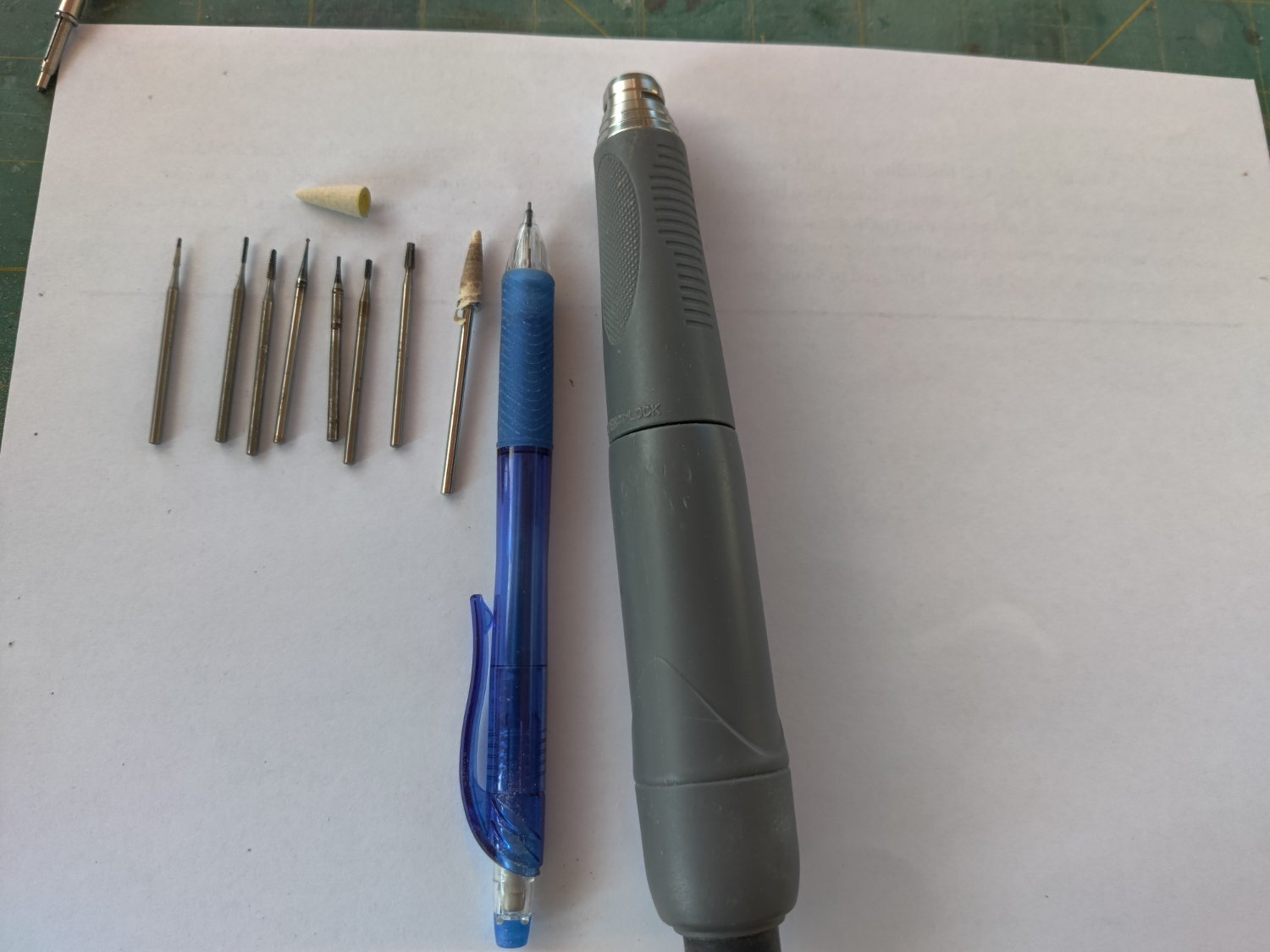
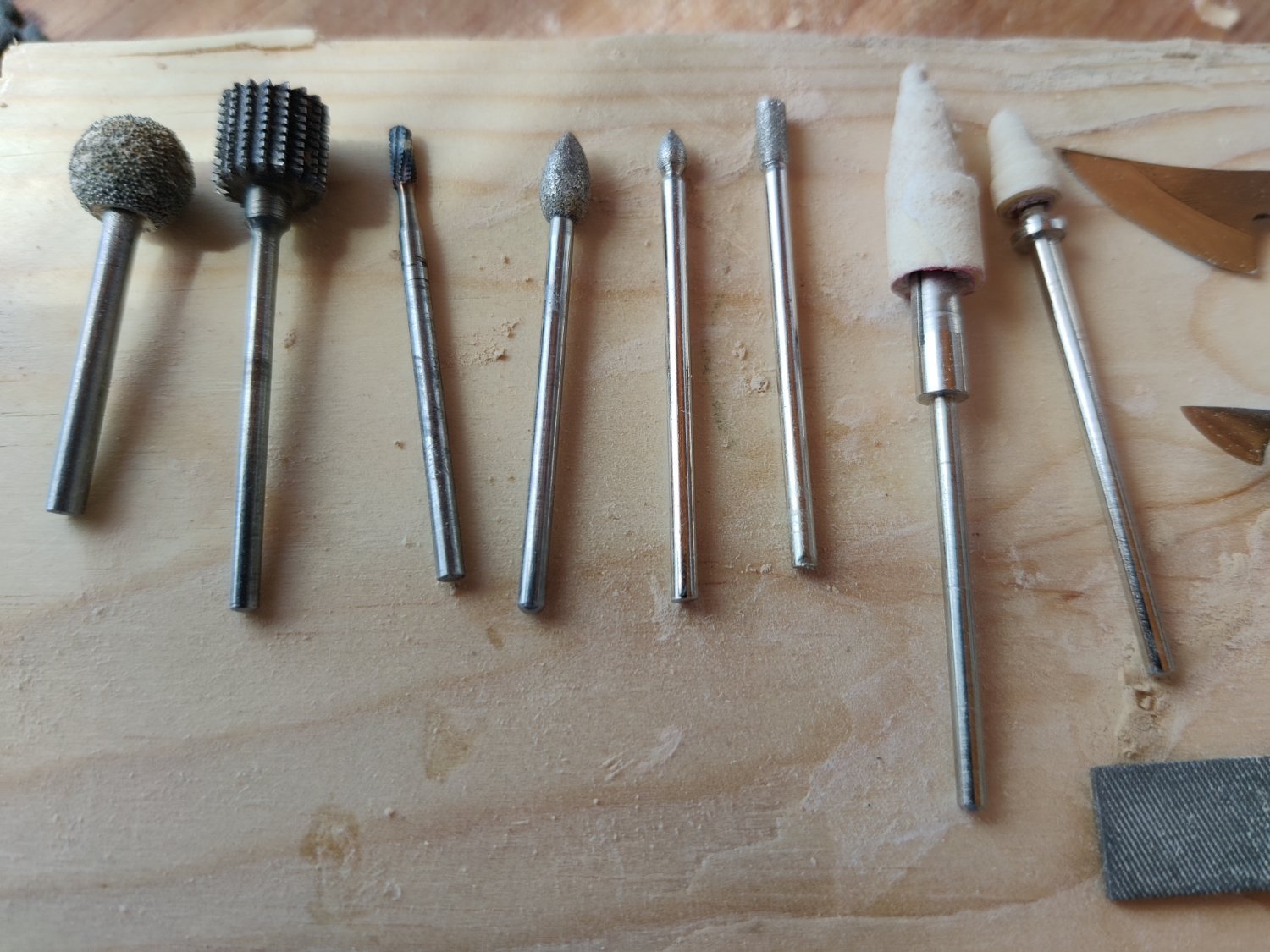
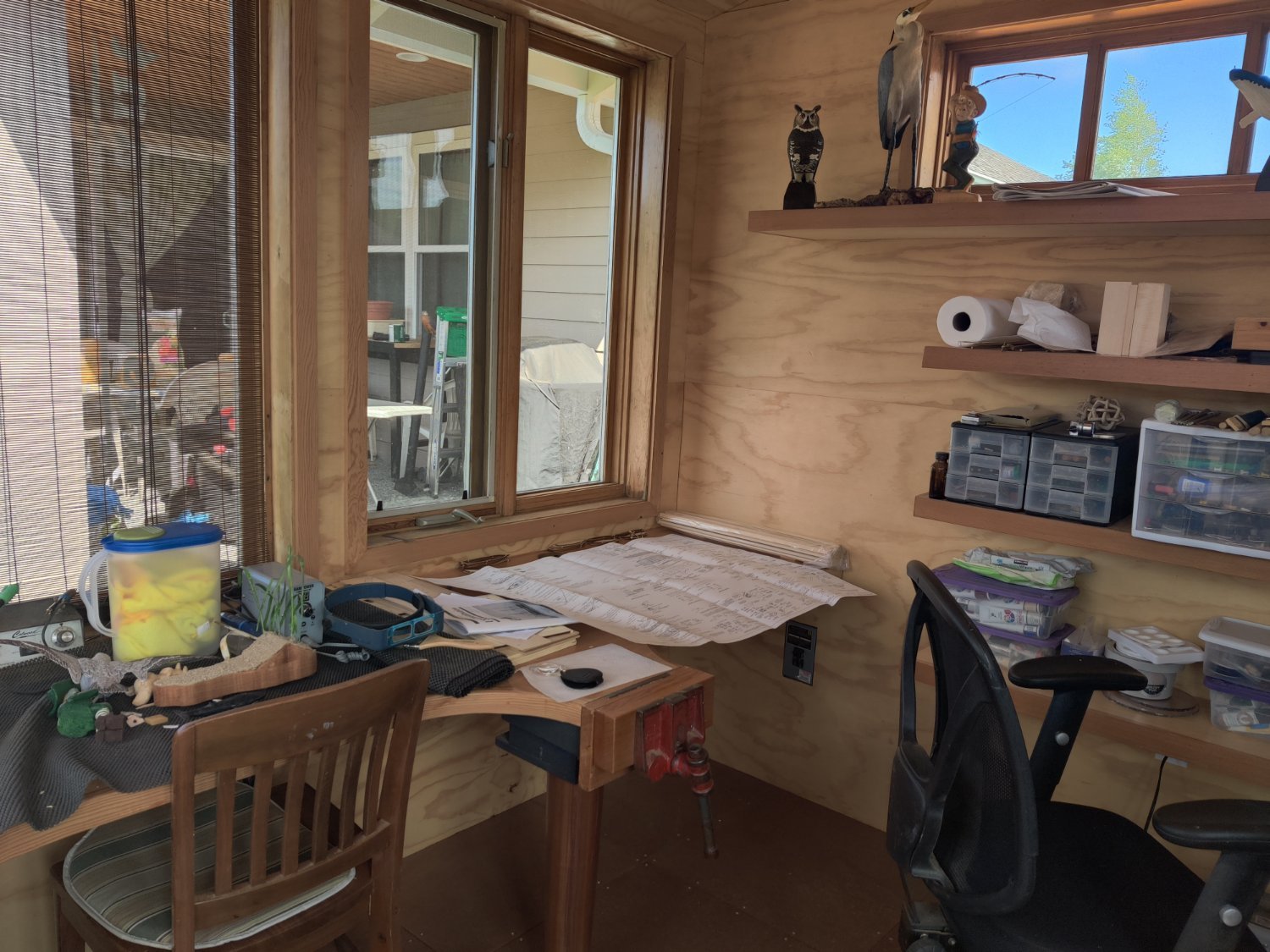
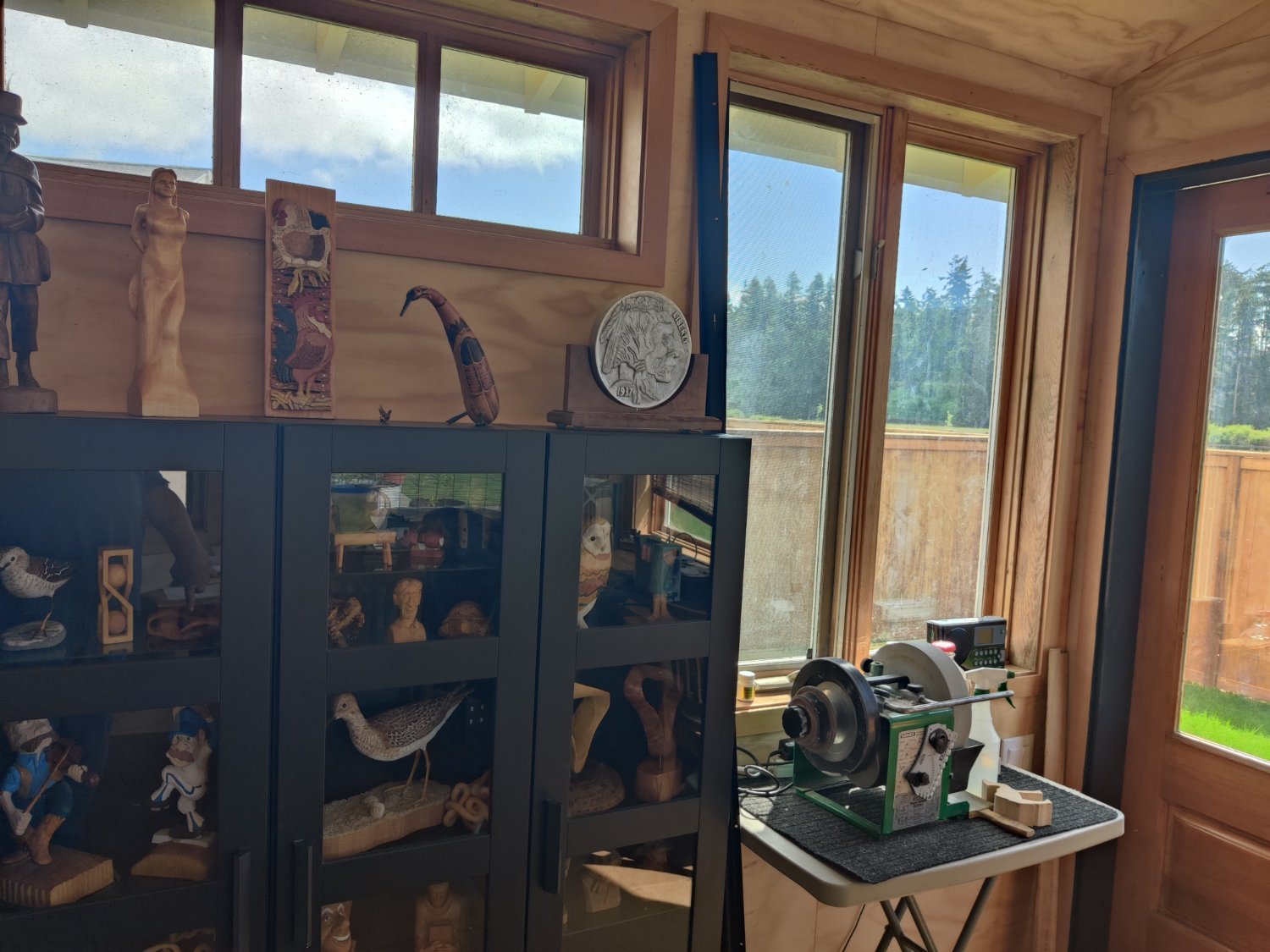
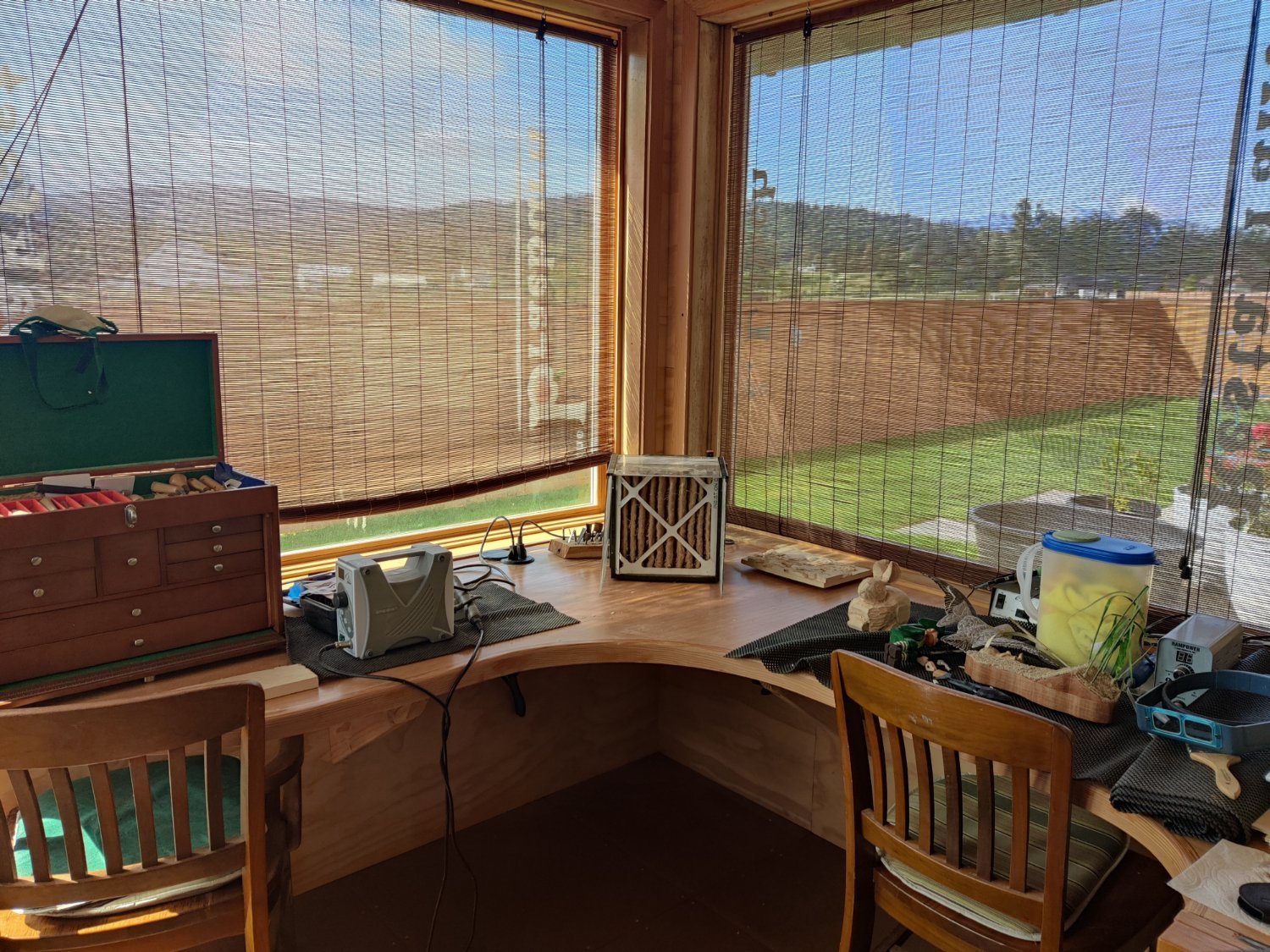
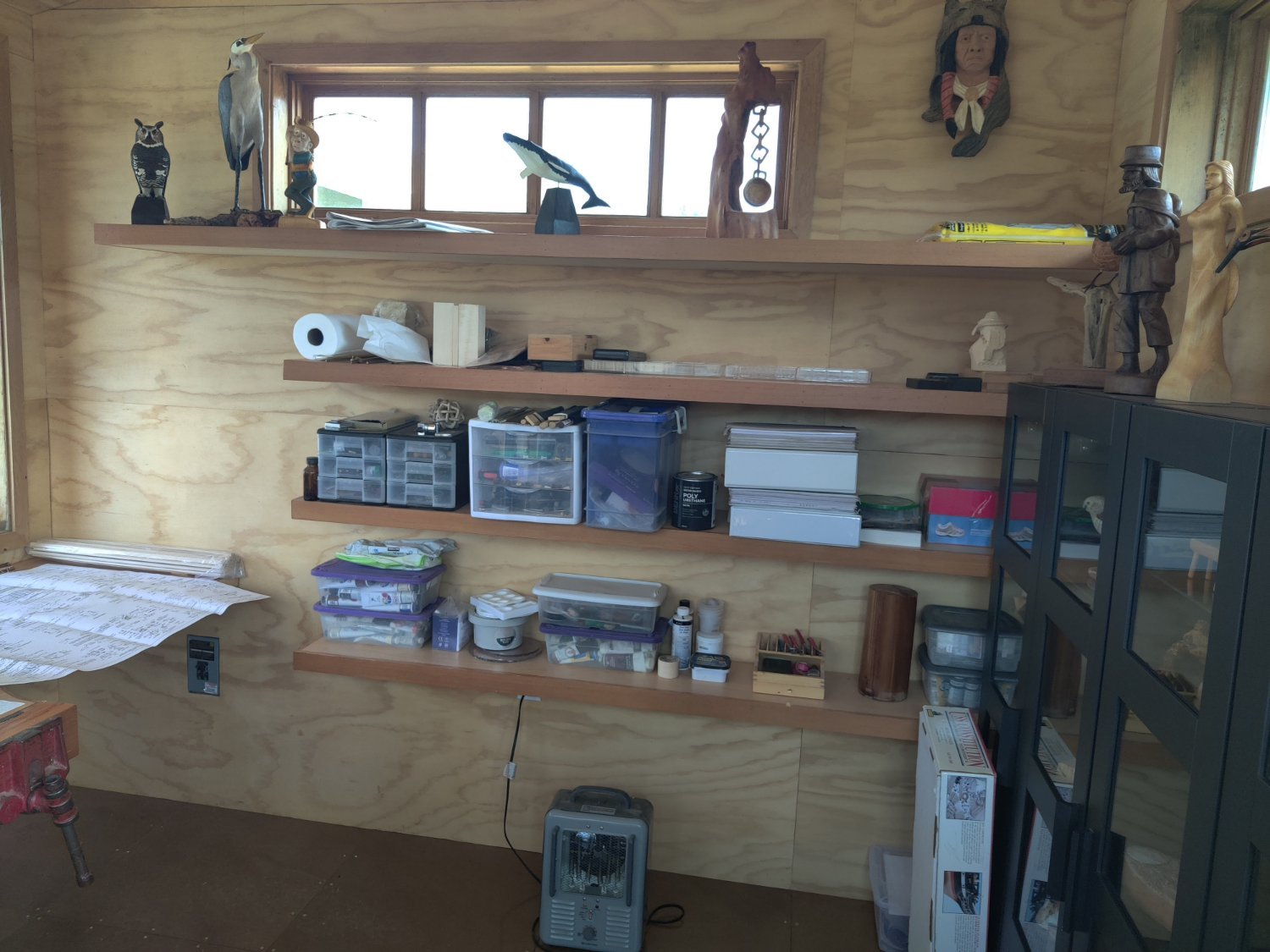
I am a novice ship builder!!! But a very experienced wood carver for 35 years. When I started carving all we used were full size traditional chisels, then palm tools became popular, essentially micro chisels, that could be used with one hand. Then came power tools with a cable and handpiece with carving bits, then brushless handpieces came without a cable and both large and micro bits. I do not have a scroll saw so I started using my micro stump cutters to cut out small pattern wood pieces. These stump cutters are high carbon steel cutters on a 3/32" shaft. The cutters can get as thin as 1/64" and as large as 3/32". If you get 1/8 shaft bits they can get as large 1/4". They are US and German manufactured and cost about $1.15 each from US and $2.25 from Germany. They last a long time if you do not overheat them. My handpiece can run up to 50k rpms without any vibration and is essentially noiseless. It has adequate torque at low speed as well. On 1/32" wood I can run at 3k rpm; on 1/16" at 6k rpm, at 1/8" I can at 12k rpm and at 1/4" at 30k rpm. There are micro sanders at 120 and 180 grit. They are cone shaped and as a they ware out they get smaller but still sand. The bits will work in a Dremel but not very elegantly. If you do not have a scroll you should try it. Pictures of the tools and my home shop below.
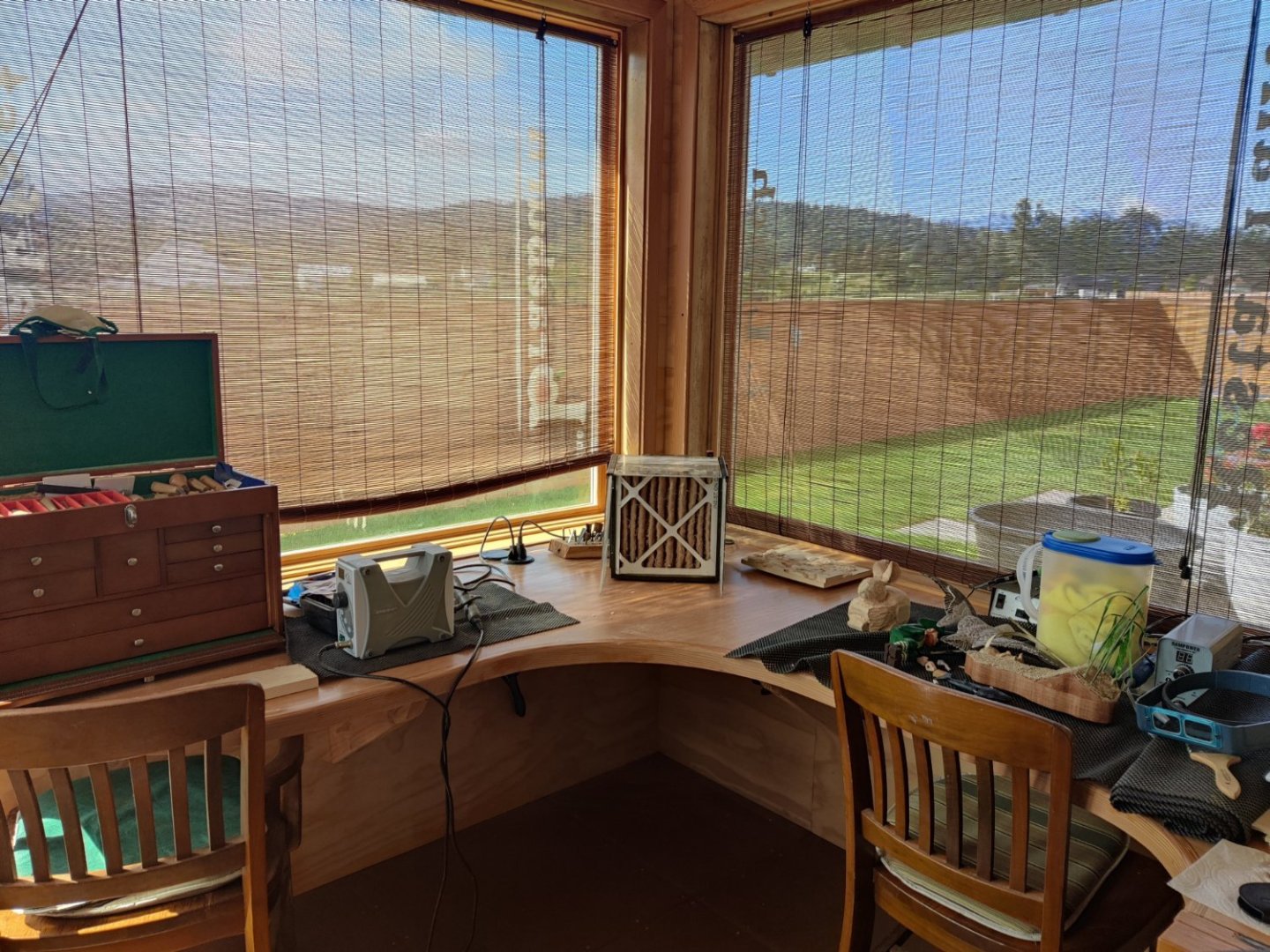
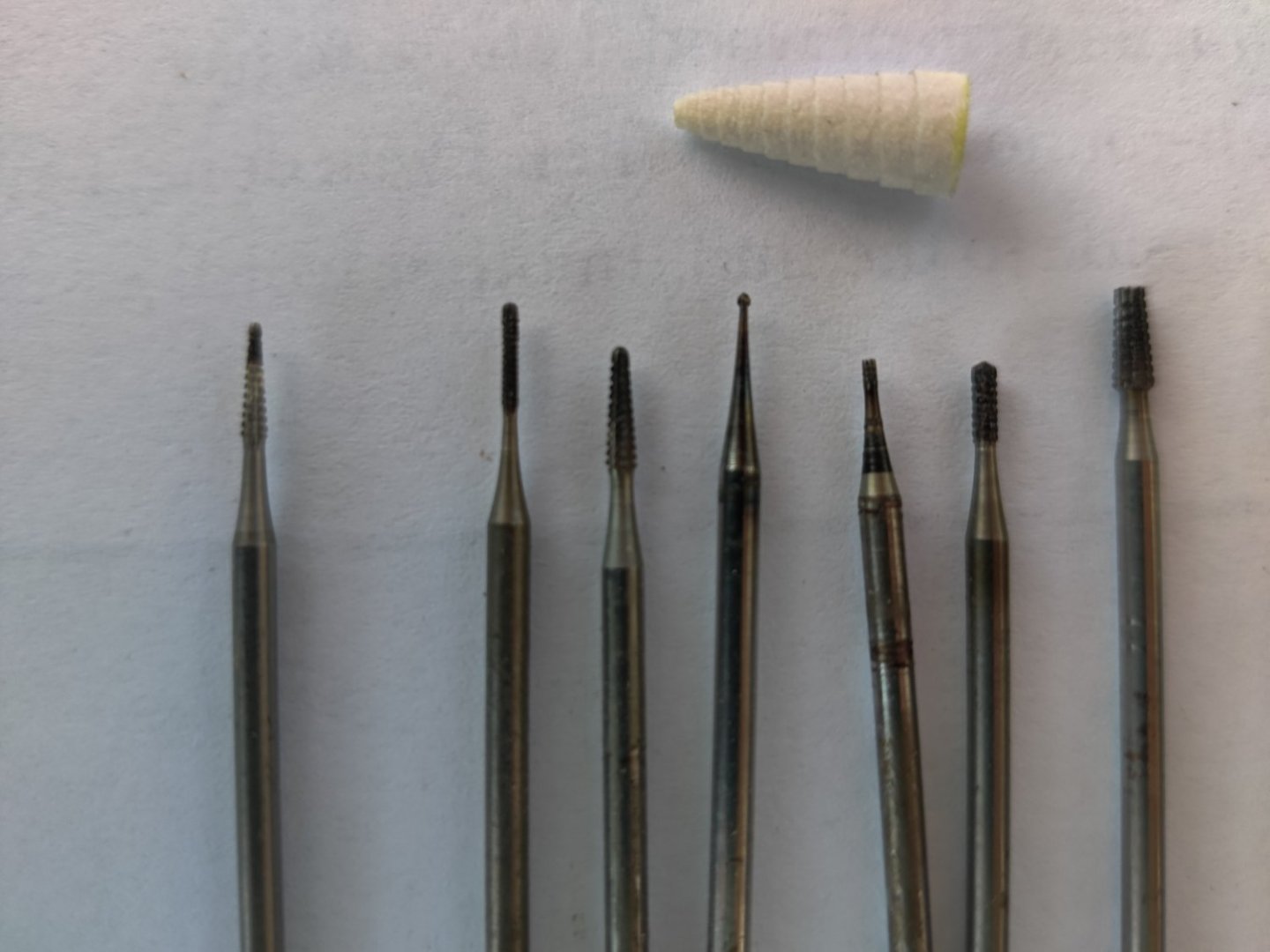
-
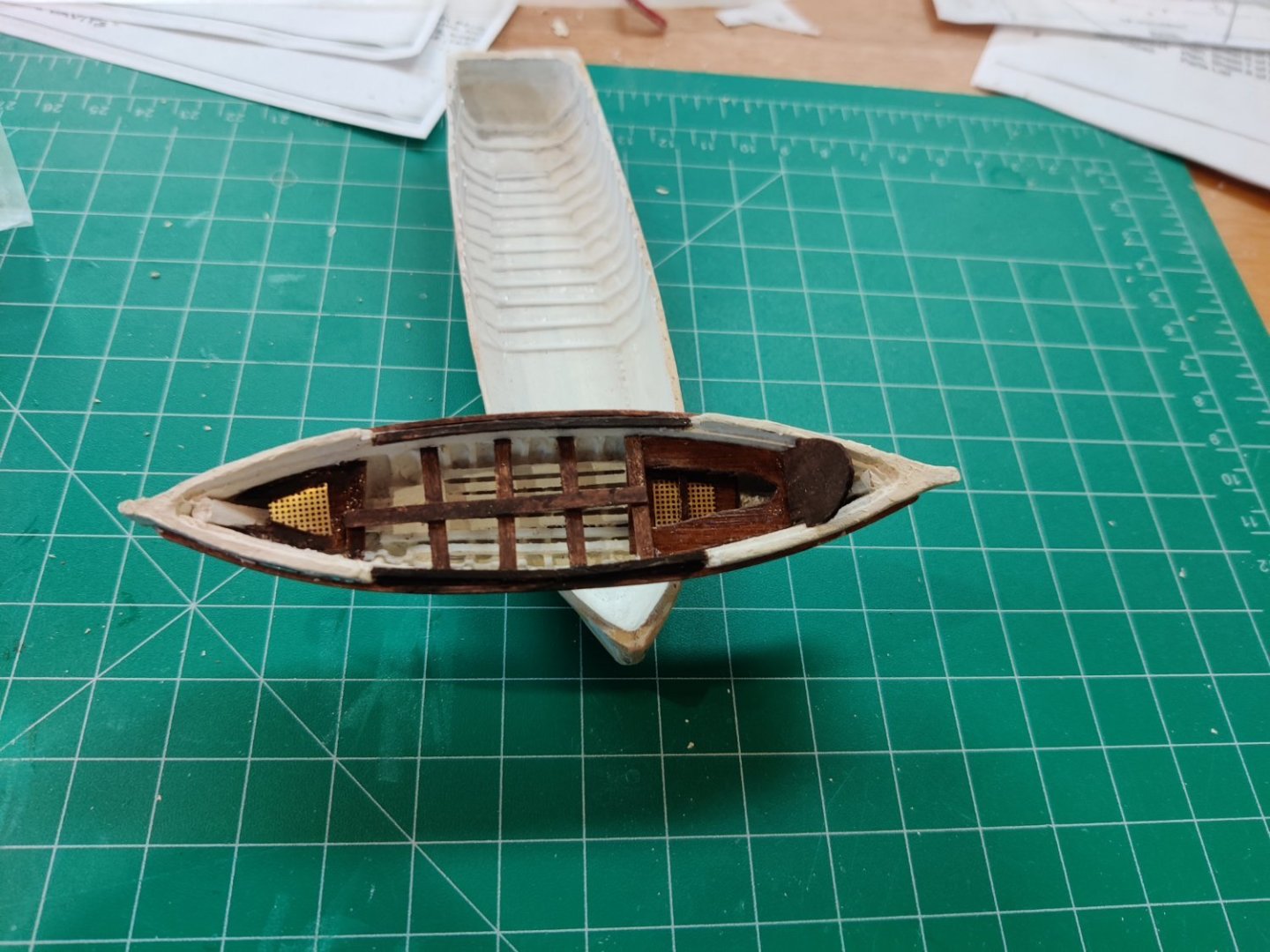
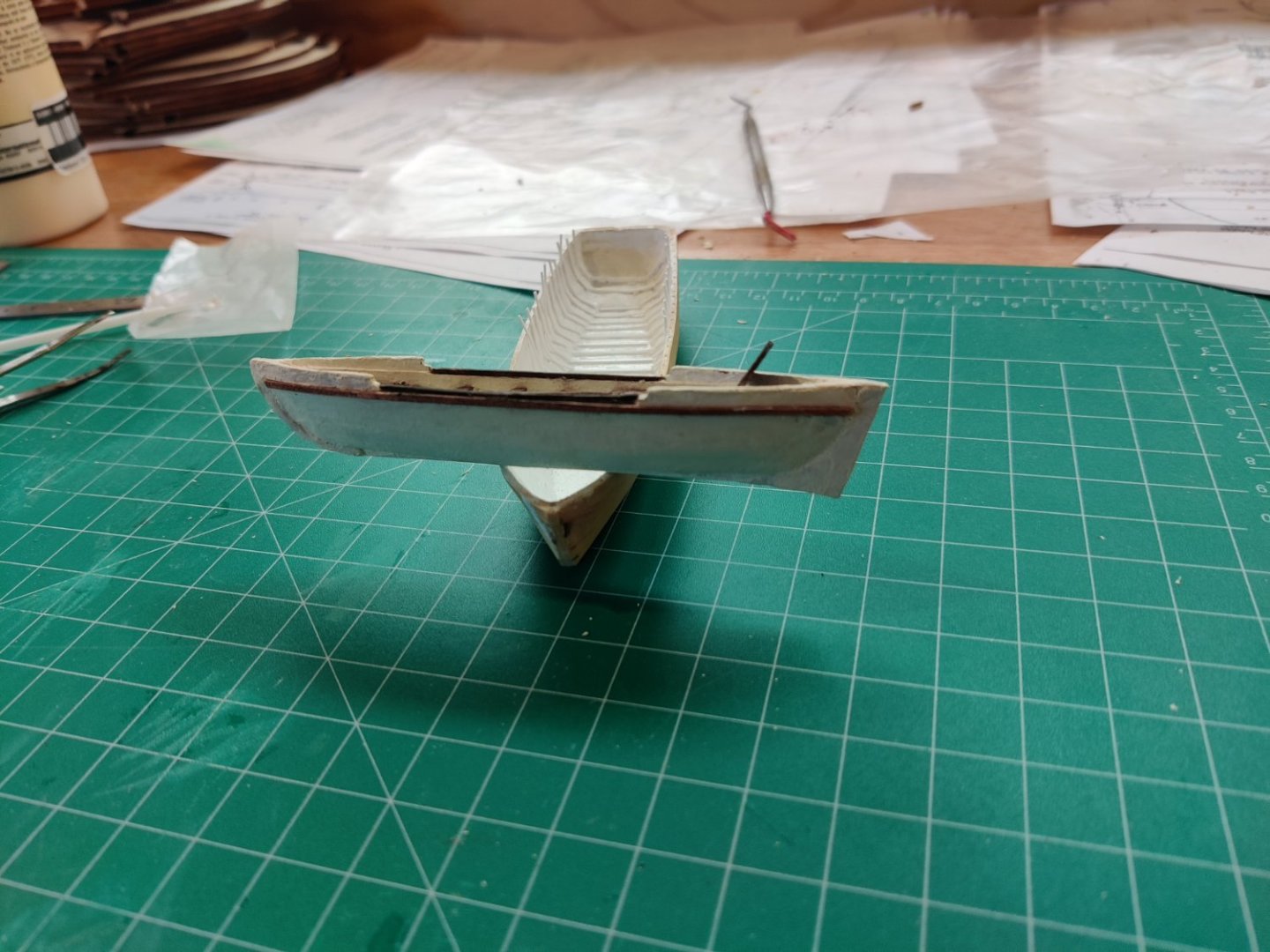
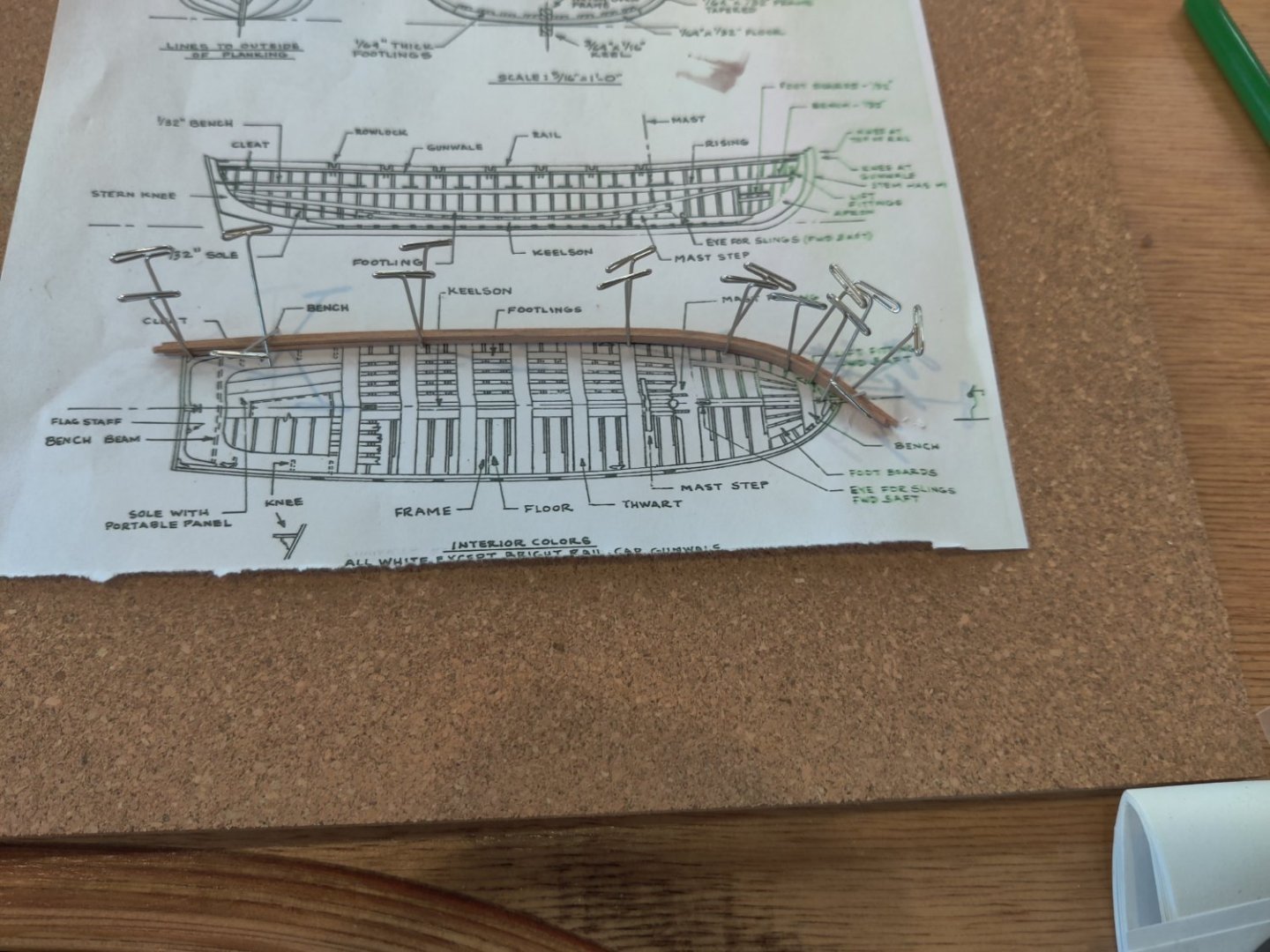
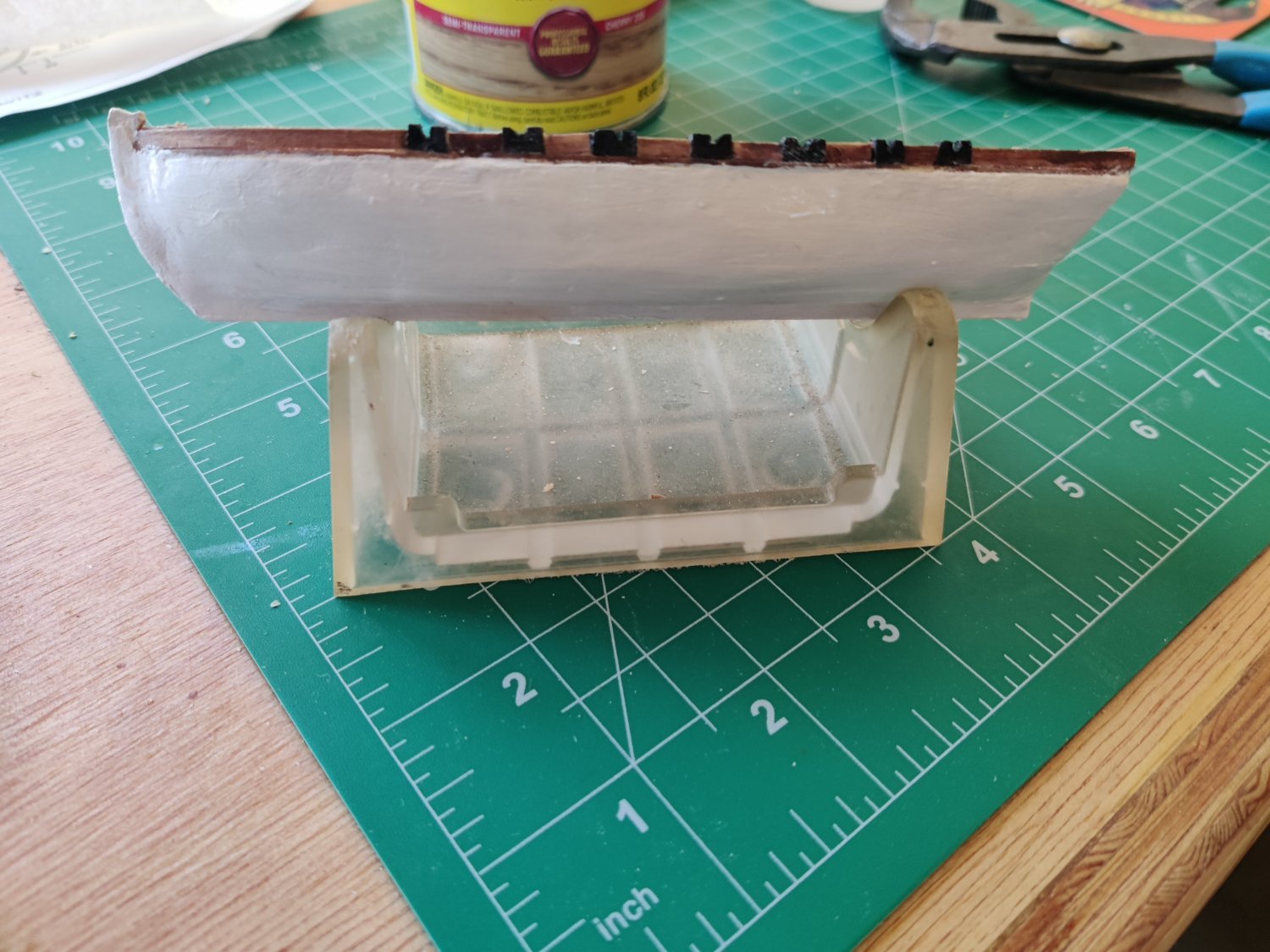
well I have completed the gig whaler. I have added all the details that my skills permit. I did not add the cleats, the rudder or the oar locks. I soaked the fender pieces in water and then pinned them to the plans to dry. I failed to take a picture of that so I included one on my pennace that I used the same procedure. I am considering putting on a couple of coats of water based poly but am not sure if I should. Now I will continue with finishing the other three boats. The keel was a real challenge, I made a template out of card stock, but it took three tries before I could cut them out without breaking them.

-
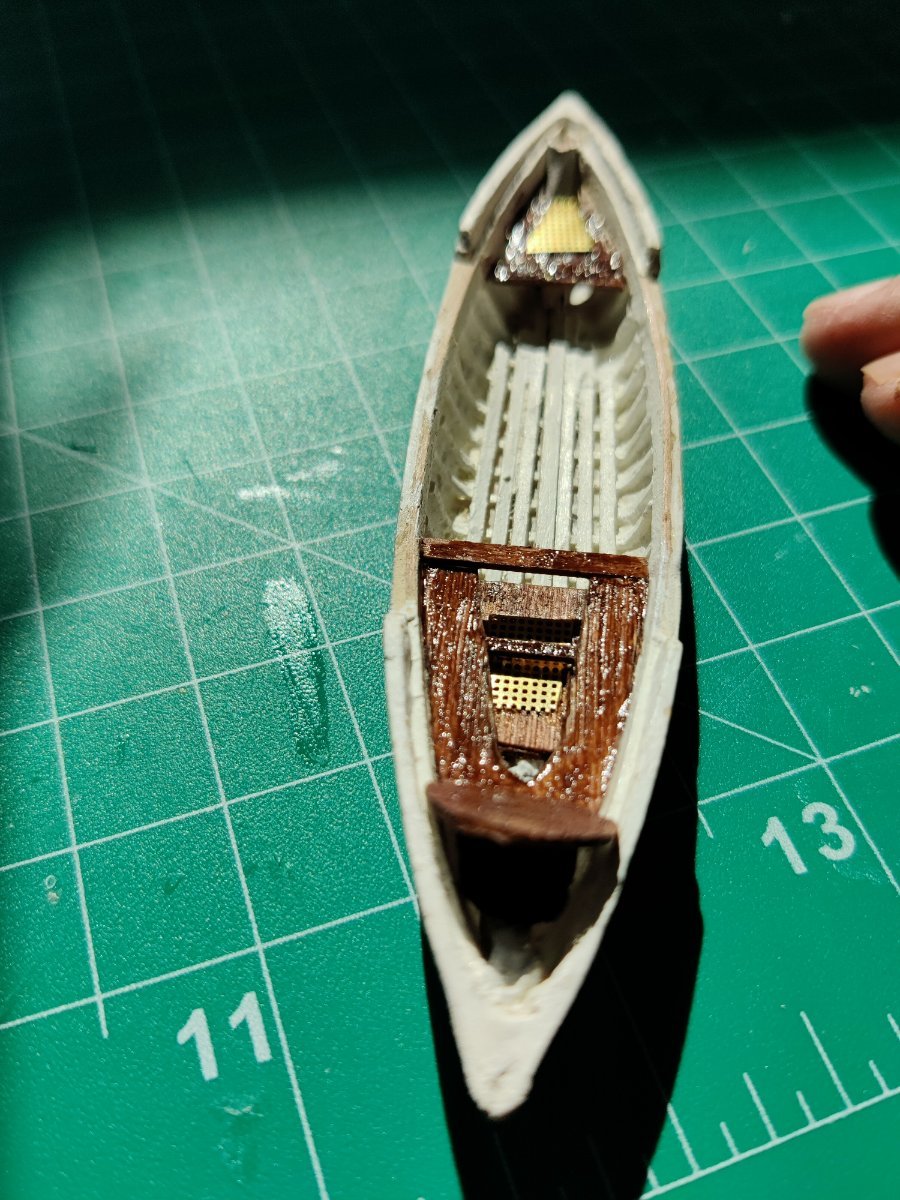
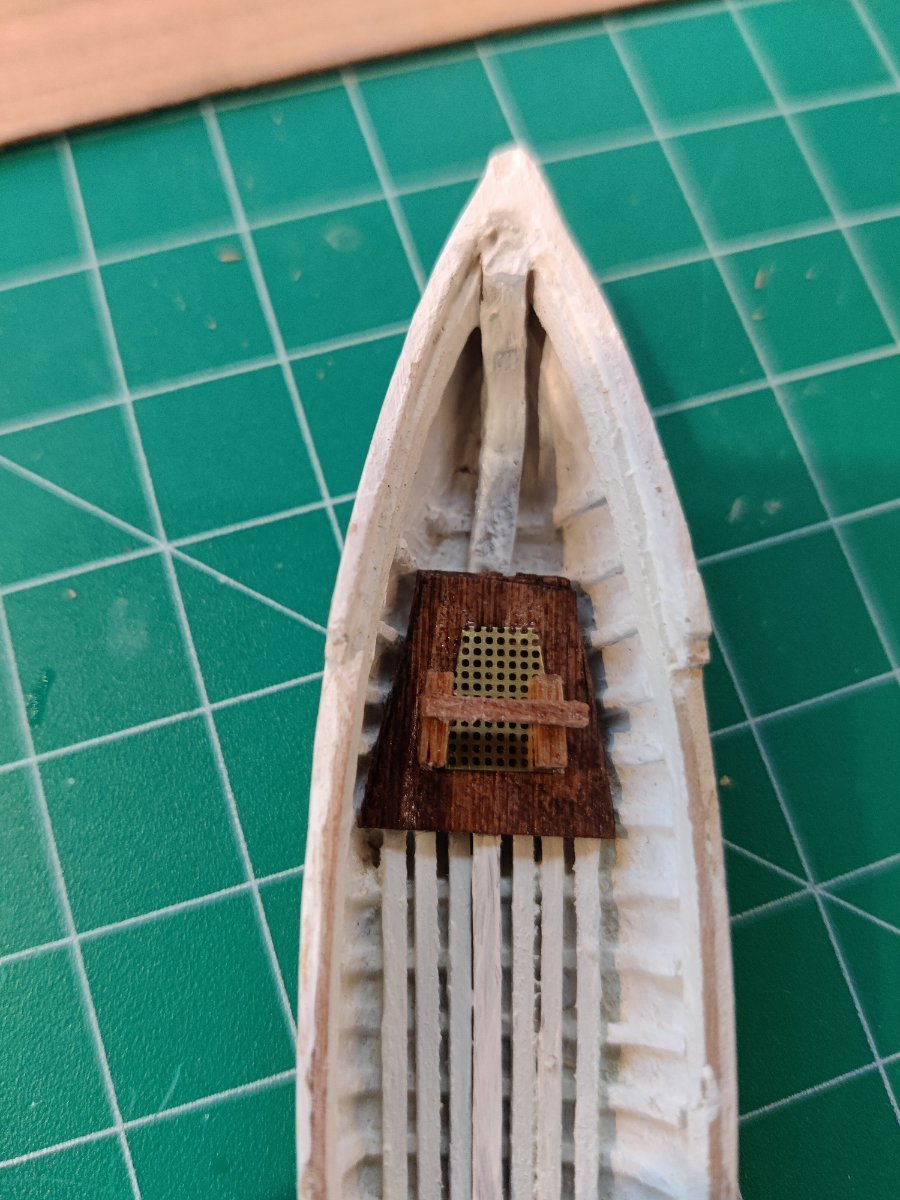
progress on gig whaler I had some cherry sheets that were 1/32 and I used the to create the flooring, and the seat. I used the the brass grate provided with the kit. I also installed the keelson. The interior was painted with two coats of acrylic white paint and the seat and footings were stained with mahogany stain. Next steps put in the back rest, the remainder of the seats and foot rests. I have decided that it is beyond my capabilities t put in all the metal fittings that were so perfectly done by JSGerson. I only have use of one arm and I have to be realistic about what I can do with one hand. I had to redo the foot rest in the picture and use smaller dimensional lumber, I have finished the ribs in one of the two 28' whalers as well. More pictures to come tomorrow hopefully.
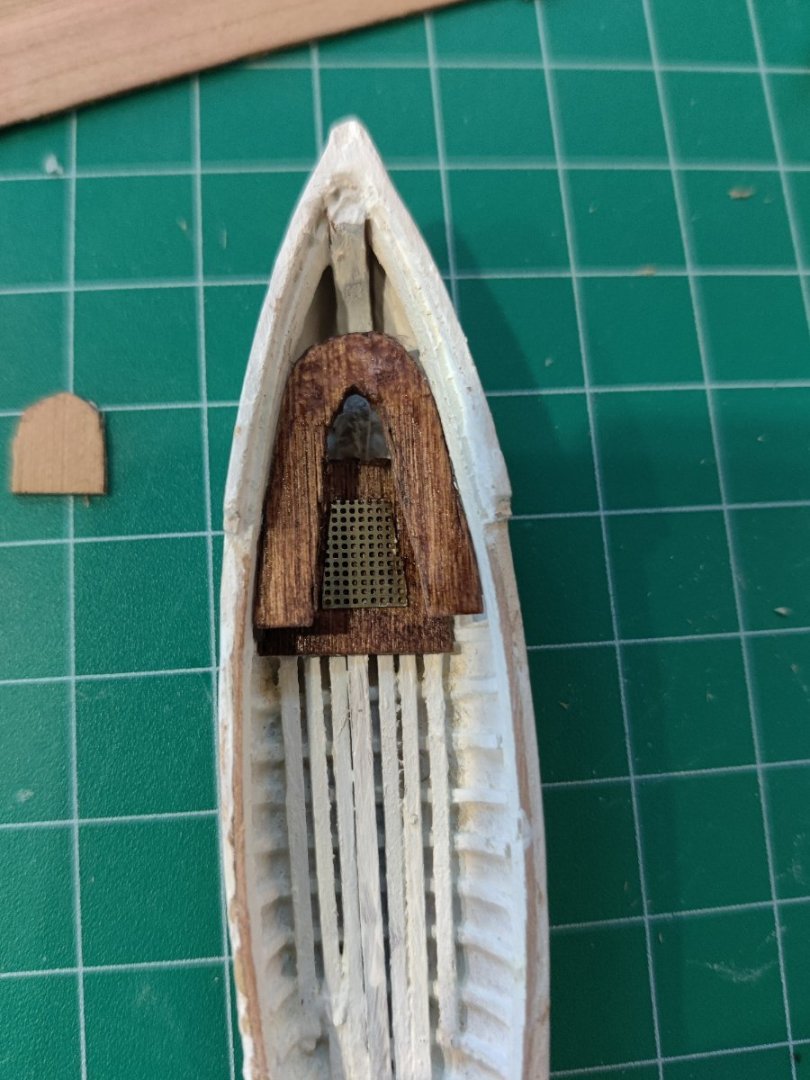
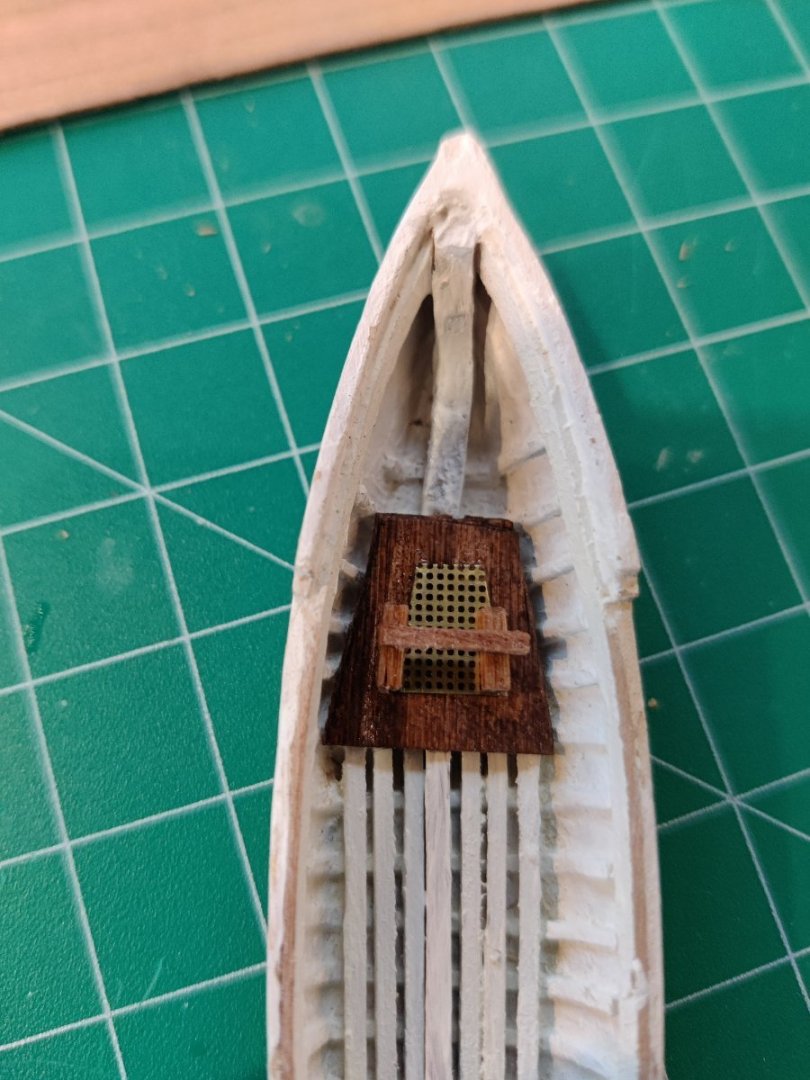
-
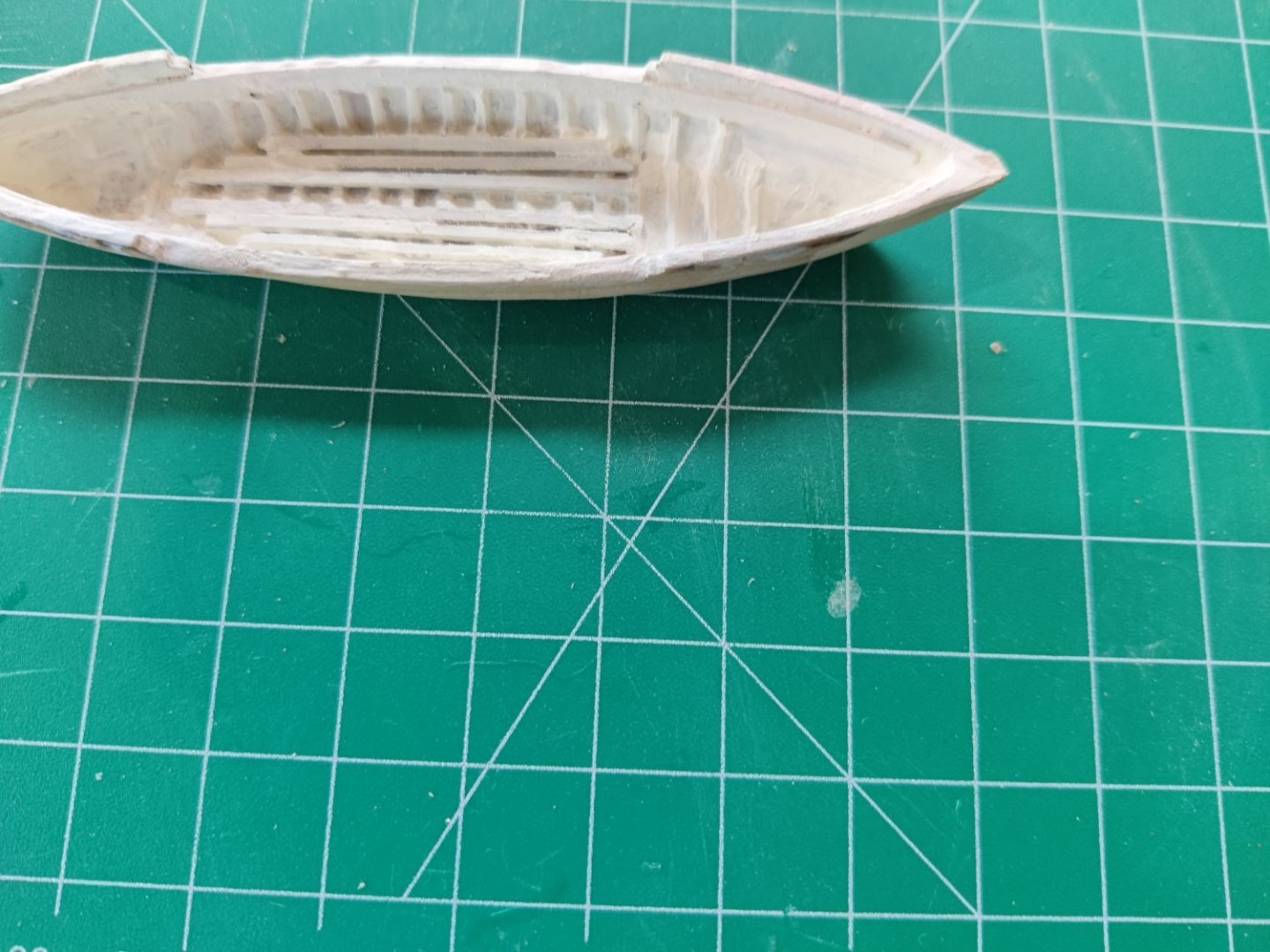
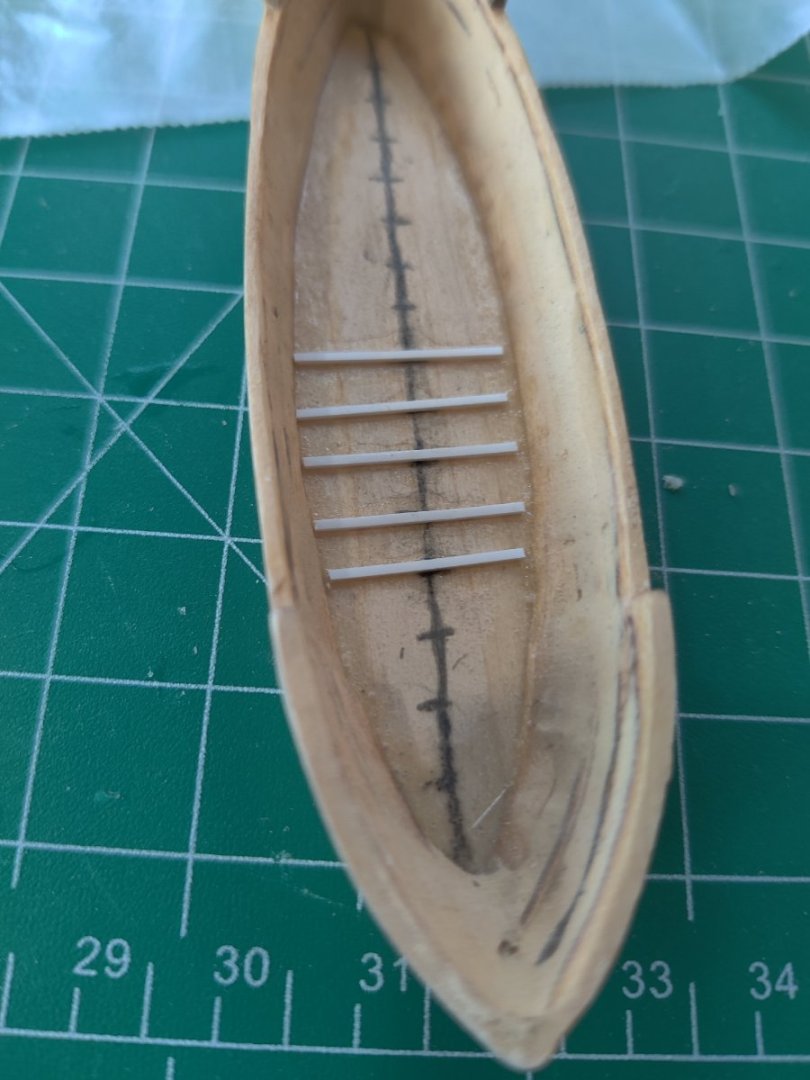
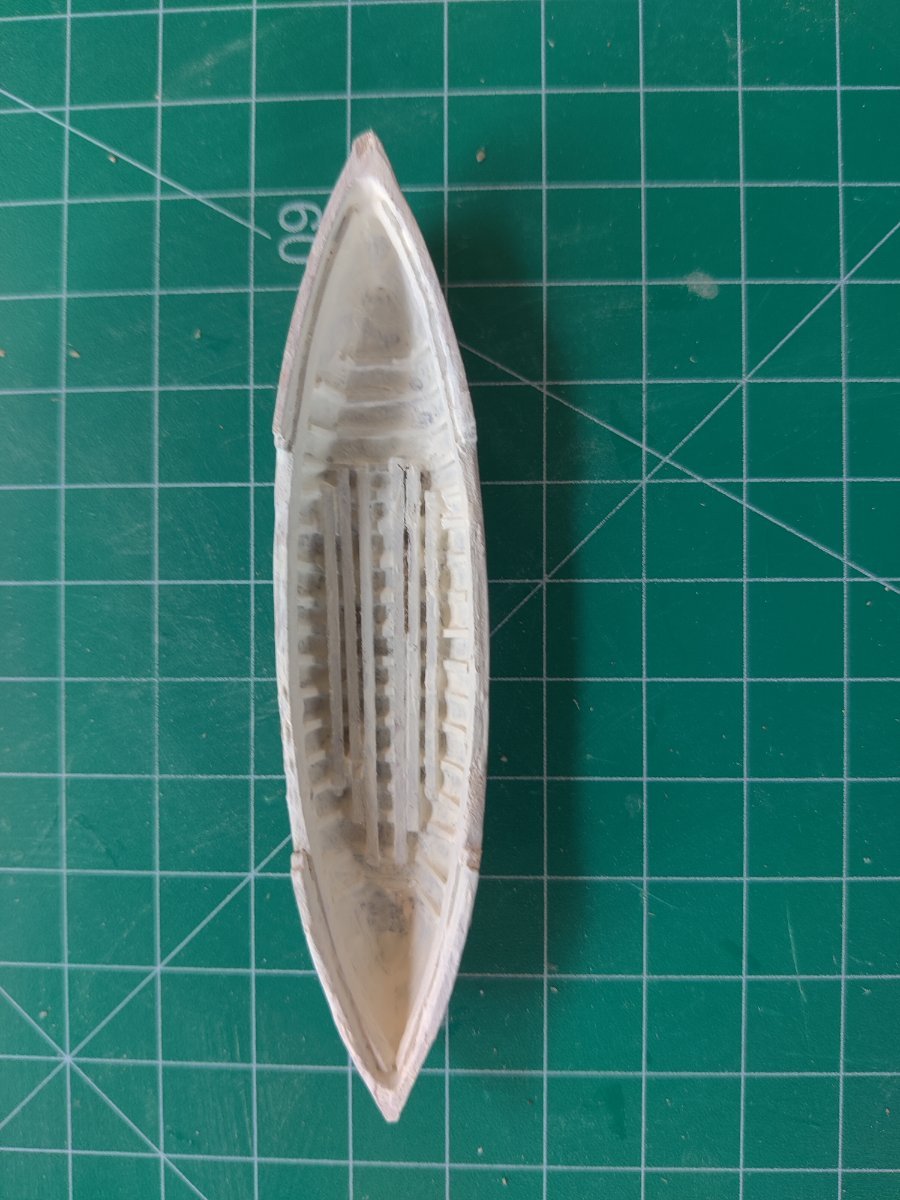
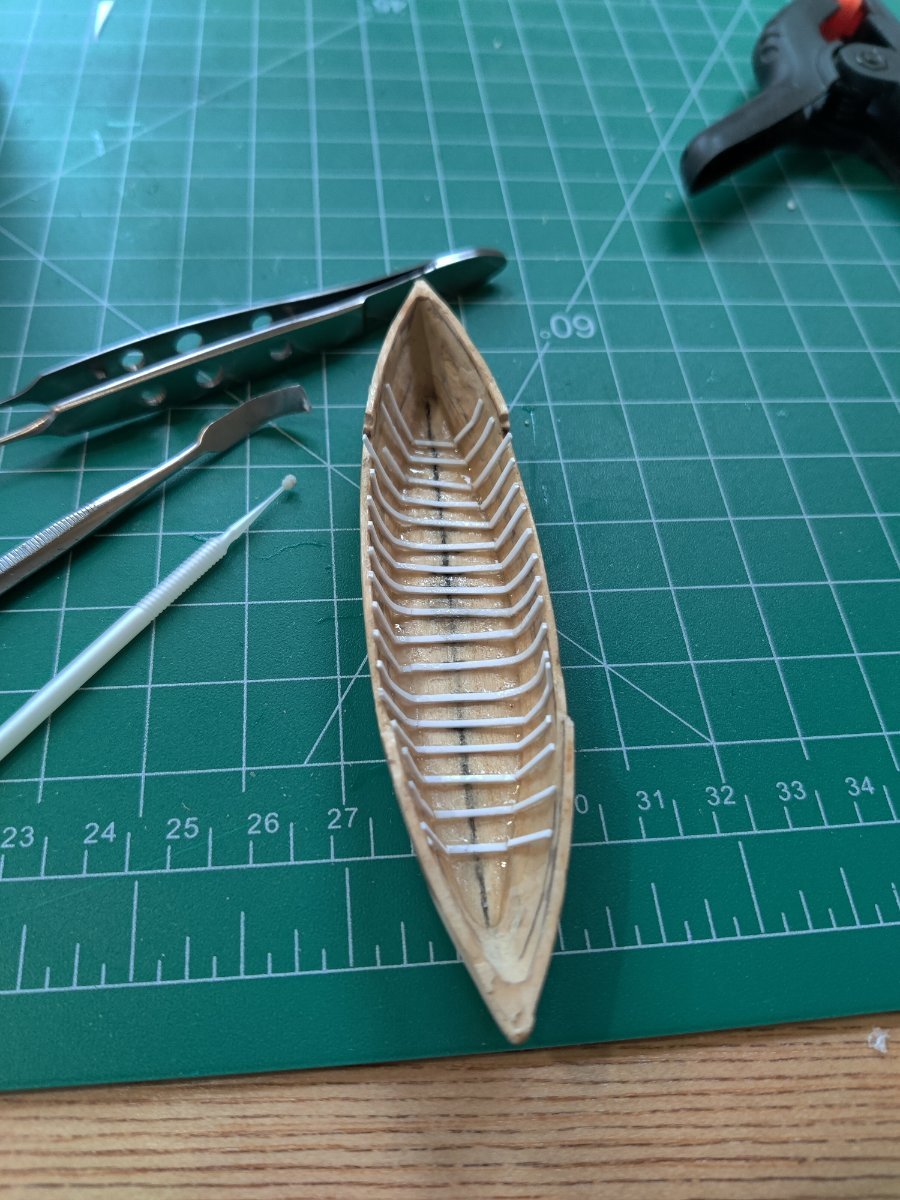
progress on gig whaler and whaler I have inserted the footlings in the gig whaler and painted the interior. On the whaler, I tried another method of putting in the ribs, which seems to be working better, it is more accurate and easier. After drawing the center line, i draw in the location of each rib, then I put one drop of super glue and using a micro plastic glue stick I spread the glue in a straight line, then I use the tweezers to drop the measured rib into place, then press it down. I will repeat the same process on each side wall. I tried putting the entire rib in one piece on the gig whaler but they often broke and it was hard to keep it straight.
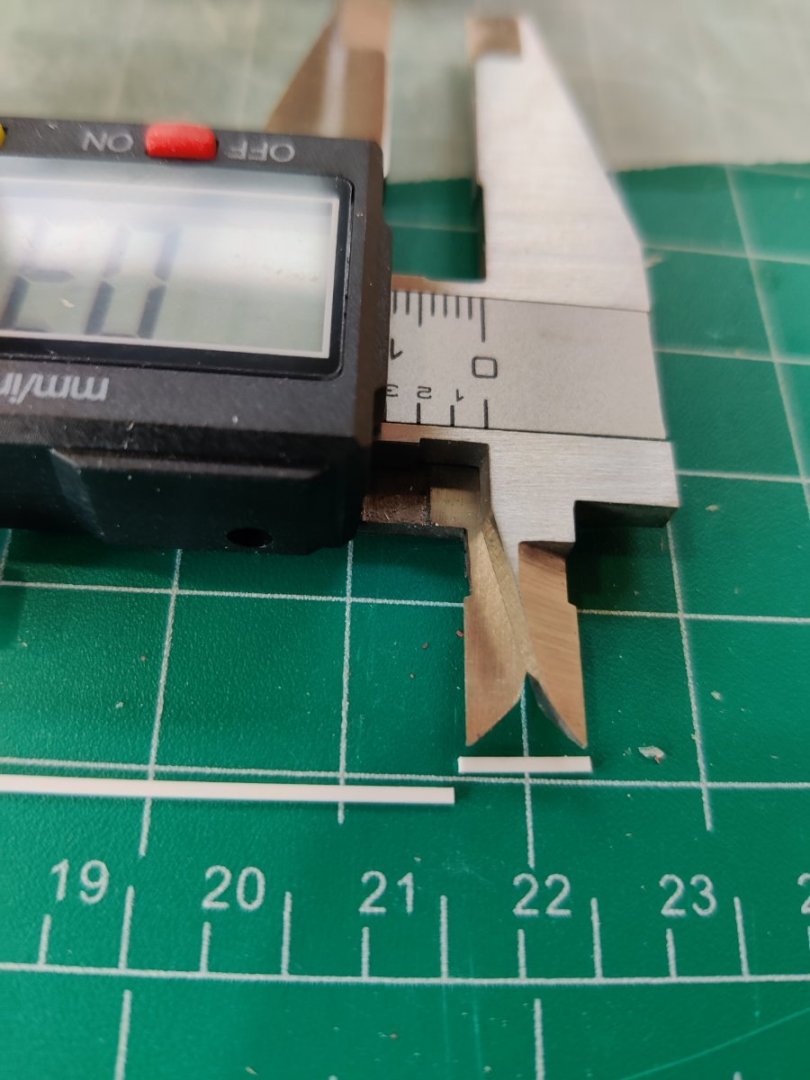
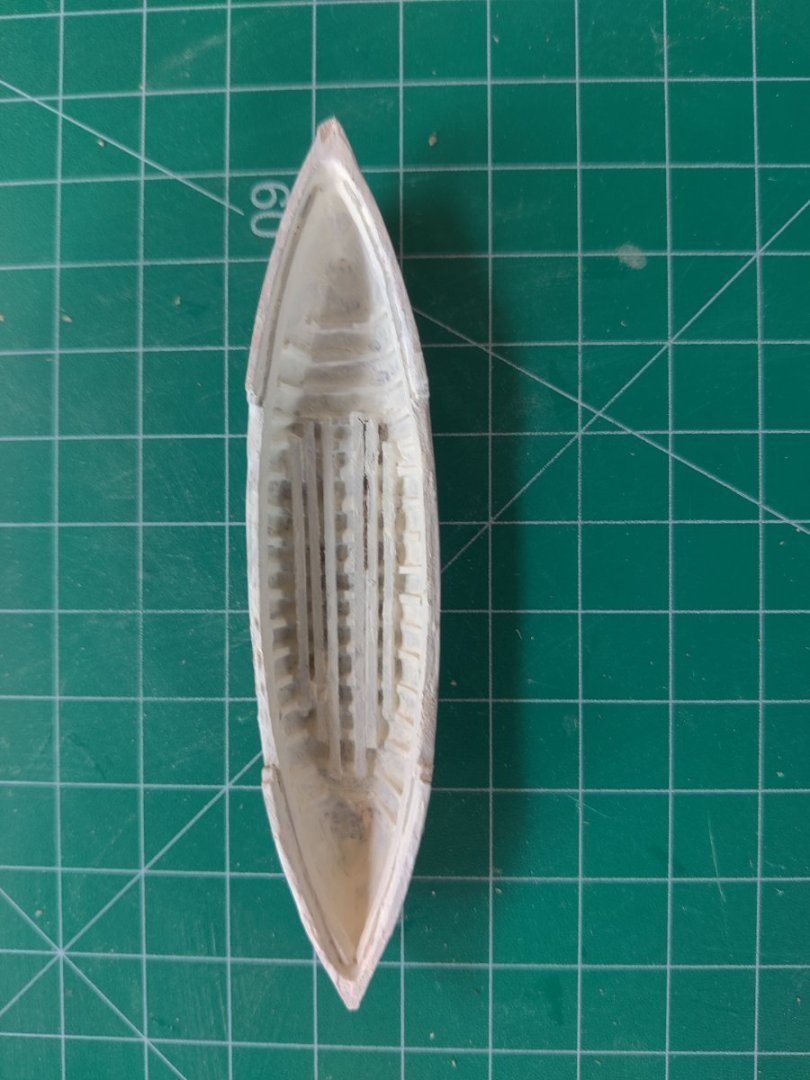
-
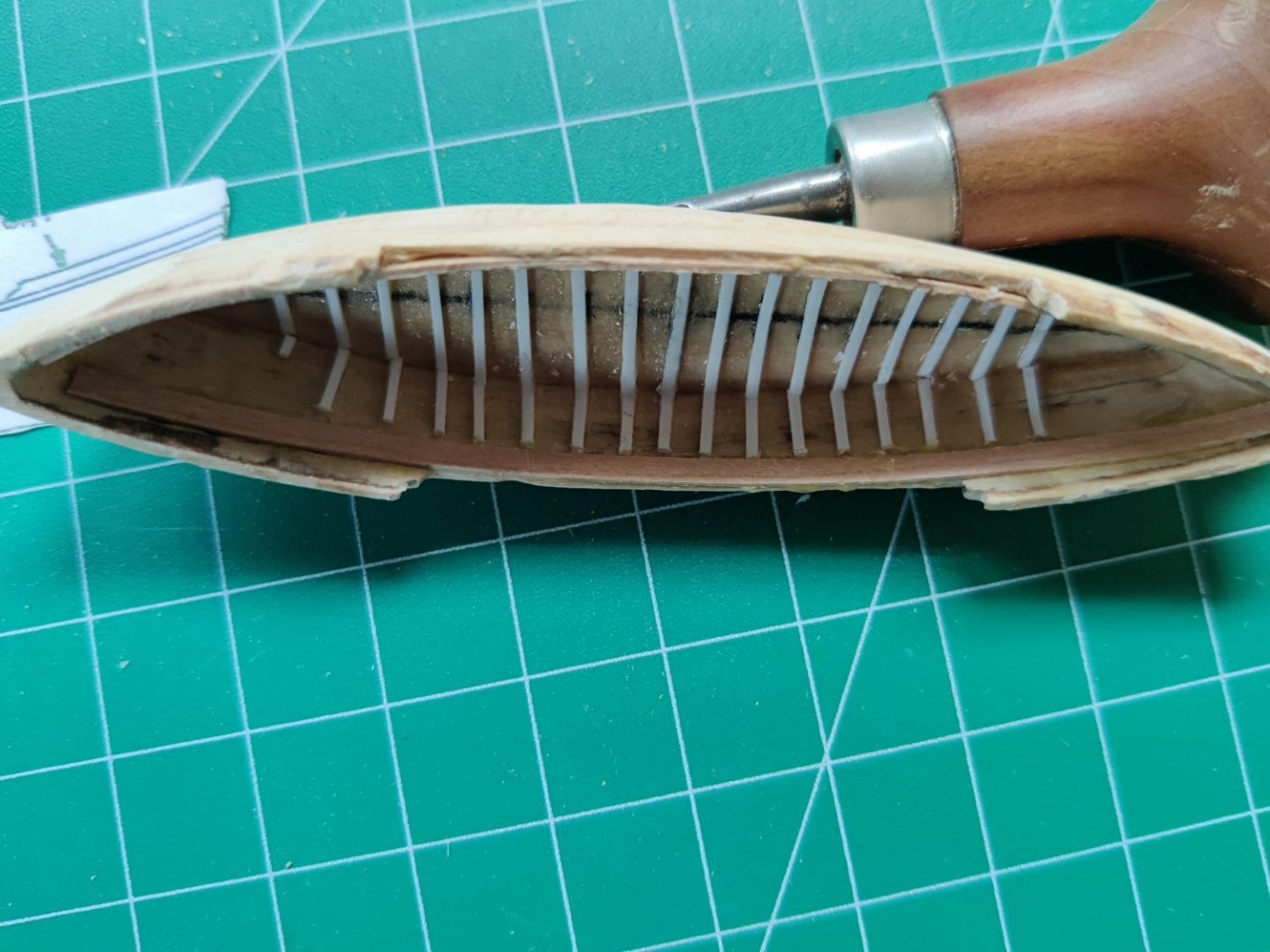
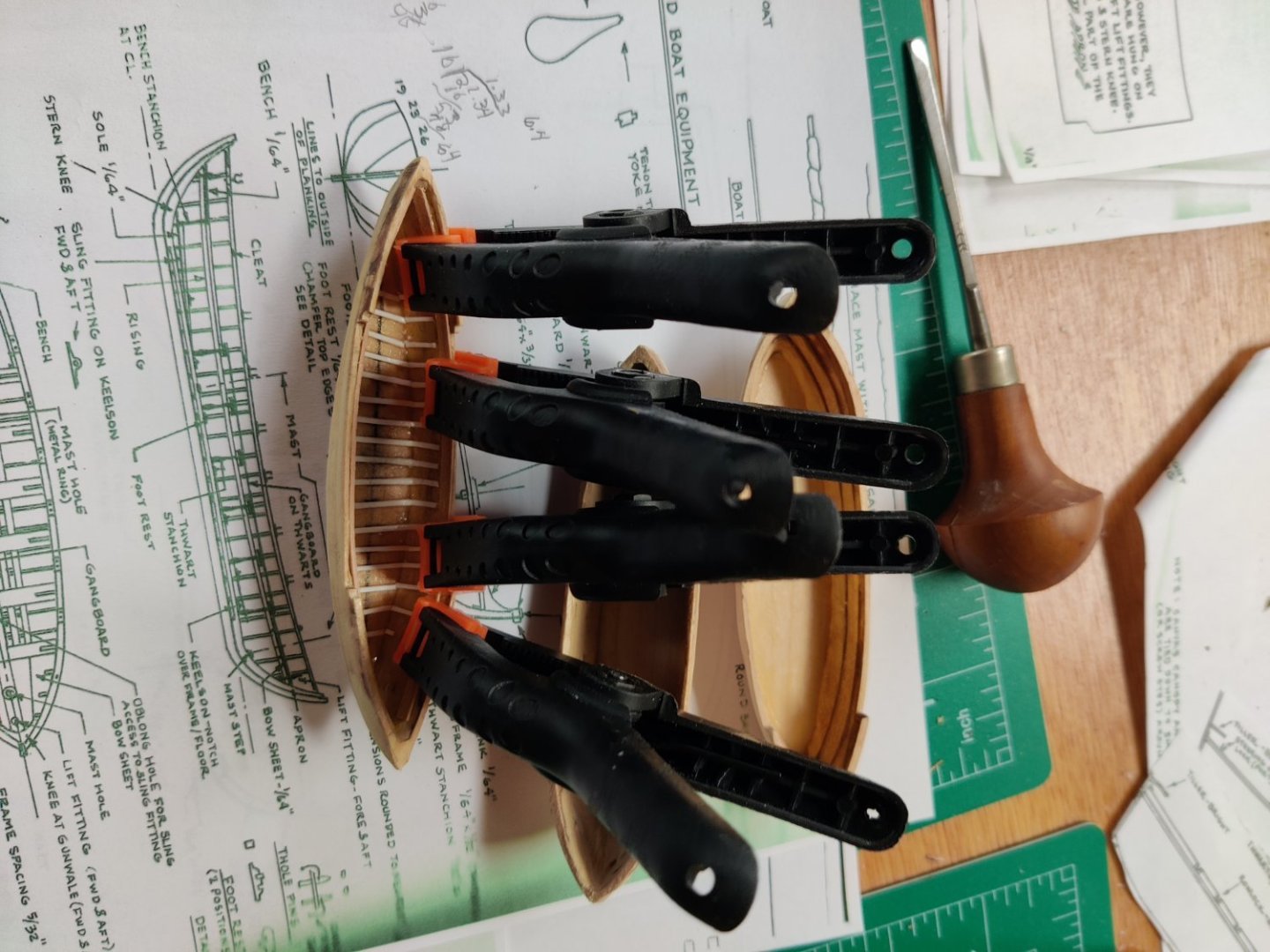
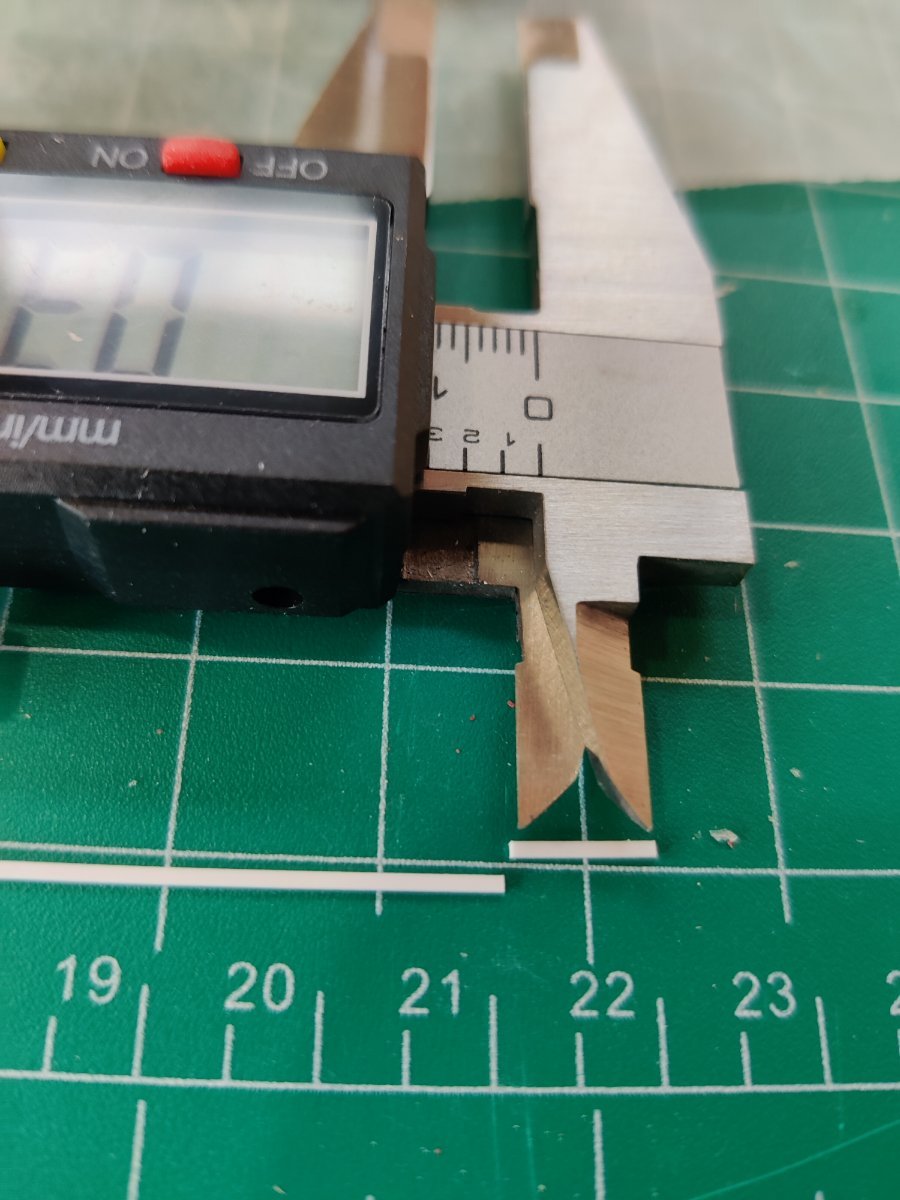
I have completed the ribs and the gunwale on the gig whale boat. I used the Evergreen Styrene strips .020x.040 (No. 122) as recommended by Gerson and others rather than wood. There are 10 strips in a package, I ordered one package, and found out I should have bought two. One is not enough to do all 4 boats. Is is very time consuming to install the ribs and tiny tweezers and a plastic toothpick or glue stick is needed to coax them into place. They are not in perfectly and even though I tried to use a spacer to get them even, I just could not keep the distance uniform. When I got them i place with the spacer, and then removed the spacer to glue the they moved. I was afraid to put the spacer back in for fear that it would be glued in. I will finish the other three boats to this point before installing the keelson and flooring. There is no pattern for the keelson, so I will freehand it. At first I made the ribs too long, when I realized that the gunwale had to be fitted in. So i shortened the ribs I had installed and marked the location of the bottom of the gunwale and put the rest of the ribs in.

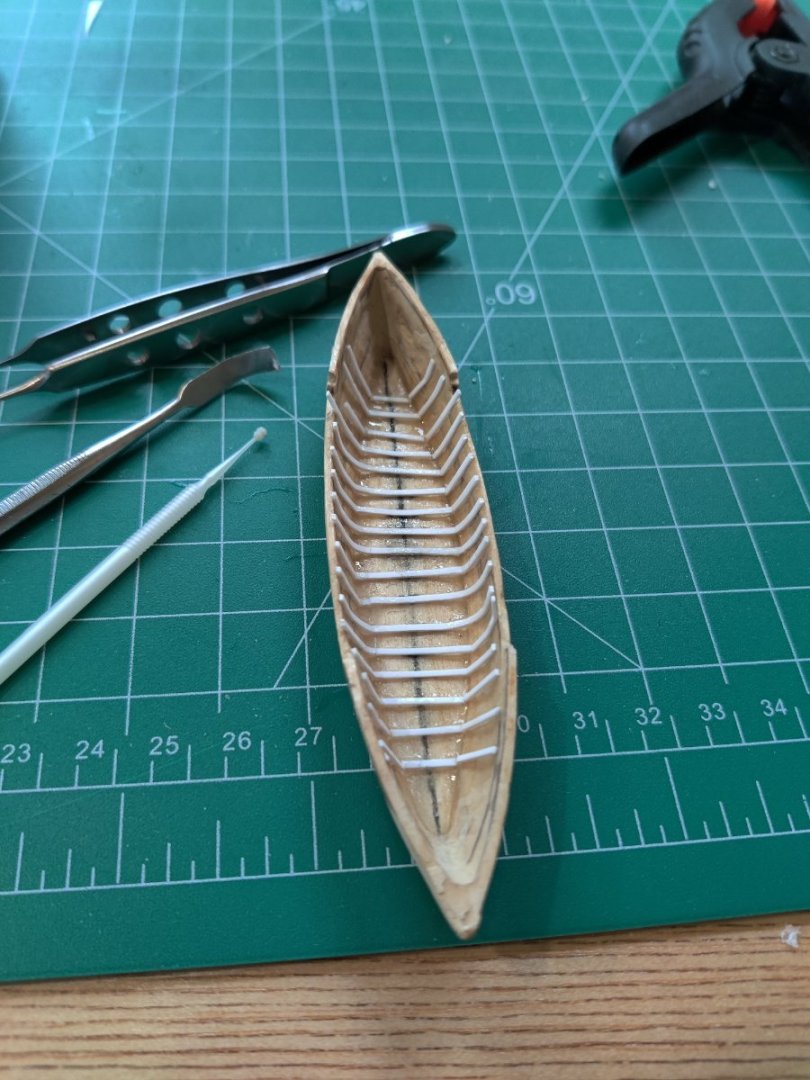
-
Before I make a fatal mistake, I need to better understand the relationship between the Bearding line and the rabbit. Am I correct that the Bearding line is the merge point between the Keel and the lowest plank on the hull? Is the goal to reduce the thickness of the keel at the bearding line by the thickness of a plank so that the last plank's bottom edge is flush with the keel?
Is the rabbit the rounding of the bottom edge of the keel, so that there are no sharp edges? To do that would you find and mark the bottom center line and then gently round each side of the keel to the center line?
Also, I am still concerned about the difference between bulkhead from the pattern plans as referenced in my last post.
-

A picture is worth a thousand words:


The line of the inboard plank corner is also called the "back rabbet" line.
Here's a fairly decent tutorial on cutting rabbets: Cutting a Rabbet Line - The Suburban Ship Modeler
The shape of a backbone rabbet is a rolling bevel, created by the use of a "fit stick" the thickness of the planking stock. The above article explains its use. Basically, it's an exercise in cutting notches at each frame end and then connecting them all in a graceful curve.
-
-
-
I have noticed two repetitive differences between the plans and the actual bulk heads. The bulk head is taller than the plans on the top and shorter than the plans on the bottom. Is that anything to worry about. See photo below. the picture does not show the bottom of the notch but it is always shorter. than the pattern. thanks for your guidance
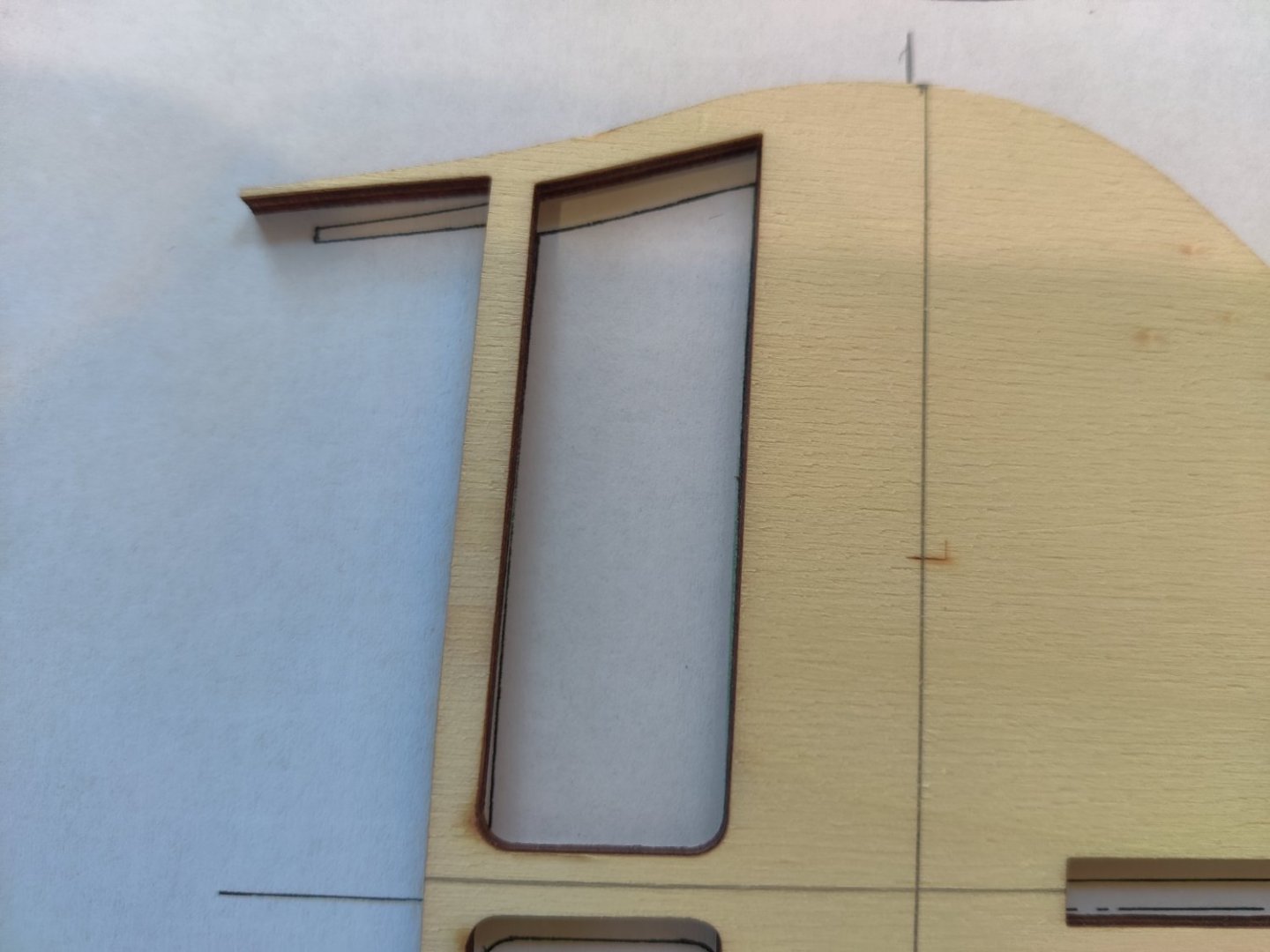
-
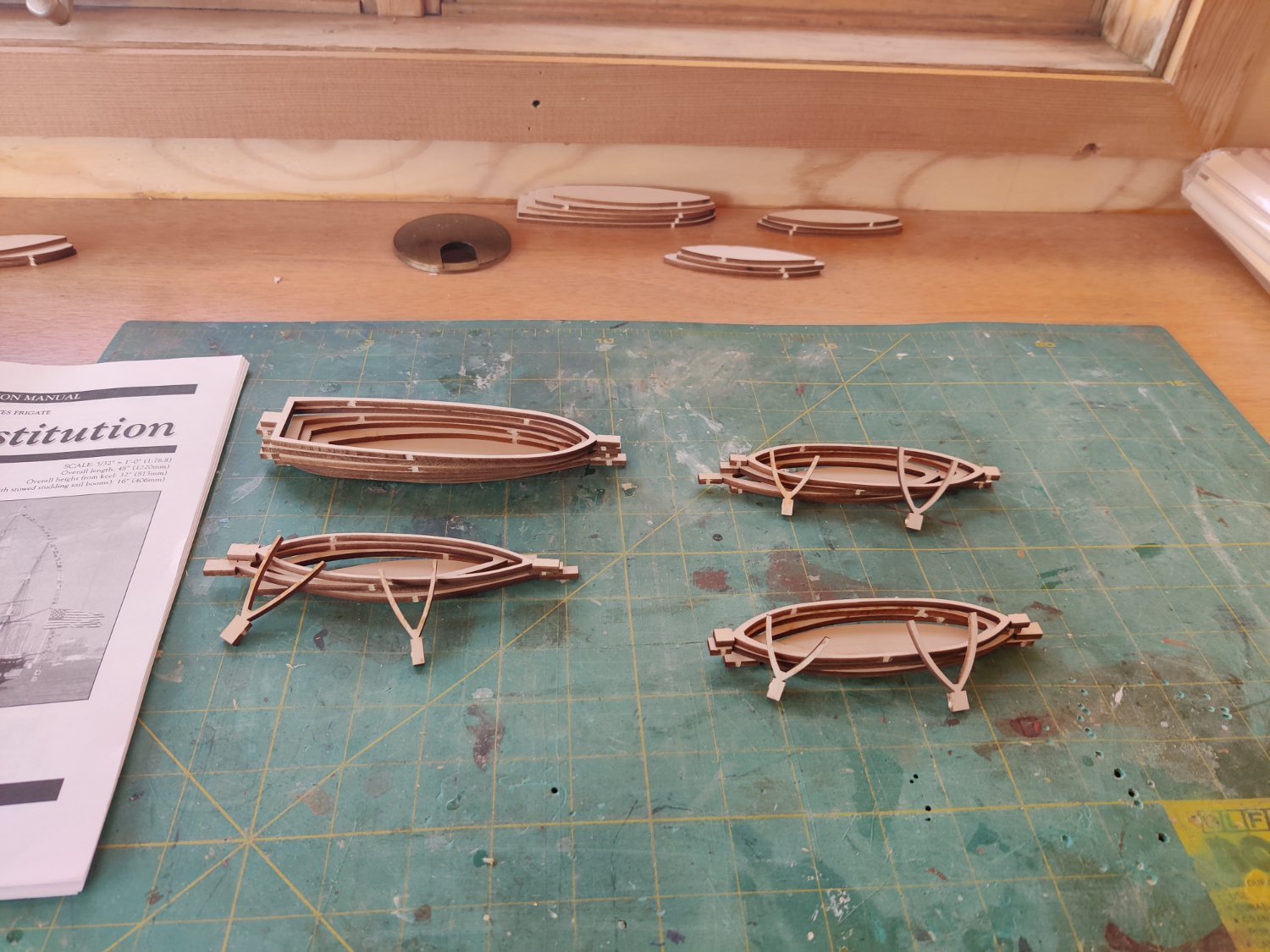
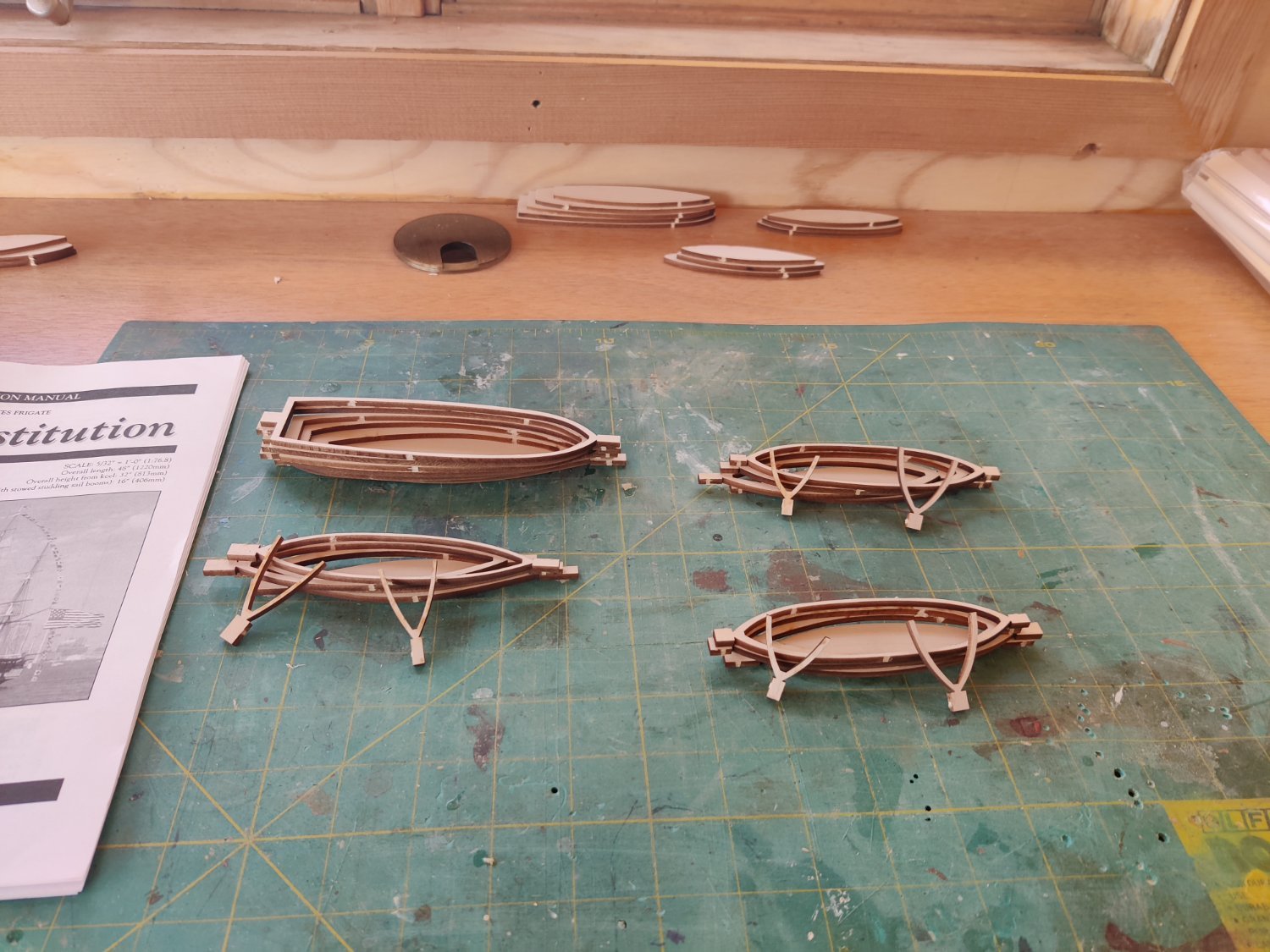
I have completed the basic shaping of the four boats, and cut off the tabs. Before I did so I wrote B on the bottom on the Bow end and S on the stern end. The angles are very close and i did not want to make a mistake. Those on the green background were bare wood, those on the black background have a coat of wipe on poly on them. After I applied the poly I saw some divots that I had not noticed so I will apply some wood filler in the divots and re-sand and poly. I am at a standstill till my styrene arrives so I will start on the hull structure. I have not noticed any comments on whether the bulk heads are sanded before they are attached to the center keel? In some of the build logs I can see the dark laser burn and on other build logs the bulkhead's edge is white. Recommendations would be appreciated.
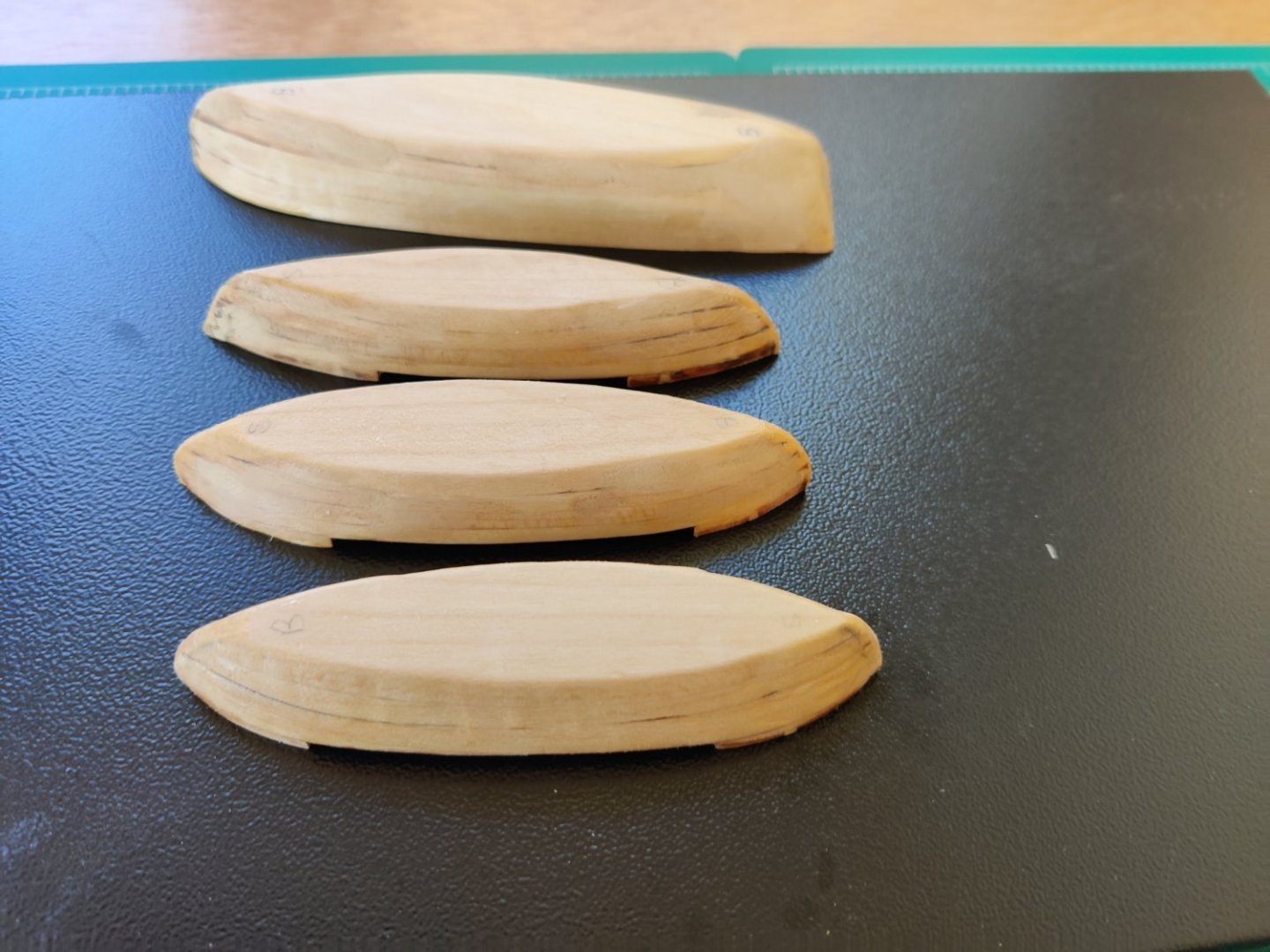
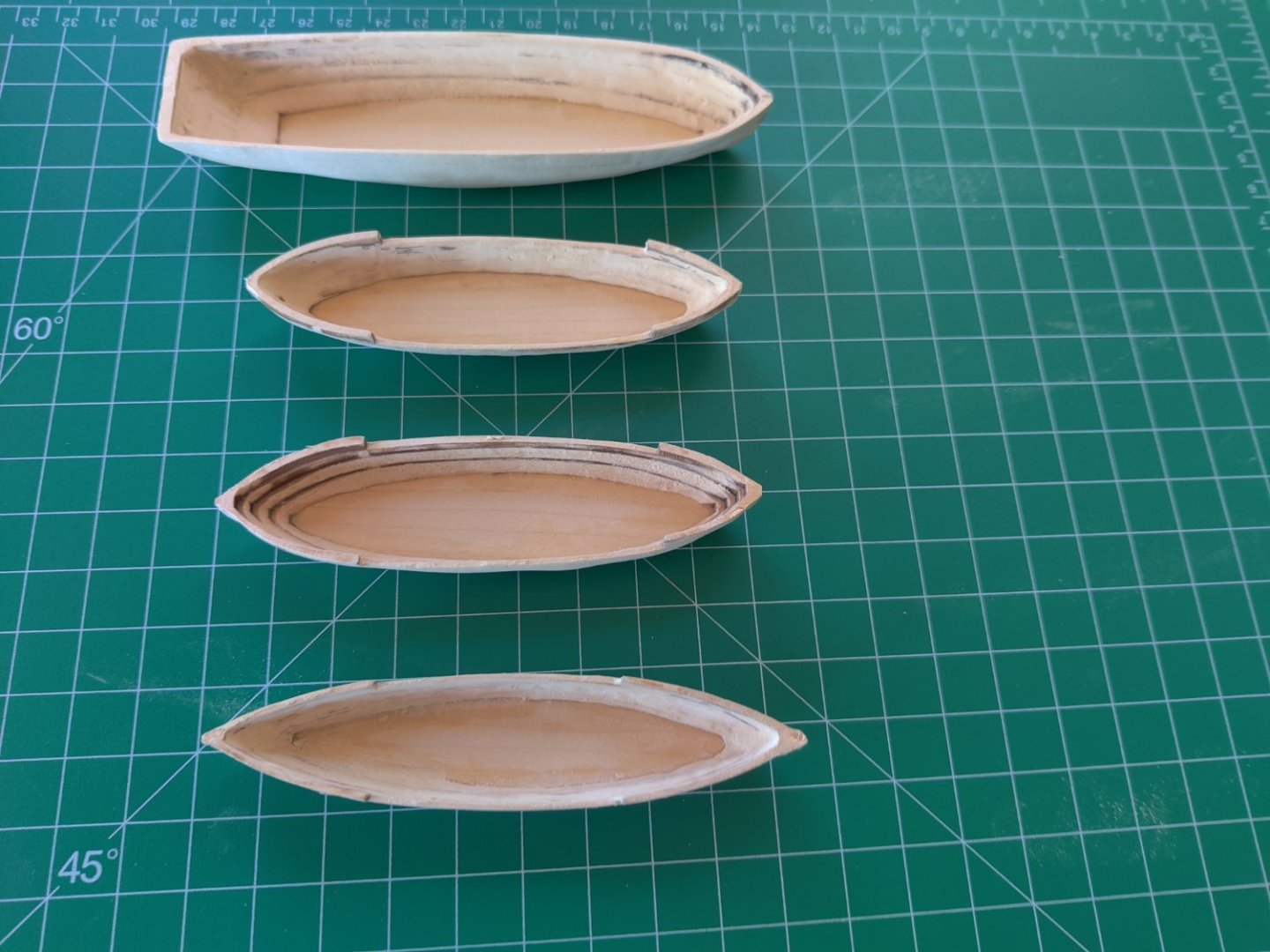
-
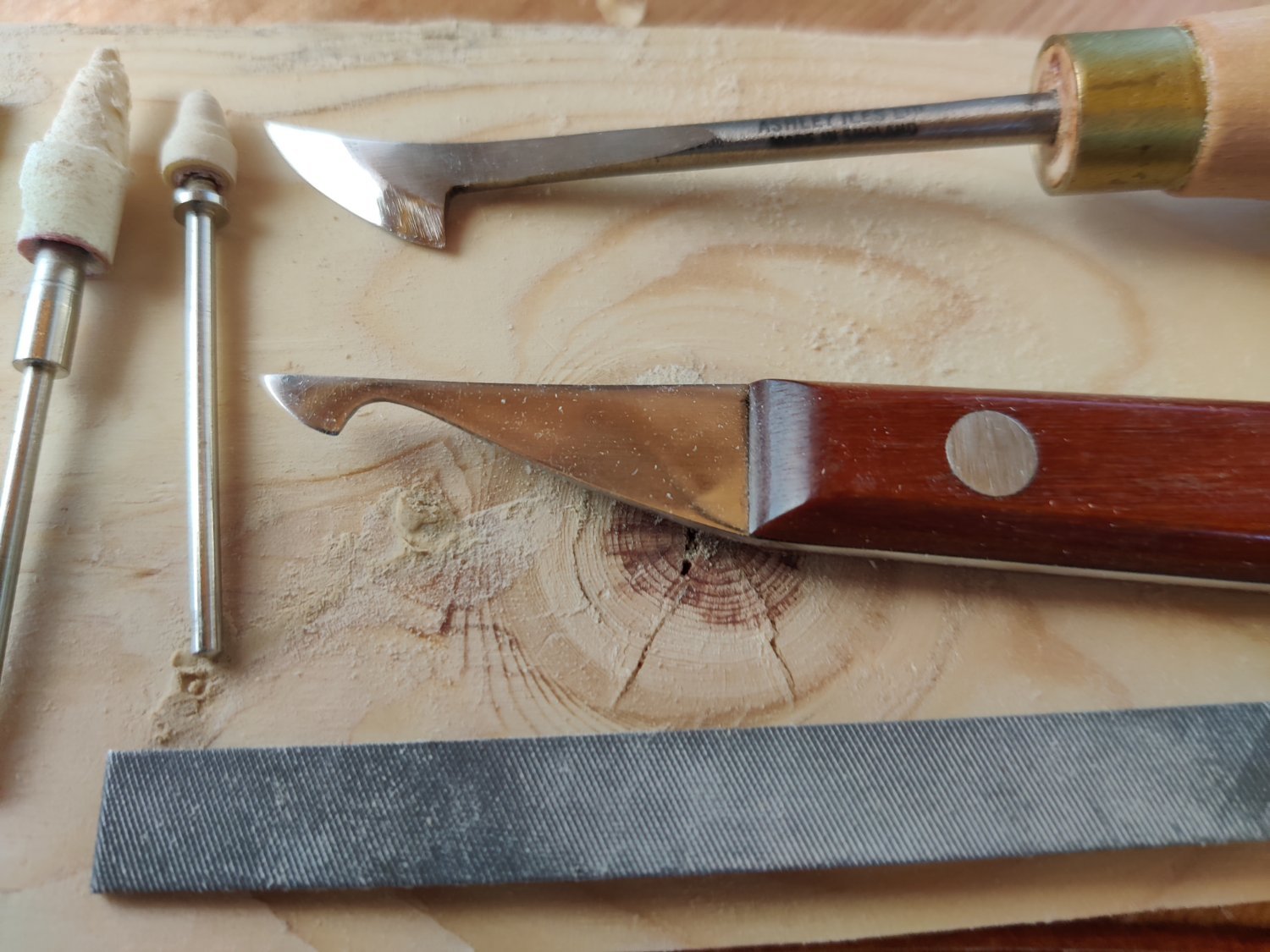
I thought it may be helpful to show the tools I used to work on these small boats. They are all part of my wood carving inventory. The first 3 micro bits are stump cutters, the next three are diamond bits, and the sanders are Guge bird carving bits, and the two knives are skews.
-
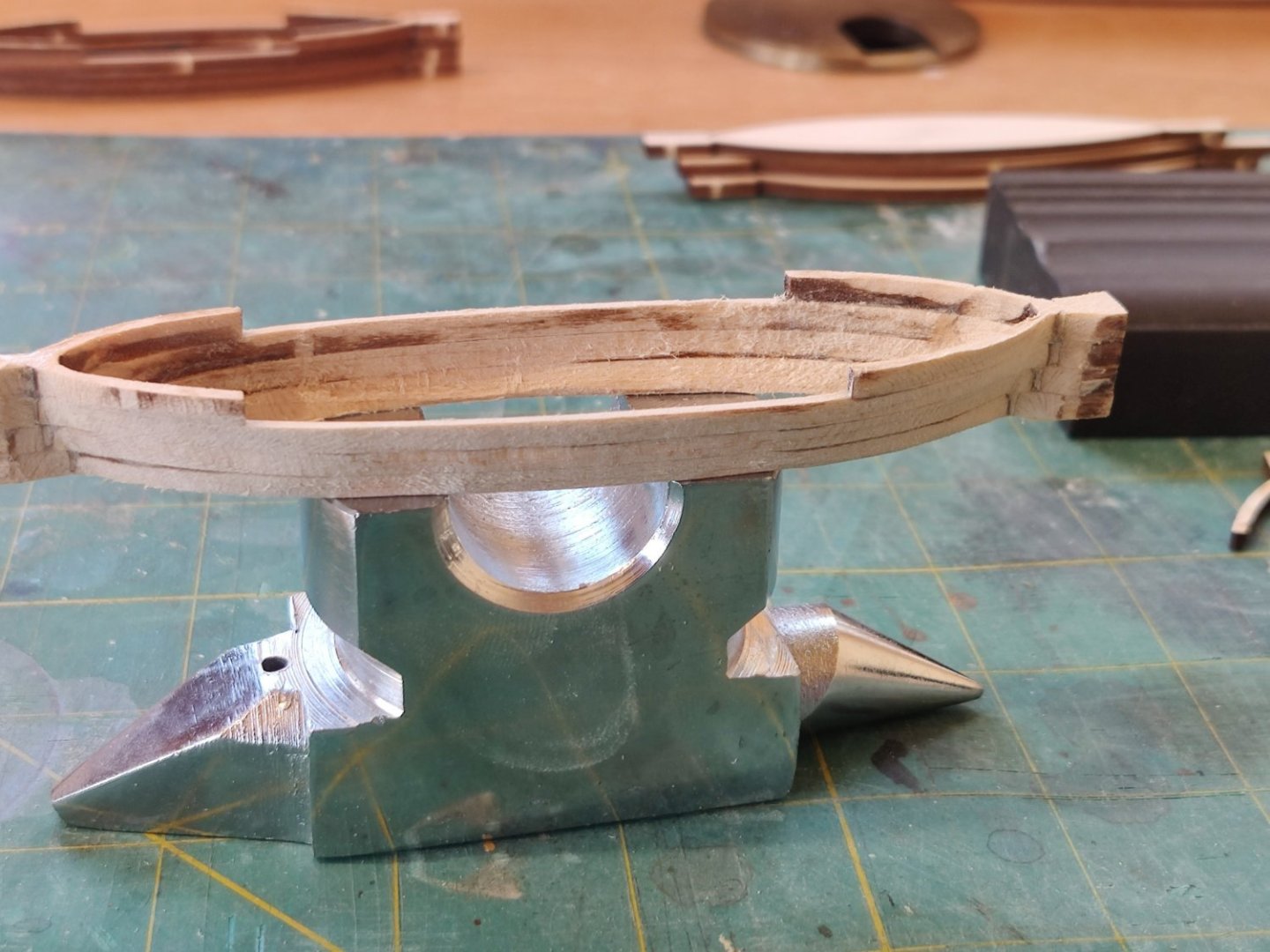
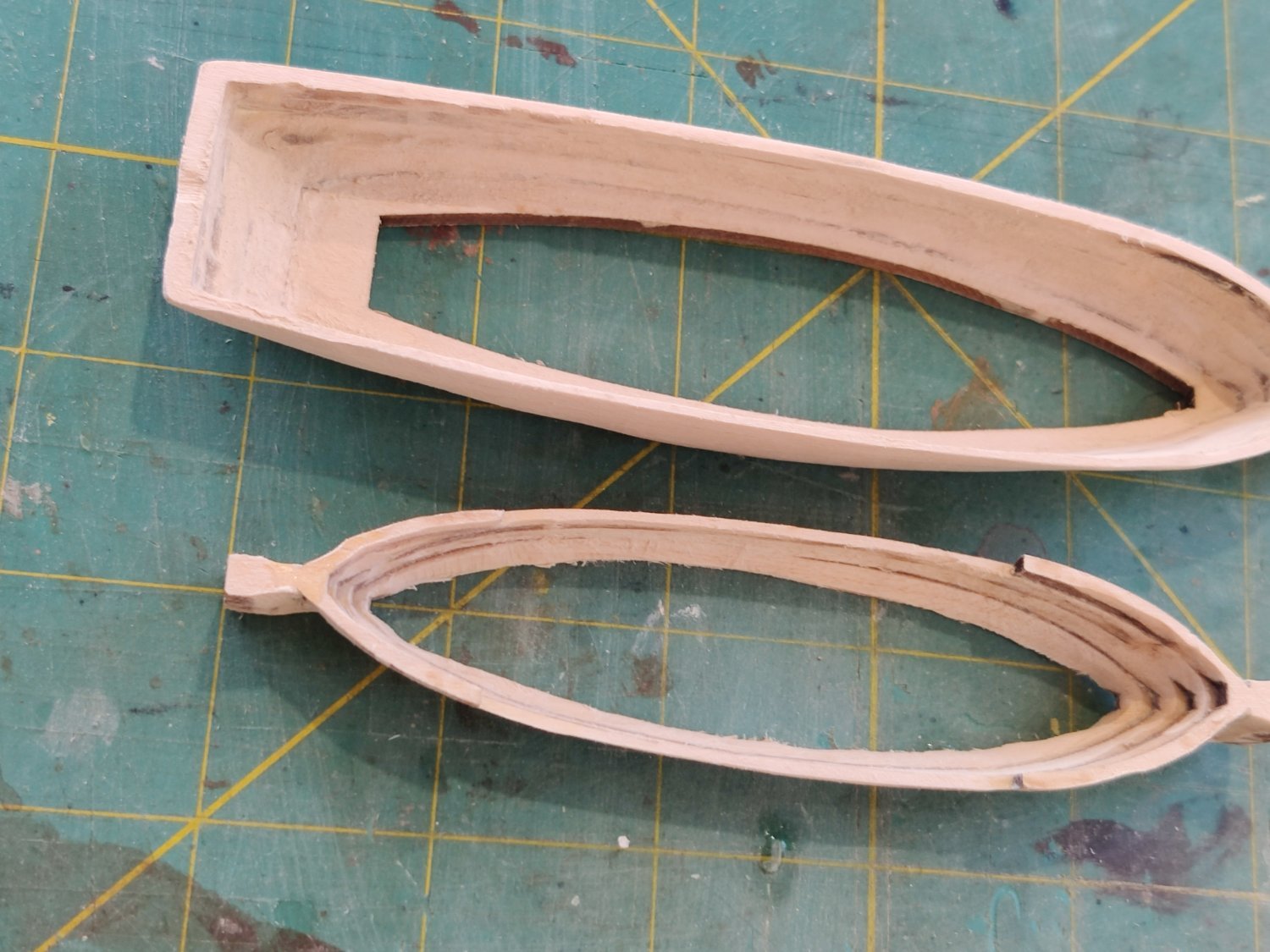
Some progress shaping the small boats after the glue up.
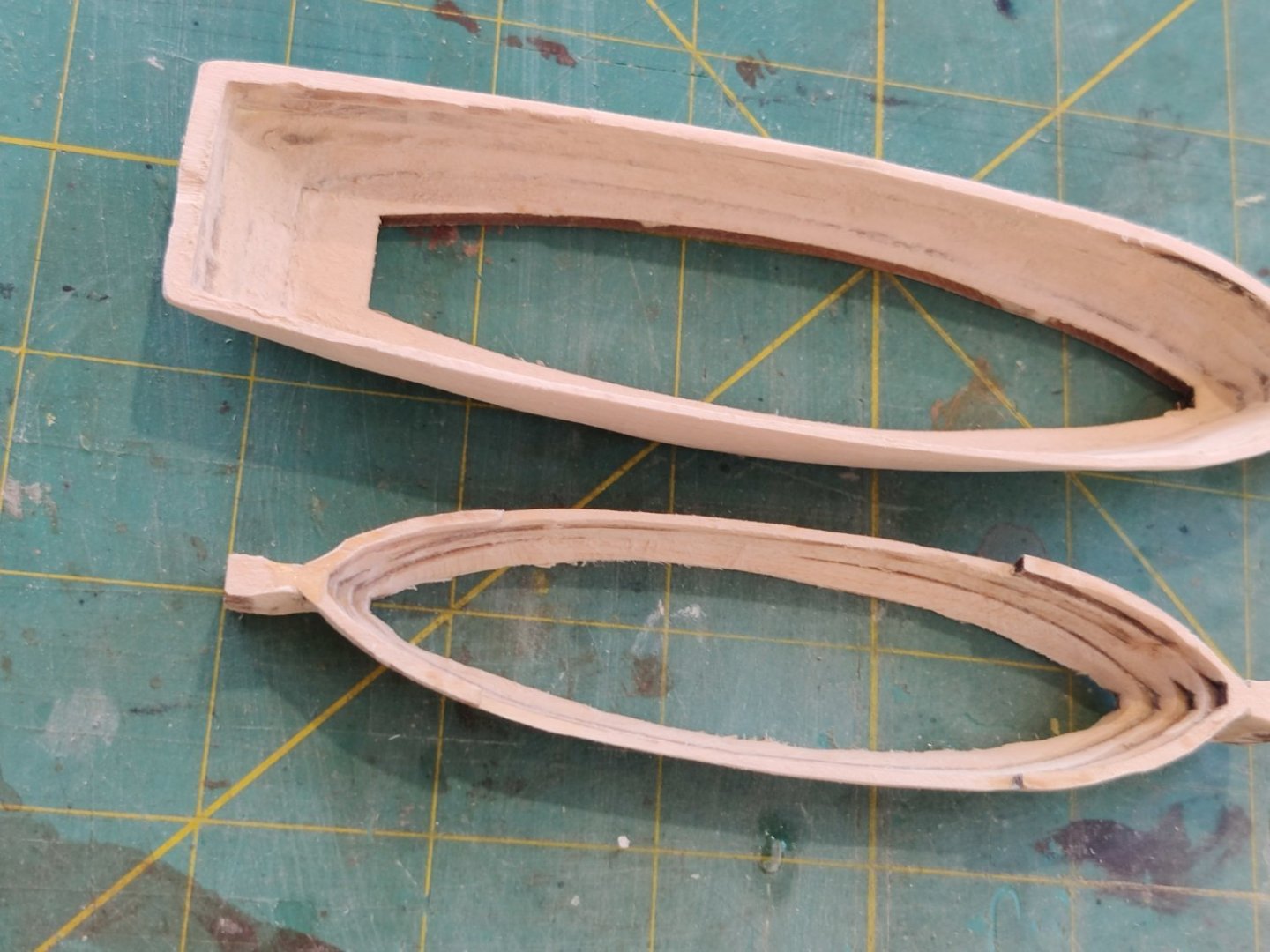
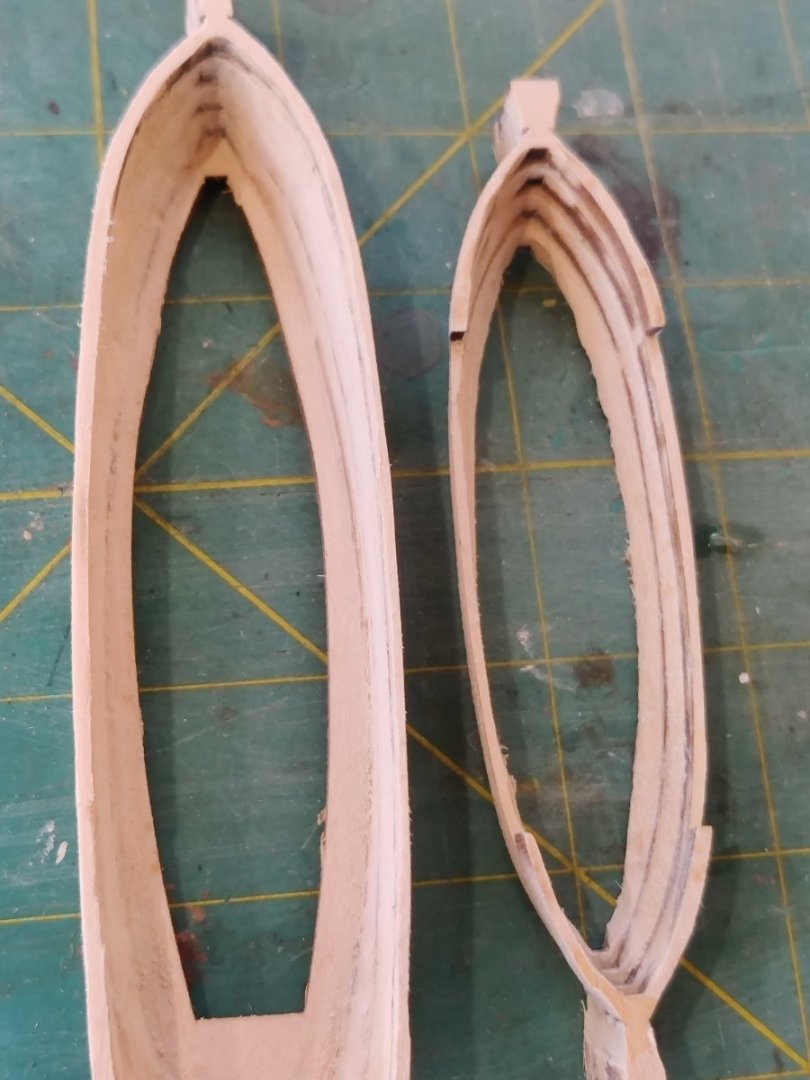
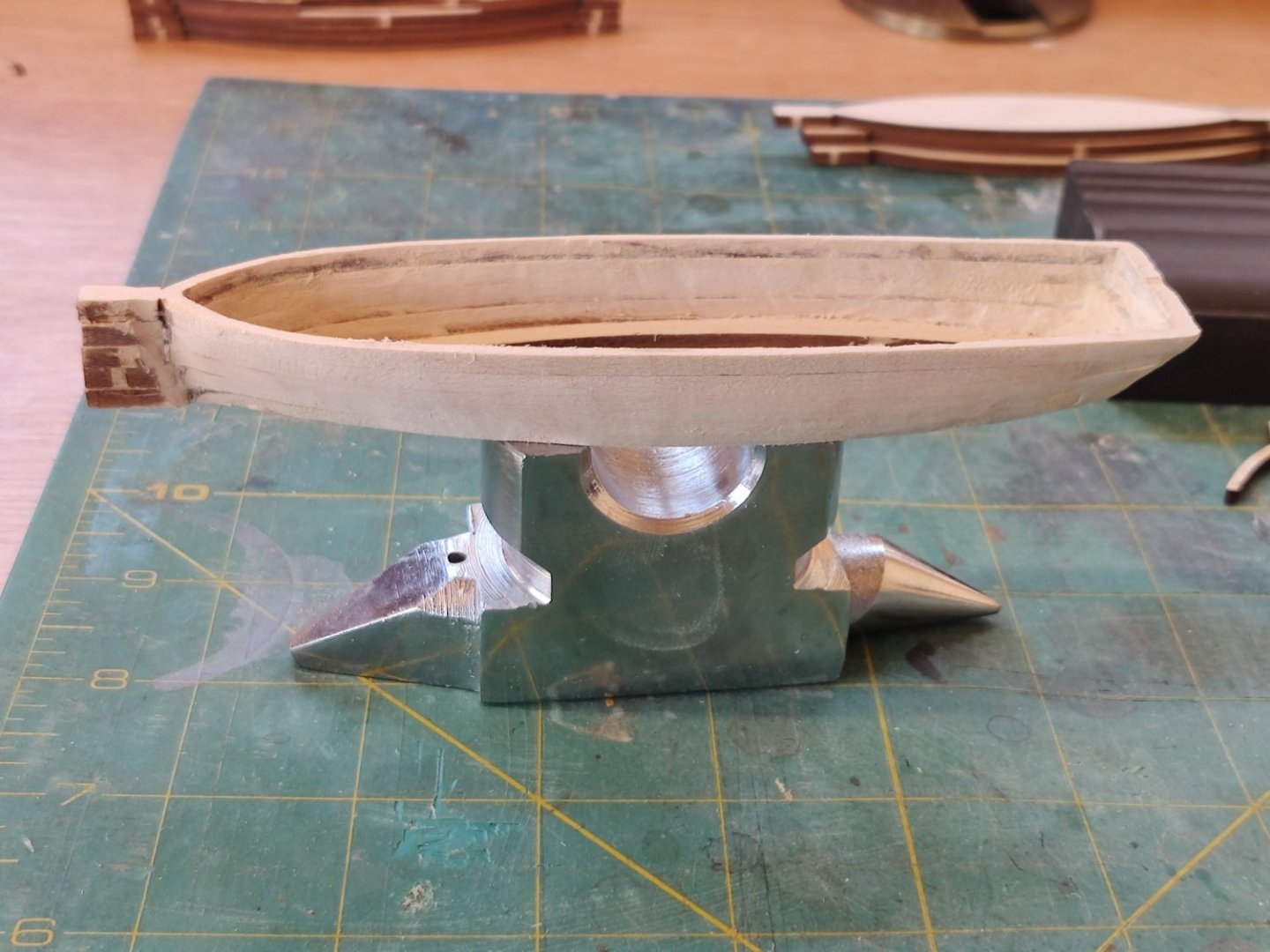
-
pinnace glued up
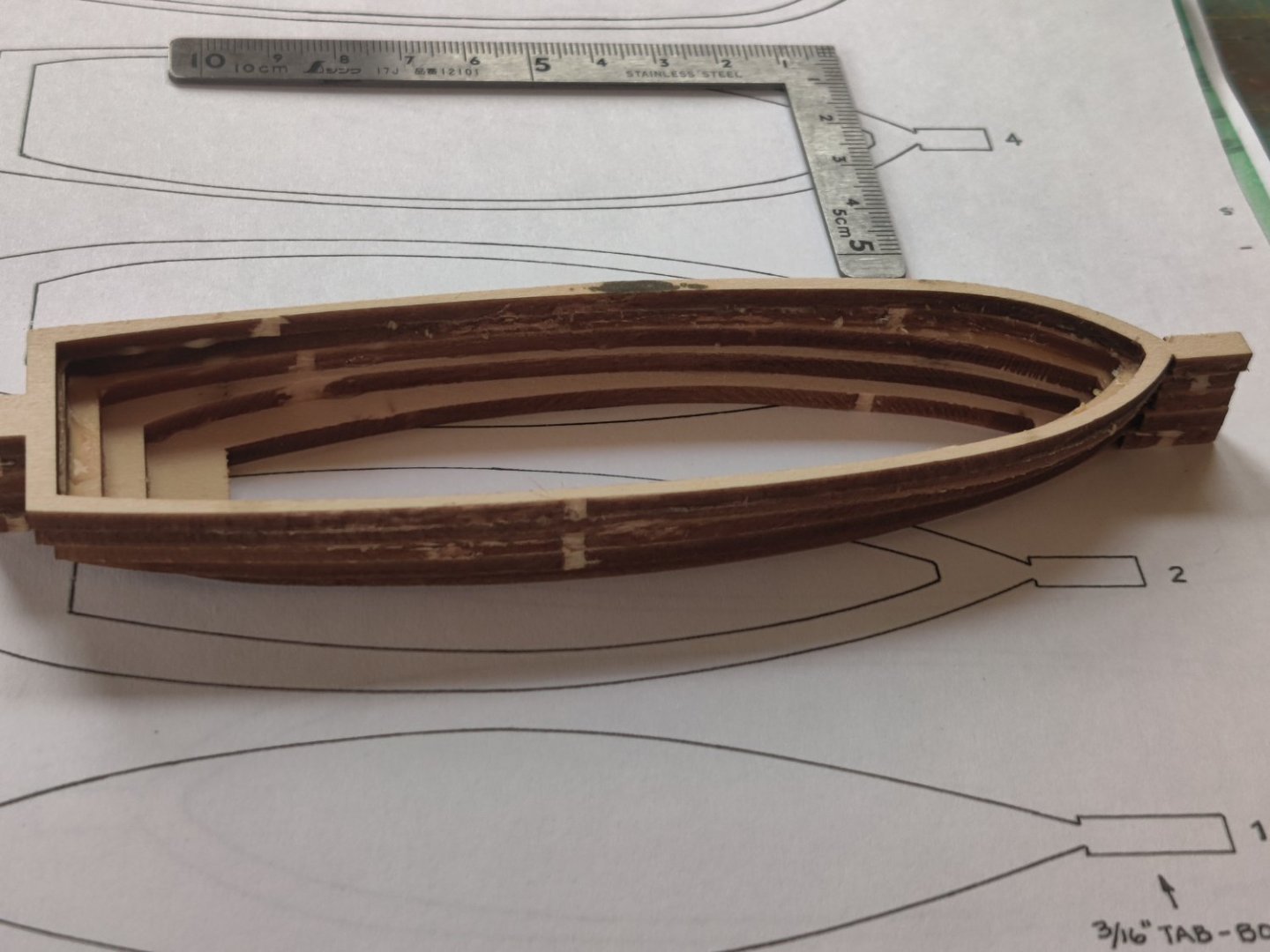
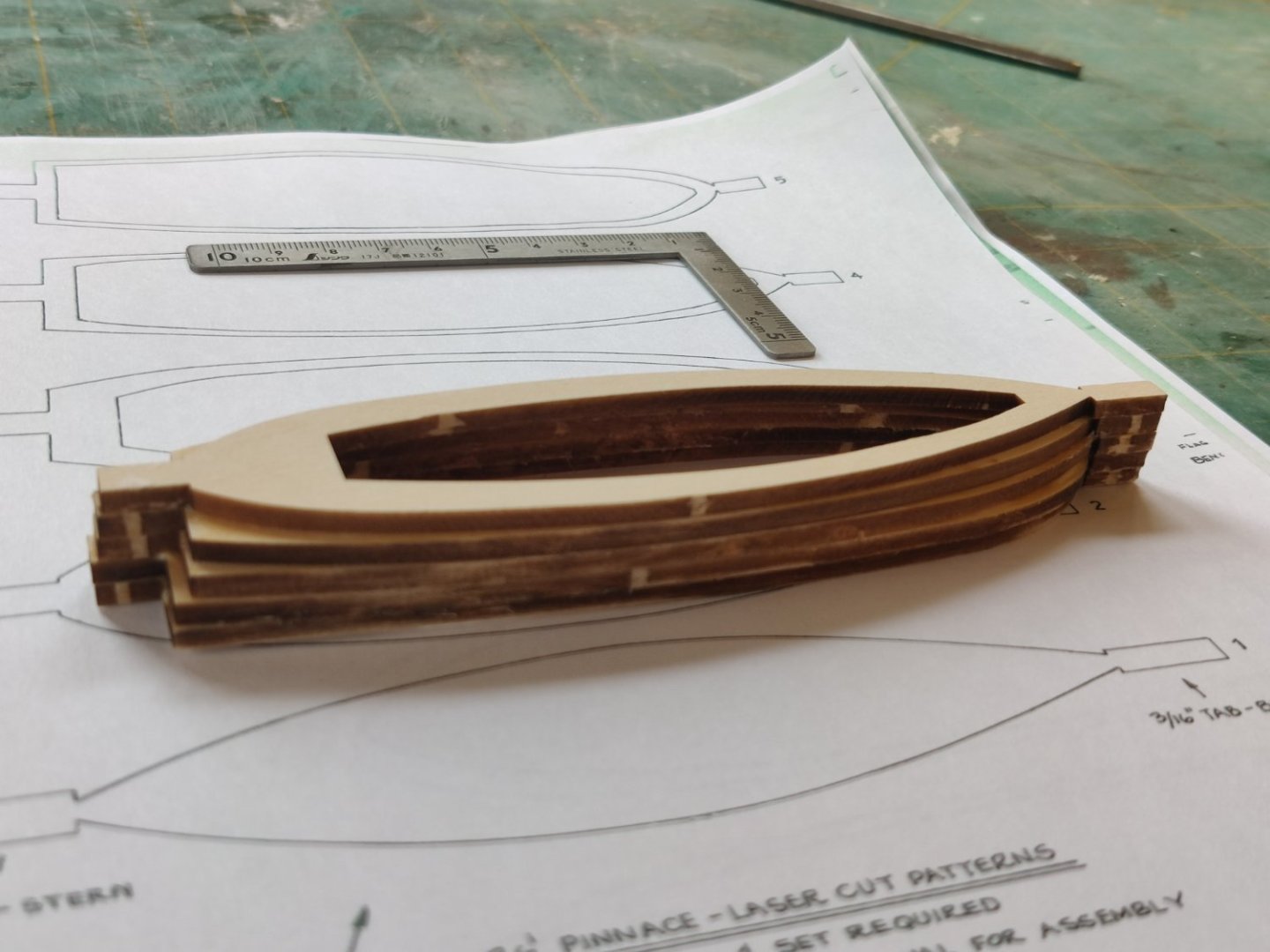
-
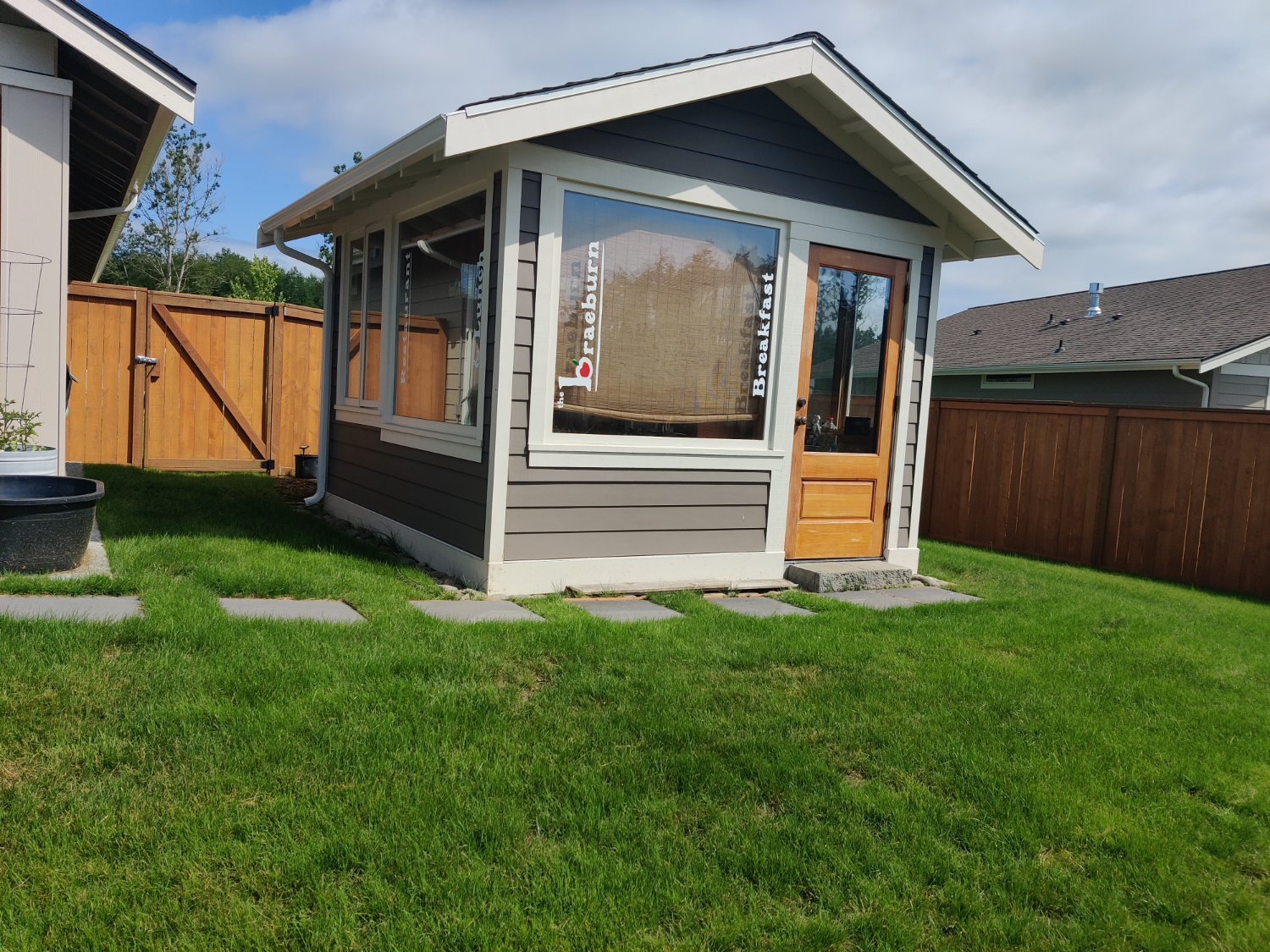
I have made the commitment to proceed with this build. Not without a lot of trepidation. I have not been a model builder, I have been a wood carver for 25 years, and have taught wood carving for the last 10 years. I needed a change of pace. Last year one of my carving students, a talented 11 year old, wanted to build a boat. Together we built the Mare Nostrum, it was not perfect but it was a success and has given me the courage to do this build. Due to an accident I only have limited use of my right hand. But I have made compensations that enabled me to carve. Realistically, I had to recognize that my limitations are such that I will not be doing any but minimal rigging, although I may attempt to complete the masts. I have read almost all of the other build logs of the USS Constitution by other members and have them all bookmarked on my computer. To begin, I have decided to follow the path of JSGerson and to build whale boats and pennace first. If I was not able to finish those then I would not have spoiled the kit for someone else. Unlike JSGerson and others who decided to build out the gun deck, I have decided that when I finish the small boats I will build the gun deck as set forth in the plans. Unlike Gerson I have not acquired the naval plans or Hunt's practicum and will instead rely on the numerous build logs here and the guidance of its members. I have ordered the styrene and the 1/32 basswood needed for the small boats. I have a 25 year collection of carving tools including the latest high tech rotary hand-pieces with a large assortment of micro bits and cutters. I will forego the pictures of the kit contents and will begin with pictures of the pieces cut out for the small boats. I did manage to get them removed with only one minor break that was easily repaired with CA. My only camera is my cell phone. I will start with the pictures of my carving studio where the construction will commence. I look forward to working with all interested and hope I will be able to continue to get young people involved in he hobbies related to working with wood. My past carving students assisted me in the building of my new studio and we look forward to using it for years to come.
-
Chuck, in the earliest notes discussing the plans for building Winnie, you expressed were skeptical about doing a group build due to a deep concern that Chinese rip offs would steal the plans. Has there been any evidence of that or has the security put in place worked?
- 1,784 replies
-
- 1
-

-
- winchelsea
- Syren Ship Model Company
- (and 1 more)
-
Is the build log for your original Winnie, available? I think I saw portions of it and it was built with boxwood, but now I can not find it. I wanted to compare it with the current build log on the Group Project to see what may be different.
Thanks
-
Thanks for the primer!! I will need to digest it with several readings. There is a lot of content. The glossary was a big help, iI would have bee lost without it.
-
Chuck
I signed up/paid to get plans for Winnie. Considering building the Winnie. Read a lot of the build logs. Confused by the scale postings on build logs. Some list 1/4 others list 1:48. Are these the same build or is there truly 2 different scales? Without completely reading every page of build logs have there been any issues with the cherry? I read one log where the builder started in cherry but later started over again in boxwood. Thanks
-
-
this discussion thread has been very illuminating and i will share this build on the forum. It will be at least a month before I can start I am in the process of moving off Whidbey Island to Sequim which is on the mainland which has better medical facilities and conveniences. Living on an island is a great experience but as you get older it is hard.




























Our Emblem ®
