
HOLIDAY DONATION DRIVE - SUPPORT MSW - DO YOUR PART TO KEEP THIS GREAT FORUM GOING! (Only 53 donations so far out of 49,000 members - C'mon guys!)
×

Pfälzer
-
Posts
371 -
Joined
-
Last visited
Content Type
Profiles
Forums
Gallery
Events
Everything posted by Pfälzer
-
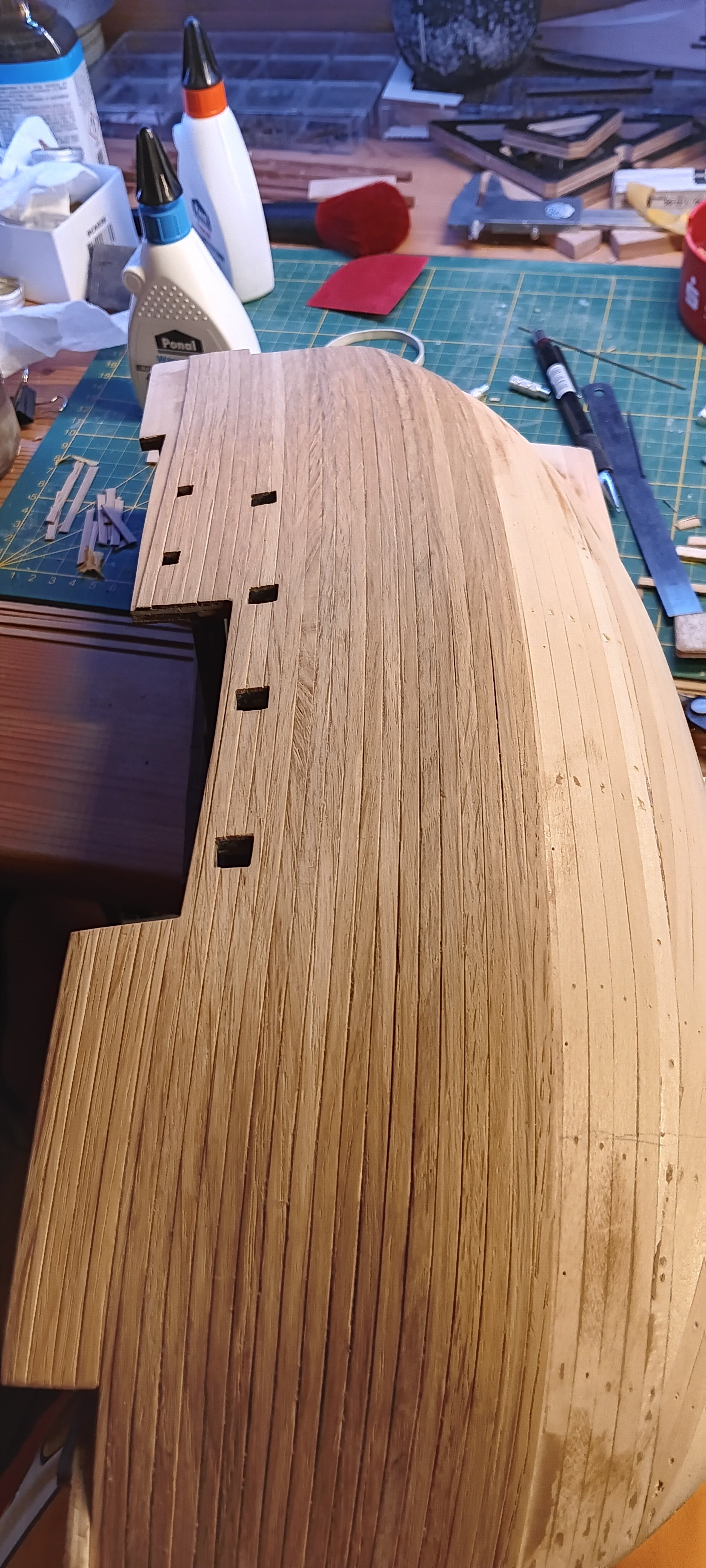
 Thank you very much for your praise. But actually, I don't think it's such a big deal. Somewhere here in the forum someone had a problem with bending Birnbaum. The lovely Chris Watton, whose kit it was, advised him to just lovingly shape the tree with finger warmth. What can I say, it works with oak too, especially if you've grown up among oak trees. I only use good old Ponal (white glue) for this. In contrast to superglue, you can still slip this for some time. Then everything is fixed with self-made wooden clamps every two to five centimeters. Screw clamps are used where this is not enough. The only trick is not to use too much of the glue, spread 3/4 of the strip width with a wet bristle brush. If any glue leaks out after clamping, wipe it away with a mini spatula. Once the glue has hardened, use the same to smooth the edges again and clean them with a brush. Then an hour has passed and it's time for the next one. By the way, I taper from the first point of the fuselage bend by a quarter of the moldings' width towards the bow, and so far I see Translated with DeepL.com (free version)
- 210 replies
-
- 3
-

-
- San Martin
- OcCre
- (and 1 more)
-
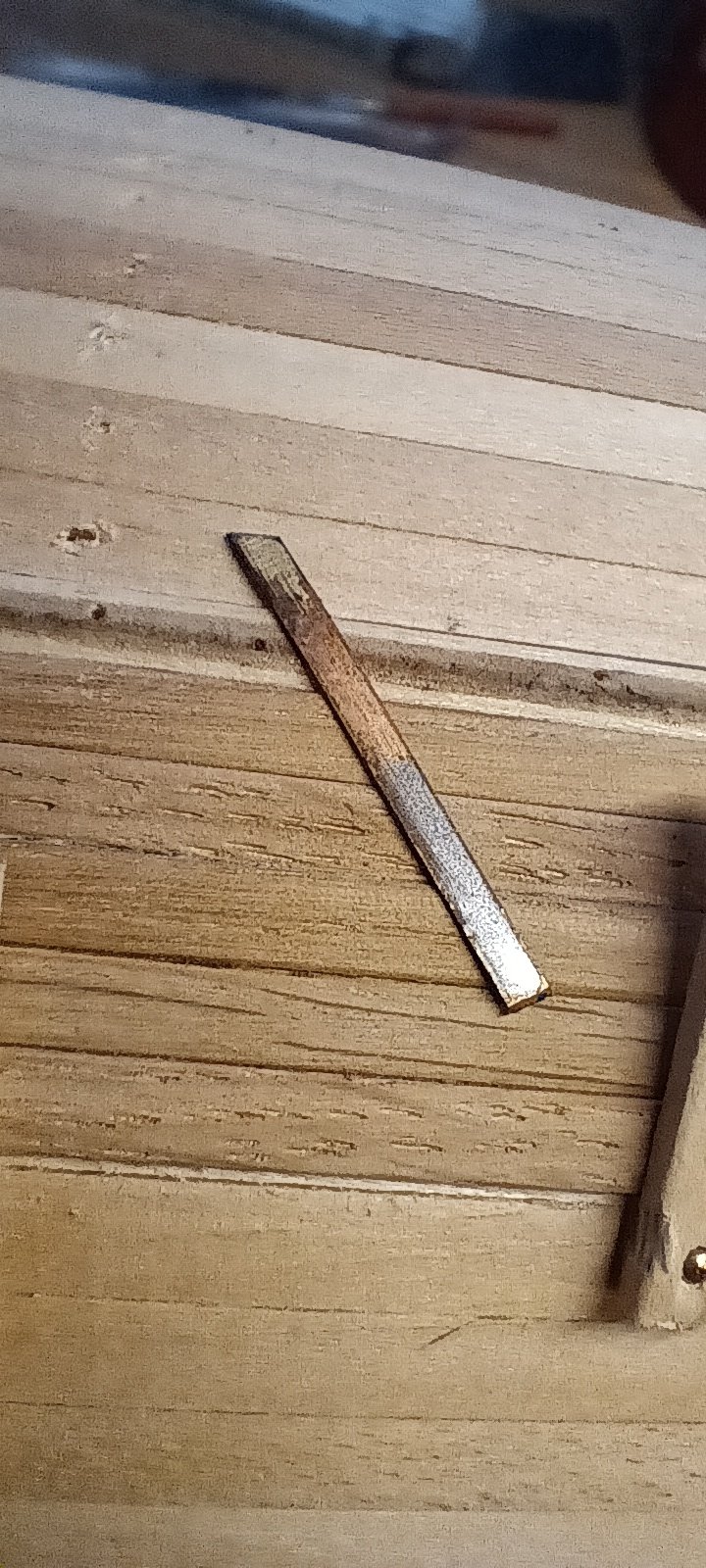
And another night with little sleep, good morning . As you can see from the pictures above, the experimentation continues. Firstly, I don't really want any chemicals on my boat and secondly, my admiralty is panicking that this build will end just as quickly as the last ones. Which would mean that I would have to spend money on a new kit again. There are no brass etched parts in this kit except for the rudder hinges. Fortunately we are saving everything, so I still have some left over from the Esmeralda to build the gun mounts. So I did a little research and found some ways of aging brass with home remedies. The thing with the zinc and red wine also worked, and it also works with white wine (Kerner Spätlese from the Einselthumer Klosterstück). Here I have now tested the vinegar vaporization variant. To do this, you take an airtight container half filled with vinegar, in this case a good Melfor. Place an elevation in it on which you place the goods to be treated. The resulting vapors will then color the brass within a day as you can see above. A trial with salt and water is currently underway, the results will follow in a few days. Have a nice day Translated with DeepL.com (free version)
- 210 replies
-
- 1
-
-
- San Martin
- OcCre
- (and 1 more)
-
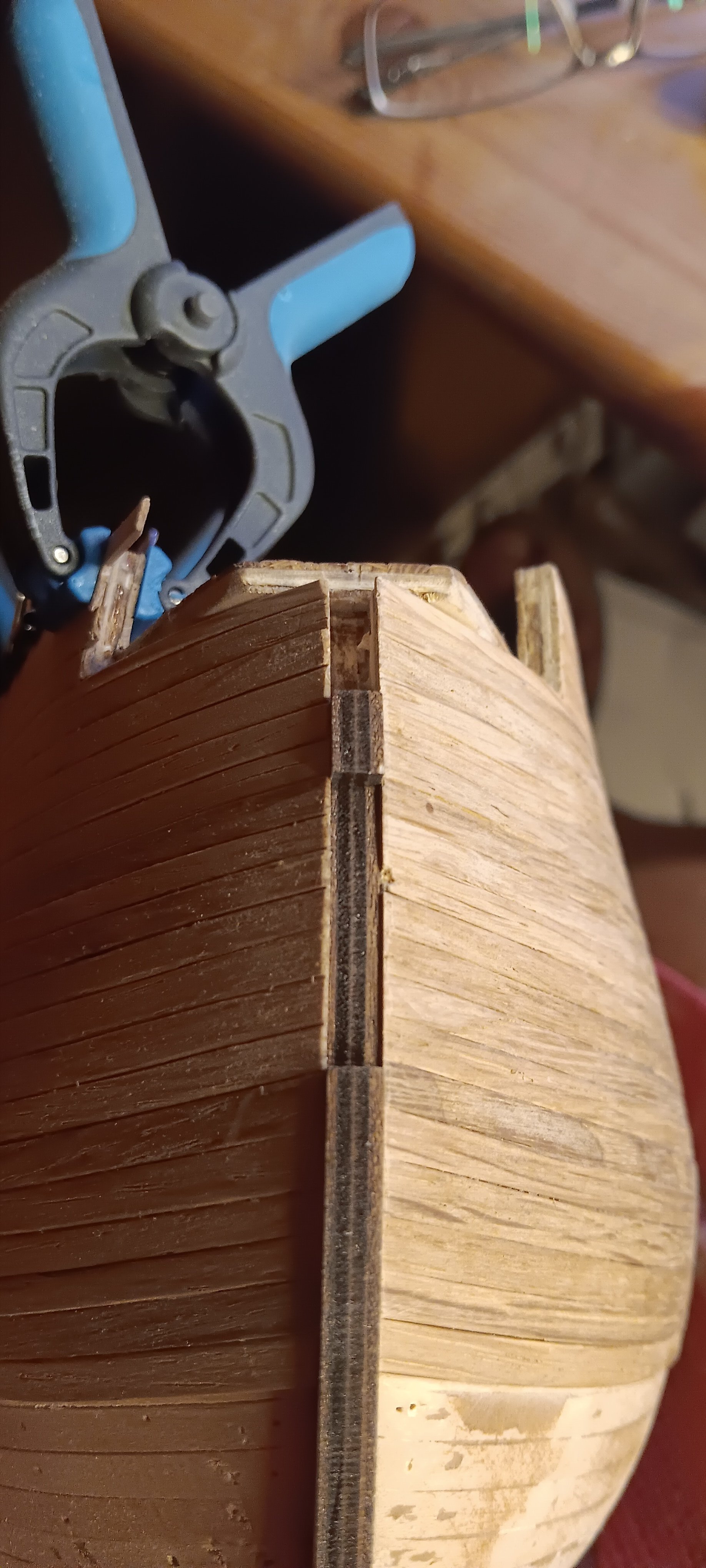
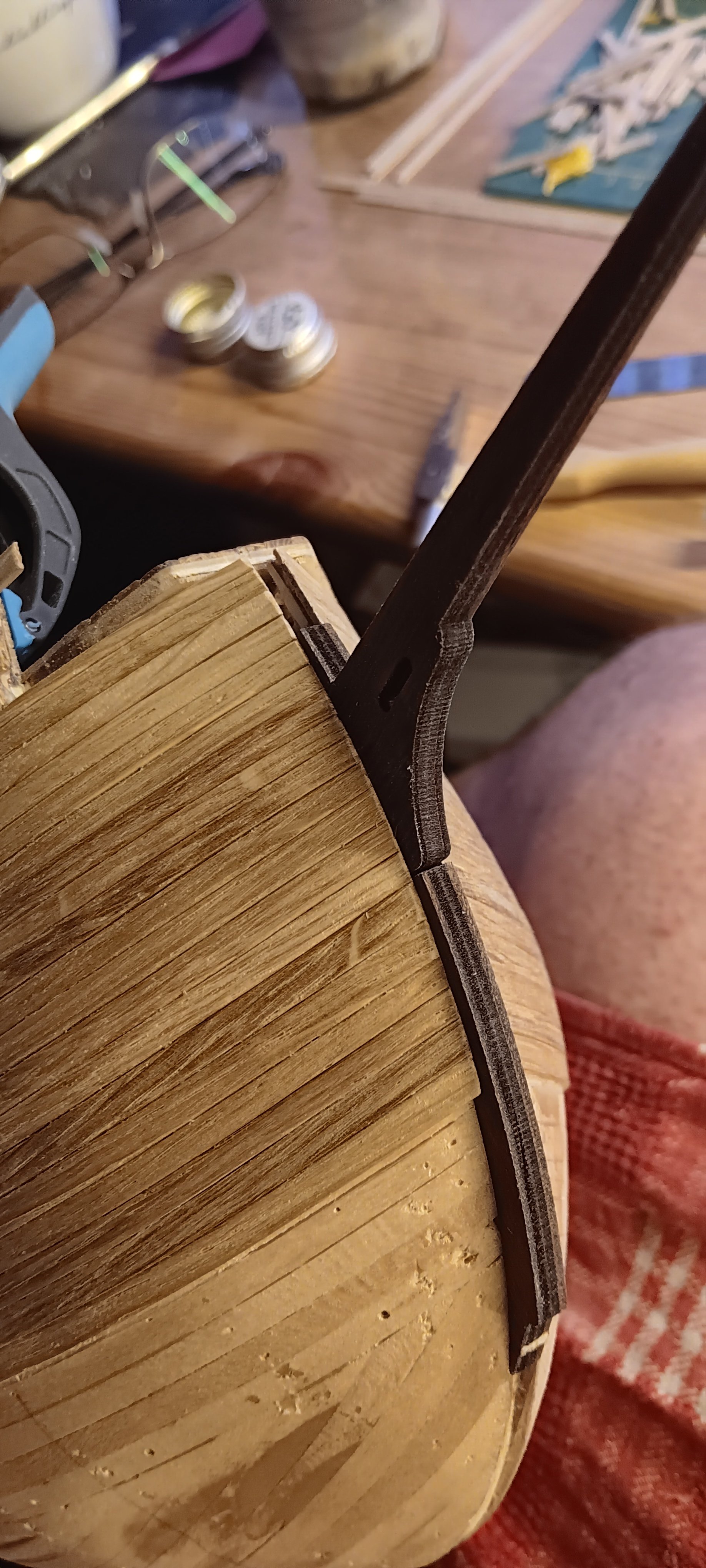
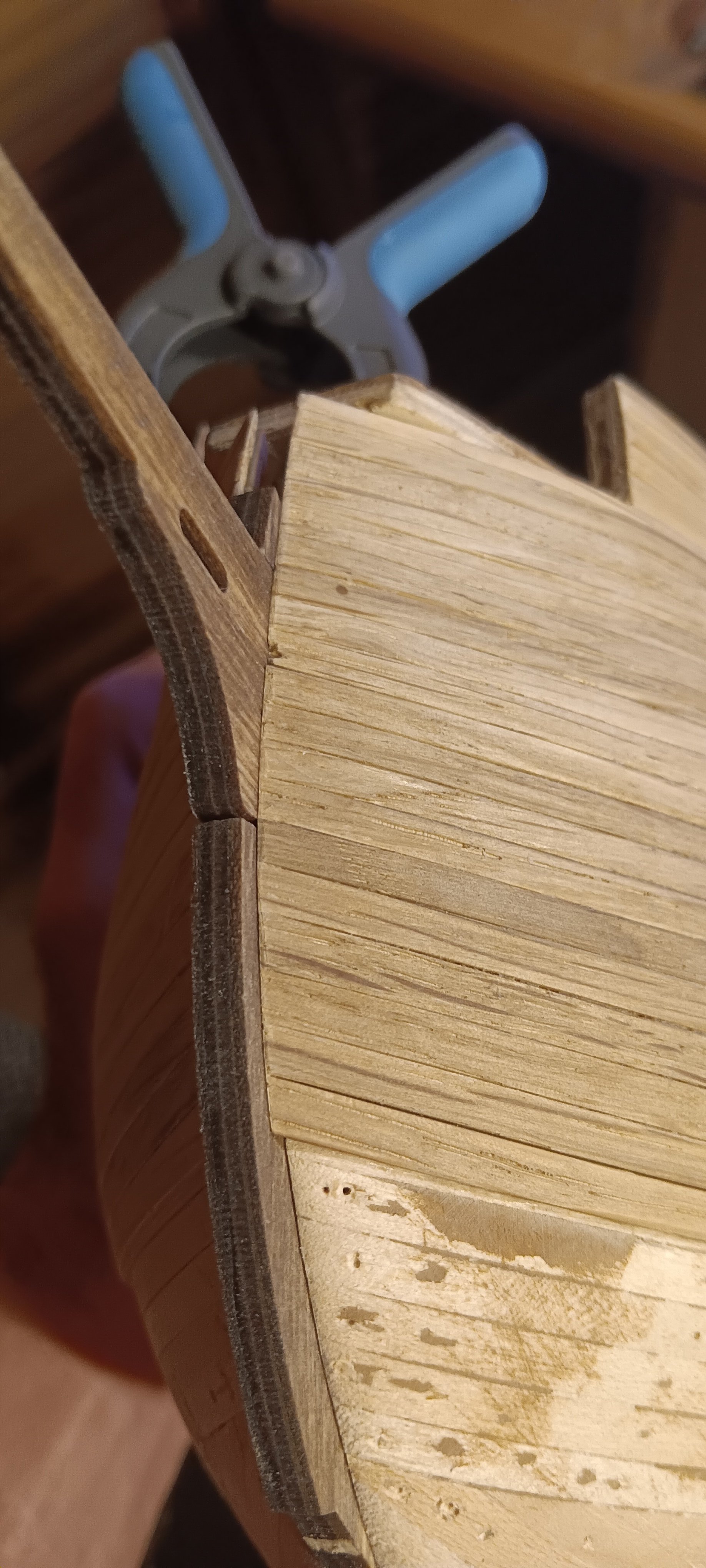
Hello friends of well-kept wood. Since I'm still in the experimental phase, I'm going about this build a little differently. On the last two ships I installed the keel before the planking. Here I thought I would test the Occre variant. It doesn't work too badly, just installed dry. Let's see, maybe I'll even use the plywood version from the kit instead of an oak replica. Greetings
- 210 replies
-
- 1
-
-
- San Martin
- OcCre
- (and 1 more)
-
I think the two frames in front of the transom are swapped
-
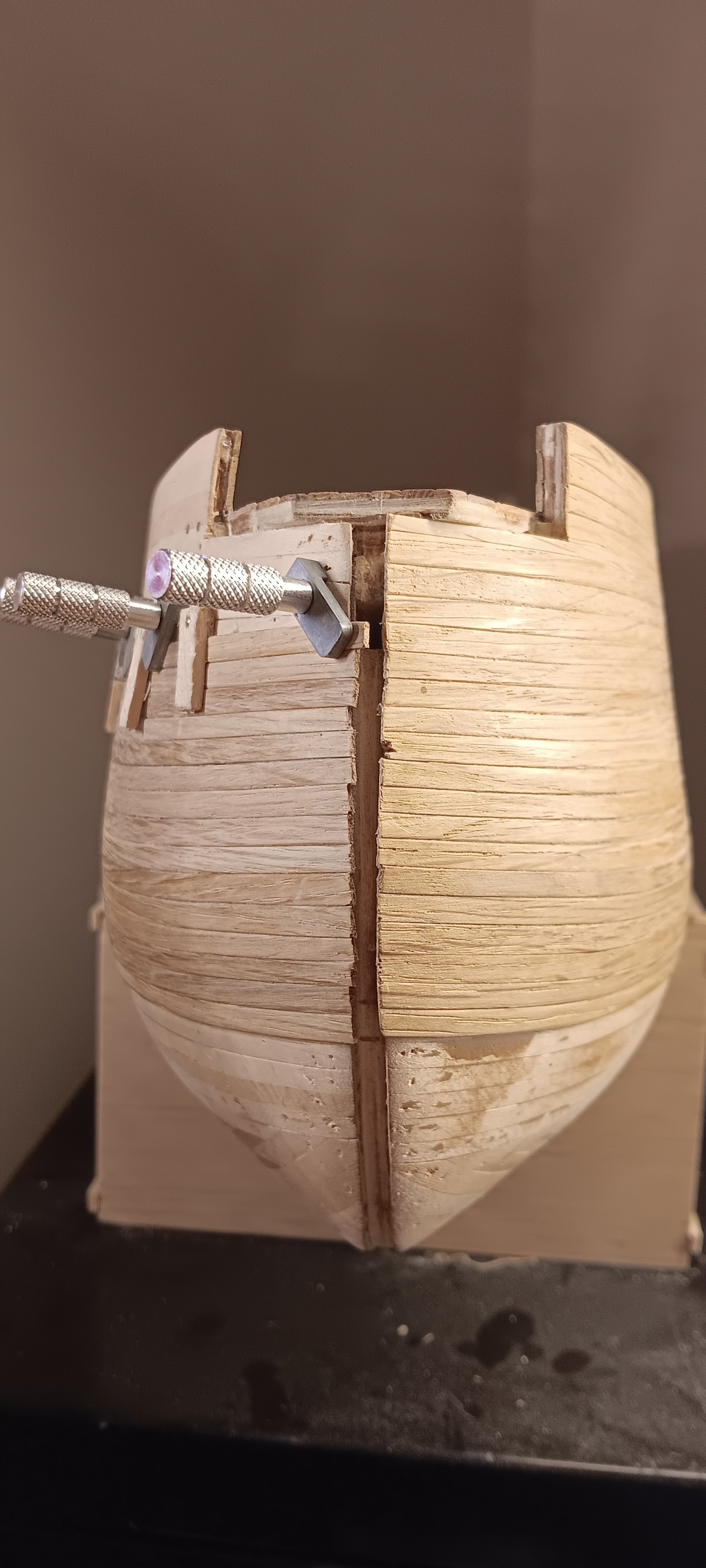
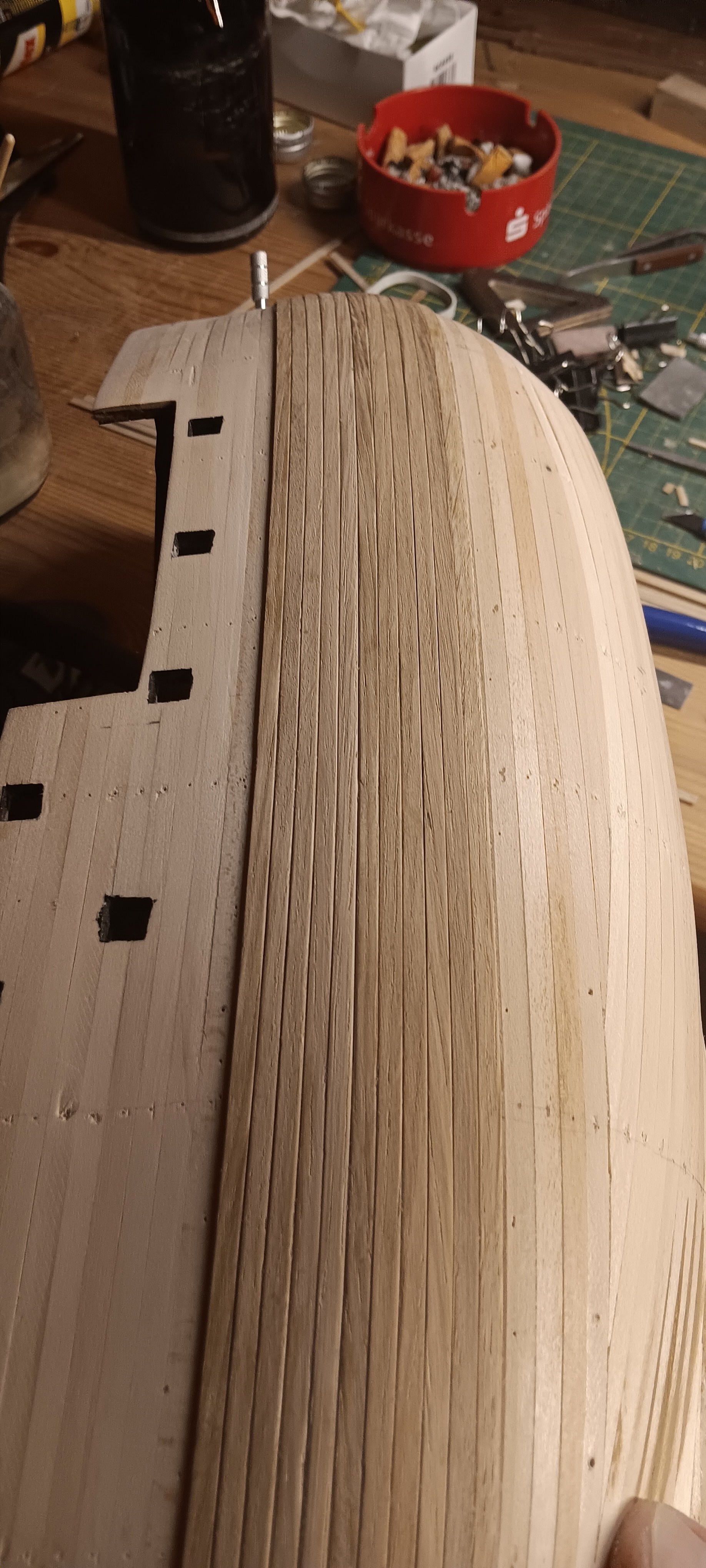
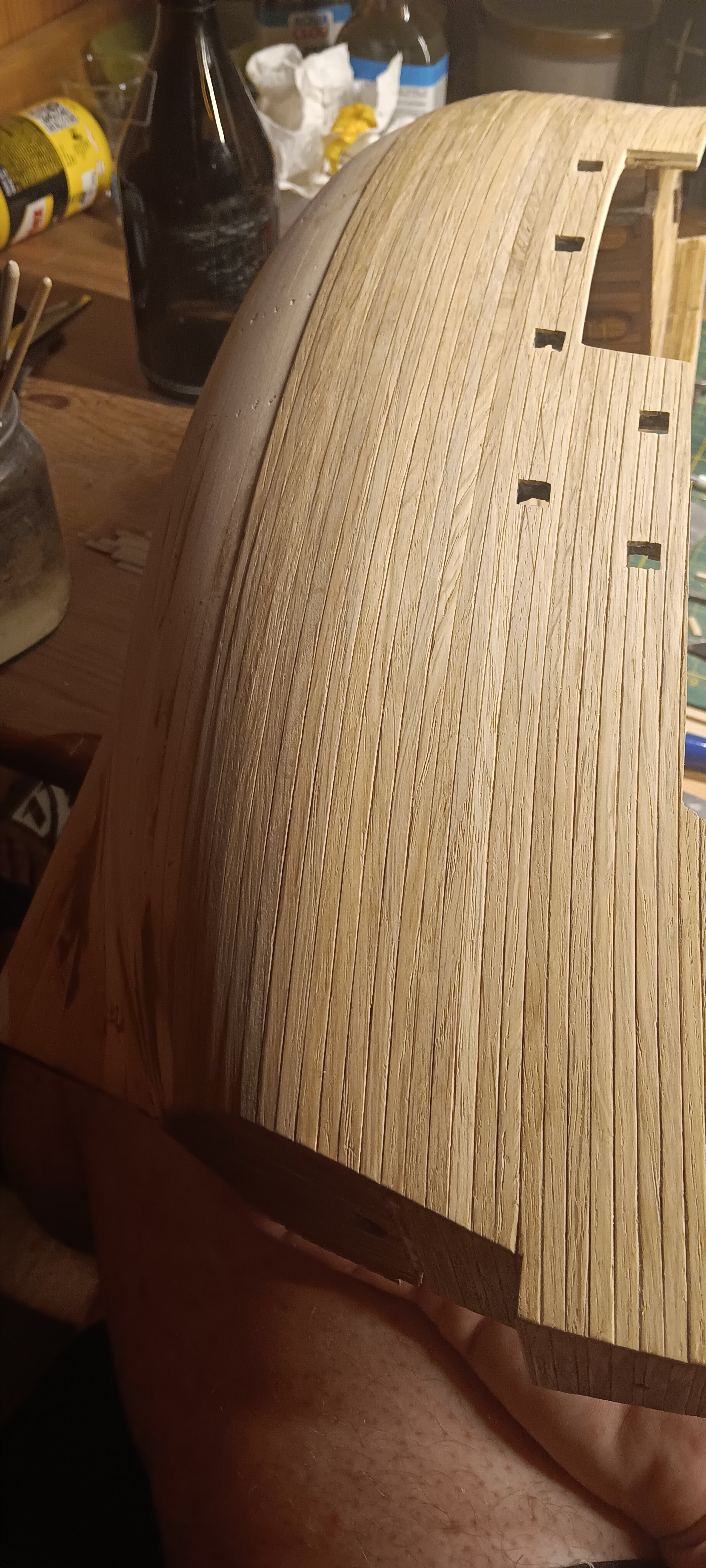
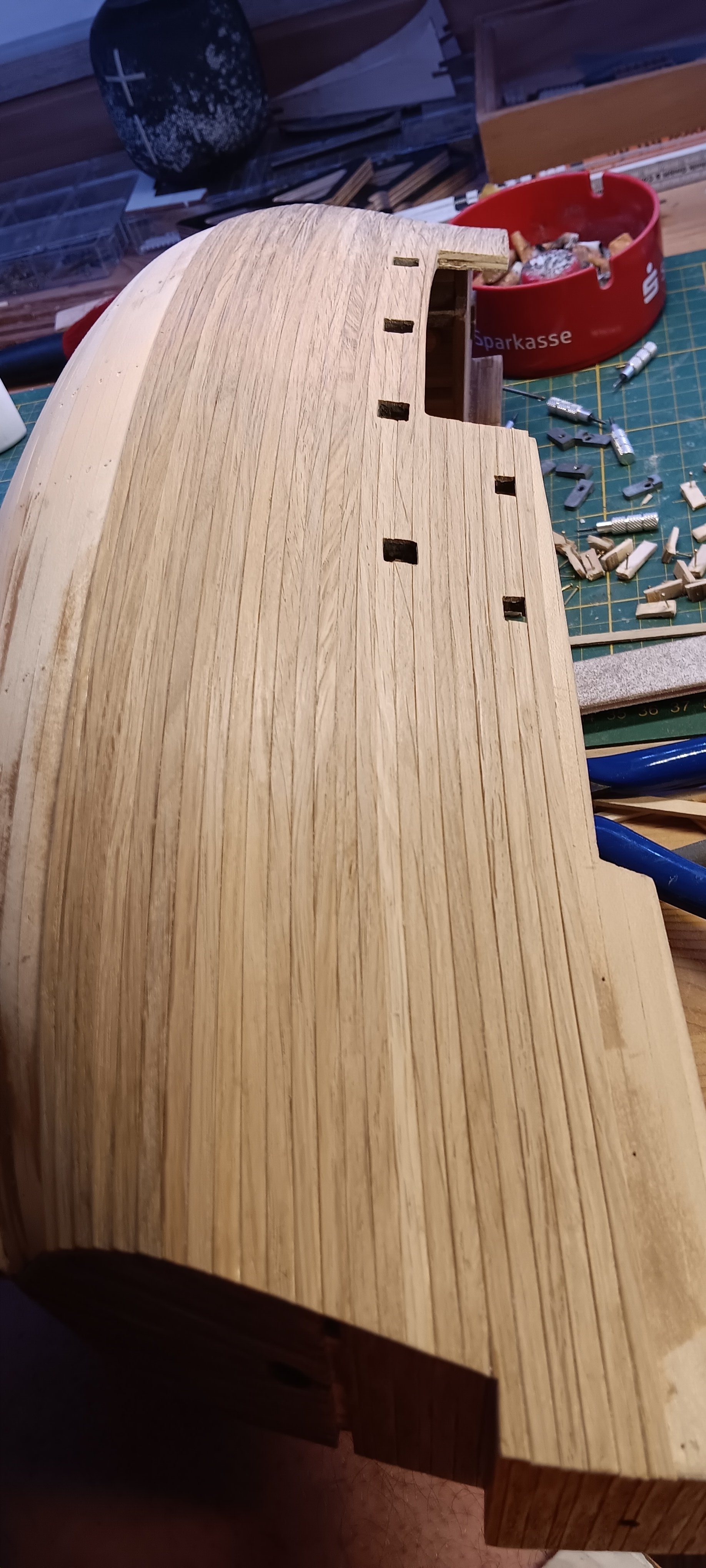
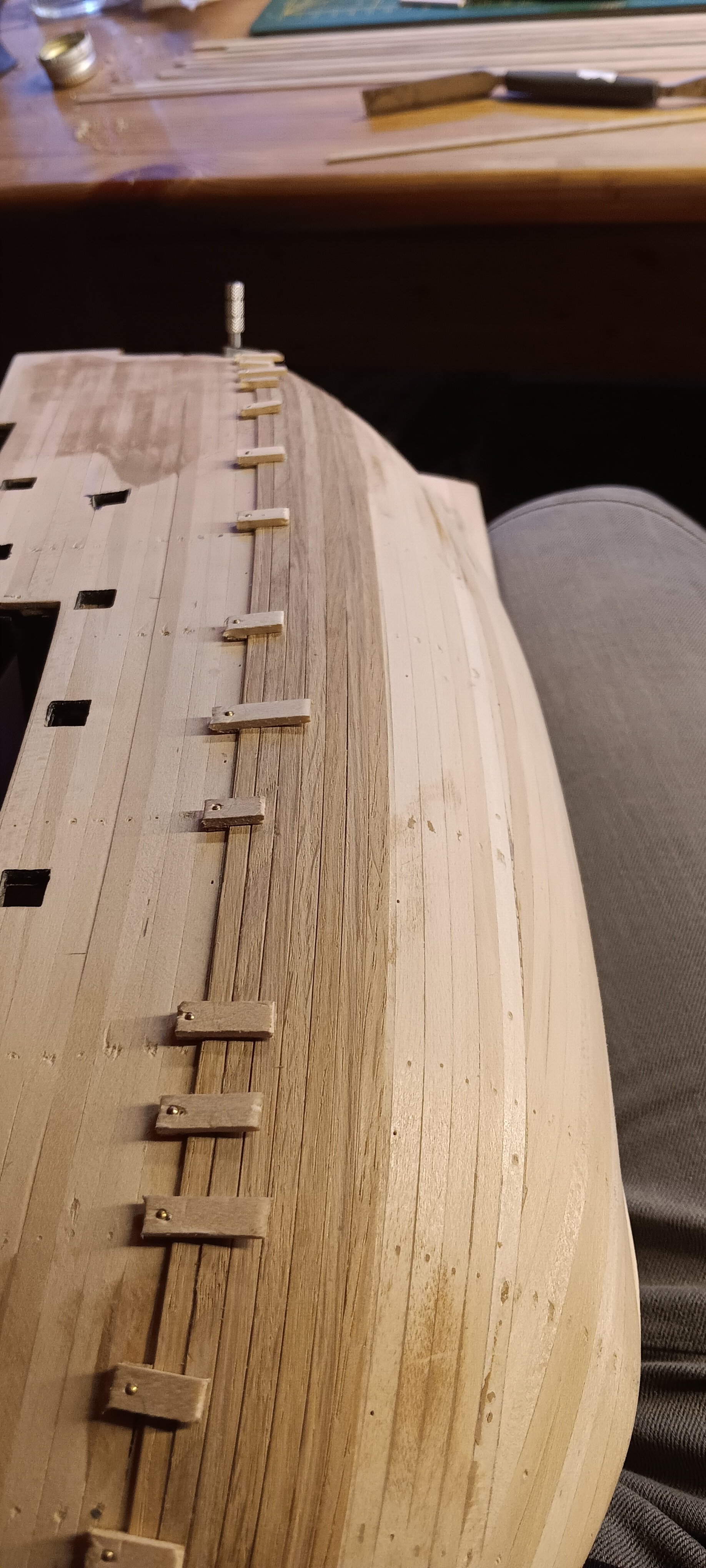
Hello lovelies, As you can see, the “every skirting board is ready before installation” thing is quite a tedious business. Each of these strips takes about an hour and a lot of love before it reaches its destination. And I can still be happy that these strips can be bent quite well without watering or steaming, despite the oak. Originally, if the material had been unruly, I had planned to make a second fuselage to bend the strips correctly. The upshot of this is that if the Palatine has such strange ideas again, send me the men with the straitjacket and have me committed. Greetings from the corner of the world where people are strange Translated with DeepL.com (free version)
- 210 replies
-
- 1
-
-
- San Martin
- OcCre
- (and 1 more)
-
Have a nice Day with your wife Bob. Greetings from me to her 48 Years is a lang time. I have 32 this year.
- 207 replies
-
- 4
-

-
-
- vanguard models
- Duchess of Kingston
- (and 1 more)
-
OcCre Bounty Launch parts ID - help needed
Pfälzer replied to Highlander's topic in Wood ship model kits
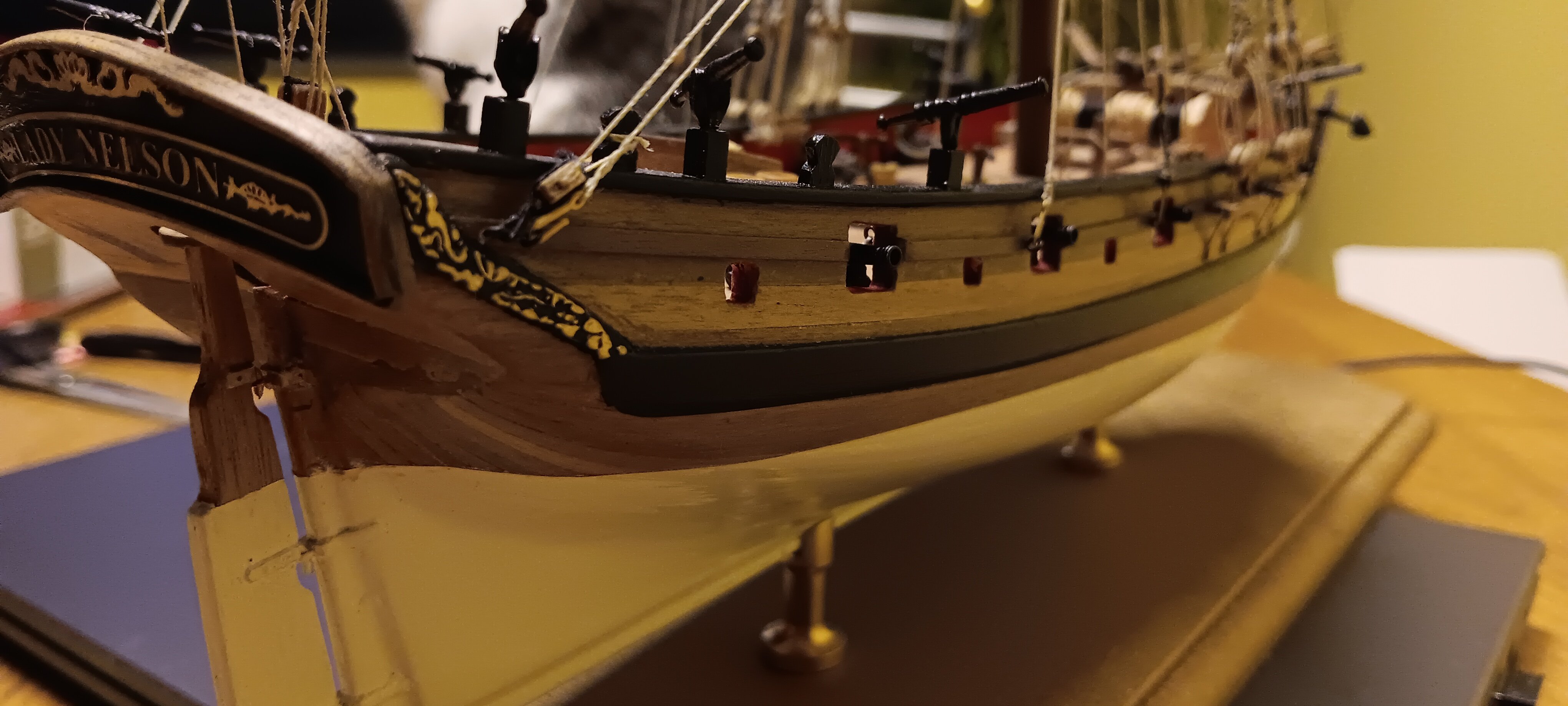
Well, I'll blend in. Occre replaces missing parts without any problems, as I did with the Esmerald. Two brass etched parts were missing, they sent me the complete plate as a replacement. I'll do the staining after assembly. But I only use white glue for gluing. You just have to use a spatula to remove anything that sticks out after each strip on the fuselage, for example. After curing, I also go over it with 1000 grit sandpaper and that's it. I think the problem usually arises when using superglue, which I have not used since the Lady Nelson for this reason. Have a nice Sunday Translated with DeepL.com (free version) -
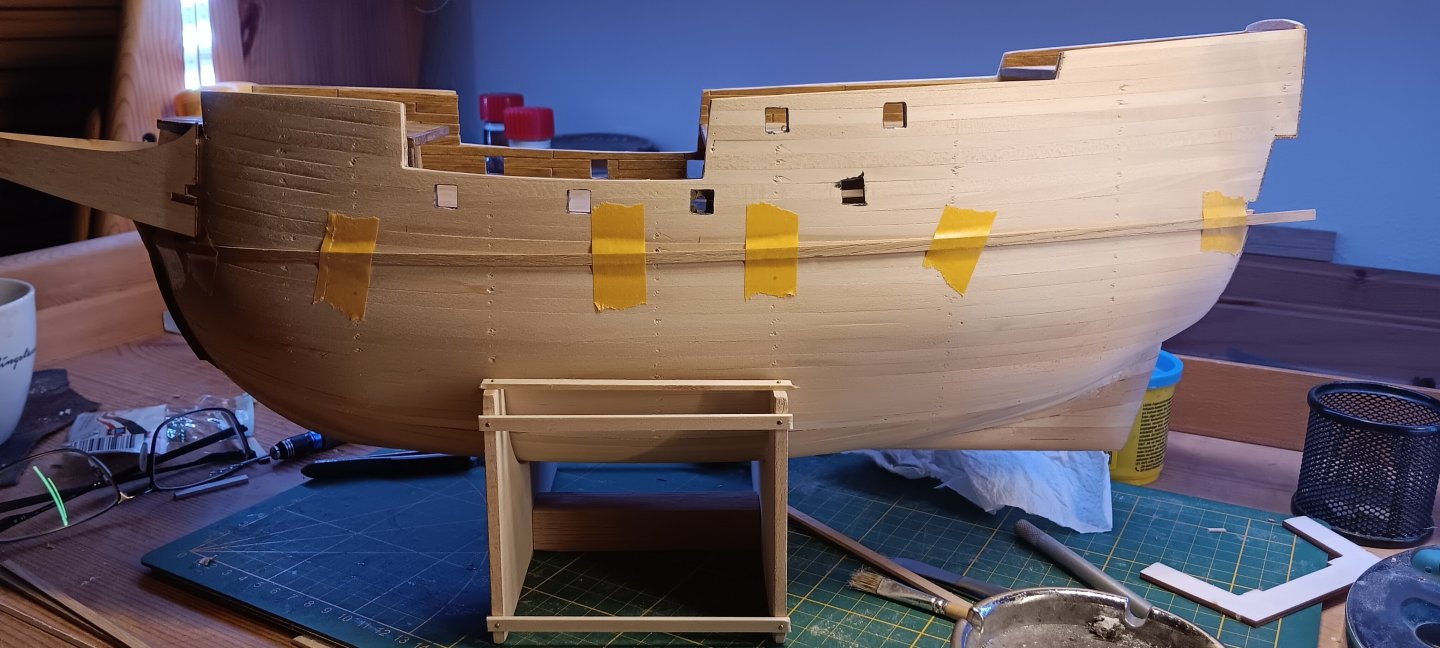
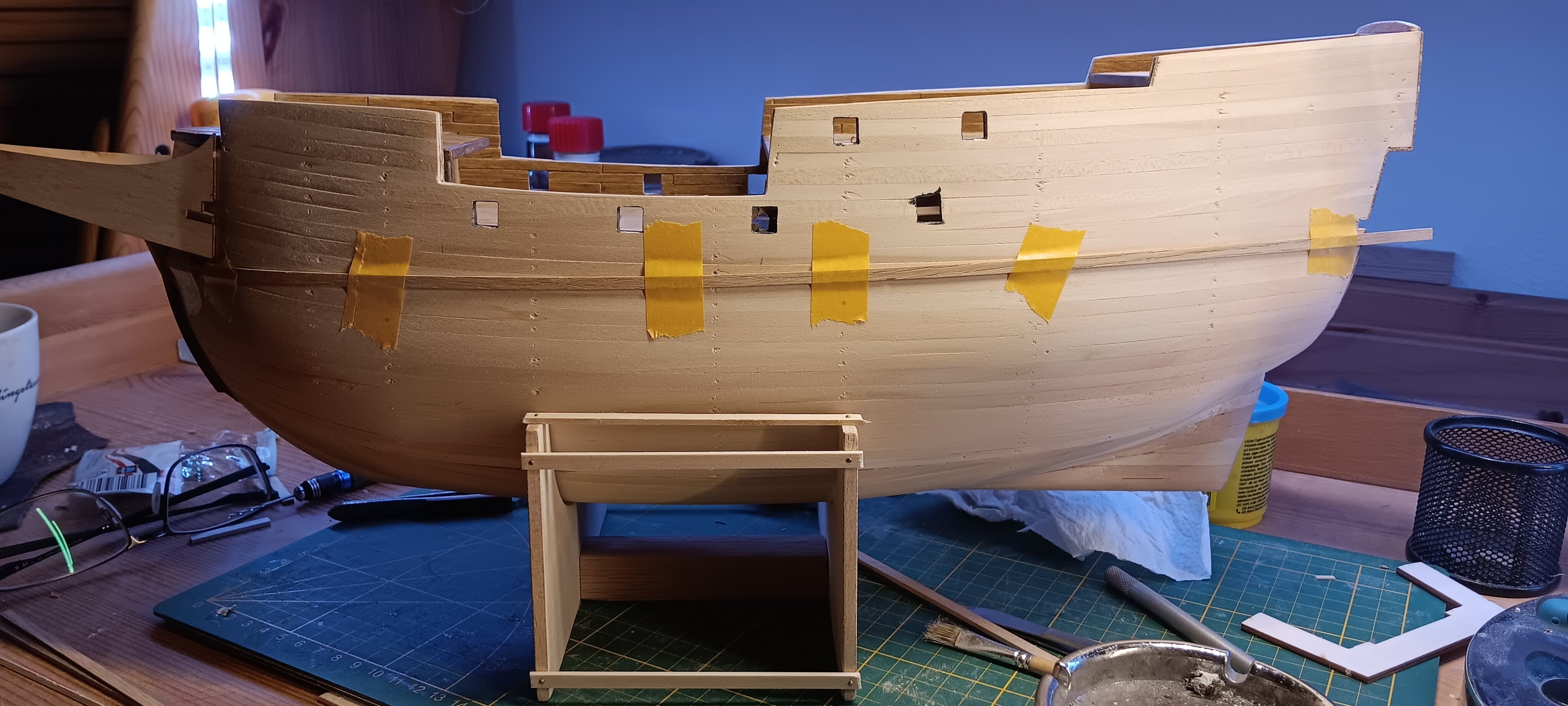
Upps, im Kit sind nicht genug Räder. Also müssen diese Teile warten, bis Occre den Rest schickt. So, jetzt fange ich mit der zweiten Beplankung an. Ich glaube, das ist die Stelle, an der ich anfangen kann. Was denkst du, ist es richtig oder zu gerade?
- 210 replies
-
- 4
-
-
- San Martin
- OcCre
- (and 1 more)
-
San Martin by MikkiC - Dusek - 1:72
Pfälzer replied to MikkiC's topic in - Kit build logs for subjects built from 1501 - 1750
You see, I struggled with strips twice as thick and sanded them down to half the size. The idea of using toothpicks is not at all unwise. Great thinking -
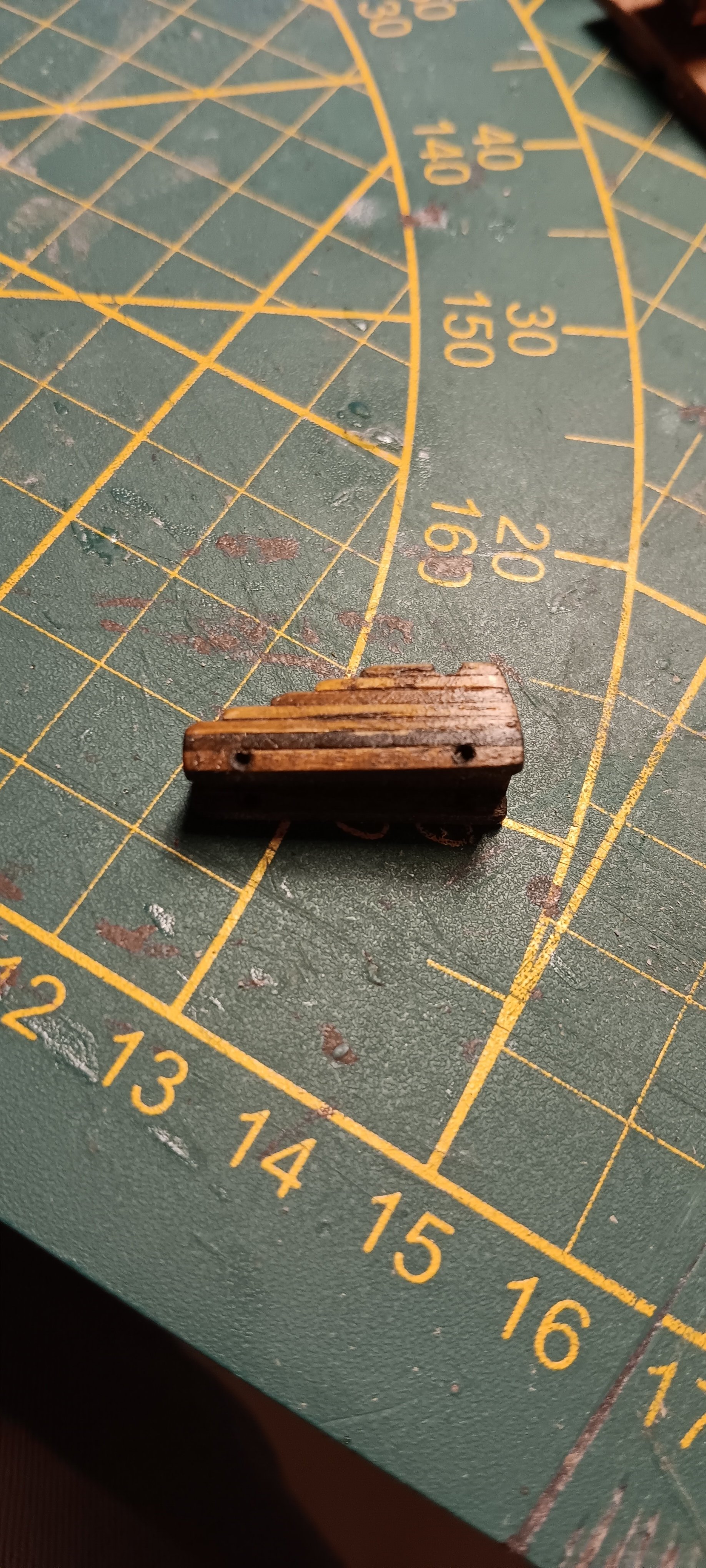
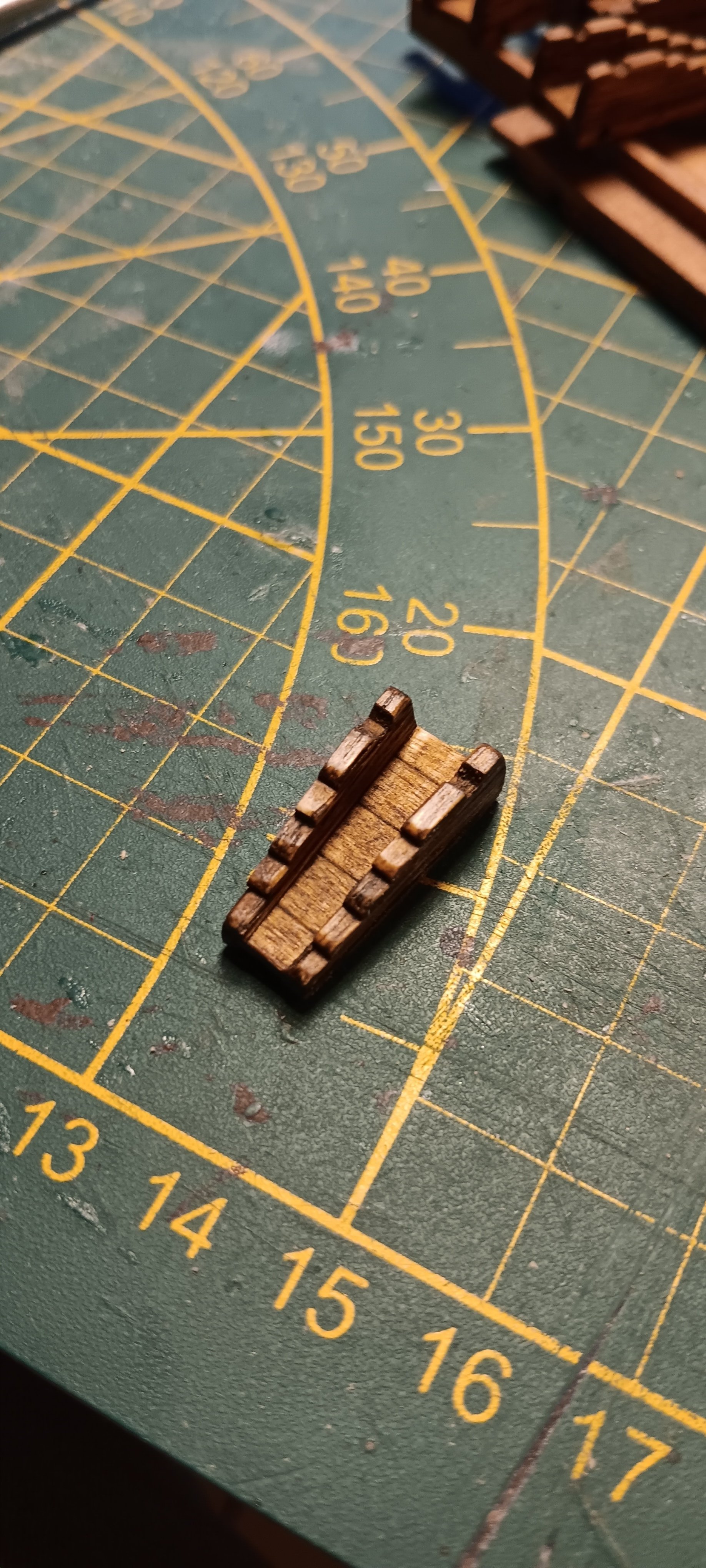
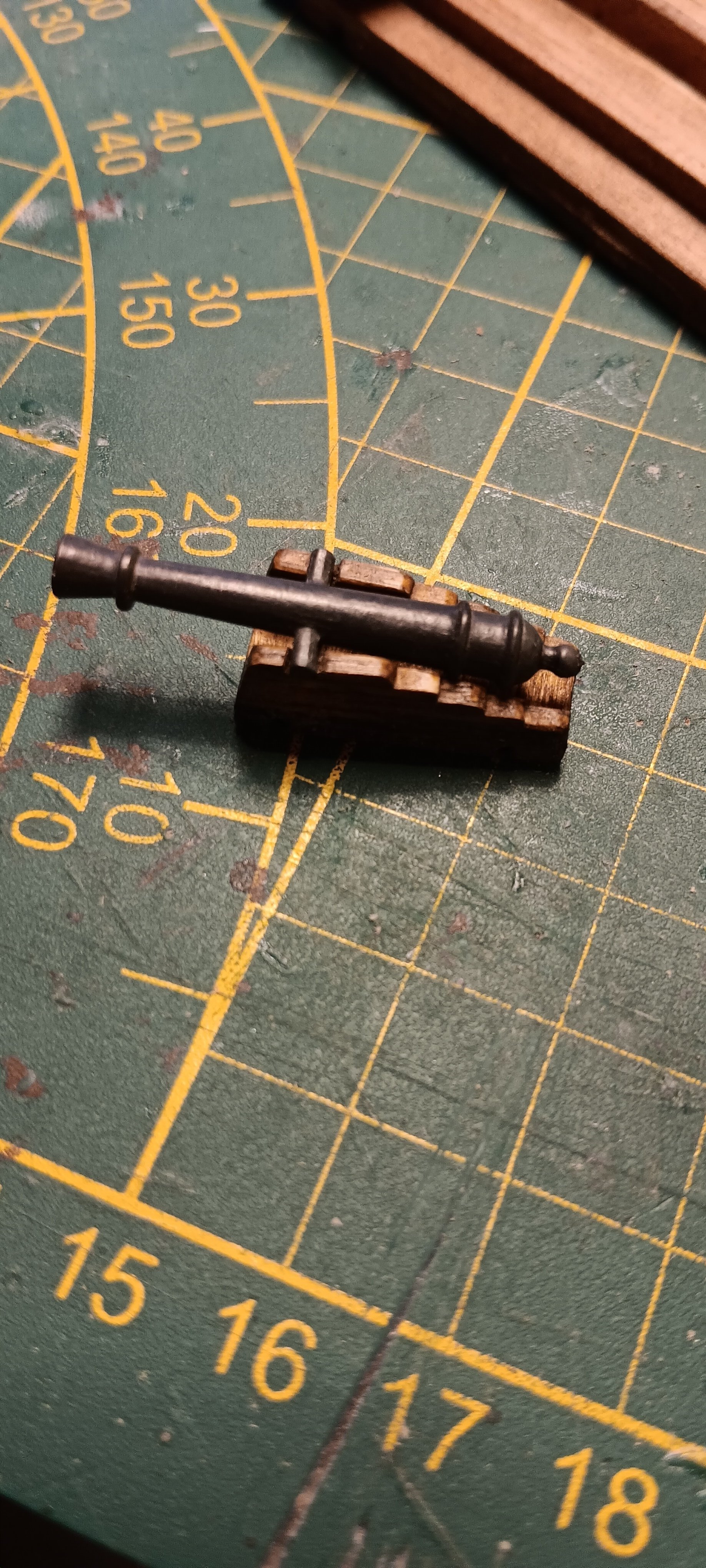
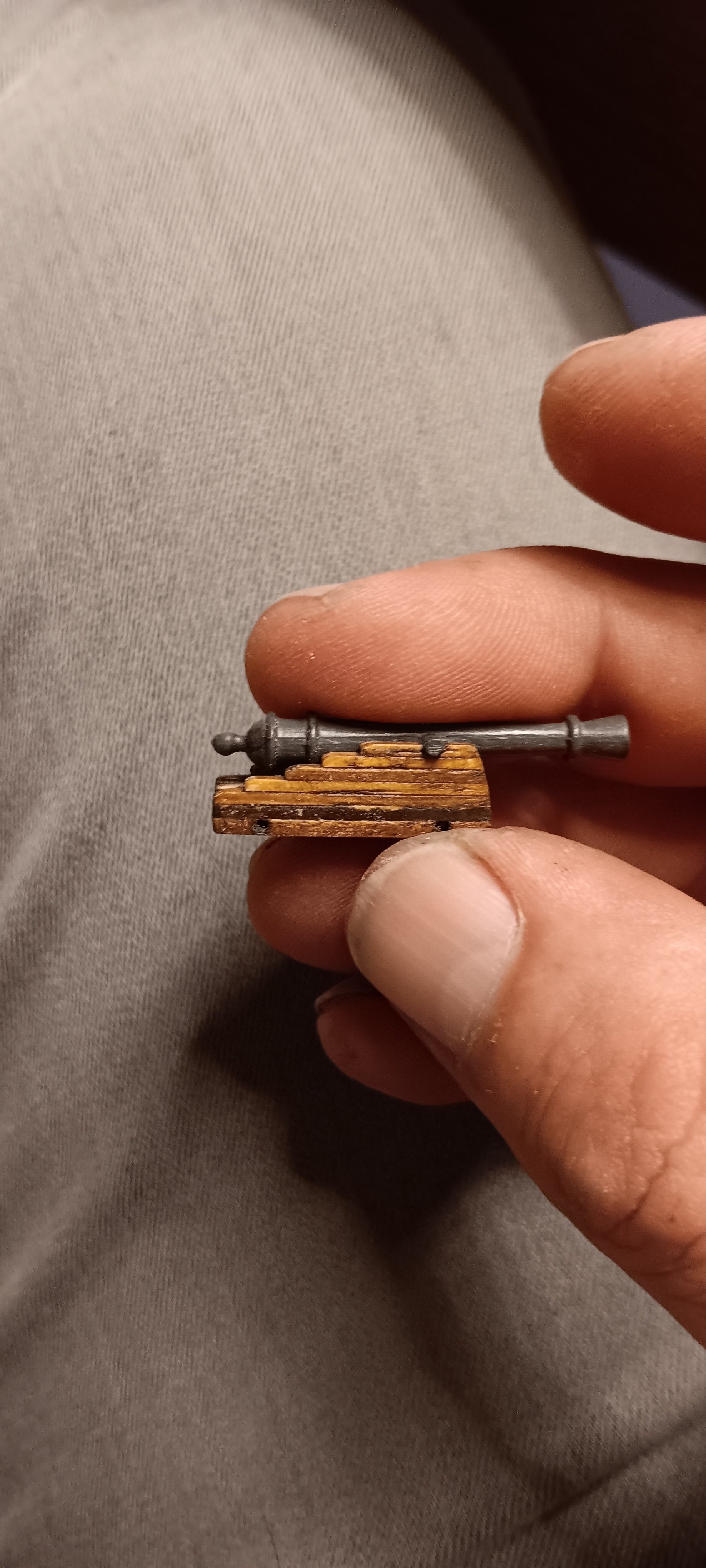
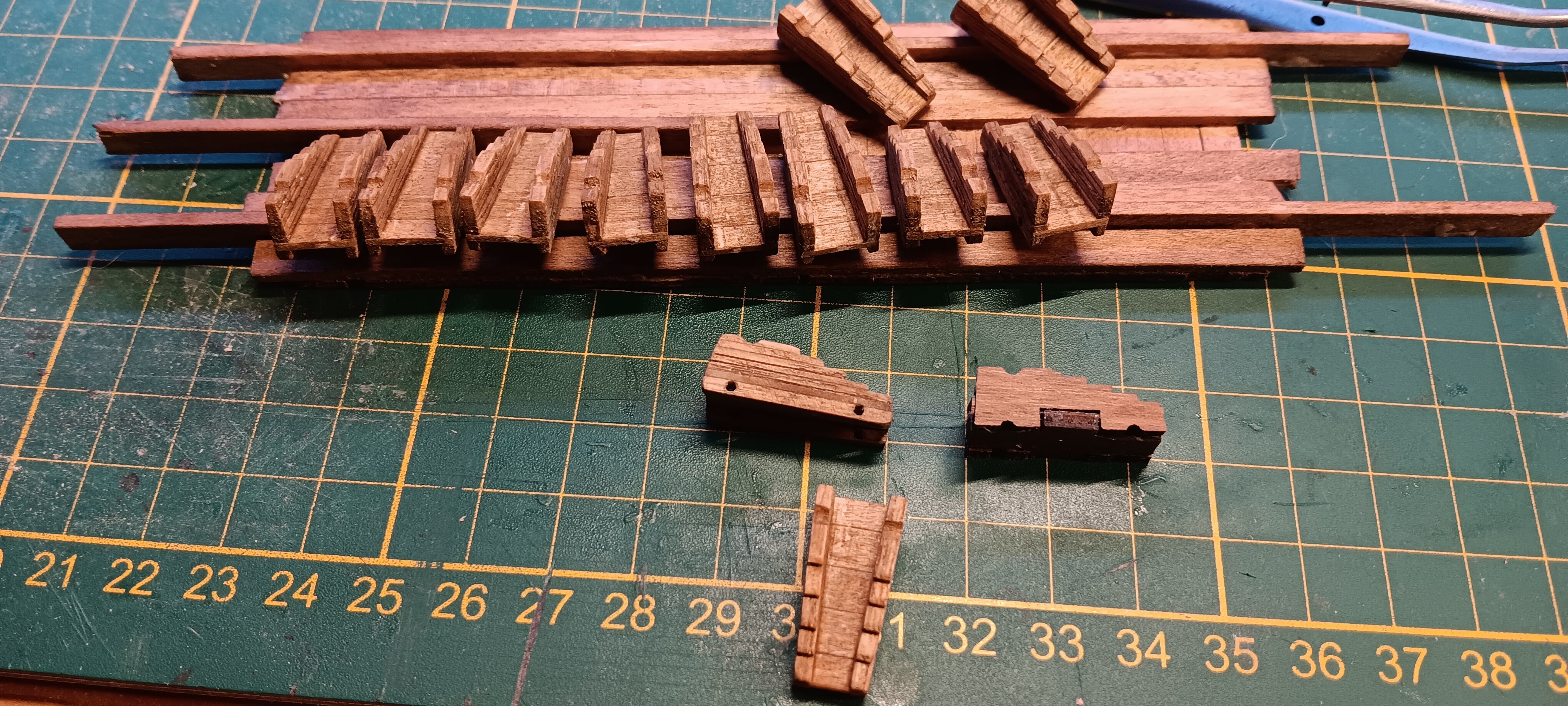
've been working a bit on the gun mounts over the last few days, and once again I don't like the kit part. So I took 1x2mm oak and glued several strips together and gave it the first coat of stain. I also stained the tail section for the first time. I wanted to see if I had worked cleanly enough to avoid glue stains before I started planking the hull in this way. I will also have to start thinking about where exactly I will add the first strip. The building plan calls for starting at the so-called master plank, which sits very low towards the keel. I tend to proceed from top to bottom. The plan also calls for the keel to be fitted after the second planking, which I haven't done yet. I have my doubts, especially with the oak, which is quite prone to splintering when sanded. So far I've done well with fitting after the first planking. Greetings Translated with DeepL.com (free version)
- 210 replies
-
- 2
-
-
- San Martin
- OcCre
- (and 1 more)
-
It's going like hotcakes at your shipyard. It must be great fun to work with such perfect material. Greetings from the Palatinate
- 207 replies
-
- 5
-
-
-
- vanguard models
- Duchess of Kingston
- (and 1 more)
-
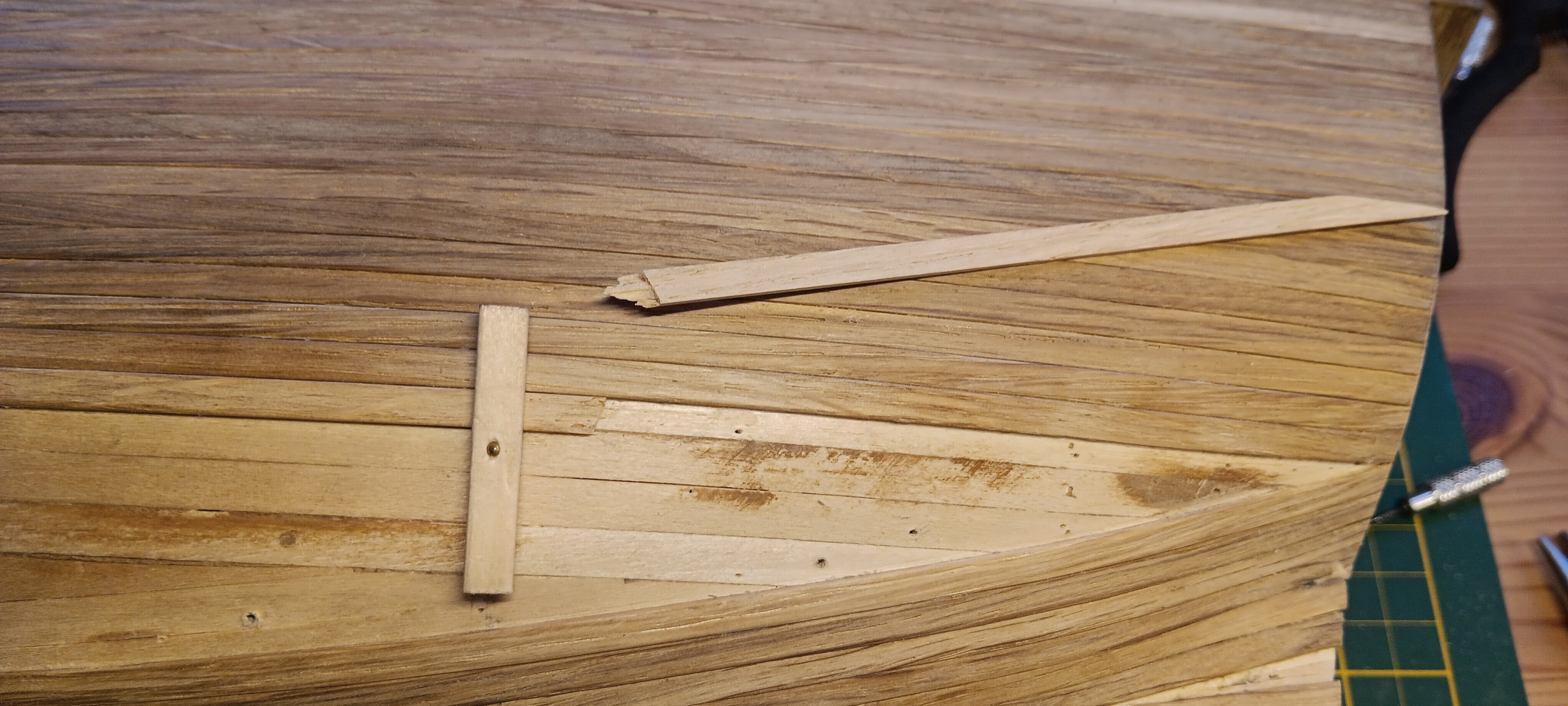
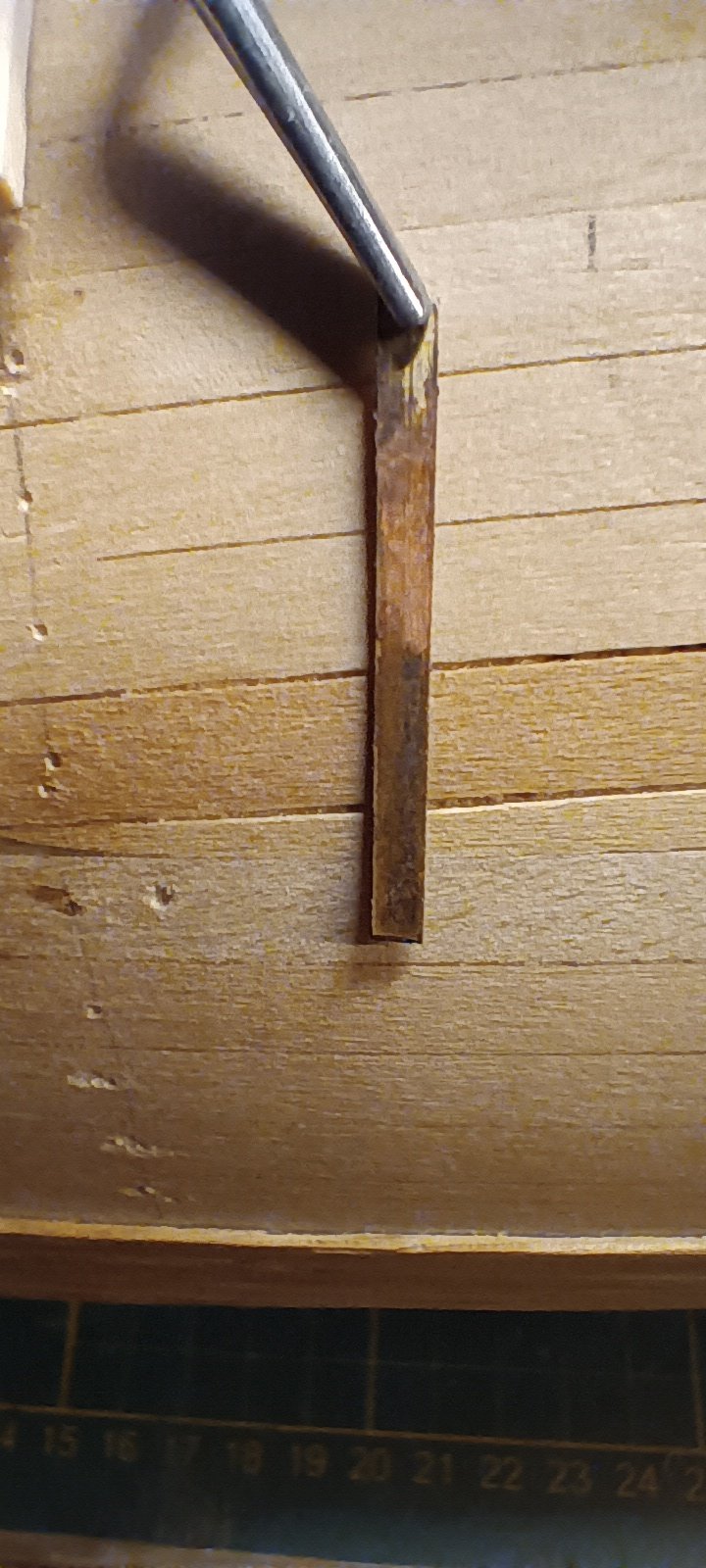
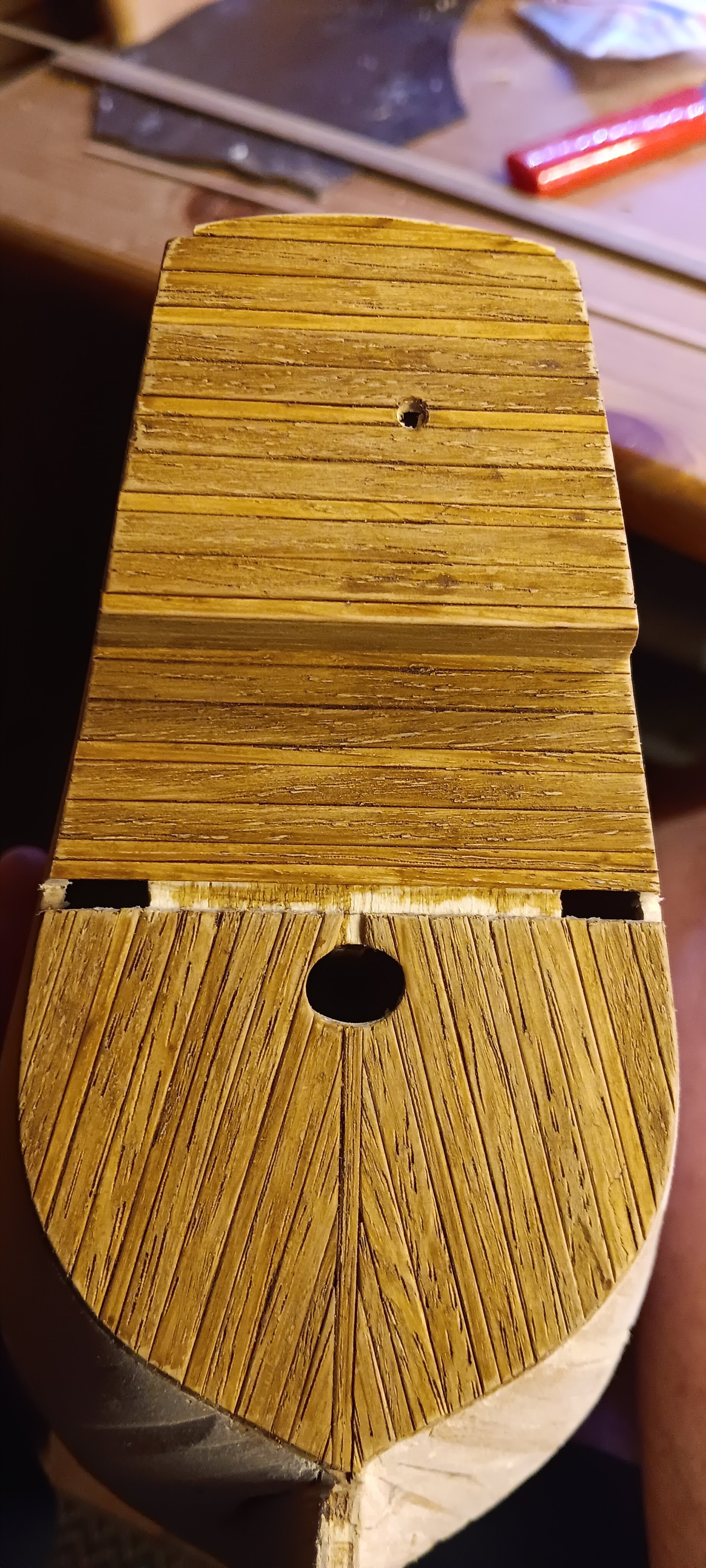
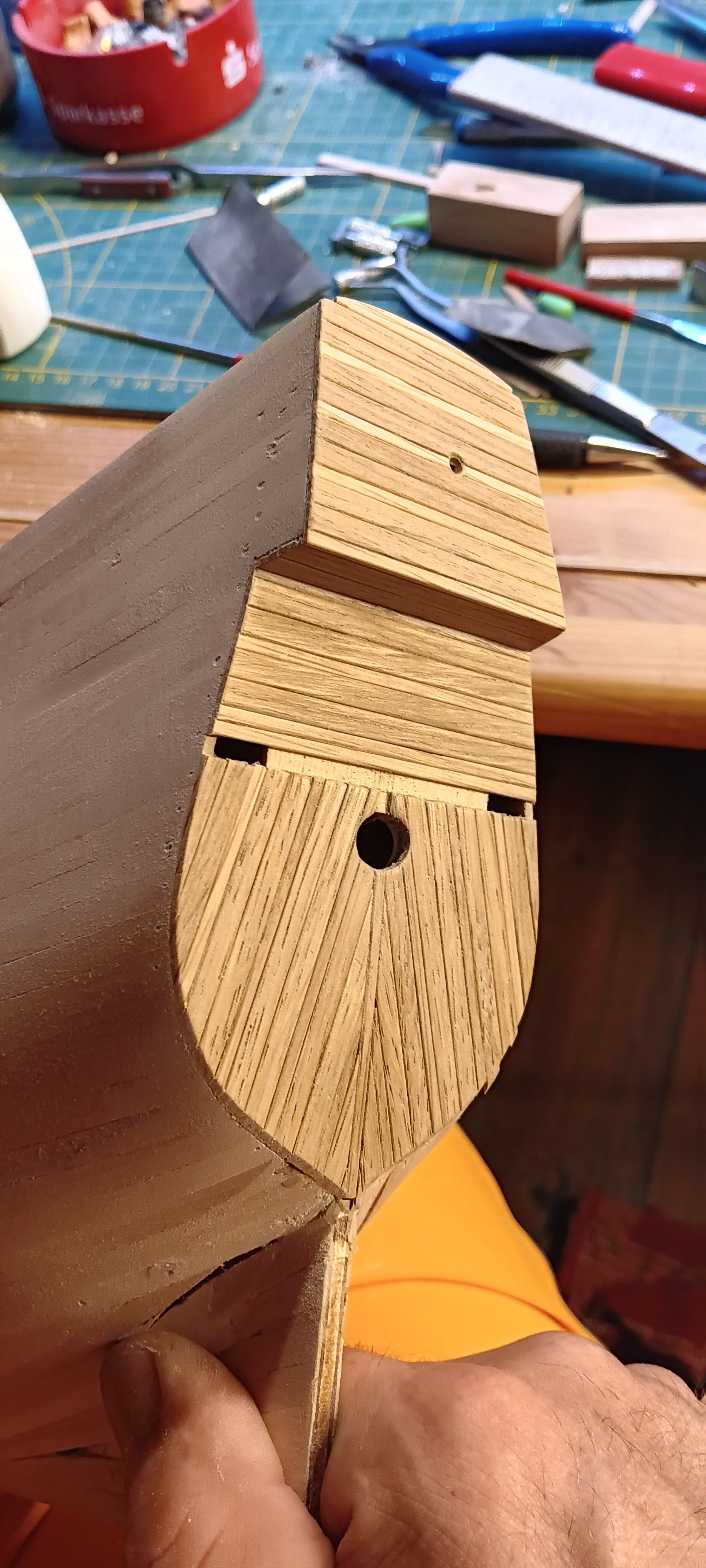
The written version of the photos. As you can see, I've finished the transom so far. No big deal, everything is straight. I just wanted to take the boredom out of it a little with the thinner strips. I could have done without the upright center plank, the keel goes over it. Then to the matter of the oak and its willingness to cooperate. It really leaves a lot to be desired. In the raw state, the strips can be bent and turned so that it is a pleasure to work with them. Only the sanding is a little exciting. Remember, each strip is sanded by hand before assembly, don't use a Dremel. A little too much tension when you let it slide through the sandpaper and it splinters like something else. If it is then stained or even glued to the model, the whole thing becomes a stress test. It hardens incredibly so that cutting with a scalpel is almost impossible. Sanding against the grain becomes a game of poker. Here, too, the good oak splinters faster than you can say Babb. I've been working on the gun ports since yesterday evening. Only possible with a very fine key file, patience and a lot of love. That's why, unlike the interior planking, I won't be staining the hull until all the moldings are in place. Everything is only glued with Ponal under pressure, I don't use superglue under the wood. Have a nice Sunday Translated with DeepL.com (free version)
- 210 replies
-
- 3
-
-
- San Martin
- OcCre
- (and 1 more)

Our Emblem ®
