

Cathead
-
Posts
3,557 -
Joined
-
Last visited
Content Type
Profiles
Forums
Gallery
Events
Everything posted by Cathead
-
 Kurt & Roger, Any insights into the whaleboat-like craft shown in the final photo, which as Kurt noted is more similar to the kit boats? I didn't know anything like that was used on the rivers, I assumed everything had a flat transom like a regular rowboat. The photo boat seems shallower draft than the kit boats, too, unless I'm seeing it wrong. Mike, thanks, but I'm an amateur compared to Kurt and others. I can't wait to learn more about this from you and the rest.
- 225 replies
-
- 3
-

-
- chaperon
- model shipways
- (and 1 more)
-
Cool, can't wait to see what you do with her. Thanks for the kind words.
-
Hey, Mike, welcome back. I'm so glad to see a new log for this kit, as an American riverboat aficionado. I'll be very interested in following along and learning more about what the kit is like, as from afar it seems to be one of the few reasonably accurate steamboat kits out there.
- 225 replies
-
- 6
-
-
- chaperon
- model shipways
- (and 1 more)
-
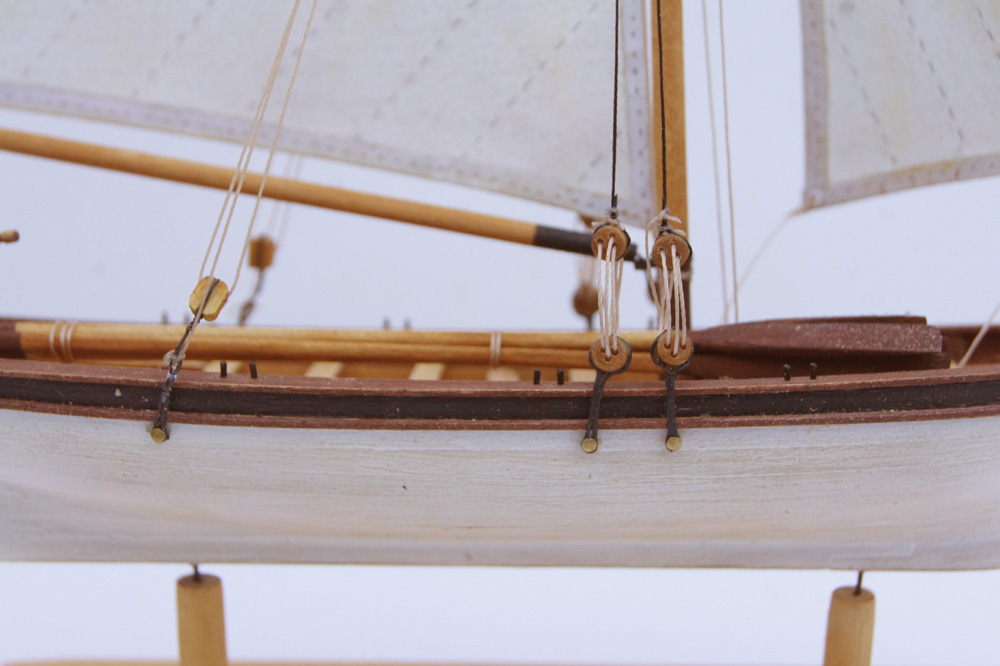
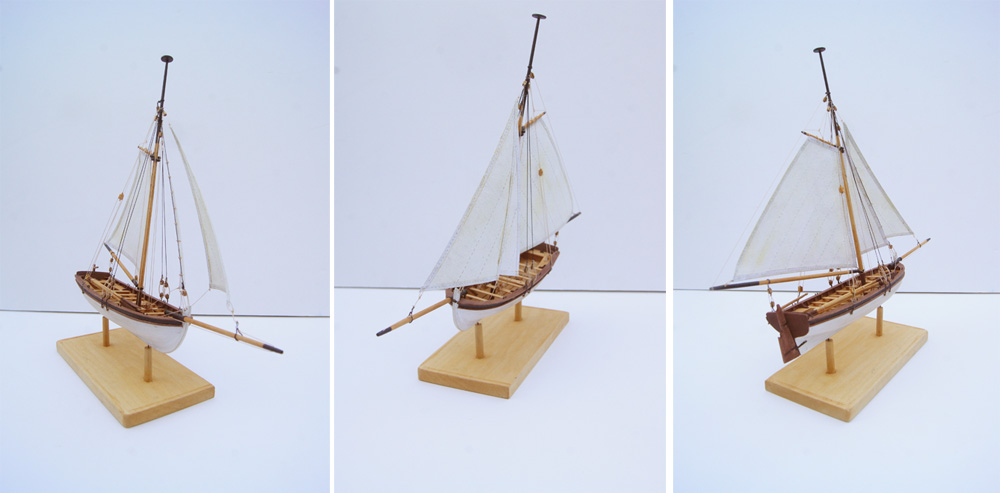
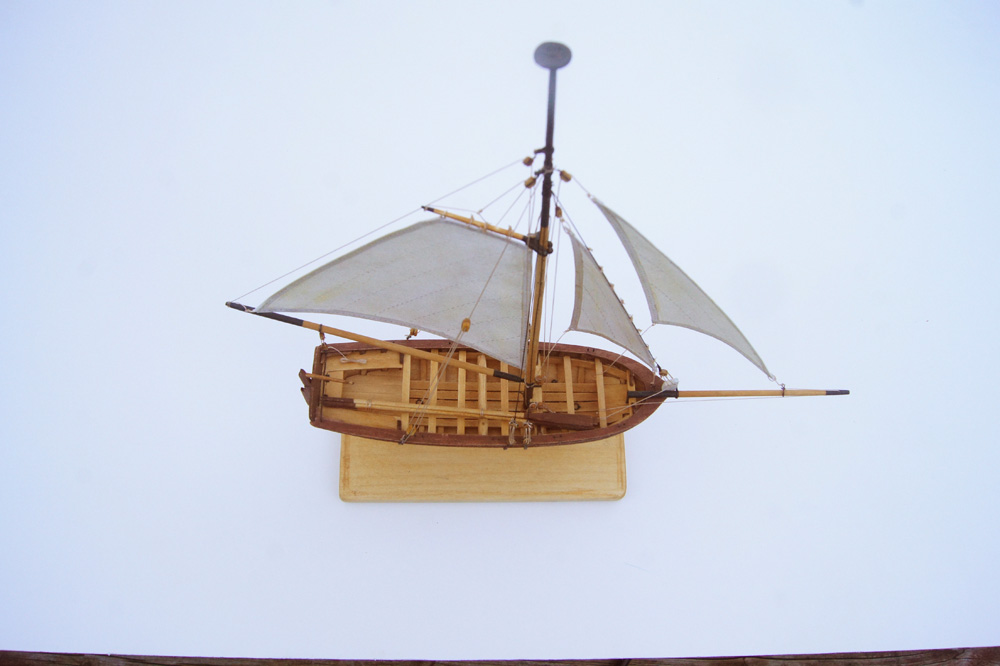
The longboat is finished! Work really slowed down as summer kicked in, and I struggled some with getting the standing rigging right, but it's done. I'm not happy with the quality of the deadeyes supplied in the kit; the holes are drilled in really uneven patterns, but I chose the best ones and made do. I had difficulty getting the tiny ironwork right, too, as you can likely see in the photo below, but like the rest of the model, it passes the "more than a foot away" test. Especially since the only folks who will likely ever see it will know less about sailing than I do! I made four oars, but left out the anchor and windlass handles, because I decided I wanted the hull to look cleaner and less cluttered. The sails add a lot of life to the model, and I decided that was enough. I built a simple base, mounting the boat on thin wire inserted into holes drilled into the keel and base. This allowed me to bend the wire slightly, heeling the boat over onto her port side a bit, as she would be with the sails set this way. I think it adds some life to the display. Here's a photo gallery of the completed longboat. I'm pretty pleased with the overall outcome. It wouldn't win any awards at a show, for sure, but it's pleasing to the eye. The sails and the new color scheme make it feel unique, and gave me a feeling of ownership over a very common kit. Many thanks to all of you who followed along, offered advice and encouragement, and politely overlooked my shortcomings. And thanks to Chuck for such an interesting little kit.
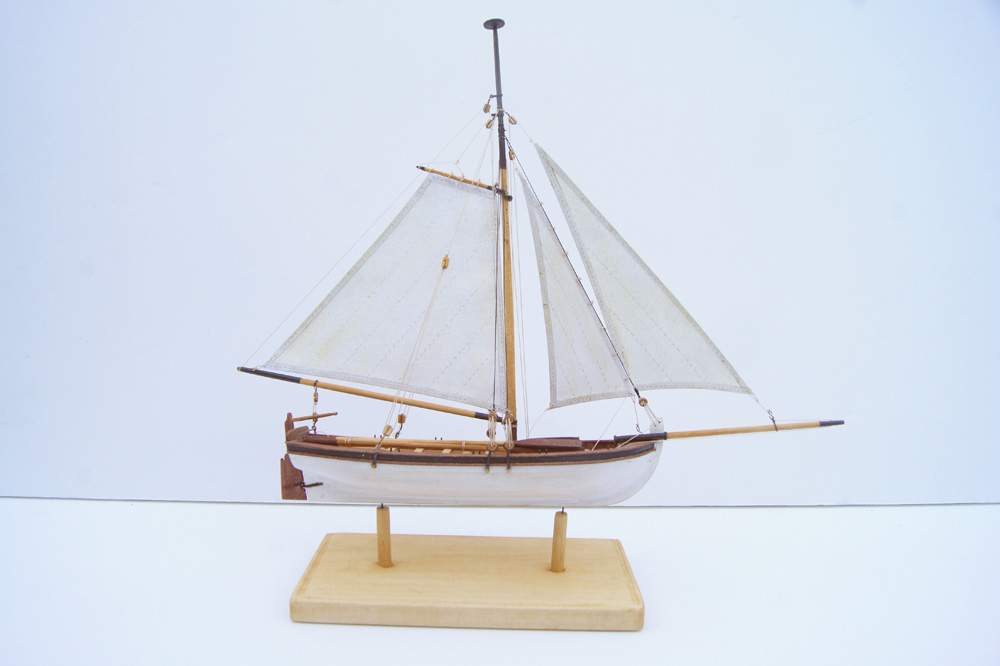
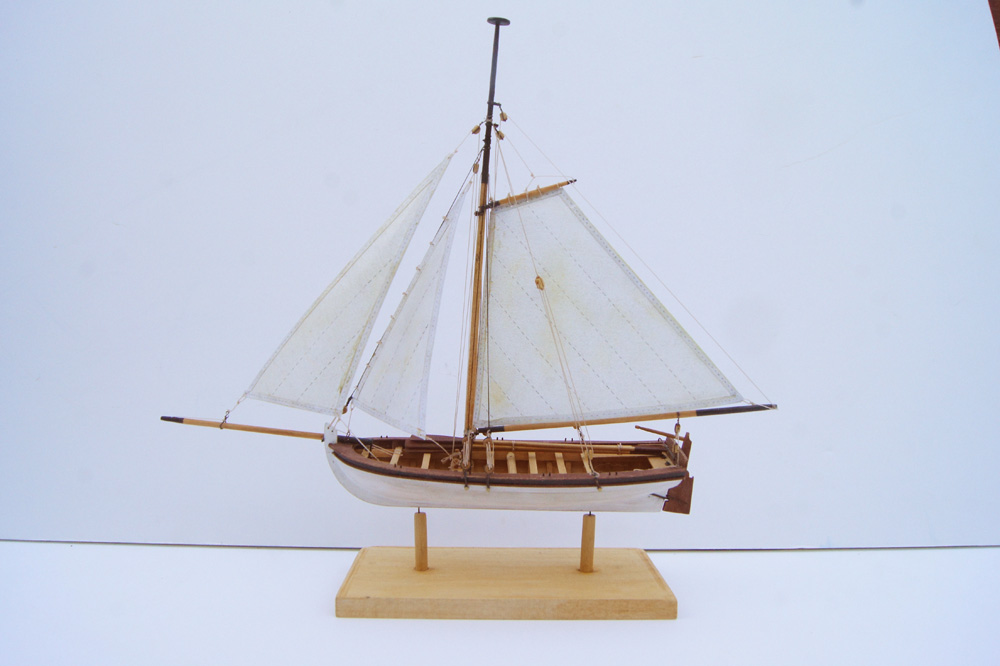
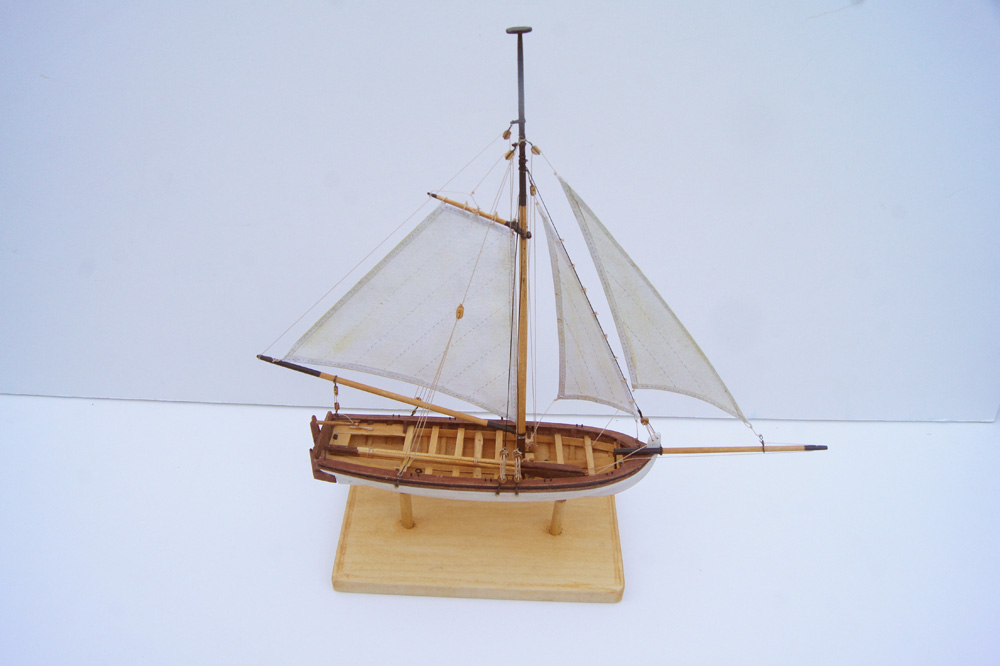
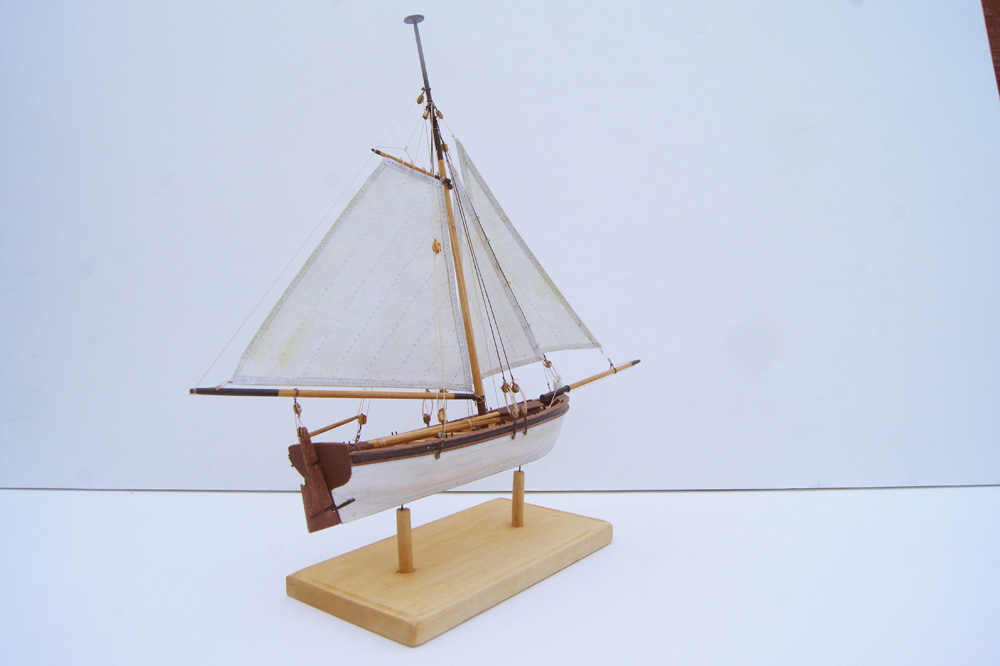
- 64 replies
-
- 18
-
-
- 18th century longboat
- model shipways
- (and 1 more)
-
Ah, you're right, I hadn't zoomed in. Apologies. Lovely work.
-
Steamboats and other rivercraft - general discussion
Cathead replied to Cathead's topic in Nautical/Naval History
John, those are fantastic! I hadn't considered the model railroad side, despite being one of them for so long, but it certainly makes sense that there would be a few kits for smaller craft from that direction, and that they'd be high quality. Thanks for sharing!- 281 replies
-
- 4
-
-
- Steamboats
- riverboats
- (and 3 more)
-
Steamboats and other rivercraft - general discussion
Cathead replied to Cathead's topic in Nautical/Naval History
Kurt, yes, there has to be a market and I'm certainly not a marketer and certainly not a neutral observer. Of course I think a nice steamboat kit would sell, I'm deep in the rabbit hole. I don't understand why there are so many more build logs of the AL kit than the MSW kit, when the latter seems so much higher quality and an equally interesting craft from a visual perspective. Many kits naturally draw upon craft that are still in existence, like Constitution or various craft at Mystic. And the Civil War period is highly popular in general. Well, there are multiple river craft from that general period that have physical museums dedicated to them (Cairo, Arabia, Bertrand), existing remains to view, and in some cases even good plans (Bertrand and Far West at a minimum). If it's economically viable to offer models of Civil-War-era ocean-going ships, to my narrow eyes it seems viable to offer models of riverboats that are simpler in design and construction than most ships. But I enjoy scratchbuilding, too, so this doesn't really affect me directly. I just have a hard time understanding why riverboats are beyond the pale when I look at how many other kits of truly obscure ships are out there.- 281 replies
-
- 4
-
-
- Steamboats
- riverboats
- (and 3 more)
-
Very nice indeed. I like how subtle they are; the pattern blends into the hull without dominating it. And that first photo of USS Porcupine gave me a chuckle. I'm curious: there are a few stretches where there are none, why is that? For example, in your last photo, upper middle, right along the waterline there aren't any on either side of the line, and in the photo above that there aren't any along the waterline in a stretch at upper right.
-
Steamboats and other rivercraft - general discussion
Cathead replied to Cathead's topic in Nautical/Naval History
Yeah, that's been my guess, too. I brought up the idea of a good scale steamboat model in the "kit makers" thread, with examples of boats that have plans and good information available, but neither responded. As a writer and educator, I'd love to work on the instruction manual for a good steamboat kit.- 281 replies
-
- 2
-
-
- Steamboats
- riverboats
- (and 3 more)
-
Steamboats and other rivercraft - general discussion
Cathead replied to Cathead's topic in Nautical/Naval History
Here's a question I've been pondering for some time, though I don't want to offend anyone: Why are many steamboat kits so bad? To my eyes, at least, some of the kits I see look terrible. The AL King of the Mississippi, for example, looks very out of proportion with inaccurate detail. I can't look at it without seeing a child's toy, even when the modeller has done a very nice job. It really makes me wish I had the skill set and resources to design and offer a good steamboat kit.- 281 replies
-
- 2
-
-
- Steamboats
- riverboats
- (and 3 more)
-
Steamboats and other rivercraft - general discussion
Cathead replied to Cathead's topic in Nautical/Naval History
Thanks, Kurt. Ironically, I just passed through Branson on Friday coming back from a quick visit to in-laws in Arkansas, and I'll miss the September St. Louis event because we'll be away on our annual vacation (in Maine this year, hoping to visit BlueJacket). But these are things we plan ahead for and it's a lot harder for me to take isolated trips for personal stuff like shows. Oh well. I know there's a small show in Columbia later in the fall, may try to hit that one. Sorry to derail the thread. Back to riverboats.- 281 replies
-
- 3
-
-
- Steamboats
- riverboats
- (and 3 more)
-
Steamboats and other rivercraft - general discussion
Cathead replied to Cathead's topic in Nautical/Naval History
Thanks for the input, guys. I'm afraid I don't get out much these days, for reasons of workload and budget, and don't think I could justify a trip to model show more than a few hours away. Would love to, but it'd be hard. Do IPMS shows accept wooden models?- 281 replies
-
- 2
-
-
- Steamboats
- riverboats
- (and 3 more)
-
Steamboats and other rivercraft - general discussion
Cathead replied to Cathead's topic in Nautical/Naval History
Great flurry of images! Those Swiss images gave me heartwarming flashbacks to past travel there. Kurt, thanks for sharing that model, too. How does one go about learning about model shows? Are there ever any in Missouri? The only groups I'm aware of in my state are plastic modelling clubs that really focus on aircraft and tanks.- 281 replies
-
- 4
-
-
- Steamboats
- riverboats
- (and 3 more)
-
Crisper than a perfect pickle! Glenn, you're making me want to start another steamboat instead of the sailing ship I'd intended next. Is the rising sheer at the stern gentle enough that regular wall planks just bend into place, or did you have to do any shaping?
-
Glenn, any idea what kind of connectors were used in the real framing? Were the longitudinal beams bolted to the posts, nailed, or other? Any support brackets, or just connectors through the wood? What about the deck beams to the longitudinal beams? This was something I wondered about in my build and couldn't find an answer for. You didn't want to mill scale tongue-and-groove siding? You're slipping! Just kidding, everything looks delightful as usual.
-
I think #3 looks too busy. Whether or not it's accurate, it looks busy and distracts a bit from the model. I think it's important for models to appear right, and I think #2 captures the impression of treenailing without running on stage and grabbing the mic.
-
Glenn, I may have misunderstood your question; I thought you were asking about matching paint color to a shade of white typical of the era. About that, I have no idea. If you were just asking about paint/color methods in general, as many of the other responses seem to, then I do have a suggestion. My favorite way to paint/weather wood, for a long time dating back to many wooden model railroad buildings, is to use a light coat of paint followed by a rubbing of pastels. At times I've even used only pastels to color wood. The pastels really dull the surface nicely and give it a bit of subtle texture that helps eliminate the "model" look, and you can gently blend many different colors/shades to get the right finish, more so than with paints in my opinion. They inherently give the wood a weathered, rough look that I really like. Give it a try on some scraps and see what you think. Pastels alone may be too rough for your otherwise crisp model, but pastels over light paint could work really well.
-
Steamboats and other rivercraft - general discussion
Cathead replied to Cathead's topic in Nautical/Naval History
Bob, I don't, but that historical society/museum is only a few hours from me, so if I ever decide to pursue the idea, it's within reach. I assume I won't ever find plans or such, it was probably built without them, but ideally I'd be able to find other photos or written accounts of its use, engine, etc.- 281 replies
-
- 3
-
-
- Steamboats
- riverboats
- (and 3 more)
-
Steamboats and other rivercraft - general discussion
Cathead replied to Cathead's topic in Nautical/Naval History
American riverboats weren't confined to the major rivers; there were many smaller, obscure craft that worked the tributaries. In my home state of Missouri, several rivers feeding the large Missouri River were themselves large enough to support steamboat traffic deep into the Ozark Hills, such as the Gasconade and Osage rivers. This page from the Miller County Museum & Historical Society, in central-south Missouri, has a series of interesting photographs of small steamboats that worked the Osage River. One of these little boats seems like an interesting scratchbuild project to me someday, particularly the J.R. Wells which I find quite attractive. Adding to the interest, the Wells and several other boats were actually built in Miller County, not in the major steamboat yards along the faraway Upper Ohio, making them truly indigenous boats. There's also a great story about the first steamboat to penetrate the remote Ozark region: I think some of you would enjoy reading this page and looking at the images of obscure but interesting steamboats from Missouri.- 281 replies
-
- 4
-
-
- Steamboats
- riverboats
- (and 3 more)
-
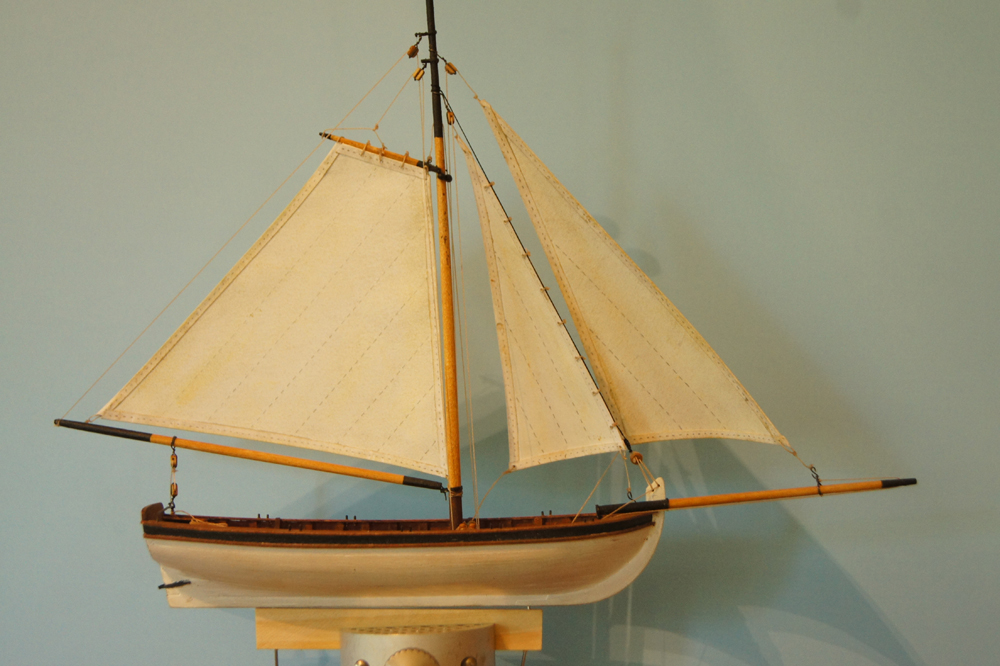
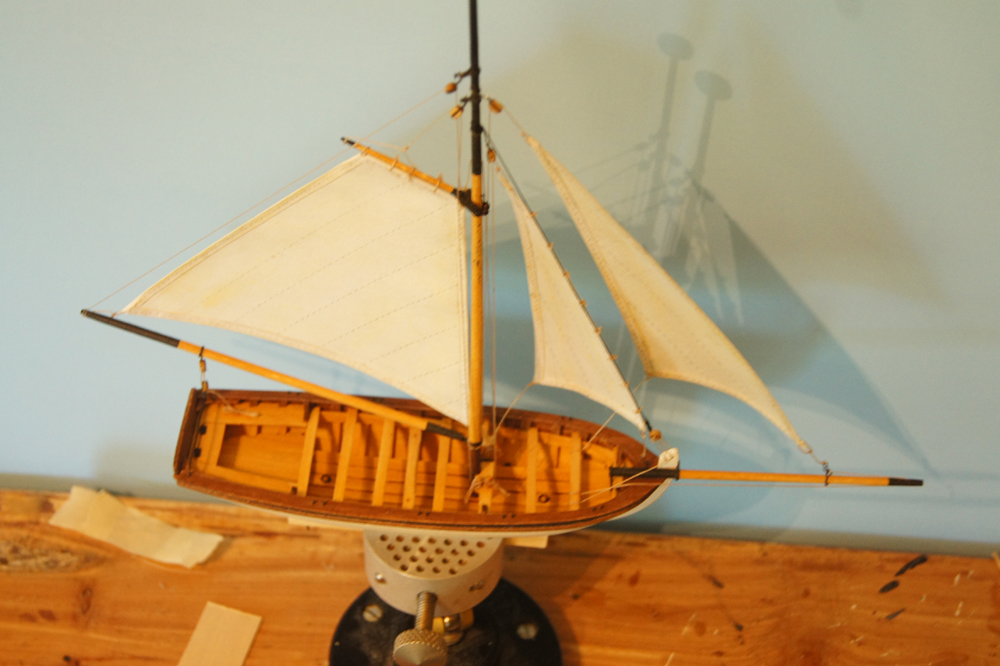
And here she is with the jib. I couldn't find a clear reference for how to shape each sail, so I defaulted to the size & shape they've have if they hung limp within the rigging (as shown on my drawings). I don't know if the jib is actually supposed to be larger than the stay sail, but correct or not, I'm pleased with the outcome from a visual display perspective. The jib is hooked to the bowsprit traveller, allowing it to be hauled out, with a halyard run through a block on the mast just like the stay sail. Seems like it would work in real life. Now it's on to the standing rigging.
- 64 replies
-
- 10
-
-
- 18th century longboat
- model shipways
- (and 1 more)
-
Glenn, Louis C. Hunter's Steamboats on the Western Rivers discusses to the superior maneuverability of side-wheelers over sternwheelers, in part, by referring to "The ability to stop one of the wheels independently of the other and, on two-engine boats, to run the two paddle wheels in opposite directions..." which implies what you suggest, that wheels can be stopped while in motion but not re-engaged. Also, obviously, Heroine couldn't have run her wheels in opposing fashion unlike later boats, so some of the turning ability is negated. Certainly, this makes mechanical sense to me, I don't see any way you could safely or practically slip that clutch into place while the shaft is turning, especially with water pressure holding the wheel in place. And the implicit reference to single-engine boats strongly implies that this all applies to Heroine, since two-engine boats became the standard not long after her time.
-
Thanks for the nice explanation of that 3D shaping, something I've never done before.
-
The sage is beautiful, but what ship modellers really need is more thyme. Lovely model.
- 170 replies
-
- 4
-
-
- gokstad
- dusek ship kits
- (and 1 more)
Our Emblem ®
