
HOLIDAY DONATION DRIVE - SUPPORT MSW - DO YOUR PART TO KEEP THIS GREAT FORUM GOING! (Only 72 donations so far out of 49,000 members - Can we at least get 100? C'mon guys!)
×


rwiederrich
-
Posts
5,518 -
Joined
-
Last visited
Content Type
Profiles
Forums
Gallery
Events
Everything posted by rwiederrich
-
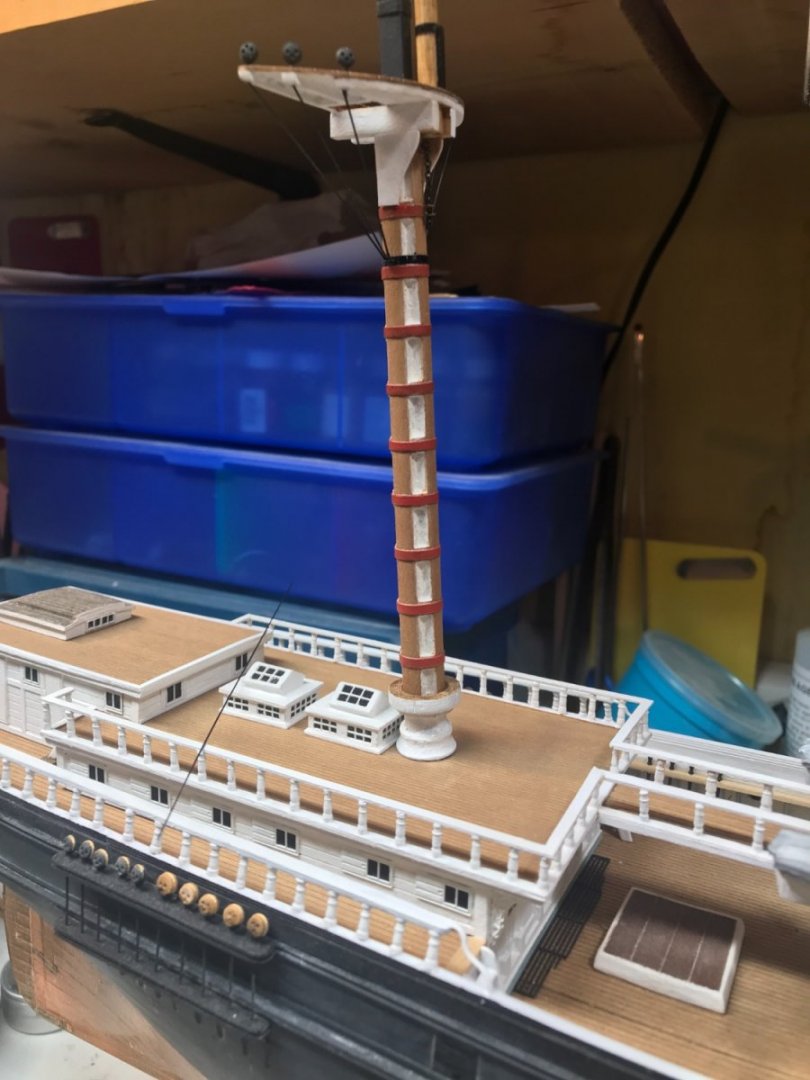
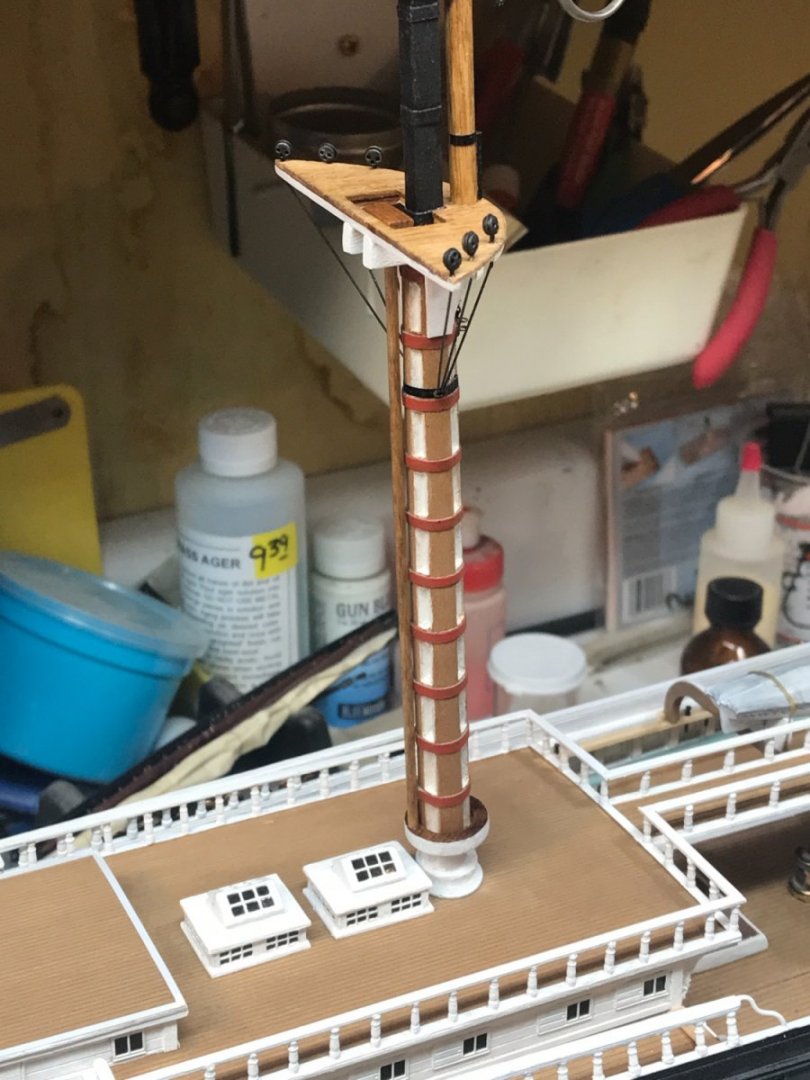
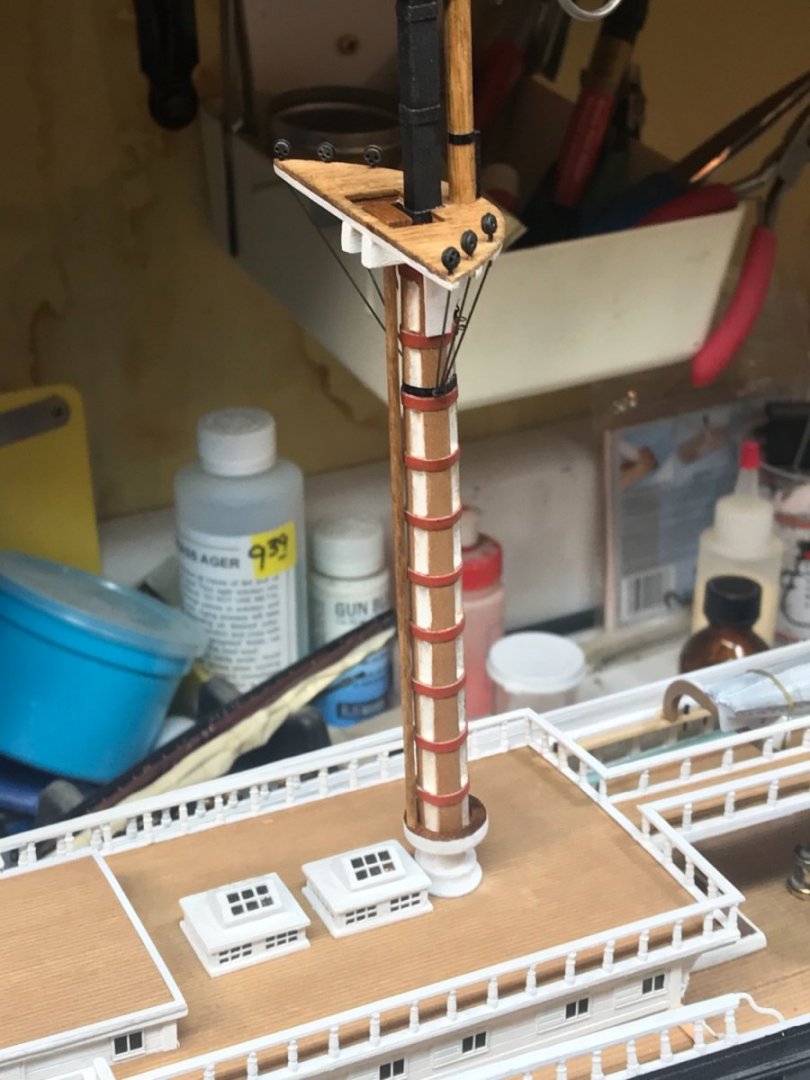
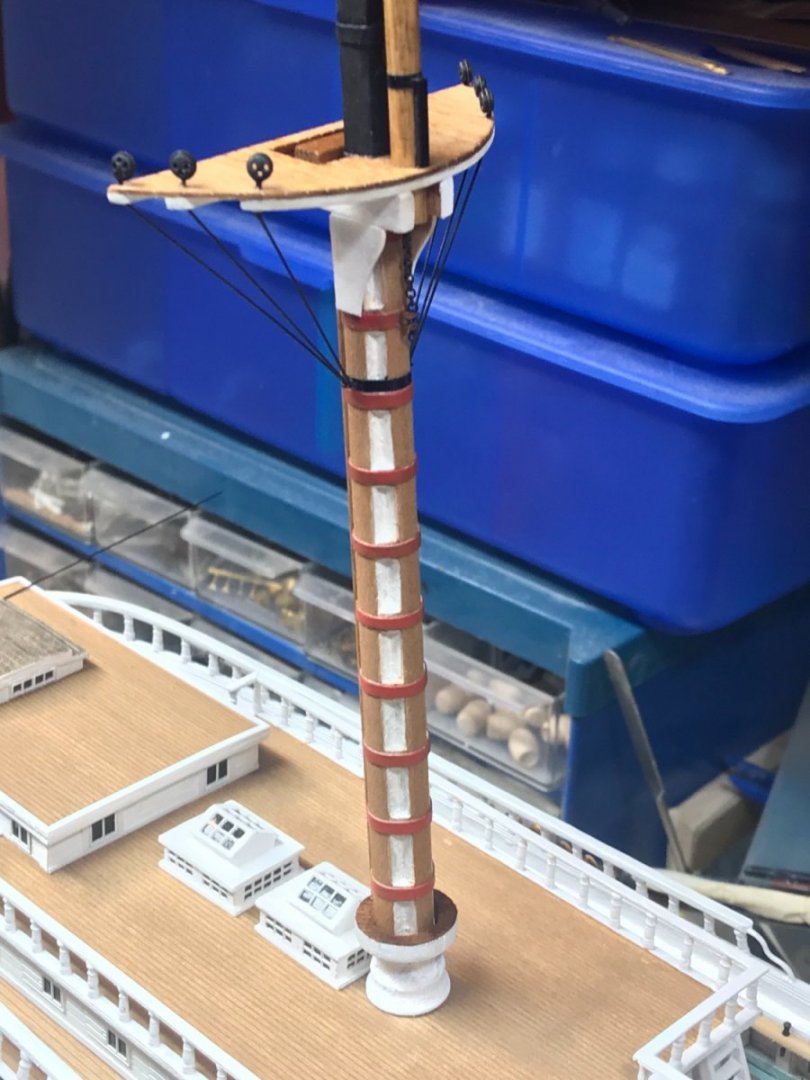
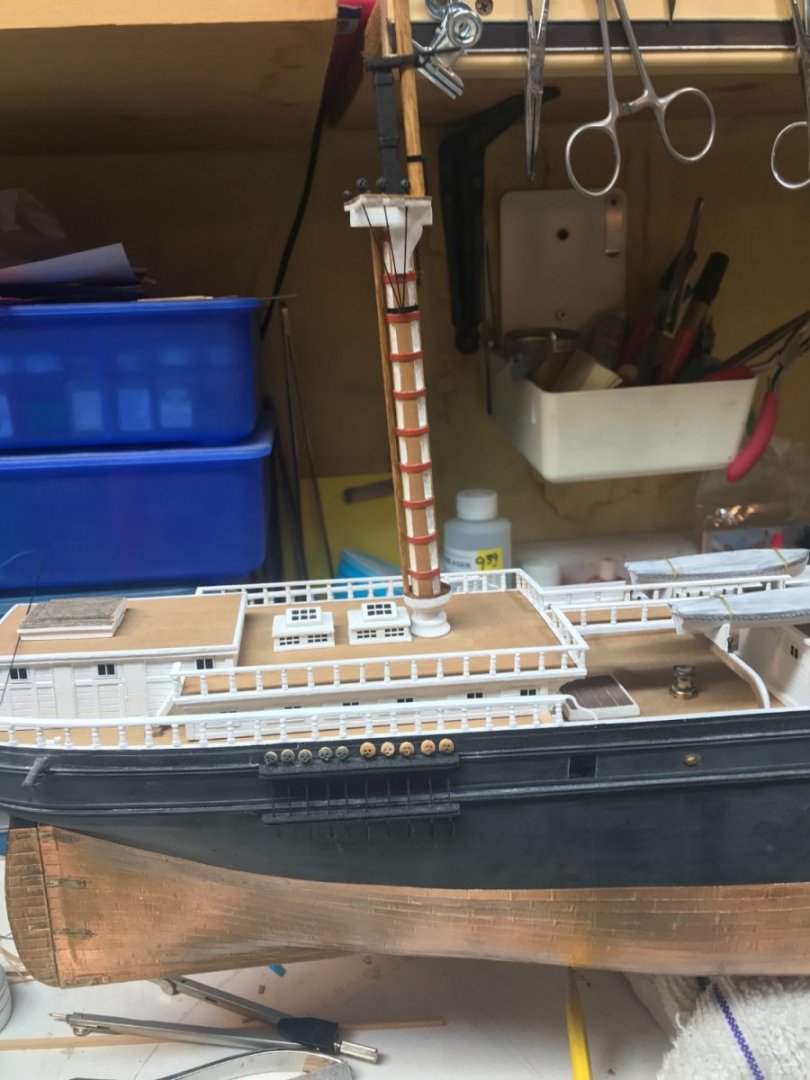
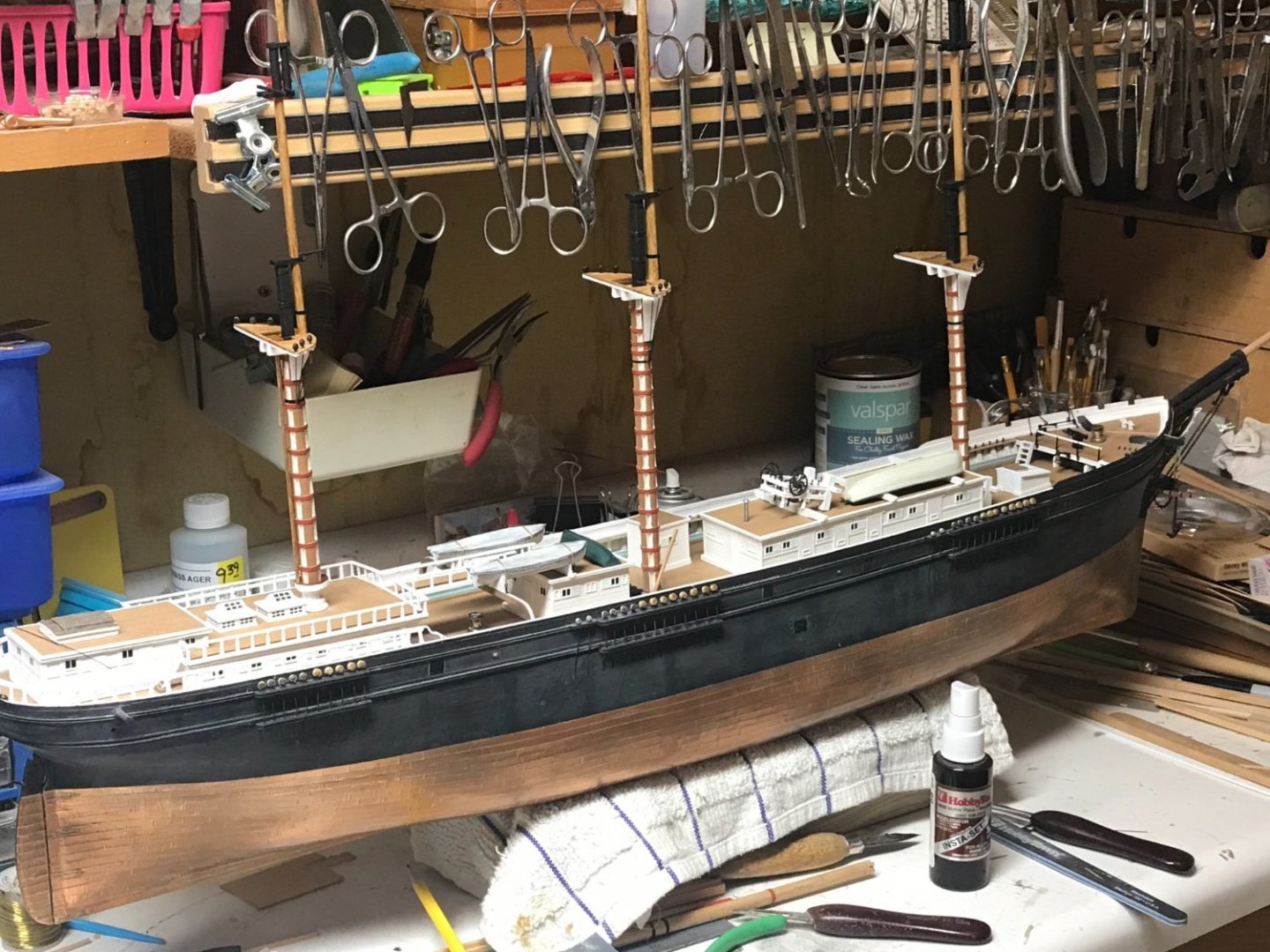
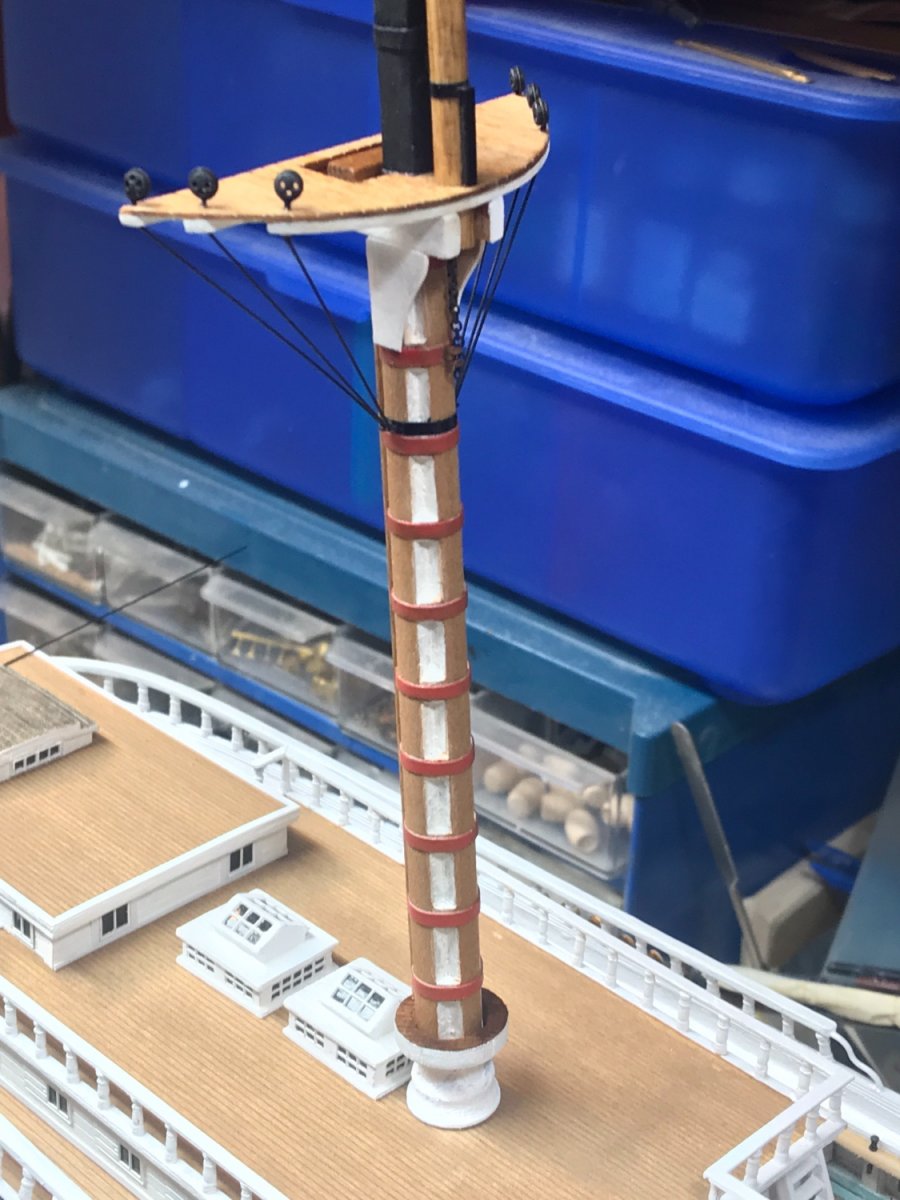
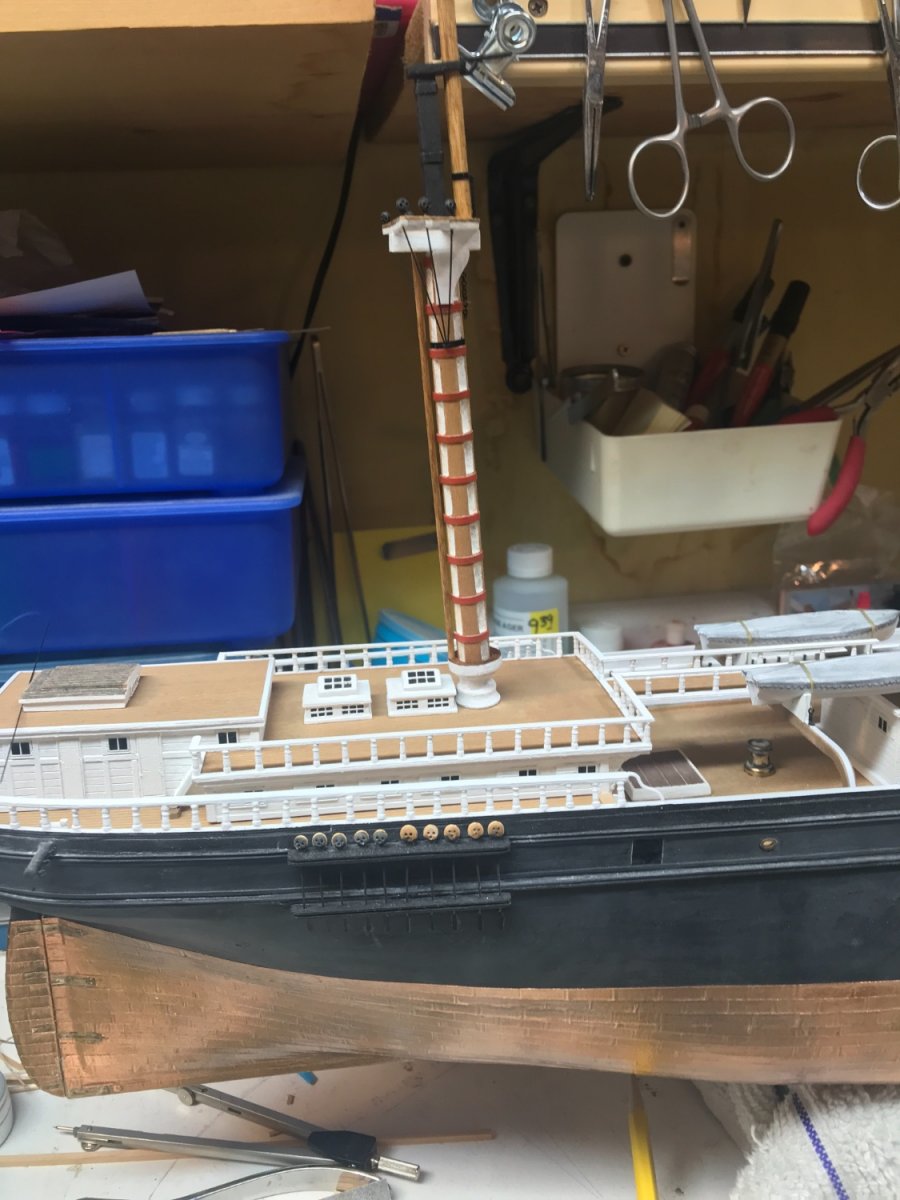
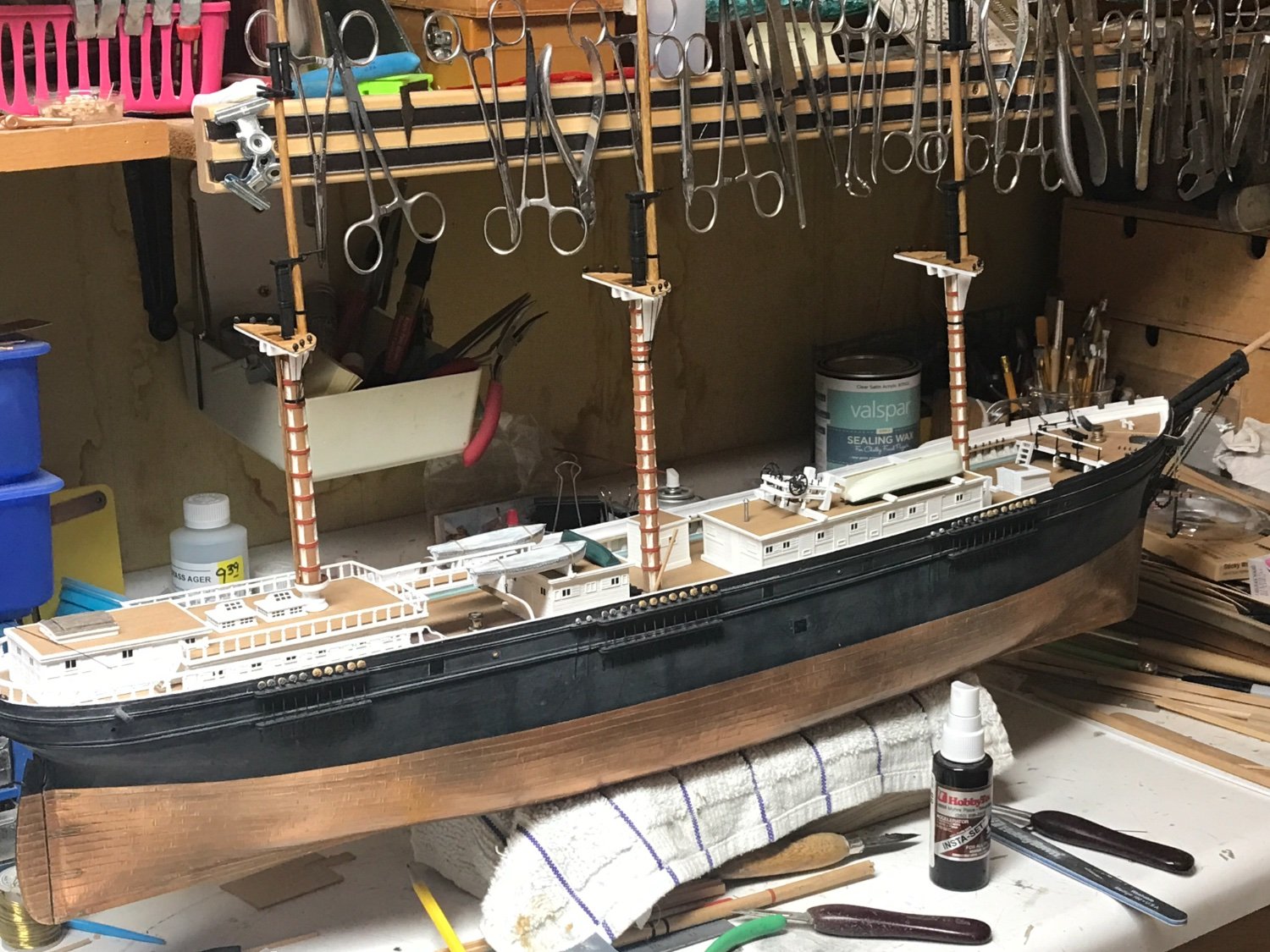
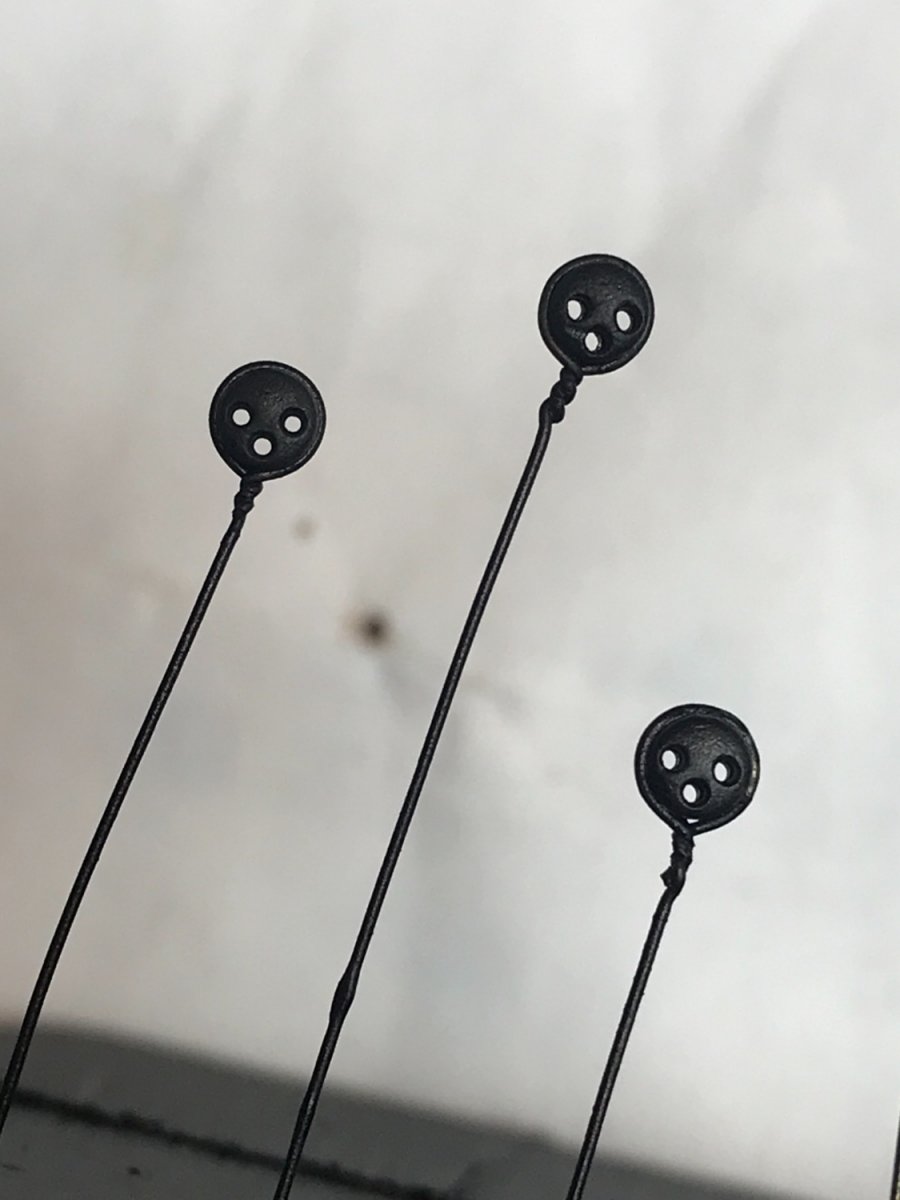
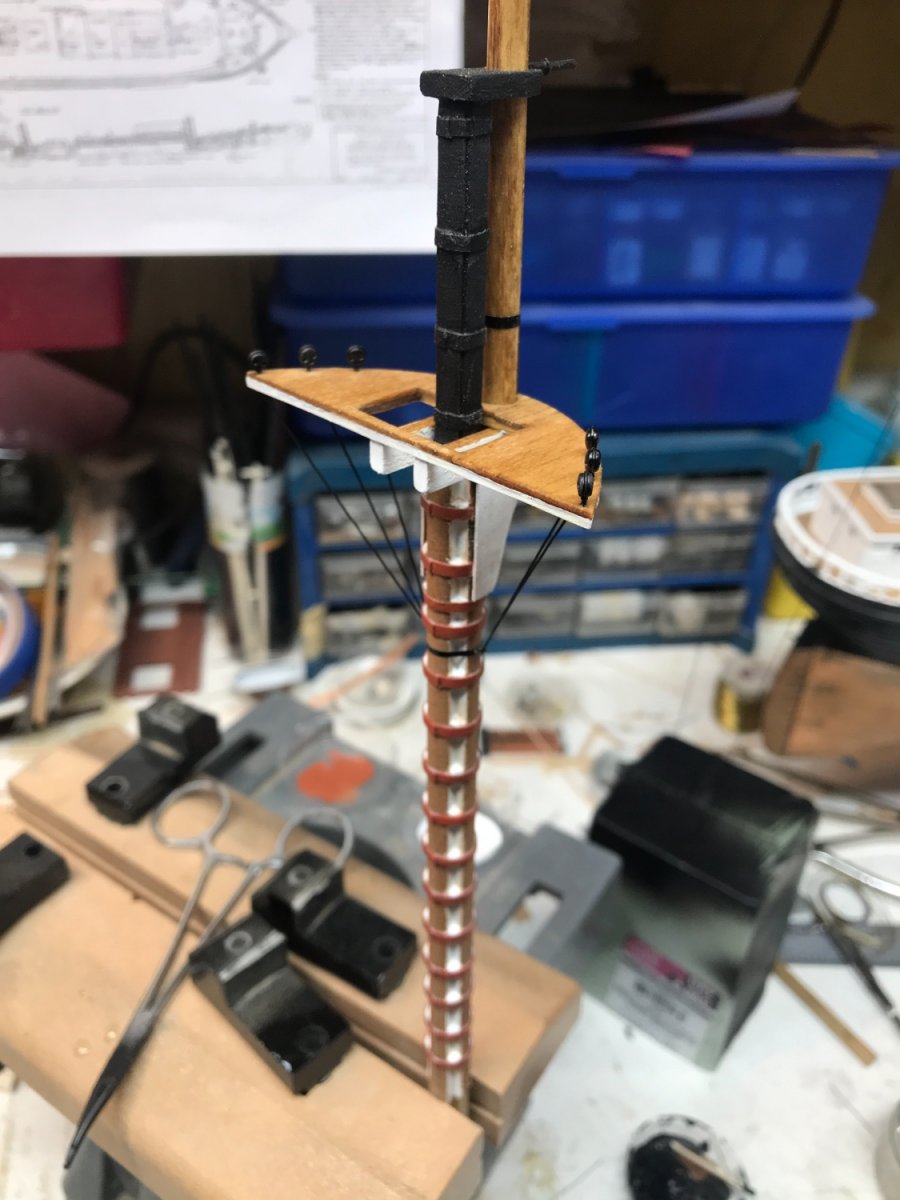
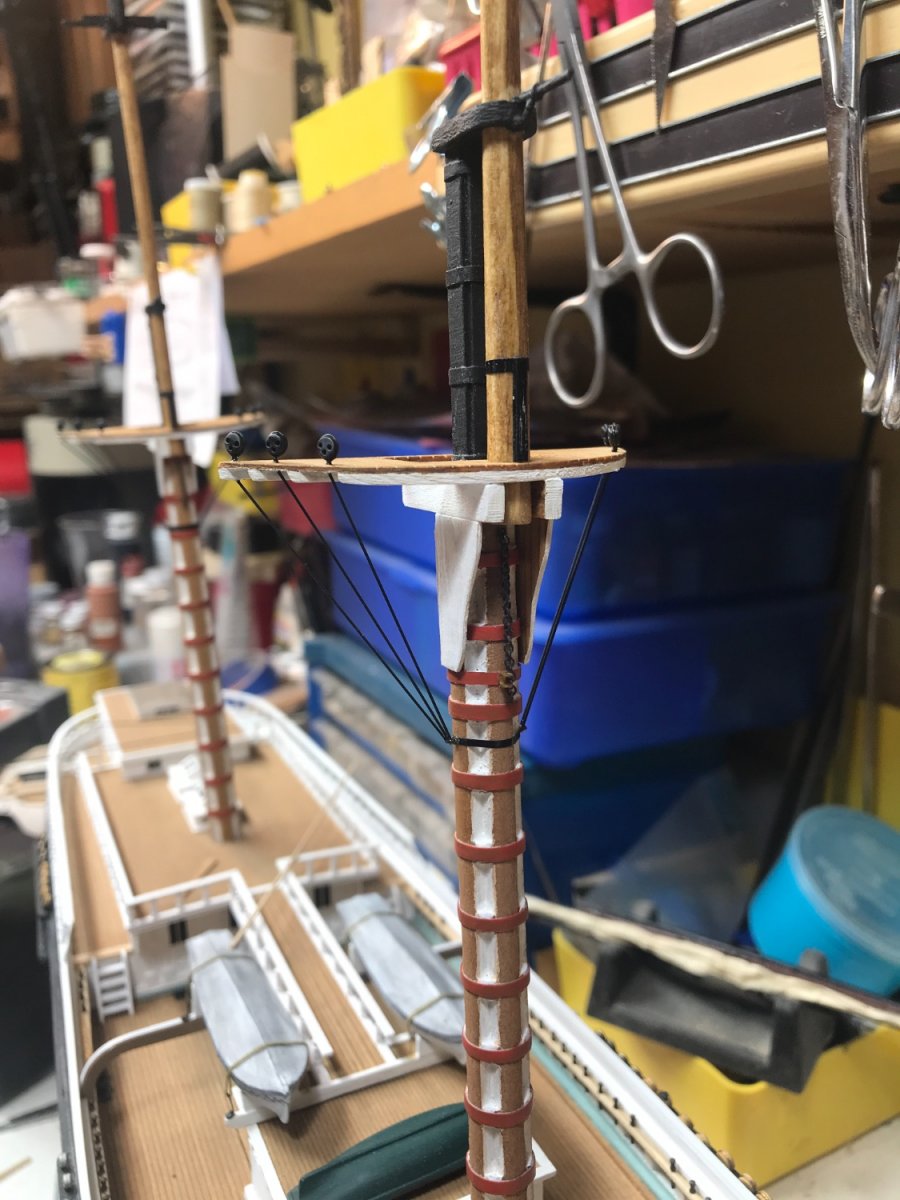
Spent some time working the mizzenmast mast. I finished up all the futtock shrouds on all the masts……so I’ll get some lower mast stuff done before I move to running the top mast shrouds. I have loads of eye bolts to place on each mast for lots of blocks and back stay connections and such. Rob
- 3,560 replies
-
- 4
-

-
- clipper
- hull model
- (and 2 more)
-
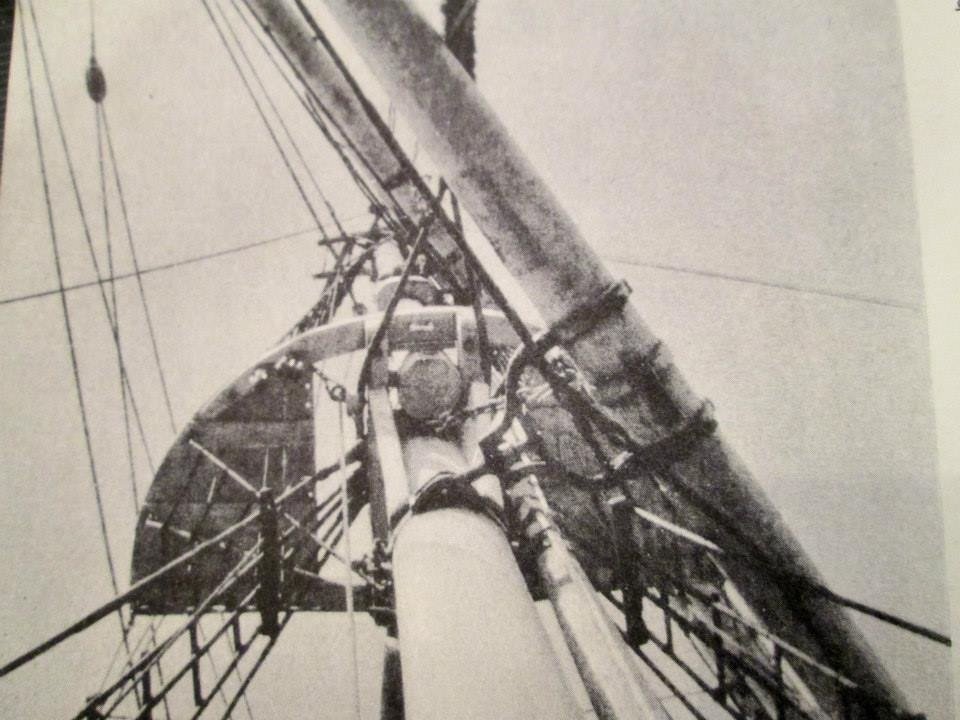
See how much room was available in the lubber's hole even on this early image of the Charles W. Morgan..... Structure is similar to Glory's top. Rob
-
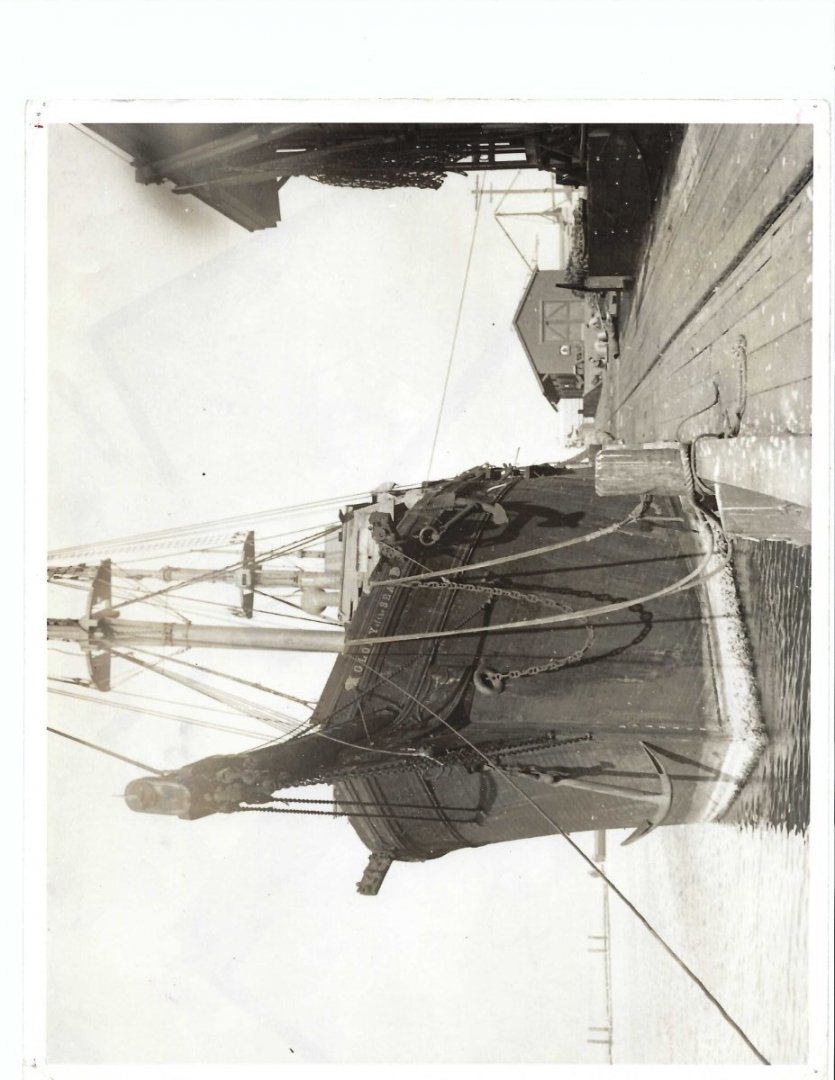
I'm jumping ahead a bit here, but I think I'm going to change up my original plan of not adding furled sails and I think I will furl the sails on the yards. However, typical furling in most folks eyes means a loosely hung furl.....but I think I am going to tightly furl the sails...where they are neatly stowed atop the yard over the jackstays. Clewed and garneted down tight. Clearly a much cleaner furl. Here, again(Using this photo), is my example of her sails neatly and tightly furled on each mast when she was docked in 1877 at San Francisco. I think this new decision will greatly enhance the effective detail of each yard and will greatly replicate a truer example of a lengthy stay in port. Also, for the readers info....this form of furling was more weather tight...creating a waterproof blanket over the entire sail...preventing water accumulation resulting in mold and rot. In essence, the sail was used to protect the sail. Ship shape! Rob
.jpg.57d2bbb283d2acaa78be97cbf85b3723.jpg)
- 3,560 replies
-
- 3
-
-
- clipper
- hull model
- (and 2 more)
-
Right. Can't flip that second image......sorry. Rob

-
Here are severla other closeups of her *Lubber's Hole* from several other images of her at pier and at her cold storage birth. Rob
.jpg.71a3cb4e7667742345e10cc1c01db1c5.jpg)
.jpg.008af599e86ab702a3e92f1bdd67c3b0.jpg)
.jpg.069a243878139bd2d942012f1b85b060.jpg)
.jpg.b7f4b0830deb48dc4efeec100a0b1b2f.jpg)
-
This is from that newest one from Mike. when Glory was getting her final survey. Rob
.jpg.bed6a837aa41476a888ae90b7163d562.jpg)
-
This is Glory as she sat prior to her being sold to be burned for the metal in her hull. Several other images show the same open construction. The main mast is a replacement mast from her original and her main mast is a built mast. It is unclear if the design for her tops changed when she received her new masts. But it is clear from this image that her tops were not as bulky and did indeed lack the central cross timber aft of her main mast doubling. I wasn't implying that you change anything...but simply pointing out the actual top of Glory at her later years. Artistic license at this point is the guide of the day. Great work by the way. Rob
-
Great work Vlad……just wonderful. I like the metal edging and detail of the slats. But you are making the same mistake I originally did. The opening for the shrouds is the full length of the top. From the forward trim to the aft timber. The full length of the hounds timber. Here is a photo of the actual design. Sorry, not to be a Debby Downer, but accuracy is accuracy. Other than that….beautiful work. Rob

-
Looking great. Nice work. Rob
-
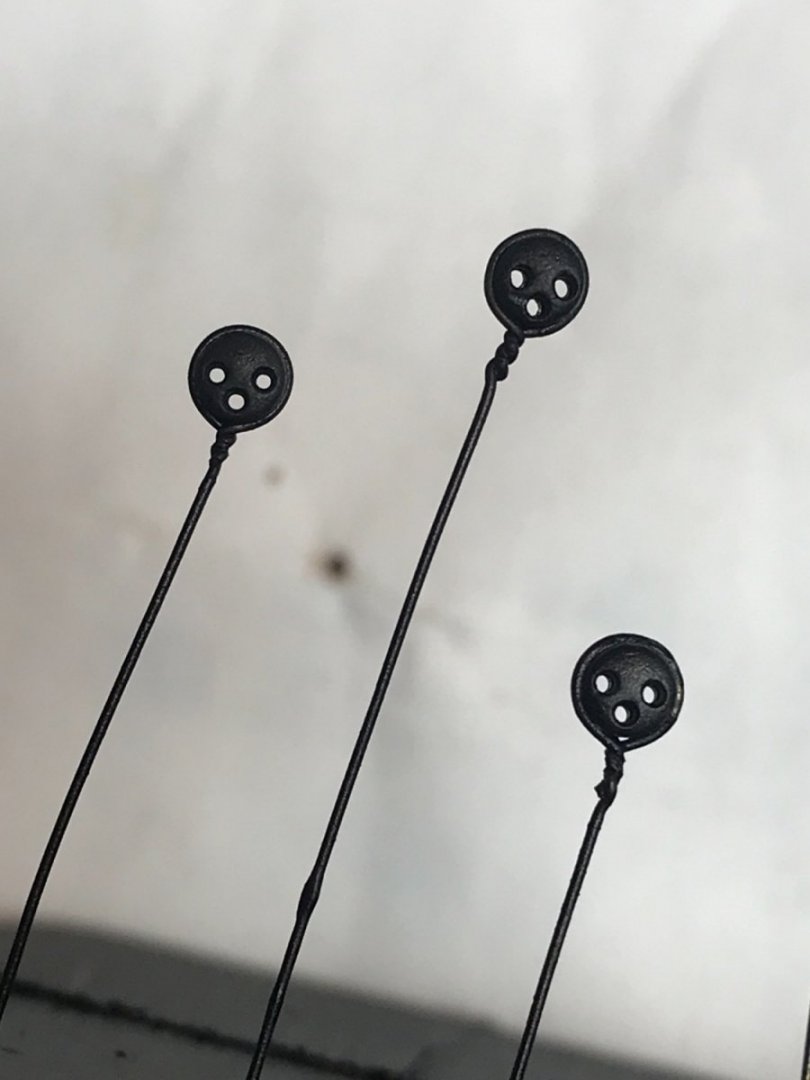
Stropped the7/64” dead eyes in wire prior to rigging. Rob
- 3,560 replies
-
- 5
-
-
- clipper
- hull model
- (and 2 more)
-
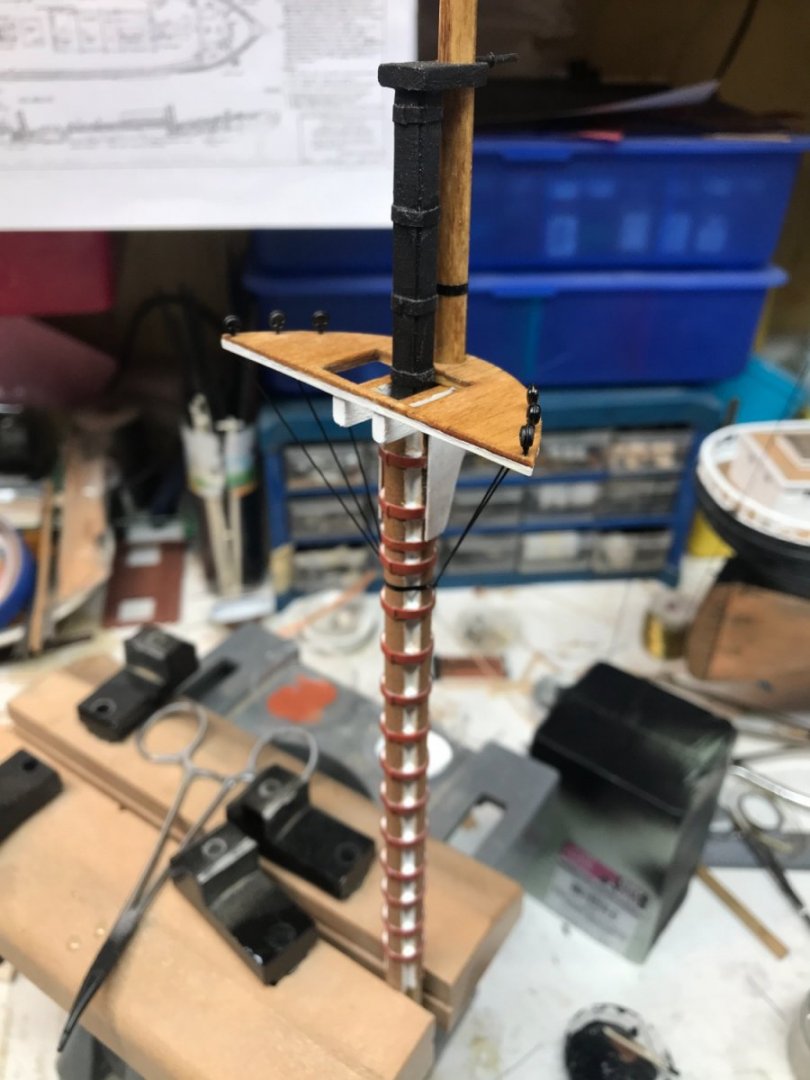
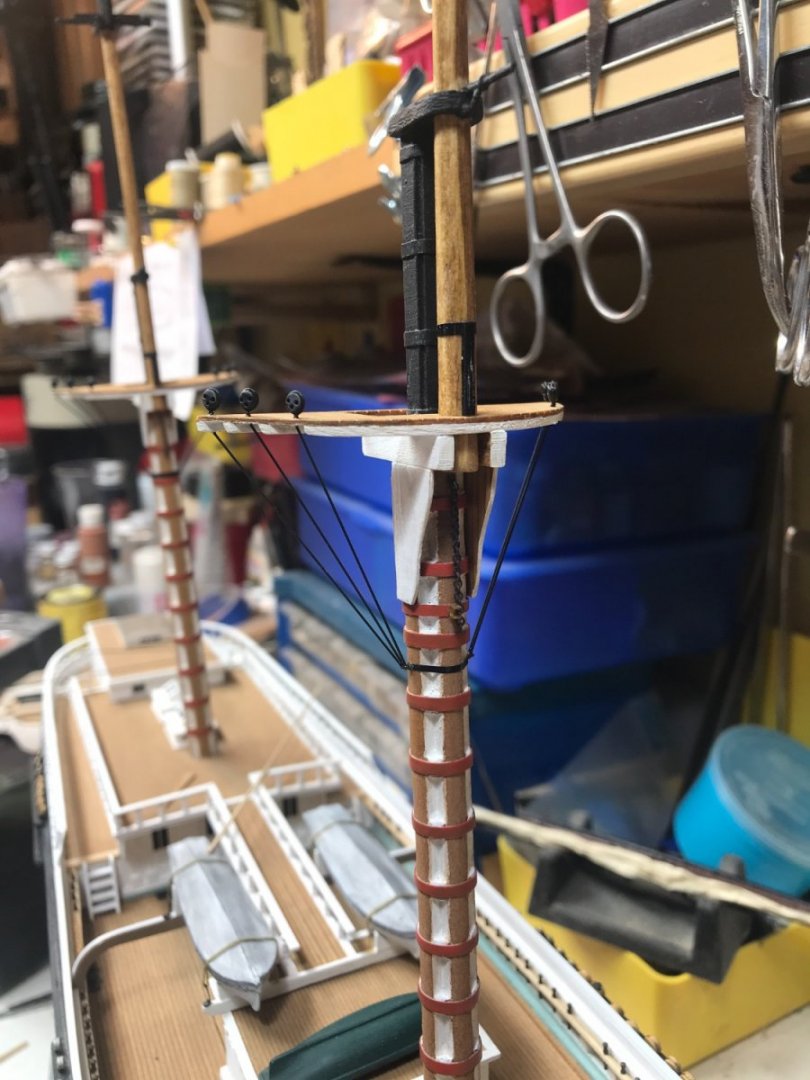
Spent some time working the main mast futtock shrouds and deadeyes. Rob
- 3,560 replies
-
- 4
-
-
- clipper
- hull model
- (and 2 more)
-
I'm here to help in any way I can.....clippers are my thing. Rob
-
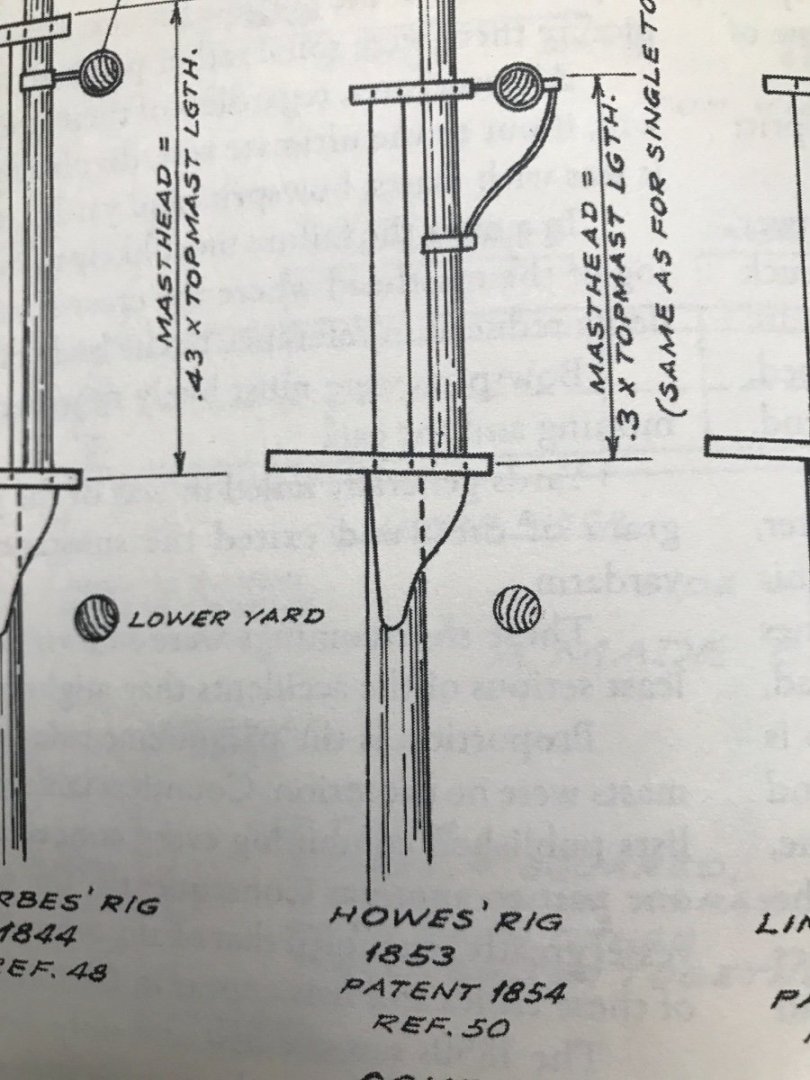
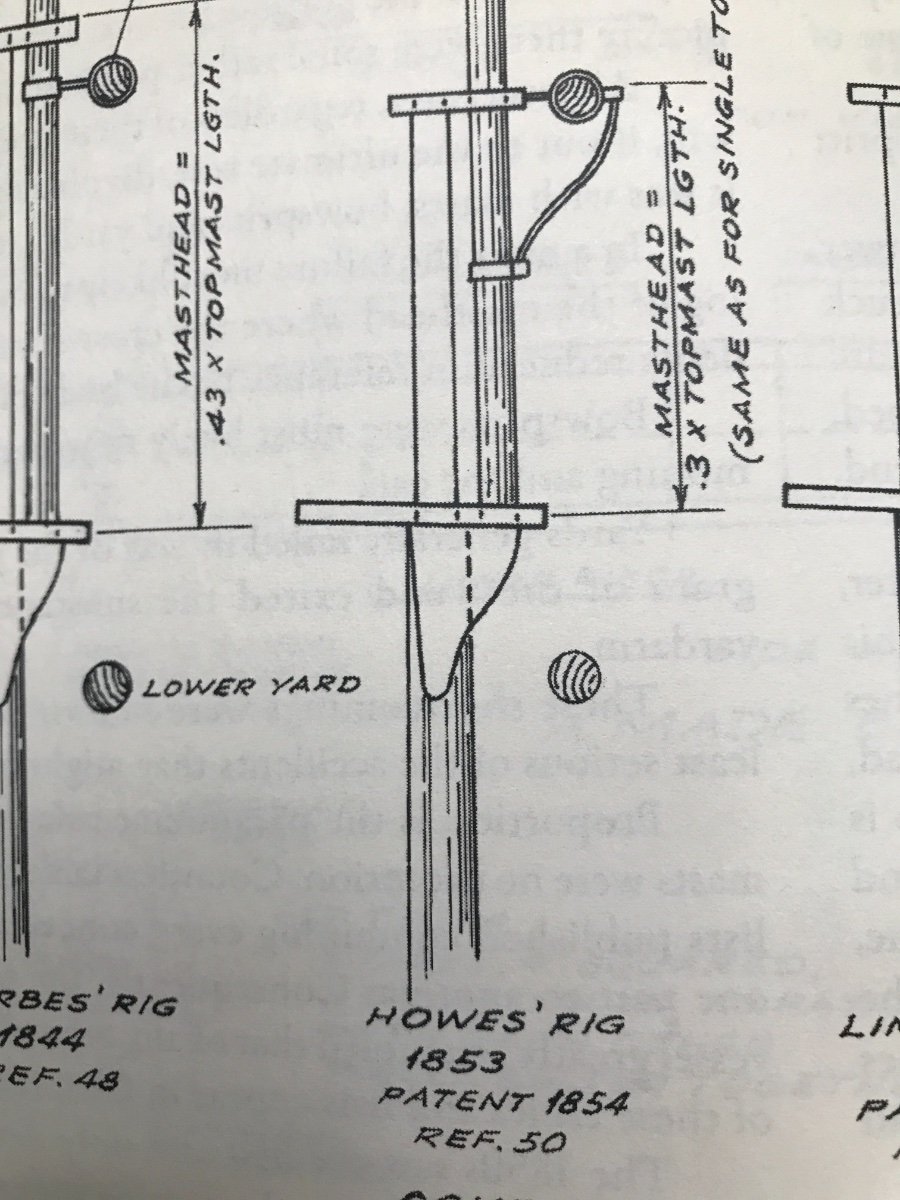
Forbes and Howes are two separate designs. Forbes actually invented the double topsail. However, his design incorporated the lower topsail that slid up and down the topsail mast doubling portion. In essence hiding the lower topsail in the wind shadow of the main course, making furling it easier on the crew. (Great Republic used this design) The Howes modification took the Forbes design to the next level and permanently affixed it to the cap of the lower mast at the *tops*. It was stationary, but could swing and rotate on its crane. (Most clippers utilized this modified Forbes design (Known as the Howes design). Some designs also included a support bar underneath the yard that either extended to the tops or to a band fixed to the topmast doubling....(Glory's design). Rob
- 3,560 replies
-
- 1
-
-
- clipper
- hull model
- (and 2 more)
-
Only her lower topsail is fixed to the main mast cap via a crane. All other yards are mobile via leather laced metal parrels. Go get=em. Rob
- 3,560 replies
-
- 2
-
-
- clipper
- hull model
- (and 2 more)
-
If you are looking for a double top gallant, lower then it will be hung like the lower top mast. this image is for a single top gallant. it is correct. Rob
-
Hope this helps. Rob
-
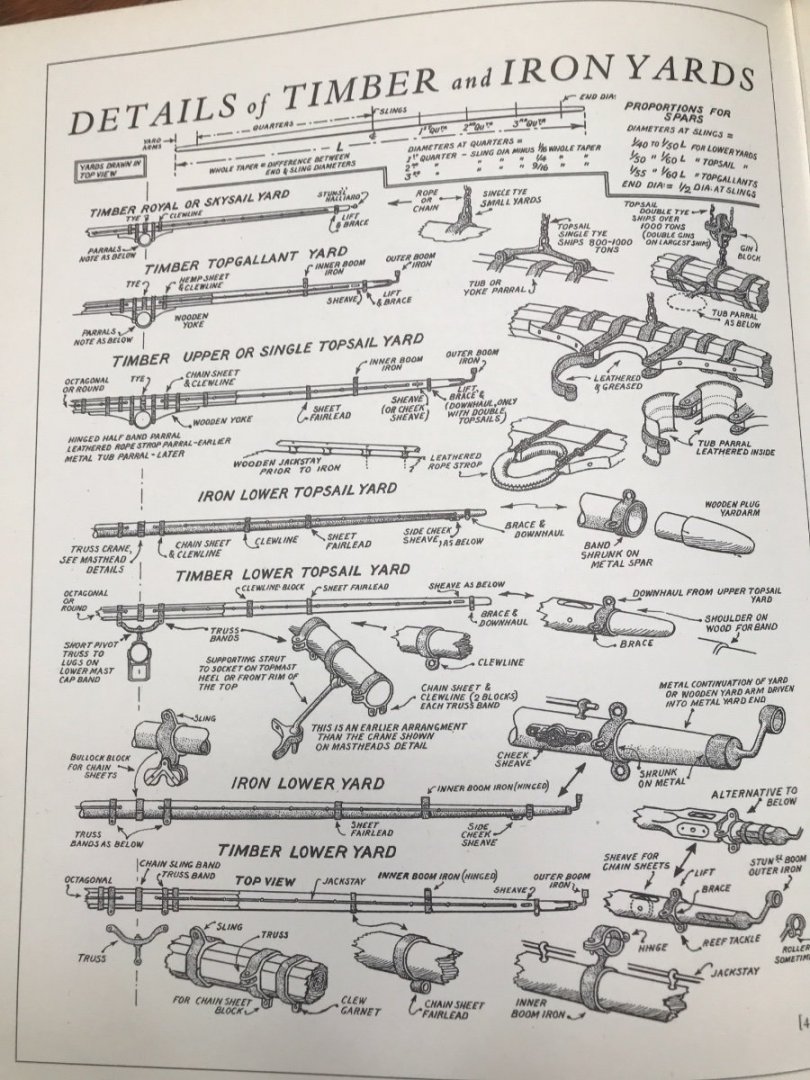
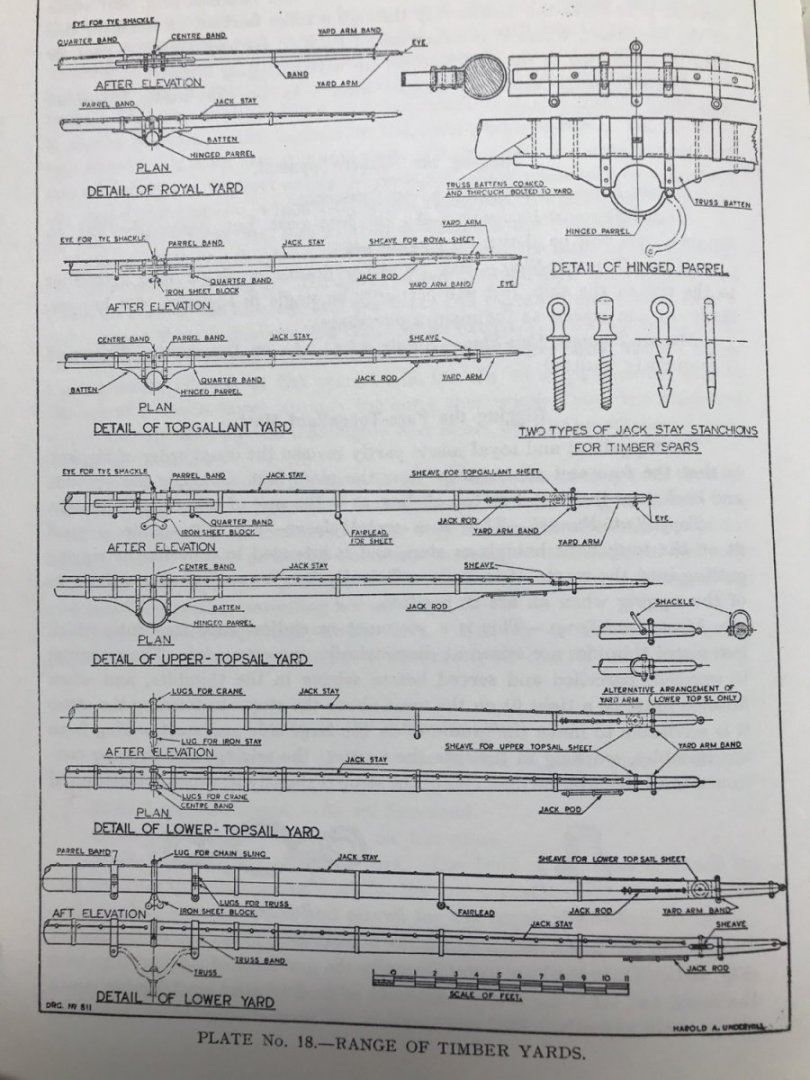
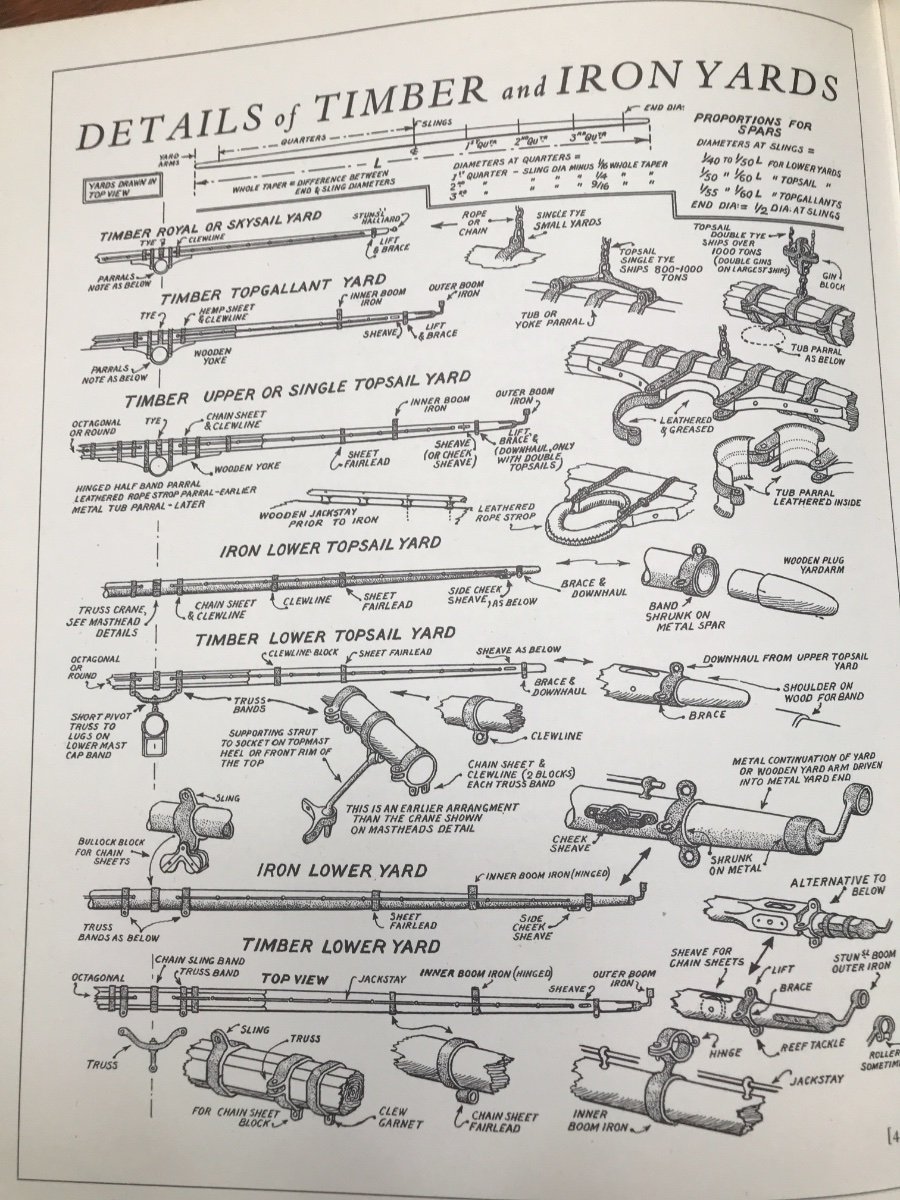
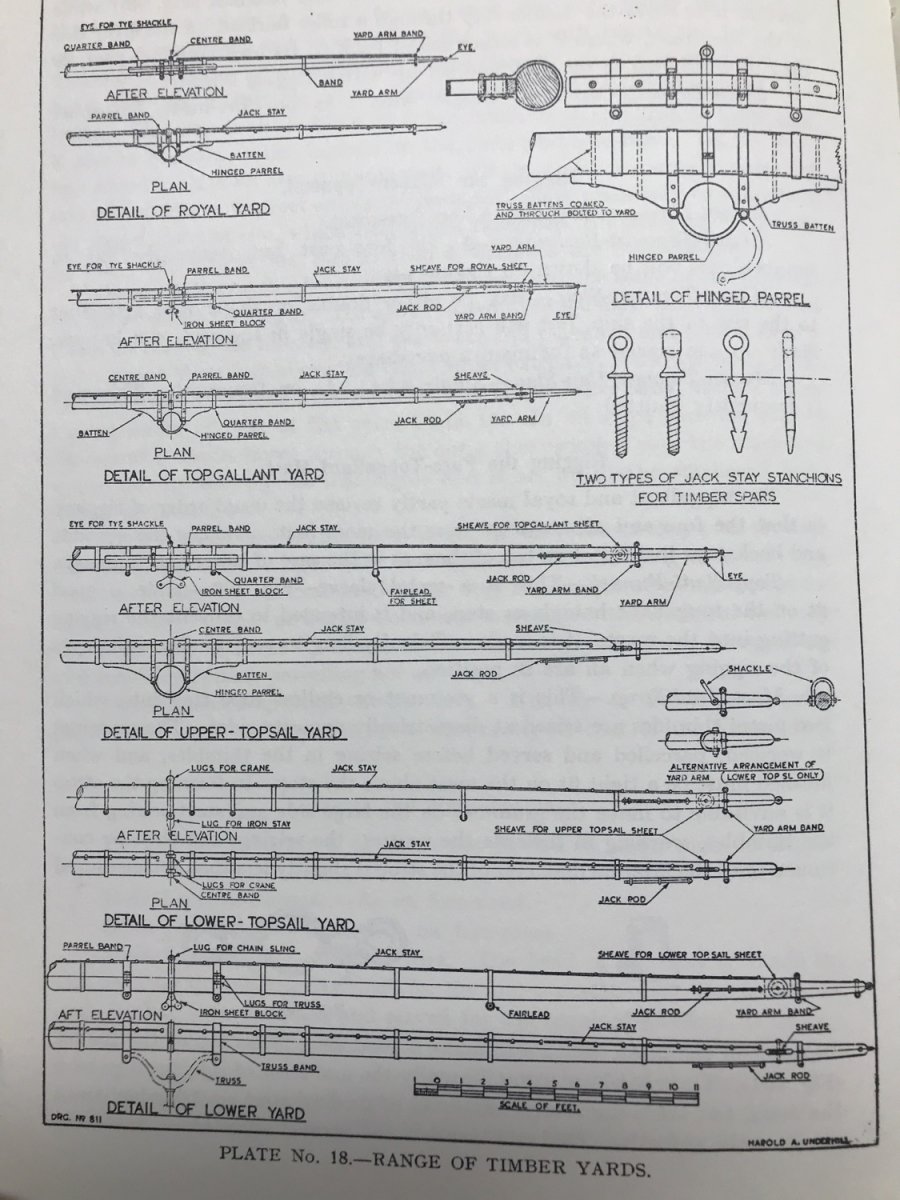
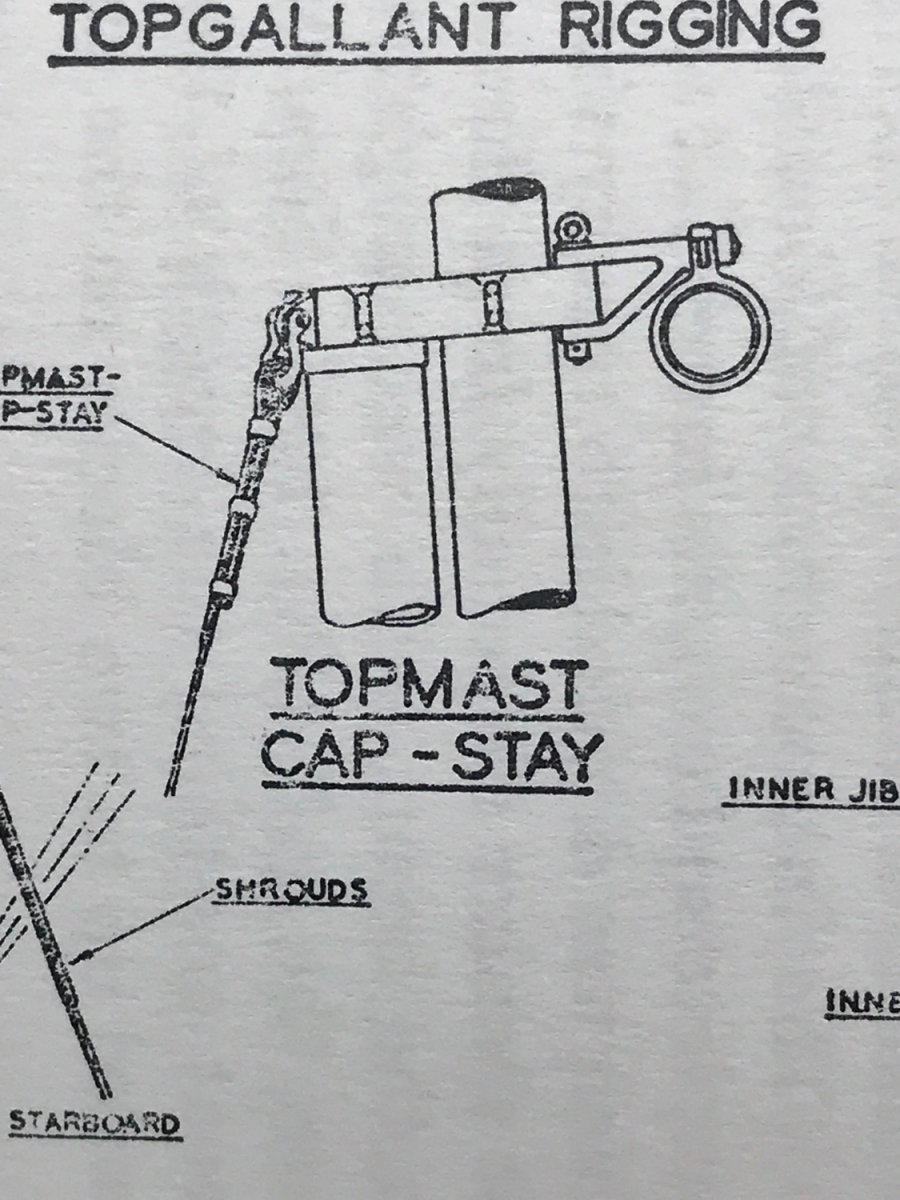
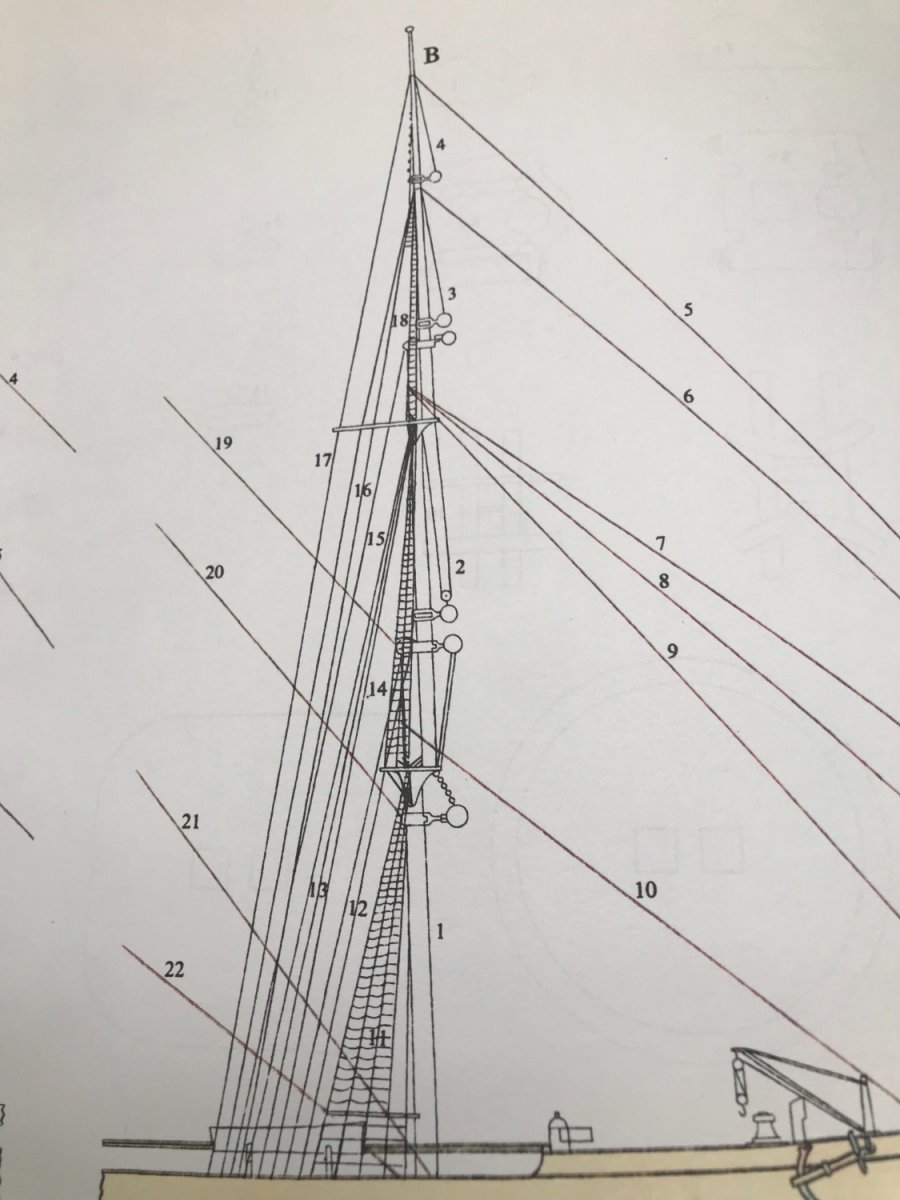
These last images are showing the configuration of all the yards and their fixtures. Images from Campbell and Underhill’s books Rob
- 3,560 replies
-
- 1
-
-
- clipper
- hull model
- (and 2 more)
-
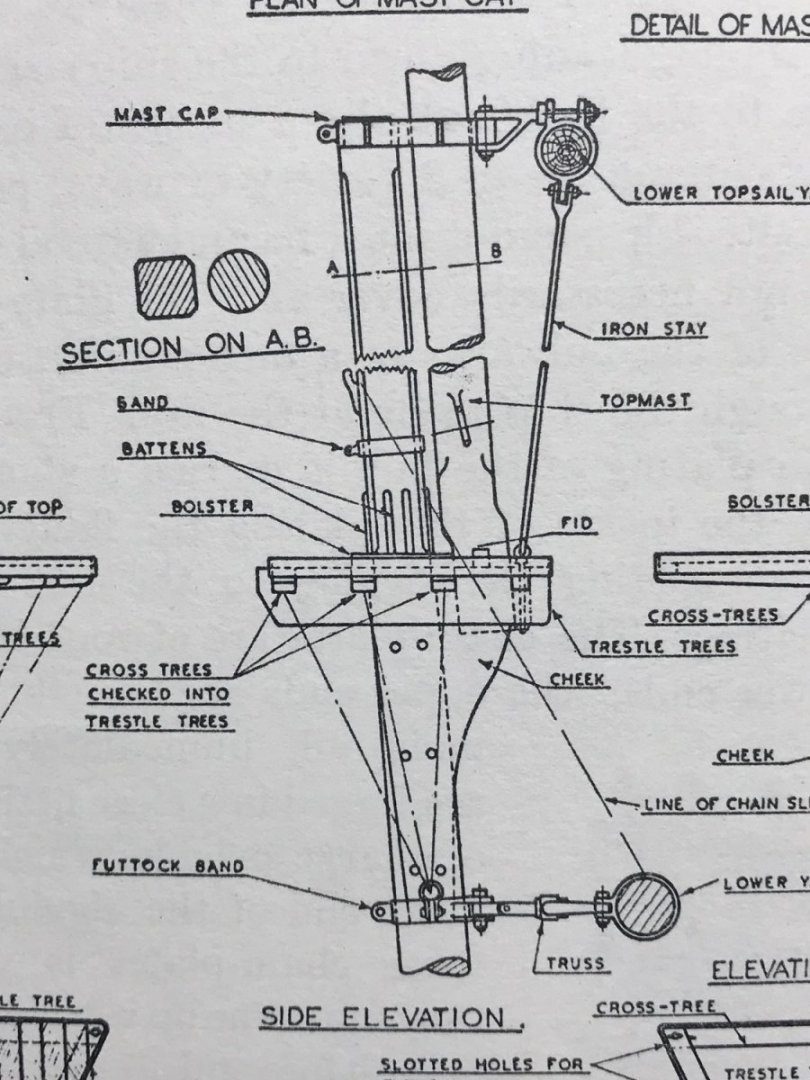
Next…..Glory was rigged with Howes double topsails. these two images come from, “The masting and rigging of American clippers” and “Masting and rigging of clipper ships and ocean carriers”. They show the Howes double topsail design. Glory was slightly modified from the image with the banded support arm. Rob
- 3,560 replies
-
- 1
-
-
- clipper
- hull model
- (and 2 more)
-
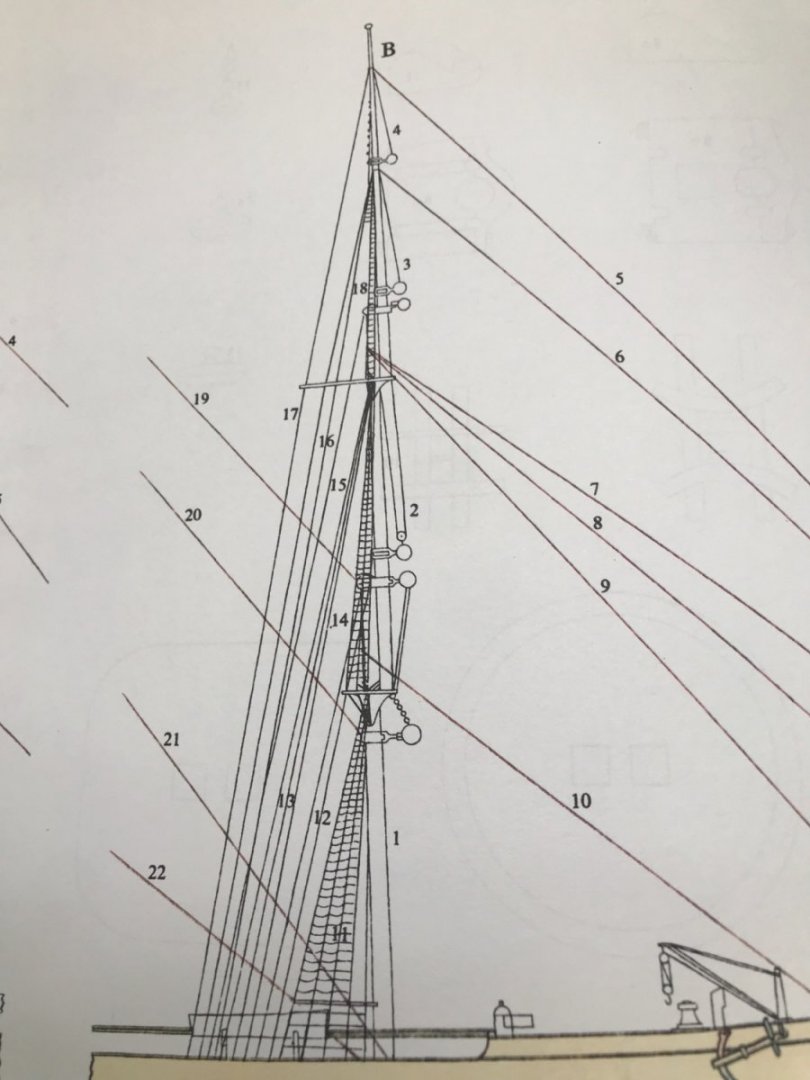
Glad….here are some diagrams from several sources first this overall image shows the yards and how they are fixed to mast. This image shows the lower double royal mounted as the lower topsail. Glory did not have one of these Image is from “Lore of Ships” Rob
- 3,560 replies
-
- 1
-
-
- clipper
- hull model
- (and 2 more)
-
To pipe in....along with published numbers...I always use calipers or drafting dividers to cross reference these numbers with actual photographs. Dead reckoning via direct measurements of photographs....either validates or causes you to remeasure. Like any good carpenter....measure twice(5 times if necessary), cut once. If I can reverse engineer the entire hull from knowing the actual length of the figurehead....I can do the same with the masts and yards. Rob
- 3,560 replies
-
- 3
-

-
-
- clipper
- hull model
- (and 2 more)
-
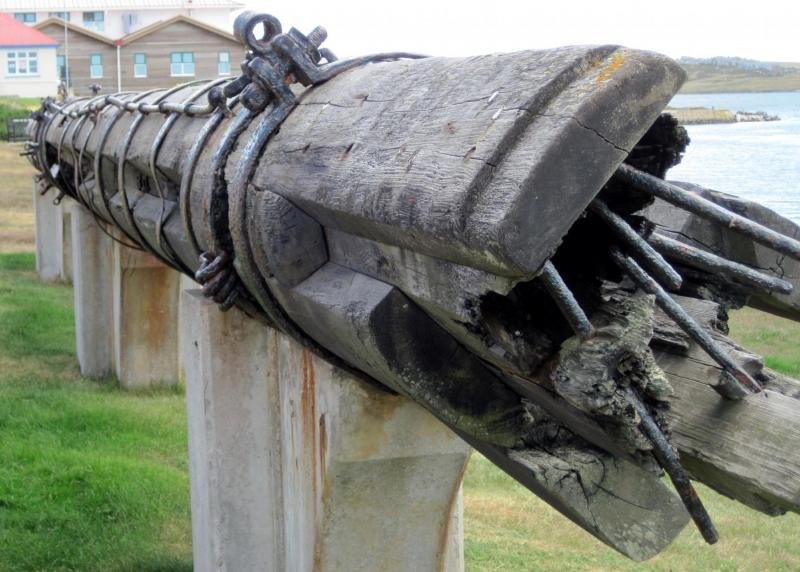
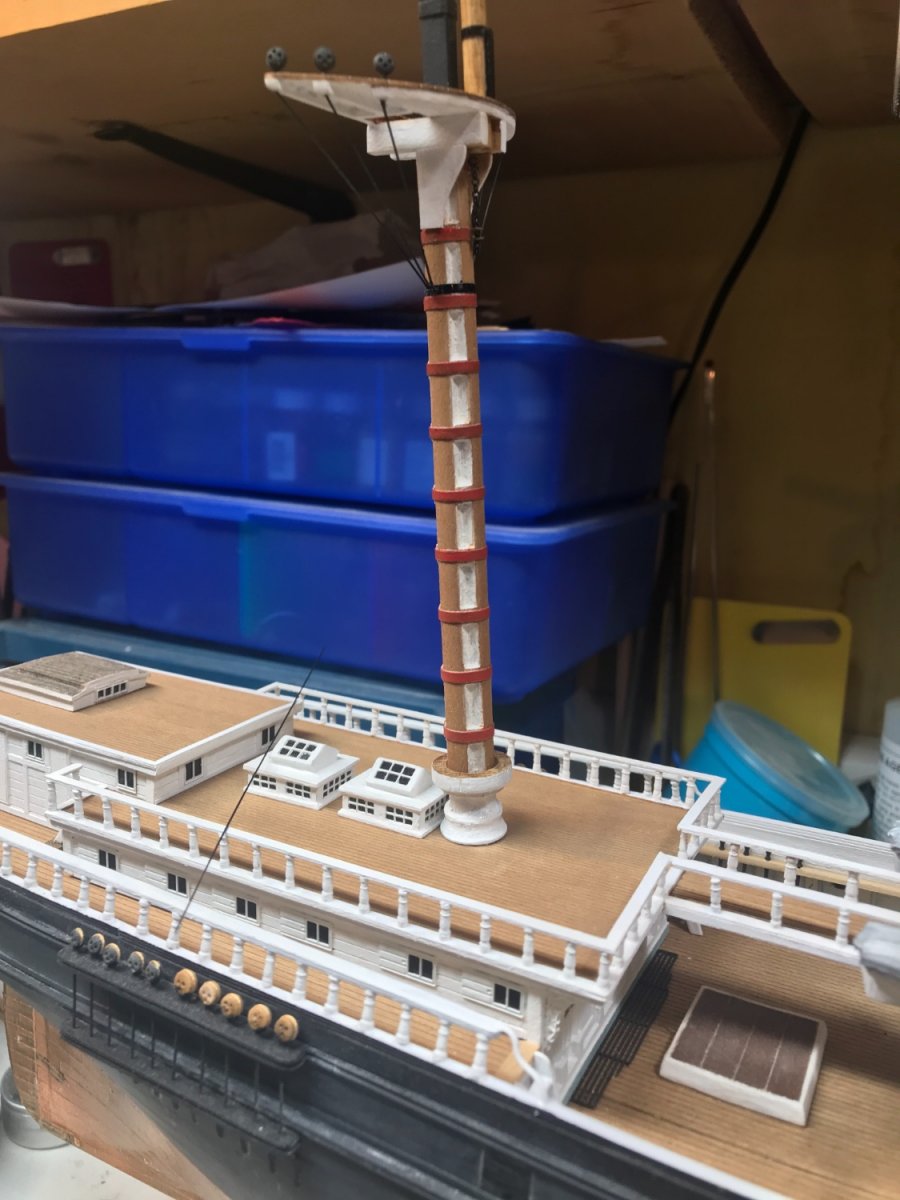
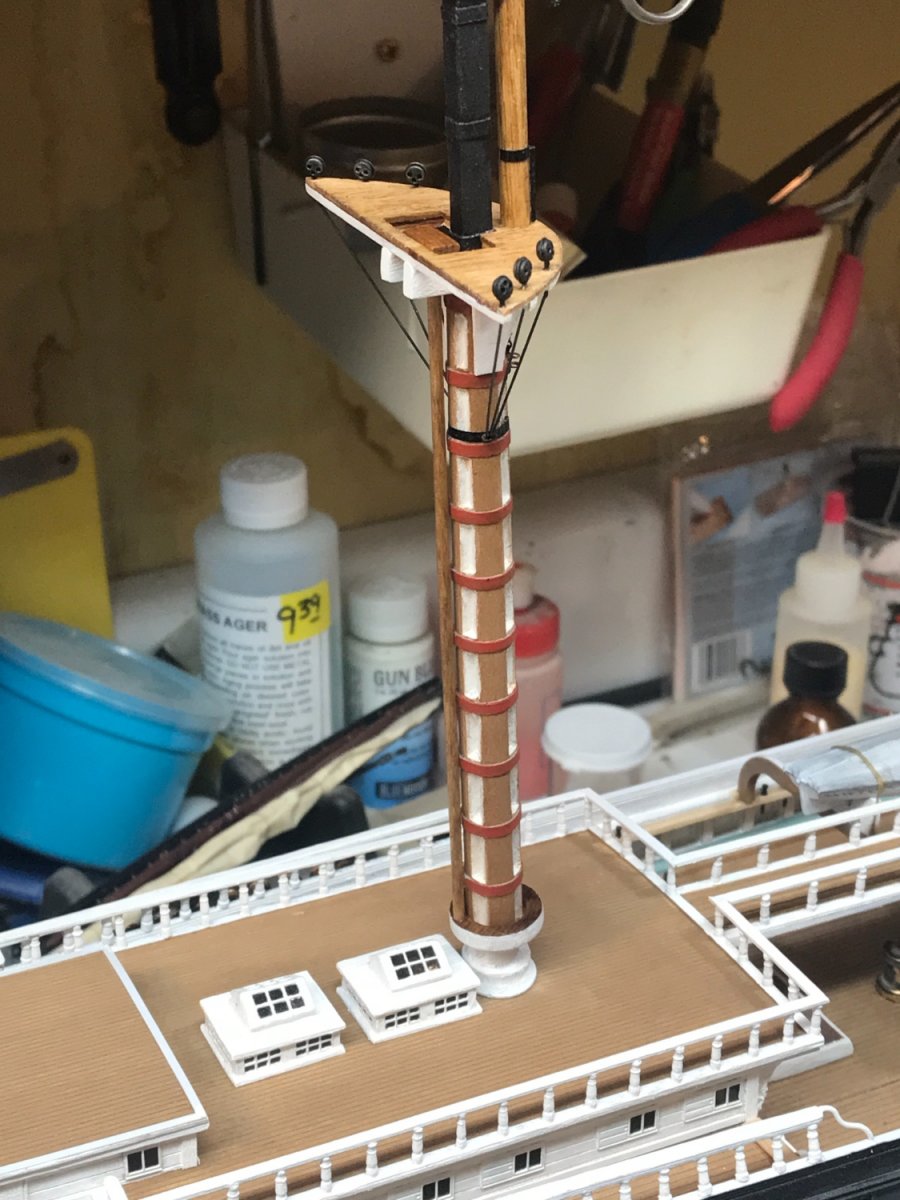
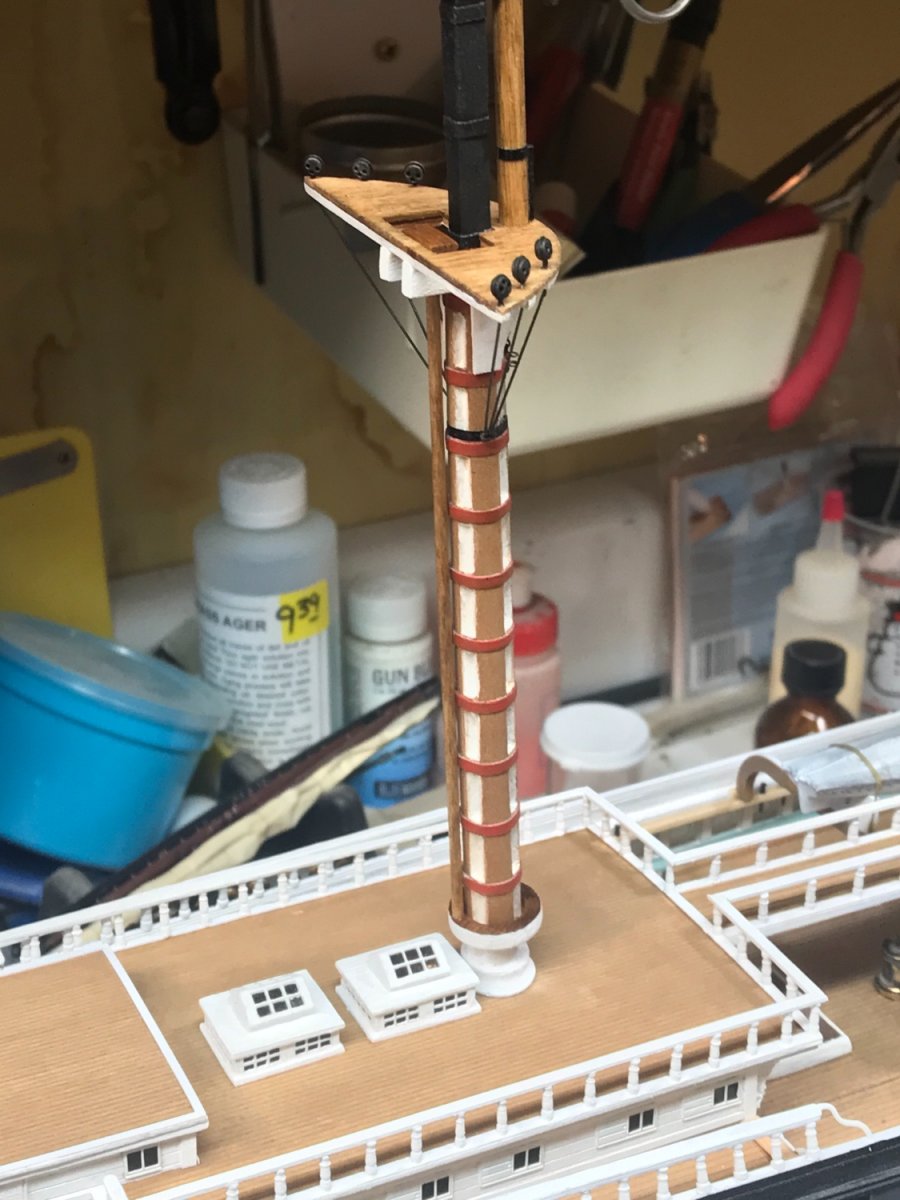
Typically built masts had hollow centers and just atop the mast cap there was a vent cap to permit air flow within the mast....to prevent rot. I have yet to add this feature to my mast caps. Hope this helps in understanding built up masts. you're doing a wonderful job. Rob
-
This image shows slightly different built mast. the chapeling is limited to just under the banding and the valley's appear quite pronounced. Rob
.jpg.fb5da1a10c0236f258fbe24279dff815.jpg)
-
And here is a picture of a built up mast that came from an (unknown) wrecked clipper. This is the mizzen mast. Again...notice the chapeling beneath the banding....this design is similar to yours with a flat valley floor. Unlike that of Glory's replacement main mast in the previous image. Notice the number of iron pins utilized to secure this mast...in this one section. These mast were quite robust. Rob



Our Emblem ®
