

druxey
-
Posts
13,390 -
Joined
-
Last visited
Content Type
Profiles
Forums
Gallery
Events
Everything posted by druxey
-
 Some of those renderings look to have been made distinctly 'heroic' rather than a good likeness! I like your analogy of an Elvis convention. Certianly my impression is of a rather round-faced, apple-cheeked and boyish looking man. At this stage, your carving looks to catch these traits nicely.
 -
An elegant solution to the problem indeed! Well done, Patrick. And tell the ship's cat to jump to it!
-
Enjoy your time off!
-
Sails on a British Cruizer Class Brig
druxey replied to DennisL's topic in - Build logs for subjects built 1801 - 1850
Royals. if present, would only be flown in very light airs. -
Enjoy your time out, and with no guilt feelings! Pesky customers can wait.
-
Yup, they always are! But digging out information is like a treasure hunt - and the thrill of discovery.
-
Your first model looks pretty good despite all the mistakes you mentioned! Welcome aboard. We all learn from many mistakes. Fortunately there is plenty of good advice and also tutorials on this site that will help you. Have fun.
-
It appears that the bulkheads start at the bow (top right) and are in sequence going left, then continue right to left in the second row. However, without any labels it is not certain. There are 11 slots in the backbone, but only 9 bulkheads. Who supplies such incomplete information?
-
I think most readers here understand that different folk like to work at their own level and most will respect that. As James (an Administrator with a capital 'A') said, the armchair arrogants usually end up elsewhere.... Welcome aboard!
-
Just pulling up a seat for this one. Looking good!
-
L'Amarante by marsalv - 1:36 - POF
druxey replied to marsalv's topic in - Build logs for subjects built 1501 - 1750
Sweet! -
Great going - especially the 'fiddly bits'!
-
Lovely work as usual. However, I am curious; Why do you not use a drawplate and split bamboo to make your treenails? It's much more time and labor effective.
-
Good questions. I think you need to do your own research. Look online in the RMG site. Check not only the plans, but contemporary model photos as well. An example: https://www.rmg.co.uk/collections/objects/rmgc-object-66464 Blow up this image. Although lo-res, you can see that the fore face of the bollard timber projects forward of the hawse timbers, above the line of planking - in this case.
-
Freehand drilling? I usually drill an undersized hole, then open it out making any correction.
-
Yes, reaching around is usually fatal! If you can rig a lazy susan to revolve the model instead may help stop that evil habit!
-
My method is to use a long length of wire, and bend one end into a short 'V'. Then thread on the ring. The next step involves holding the two end of the V (inverted so gravity moves the ring out of the way) )in a parallel plier and squeezing the V together using a needle-nose pliers. I then release the ringbolt and, with fine wire cutters, cut the short end at an angle and then the longer end to make a stem. As observed by Gregory, the bolt is partially sunk into the wood. After drilling a suitable hole, I open it up using a miniature jewelers' screwdriver tip held at about a 35 degree angle. This forms a sort of countersink for the ringbolt.
-
Yes, Caruana was a principal source.
-
It looks like you have found your medium, Aleksandr!
-
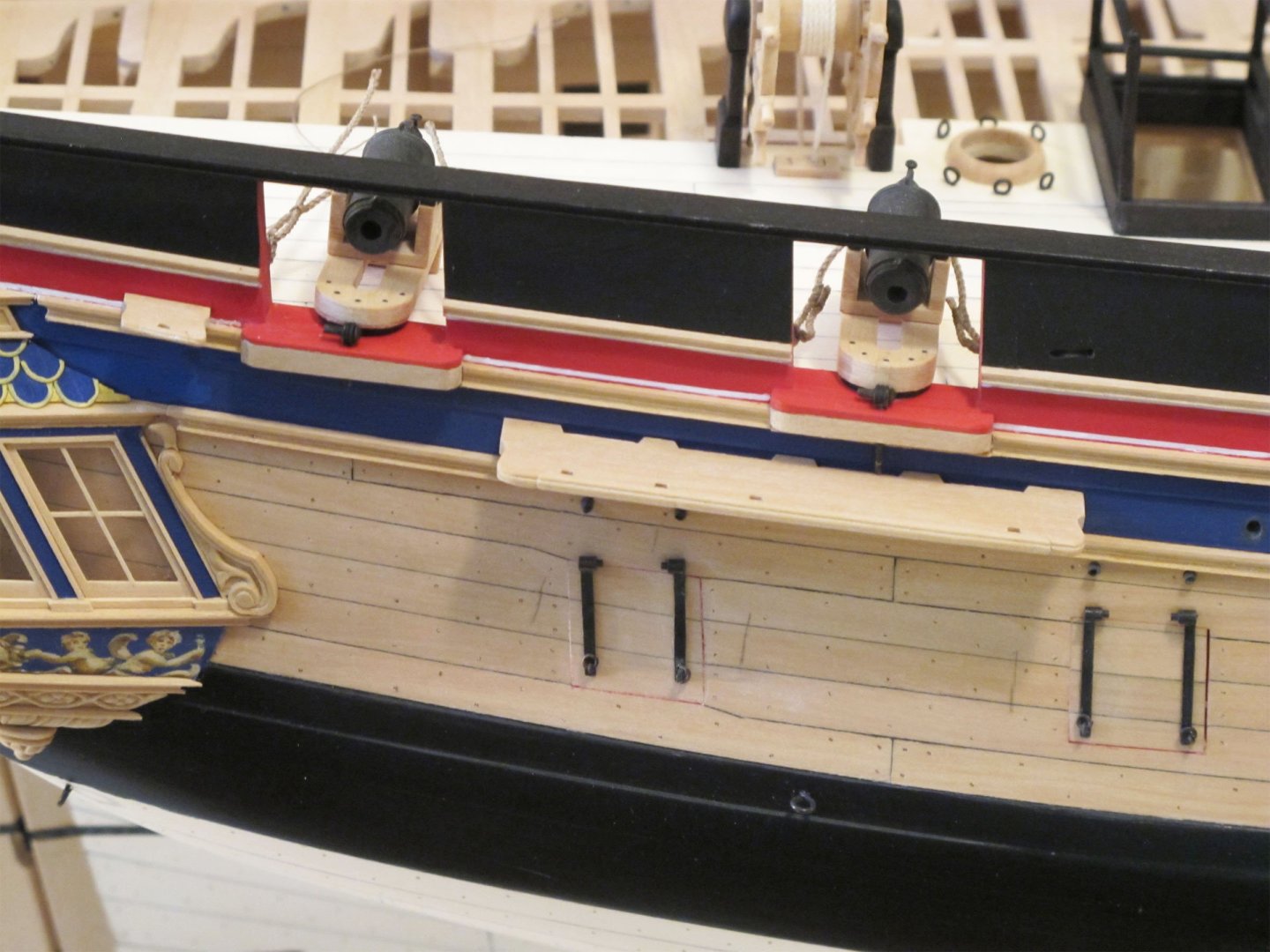
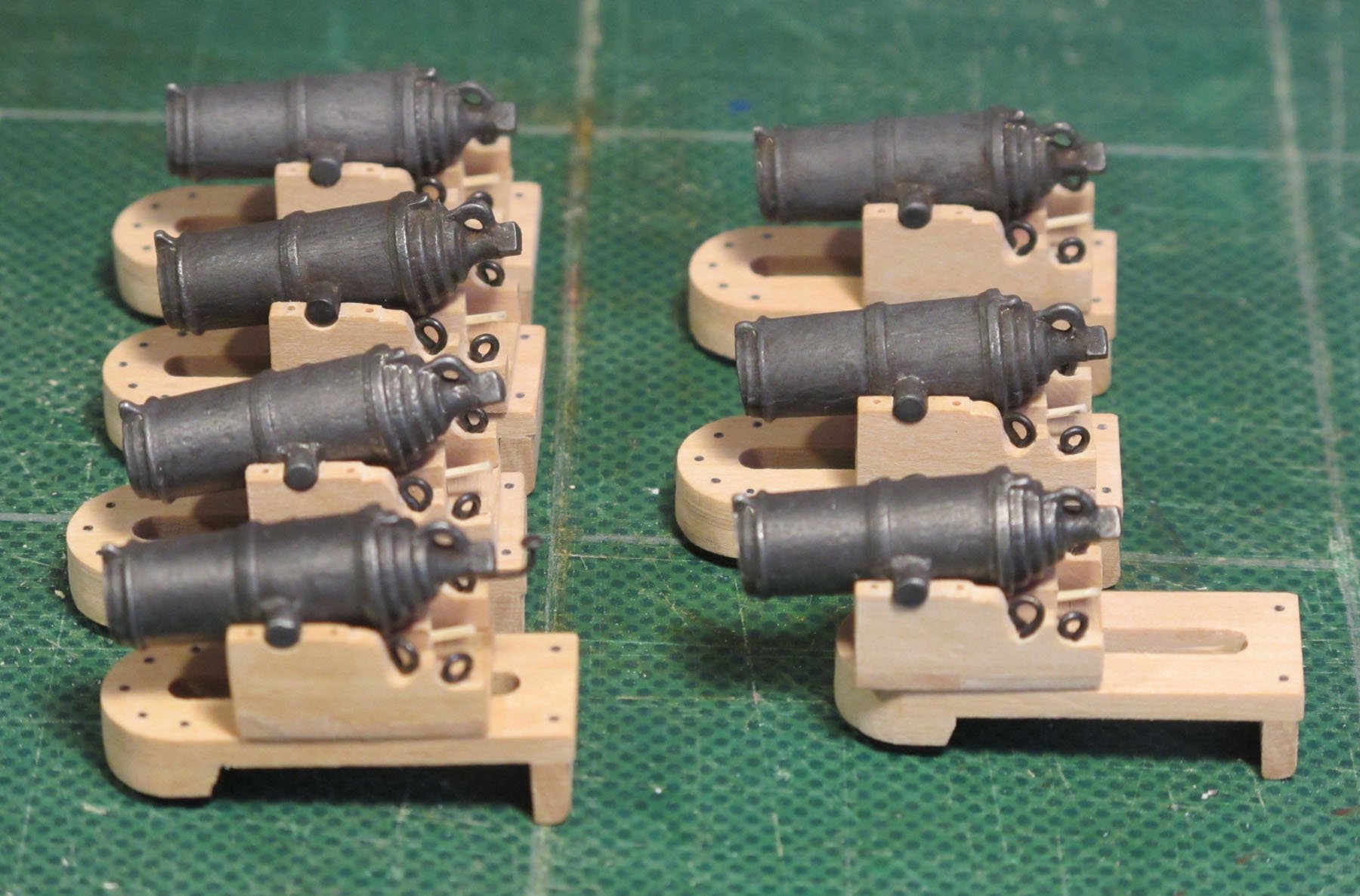
Early carronade mounts are a subject in themselves. This was something I delved into some years ago for a 1782 fireship. From the evidence I could uncover in Caruana and elsewhere, the early carronades were mounted on the 'outside principle' and had no muzzle extension to limit blast spread. Also, there were no wheeled trucks on the inboard end of the slide. I'm about to read your pdf and may have some additional comments later.

-
It's clear that you are having too much fun fitting out the accommodation. Well done!
-
Well done, Mark.
-
While the use of wax or modeling clay (Plasticene) is very helpful to work out the problems of a carving in 3D, the process is quite different. In the case of carving, the process is subtractive, while modeling using a plastic material is additive. Sure, one can carve wax and clay, but if a mistake is made , one simply adds more material. Try to do that with stone or wood!



Our Emblem ®
