

Morgan
-
Posts
546 -
Joined
-
Last visited
Content Type
Profiles
Forums
Gallery
Events
Everything posted by Morgan
-
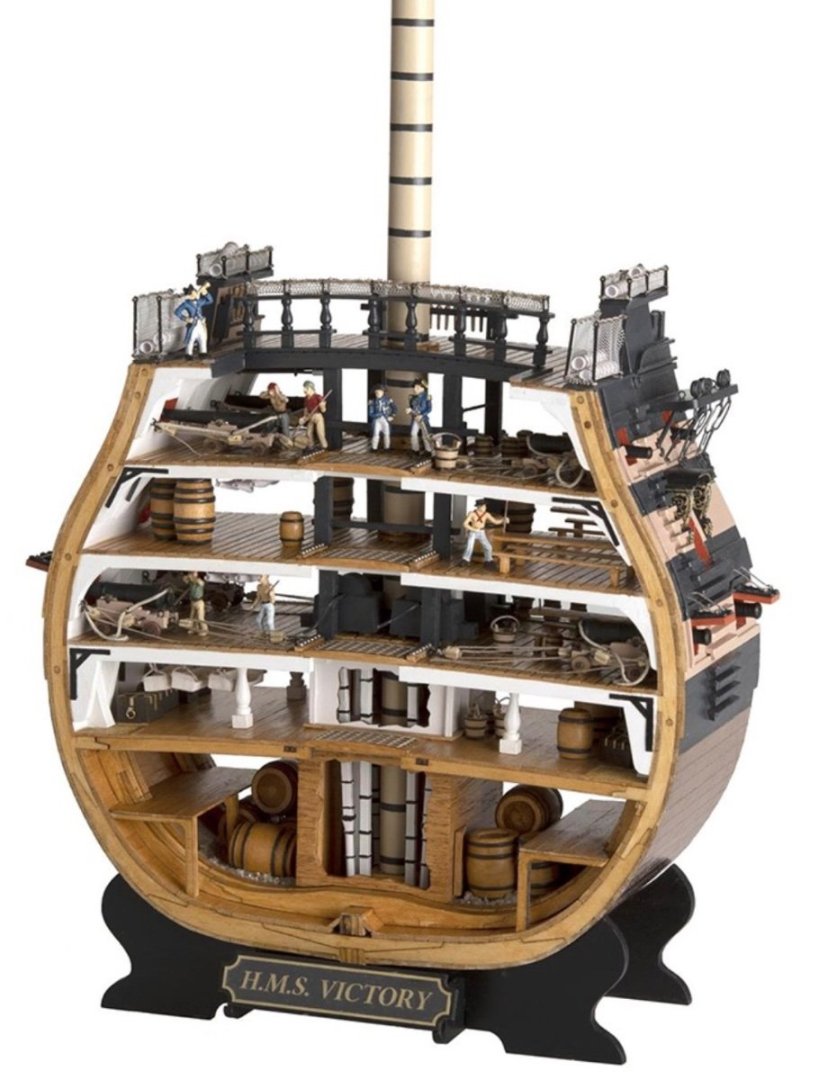
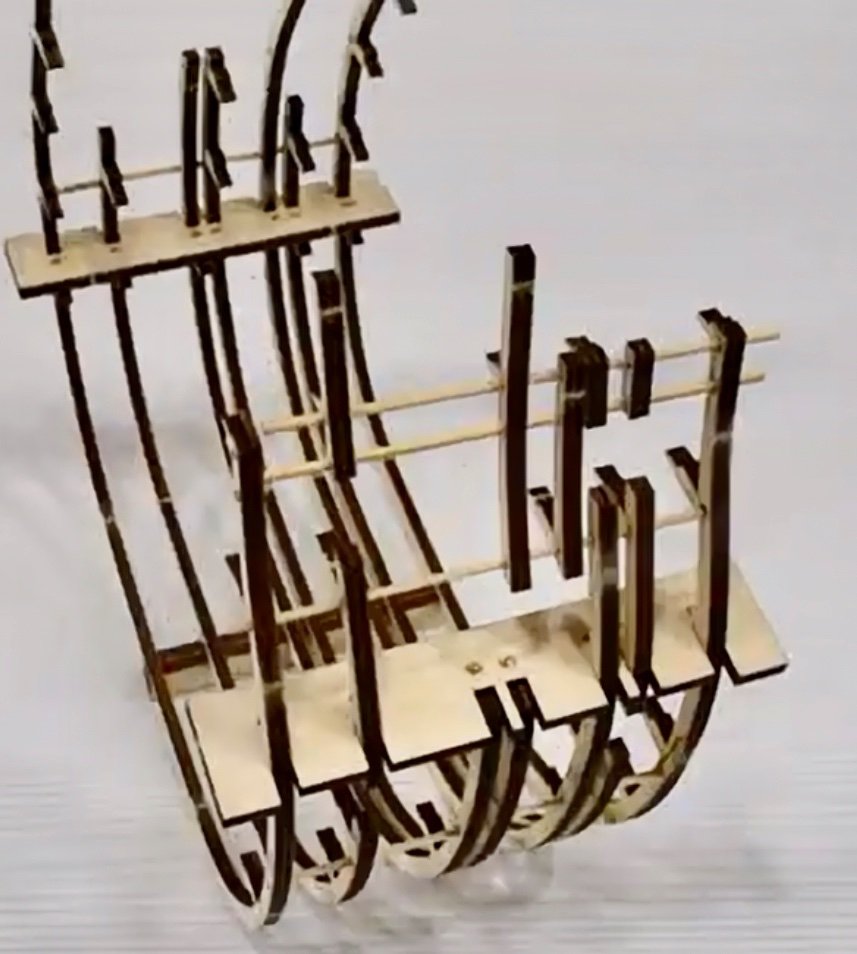
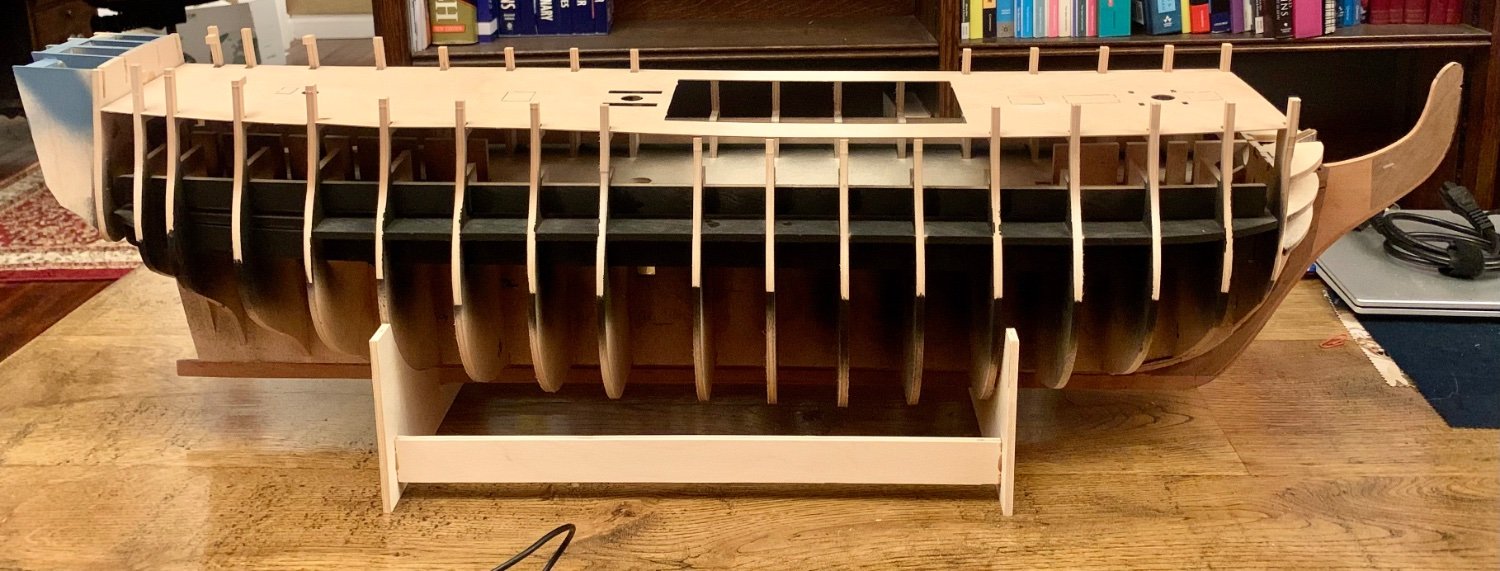
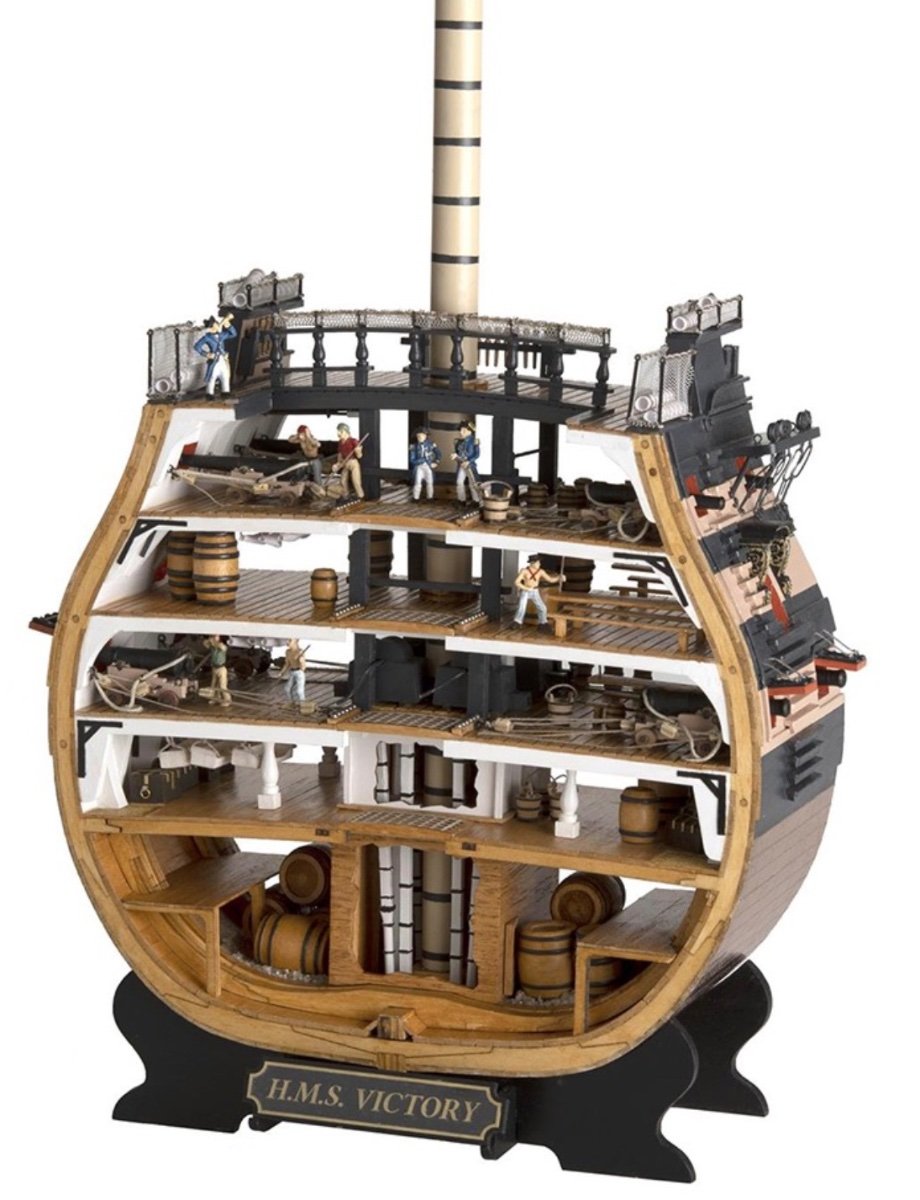
 At the time of commencing this build log (November 2023) I have already been working on Part 1 of the project since 2015, which amounted to researching the ship herself and what Victory really looked like at Trafalgar. Now I know people will point to the Victory herself in Portsmouth and say that’s what she looked like, after all they have been restoring her off and on for a century so you would think they (NMRN) of all people would know, but actually no, it isn’t what she looked like. It may be that is how they label her, and that it has been the objective of her restoration since the 1920’s, and has been ongoing ever since. It was clear to me back in 2015 that the present Victory did not look like some of the strictly contemporary images I had recently been viewing, this is described in the attachments, and of course you will need to read the work for the background and results. You will see I use the term ‘strictly contemporary’ throughout the paper, and this is important, it both highlights and describes primary sources of works of evidential value from 1801 to 1806. Art Works and other records of Victory first produced at a later date, of which there are many, especially after 1814/16 when the ship was radically altered, are voluminous whilst passingly informative, do not carry the same provenance when considering her Trafalgar guise. Unfortunately, a substantive body of the Nelsonic art works, including images of the Victory, grew in preponderance in the 19th Century, and these works continue to dominate the visual record. Accordingly, there is a lot of myth that surrounds Victory, much of this grew up in the century after Trafalgar, especially with the Victorians recasting Nelson, Trafalgar and HMS Victory to reflect the values of their time. Much of this ‘doe-eyed romanticism’ hung over into the early 20th Century and made its way into the restored Victory and Nelsonic cannon of the time. The accompanying volume to this build-log looks back to the records before this dreamy rose-tinted time, but I also draw on the modern research that can be validated. I deliberately caveat my references to modern studies, as even some of today’s authors, including some of the biggest of names in maritime history, are not beyond repeating the hyperbole and mistakes of their Victorian antecedents. Neither are they beyond repeating the ‘findings’ of others, which upon examination of the historic archive do not hold up to scrutiny. I have labelled the result of my research ‘Nelson’s Victory Revealed’, my intention is to release that work in PDF format in conjunction with this build log. Included in this first part is the first instalment, principally the contents, introduction and review of the background research materials. I’ve also enclosed numerically the final 2 parts, the Bibliography and End Notes as they will be needed throughout for cross reference purposes (parts 12 & 13). There is a separate dedicated thread for the Research under ‘Discussions for ships plans and Project Research ….. etc.’, I’ll also post these over there as well. So, after enough waffle, on to ‘Part 2’, of the project - the build! Whilst I would have liked to have built the Victory in 1:64 scale utilising the prospective Amati Victory as a basis with the ability to detail all decks, it is not available at this time, and I am keen to make a start so waiting isn’t an option. So, I have purchased the Caldercraft 1:72 version from Jotika. I had considered scratch building, but I am being realistic about my abilities. I have scratch built HMS Trincomalee in 1:64 plank on bulkhead, or rather more correctly, part built – I’ve completed fitting out the Gundeck, but a First Rate is an entirely different proposition. I had though initially about opening up the Caldercraft Middle Gun Deck and detailing it, however, it just happens that Artesania Latina have also just released a 1:72 scale Main Mast Cross-section, timing couldn’t be better. I’m going to build this in tandem with the Caldercraft kit, or more accurately slightly ahead of it. This will allow me to detail items such as the double height chain pumps, Riders to all decks, pump well and multiple shot lockers, and multiple gun patterns. In terms of reference material, well there is that small volume I’ve already mentioned, and I have also collected in pursuit of my research a substantial volume of reference material, all of which is listed in the Bibliography. Then there are also in 1:48 scale all available Victory draughts and plans from the NMM, together with those of the Boyne. In addition, I have Bugler’s 1:48 plans and a set of John McKay’s drawings in 1:64 – so no shortage conflicting materials to draw from! Then there are the prints I have also obtained from the NMM, including both Turner and Stanfield’s Trafalgar works, as well as those of EW Cooke and Pocock. Some of these are now framed and adorn the library by kind permission of the Admiral, I’ll get around to posting a few photo’s of these. I claim they are for inspiration, but truth is sat in front of an open fire next to a decanter of Talisker Whisky there is collectively more of a soporific effect (cue Master and Commander on the iPad and miss the end of the film again 😊). I will also need to capture some side profiles early for the later fabrication of the many fenders, and the head chutes. At some time there is the stern and quarter gallery shapes to confront and reconfigure, but this will be an iterative process as these can only be done when the hull is at a stage that the quarter gallery patterns can be fitted and shaped., which in turn help establish the stern shape. The kit will be augmented with an authentic mix of Blomefield and Armstrong-Frederick guns – spoiler alert, Victory did not carry a uniform pattern of guns throughout at Trafalgar, like much of the British Fleet there was a fair bit of mix and match. Also, forget 104 guns, there were 96 + 2 Carronades, speaking of which, there will be some bashing of carronades to get something akin to the prevailing pattern in the early 1790’s when Victory’s were probably cast, rather than the poorly formed replicas we see aboard the ship today. The Upper Deck will get its steam trunking, sick berth, and internal galley chimney. There will be more supplements to the kit as the build progresses. Painting will be in the new colours as I’m a believer in the science and the research undertaken to establish these, particularly when combined with the Rase Mark analysis on the ship. There will be some tonal adjustments to the palette to account for the optics at scale. She will also get the pattern extending around the stem, NO black gunport lids – that is wrong, and lower white masts with the hoops painted out and white underside fighting tops as were worn at Trafalgar. I’m not going to do an un-boxing, there are enough of these around already. What I do need to sort is either a building board or cradle of some form, but I think I’ll address that when I’ve got the skeleton assembled and have more of a feel for handling the model in the space available. Below is a photo of progress to date, first up were modifications to the stem. The kit provided stem reflects the present Victory, but is both too short and low for 1805. This necessitated some amputation and the insertion of a filler piece to throw the head further forward and upwards. There was some additional shaping and profiling with the horizontal bow filler pieces to obtain the necessary profile, which itself was thinned down from the stempost forwards and from where the third cheek down to where it is affixed to the keel. A sacrificial profile or template for the placement of the bearding line at the bow was added at this point, this follows the correct profile and will require further refinement as the work progresses. I also took the time to replace the kit keel which as supplied is a uniform 5mm x 10mm. Based on the Bugler midship section it needs to be 7mm x 11.5mm plus a false keel strip. In addition, it needs reducing in width at each end tapering down from 63mm out to fair-in with the stern and stem posts. Elements of the keel were pre-rabbeted to match the bearding lines. All of this will be covered in copper plates anyway. A new stern post was fabricated using the kit version as a template, instead of a uniform 5mm the correct width at the top is 8.5mm tapering down to match the keel. This will be fitted after planking. Brass rod is used throughout to strengthen the joints of these pieces, much of which is capped over with pear strip. I have also blasted the dummy gunport liners and cabin spaces with some rattle can paints, these areas won’t be seen directly, but I felt some appropriate colouration wouldn’t hurt. For those who haven’t seen the AL cross section yet I’ve attached two images below, one shows the frame they are using to build up the cross section, and the other is of their finished product. That’s it for now. Gary Nelson's Victory Revealed Pt. 1 Background Materials.pdf Nelson's Victory Revealed Pt. 13 References Endnotes.pdf Nelson's Victory Revealed Pt. 12 Bibliography.pdf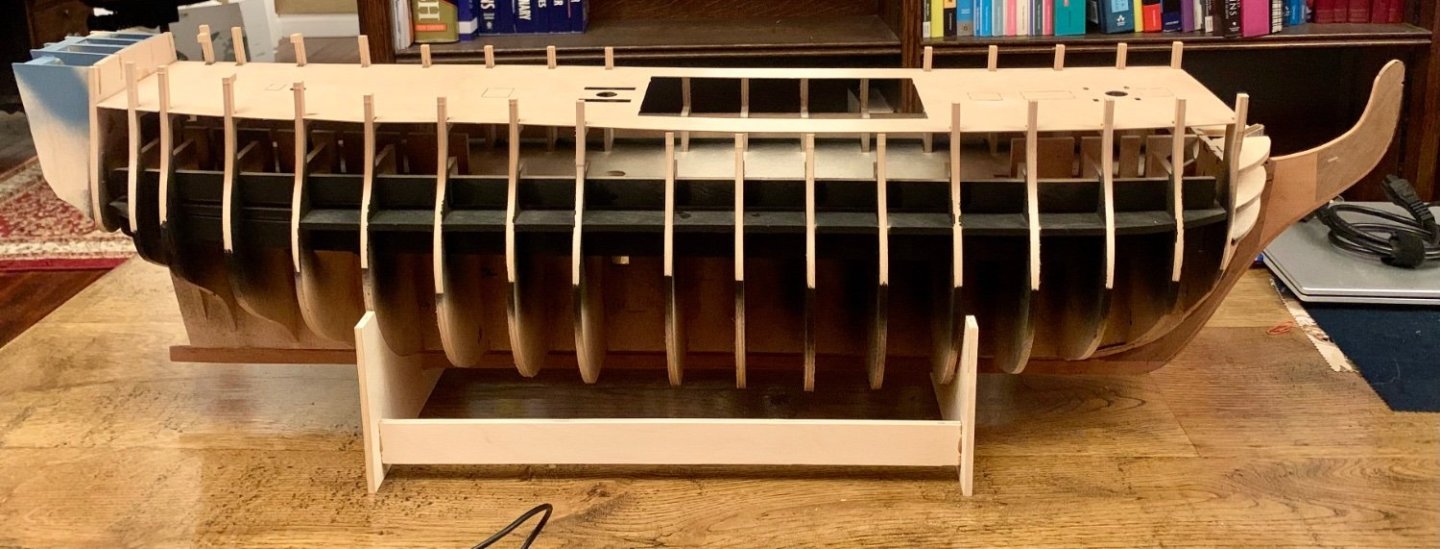
- 2 replies
-
- 7
-

-
- HMS Victory
- Caldercraft
- (and 1 more)
-
Kit review 1:84 Santisima Trinidad – Trafalgar 1805 by Artesanía Latina
Morgan replied to James H's topic in REVIEWS: Model kits
Thanks for the review James. I like the novel approach to their current kits, I recently picked up their Victory cross section (also just released) and they take a new approach with built-up frames (whole and part) threaded onto dowels with pre-formed spacers to construct the hull. Definitely some original thought being applied by AL. Gary -
Of course cash has nothing to do with this offering, it’s all about the ‘experience’ of building your Victory. Only 999 kits available, so that is anticipated sales values of GB£1.2m, US$1.6m or €1.4m. Given the plethora of Victory kits on the market I do have to wonder what the driver for this one is 🤣 Gary
-
I don’t understand why they have notched the frames, it is so wrong and is an immediate turn off! Given the laser cutting used (and price) it would have been more authentic to provide integrated beams and knees which would have been far more authentic. Those with the skill could have built on this and fully detailed the an authentic deck structure, those less inclined could have gone with the ‘cut and stick’ infill approach. Gary
-
Shot Garlands
Morgan replied to tmj's topic in Discussion for a Ship's Deck Furniture, Guns, boats and other Fittings
Hi Allan, No, you missed nothing, tmj was referring to post #28 and the description of the triangular shot grommets. Gary -
Shot Garlands
Morgan replied to tmj's topic in Discussion for a Ship's Deck Furniture, Guns, boats and other Fittings
I think it’s the anti idiot device, at least if you have to pick 4 shot up you’ll do some proper damage to your toes and may just get educated in the process 😈 The shot racks around the coamings are similarly safeguarded. -
Shot Garlands
Morgan replied to tmj's topic in Discussion for a Ship's Deck Furniture, Guns, boats and other Fittings
You have to look twice, you’ve made the same initial assumption that I did. There are in fact three swivels mounted on a rail at the break of the Poop, it was shot away at Trafalgar and subsequently reinstated. The Victory’s Marines were initially drawn up on the Poop, so it makes sense to have them close to the Marines. Nelson wouldn’t have Marines in the tops due to risk of fire to sails. Gary -
Shot Garlands
Morgan replied to tmj's topic in Discussion for a Ship's Deck Furniture, Guns, boats and other Fittings
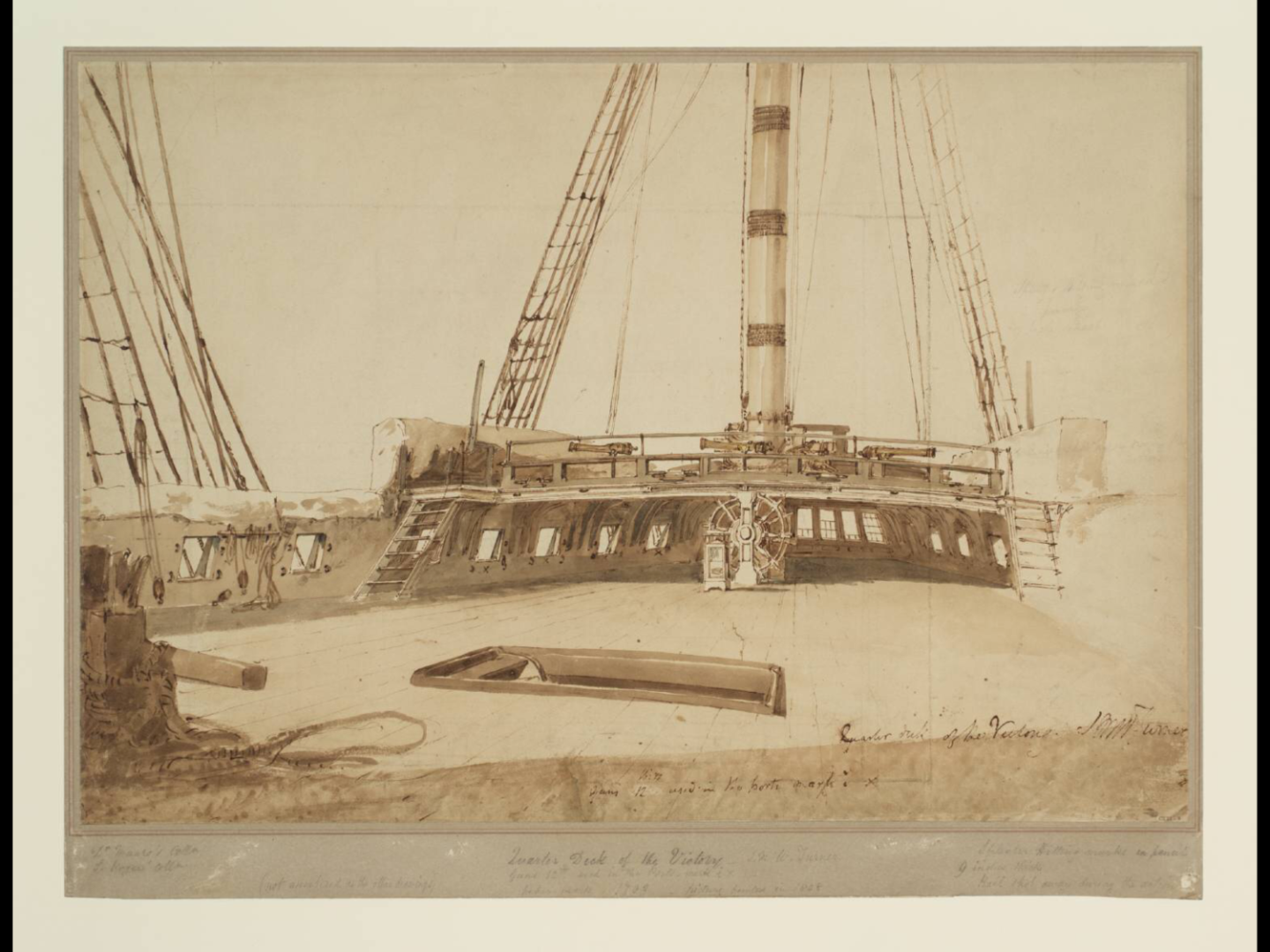
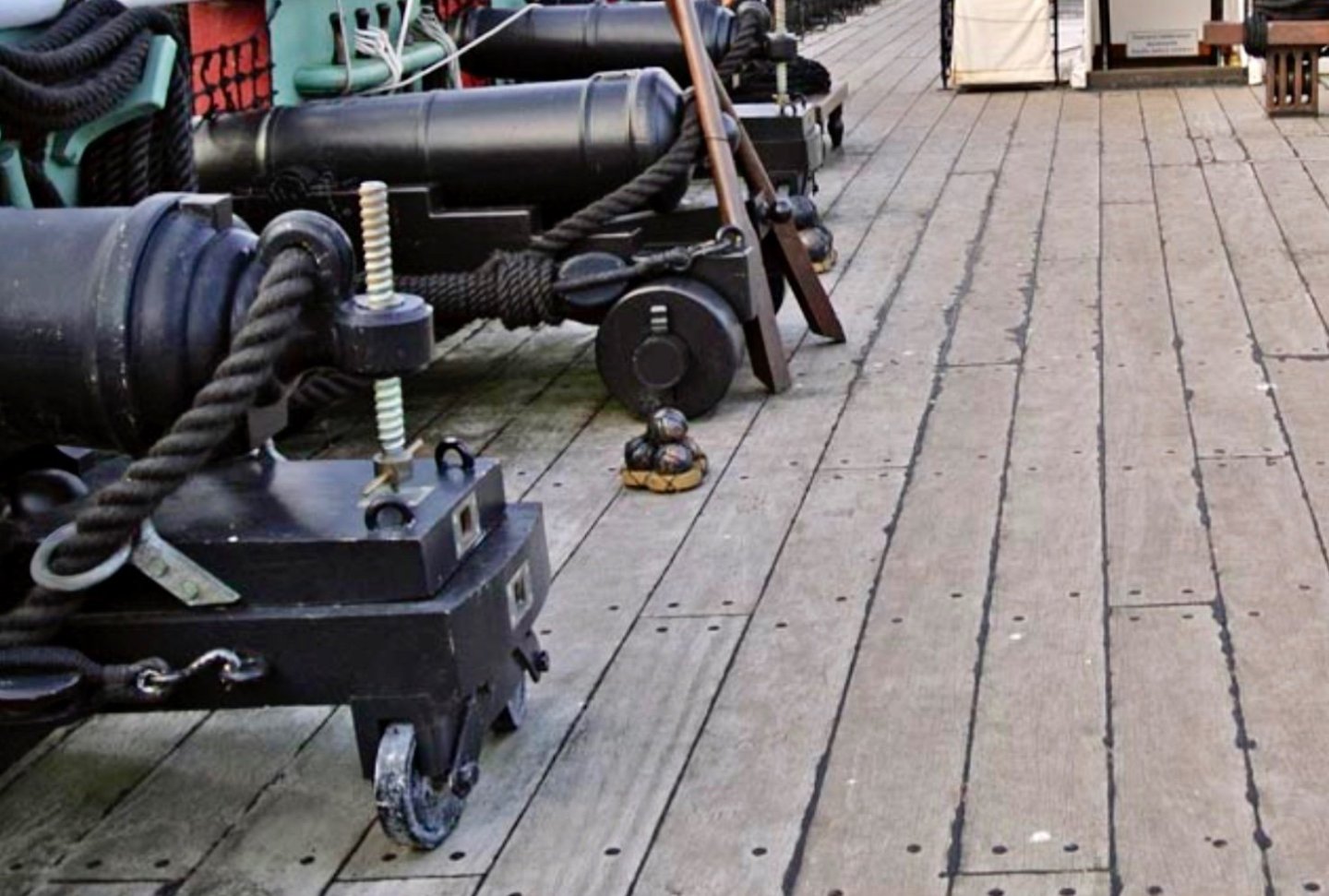
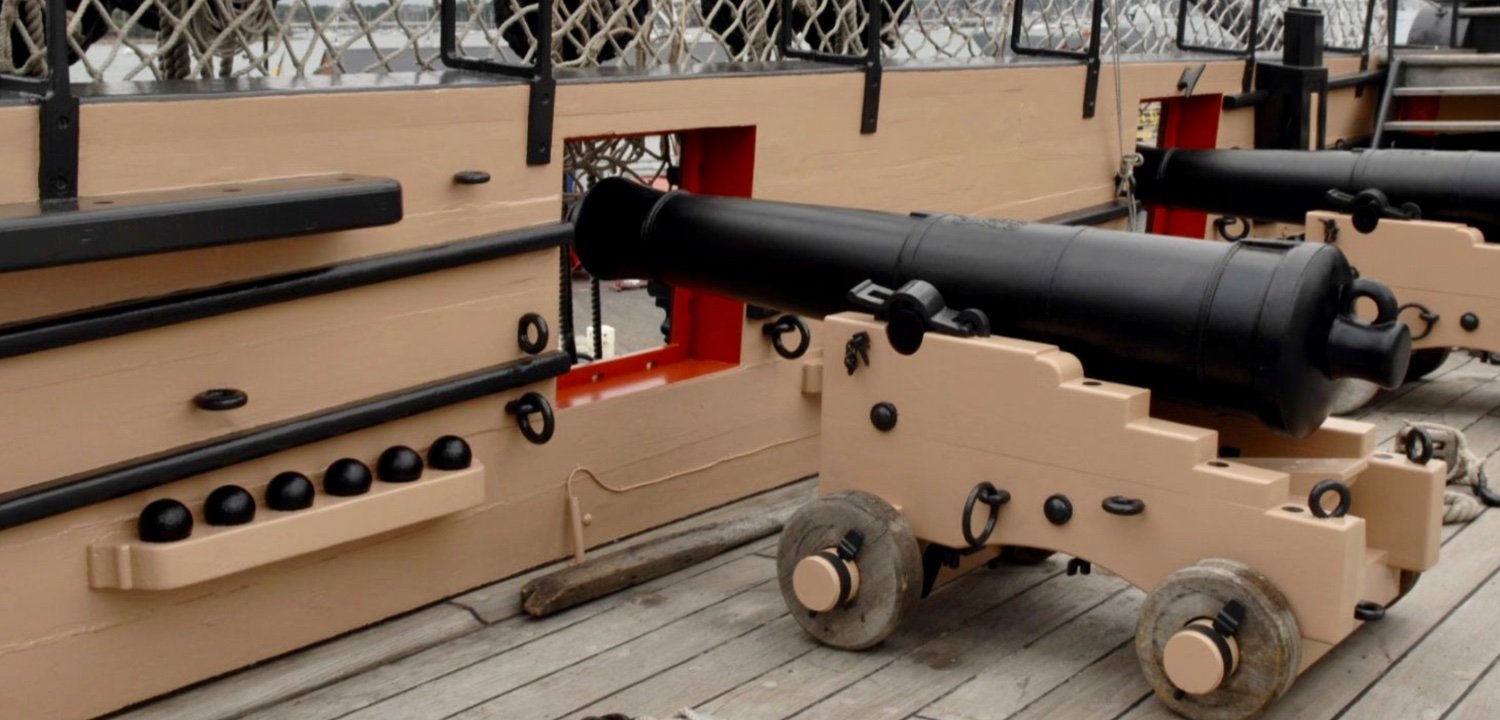
They have done that on the Victory, so I assume that they got the idea from somewhere. The photo below shows it, but it wasn’t an actual feature the ship had as per the Turner 1806 watercolour - same gunports. Gary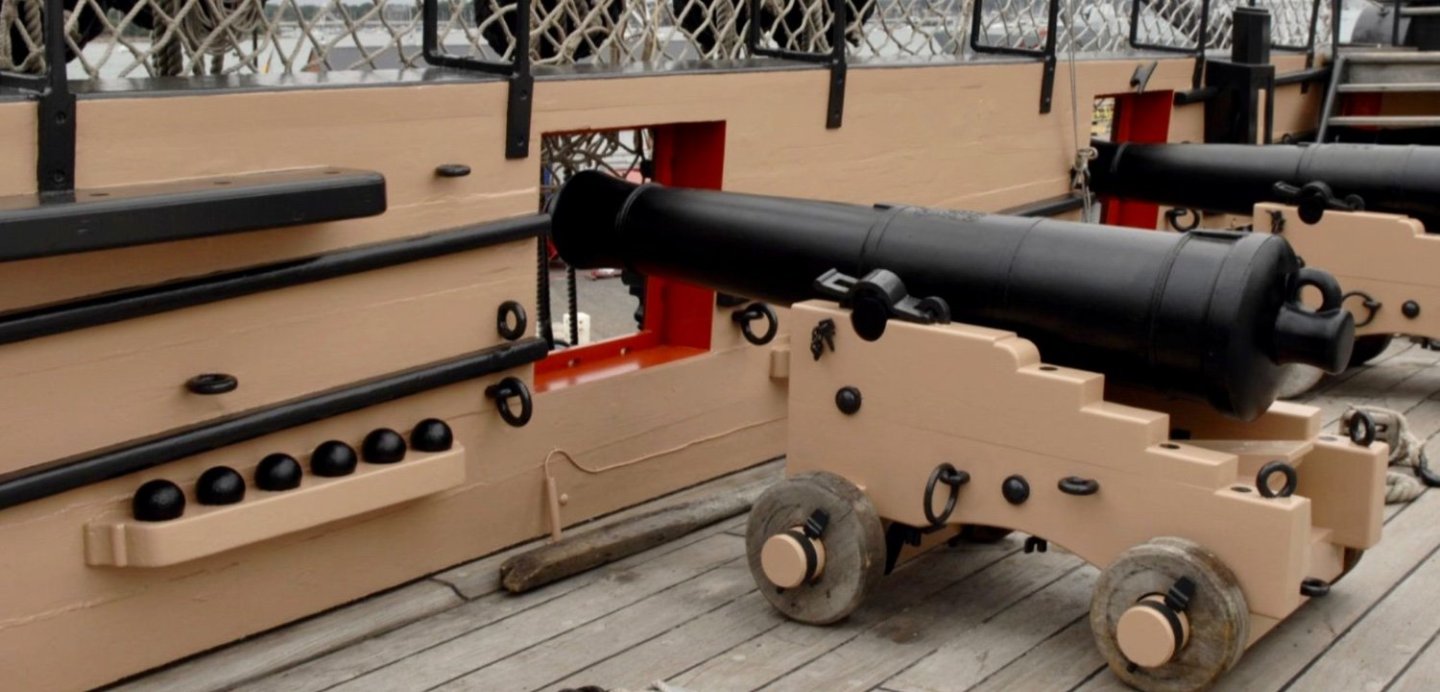
-
Shot Garlands
Morgan replied to tmj's topic in Discussion for a Ship's Deck Furniture, Guns, boats and other Fittings
For the triangular rack - 3 balls along a side, which means 6 balls on the bottom, these then support a second layer of 3, and a single ball atop. Gary -
Shot Garlands
Morgan replied to tmj's topic in Discussion for a Ship's Deck Furniture, Guns, boats and other Fittings
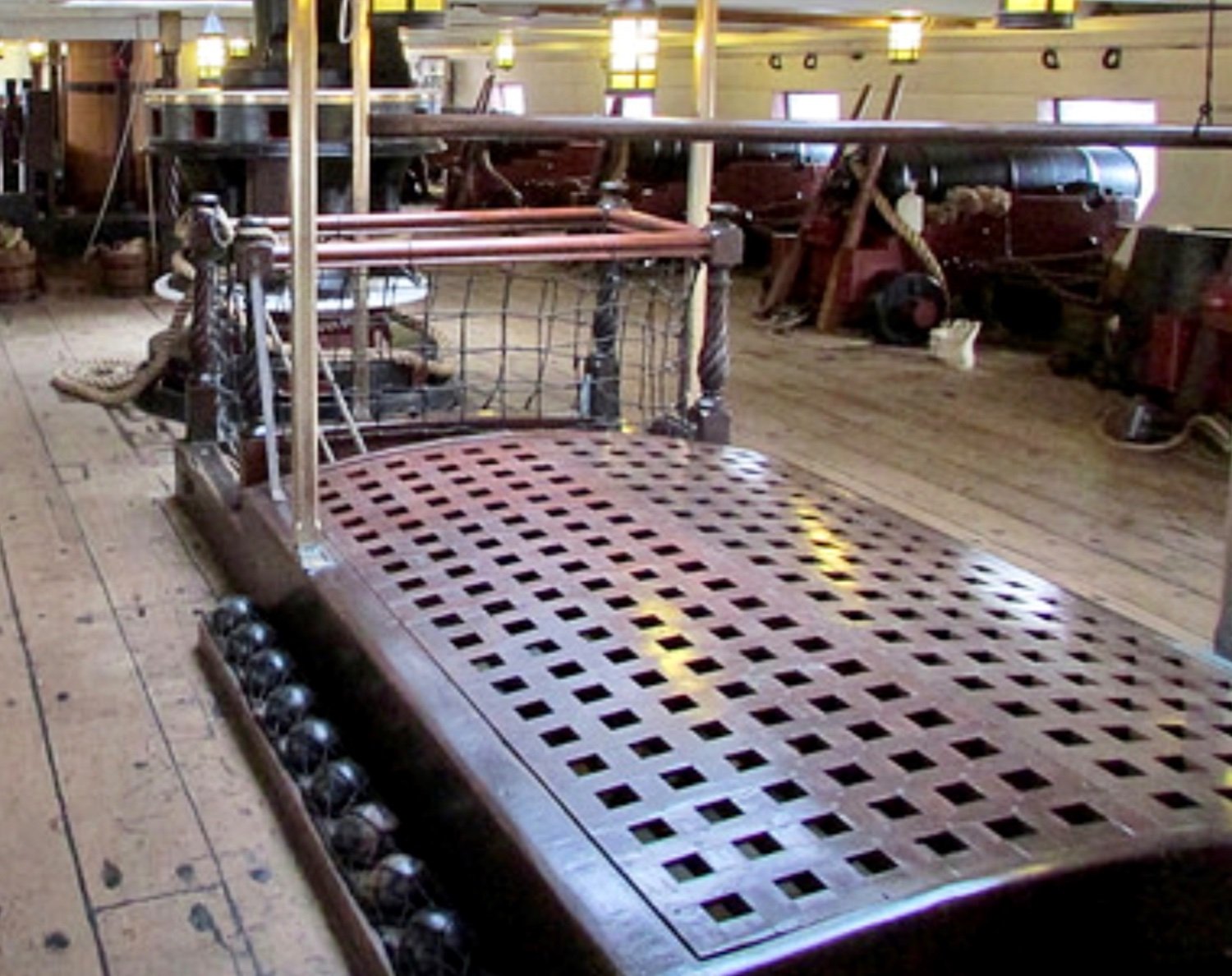
Attached are two photo’s, one shows the shot racks to the hatchway coamings, and the other is a simple rope grommet for holding 4 shot. For the triangular one’s think of a pool table rack for setting up the balls, but you would stack more on top in successive layers with the shot supporting each other to get the pyramid. Only 3 simple sides, nothing in the middle. Gary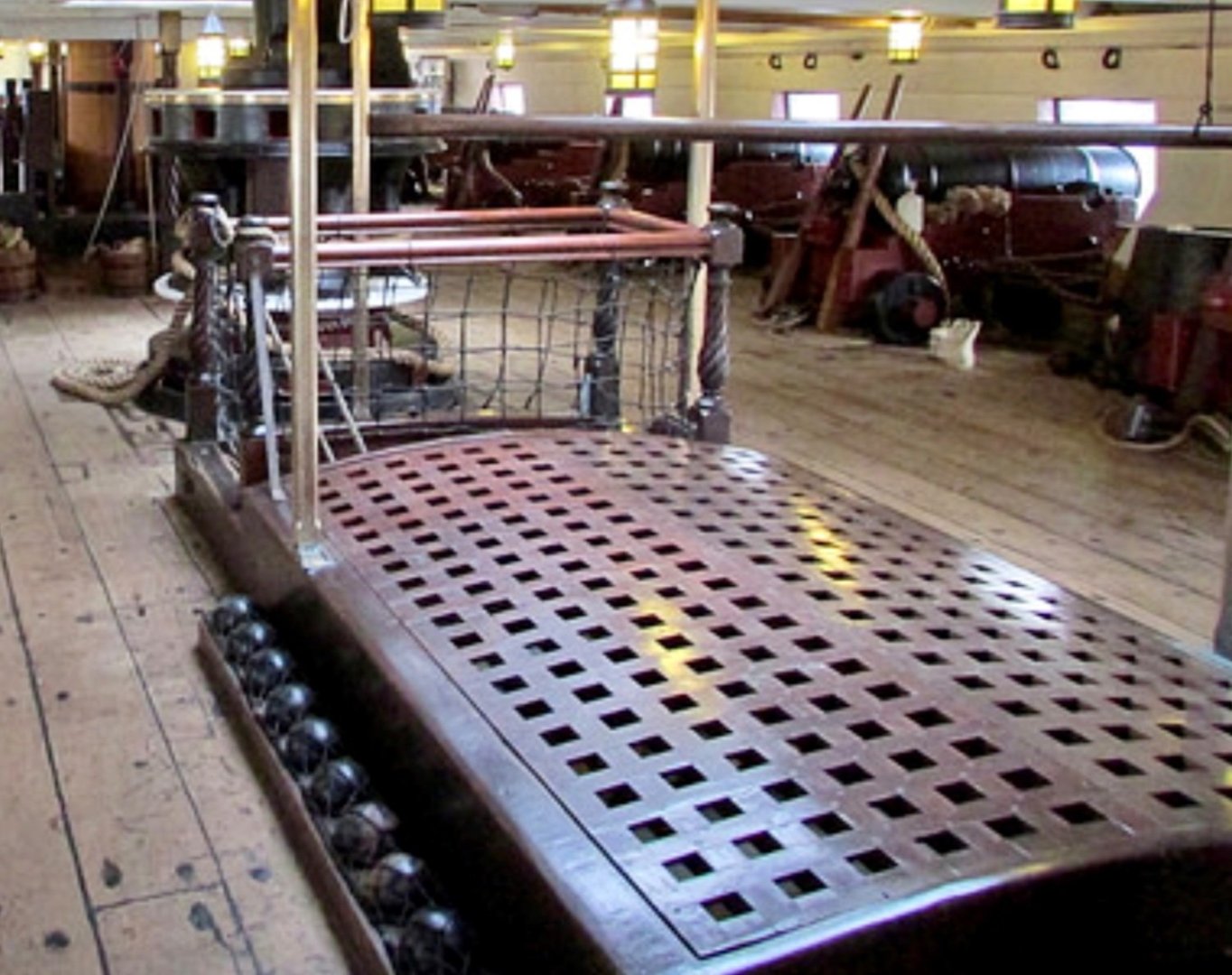
-
Shot Garlands
Morgan replied to tmj's topic in Discussion for a Ship's Deck Furniture, Guns, boats and other Fittings
Yes they were, they went aboard in August 1804. Gary -
Shot Garlands
Morgan replied to tmj's topic in Discussion for a Ship's Deck Furniture, Guns, boats and other Fittings
Tom, From the ‘Sea Gunners Vade Mecum’: 68-Pdr - 8.0 ins. 32-Pdr - 6.0 ins. 24-Pdr - 5.2 ins. 12-Pdr - 4.4 ins. Gary -
Shot Garlands
Morgan replied to tmj's topic in Discussion for a Ship's Deck Furniture, Guns, boats and other Fittings
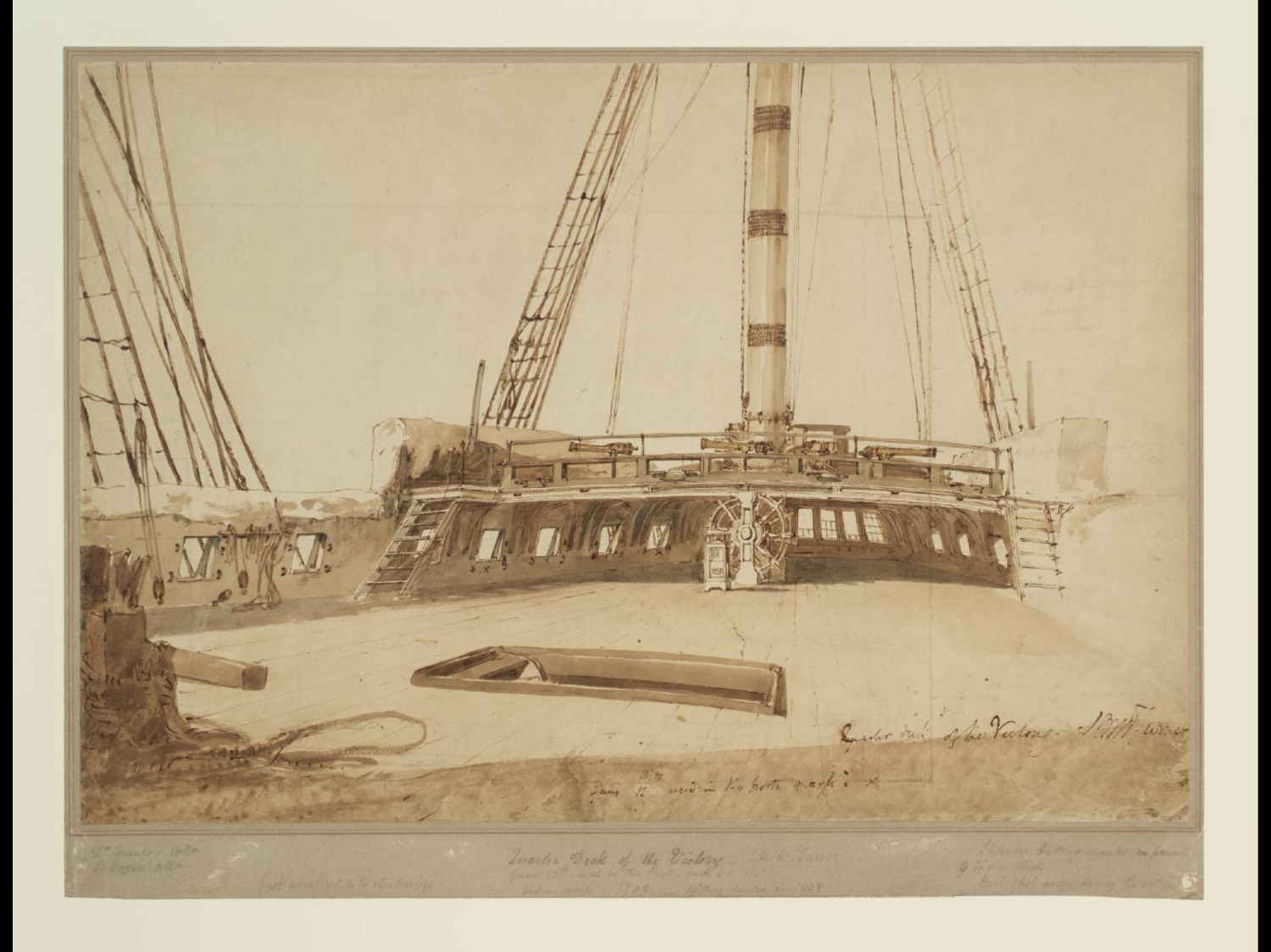
Tom, Waterways are the planking structures that join the side of the ship to the decks, and usually formed so as to lead any water on the decks to the scuppers. So Roger’s comments points to shot being stored on the deck along the ships sides on Great Lakes warships. However, for your Victory cross section this would not be appropriate. The British historian LG Carr Laughton, who investigated the Victory for her 1920’s refit notes that: “Before 1780 shot racks were placed against the sides of the ship. By an order of 27 May 1780 they were directed to be moved to amidships or round the hatchways if desired, and these continued to be their positions till long after 1800’s. On 29 Mar. 1803, when the Victory was completing her repair, the Navy Board wrote to the Admiralty: "Understanding that it is now the practice on board H.M. Ships to keep the shot in the match tubs and put them in grummets [shot racks / garlands] upon the deck; if this circumstance is known to their Lord- ships we are desirous of being informed whether we shall continue to fit shot racks round the coamings of the hatchways, as it appears to us to be an unnecessary work and employing men improperly if they are to be removed by the officers." The Admiralty answered two days later that shot racks were to be fitted in the usual way except upon the quarter deck. The Victory therefore must have had shot racks round the hatchways on all decks except the quarter deck“. This is reinforced by visual evidence from JMW Turner in December 1806 sketches and watercolours that show no shot or facilities to store shot are present along the ships side or around the quarterdeck hatchways. Unfortunately this was ignored and shot racks and other fanciful fittings are presently adorning Victory’s inner hull that simply weren’t in place way back when. Gary -
Shot Garlands
Morgan replied to tmj's topic in Discussion for a Ship's Deck Furniture, Guns, boats and other Fittings
I think it was just the way these were made, they were a temporary storage device used when going in to action and shot was brought up in bulk. For instance, Victory at Trafalgar had a thousand shot per deck brought up the day before battle, far more than the fixed garlands could accommodate, so these were used. The shot within them were stacked pyramidal fashion. They could be square, oblong or triangular. Gary -
Shot Garlands
Morgan replied to tmj's topic in Discussion for a Ship's Deck Furniture, Guns, boats and other Fittings
Definitely bowl shaped sockets, below is a free standing version recovered from the wreck of HMS St. George which sank I think in 1811, you can see the slight scalloping. Gary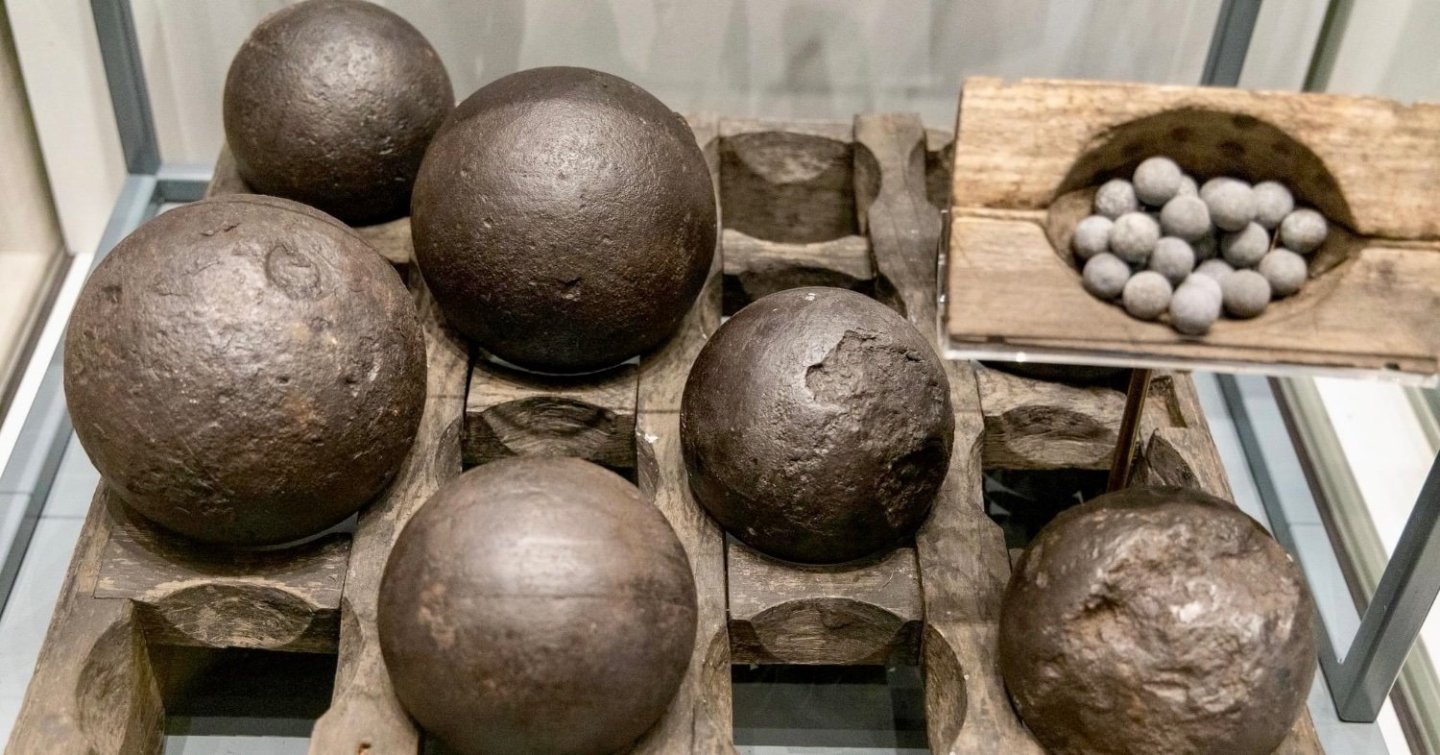
- 41 replies
-
- 11
-
-

-
Interesting, no camber anywhere. The release video shows the parts are laser cut, so why not put that extra detail in? All for a regular price of USD $1,700 / €1,400. The price and detail run contrary to where the leading manufacturers are. It seems a matter of style over substance. Maybe we are missing the point and the target market isn’t the discerning modeller. Gary
-
It is a mish-mash of styles for sure, and clunky! Certainly not sure about Oak as the ribs and frame, not easy to work or detail at that size so won’t lend itself to modification. Also, that lattice frame approach to all the decks could easily have been substituted for a proper set of deck frames as they are all laser cut. A lot of authenticity lost for more than over simplifying the design. Also at 1:87 that is a really odd scale, OcCre don’t seem to have settled on a uniform scale. Gary
-
Hi, There is no button, you simply start typing in the box below the most recent post, in the attached picture you can see below your post is my Icon and to the right the box that says ‘Reply to this topic ….’ Simply click in this box and start typing. When done hit the ‘Submit Reply’ button to the bottom right. Gary

- 1 reply
-
- 1
-
-
Just watched the release video feed live, very much a high level production. Not much in terms of constructional photos of the guts of the model, but looks to have each deck rigged with cannon, but nothing to see as yet beyond that. It seems like a nice attempt to produce something in the Admiralty style, but rigged! I’m torn as to my views of it, I like the concept but for the time and money they have invested it falls short on accuracy, for example in producing the frames why not get the scantlings to scale and properly detailed if the details are laser etched. It also has elements that are of a standard in keeping with a decorative model. More details still required, so the jury remains out on this one for me. Gary
-
I see the Micro-Mark photos were indeed at some earlier stage, the Model Expo site shows the finished model, with Poop, Boats, and a full set of yards and sails. Gary
-
There are a number of images still out there (erroneous courtesy of Micro-Mark), she is the usual OcCre wood pallet, but the model seems naive in part, and accuracy seems to be of passing concern. It could be these are not of the completed model, we’ll have to wait and see, but the missing Poop deck is significant. The open framing is interesting, although again seems underdone for a supposed price of circa US$1,700! It seems the Middle Deck, as well as the Upper and Weather decks (or at least those included so far) is somewhat detailed. Detail for the Lower Deck isn’t discernible, but there is a nascent Orlop. I’m tending toward these being interim construction photos, those yardless masts hint at that. We’ll have to wait and see. Gary
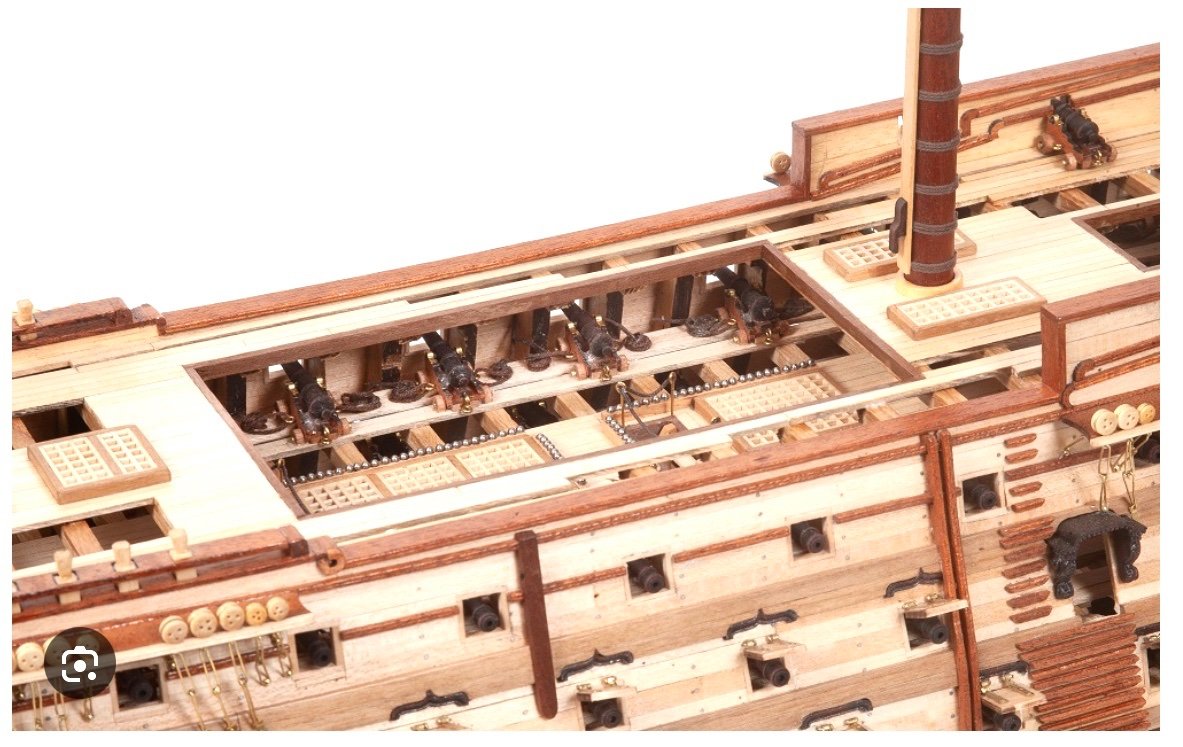
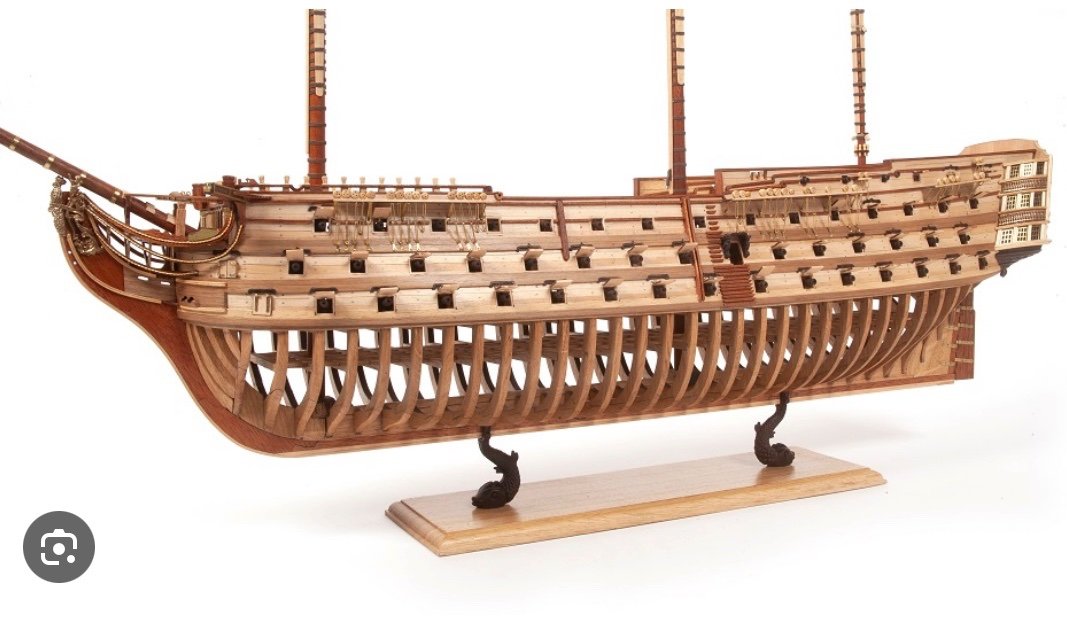
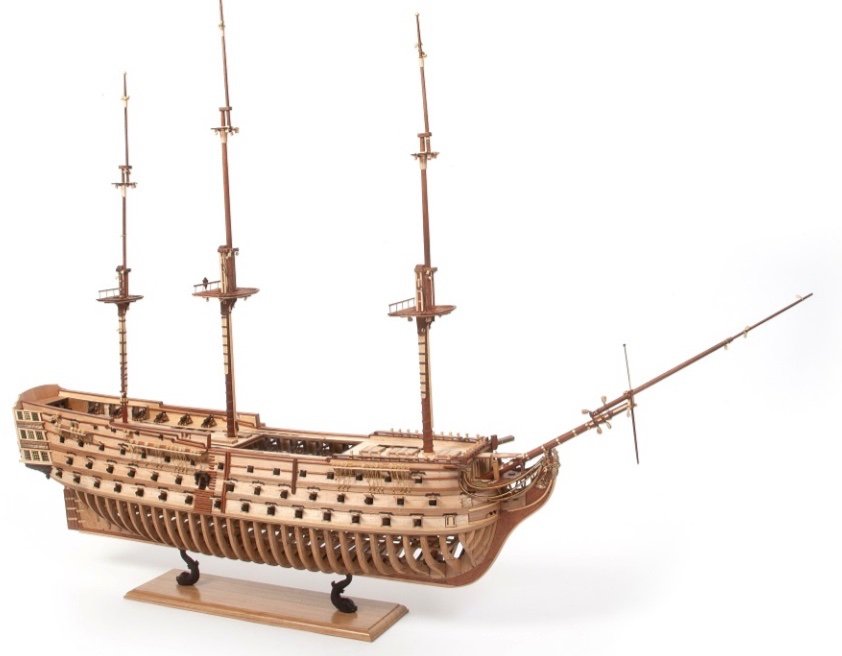
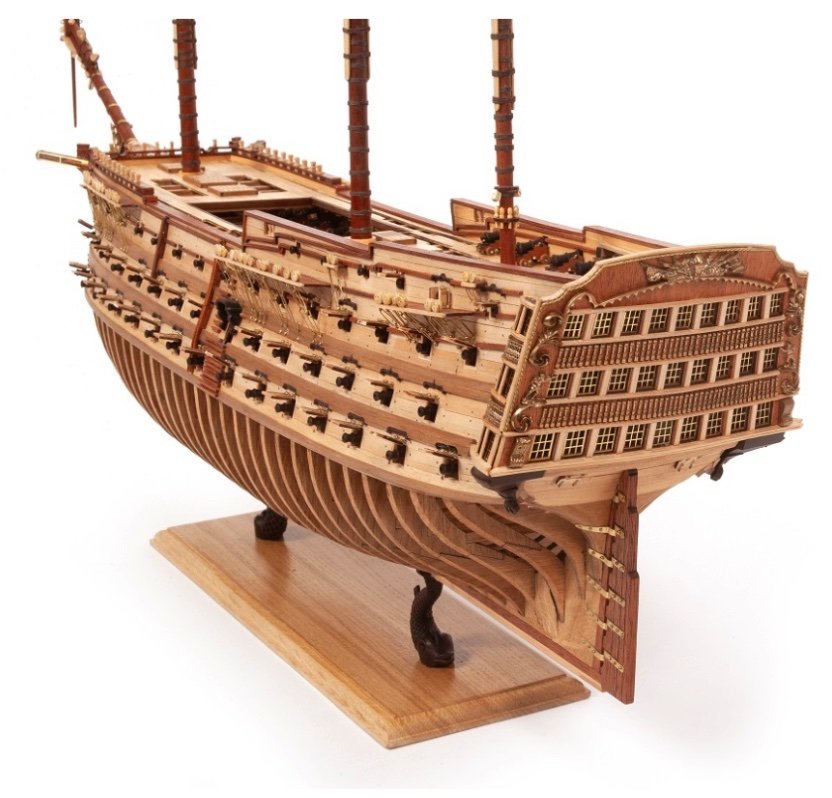
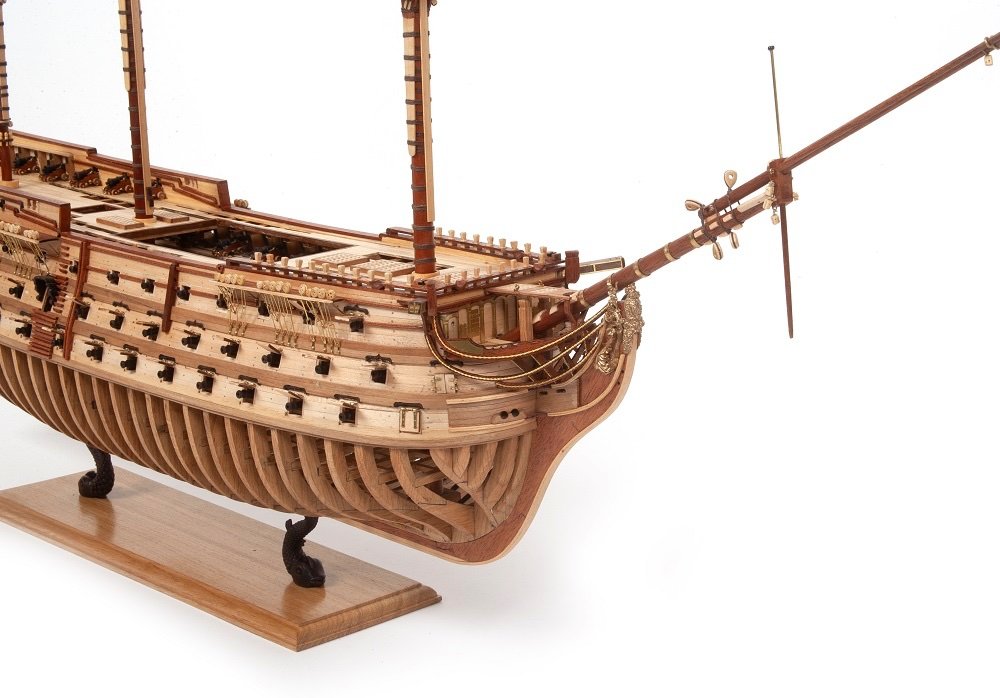
-
It’s still out there on Google, but as you say the link doesn’t work. Admiralty style from the look of it, fashioned from Oak - not your typical model building wood! Gary
-
21 October - Trafalgar Day, and who was launched in 1765 - Victory! Gary
-
There are usually 3 main issues causing discolouration. Firstly dirt, second paintings being varnished, and the oil paints themselves changing, but most of this happens in the first year after painting. But having stood within just a few feet of this large painting last year it is in very good condition and clean, no sign of any discolouration from varnish - which most conservators remove these days anyway. To what extent the paint itself may have changed is hard to tell. Gary



Our Emblem ®
