
Chuck
-
Posts
9,703 -
Joined
-
Last visited
Content Type
Profiles
Forums
Gallery
Events
Everything posted by Chuck
-
 You are the second person to ask me that.... The problem is that it would only be an estimate. I wont know for sure until I actually build it. I usually keep track of what I use and then add just a bit more to make the materials list. So far I only have one 48" x 48" sheet of ply that is 1/4" thick and one 3" wide sheet of boxwood or whatever you prefer to use for teh keel and stem and rudder. It should be 7/32" thick. Other than that I haveent got a clue. I would be afraid that after examining the plans carefully I might forget something....so keeping track as I work is usually foolproof. But maybe I will give it a try this weekend. But like I said...I may overlook something. It will be real close though. Thanks for the interest in the project. If all goes according to plan the 3 sheets will be released around the new year but February at the latest. I basically just want to plank it outboard to prove the hull design. I also want to write the first few chapters so folks will have a guide. Chuck
- 1,051 replies
-
- 11
-

-
- cheerful
- Syren Ship Model Company
- (and 1 more)
-
Just as Druxey mentioned. It takes practice but after doing a few it will get easier. Chuck
-
No it actually removed material. If you use a soft wood it will not. A soft wood will crush into shape. But a hard wood actually scrapes bits from the strip. You can sharpen the scraper edge carefully by filing on an angle. This helps to remove wood as it scrapes.
-
yes...i usually just use my cheap a small files because the edge will end up getting ruined over time. I also use a small razor saw sometimes. I prefer NOT to use the dremel. This is what works for me but maybe others have different idea. That file in the photo is the one I actually used. The tip is quite small in diameter. Careful slow deliberate strokes. It takes a while. Chuck
-
You can unfortunately not buy the beaded molding any longer. That was a long time ago that I bought those. Basically you need to create a profile in a piece of sheet brass.or a straight razor. See below...its pretty clear. There are many ways to create the profile...needle files, dremel cut off wheel etc. I am sure others will chime in here. Chuck
-
Just sand the heck out of it. The wood is thick enough and can take it. Start with 220 grit and then follow up with some really fine stuff. I see this all the time in my local club. For whatever reason they are scared and nervous about it. They dont think 1/32" or even 1/16' thick strips can take sanding. Usually I just ask the model builder if I can grab the hull and show them. Its a very easy thing to do and there is no danger at all. Most of the glue will not have soaked well below the surface at all. Surface prep is key to getting a good finish. Sanding with a fine grit will leave a super smooth surface free of glue stains and show no blotches.. If you are still nervous about it...plank a dummy piece of wood and leave similar stains and blotches...test it out to see how far you can go and what it will look like after you are done. Chuck
-
New article "Modeling small figures for Ship Models" placed in the database and is ready for download. Thank you Dave Fellingham for the article submission. Very well done. I enjoyed reading it and I am sure most of our members will also. Click Here to download article Chuck Remember if you wish to submit an article to the database or for consideration in the Nautical Research Journal...please contact me. We welcome all submissions!
-
- 5
-
-
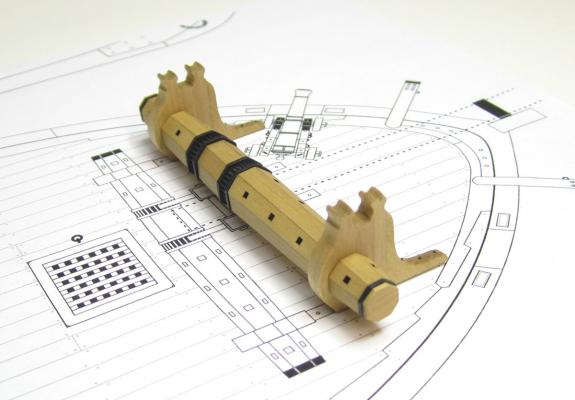
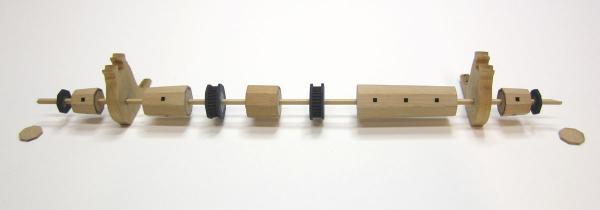
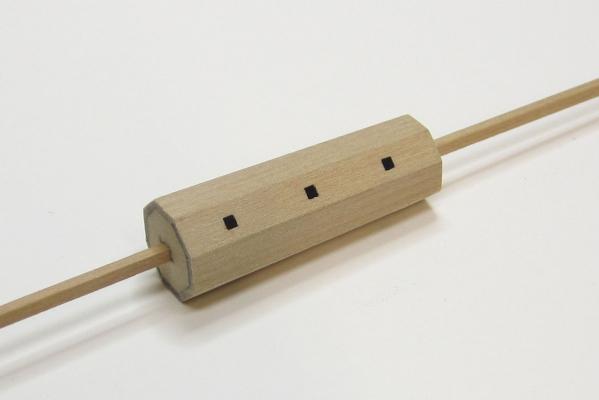
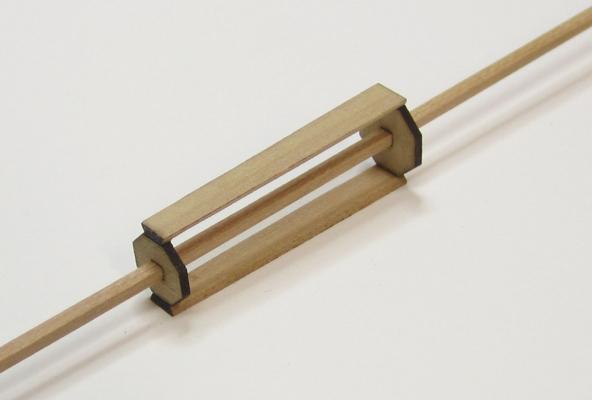
Windlass 2.0 The final version....no photoshop this time
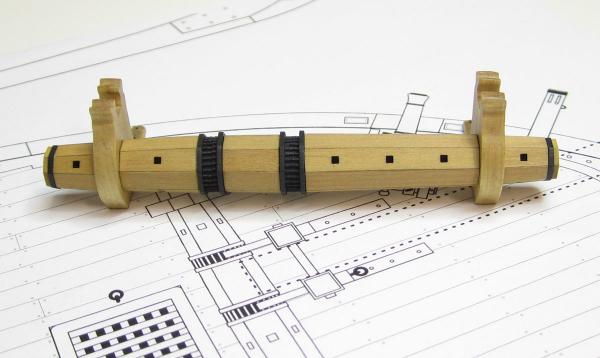
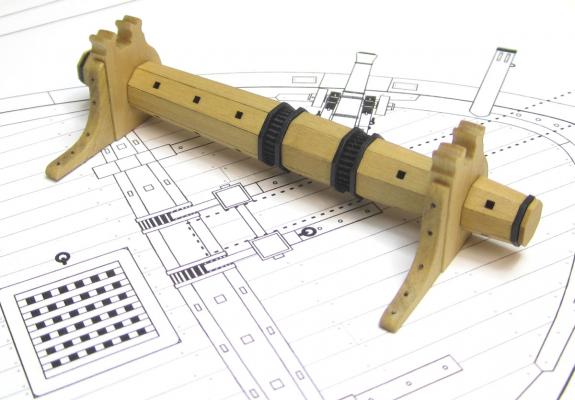
- 1,051 replies
-
- 40
-
-
- cheerful
- Syren Ship Model Company
- (and 1 more)
-
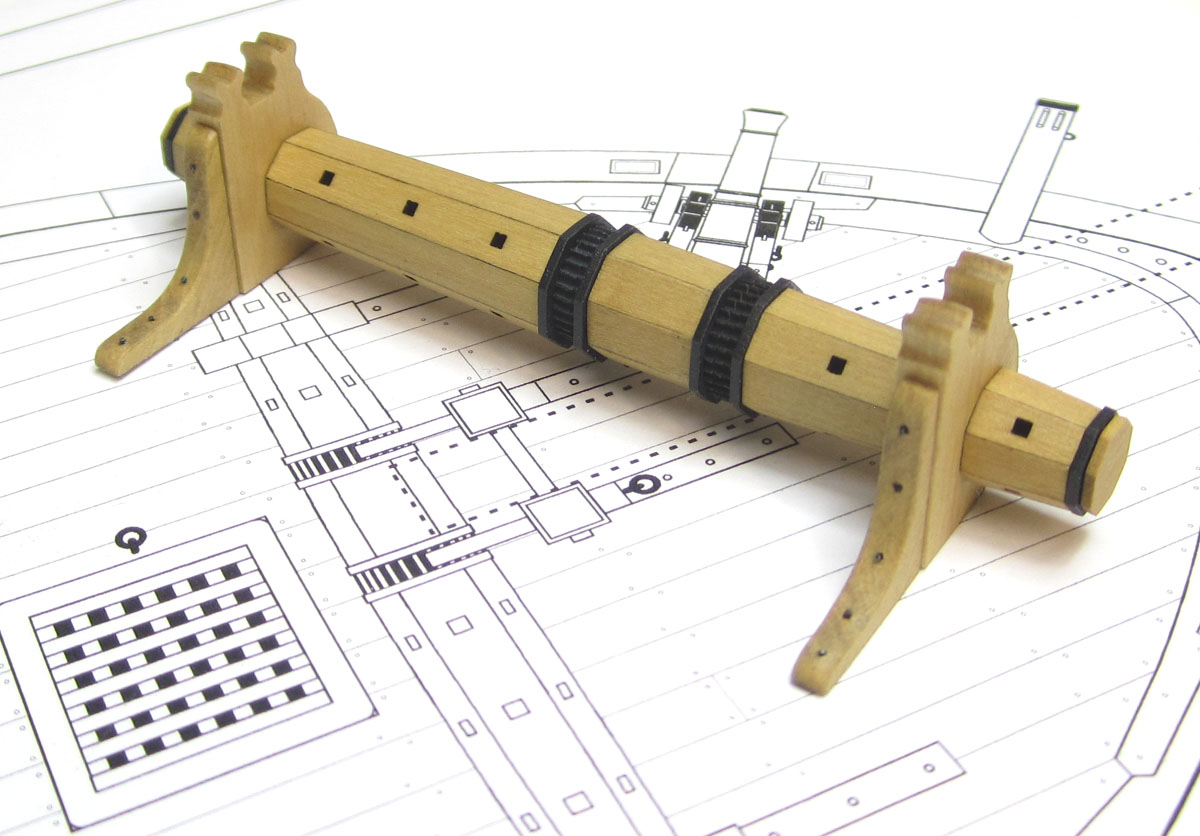
Seeing as I have to make another windlass anyway...I will alter the plans to show the bar holes on every other face. Its an easy fix. I can see that it would make sense...or to alternate their position should they appear on every face like shown on John;'s example he posted above. Dont y0u wish making changes in real life was as easy as having Photoshop. Heres what she looks like with every other...piece of cake...
- 1,051 replies
-
- 16
-
-
- cheerful
- Syren Ship Model Company
- (and 1 more)
-
Thanks guys... Druxey...Like you, I thought that was true. Holes on every other face of the windlass. However, I kept seeing more and more of these that showed them on all sides. I may switch it later...but I am torn. Do you have have any info on these that would clarify. Other than contemporary models....few even show the holes at all, I could only find secondary sources. For example, The AOS for the Cutter Alert has an almost identical windlass with holes on all eight faces of the windless. Go figure. Its easy enough to change, just need to find something definitive. Any help would be appreciated. You can see that Roger Cole also added the holes on every face of his windlass on his model of Alert below. Chuck
- 1,051 replies
-
- 6
-
-
- cheerful
- Syren Ship Model Company
- (and 1 more)
-
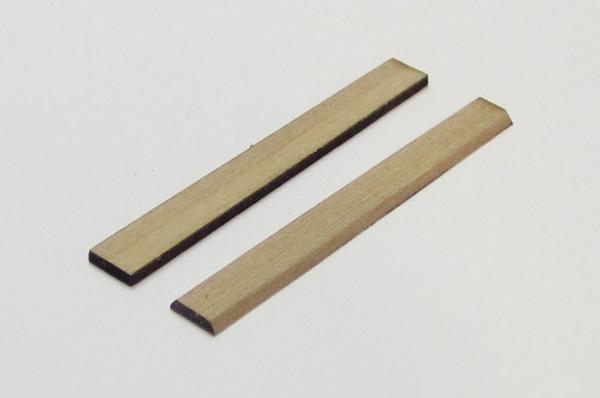
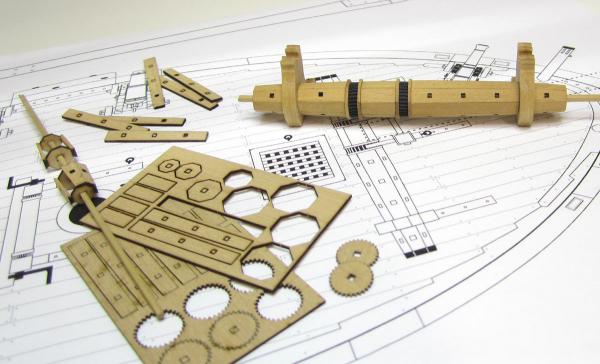
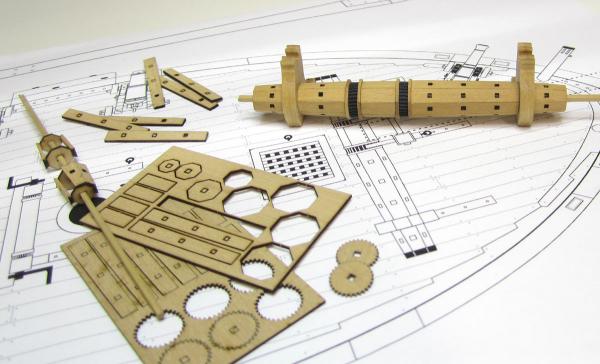
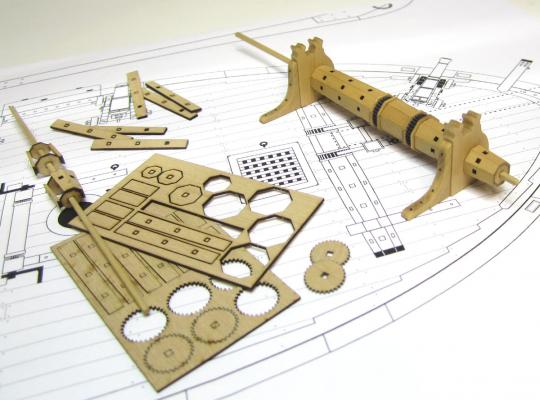
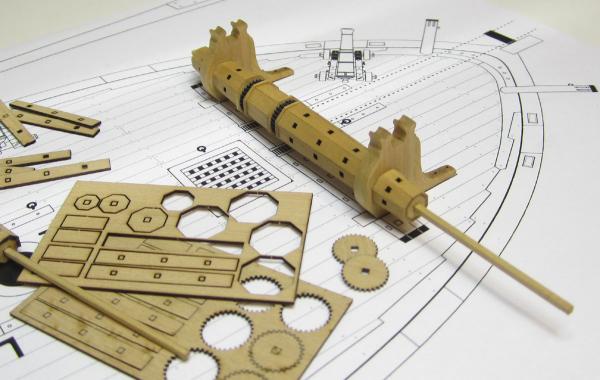
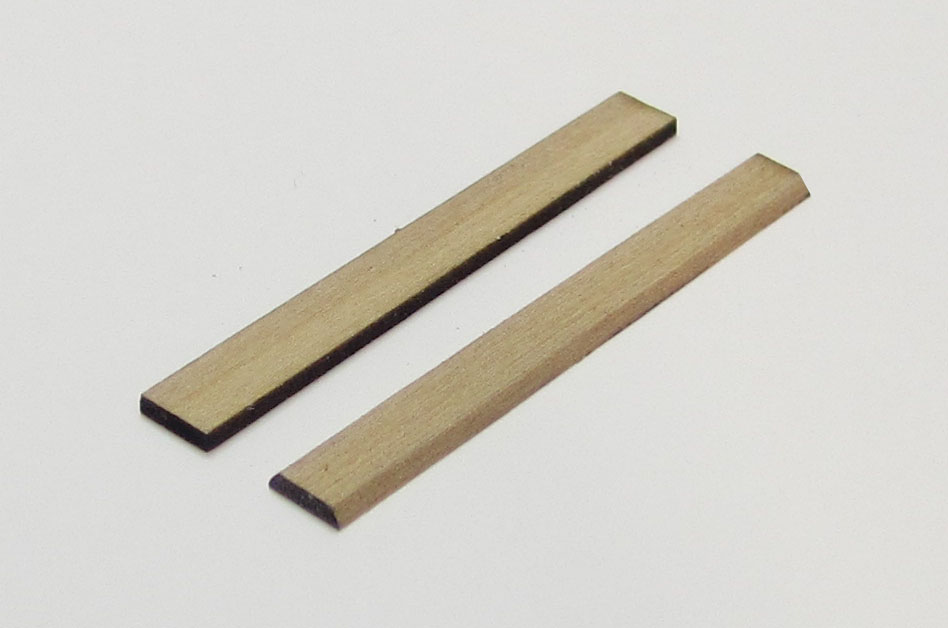
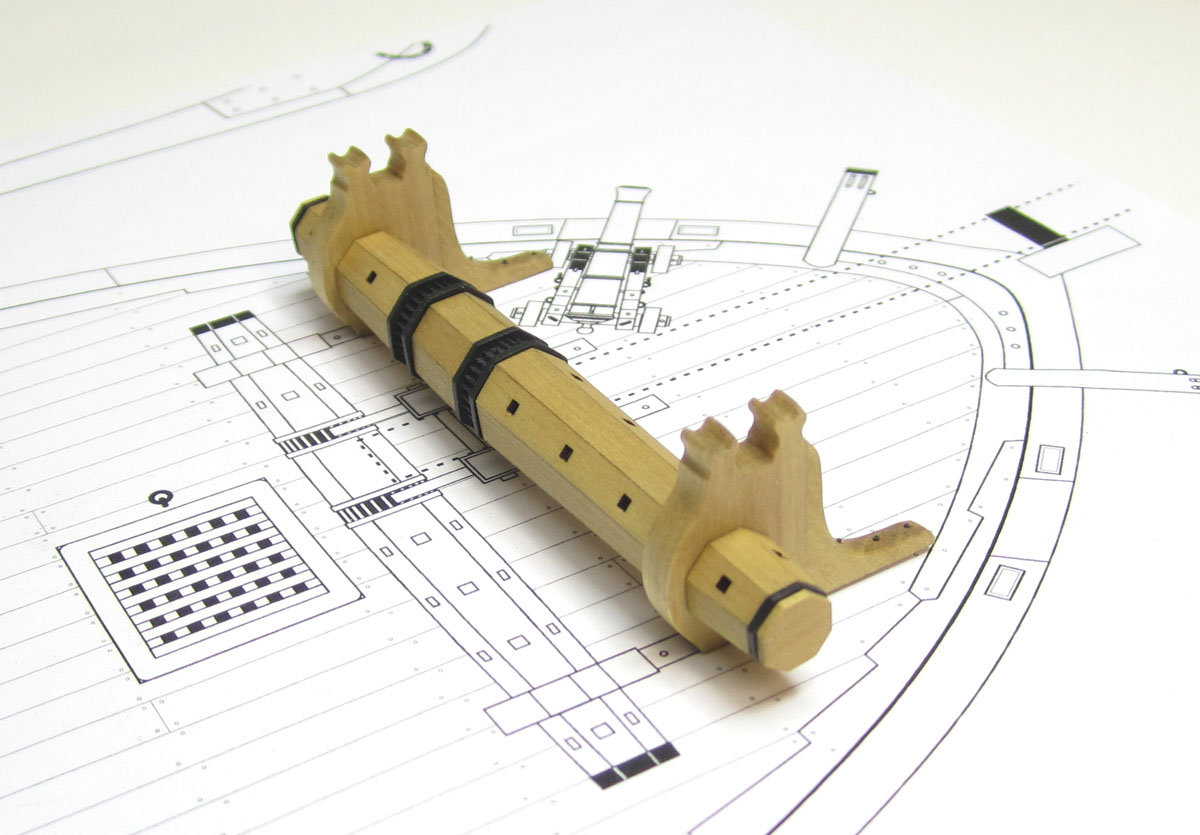
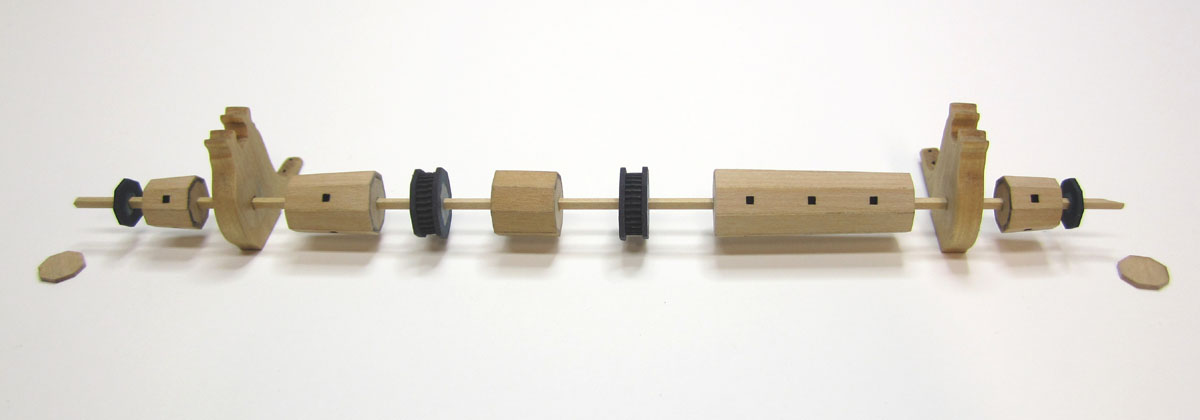
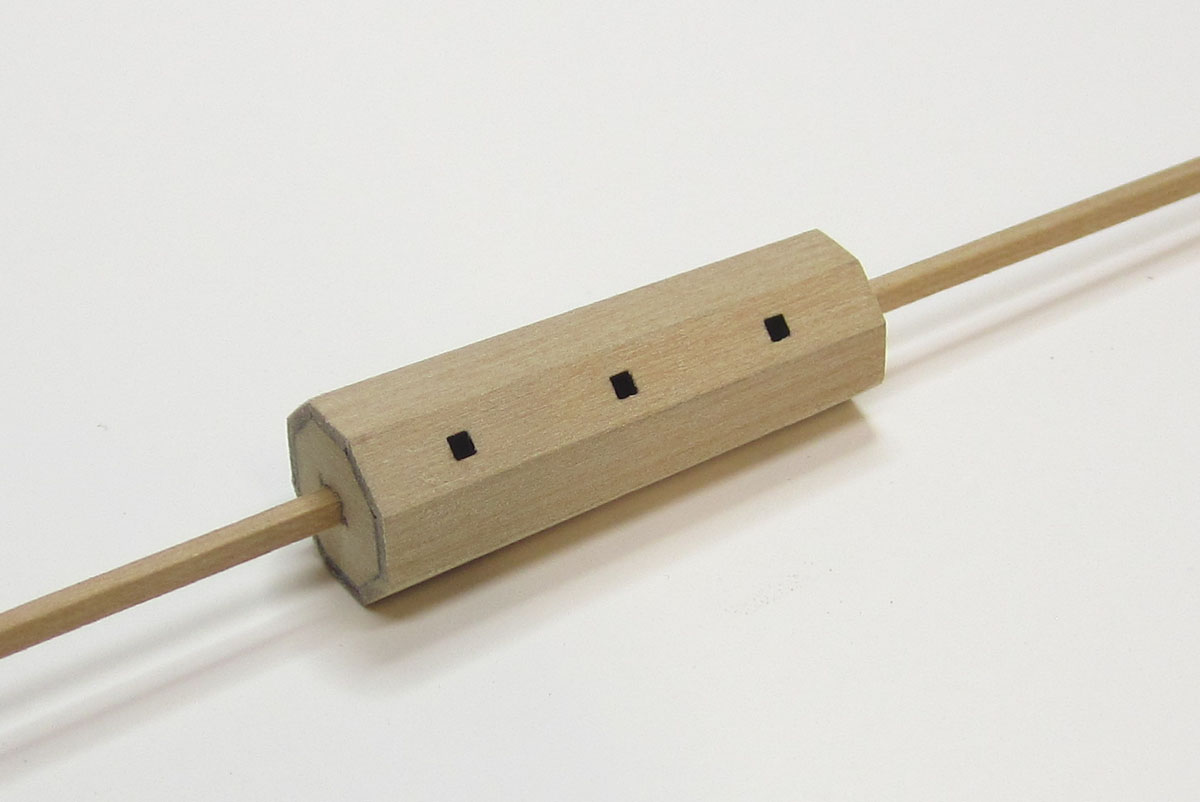
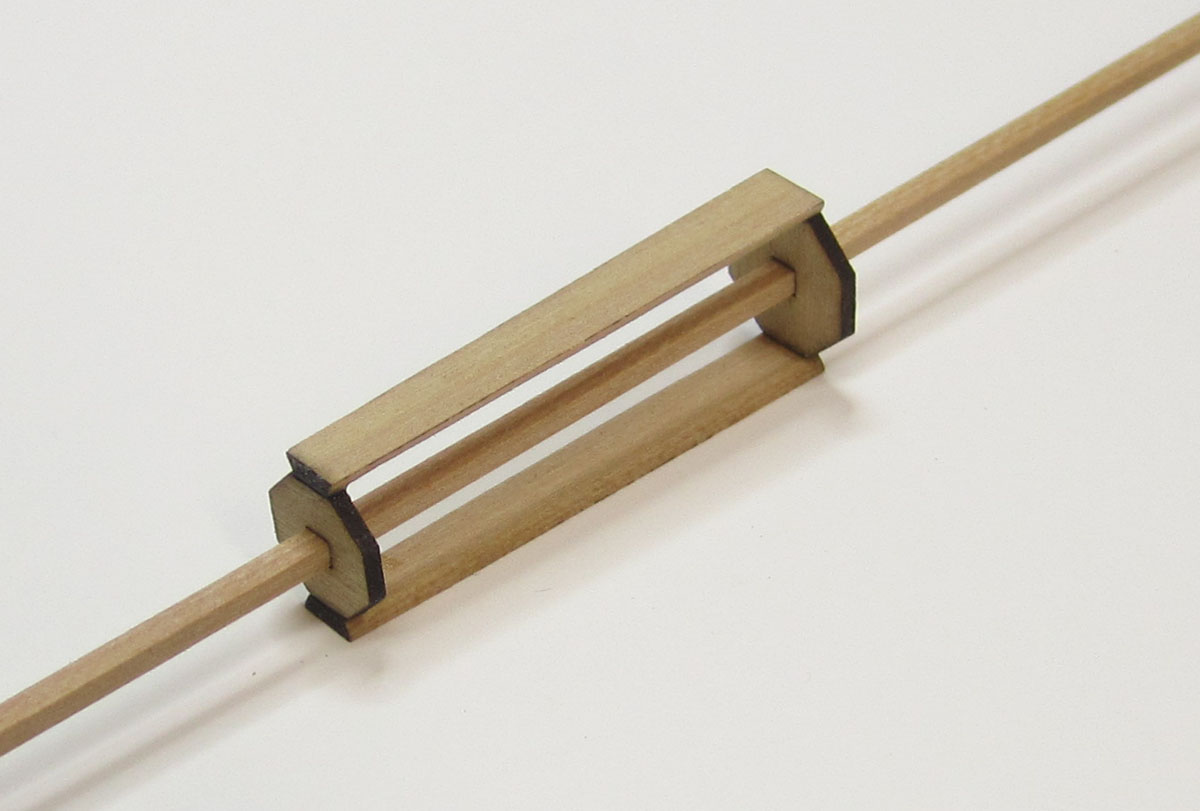
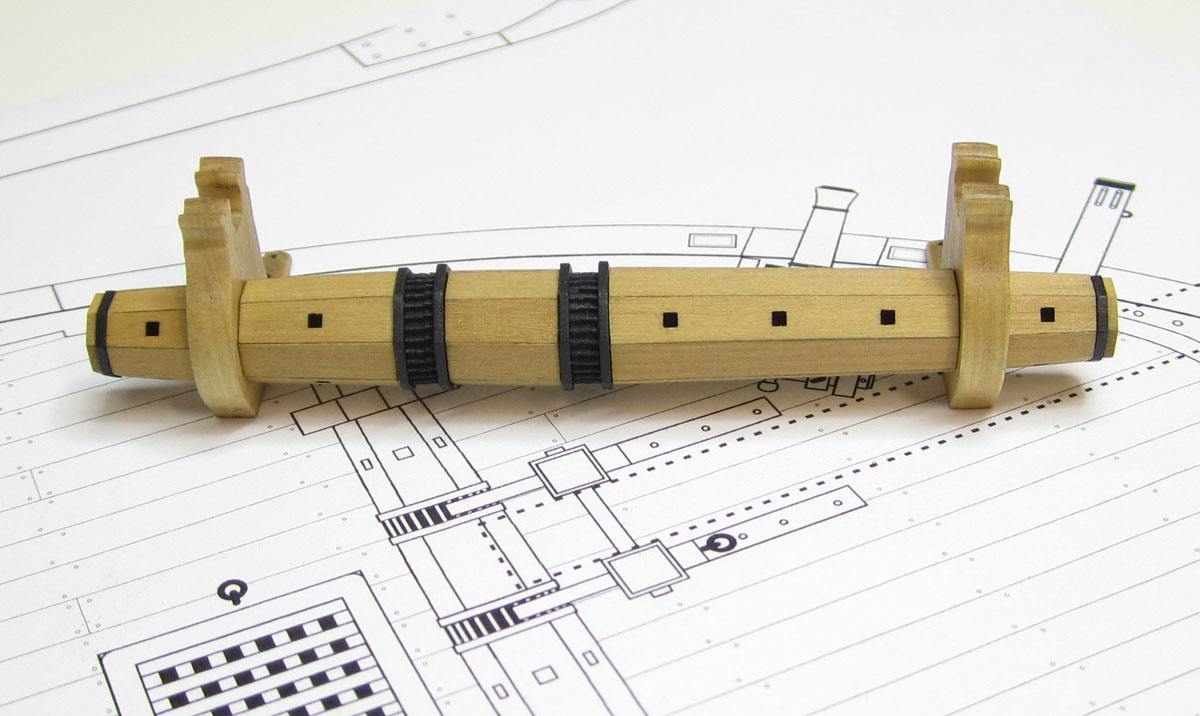
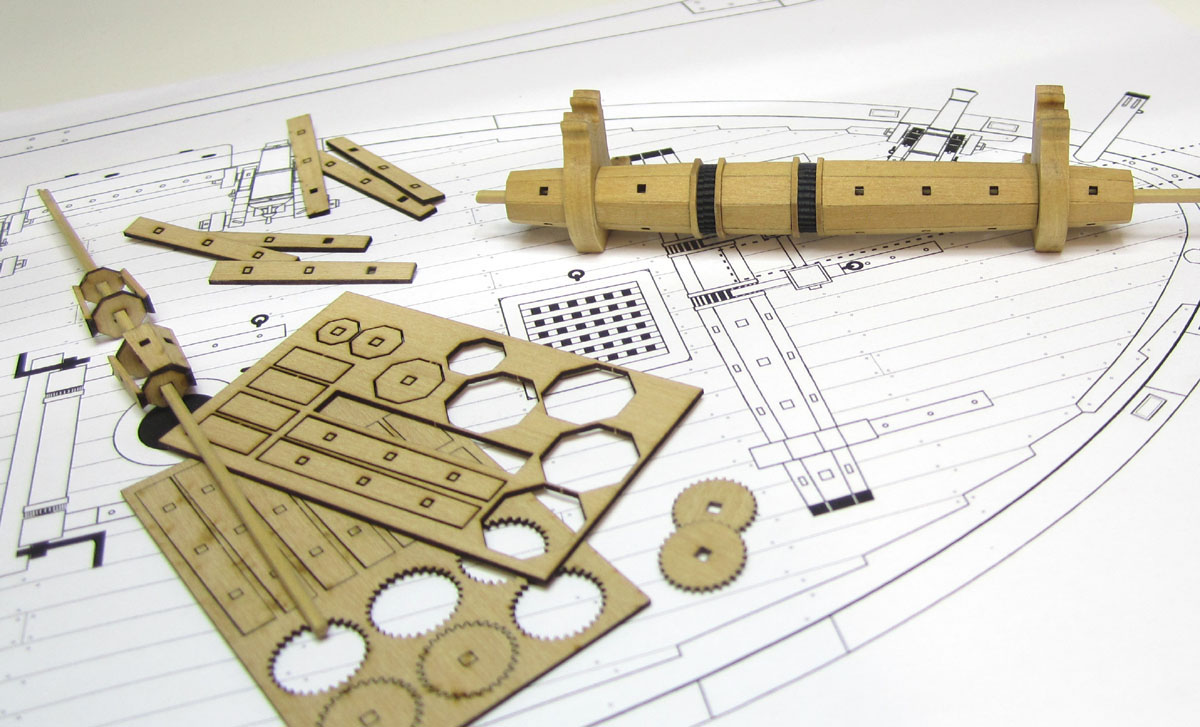
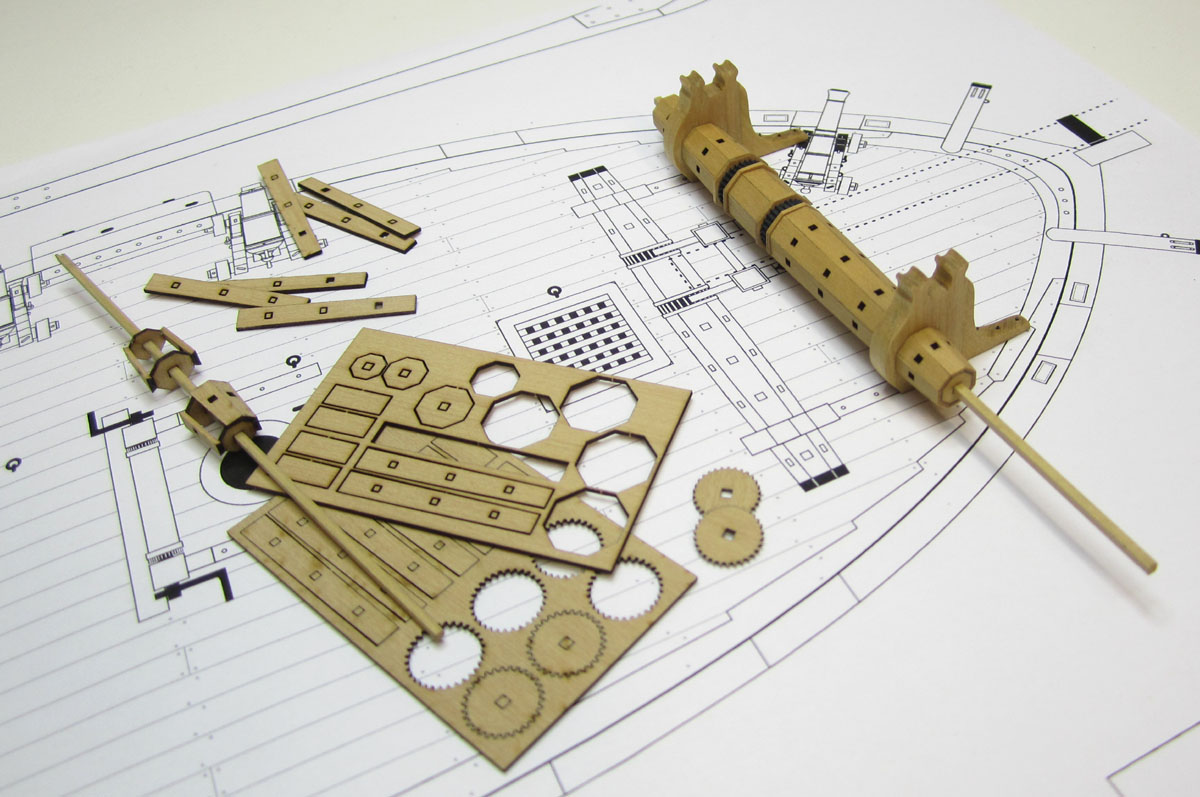
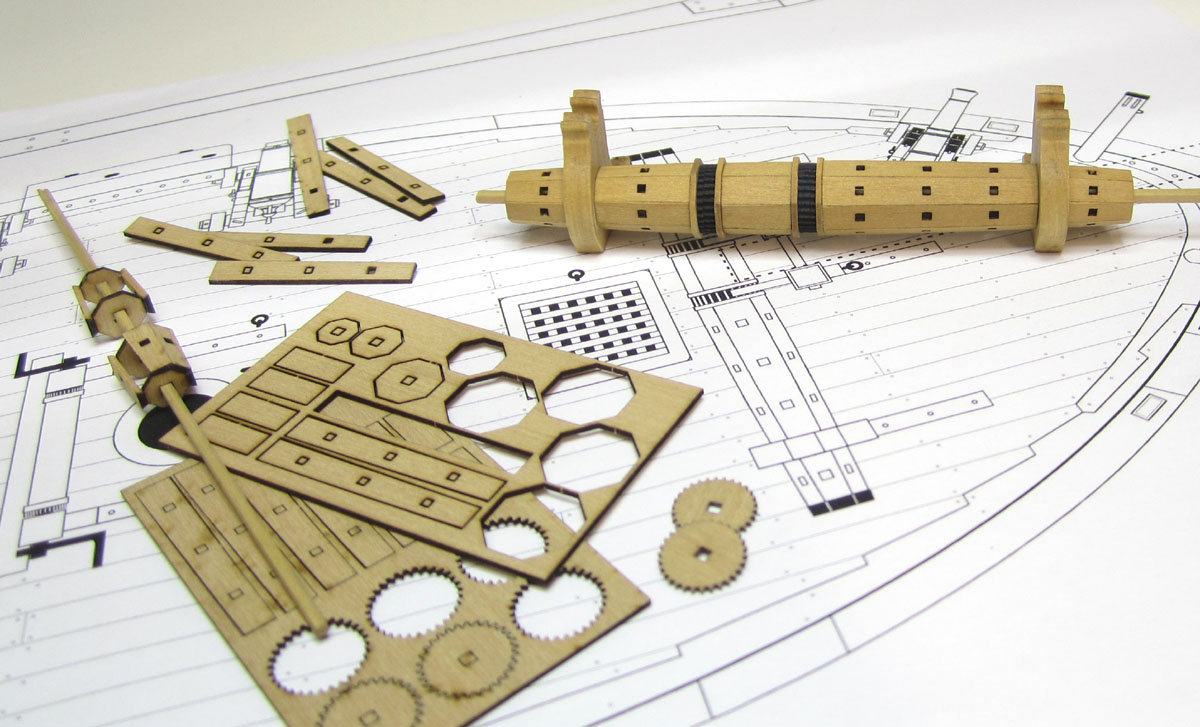
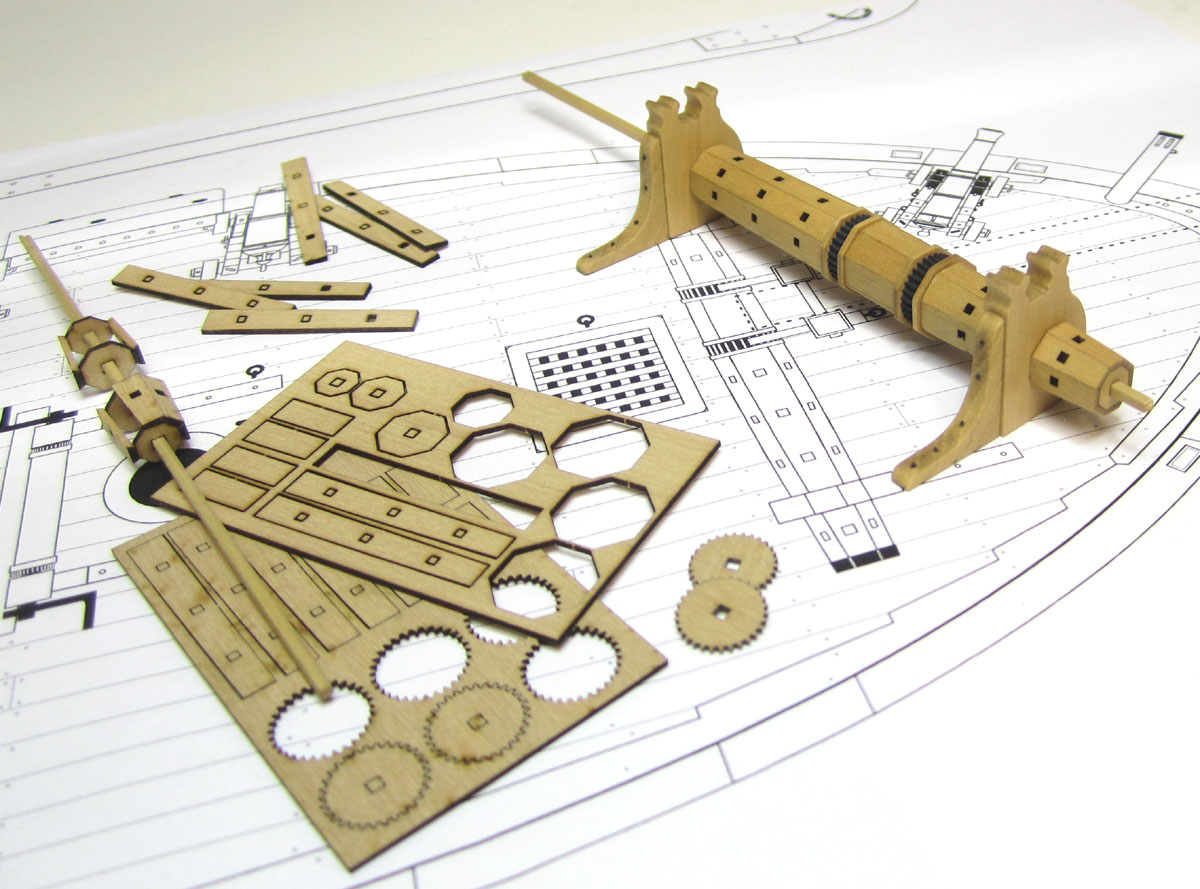
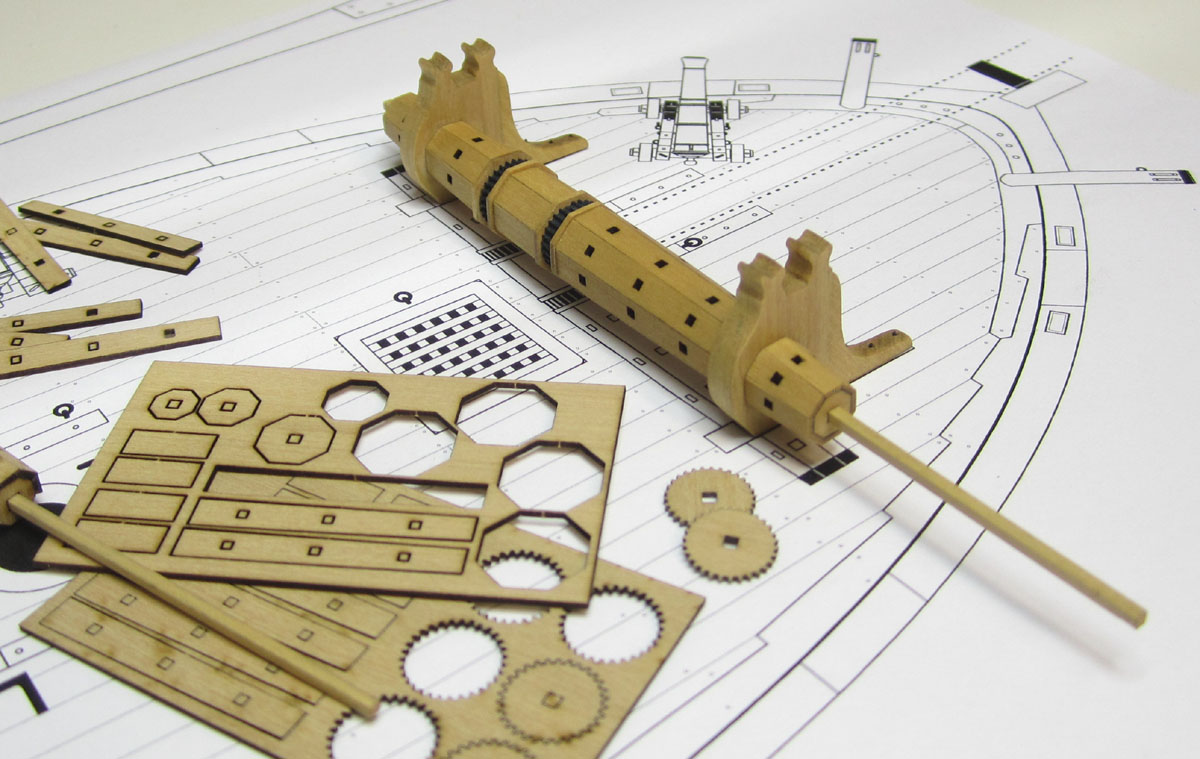
Thank you gentlemen... I took a break from framing because I wanted to work on the windlass. Its 3 1/2" long. I have had the design concept in my brain for over a year and I wanted to see if it would work. I think it came out really well. The design is much like the lantern. You build the windlass drum in sections and slide them onto a 1/16" x 1/16" strip. There are 65 pieces in this windlass. All laser cut. Its a perfect match to the plans. The hardest part (which isnt very hard at all) is to bevel the edges of each face of the drum. This is so they fit tightly together. Once you get the angle down, it goes quickly and without incident. You have to bevel the edges without over doing it because you will lose the original shape of each precision cut piece. The laser char on the edge actually help out a lot. You need to bevel the edge until the laser char is all gone and resist beveling further. I was worried about this ever since I saw the model in the Rogers collection. Yes, you could shape the windless drum from one piece and carve the sprockets by hand...but that is a real challenge. I have seen what David Antscherl did for his Comet model and it scared me to death ever since. Knowing that others will ultimately build this model I needed to put my kit designer hat on. This windlass is a MAJOR deck fitting and can make or break a model of a cutter if it isnt done well enough. Ultimately, this windlass will be painted all red but I am not sure yet. Its usually shown that way on contemporary models. If I decide to leave it natural boxwood I will paint the ends of the drum so you cant see the construction method. If its painted carefully to look like wood, it will look like a solid piece. This is still not glued together. The individual segments are just slid onto the stick. I just have to snip the ends of teh stick off and sand them down after the segments are glued together. Silly me, I got so into making it, that I didnt take any construction photos. That means I will have to build another one at some point. Lucky me. Now to take my daughter to the movies and sit with her and about 7 other 14 year old noisy girls. Lucky me again!!!
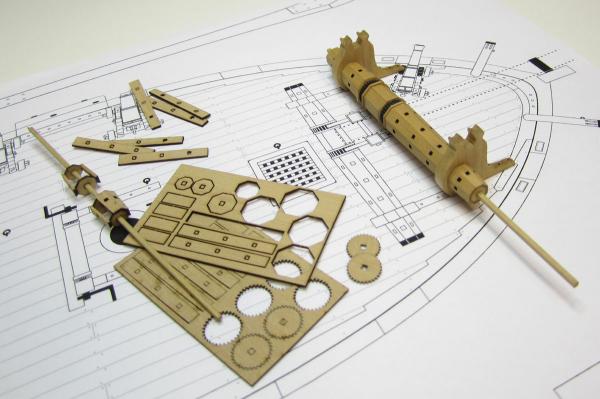
- 1,051 replies
-
- 36
-
-
- cheerful
- Syren Ship Model Company
- (and 1 more)
-
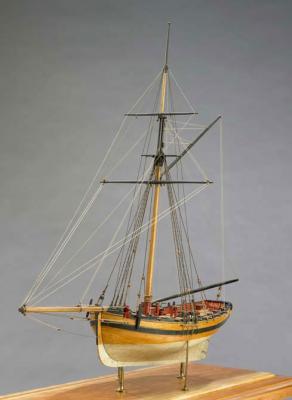
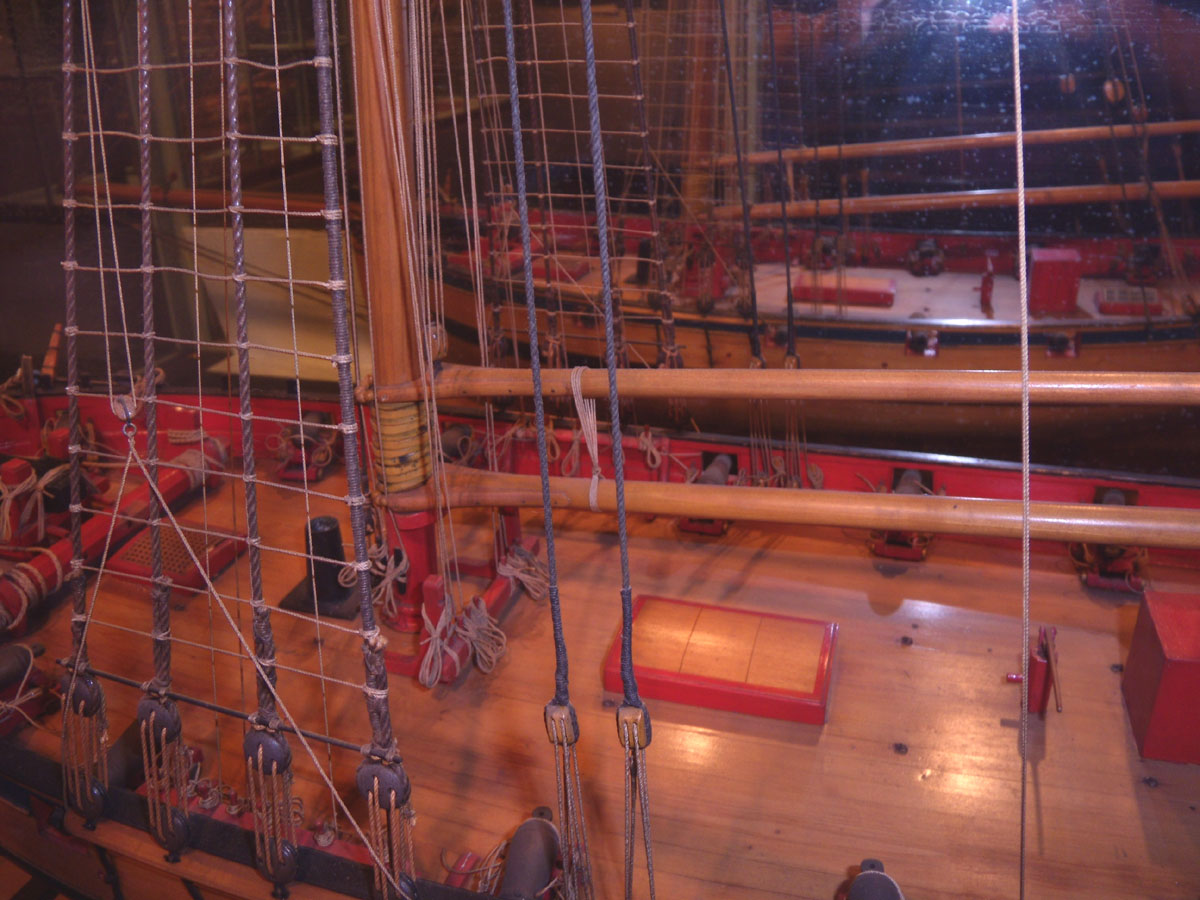
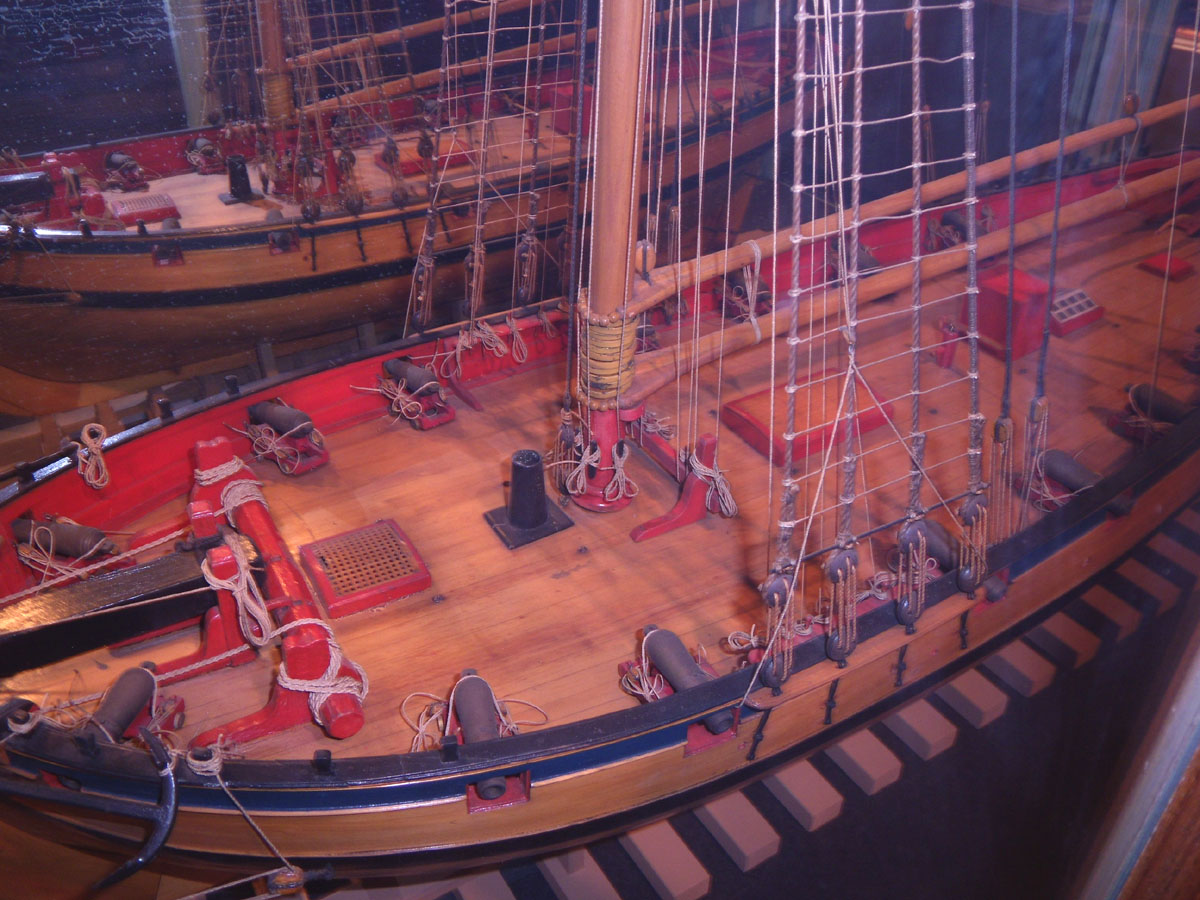
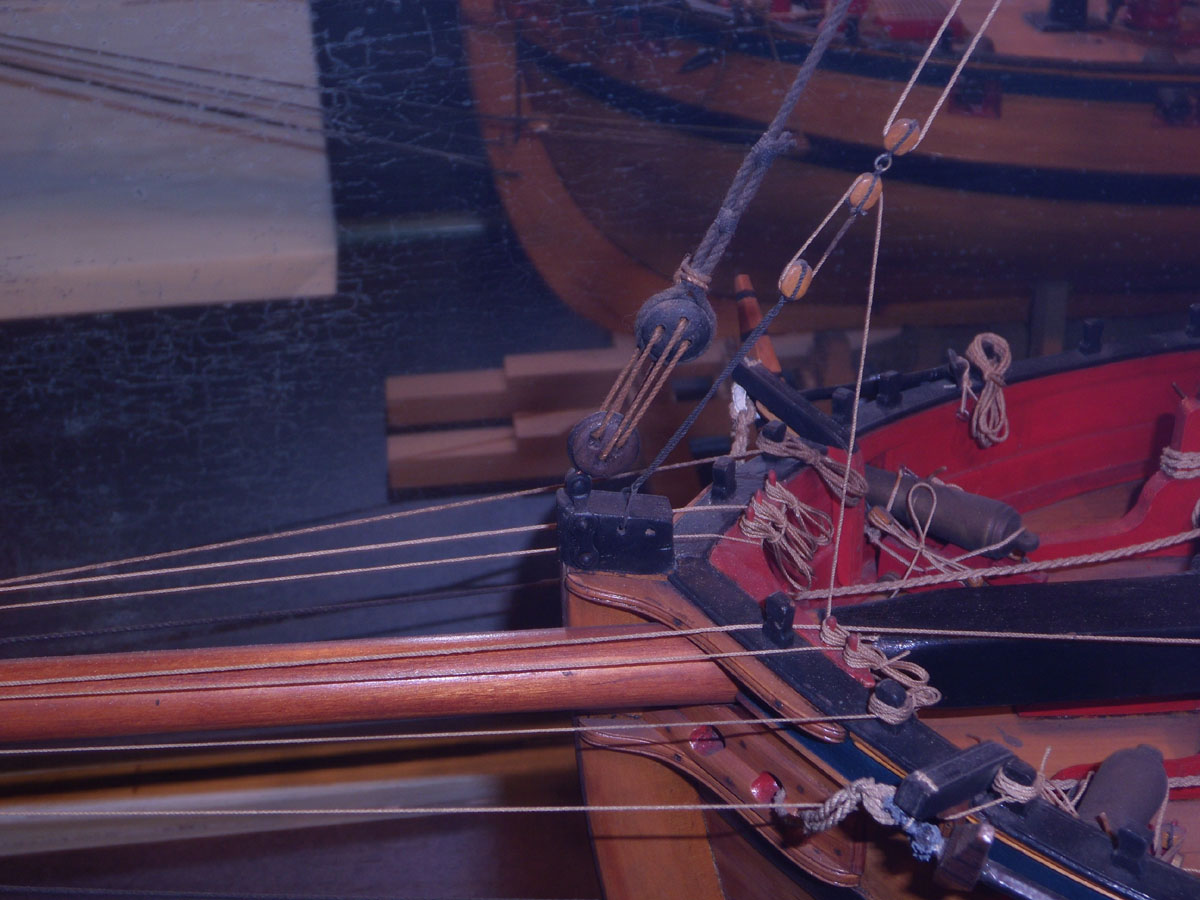
I think the fore most shroud would do the most damage. Its a mystery. There are other cutters I have examined and its usually both the fore shroud and the aft shroud or none of them. I have never seen just the aft one served. The way the stay is rigged with two deadeyes....plain with three holes is also a curious detail I have not seen before. I am going with the more tradition rig. Based on the Surly in the other museum. Chuck
- 1,051 replies
-
- 11
-
-
- cheerful
- Syren Ship Model Company
- (and 1 more)
-
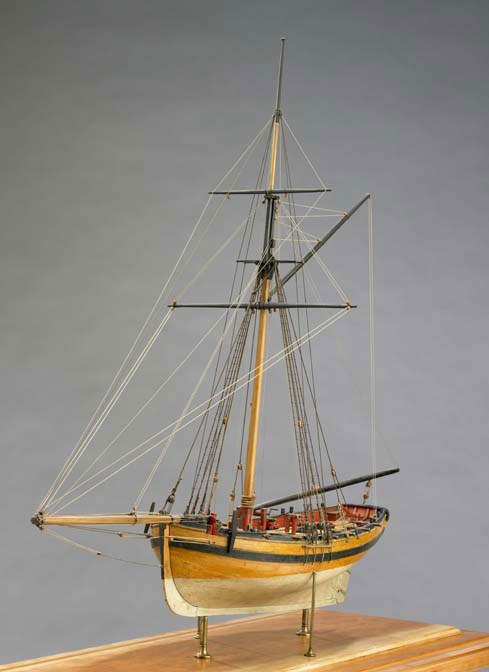
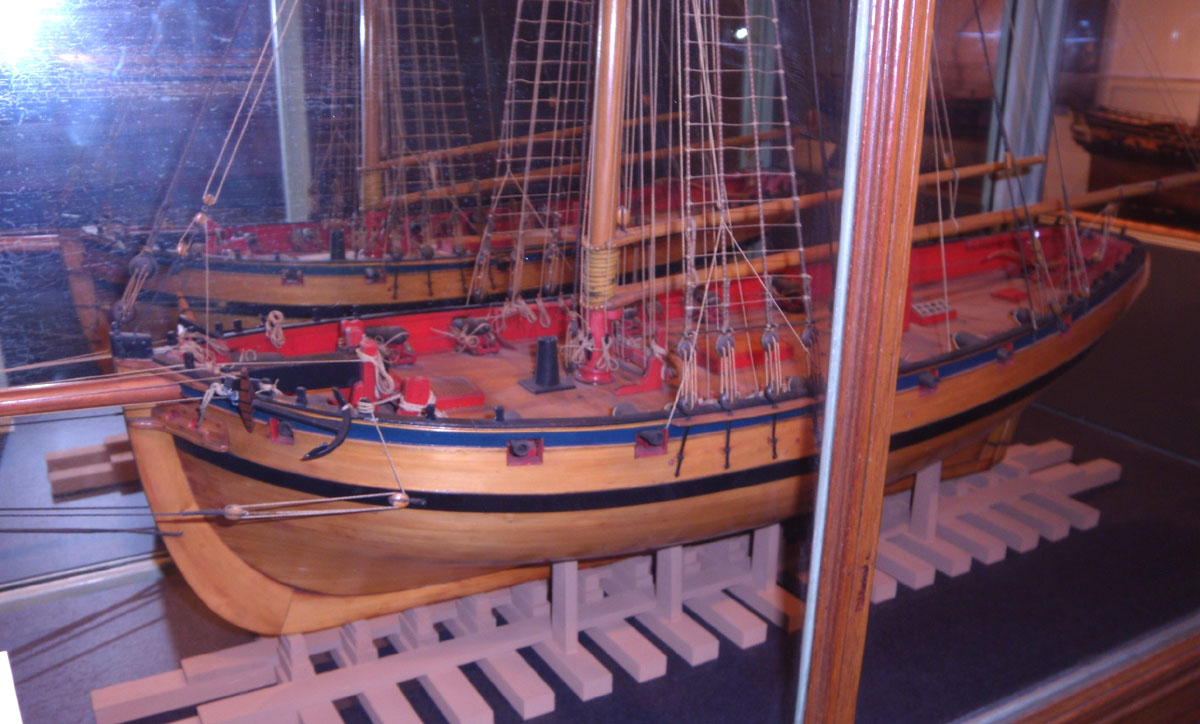
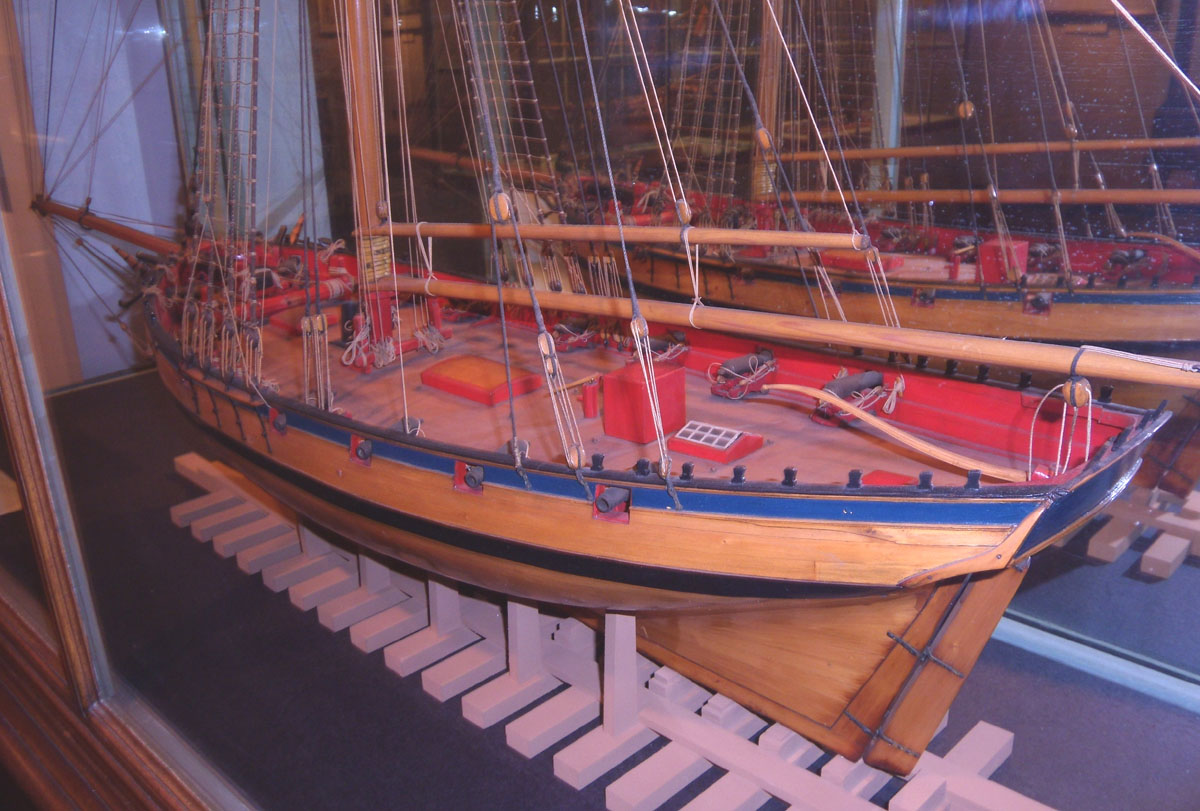
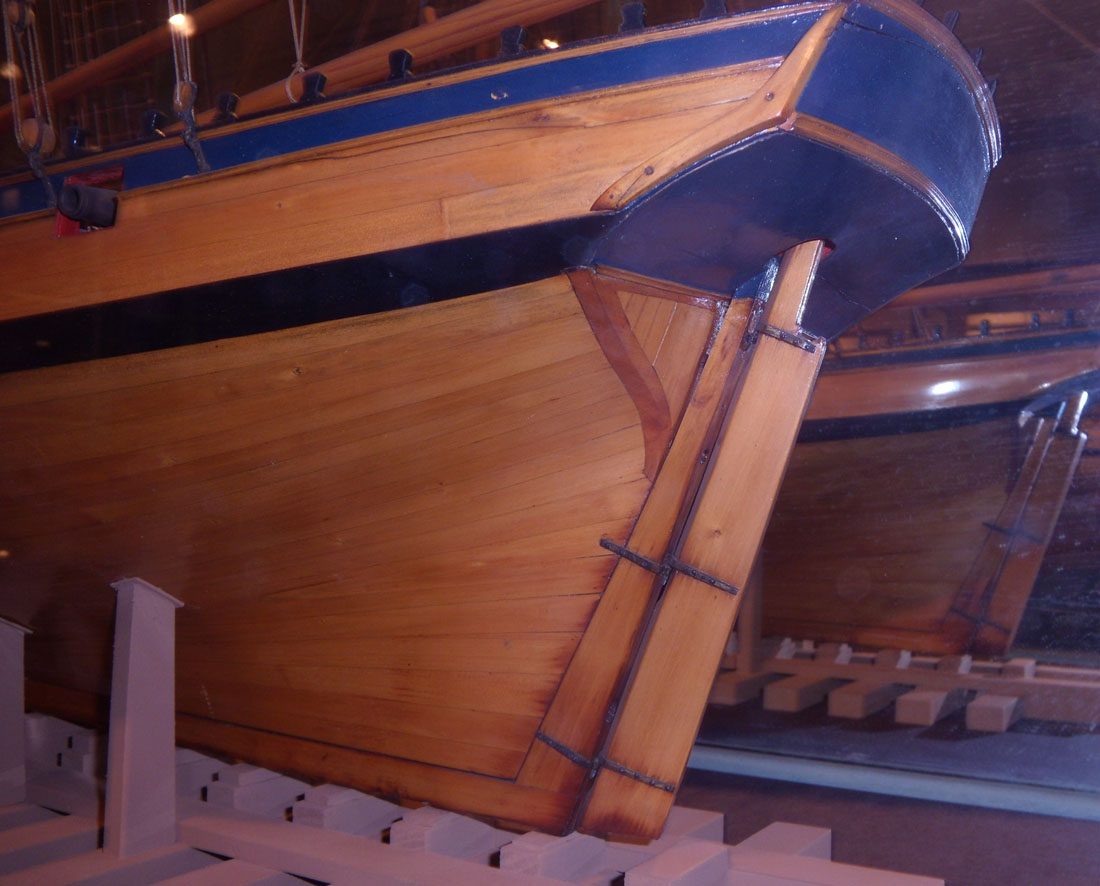
I also wanted to post some photos of the Rogers collection model. I should have done so earlier on in this log. It is identified as Cheerful but after much scrutiny it is not. At least in my opinion. The measurements on deck match but thats about it. There are too many stunning discrepancies when compared to the original drafts. But its very close. It is a cutter of the same period and for research its very valuable. The rigging is quite odd as well. Nothing I have ever seen on a cutter of this period. It is interesting to note that until recently this model was identified as an unknown cutter circa 1770's. I am not sure who actually mis-identified it as Cheerful but it has changed at least three times in literature that refers to the Rogers collection. Its a great model non-the-less. What I was glad to see was it is not Clinker planked. One of the reasons I chose this subject. I also have many photos of the square tuck...note the vertical planking back there as opposed to the usual diagonal. This is a detail that is also shown on the original draft. Also note the gunnades on deck. These are the carronades on carriages rather than sleds. This model does not have long twelves at the bow which Cheerful did have. Instead it has more gunnades. Also note such peculiar things such as the aft most shroud being served but the fore shroud is not. Go figure. Any question and I would be glad to try and answer them. I have tons of photos. I also have some photos of the only sister....in this class, Surly. This is another contemporary model in a Canadian museum. It shows this class after a major refit. One that Cheerful never had because it had such a short life. Chuck
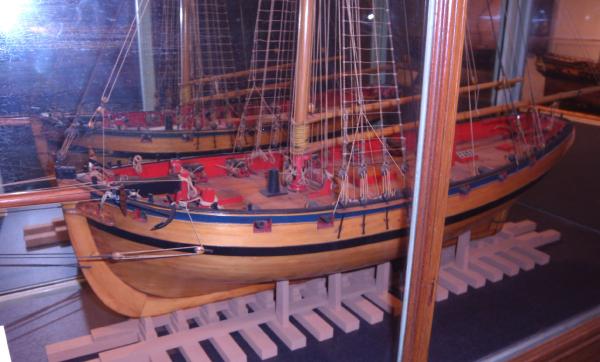
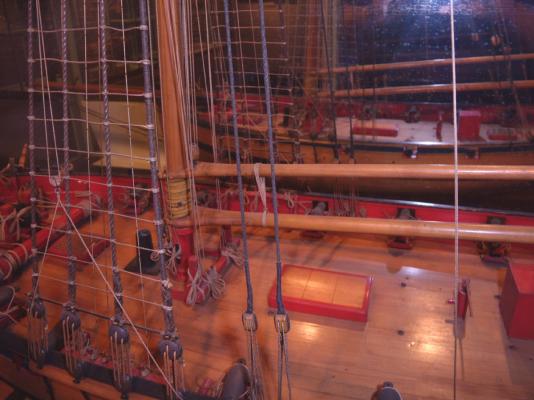
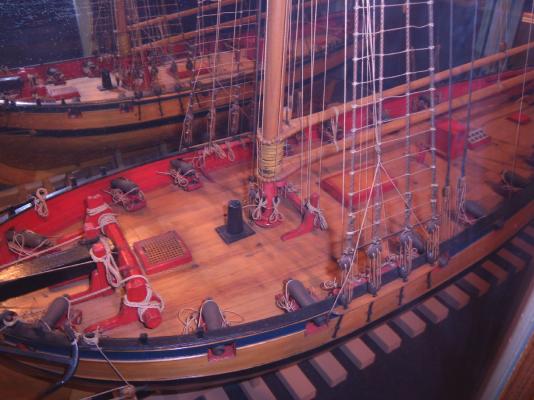
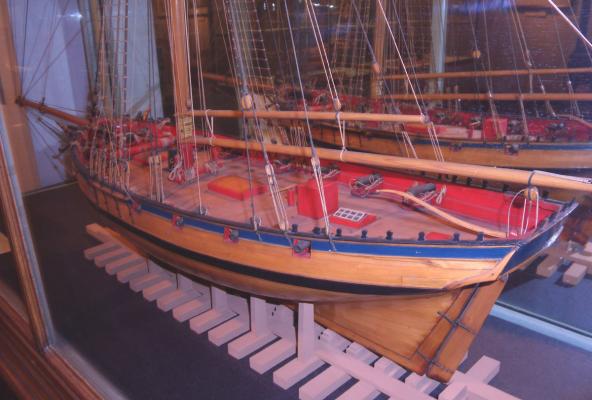
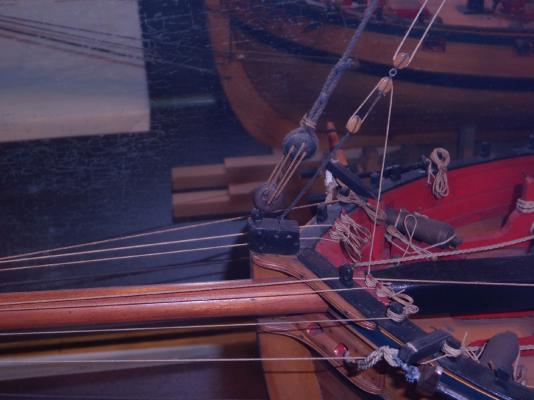
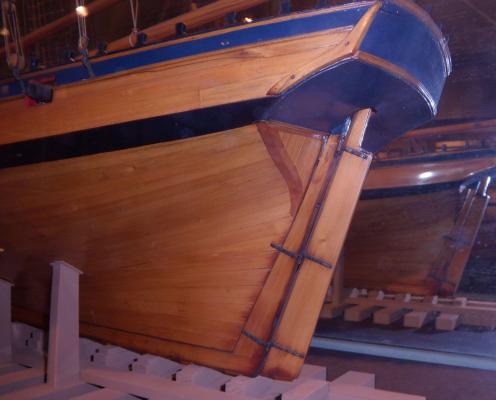
- 1,051 replies
-
- 22
-
-
- cheerful
- Syren Ship Model Company
- (and 1 more)
-
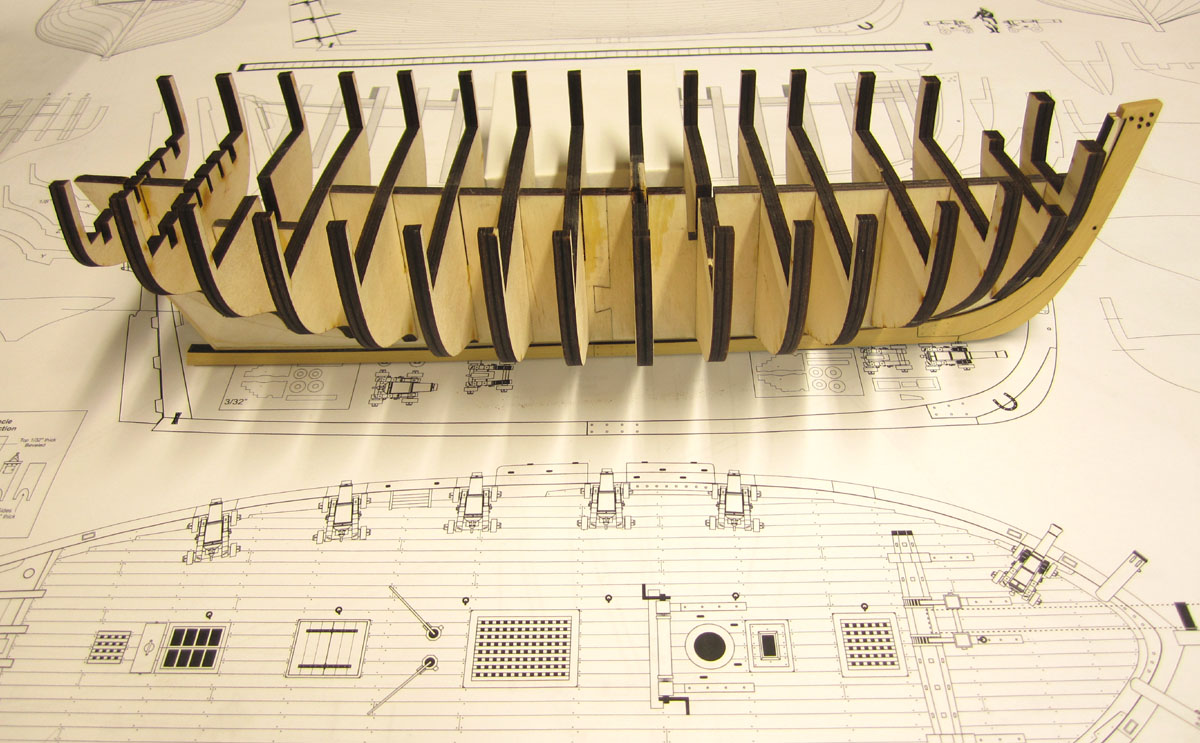
Since there is nothing on the tube tonight I went ahead and glued the bulkheads into position. This was something I wanted to do quickly so I get get a sense of the overall shape of this cutter. I will start framing the gunports tomorrow. You will notice the 2nd bulkhead at the bow has no extensions. They wont be needed because the forward-most port will be framed there. No warping which is great....straight as an arrow.
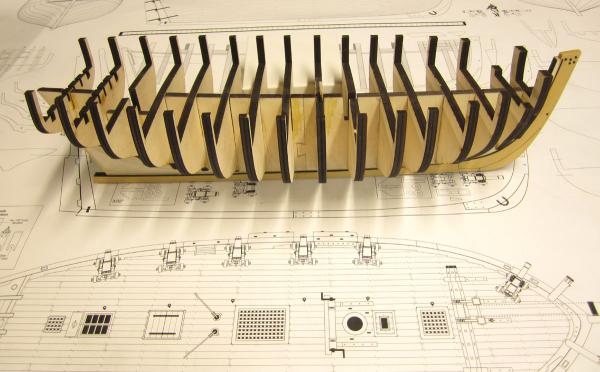
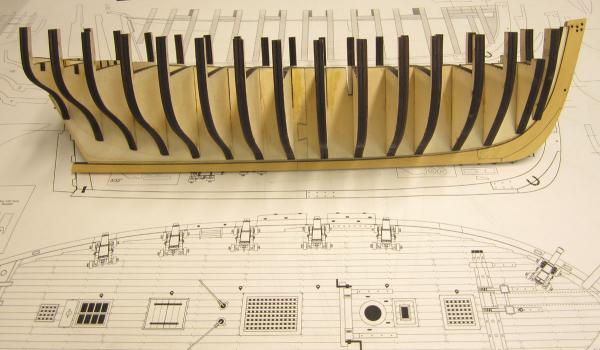
- 1,051 replies
-
- 23
-
-
- cheerful
- Syren Ship Model Company
- (and 1 more)
-
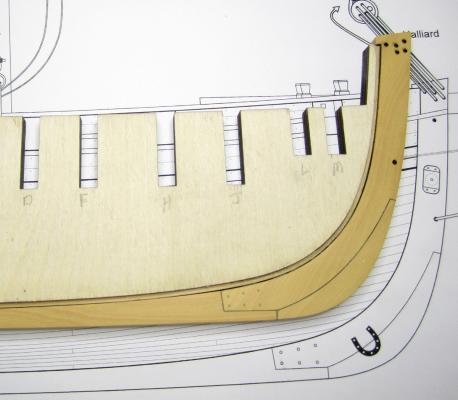
Thanks... The shop will hopefully be cleaned after I get back from St Louis. Alistair, I wont be distributing the DXF files. That would just make it to easy for folks to duplicate everything and pirate the plans. The plans will be sold in paper format only, rolled and mailed in a tube. As far as the laser cut parts go...I really want this to be a scratch project for folks and I dont see myself getting in the kit business. As we were talking about earlier...Maybe the bulkheads but thats it think. But who knows, we shall see, I hate to close the door on it all together. I am however using the laser for most pieces of the prototype. Its quicker and I consider it just another tool like a scroll saw. Plus, after what I paid for the laser, I might as well use it whenever I can. Having said that, these pieces are easy enough to cut with a scroll saw. Its a really basic design and a simple single masted cutter. Its the perfect starter project for a first time scratch builder. I have tried to keep it as accurate as possible and as you will see with the square tuck at the stern, its the first POB cutter project that will show it correctly modeled. So basically...the plans and a few other laser cut pieces will be made available but not a full kit. No electronic files either. Other than the monograph which will be free. I think folks will enjoy building it. I hope. The treenails on the stem and keel are all done. Tomorrow I will glue in the bulkheads and start on the gunport framing and bow fillers.
- 1,051 replies
-
- 13
-
-
- cheerful
- Syren Ship Model Company
- (and 1 more)
-
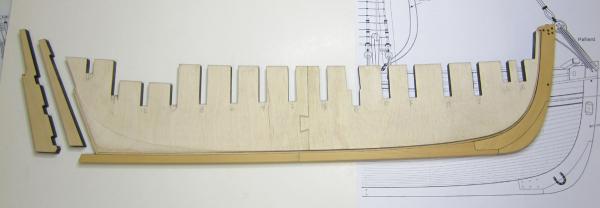
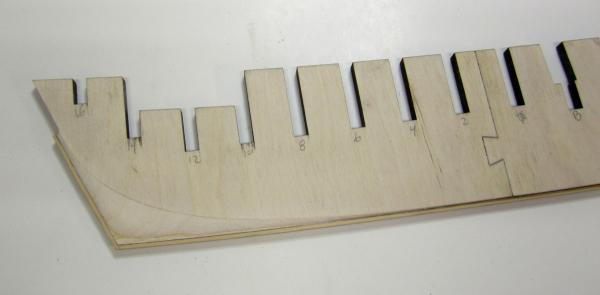
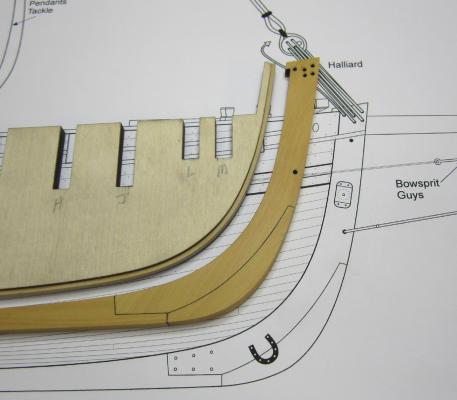
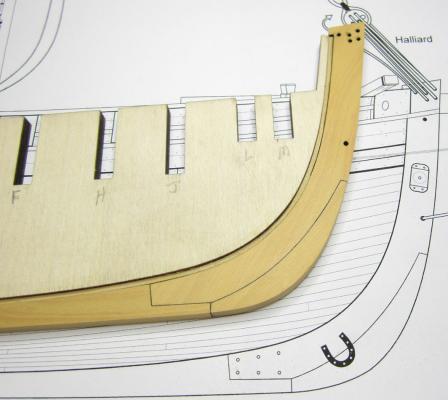
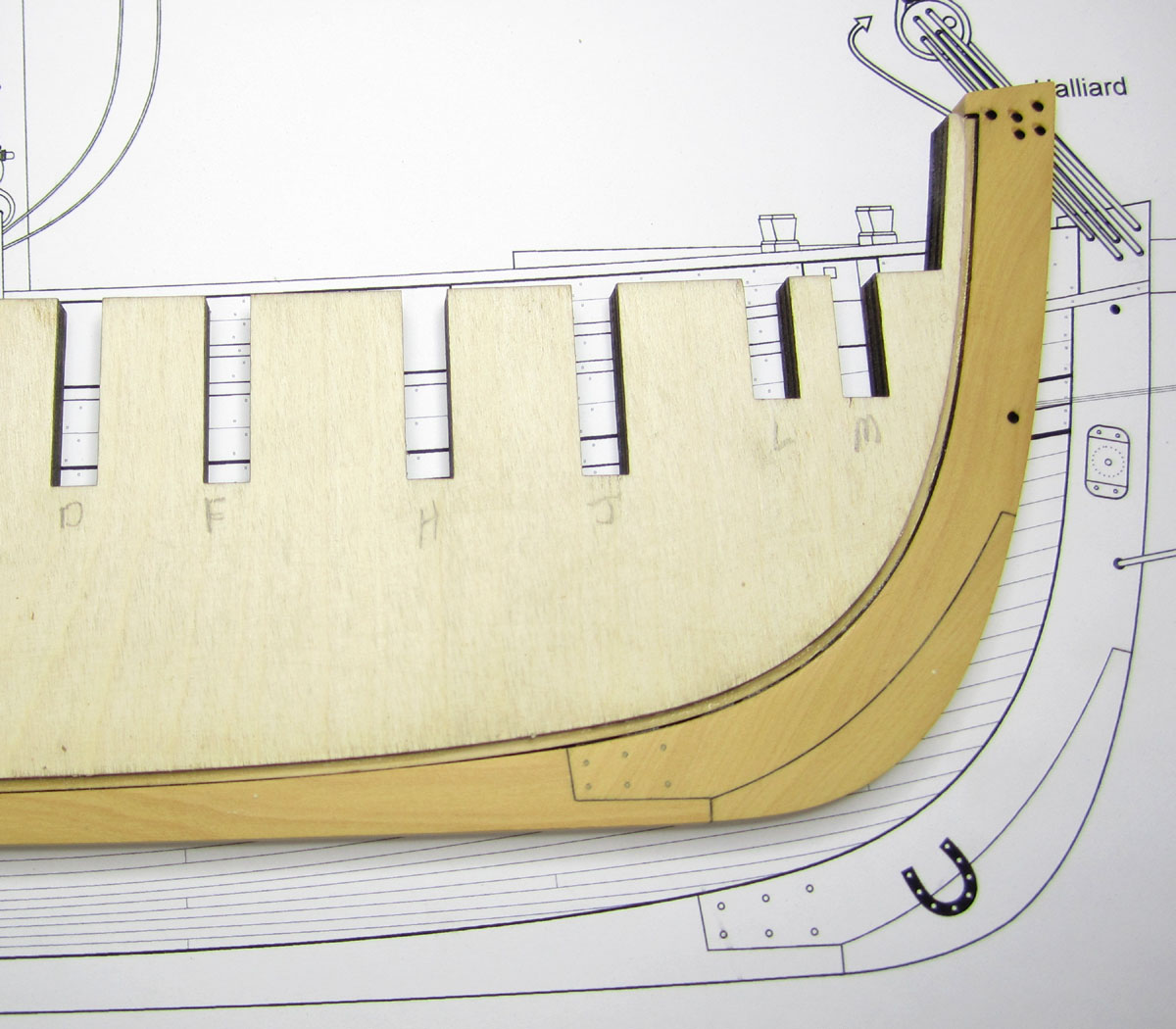
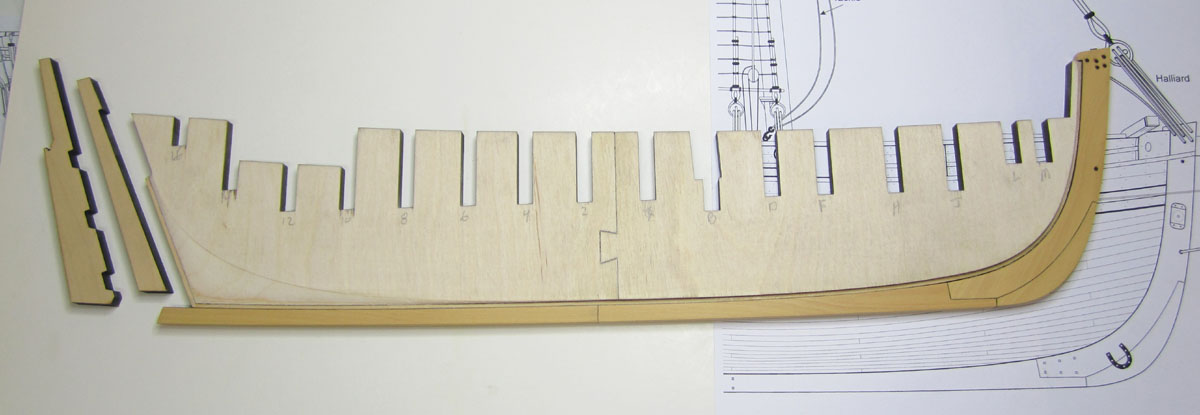
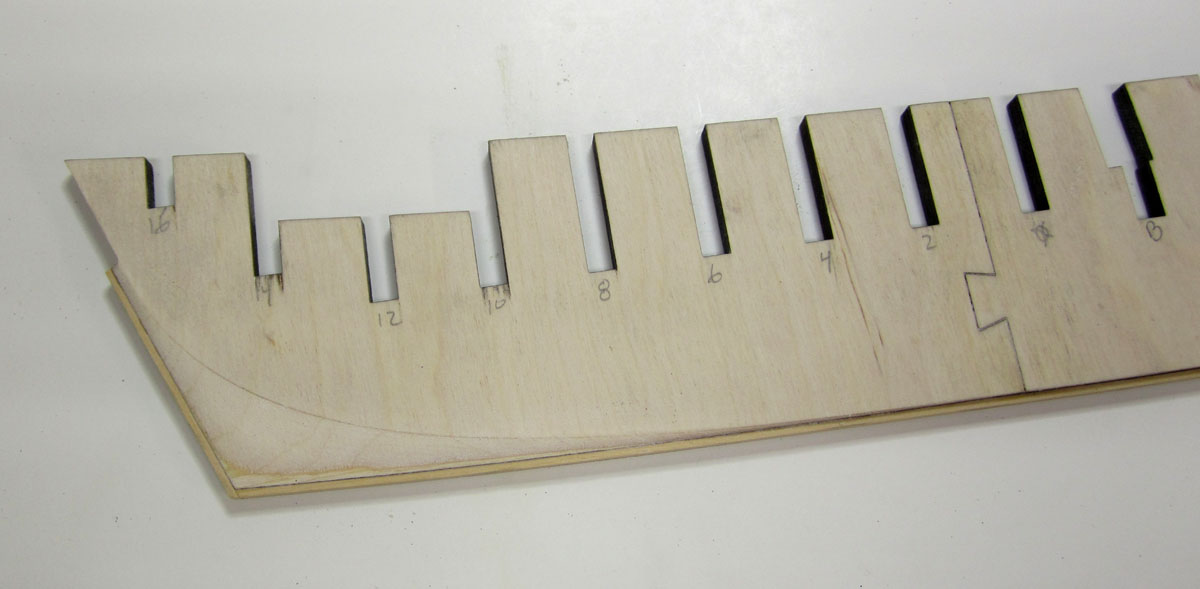
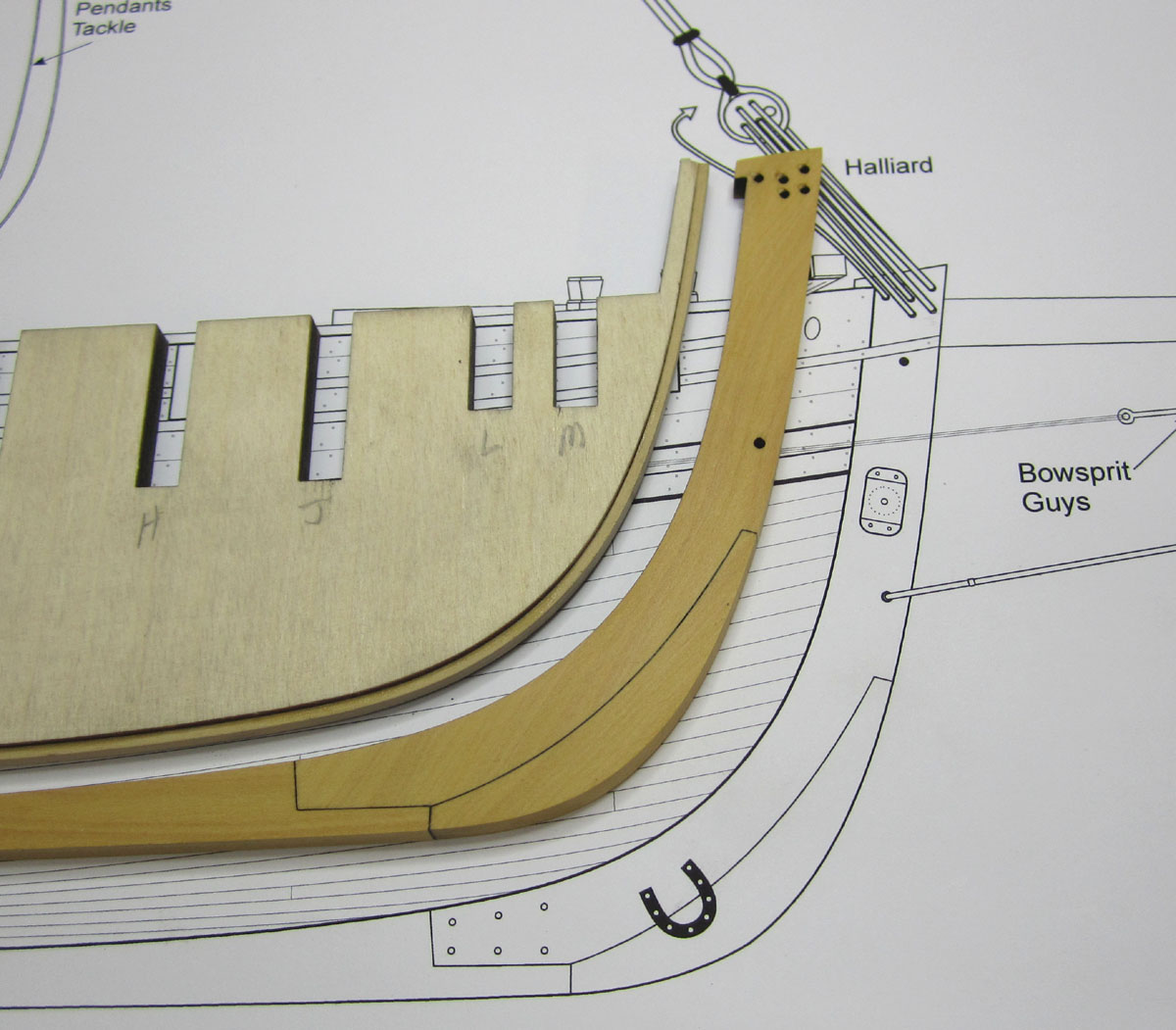
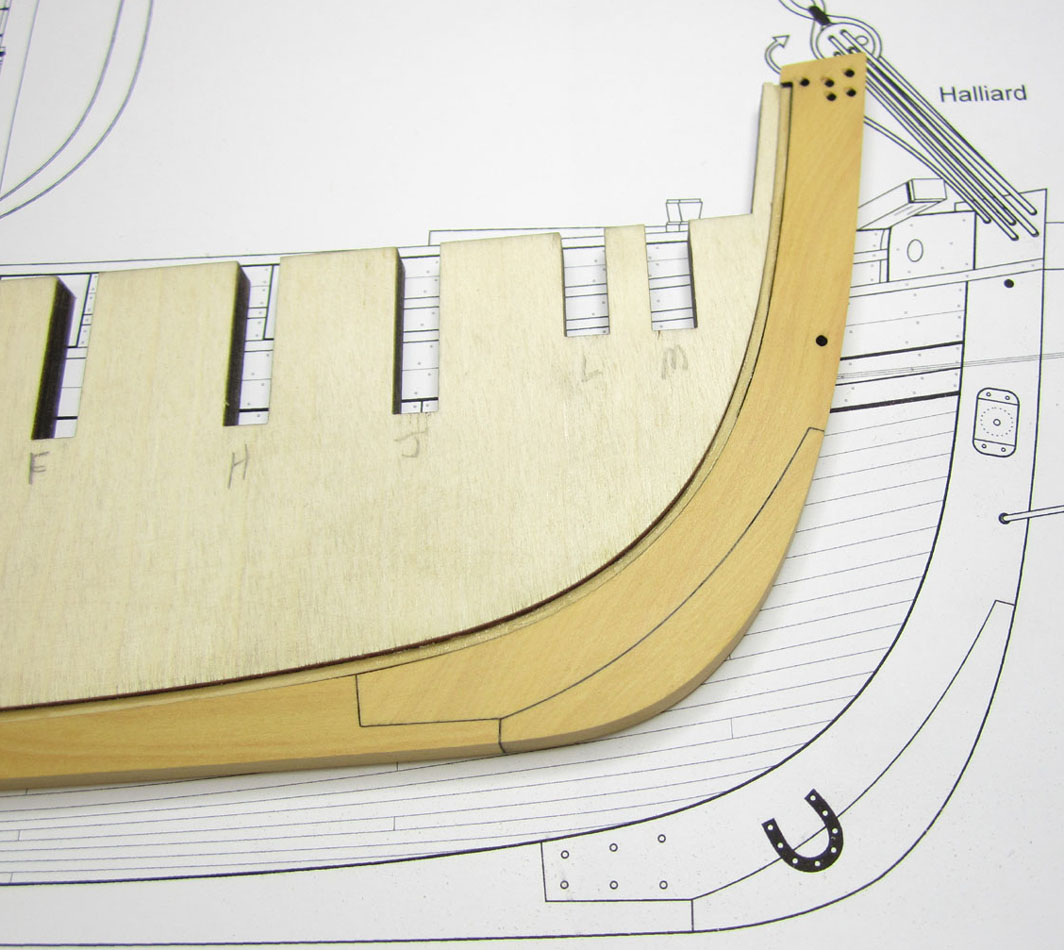
Thank you...yes I am very lucky and fortunate to have a large shop...I dont know how I could work down there for so long if it wasnt as large. Anyway.. I actually started gluing up the bulkhead former. It was in two pieces as you saw earlier. Then I added the rabbet strip which was 1/8" x 1/16" in size. It went all along the bottom of the bulkhead former and up the stern post. Because the former was 1/4" thick this left a nice rabbet when everything was all together. I tapered the bulkhead former at the stern from the bearding line to the rabbet strip. I used a combination of chisels and sand paper. Once completed, I cut the pieces that would make up the stem. I decided to just use boxwood. To keep it in the proper thickness the thickness for the keel and stem needed to be 7/32". I could have just used a 1/4" thick piece because after sanding it would eventually be the right size. But I started with a 7/32" sheet. The pieces were glued together and pencil was used to make the seams show up better. It does a nice job of simulating the tar par and caulking and such. You can see that I added all of the pieces except for the stern post. I like to leave this off until the hull is planked as I did with my other builds. I did cut them all out though. These are the only pieces including the rudder that will be this thick so I went ahead and cut them all. I will set them aside for later. You will also notice the five holes in the stem for the deadeye halliard. This is for the main stay. I added the grooves above each hole at the appropriate angle so the halliard will lay correctly when rigged. I still have to add the treenails through the keel and stem pieces. Maybe later this evening.
- 1,051 replies
-
- 14
-
-
- cheerful
- Syren Ship Model Company
- (and 1 more)
-
Ok guys....knock it off...... 12" or 14" this can go for ever and its making folks uncomfortable. Chuck
-
Funny......it weighs about 300 pounds...But I am in the shop every day...Feel free to stop by anytime. Many folks visit the shop all the time and stop me from talking to my dog like a crazy man all day.
- 1,051 replies
-
- 3
-
-
- cheerful
- Syren Ship Model Company
- (and 1 more)
-
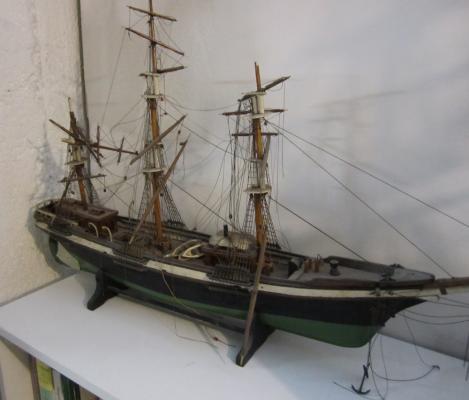
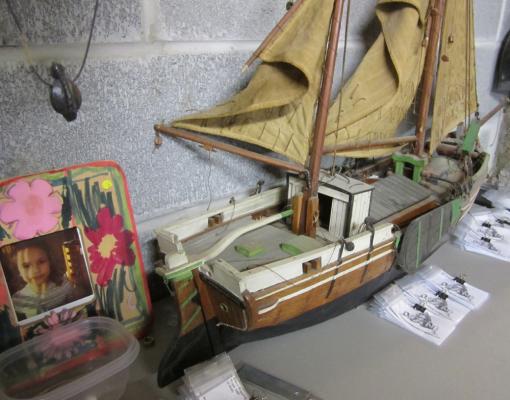
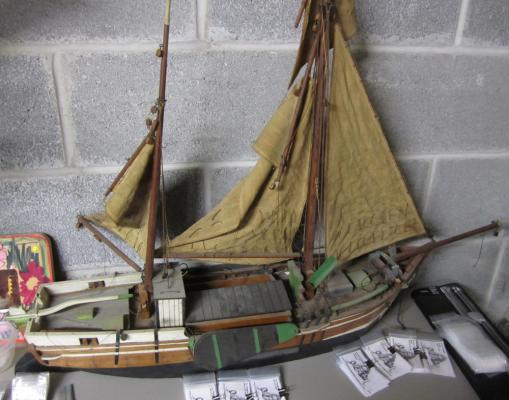
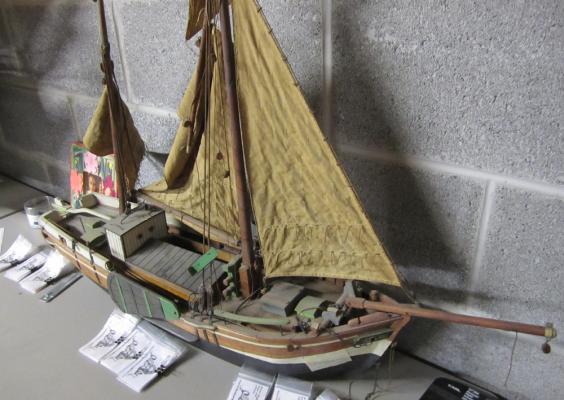
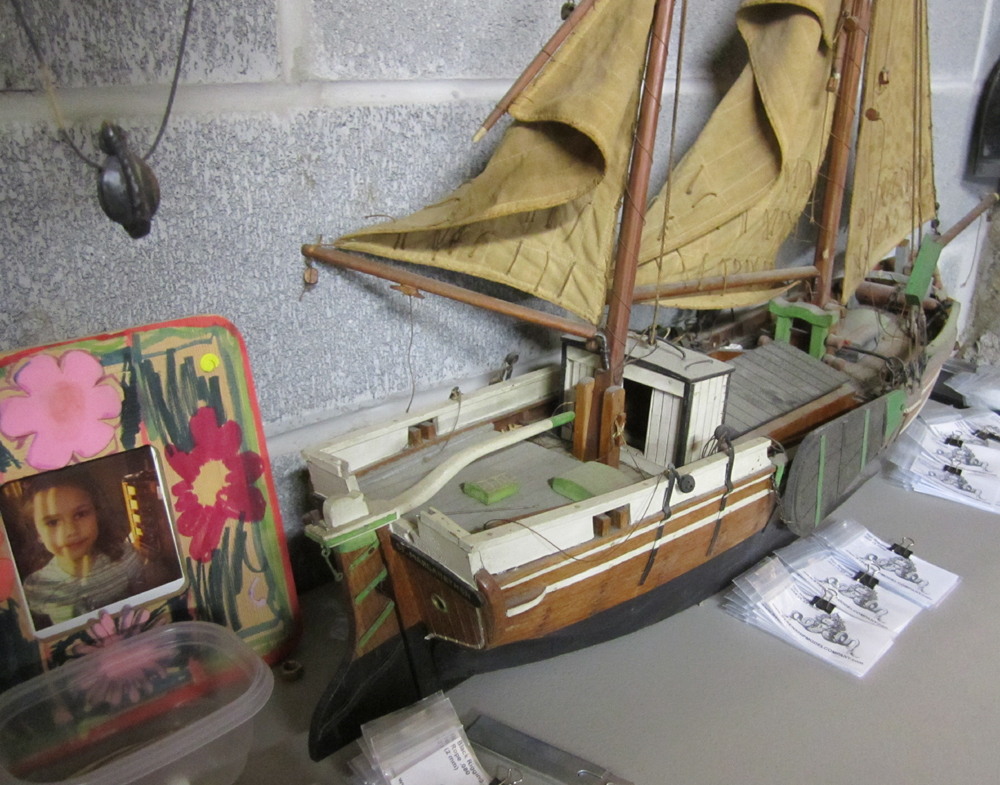
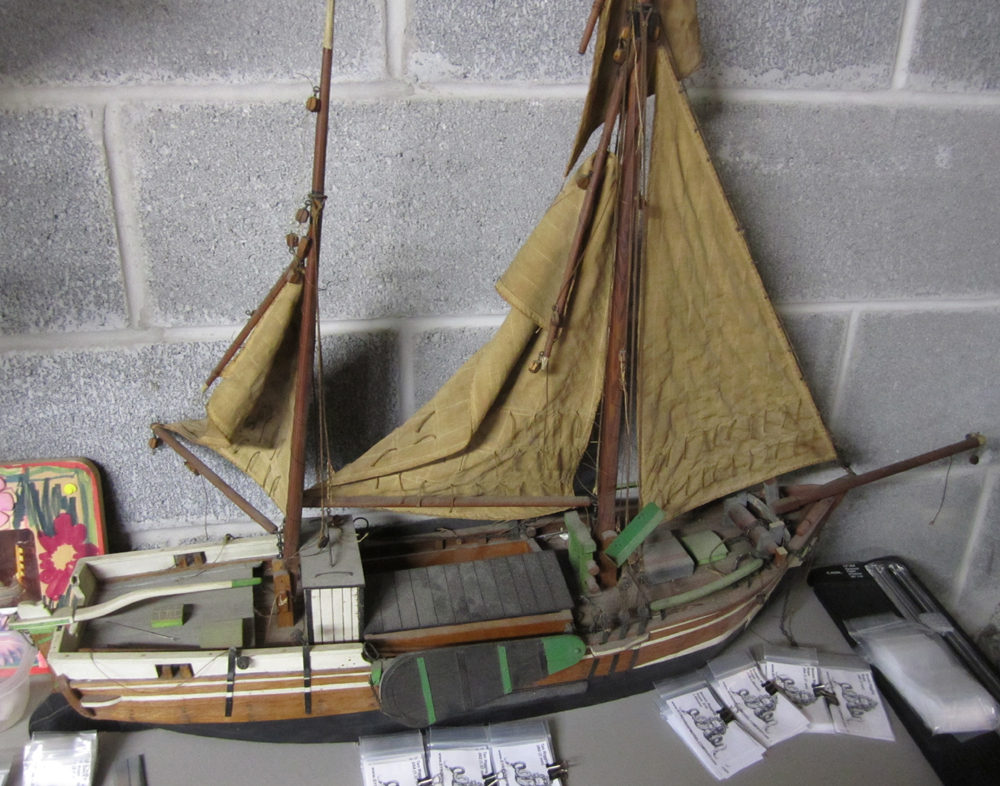
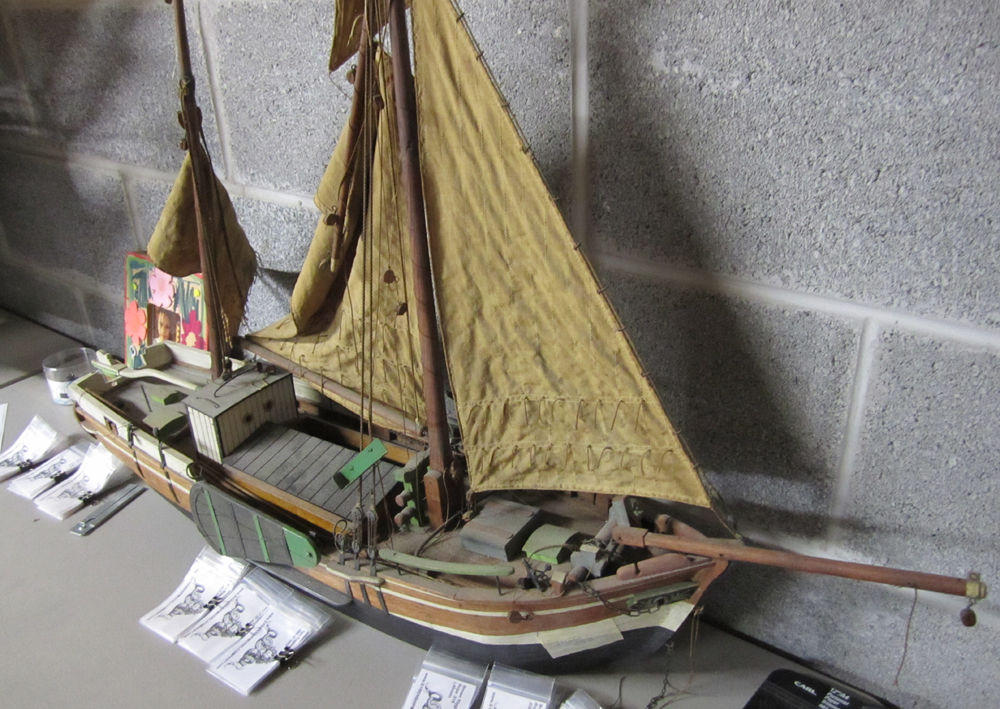
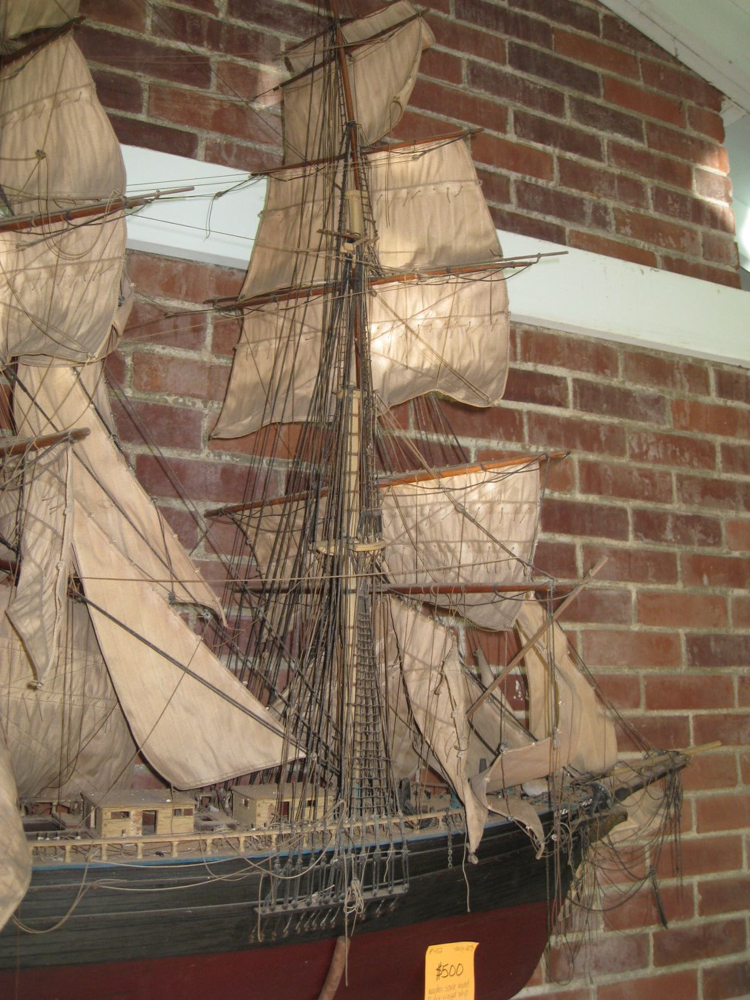
Unknown...circa 1950-60 maybe... Some people save stray dogs I save models that are destined for the dumpster. Unknown Dutch Fishing vessel...Maybe??? Circa 1950ish maybe. Who knows.
- 1,051 replies
-
- 14
-
-
- cheerful
- Syren Ship Model Company
- (and 1 more)
-
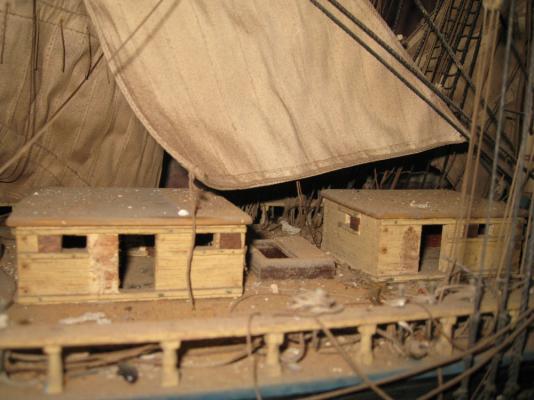
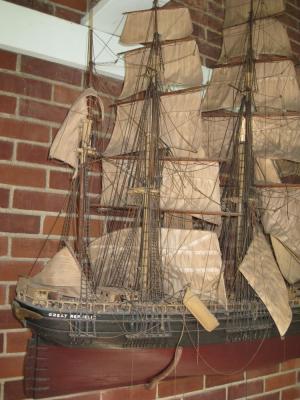
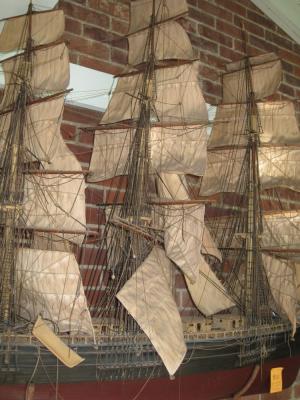
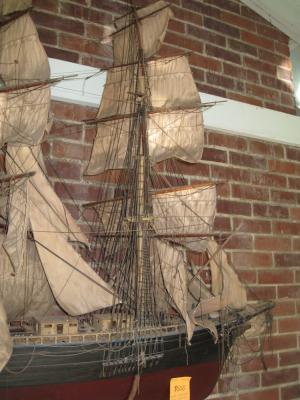
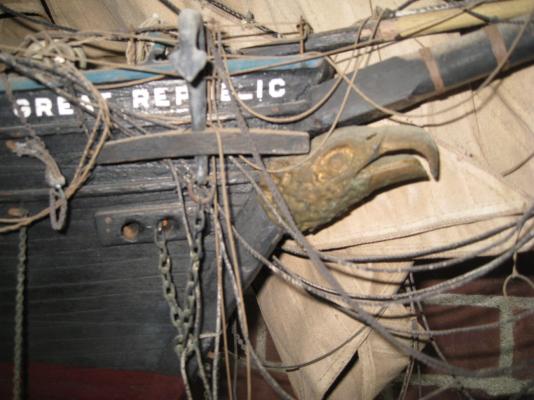
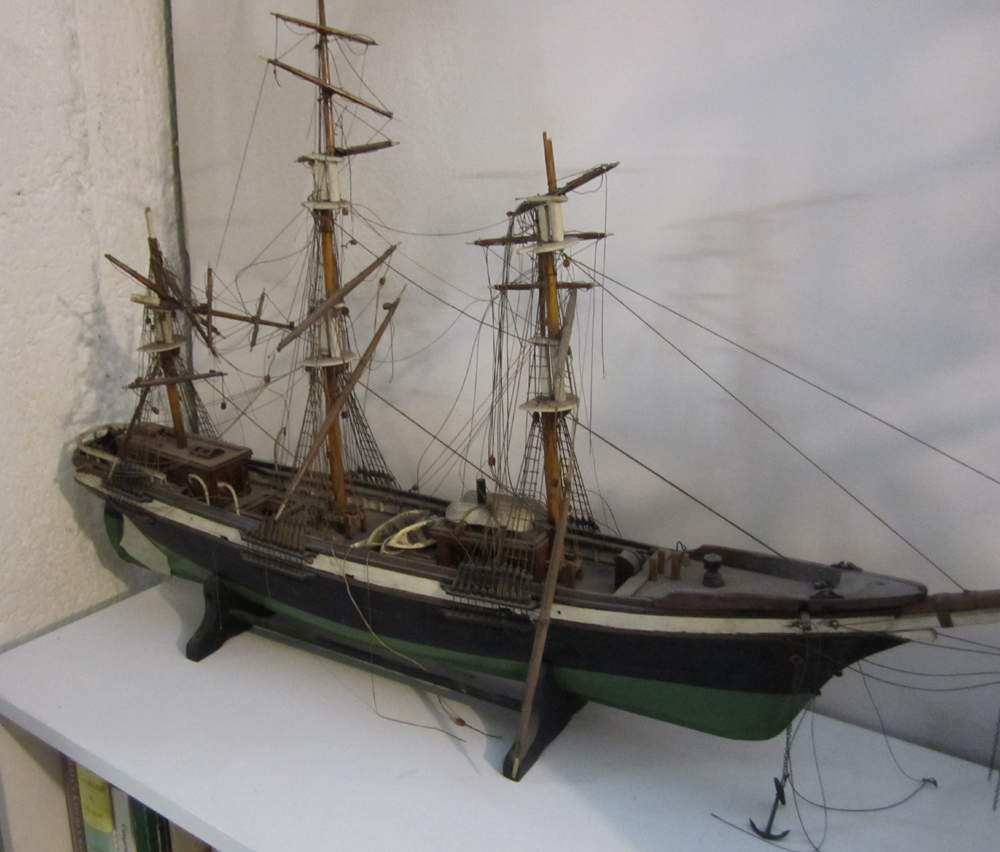
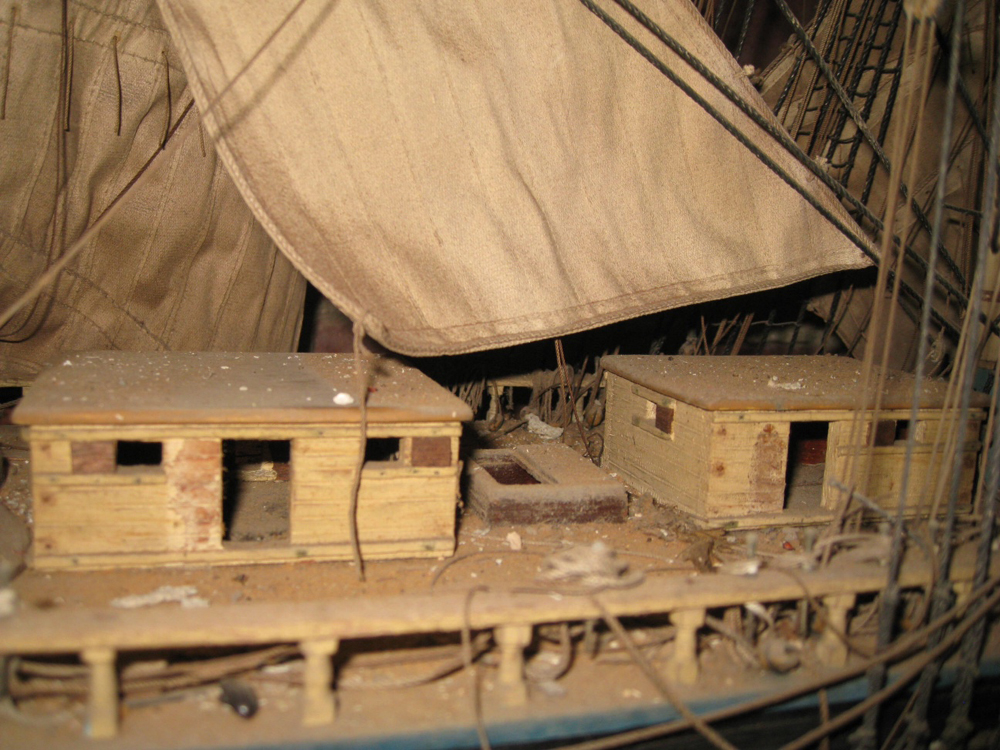
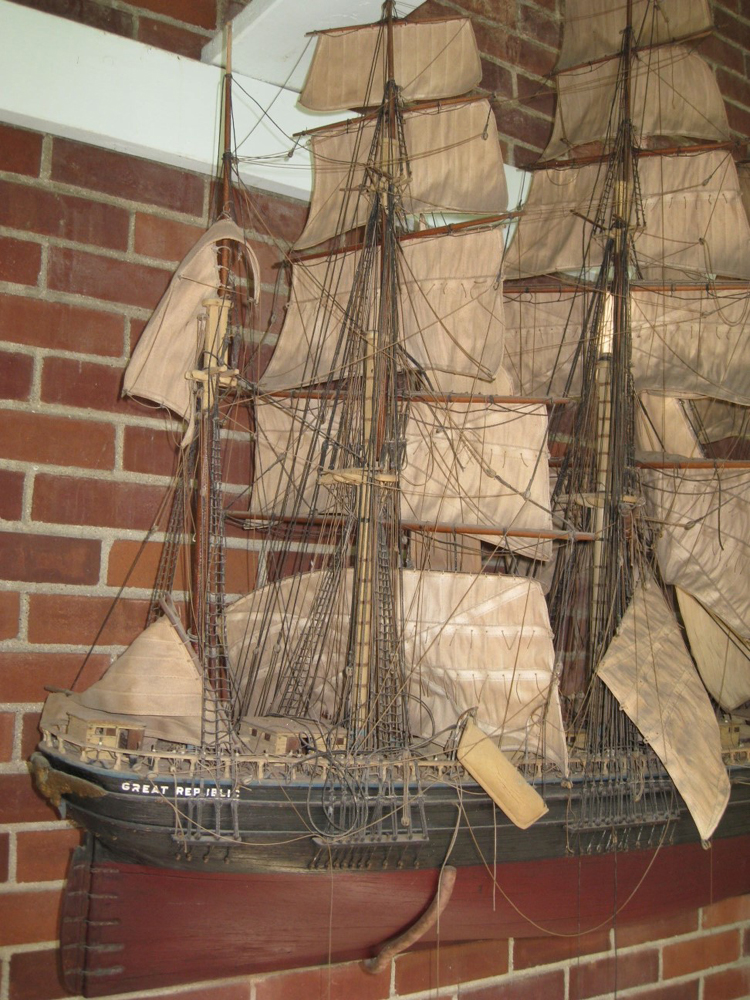
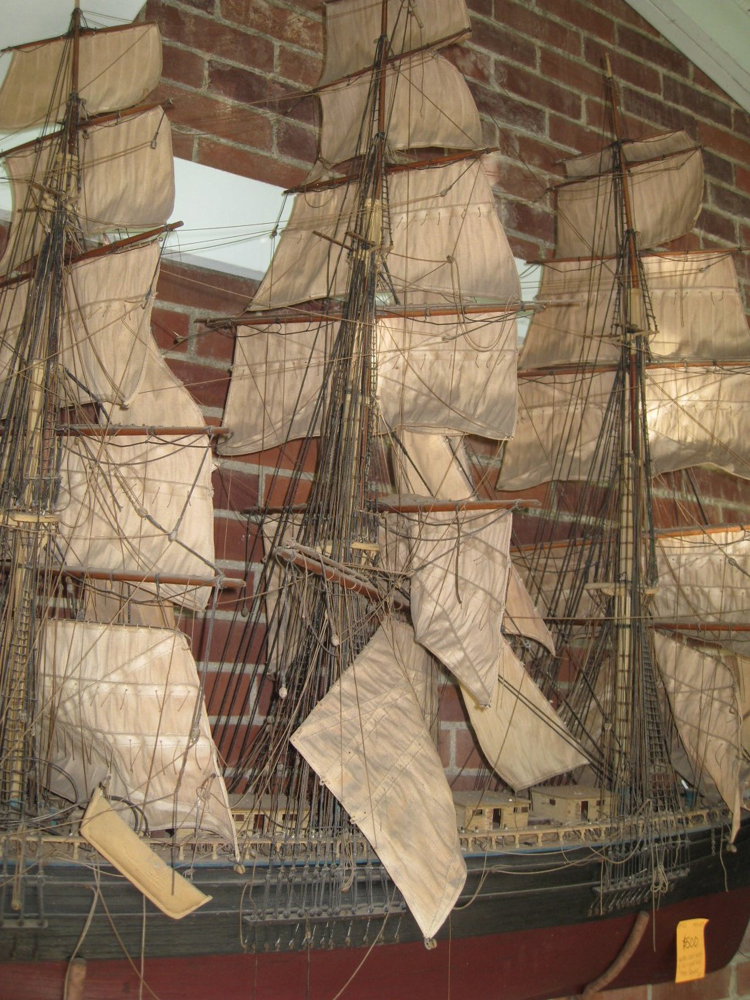
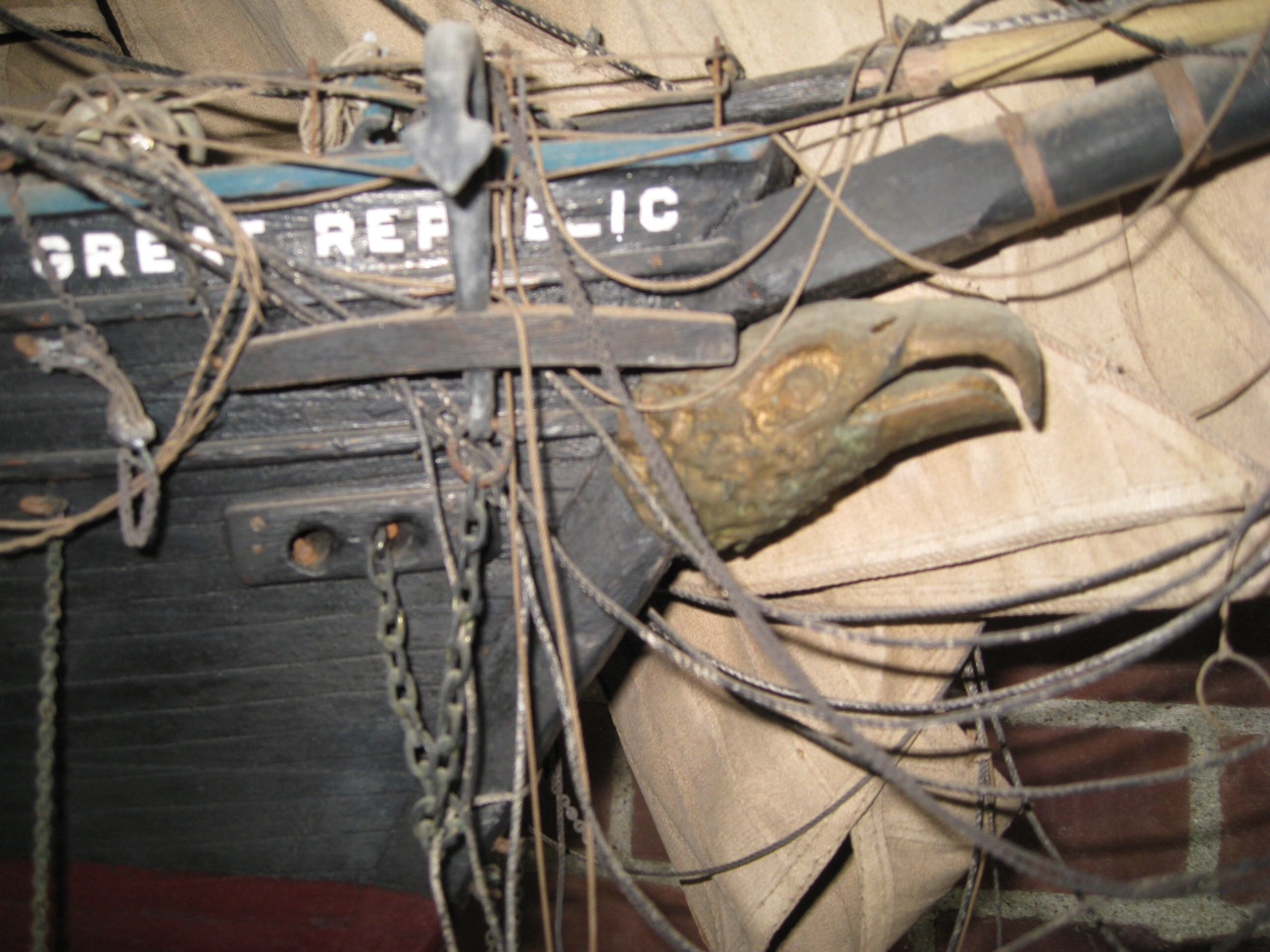
Not to get to off topic... But just a few...Boy am I lazy today. I am crapping up my own build log to boot!!! Great Republic by Boucher...1912
- 1,051 replies
-
- 14
-
-
- cheerful
- Syren Ship Model Company
- (and 1 more)
-
There is a topic on the big one....I will take more pics of the others later...I have quite a few old models that need some TLC. I figure at this rate I will be about 70 years old before I find time to do it. http://modelshipworld.com/index.php/topic/6263-dutch-east-indiaman-vlissingen-1747need-help-from-our-dutch-members/ I have to try and accomplish something today. I am feeling very lazy and yet I have so much to do...I have do something other than watch old reruns of the "rockford files" marathon on TV.
- 1,051 replies
-
- 5
-
-
- cheerful
- Syren Ship Model Company
- (and 1 more)
-
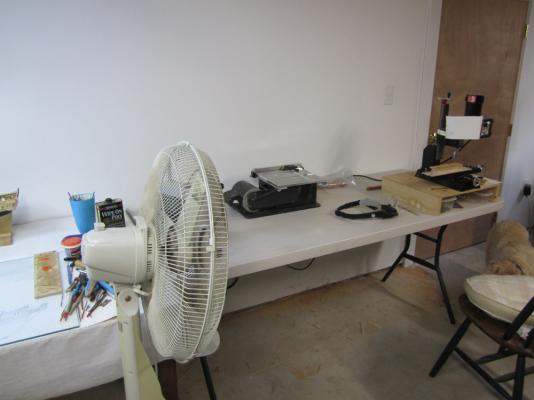
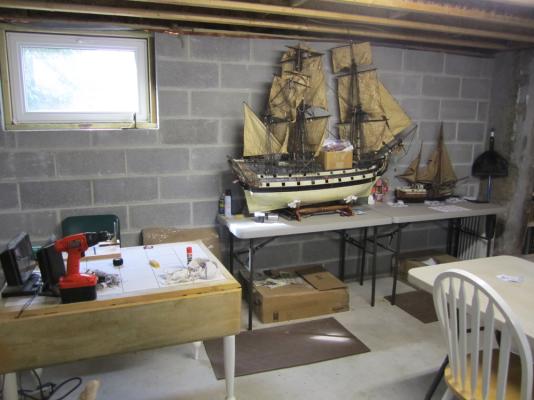
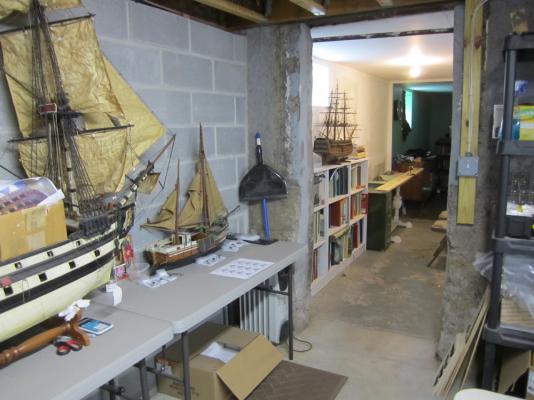
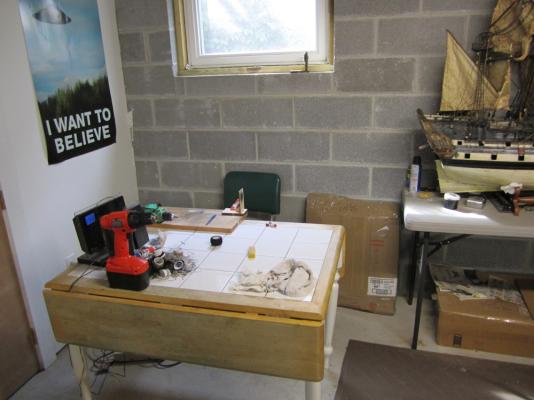
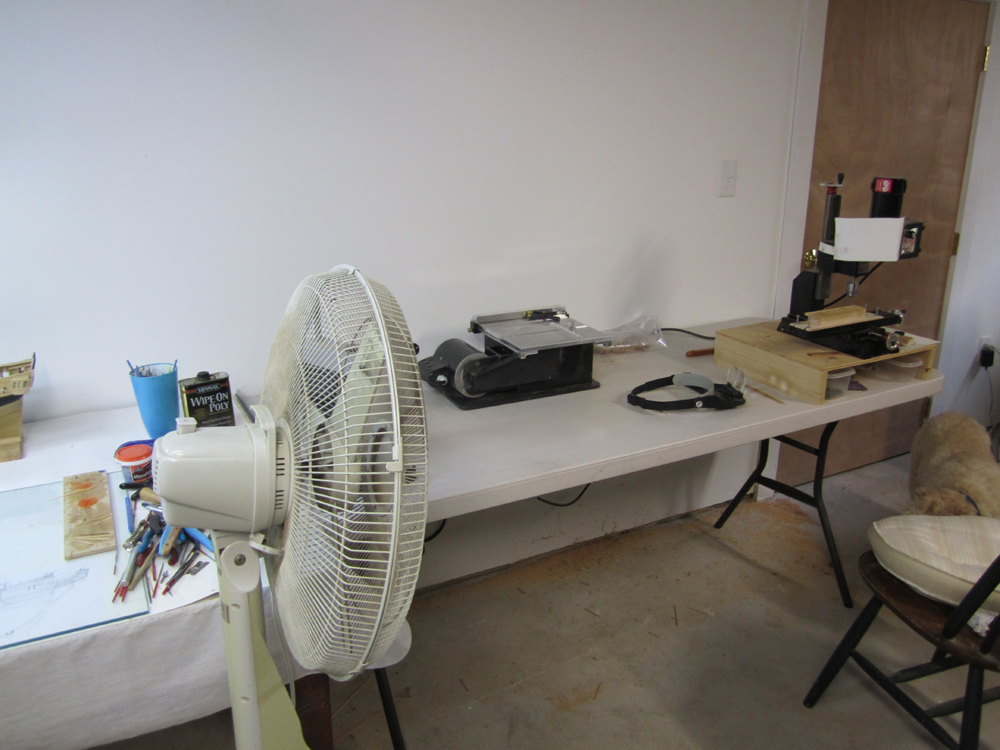
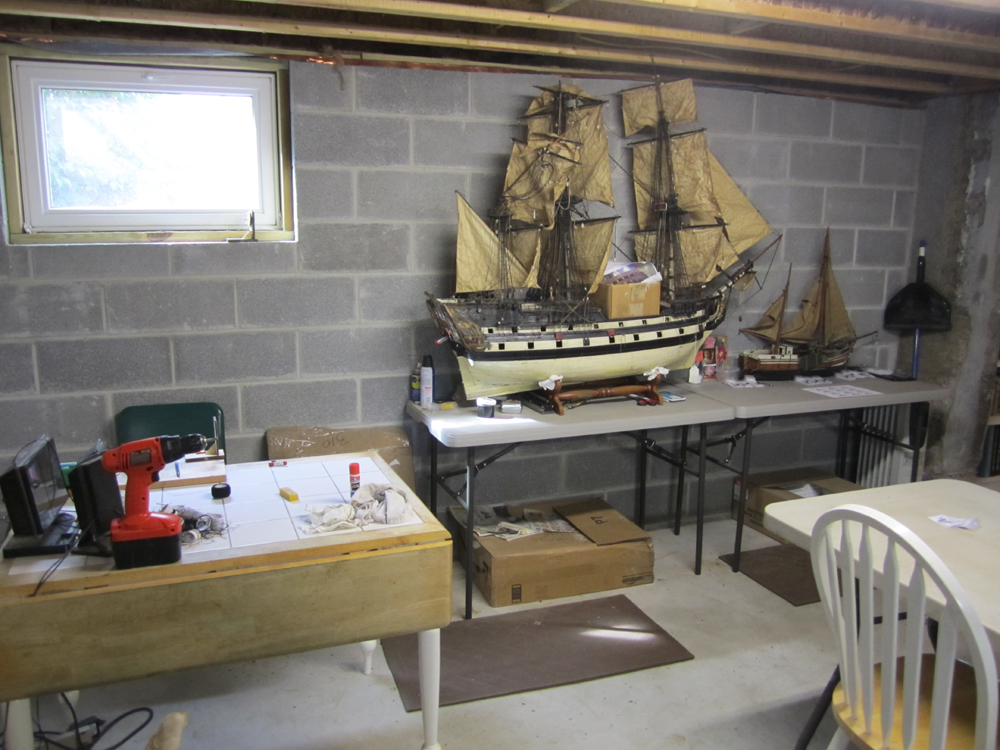
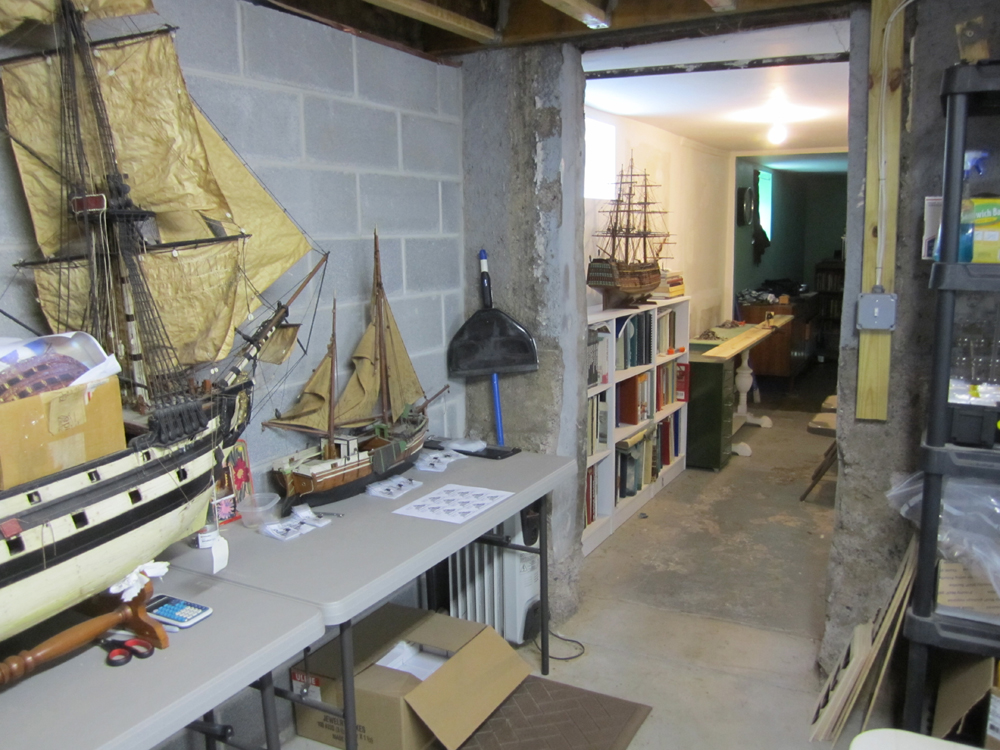
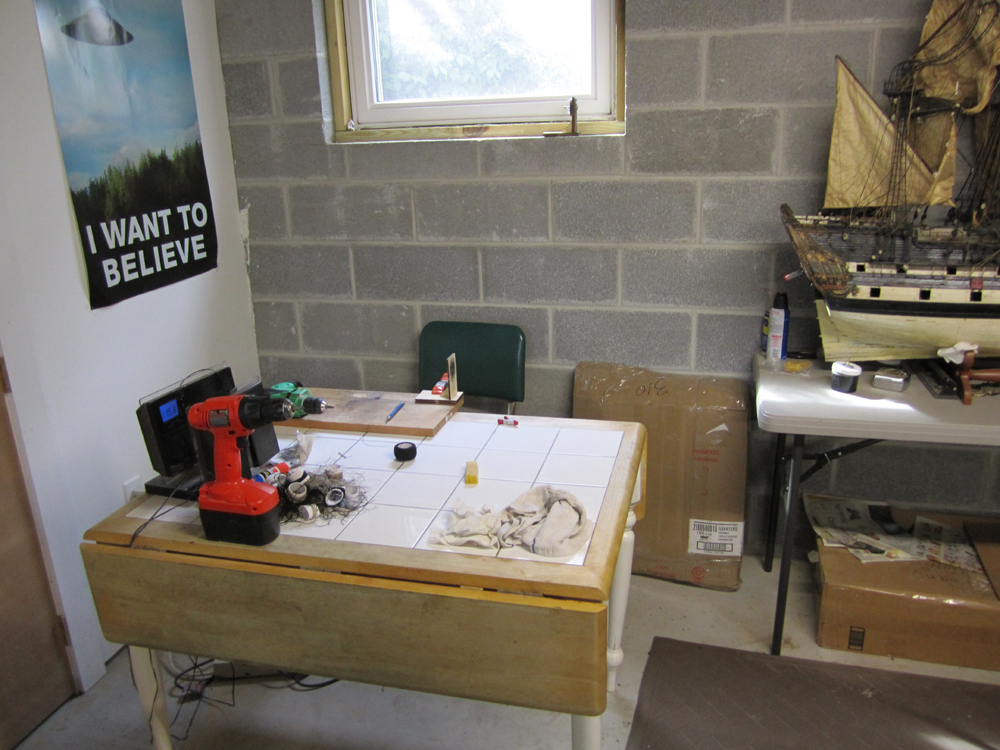
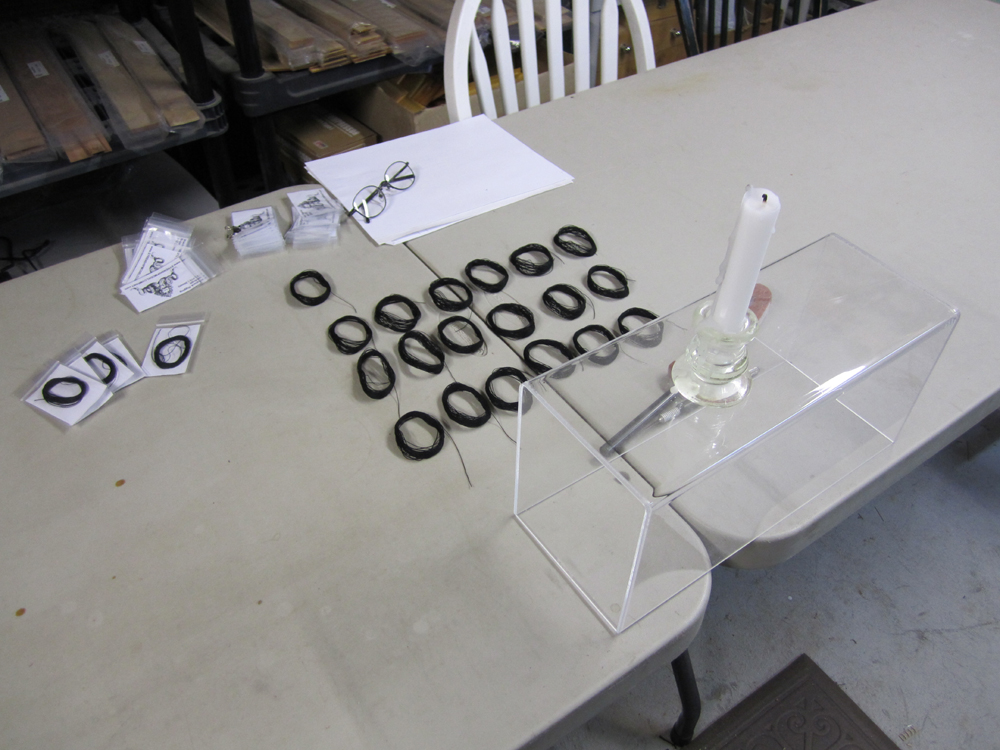
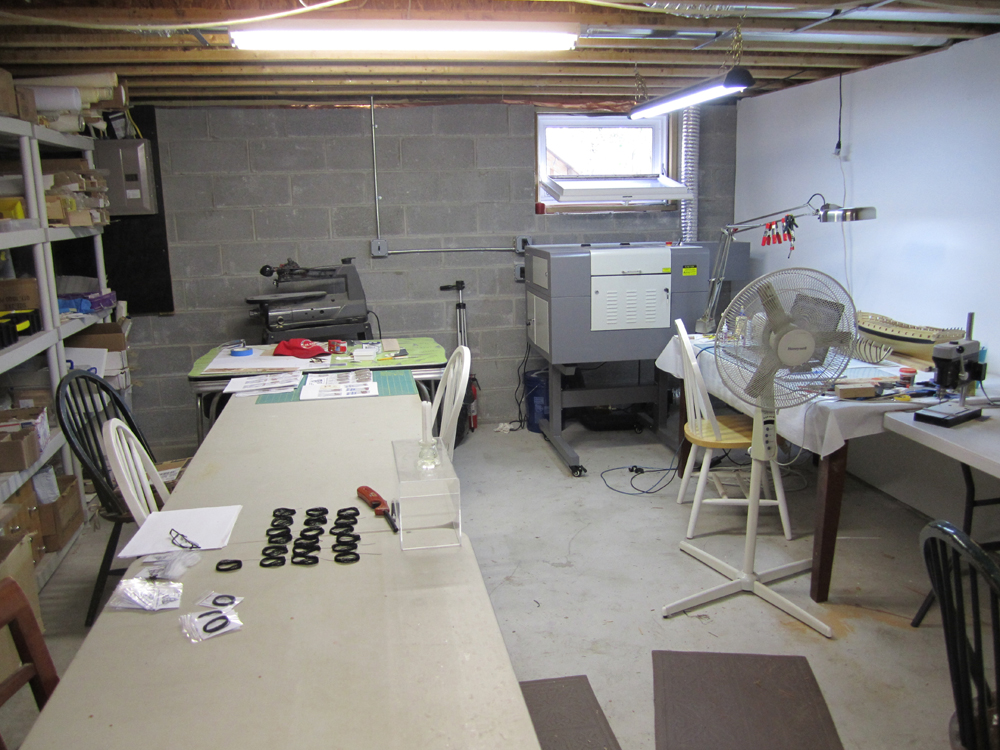
And just to round out the images of where I spend 10 - 12 hours per day... This is the other side of the shop which is in my basement...yes I know it is an absolute bloody mess. In total its about 25 feet long and 18 feet wide with that little hallway which leads to my kids man cave. This is my block making station where yesterday I finished up milling 2000 2mm blocks. Theres a lot of sawdust on the floor....and my shop mascot snuck in the picture. You can see a drill press behind my hi-tech dust control system...the fan. , Byrnes saw and Sherline mill. This is one half of my rope making station...You can see one half of that cheapo ME ropewalk on the table as well as all of the scraps from making a few thousand feet of rope over the last few days....I WANT TO BELIEVE. I will be bringing all of that rope making stuff to St Louis to do a demo for the NRg Conference. I will be showuing how I make 20 - 23 foot lengths of rope on that little Model Shipways rope walk....thats how I make all of it. And then looking down the length of my basement and down the 30 foot long hallway to the other end of the rope making station. This is where I make my rope. Nothing too terribly exciting. Alond the wall is my library and a bunch of old models...including the 18th century model that I should really find a better place for. There is another old Dutch model there too that is crying out for some love and restoration. I have no idea what it is but looks about 60 - 70 years old. Maybe. By God I have to tidy up this place...there is crap all over. I am embarrassed.
- 1,051 replies
-
- 30
-
-
- cheerful
- Syren Ship Model Company
- (and 1 more)
-
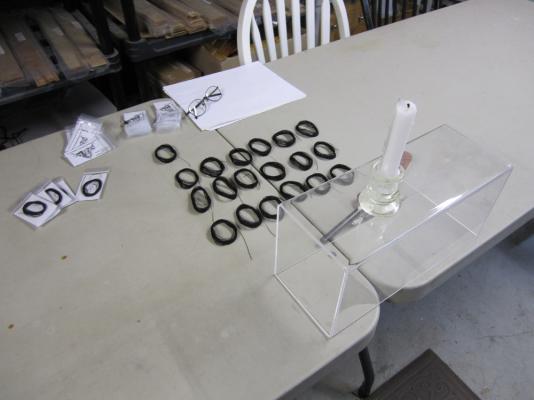
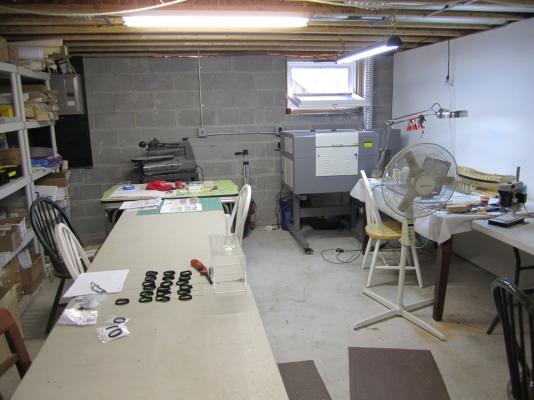
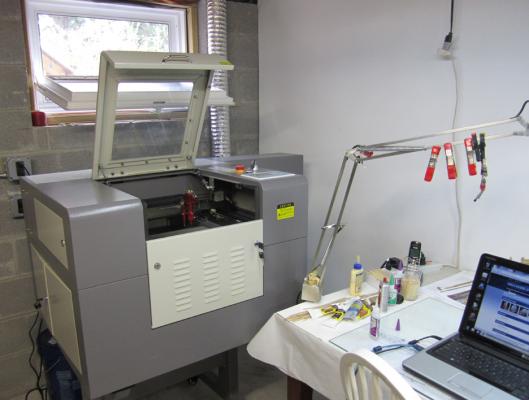
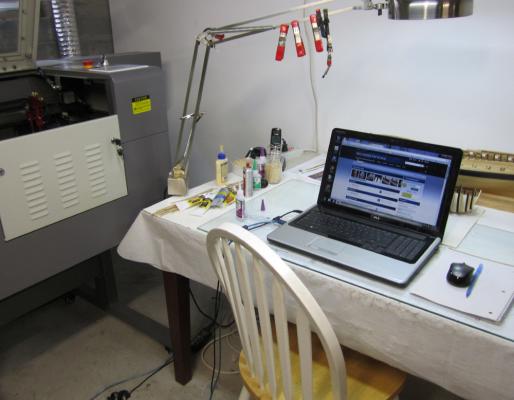
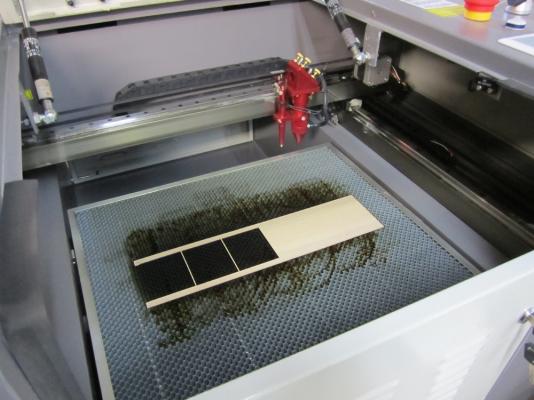
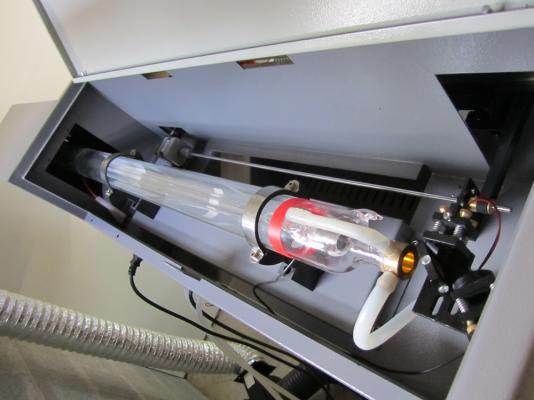
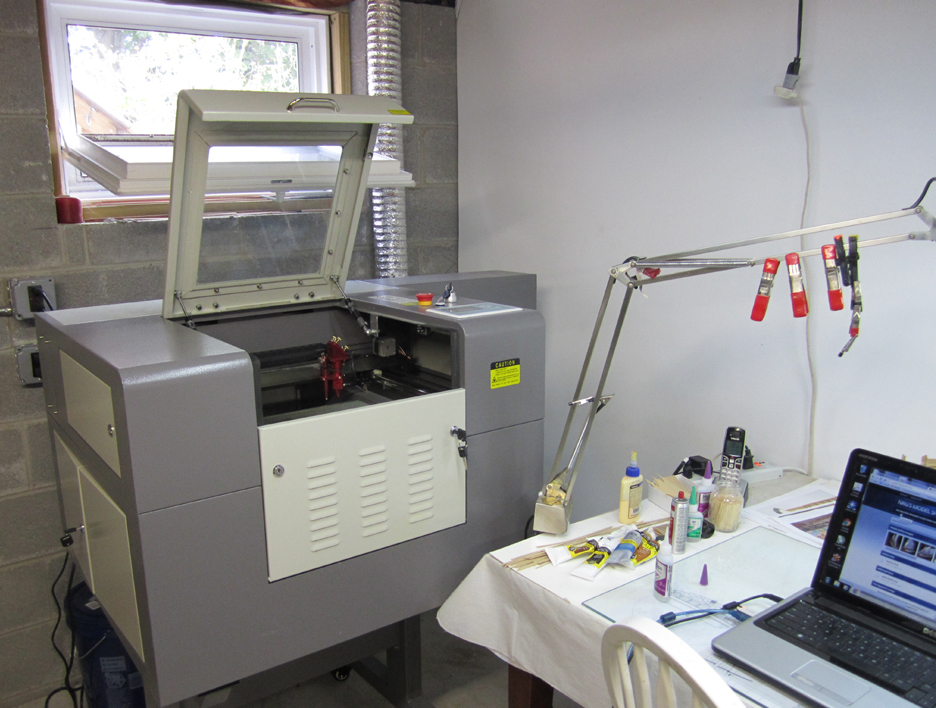
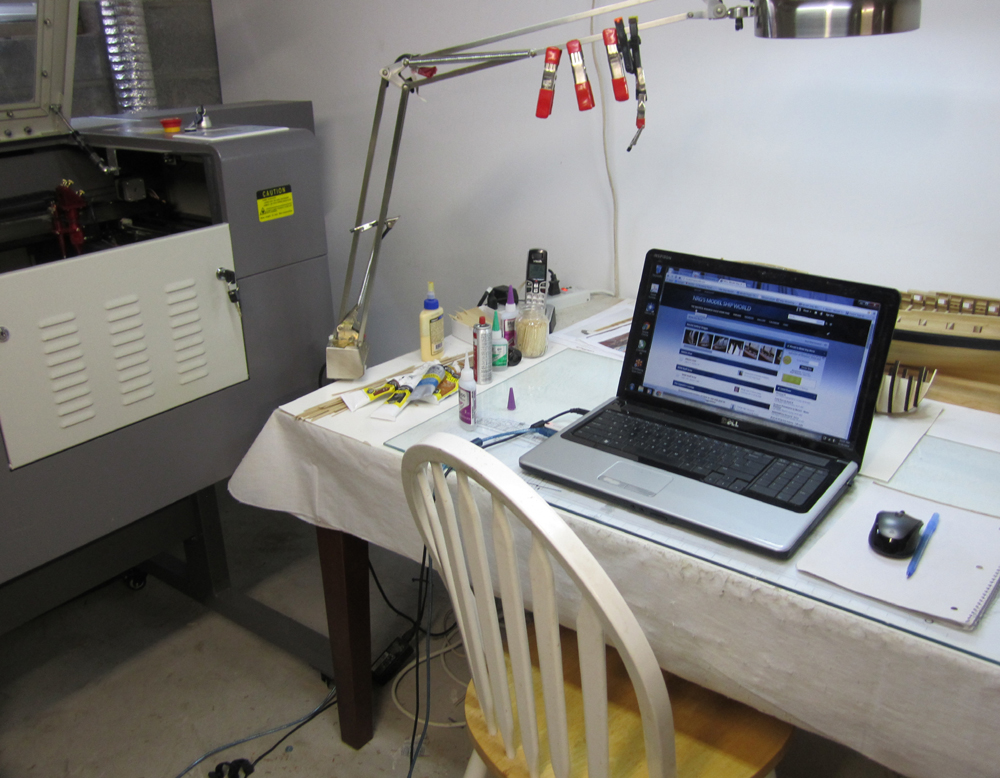
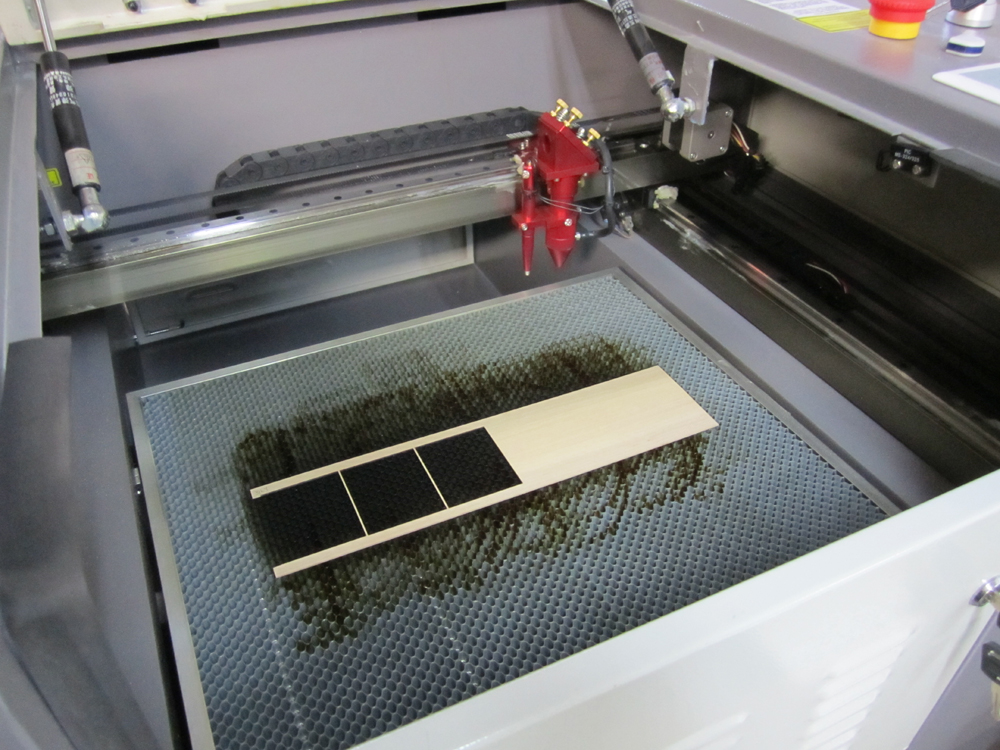
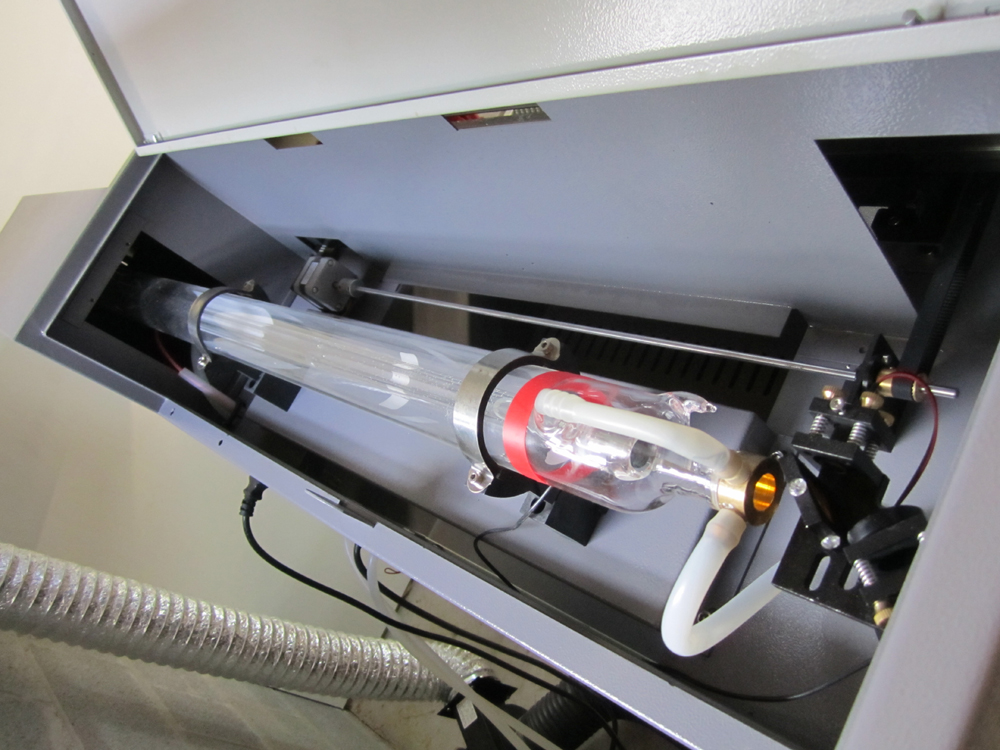
Well I dont have any pics of the machine working...today is a rope making day. But here are some images of the shop with the laser cutter. Its very very messy as I am in high gear making stuff for the NRg conference in a few weeks. The laser cutter....is a BOSS Laser cutter 80 watt. But its custom and I had the larger laser tube placed in a smaller machine body for space reasons. I dont need a huge laser bed because most of the parts we make are small. I am very happy with its performance. Buying a laser cutter is like buying a car...so many opinions and stuff to weed through on the web about which is the best one. This particular unit cost about $5500 after everything was all set up. The cheaper desktop models you see just wont do the job and cut very poorly. Many promise to cut through 1/4' plywood but just wont. So far I was able to cut through teh plywood using only 65% of the power that this tube is capable of generating. It sits on a stand with wheels and can be rolled around teh shop but I like it right next to the workbench. Its just like sending a document to the printer....instead you just hit "file Cut" rather than "file print". Its very easy to get up and running. Baiscally the Laser is hooked up directly to an old laptop of mine. I use Corel Draw to draft my cutting files. They are saved as DFX files and opened up in the laser cutters software...lasercut 5.3. Note the dryer exhaust behind the laser cutter. The laser cutter doesnt leave behind anything after it cuts. It actually obliterates the wood in its path leaving only residue....thats the brown stuff you see on the cut edges. It is also on the laser bed. It must be cleaned from time to time. The material will smoke a bit as it cuts and there is a powerful exhaust fan that blows it outside through that vent. My shop always smells like a fireplace now...very pleasant actually. But I wont cut plastics and other materials because its noxious and the fumes are usually very hazardous...it could literally kill you. Its a bit noisy because of the blower to work the exhaust and the pump to cool the laser tube. Water is constantly pumped through the center of the laser tube as it cuts. You can see its size in relation to my work table... This is the bed of the laser which allows me to cut a 14" x 14' piece of wood comfortable. Its big enough for what we do. This is the actual 80 watt laser tube in the back of the machine....the heart of the machine. Th e laser beam is invisible and bounces off a series of mirrors to the laser head. The laser head moves with a pulley and track system to follow the path of your lines. The three things used to become an effective laser cutter is mastering the POWER setting for any given thickness of material, the SPEED of the laser as it travels...and the maintenance of the machine to focus the laser as sharply as possible to give you the thinnest kerf. Oh and of course the drafting and files you create must be done to the best advantage for your laser settings. Basically its trial and error...place a thickness of wood on the bed and try various setting of power and speed until you find the optimum settings. Every type of wood and thickness has different settings and they are recorded once I find them. Now back to the rope burning station where I need to finish up these 24 packs of black .012 rigging rope. From high tech to incredibly low tech in just a few steps. When you think about how much money you could spend on a Sherline lathe and mill and all of the accessories...$5500 is not that crazy. I make a lot of parts for a living and that isnt the case with most ship modelers but I view this as just another tool to make parts. You can excel at using it just like you could with a mill and lathe...which by the way, a lathe is something I dont own.
- 1,051 replies
-
- 24
-
-
- cheerful
- Syren Ship Model Company
- (and 1 more)
-
Really fine job on the planking.
-
Nope...Sorry. But these Carronades have trunnions and are a different style. They wont work with a sled. Chuck
- 1,051 replies
-
- 1
-
-
- cheerful
- Syren Ship Model Company
- (and 1 more)

Our Emblem ®
