


Louie da fly
-
Posts
7,989 -
Joined
-
Last visited
Content Type
Profiles
Forums
Gallery
Events
Everything posted by Louie da fly
-
I came across this term in a book about sailing ships in the 19th century (may have been Two Years Before the Mast) applied to whaling ships, where unlike other ships, whalers have "crows nests", and that's one of the things that distinguishes them from other ships. Unfortunately, the term seems to have been so widely understood that the author doesn't bother to explain what it was about a crows nest that made it different from a normal ship's top.
-
 There was also a very worthwhile discussion of this subject in an earlier thread at http://modelshipworld.com/index.php/topic/3952-dioramas-water-related-photos-hints-tips-and-videos/ . Might be of help.
 -
Hi Dick! I just discovered a website dealing with the excavation of the wreck of the Lomellina, a large Genoese ship with 300 men aboard, which sank in Villefranche harbour in 1516. Some interesting stuff there, including the capstan, rudder, port lids etc. It's at http://archeonavale.org/lomellina/an/l_6a.html and there's more at http://www.culture.gouv.fr/fr/archeosm/archeosom/en/lomel-s.htm It seems to me that quite a bit of this information could be relevant to your build. Best wishes, Steven
-
Mary Rose by Chidokan - cross-section
Louie da fly replied to Chidokan's topic in - Build logs for subjects built 1501 - 1750
I've just added some more pics of common sailors' clothing - this time to Tarbrush's build log for Mary Rose. You might find them of use. I'm following both these logs with great interest. -
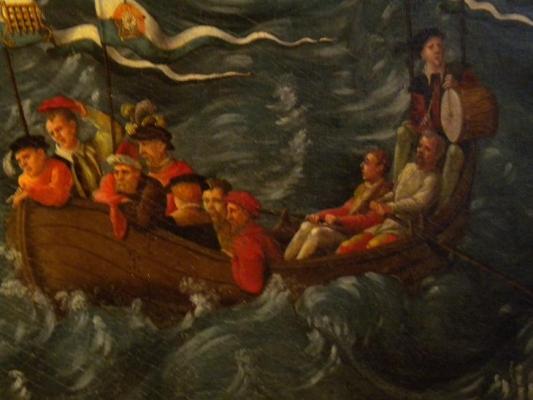
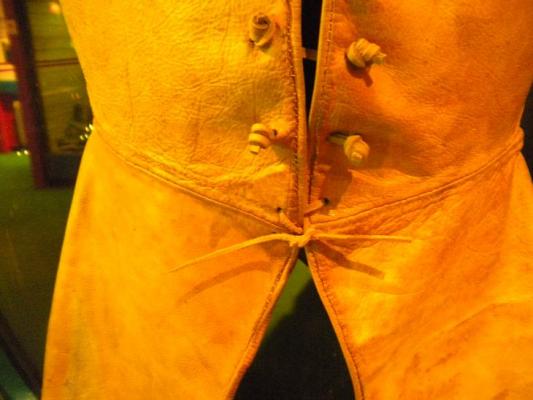
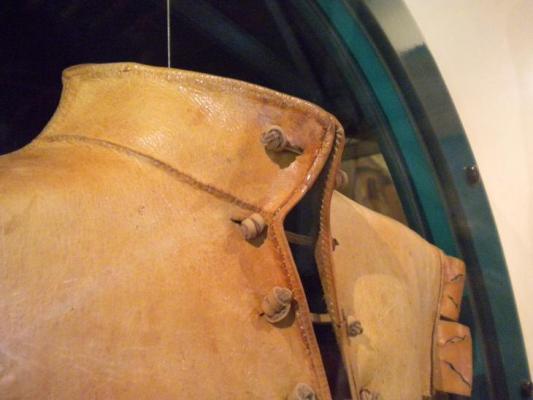
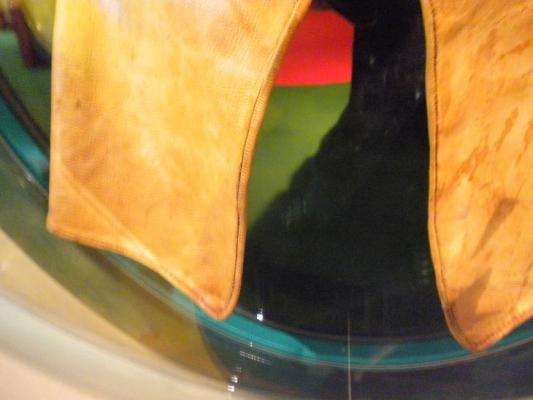
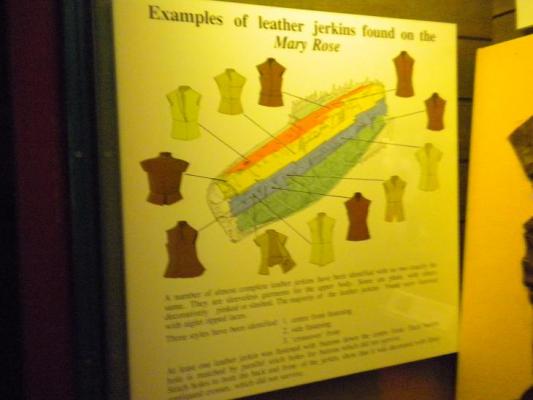
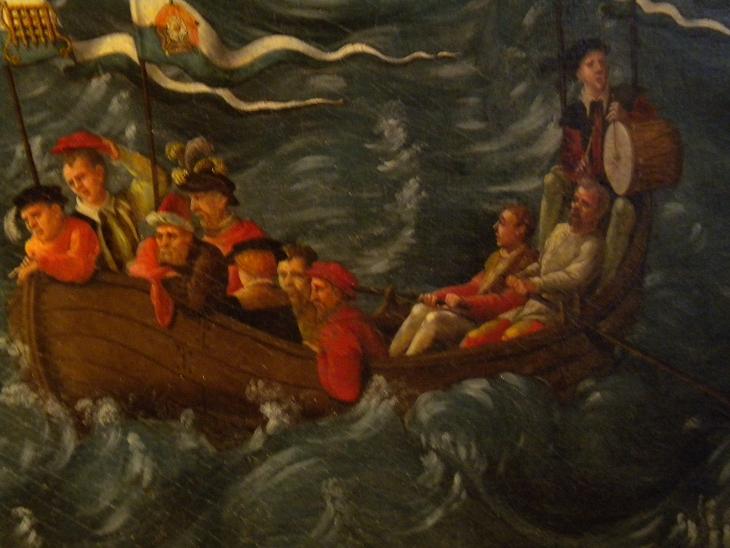
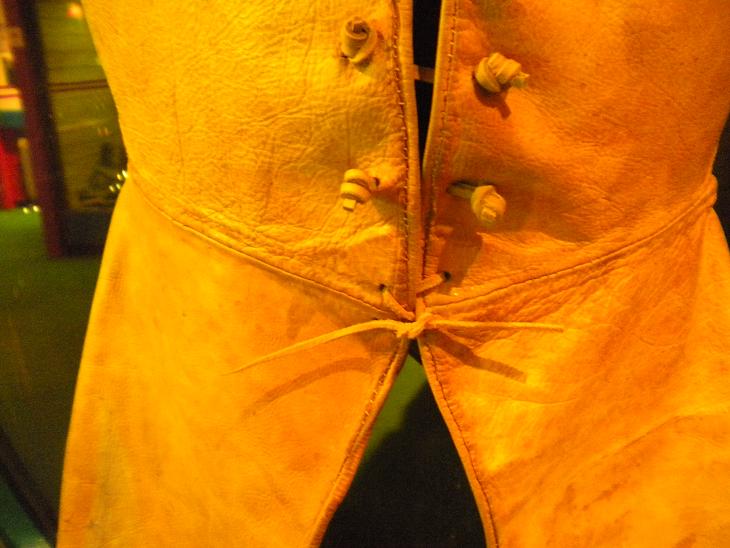
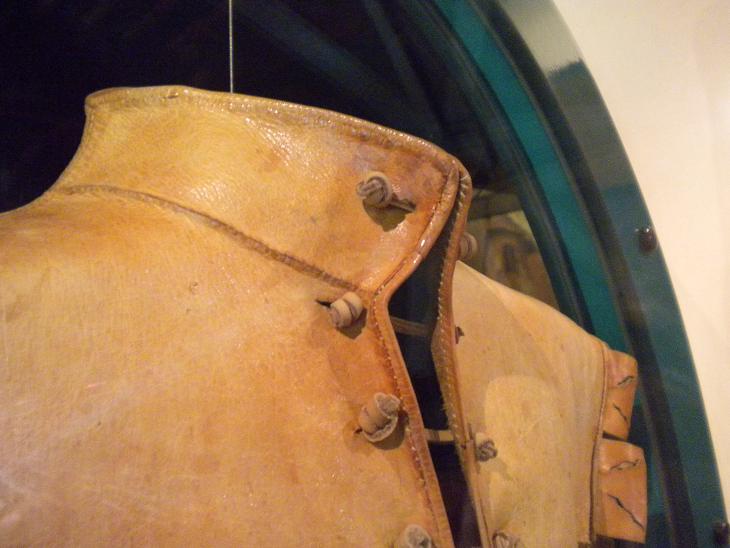
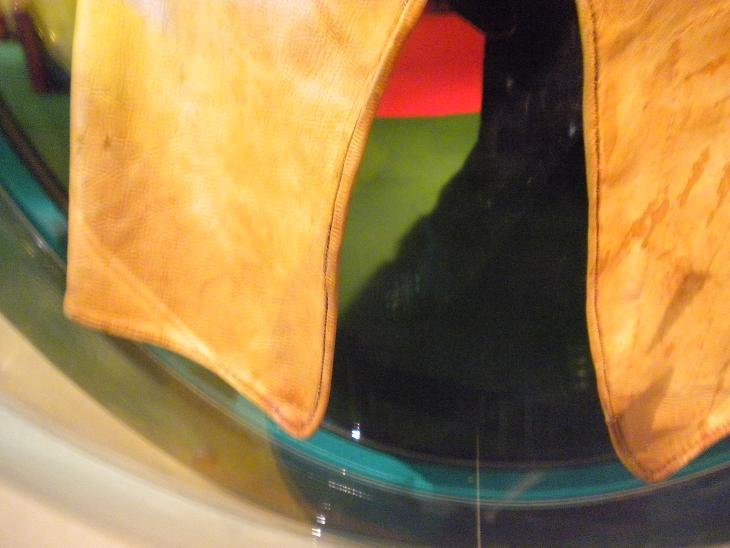
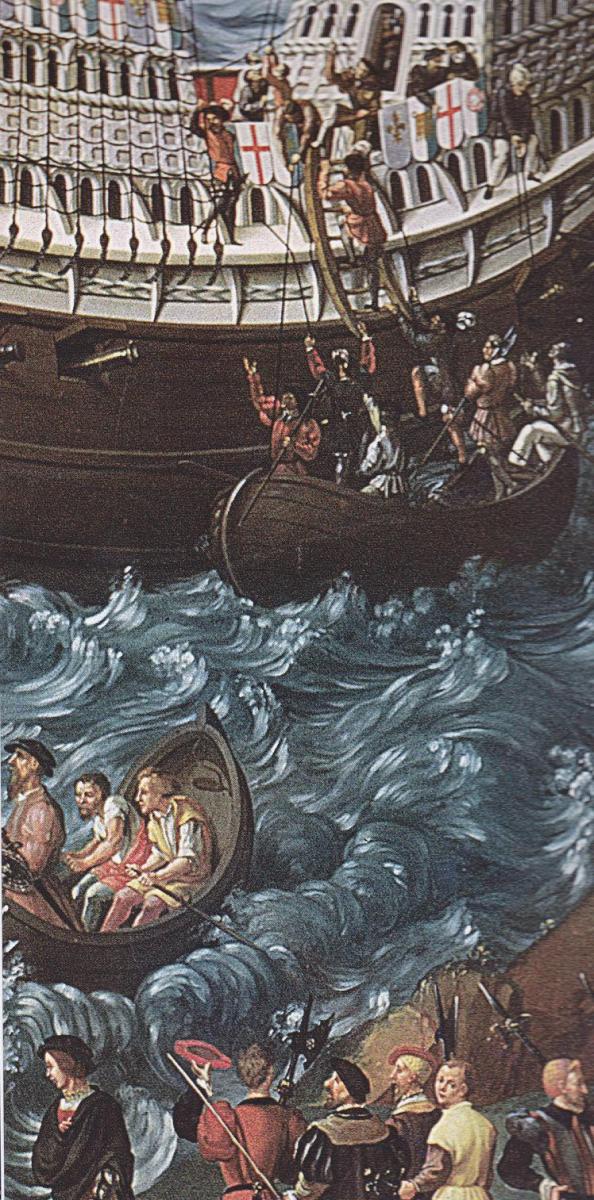
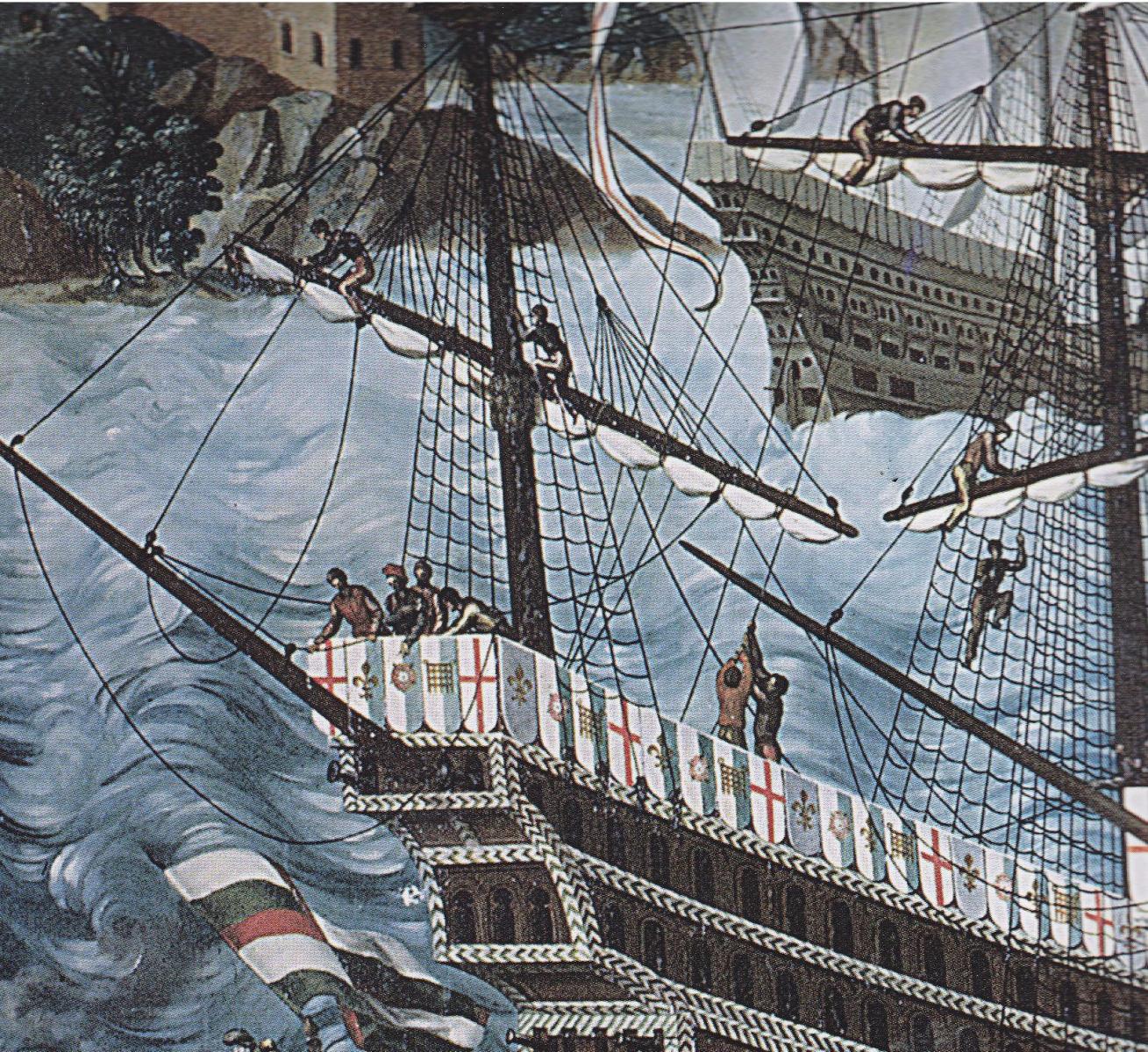
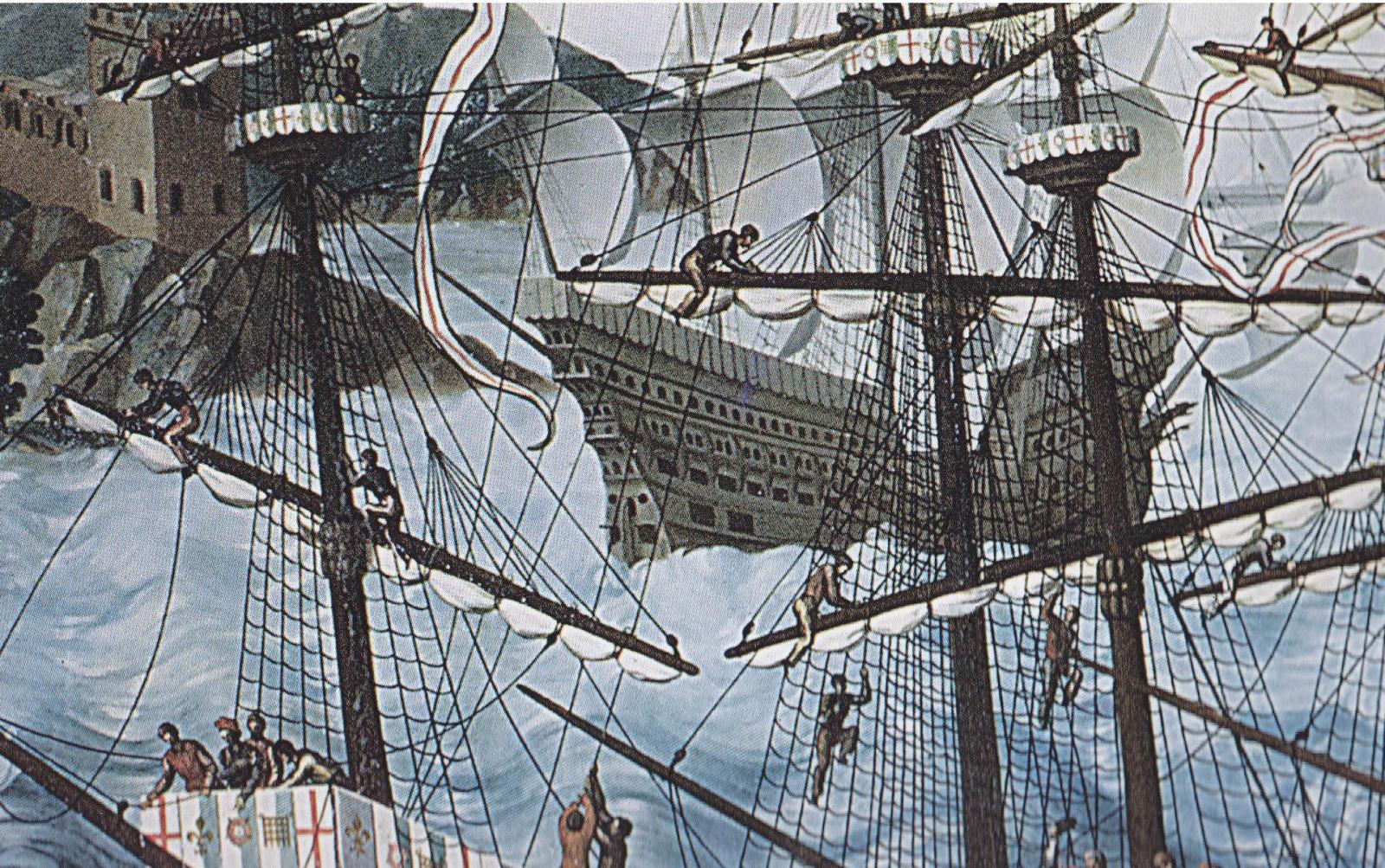
The Embarkation is a useful painting (it's on display in Hampton Court Palace, if anyone wants to see the original and take some photos). However, though I believe the costumes are to be relied on, I cant say the same for at least some of the details of the ships - square sails on the mizzen masts, and rectangular forecastles, which I just don't believe. I think the painter wasn't all that familiar with ships, and got some things wrong. So whether the running rigging (for example) is to be relied on, I just don't know. (It conflicts with that shown in the Anthony Roll, but perhaps that's wrong and the Embarkation is right - or maybe they're both right for different times the ship was seen).. I found a few more pics - another couple of oarsmen (I took this one myself at Hampton Court), and some detail photos of a reproduction leather jerkin based on one found on board the Mary Rose. Unfortunately, I didn't think to take an overall photo of the jerkin itself - I was more interested in how it was put together. Plus a chart of where leather jerkins of different styles were found.
-
I've put some detail views from the contemporary painting The Embarkation of Henry VIII at Dover of sailors on Henry VIII's ships on Chidokan's Mary Rose Cross Section thread, which mght be of help.
-
Mary Rose by Chidokan - cross-section
Louie da fly replied to Chidokan's topic in - Build logs for subjects built 1501 - 1750
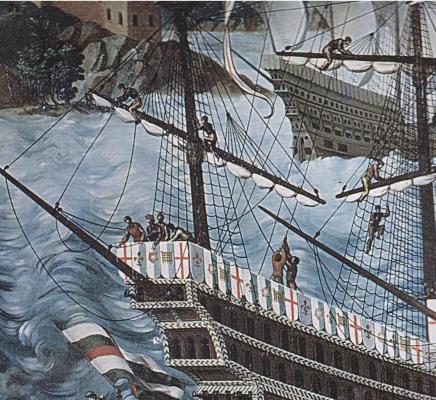
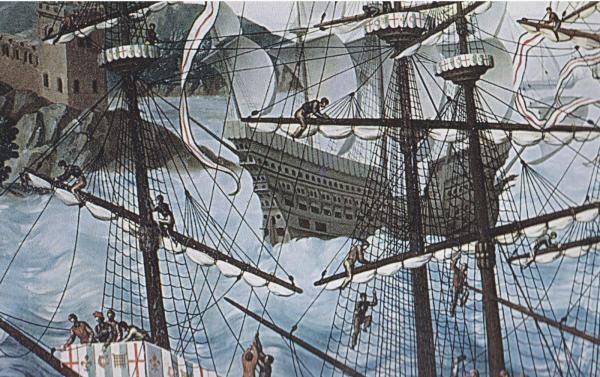
Here are some detail views from the picture The Embarkation of Henry VIII at Dover I mentioned above, showing some of the sailors at work. Funnily enough, their clothes look very like those of Jack Tar in Nelson's navy - most wear long loose trousers and a plain jacket. So it may be easier to find figures for common sailors than it first appeared. But the two guys rowing the boat seem to be better and more fashionably dressed. And - look, mum! No footropes! I've noted, also, both from this painting and the Anthony Roll, most of the ships' boats are double-ended. The Embarkation should also serve as a guide for colours for the upper classes. By the way, on the Mary Rose they found quite a large number of leather jerkins , with decorative slashing. I'll see if I can find some photos from when I visited in 2009.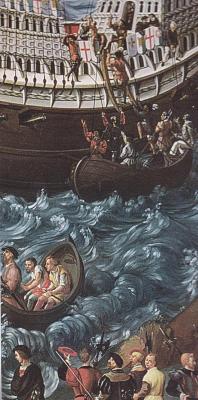
-
Batavia by *Hans* - FINISHED
Louie da fly replied to *Hans*'s topic in - Build logs for subjects built 1501 - 1750
Your Batavia is beautiful. -
Mary Rose by Chidokan - cross-section
Louie da fly replied to Chidokan's topic in - Build logs for subjects built 1501 - 1750
For the Wars of the Roses, you'd be looking at a carrack. Woodrat has a very good build log at http://modelshipworld.com/index.php/topic/4915-venetian-carrack-or-nave-tonda-by-woodrat/page-1 which is well worth a look. But the Mary Rose is well worth while in her own right - basically the ultimate development of the carrack - to the point that they were overtaken by events - the high castles were unnecessary once cannons replaced boarding as the main mode of combat, and with the addition of guns, particularly on upper decks, they became unwieldy, and the lower, more seaworthy galleons pretty much took their place. -
All depends on finishing the house renovations. The Admiral has made it very clear that this comes first, and who am I to refuse? Currently we expect to finish some time after Christmas if all goes well. Then maybe I can get onto the Great Harry. It'll be nice - after all the ill-treatment the model has received in my travels over the last decades, I feel I owe it to the poor thing to put it back together properly and put it in a place of honour on the shelf. Then I can get onto starting the dromon!
-
Nice - looking forward to seeing progress on this one. If the original is in Port Phillip I'll have to go down and have a look at her sometime. Where is she berthed, Brian? As an Aussie I'm curious as to why someone in Scotland chose to make a model of an Australian tug. Is there a personal connection, or were you just interested in this particular vessel?
-
Looking forward to seeing this one. Mary Rose is a lovely ship, and those plans look really good.
-
Mary Rose by Chidokan - cross-section
Louie da fly replied to Chidokan's topic in - Build logs for subjects built 1501 - 1750
Those figures are excellent. I was going to get into re-enacting this period and did quite a bit of reading and research on Henrician clothes, and I'm very impressed by the figures you have here. For clothing colours, you could look at the figures in the painting The Embarkation of Henry VIII at Dover (you can get it from Google image search). It depicts an event dated 1520, but the painting itself is thought to have been painted about 1545, so it's pretty much spot-on. However, note that most of the figures are higher status than common sailors. There are a few of those shown in the boats, however. Another painting The Field of the Cloth of Gold though it mostly shows upper status people, has a few of "the common sort" getting drunk at the wine fountain. Several of the figures you have may in fact be a little higher status than common sailors anyway, and perhaps belong on the quarter deck. The more complex slashed and puffed clothing would probably have been awkward to work in, and to portray sailors it might be best to concentrate on figures wearing the simpler styles. There's also the Cowdray engraving at http://www.myoldmap.com/dominic/maryrose/ , a coloured 19th century copy of a contemporary representation of the sinking of the Mary Rose (now lost), which has a lot of people in it. As it's a copy, it has to be taken with a pinch of salt, but I beleive it's pretty close to the mark, too. By the way, though sumptuary laws restricted the colours and types of fabric "the common sort" could wear, these laws were usually unsuccessful and often ignored. If you could afford it, you usually wore it. These laws were an attempt by the nobility to keep the rising merchant class in their place, and were rarely successfully enforced. -
Mary Rose by Chidokan - cross-section
Louie da fly replied to Chidokan's topic in - Build logs for subjects built 1501 - 1750
I wouldn't recommend the book. I have it myself, and unfortunately it isn't all that good. It's very basic, very short and dated. It was written in 1955 and is based around building an Elizabethan galleon for which the plans, drawn some time before 1942, were available in 1955, but probably aren't now. The best book for the Mary Rose would be Mary Rose: Your Noblest Shippe, Anatomy of a Tudor warship, put out by the Mary Rose Trust, but it no longer appears to be in print. I'd like to get it myself, but it's hard to get hold of, and copies are very pricey. -
Really good to hear you're building a cog. Mediaeval ship models are sadly under represented in this hobby, and I think they're fascinating and worth just as much attention as the later vessels. Unfortunately, I have no more information than you already have. Perhaps you could write to the groups who have already built and sailed reproduction cogs. I've tried this with other subjects, and I've found that people, particularly enthusiasts, are very willing to help fellow enthusiasts. You can probably find out who built these reproductions from a web search, and that should lead you to an address to write to. Sorry I couldn't be of more help, and I look forward to seeing your progress.
-
I'd like to know about this as well. There are several apple trees I might be able to get timber from, but there's no point if it's not good to work with.
-
Mary Rose by Chidokan - cross-section
Louie da fly replied to Chidokan's topic in - Build logs for subjects built 1501 - 1750
Sounds like a great project. I look forward to seeing your progress. Bear, have a look at the thread http://modelshipworld.com/index.php/topic/4031-mary-rose-forecastle-more-info-on-its-shape/ There's actually quite a lot of contemporary pictorial info out there and if the Mary Rose's forecastle followed normal practice of the time, it was triangular, and very similar in profile to the depiction of her in the Anthony Roll. -
This is a really beautiful build, Dick. Little bit by ittle bit everything is coming together. It's going to be a really magnificent model when it's complete. I like the fact that the upper deck follows the slight curve of the wales. It adds to the beauty of the vessel. Steven
-
Questions about Magellan era Portuguese Carrack
Louie da fly replied to Salty Sea Dog's topic in Nautical/Naval History
Buck - As well as the pics I posted, I included several links to sites with carracks in my posts in Woodrat's log. In case you missed them, they're also worth a look. Steven -
Questions about Magellan era Portuguese Carrack
Louie da fly replied to Salty Sea Dog's topic in Nautical/Naval History
I love carracks as well, Buck. To me they have a rather ungainly beauty. I'm not an expert on joints in keels, but I'm sure you're right. The model seems to have far too many of them, and far too fragile. Also, in my view the rear cabins in the model you're considering seem somewhat over-large compared with how they're portrayed in the pictures of the time. There's a particularly fine build log of a Venetian carrack here, which has lots of very good contemporary pictures of carracks and may be of help to you in your research. Steven -
Thanks for all the feedback, everyone. I'll keep the branch and see what happens to it over time. Ballarat's pretty special - I've got some big pieces of ash and elm from street trees that have come down in storms or been pruned, and the bloke next door (on the other side!) let me have the timber from a pretty big walnut tree that died in his yard. I've no idea what I'll do with it all, but it's great having it.
-
The bloke next door has a pear tree in his chook (chicken) run and he had to trim off a fairly big branch because he wants to put a mesh roof over the run after a fox got two of his chooks. I've been coveting that tree for some time, and I mentioned to him if he ever wanted to trim the tree to let me know - so he borrowed my bush saw and cut it off there and then! Nice. Now I just have to persuade the neighbour on the other side that his (enormous) pear tree also needs trimming . . . Any suggestions on what I should do with the branch to make sure it's usable and seasons properly? It's maybe 3 inches thick.
-
I'll be watching this with interest. Building the Olympias and rowing her revealed some faults in the concept - for example, oars from different banks interfering with each other to the degree that there were quite a few broken oars in the first trials. But that's why people do reconstructions - to find out what works and what doesn't, in hopes of getting a more accurate idea of what was used. They couldn't get her to go as fast as the original triremes were reported as going, either. If I remember rightly, it was to do with the oarsmen not having room to fully stretch out and get a full oar stroke. I take it you've read "Age of the Galley"? As far as I'm aware, this is still pretty much the definitive work on the subject, though a lot of it has necessarily to be educated guesswork, and as it was published in 1994, the world has moved on as more discoveries have been made. I look forward to seeing your progress. They are such graceful vessels, aren't they?


Our Emblem ®
