
HOLIDAY DONATION DRIVE - SUPPORT MSW - DO YOUR PART TO KEEP THIS GREAT FORUM GOING! (83 donations so far out of 49,000 members - C'mon guys!)
×


tkay11
-
Posts
1,829 -
Joined
-
Last visited
Content Type
Profiles
Forums
Gallery
Events
Everything posted by tkay11
-
 Thanks, @Dziadeczek, I've started just with the station lines, and, as you and @PietFriet suggest, this may work out ok. I think I've been too fixated on buttock lines. Tony
 -
Interesting thought, @PietFriet. Thanks. I'll have a look and more of a think. Now that I've tried matching the bulkhead drawings to the sheer and half-breadth plans with waterlines, there's a lot of discrepancies to work out as well. I can see 3D modelling may be the way to go. Tony
-
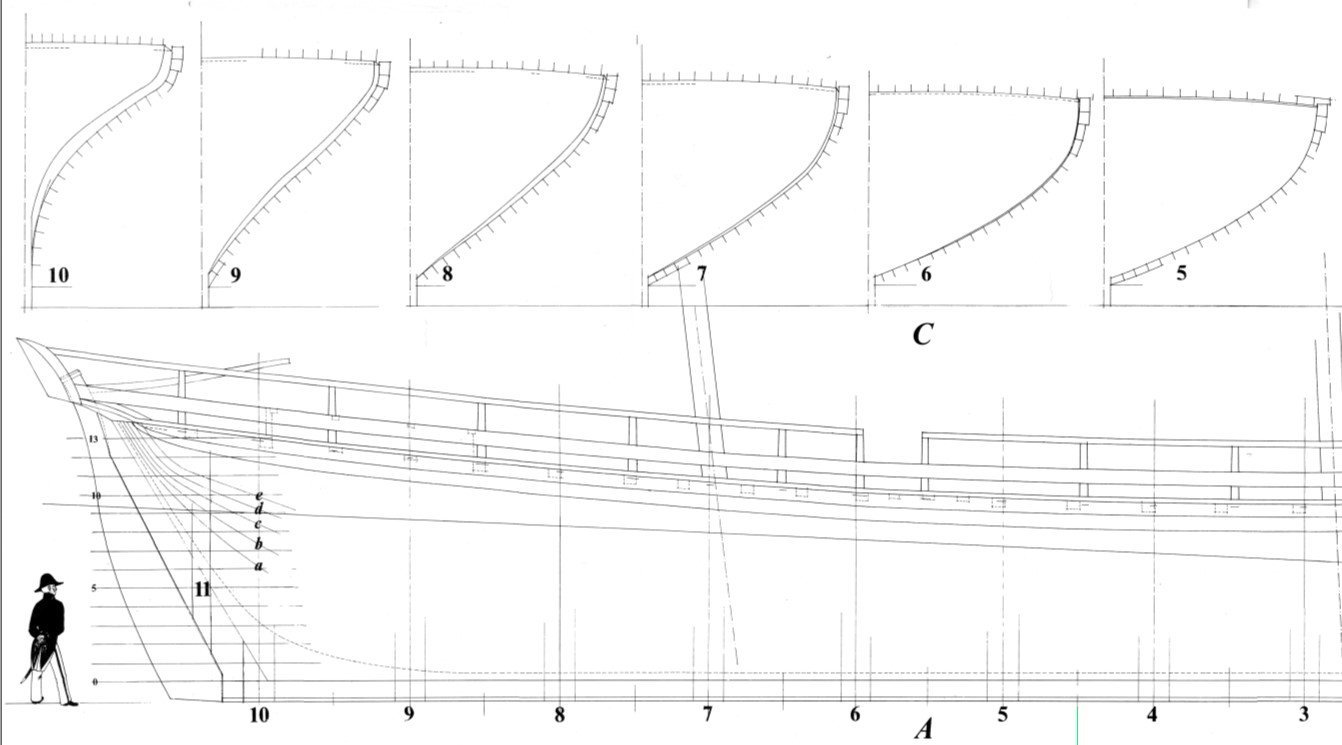
Thanks, @PietFriet and @druxey. I think I might have got by, had there been a body plan as well as diagonals. Unfortunately there are neither. The plans only show the half outlines of the fore & aft sections of the bulkheads. Could I prepare diagonals from these? One thought I had was to make outlines of hypothetical frames from a combination of two adjacent bulkheads, but that would result in fancy that I am not sure would work. Tony
-
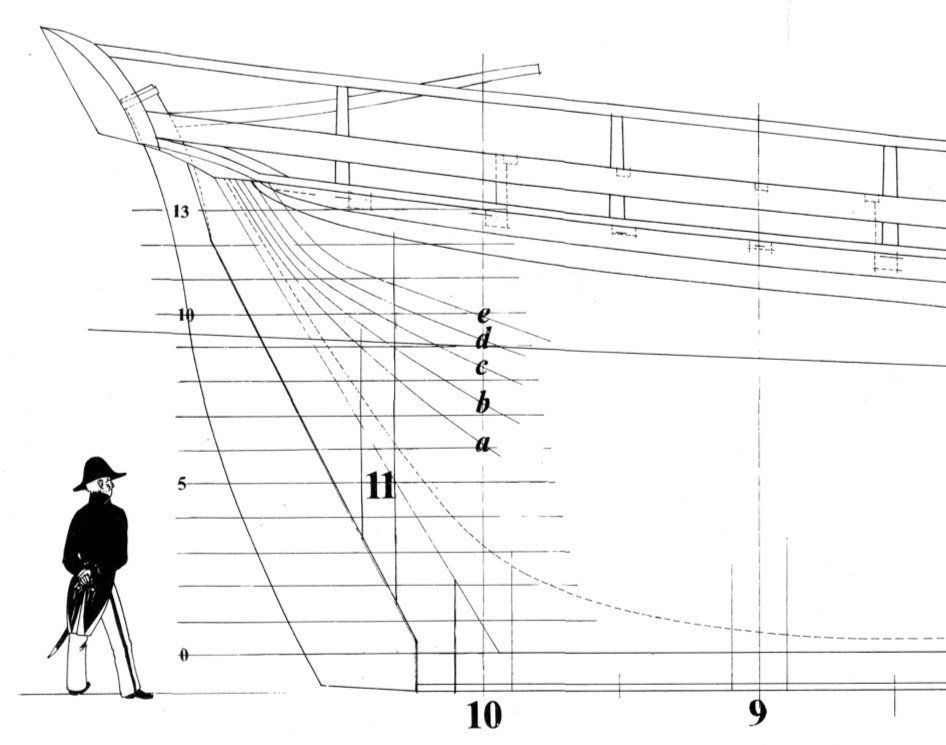
I have seen a few builds of La Jacinthe (including Frolich's) with full framing. However, I don't see how to develop the frames without sufficient buttock lines. I have a feeling I am missing something dead easy, but can't remember it or think of it. The attached drawing is part of the sheer plan drawn up by Boudriot. It shows a few buttock lines, which don't extend much further than bulkhead 10. There are of course buttock lines shown on the half-breadth plan, but these don't cover the full width of the hull. I'd be grateful for any hints or suggestions to put me back on the right path! Tony
-
I definitely appreciate the need for layering the ModelSpan. Thanks for laying out the steps. Very useful. Tony
-
Thanks very much for the several 'likes'. They are much appreciated. Thanks also for the generous comments, Mark and Edward. They make me feel it's not as bad as I thought! I try to keep reminding myself that this is a process of continuous learning and improvement, just as for everyone else, but I also sometimes feel frustrated when I know I'm not doing something as well as I'd like. Tony
-
Thanks for the history of the flags, wefalck. I should have been more suspicious, as I had had a look at the history and the flag and the emblem on the stern panel are different -- the emblem on the rear looking the more accurate. What do you think? The flag and pennant are, however, as in the monograph. Maybe an equal oversight by Franco Fissore. Tony
-
Gosh, John, that's very nice of you. It's also exactly how I would describe my own view of the build. Well, maybe not quite stunning. Tony
-
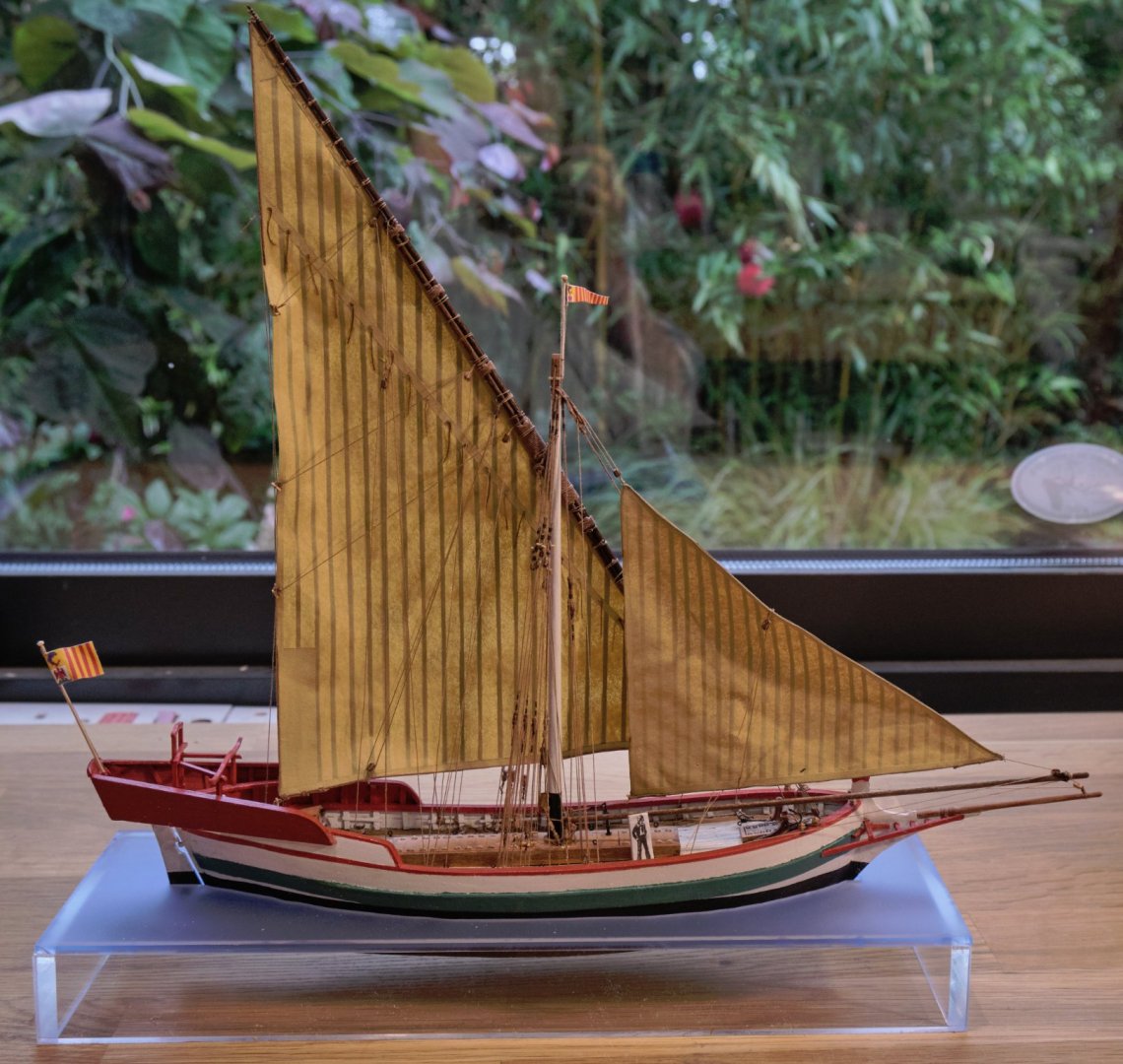
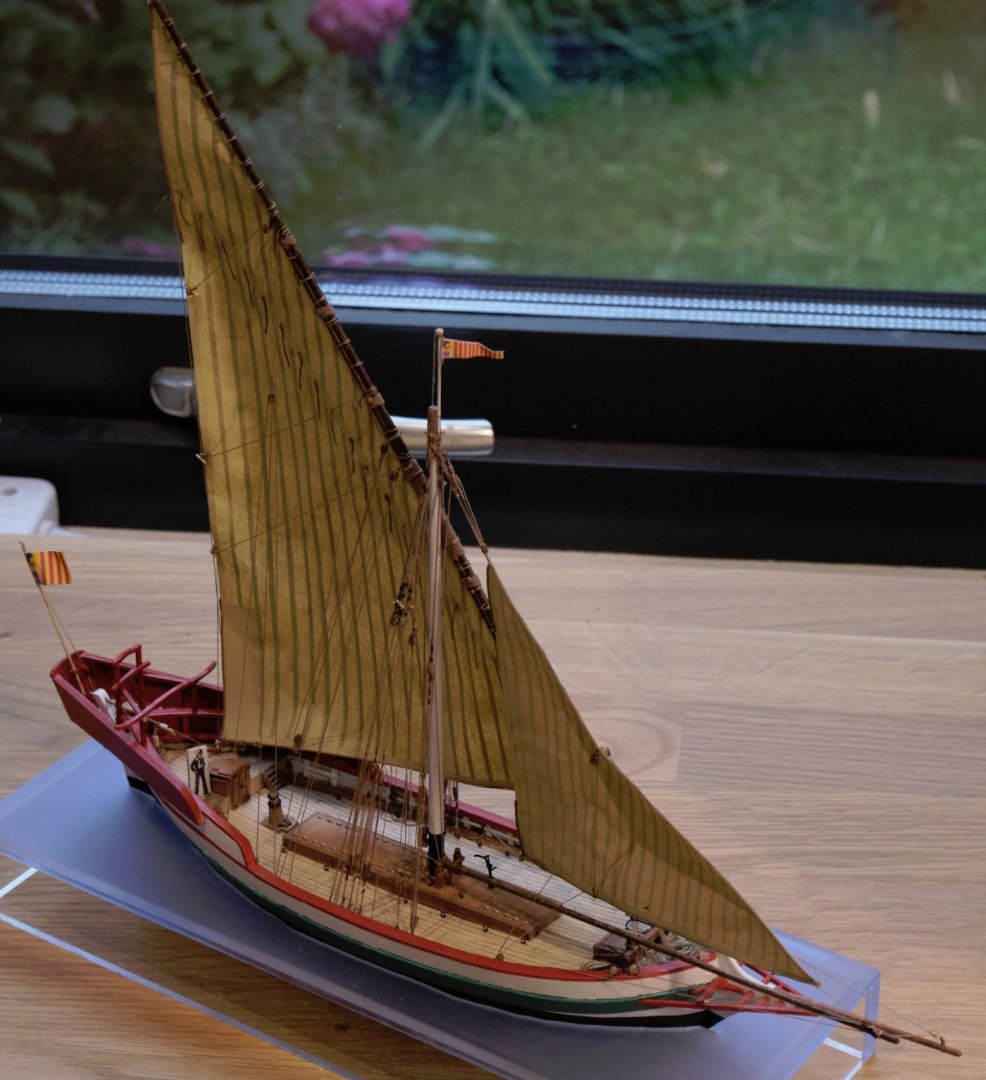
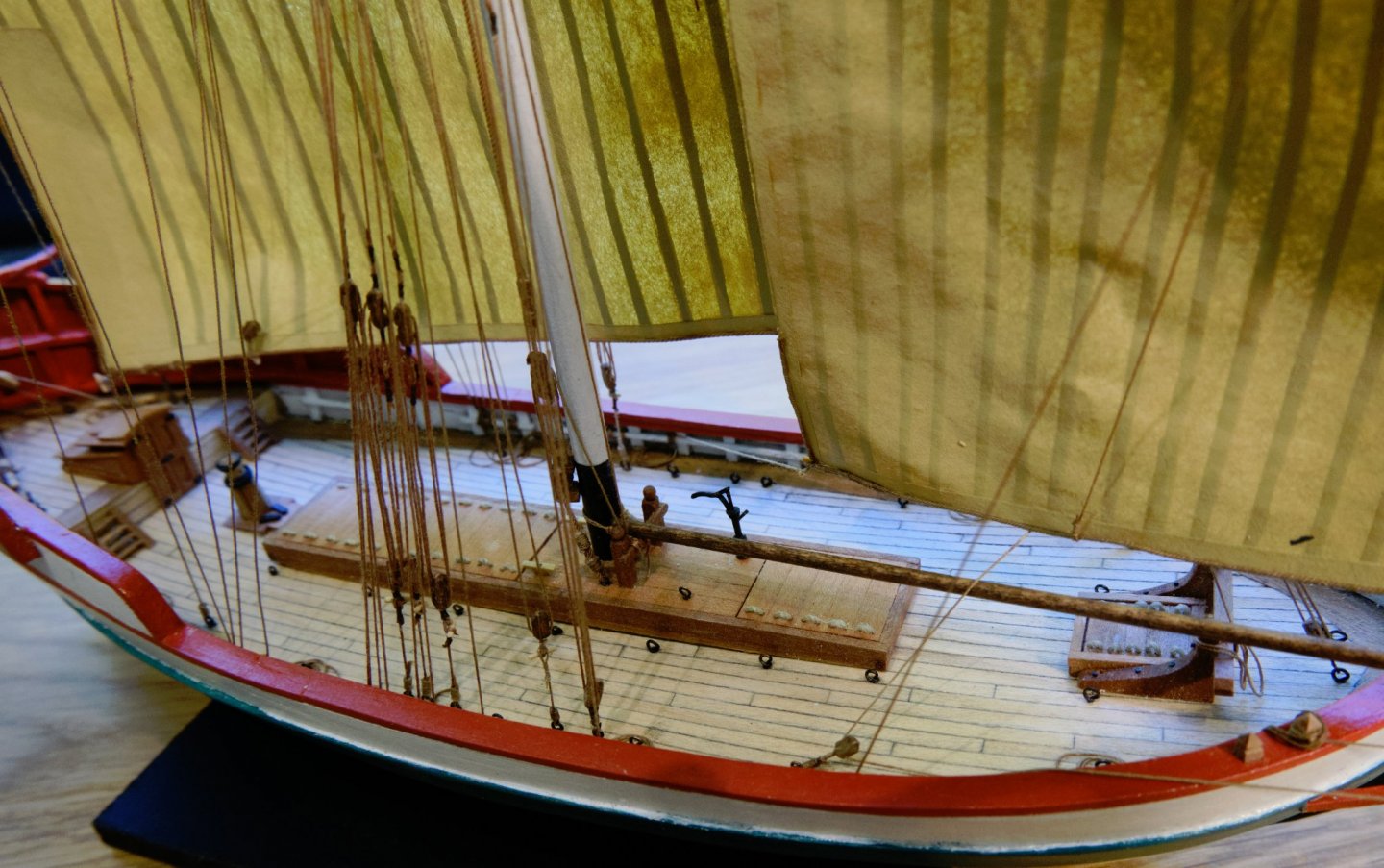
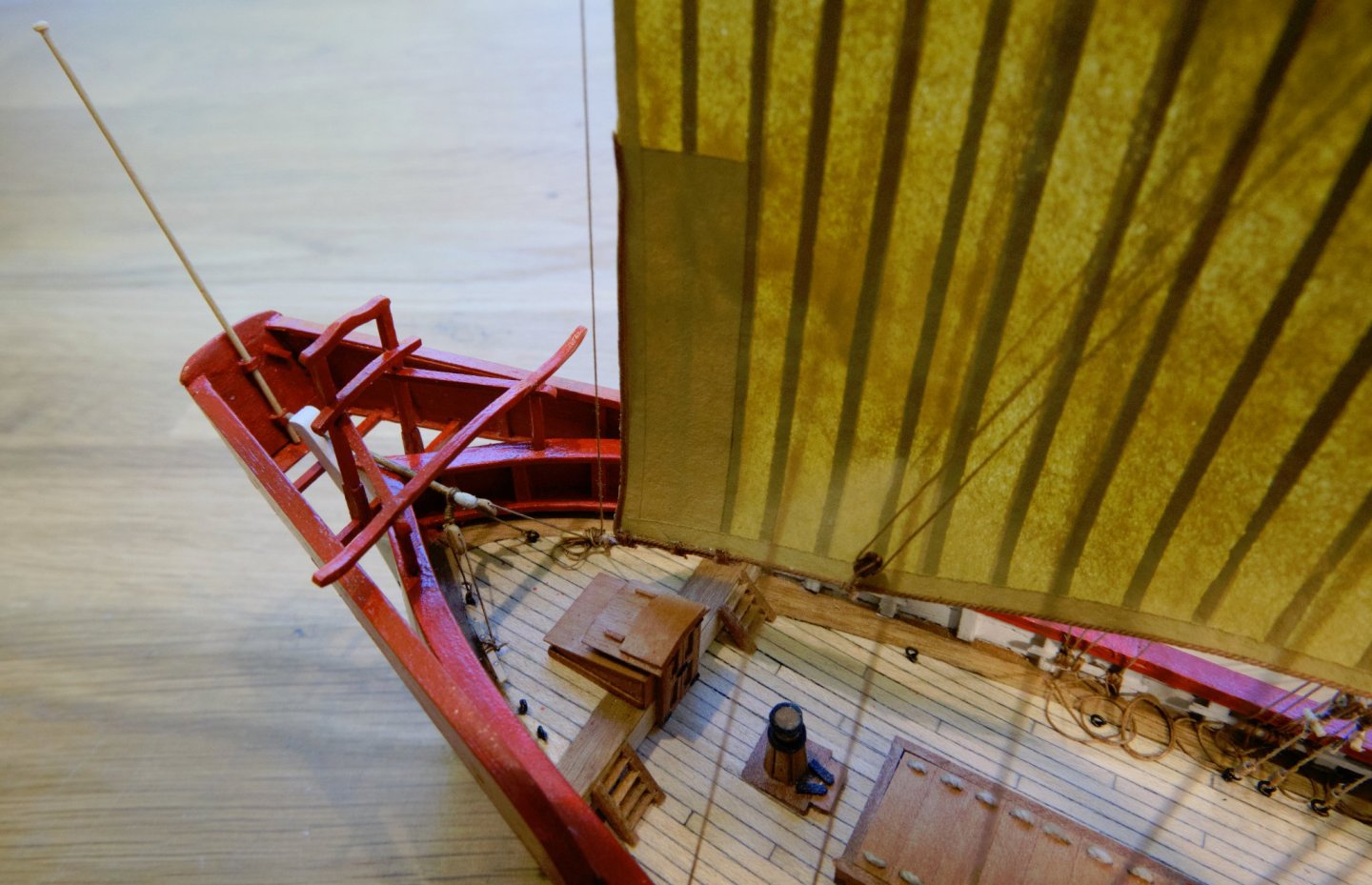
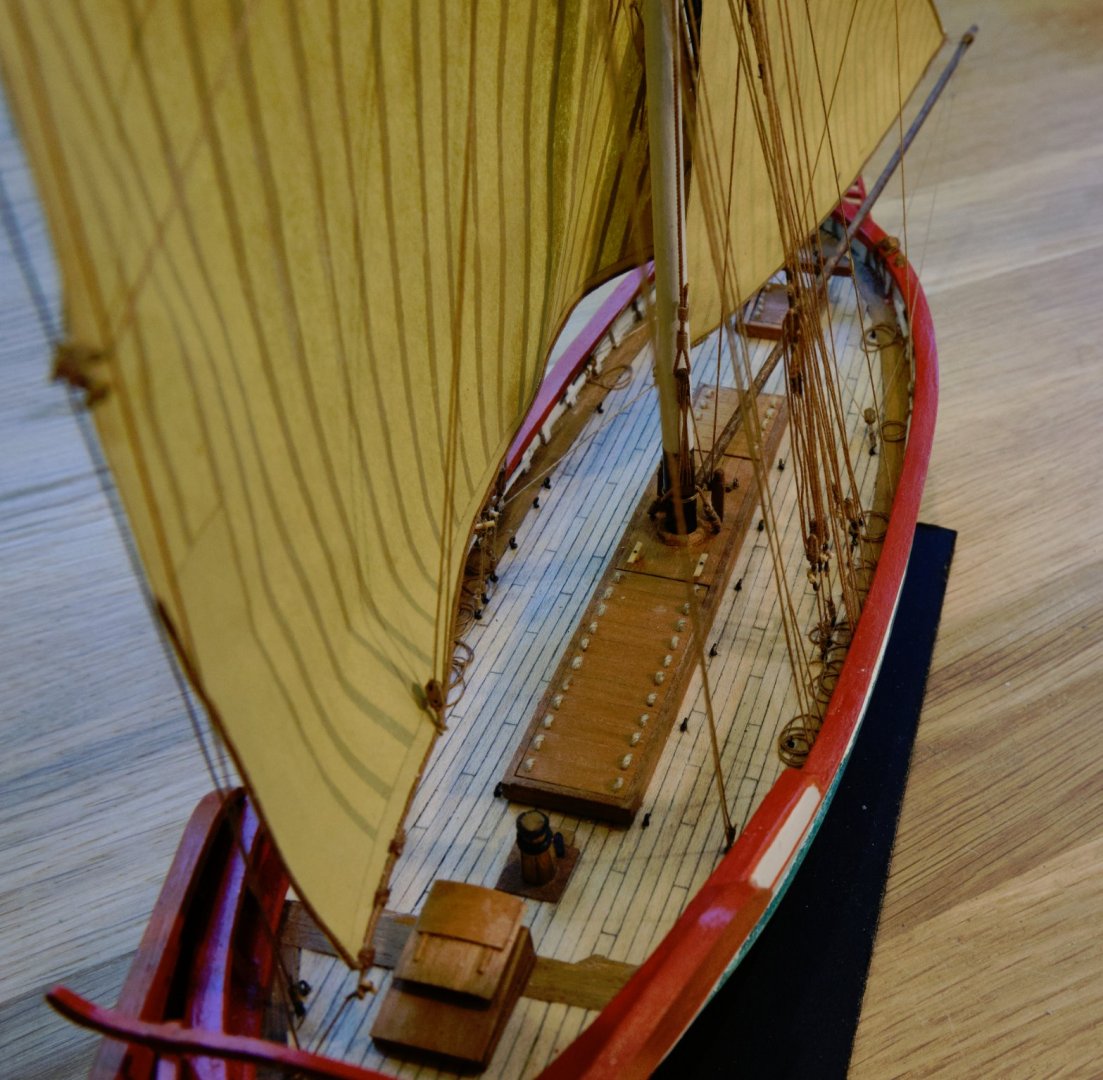
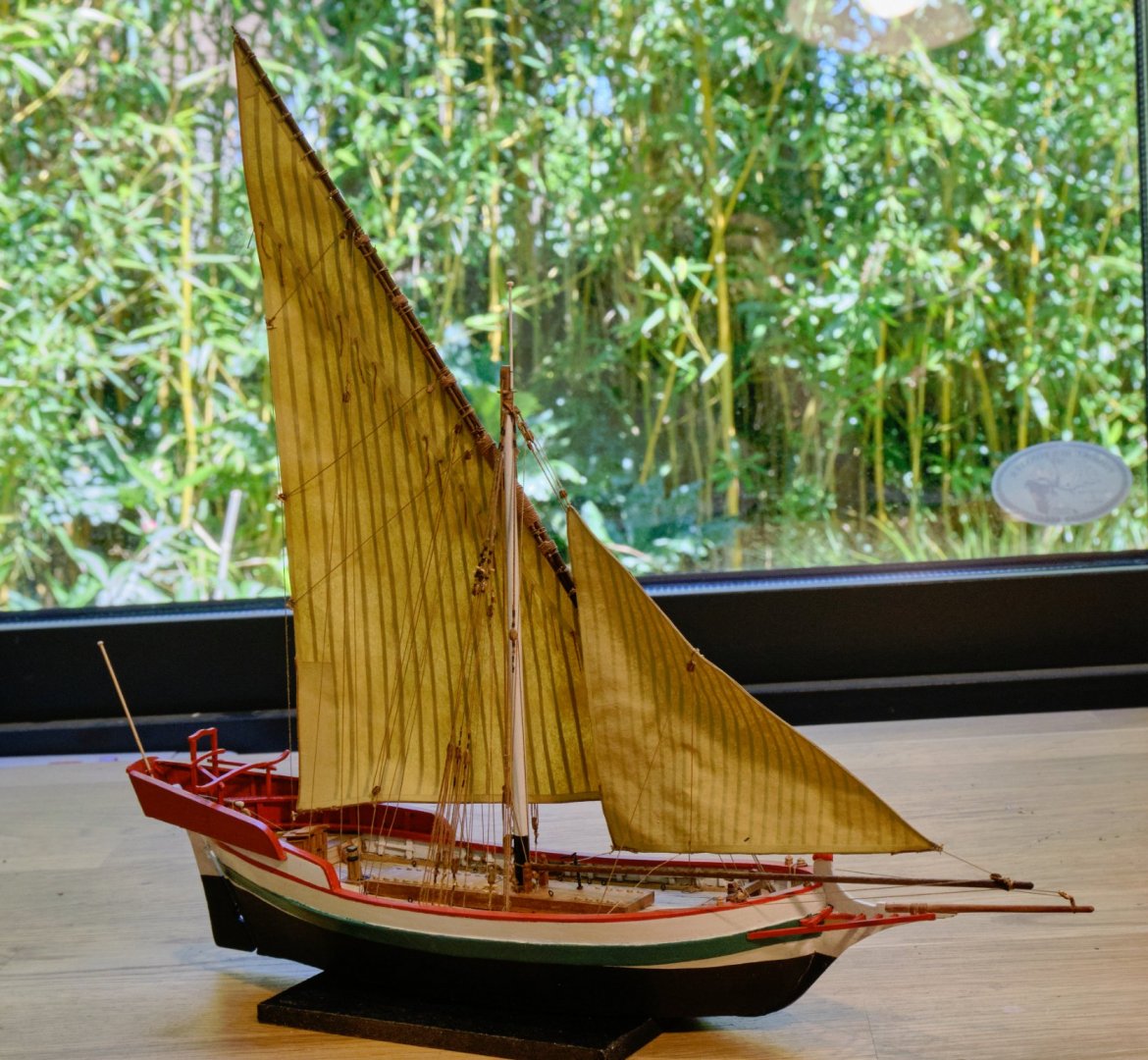
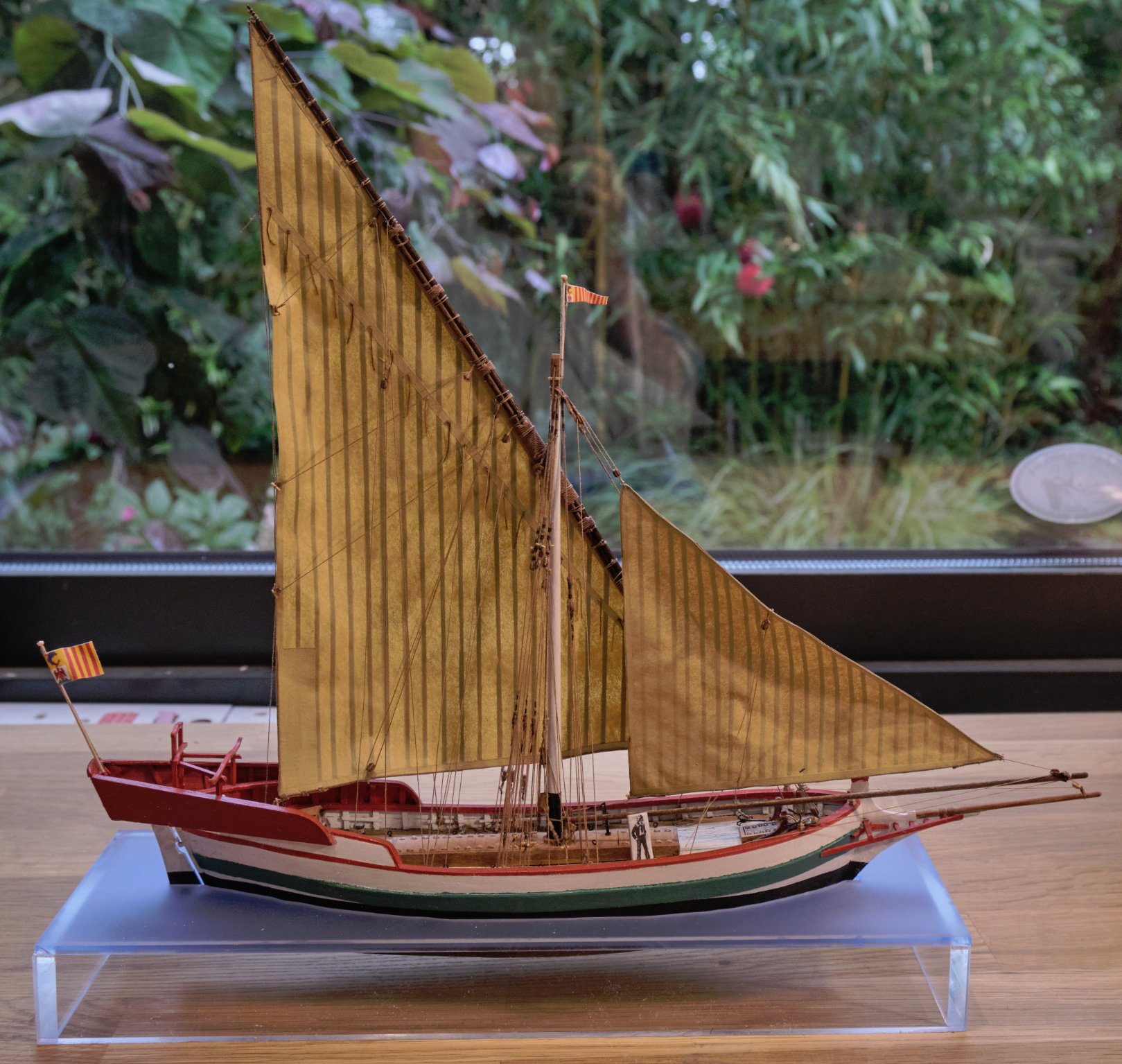
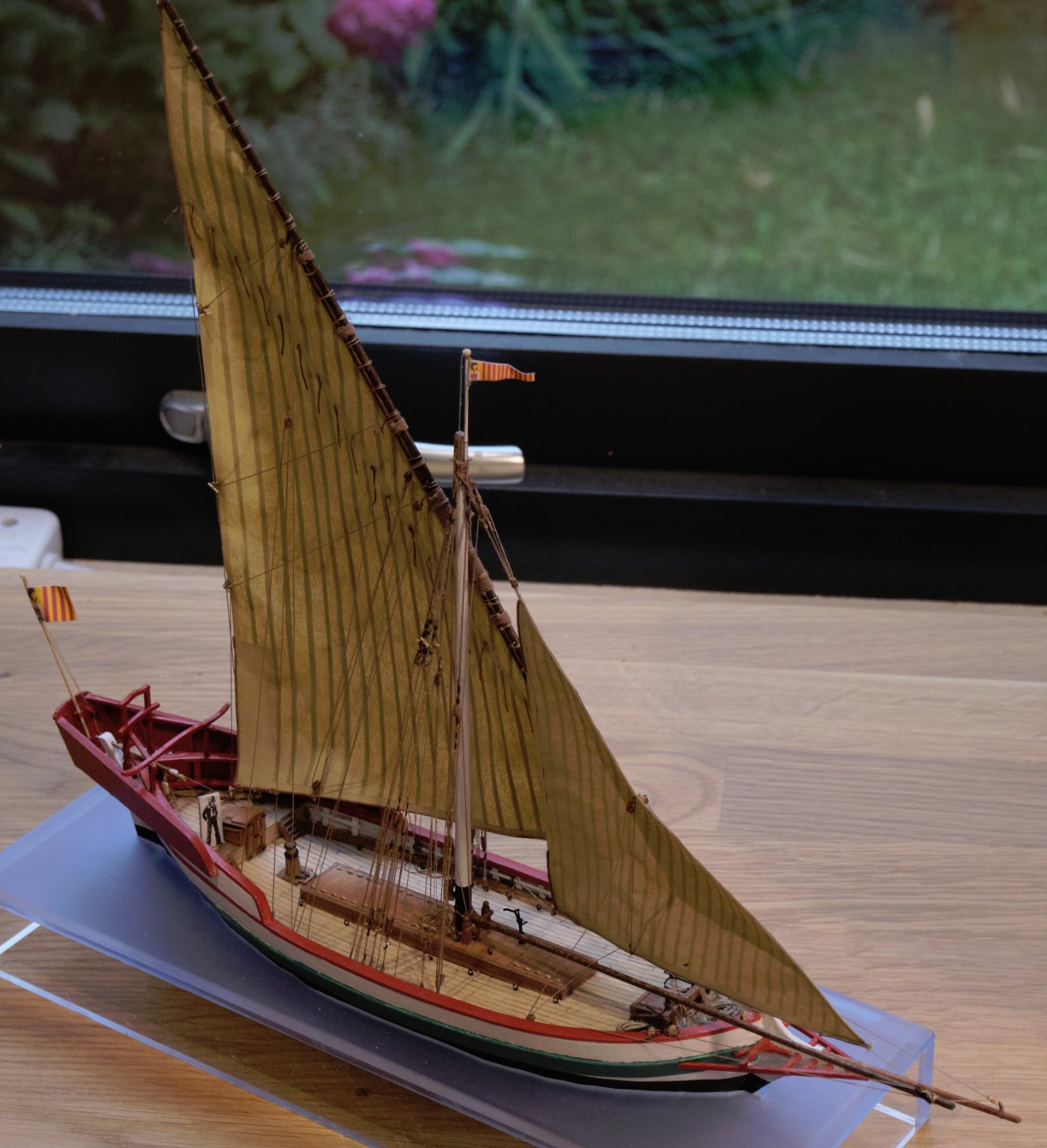
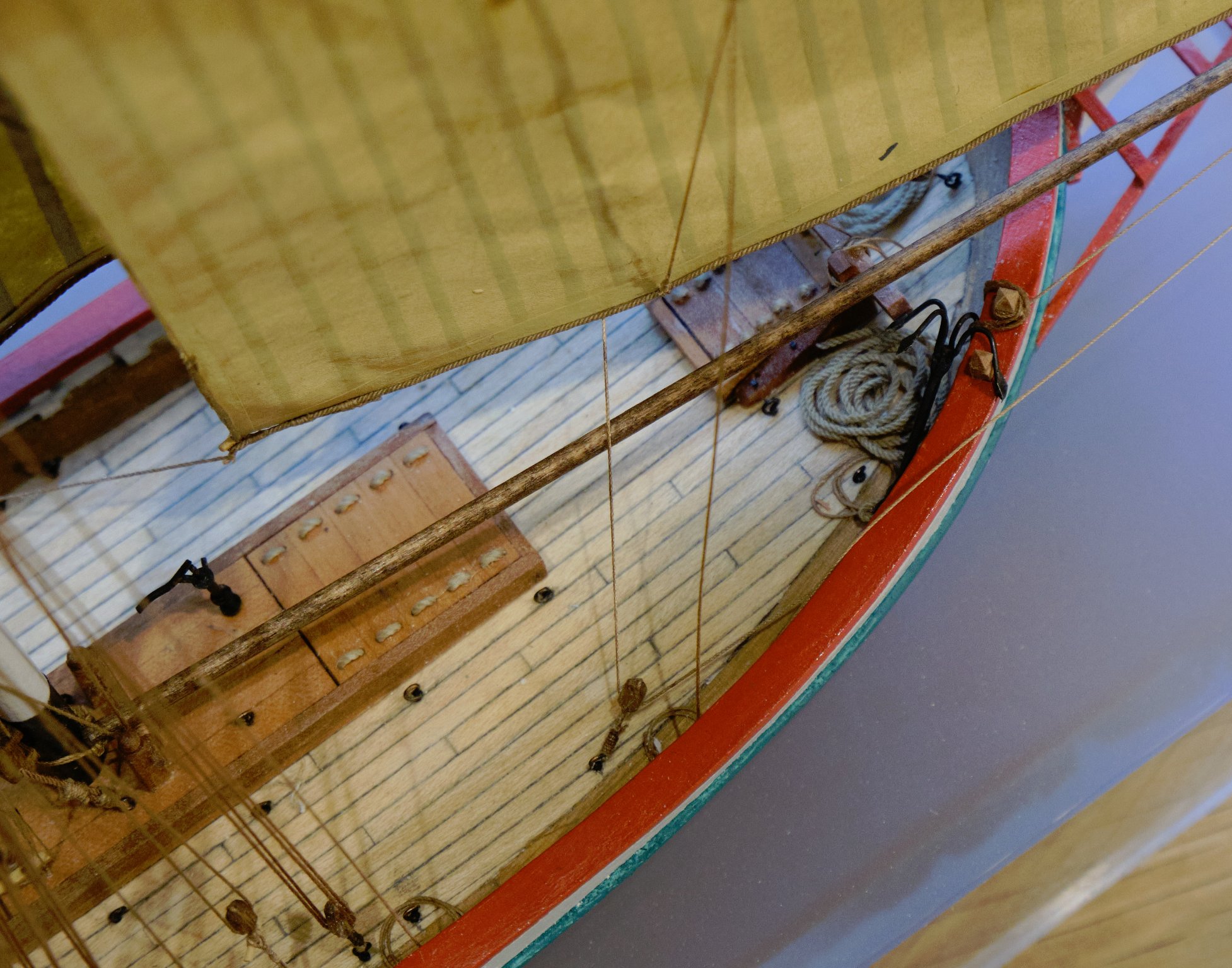
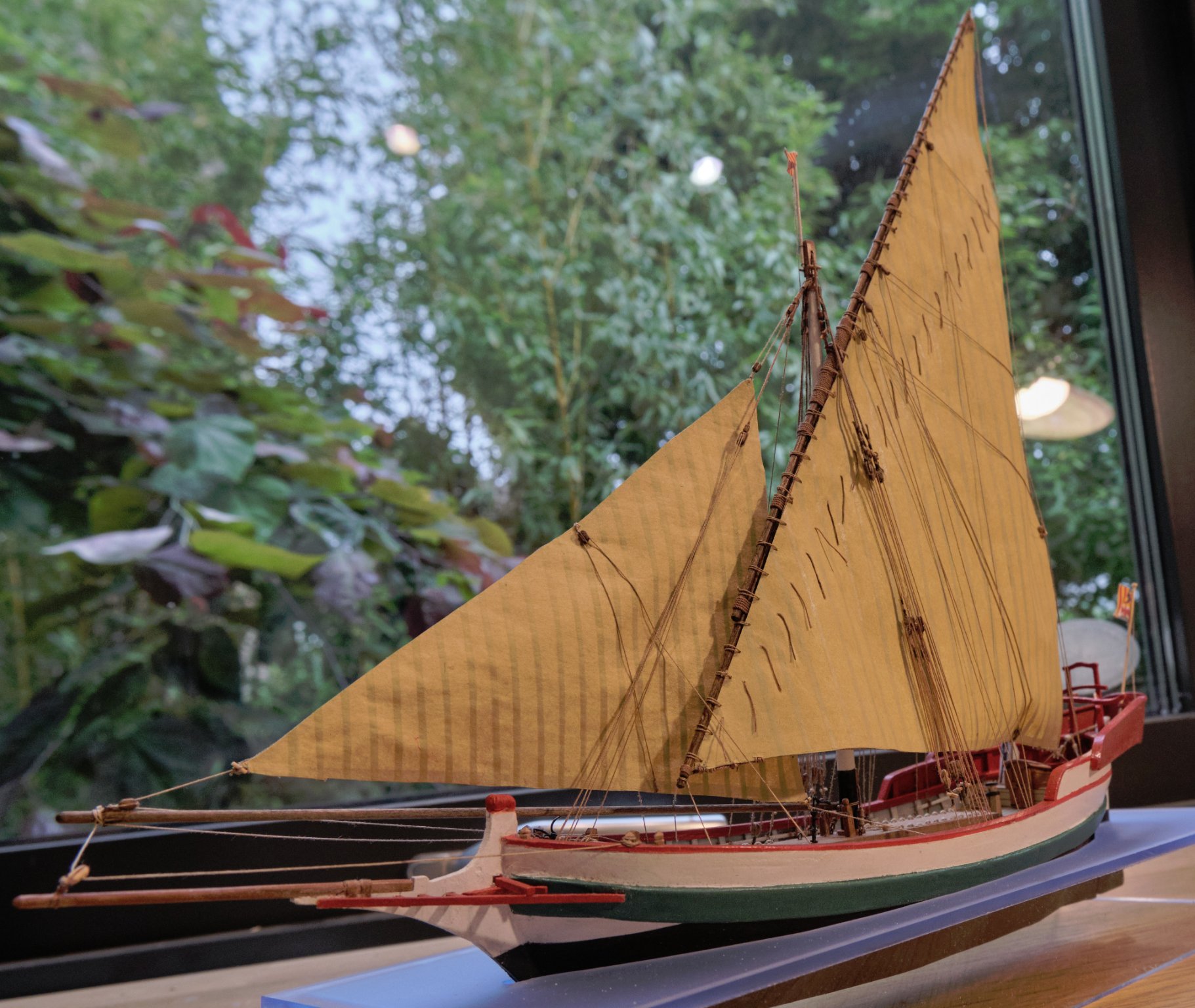
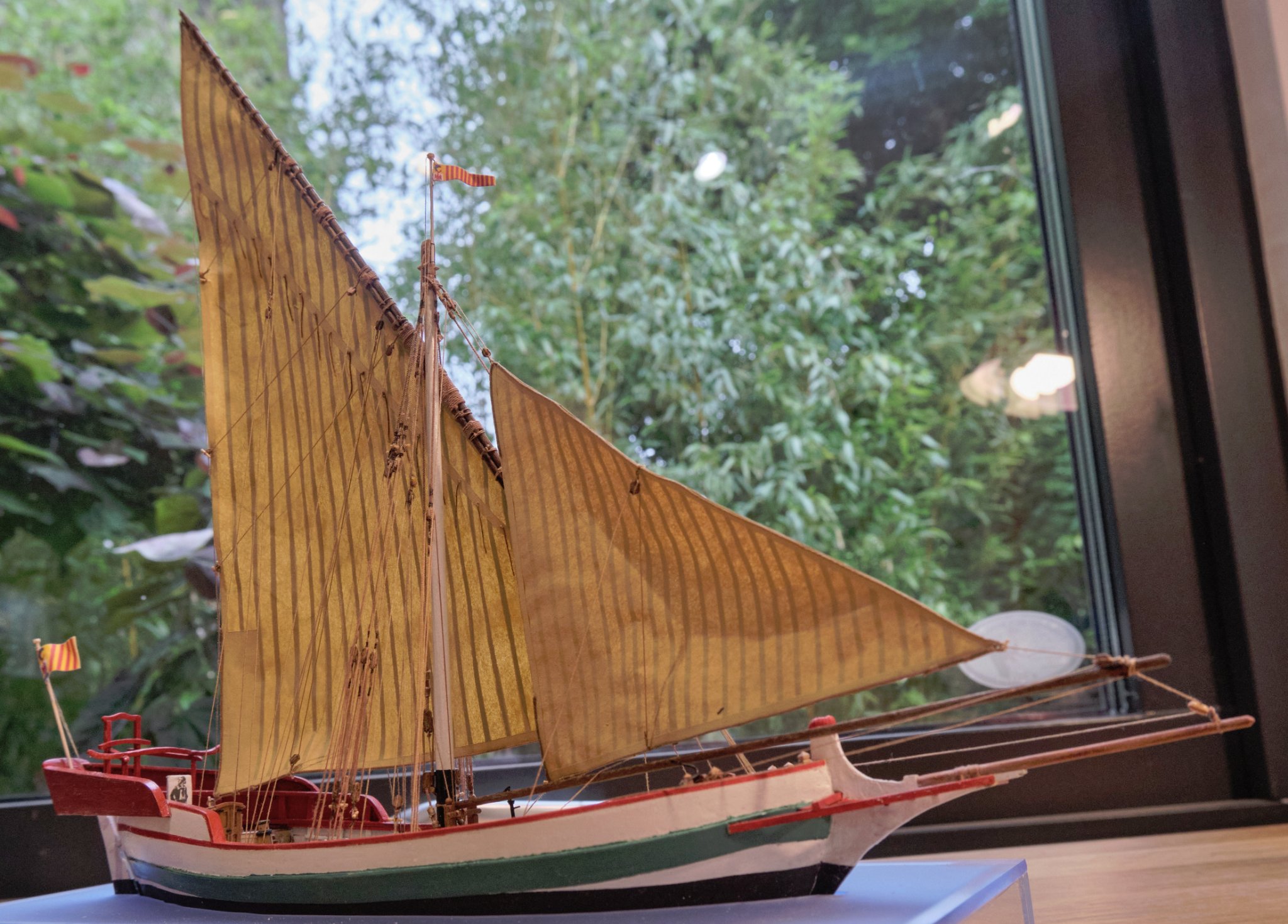
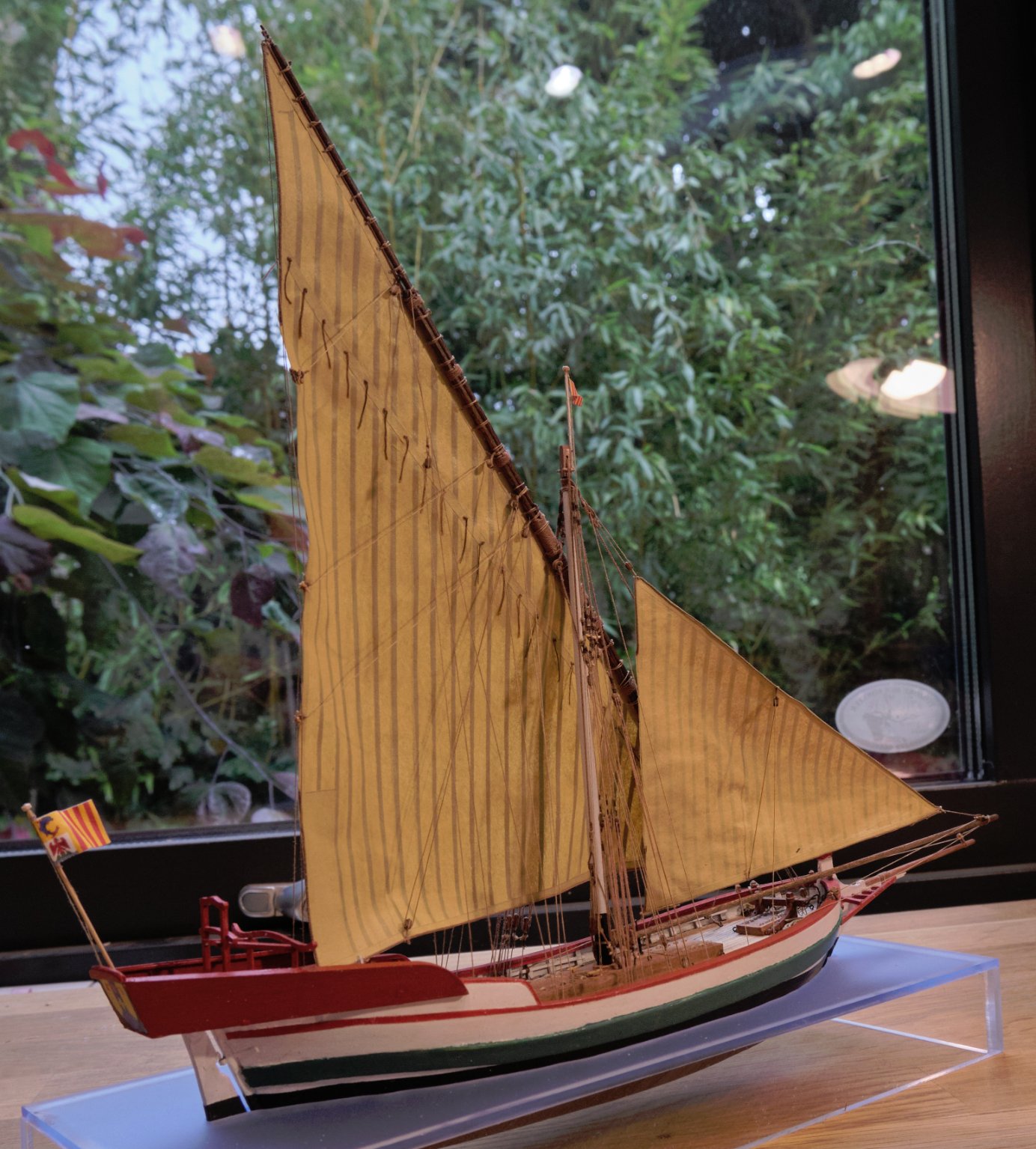
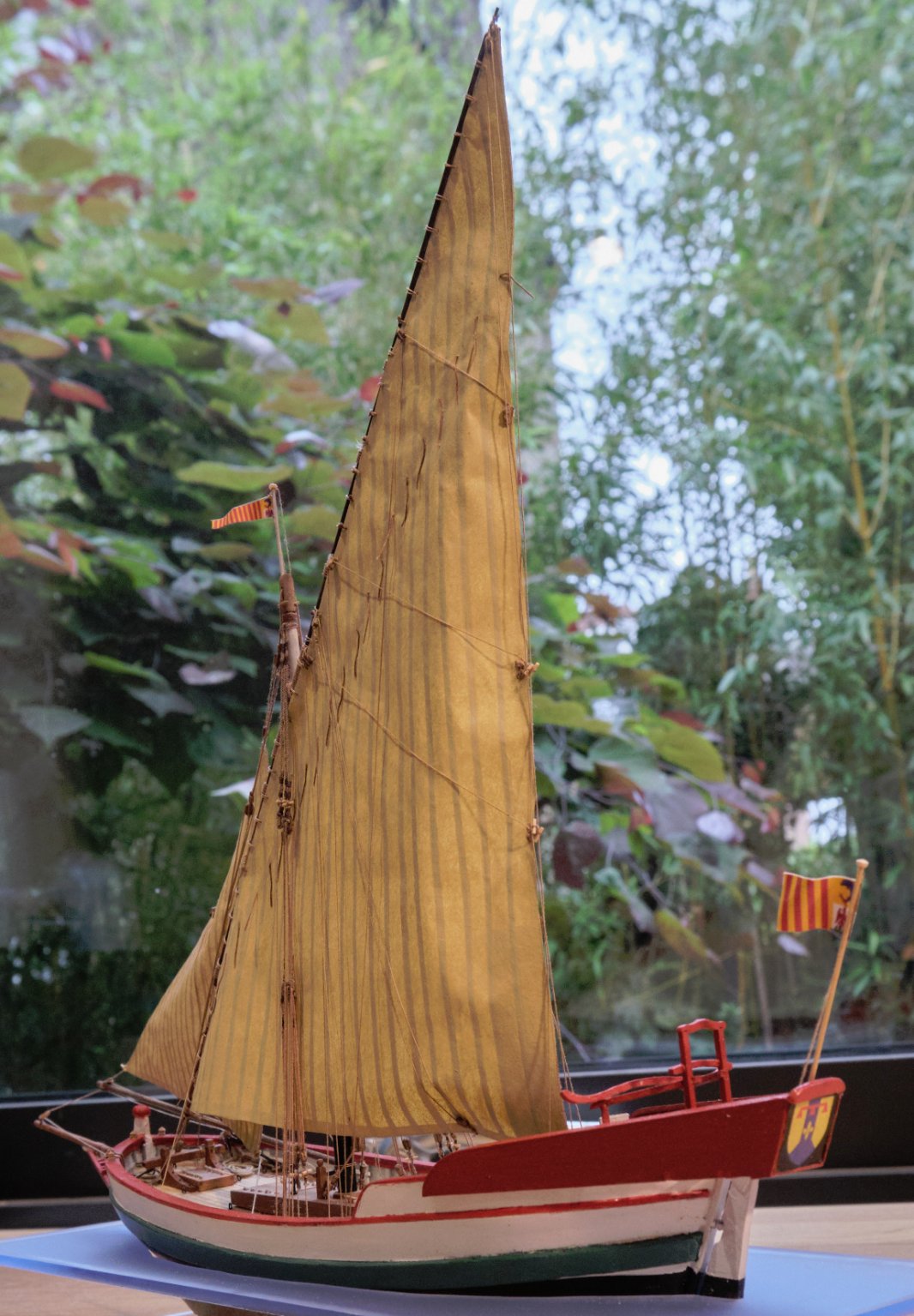
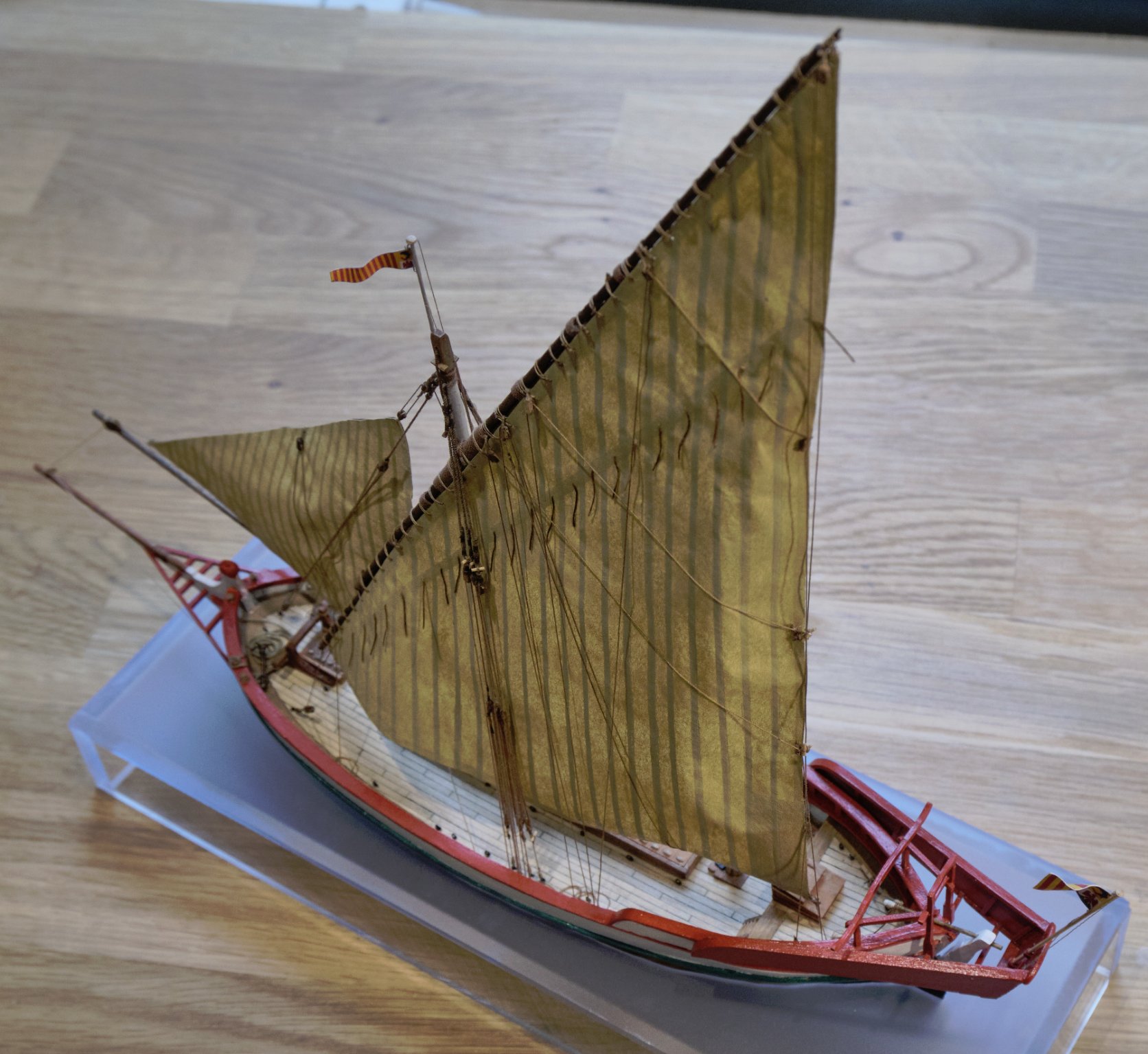
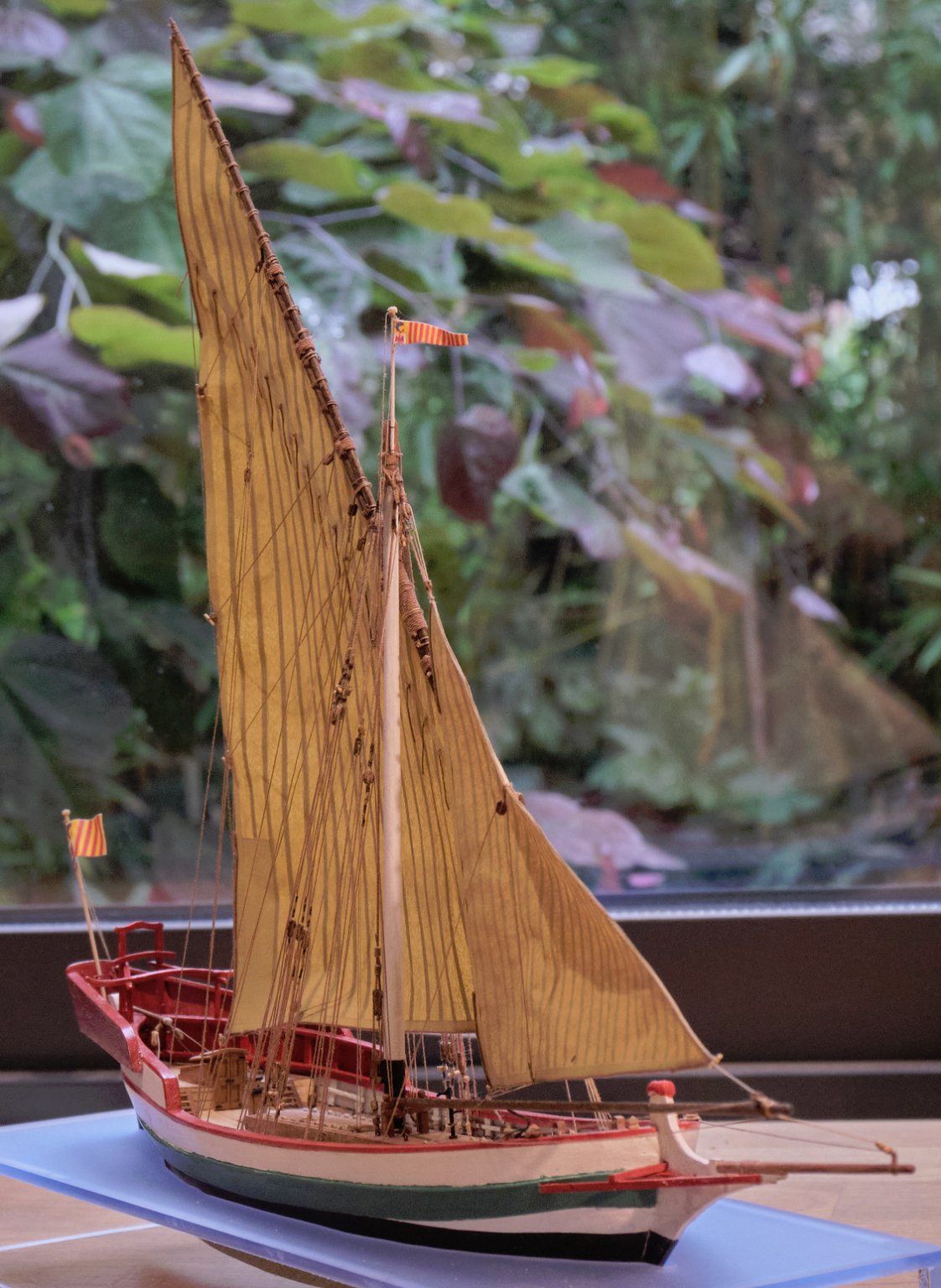
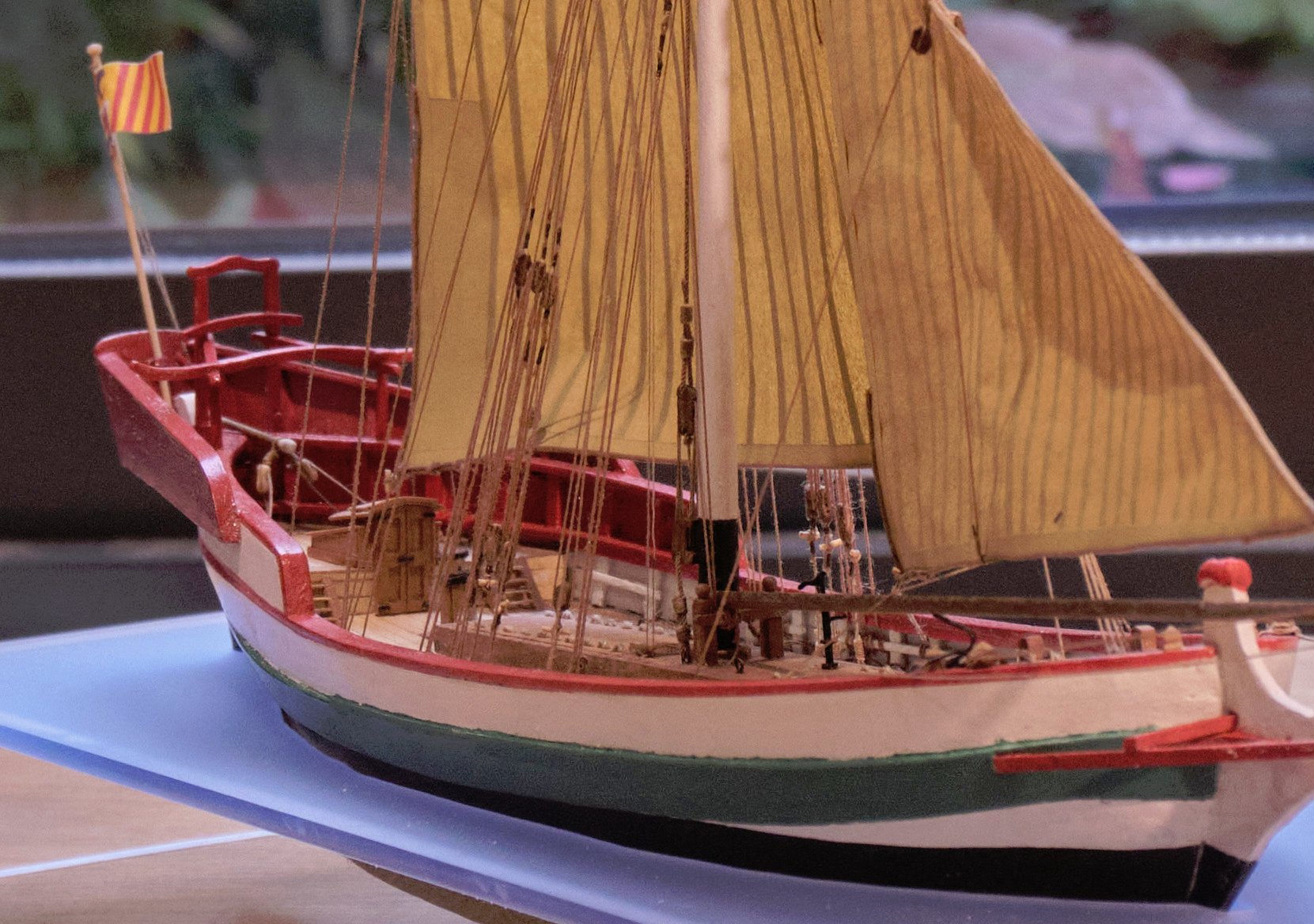
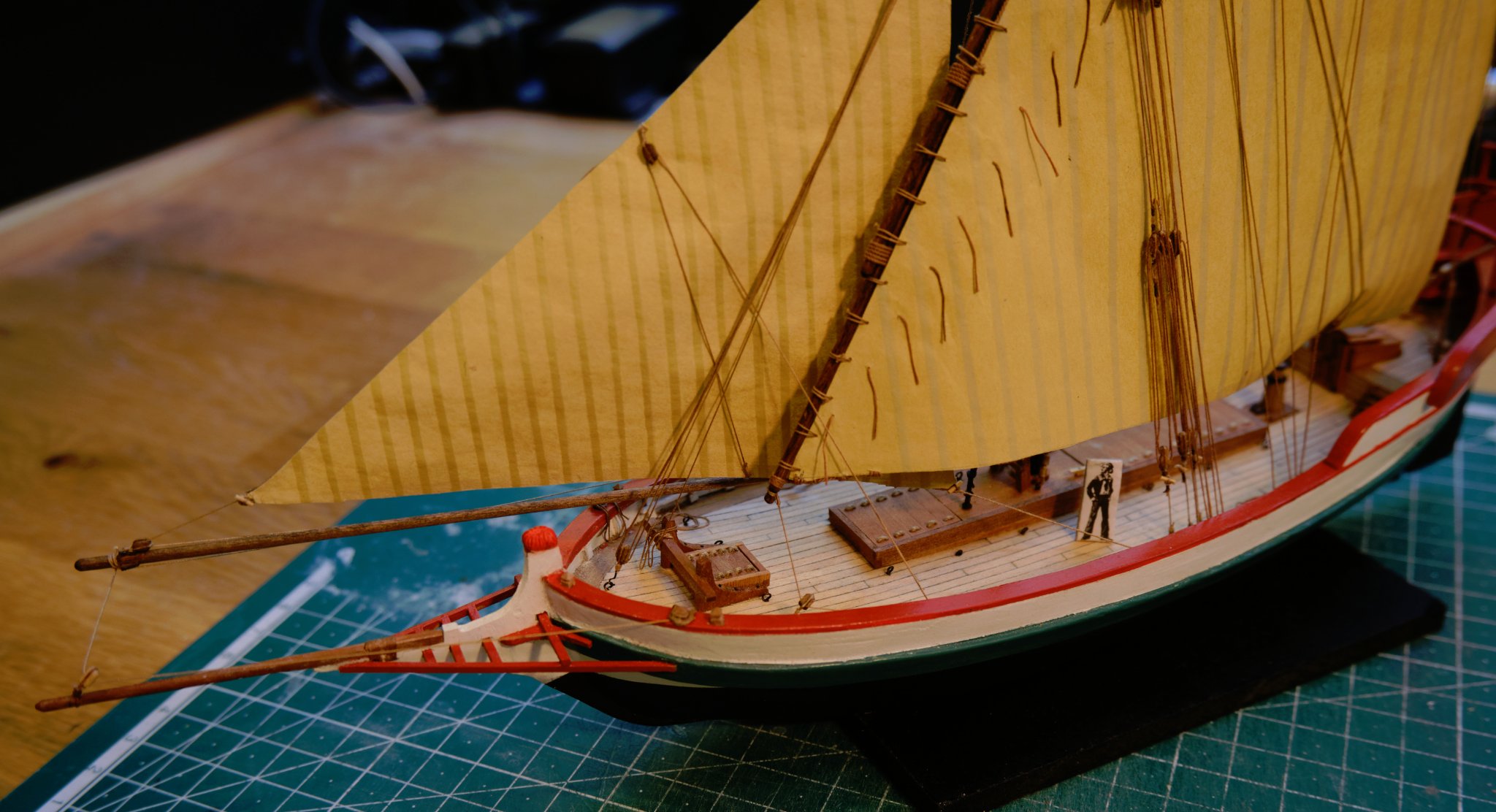
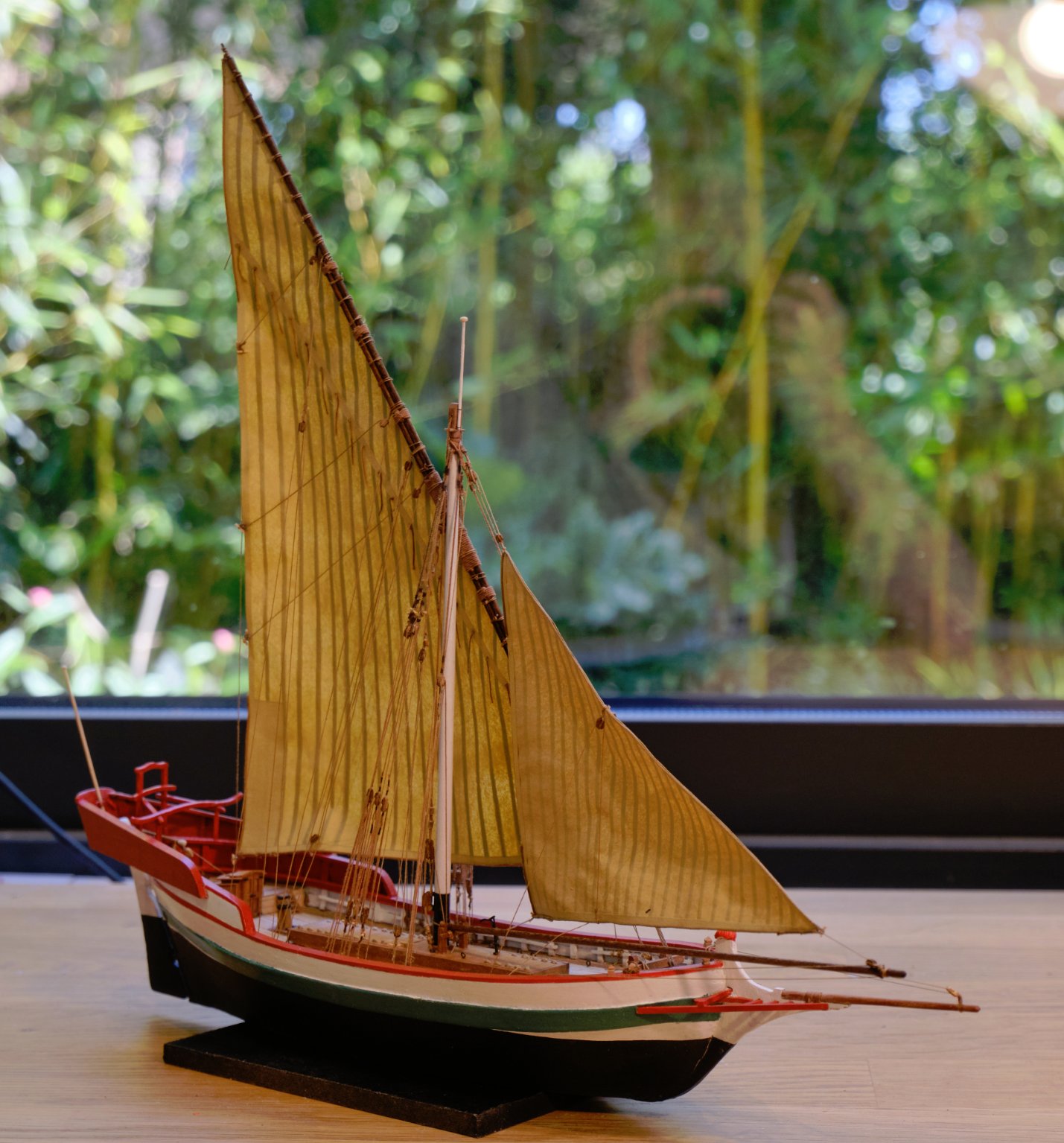
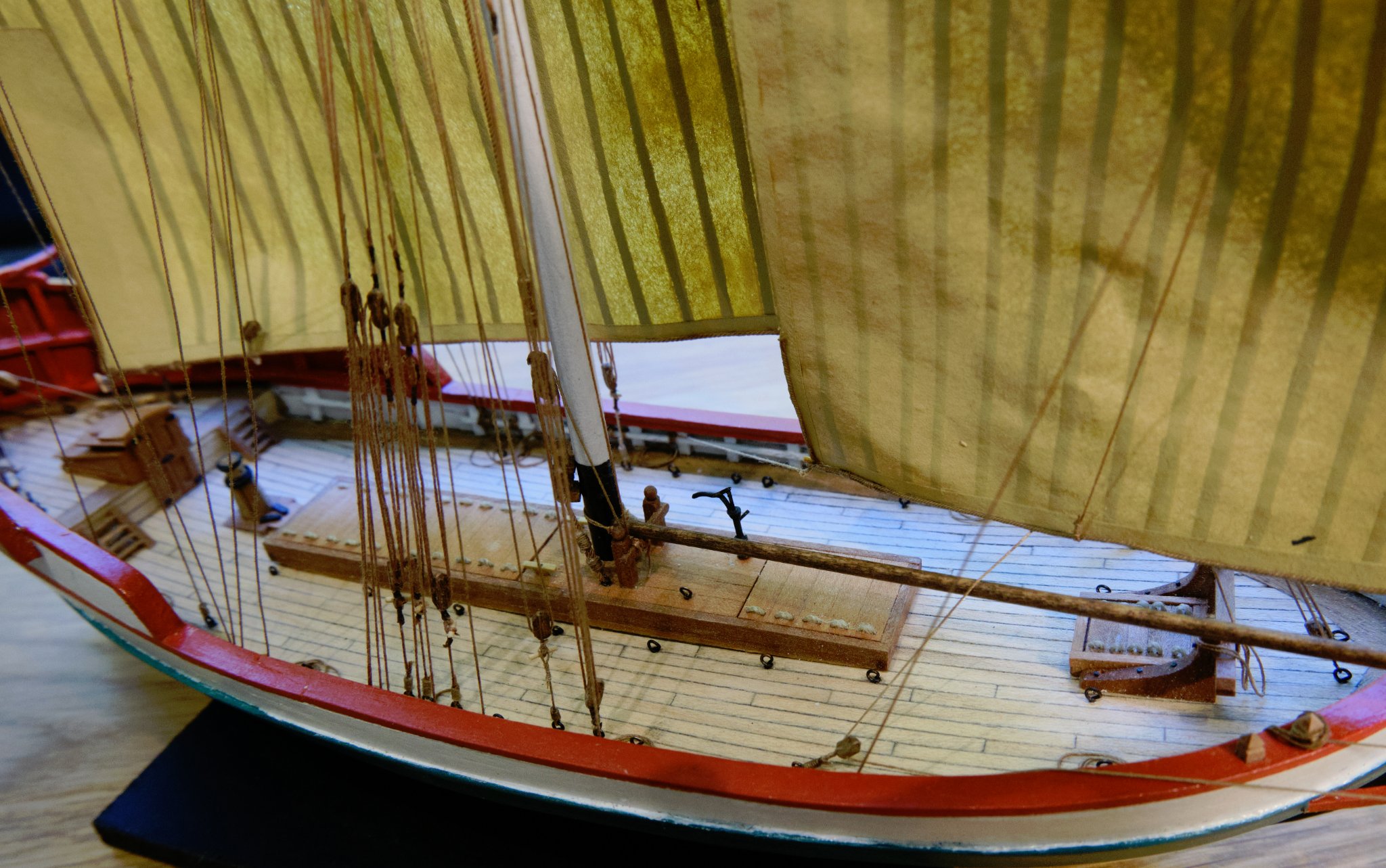
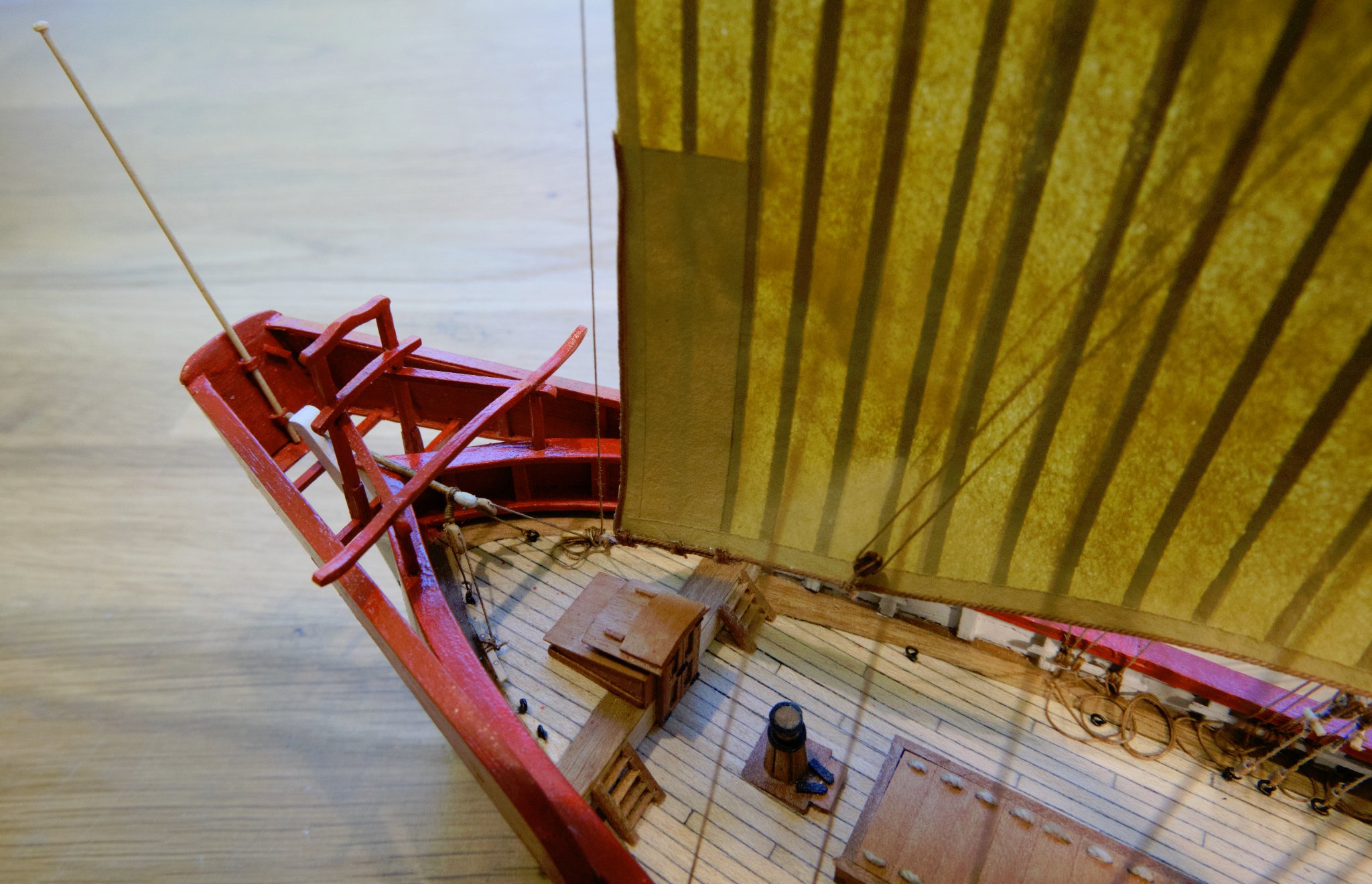
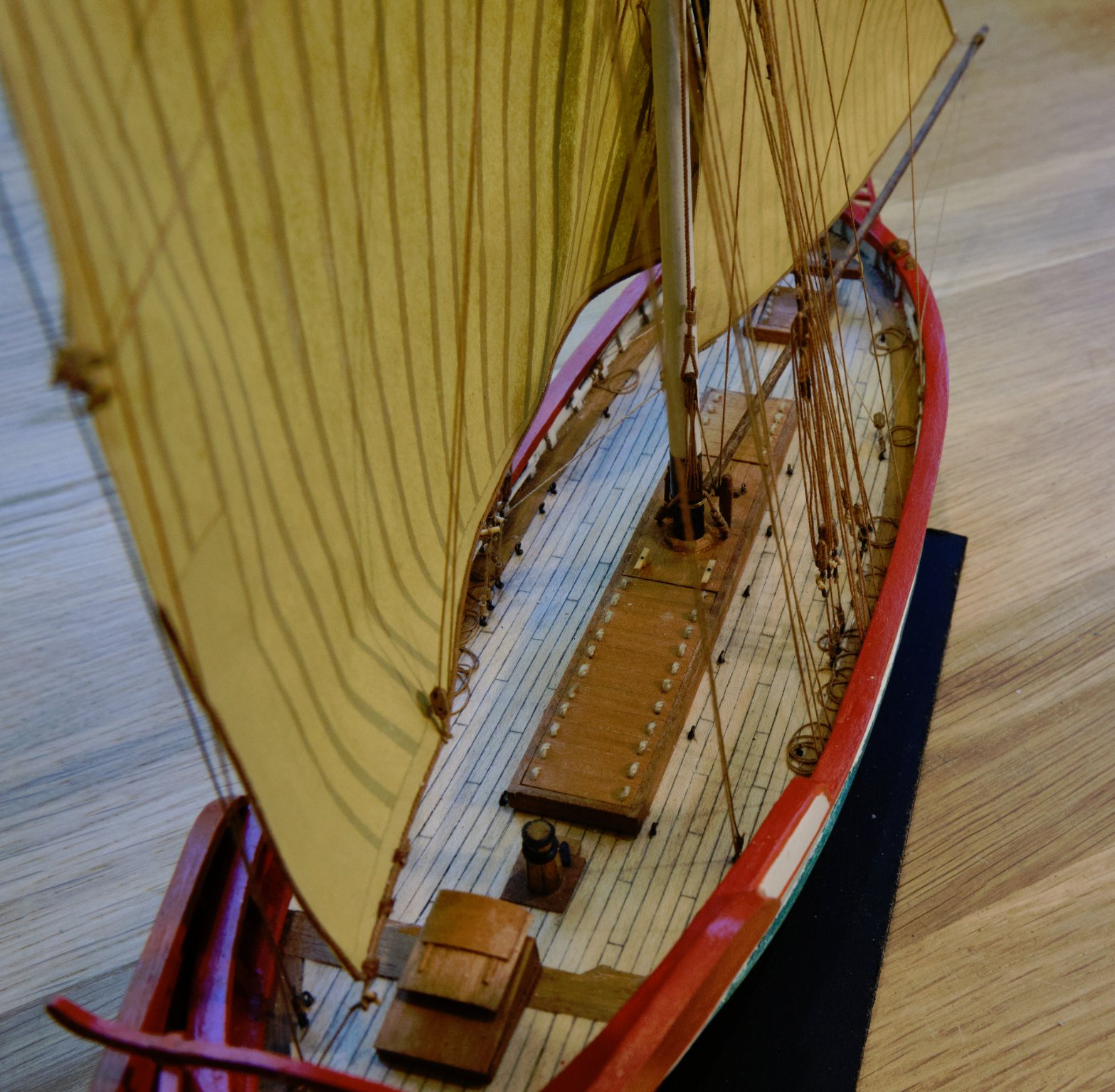
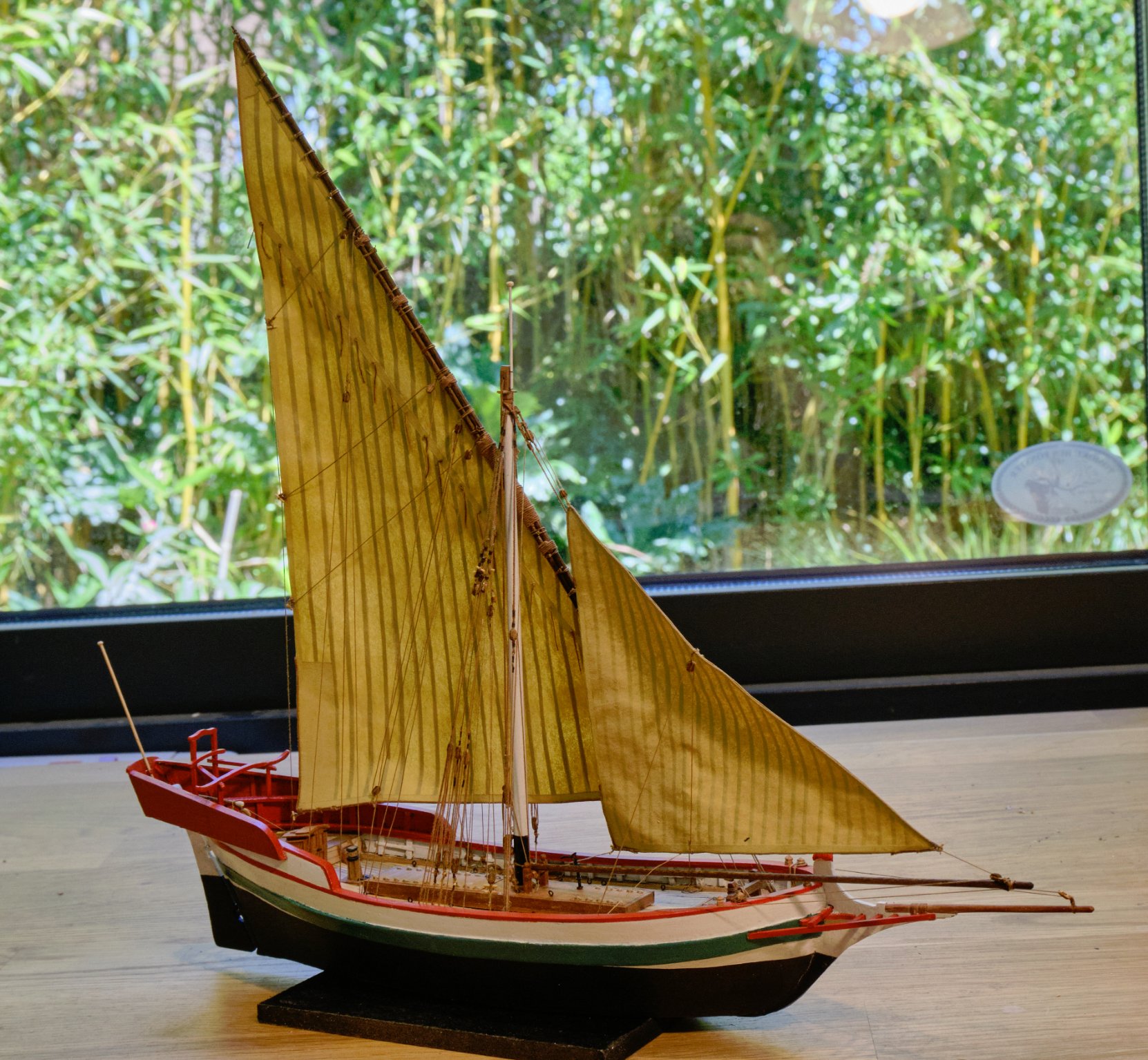
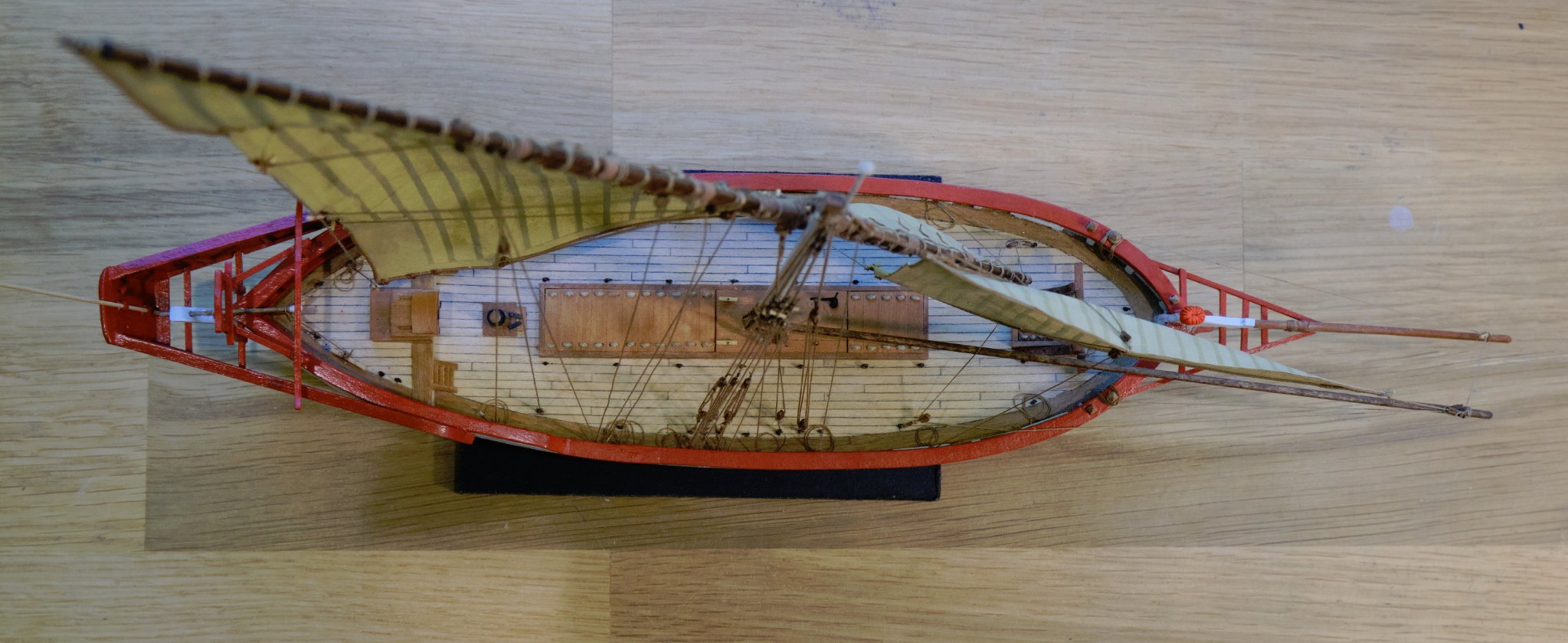
I decided to have another 'waterline' model in a perspex/acrylic stand. The top is acrylic blue, the sides plain so as to see underneath. It's to make me think of a clear blue Mediterranean sea. I've now completed this model. As with previous models this was more of a learning exercise to look at (1) what it is to work at a smaller scale (not quite the 1:196 some modelers achieve and certainly not nearly as good as those who have worked at 1:96); (2) seeing if I can improve working with card; (3) practising with an airbrush; (4) continuing to try to improve working with a lathe and making blocks. After completing it, I can see I have a long way to go before I can be satisfactory in any of these areas, although there is some improvement. (1) My main concern is especially with the sails. I can't seem to make them retain their shape in the wind even though I used dilute PVA to stiffen the paper and a hair dryer. Part of the problem was maintaining the tension in the ropes without a real wind to keep the sails in position (perhaps wire is the answer). Then there is the fact that the left side of the sails is left bare as the bolt rope is fixed to the right. I shall try working with cotton voile next time and sewing on the bolt rope. (2) I don't think I'll ever try mixing card with wood again, and will stick with just wood and metal. (3) Although I used a satin varnish to mix with linseed oil and white spirit as a finish, it remains too glarey under artificial light. (4) I found that by making the ropes to the correct diameter, the appearance seemed very meager. I now understand why the advice is sometimes to go with appearance rather than correct dimensions. However, that brings with it the need to make blocks bigger than they should be. Also, using cotton thread without waxing it or singeing the fluff, the ropes have a very ragged appearance. (5) The paintwork. Ouch! The poor waterline and edging of the card wales. I don't want to repeat that! (6) Finally, it is clear I need to spend more time sanding the wooden parts. All the same, I do like the general appearance of this allège, and am pleased to have done it. It would make a great model in more experienced and better hands. It was also a kind of review of the Ancre monograph. In summary, I'd say that in comparison with other Ancre monographs (1) the explanations and translations were inadequate; (2) the plans needed very careful checking as there were plenty of inconsistencies and some mistakes (so far the plans I have worked with from Ancre or studied have been of a much higher quality); (3) very poor quality of the photos, which often were also poorly taken from the point of view of knowing what was shown. However, the rigging diagrams and notes were very good. Understanding this monograph is certainly helped by looking at the detailed photos on Fissore's own site. You're welcome to have a look at the overall pictures that follow. If you need detail, they'll enlarge considerably. That's it until next time! I wonder what it will be? Tony
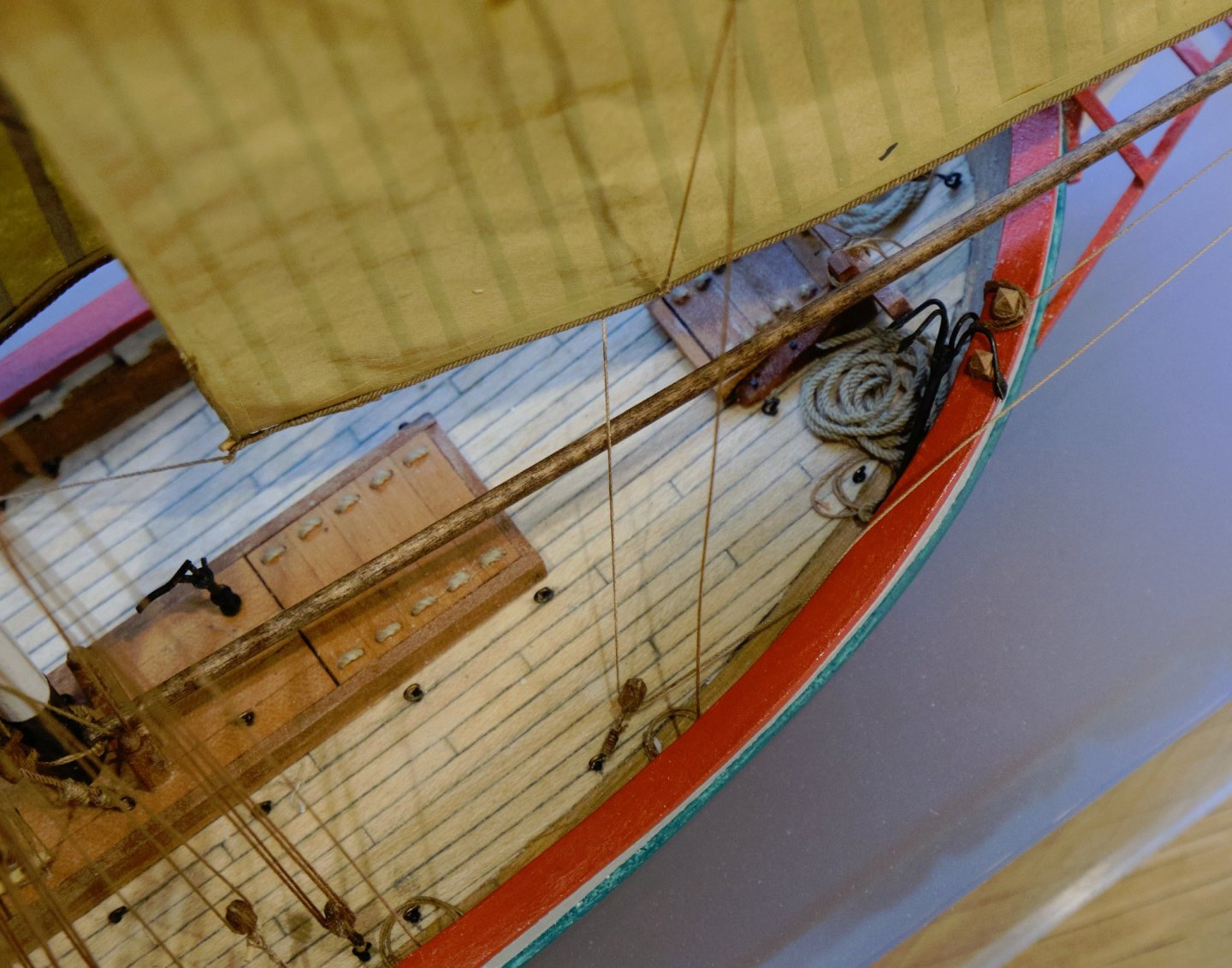
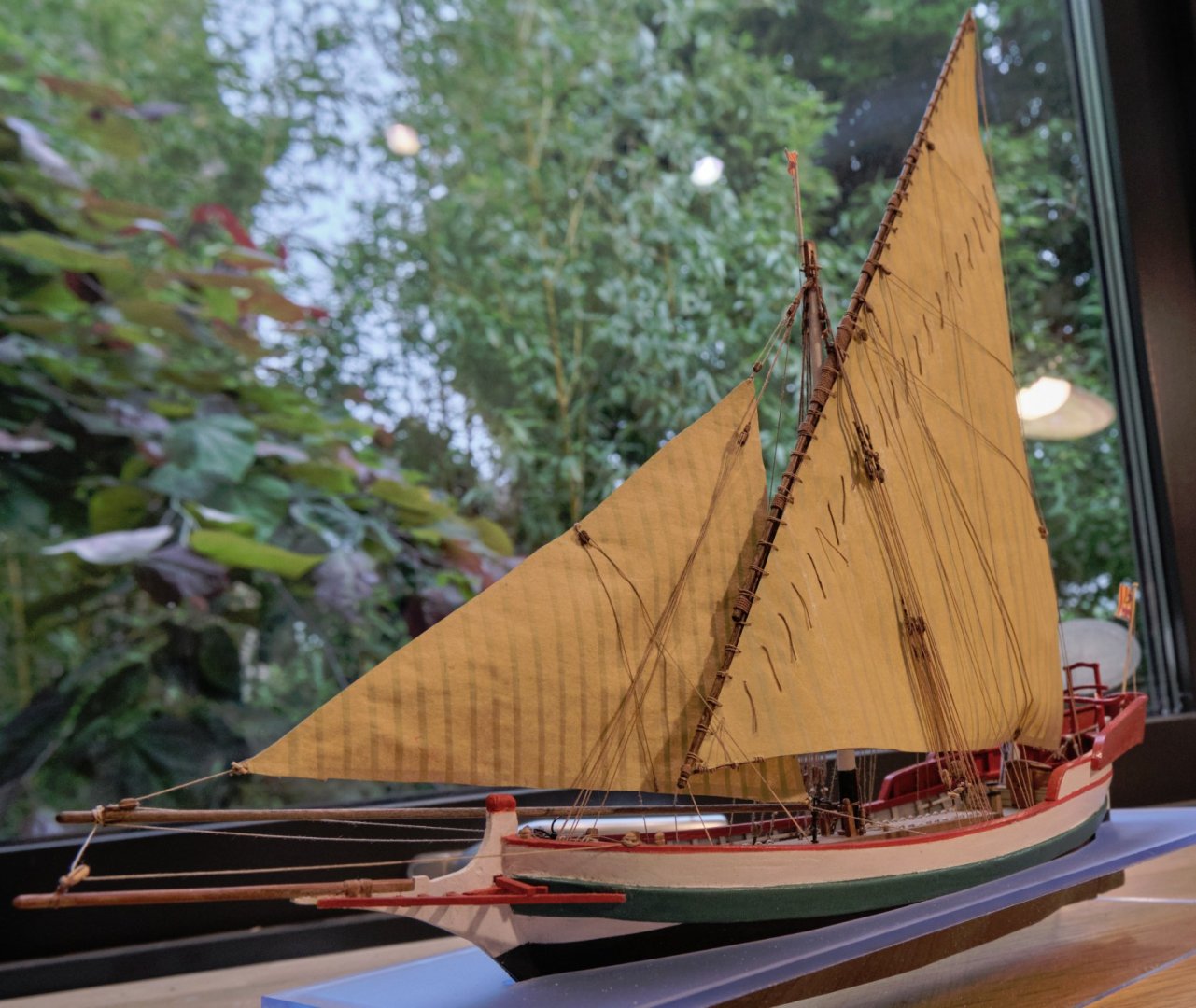
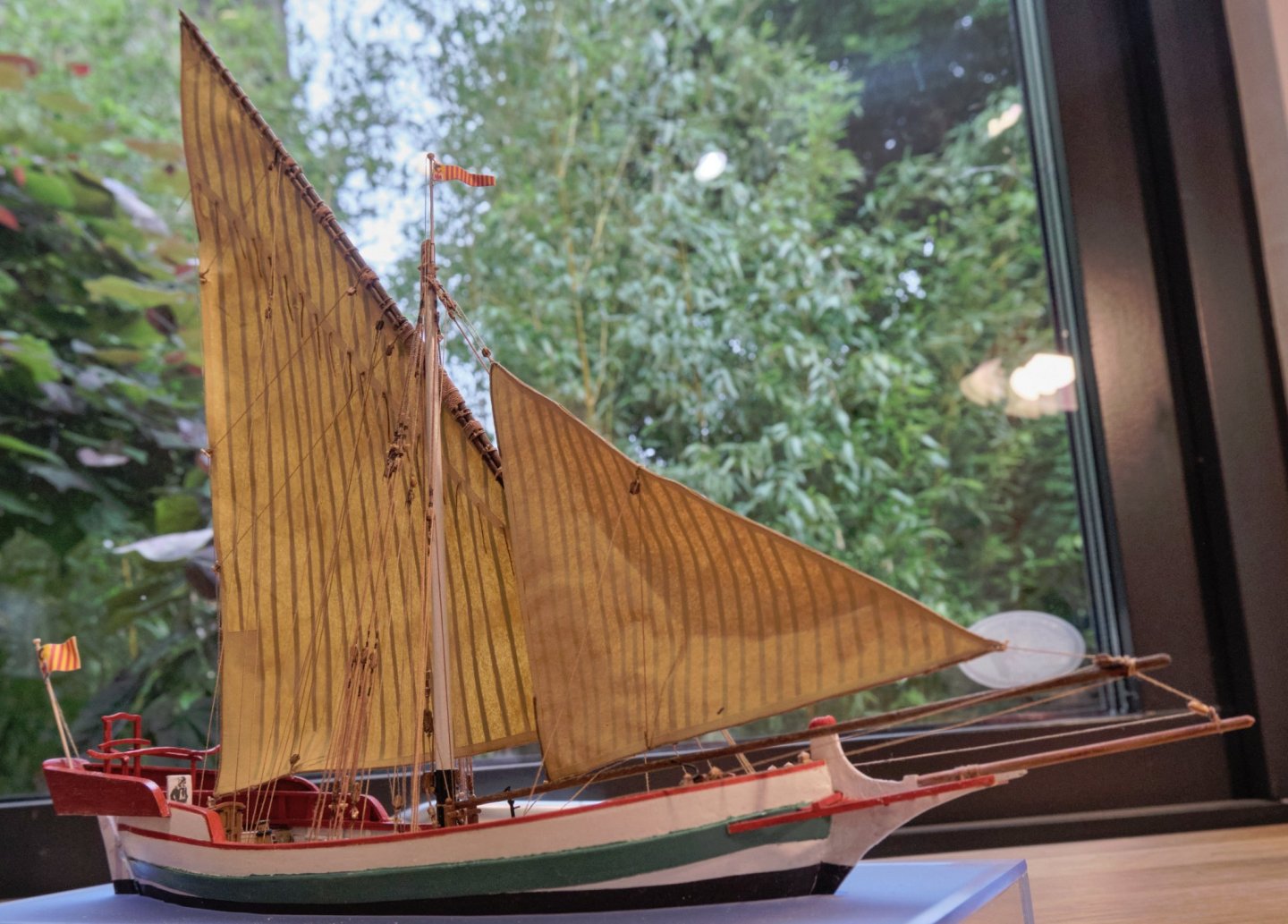
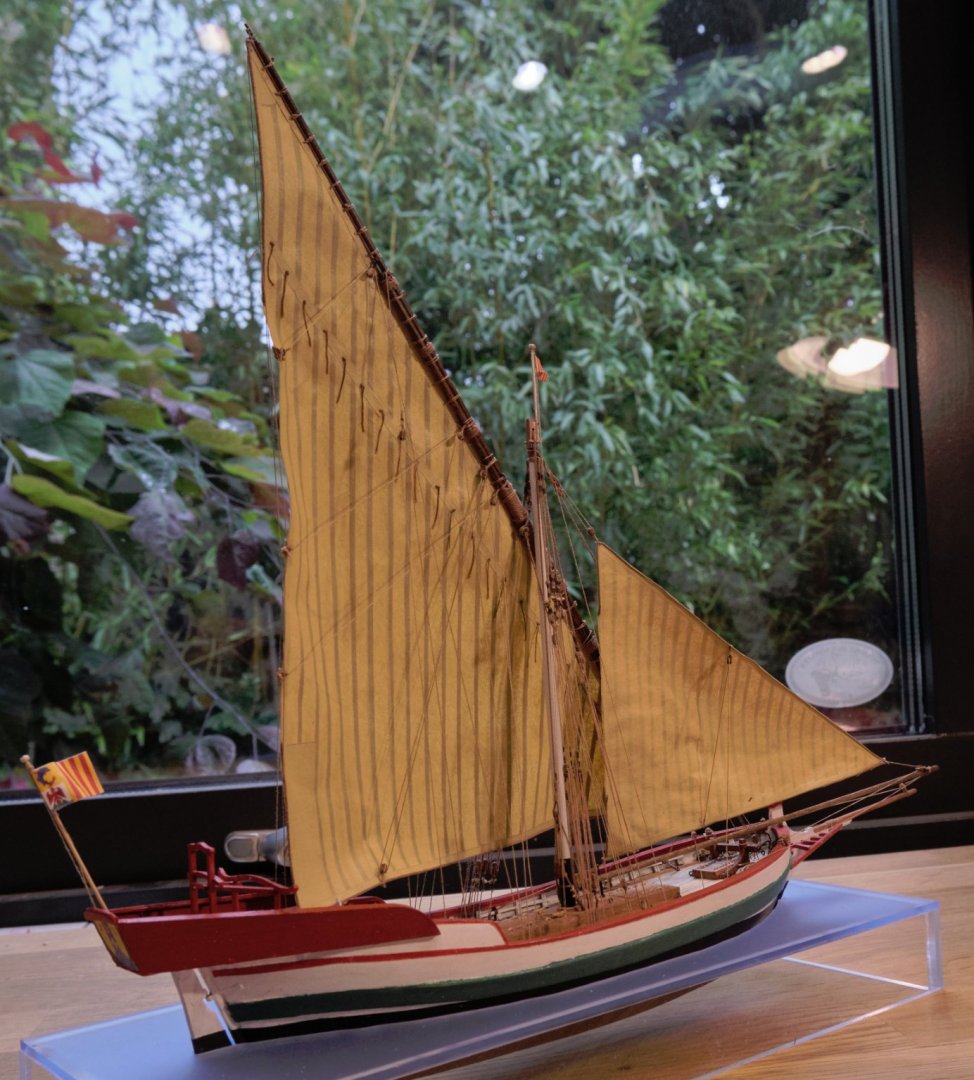
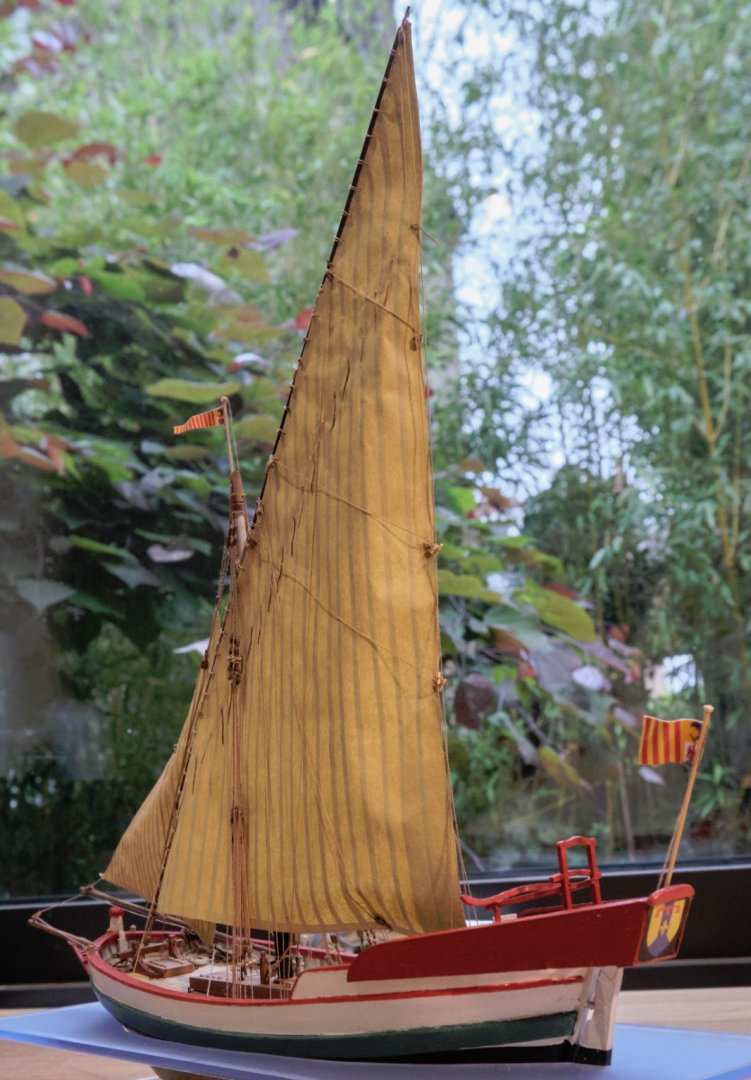
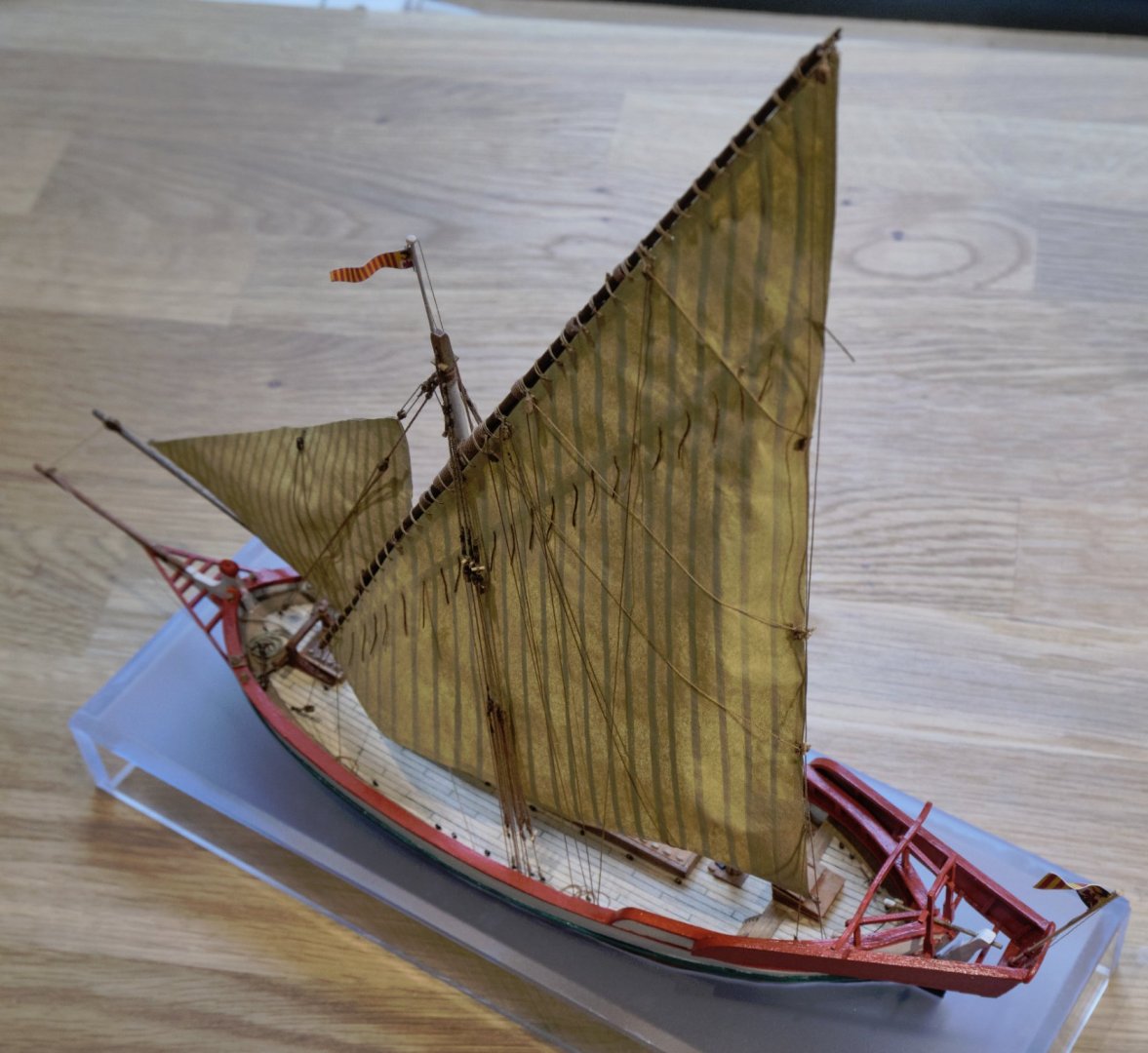
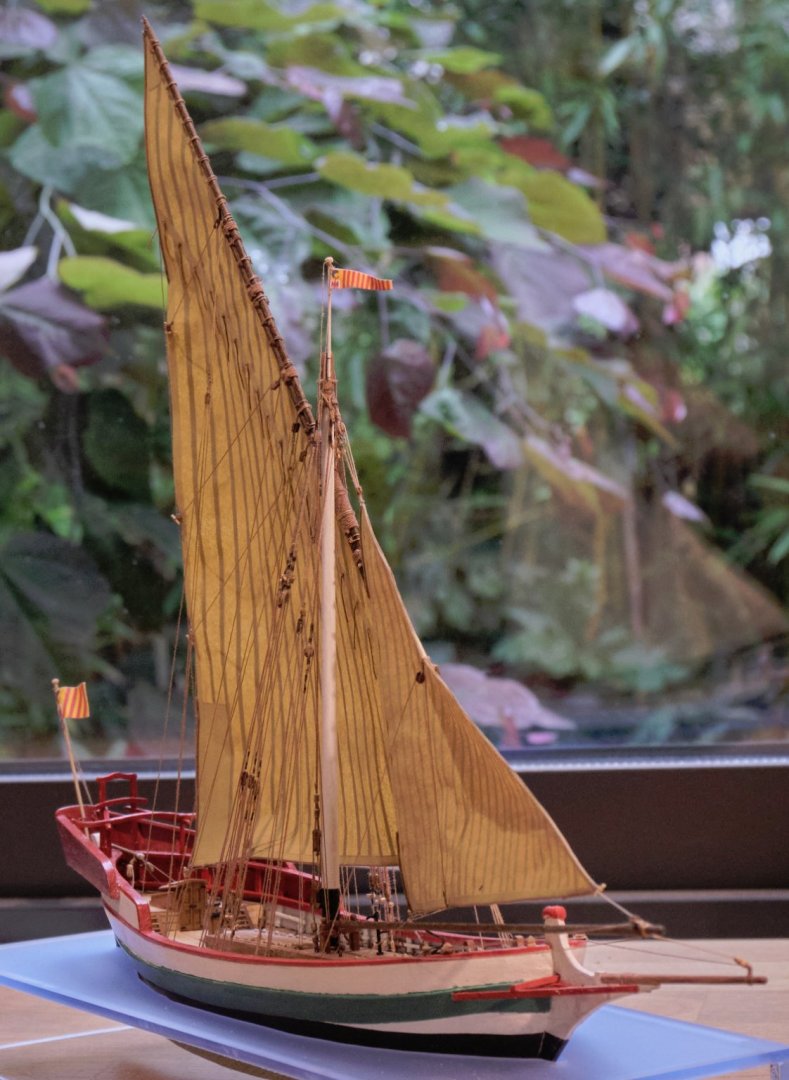
Portfromfrontabove.thumb.jpg.f02f6c91d5c64a078f8bd685f8c5ebf5.jpg)
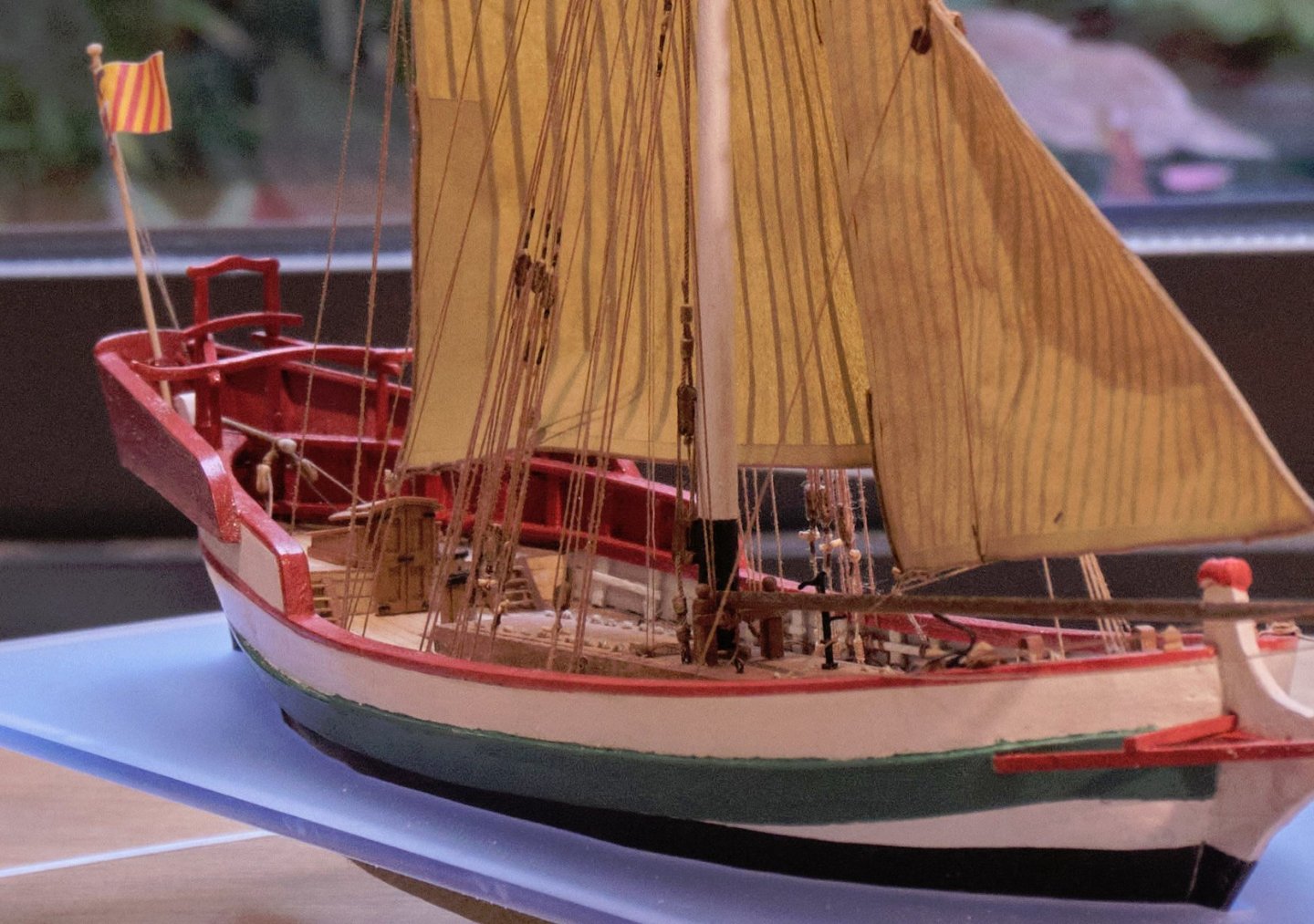
- 41 replies
-
- 12
-

-
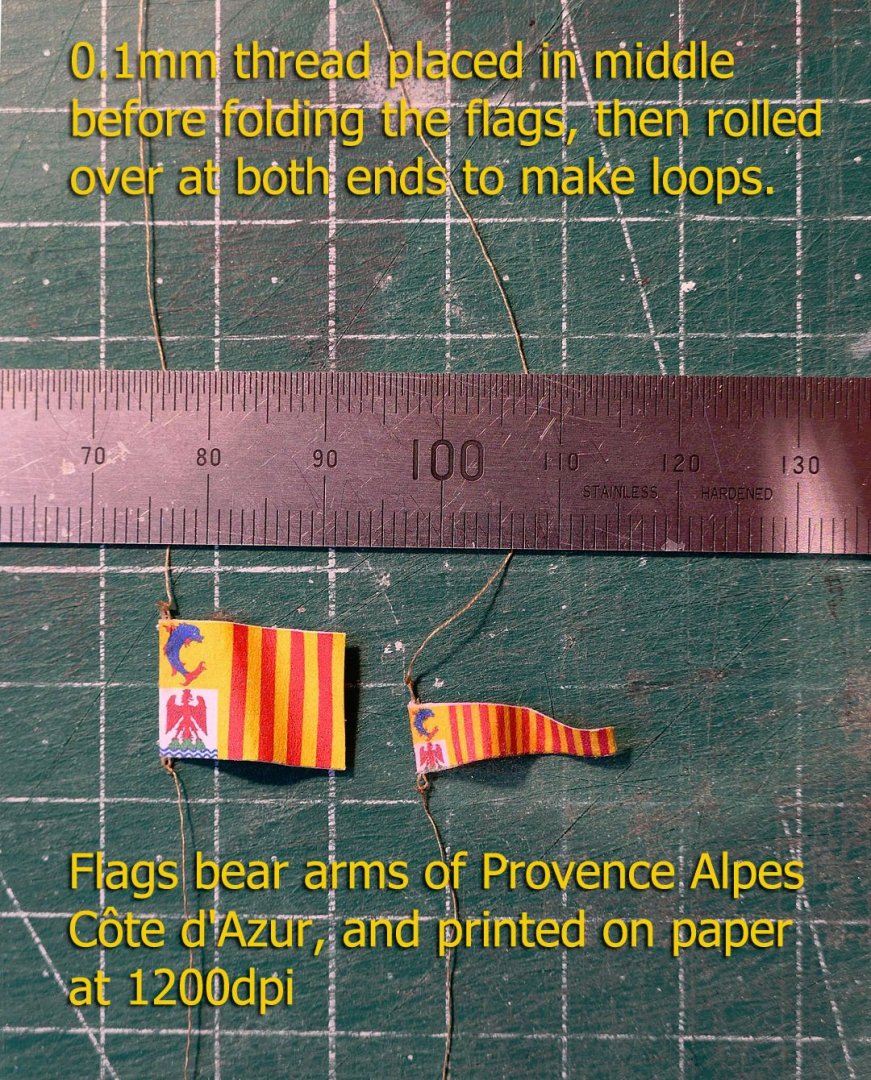
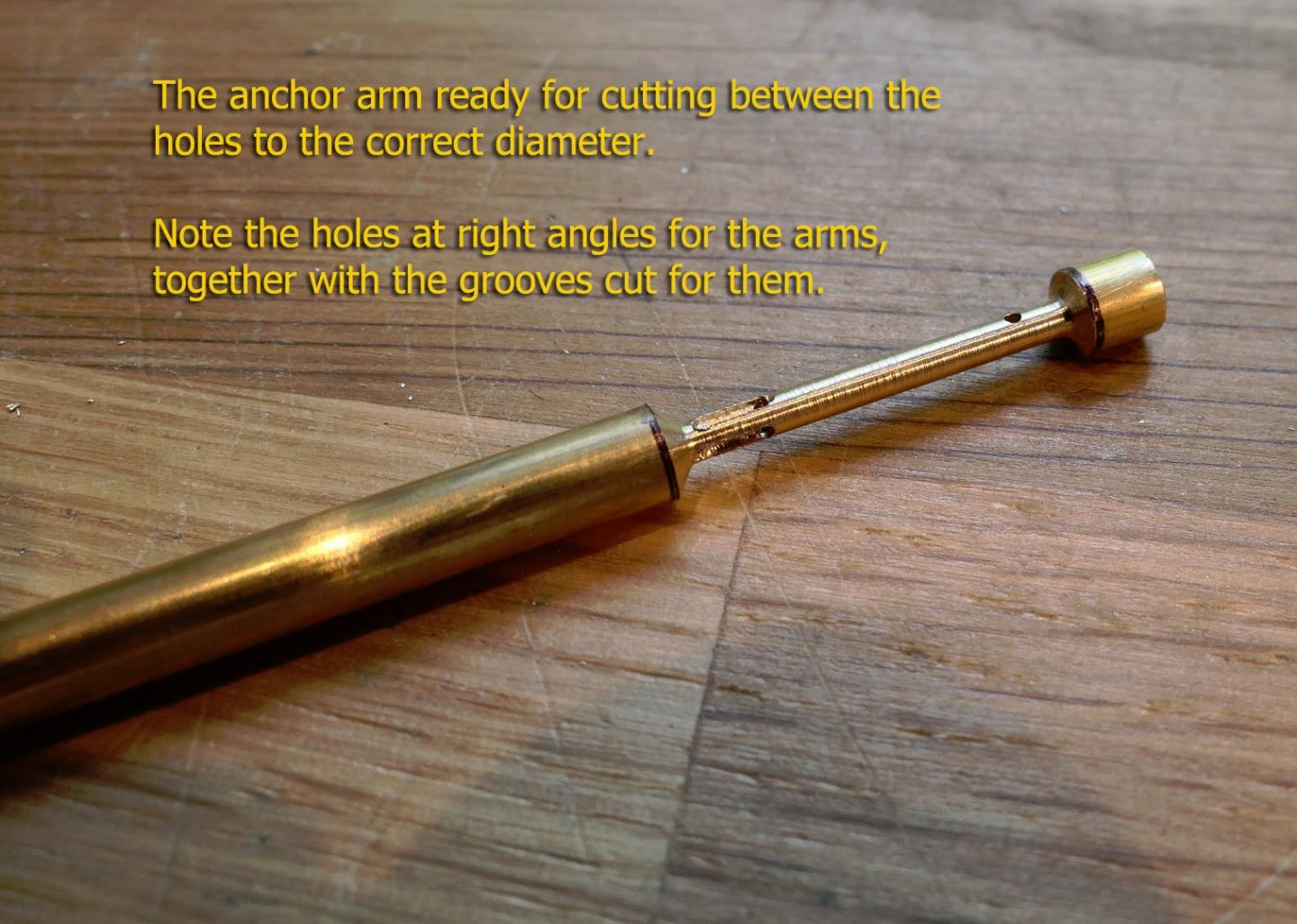
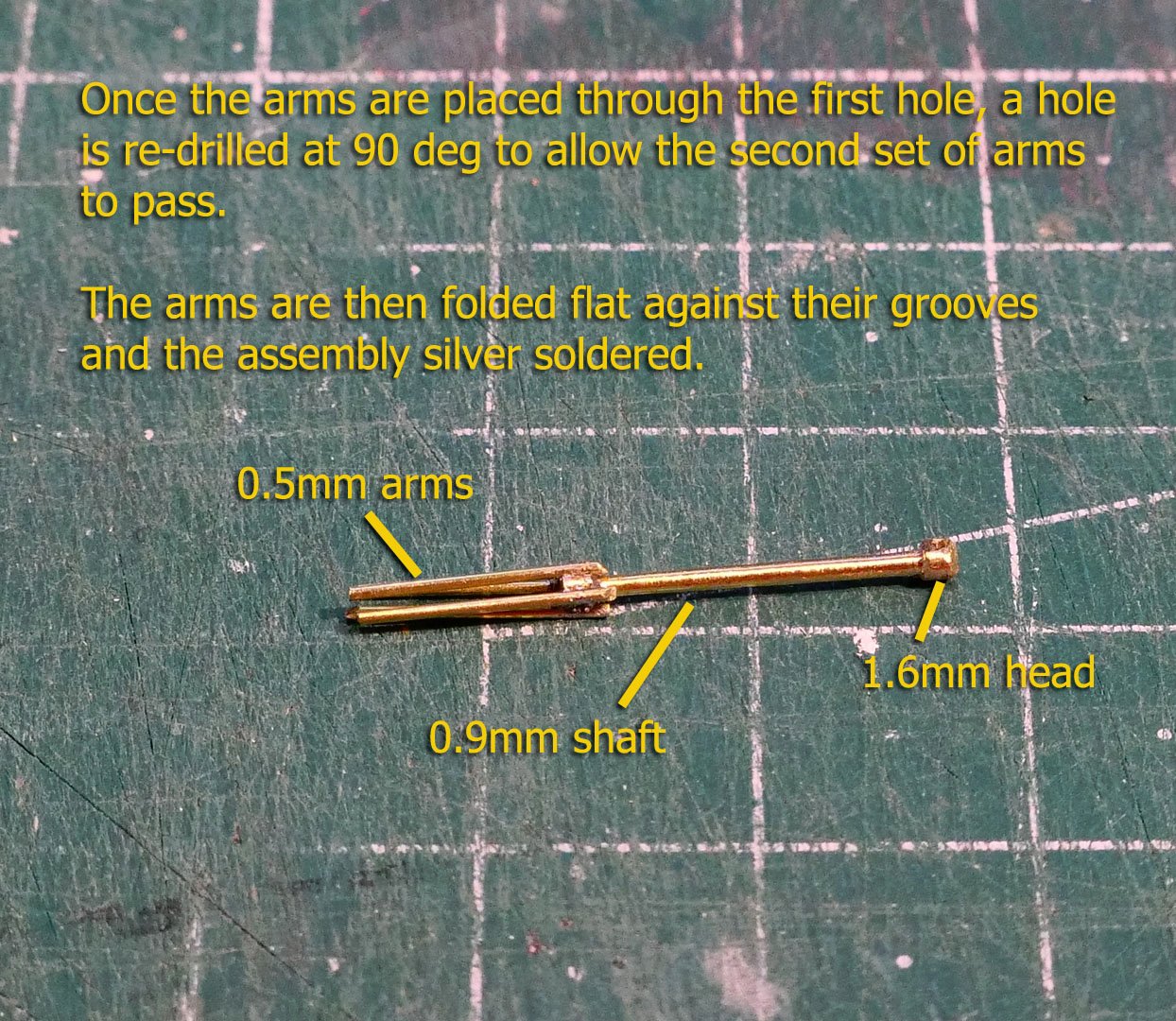
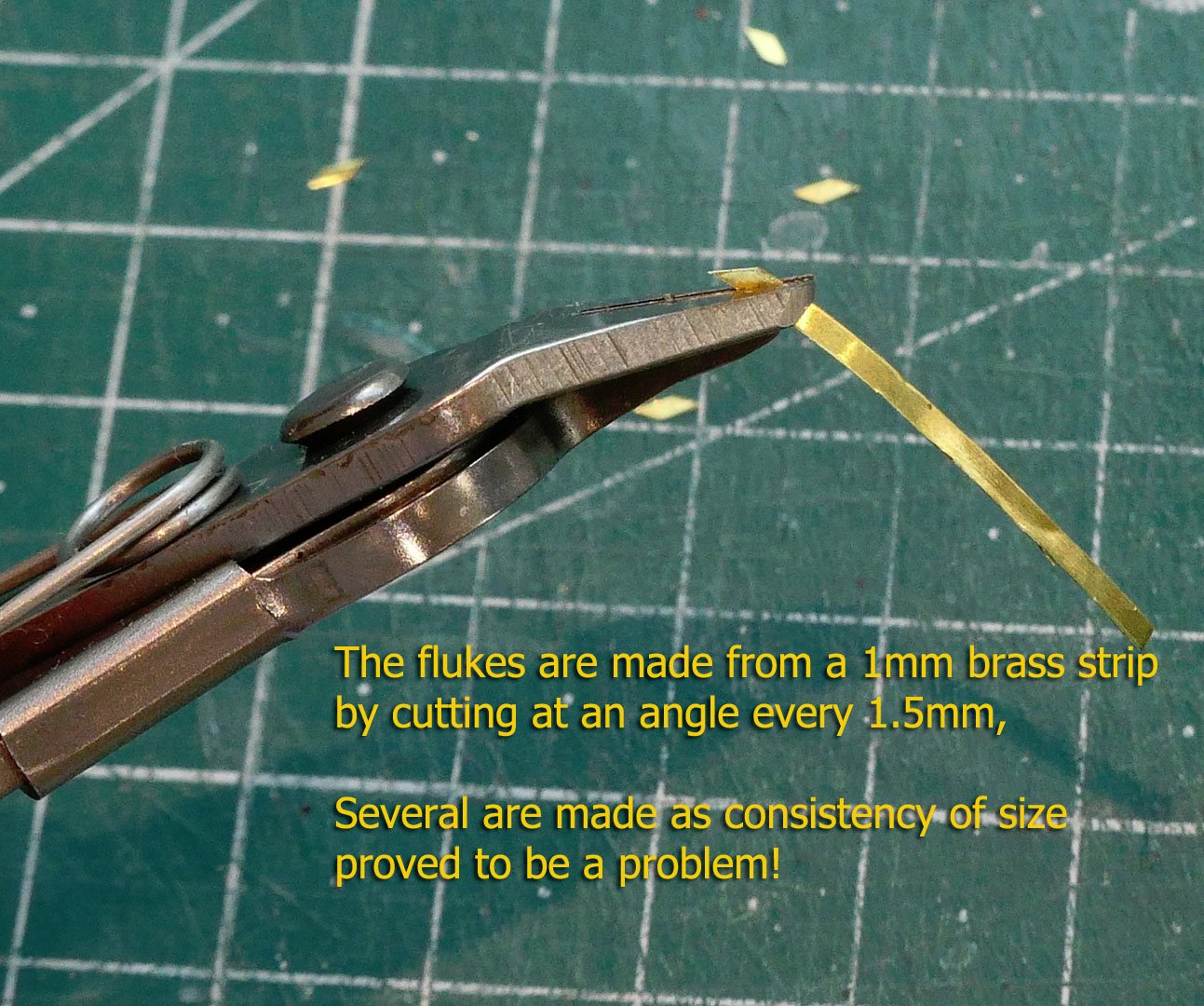
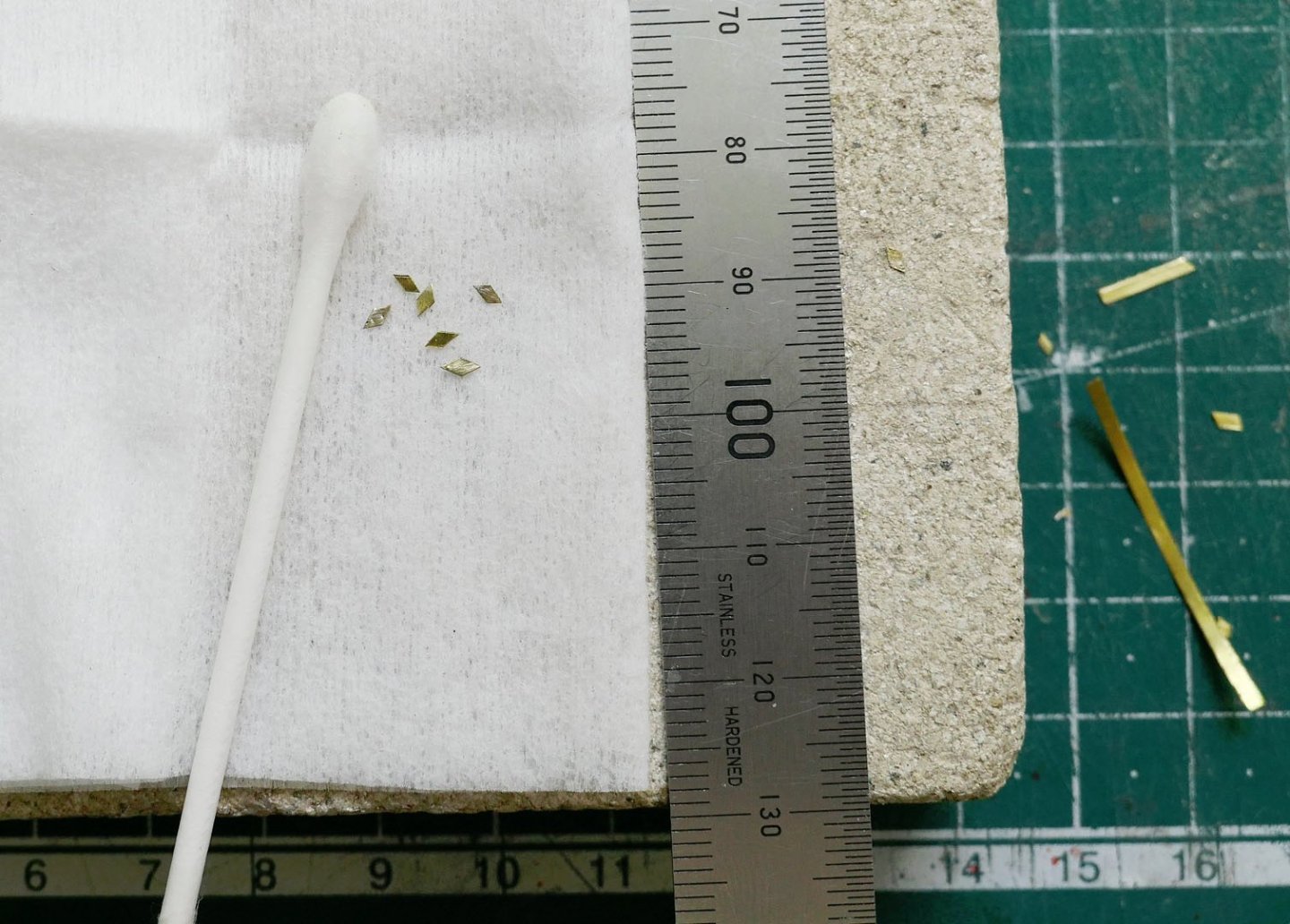
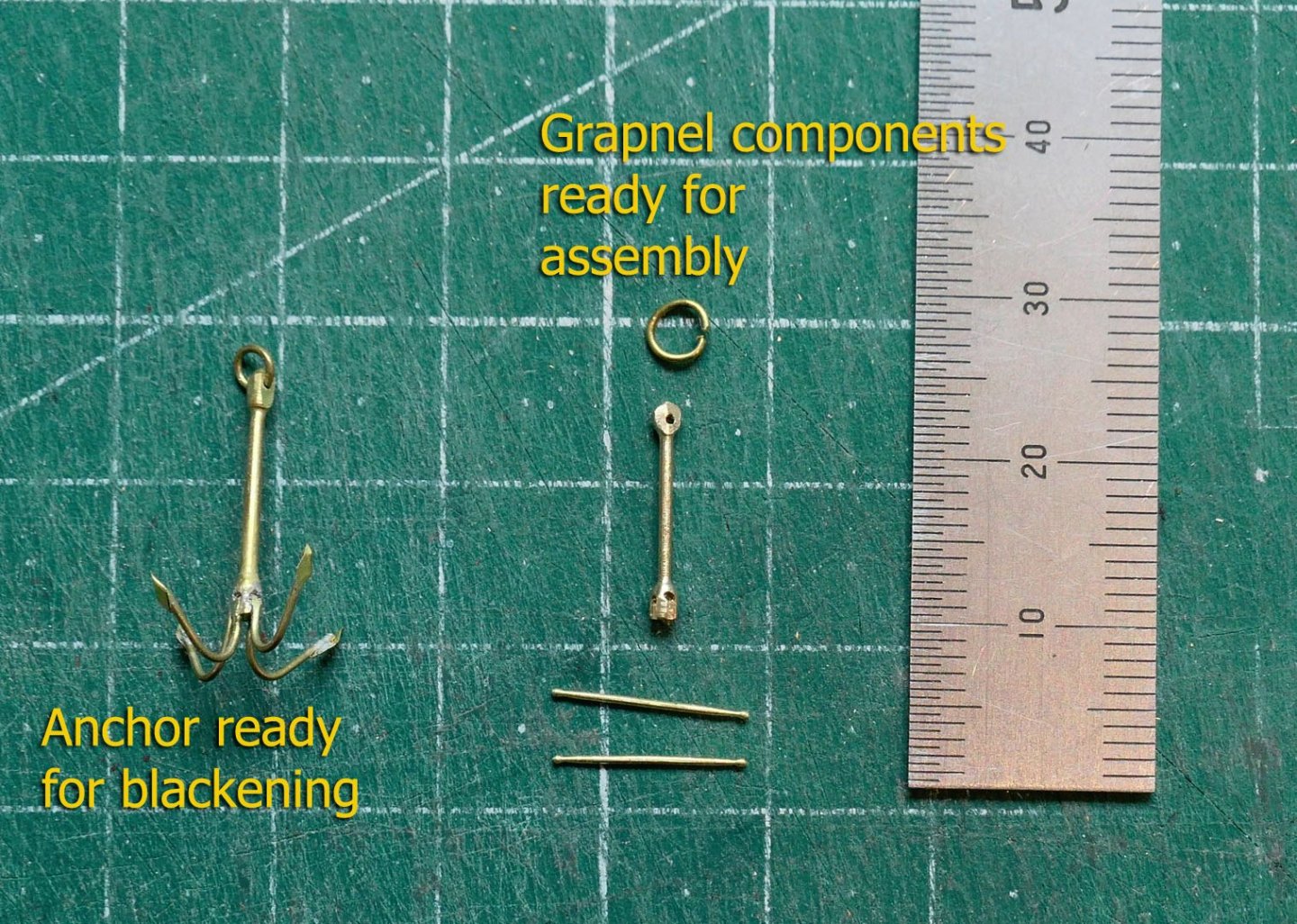
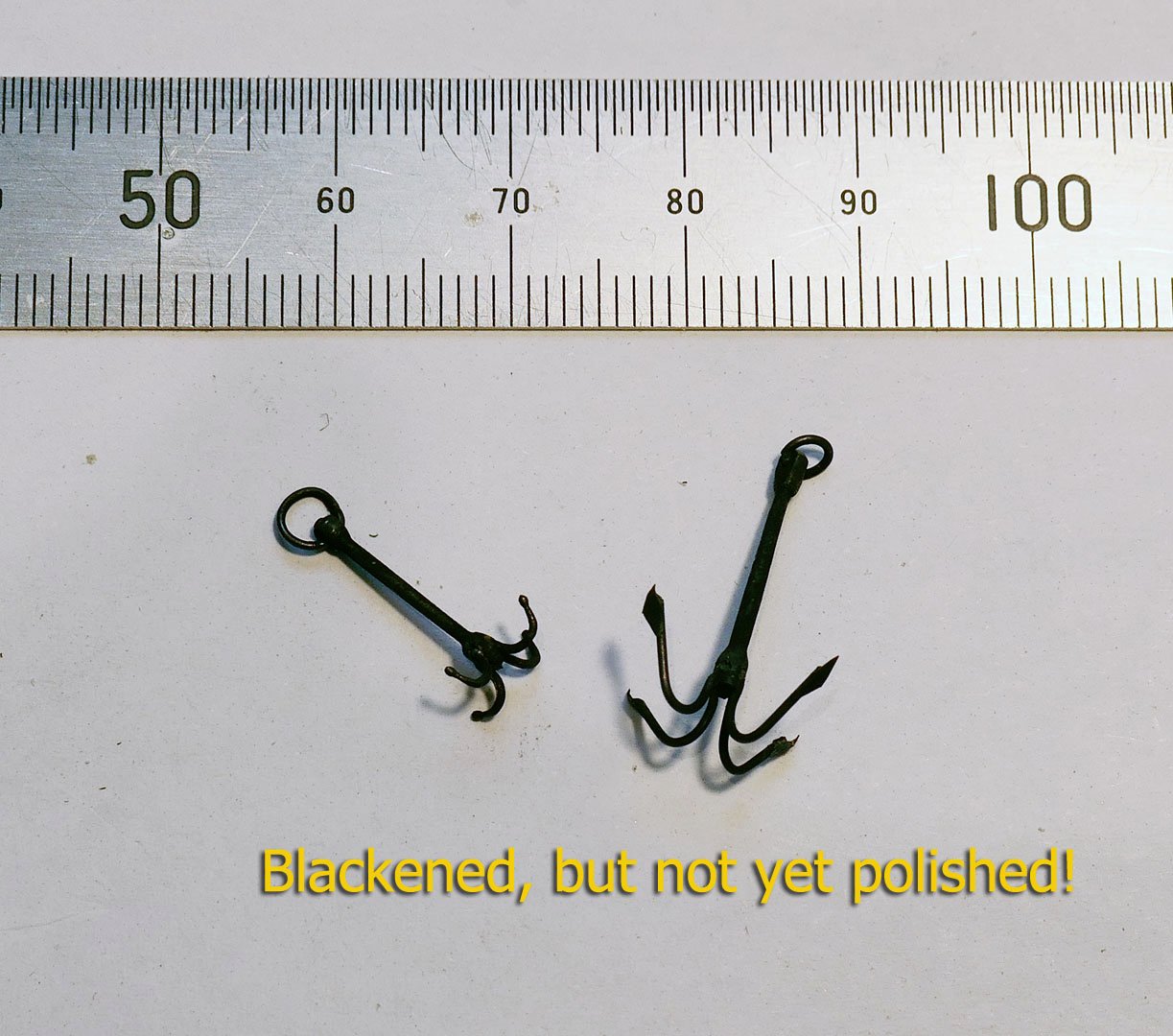
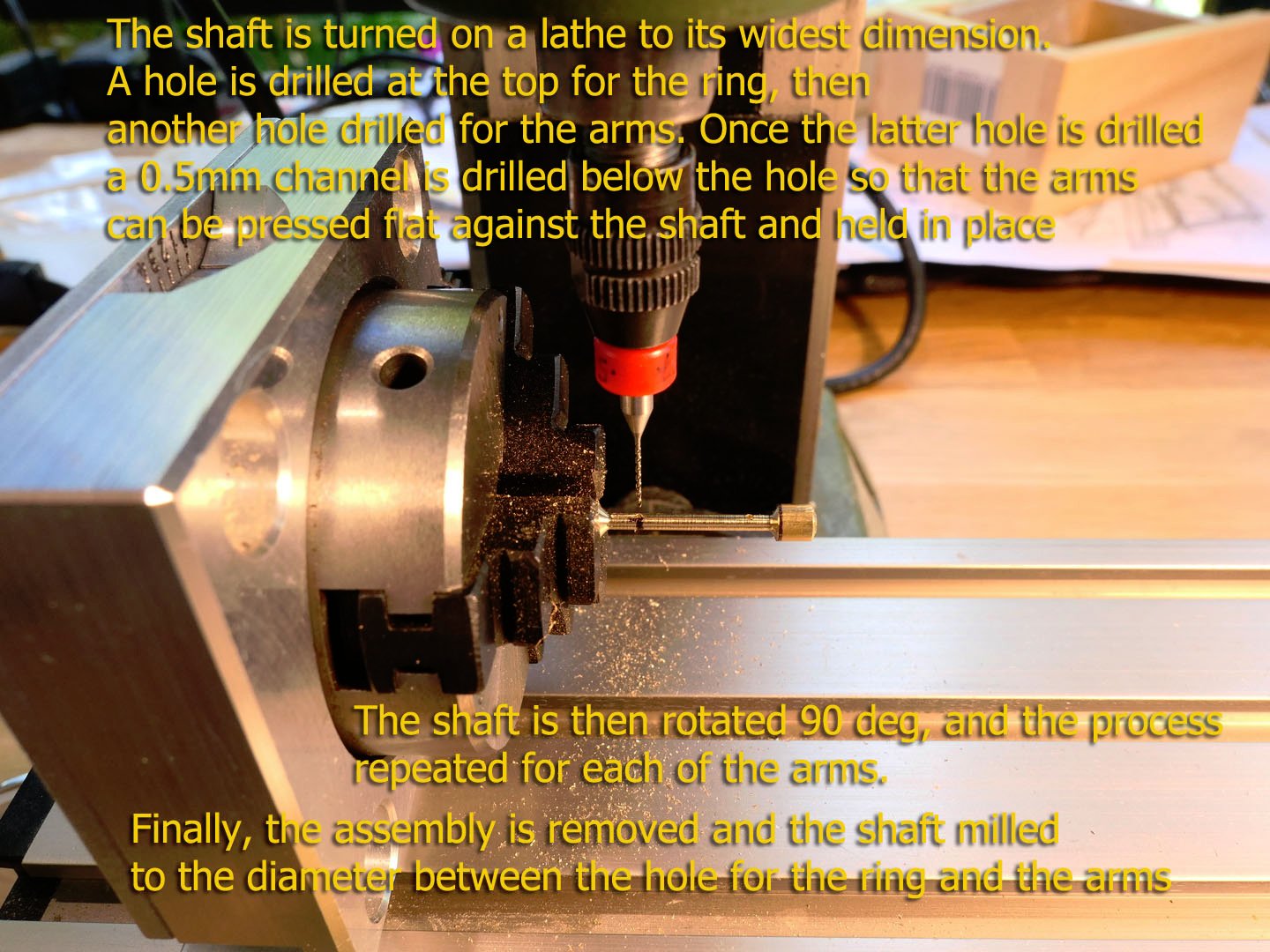
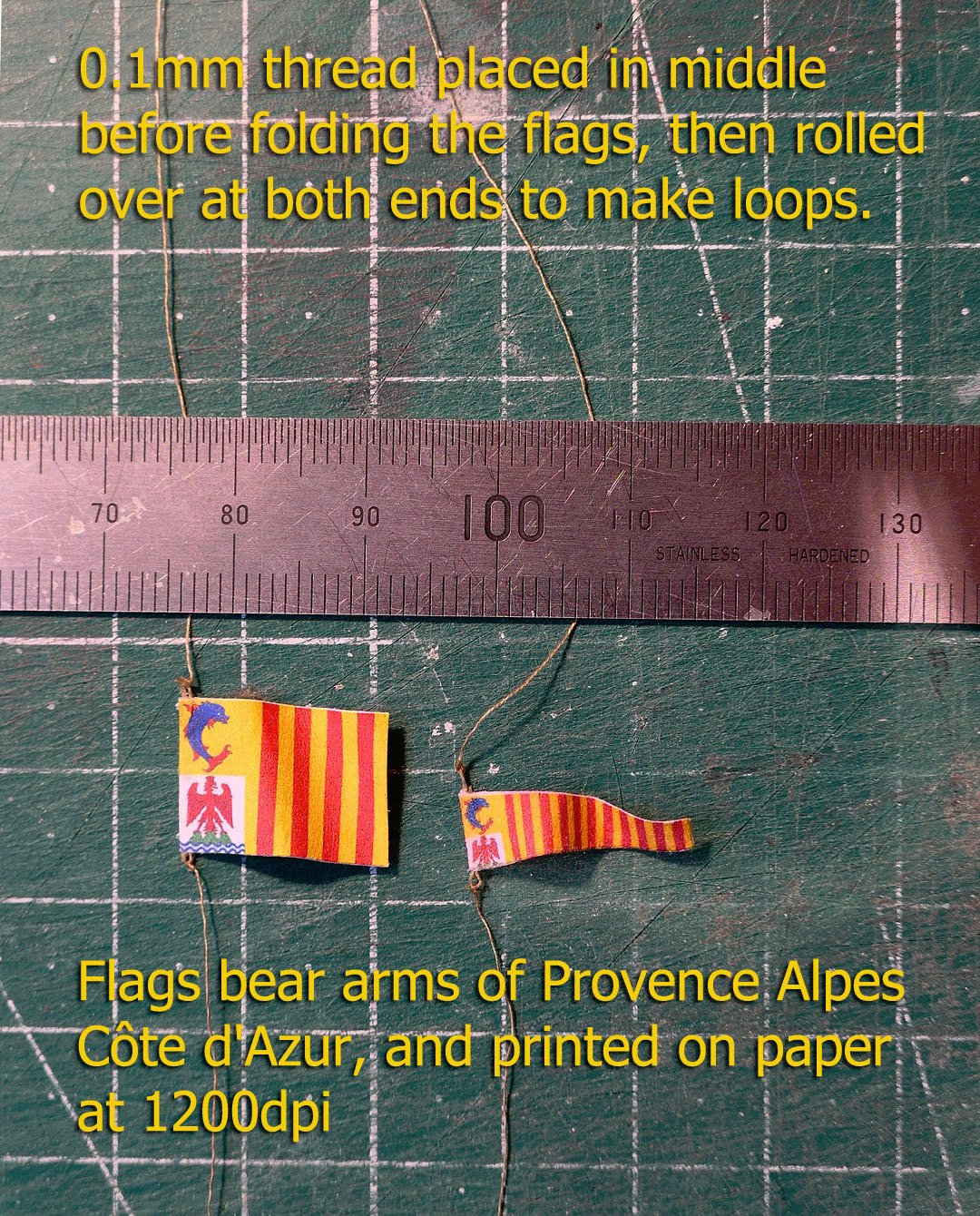
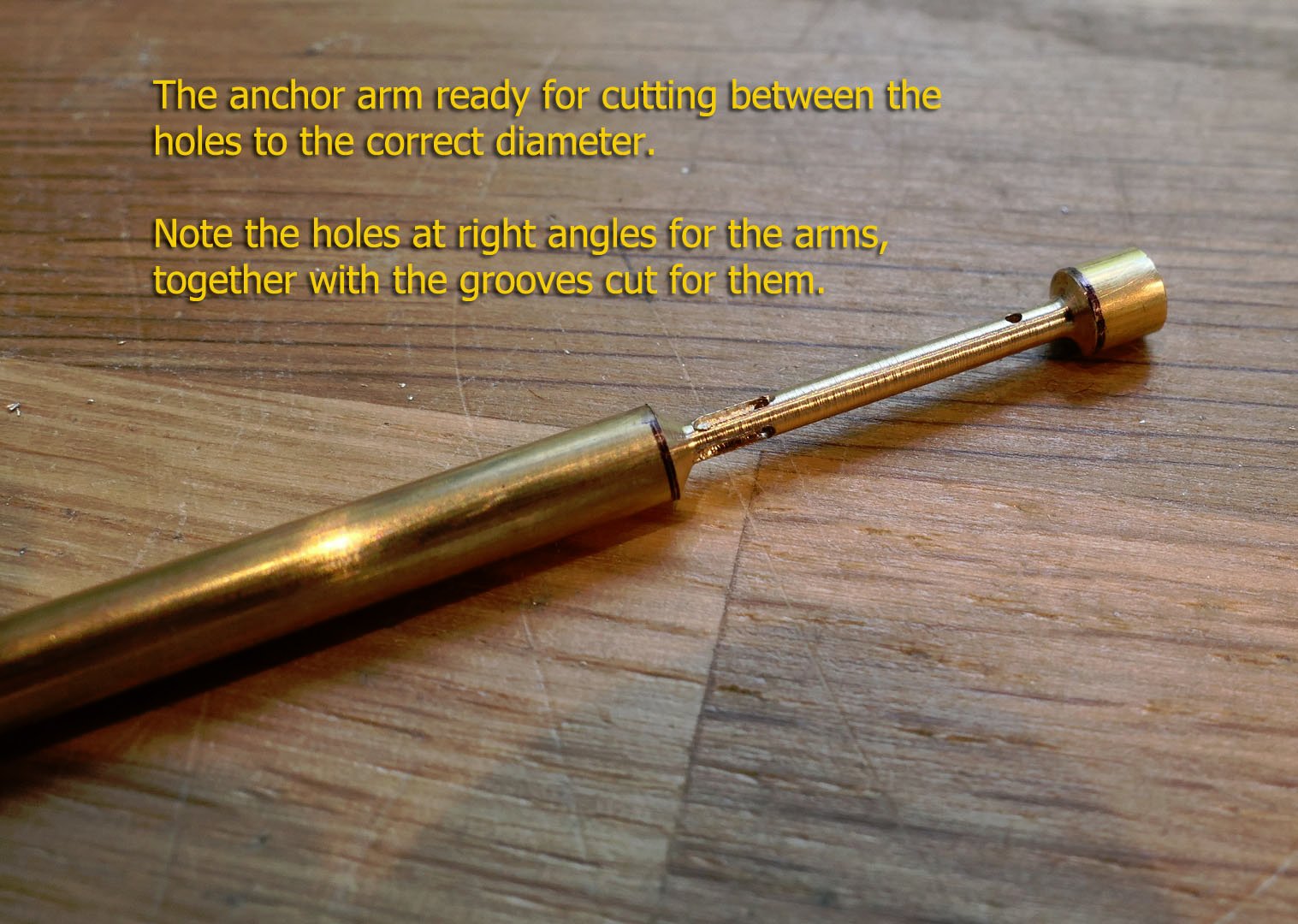
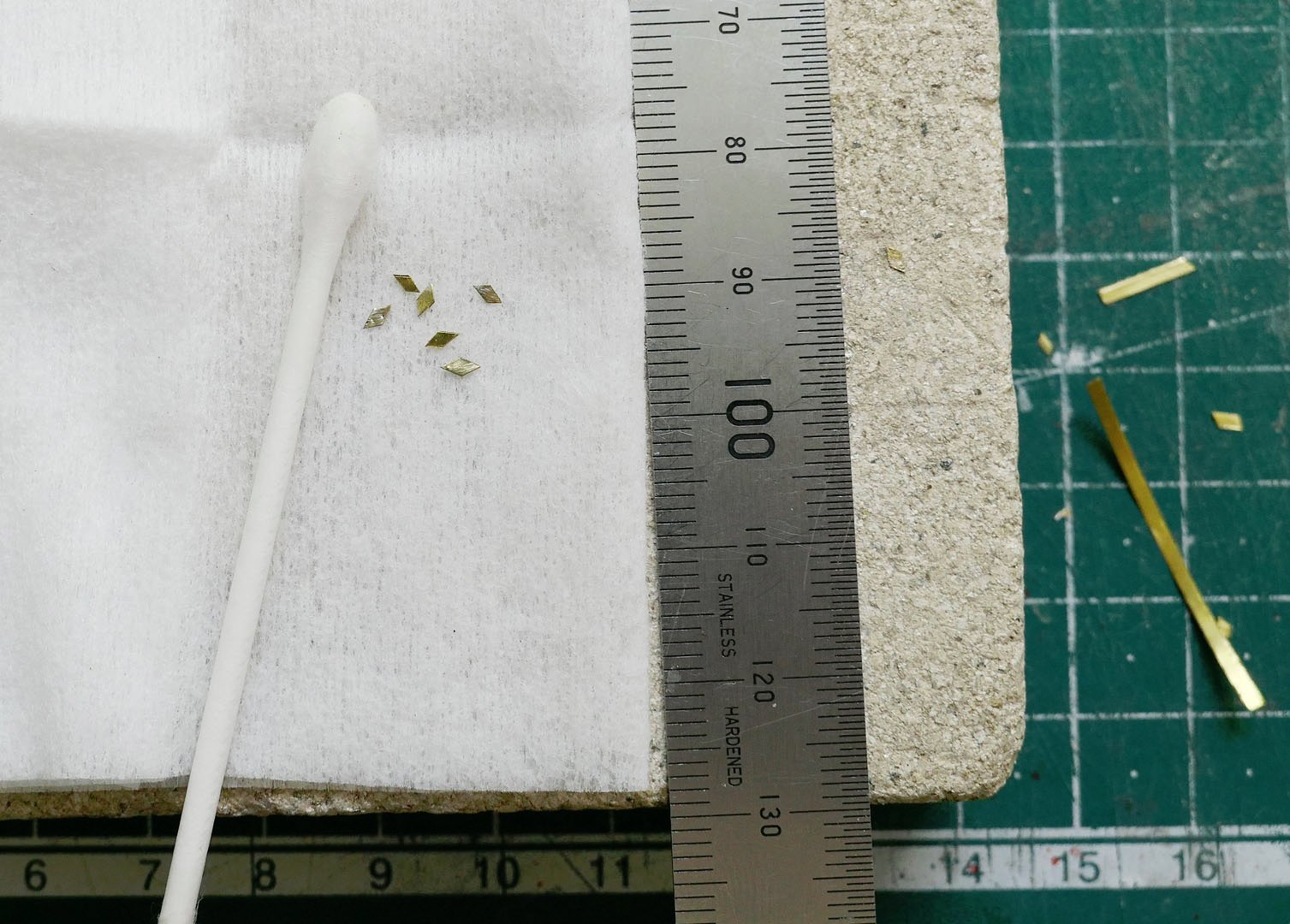
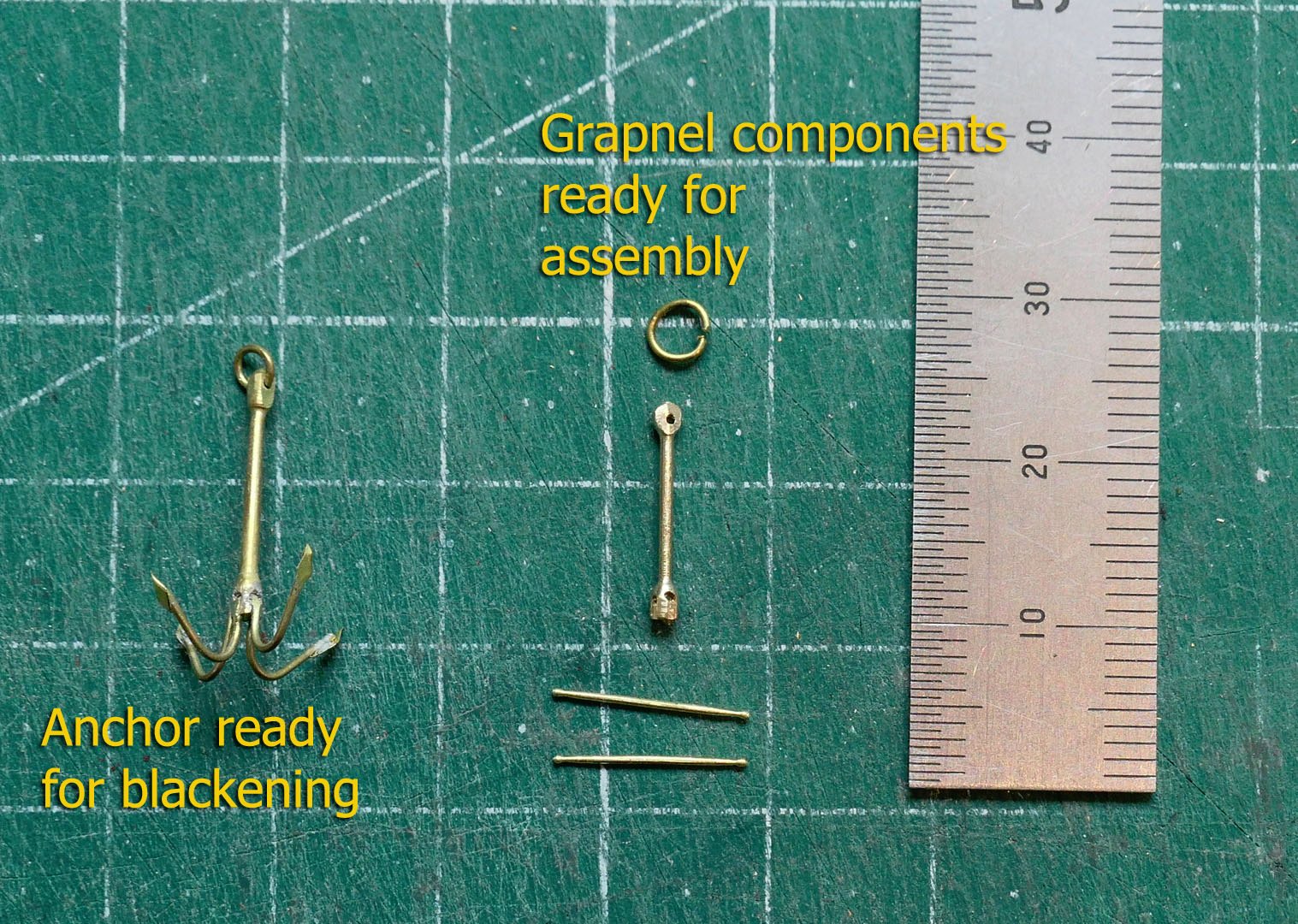
Fittings Flags I eventually gave up trying to make the flags from Modelspan or thin cotton cloth, and instead opted to print them on to ordinary copy paper at a resolution of 2000dpi. At least the definition was ok. The method was to print the two sides of the flag edge to edge with a 0.2mm gap. I then laid a 0.1mm line down the middle of the inside and folded each end of the line over to form a loop. The two sides were then glued together using a stick glue. Again the monograph does not reveal the origin of the arms on the flags, but a search revealed them to be of the Provence Alpes Côte d'Azur. Anchor & Grapnel I had to make the anchor 3 times before I got the hang of the sequence necessary. The monograph suggests drilling a hole for the arms, but that would still leave the problem of how to solder the remaining two arms at 900 when using solder that has only one melting point. I eventually hit on the following sequence: 1. Cut a 4mm brass rod to the maximum diameter (1.63mm) of the shaft (i.e. the diameter of the head and crown. 2. Drill a 0.7mm hole for the ring 3. Drill two 0.5mm holes at right angles to each other for the arms near the crown. 4. Mill 0.5mm grooves for the arms from each of the holes. 5. Cut the arm between the holes to the final diameter (0.9mm). 6. Insert the first bar of two arms through the first hole at the crown, then bend them together until they sit in the grooves. Solder with silver solder. 7. Re-drill the hole in the second hole so that it passes through the paired arm in the first. 8. Insert the second paired arm through the second hole, and repeat the process for the first paired arms. 9. Bend all the arms to right angles at the same spot. This makes it easier to solder on the flukes exactly. 10. Prepare the flukes by cutting a 1mm strip of 0.07mm brass at a sharp angle at 1.5mm intervals. 11. Wipe the flukes with a cloth impregnated with isopropanol then solder to each of the arms. 12. Bend the arms to their final shape. 13. Blacken with Sodium Metabisulphate solution (5%) I now just have to put their ropes on, make the stand, and those will be shown in the next post. Tony
-
I'm sorry I missed this model until now. How wonderful. I love the techniques you use with the simplest of tools. Your work is a real inspiration to me for my next build. Tony
-
Very nice ideas, wefalck. Thanks. I hadn't known that decals could dissolve in that way. Lots to experiment with! Tony
-
@wefalck: Thanks for the tip, I'll look into it. Decals might attach to painted aluminium. They might even glue to fine cotton voile or silk pongee. There are two problems in addition to lightfastness: (1) the detail of the printout from the inkjet at this scale, especially when the material tends to diffuse the ink, and then (2) material that is thin enough for some realism. I'll also review the ppi of the images I have. I had set them to 600ppi, but that may need to increase. @Edwardkenway: Thanks for the kind words. I'm appreciating work at this scale as it makes some things simpler and certainly allows for our small storage space. Of course it also makes some things more difficult in terms of achieving correct sizing of parts.
-
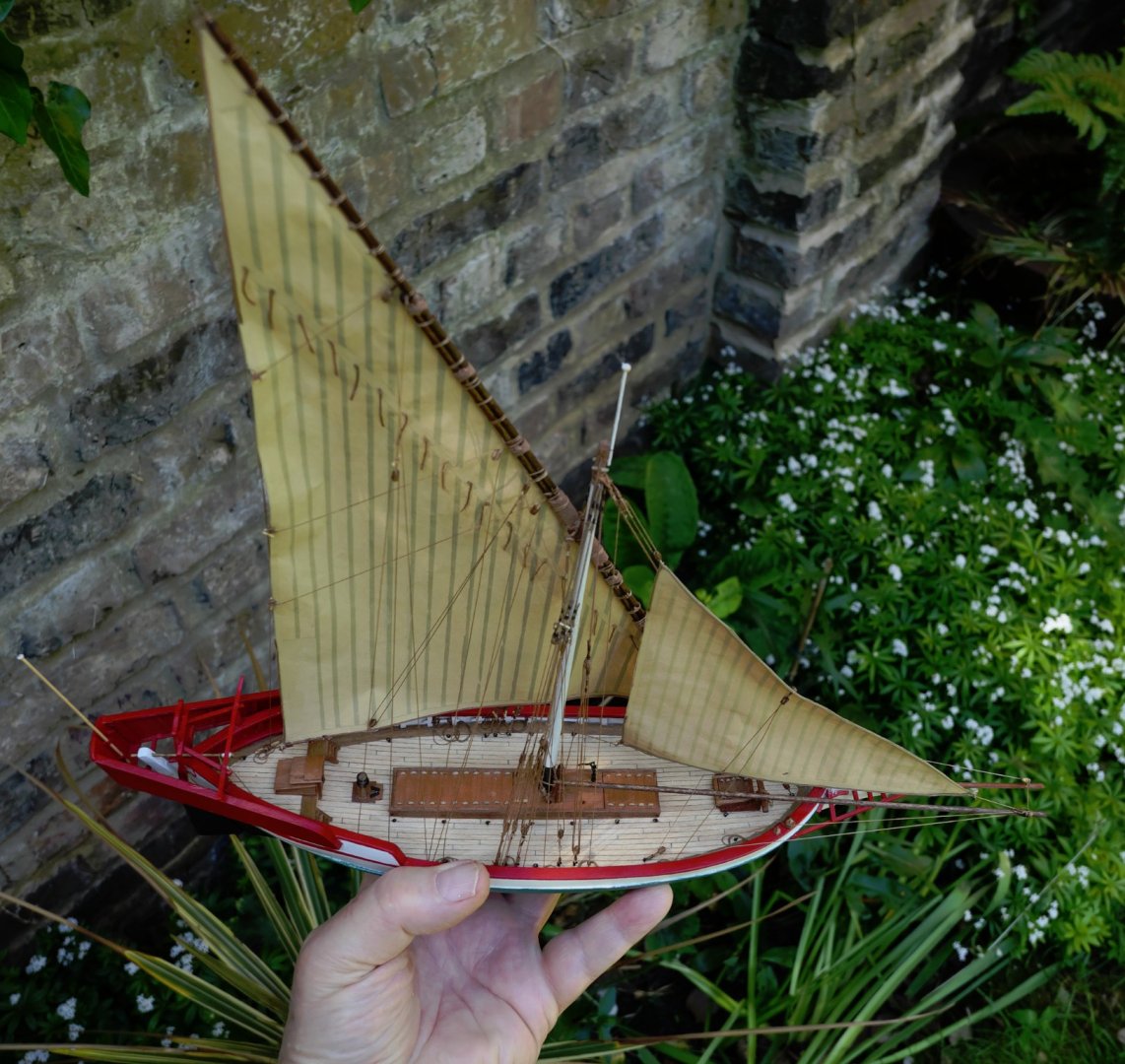
Just thought I'd add a photo to demonstrate scale. Sorry for the slightly dull look to the photos in the last post, I had my screen brightness too low when preparing them. Tony
- 41 replies
-
- 12
-
-
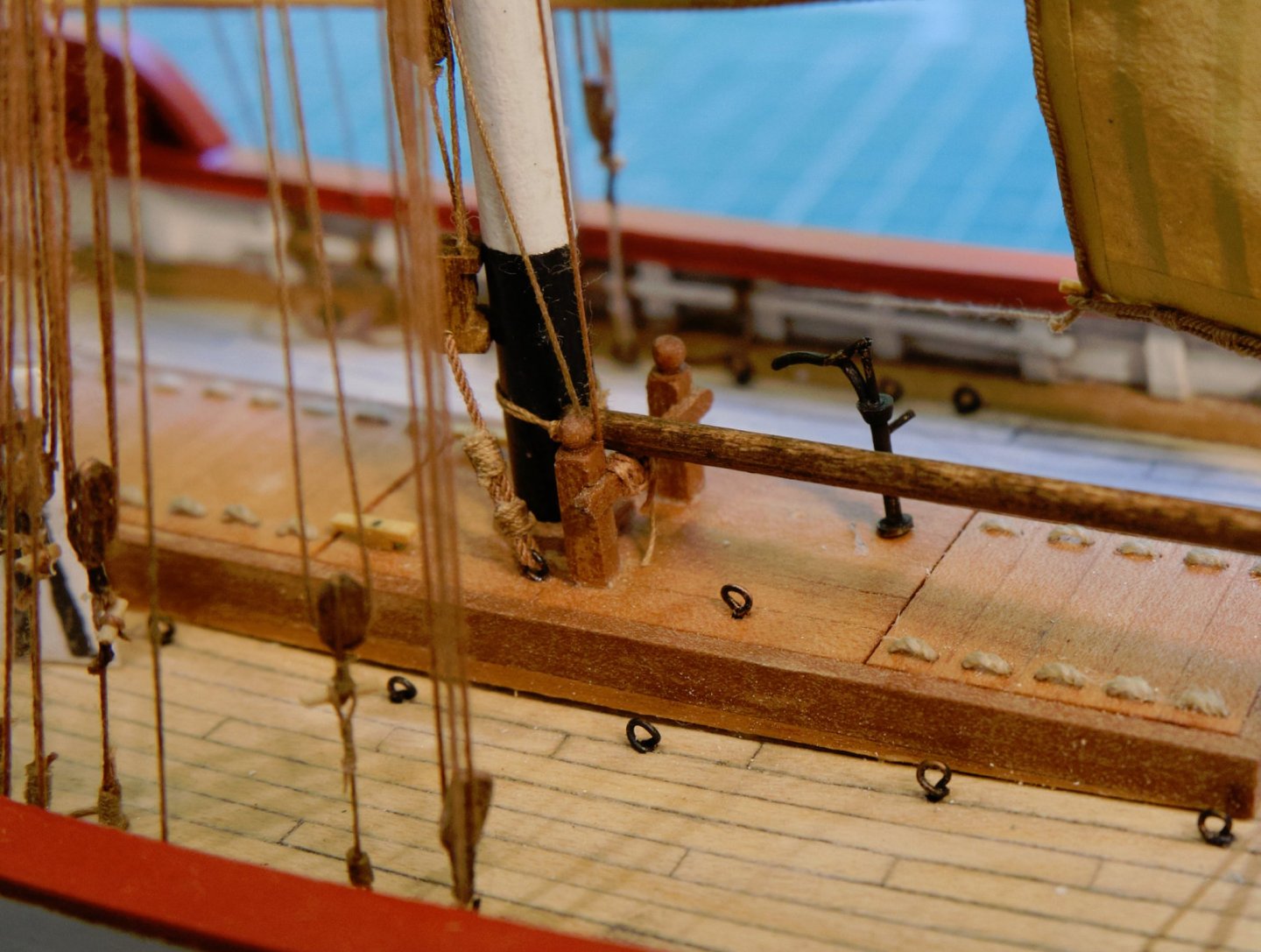
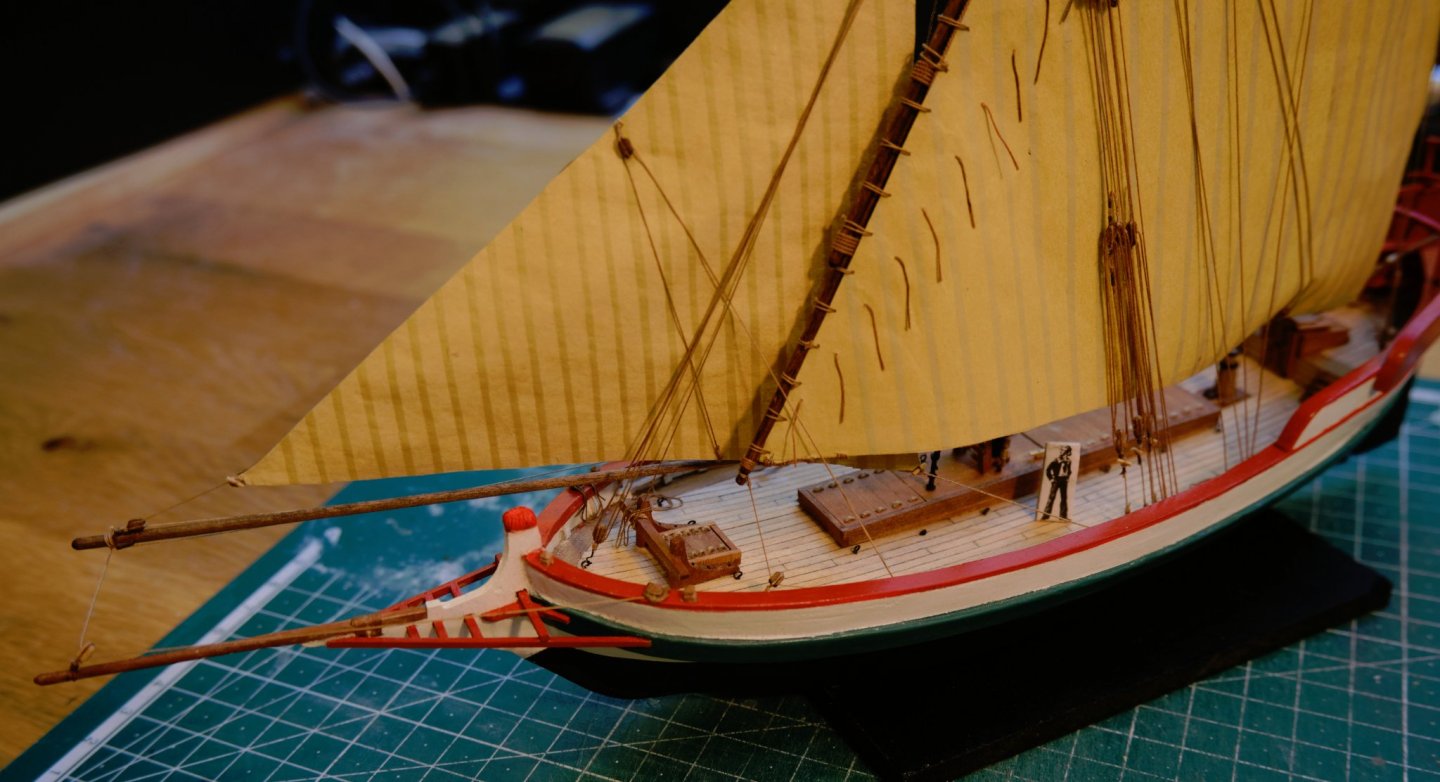
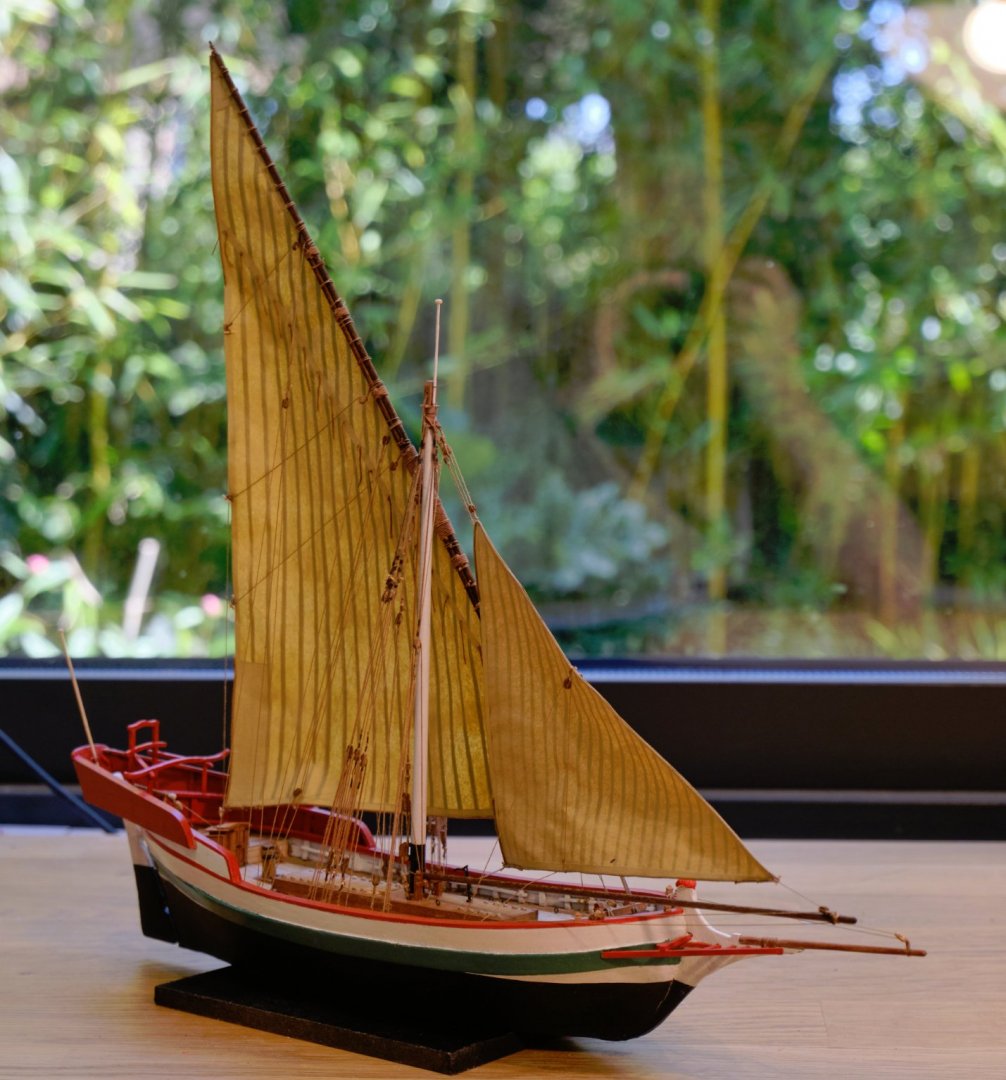
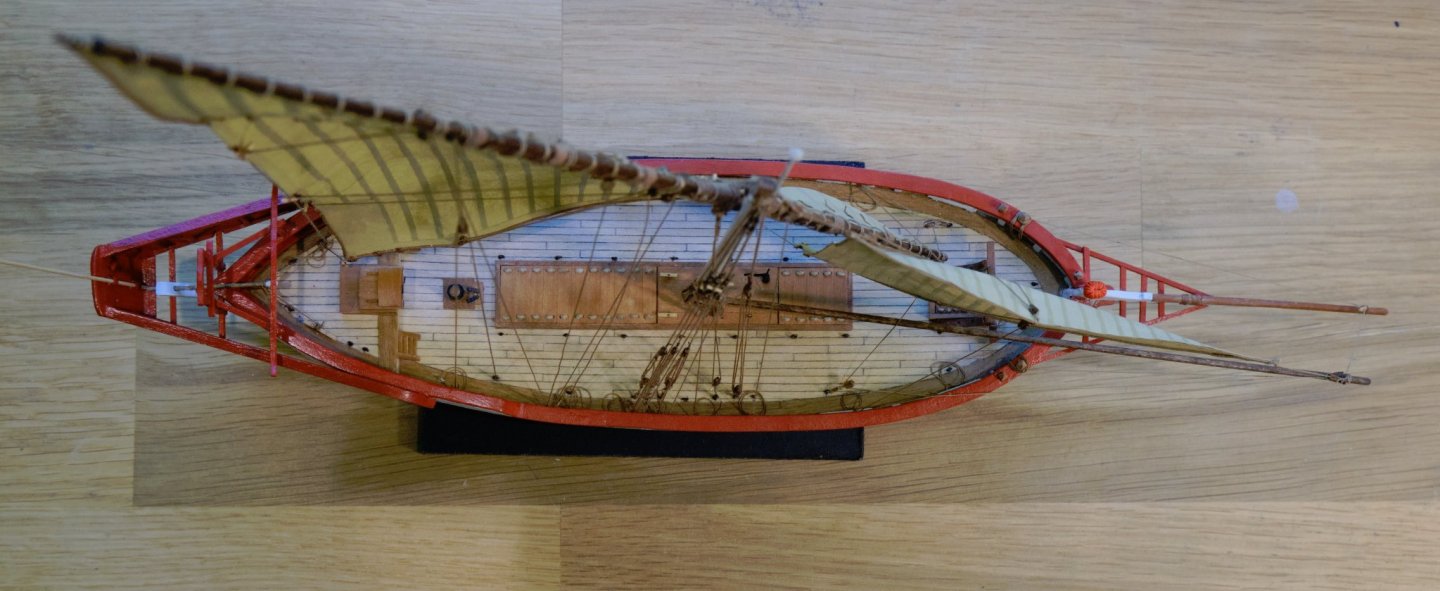
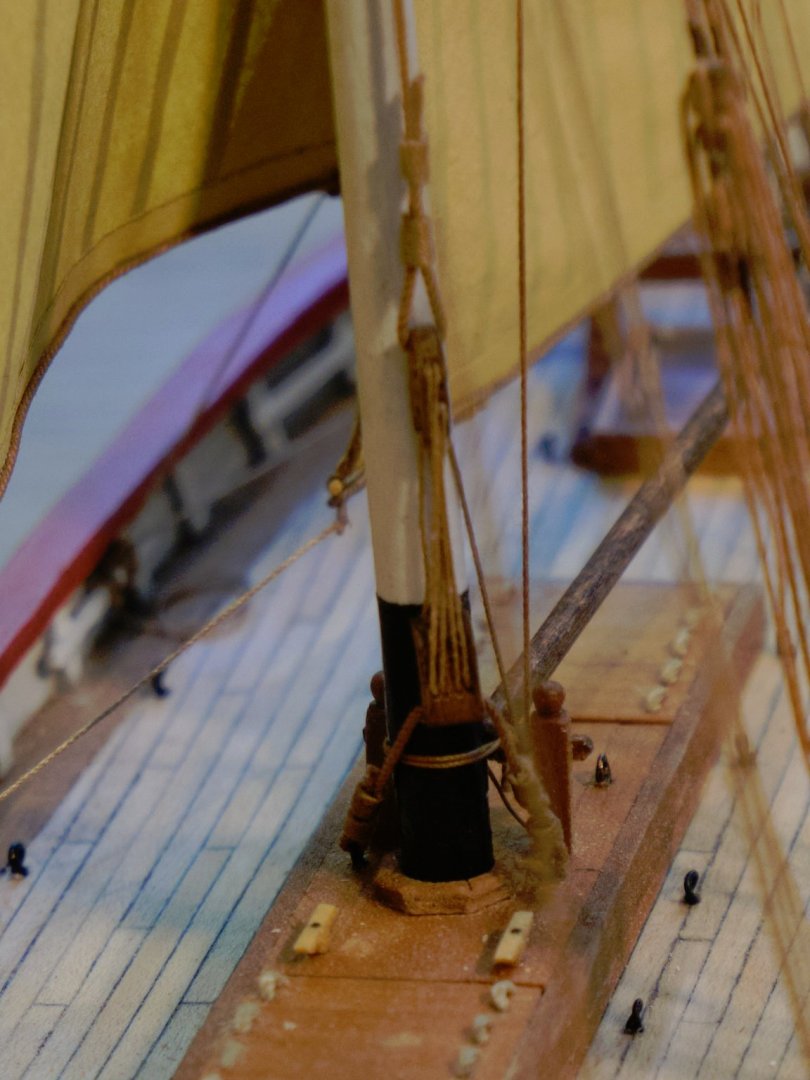
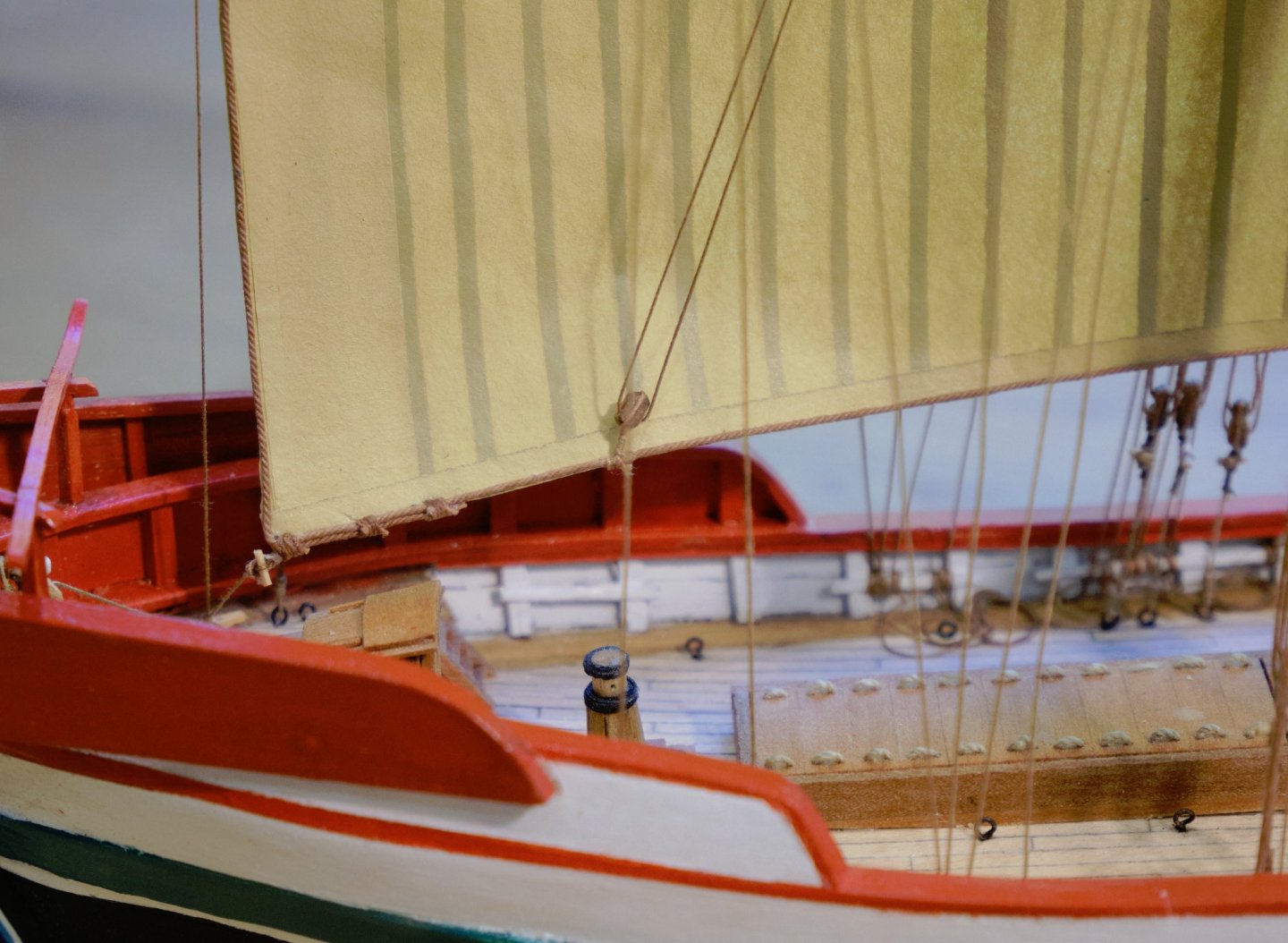
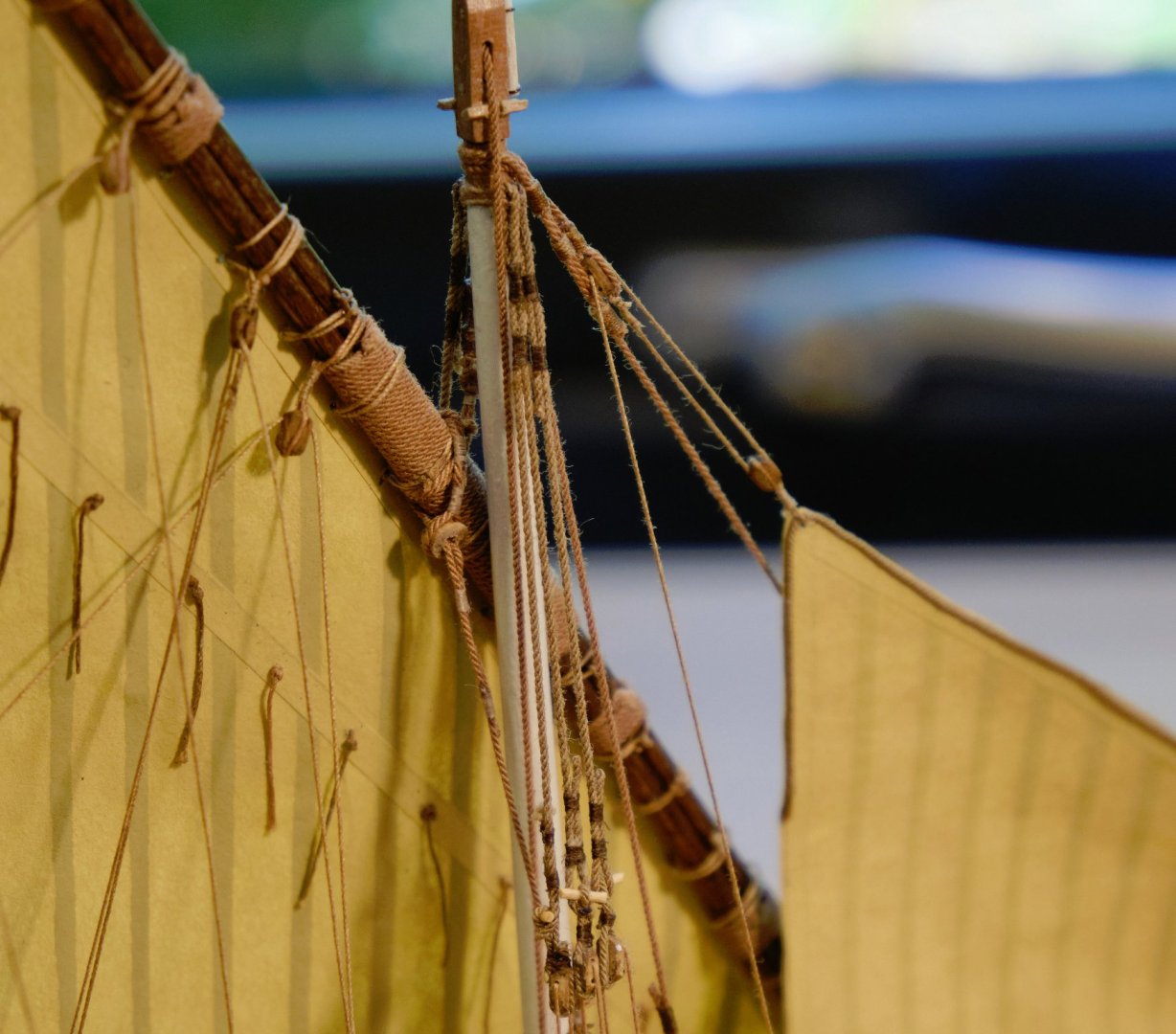
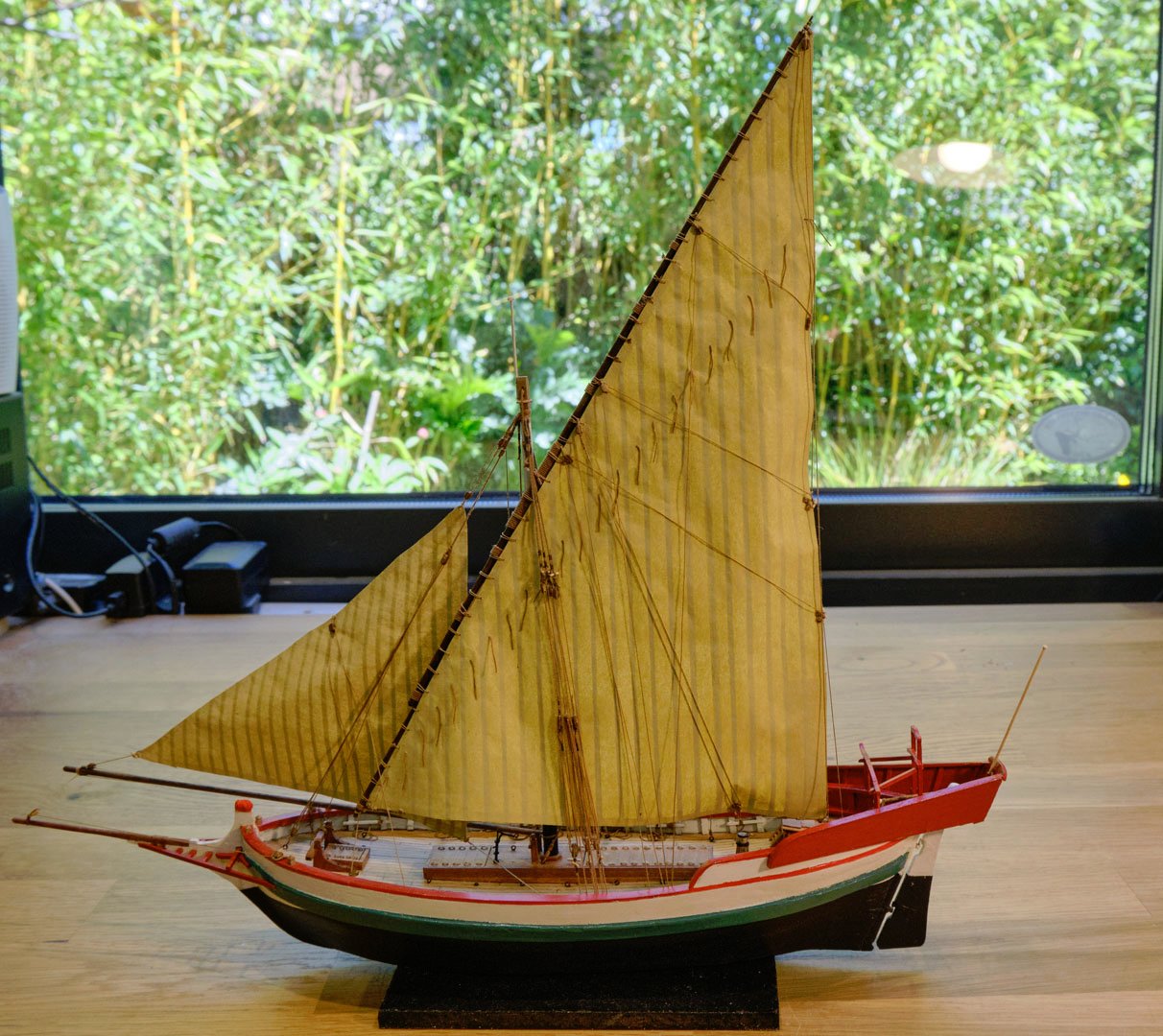
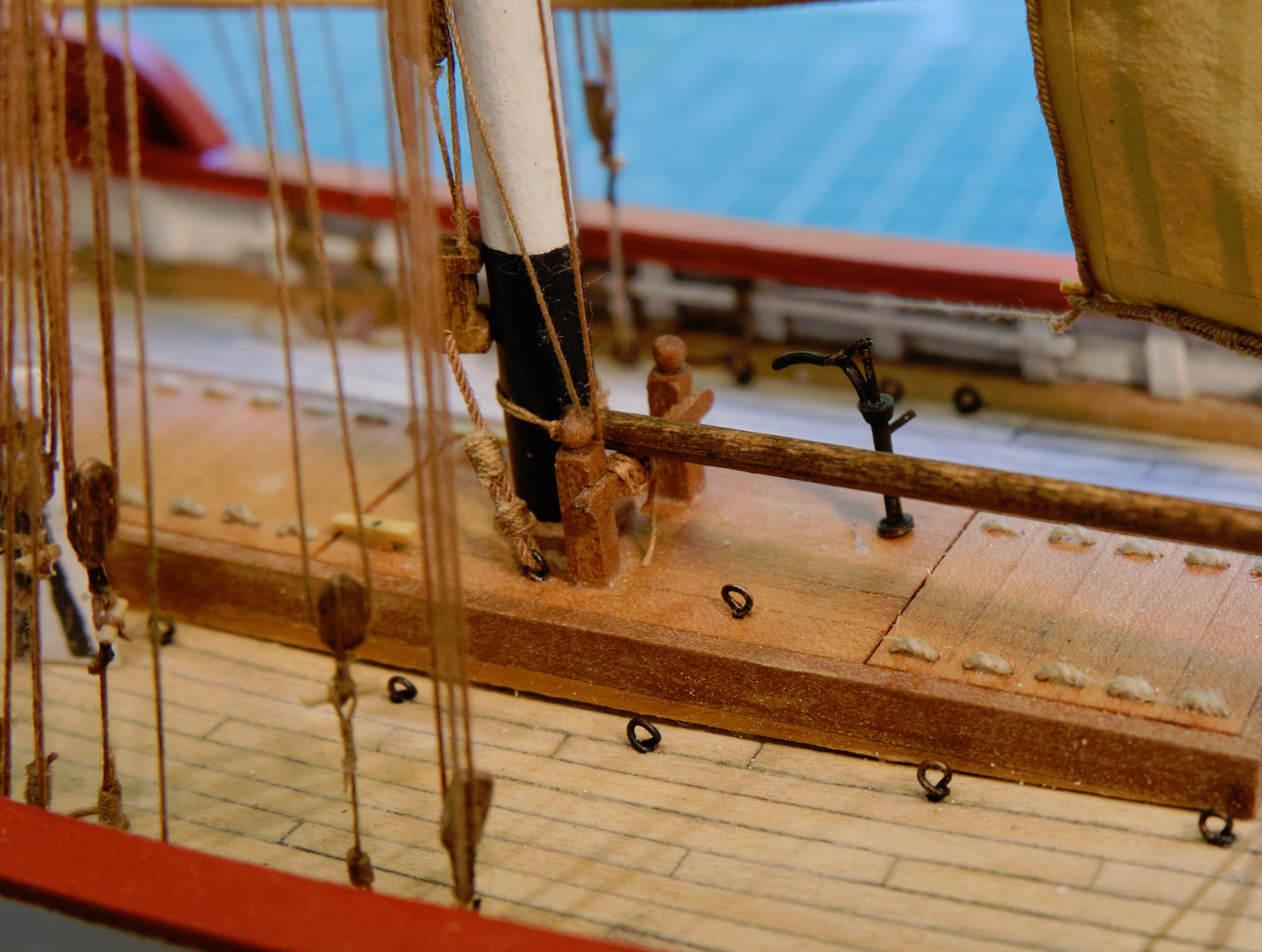
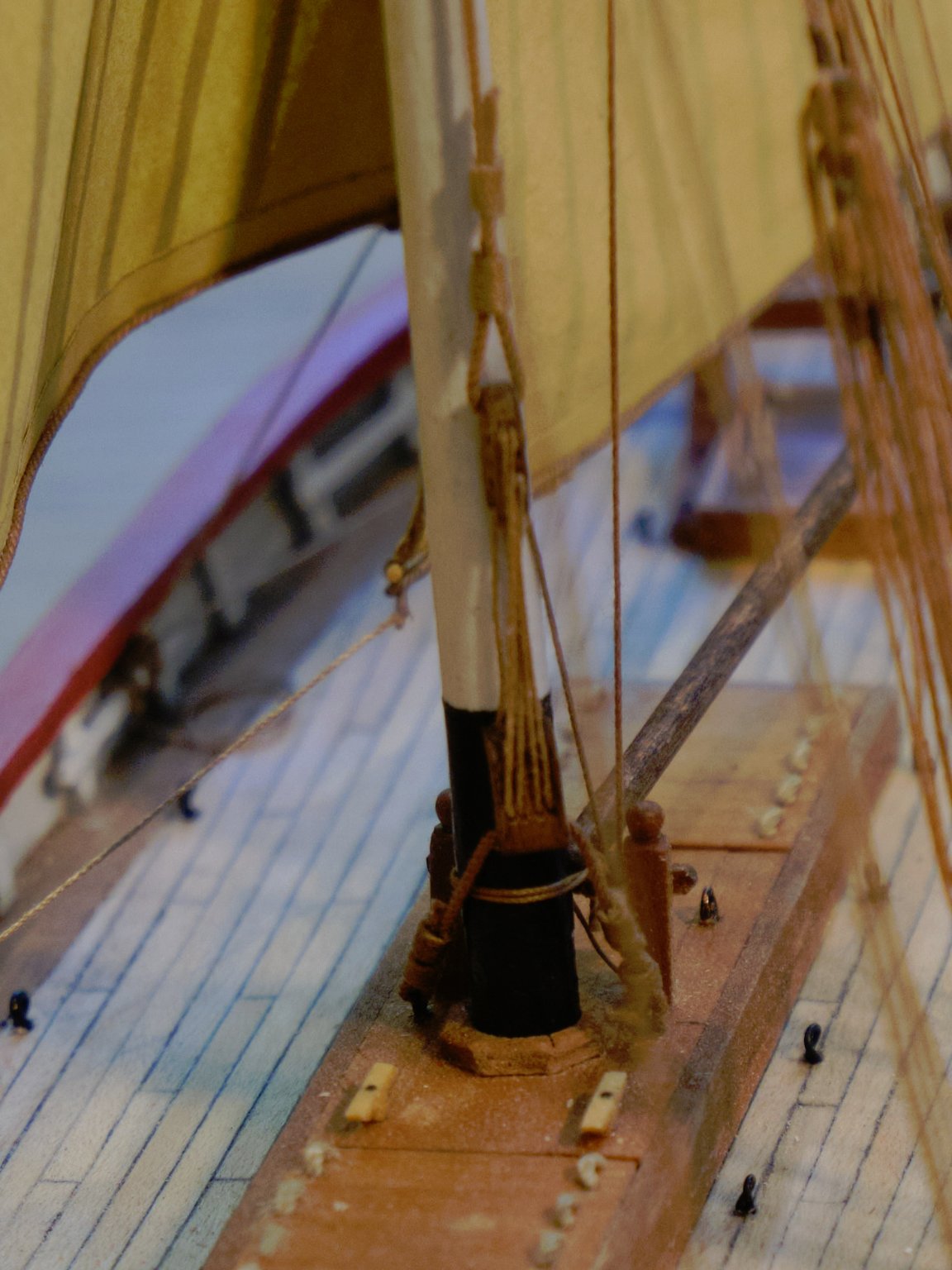
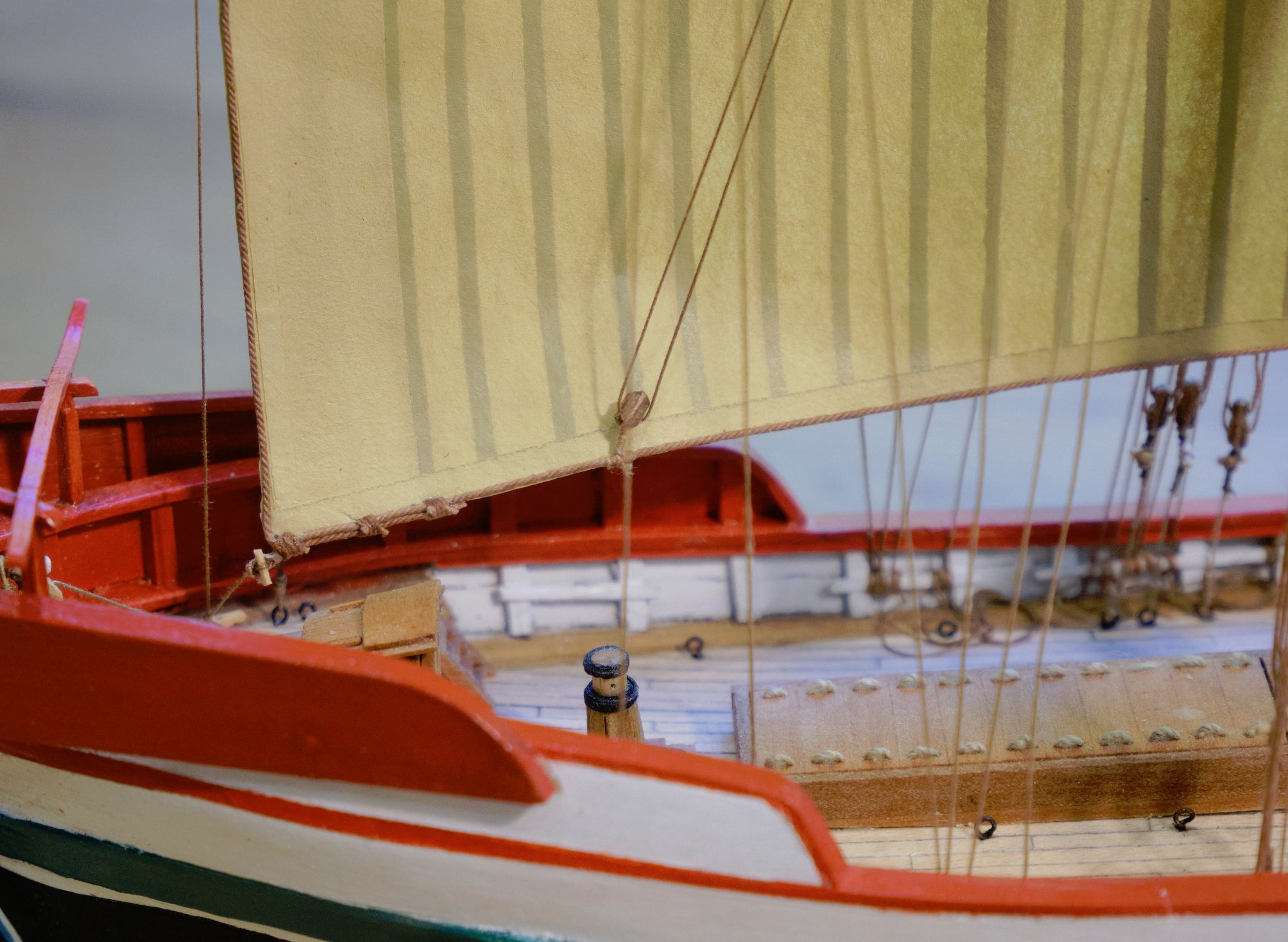
Rigging completed I’ve now completed the main rigging. The photos mostly speak for themselves, but I’ll start with some of the detailed ones, and follow with the general views of the model so far. Lateen halliard This is not very clearly shown in the monograph, so is worth a look in its final position. The fall is attached to the bitts in front of the mast. Lateen sheet The sheets and tacks on both sails are attached using wooden toggles, as was shown for the other parts of the rigging. Note the doubled bolt rope and its lashing to the foot of the sail. Parrel truss Here you can see how the parrel truss ended up, complete with its small wooden heart. Stemhead This stemhead (the capioun in French) seems to me to be unique to the Mediterranean lateen-rigged boats. It doesn’t appear in every such boat, but is certainly common. It looks like a roll of spun yarn. I made mine with white epoxy putty. In the monograph it is shown only in plain wood (the hull is unpainted in the monograph) so I took a guess at the colour and gave it the same red as on the rails. The photo shows it with its first coat, so is much lighter than the colour of the rails. This will be put right with further coats. Fore deck bitts This is just to show the view of the jib boom and the ropes on the bitts. Mast top This shows the port view of the top, with its parrel truss. General views That's it so far. I'm now working on a more sturdy perspex base, and will try other methods of making the sails. Tony
.thumb.jpg.2ab9ce3a7b935deb2825b01a04d795c7.jpg)
.thumb.jpg.3533f7d6d16a05968a02ab8b20fd5f82.jpg)
.thumb.jpg.f69564899f4744ac1ed411d06f75d794.jpg)
.thumb.jpg.37f9e598171e25f375df308ca2f9b43a.jpg)
- 41 replies
-
- 11
-
-

-

-
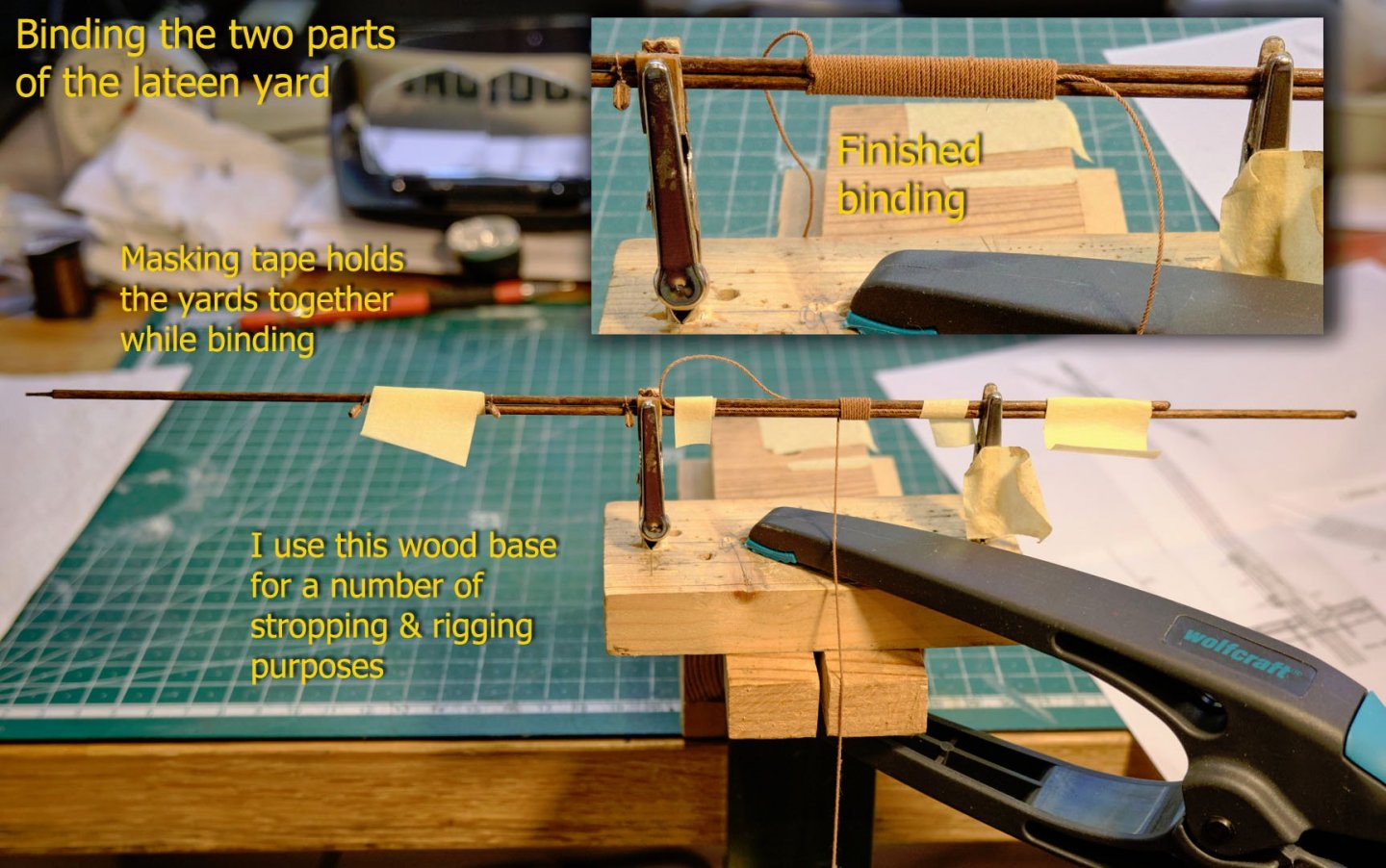
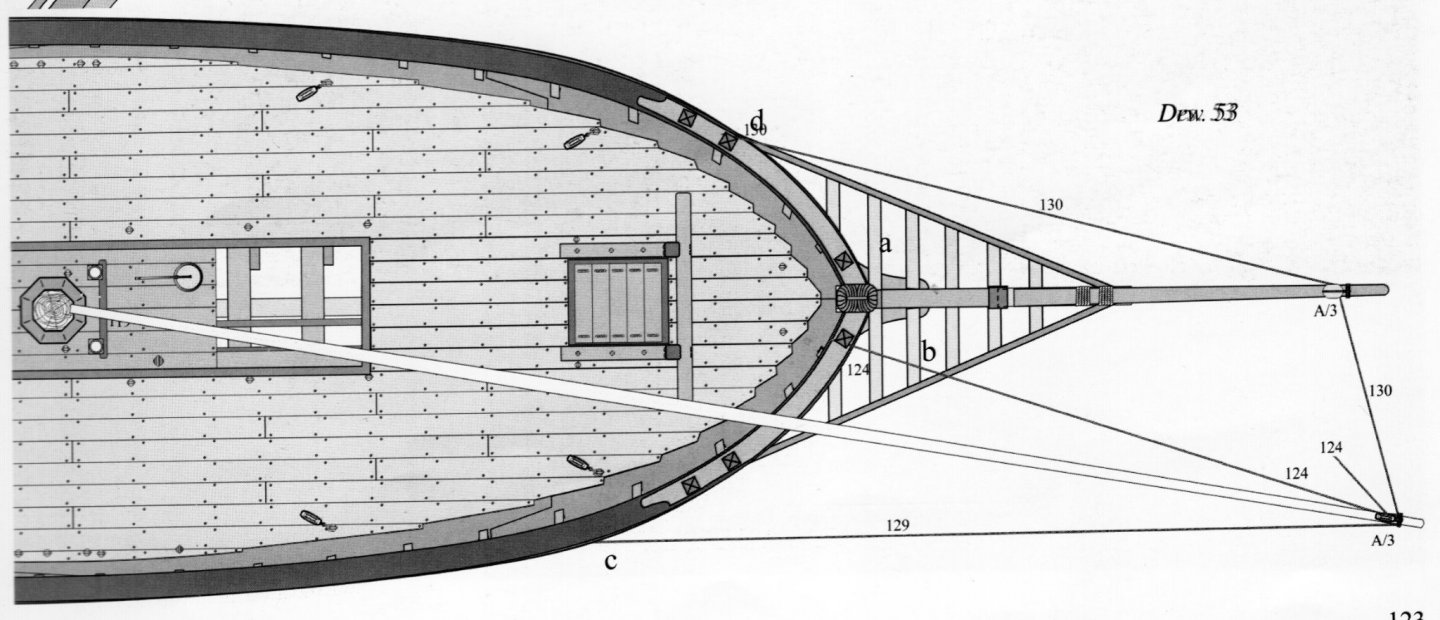
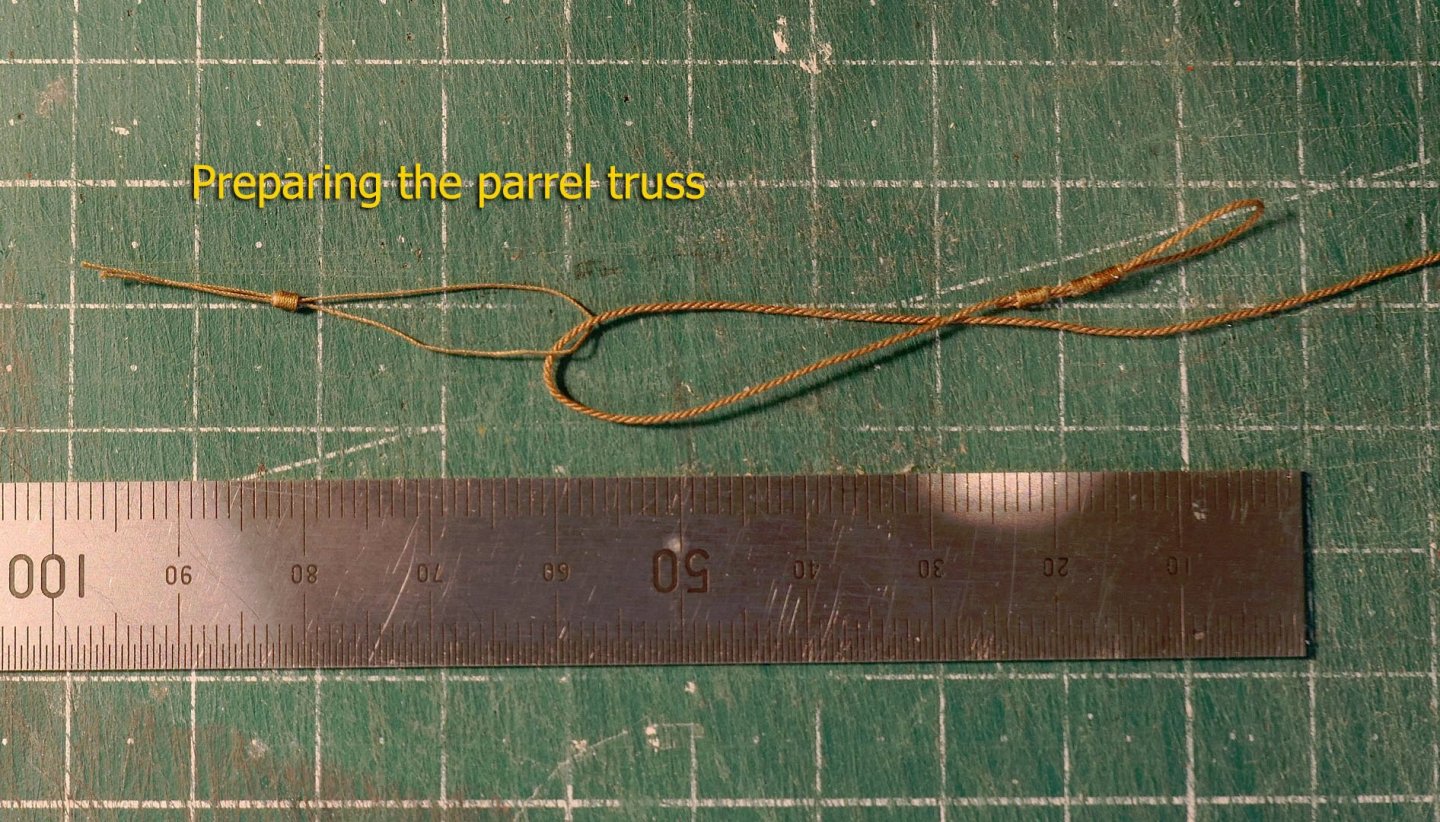
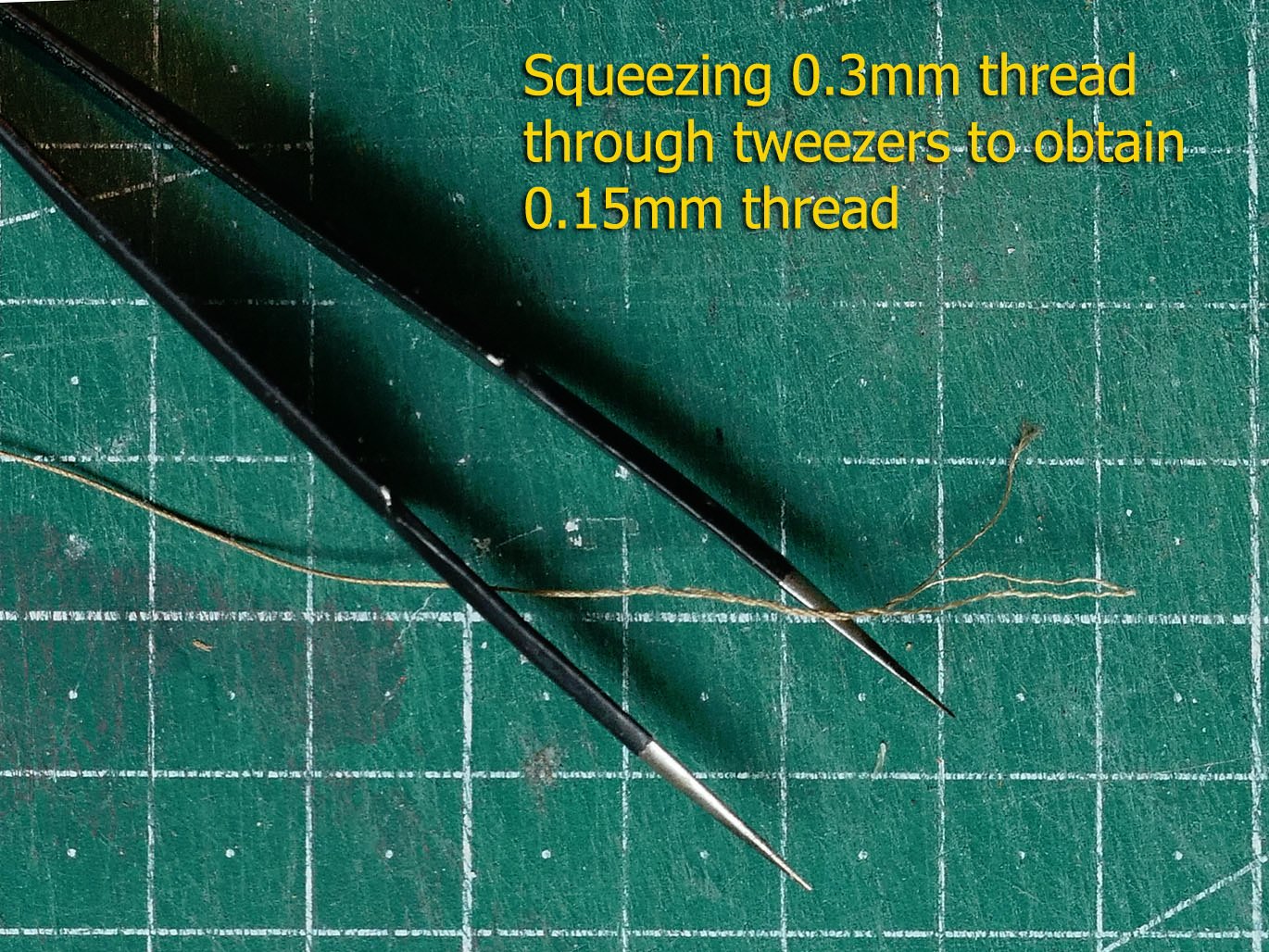
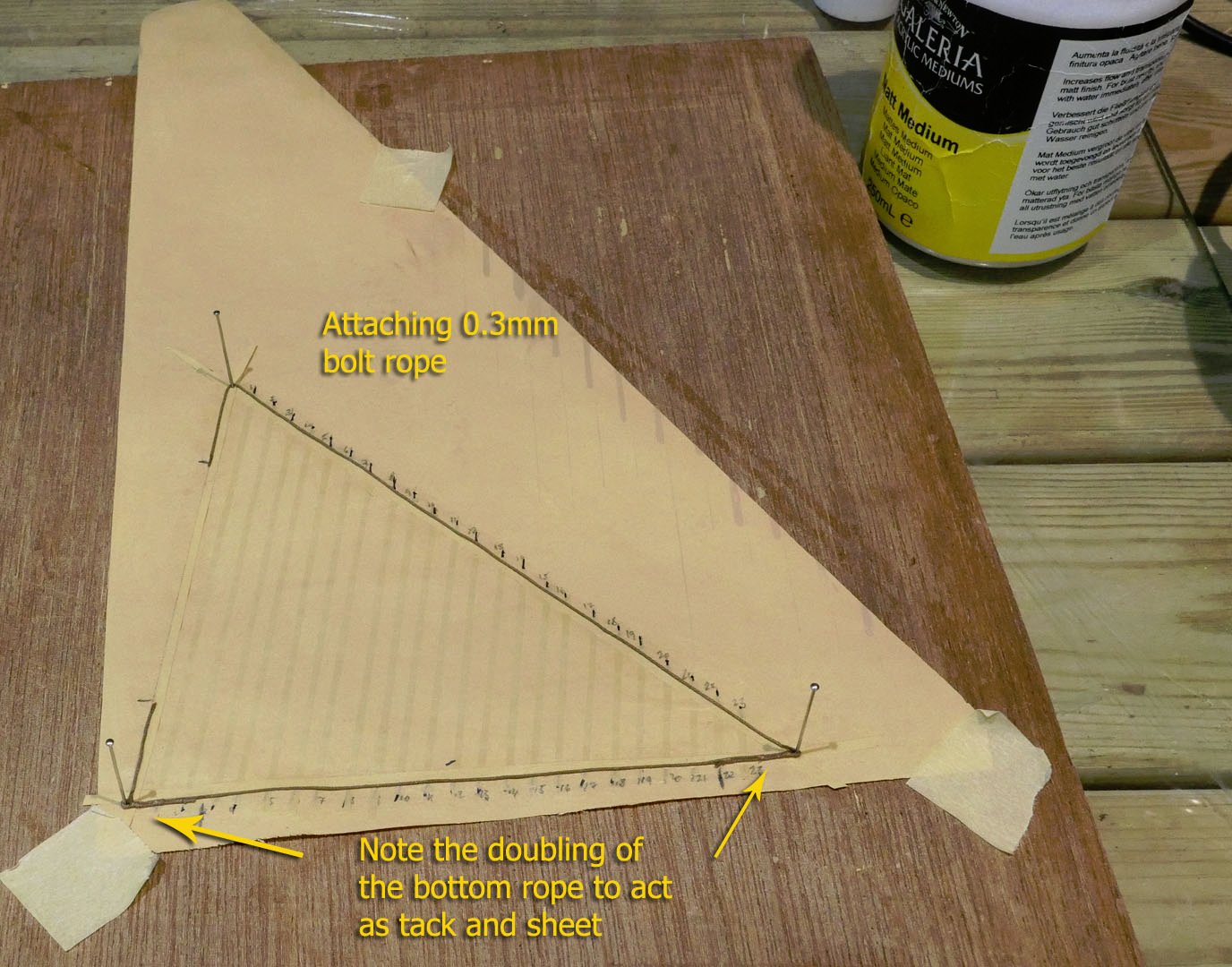
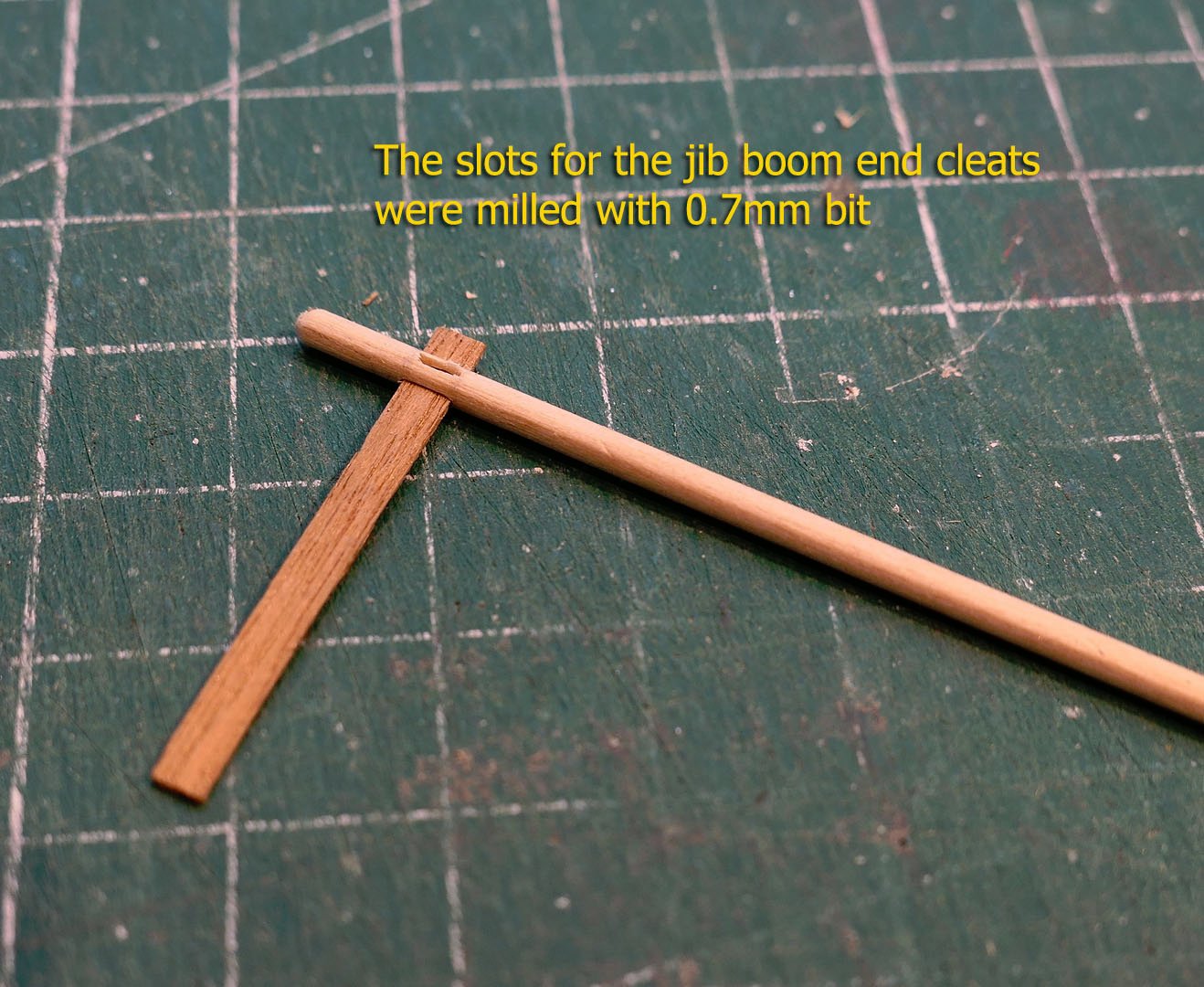
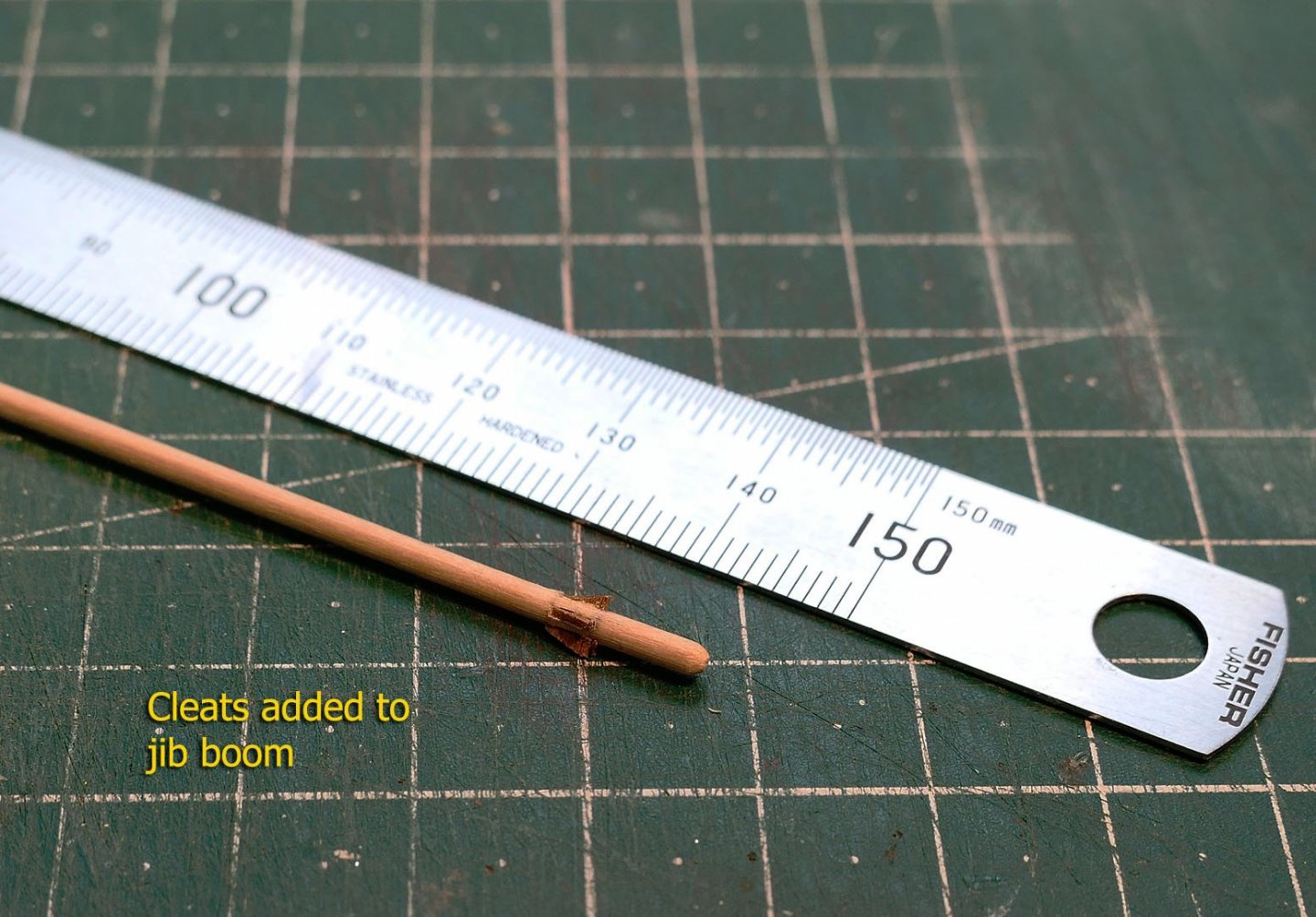
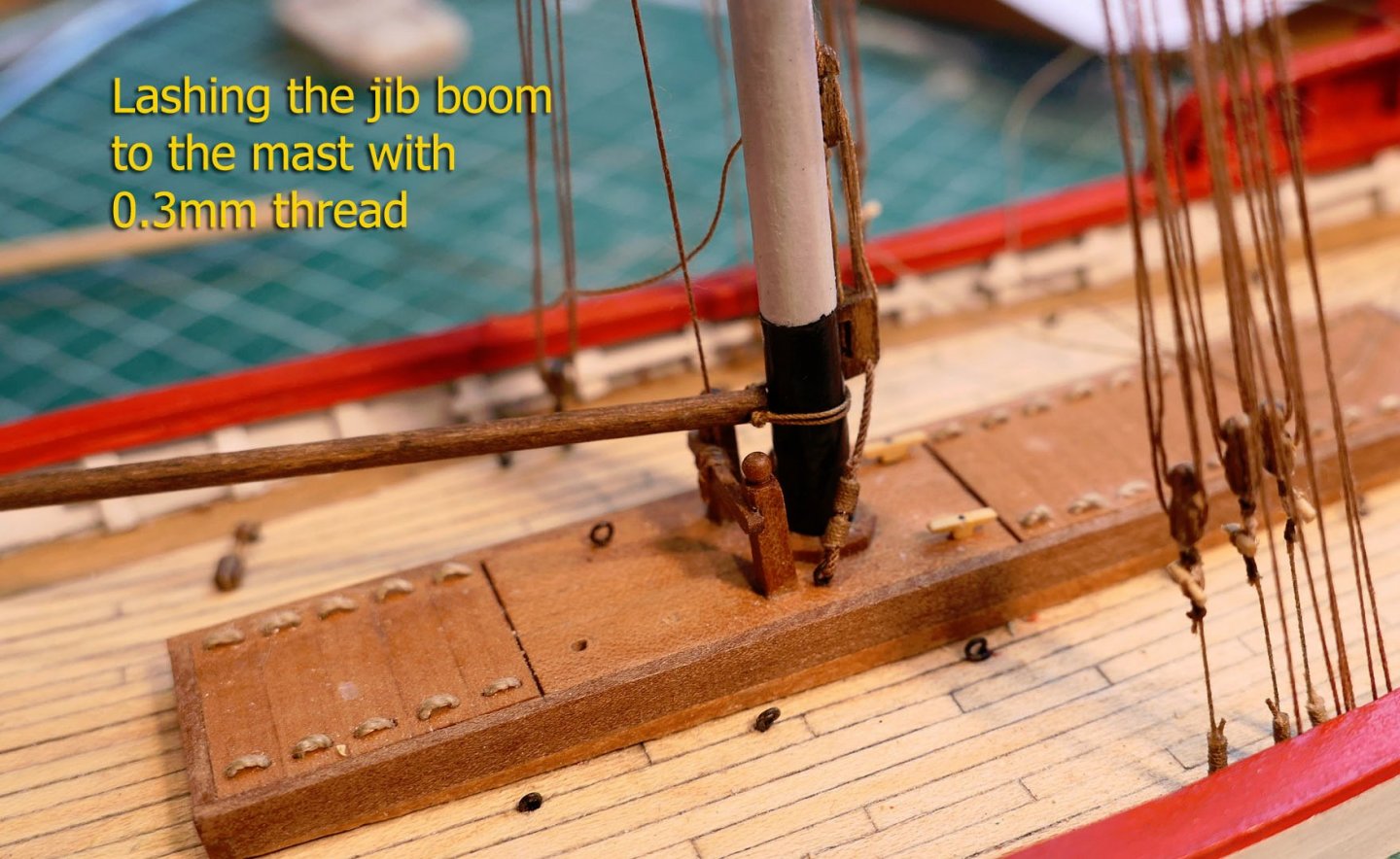
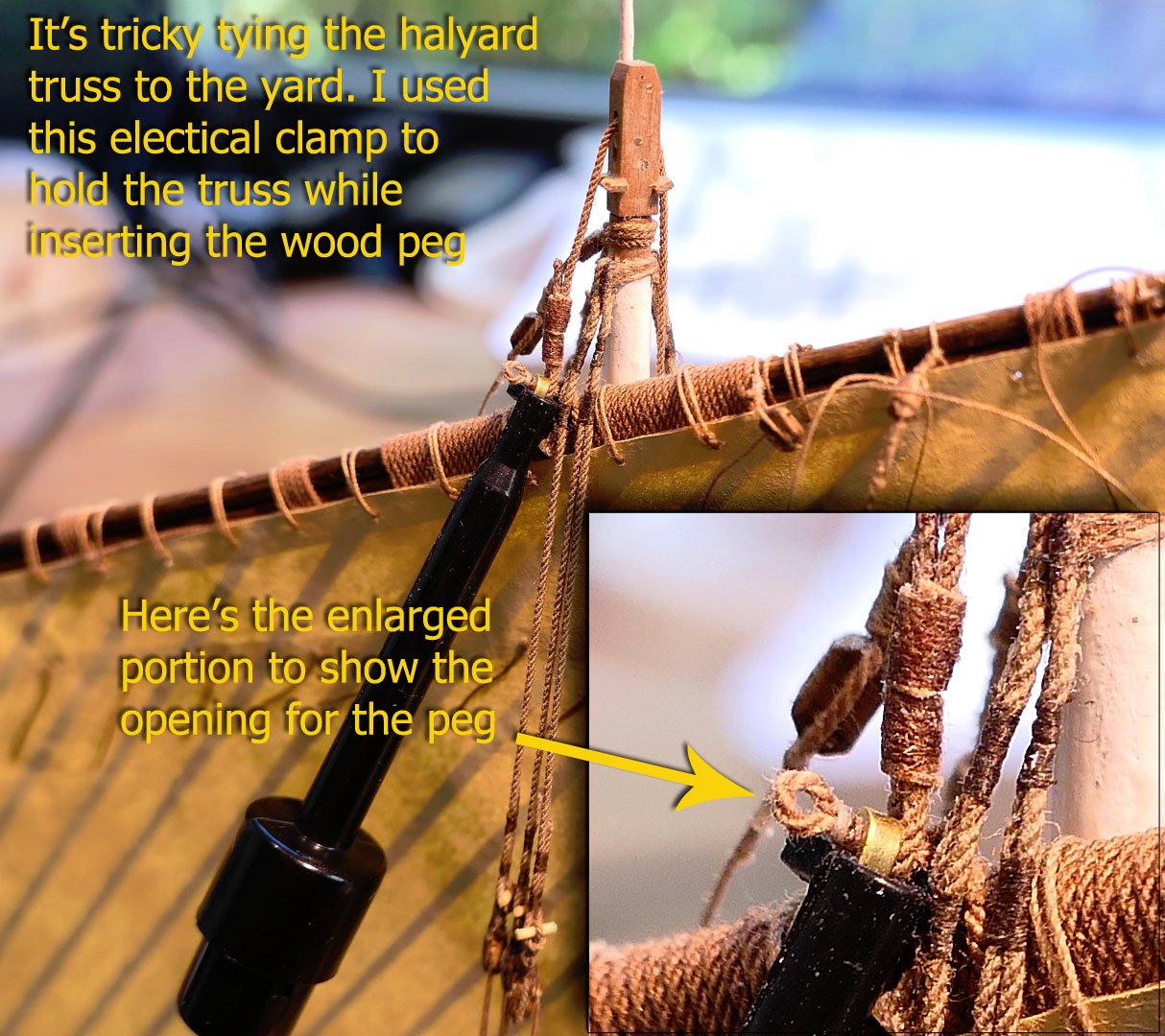
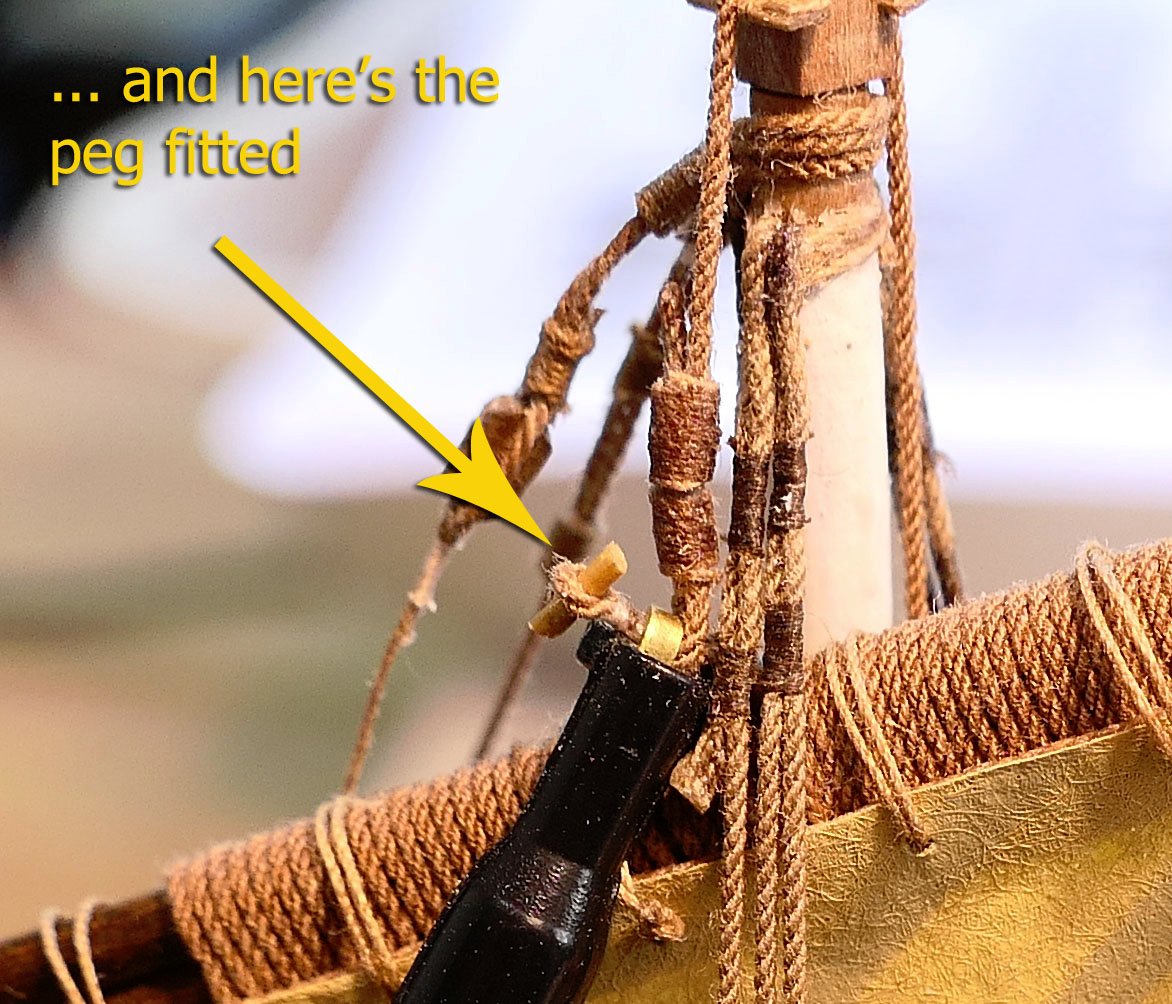
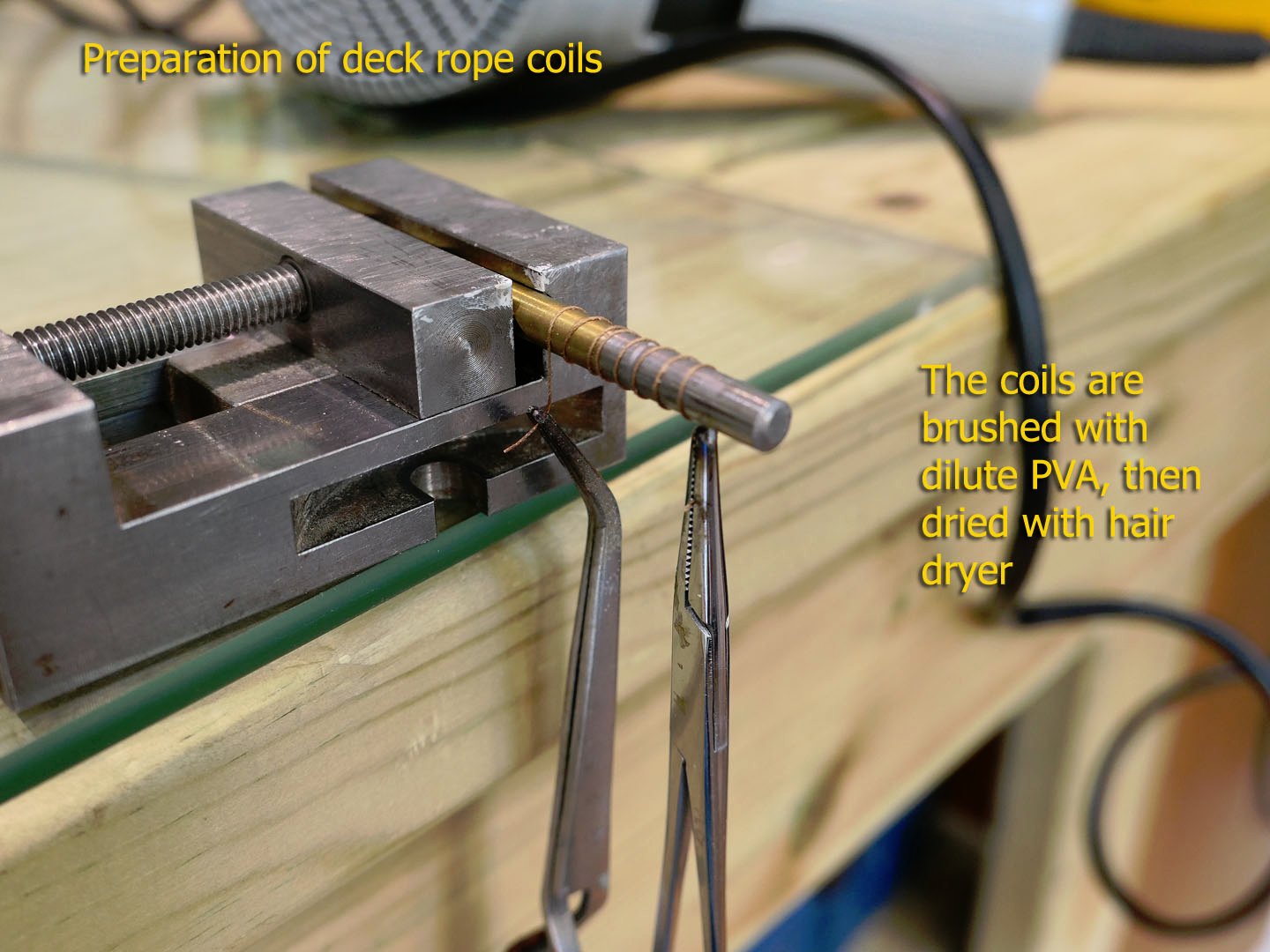
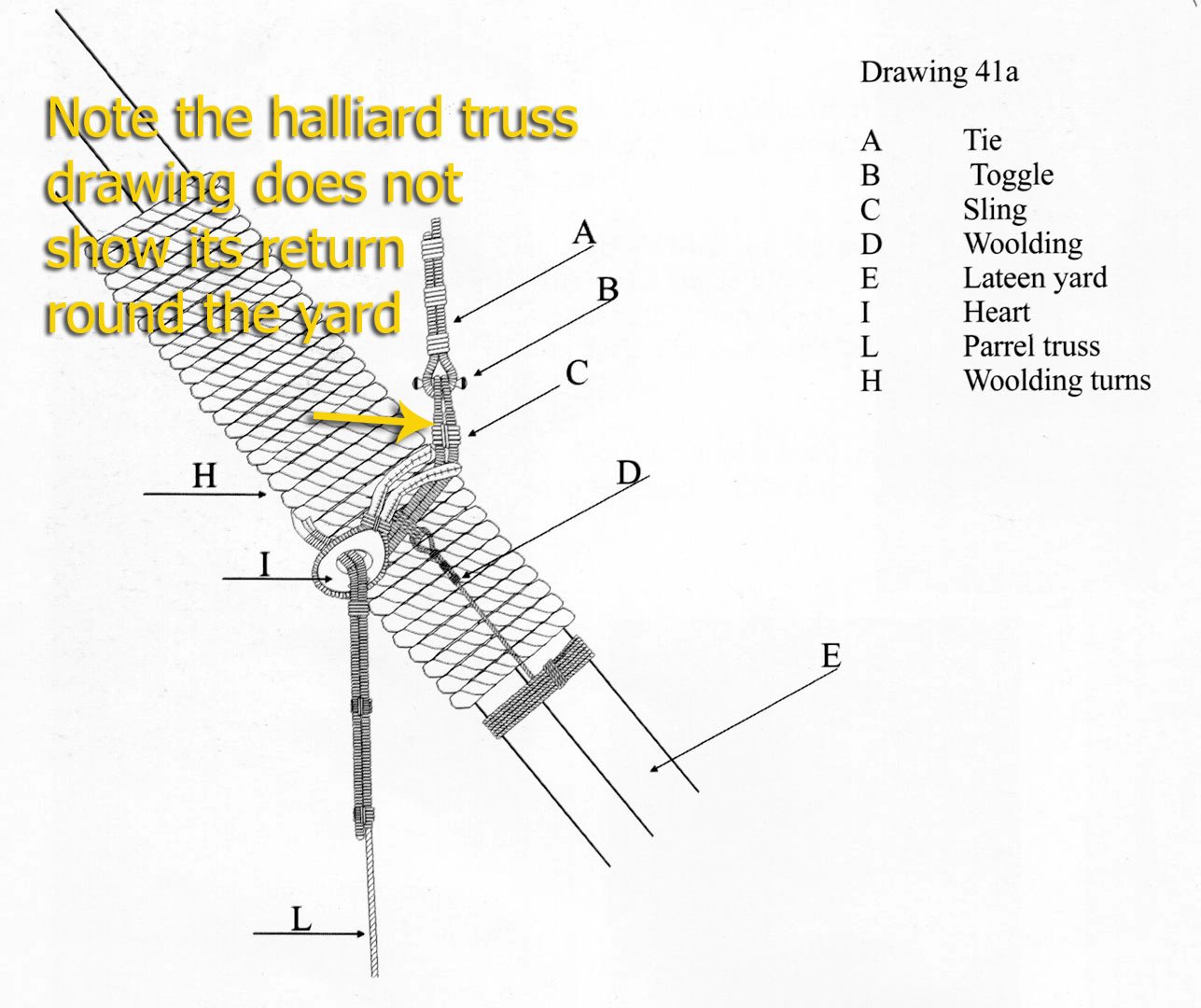
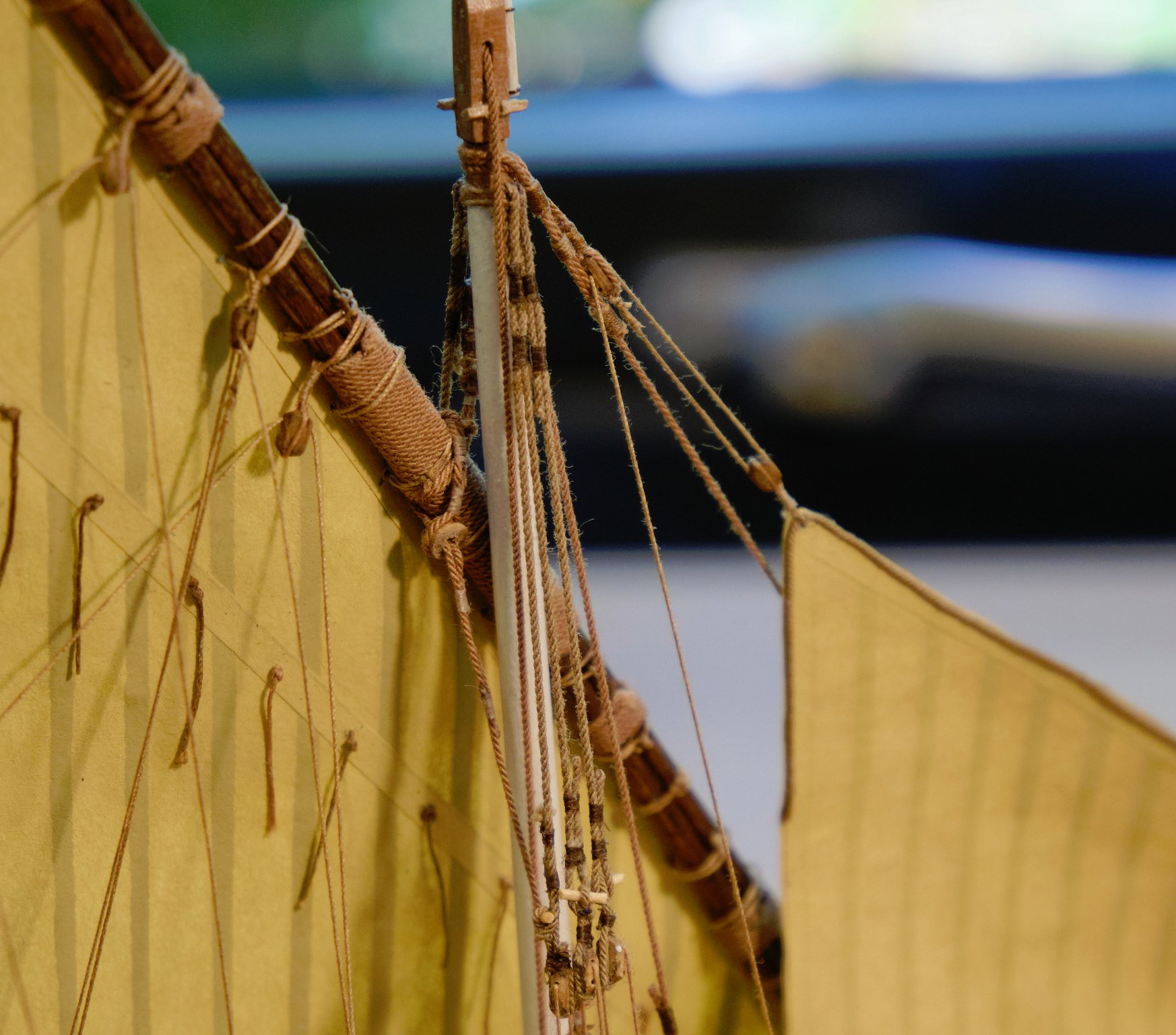
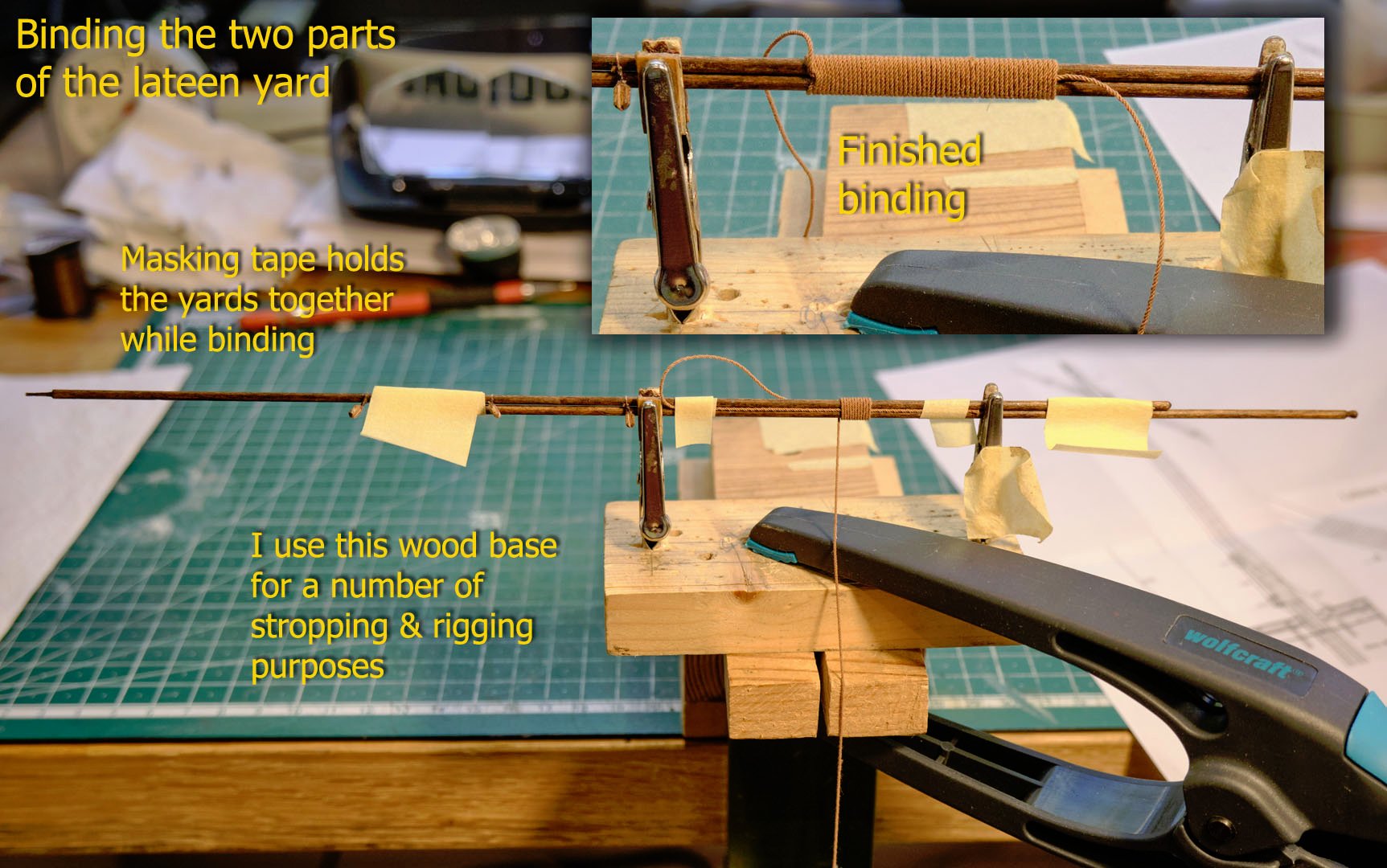
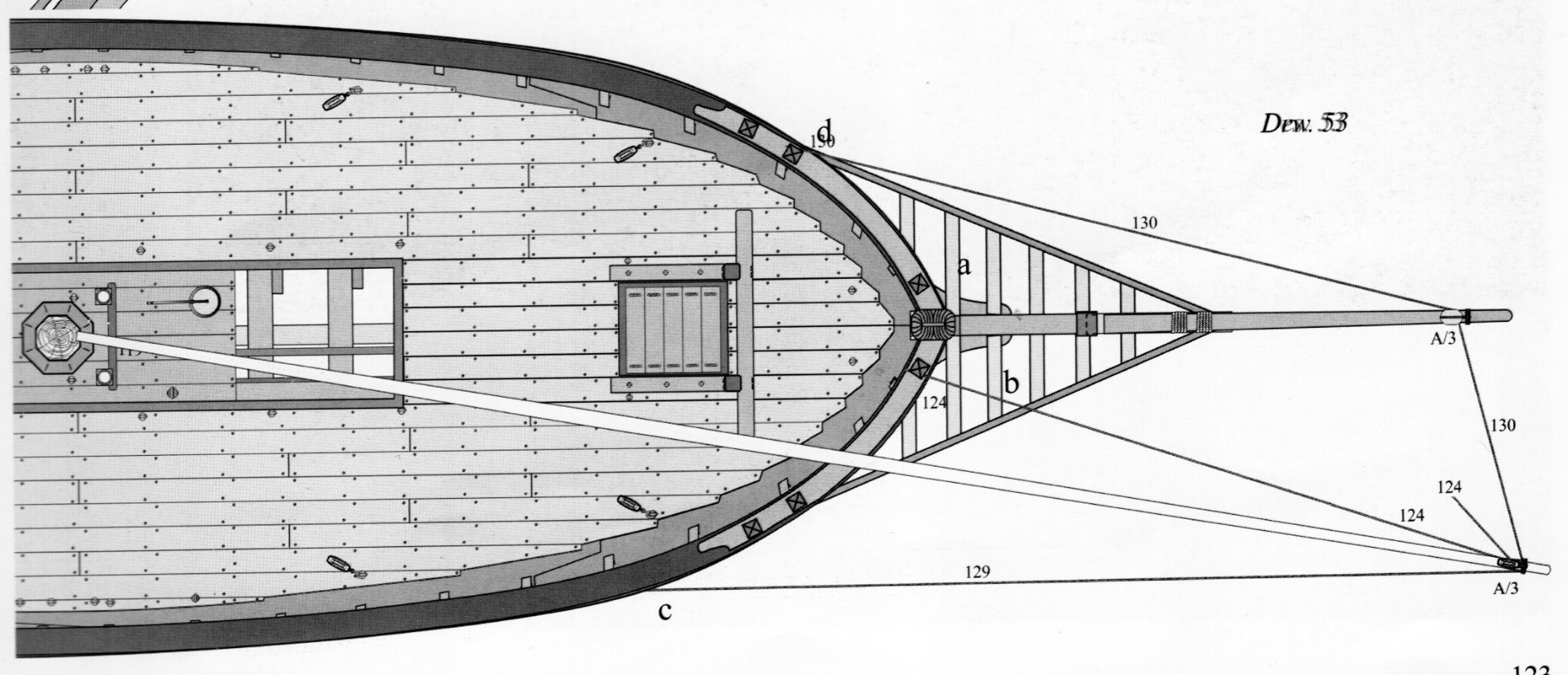
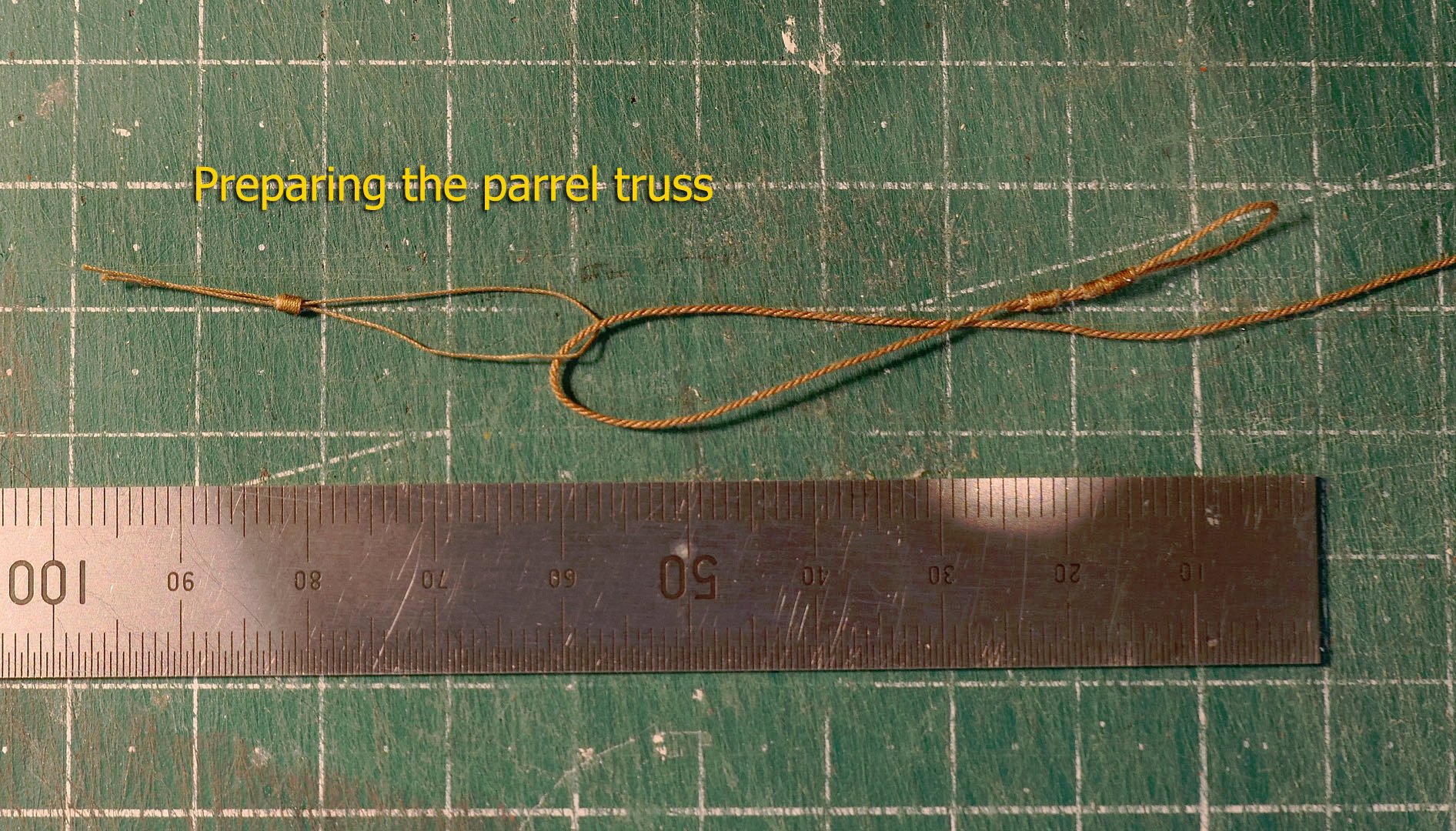
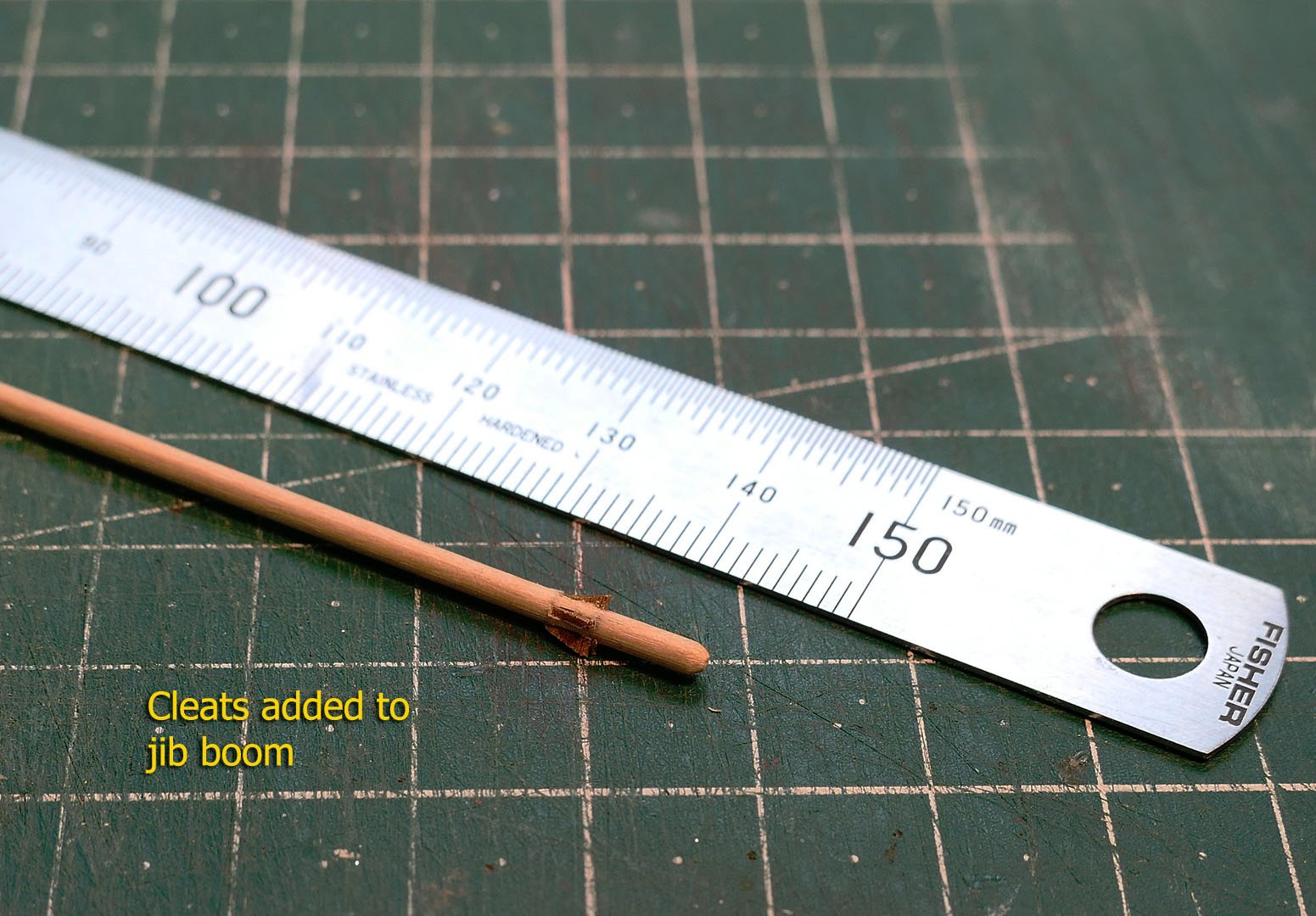
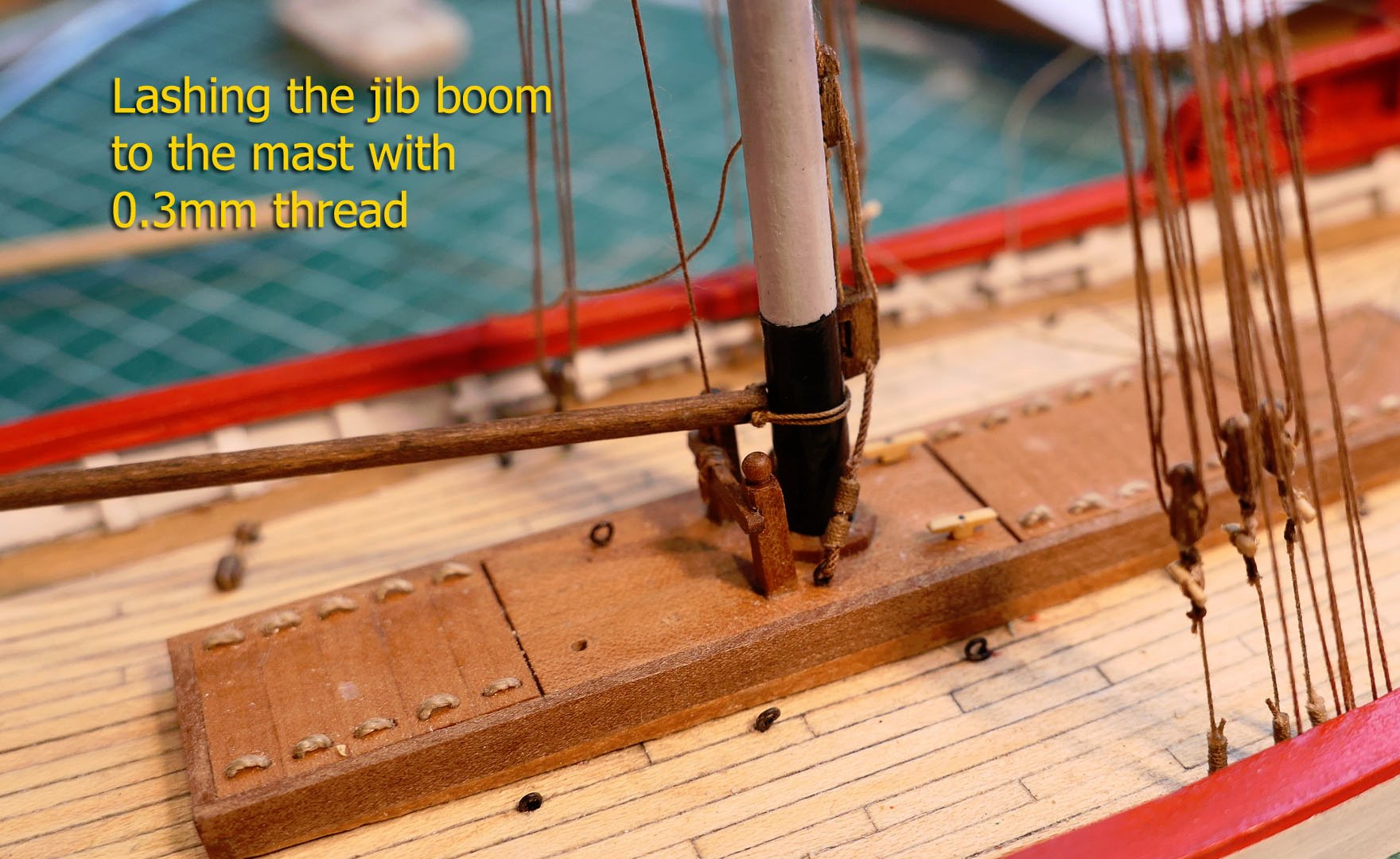
Continued Rigging This is not a full description of production of all of the rigging. I’ve left out lots of detail and numerous ropes, blocks and fitting. The following just gives a few of the main points to show some of the significant aspects of the lateen rig. The main visible point is the lateen yard itself. This is made of two overlapping yards lashed together. The picture (and insert) shows the use of 0.5mm rope to do this. A slightly tricky operation was making the halliard and parrel trusses. The diagram in the monograph shows them as follows. Note that the halliard truss requires a circular rope which is tied to form a loop at one end to accept the toggle holding it to the halliard. I just spliced the ends of a rope together and then formed the loop with fishing line. I don’t have a picture of that, but I do have one for the parrel truss (unfortunately without the small wooden heart I made from 2mm dowel). Fitting the yard by its halliard truss was also tricky. I managed this with the use of an electrical clamp. This held the truss with its end open (as shown in the insert) so that the peg could then be placed in it. I found after a while that the use of fishing line, although wonderfully fine, was very tricky to use without its disintegration and with the need to seal it with CA glue. Eventually I decided to unravel the 0.3mm DMC Cordonnet 100 thread which I like very much for its strength. I used a pair of fine tweezers to do this. It was far simpler and quicker than I thought it would be. (I also tried this on ordinary cotton sewing thread, but this was a failure as it just disintegrated). The jib boom There are two ways of fixing the jib. The simplest is to tie the tack directly to the block at the end of the bowsprit. The other is to use a jib boom. The monograph shows this as follows. The first step was to mill the holes for the cleats at the end of the boom. The cleats were then glued and shaped as follows. The boom was then lashed to the mast. The monograph does not show this at all clearly, but using the photos from Fissore’s site I was able to see it was a simple lashing with a double turn of the rope. Sails I made the sails in the usual way with ModeSpan, coloured with a mix of Titanium White, Unbleached Titanium and Yellow Oxide. The seams were done using the same mix using a drawing pen, but with a touch more Unbleached Titanium. The seams and bolt rope were fixed using matt medium. Note the foot rope is doubled over to hold the tack and the sheet. Rope coils I prepared rope coils for lying on the deck. This was done by winding them loosely round a 5mm drill, then fixing their shape with white PVA. Several coils were thus made in one go and cut into coils of two or three turns. Flag and pennant I experimented with the use of ModelSpan to make the flag and pennant. This involved painting the ModelSpan with acrylic varnish on both sides (in an attempt to make it impermeable to printer ink). The paper was then fixed to a sheet of ordinary printing paper and printed with an inkjet printer. The tissue was then removed and covered again with varnish. My first attempt ended with smearing printer ink over the flags. The second attempt was better, but the result was so transparent that it looked ridiculous. I then covered the rear surface with white paint to stop the translucency, but that also ended in failure as the white ink still permeated the flag in spots. It also lacked good resolution of detail. So I’ll just have to keep trying. That’s it for this posting, but I have completed the rigging and I’ll deal with that shortly in the next post. Tony
.thumb.jpg.8c001a754e78302b9f81a89066dda615.jpg)
.thumb.jpg.a1df6daaa09d93dadde449dbe42c6275.jpg)
-
Both @Dubz and @Siegfried bought these Sherbourne plans (of which sections were shown) and there was much critical discussion of them, especially from @Stockholm Tar, when I was building mine. For example about the gunport lids, the horse and the windlass. The belaying plan, although obviously not on the original plans, also came in for much discussion, especially round the bowsprit. Tony
- 1,039 replies
-
- 3
-
-
- ballahoo
- caldercraft
- (and 2 more)
-
I am totally out of my depth here, but although the cheap Chinese carbide micro-mills used for cutting PCBs have a reputation for being very brittle and not useful for wood, I have used the 0.4 bits as mills (as well as drills) on pear and boxwood and while I certainly did break some in early experiments, I found that if I go to a depth of about 0.1mm at a time, and travel slowly with my Proxxon MF70 mill, I have no breakages and a clean line. The downside is, of course, that it takes a longer time and patience is needed while watching the bit so that I stop if there's the slightest sign of bending. Unfortunately this still hasn't improved my skills very much! I apologise for treading where angels would rather not, but I thought I'd throw this in as an example of an amateur's experience. Tony
- 433 replies
-
- 5
-
-
- open boat
- small boat
- (and 1 more)
-
Well said, George. We all have our own particular motivations. I make models for my own enjoyment, not for others. I enjoy the simple exploration of how to do it and still come out with some kind of a complete model. I also like exploring the different types of look of ships and boats. In any case a true replica would not only involve something at full size, but also detailed photographs of the original, together with detailed explanations of the actual rigging practice and sail plan of each particular captain of the boat in question, together with a choice of the actual time of a particular day that the replica was to be built. Some folks in fact try to do that, but each to their own limits; the level of faithfulness is up to each modeler. I still much enjoyed your Sherbourne, especially as you helped me understand how to interpret plans and instructions. Thanks for the continuing stimulation! Tony
-
On my plans scarf A and scarf B are exactly the same size. You could trace them to check or use dividers. I note that there is a fold going across the tip of scarf B, so is this where your measurement might be going wrong? The other thing is that if you have used scans or photocopies to go to 1:24 there may well have been distortions in the scanning process. Gérard is very precise in his drawings, and when there are errors in Ancre plans the ones I have found are always due to mistakes by the author. Questions about the Rochefort have been pretty thoroughly examined in the Marine & Modélisme d'Arsenal forum, so you could also have a look there about issues that come up as you build. Good luck with the answer! Tony
-
Thanks very much, Eamonn, Roger and Casi. Really appreciated, coming from builders such as yourselves. Tony
-
Well, there are plenty of others who have ended up making the same decision. I've often had to go several steps back, and take it as a learning experience. I hope all goes well on the re-do. Tony
-
Sure it can't be straightened out? Under a heavy board for a few days, after wetting perhaps. I don't know as I've never tried such a thing, but there may be a solution. Better to pause before a rebuild, I would think. You've done so beautifully so far. Tony
-
Very nice. Tricky thing, but buoys will be buoys. Tony
- 1,039 replies
-
- 1
-

-
- ballahoo
- caldercraft
- (and 2 more)
-
Great thought about those cheap collets which can be used as clamps. Thanks a lot! Tony
Portfromfrontabove.jpg.832ebd17bd2a54748f73f8ee813ff055.jpg)

.jpg.e72401a16c6a86b05cd7a330cf1272f2.jpg)
.jpg.921b9fa7a7128124a51f85da9add8ead.jpg)
.jpg.5442d1fcfeb22d235c1ab878087c4c95.jpg)
.jpg.50df049795c0647eeea25d959d246069.jpg)
.jpg.7559ee21824fde8f551ae148458315ac.jpg)
.jpg.3218a4834eb5ec725c488c9a7178deb6.jpg)
Our Emblem ®
