
HOLIDAY DONATION DRIVE - SUPPORT MSW - DO YOUR PART TO KEEP THIS GREAT FORUM GOING! (Only 20 donations so far - C'mon guys!)
×

mbp521
-
Posts
1,002 -
Joined
-
Last visited
Content Type
Profiles
Forums
Gallery
Events
Everything posted by mbp521
-
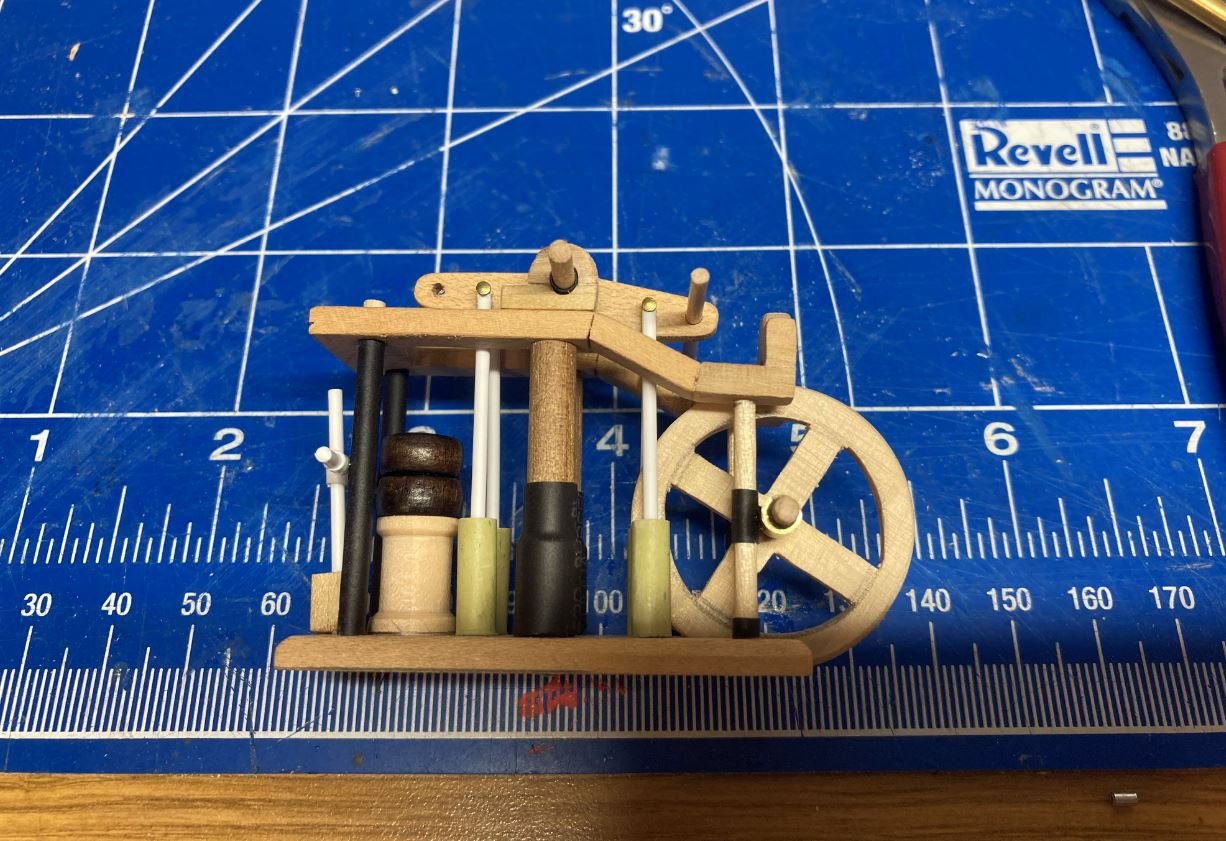
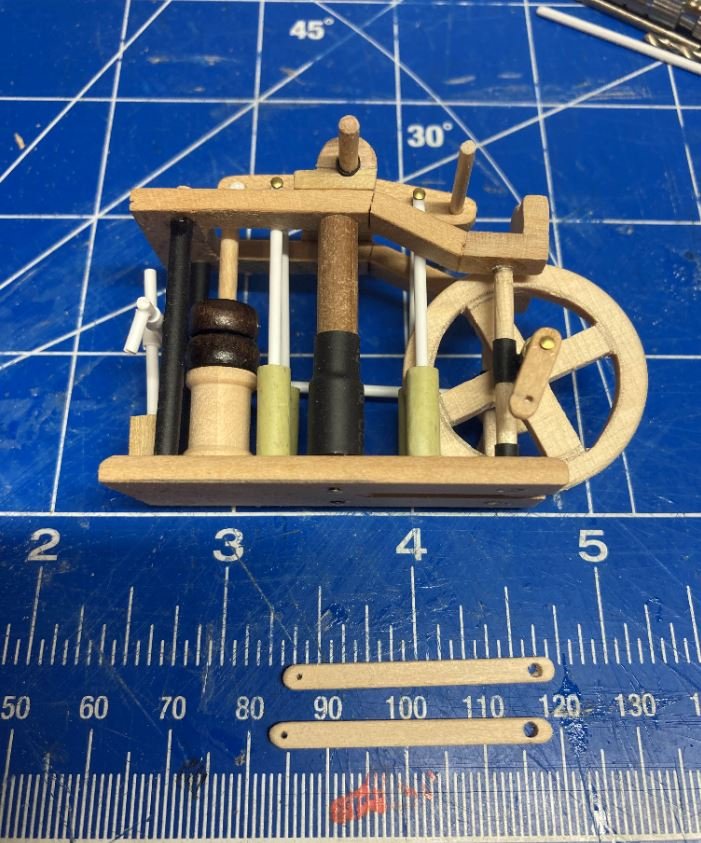
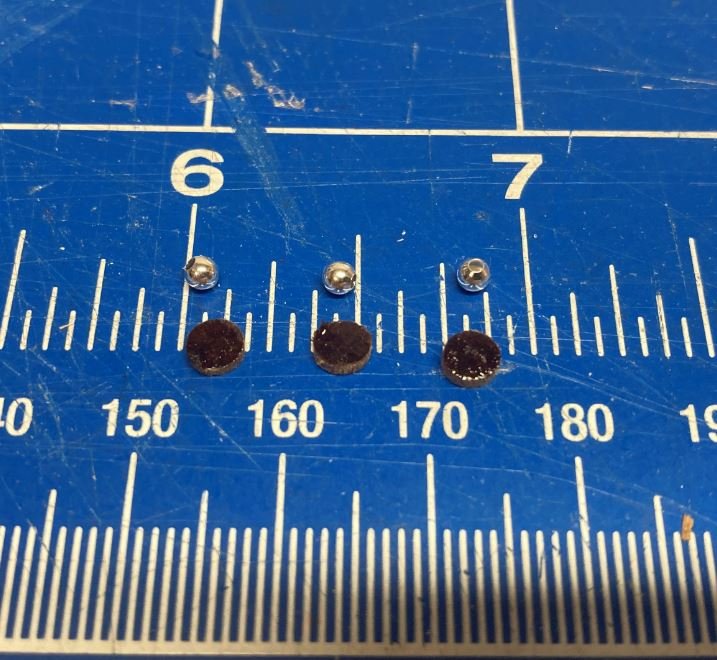
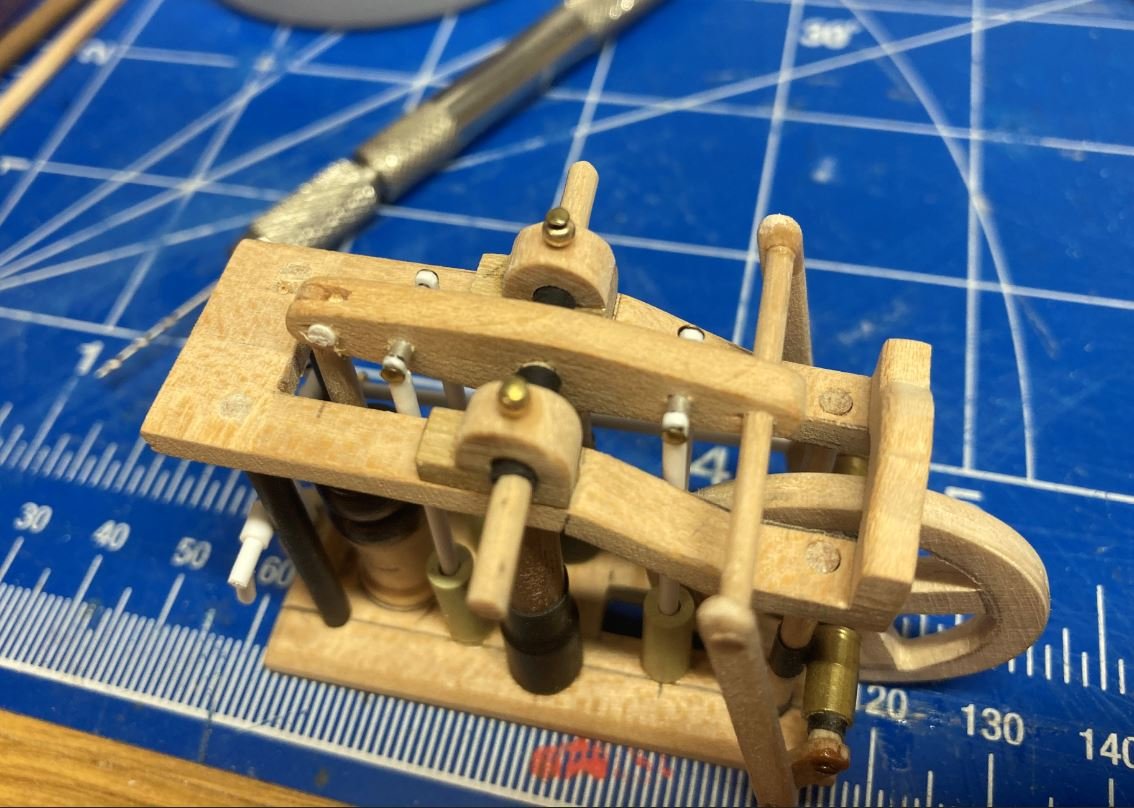
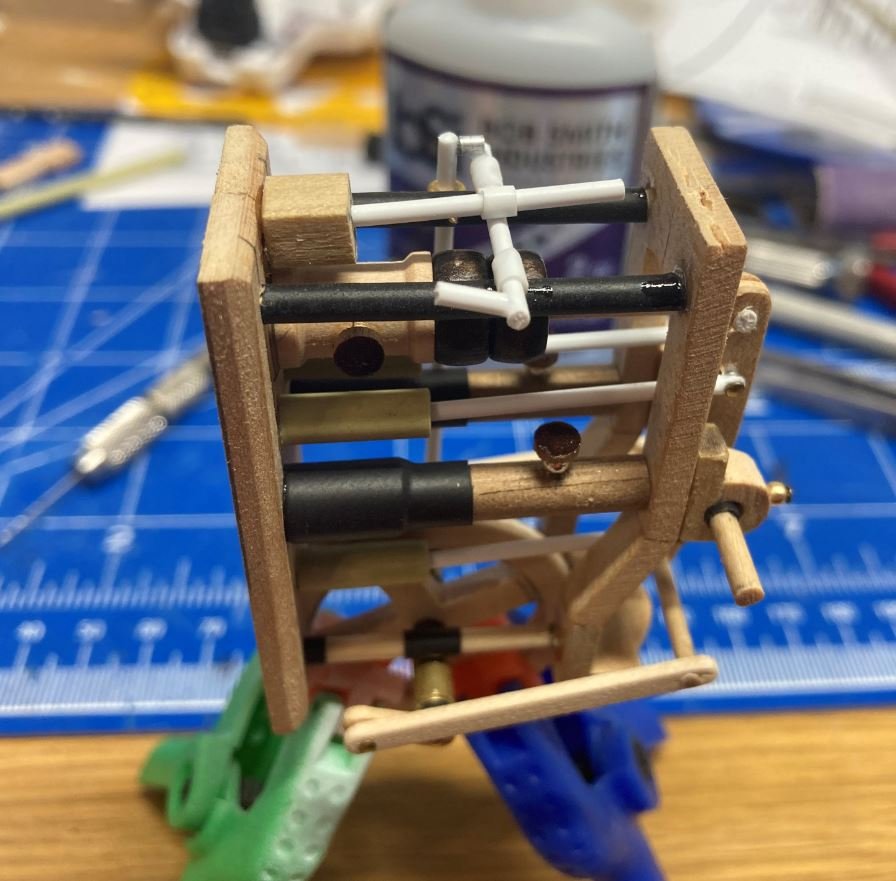
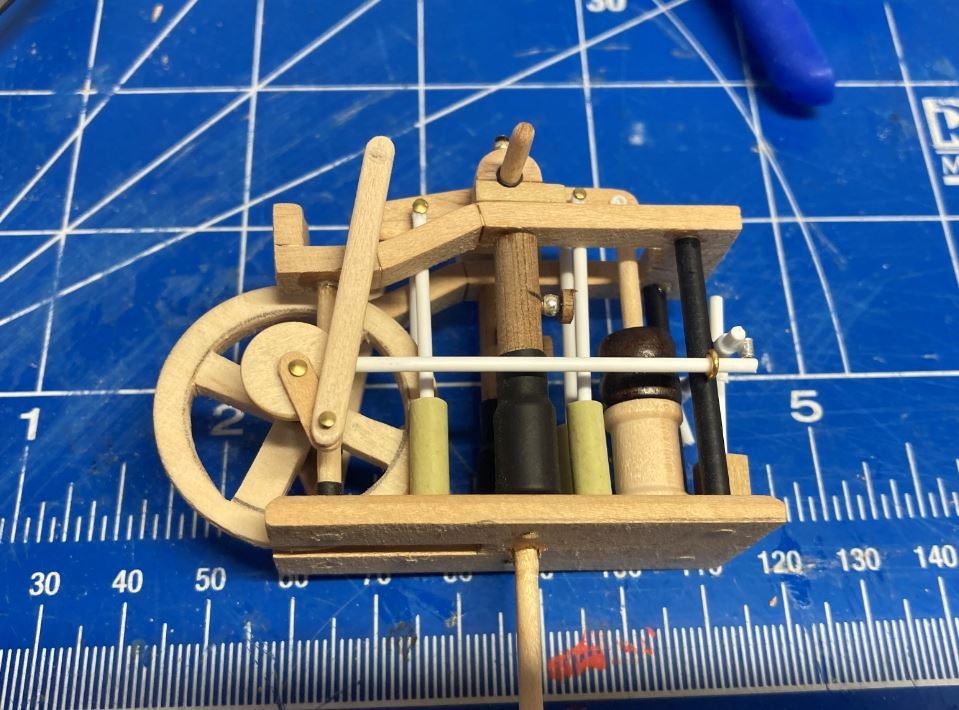
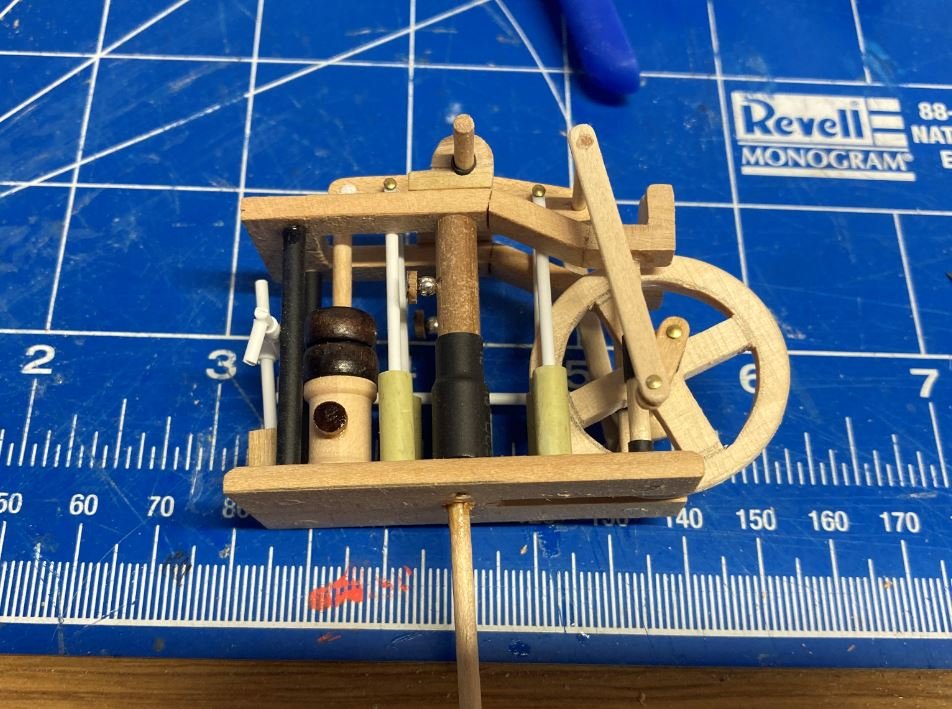
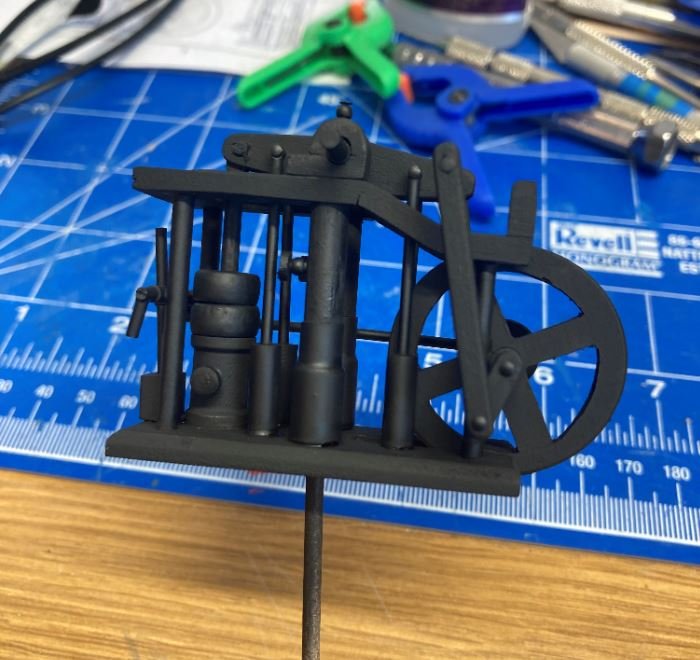
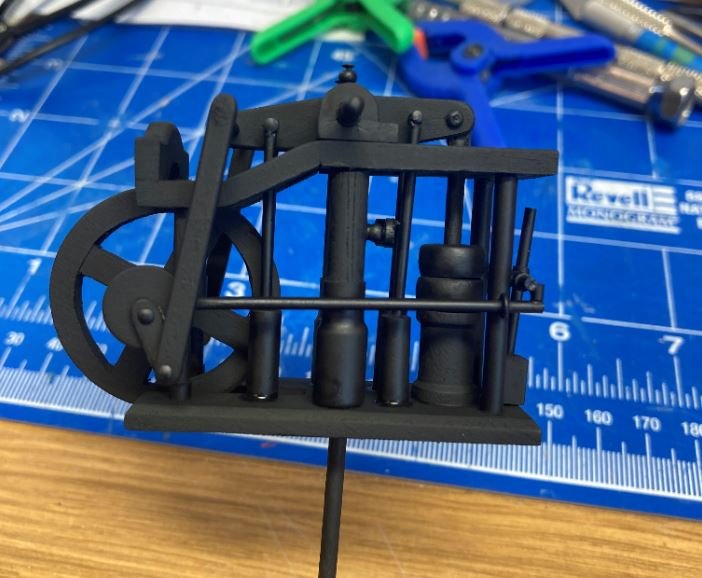
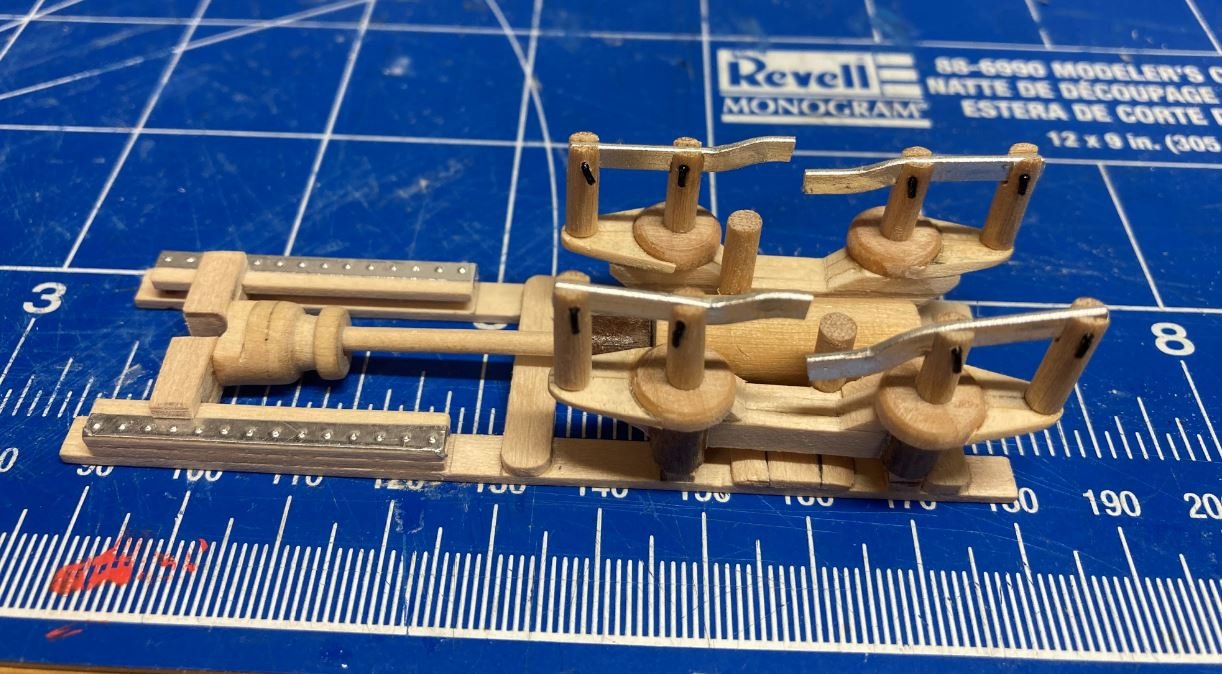
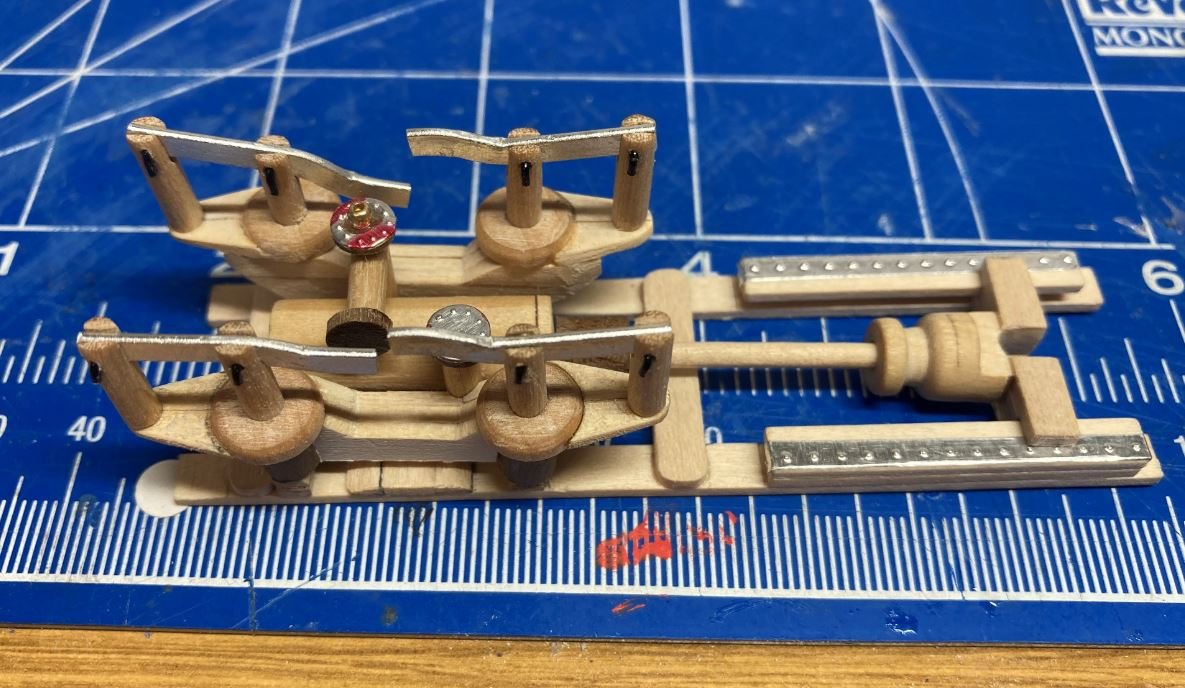
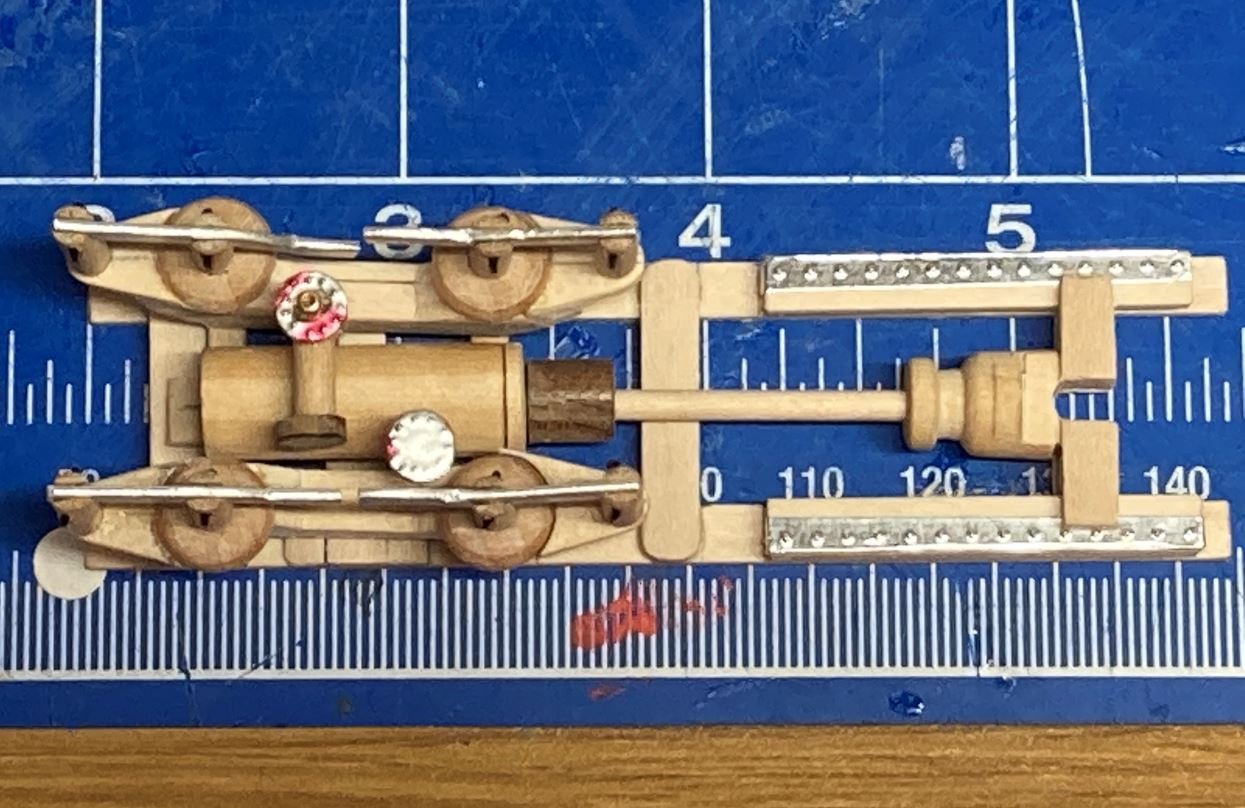
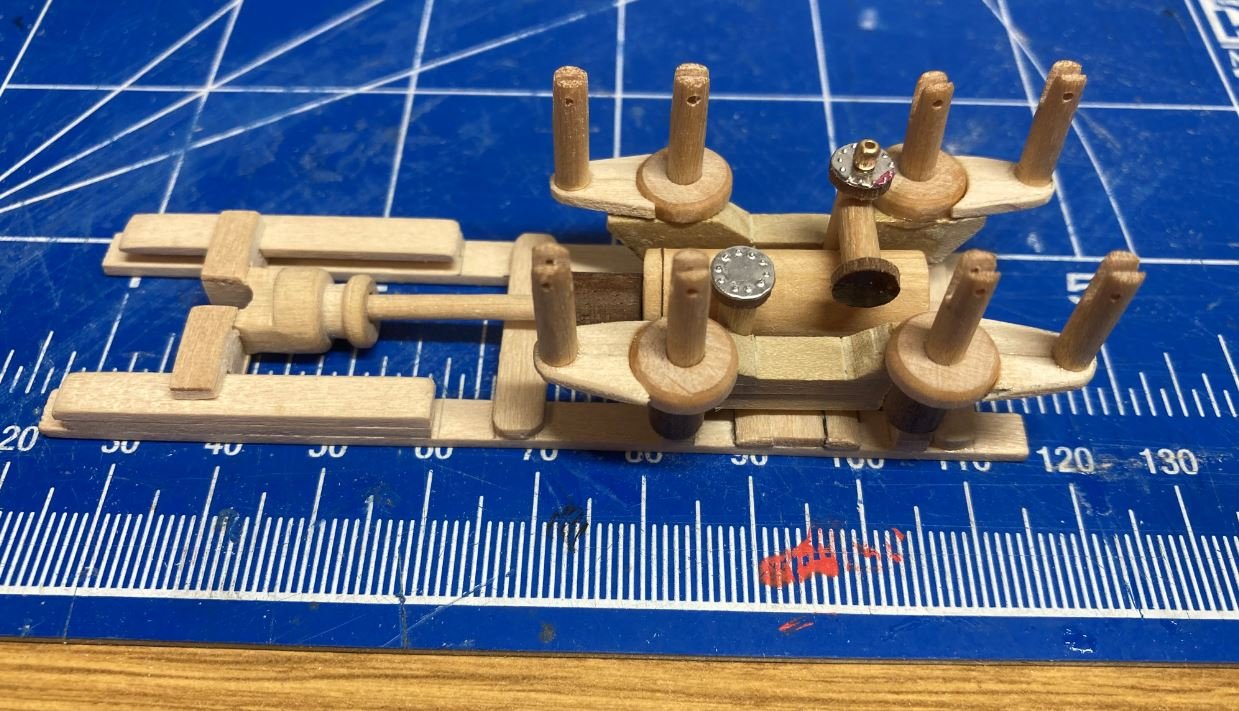
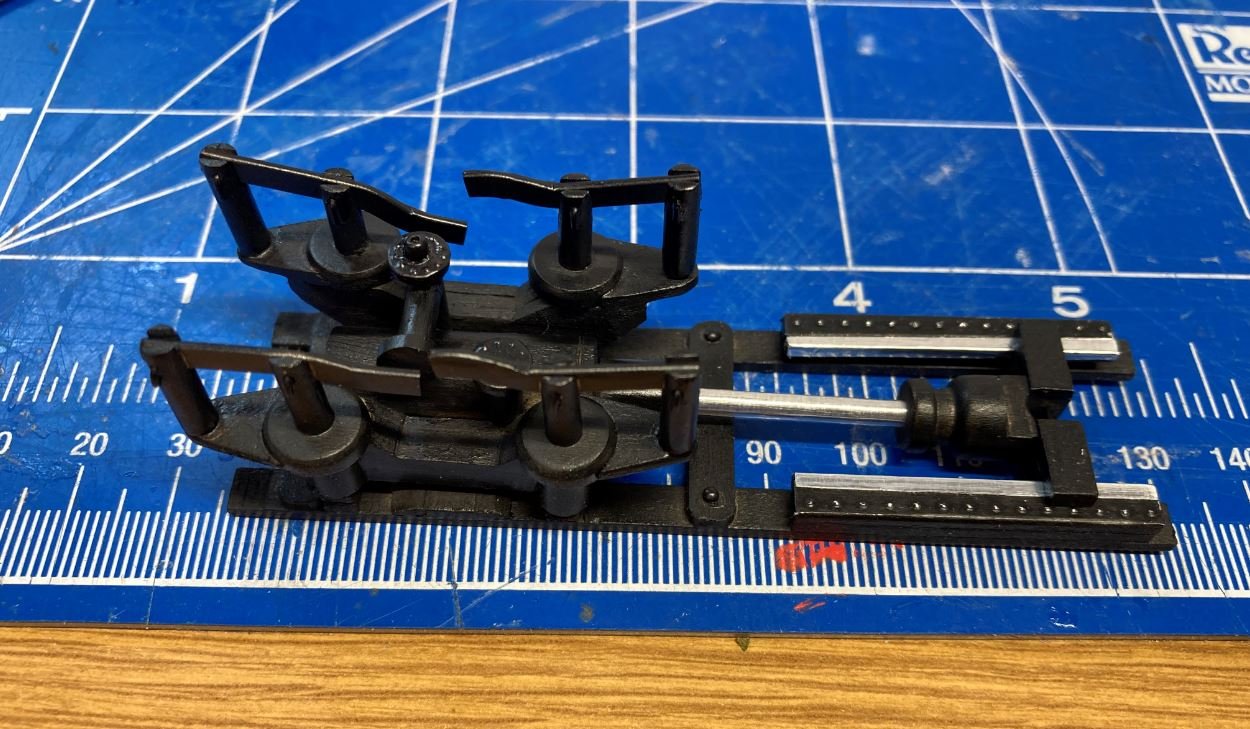
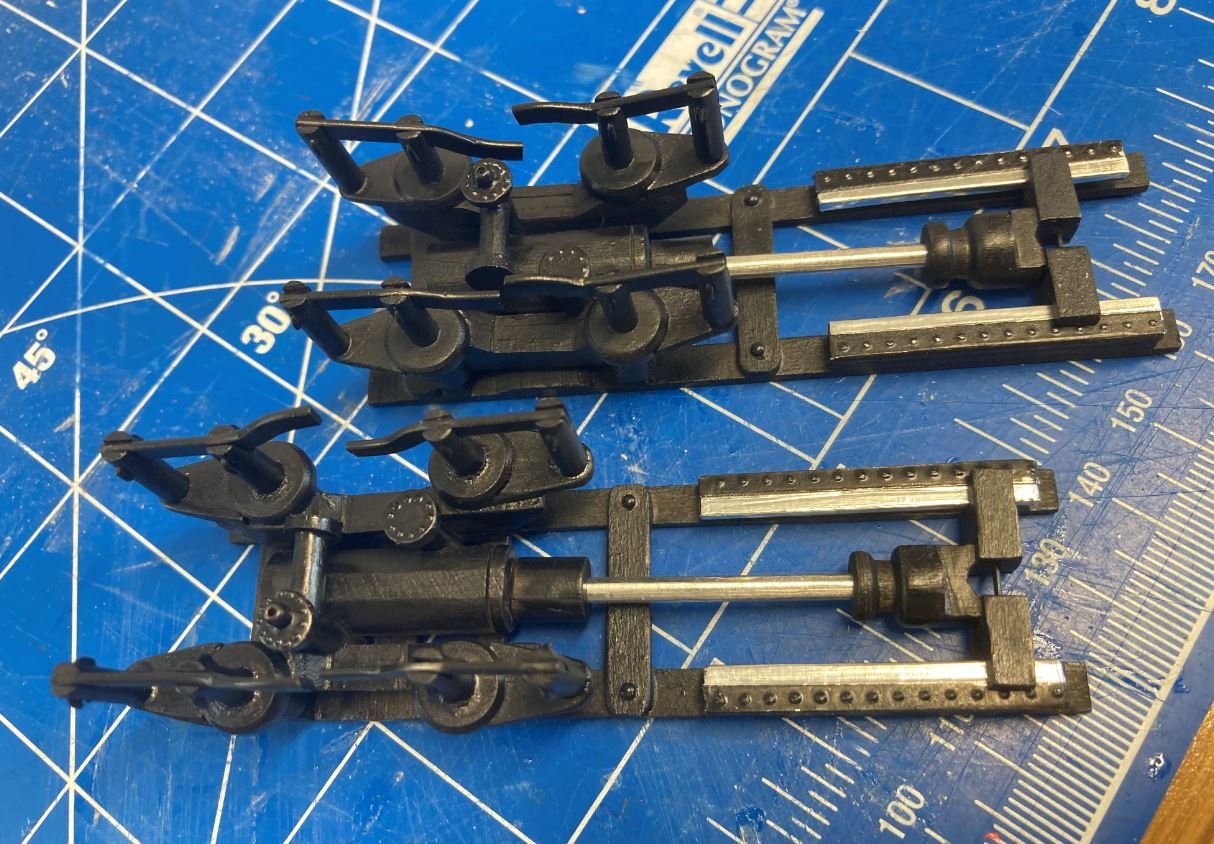
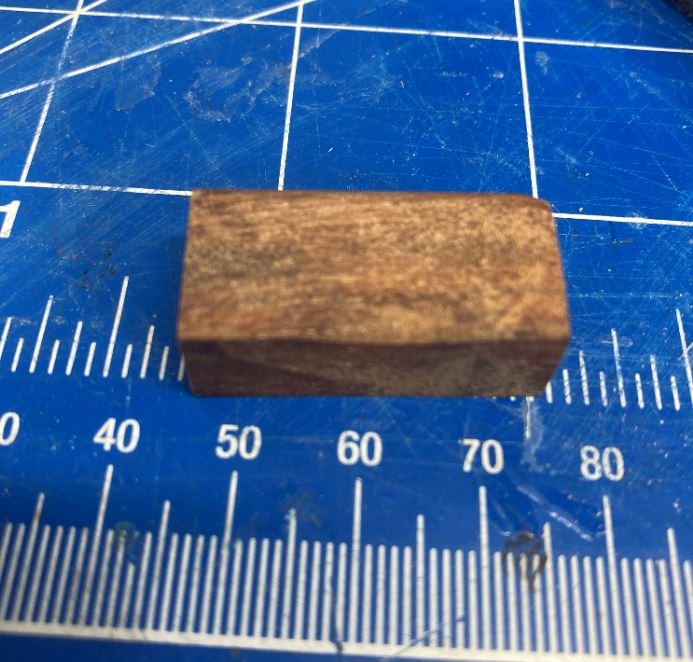
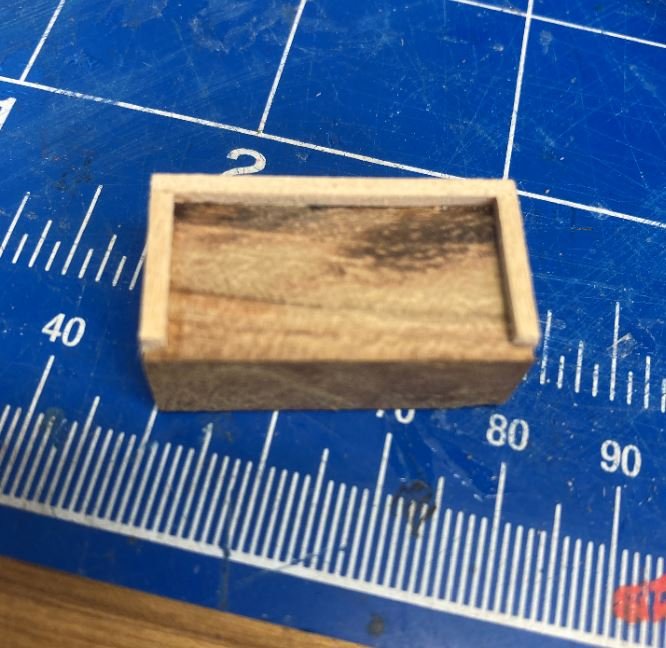
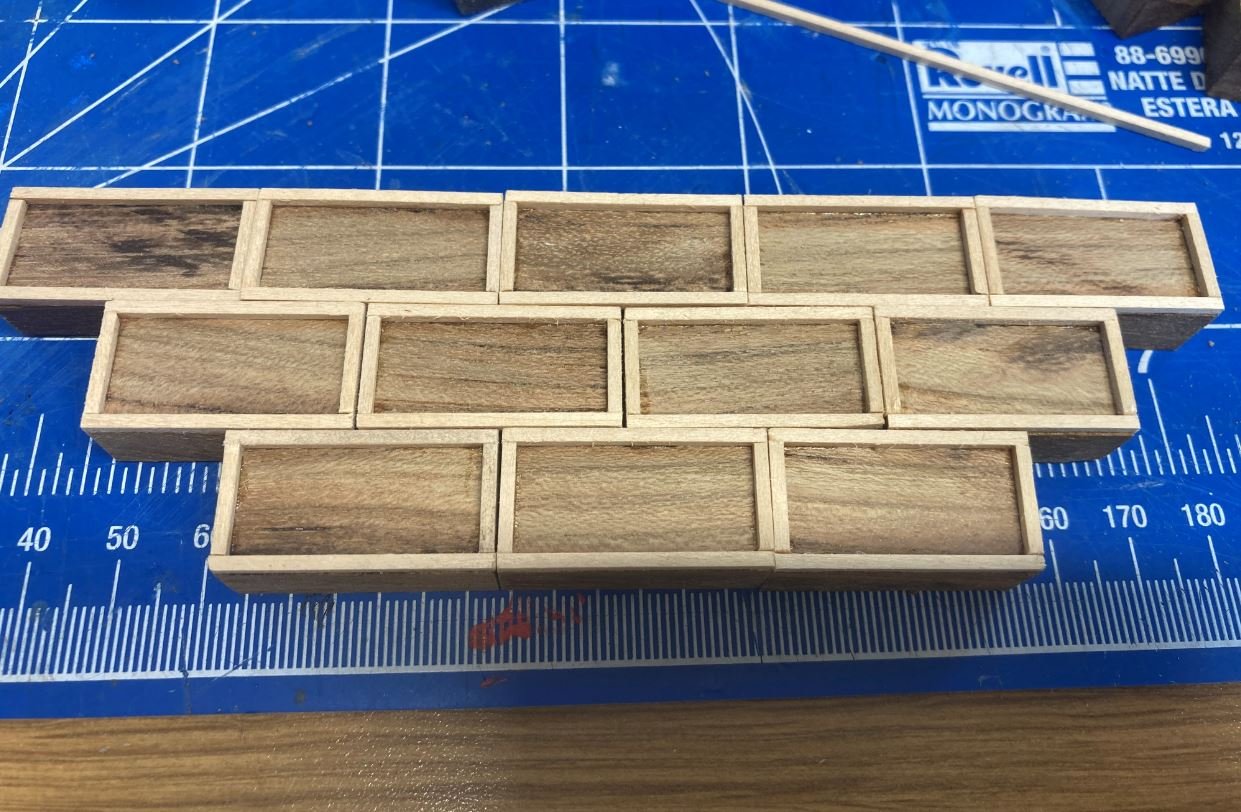
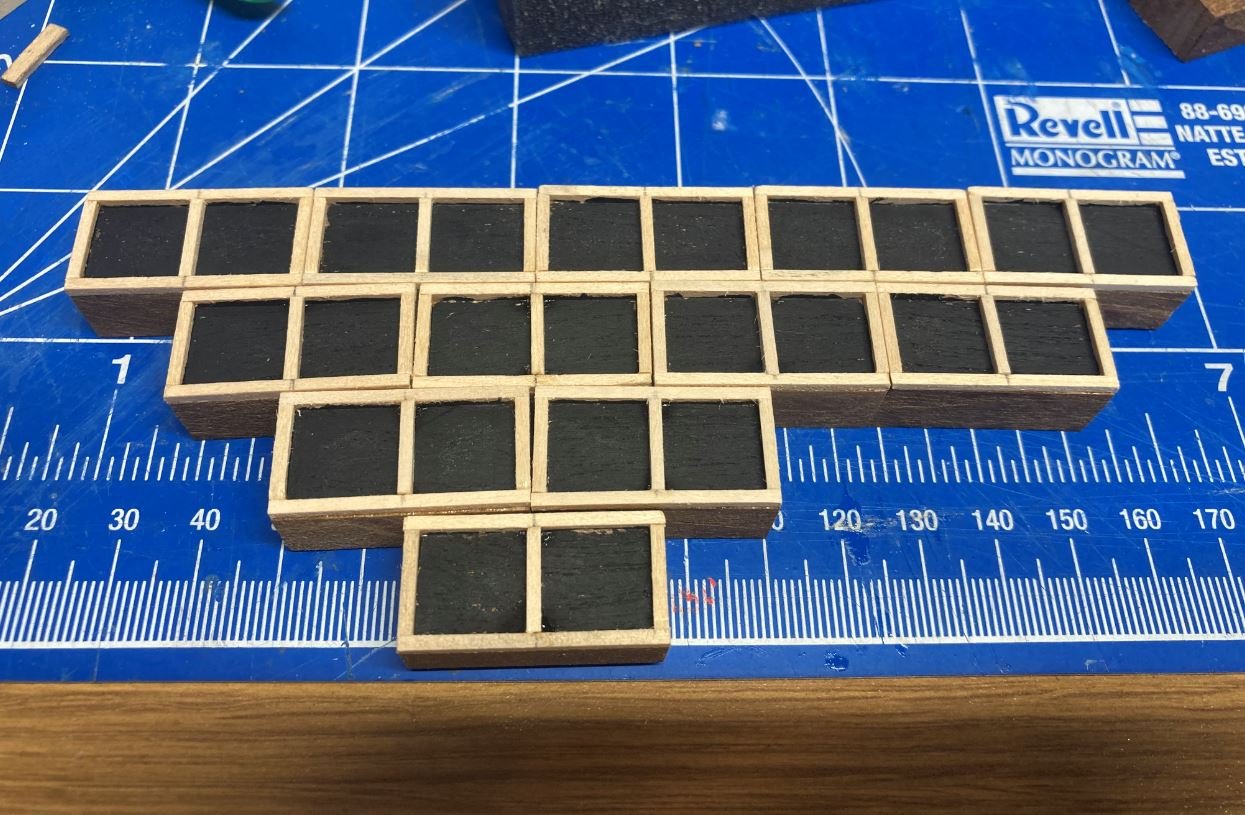
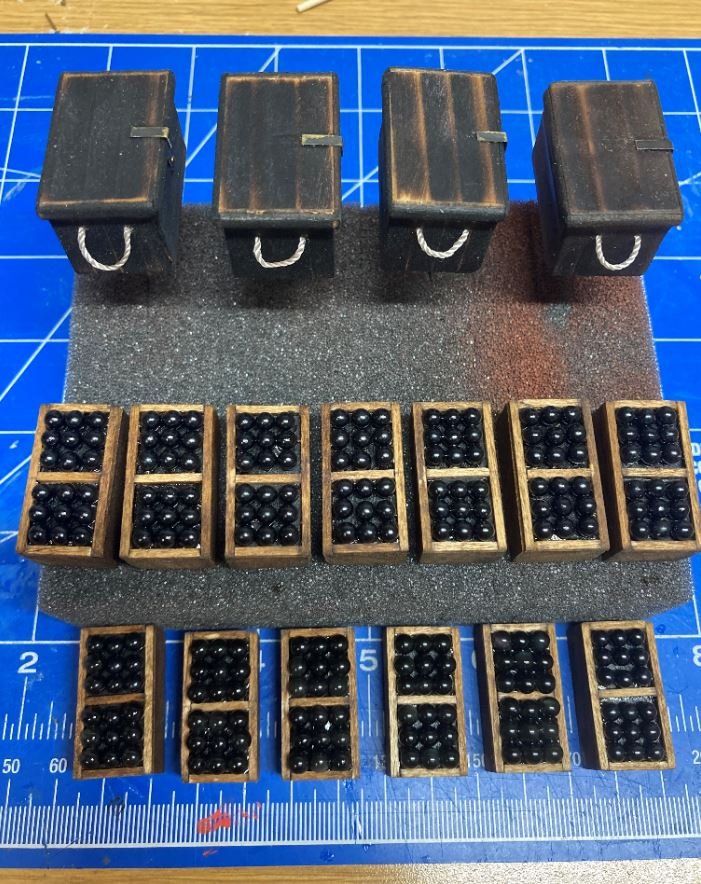
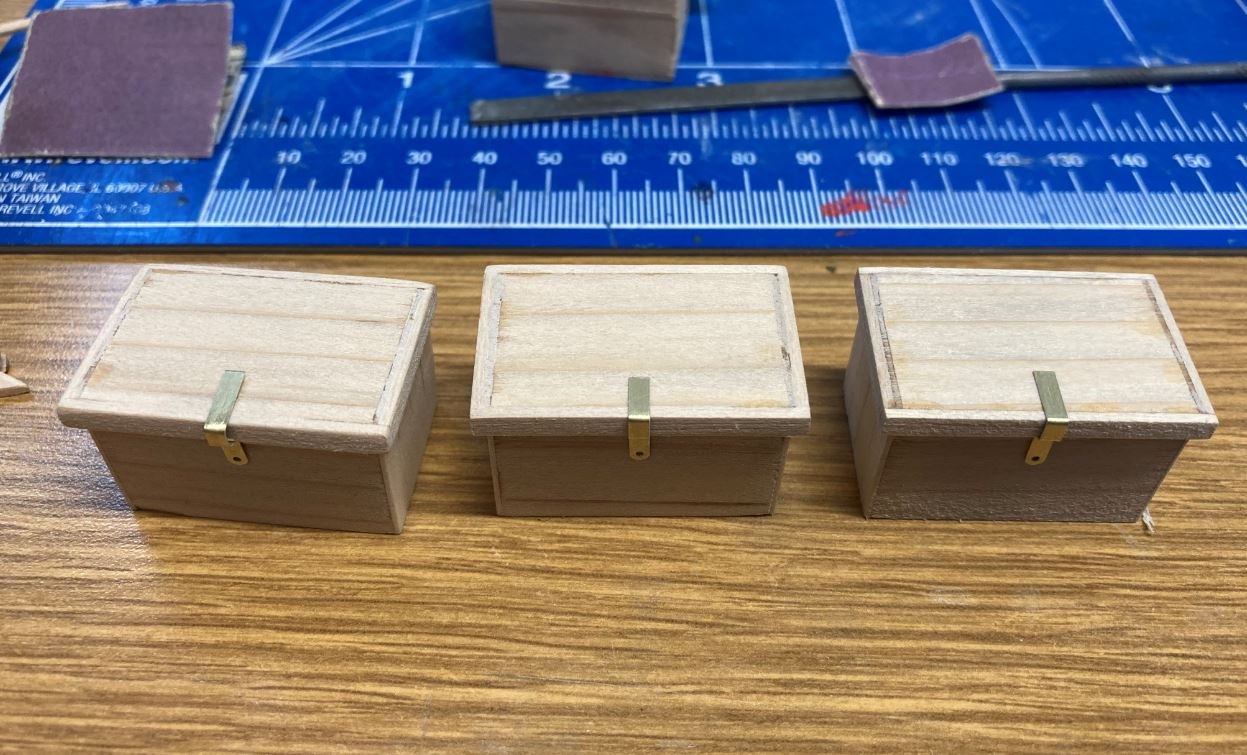
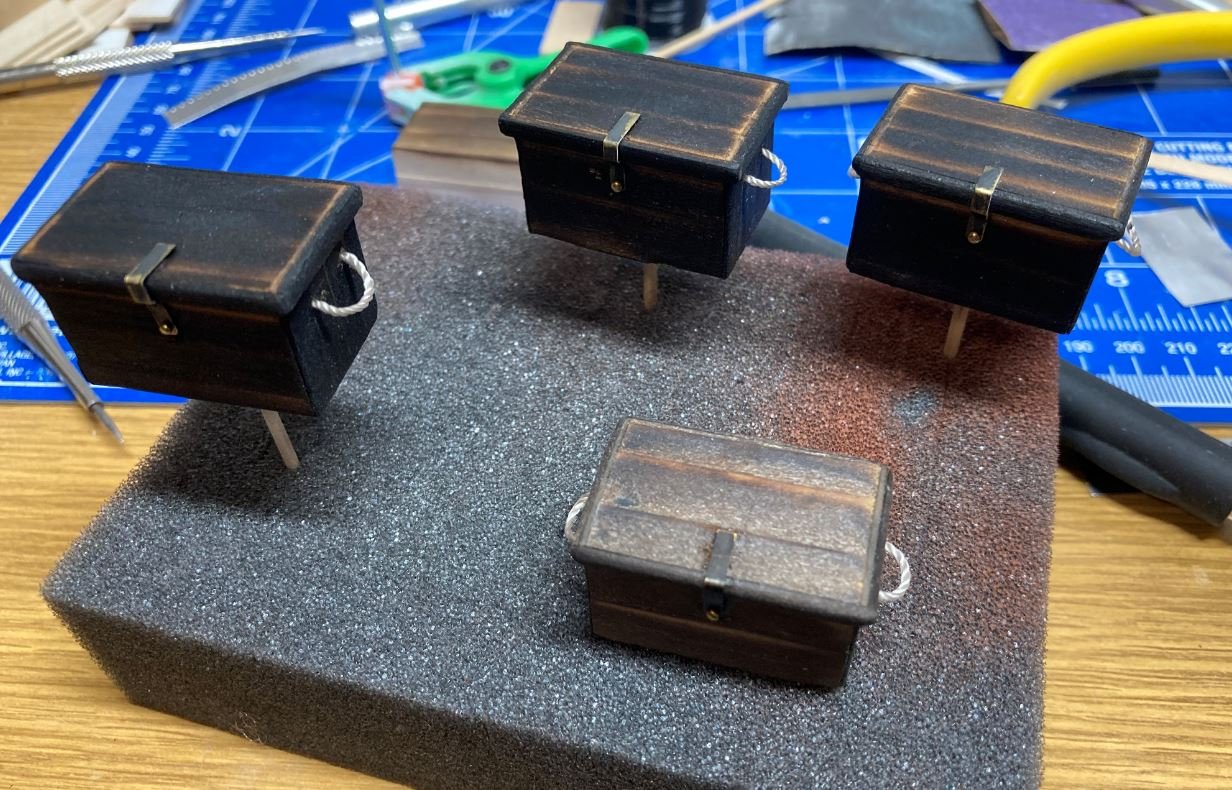
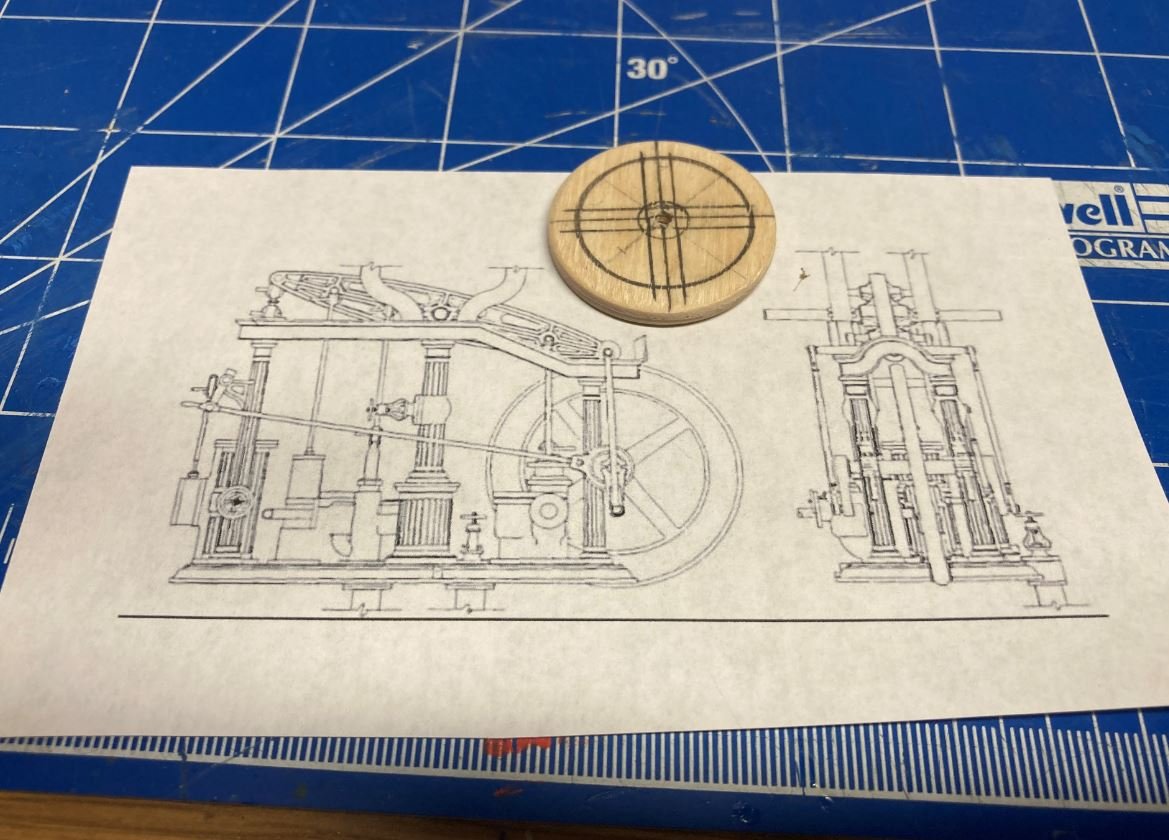
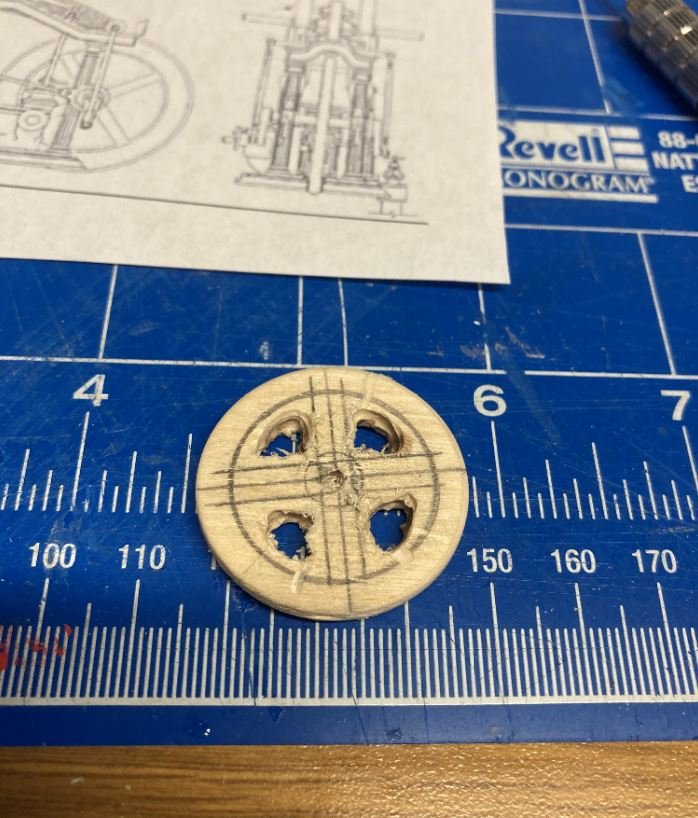
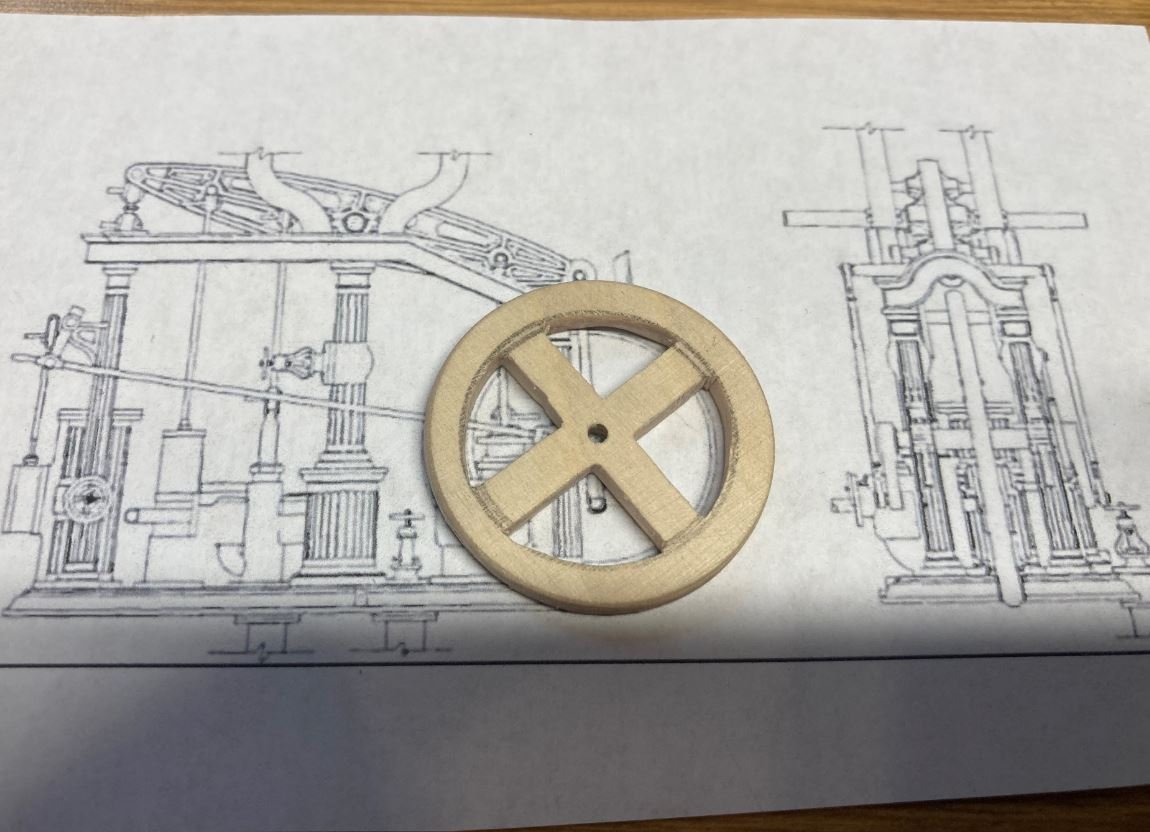
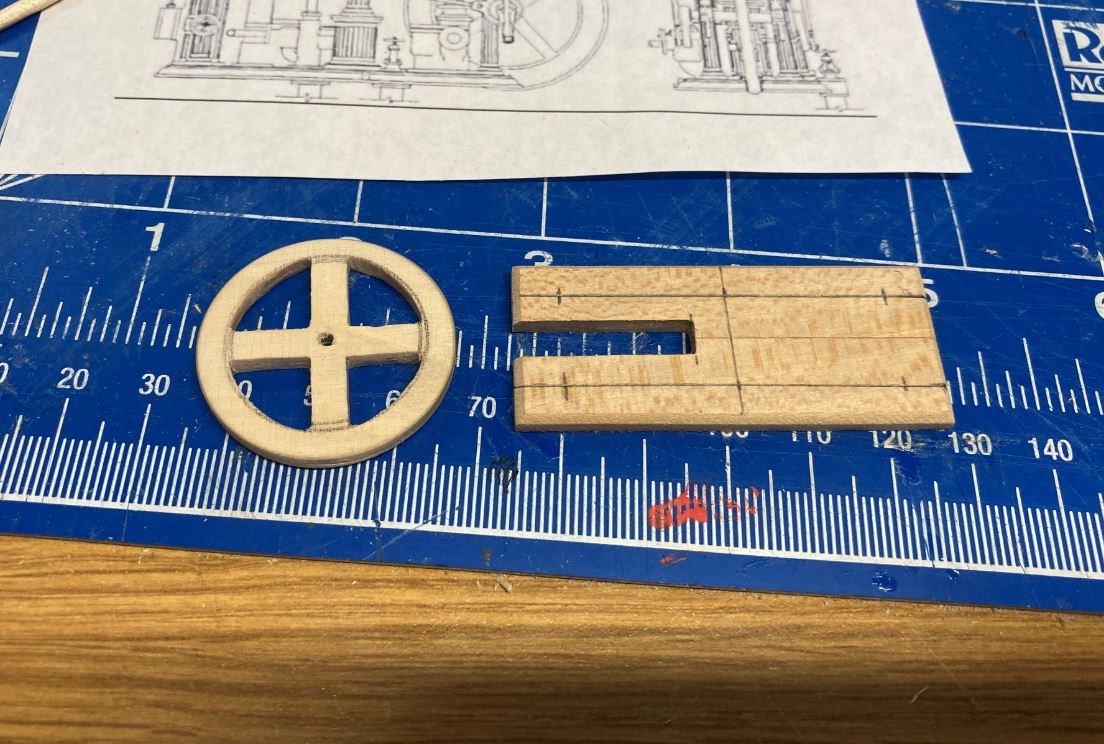
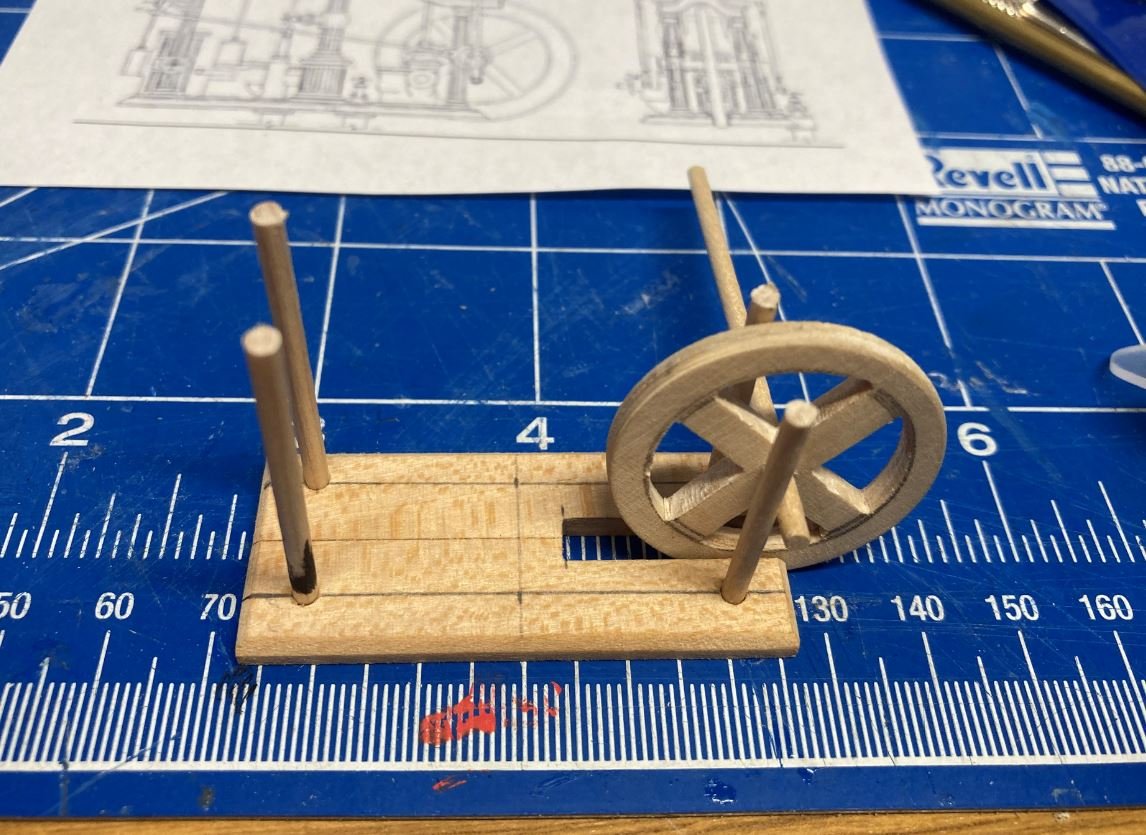
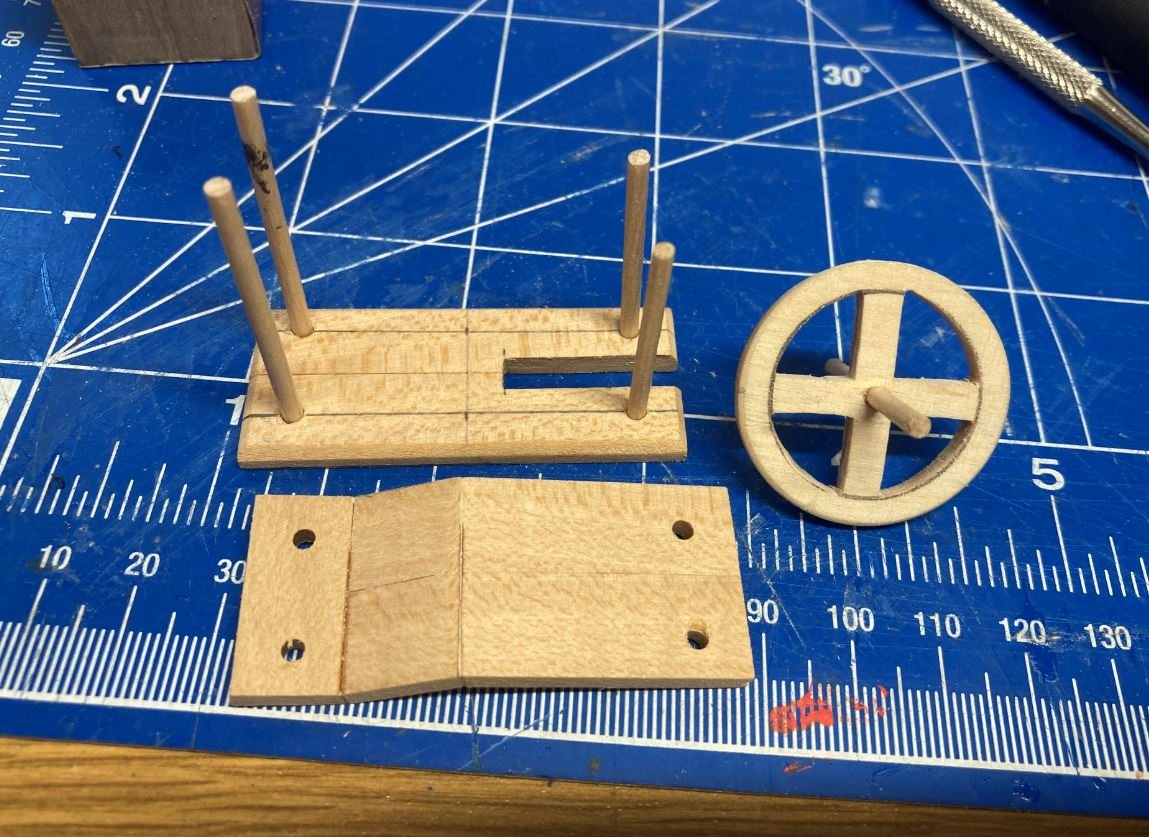
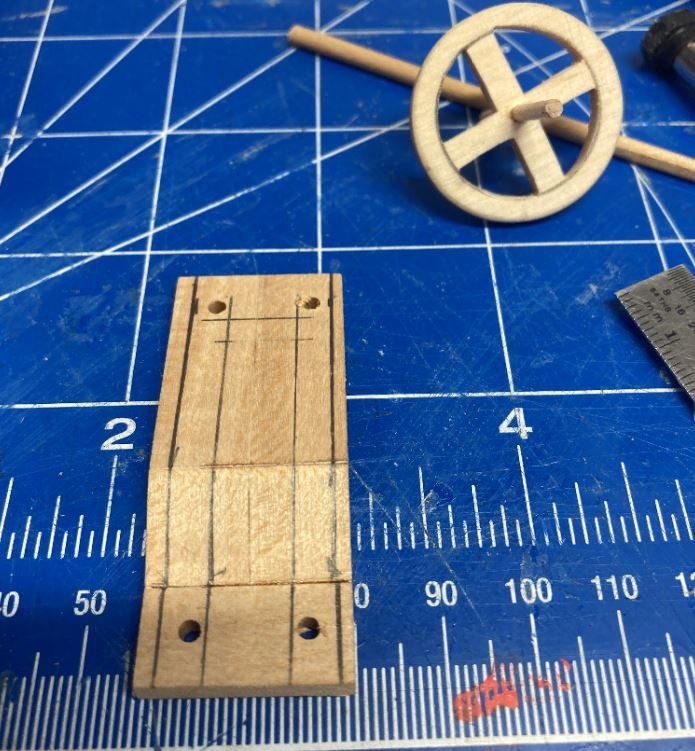
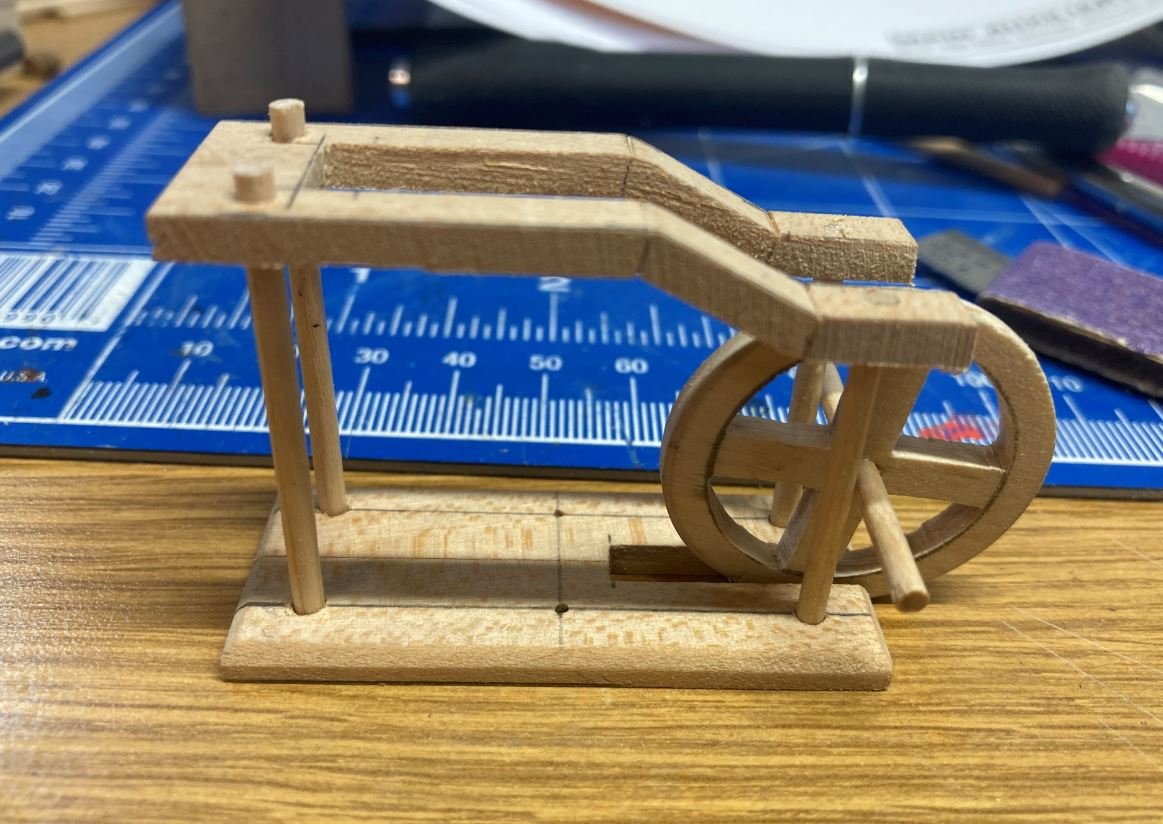
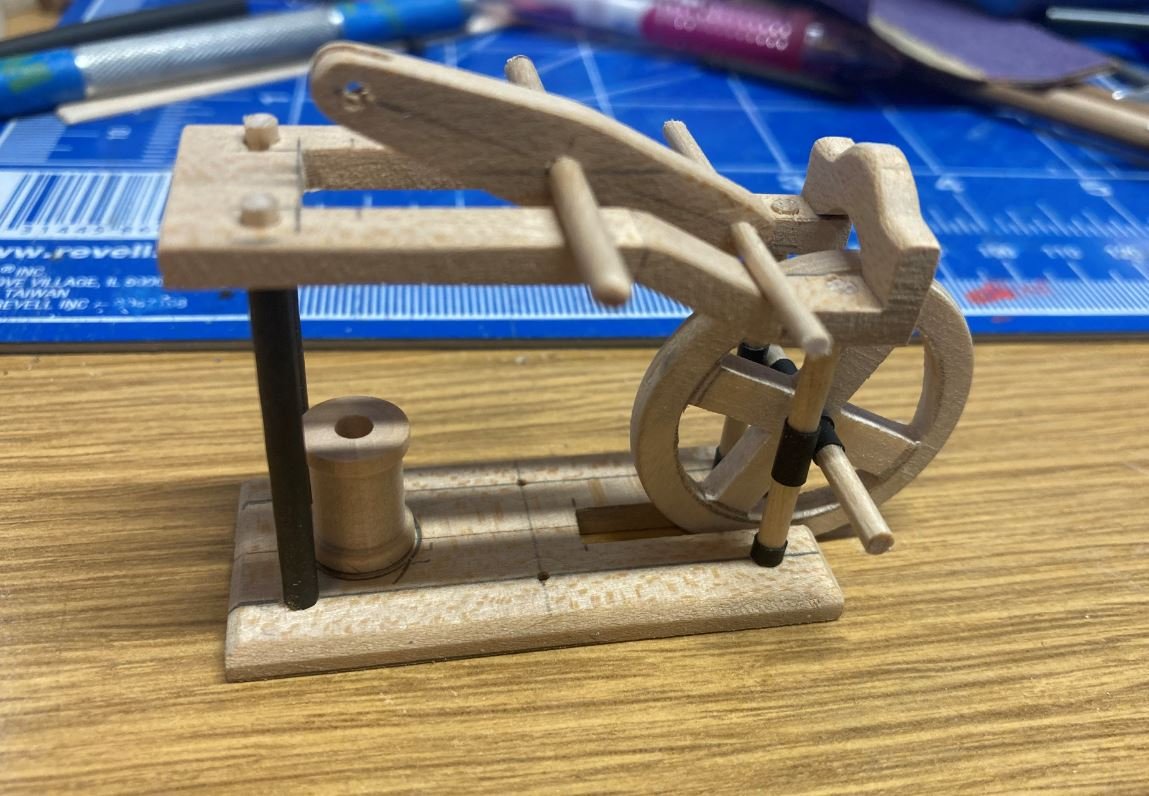
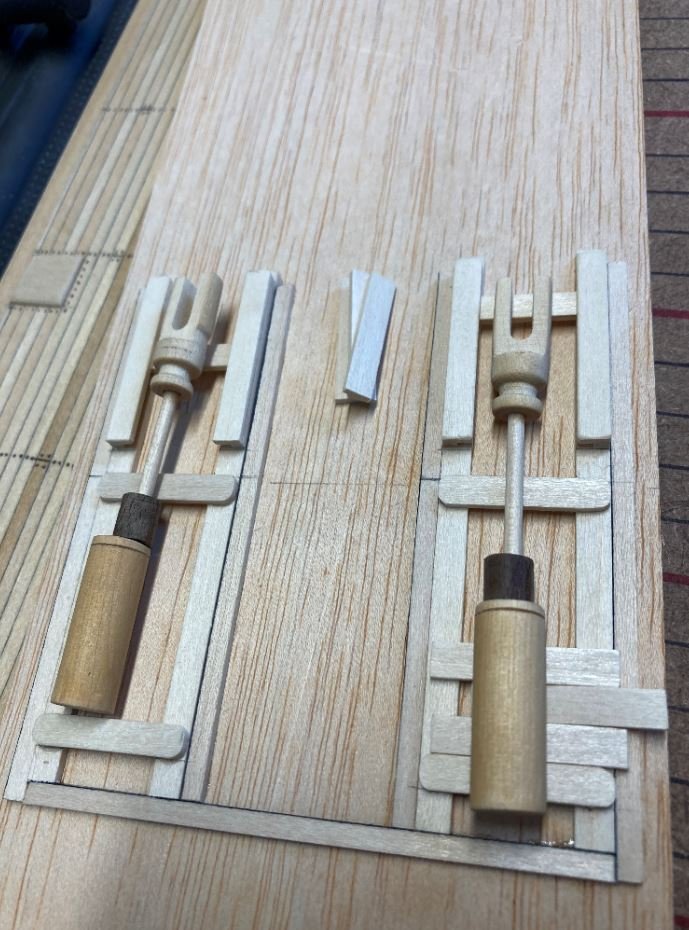
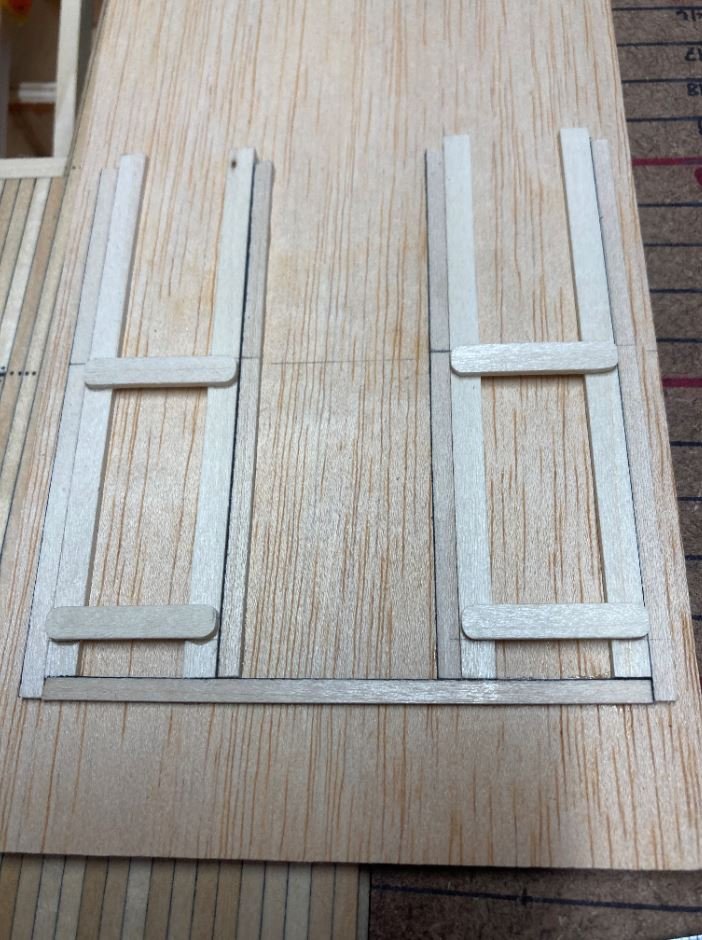
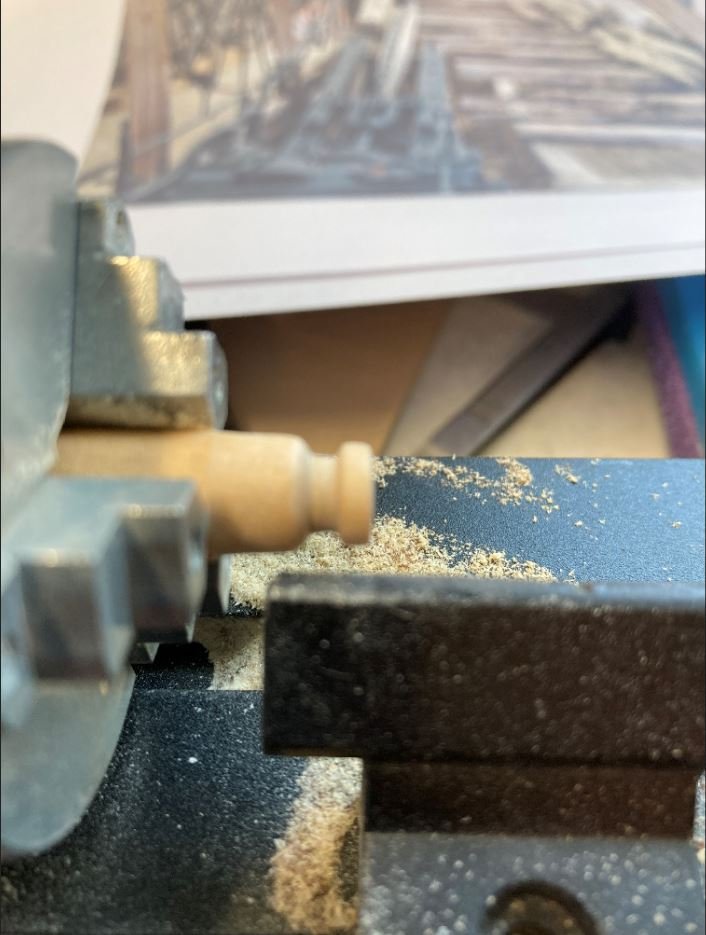
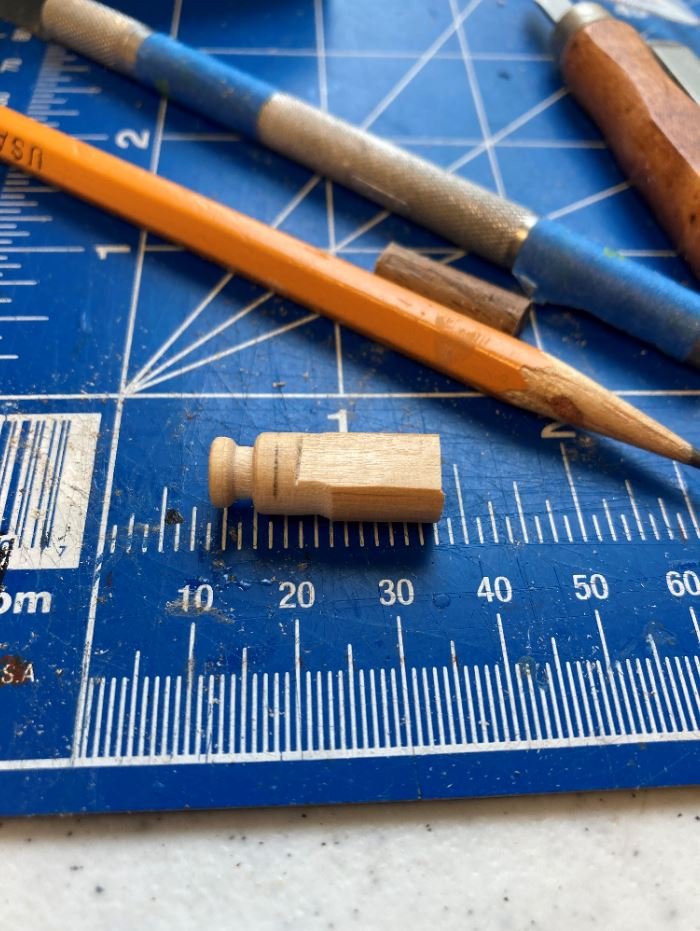
 Greeting everyone, Hope everyone is staying safe and healthy. I am back with another update on my build. I have not made much progress on the boat itself, but I have managed to get several interior pieces done in spite of not having electricity or water for four days due to the "Big Texas Freeze and Snow Storm". What an adventure that was. Starting off, I finally managed to tackle the engines. This was one of the builds that I was dreading due to the fact that I just couldn't get my head around how to make them look somewhat realistic. The more I pondered them the more I finally came to the conclusion that for the most part not much of them will be seen and did my best to replicate what I though would be visible through the viewport. So this is is what I came up with. Earlier in the build I had started the framework and pistons along with the pitman arm yoke. During the process if building them, I wasn't liking the scale and look of the yoke. That's when I sidelined them. I really didn't want to rebuild the entire thing, so I salvaged what I could and made some adjustments here and there. The beginnings of the frames and pistons as well as version 1.0 of the yoke. At this point is where started the revision. Unfortunately I didn't take very many pictures due to the fact that I wasn't really sure if I was going to use this version of them or not. But the more I worked on them, the better they started to look. More pieces and parts added. Forgive me, but I am not up on the nomenclature of all the parts that make up the engines so for now pieces and parts will have to do. Again my aluminum tape came in handy to make the rivets along the sides of the yoke guides. I made a visit to the local Hobby Lobby and found all kinds of neat little wooden parts that were useful in the construction of the engines (and other parts). Some of these included miniature spools, wooden beads, and wooden discs. The rocker arms (best guess at what they are called) are the same aluminum strips that I used to form the rings on my paddlewheel. Completed port engine, minus paint. The finished product, port side. ...and both engines completed. There are various linkages that still need to be fabricated, but I'll get to them when I am ready to install them and the paddle wheel Next up were the foot lockers and ammo crates. For the foot lockers, I just cut out a few blocks and trimmed them with some 1/8"x1/16" basswood strips around the tops and 1/32"x3/16" strips on the ends to hide the grain of the blocks. I used some thin 1/8" wide brass strips for the hasps, then aged the brass with Brass Black and the wood with a mini torch. A light sanding and a coat of satin varnish, then fitted the handles made from standard tan rigging line and viola. The ammo crates were constructed similarly to the foot lockers. I used some scrap Teak blocks that I had and trimmed the tops of these with 1/16"x1/16" basswood strips. Next I added a divider in the middle and painted the bottoms black for depth. Next was the fun part. There are four different types of cannons on board (not counting the deck Howitzer on the Hurricane deck). That means that there were four different sizes of cannon balls used. Well, it was easy to scale the 8" parrot rifle since the bore size is given in the name. 8" roughly converts to 4.2mm in 1:48th scale. However, how do you convert 42lbs, 32lbs and 30lbs into inches and then millimeters? Thank goodness for the internet. I'm not sure how I made it through High School and College without it, but is sure comes in handy nowadays. I found this most useful website in my research that all Civil War buffs should check out (if you don't already know about it). Civil War Artillery is a fascinating site, full of all sorts of facts and history on none other than Civil War Artillery. They even have a conversion table that converts the cannon ball poundage into its proper diameter (caliber). So according to their table the 42lb ammo is roughly 7" in diameter, converted to 1:48th is about 3.7mm. The 32lb ammo is roughly 6.4" and 3.4mm converted and the 30lb ammo is roughly 6.3" and 3.3mm converted. Now where I am going with this is I needed to fill the ammo boxes with, what else, ammo. During my Hobby Lobby adventure, I found the bead section and it is full of potential "cannon ball" material. So with that being said I managed to find some black plastic beads that measured 4mm and 3.5mm. I figured that the differences between 3.7mm and 3.3mm was so negligible that 4mm and 3.5mm would suffice for what I needed, and the fact that there were no intermediate sizes, I made do with what they had. And with that, I stocked up the ammo crates. Another thought that I had was did they use different size crate for the different size ammo or did they go to that much expense? I went with the thought that they kept it simple, and had a one size fits all for the crates. That is why some of my crates look a little more like they are overflowing than the others. Again this is another feature that will mostly be hidden, but I still wanted to get it as accurate looking as possible. Next piece was another one that I was somewhat dreading, but after I got started on it, it actually turned out to be a lot of fun to build. This was the "Doctor" pump or Auxiliary Engine. The original "Doctor" pump from the Cairo was lost during the salvage operation and there was no accurate documentation of it's actual construction. However there are tons of examples out there, I just stuck with the example given in the HSR. First step was the construction of the fly-wheel. Next was the construction of the base, supports and top frame. Then it was on to the various pump housings, push rods and linkage. The valves I simulated with some small beads and wooden discs cut from the end of 1/4" mahogany dowels. The pillow block oilers also made with small beads and brass nails. More linkages and the flywheel brake installed. Then everything was given a coat of black and clear satin for looks. I still have a few more valves to add as well as the piping for the preheaters mounted on top and a few other details, but I'll get to those later. Some of the valves will require the pump to be in place due to the fact that I will have to drill a hole in the hull (yikes) for the fresh water intake. So that is all for this update. I hope to have more next time. My plan is to work on the bilge pump and capstan, and hopefully of my cannon barrels come in soon, so I can get started installing them in the carriages and getting them rigged up. Until next time, thank you all for stopping in and the likes and kind words. -Brian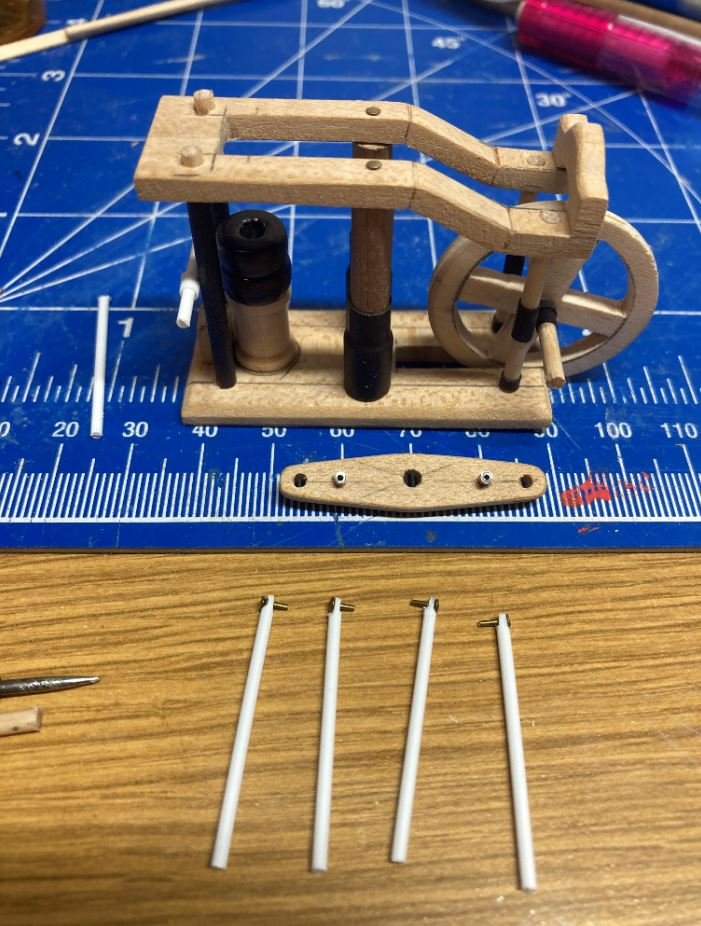
- 739 replies
-
- 16
-

-
Thanks for the kind words. Better late to the party than never and always glad to have additional input. In my research I have run across many places that state the interior being whitewashed and exterior being black, and since all seven of these boats were nearly identical, the colored bands on the stacks served as an identifier as to which boat she was. Unfortunately there is no information at all (that I have been able to run down) on the hull coloring of the City Class boats. Even with the extensive research that the group in St. Louis has done on their build, they have not turned up any clarification of the color used, so I went with the color I though would be best for my build. So far, I am not disappointed. I did manage to find a used copy of the Hardluck Ironclad on Amazon, and I will definitely give that a read. The more info that I can cram into my head on this boat the better. -Brian
-
Beautiful job on your build so far. This is truly a nice kit from MS. I started this kit about seven years ago and stalled out after having completed the hull, decking and deck furniture. We moved in the process of the build and I haven't picked it back up since. I caught the steam era bug and have been there for the last several years. It is my plan to pull it out of mothballs once I've completed my current build. It'll be nice to get back to the age of sail for a bit. I'm sure following your build will provide me the motivation to pick it back up again. -Brian
- 602 replies
-
- 1
-
-
- Flying Fish
- Model Shipways
- (and 2 more)
-
Keith, She’s really starting to come together. I am one of those strange individuals that find the rigging portion of the build my favorite part. Don’t get me wrong, I love the rest of the build to, but the rigging seems to tie everything together (pun intended) and starts to show the intricacies of these magnificent ships. I’ve been away from full rigged ships for a few years (and will be for a couple of more at the rate I’m going on my current build), but I think next on the bench I will take a break from the steam era get back to a full rigged ship. -Brian
-
Welcome Desalgu, Beautiful job on your Syrene build. Please feel free to share more photos of her. You have definitely stumbled onto a goldmine of knowledge with this forum. If there is a kit out there, chances are someone in the forum has a build log for it (all legitimate kits of course). The best part is that no one judges you and everyone is willing to help with whatever issues you may have. Looking forward to see a build log from you soon. -Brian
-
Talk on Missouri River steamboat design & history, March 9, 2021
mbp521 replied to Cathead's topic in Nautical/Naval History
Sounds very interesting. Count me in. Headed to register now. -Brian -
Keith, I’m sure this is a common occurrence for you northern folks, but a 12 degree day with -5 windchill is unheard of here in Texas. But I have to agree with you, the Bahamas would be nice right about now. -Brian
-
Eric, Great job on the mast step. Very interesting on its placement. I would have never guessed that the builders would have chose the bench tops as a strategic place to mount it, but those guys were a master of their craft and knew what they were doing and from an engineering perspective it makes sense. As for the rigging, I am way out of my element on this one. My guess is that it would have been somewhat simplistic yet functional and sturdy given that there was only one sail (a rather large one) to deal with. I would think that it would be rigged where it could be set up and stowed with the minimal amount of effort so they could focus more time and effort on their conquests. I am just slightly disappointed that you aren’t going with the rivets, but totally understand the reason. Accuracy is one thing but there comes a time where you have to draw the line, do I build it the way I want to and get it finished, or do start something that will put me off of the model and shelve it. This unfortunately is what happened with my USS Constellation build. I wanted to portray it as accurate as possible, but the more I researched it the more faults I found with the kit until I finally gave up and now use it as a dust collector. I may dust it off one day and finish it, but right now I am having too much fun in the steam boat era. Overall she’s looking great. This has been a very interesting build and good info on an era I know nothing about. Keep those updates coming, I always look forward to them. -Brian
-
That she definitely is a beast. For some reason I was thinking it was smaller than that. I can see where she would take up a lot of space, especially if the oars were in set and ready to row. But you really want to at least put the mast in place, otherwise you’re going to miss out on all the fun rigging. 😜 -Brian
-
Excellent work as always. Out of curiosity, what is the overall length of the hull. Just trying to get an idea of how big this boat is. I briefly scanned through and couldn’t find anything on it. I was trying to figure it out in relation to the bench supports on your patio deck but figured it would be a lot easier just to ask. -Brian
-
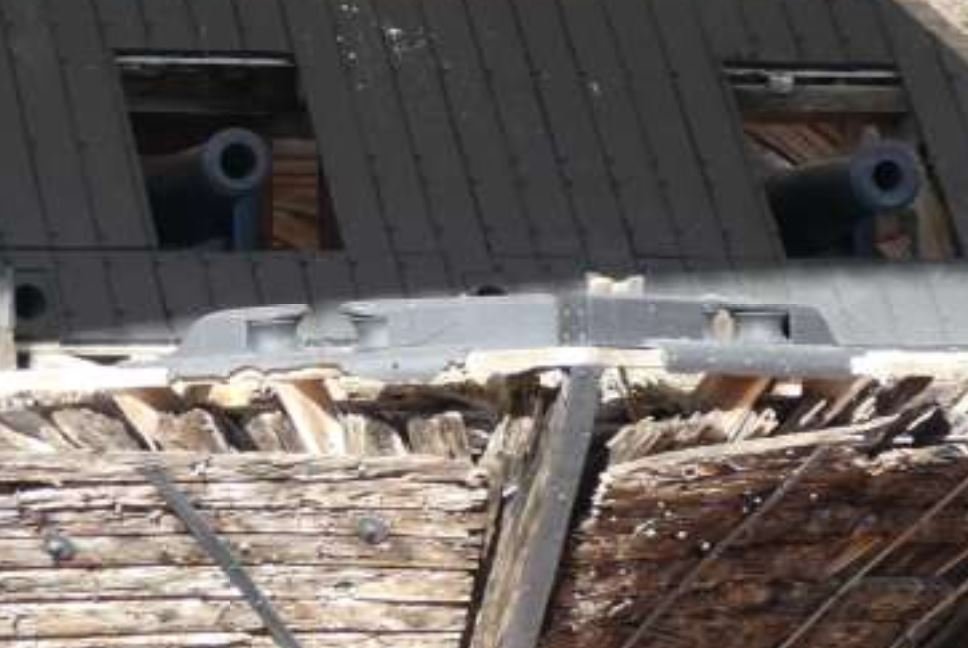
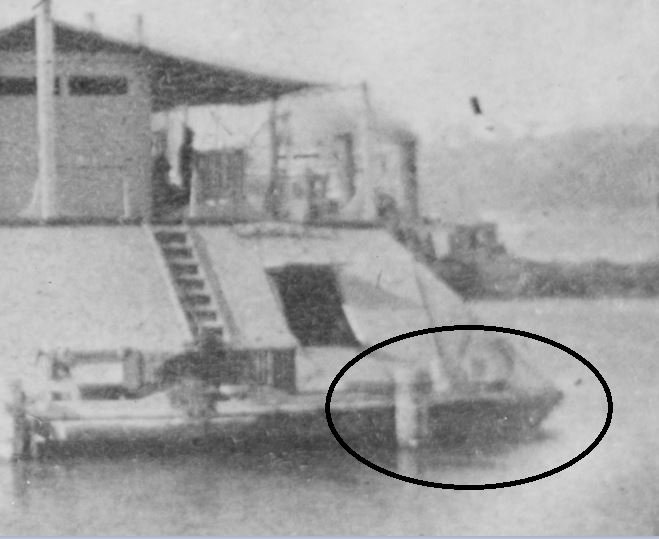
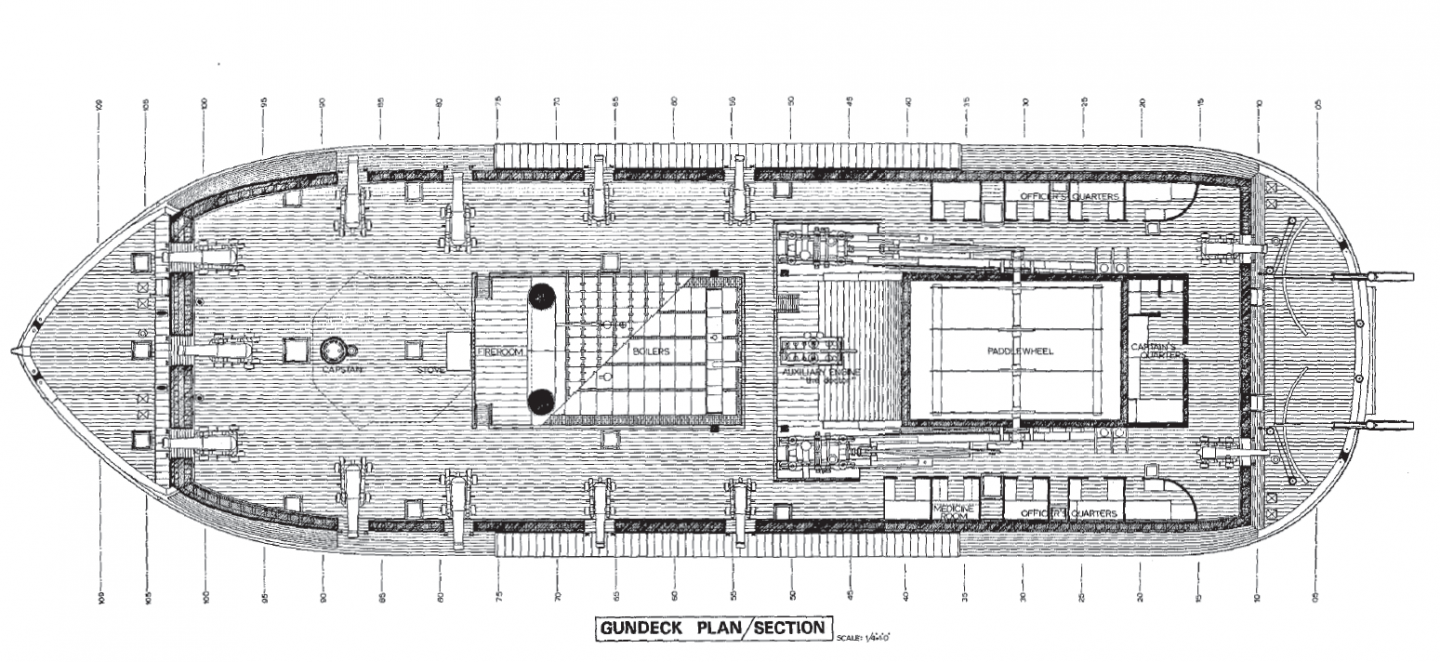
Wefalck, Most definitely. Here is a picture of her forward ones as she sits today. The aft ones were either lost in the recovery or just not installed on the display. I am not able to find any reference to fate of the aft ones for the Cairo in the HSR or otherwise. However, they are visible in some of the old pictures of other City Class boats and they are also called out on the HSR plans. Cairo: Carondelet: HSR Plans: -Brian
-
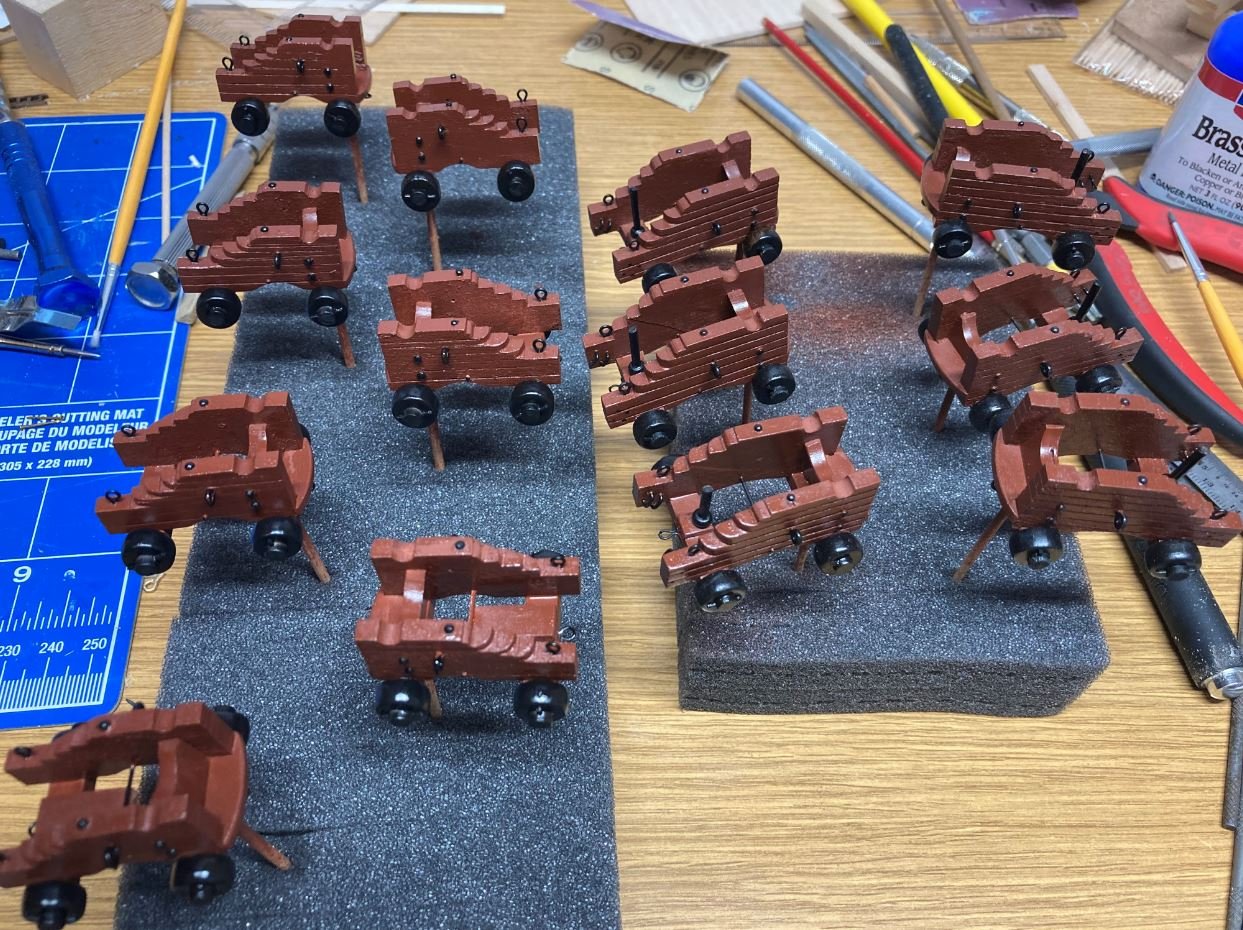
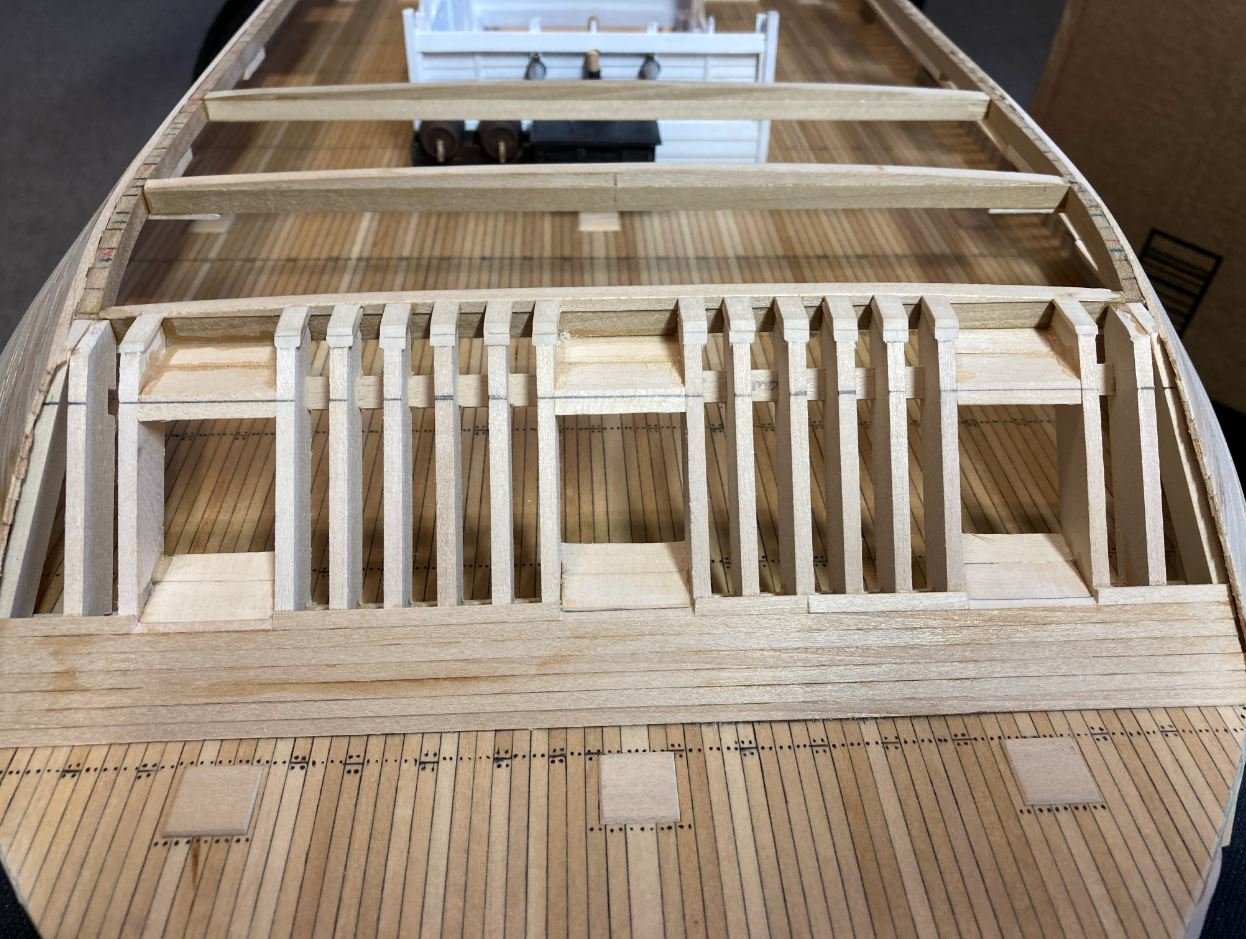
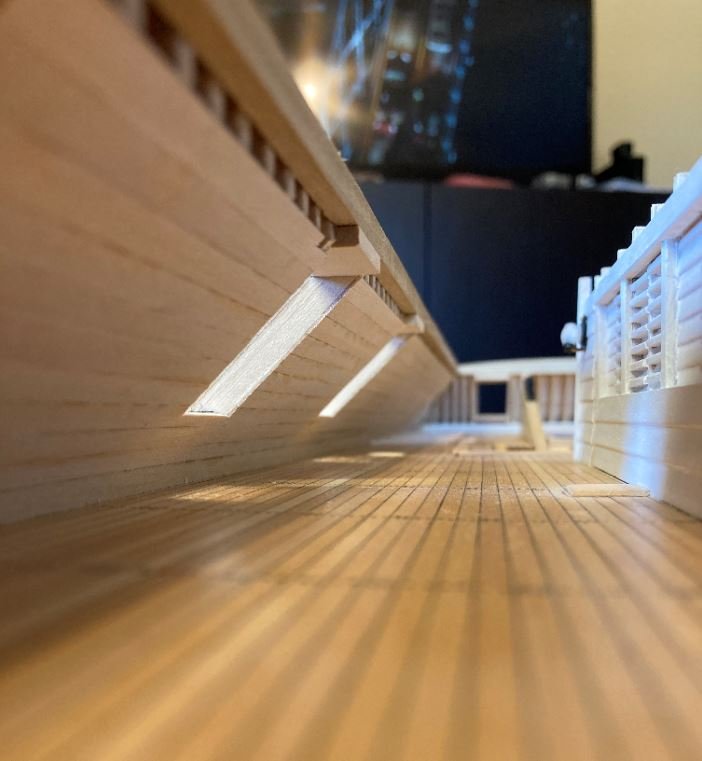
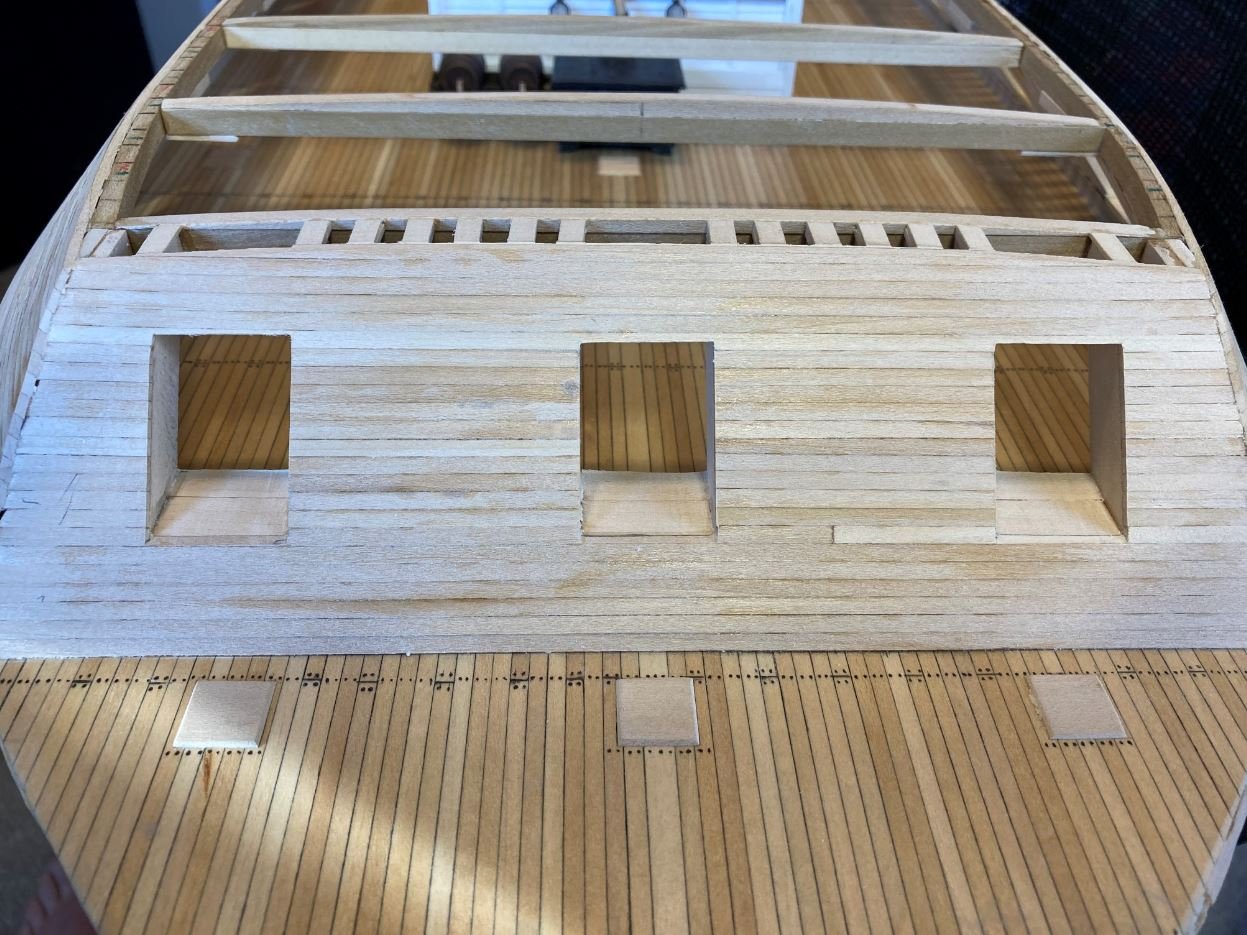
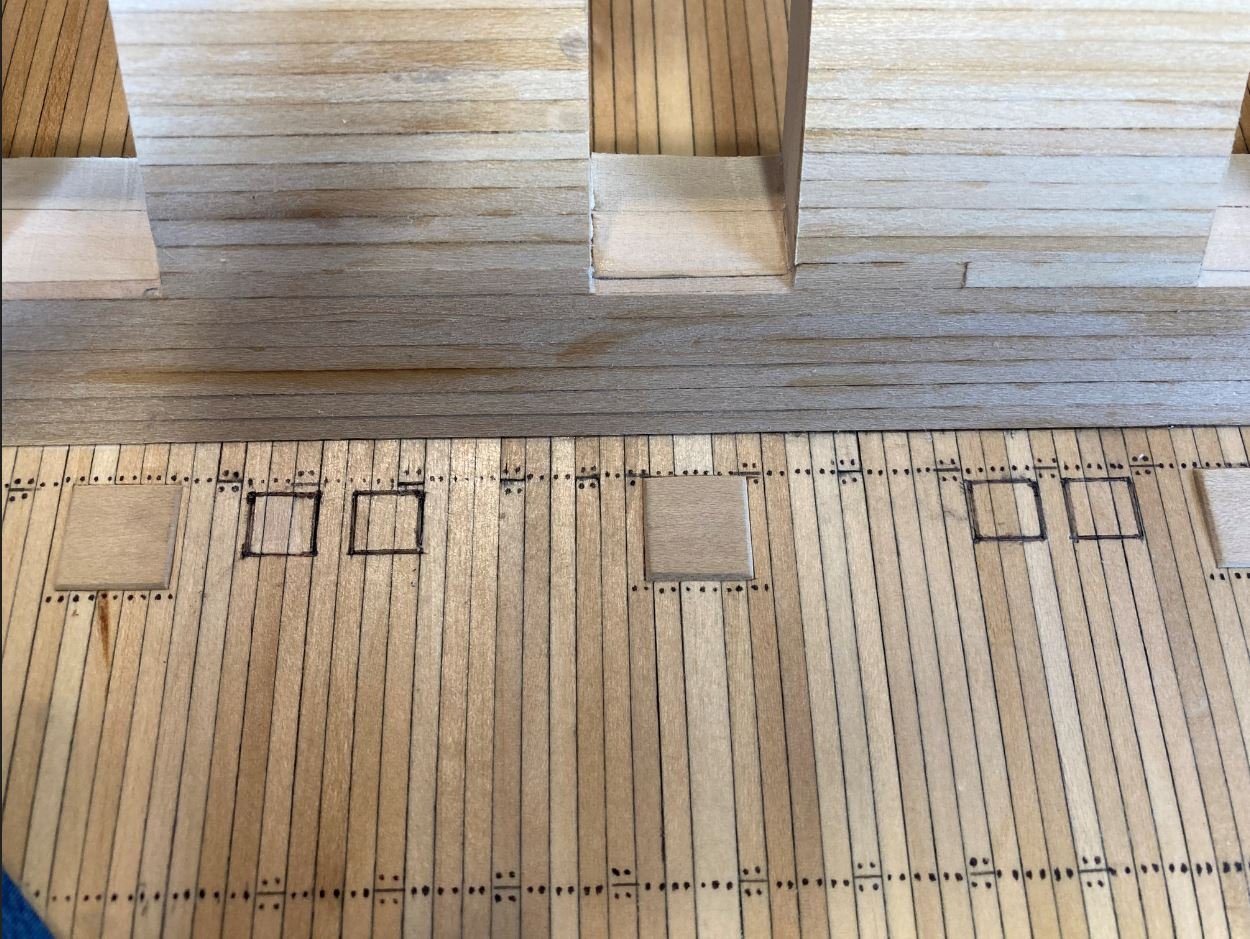
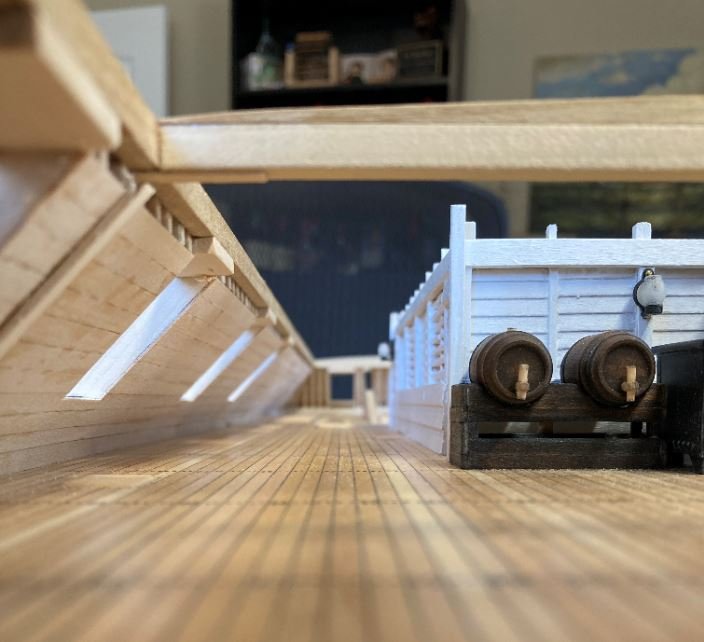
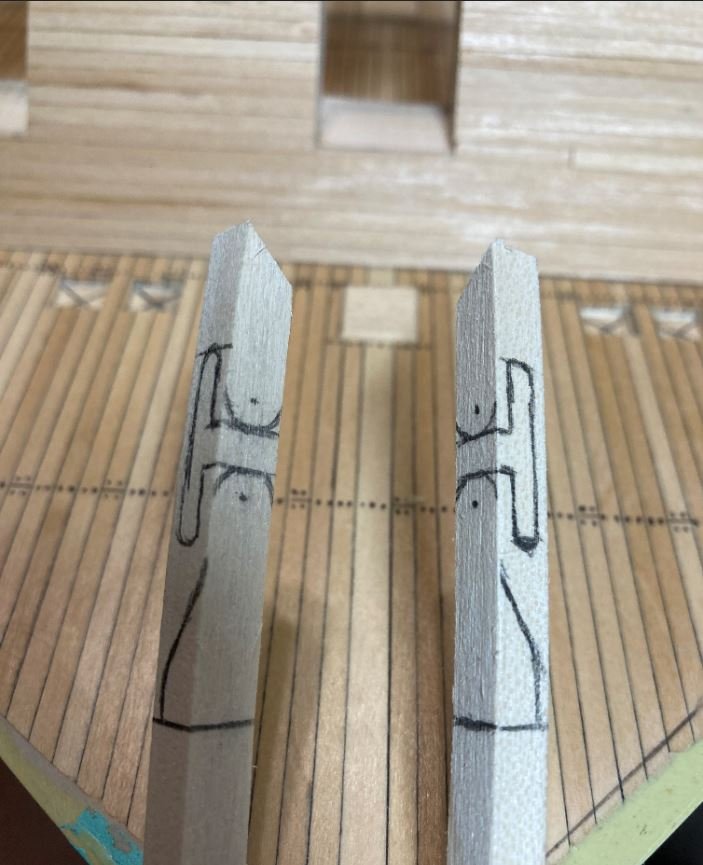
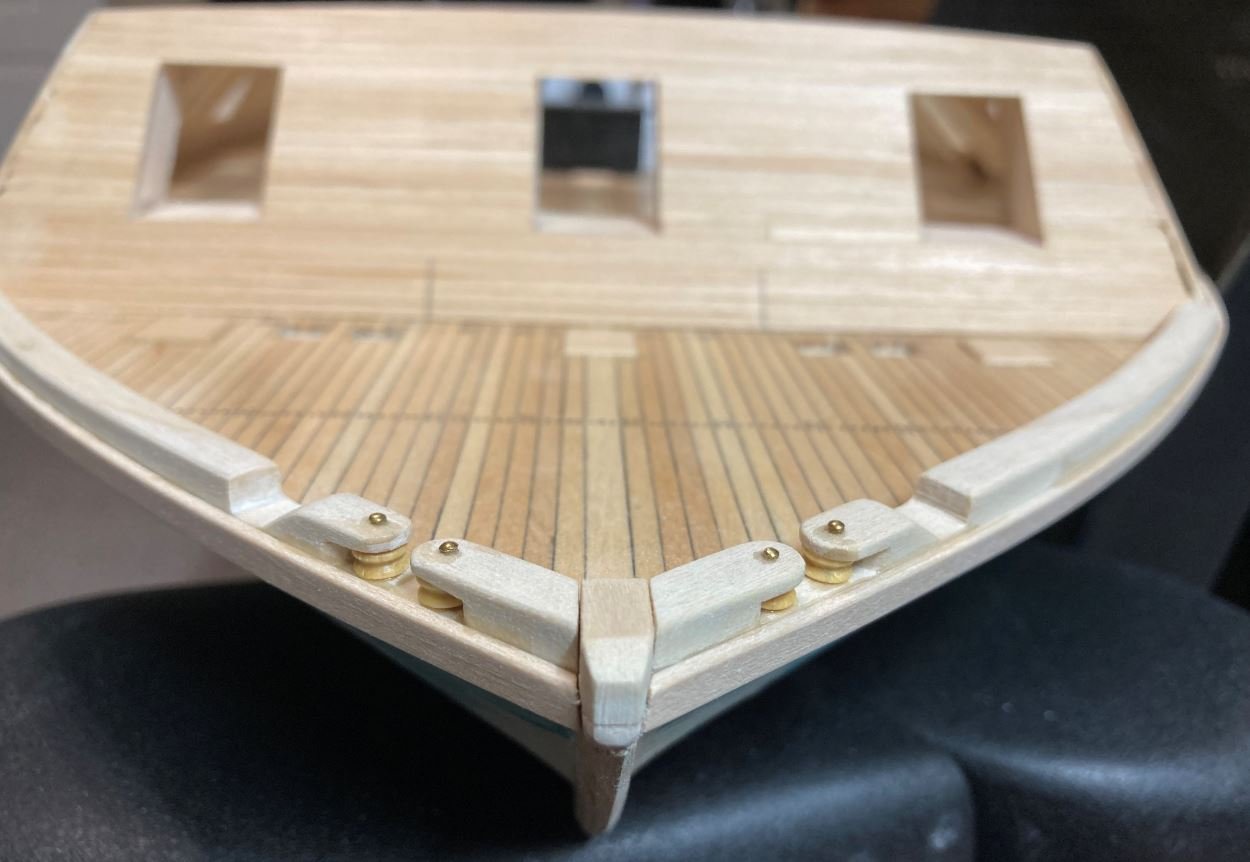
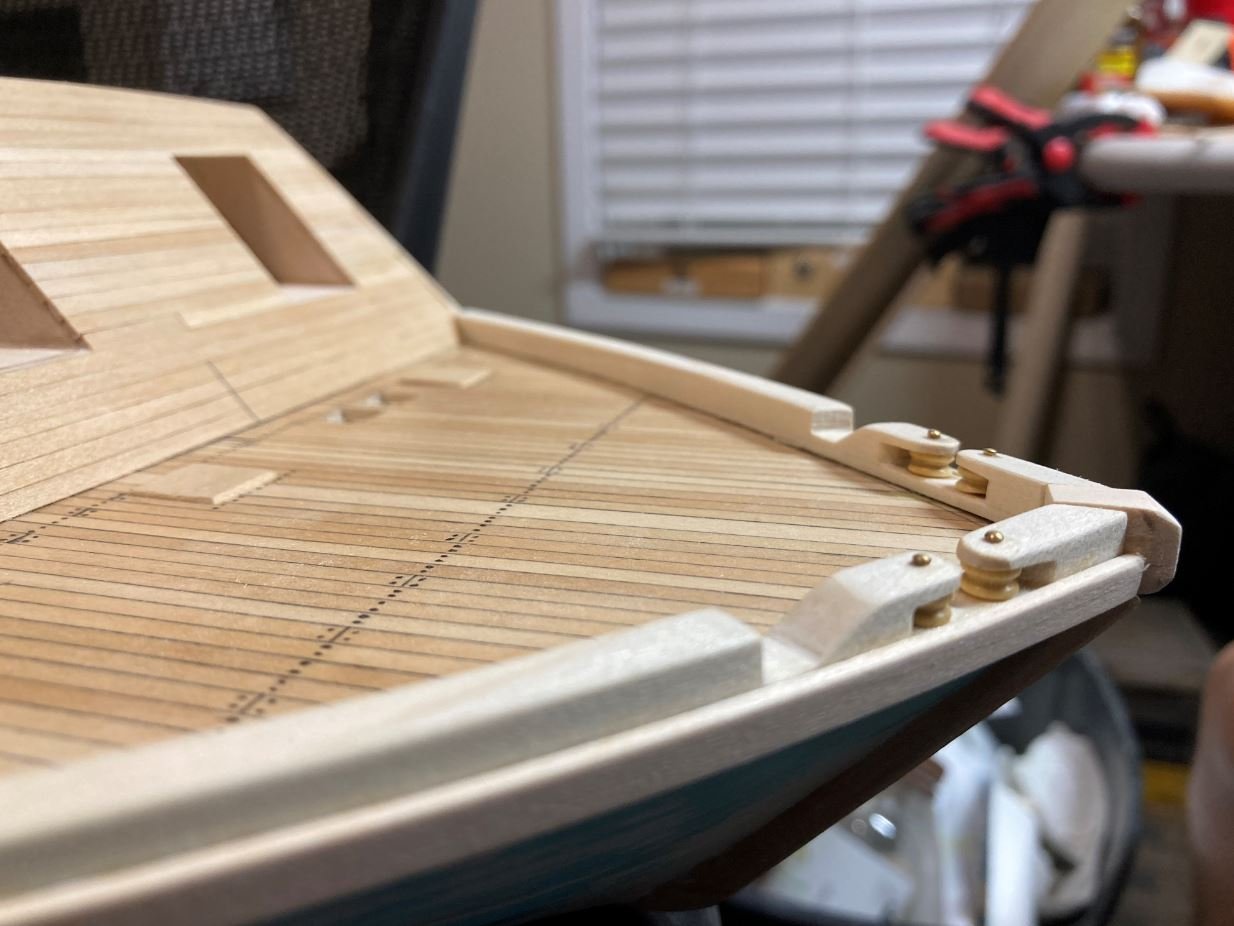
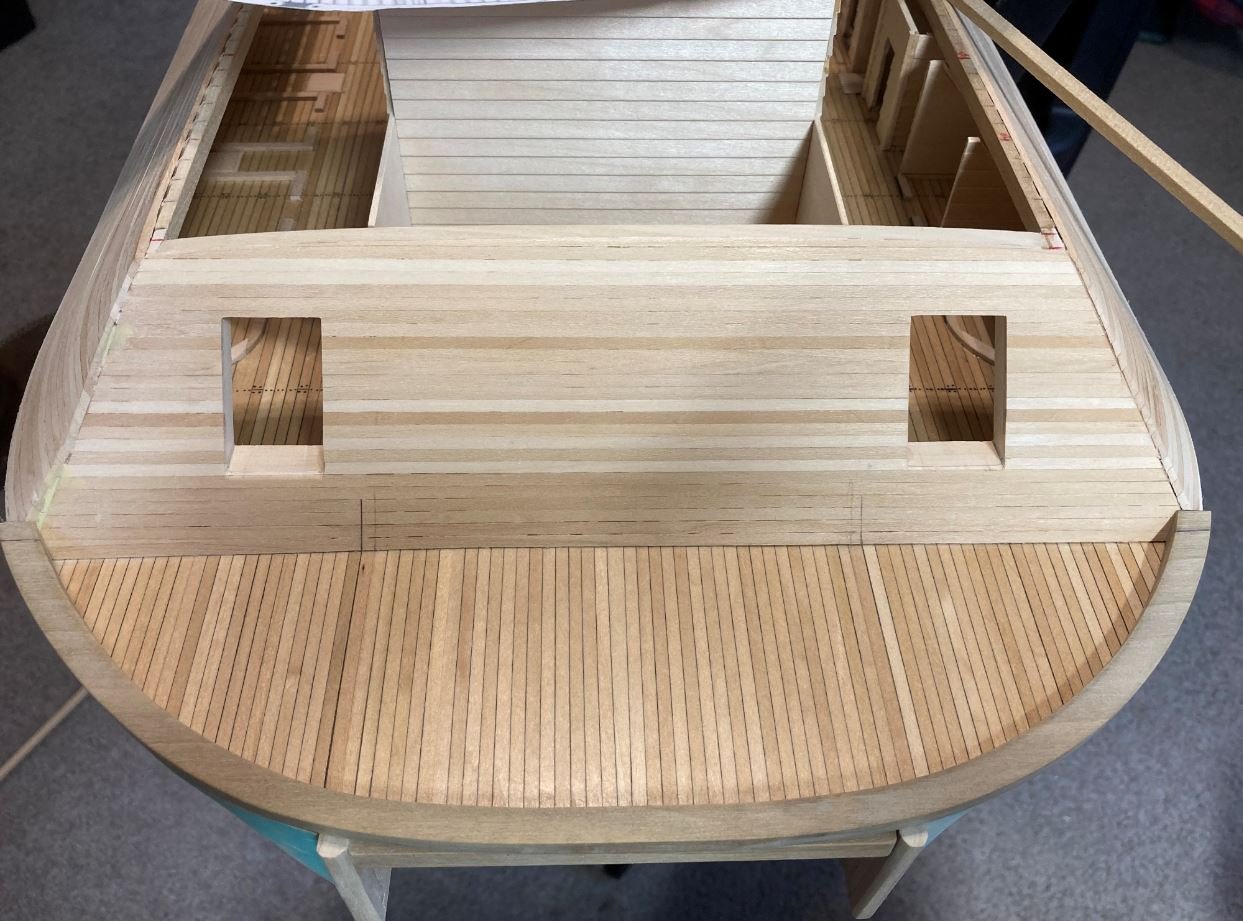
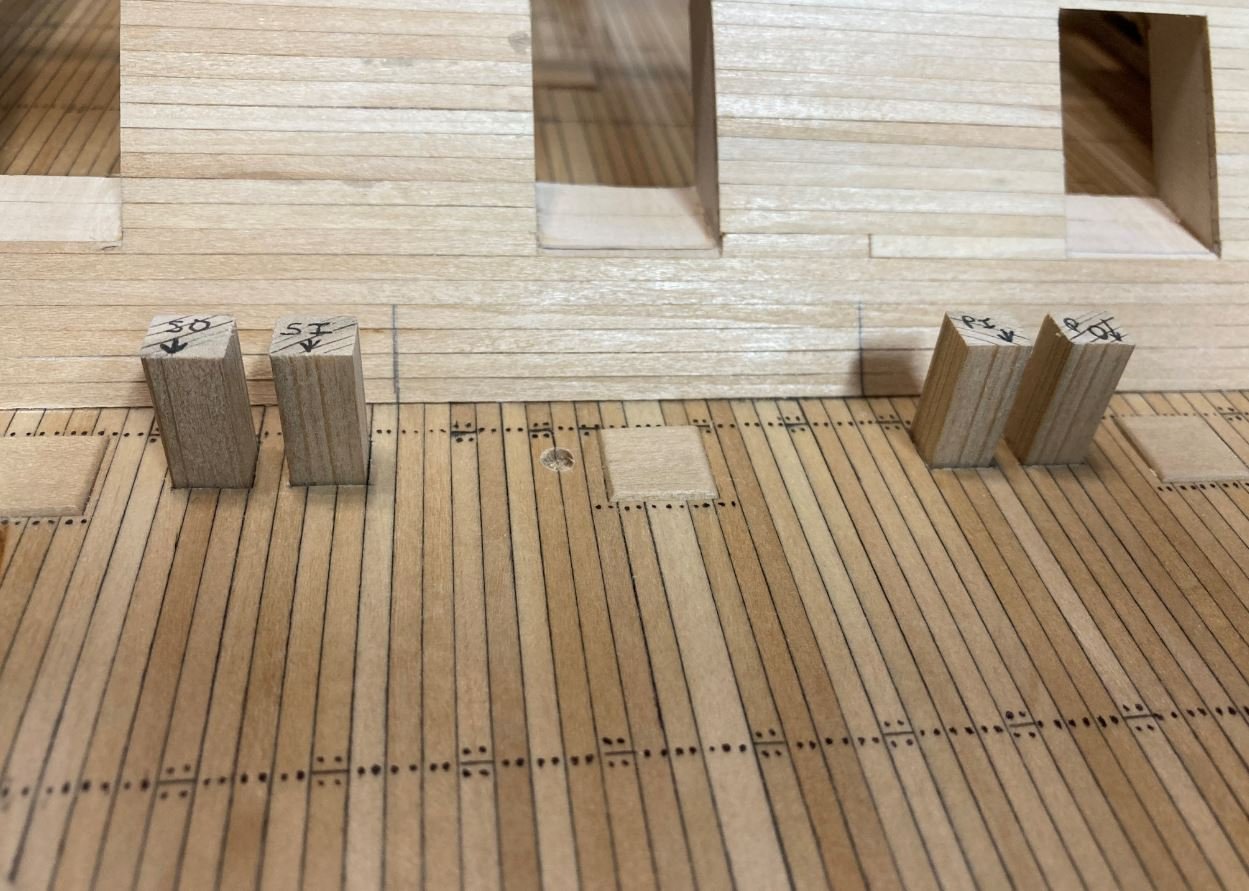
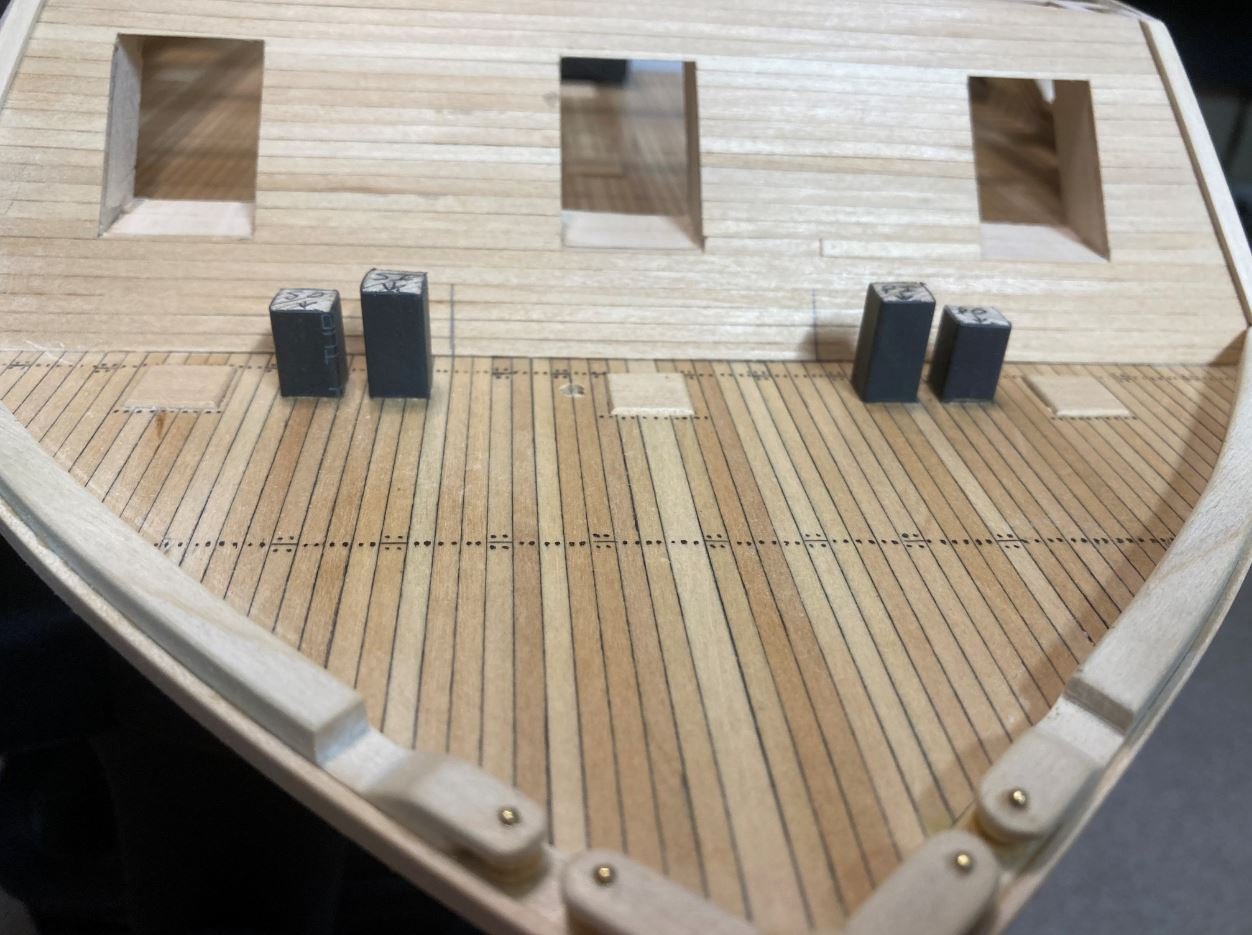
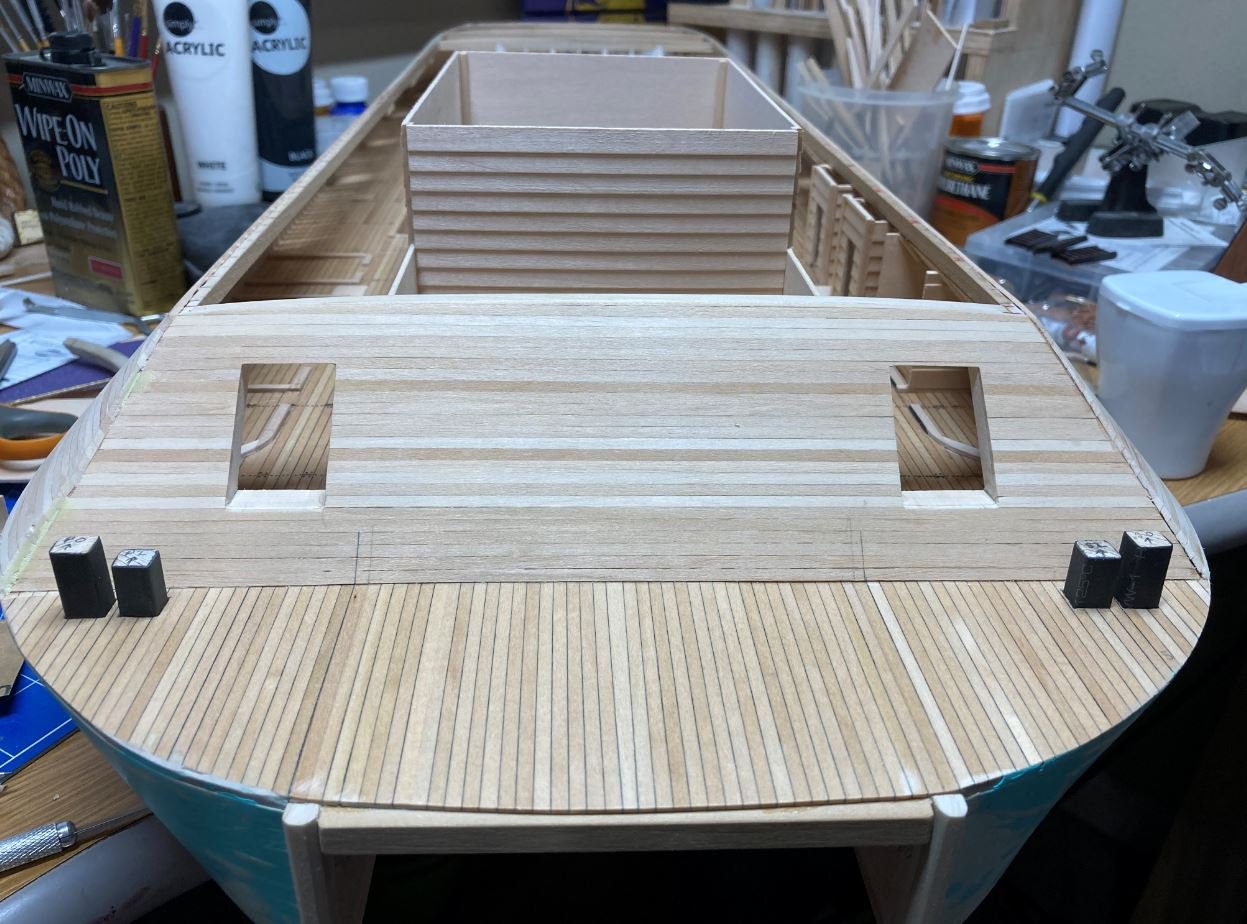
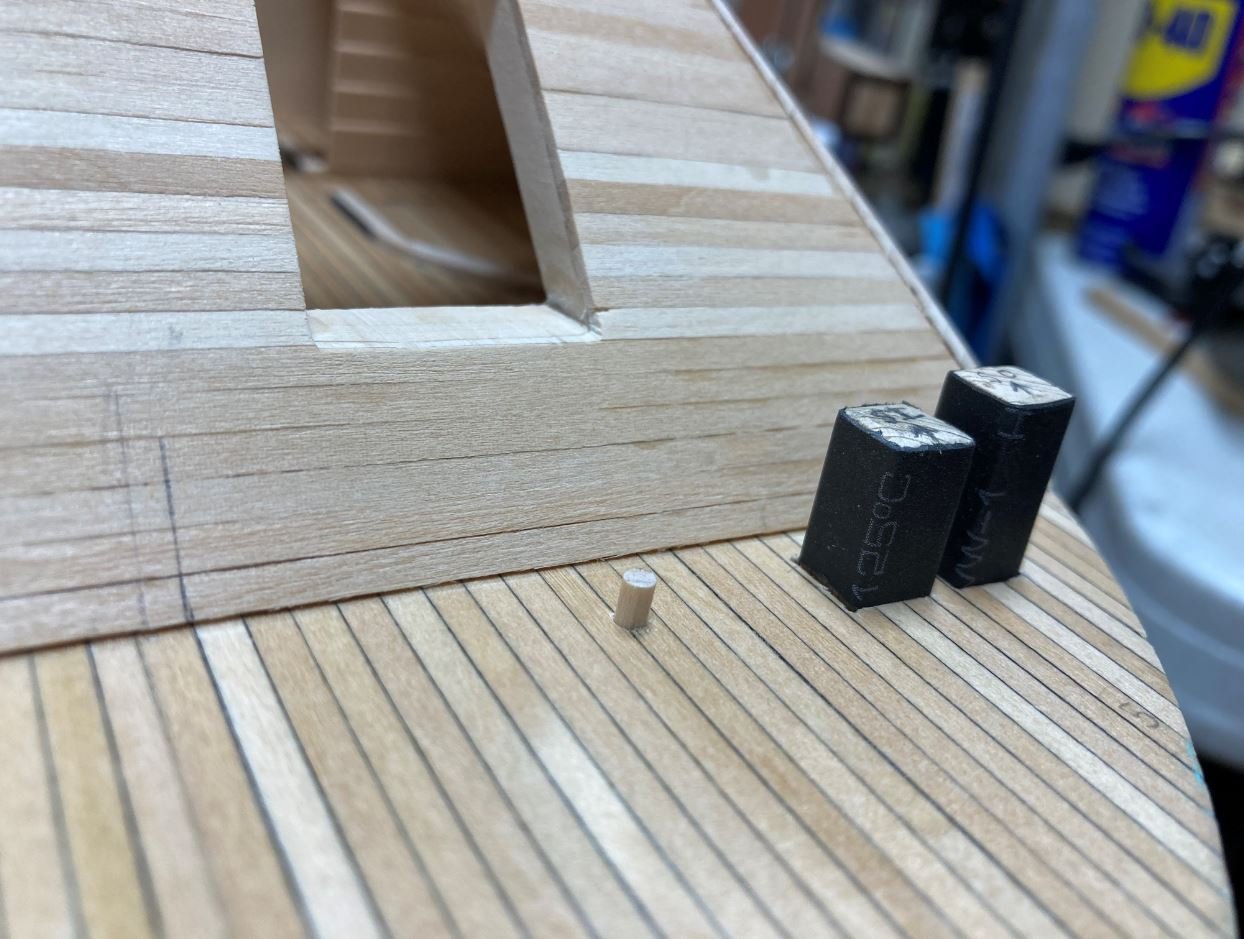
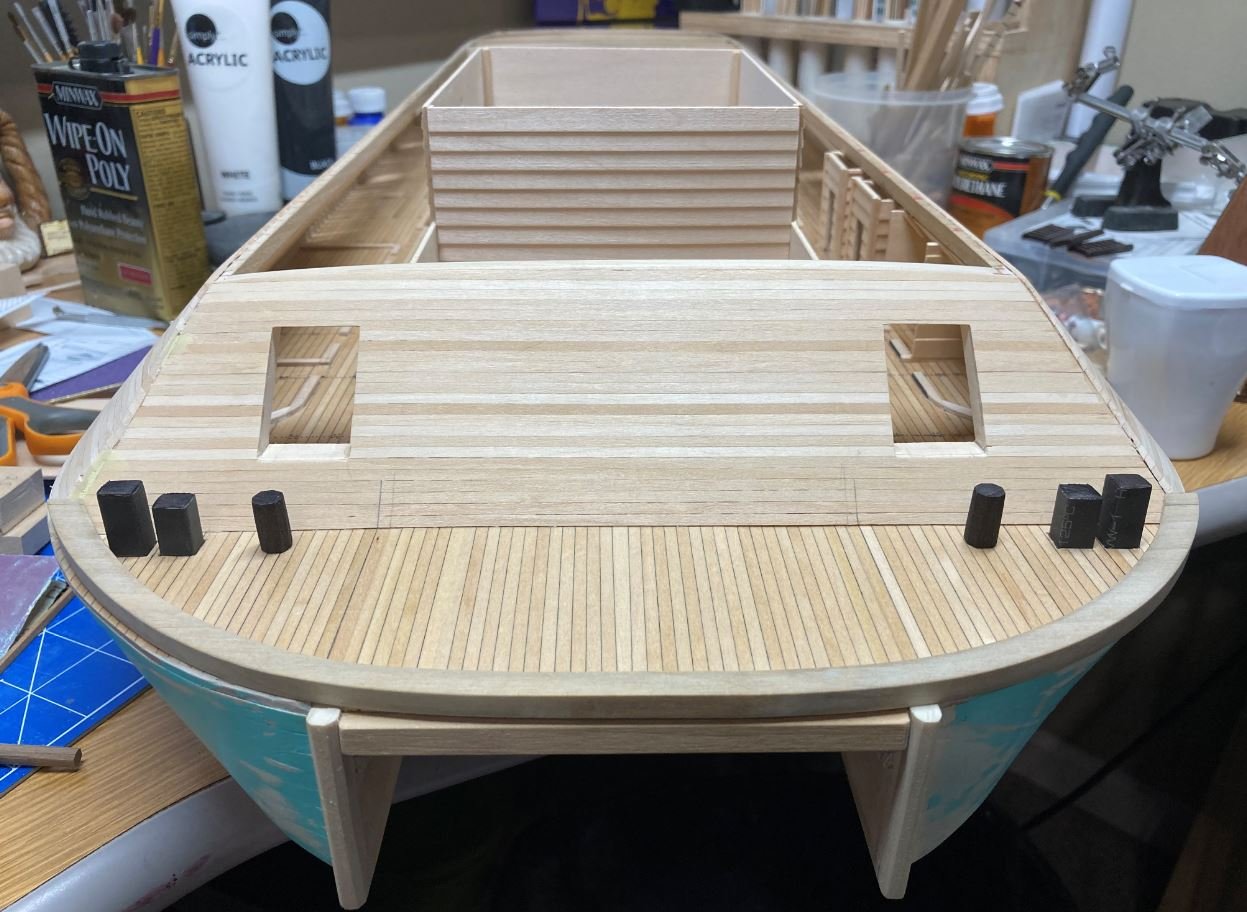
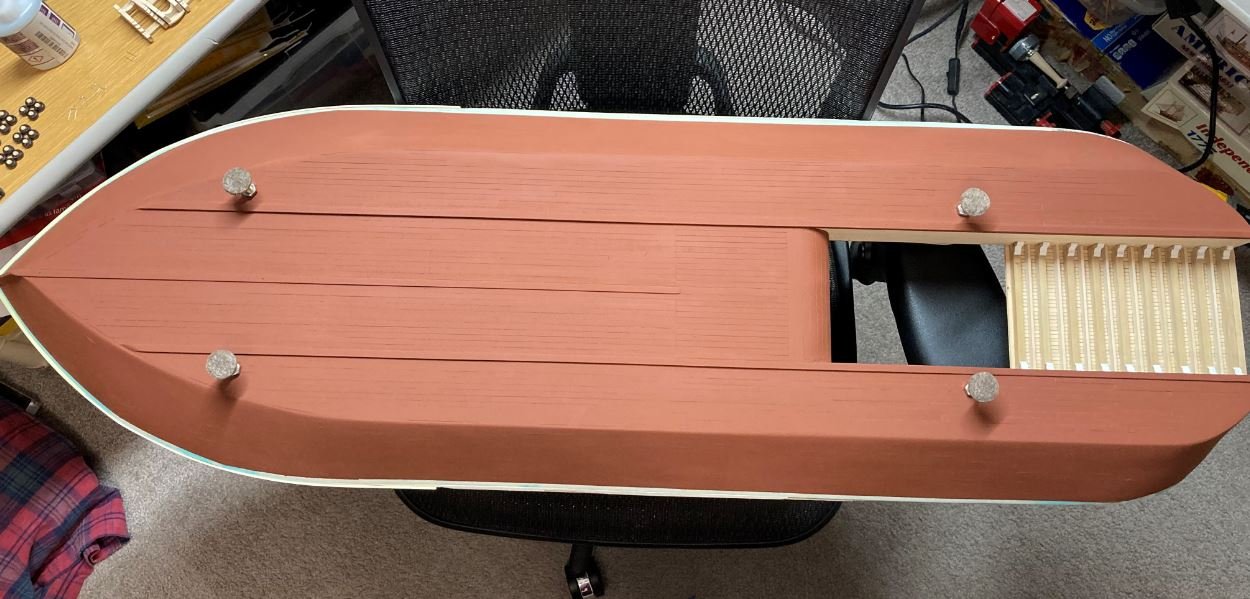
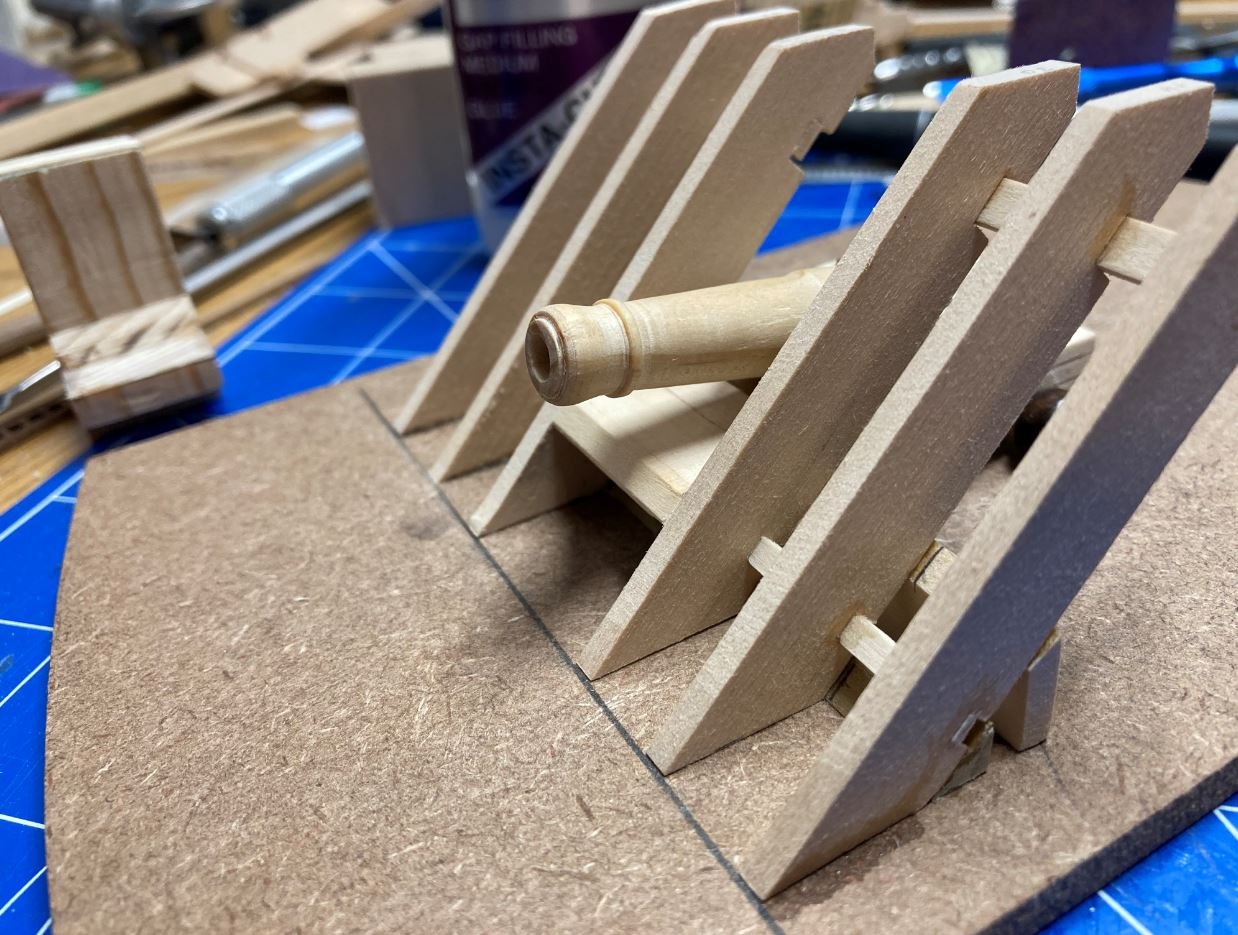
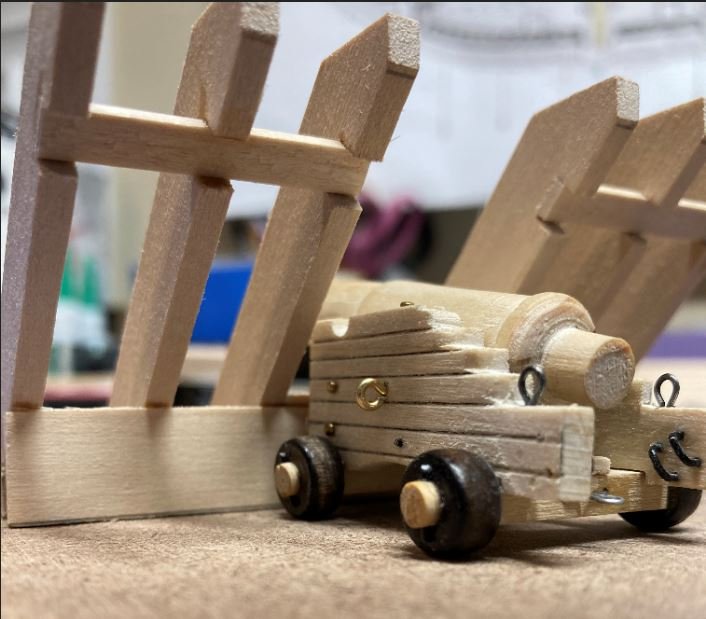
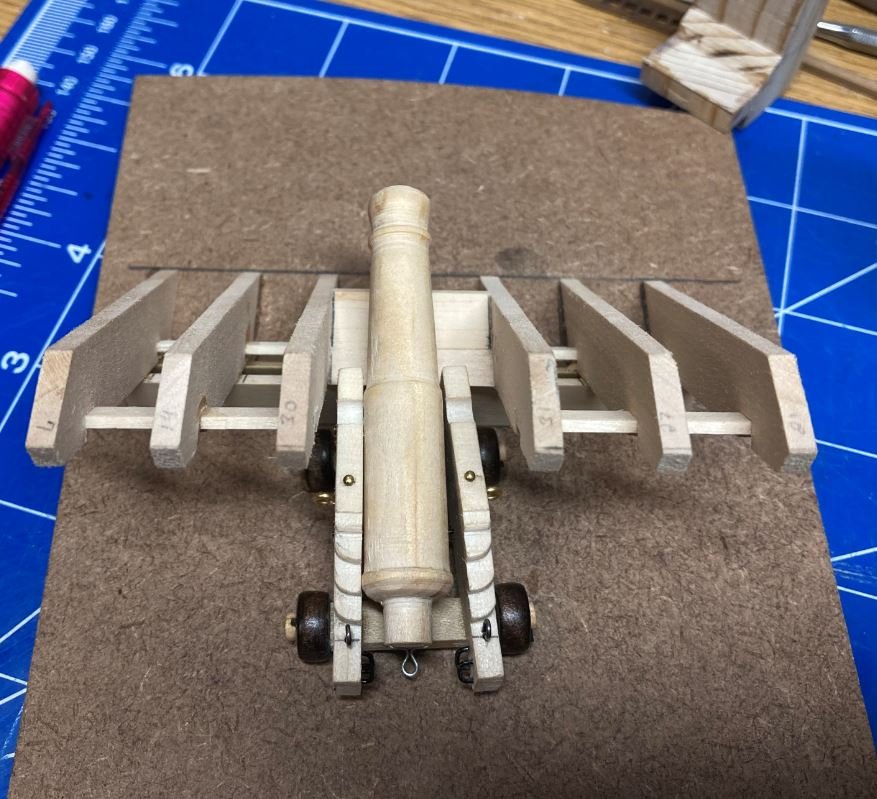
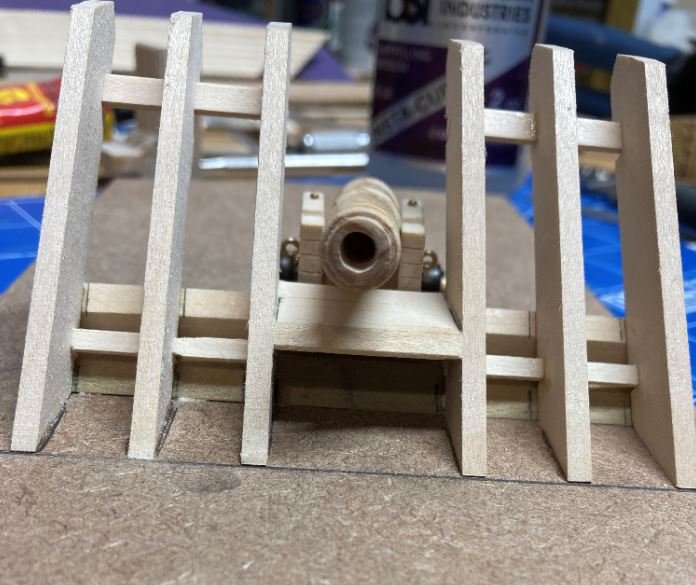
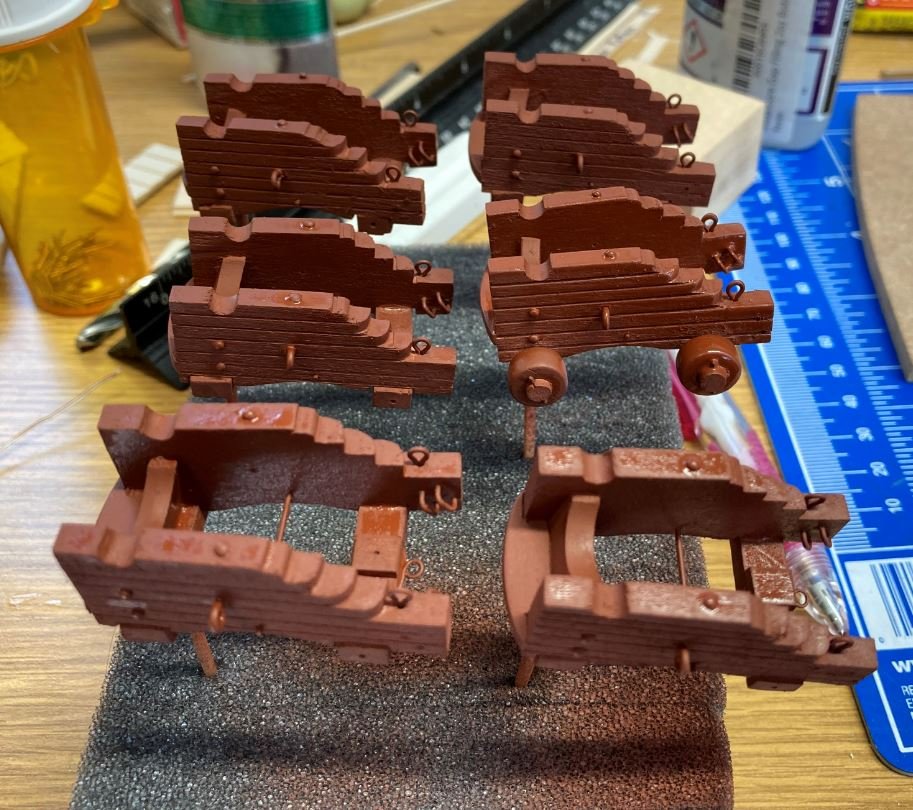
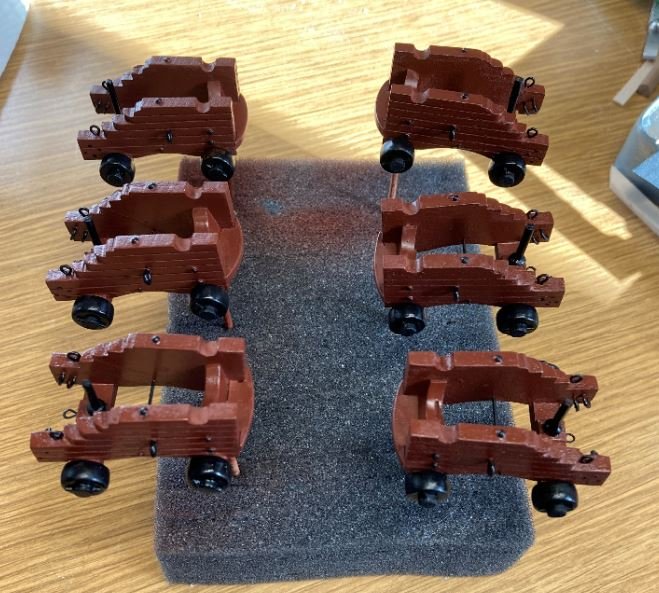
Greetings again all, hope everyone had a great New Years. It's been a bit since my last update. Since Christmas things have been a little slow on the build and I have not had a whole lot of post worthy work to show. I did however get a few things accomplished recently. One of them being completion of the forward casemates. Also complete were the starboard side interior walls. Next I started work on some of the forward deck features. First were the bollards. Next were the forward bulwarks and fairleads. I have found that spare deadeyes make perfect rollers on the fairleads. Next up were the aft bollards. After extensive research and several info requests, I came up empty on my search for hull color. I finally made the decision that I am going to take my builders liberties with this and paint the hull something other than black. During my research I came across build after build and model after model of Ironclads that had some type of red color on the hull below the waterline. Unfortunately no info exists on whether or not the Cairo had a painted hull, so my choice is to paint it. I tried several different colors before deciding on a reddish-brown red oxide color. I wanted something that would break up the mostly black paint scheme of the casemates and armor plating, but something that would not stick out like a sore thumb. Many of the examples that I ran across the builders used a bright red paint, much like many of the modern day anti fouling reds that are used today. I just felt this would not have been the case and went with a more subdued color that will separate the black, but still maintain some of the boats stealthy-ness. Here is the color I came up with. As always, comments are definitely welcome. It may not look like much now, but as soon as I get the black paint on it, I think it will blend in nicely. Next was the completion of the cannon carriages. Here are the six large carriages. I had some leftover red from the hull, so I decided to use it on the carriages to. This way it transfers some of the color to the inside of the boat as well. Large carriages completed And all thirteen carriages completed. I had started turning down the cannons, but I was having trouble getting them to come out looking the same. After several attempts I finally conceded defeat and decided to take a different approach. I was speaking with one of my uncles who used to be a machinist and still has some connections at his old shop that could 'hook me up" with some turned brass ones. All I need to do was to send him the dimensions and plans for them and he would take care of them for me. So this is the route that I am taking. Hopefully the truest out there won't look down on me for cheating a bit, but I just don't think that my skills on the lathe are there yet. In the meantime, I built me a mockup of one of the gun ports for rigging the cannons and I set up my first attempted carriage and one of my failed turned wooden barrels in it. This will allow me to rig everything up with easy access and then all I have to do is transfer it to the model. Should provide me with a lot more room to work instead the close confines of the gun deck. Everything is ready to go for the rigging, I'm just waiting on my order of blocks and rope from Chuck over at Syren Ship Company to come in and I'll make my first attempt at getting the cannons rigged up. Well that is it for this update, hopefully it won't be so long before the next one. Thanks again for the likes and for stopping by. Everyone please stay safe. -Brian
- 739 replies
-
- 18
-
-
Johnhoward, I appreciate the input on this very much and kinda figured that would be the answer. Coloring determination on many older ships, especially those that didn’t have much of a history before going down to the depths make it difficult on us builders that are doing our best to faithfully replicate the original ships. I see a lot of this issue on other builds where builder liberties have to be used when the information is just not there. One such example would be Vasa. She didn’t make it past her maiden voyage before being lost for 400 years. During my research on the coloring, I have run across model after model of ironclads, not just the City Class ones, where the builders have used the red color scheme for the hulls. There is even a life size replica of the Monitor that has the hull painted red. I agree that the bright red was most likely not used, but that a more muted red iron oxide could have been a possibility. However, since there is no documentation or information that can prove otherwise, and like you said, I will go with my own personal preference and color the hull to my liking. I have been playing with a few color schemes that I like and I believe I have settled on a reddish-brown rust color that is close to an iron oxide that I think will break up the otherwise all black paint on the casemates. I guess that if somewhere down the line a discovery is made the confirms the true hull color, I can pull my model out of its case and fix the error. Until then I think I’ll be happy with what I have now. Again, thank you so much for your input. Really looking forward to more updates on the St. Louis build. -Brian
-
Lots of tedious work, but it all pays off in the end. I love the minor variances and inconsistencies, they add that touch of realism to a build. To echo Steven’s comment, I’m glad all went well with your father in law’s memorial service. Coordinating that any people online is no easy task. -Brian
-
Happy New Year to you as well. What a beautiful winter scene, definitely postcard worthy. We barely escaped the white stuff here this time around. good weather to spend in the shipyard. Can’t wait to see how the latest additions to the crew come out. -Brian
-
Daniel, Beautiful work as always, as well as the very descriptive history lesson. Truly wonderful build to follow. Stay safe and have a Happy New Year as well. -Brian
-
That’s what I was thinking as I was watching. It’s amazing the skill and labor involved with shipbuilding. My ulterior motive was hoping, somewhat, that by watching it would entice you to add the rivets to your build 😈. Beautiful job on the figures. They look right at home on the deck. My skills at detailed painting have never been that good. One of the reasons why I try to steer clear of painting my models unless it it’s one solid color, or lacks the fine details. -Brian
-
Johann, This is quite simply a masterpiece in the making. The details and intricate work you put into this build are mind blowing. I look forward to each and every update with great anticipation. Coupled with the videos, it is one of “The” builds to follow. Thank you so much for sharing your amazing work with us, it is a true pleasure. -Brian
-
Keith, What a beautiful build! My apologies for being so late to the game. I’ll gladly take a seat in the back row, punishment for being so late. Your deck details are fantastic, as is your rework of other details. After reading through this build, not sure if I missed it or what, but what is the back story on the model. Was this a continuation of a build that you started in the past or an unfinished build that you inherited? Also, what is the coloring of the decking? From the photos it has a deep, rich color that goes beautifully with the black and white of the hull. -Brian
-
Johann, Merry Christmas to you and your family as well. -Brian
-
Wefalck, Just ran across your build and spent the last hour catching up. I have to say this is an interesting boat and a magnificent display of model building mastery. Looking forward to following along on future updates. -Brian
-
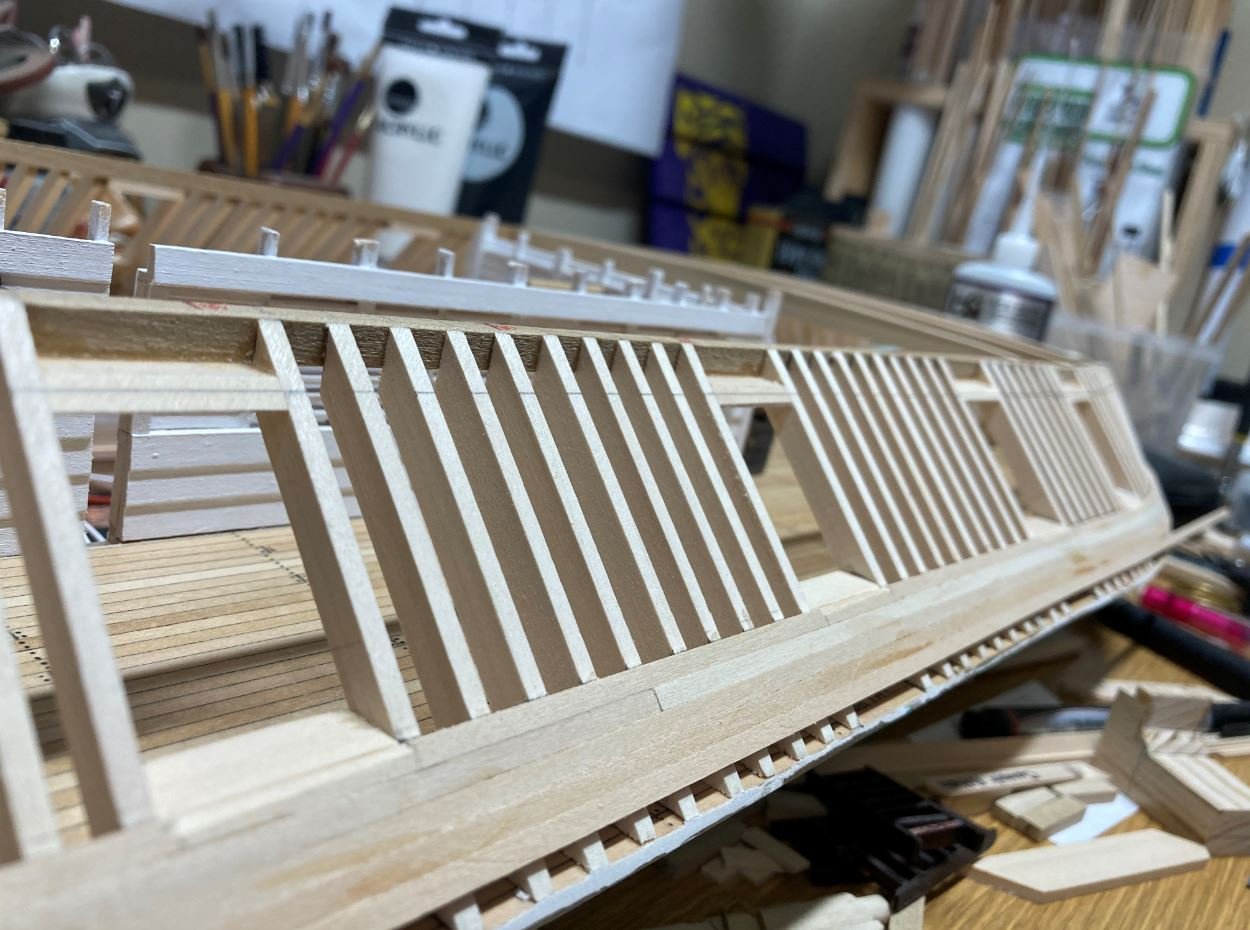
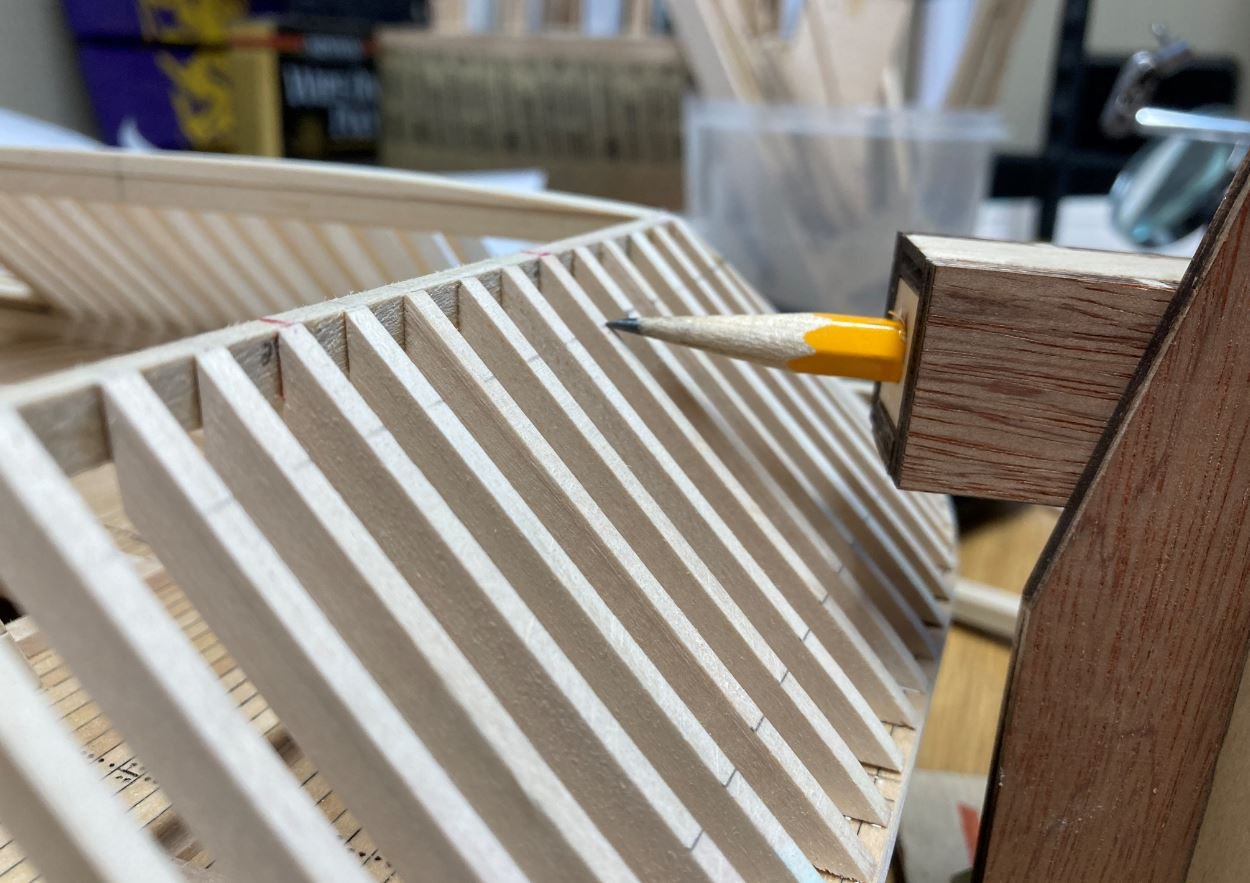
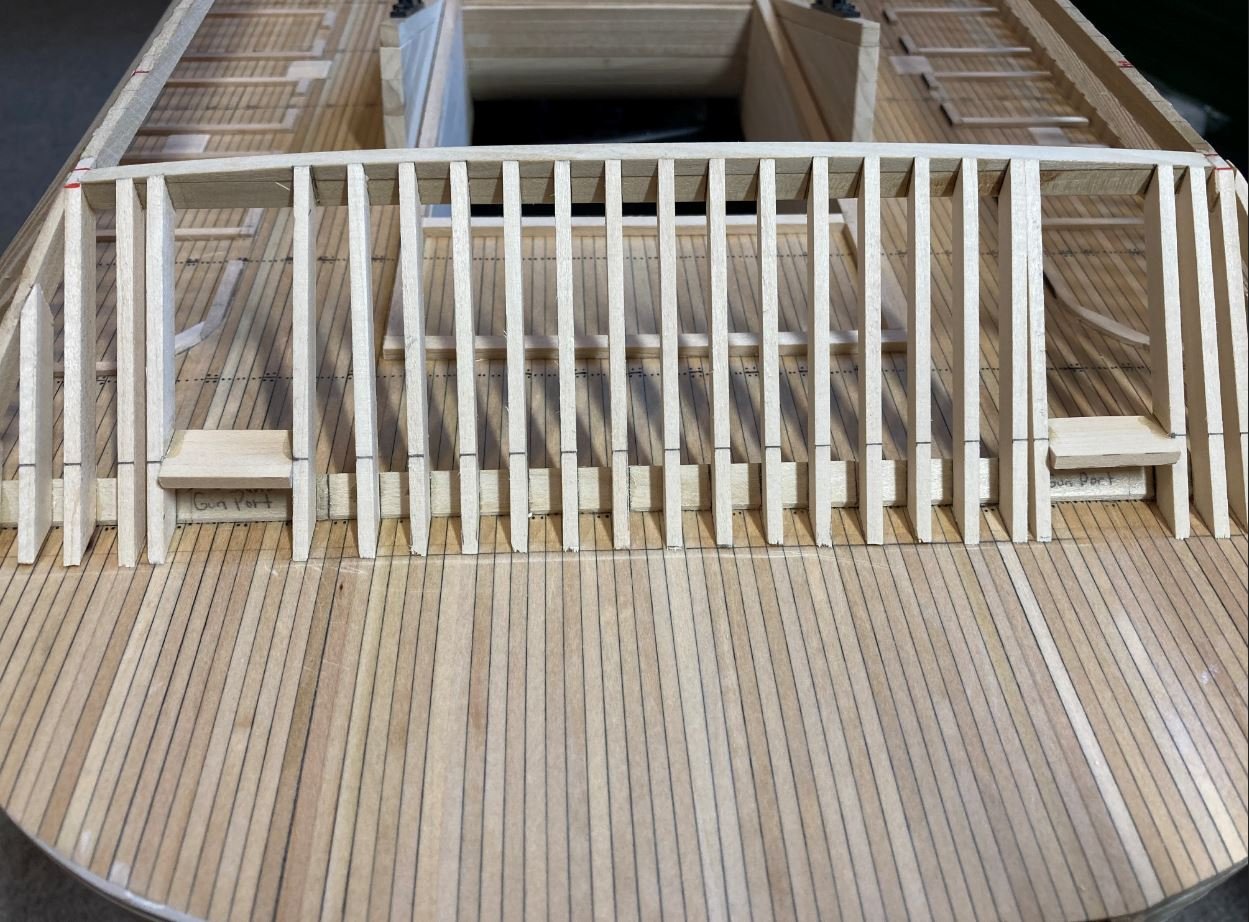
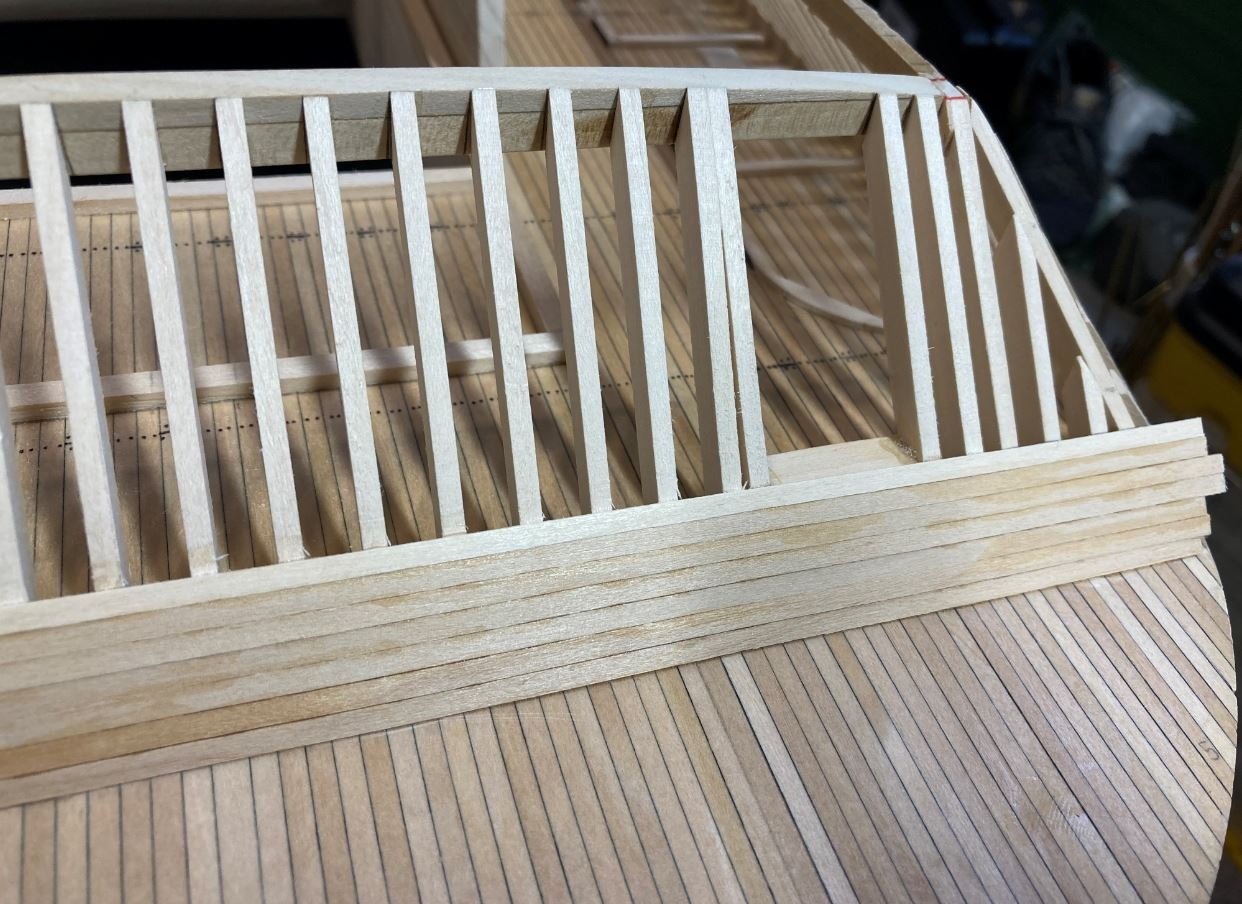
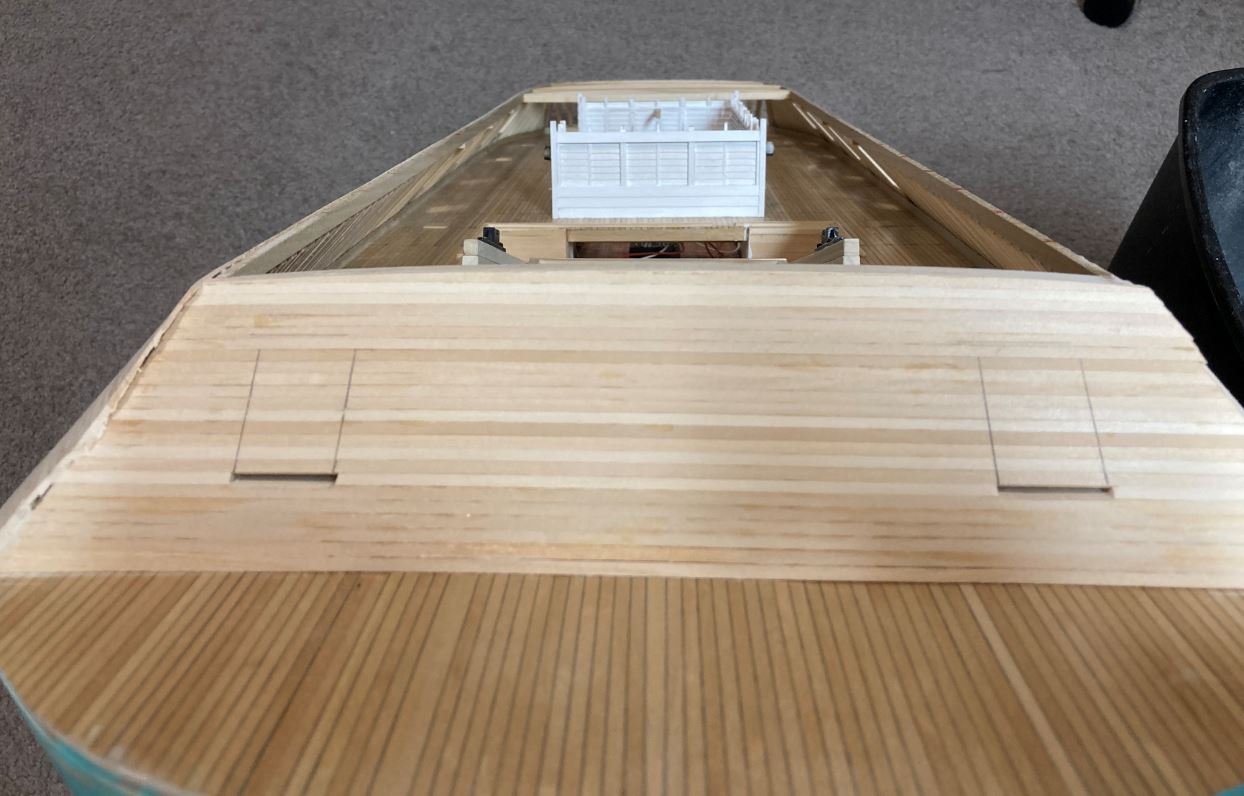
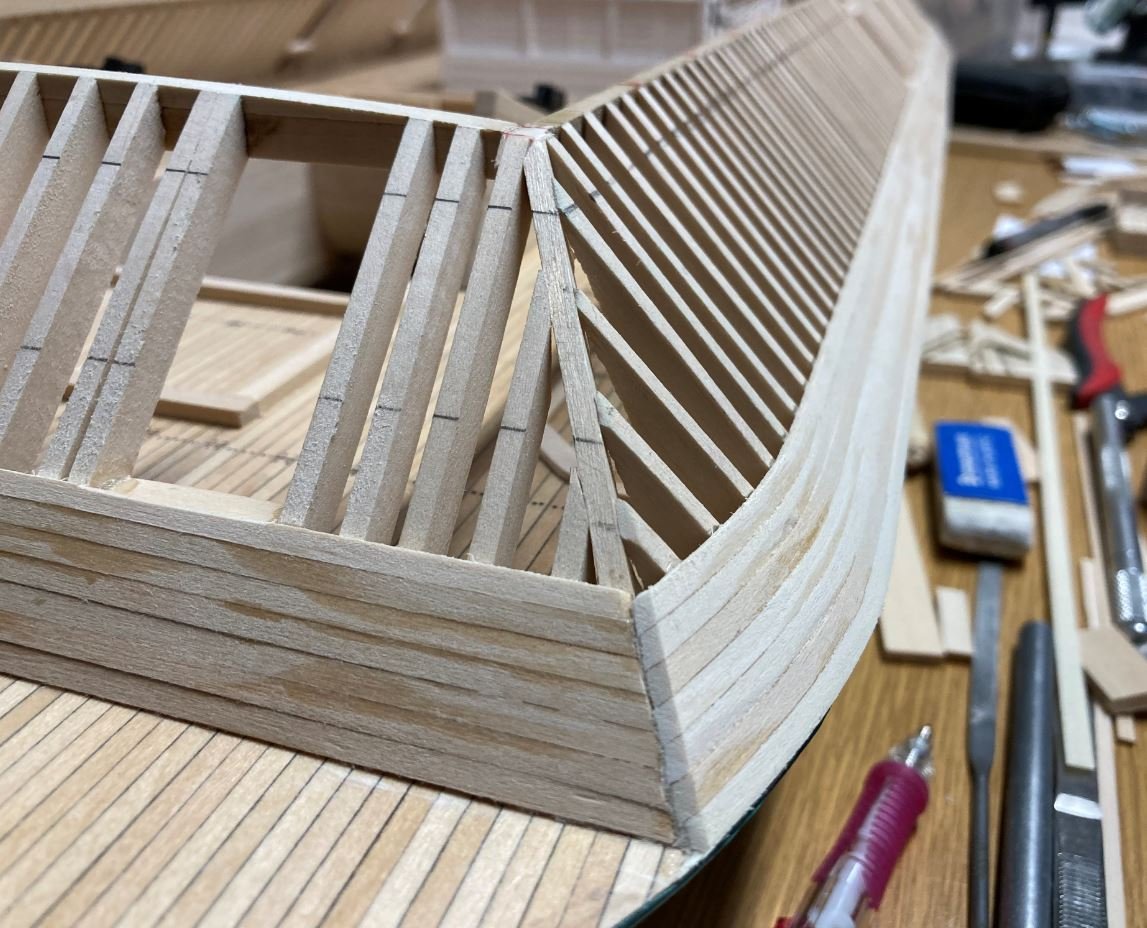
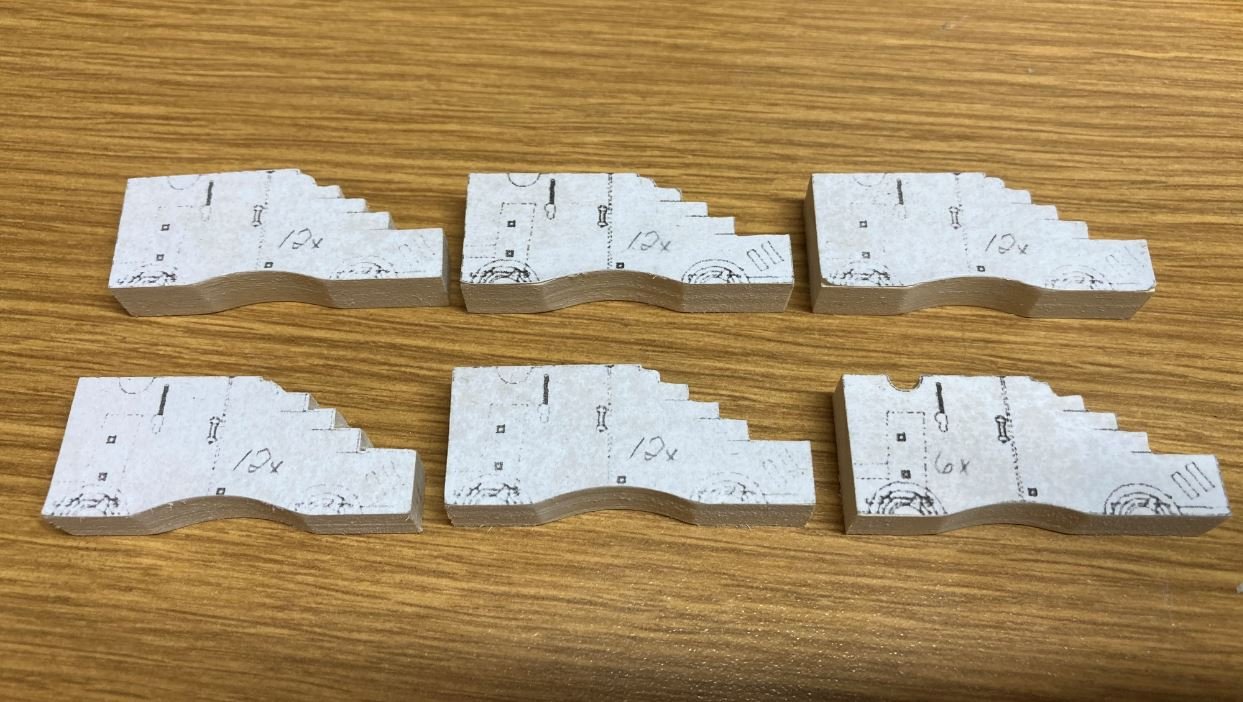
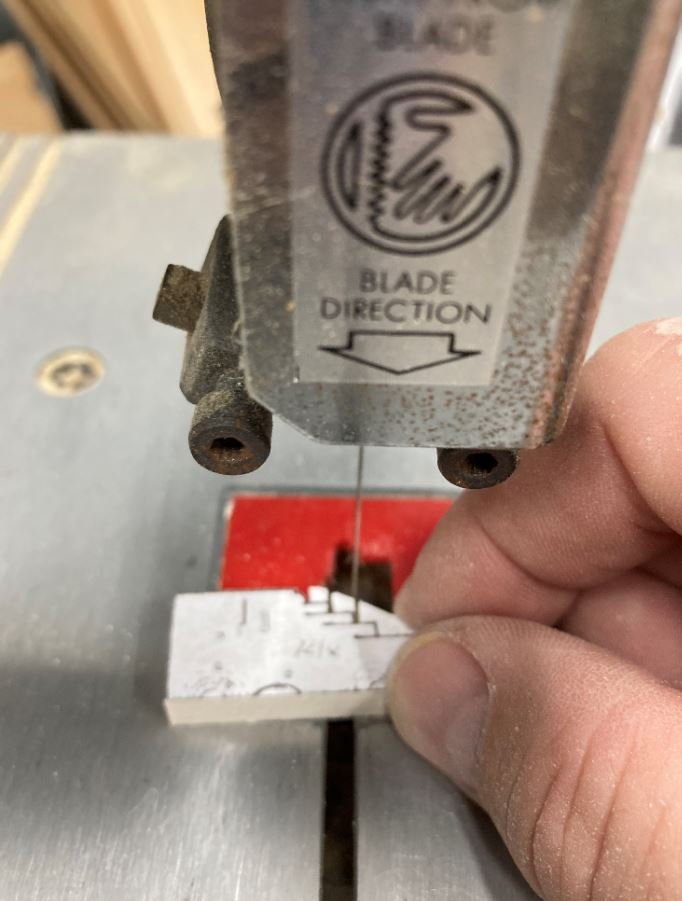
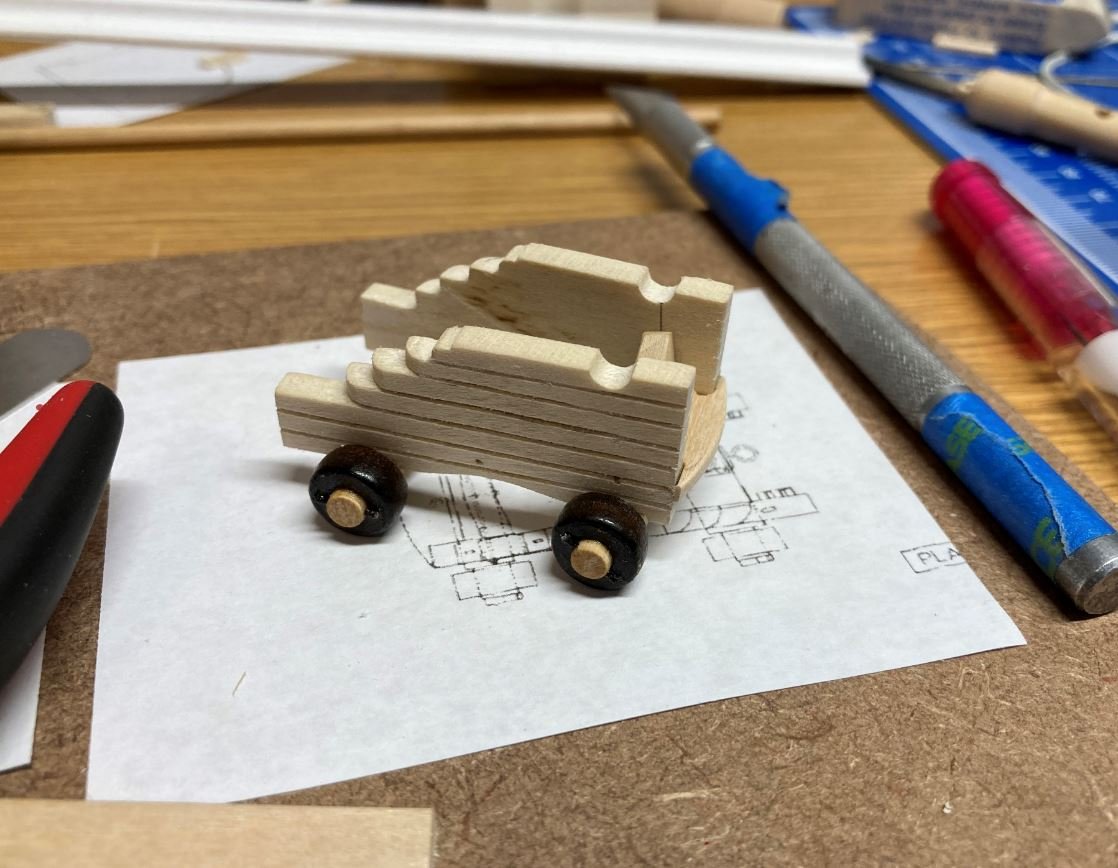
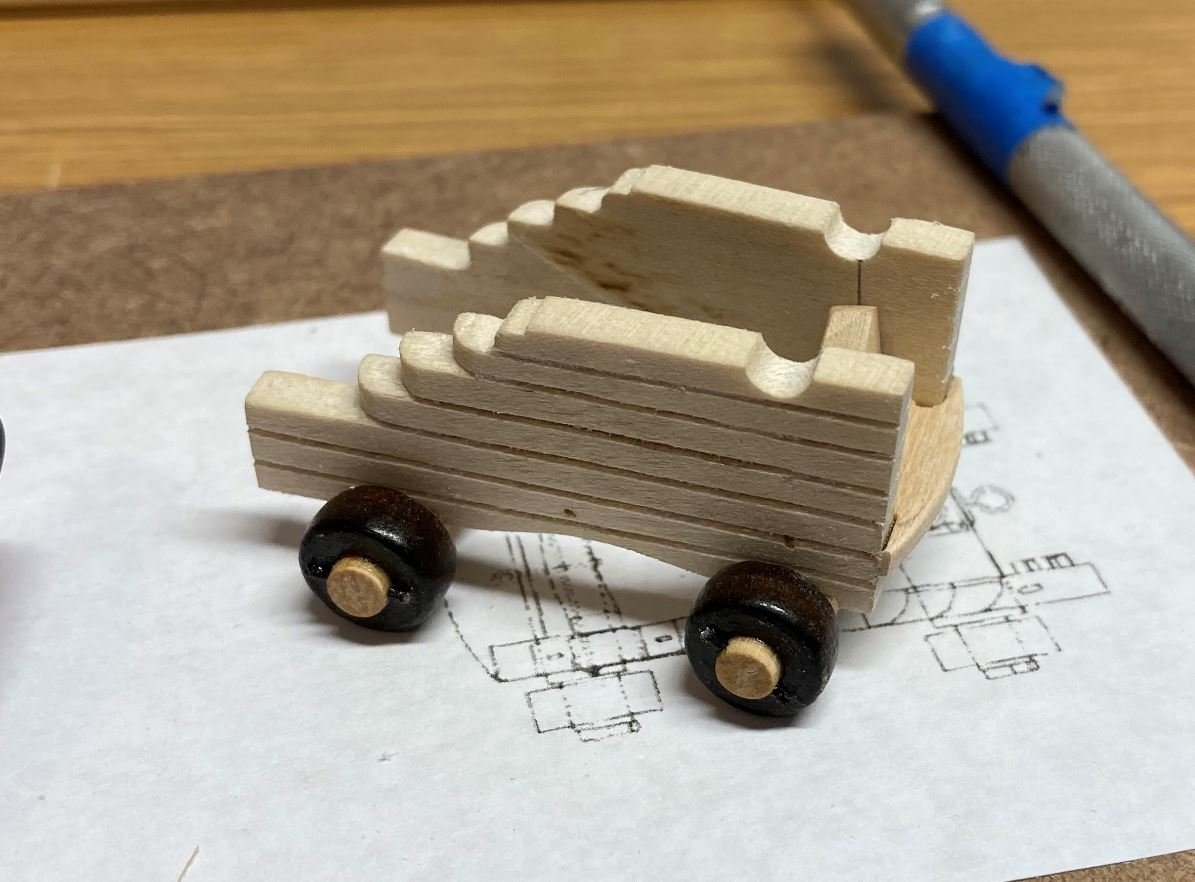
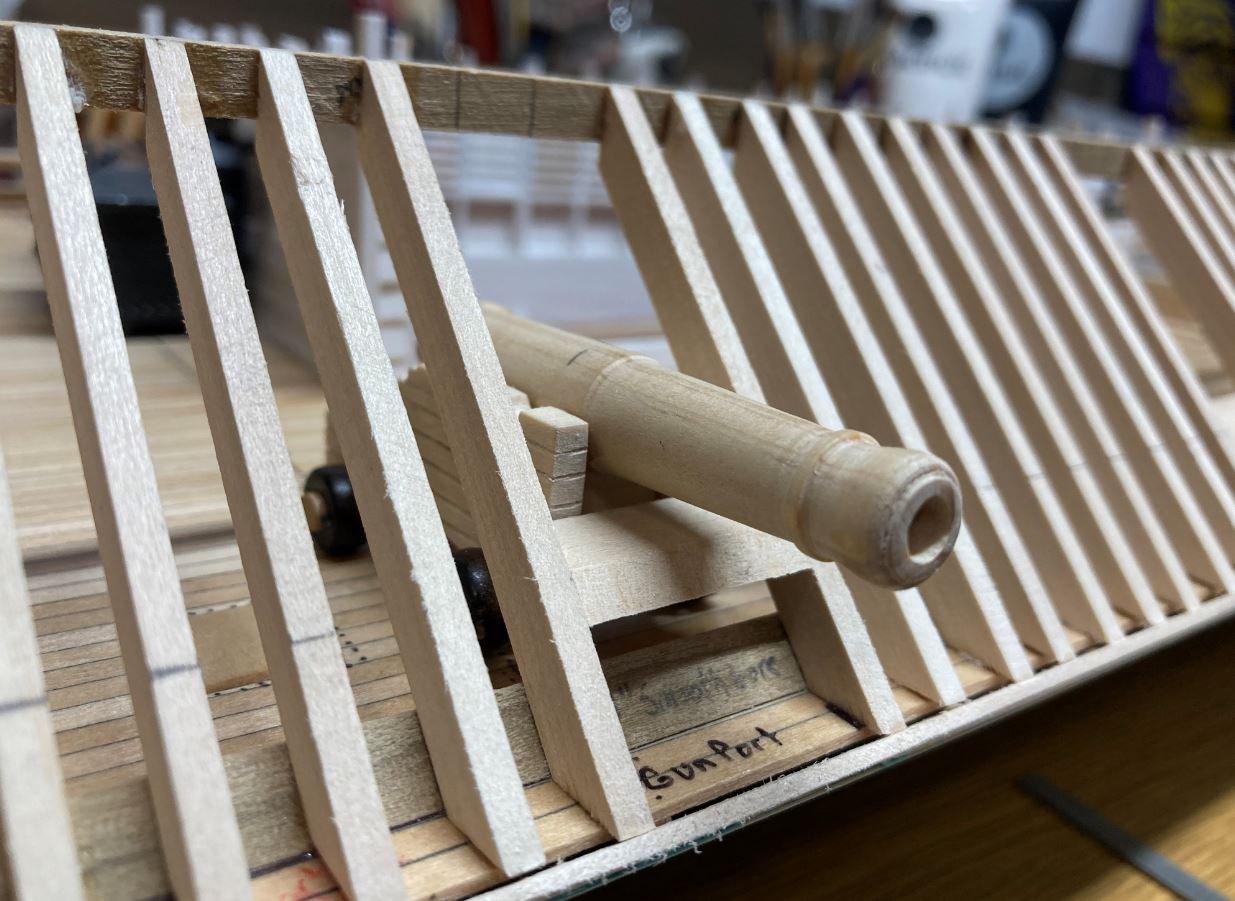
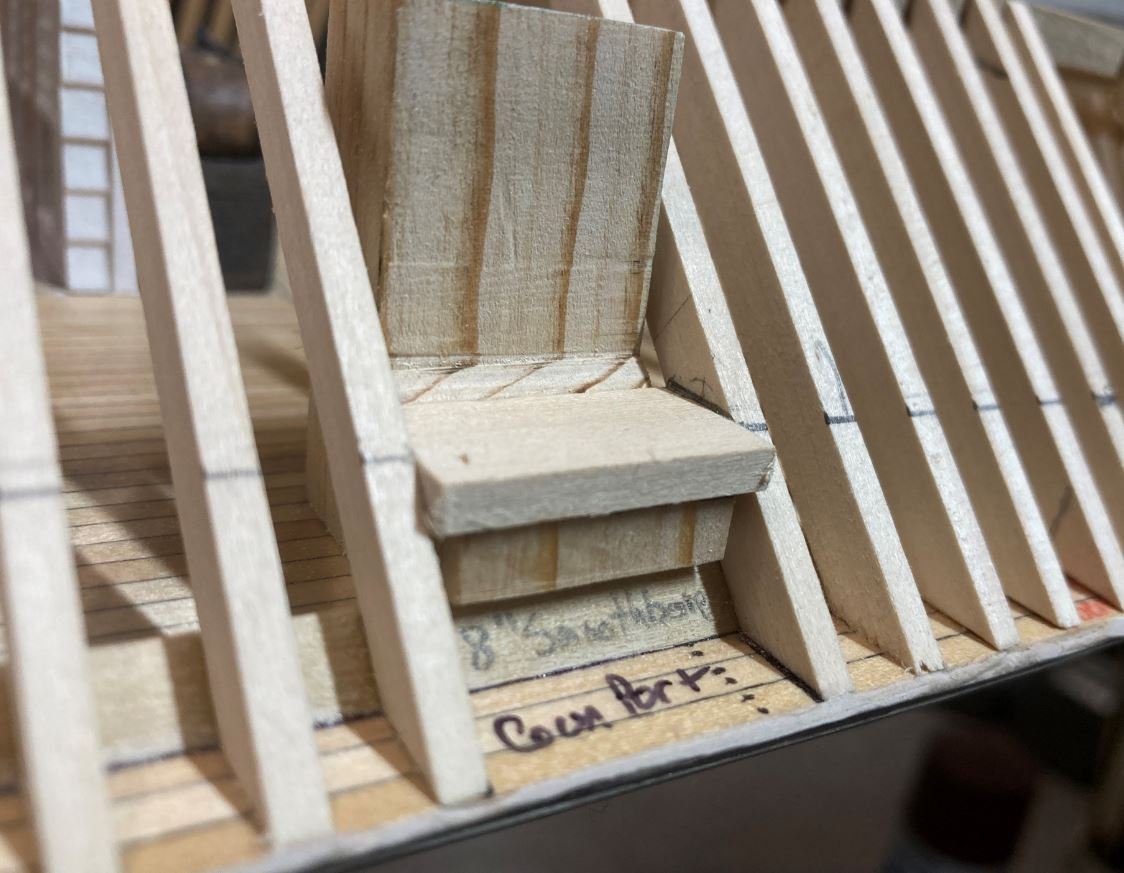
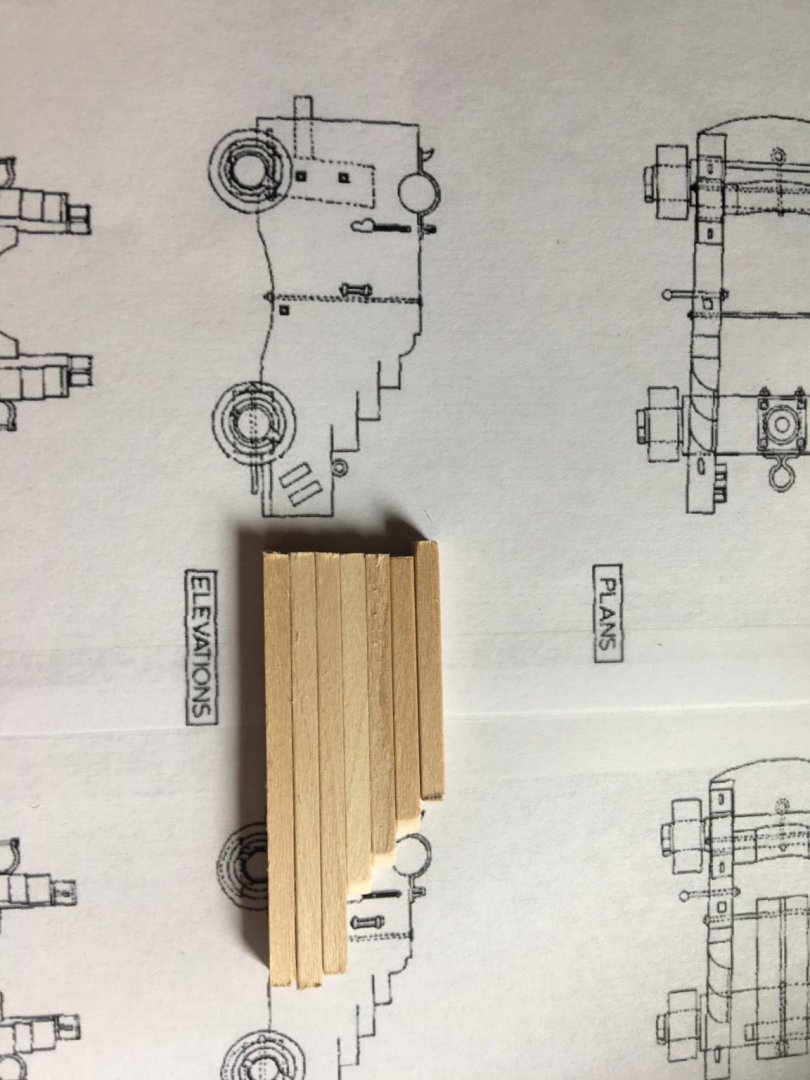
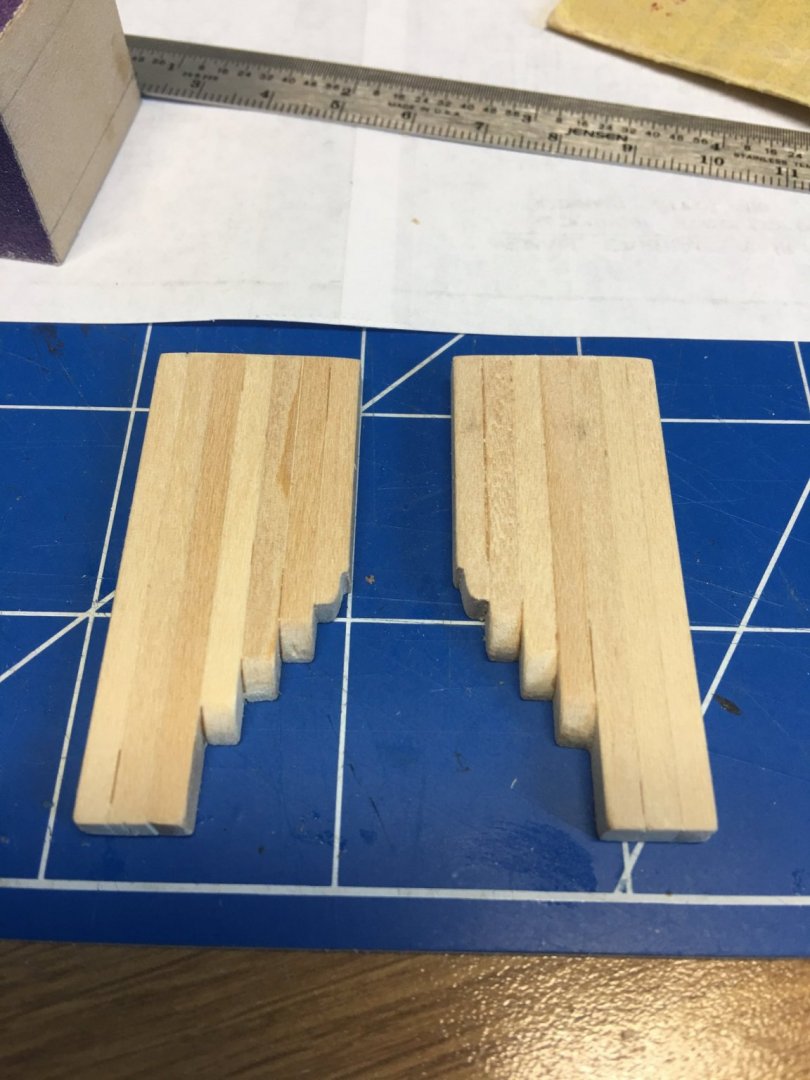
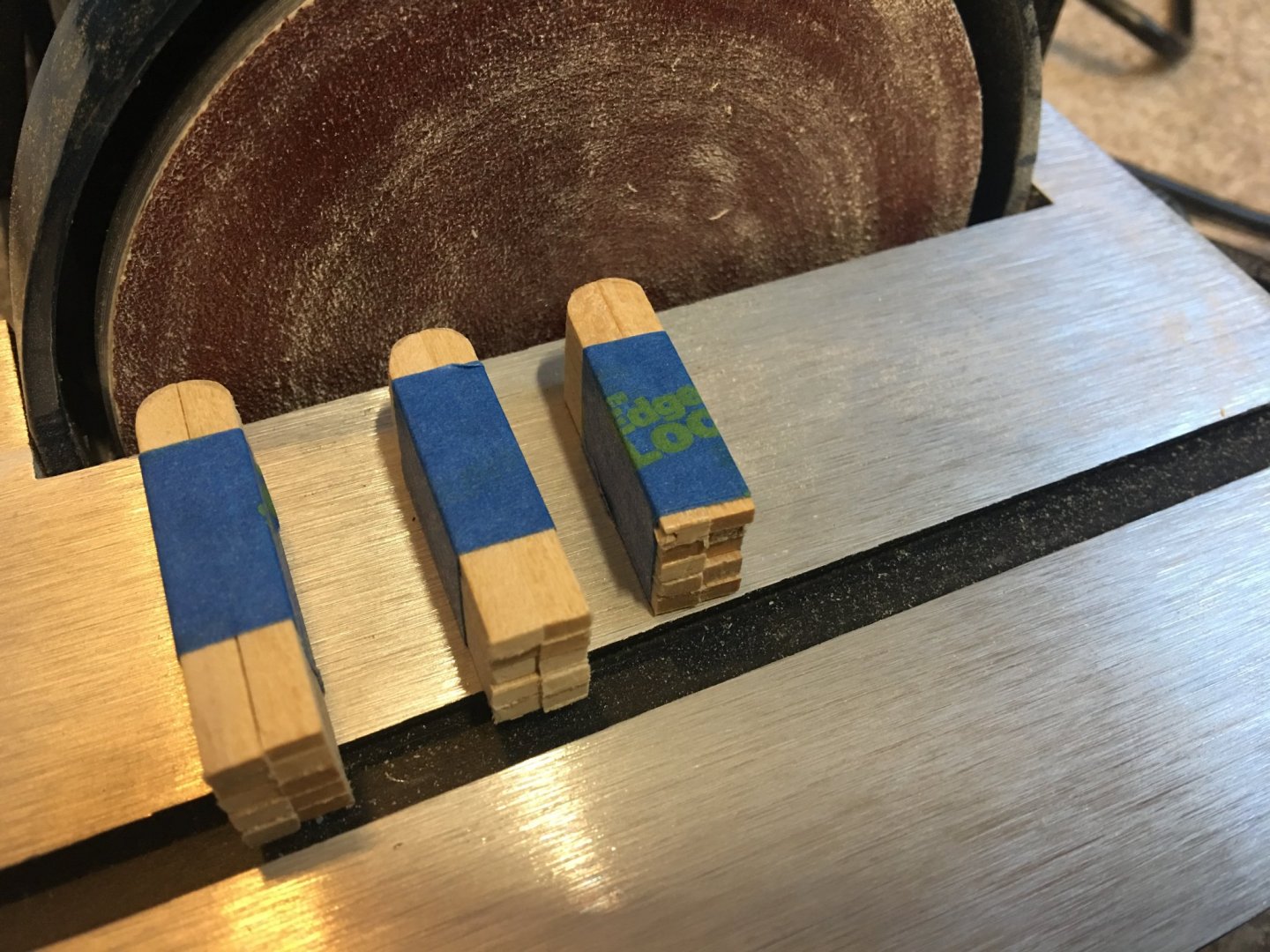
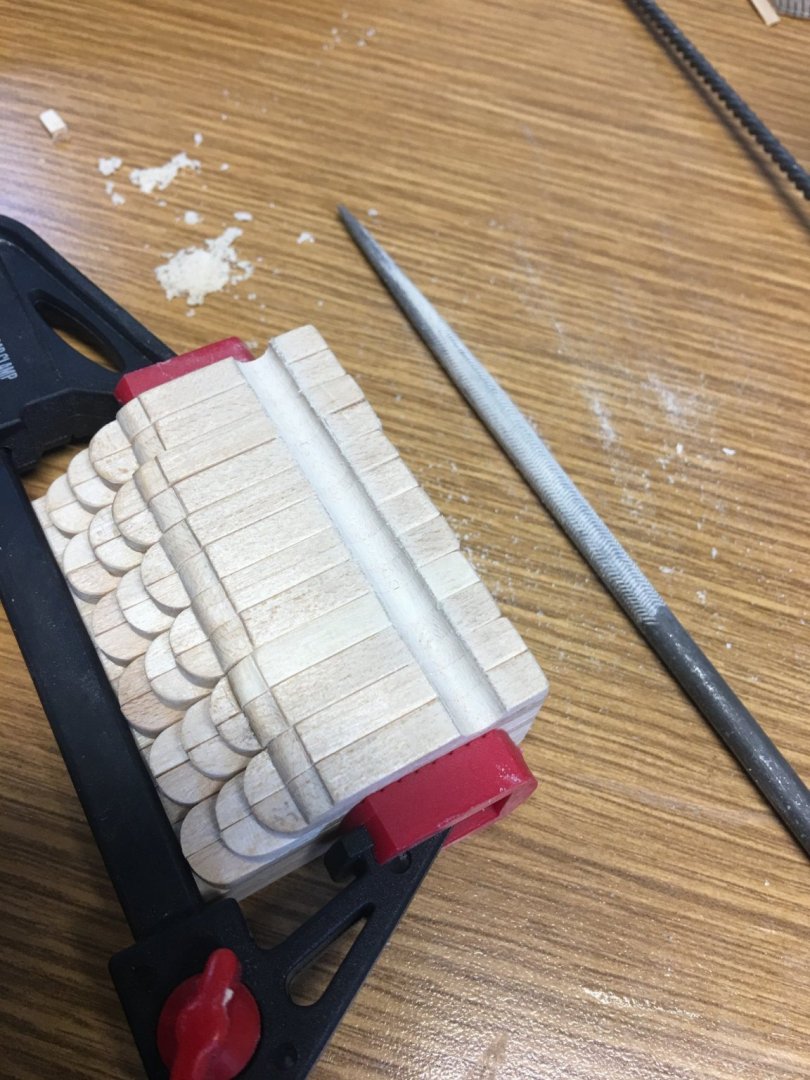
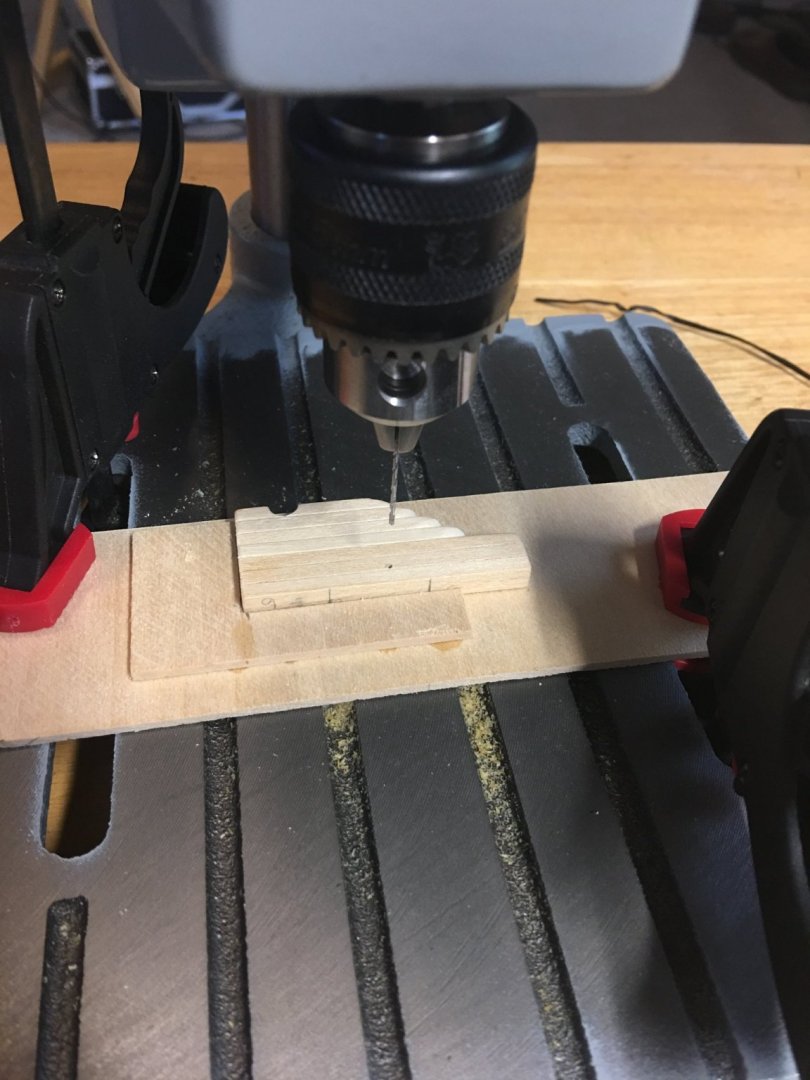
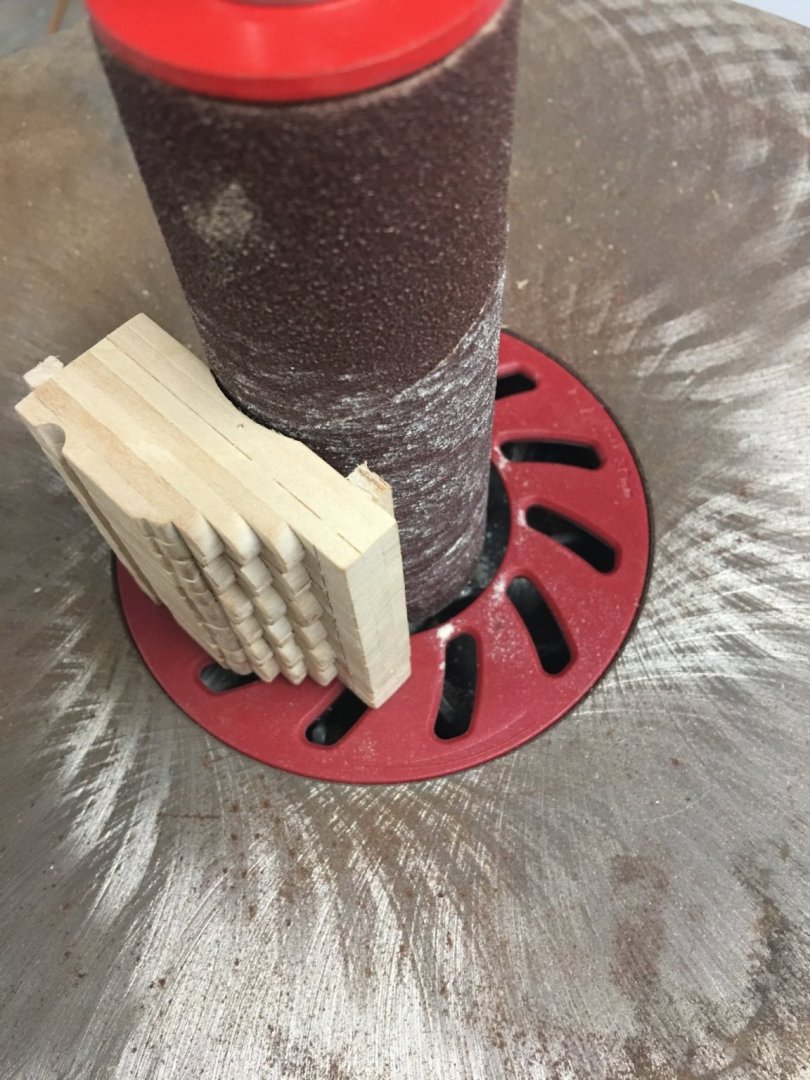
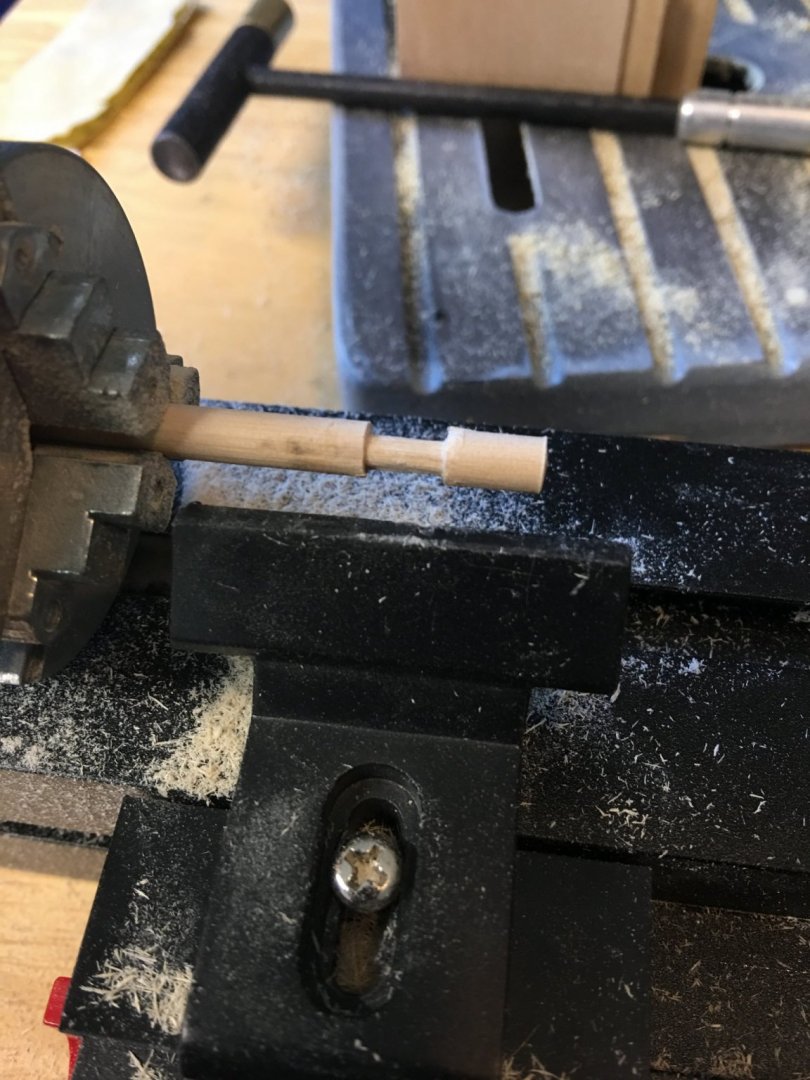
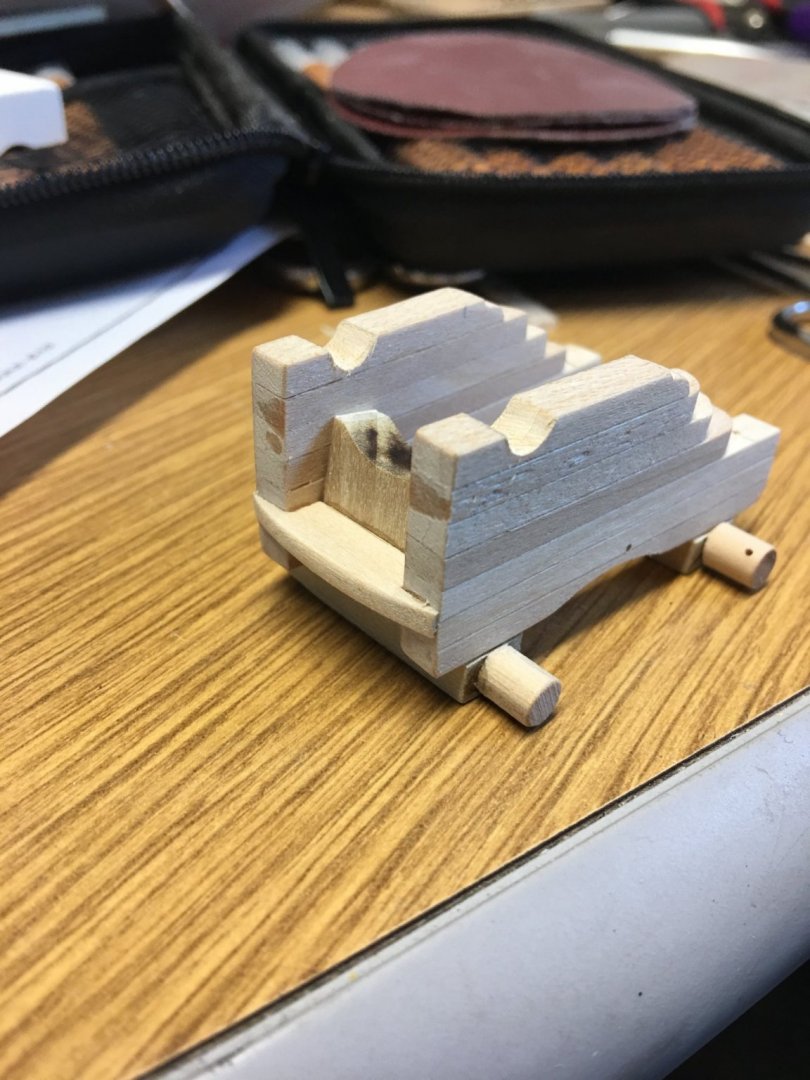
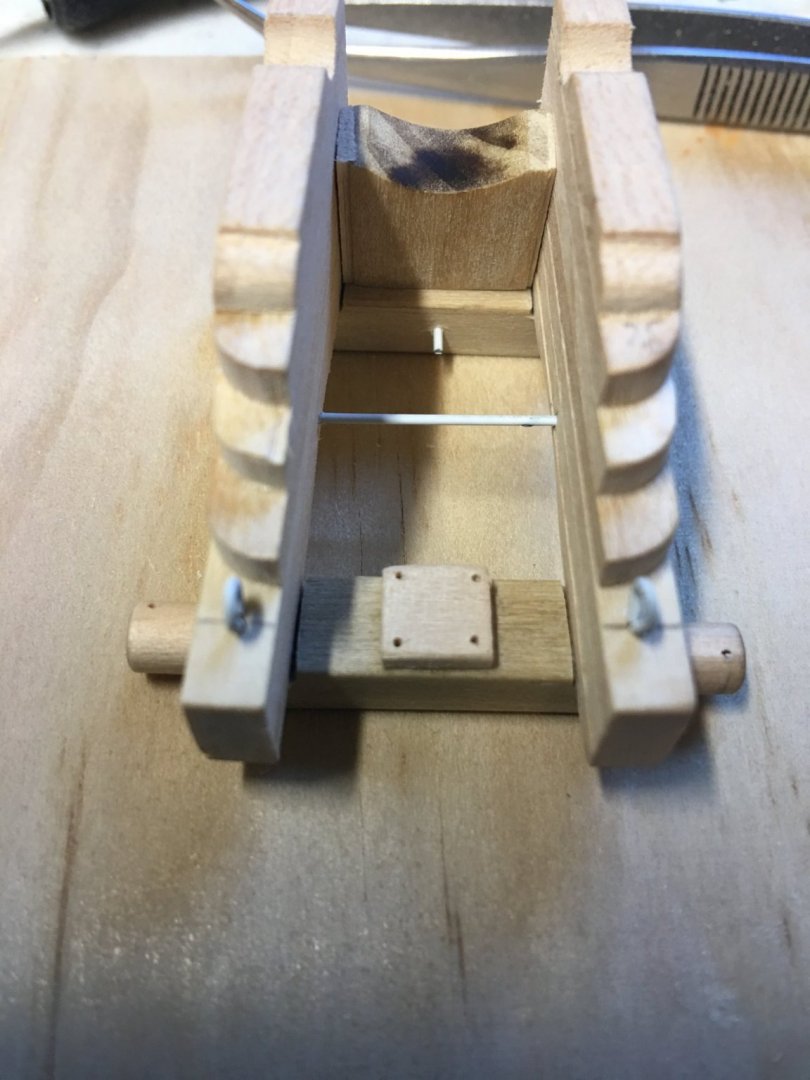
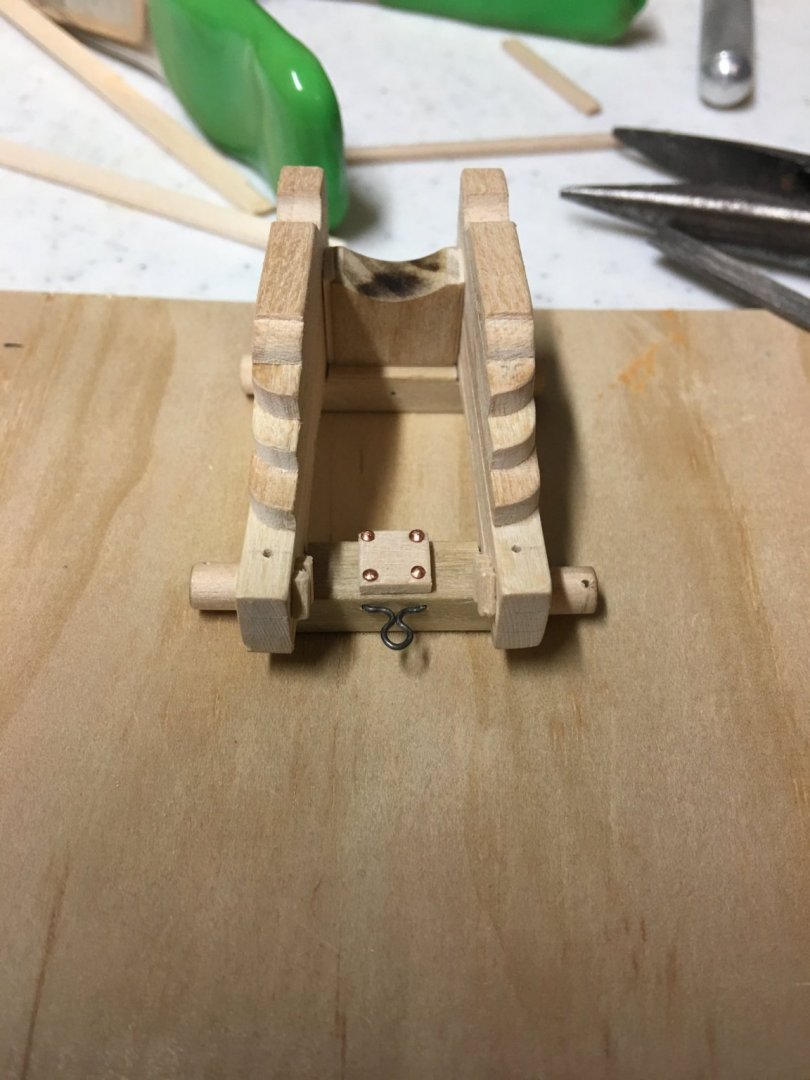
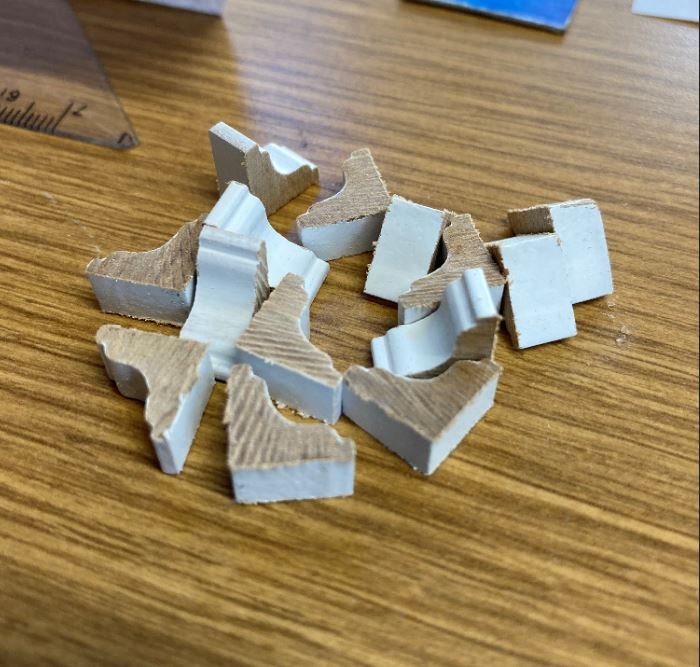
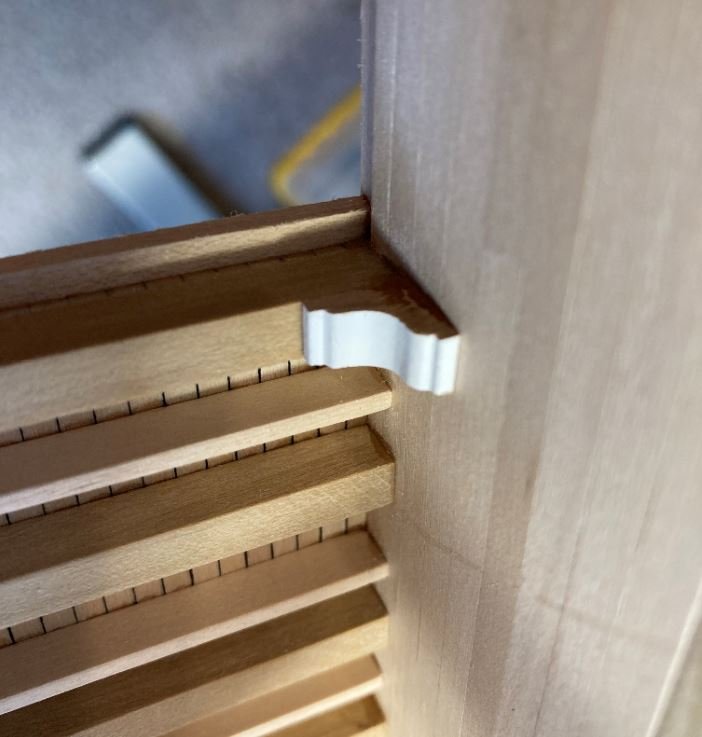
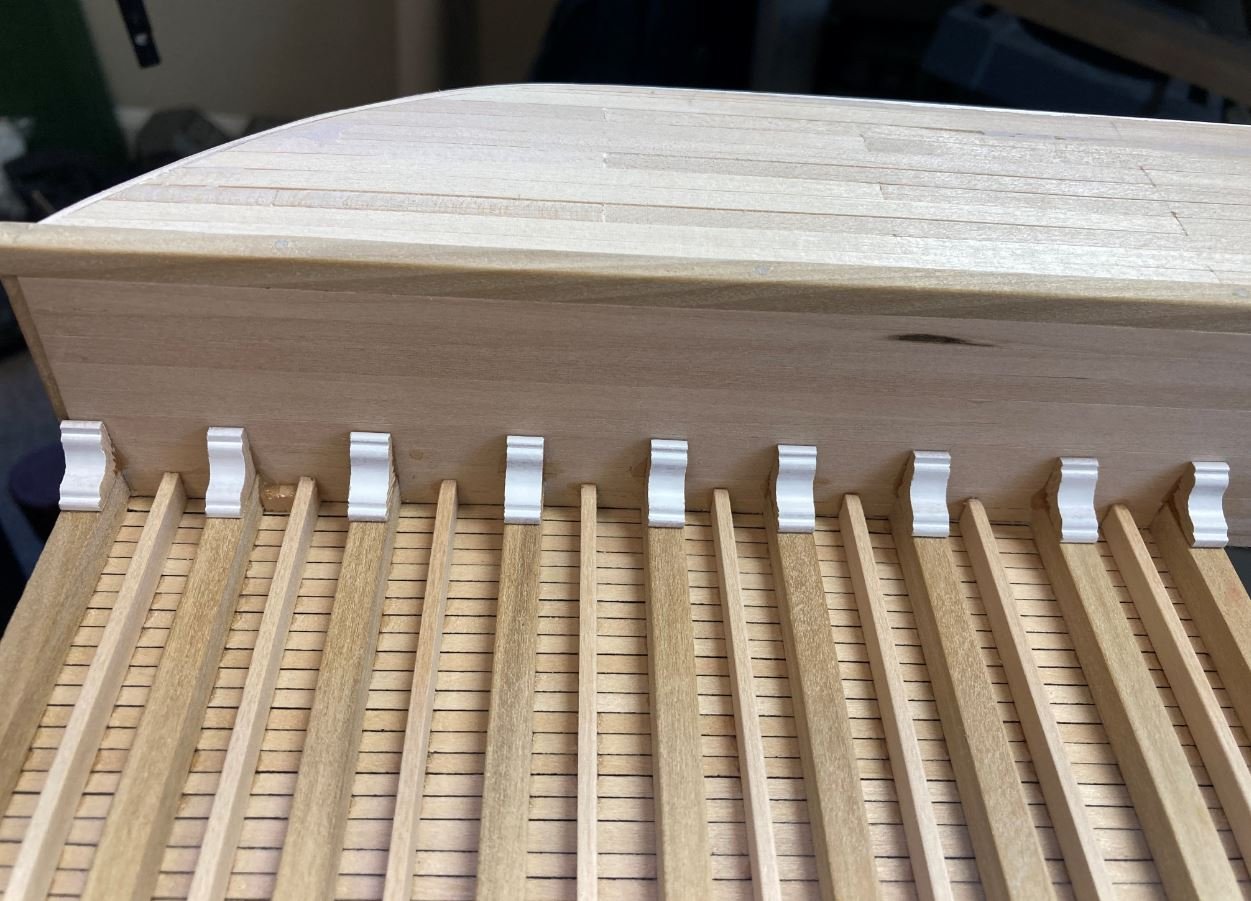
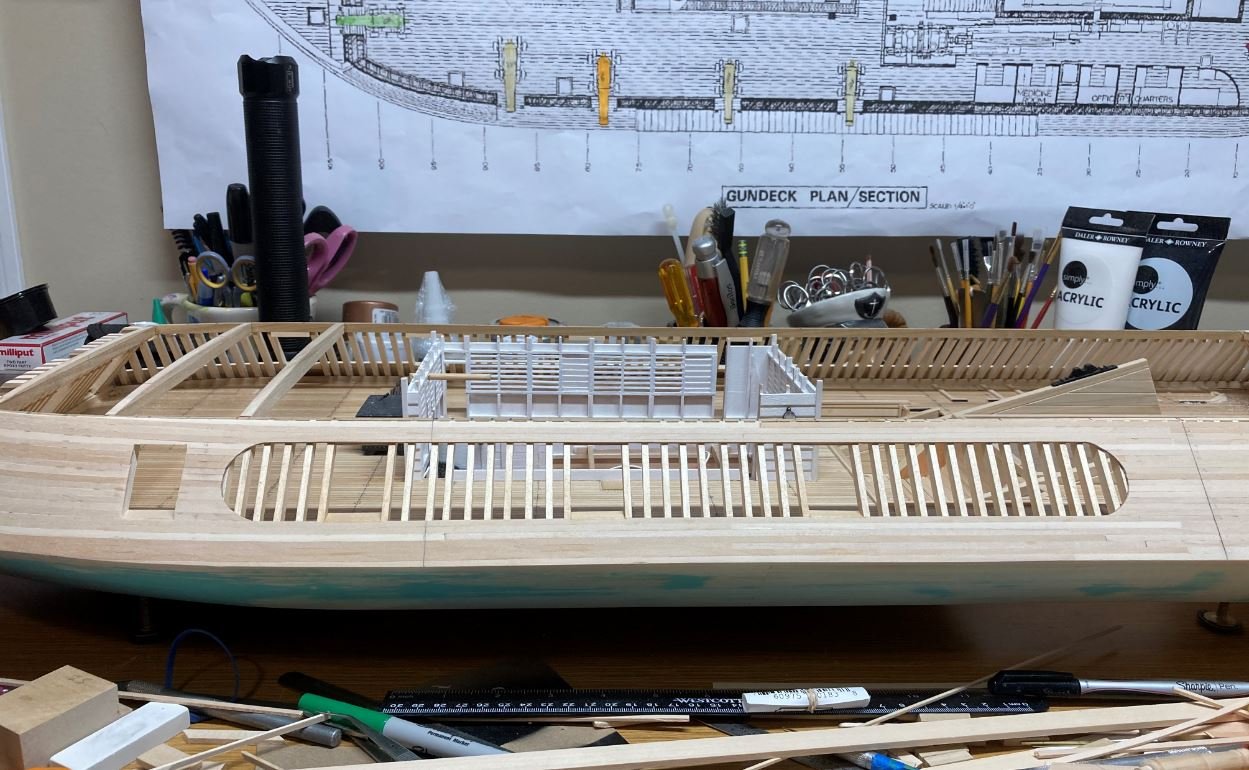
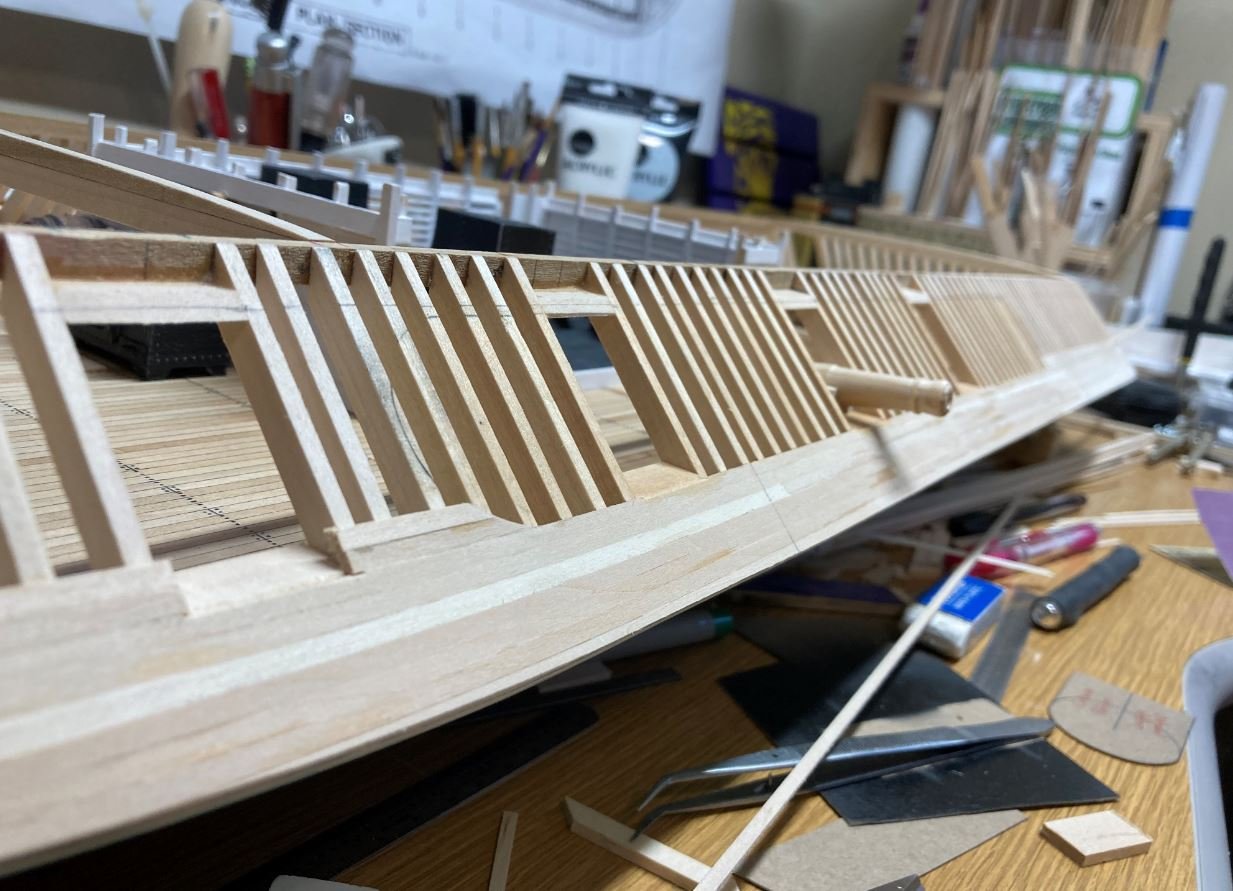
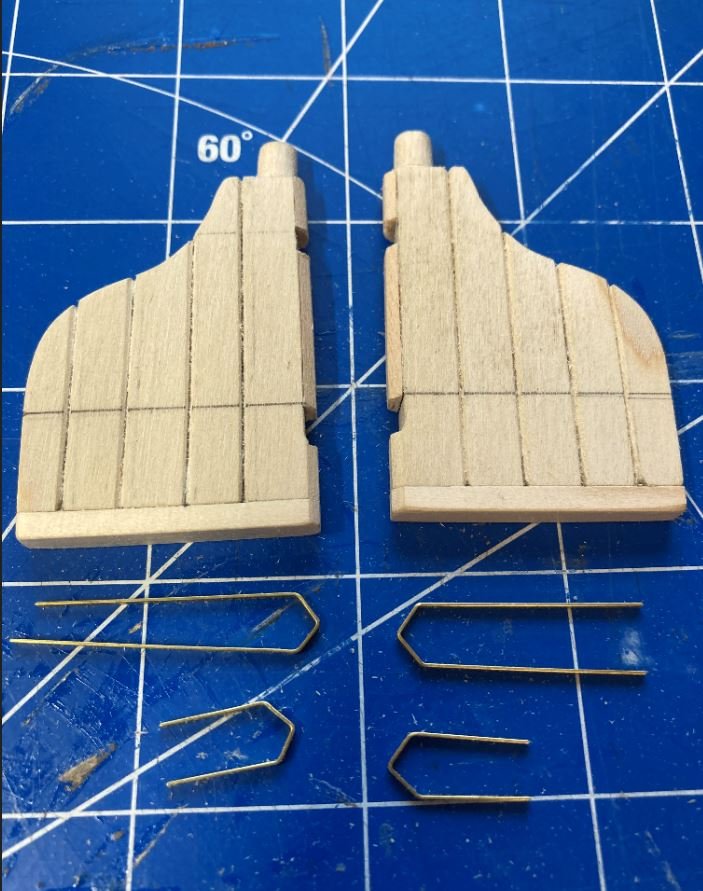
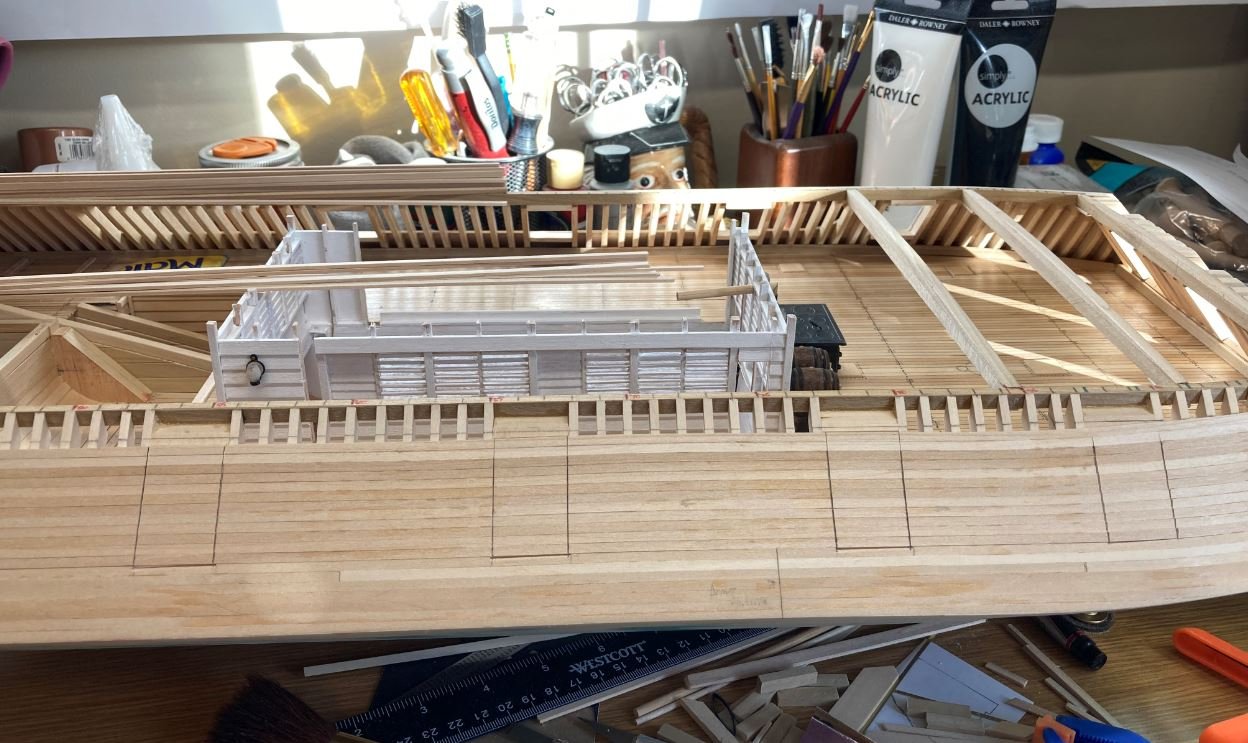
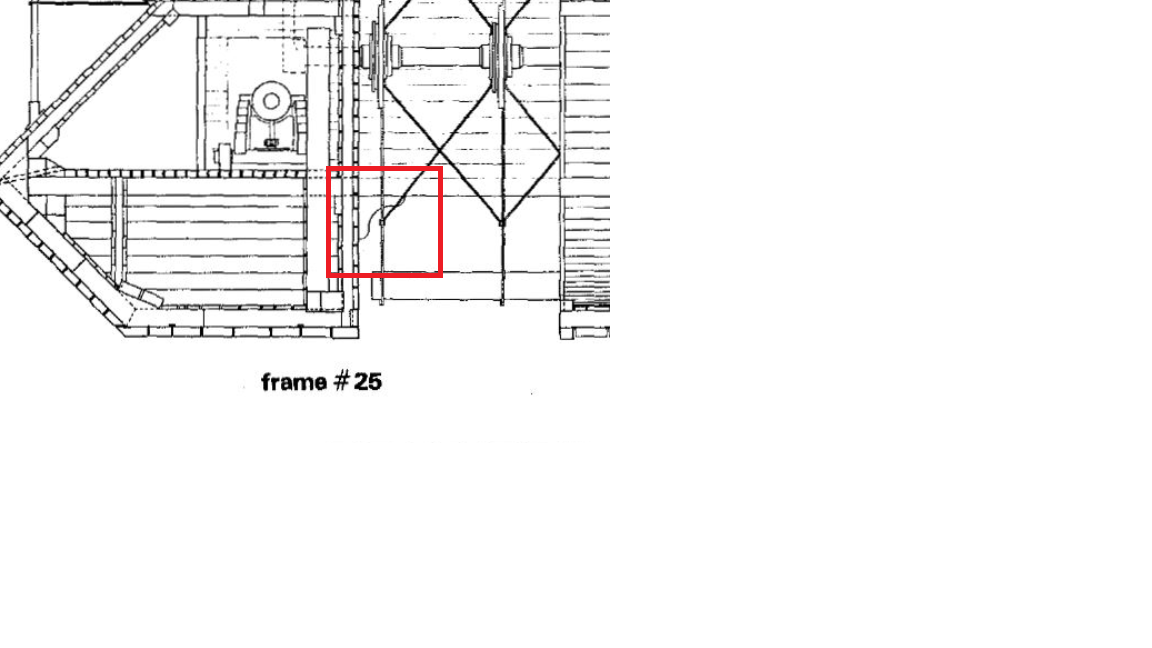
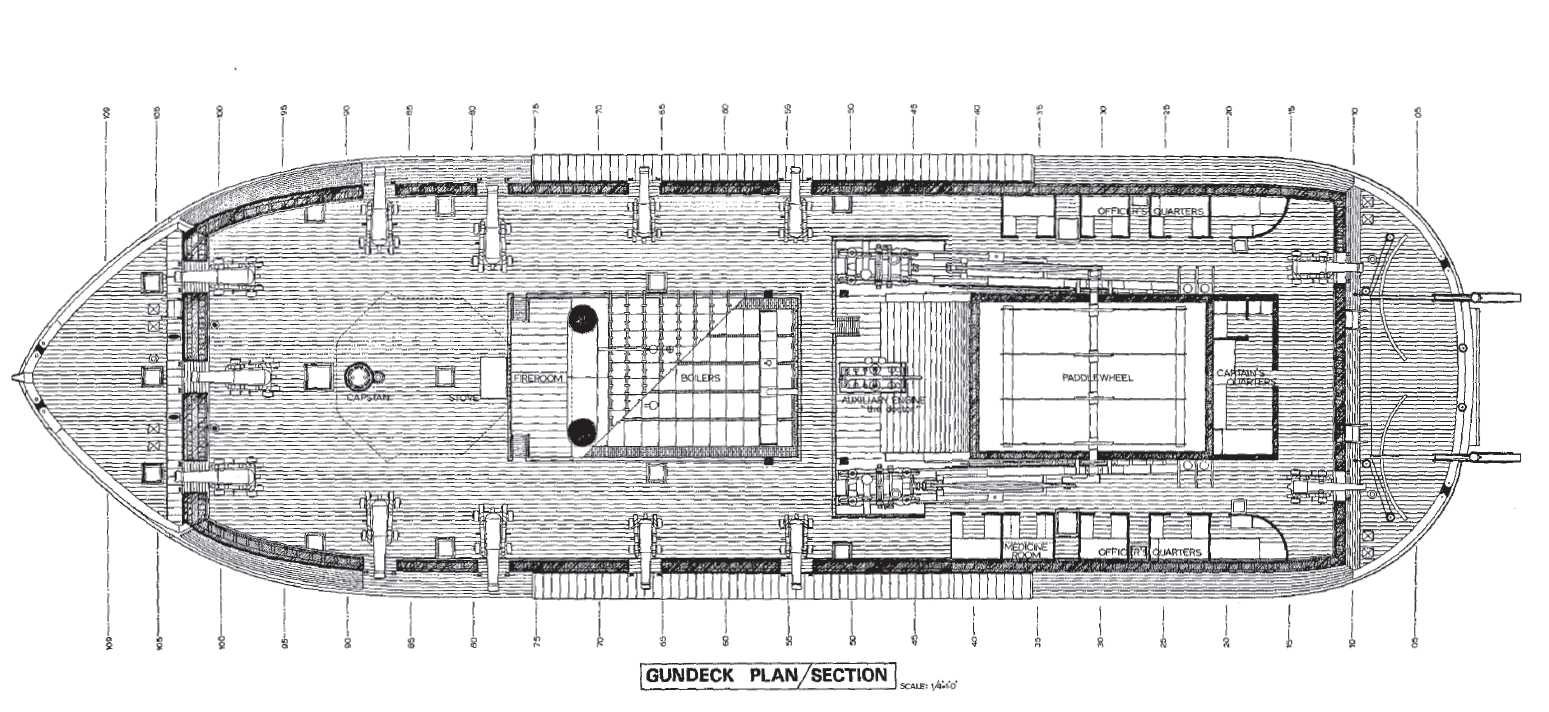
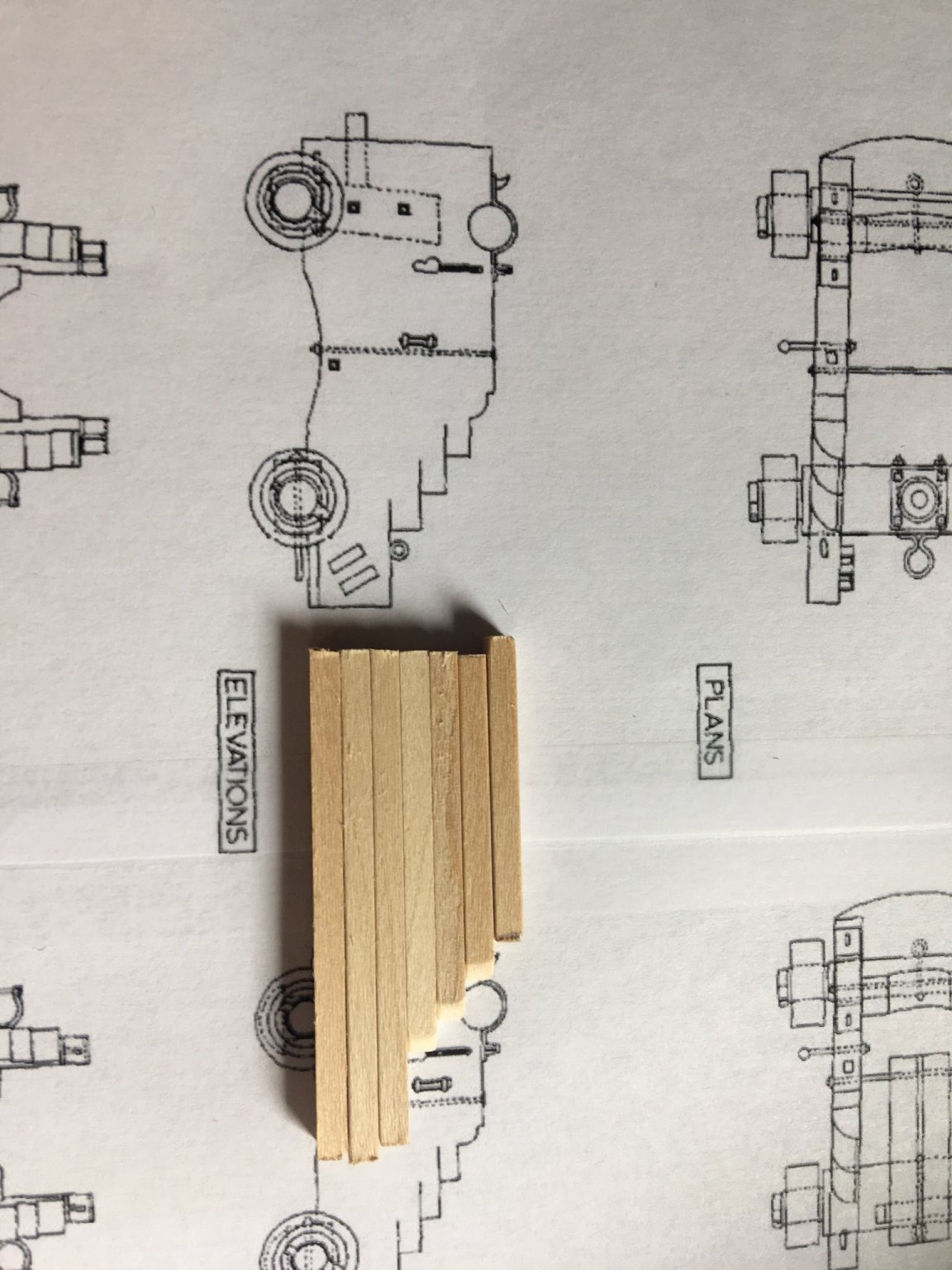
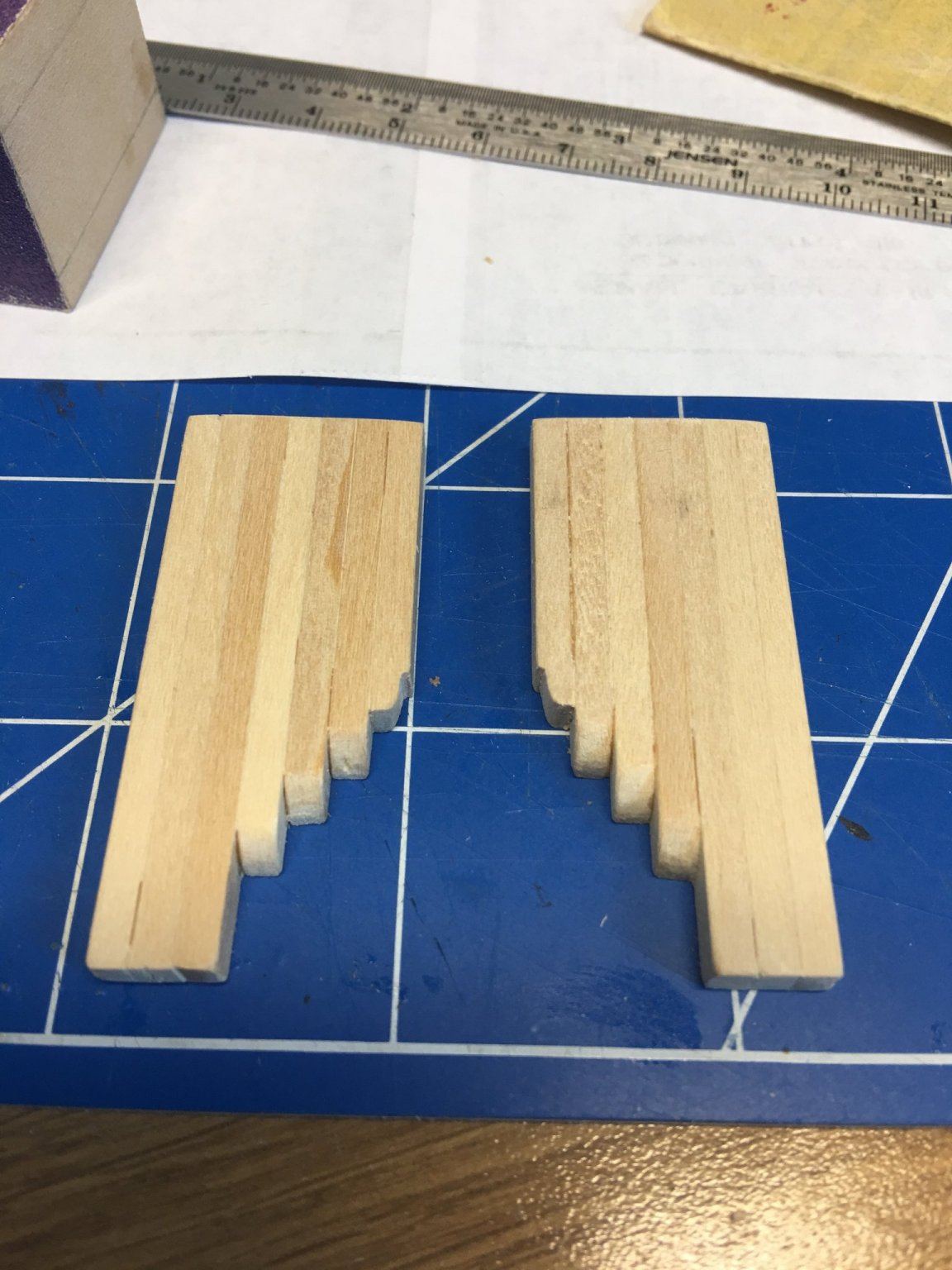
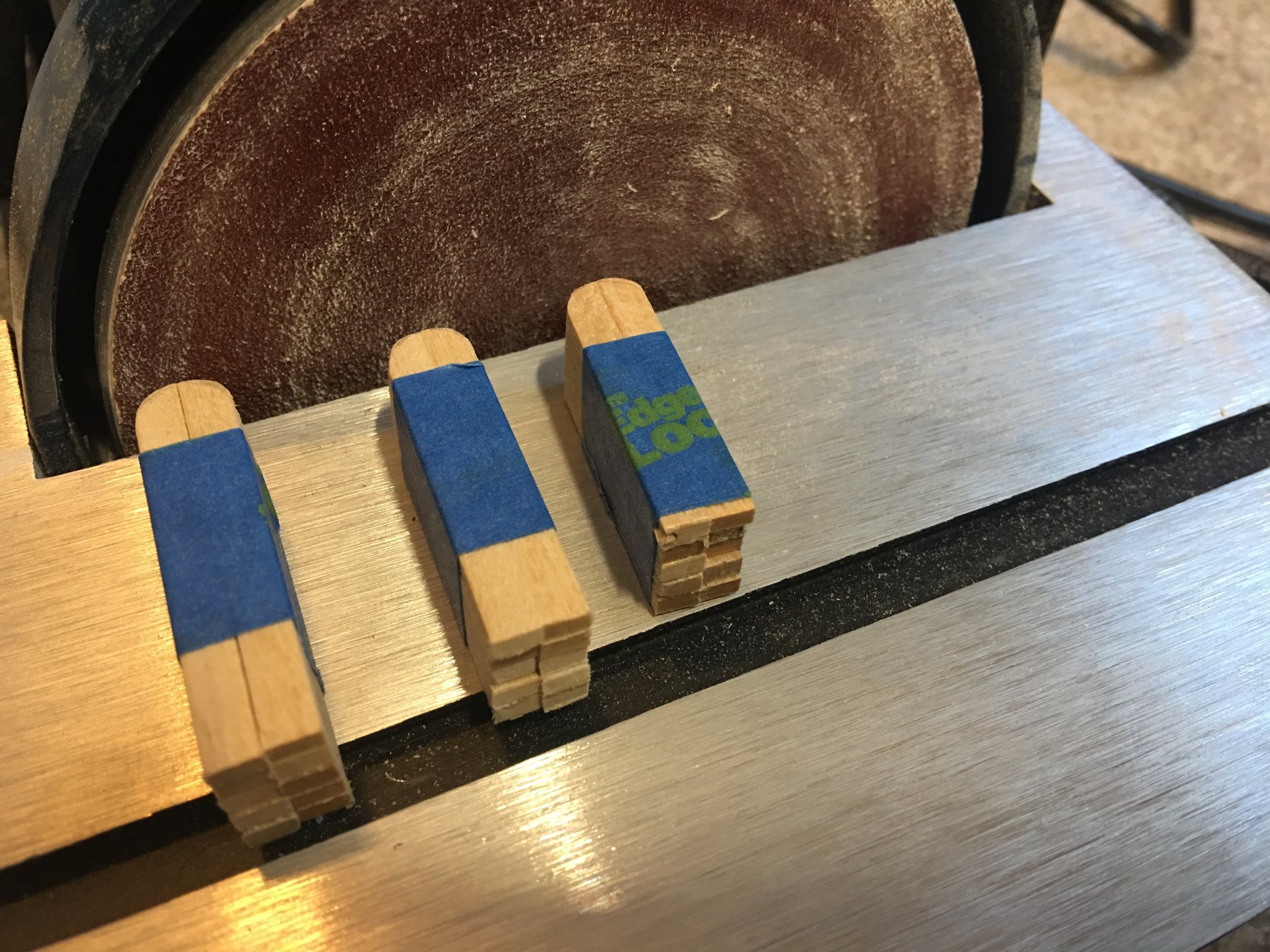
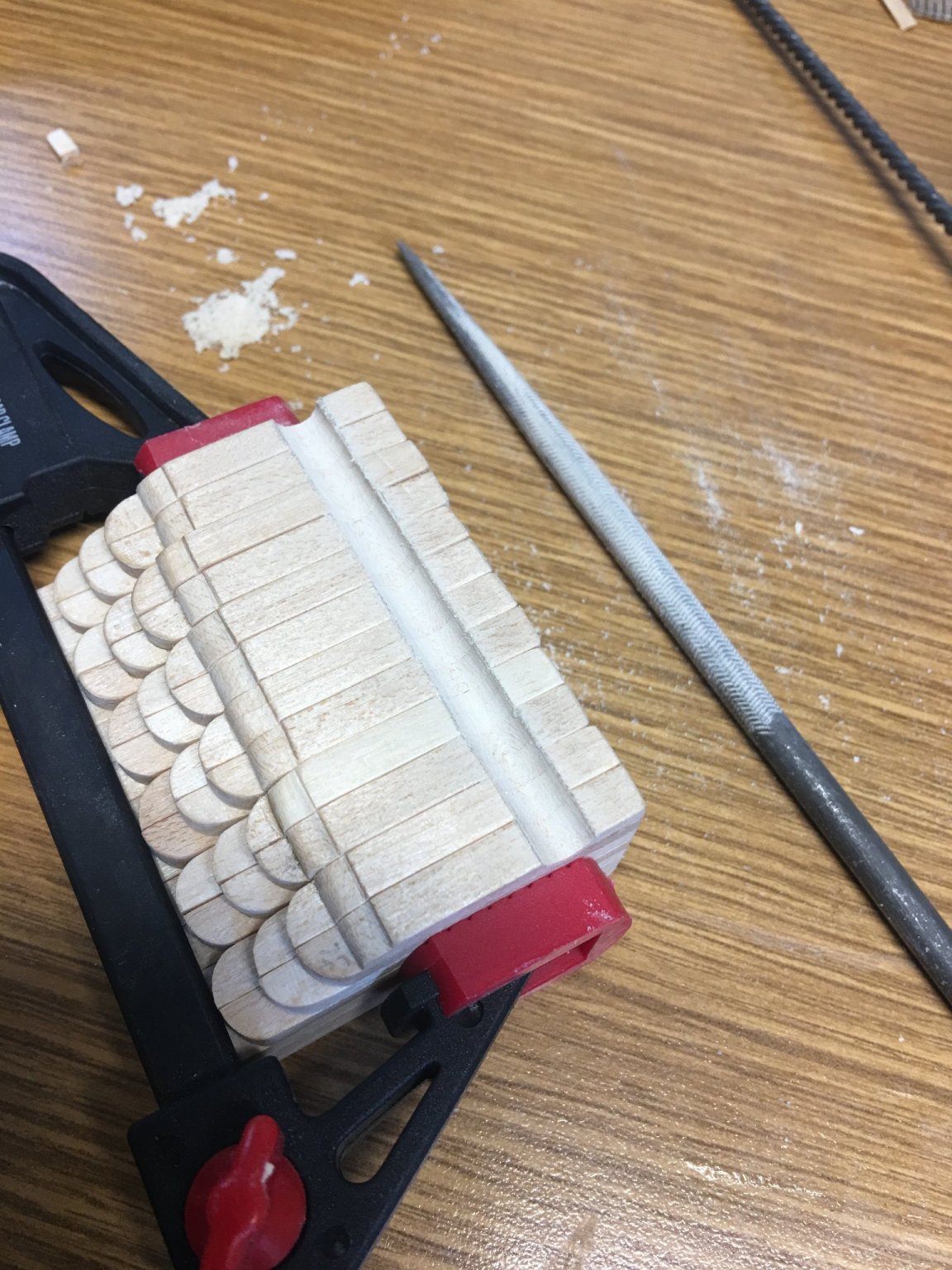
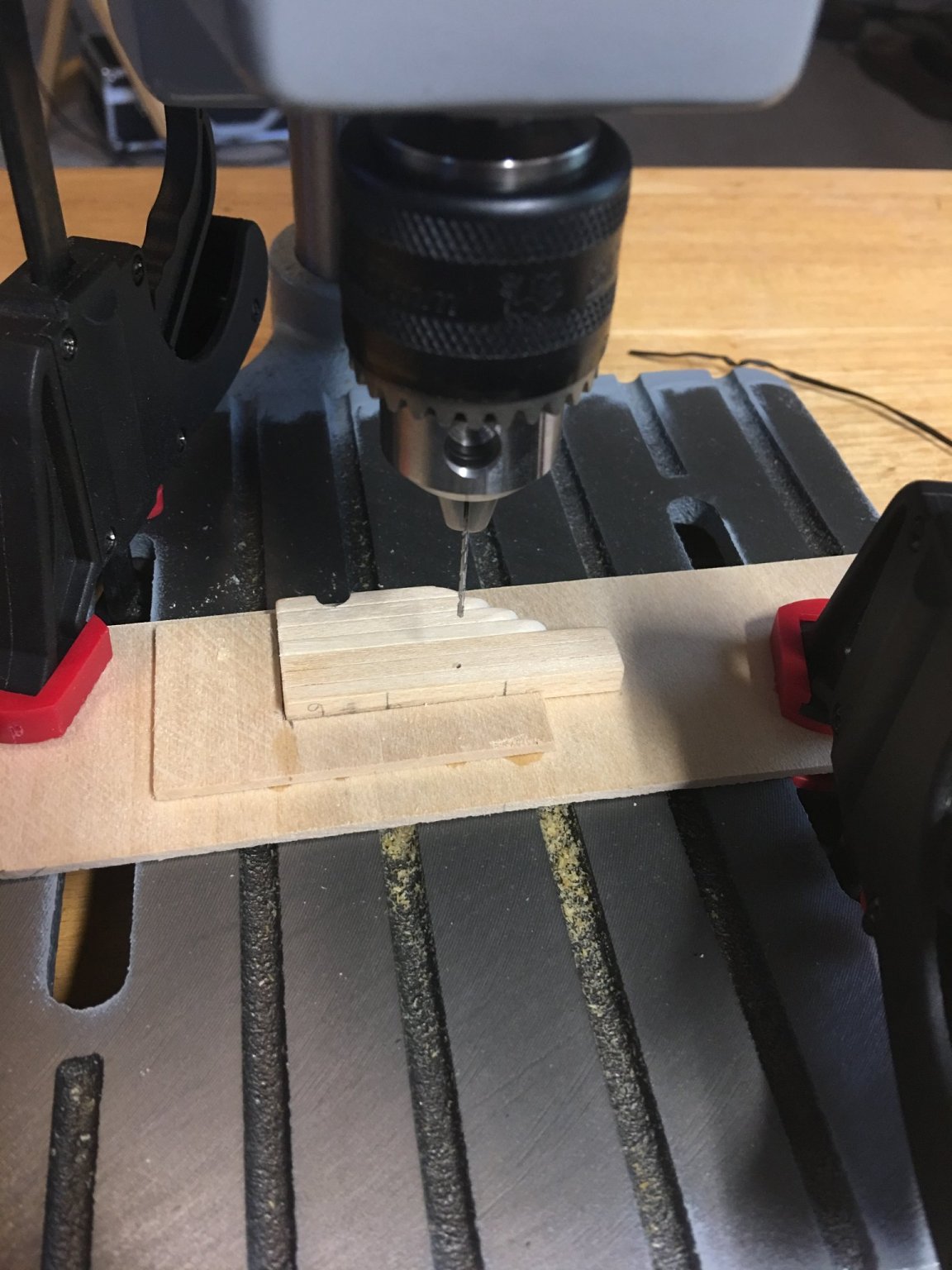
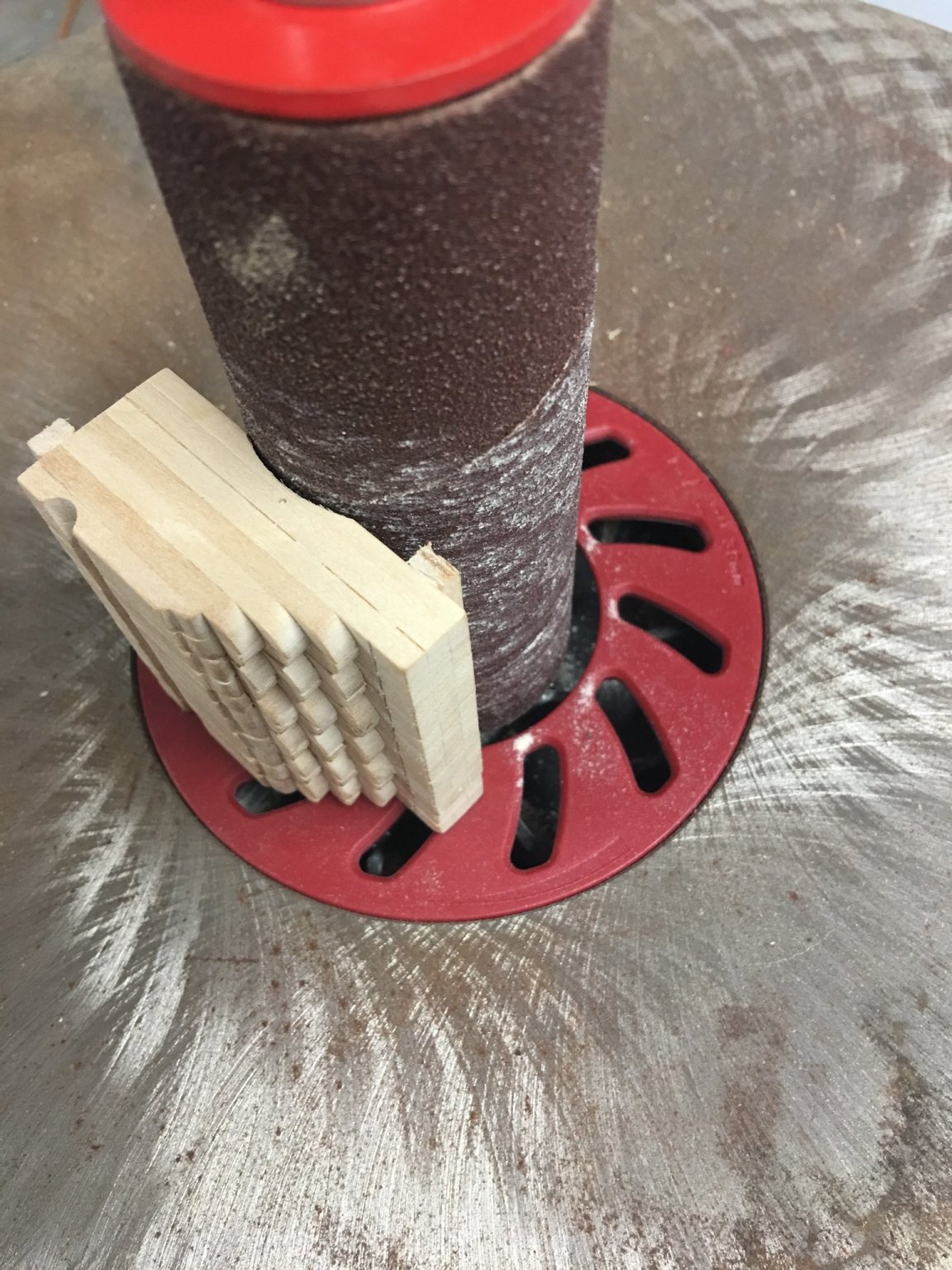
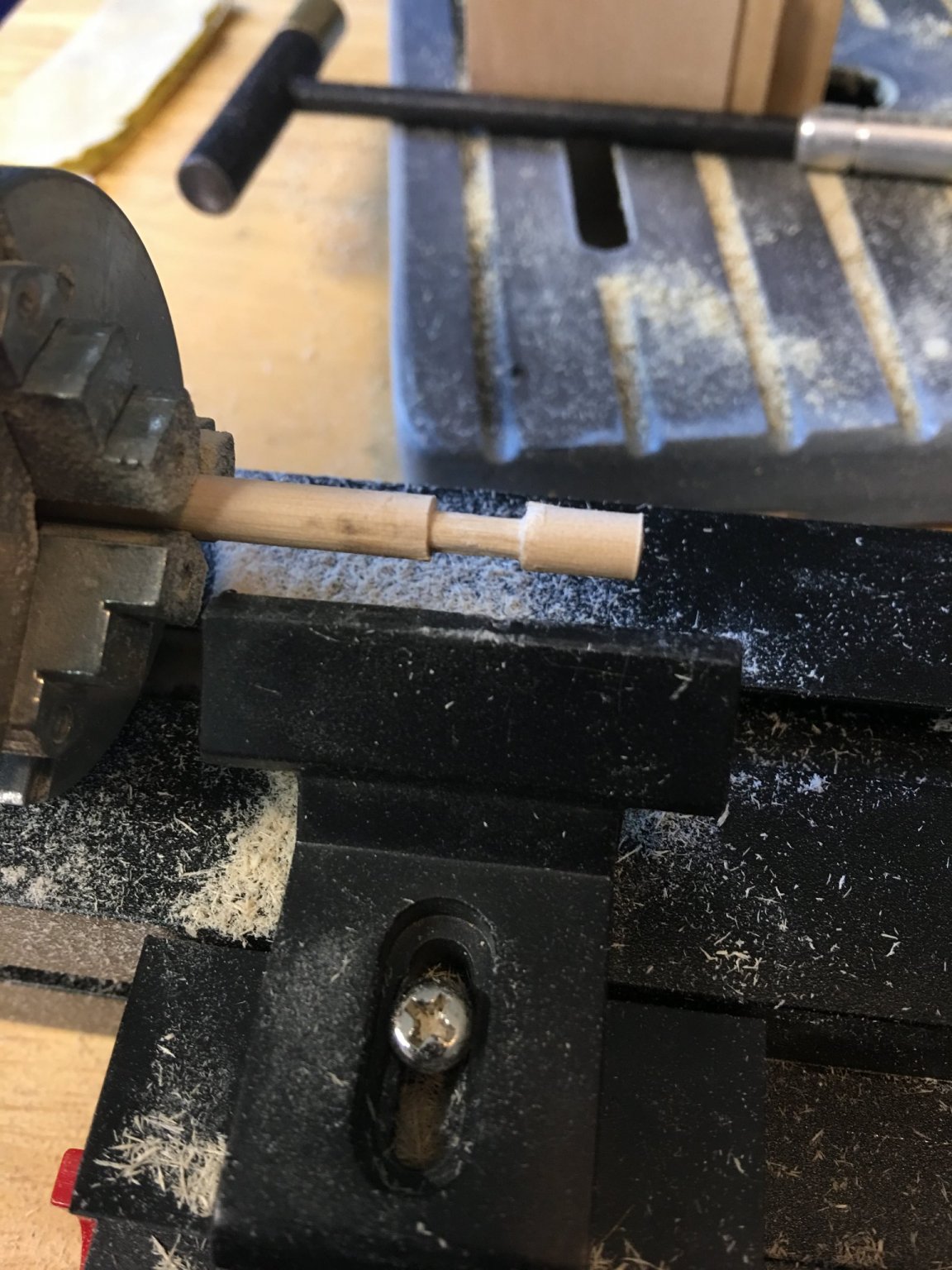
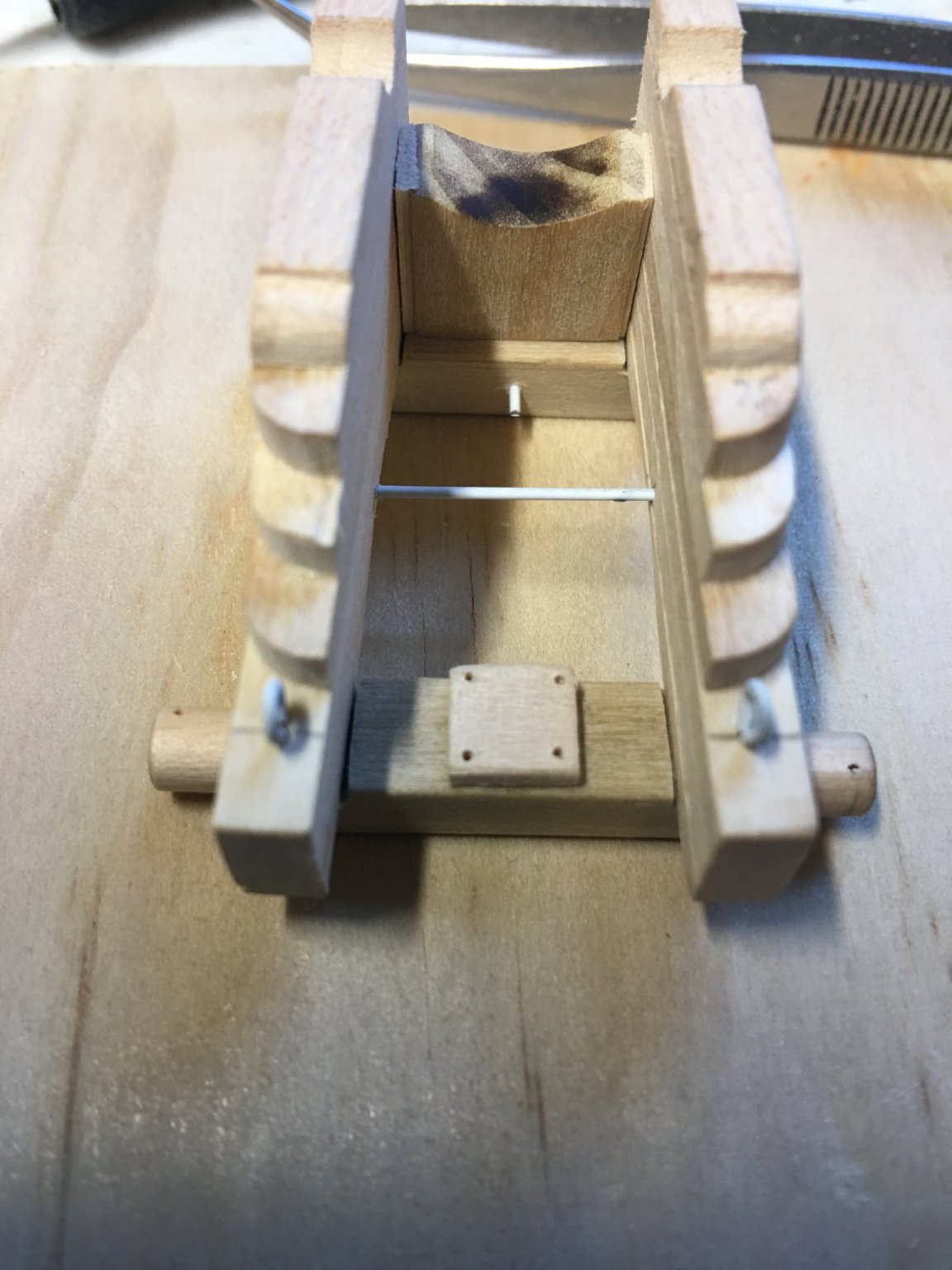
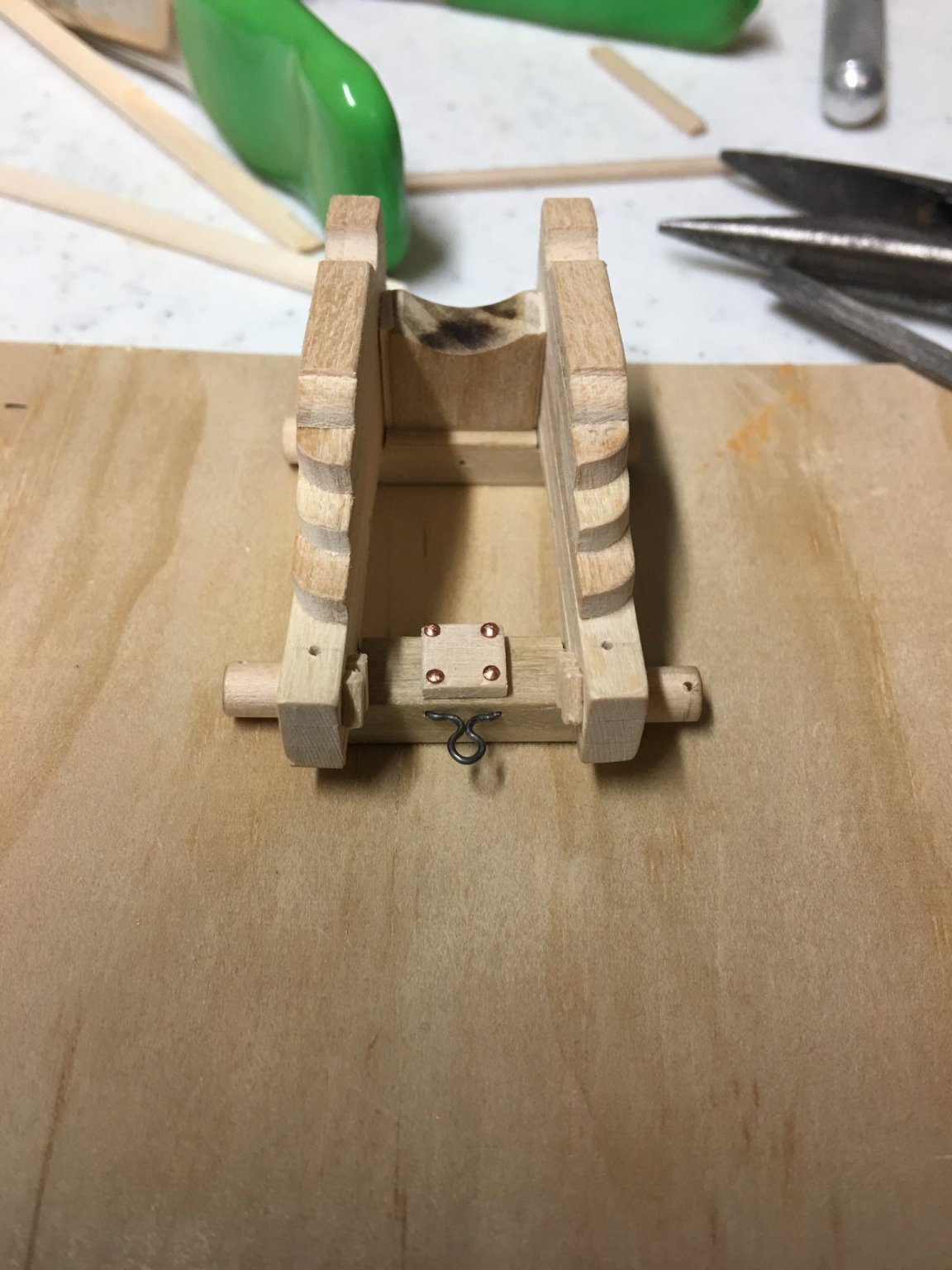
Merry Christmas Everyone, I figured I'd get one more quick update in before the end of the year. While I still sort out my hull color, I started working on the cannon carriages. I started out with pasting the template as a pattern and cutting out the rough form on my bandsaw. With a little sanding and carving I pieced them together. Please forgive my lack of pictures on these, I totally forgot to take them while building them. Temp installed in one of the gun ports. The more I looked at the carriages, the more I became dissatisfied with them. So while I pondered yet another quandary, I decided to work on putting in the waterway knee braces. I managed to find some dollhouse molding that I thought would work perfect for these braces. They may be a little bit more fancier than what was actually used, but since none of them survived the salvage, I went with what I thought would work. Besides, compared to the HSR, they look pretty close. First one in place. All done. I'll clean them up a bit before the paint goes on. Once the knee braces were installed, I worked on building the rudders. Again I apologize for the lack of pictures, I guess I was just too engrossed in my work to focus on anything else but the build. Next I started working on the casemate planking. This time I remembered to take pictures. Lining things up for the casemate planks. I made little jig to ensure that all sills were the same height. It seemed to work pretty good. Aft lower sills in place. Planking begins. Aft and starboard planking. Port side planking. It is here where I finally figured out how I wanted to show the insides. I was struggling with how to show off some of the details inside. I wasn't sure if I wanted to leave the whole thing opened like the model in the Cairo Museum, or make a removable panel, or what. I wasn't too keen on leaving the whole side open, due to the fact that it seems that the integrity of the side would not be there without any support. Not that I'll be handling the model much after it is completed, it was just a concern. Then I thought that maybe I could install a few removeable panels to allow access to the inside views, but I ruled that out because I didn't want to have to take it out of the case every time I wanted to show someone the insides. It wasn't until I was looking for some parts on Model Expo when I saw a picture of the USS Confederacy that the Idea to leave the planking off the side and expose the framing. The frames are spaced far enough apart that you will be able to see inside and there is no issue with compromising the structure. Completed port side with cutaway. Finished planking the starboard side and starting the gun port cutouts. Aft planking done and working on the gun port cutouts. Finally, I couldn't stand it anymore. I just couldn't get over the look of my first attempt at the gun carriages. They just didn't look right. So I went ahead and rebuilt them. This time I took pictures of the process. Shaping the boards. Sides stacked and glued together. Trunnion notches filed out. More shaping. Turning the axles. Pieced together. Mostly completed, just need to add the trucks to it. Then assemble 12 more. I am much more pleased with the outcome of these than my first attempt. Well that is all for now. Hopefully on the next update I will have some progress on the hull painting and a few other things. I hope everyone has a wonderful Holiday Season. Please be safe and take care of yourselves. Thanks for looking in. -Brian
- 739 replies
-
- 19
-
-
Eric, Just scanning through YouTube and ran across this video. You may have already seen it, but I thought I might share. Very interesting. -Brian
-
Eric, Love the look of the deck. It’s coming along nicely. As for the rivets, why not try several techniques on some scrap wood to see how they turn out. At least that way you can see if if you like any of them without risking the looks of your build. -Brian






Our Emblem ®
