

Chuck Seiler
-
Posts
1,878 -
Joined
-
Last visited
Content Type
Profiles
Forums
Gallery
Events
Everything posted by Chuck Seiler
-

Divers Discover 2nd Century Military Ship off Egypt
Chuck Seiler replied to Ian_Grant's topic in Nautical/Naval History
Interesting. I wonder how long it will be before they finish the excavation and come up with a written product. From the picture, the style and pattern of the internal frames appears the same as in the Sea of Galilee boat except closer together. -
The von Fircks book is in German as well, but the pictures are in English. They must be...I understand them. 😄
-
I stand corrected, the above models is not from the Zimmerman book, it is from "Normannenschiffe: Die normannischen Bayeux-Langschiffe und die frühmittelalterliche Nef der Cinque Ports (German Edition) Hardcover – January 1, 1986. German Edition by. Jochen von Fircks " The nef from the Zimmerman book looks more like the one you envision. A picture of the model can be found at: https://theropetokyo-en.jimdofree.com/gallery/35th-exhibiton-2010/ Another book I will have to purchase (and German lessons).
-
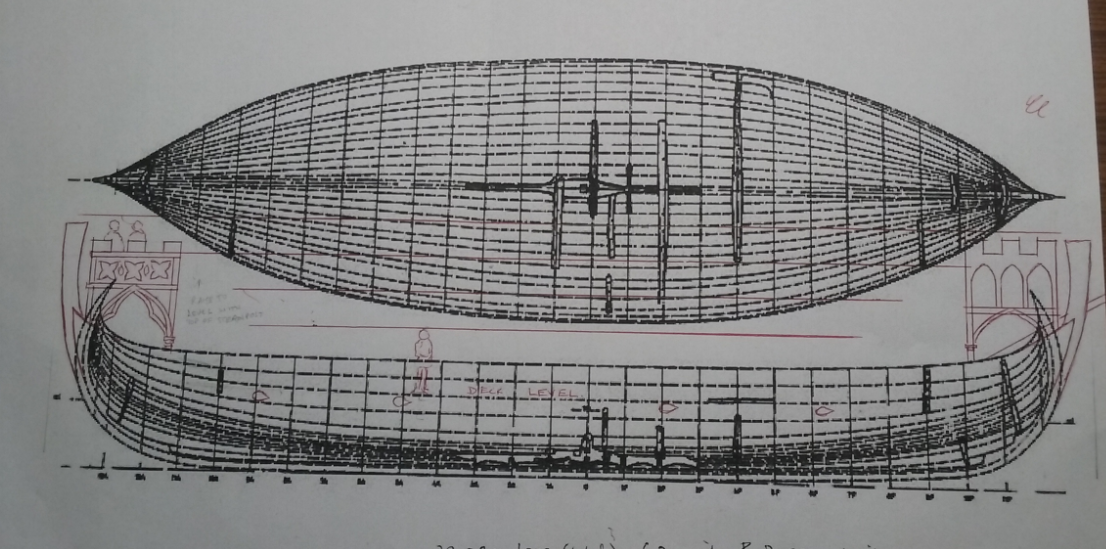
Steven, Will you be following the lines you posted in your post #1? (See below) You mentioned you would not be including a bowsprit, but a bowsprit is in the plan. How tapered do you anticipate the castles to be? A model of the Hedeby 3 https://www.icelandknarr.com/the-hedeby-3-knarr.html shows the beams to be fairly high up and certainly an obstacle, although not through-beams.
-
I am not really sure what the model is based on (yet) so I am not really sure. The knarrs Christian referred to had above deck beams that served as thwarts/seats for rowers. They were lower and not thru-deck, but served the same purpose of structural support. The nef deck is not that far above the keel. I do not have the full plans in front of me, but I estimate the height of the beam to be knee to mid thigh level.
-
Yeah, I have done that. The concentrated solution gives a thick coating that chips off easily, while the diluted solution etches deeper. Good luck.
-
Lyle, That is really looking good. You are well on track to be done on time. I hope mine ends up looking as good as yours.
-
Will you darken the nail heads? If so, how?
-
Wow! Significant progress. Looking good. I find the cutwater very interesting. It seems quite large for such a small boat. I guess you might need it to ram rival fishermen. 😄 Between your progress and Louie d F's start on the NEF, I am embarrassed at my lack of productivity. I have been dawdling with the Jesus Boat, some movement, but I need to get in gear and go public. Build log by Saturday.
- 83 replies
-
- 1
-

-
- Sea of Galilee boat
- SE Miller
- (and 1 more)
-
Here is the link I mentioned. Includes info on book and other links to more detailed photos. https://www.modelships.de/Nef-Winchelsea/Nef-Winchelsea_eng.htm
-
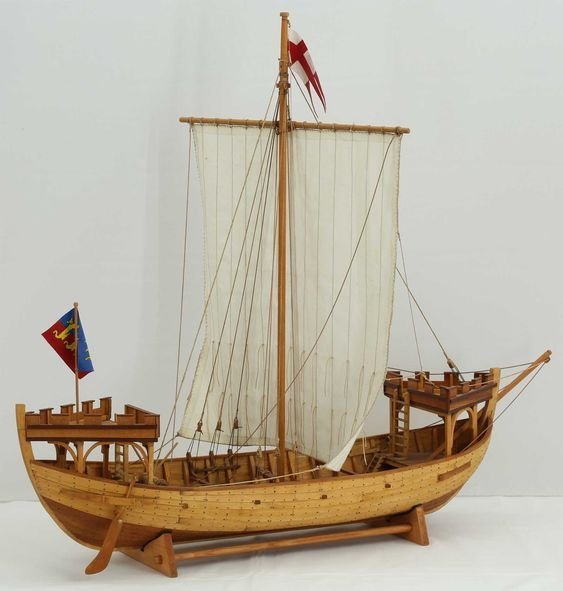
Steven, I am pulling up a chair. I am considering that model as well. It was going to be after my cog, but I stalled on the cog and another project interceded. I have the book as well. I do not read or speak German but the plans are pretty good and there are some fine diagrams. It covers the nef and another that resembles a longboat, but was used by William the Conqueror...after all, Normans WERE Viking descendants. The plans yielded the following model which can be found on the internet. I can send the link. There are multiple angles and interior shots I had not chosen NOT to name my log (when I make one) Winchelsea Nef because everybody will be opening it expecting a frigate. 😄However, if you look at the transom of Chuck P's WINCHELSEA model, you will find the nef.
-
Knot tying tools
Chuck Seiler replied to Dsmith20639's topic in Modeling tools and Workshop Equipment
I use tweezers and forceps. Some are locking and some are not. -
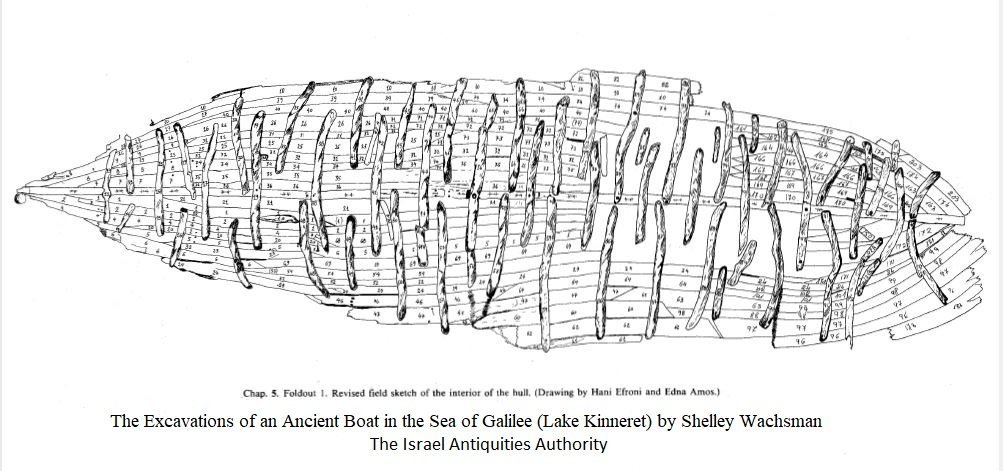
The pattern Lyle used is from the excavation. (see attached). The book refers to the individual pieces as "floor timbers", "futtocks" and "half frames". As Lyle's model shows, the frames alternate floor timer, half frame, FT, HF, etc. Many of the floor timbers have "futtocks" which extends the frame to the gunn'l, but not all. The book notes that some locations where frames are missing you can see nails, other locations there are no nails. I have seen models where floor timber/futtock arrangement goes the full length of the boat and some where that arrangement is used only for about the center 1/3 while floor timber-only is used for forward and aft 1/3s. Who knows for sure.
- 83 replies
-
- 1
-
-
- Sea of Galilee boat
- SE Miller
- (and 1 more)
-
You are off to a great start. Good wood makes alot of difference in the build. Good luck with the pear. I think you will find it bends easier as well.
-
Doors
Chuck Seiler replied to Don Case's topic in Building, Framing, Planking and plating a ships hull and deck
Oh, the humanity!!!!!! 😲 -
Doors
Chuck Seiler replied to Don Case's topic in Building, Framing, Planking and plating a ships hull and deck
I can live with 'doors' depending on the situation, but I have to balk at walls (bulkheads), windows (ports), floors (decks) and boats (ships). Okay, windows if associated with transom and quarter galleries. Okay, floors if talking about the lower-most part of a frame. Okay, stairs if you are talking about what you do at a group of women after a long time at sea. Or would that be stares? -
Doors
Chuck Seiler replied to Don Case's topic in Building, Framing, Planking and plating a ships hull and deck
I was never in the Navy in the 18th century, only the 20th. Back then they actually had doors, as has been discussed. Openings from one deck to another were hatches. Even today, after the advent of watertight compartmentation, the hole that I walk through to get from one space to another is secured with a water tight door. As DCA I had to buy enough of them to know. -
Lyle, How structurally sound is that? Will the frames beef it up or re they just for show...and it requires the thwarts for solidity (is that a word?)
- 83 replies
-
- 1
-

-
- Sea of Galilee boat
- SE Miller
- (and 1 more)
-
I use both, locking and non-locking tweezers and forceps. There are times when I need to lock it, but most of the time I prefer unlocked. It gives me better control.
-
The black thread tying off the line around the ring is called "seizing". In my Boy Scout days I think we called it frapping. The seizing should be the same color as the line seized, for the most part. Black or dark brown thread/line represents line that has been coated or treated with pine tar to preserve it...mostly standing rigging. If the line was treated with pine tar, the seizing would be coated as well, after being seized.
-
How long are you soaking your planks?
Our Emblem ®
