


amateur
-
Posts
3,533 -
Joined
-
Last visited
Content Type
Profiles
Forums
Gallery
Events
Everything posted by amateur
-
Bit late in replying to apost of sept thrid... Actually, duyfken is known as. Yacht, by all naming stamdards, while derf.inger is supposed to be a fluyt (i have to say, a very poor example of it, based on a reconstruction fromthe early thirties by rolf hoeckel) duyfken is early 1600' whilde derflinger is suposed to be around 1700 ( i guess) Derflinger as shown by eruomodel is not a fluyt by dutch standards, as the typical shape of the "back end" is not correct. It is also not a retourship, as again, the back end is not likea retourship.... Its kind of inbetween. (-although a nice model, it is not historically accurate) Having said that: painting the hull white was habit in the mid 1600. A mixture of chalk, tar, sulfur, lead and some other toxic ingredients wre smeared below the waterline to prevent. Although thereare indications that especially in the baltic erea this was not done, as rot wasnt a problem over there. The klinker plankint of the upper hull was standard, and in practice over long periods of time. It started off quite early, as the upper part of the hull had no structural function, and was build using thinnerplanks. To give some strength, klinkering was used. Jan
-
I'm with Mark Jan
-
Your models are a joy to look at! Thanks very much for sharing Jan
-
In some cases the english just reused valuable timber of an old ship. Pretty sure that this factory/warehouse/mill has some heavy timbers that had a previous life as deckbeams of HMS whatshername. Problem is: which one. And I don't want (at least, not yet) try google pic Jan
-
Or is it the jolly sailor inn, with parts of an other hms?
-
Was that hms something, taken apart and hidden below thefloorboards in case the French would come:) Jan
-
Lost in translation....... I checked my literature. It's called a knight. The rope from the yard is lead over the mastcap, down along the mast, through a hallaird-block, up again over the mastcap to the yard. The rope trough the knight and the halliardblock is names halliard (surprise, surprise....) The method of hoisting a yard using jeers and jeer blocks is english, and much, much later tahn halve maen. Jan
-
Try knighthead... In both languages it is named after the type of head which was carved on top. In england they used to carve figure with an helmet, in the netherlands they used a type of servant (knecht) Jan
-
Which leaves the other two. Both are last in a certain sense. So my first guess: Kamikaze, the last one sailing of the class, she ran aground in 1946. Jan
-
Google for barentz harlingen. They are dong a replica of a1600 ship overthere. Jan
-
Thereshould bea knechtbehind every mast. It was needed to hoist the yards. I would follow your drawings with respect to the beting (or actually absenceof it) You could make a less heavy build pinrack. These ships had only one heavy beting: just behindthe fore mast, on the lower deck. This was used to belay the anchor ropes. Jan
-
Both in dutch: 1 knecht, used to hoist the main yard. Positioned about were your little hatch behind the main mast is..... 2 beting, and i very much doubt whether that thing was there on this ship. Belaying lines this was was quite unusual on early dutch ships. Lines were either belsyed on a knecht, on on clamps on the mast, or on the inside of the railing. Jan
-
I hAd a dremel, but itwas too heavy, too large and too powerfull imo. I use a minicraft now. Jan
-
Cargo Winch
amateur replied to MT Hopper's topic in Discussion for a Ship's Deck Furniture, Guns, boats and other Fittings
Drawing orfinished product? Are these winches the same as on the famous victoryships, or do you look for something earlier? Jan Jan -
The wonders of google translate.... 'Openstaande' in dutch means 'not closed' (you can have an 'openstaande deur', which means that is is not closed....), or it refers to bills not yet payed (an 'openstaande rekening' means an 'unpaid bill') Google should in this case translate 'outstanding' with 'uitmuntend', 'voortreffelijk' or 'buitengewoon', which are all accepted (but apparently not by google....) ways of expressing admiration. Which, I have to admit without any reservation, this carving and painting deserves. Jan
-
That's an Island ferry, but not for inland waters.... Somewehere in the outer Hebrides in Scotland, perhaps? Jan
-
Yep, thats her. Long gone by now (as is her company) Jan
-
Sure, i always show dutch ones Jan
-
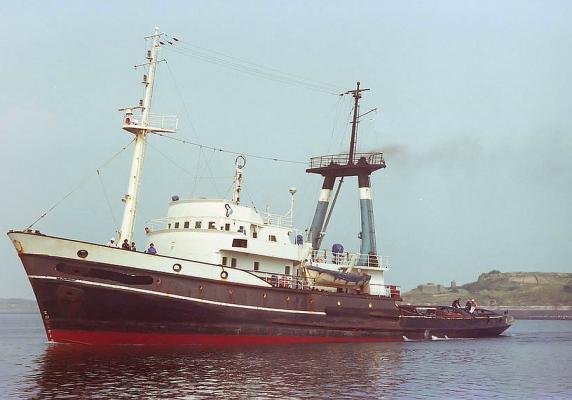
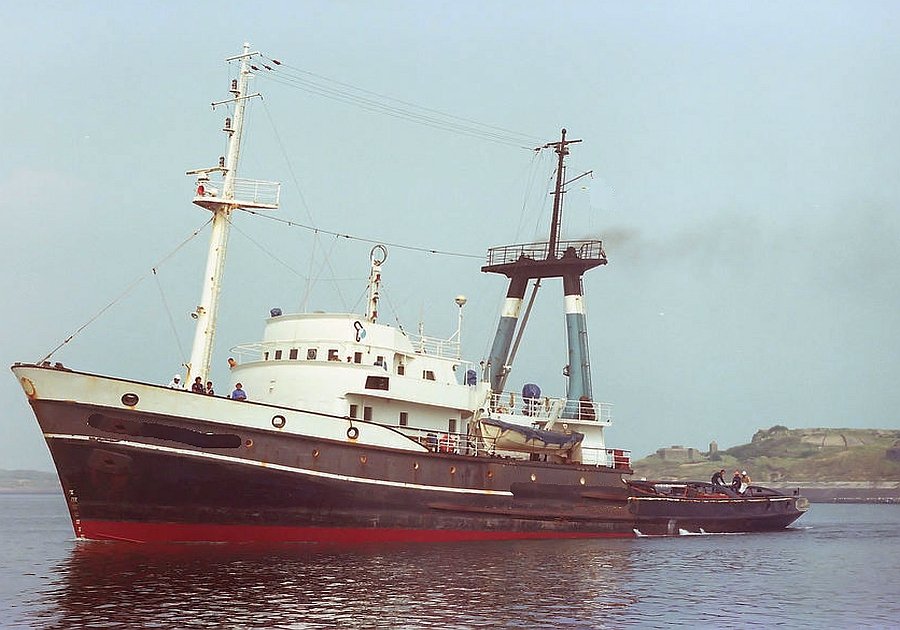
Then this is the next one. First hint: it's a tug Jan
-
No, it is exactly what you should expect: take two peices of brass wire, and try to make it look like shrould laid: you will notice that you have to turn your wires counter-clockwise (which is left) I don't think most viewers of our models will notice the cable-shrould difference in a model scal 1:64. Also the difference in the way the shroulds are round the dead-eyes will be lost to the average spectator. But it is the builder who decedes.... Springy rope is a nightmare: I am currently doing the rigging of the Prins Willem (Corel 1:100), and the yards are not heavy enough to counterbalance the springyness of the kit provided rope. Quite frustrating.... Jan
-
Hi Diederik, You could also upload the whole bunch to a picasa-webalbum, and put the link to that album here. something like: https://picasaweb.google.com/101597346346552139735/ZevenProvicien?authuser=0&feat=directlink Jan
- 487 replies
-
- 1
-

-
- ship of the line
- 80 guns
- (and 1 more)
-
The interesting question is: when will it be released? Jan
-
HMCS patrol boat, canada, sunk in WW1, but no war-casualty. Google all of the above, and you end up with HMCS Galiano. I guess, there is no other that fits the bill. Jan
-
No. hollidays are over. Due to the background my second thought was canada....(my first was: finland or sweden, but as you say it is outside europe...) Jan
Our Emblem ®
