HOLIDAY DONATION DRIVE - SUPPORT MSW - DO YOUR PART TO KEEP THIS GREAT FORUM GOING! (Only 13 donations so far - C'mon guys!)
×


Ian_Grant
-
Posts
2,113 -
Joined
-
Last visited
Content Type
Profiles
Forums
Gallery
Events
Everything posted by Ian_Grant
-
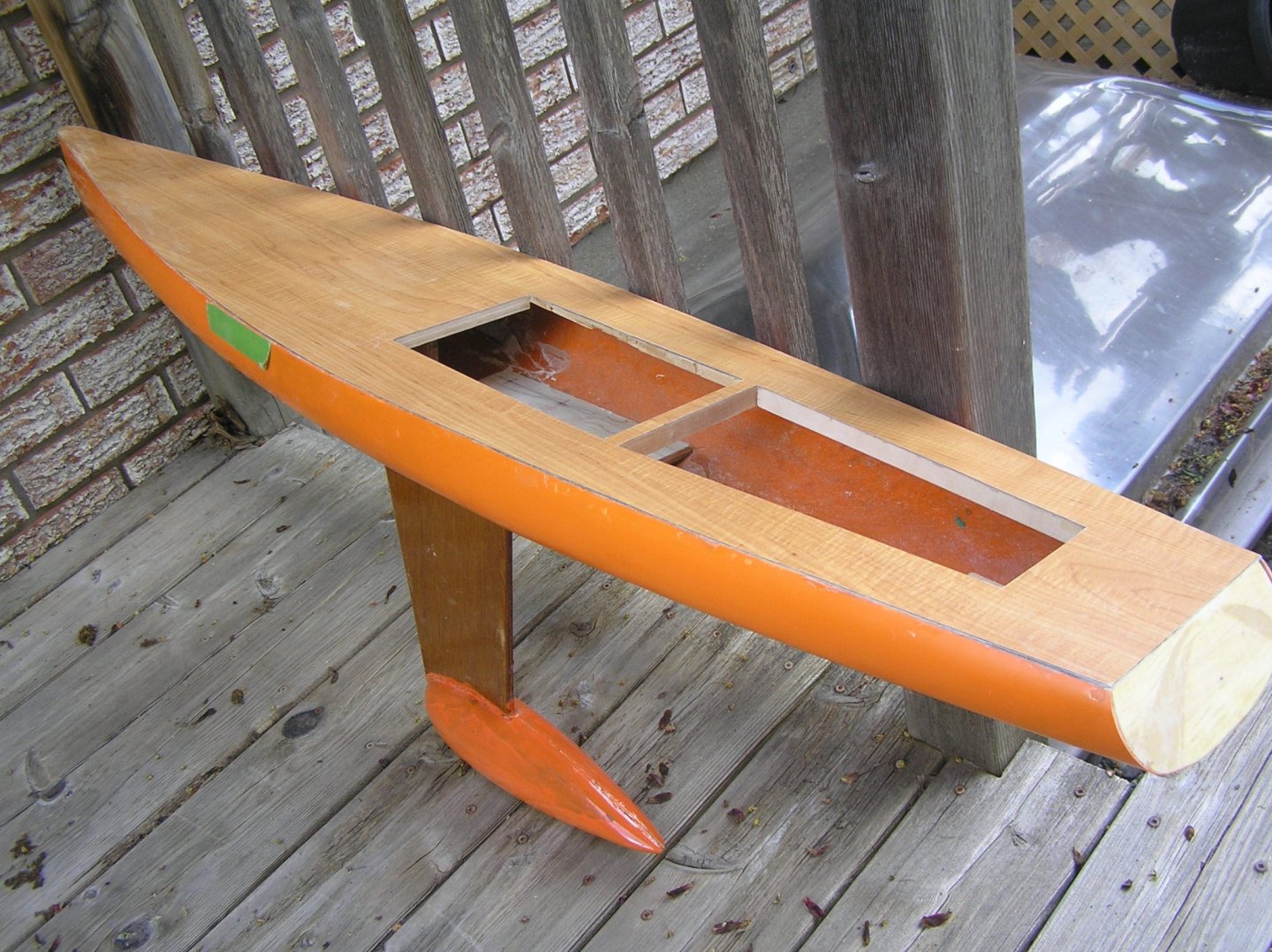
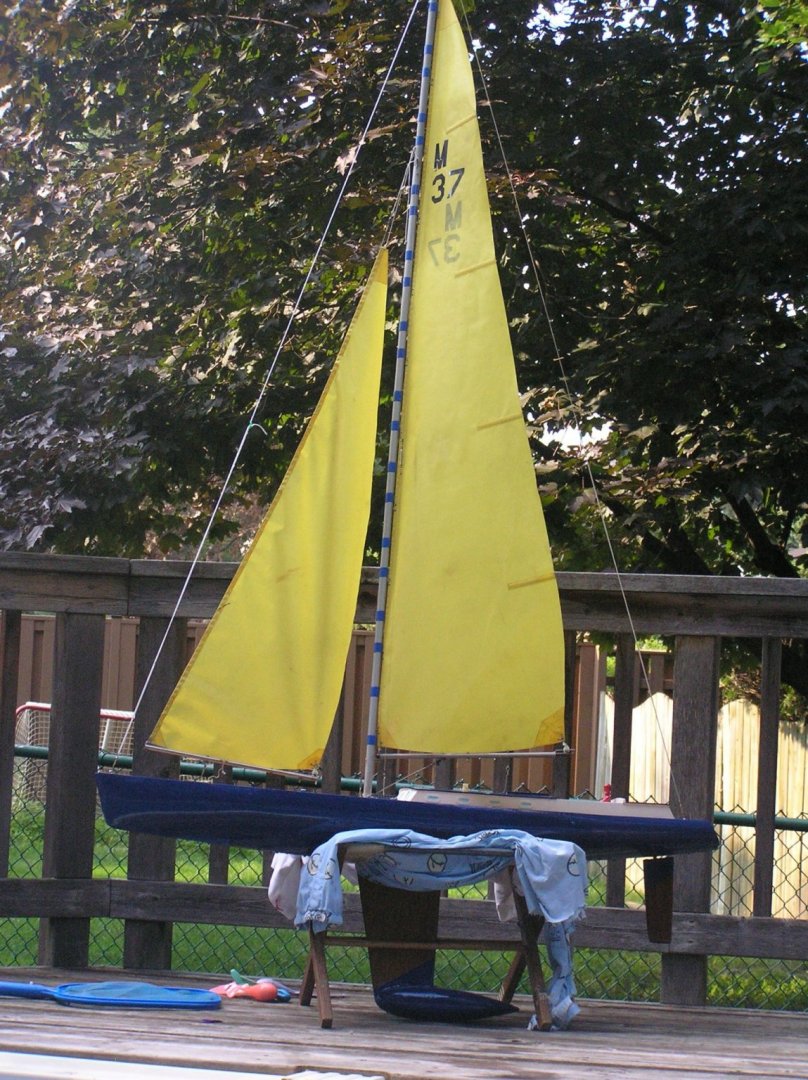
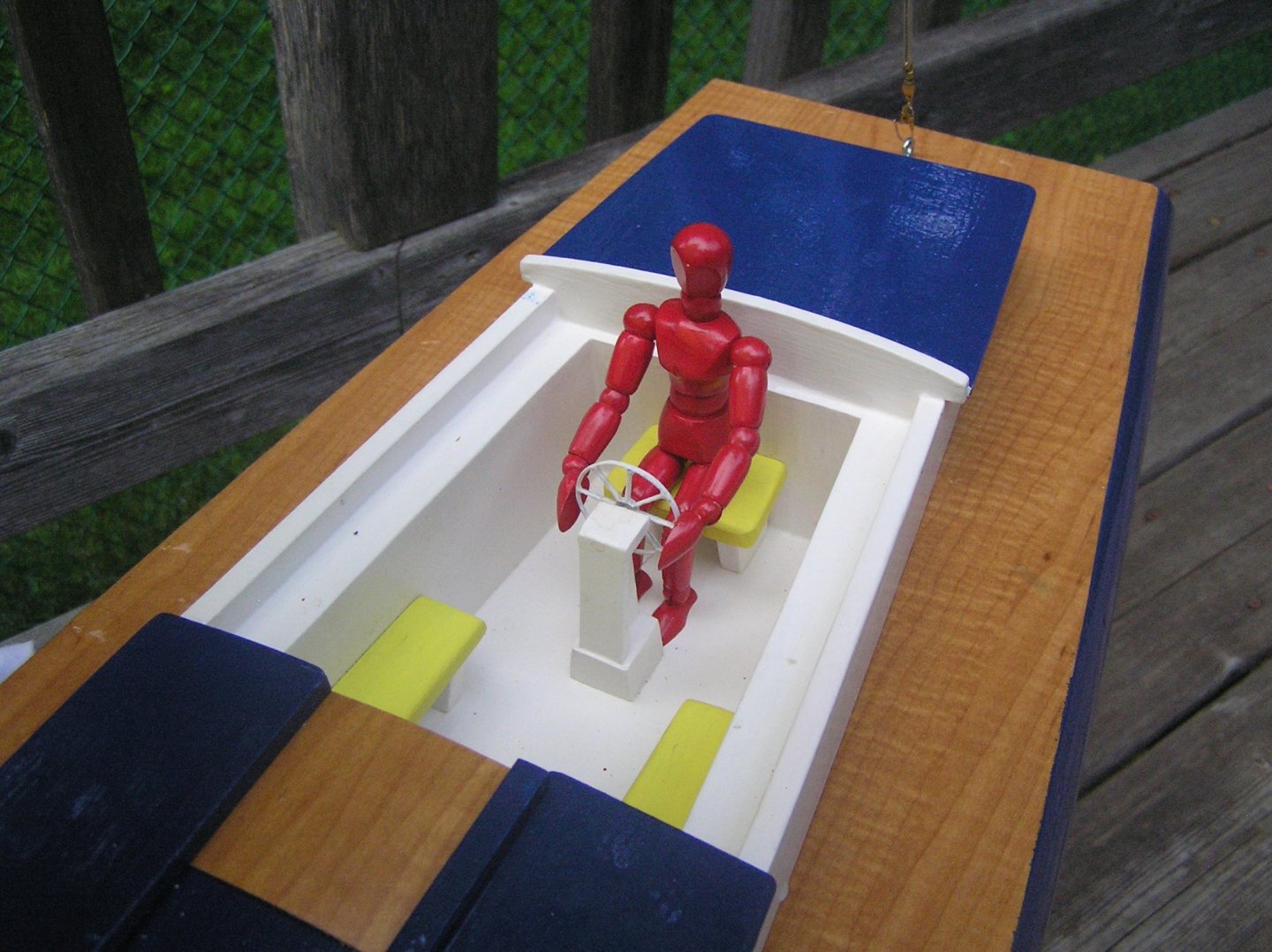
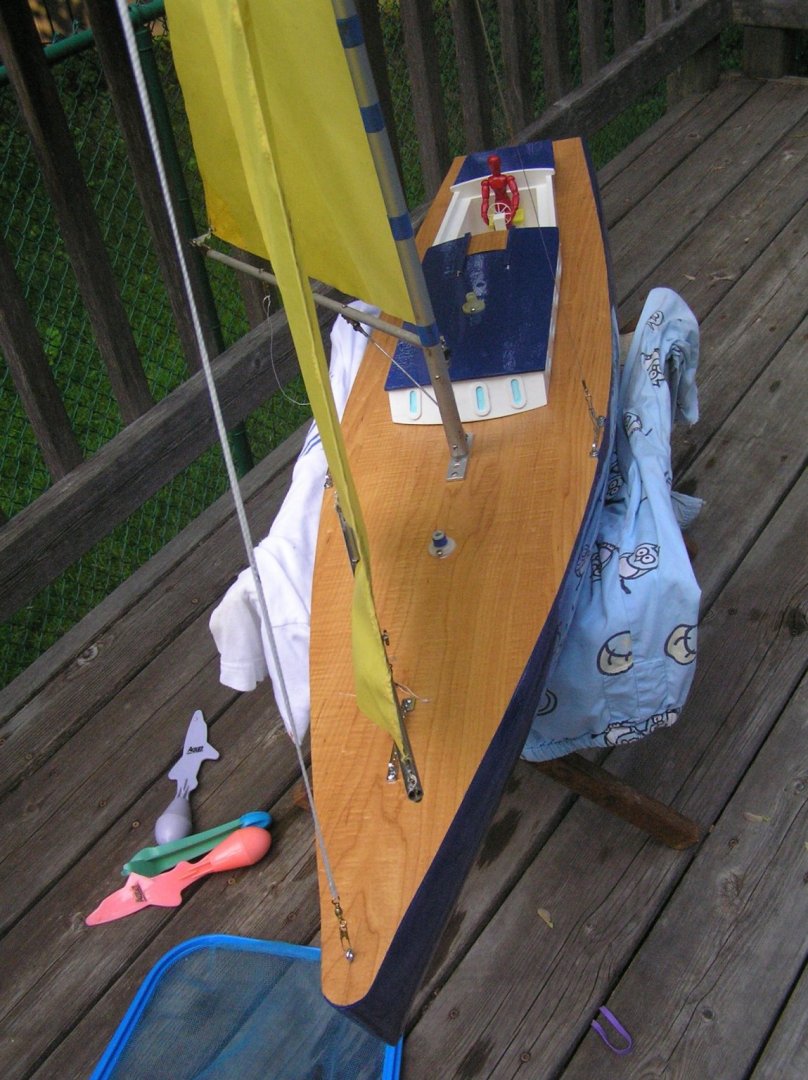
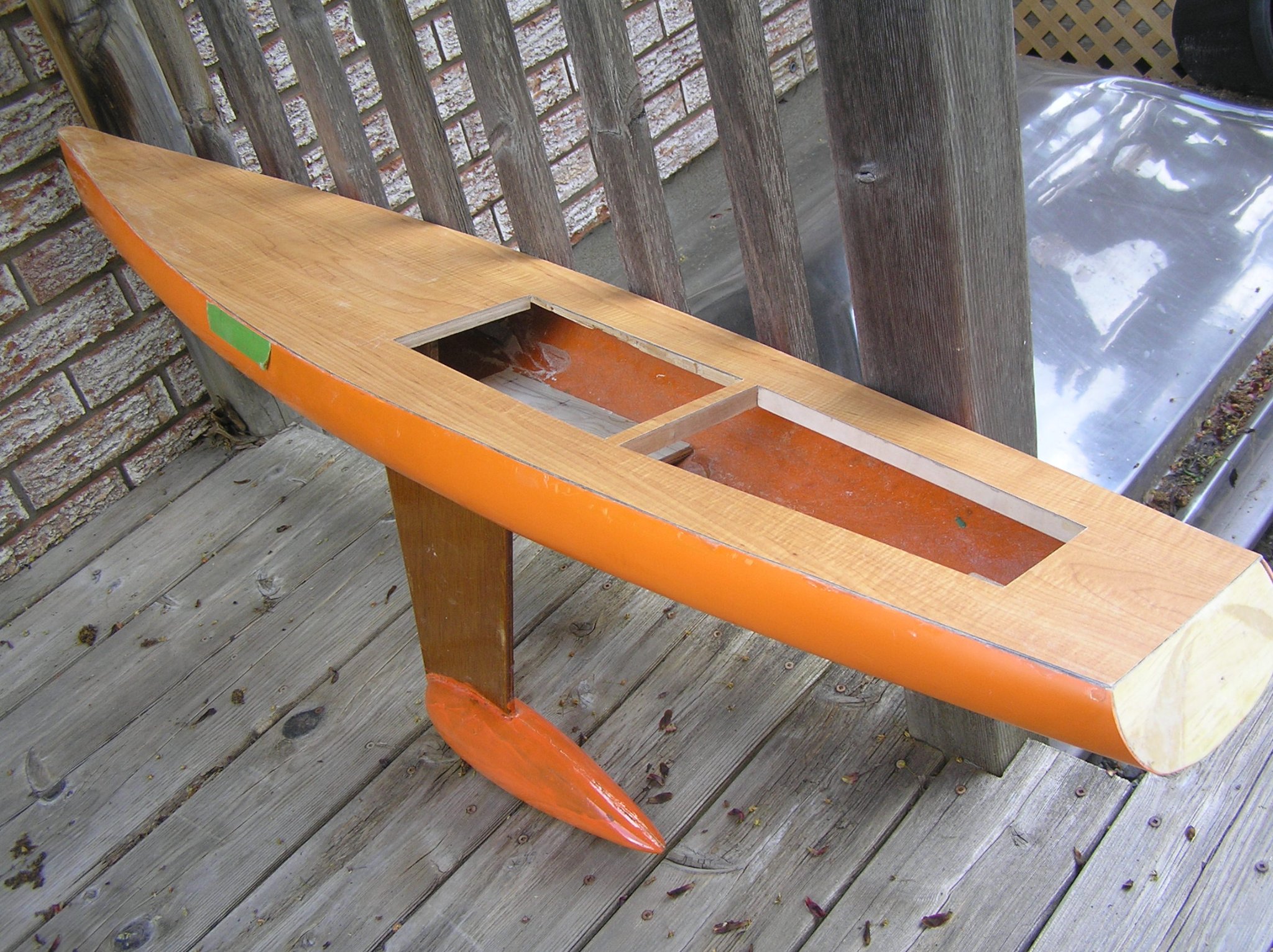
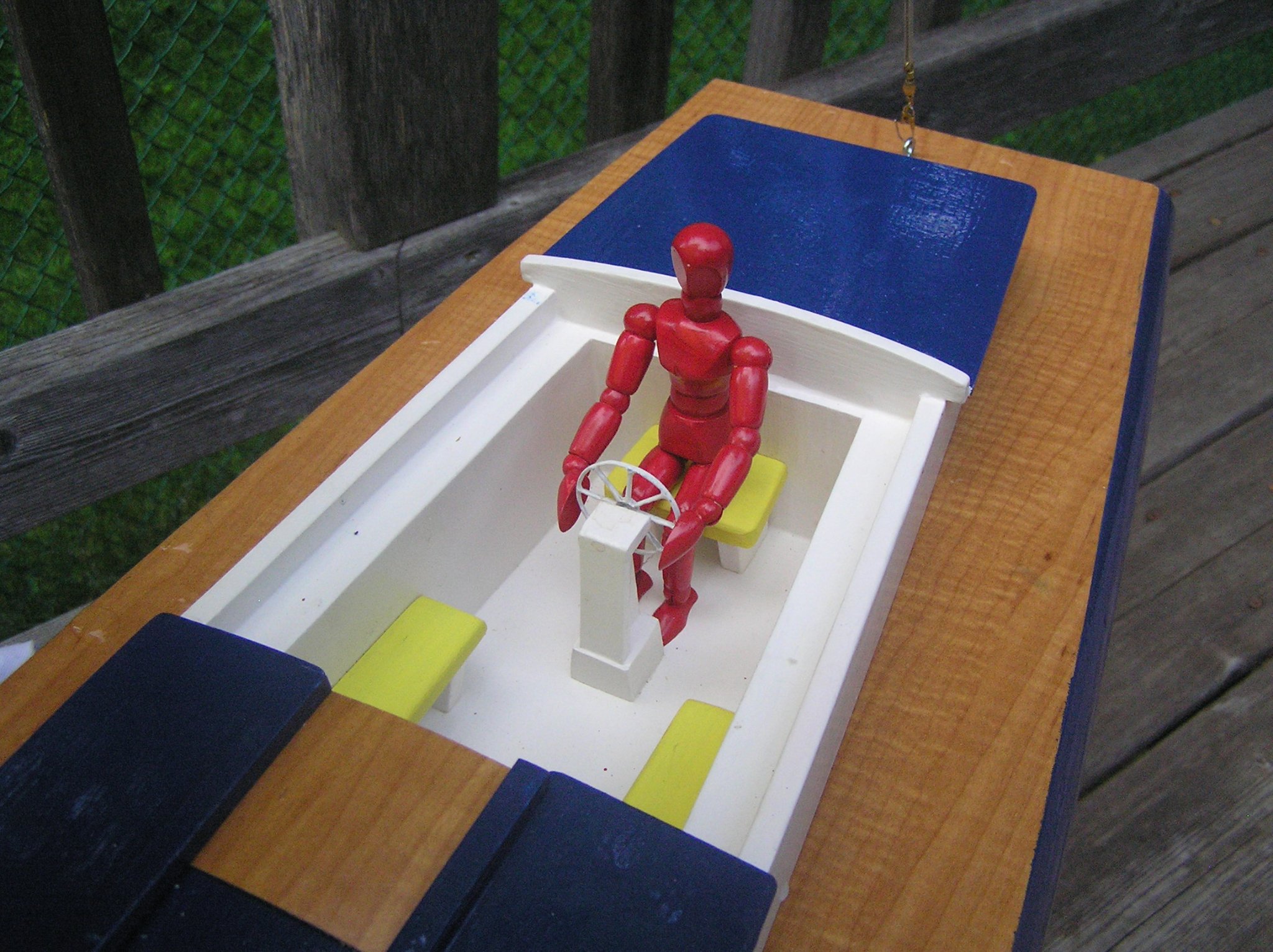
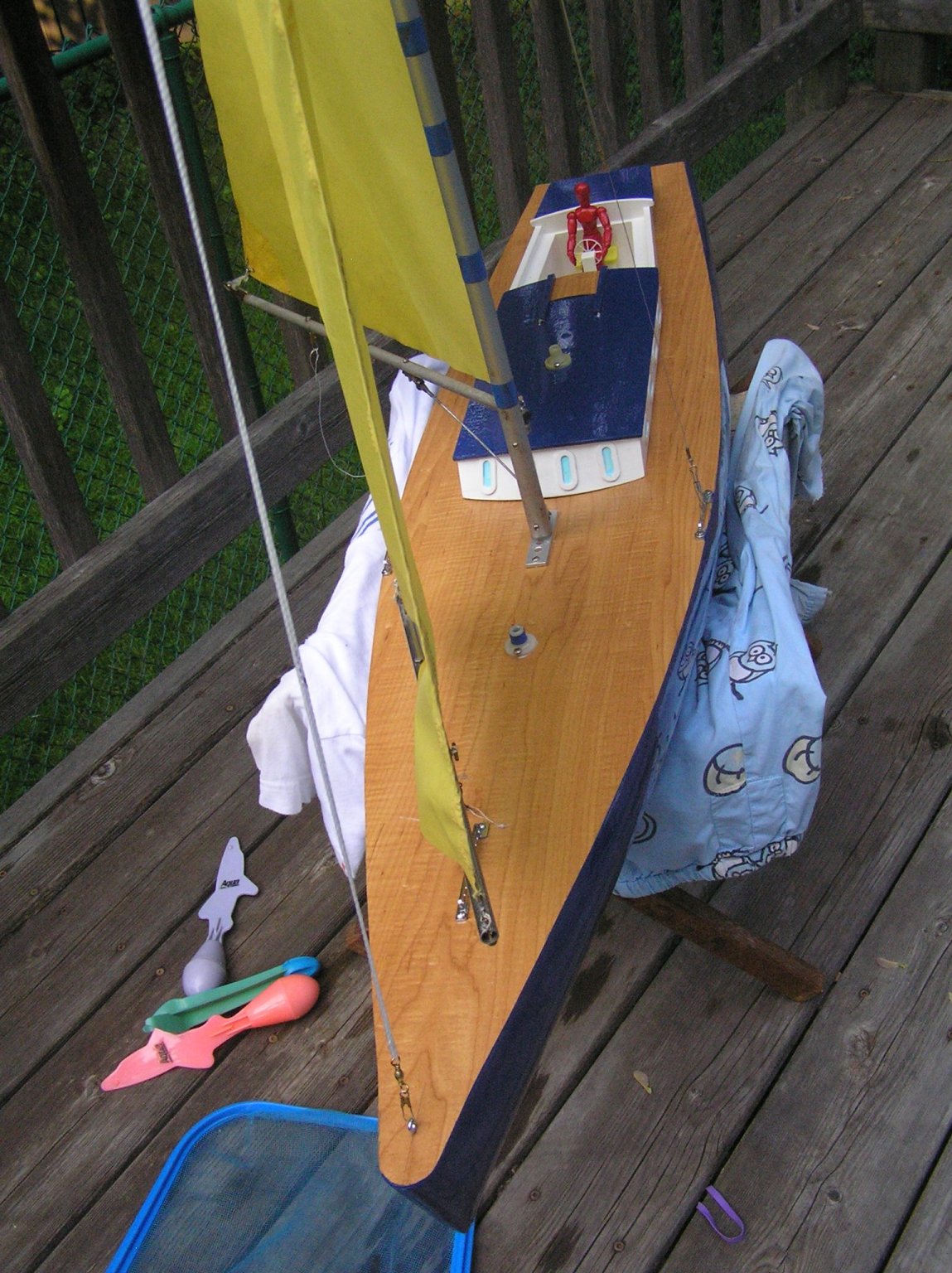
 I had an old M-class RC yacht from the 80's I hadn't sailed in decades. I decided to buy a modern RC set and try it at the cottage. To my utter shock it sank stern first, fortunately near enough to shore for me to snorkel down and find it. Turned out that the chunk of balsa, of all woods, that the teenage me glued in to support the rudder tube finally detached from the inside of the hull and water poured in. To make a long story short, I did a major refit since I needed to cut the aft deck to access the rudder tube. The idea was to change from a utilitarian rectangular hatch just abaft the keel to a "recreational" yacht design. I too liked the idea of a deep blue hull instead of the orange it came as so I painted it with marine paint I had left over from my 1:1 sailing dinghy. My new decking replacing the old white deck is much simpler than yours: a cutoff of laminate obtained from a counter supplier! Here are a few photos of the refit and how beautiful a deep blue hull is. My brother says I should put an Ikea logo on it as the sails happen to be yellow 🙂 . I meant to find some yellow pinstripe tape to accent the hull, plus paint crash-test-dummy style chequered circles on the "helmsman" but haven't as yet.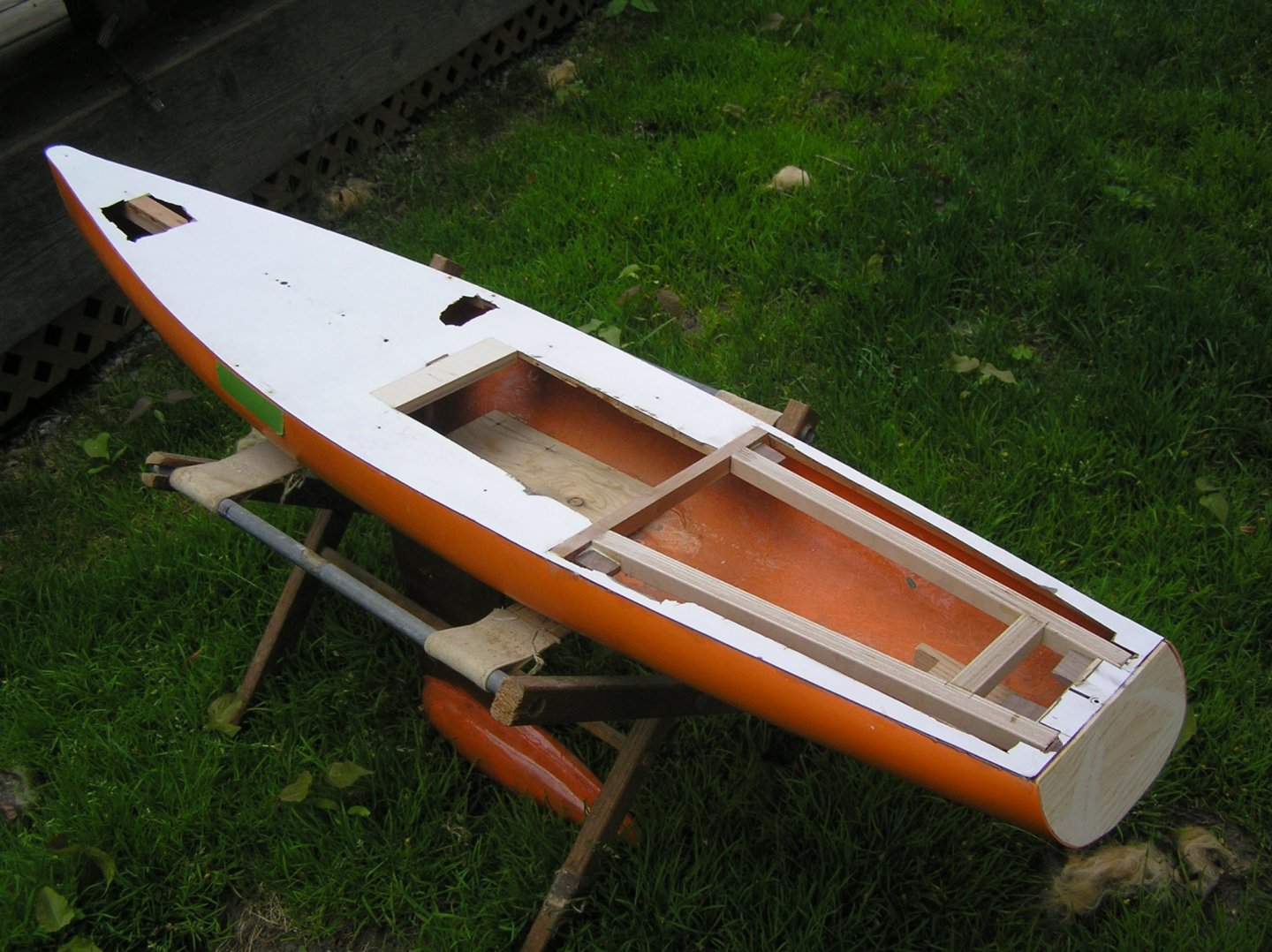
-
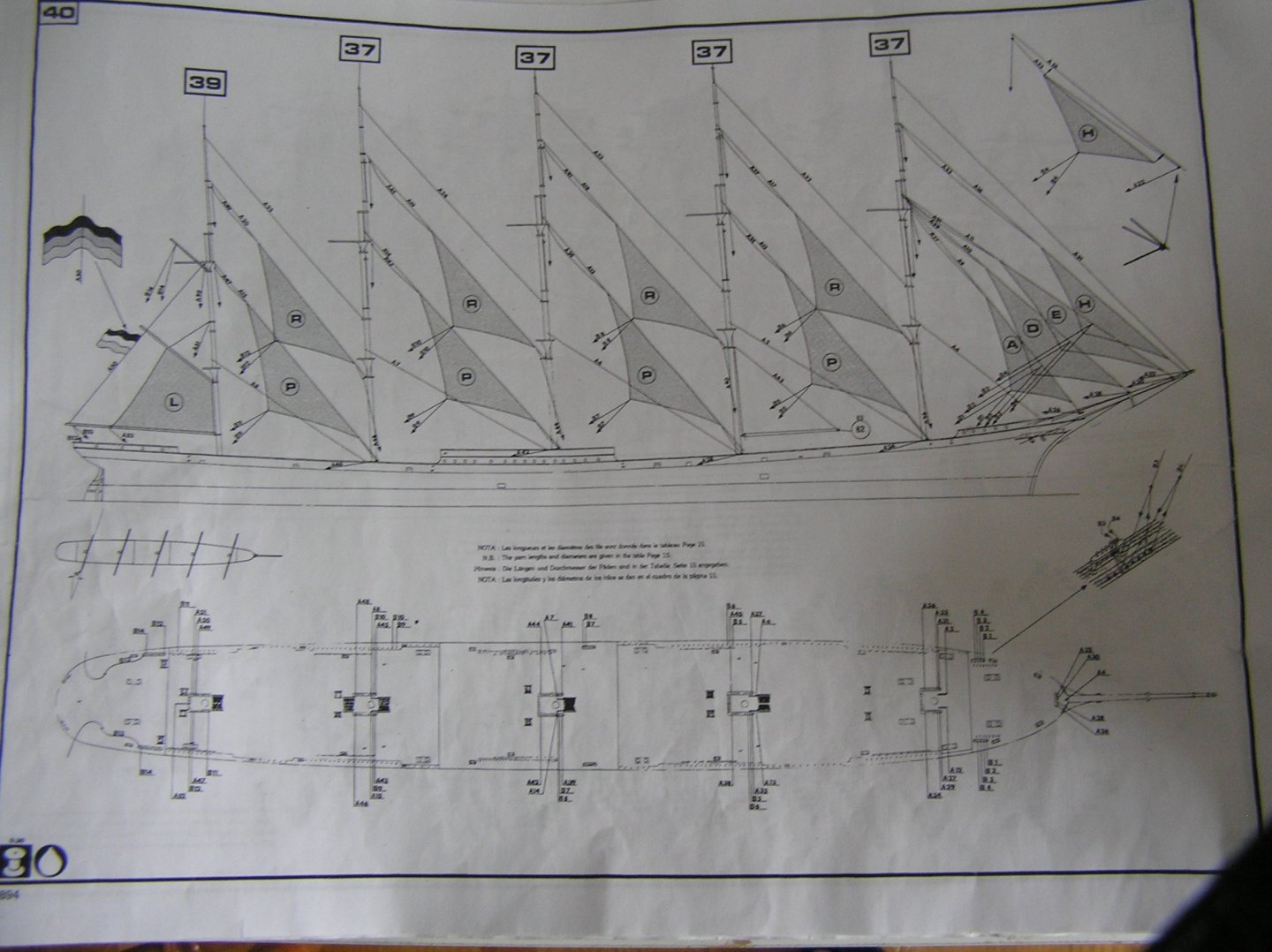
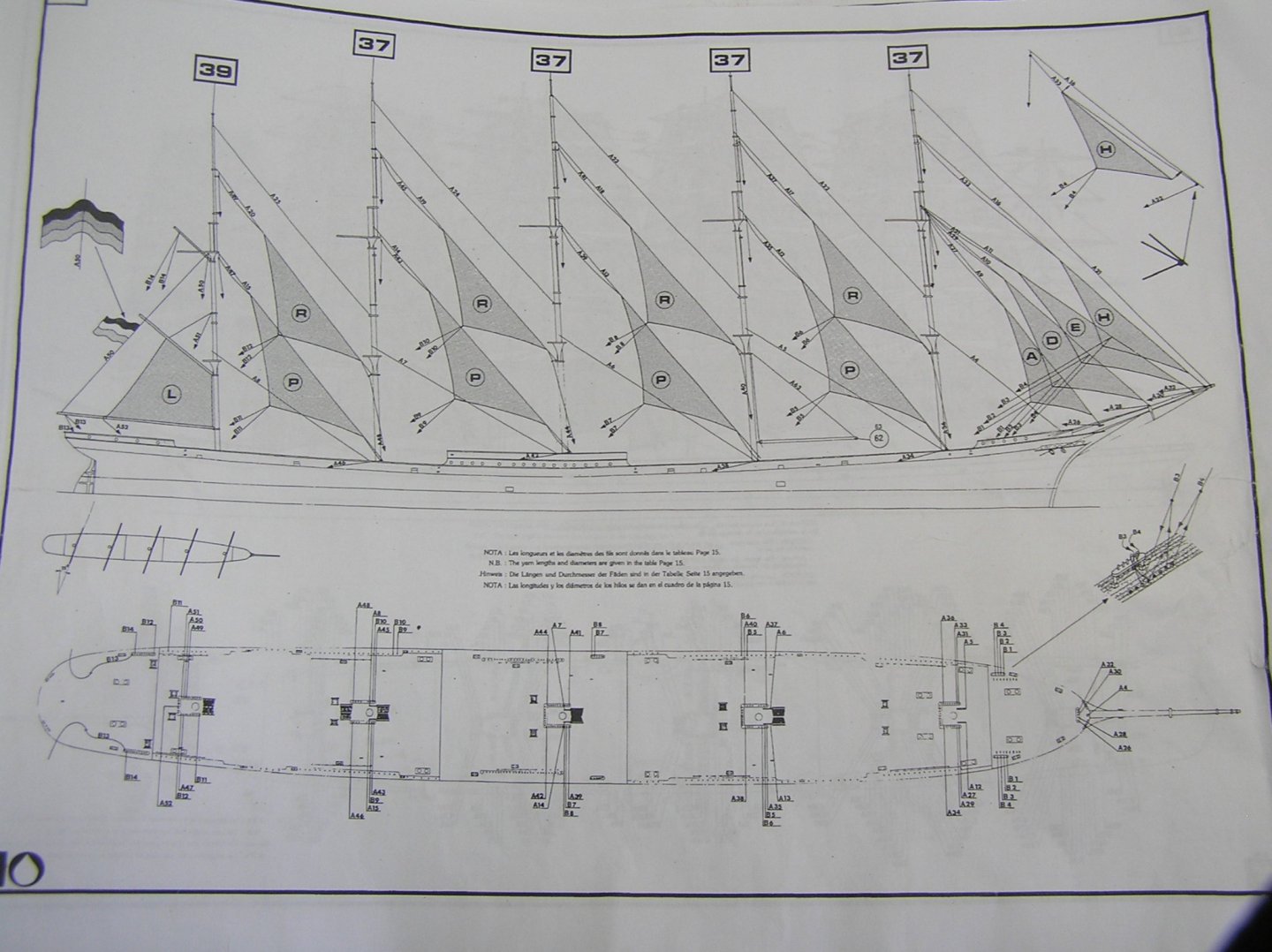
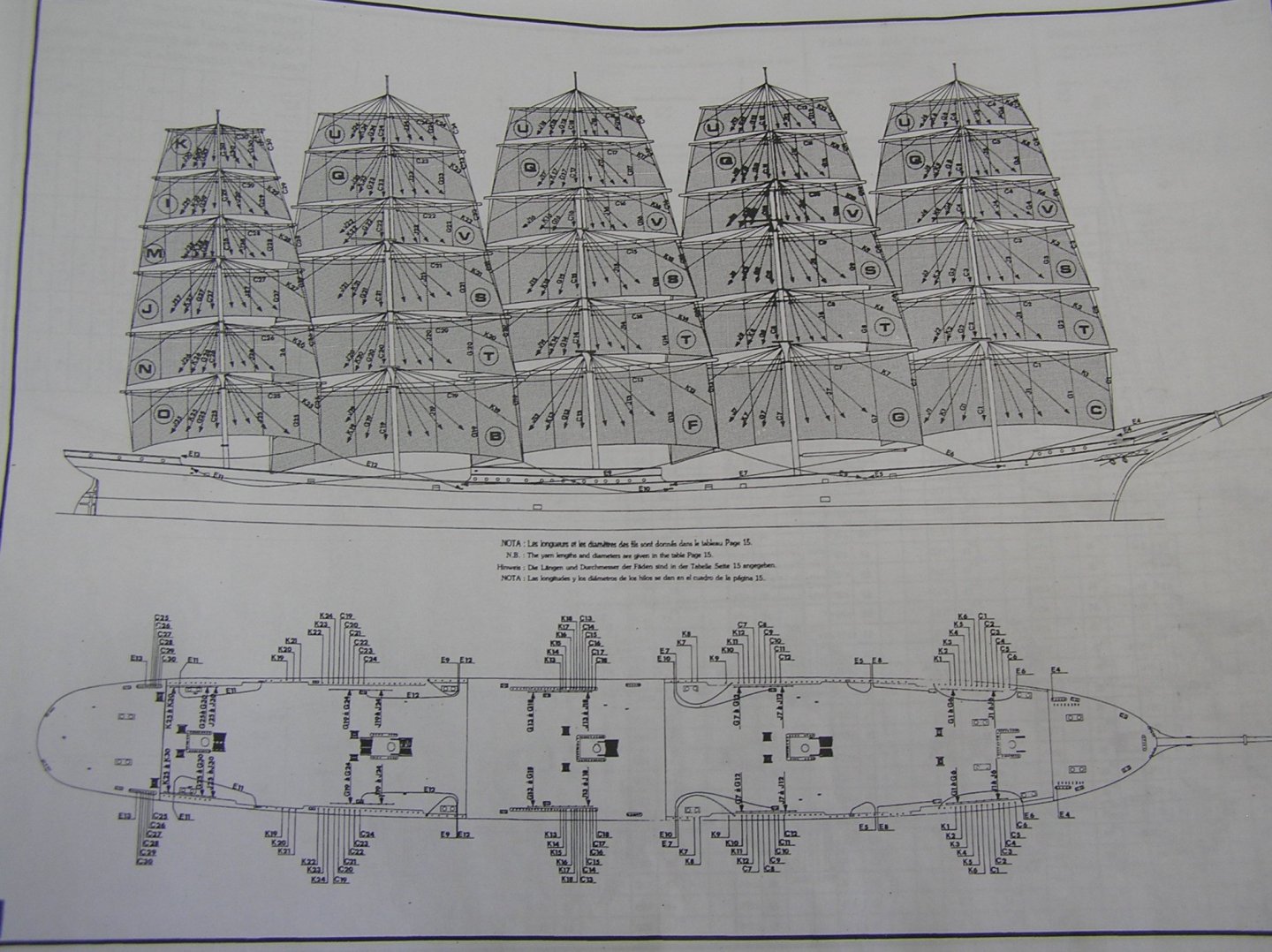
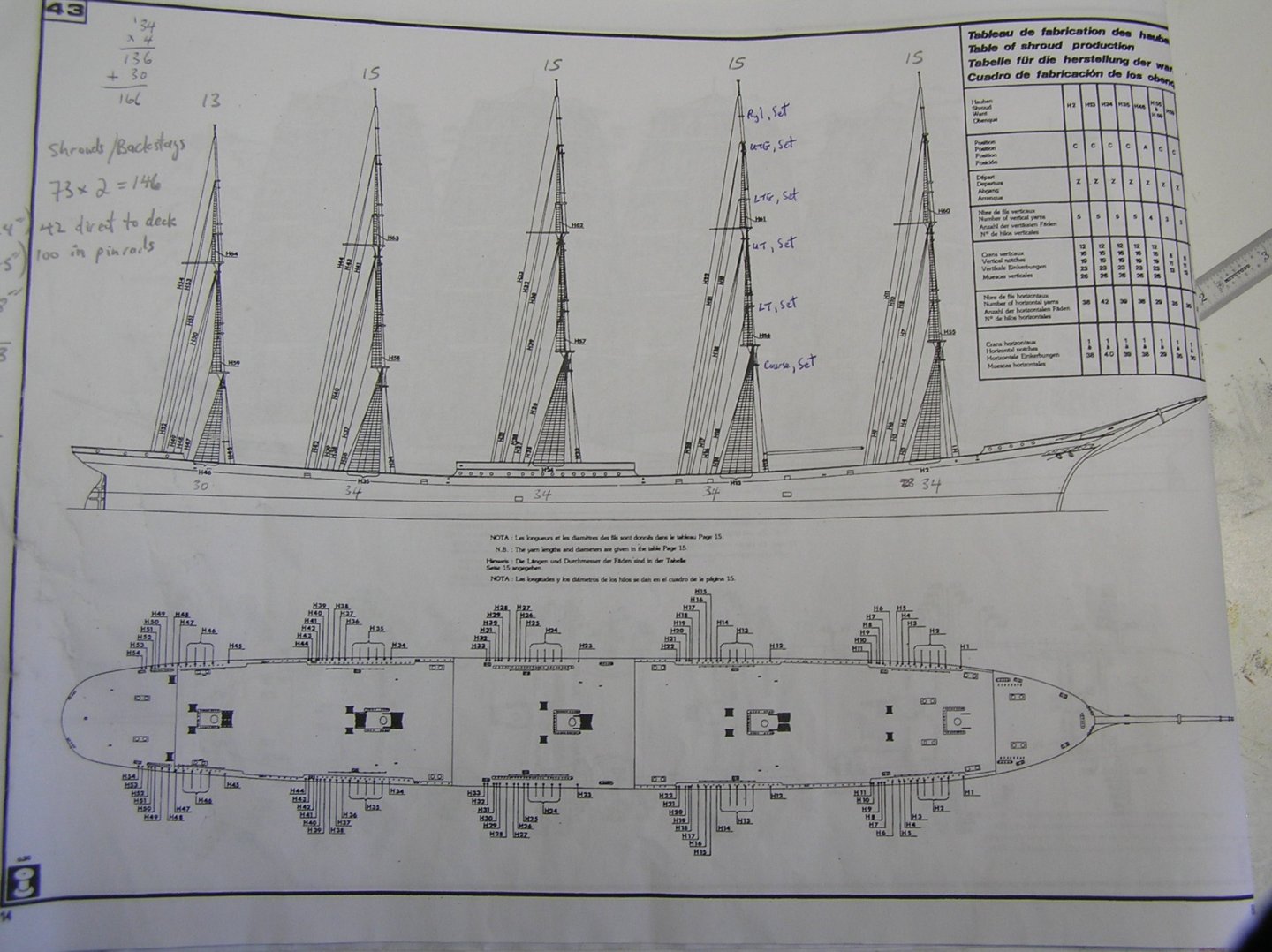
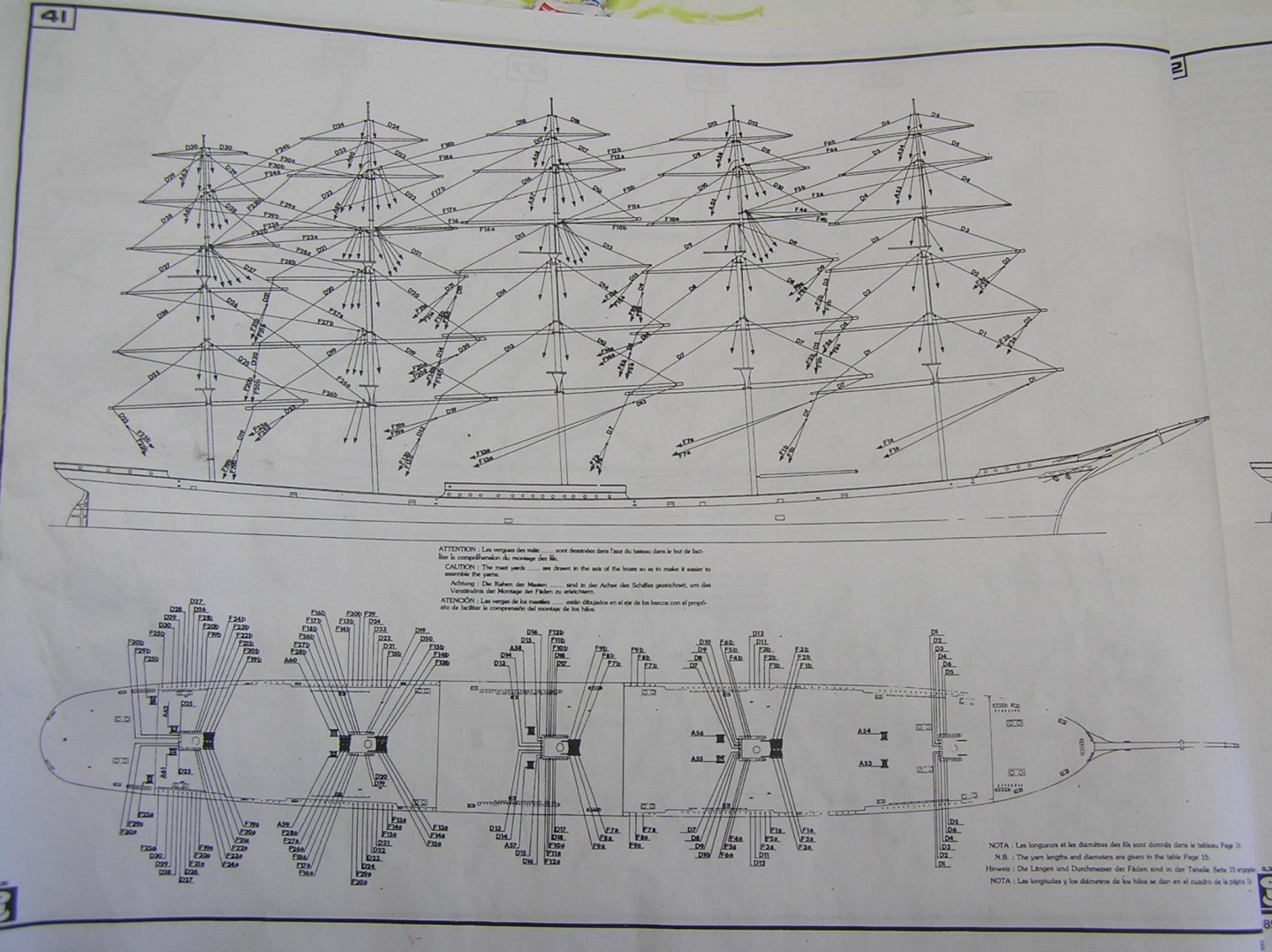
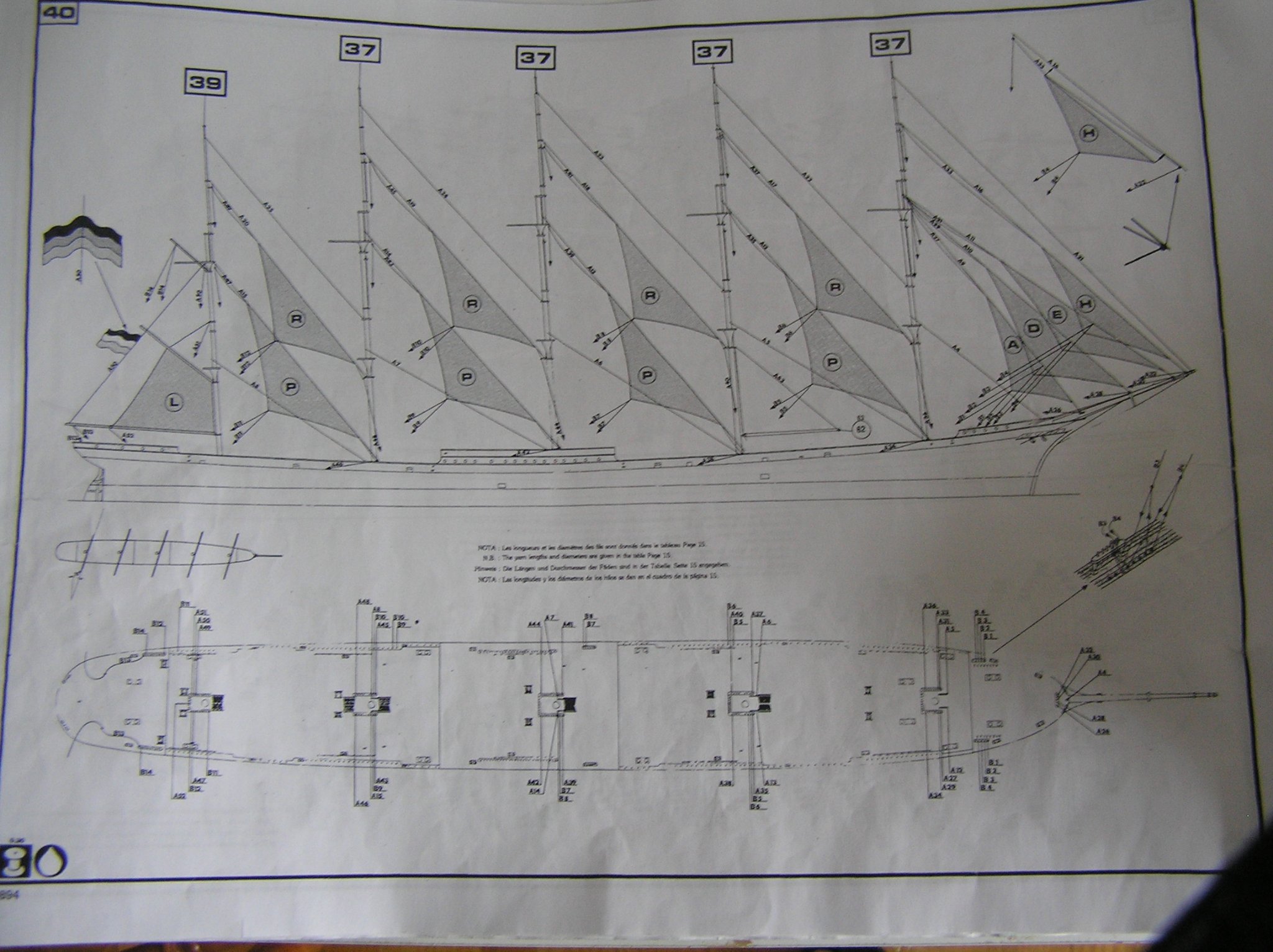
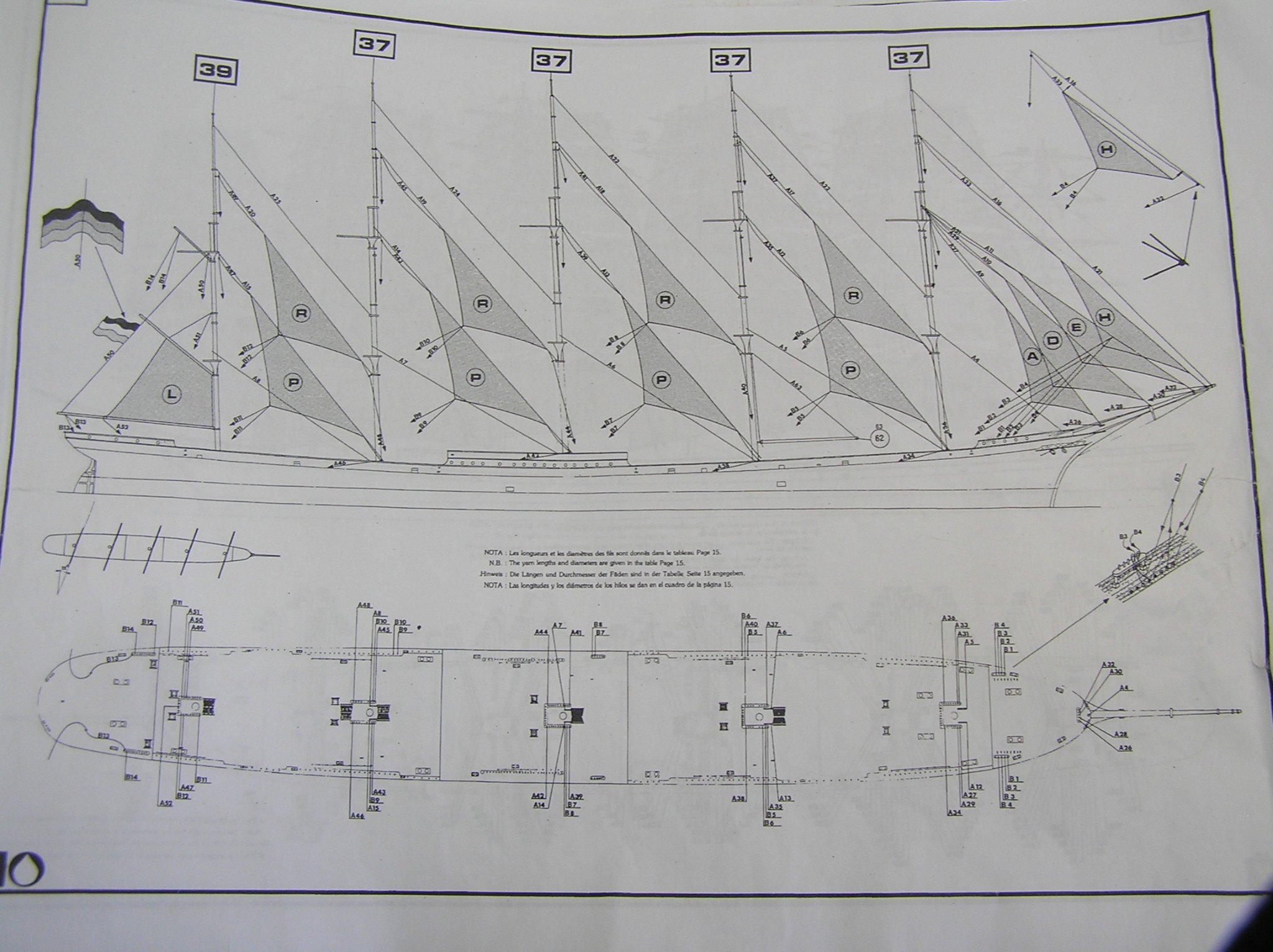
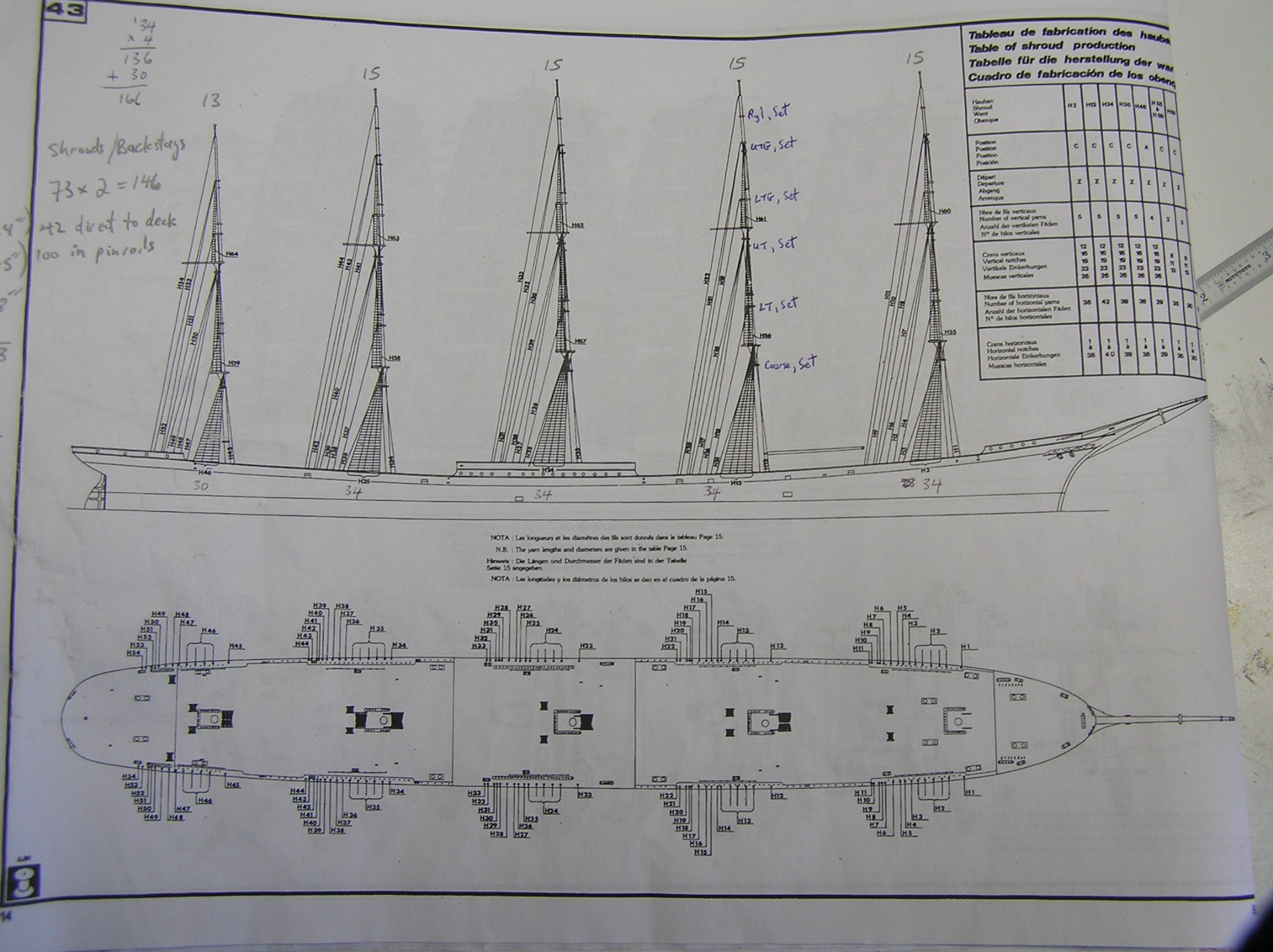
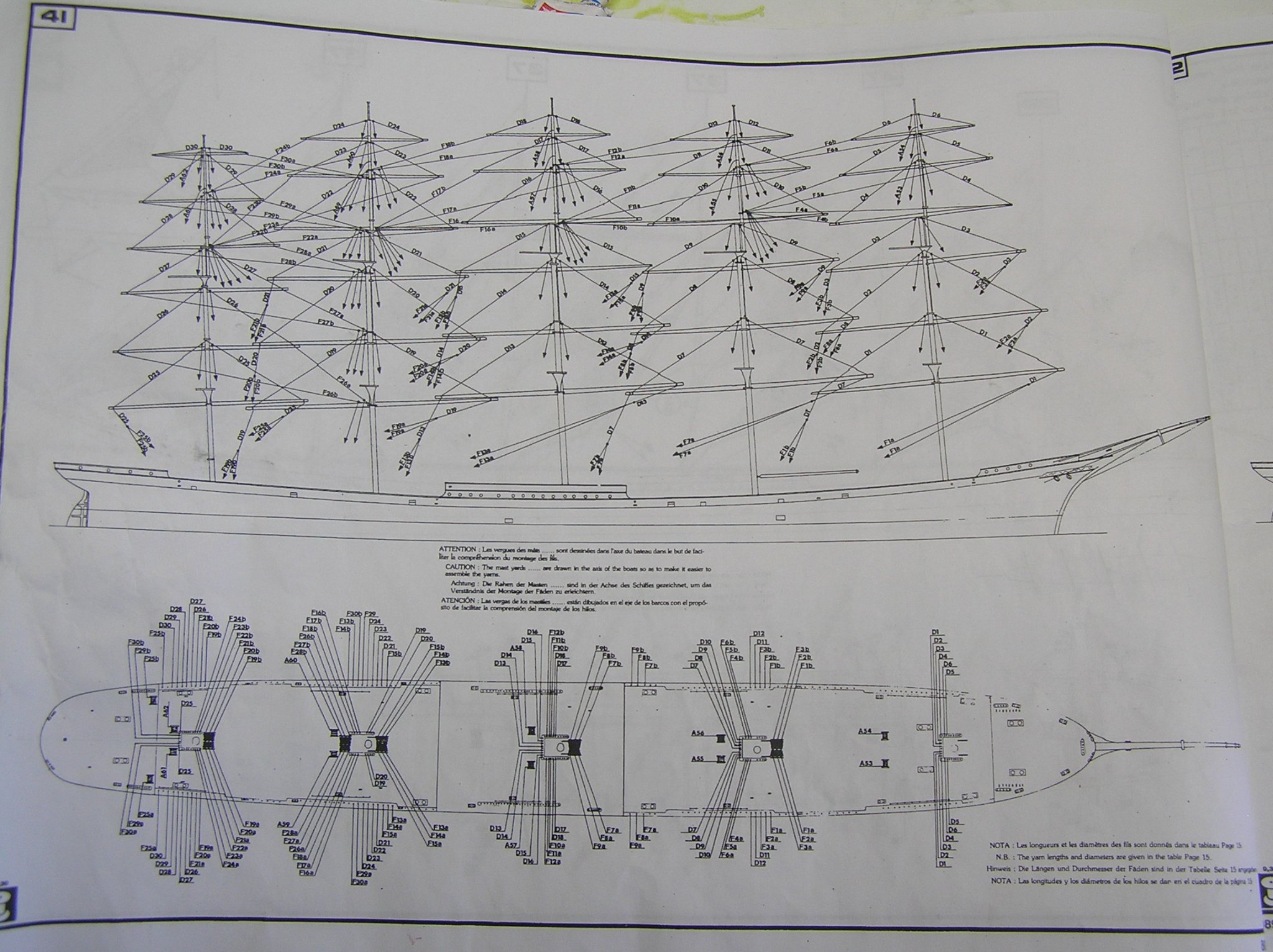
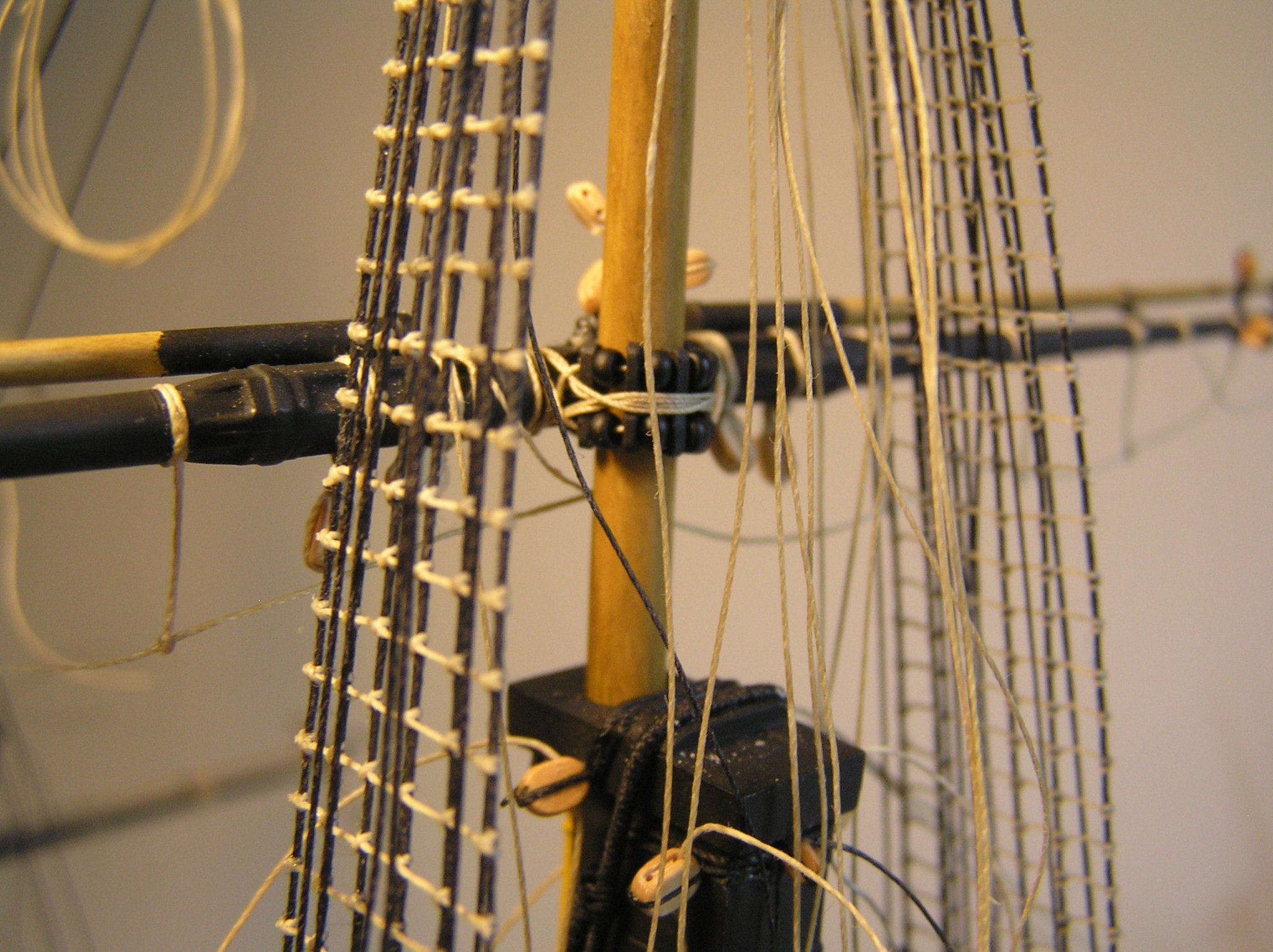
Wayne: Thank you for your comments! With the Passat you will not have to make all those rigging screws as that kit includes some reportedly sturdy ones. Miki: Thanks for the great photo which I have not seen!!! I must look for more books. Nils: Appreciated, especially given your many builds I have admired! George K: Thanks for your kind appraisal. No, I have no intention of using a jig for shrouds. I will rig them properly the same as I did for Victory after reading everyones' panning of that supplied jig. That said, because of the way the masts assemble one needs to seize the shroud pairs in place around the lower mast head (which in fact is part of the topmast piece). Too bad as with Victory one could seize them around a suitable dowel then slide them down the mast head before attaching the cap. I'm making the screws because the Preussen kit does not include them or any blocks, which I understand the Passat includes too. Rigging instructions?....we don't need no stinkin' rigging instructions... LOL. As opposed to the Victory kit where rigging instructions (and I use the word loosely) were scattered all over, the Preussen includes four diagrams at the end. Here they are: Each includes a belaying diagram at the bottom. The print is very small. Very. As you say the standing rigging is pretty good, although each lower mast only has five shrouds not six (except four shown on the jigger), as I have seen in model photos Miki posted earlier and now again in his Preussen photo (Thanks again Miki for the great shot!!). Now my attention is called to it, Heller calls for one stay (H1) leading from the side of the lower yard band to a screw just ahead of the first shroud, then five shrouds (5x H2), then a stay (H3) leading to the mast cheek, then the mast cap stay (H4). It seems a little silly to have H1 and H3 supporting the mast within feet of each other and the shrouds; I think I will change H3 to a sixth shroud, despite the fact that will increase my number of ratline clove hitches by 20%. HHmmmm....... The many ratlines will be a chore assuming I can find something small enough and non-fuzzy with which to rig them. The lower brace instructions are odd too. They show the brace block on a pendant (fine) with the two leads going to a pin on the bulwark rail and a spindle on the brace winch. No mention of sister blocks on the bulwark then to the pin, or worse yet no leading blocks on bulwark then under the mast top to guide to the brace winch to provide it with a steady lead as the yards swing. Having said that, I am not looking forward to rigging blocks at this scale. I nearly went cross-eyed using 2mm blocks on Victory's cannon tackles. Incorrectly, I think, every yard is shown as having lifts. I understood that for example the lower topsail yard takes advantage of the downhauls for the upper topsail yard as lifts for itself. Also leech lines are shown in addition to the many buntlines. I assumed Preussen would furl her sails to the yardarms not the slings so there wouldn't be a leech line, Can anyone advise? My 3D CAD for the winches looked great, but the gear detail went to oblivion in the actual printing. I am forced to revert to those provided for reasons mentioned in my earlier post. There aren't many notes in the instructions, but they are given in English, French, and German. Again, thanks you all for commenting. It's been said before but it is really motivating! Note: I can't seem to delete this unintentional blow-up of one of the sheets despite several tries. Oh well ;-(
-
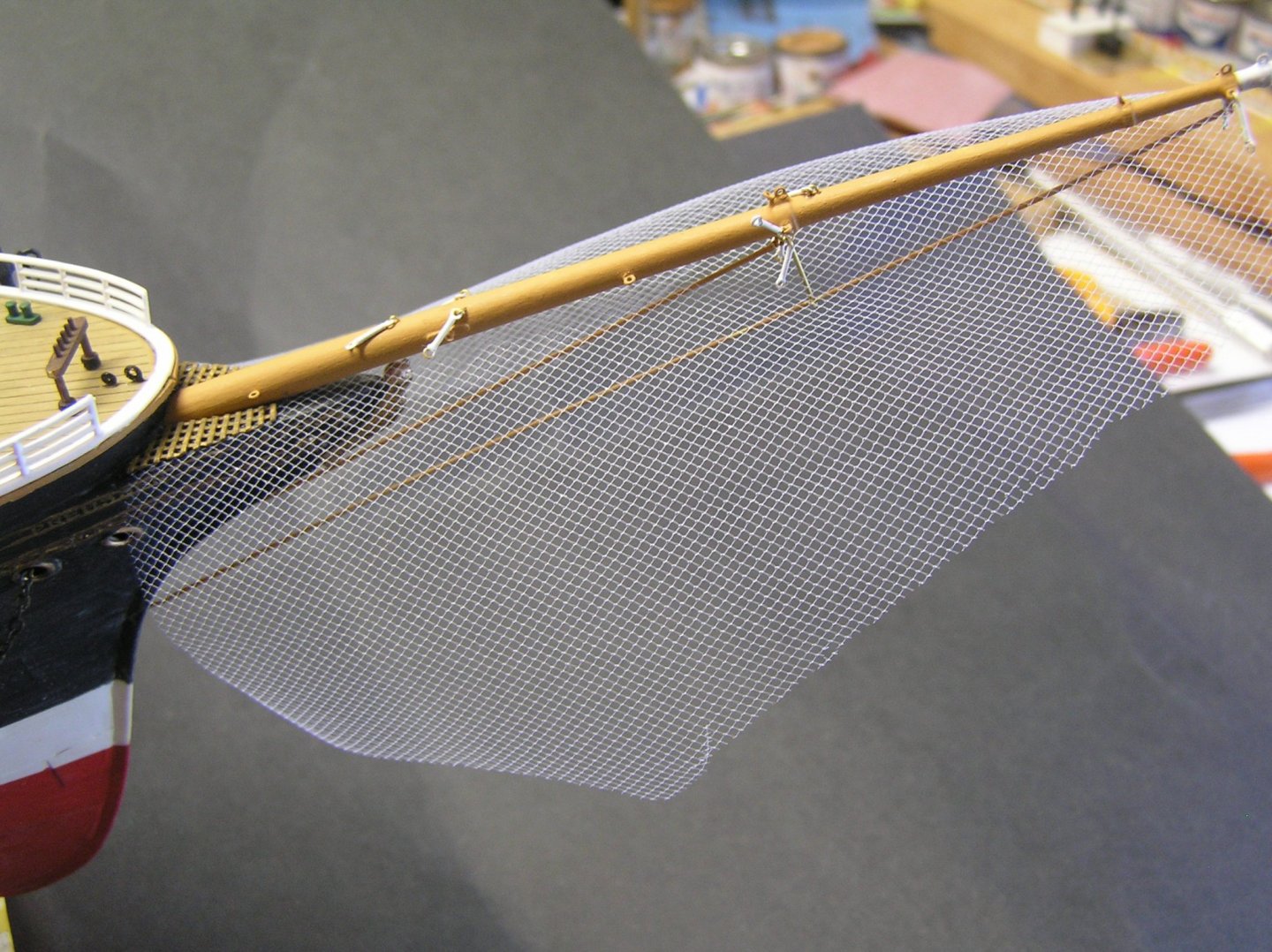
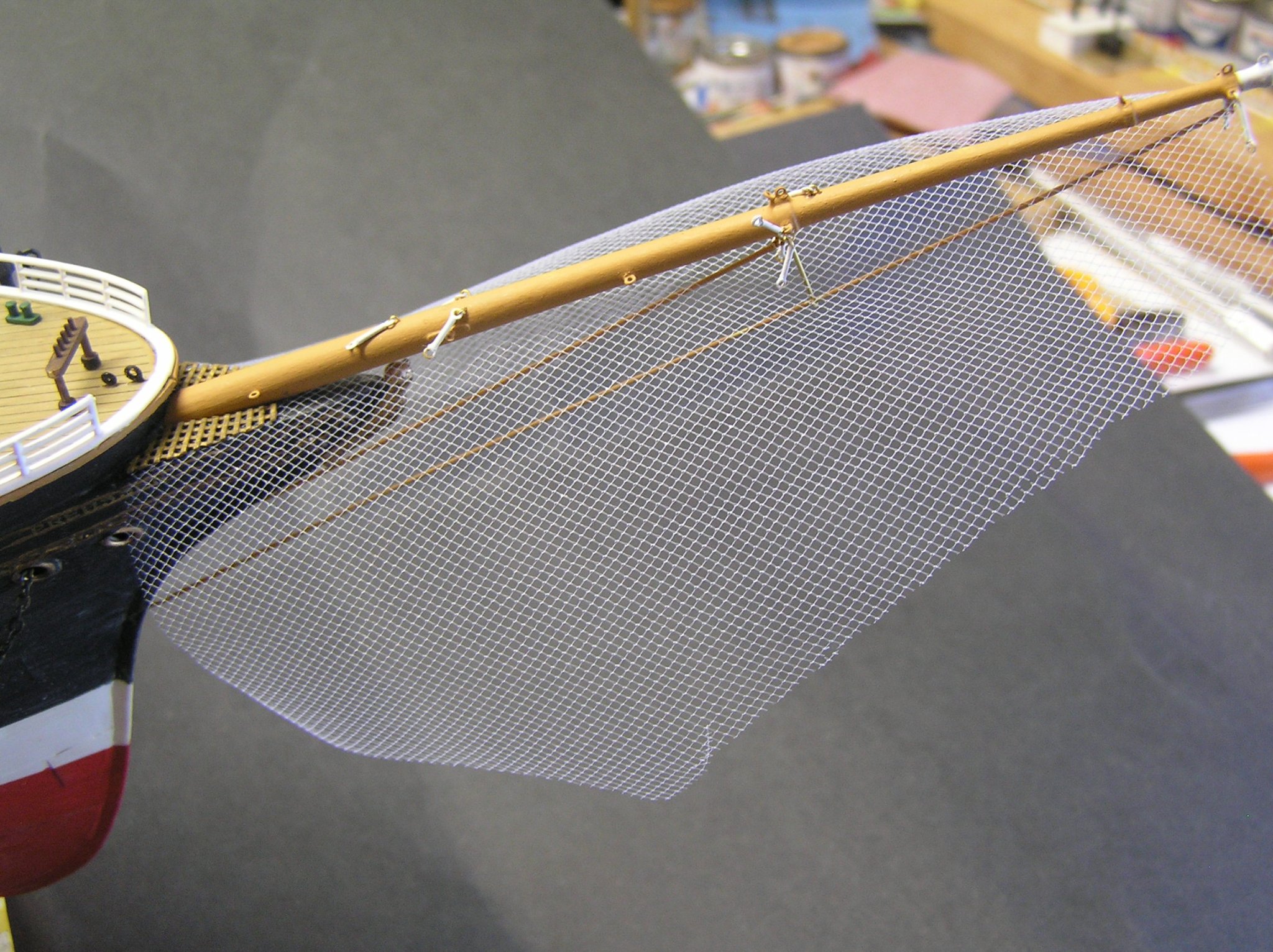
A quick note to say I managed to add the safety netting. It is not yet stitched on or trimmed because I have no jib boom guys as yet. I broke off the bobstays at the stem and pulled the martingale off the bowsprit, in order to pass the inner bobstay and martingale through the netting before reattaching. The martingale broke so I made a new one. Only four inches of 0.6mm brass tube left, now. To make it easier I simply glued the bow end of the netting under some gratings I had made for the purpose after seeing the photos of "Passat" I refenced in an earlier post. Here is a photo against a black background, which is the only way I can see this netting. Not looking forward to trimming the tiny mesh for sewing to the guys!
-
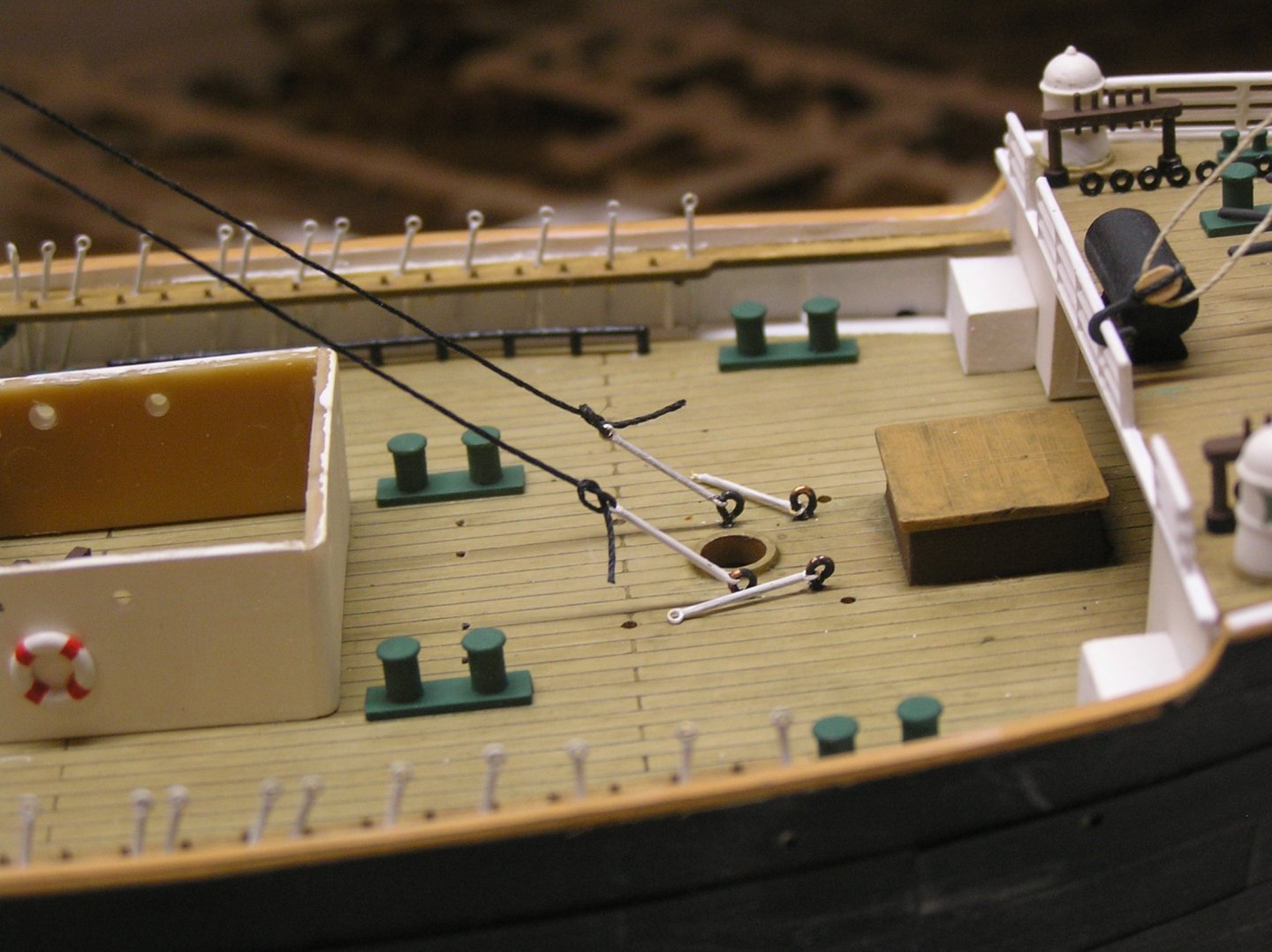
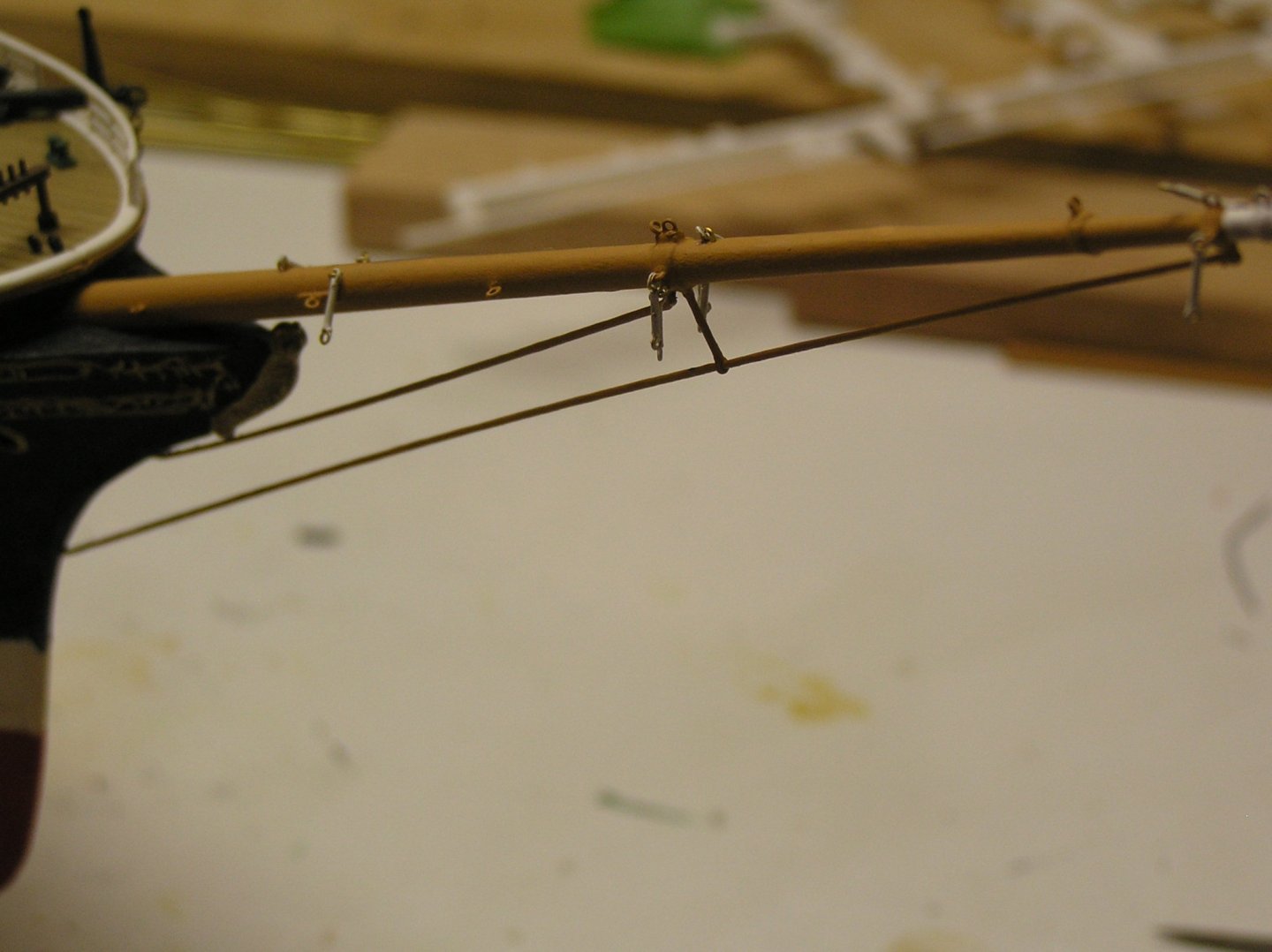
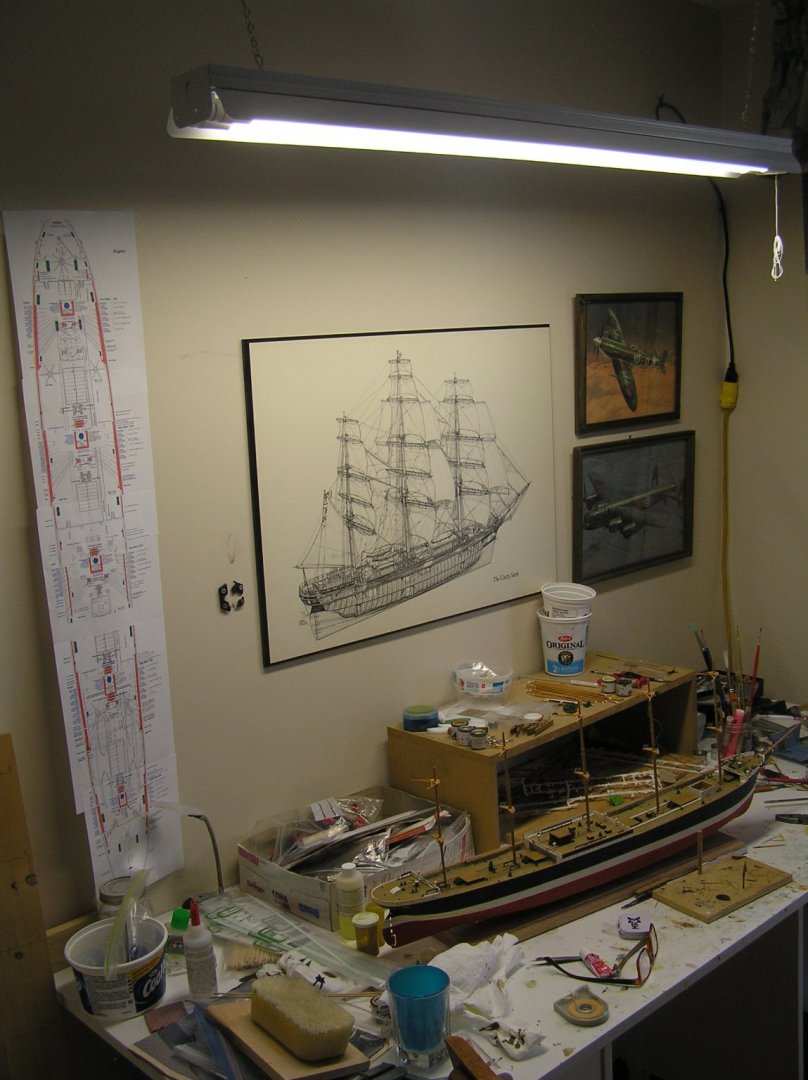
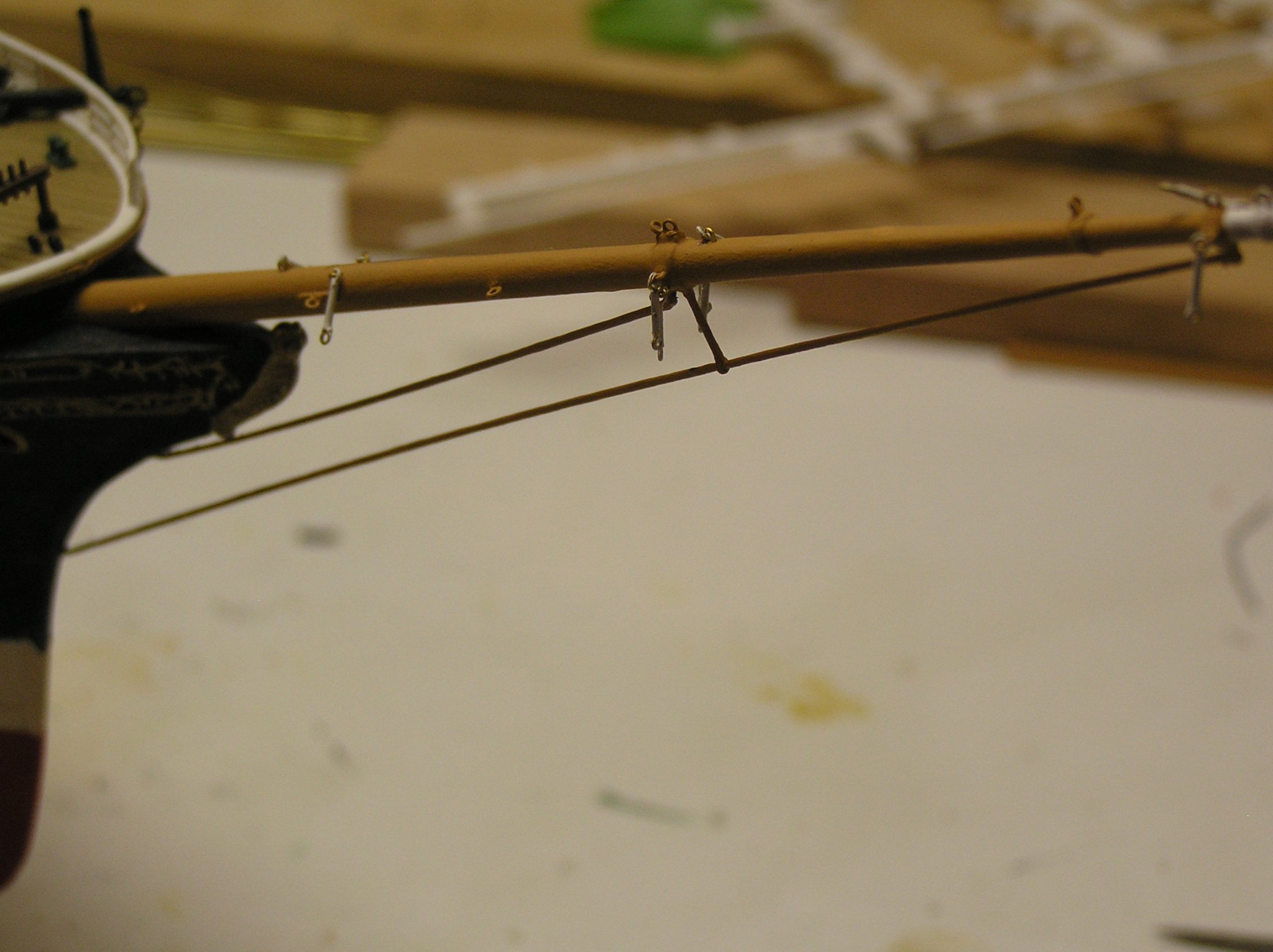
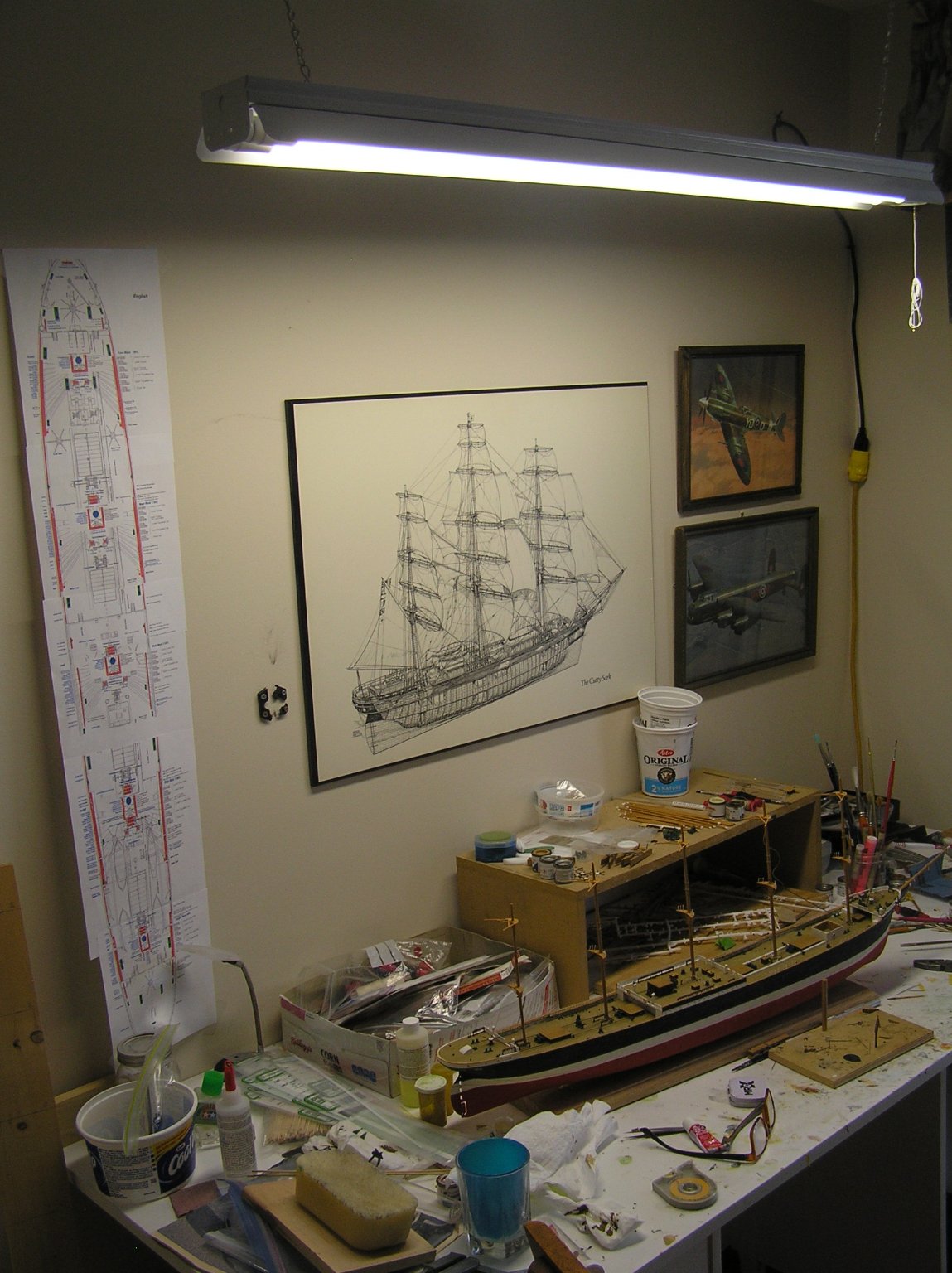
Long time since I posted. What with lockdowns etc I took time to do reno work in my own house for a change so I haven't done much on Preussen. However, I DID get through to someone for a replacement stern railing. The Heller parts replacement source is Glow2Be in Germany. Go to the "glow2be.de" website, click on "Service" then "Spare Part Form" , print the pdf file and fill it out. I tried scanning and emailing to the address given on the form but it would not go through as the "glow2be" server would not accept messages from my "domain", be that Canada, North America, or whatever. I then FAXed the form to the number given and was rewarded after two days with news that a free part had been shipped! Customer service! Meanwhile, my brother sent me the ladders, jarvis winches, and railings he had 3D printed for me. He had trouble separating the fragile railings from the printed supports so they were not usable, but I no longer need one see above. The winches turned out ok but the spindles are very brittle so I've decided to use the Heller winches, maybe augmented with some brass. The longer ladders I drew in CAD are a perfect fit but it turns out I drew the steps too close together. Andrew is now printing a revised version with one fewer steps spaced out a little more, which should look better. On the actual model, I have been making some fake "rigging screws" for the various stays, again using the 0.6mm tube and brass etch eyes. I'm down to my last 15 eyes and last short piece of tubing so I need to put out an order. I just discovered that "Model Dockyard" has shut down for retirement which is a shame because Nick was very helpful. I decided I wanted rigging screws at the base of the lower and topmast stays, which meant breaking off the Heller supplied deck cleats I had previously glued. It left a little bit of a mess on the deck but by the time the pinrails are in and coiled it won't be visible I hope. I mounted the rigging screws on copper eyes which I had painted black but of course the paint flaked off as I tugged the etched eyes around the curves. Touchups will be needed. I did it this way because I don't seem to have much luck with blackener on copper especially but brass too. I get an immediate black appearance but it always seems to be a coat sitting on the surface which then flakes off. Maybe I need to etch the surface beforehand? Here's a photo of the rigging screws at the foot of the foremast. Excuse the sloppy knots; I just wanted to see how a stay would look! I also added the bobstays, formed from brass tube.They hook into etched eyes at the bowsprit end, but I cheated and just bent the other ends and glued into holes drilled in the front of the stem. The outer bobstay passes through an etched eye at the end of the martingale. You can just see several other "rigging screws" dangling; these are for the fore topgallant and royal stays as well as various staysail stays. The bowsprit looks much better to me than as supplied by Heller with all sorts of clumsy plastic cleats molded on. Sadly I realized that the presence of the bobstays means I cannot add the safety netting without cutting along its centre and stitching back together 😞 😞 . After my experience with needle and thread lacing the Hobby-Lobby netting (which I can barely see even with magnifiers) for Victory's hammock netting I am loathe to attempt this resewing of a cut especially "in place", so I will have to break off the bobstays and reassemble with the inner bobstay and martingale passing through the netting. I'll need to add the jib boom guys in order to stitch and trim the netting but I haven't been able to shop for grey thread to represent wire rope, due to the re-lockdown. One final note, the movable-arm lamp I had mounted to the wall broke off as its plastic mounting bracket fell apart under repetitive stress. I bought a chunk of aluminum to machine a new bracket but then I saw LED strip lights for sale. I bought a twin 48" fixture and boy, what illumination! This photo doesn't do it justice; the camera must have reduced the exposure due to ambient brightness. The broken bracket is just to the left of "Cutty Sark". Now I wonder how I ever built "Victory" with a bedroom ceiling light and a single bulb swing arm lamp!? The hall seems so dim now when I step out of the "shipyard".
-
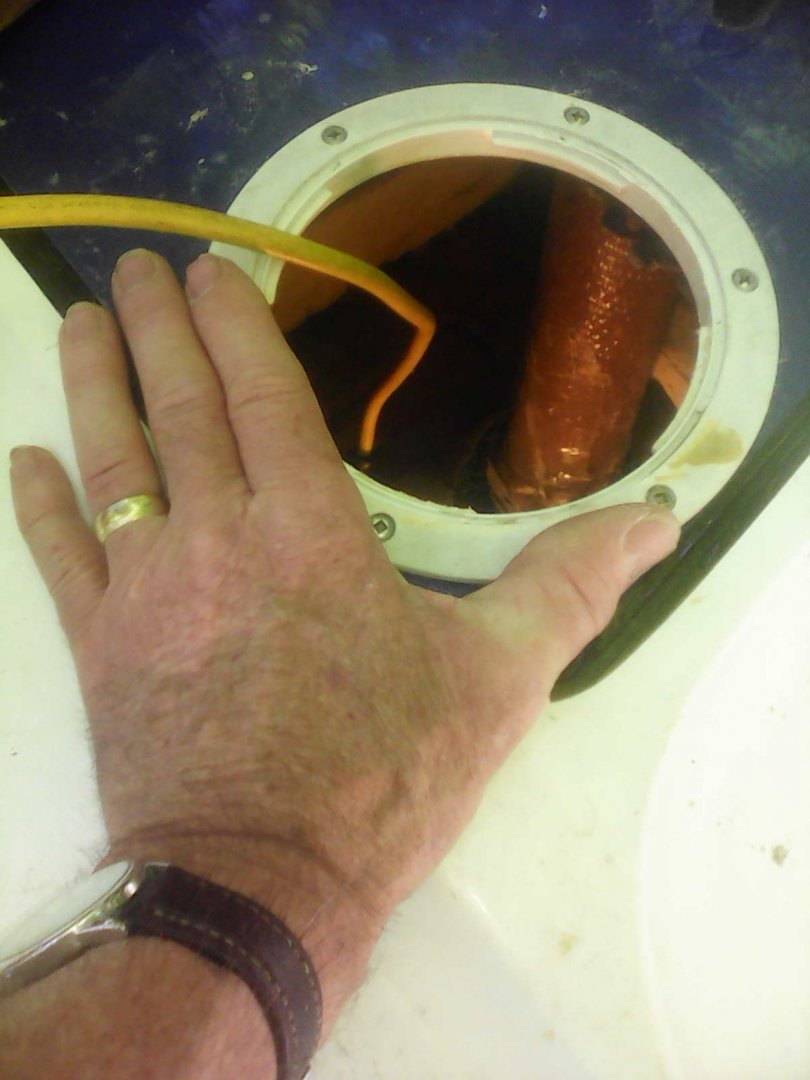
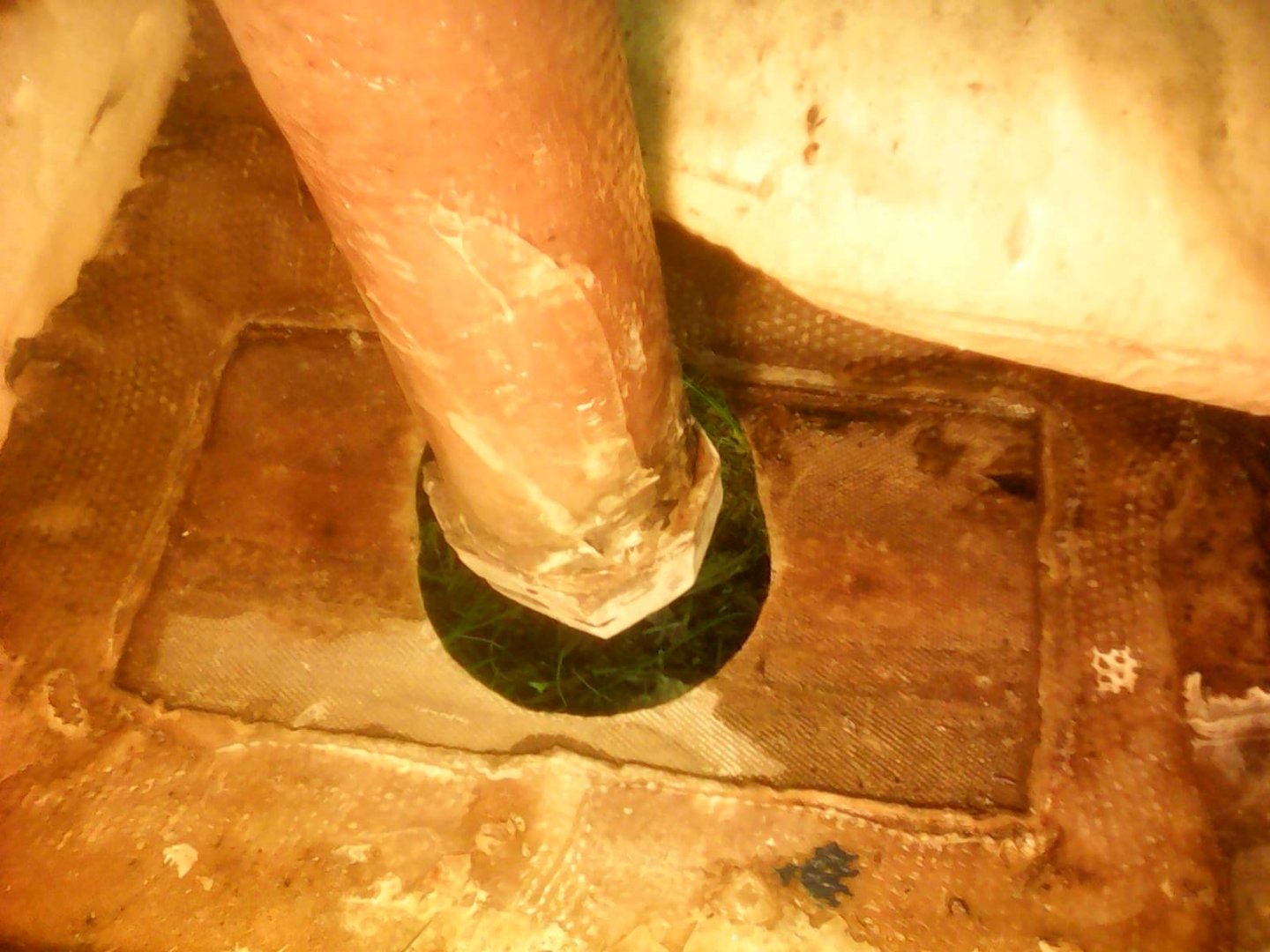
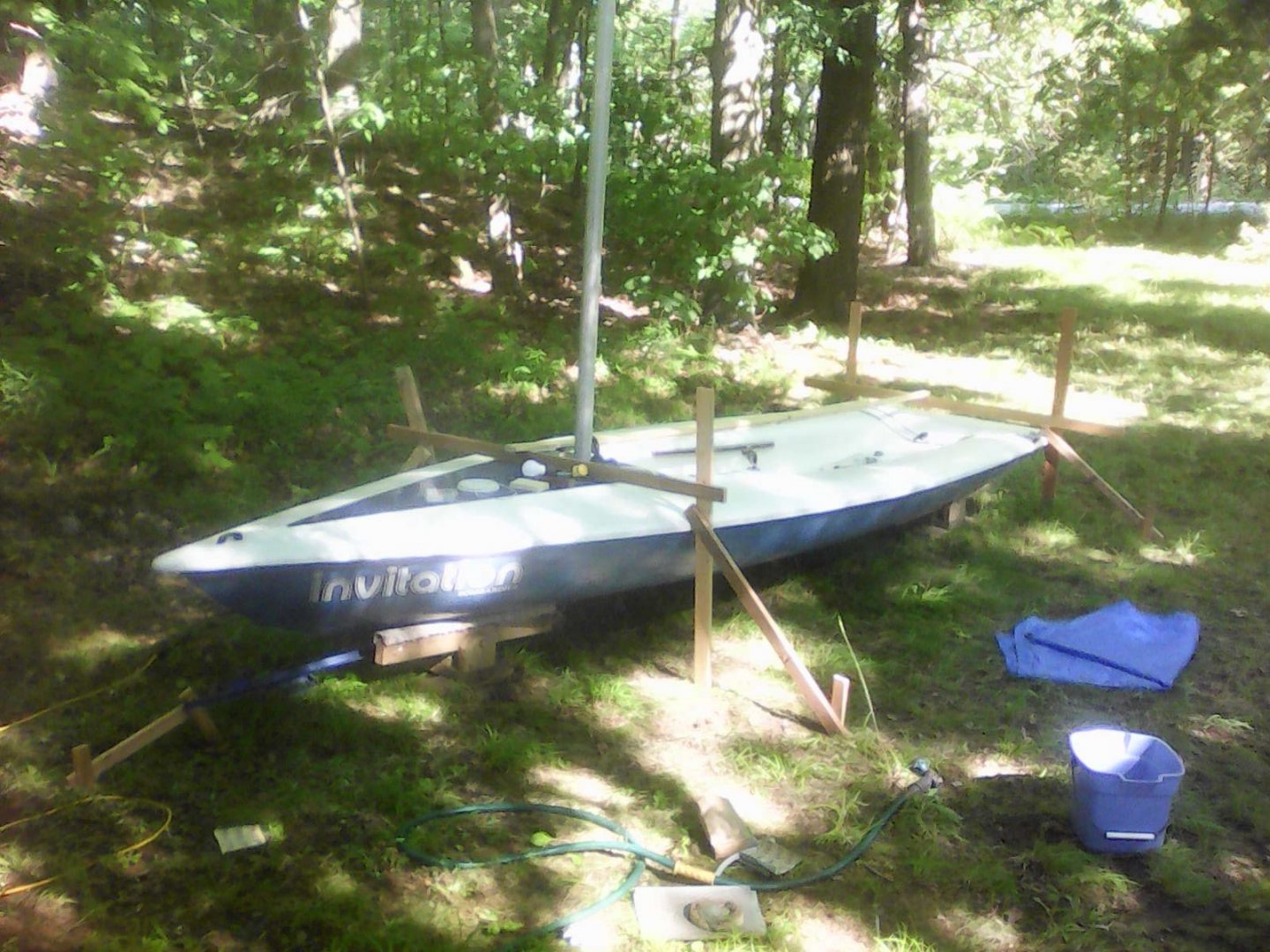
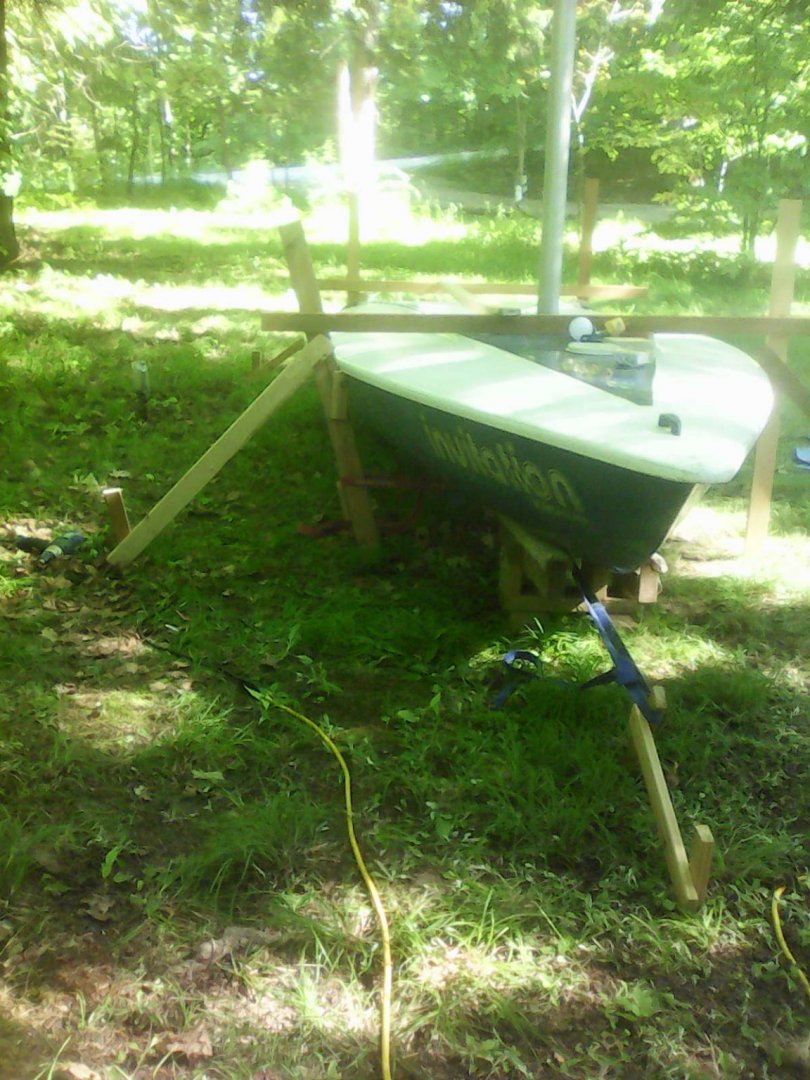
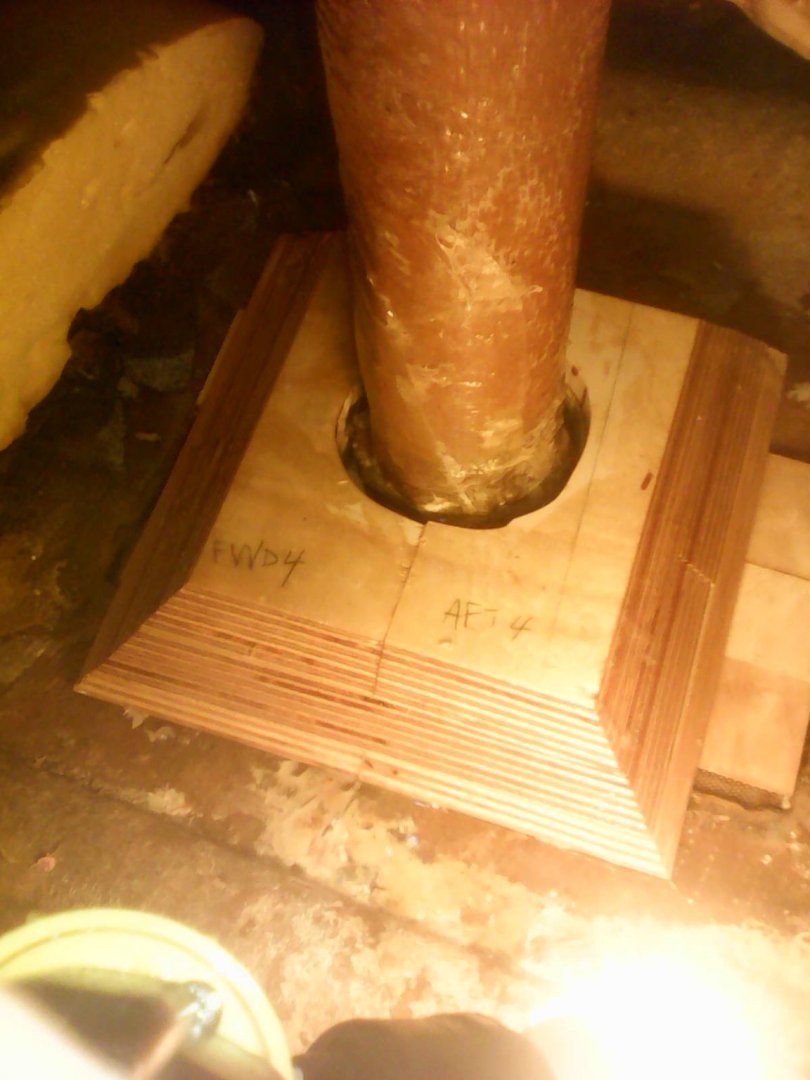
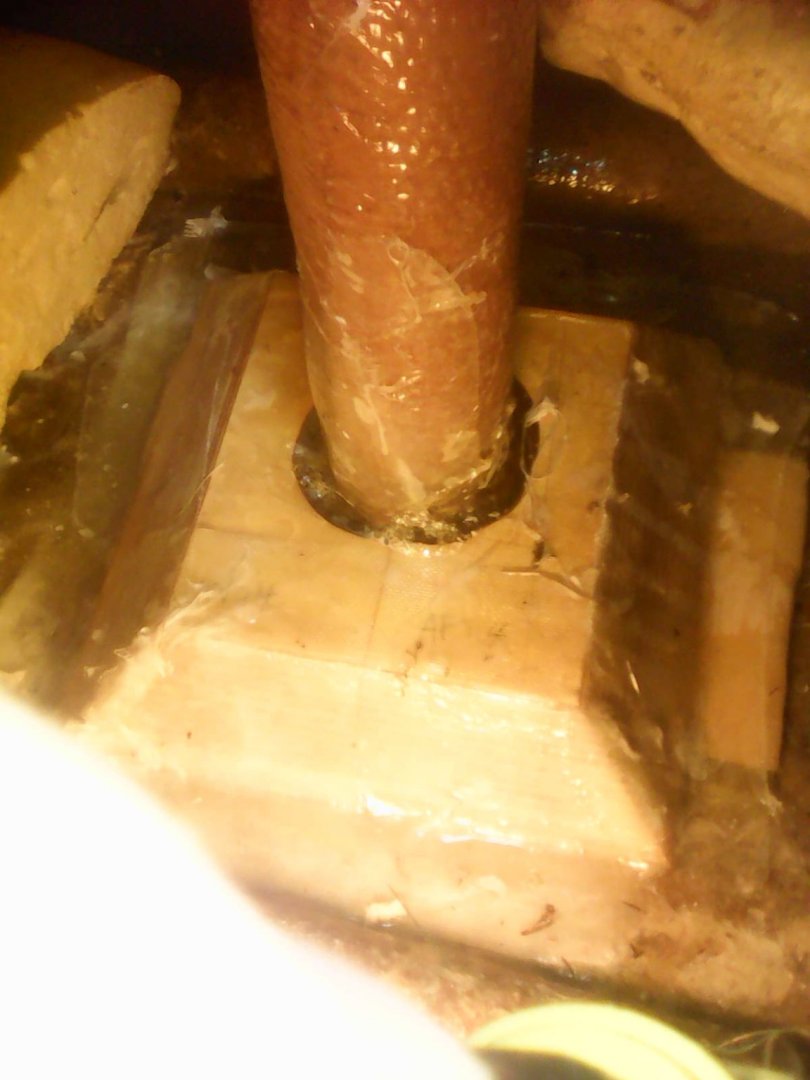
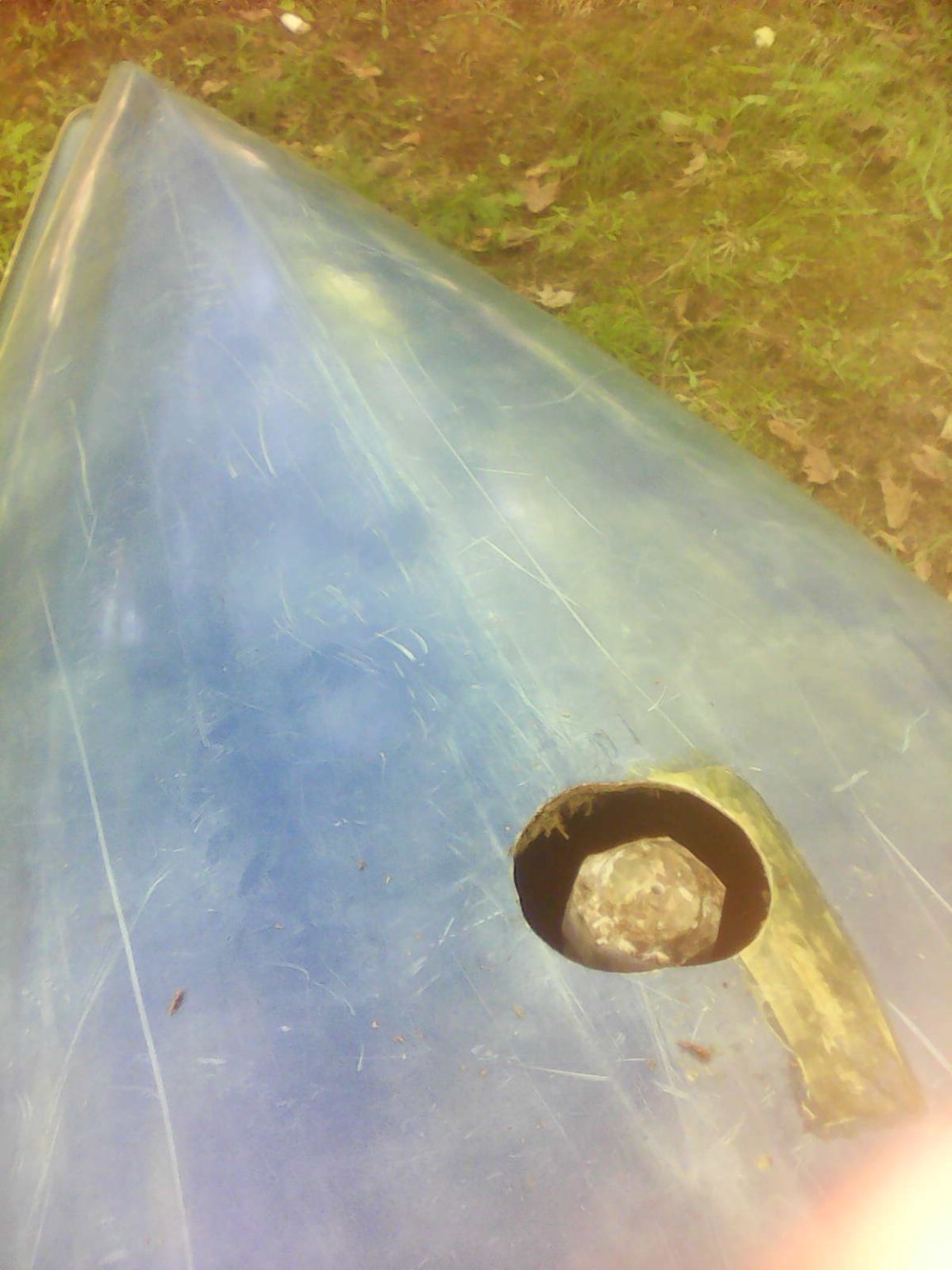
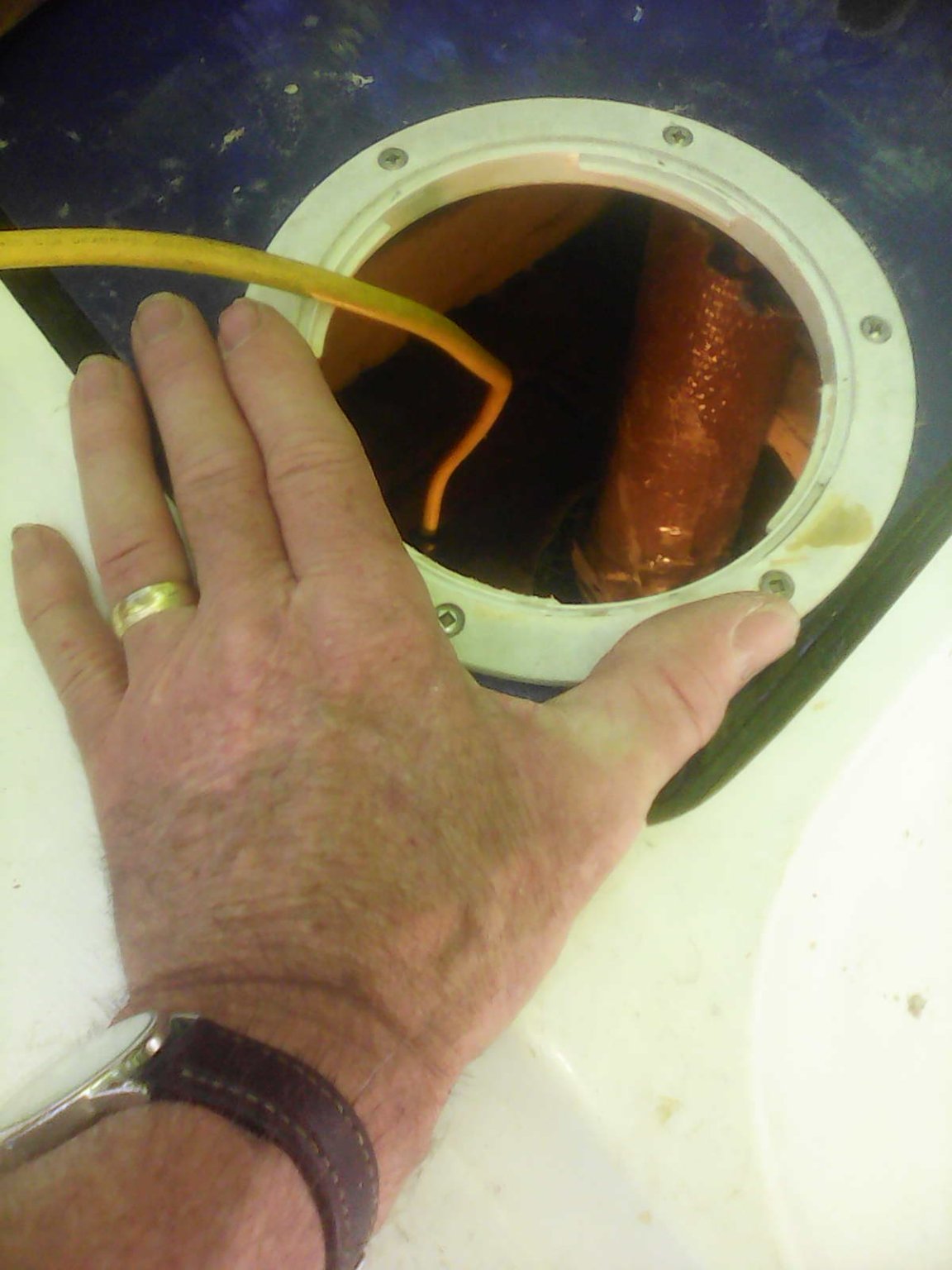
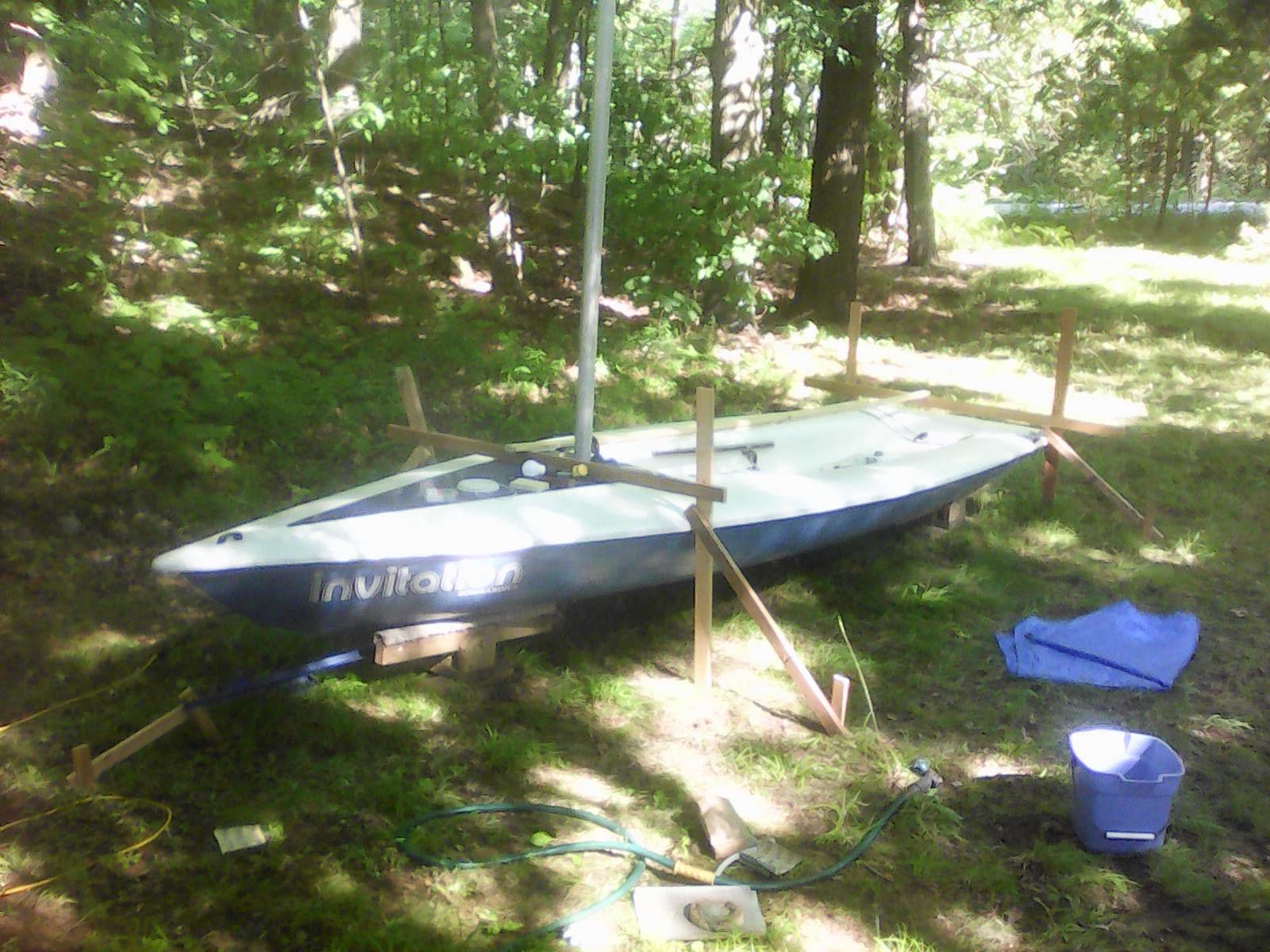
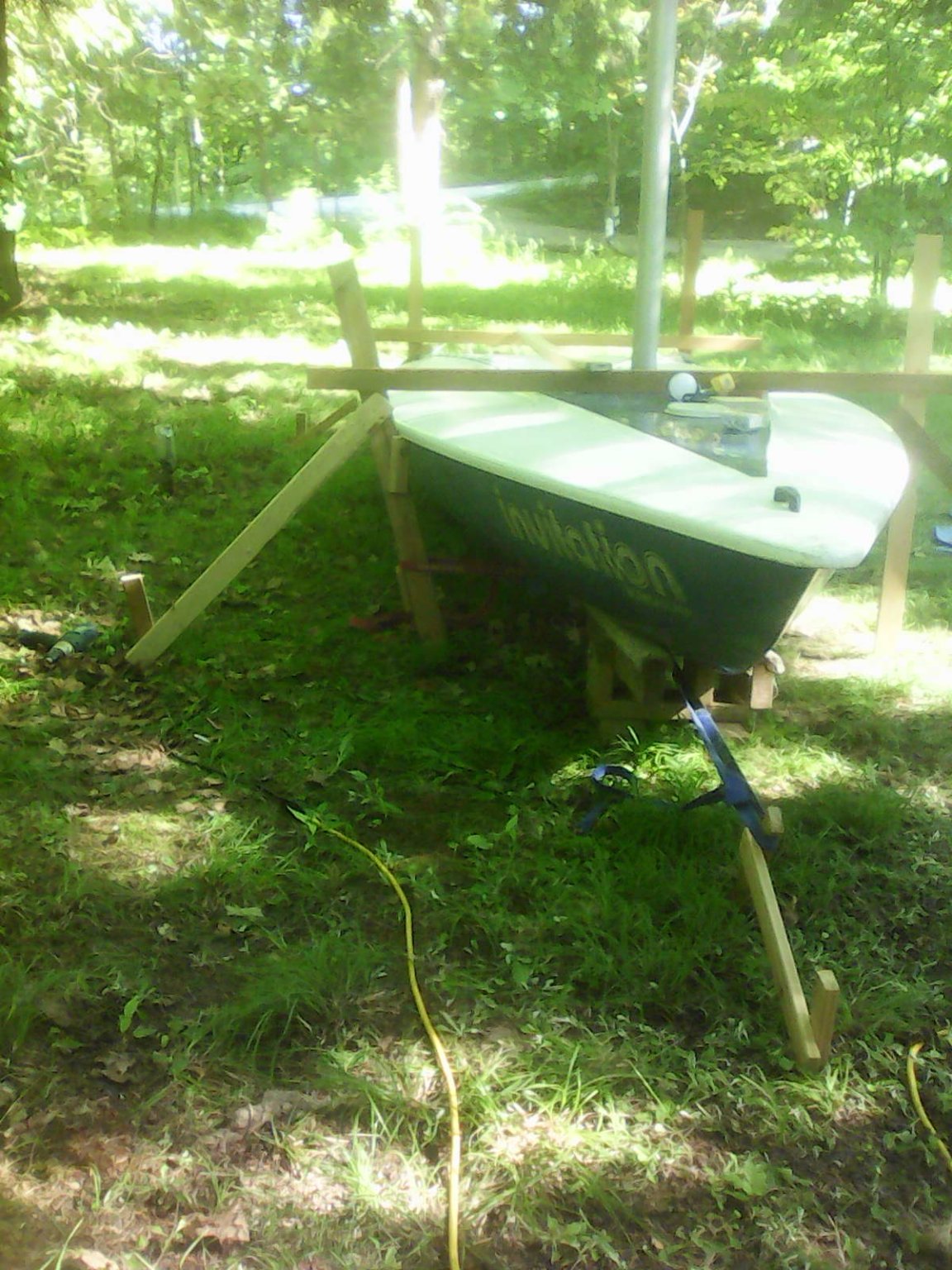
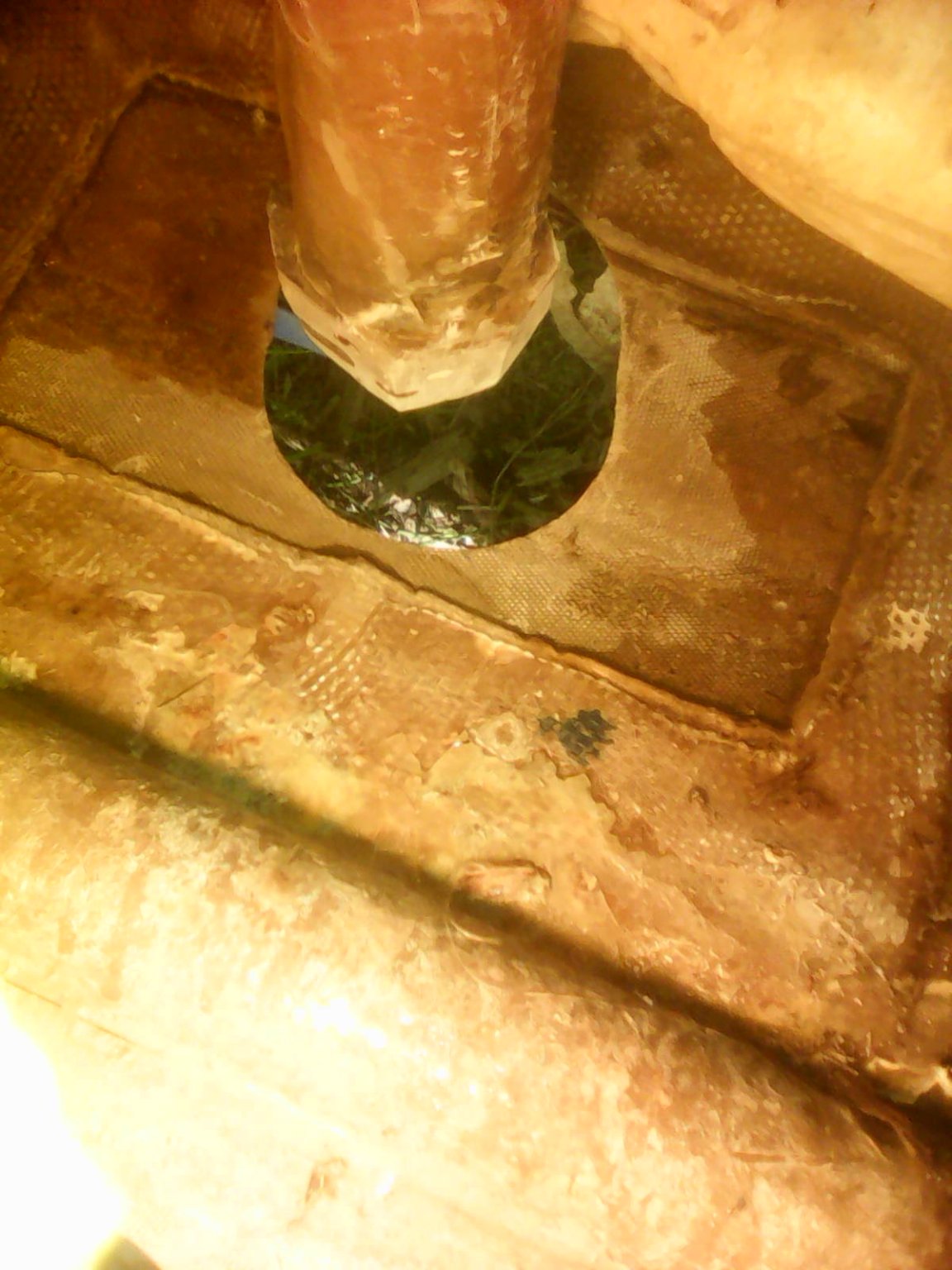
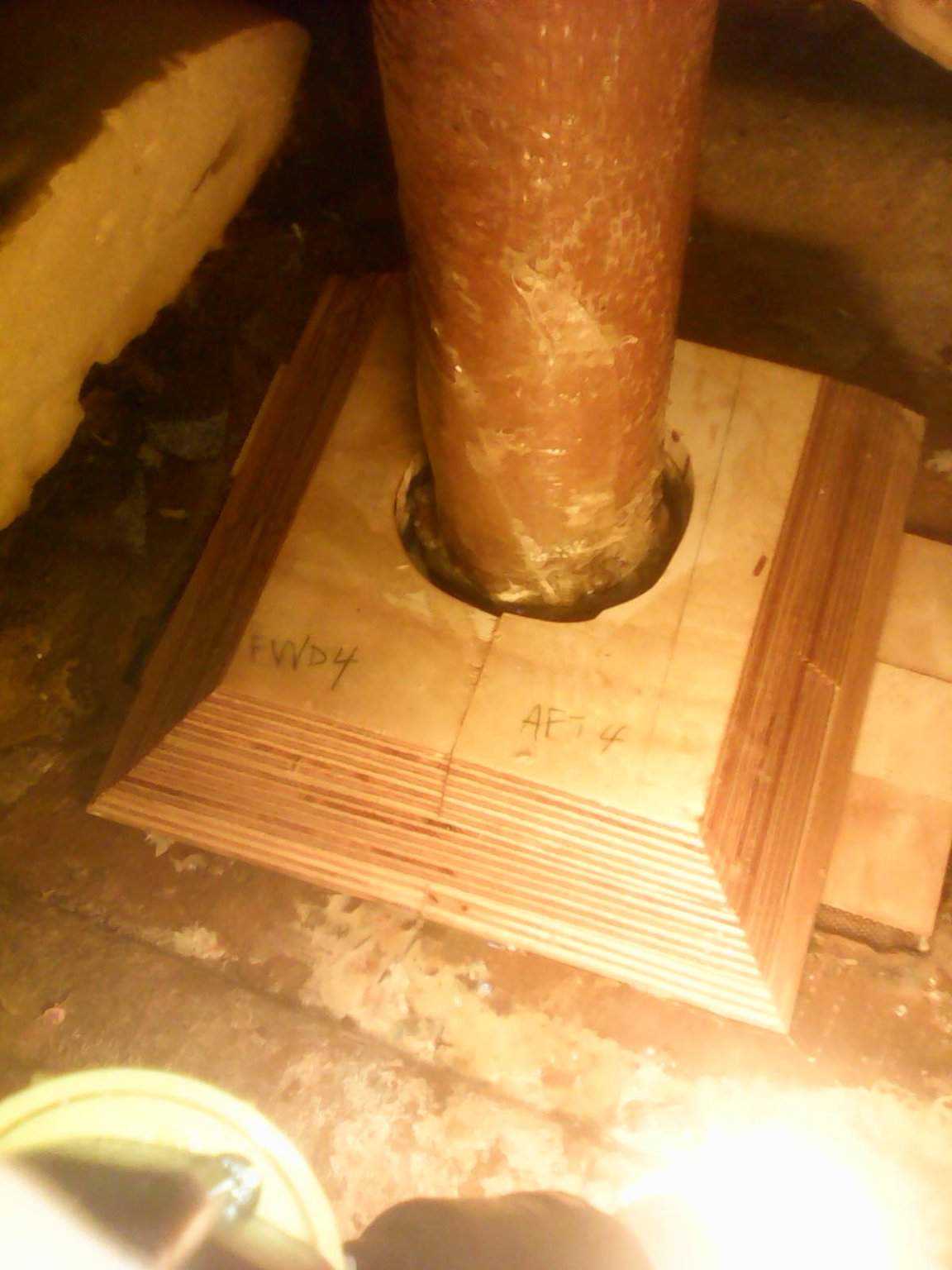
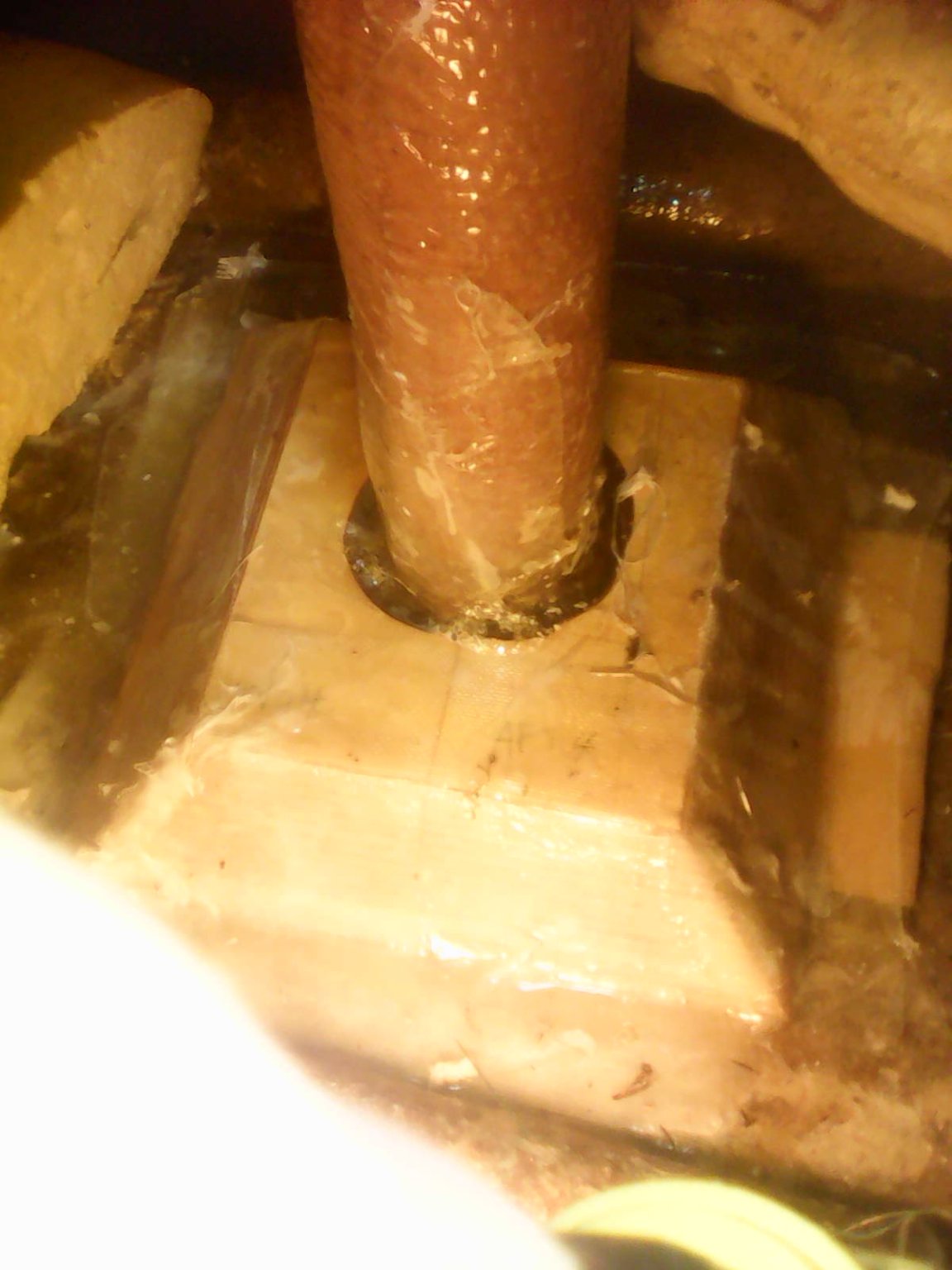
About ten years ago I bought an old Bombardier Invitation 16 to sail at the cottage. This is a cat-rigged boat very much like a Laser 1 but slightly larger in all respects. I had one in the 80's because I'm a tall guy and the Invitation is a much better fit than a Laser for my height and weight (which is at the top of the range for a Laser). It has 90 square feet of sail, a roomier cockpit, and more room to duck under the boom. Unfortunately I sold it in the mid 80's because I spent so much time cycling that sailing just sort of fell off the map. And of course, when I met my now-wife shortly after, she mentioned she would love to learn to sail 😞 The lady had this one at her cottage, less trailer. When I went to view it, I checked the bottom (which was a bit beat up but hey, this boat went out of production in 1980), verified none of the screws holding fittings were stripped, poured water into the mast tube to verify it didn't leak into the hull, and looked over the rudder, tiller, daggerboard, mast, boom, and sail. The wood rudder and daggerboard needed fresh varnish, but everything looked good so I bought it. I did not think to sit the lower mast section into the hull tube and take a step back. The very first time I rigged it I saw the mast was leaning forward and to starboard. AHA...that explained the circular access port someone had installed in the foredeck...they must have been fiddling with the mast step block inside. I sailed it for a few years like that, until I just reached the breaking point with its handling: forward leaning mast equals downward thrust on bow equals constant weather helm. In heavy gusts it would luff uncontrollably. Very annoying! Plus it's embarrassing to have a boat whose mast leans to one side, when reaching across the lake towards someone's dock! I decided to attempt to replace the mast step a couple of years ago, and if the result blew out in the wind and wrecked the boat then so be it. This old boat isn't worth much now anyway. Plus it would be an excuse to the admiral for me to buy a new RS Quest or even perhaps an Aero 9 since I usually go single-handed. Step one: I cut a disc of wood the diameter of the mast tube in the hull, with a hole at its centre. I pushed it down to the bottom of the tube and used a cable installer long drill bit to drill through this hole and the hull bottom. Flipping the boat over I measured the hole as being 1-1/4" off centre to port (!!) which generated a huge offset at the masthead. Time to get to work. Step two: From the hull bottom, I jigsawed a radius around the drilled hole. The radius was large enough that I was clear of the base of the mast tube. I then cut out a little more to starboard to allow the mast tube base to move over the requisite 1-1/4". Also cut out some more forward for similar reason. Here's a picture (when my brother saw this he asked, "What the HELL happened?!!"). You can see the base of the mast tube inside the hull. Note this is after I sawed/chiselled away the internal bracing of the tube to the hull bottom. This consisted of very heavy fiberglassing over a wood block formed from a few layers of plywood with a hole for the mast tube. I was able to cut through the fiberglass by slanting a sawz-all blade in through the big hole. All the plywood was completely rotted and chiselled out in soft black lumps. Step three: I sanded and cleaned the inside hull bottom around the hole to remove the remaining shards of fiberglass bracing, with one-arm access through the 5" port in the foredeck. Here is the port (wire for light bulb inside) and the prepped hull bottom. The large yellowish things are flotation/reinforcing/sound deadening foam. Step four: I sat the hull on its storage chocks and braced it in place with stakes. A bolt was added through the hole I had drilled through the bottom of the mast tube, and a couple of tie-down straps were hooked around it and tightened to pull the bottom of the mast tube forward and to starboard. The bottom portion of the mast was inserted to decide on alignment by eye. Here is a view with the mast tube pulled into proper alignment; compare it with the earlier internal shot. Step five: I cut a three-layer square pyramid from baltic birch ply to fit around the mast tube. The rectangular recess in the hull bottom, from the previous step's block, was first filled in with two more pieces shaped to create a flat(tish) surface for the pyramid. The pyramid layers had to be cut in half to be placed around the mast, and in any case would not fit through the access port otherwise. I used my usual West System epoxy to glue everything in in one sitting, one piece at a time, alternating the orientation of the cuts. Here is the result: Step six: Duct tape the hull bottom to seal the large hole and fiberglass the entire internal mess with cloth and resin. A very painful exercise using one arm through a single 5" hole! Here is a completion shot: Step six (b): Scrape the epoxy from one's right forearm! (Hand was ok due to latex glove). Step seven: Demolish the bracing, flip the hull, remove duct tape, remove the bolt protruding from the mast tube, fill in the hole in the bottom and fair with resin. I don't actually have any pictures of the finished hull bottom. It's an ok job. I plan to refine it this spring. RESULT: She sails now with very little weather helm which feels much much better. I've been out in strong breezes with nary a creak from the step so that's a huge relief too. All in all, a job I approached with a lot of trepidation but I'm glad I finally did it. What took me so long?....I could have prevented so many dumps with the previous uncontrollable luffing...


-
Chris, That's great that it doesn't blush! Saves you some hassle. I see they have three different hardeners with different working times; you mentioned waiting seven hours for a coat to dry - you could get away with a faster hardener especially now the glass is saturated. Epoxies sure have changed in the last 30 years! When my canoe was completed, a friend of my father-in-law "borrowed" my strongback and forms to make one too (I was glad to get them out of the garage!). Unfortunately when he got around to epoxying his exterior it was in the fall and it (the epoxy) got cloudy as it dried so he ended up painting it red 😞 . I still use west system to repair my 1:1 dinghy and they now have different hardeners guaranteed not to cloud over. Speaking of which, would my recent mast step replacement in my dinghy be of interest at all in this categorised section?
-
I agree with Bedford. If you add the next coat while previous coat is a little tacky, you get a chemical bond between coats. If you wait until fully dry, then you must remove the blush for which acetone is the best. You need to rough it a little with sandpaper because now you depend on the physical bond between coats so a rough surface is needed for keying. When I made a cedar strip canoe I did three coats of West System Epoxy on the hull exterior in one day, the second and third applied before the preceding coat dried, as recommended by Ted Moores of Bear Mountain Boat Shop who wrote the book. God that was a loo-o-oong day! By the way I have been inspired by Chris's build to post old photos of my canoe build; see "Peterborough 16".
-
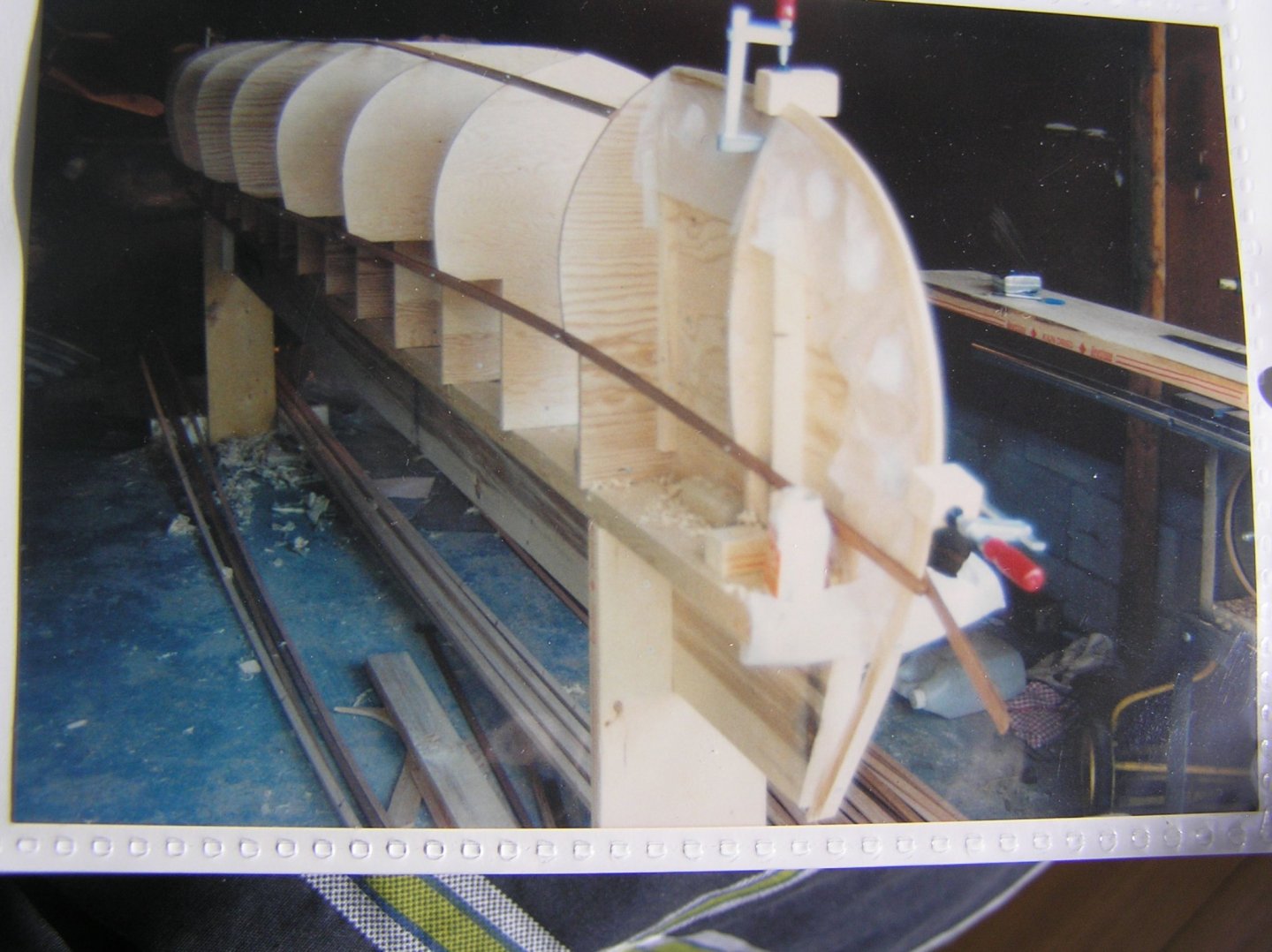
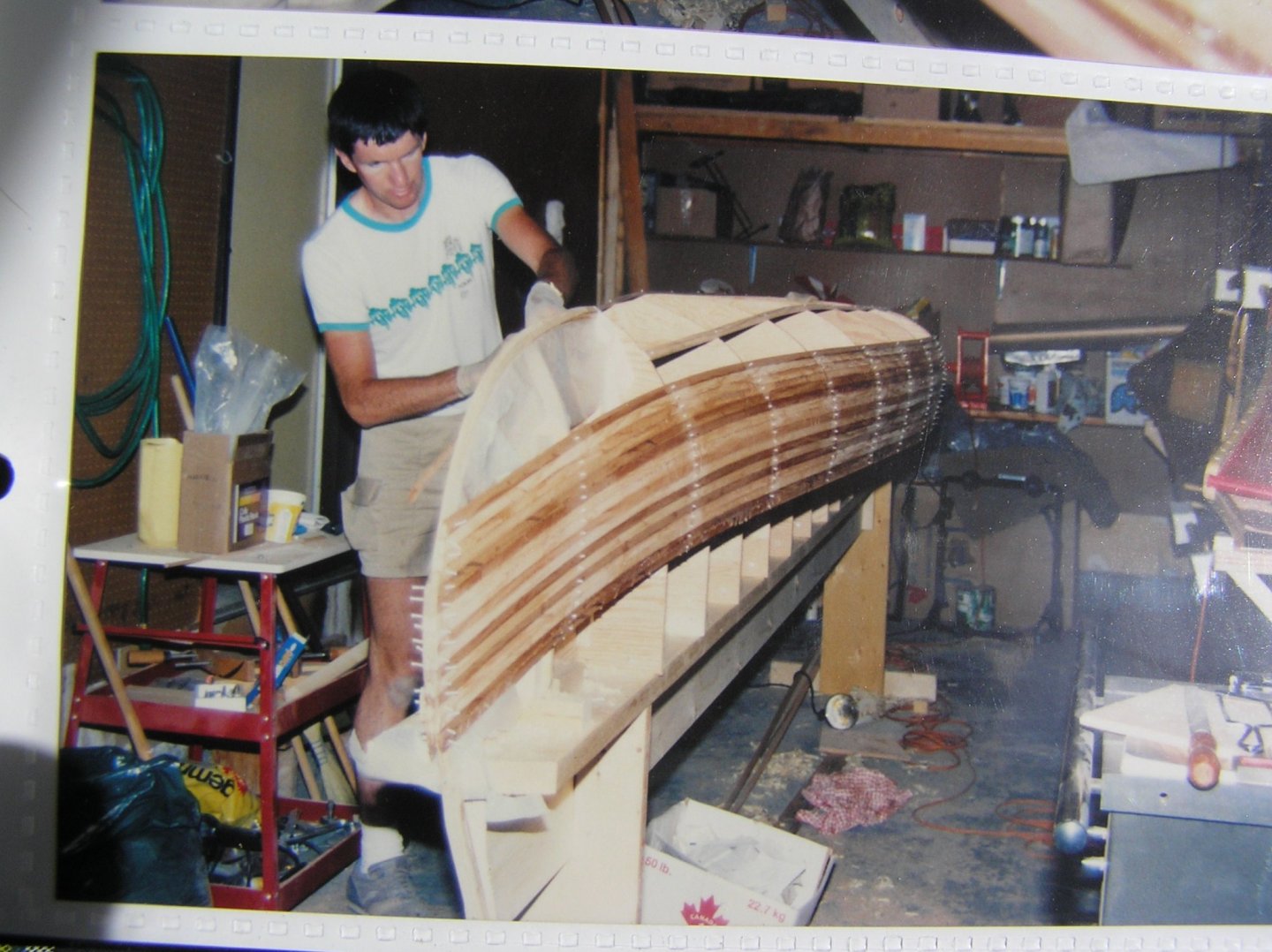
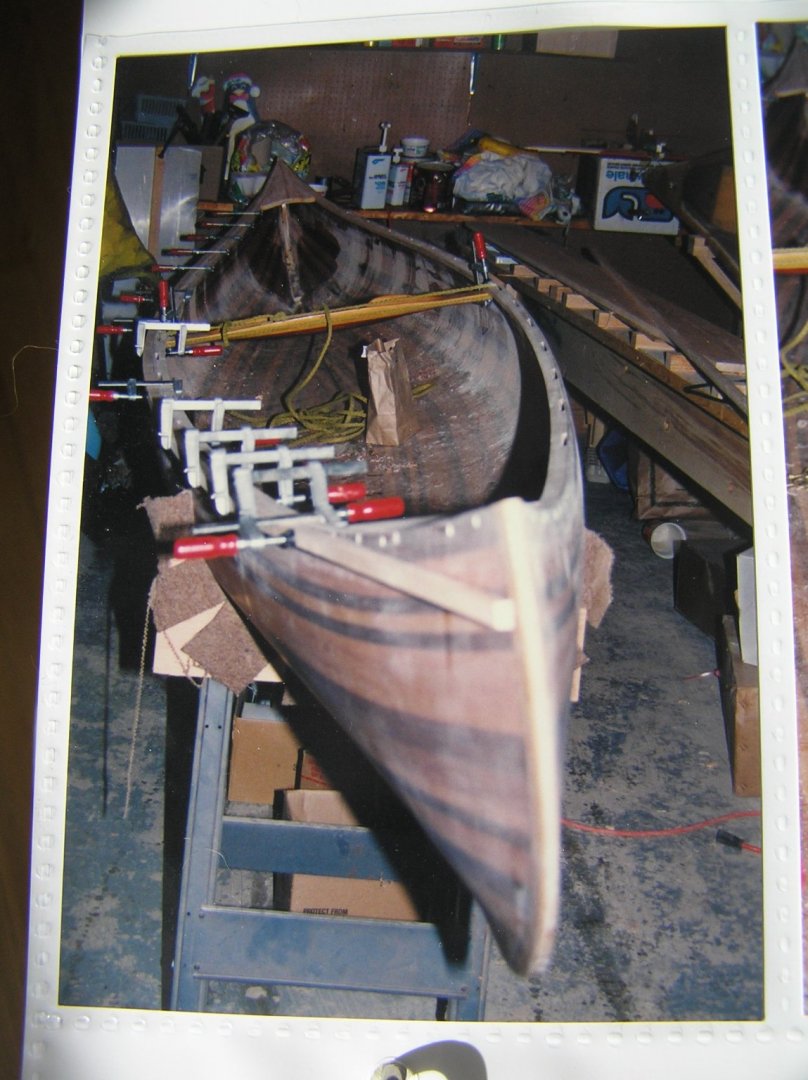
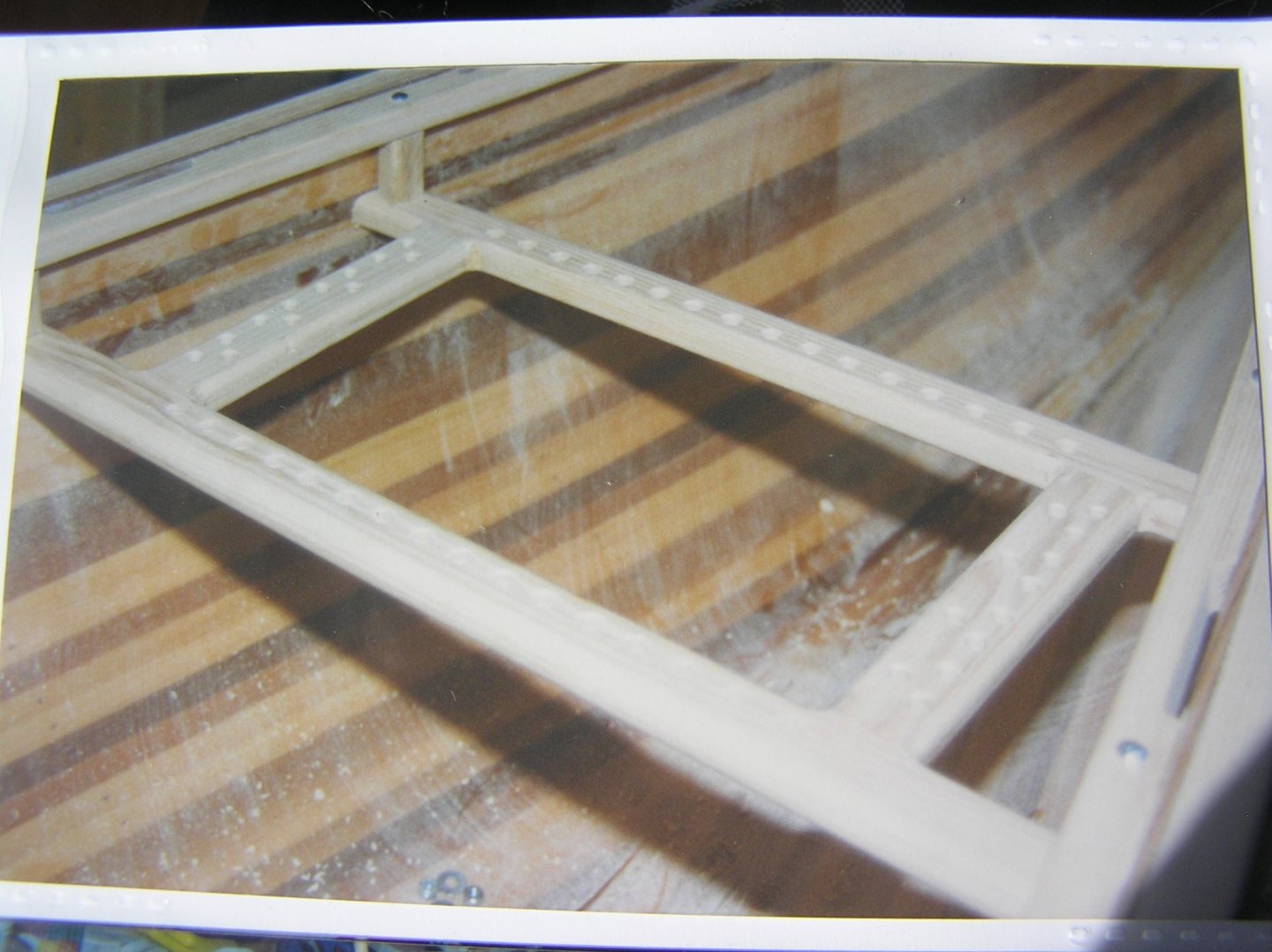
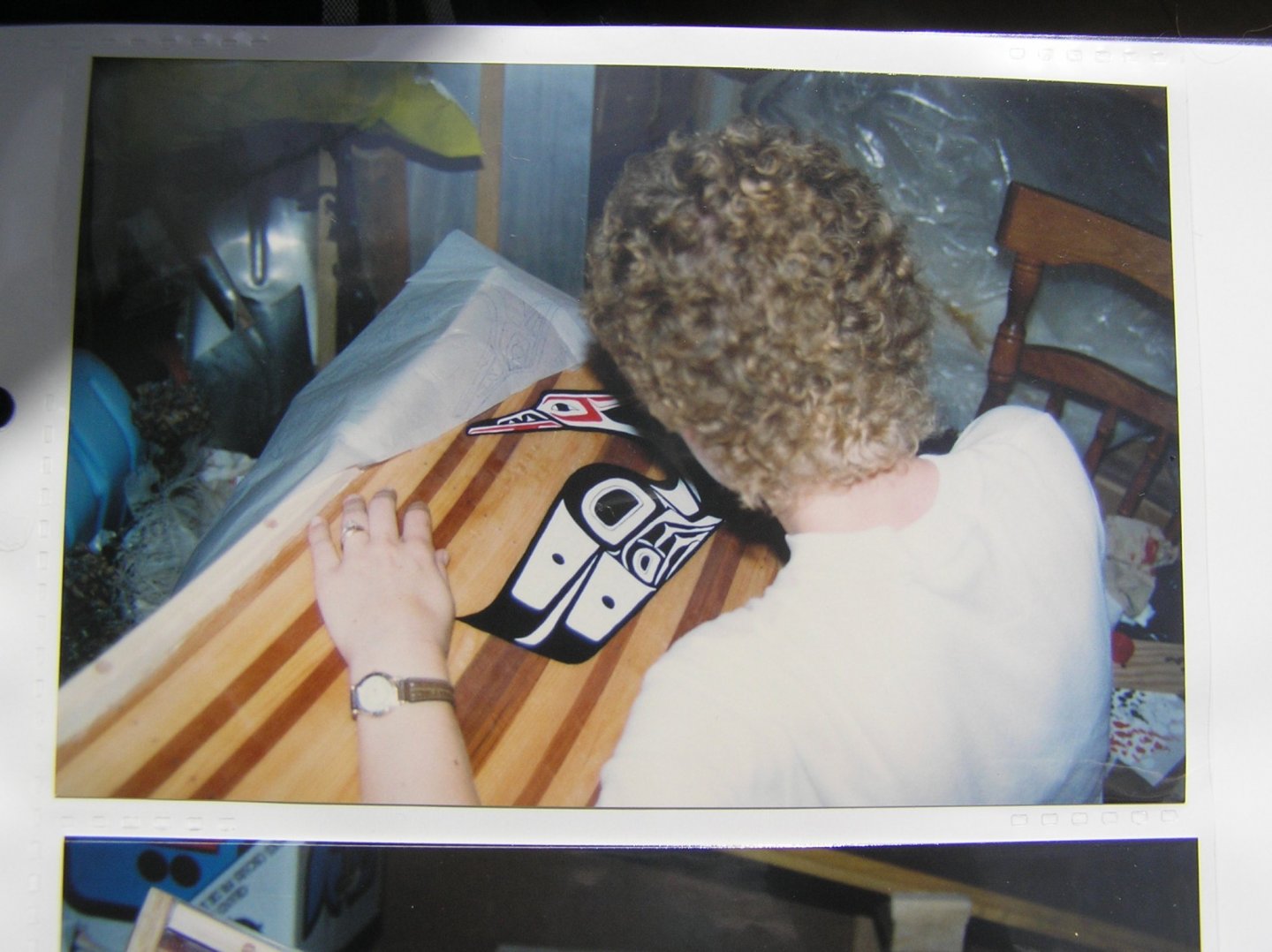
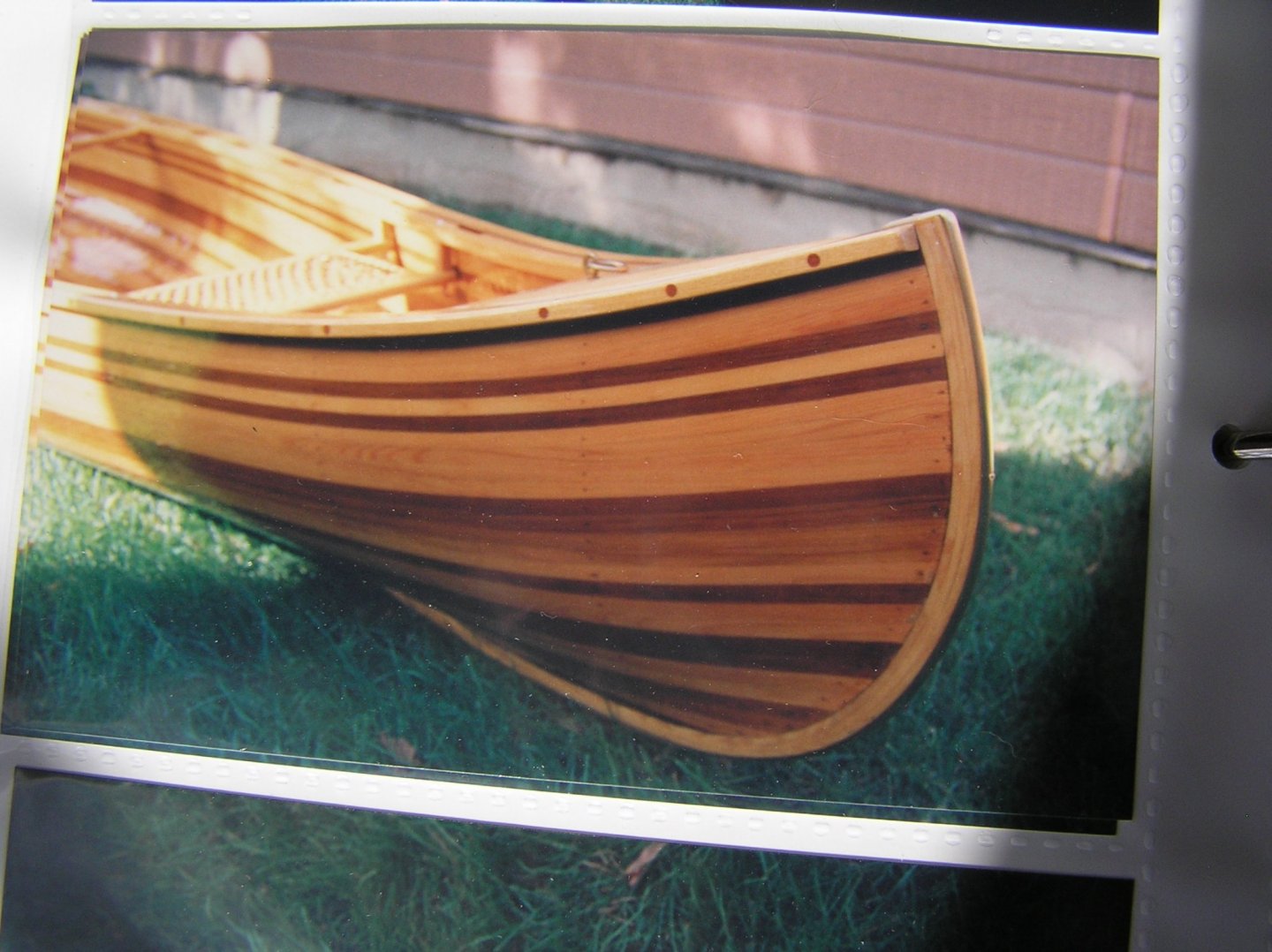
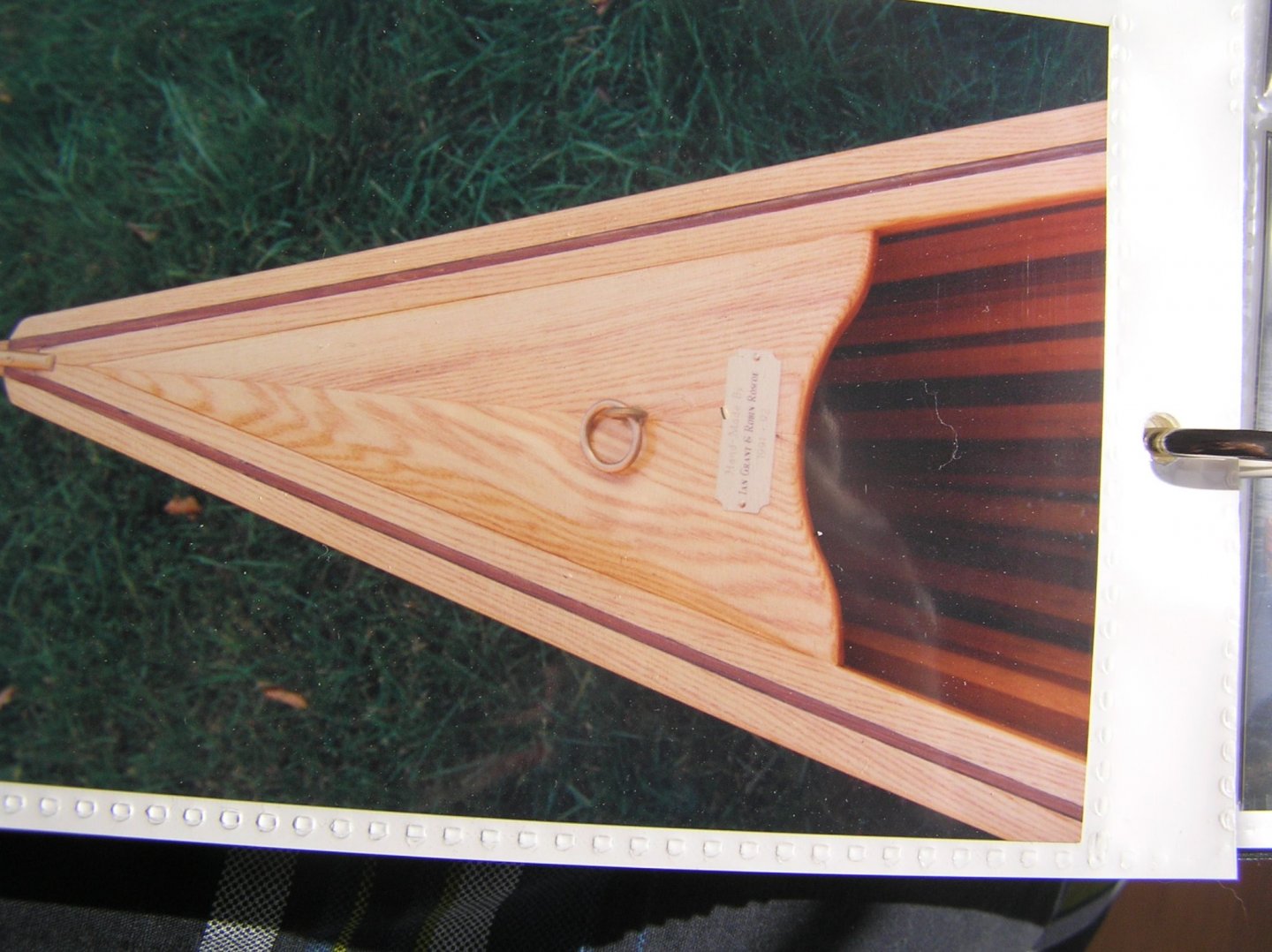
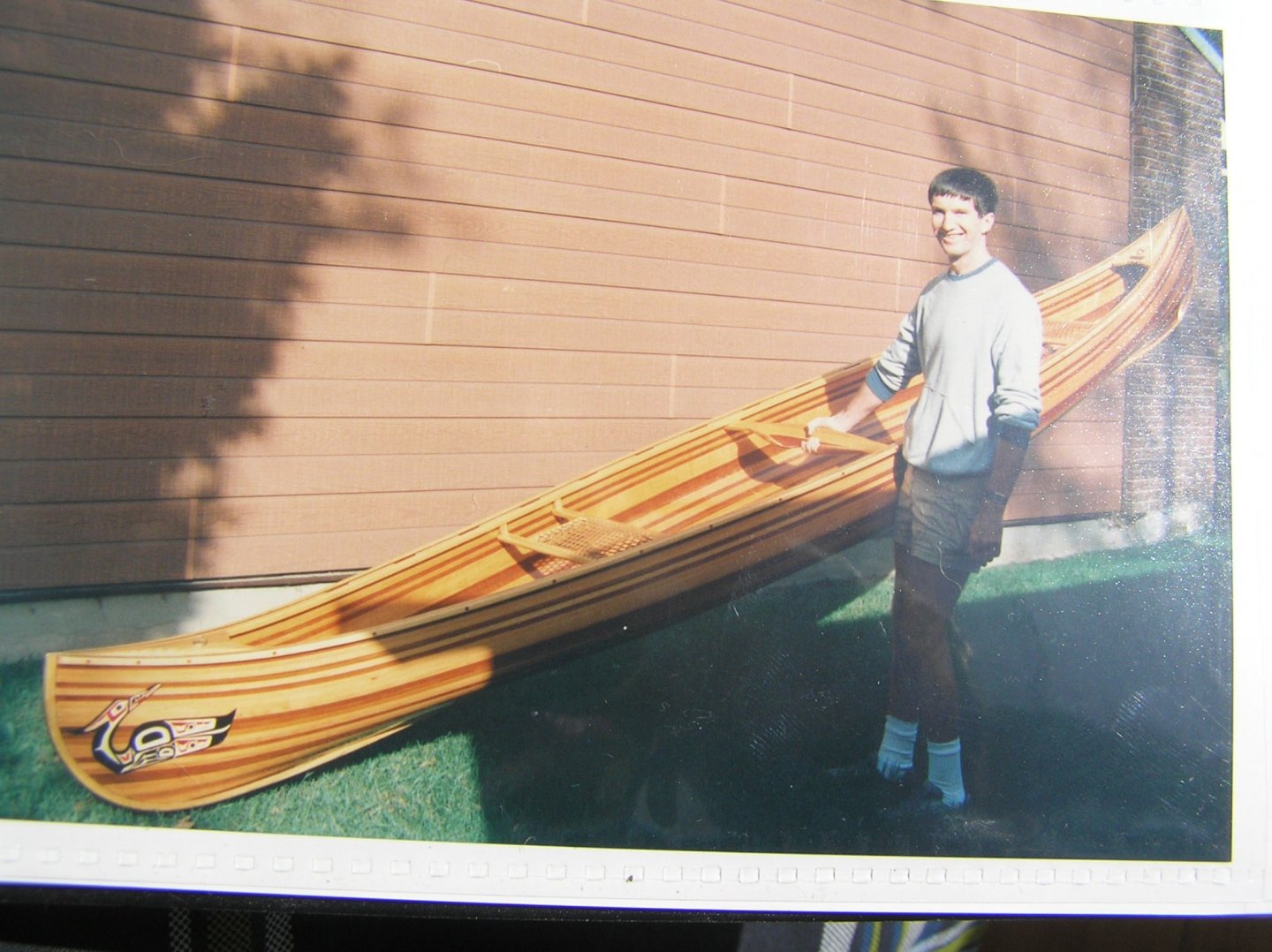
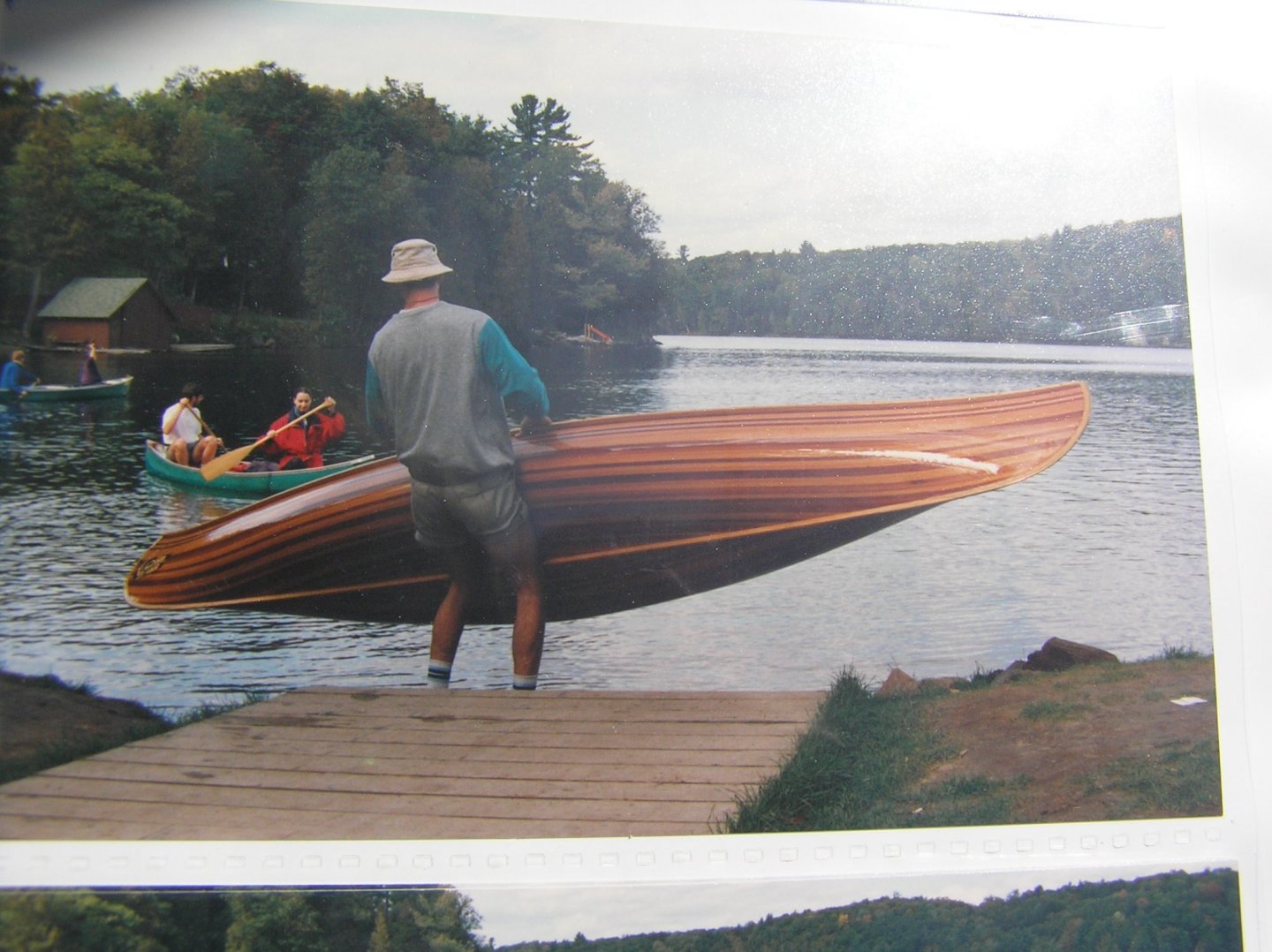
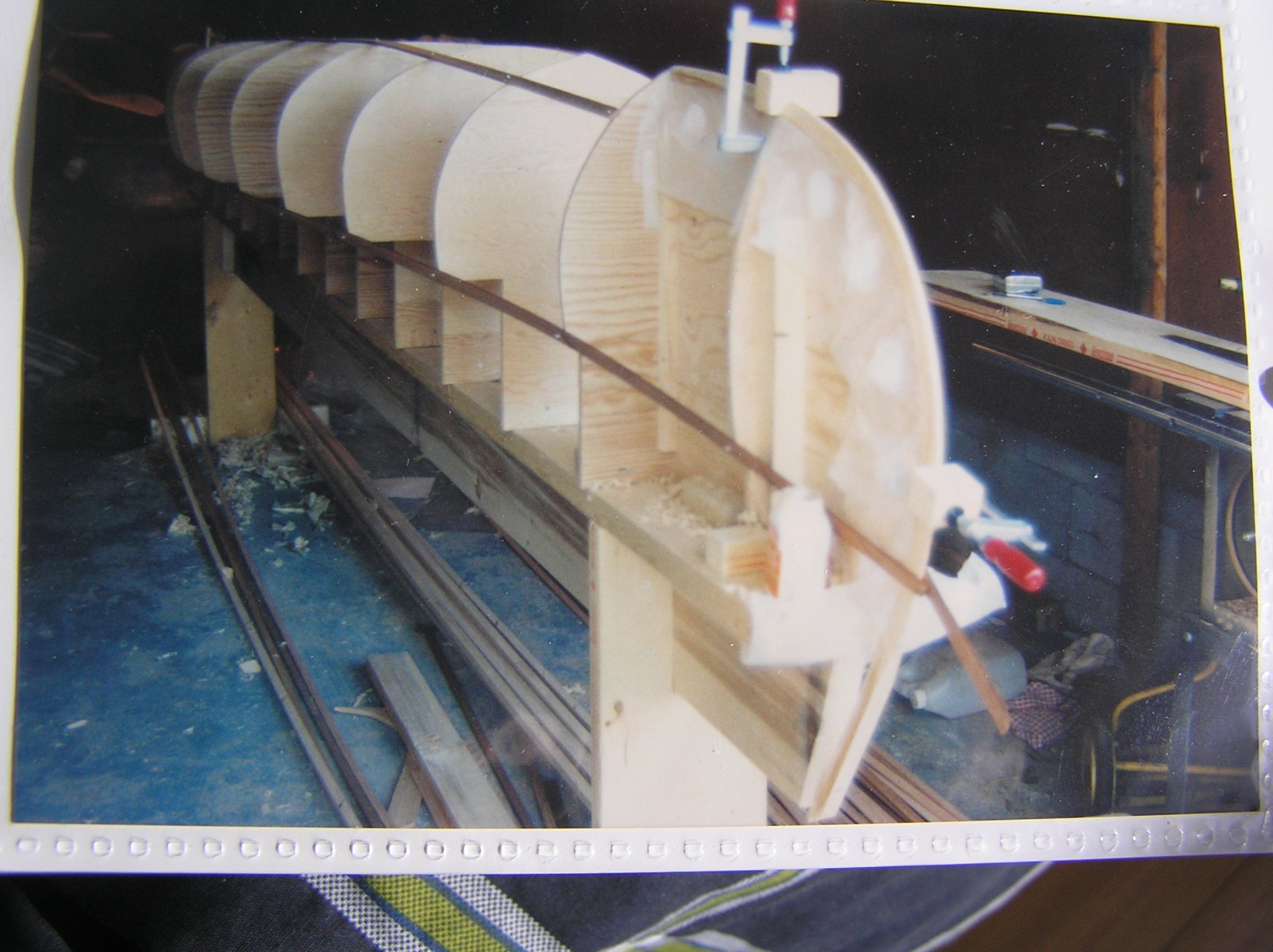
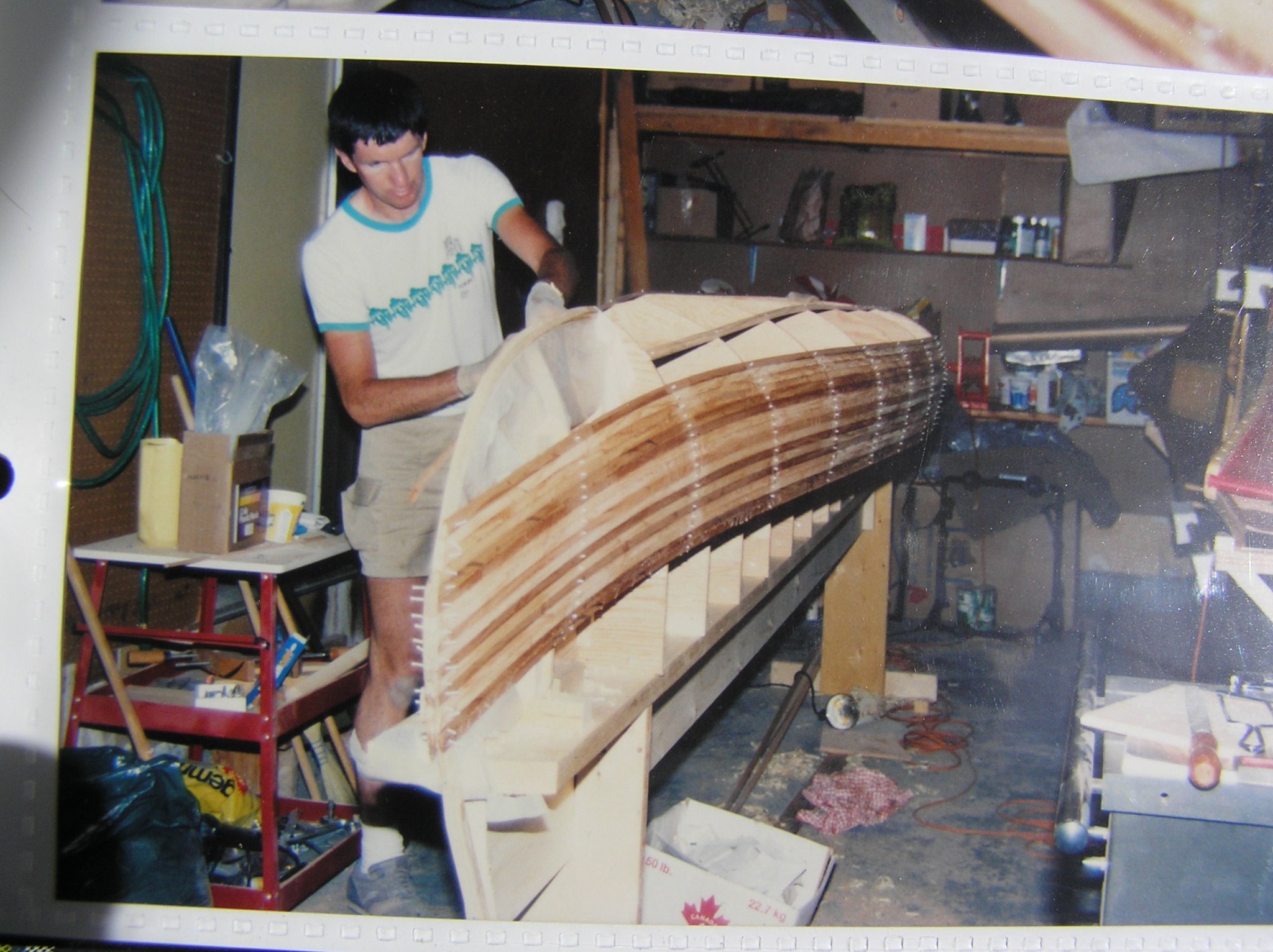
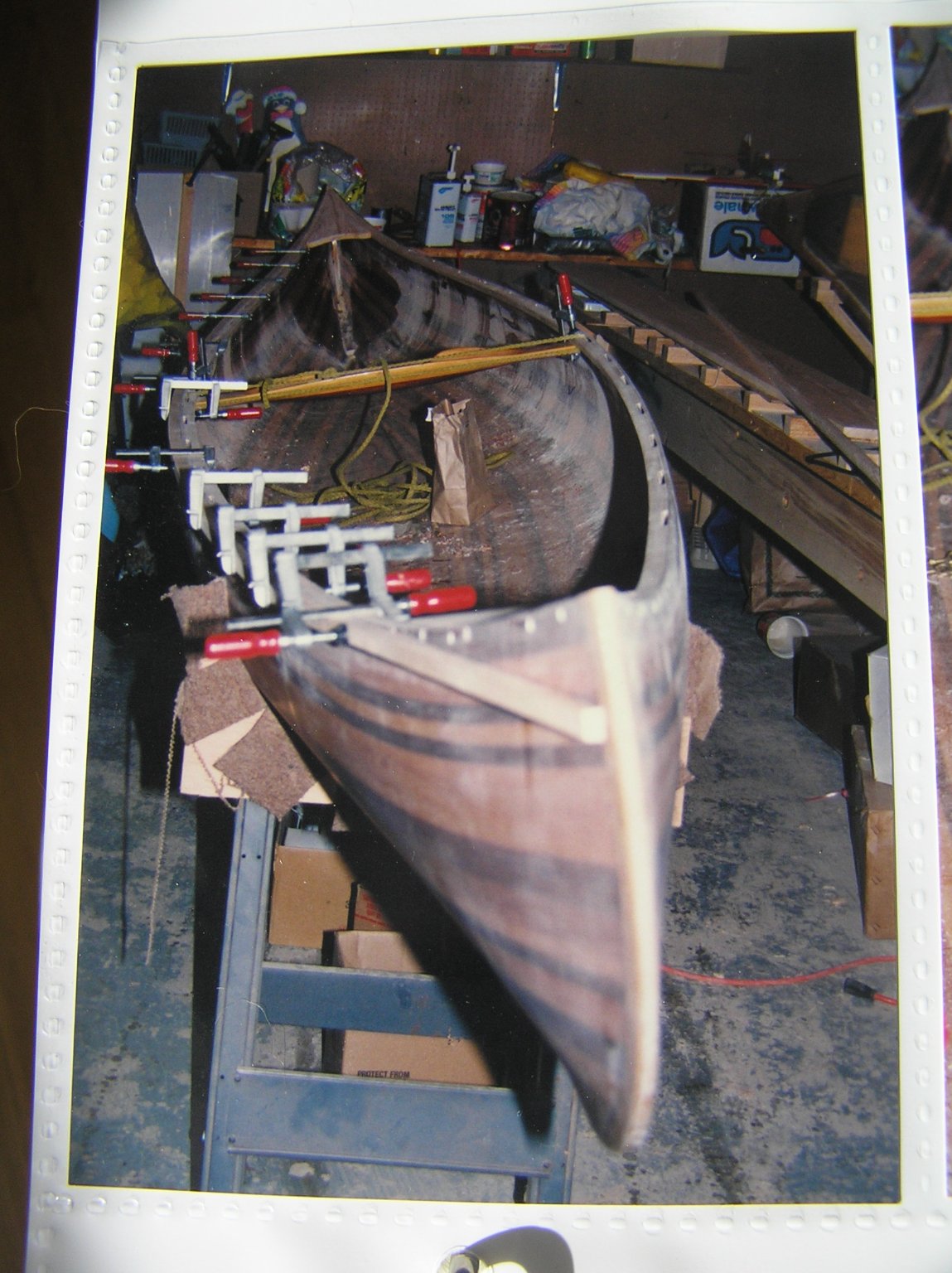
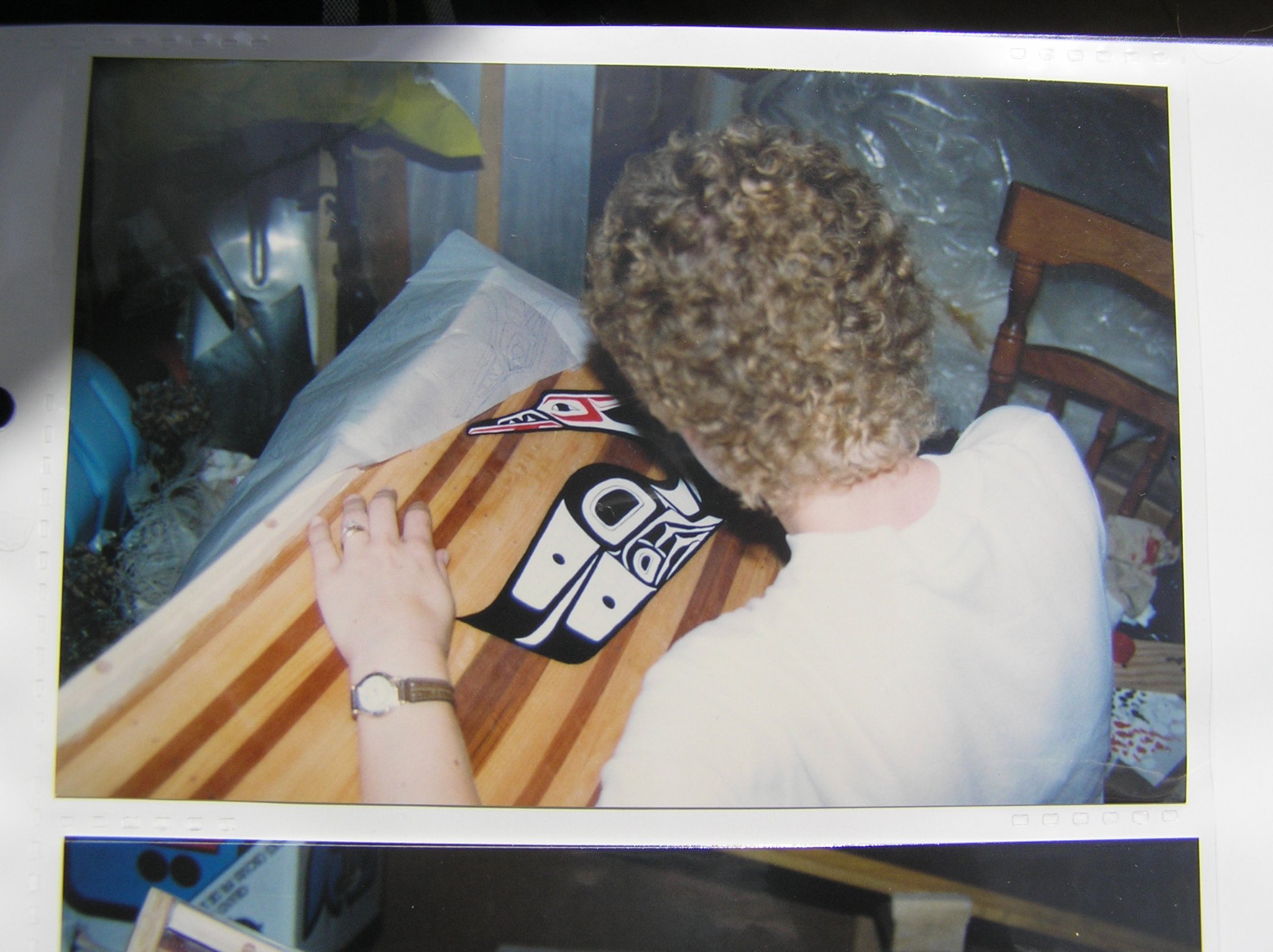
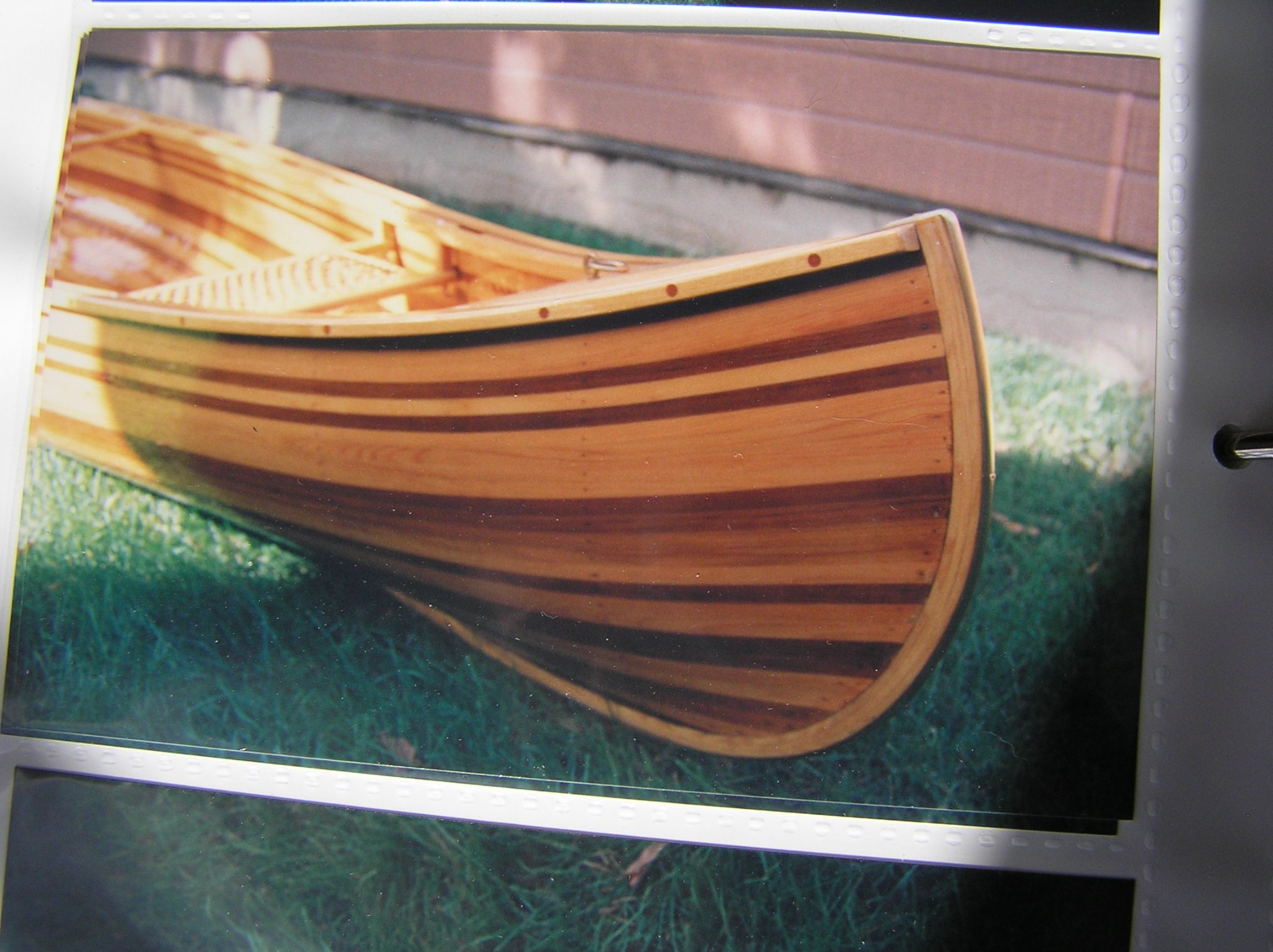
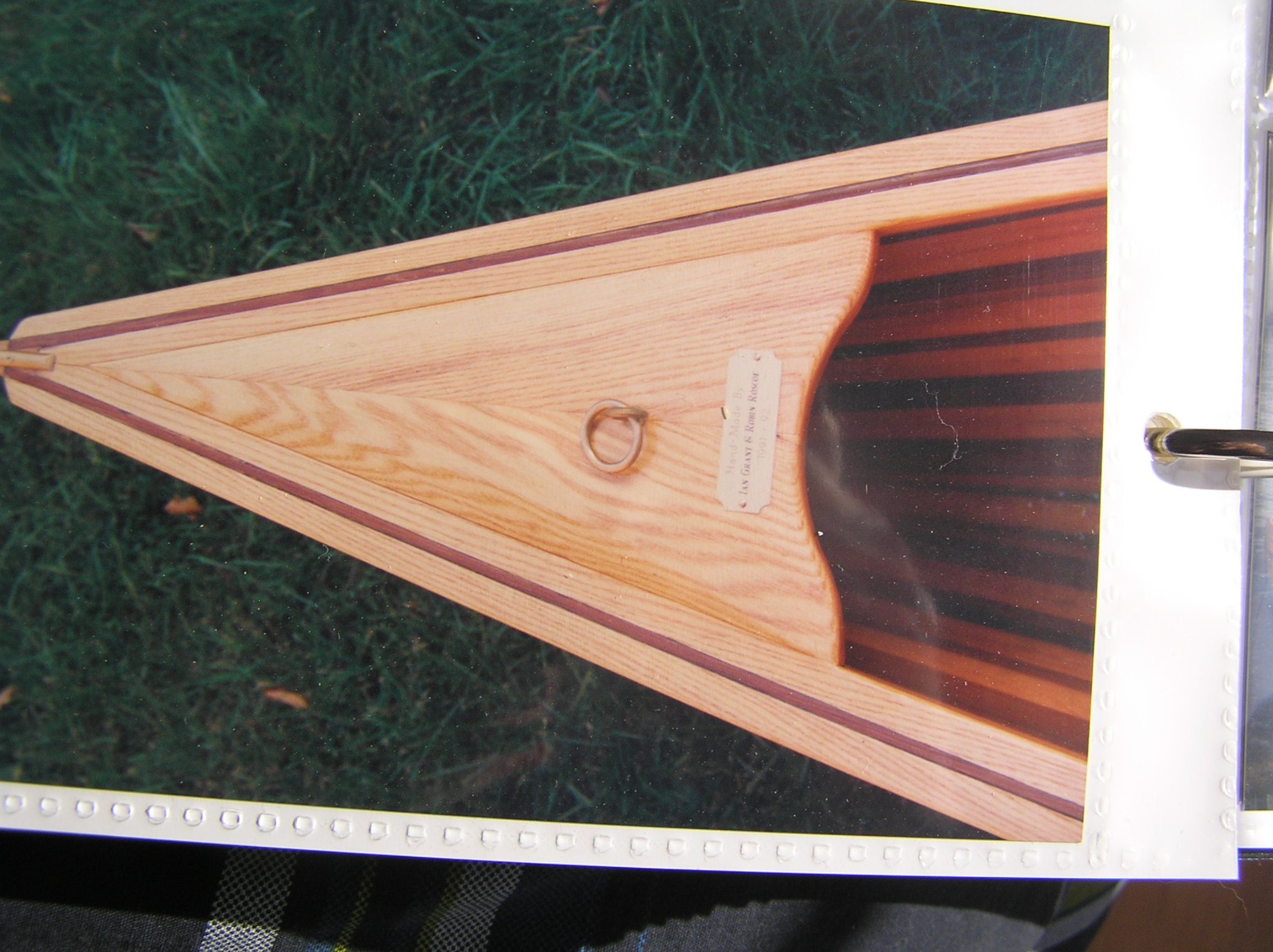
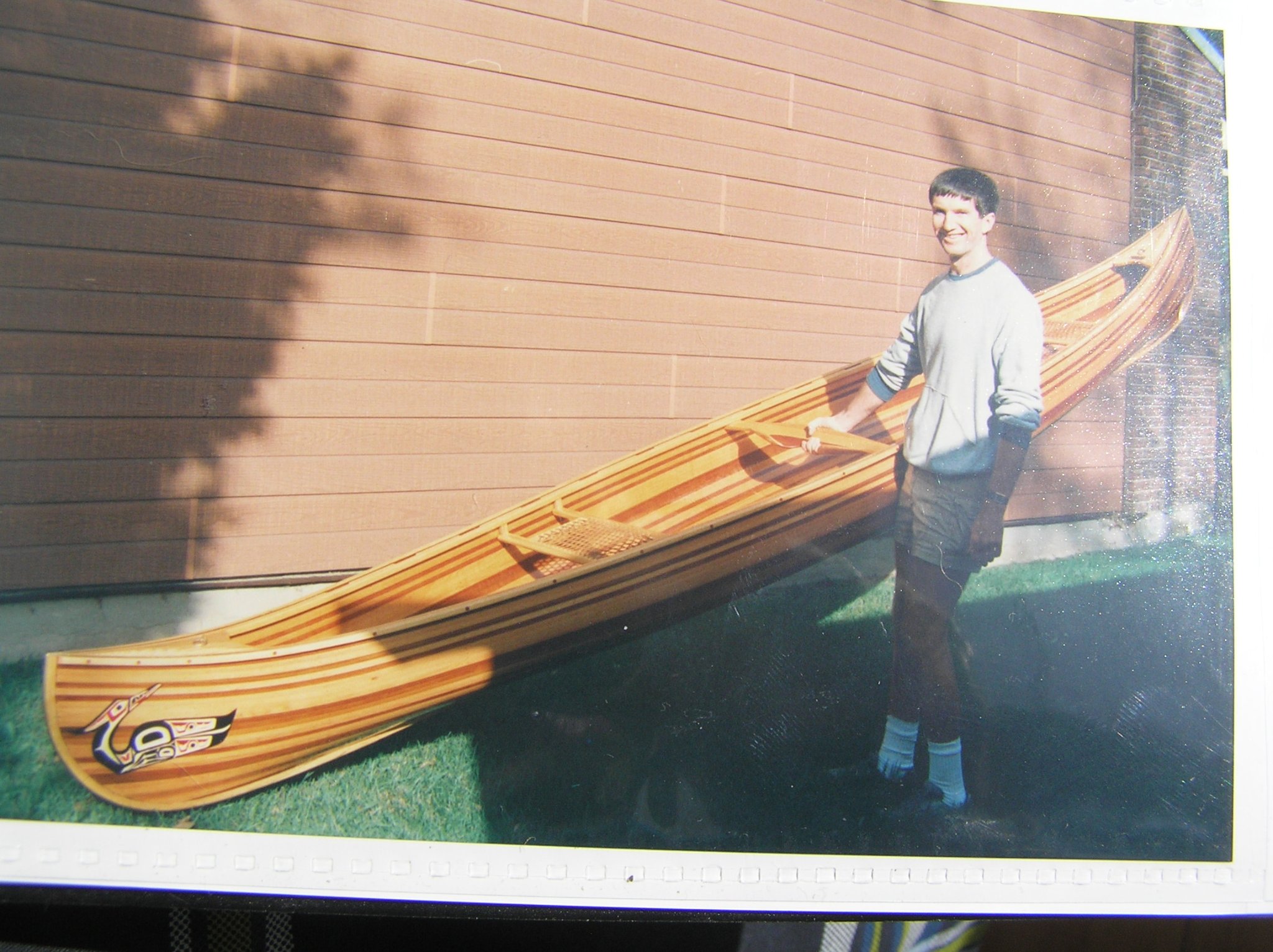
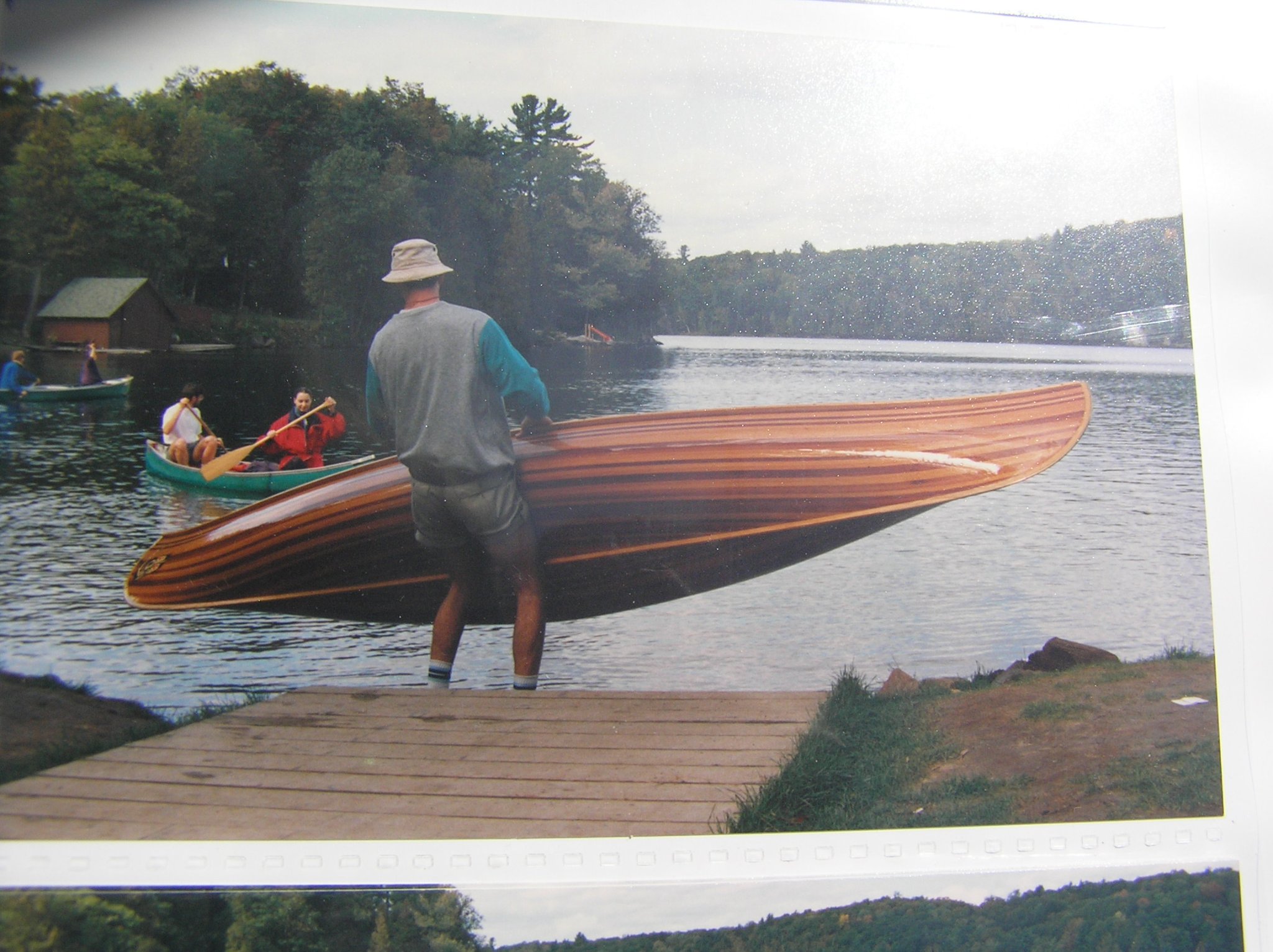
After seeing C Coyle's build log for his 12 footer, I am inspired to post some pictures of my 16 ft Peterborough cedar strip; didn't know we were "allowed" to post non-model builds. I made it from the book "Canoecraft" by Ted Moores, which contains lines for several different canoe designs. I picked the Peterborough as a good type for casual paddling at the cottage, since we already had a 16 ft kevlar Prospector for trips in the back country and his 17 ft "Redbird" design is too long to hang on our garage ceiling without interfering with the opening of the door! Shout out here for the Canadian Canoe Museum which is located in Peterborough. Haven't been there in a while but they have a great collection. This canoe was made in the days before digital cameras, but I just this minute took some photos of the old photo album and they seem to have turned out ok. I remember the first day I had my tablesaw out in the driveway, busily ripping six gorgeous 17 ft knot-free western red cedar 1 x 6 planks into 3/4" x 1/4" strips and in doing so creating a monstrous pile of sawdust under the saw as my blade kerf was 1/8" so one third of each plank became sawdust. My neighbour, after watching for a while, came over to ask just what it was I thought I was doing and was amazed to hear I proposed to make a canoe. I then used my router table to cut beads and coves into the strips' edges. When assembling, the strips are tacked to the forms cove side up, making it simple to run glue along inside the cove before pressing in the bead edge of the next strip above. I thought it would be a great woodworking challenge but making the hull was basically tedium. If you enjoy gluing endless strips, or sanding cedar with its attendant dust, or better yet sanding epoxy resin with even more horrible dust, canoe building is for you! I did enjoy adding the ash trim and making the seats once the hull was completed. The Peterborough is a good canoe for light paddling. Doesn't have the volume or the high stems for a long canoe trip, and the first time I sat it on my neck with the deep-carved yoke a friend donated the top of my head was pressed against its bottom! Very uncomfortable and not to be portaged...later changed the yoke to a shallower design but never carry it far. It weighs in the 68lb range I would guess, much heavier than our kevlar canoe which is another reason not to trip with it. Anyway here are a few random shots of various stages. My talented wife painted the West Coast Native loons each side of the bow, taken from an art book we had. God we were young then 🙂 Dust everywhere! Adding the gunwales with fiberglass on exterior sanded, but it looks dull until you wet or varnish it..... Making the seats which were later laced with leather "bootlace". The Admiral working on the art, with the hull cleaned but not yet varnished. Completion shot beside the old townhouse. First launch; Meech Lake QC.

- 10 replies
-
- 17
-

-
You can buy Caldercraft copper eyebolts almost exactly the same size as Revell's plastic versions at many hobby suppliers, for example: https://www.cornwallmodelboats.co.uk/cgi-bin/sh000001.pl?WD=eyebolts copper&PN=caldercraft83500.html#SID=154
-
Heller Royal Louis 1/200 by Robert Taylor
Ian_Grant replied to Robert Taylor's topic in Plastic model kits
iRobert, It's been a long time since you asked about this. Lest you gave up and set the box aside, you CAN get Heller replacement parts. I just explained how in another forum post. See below. And you are the second person I've seen with this problem in a Heller kit. -
Pyro/Lindberg Nantucket lightship build
Ian_Grant replied to Shotlocker's topic in Plastic model kits
Nice looking little ship. How long is it? If I am to continue in this hobby I need to decrease the size of the models for display usage. -
Paul, I too needed some replacement parts for a Heller kit. On the German glow2be.de website, click on "service" then "spare parts form" then select excel or pdf version. Being old school, which you can read as simply "old", I selected pdf and printed it. I filled in the part info and my address etc, scanned it and sent it to the address given on the form, "mail@glow2be.de" which resulted in a very long complex "undeliverable" message. If I understand it correctly, the "glow2be.de" server did not/could not pass along my message to "mail" because (a) it may not be an office365 server (?), (b) it cannot accept messages from my "domain", by which I guess it means Canada, or maybe North America?? Whatever, I found a FAX machine (old tech I thought only the medical profession was still using) and instead FAXed my message to the FAX number also given on the form. I just got a reply, after two business days, that my part is on the way free of charge. Customer service! By the way I replied to the nice lady to inform her of my difficulties contacting "mail@glow2be.de"; perhaps they will be able to fix the issue.
- 1 reply
-
- 2
-
-
Heller 1/100 HMS Victory - Question on size
Ian_Grant replied to Bill97's topic in Plastic model kits
Mark, thanks and yes, I'm familiar with Daniel's work from the now defunct Pete Coleman site devoted to the Heller Victory. I had the pleasure of buying some of his brass etch to enhance my build. My favourite Daniel build is: https://modelshipworld.com/topic/349-sms-trinkstein-by-dafi-sos-stone-on-soil-flush-deck-frigate-of-the-austrian-mountain-navy/?tab=comments#comment-3313 -
There are some brass etch gratings here: http://www.dafinismus.de/plates_en#anker7 Scroll down to Plate 8 which contains three grid sizes; perhaps the largest would suit your scale? If not I would ask Dr. Google for any others.
-
Heller 1/100 HMS Victory - Question on size
Ian_Grant replied to Bill97's topic in Plastic model kits
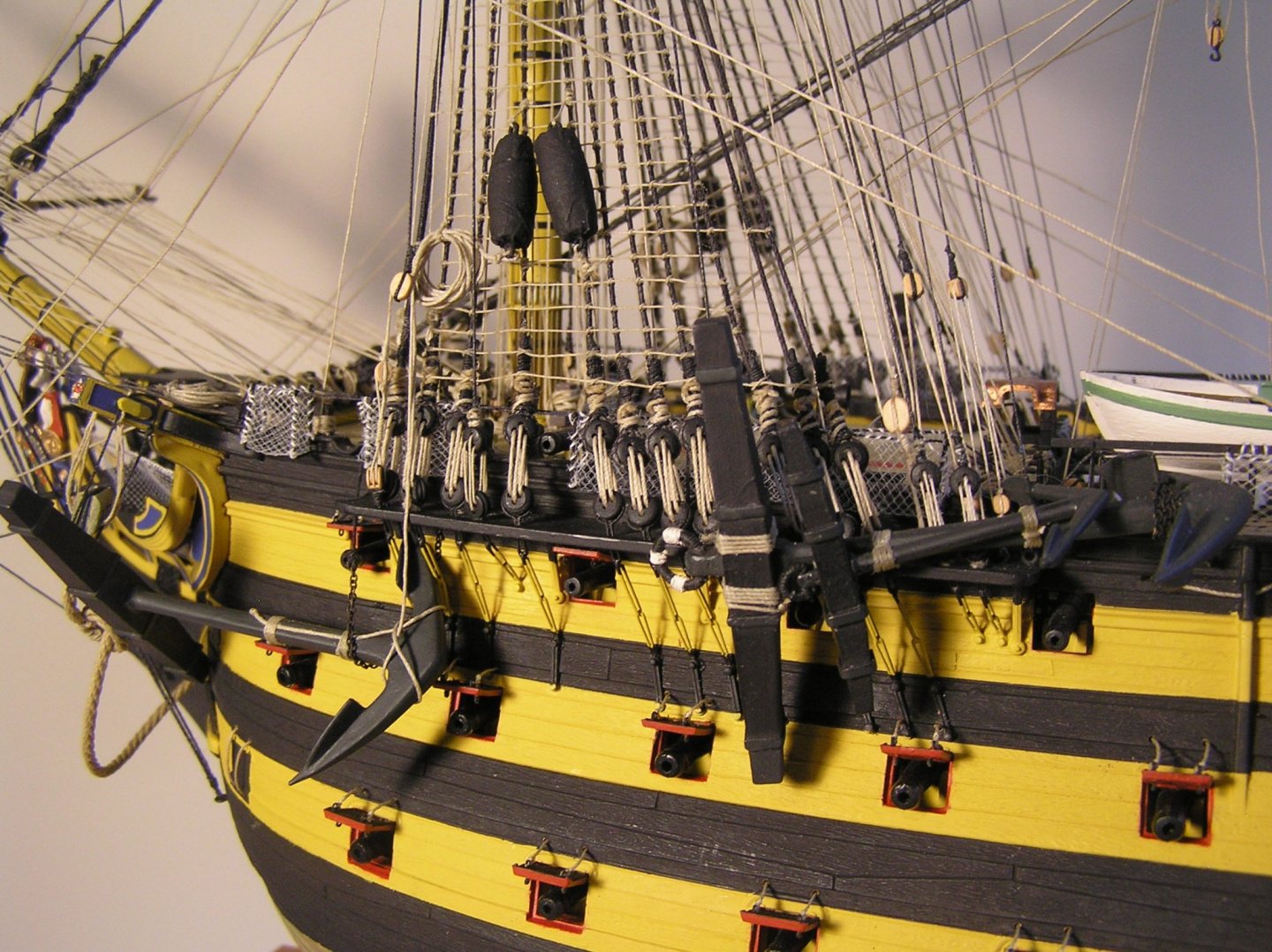
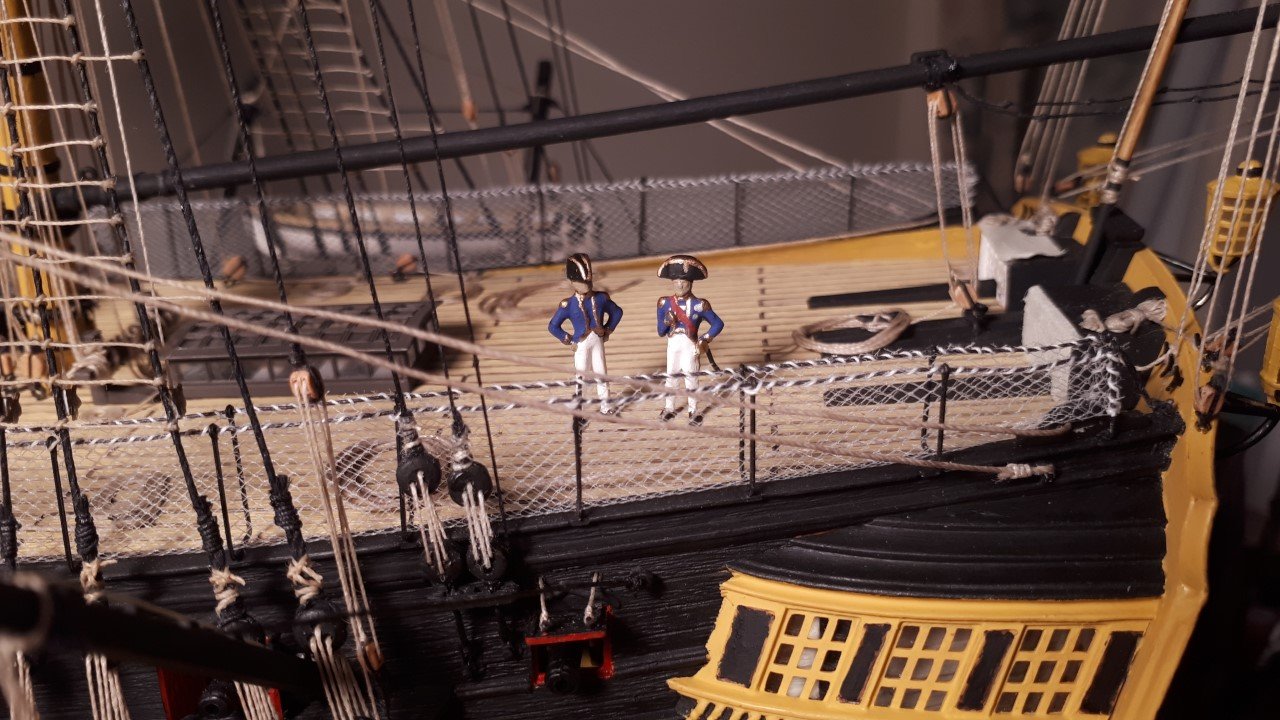
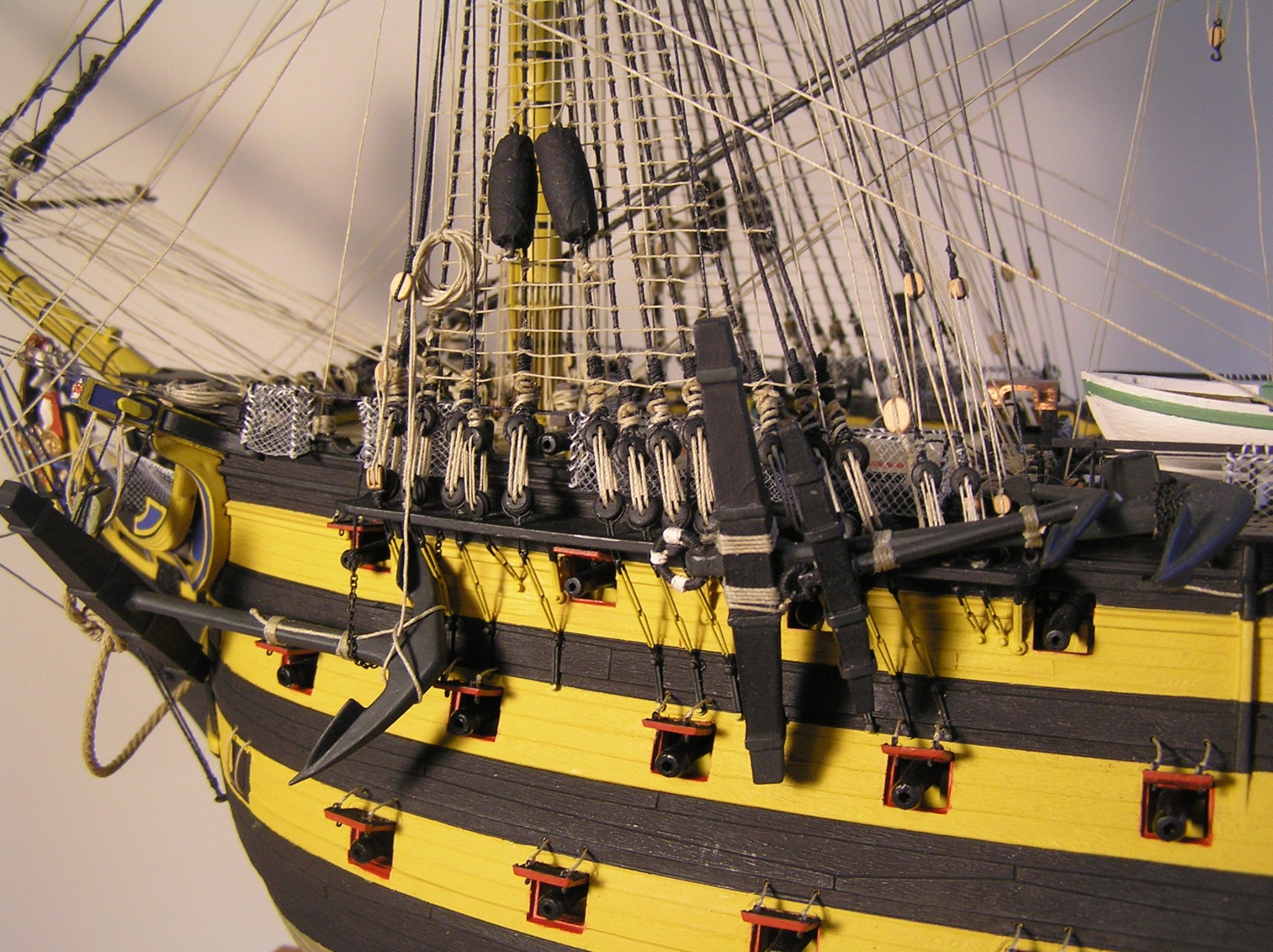
Me again! I should also mention the appalling rigging instructions, or lack thereof. I don't know if you were aware of this. The separate Revell rigging instructions are a joy to follow, all laid out neatly and in a logical sequence. Heller has scattered rigging "instructions" all through the assembly manual in nearly illegible print. In order to see where a rope goes, one must find its two ends which could be on any pages whatsoever. I cannot stress enough to you that you should buy a book as a rigging guide. The "bible" for this is "The Anatomy of Nelson's Ships" by Longridge. It has many beautiful diagrams and separate descriptions of each rigging line complete with rope and block sizes. There is also a much smaller book, "HMS Victory Classic Ships and how to model them" by Hackney. This book is geared to enhancing the smaller Airfix model but it also gives rope-by-rope instructions albeit with less impressive diagrams. The "bible" mentioned above is much much thicker but much of it is concerned with scratch building a wooden hull and masts which is of little use to the plastic modeller. The rigging part boils down to the last 65 pages. Either book will inform you of additional ringbolts and blocks which must be mounted on the deck in order to properly rig, for example, lower yard truss pendants (I mentioned in my earlier post that Heller provides no instruction as to how the yards are attached to the masts) LOL. As I said earlier the provided deadeyes and blocks are useless; aftermarket wood parts should be acquired. I recommend Syren wood blocks. In order to properly rig her you will need about six block sizes, in singles doubles and occasionally triples, and five or six sizes of both black and tan thread. Finally, there are eight brass etch sheets available to enhance this model. I highly recommend at least the two containing deadeye chains and preventers (Heller provides none), and stanchions (the brass parts have actual eyes for threading whereas the plastic parts do not). Brass etch can be viewed at http://www.dafinismus.de/index_en.html ...click on "...parts for the Heller kit". Sorry if all this is known to you.....I don't know if you have made models other than the beautiful Revell ships you showed us. The Heller "Victory" is a whole new ball game. Looking forward to your build log!!! PS Here are some shots of a home-made parral; brass etch chains in place; brass etch stanchions.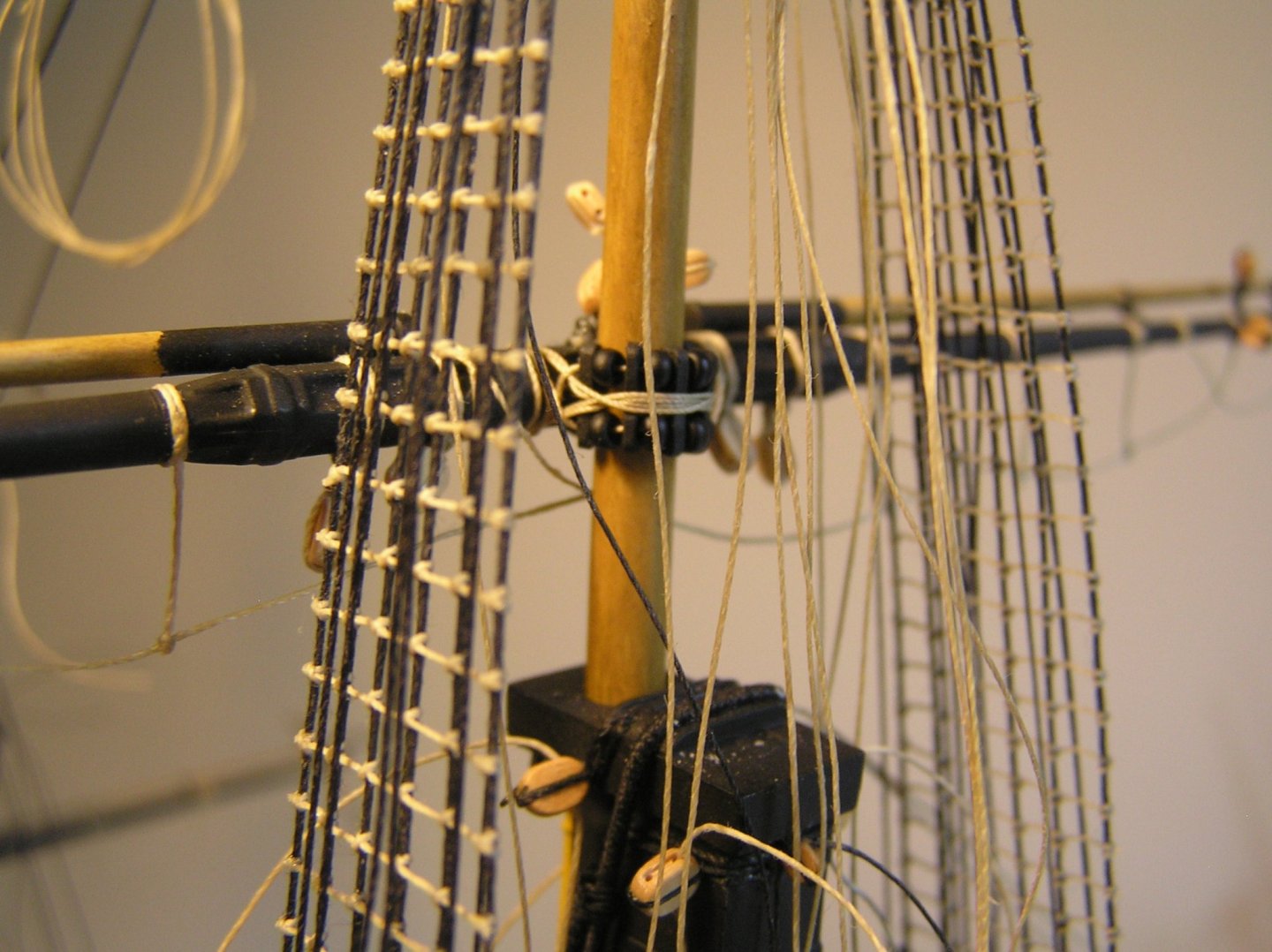
-
Heller 1/100 HMS Victory - Question on size
Ian_Grant replied to Bill97's topic in Plastic model kits
Nice display, Bill !! I made the Connie and Cutty Sark in high school back in the seventies. I still have them although I decided to scrap the Connie a year ago; for some reason I gave the sails a green/brown wash and I came to realize they look mildewed. The bosun would be hung for that! I used a couple of the upper yards as donor yards for Victory's fore and main royal which Heller do not provide. They're lashed inside the topmast shrouds for stowage. I don't know how much you've looked at your kit, or know about various problems found in certain Heller ship kits, but as forewarning here are some other things Heller do not provide for Victory: fore lower studding sail booms; any and all yard parrals; stream and kedge anchors, and buoys; fish davits; usable deadeyes and blocks; usable thread. Looking forward to your build log; it's always nice to see another Victory come together. -
Steven, thanks for pointing me to this build log. What a great model! I was greatly interested in his linkage design at the oar looms and the racetrack operation. LATER EDIT: the following paragraph was augmented. A large part of the complexity of my all-mechanical pseudo-design (I priced it at about $300 worth of parts from servo city!!) was driving both sides from a single motor so the oars on the two sides would be perfectly in sync when rowing straight, yet allowing for moving in opposite directions when turning. Bensid remarks several times in his videos that he has trouble "driving" his galley and I think it stems chiefly from having two motors drive the two sides with no means of having them run at exactly the same RPM, and even that does not guarantee the oar beams would be in sync as well. Very difficult to achieve with a purely mechanical solution. It was shortly after that I read (somewhere?) about the Arduino/servo system. The two sides can be kept perfectly in sync because the Arduino is sourcing all the servo PWM streams. Again, and this is huge, there is no need for any racetrack or other way to shape the stroke because servo interaction defines it. I did not go to the lengths of sketching a possible mechanism but after watching these videos I can see maybe needing two servos on each side for the up/down motion; one at each end of the beam and plugged into the same Arduino output channel with a Y-harness, filling the function of the drive-belted sprockets. Still the same Arduino requirements: read two PWM streams and generate four. I should add that as some people have mentioned, a drumbeat would be cool. Well an Arduino could also be programmed to automagically drive a speaker with a sound burst once per oar stroke. It is to dream....
-
Richard, what a wonderful model! The planking is superb! I have contemplated in my wildest dreams making an RC galley. There is a picture of a large model "Liburnian" galley in Vaughan Williams' "Introduction to RC Scale Sailing Models". They don't go into the rowing mechanism though. I actually went through the exercise of designing a mechanical drive to provide an oval motion. It was quite complex since you want the oars synchronized on both sides when rowing forward or backward, yet able to be reversed on one side for rapid turns. You either need mechanical reversing mechanisms or a way to synchronize two separate motors (I picture microswitches with momentary contacts which are pressed by the oar beams at the end of their stroke, generating pulse streams which could be put into the phase detector of a PLL whose filter output controls the speed of one motor to exactly match the other; doable but unwieldy because the PLL would have to be incredibly slow with such infrequent phase updates from the uswitches). Then I saw somewhere or other a different idea: Have four fairly high torque servos. The oar drive beam on each side is driven by two servos; one to provide the back-and-forth motion, the other to provide up-down motion. And this is the clever part ----> you plug an Arduino board into your RC RX to read your "throttle" and "rudder" channel PWM streams, and program the Arduino to provide four PWM streams for the four servos, with each oscillating back and forth to provide repetitive oar strokes. So for example, if you push your "throttle" stick to "full ahead" the oar drive beams on each side move quickly, in unison; if you move the rudder right you can have the Arduino slow the right-side beam down, or stop it, or even reverse it given a sharp rudder stick position. It's all controlled by the program you write which can be in BASIC to keep things simple. You can design the PWM streams to the "stroke" and "elevation" servos to give elliptical motion or any other you care to experiment with. Arduinos are available with multiple PWM generators (where you simply enter the period and duty cycle). No electric motors, no drive belts etc. LATER EDIT: I read up a bit on this topic as I am seriously considering making an RC galley next. It's actually PIC microcontrollers for which there is an available BASIC compiler. Arduinos employ "arduino" language which is a sort of "C" coding. I know zero about "C" but the Arduino commands look pretty simple; for example once you declare an internal timer is to output a PWM stream and set up the clock to get a 50 Hz repetition rate, a simple write of an integer value into a register sets the PWM output's duty cycle and hence servo position. All one needs to do is to write gradually increasing or decreasing integer values at regular time intervals and the servo arm sweeps accordingly. The Arduino "Nano" board sports up to six PWM outputs and several analog inputs to an internal Analog-to-Digital converter which could be used to read the DC value of the throttle and rudder outputs from the RC receiver, suitably low-pass filtered by an external R-C circuit you provide. From my brief reading, getting started with an Arduino is easier than with a PIC; just my novice opinion. The Arduino Nano measures 18 x 45 mm, draws 19 mA, costs less than $25, and is hooked up to your PC via a mini USB to download programs you write using the user friendly and open-source Arduino IDE (integrated development environment). It's still in the back of my mind for when I finish my current static model, but I also would really like to make an RC square rigger. Around here a square rigger would draw a lot of interest, but a galley would be unique I am sure. I'm interested in how you joined the oars to the drive beam. I wondered how to have them attached, able to rotate at the joint during the stroke, while being unable to spin on their axis and throw the blades off vertical. At one point I pictured U-joints as used in RC electric motor boat prop shafts but it would cost a fortune to buy multitudes of them. Can't quite make it all out in your video. I will follow your log with great interest. Thanks.
-
Daniel, fantastic job on this your second wooden ship. You have an innate skill; I've never dared try one. I noticed some talk of suitable books for rigging. I have Lees and it's very good, but you might also like "Rigging Period Ship Models" by Lenarth Petersson. This much thinner and presumably cheaper book has an illustration on each page of one particular part of the rigging of HMS Melampus built in 1785. May be too early for your Terror model, but it's a great book for learning the names of various ropes and how they are rigged for future models.
-
Heller 1/100 HMS Victory - Question on size
Ian_Grant replied to Bill97's topic in Plastic model kits
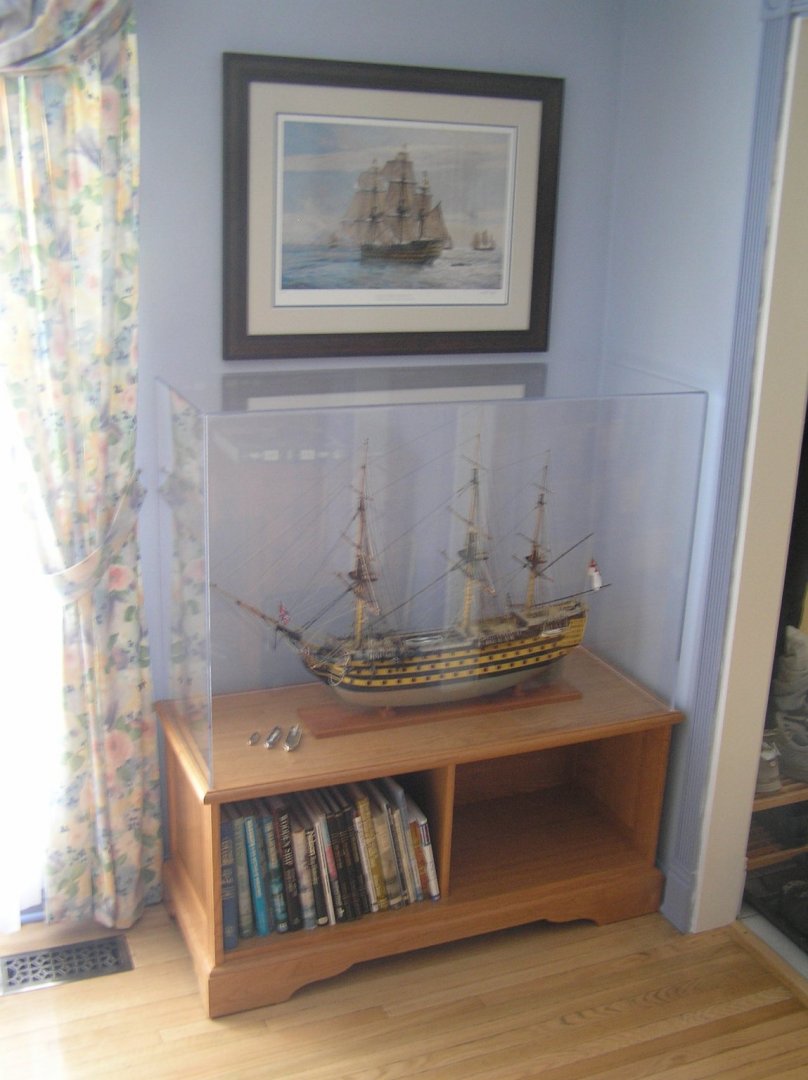
Yes, I can see those numbers on the internet too and no wonder Bill is confused. I can assure you both that Victory is more than 6" wide. That might be the hull itself, maybe (?), but the main yard with studding sail booms is much longer. The width I gave was for my model which is "bare sticks" with booms stowed. If you want to rig it sailing with studding sails set it would be much wider. As for the 44" long I don't know where that comes from either. That value exceeds the length of my case which has 1-1/2" to 2" of space at each end of the model. Perhaps if one had a large flag streaming aft on the ensign staff?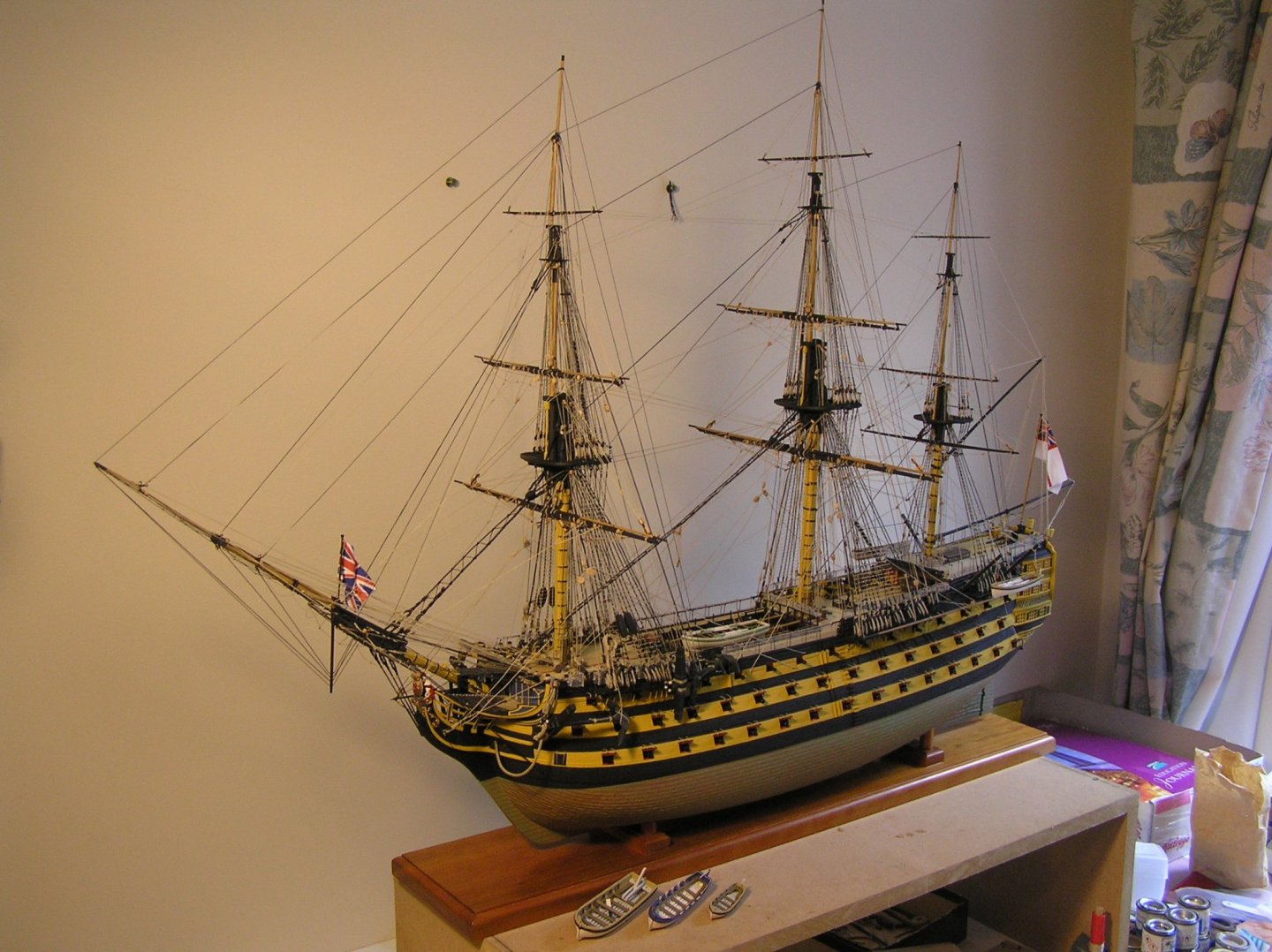
-
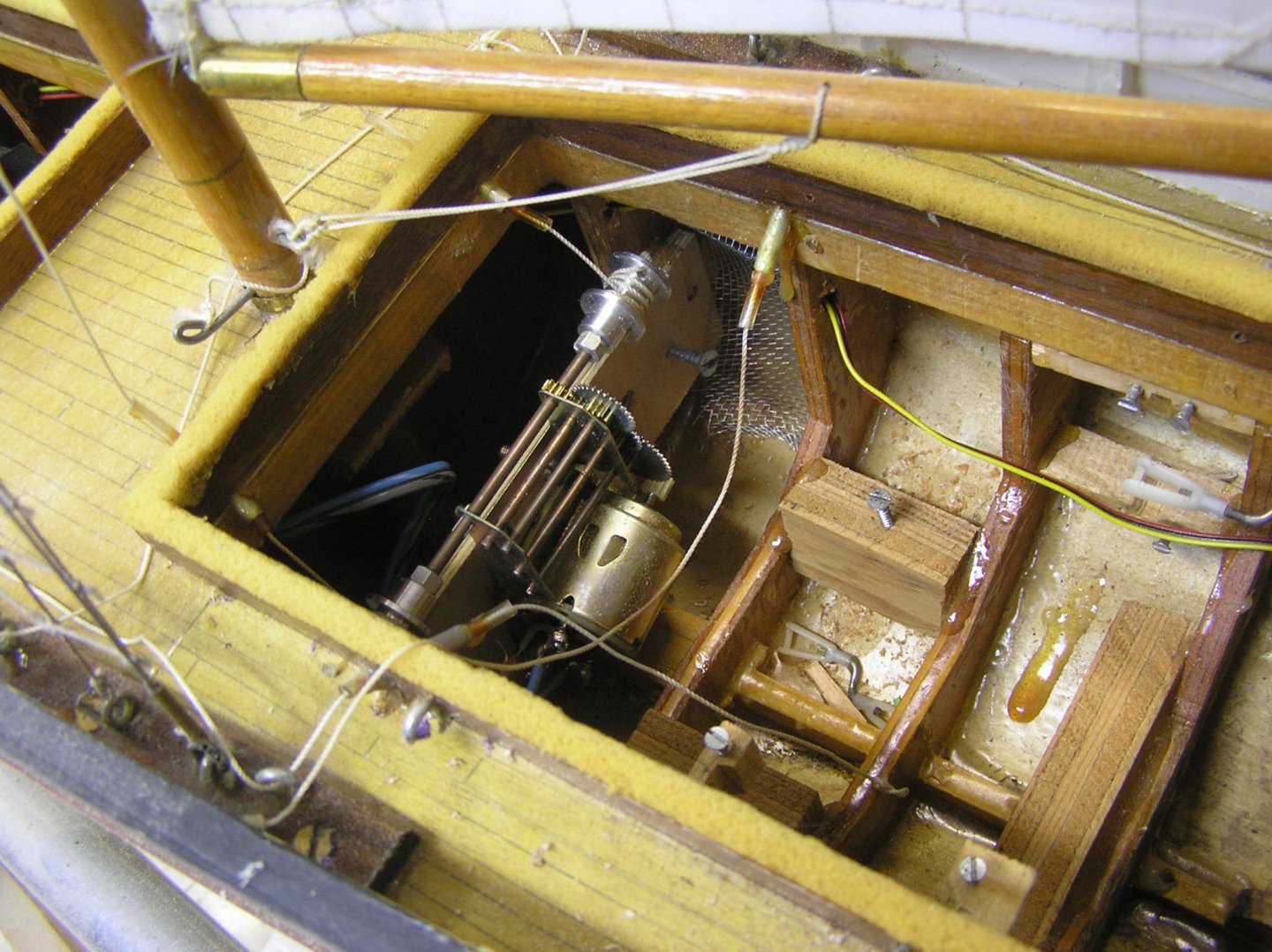
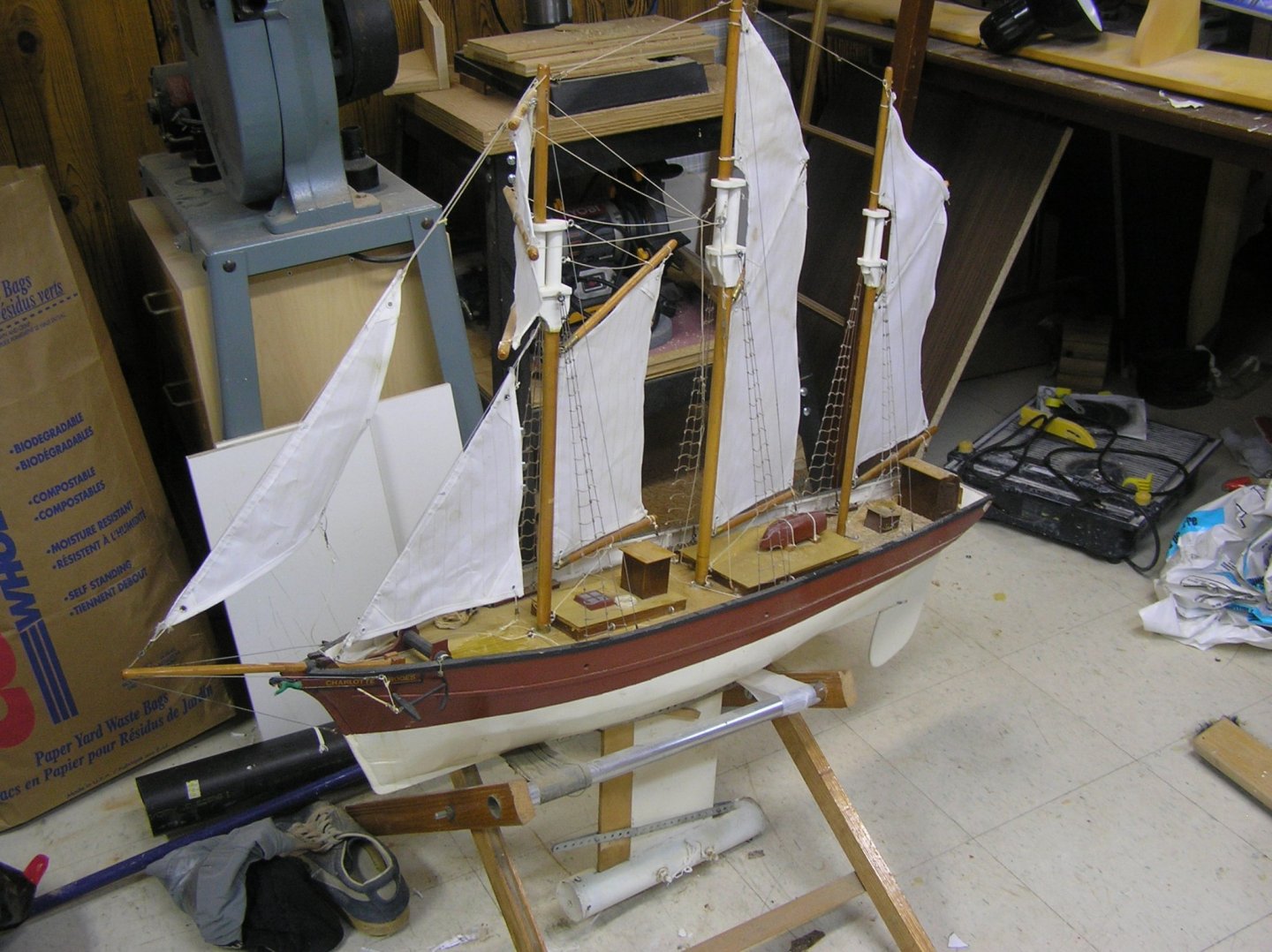
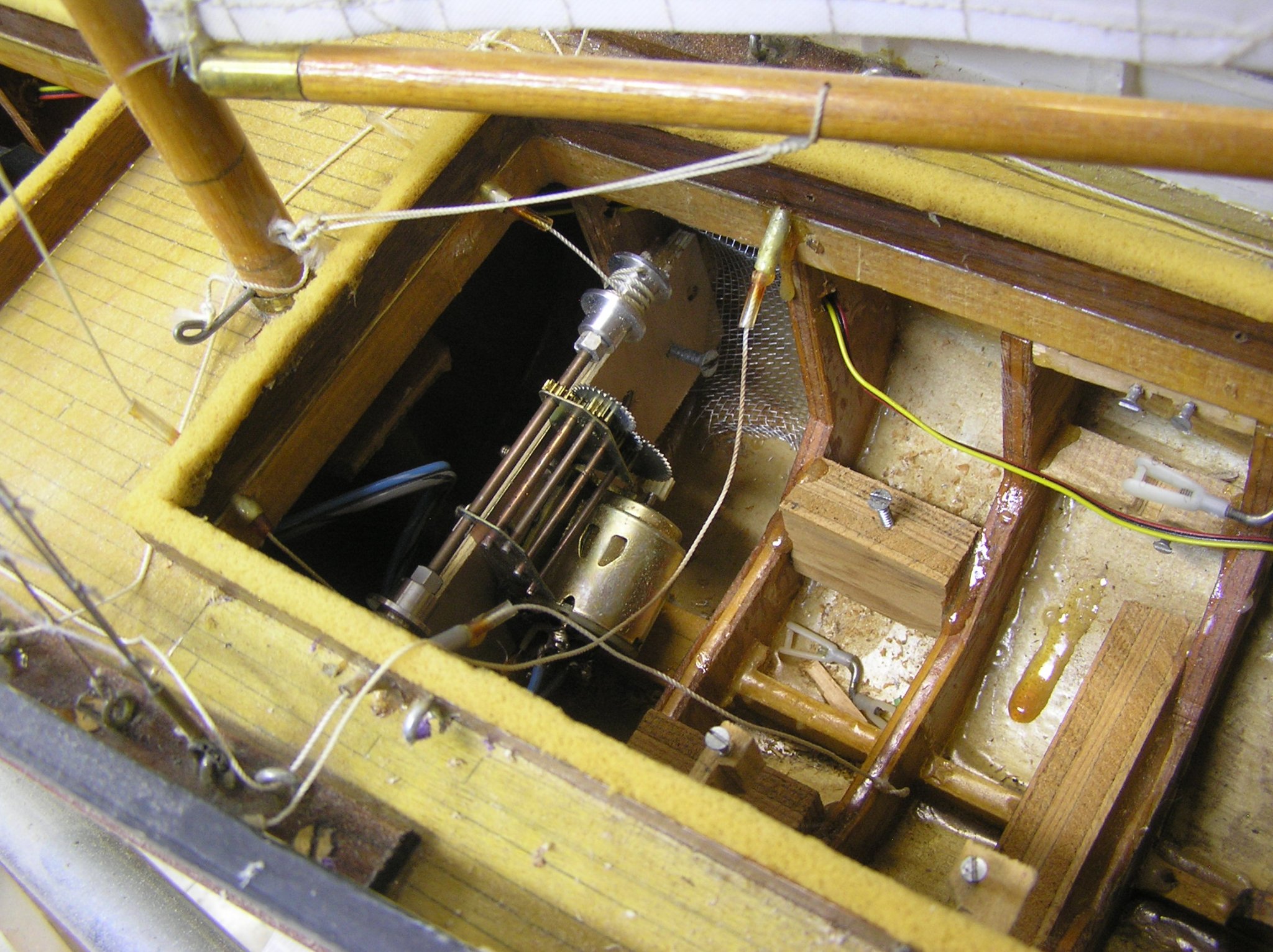
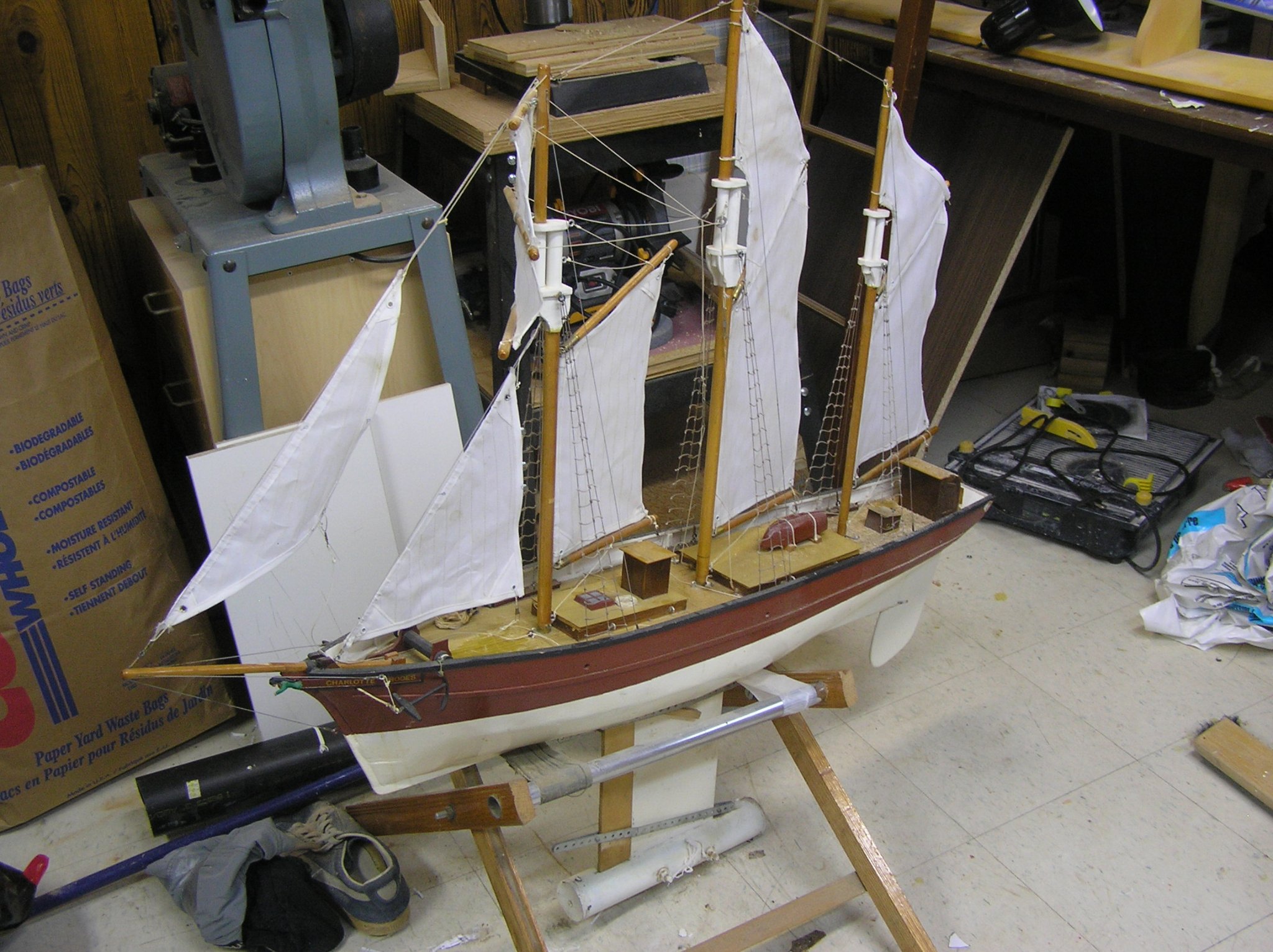
I built a rather larger motorized German Panther tank when I was a kid. In my teens I got into RC boats, then RC sail. My peak came when I scratch built an RC schooner. Needing a winch to control the braces of the square topsails, I ripped the drive assembly out of the Panther and mounted it under the main hatch, as here: This photo was taken a while ago, after many years of dust-gathering by the "Charlotte Rhodes". The model would not tack properly; I decided I had placed the fin too far aft; I then left for university and the model never got wet again. By the way for the fore-and-aft winch I used my monstrous sail winch from the 80's which generated about 21 lbs of pull but was about the size of three hockey pucks. How times have changed! Here is the whole boat. It was clad in 1/32" plywood soaked in water, my mom made the sails. Not bad for a teenaged kid. Good times!
-
Kevin that's pretty amazing looking for TinkerCAD, love all the leafy greenery and I have no idea how you did that. Funny you should mention the SR. When I finished Victory I had a stash of two ships to choose from: Soleil Royale and Preussen. The SR is beautifully engraved but there are as always it seems with Heller's ships some big problems. The underwater hull is hard to believe; there seems very little "curve of the bilge" near the stern meaning there's no buoyancy right where the hugely tall and presumably heavy stern juts up. The topmasts are too long, and the crosstrees are an odd construction to my eye. Anyway I decided I couldn't face another 5-year build so similar to Victory (100 guns, deadeye rigging, mods required) so I started on Preussen. It will be another beauty when completed. As for the SR, when the time comes, I'm torn between her and building an RC square rigger. I would love to have one, I still have my 50/800 sailboat I sailed in my teens. If the SR it will be a waterline build, or I'll cut the underwater hull off and add a "strake". I may not have enough years left to do both 🙂
-
Hello Kevin! You won't remember me, but we joined Pete Coleman's website on almost the same day and exchanged a few messages. Glad to see you're back on the build; I had wondered where you had got to! I was just finishing my Victory as Pete's web site disappeared so I put a few build log pics on here. She took me 5 years so you are not far behind ;-) Your printed entry port looks great! I am currently working on a Heller "Preussen" and trying to get some 3D printed parts too. In my case my brother is the one with the printer, albeit 400 km away. In this kit the ladders are deficient plus my stern railing was bent and broken so I used TinkerCAD to draw some replacements. Hope they turn out as well as yours! I suppose you're using more advanced mesh software? You're bringing new ideas to the Victory kit. Will be interested to see what you come up with next. Best Regards, Ian
-
Heller 1/100 HMS Victory - Question on size
Ian_Grant replied to Bill97's topic in Plastic model kits
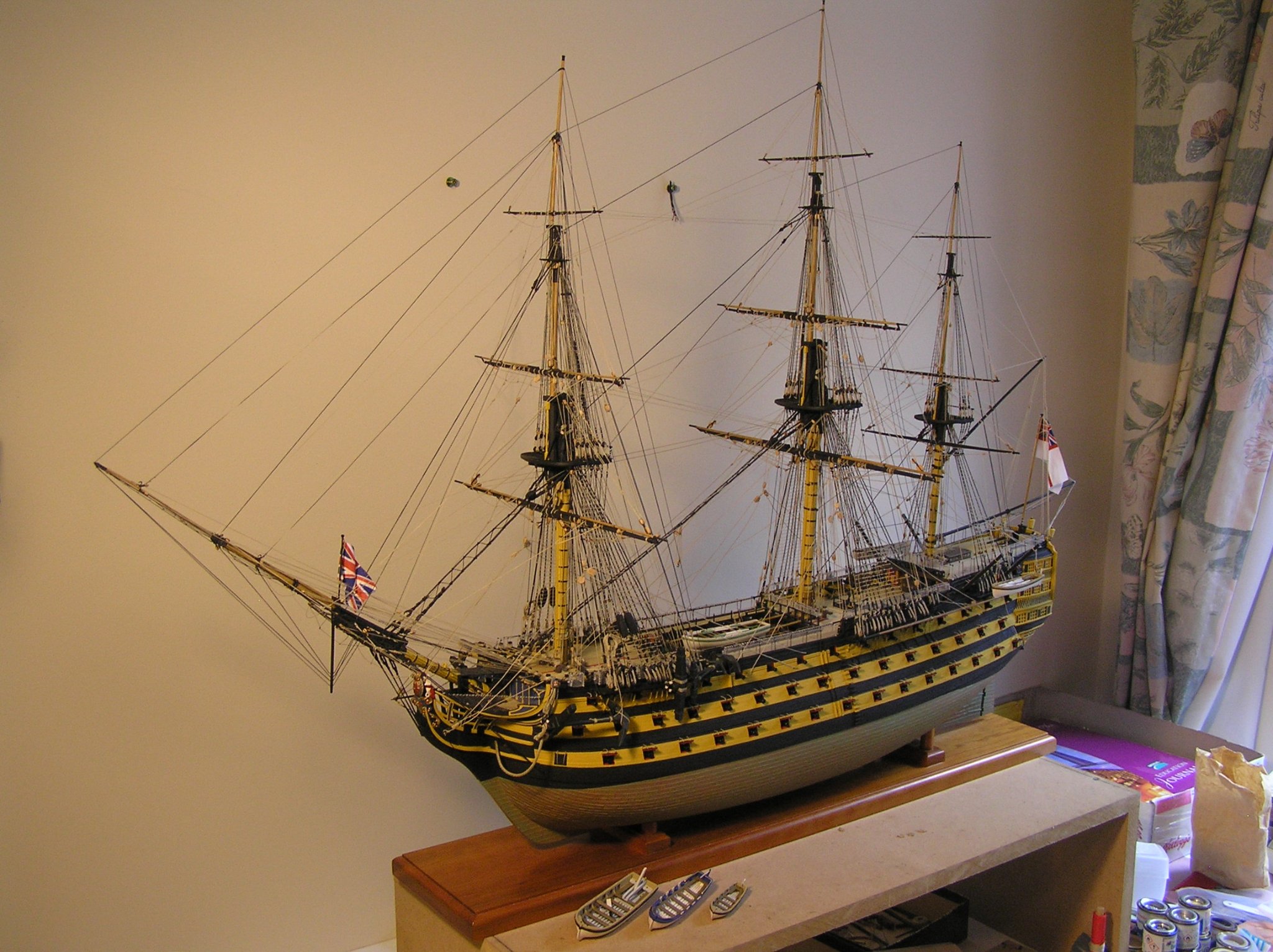
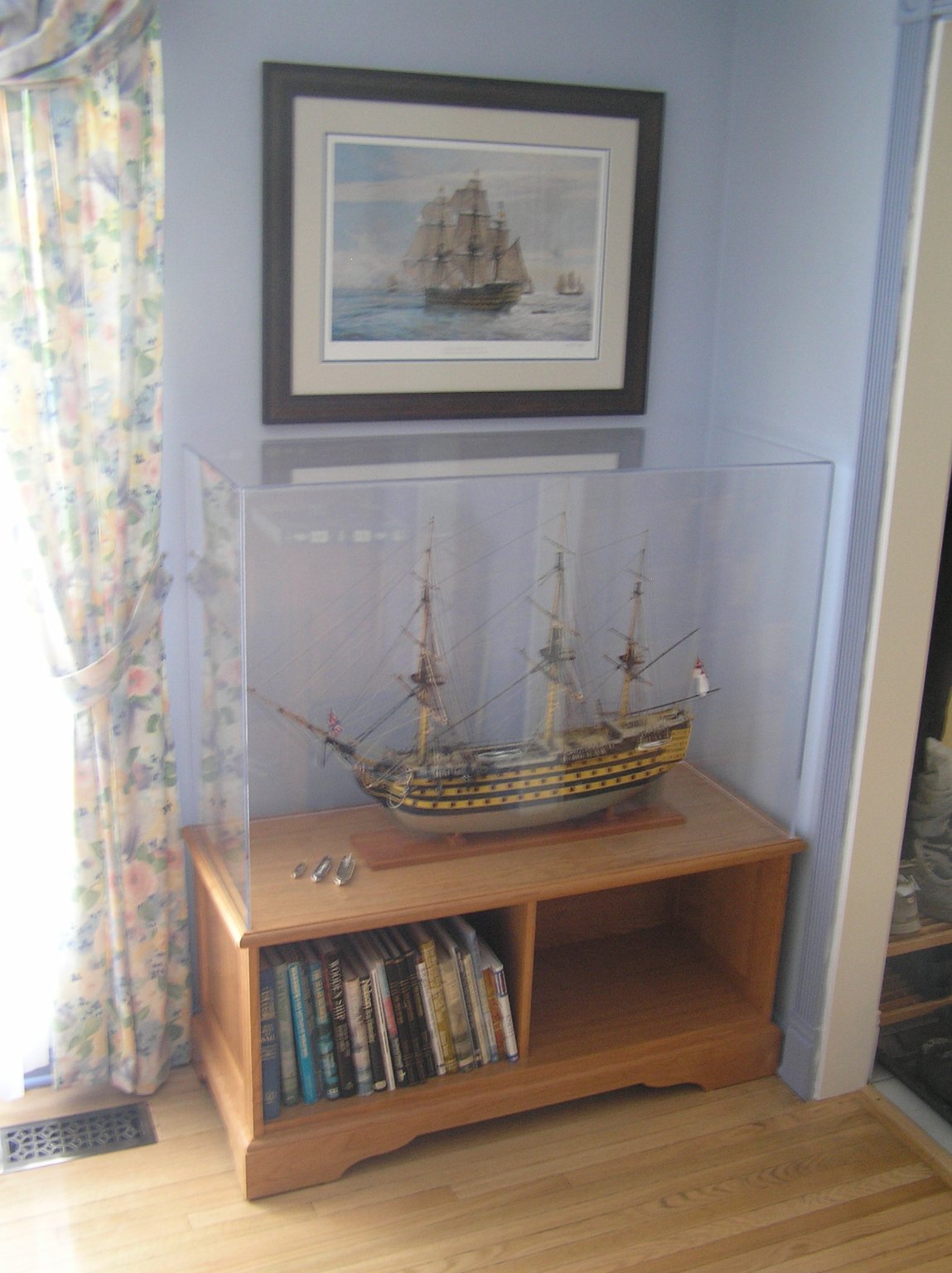
Bill, I have built one. It measures about 38" long, 28" tall, and 14" wide. I say "about" because it's a bit hard to judge exactly as I have it cased. To give you an idea about displaying one, its case measures 43-1/2" x 29-1/2" x 17". -
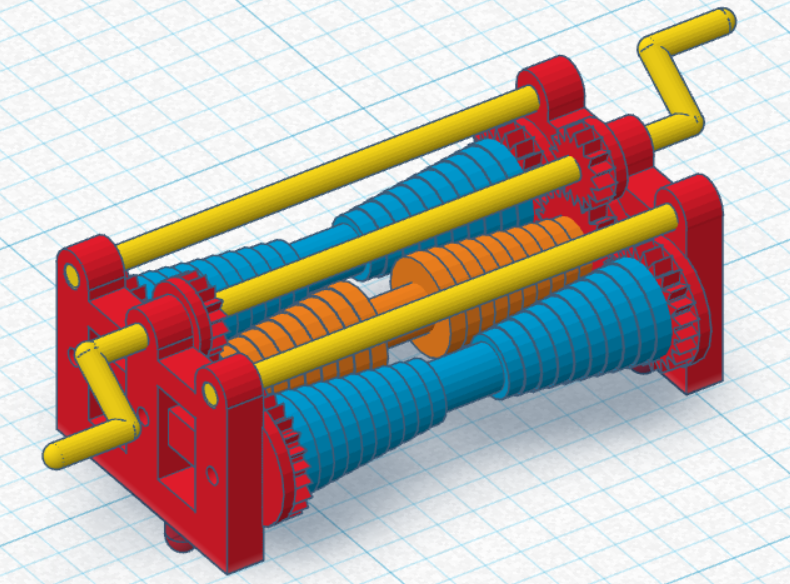
Just for laughs I worked on a Jarvis brace winch in TinkerCAD. The supplied Heller winches seem too low down to me; it's as if they forgot that sailors need to crank them around too. I drew a winch which provides a crank at the same height as the wheel on the halliard winches, and made the overall assembly about 1.5mm wider (viewed from the sides) after first ensuring that there is clear deck space for this slight enlargement. I kept the width athwartships the same so as to use the same two mounting holes in the deck. Here is a screenshot. It is sitting on a 1mm grid so you can appreciate how tiny it is. The different colours are components I envision as separately printed before final assembly. The yellow represents some 0.6mm OD brass rod. Of course it's one thing to draw it and another thing to successfully print it. Opinions on odds of success, anyone? Haven't shown it to my brother yet as he's a busy guy and I am already waiting for the railing print 😉 God knows how the gear teeth would turn out. And before I receive a flood of messages, yes I know the gears could not mesh with their flanges as depicted; I wanted a circular base on which to print each toothed gear. I could have flipped the central large gear by making it another distinct part, but at this scale why bother? And they may prove to be totally unprintable anyway. I messed around for pretty much an entire day on this, more than I wanted to but the CAD brings out the ex-engineer in me. Gears are none too easy to draw in TinkerCAD as I couldn't find a "primitive" for them. Perhaps there is one in there somewhere but mine are a manual effort.







Our Emblem ®