
HOLIDAY DONATION DRIVE - SUPPORT MSW - DO YOUR PART TO KEEP THIS GREAT FORUM GOING! (Only 36 donations so far out of 49,000 members - C'mon guys!)
×


Jim Lad
-
Posts
9,497 -
Joined
-
Last visited
Content Type
Profiles
Forums
Gallery
Events
Everything posted by Jim Lad
-
Hello David, and a warm welcome to the forum from 'Down Under'. John
-
 A bit late finding your log, Eric. This will make a stunning model and you've already overcome the first hurdle. John
 -
hi, this is Medy lin, I am ship model bulider
Jim Lad replied to Medy lin's topic in New member Introductions
Hello Medy Iin, and a warm welcome to the forum from 'Down Under'. Those are very nice looking models you've shown us. John -
Hull building
Jim Lad replied to mauryd824's topic in Building, Framing, Planking and plating a ships hull and deck
Maury, some good advice there from Allan. Just like an aircraft, a ships hull has very few flats or straight lines - I can only agree that your best bet is to check out the planking tutorial right here on MSW before you start the actual planking. John -
Hello Lyle, and a warm welcome to MSW from 'Down Under'. John
-
Looks like you're about ready to hire the spiders for the rigging, Mario. Looking good, mate! John
-
Hello Mike, and a warm welcome to the forum. Nice to see another Aussie here. John
-
Hello Michael, and a warm welcome to the forum from ;Down Under'. That's good advice from Mark. John
-
Hydraulic Dredge by Steve Harvath
Jim Lad replied to Steve Harvath's topic in - Build logs for subjects built 1851 - 1900
She's really coming along, Steve! Great stuff. John -
You've made a very nice start to your Sherbourne, Liam. John
- 46 replies
-
- 1
-

-
- caldercraft
- sherbourne
- (and 1 more)
-
New to MSW, Tom from The Netherlands
Jim Lad replied to Articcie's topic in New member Introductions
Hello Tom, and a warm welcome to the forum from 'Down Under'. John -
Hello Daryl, and a warm welcome to the forum from 'Down Under'. I'm not familiar with the merits of different kits for a newcomer to the hobby, but I'm sure someone will chip in with some good advice. John
-
Either there was more wind than it looks in that first photo, Mark, or you were sinking! John
-
Toni, the usual method of fastening clinker planking on a larger ship was by either iron rivets which were fastened over a 'rove' or washer on the inside of the hull or by iron nails driven through with the ends clenched over on the inside. John
-
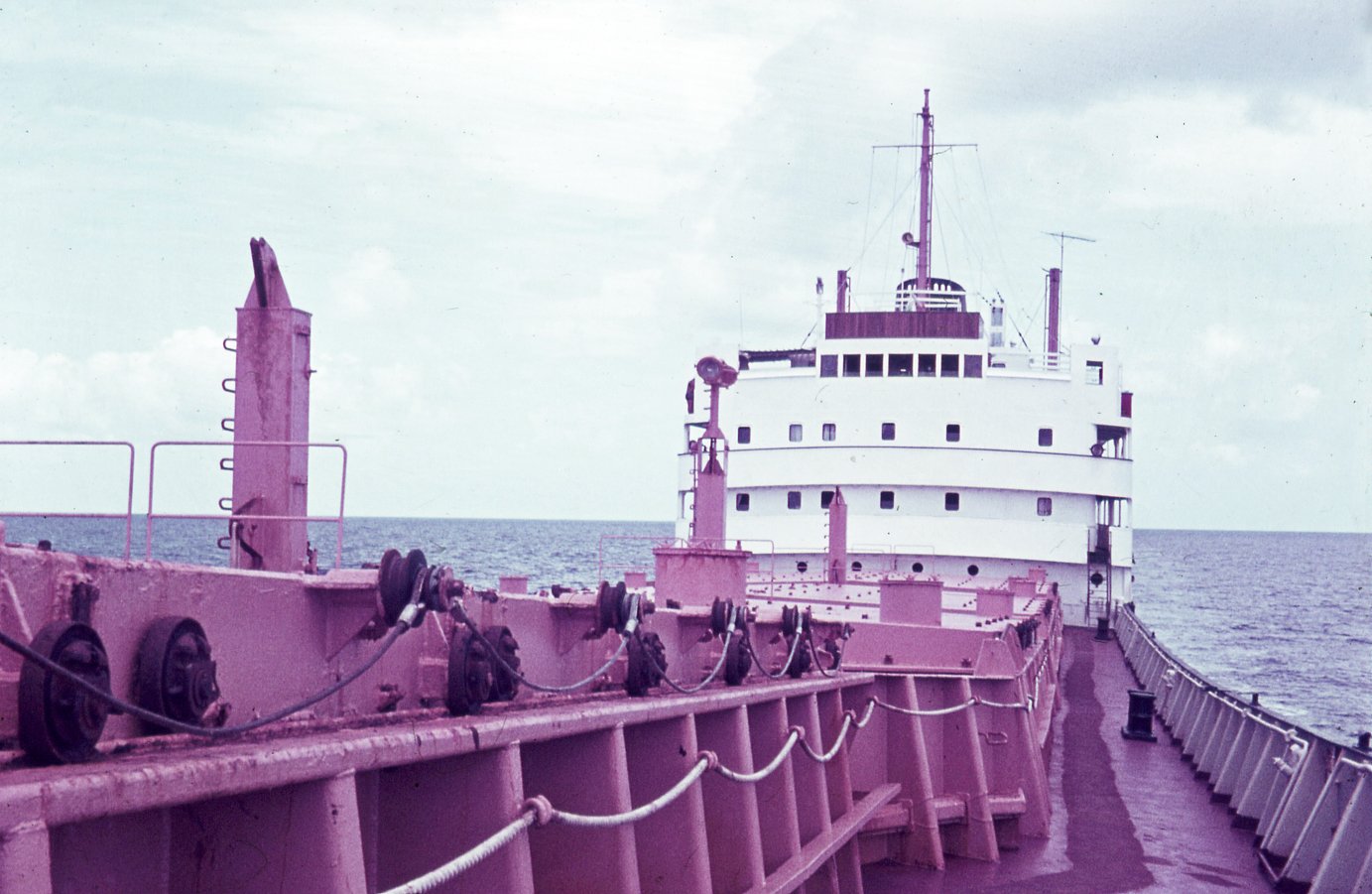
'Anti-skid' paint was certainly used on some ships where better footing was needed. The old and rather grotty photo below shows the fore deck of one of my old ships - MV 'Meringa' - with a strip of 'anti-skid' painted. it was needed on this ship as she was a sugar carrier and the deck was a death trap with wet sugar on it. The paint was made by simply adding copious amounts of sand to ordinary deck paint. As Ken has advised, old phots of the actual ship would be helpful in sorting out proper placement. John
-
Hello Kimosubby and a warm welcome to the forum from 'Down Under'. John
-
Hello and a warm welcome to MSW. I wish you all the best with the restoration of your "galleon". John
-
Hello Robby, and a warm welcome to the forum from 'Down Under'. John
-
Bob, I think I have to disagree with you a little. It was important for seamen to know exactly where each line was on their ship - in an urgent situation on a pitch dark night it was no good trying to leisurely try and follow a line down to the deck or to wonder just where a line might be. It was vitally necessary (for the safety of the ship and your fellow crew members) to know instantly and without thinking that THAT line was secured THERE and to be able to throw it of its pin the moment the order was given. Consider a ship leaving port. A brand new crew has just signed on and as the ship clears the port and prepares to cast off the tug the 'Old Man' says to the Mate, "Make sail, mister". He immediately starts issuing a string of orders to get sail on the ship and he expects his orders to be obeyed NOW (or possibly even a couple of minutes before he issues them). No time to try and work out what goes where or which line is secured to what pin - just do it - NOW. In view of the above, sailing ships had a pretty standard rigging system. There might have been very minor innovations or changes, but the belaying plan had to be largely standardised from ship to ship to allow for the immediate efficient working of the rig by any new crew member - especially considering that a sailing ship had no other motive power than it sails and was crewed by the absolute minimum number of men to operate the rig. There are several good books available that provide details of the rig of ships from about the seventeenth century onwards; so it's worth getting hold of a copy of a good book that covers the period of the model and to study it closely. John
-
G'day Sjors! It's great to hear from you and to see some progress on your lovely tug. John
-
Never mind how long you've been working on her, Mario, she's looking first class. John
-
Hello Gazzalene, and a warm welcome to the forum from 'Down Under'. John
-
Hello Jandrus, and another warm welcome from down in the Southern hemisphere. John
-
Your first image is vaguely correct, but the lower block should be attached to a hook in the lifeboat with the running end of the fall secured to a cleat on the davit. John
Our Emblem ®
