HOLIDAY DONATION DRIVE - SUPPORT MSW - DO YOUR PART TO KEEP THIS GREAT FORUM GOING! (Only 36 donations so far out of 49,000 members - C'mon guys!)
×

Jim Lad
-
Posts
9,497 -
Joined
-
Last visited
Content Type
Profiles
Forums
Gallery
Events
Everything posted by Jim Lad
-
If they're too long then you're wasting good rope, laddie! Seriously, only use as much rope as is really needed - rope is expensive stuff and the more rope you buy the less profit to the owners. John
-
Hello, and a warm welcome to the forum from 'Down Under'. John
-
Tally Ho by jwpage - Scale 1:16
Jim Lad replied to jwpage's topic in - Build logs for subjects built 1901 - Present Day
Another warm welcome to the forum from 'Down Under'. he looks a lovely yacht and will make a fine model. john -
Hello Clark, and a warm welcome to MSW from 'Down Under'. John
-
You're making some nice progress there. John
-
Just checking in, mate. She's looking really nice! John
- 164 replies
-
- 3
-

-
- vanguard models
- flirt
- (and 1 more)
-
She's certainly come a long way since I last looked in. First class work, Allan. John
-
Bill, you might need to do a little experimenting with the vangs. Their purpose is to stop the spencer gaff from sagging too far to leeward when the sail is set, so try them and see what looks logical. Remember that the 'criss cross' pattern you talk about is simply a pretty way of rigging the boat falls - their proper place is rigged to the boats and not crossed to the opposite davit, so you can choose to rig them to the boats if you like and avoid any problems of which side the vangs should be. John
-
OK, Bill. The vangs wouldn't be a problem - they could simply be let go when a boat was to be swung out. John
-
The "brick pattern" is indeed the copper sheaving. The actual hull planks were as long as practically possible as they contributed in large part to the longitudinal strength of the ship. John
- 74 replies
-
- 2
-
-
- mantua
- thermopylae
- (and 1 more)
-
The course sheets would lead in through bulwark sheaves and then forward along the bulwark rail to the winch. You can see this clearly in Woodget's photograph of the ship at sea. What spencer rigging are you concerned about. John
-
Hello Daniele, and a warm welcome to the forum from 'Down Under'. John
-
Hydraulic Dredge by Steve Harvath
Jim Lad replied to Steve Harvath's topic in - Build logs for subjects built 1851 - 1900
Been away for a few days, Steve, so I missed your previous post. A job very well done indeed! John -
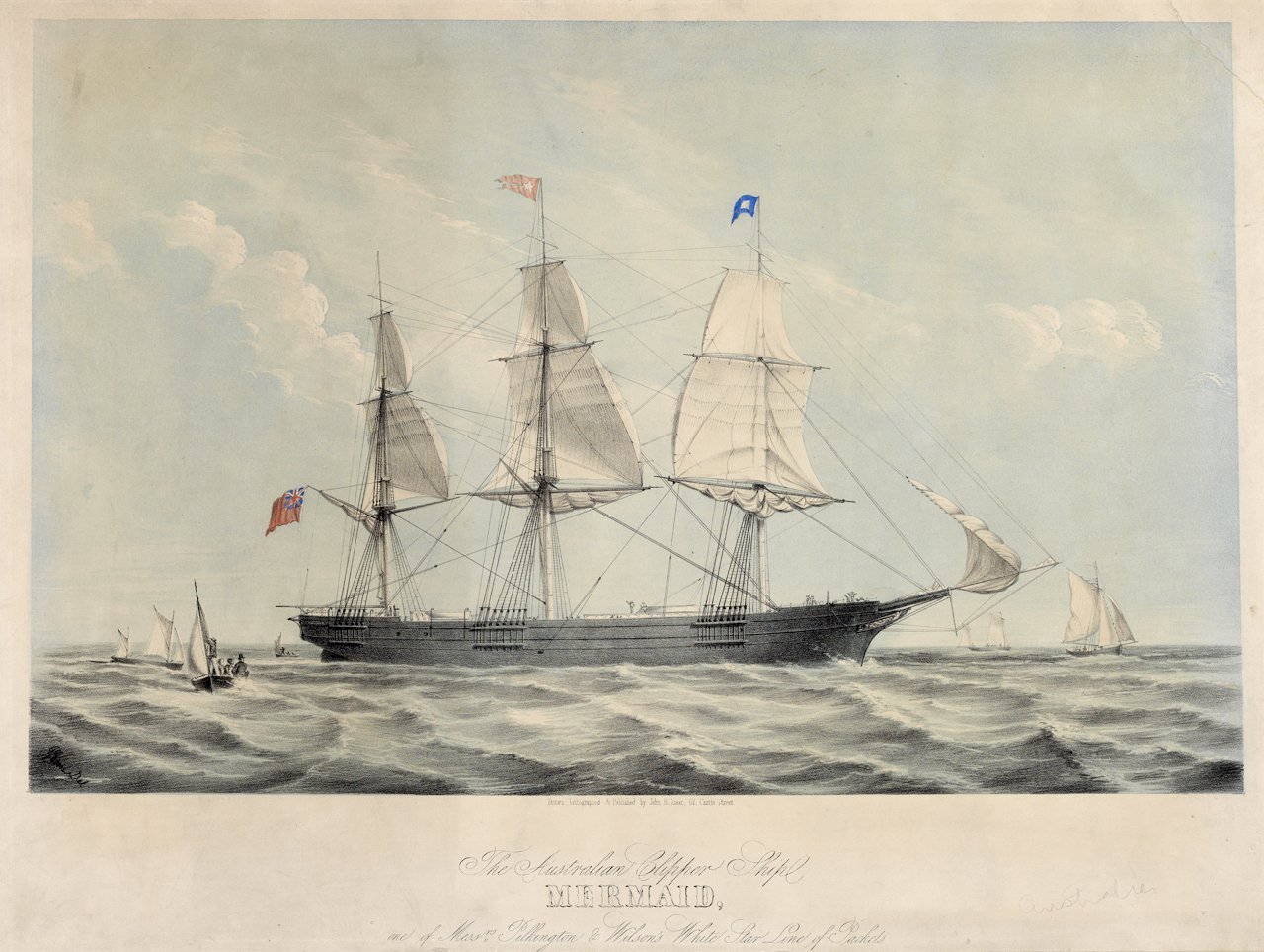
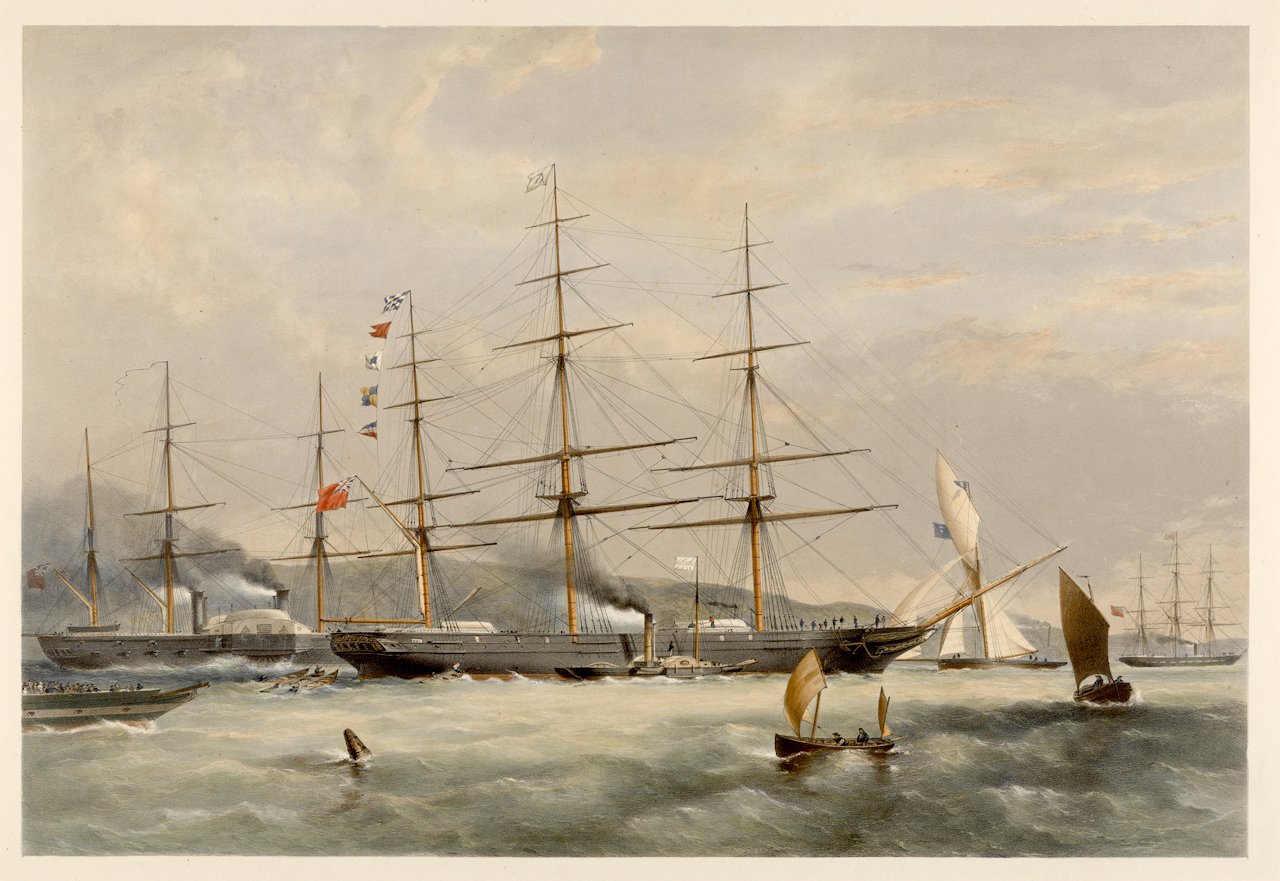
Bill, I found a couple of paintings on the National Maritime Museum (Greenwich) web site. They are of ships from the mid 1850's, but will give you an idea of the look. they are the 'Mermaid' and the 'Schomburg'. John
-
Bill, The spanker boom always remains fixed to its gooseneck at the mast. I believe the Cutty Sark had a standing gaff - ie. it is fixed to the mast by a gooseneck and supported by a span. If this is the case, the spanker was brailed in to the mast. There are outhauls and inhauls at both the boom and gaff and three (probably) brails up the after end of the sail which lead in to the mast and then down to pins at the foot of the mast. When the sail was furled it was brought in to the mast rather than down to the boom. I'm afraid I can't lay my hands on a photo of a furled spanker at the moment, but I'm sure you get the idea. John
-
That looks a very good base for your outer planking. John
- 74 replies
-
- 2
-
-
- mantua
- thermopylae
- (and 1 more)
-
Hello Guy, and another warm welcome to the forum from 'Down Under'. John
-
That's a very 'swish' looking clamp! John
-
Hello, and a warm welcome to the forum from 'Down Under'. John
-
Tom, even up to the end of commercial sailing ships in the early 20th century, it was common not to have ratlines on the uppermost mast sections. in his book 'The Last Grain Race' (describing a sailing ship voyage to Australia and back in the barque Moshulu in 1938/39), Eric Newby describes his fear at having to 'shin' up the last section of the mast to the cap. John
-
Hello Lynn, and another warm welcome to the forum from 'Down Under'. John
-
Sorry to hear about your sister-in-law, Mario. Yes, I have a build in progress, but it's at the museum and I haven't been allowed back in there since March! Soon I hope. I hope you and your family are out of the line of fire of these Californian wildfires that have been making the news over here. John
Our Emblem ®