Jump to content
HOLIDAY DONATION DRIVE - SUPPORT MSW - DO YOUR PART TO KEEP THIS GREAT FORUM GOING! (Only 20 donations so far - C'mon guys!) ×

GGibson

NRG Member
  • Posts

    1,038
  • Joined

  • Last visited

Everything posted by GGibson

  1. Noticed on OcCre's website that their home page has a "Save the Date - 10/21/2023 - Limited and Numbered Edition" announcement. Hmmm... Anyone have any inside info... or wild guesses... on what it might be?!? Curiosity killed the cat...
  2. Very interesting read! Another example of how language has evolved over time! Fascinating! But, have to admit, for those of us who are BOTH ship modelers and backyard BBQr's, seeing the "...Ground Toes" topic title caught my BBQ radar attention immediately! We'll put almost anything on our smokers! 🤣
  3. Hi Jon! I've spent the last 27 pages catching up on your Constitution build-to-date. Great job! I have been seriously considering putting the Constitution in the shipyard for a future build and, if I do, no doubt your log will be referred to often! I'm hitting the follow button. Awesome work, sir. Carry on.
  4. Nice cabin work, John! I need to remember to put the ringbolts on the forward-side of my cabin, as well, before permanently placing!
  5. Ahhh, my apologies. I believe I understand Commodore's concern now. Yes, my transom was cut a bit higher than where the line was drawn, as well. I pulled up some of my pictures I had taken and zoomed in a bit on my transom area. Sorry if some are a bit blurred due to the zooming. But you can see on mine, once the inwales and the quarter knees were in place, the stern transom piece (as well as the bow transom) was cut slightly higher than where their line was drawn, and it had no effect on ultimately how the rudder was placed. From my recollection on my NSP, you will be fine. Hope that helps.
  6. Hi Mustafa... Great build, so far! Hope you don't mind another "follower", as I have been considering adding the Constitution to my shipyard. Thanks!
  7. Hey Commodore! It all looks really nice! If I am understanding your concern, I think you will be good. Whatever little sanding you need to do, plus your hull painting, will cover whatever small inconsistencies you see as the builder. Your local admirers won't notice after it's completed. Looking sharp. Getting ahead of where you are at now, but you'll be there in no time... thoughts on how you are going to finish the topside/interior?
  8. Following up on the recent question regarding adding links to signatures, I thought I would add another question, but start a new topic so as to not clutter the great info in the "adding links" thread. And perhaps this question has been asked and answered previously. If so, I apologize for not searching properly and asking what may be a stupid question again... Does the signature content of users get updated on all of the posts that someone has previously commented on, or just on posts subsequent to their signature updates? Many of us use our signature section to list current builds, completed builds, etc. For example, if I am looking back on an interesting topic thread from, say, 2016, and I see that John Doe's signature shows that he is "currently building" the USS Constitution, is that 2016-dated post just showing what his signature page depicted at the time of his post in 2016, or is that an updated reflection of what Mr. Doe is now working on (from whenever he last updated his signature)? Thanks!
  9. Working on the original 1921 Bluenose! Just posted an update on my progress. And, yes, I certainly understand there are some subtle differences between the two ships, but enjoy seeing the pictures of all of them! Appreciate you sharing!
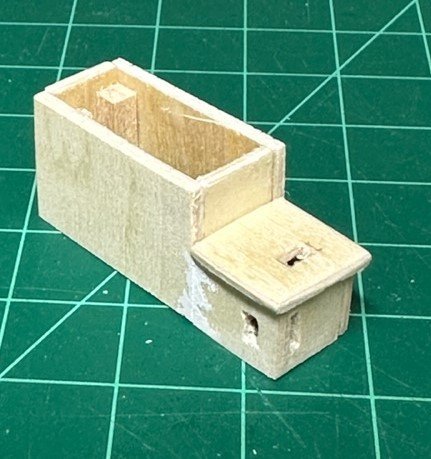
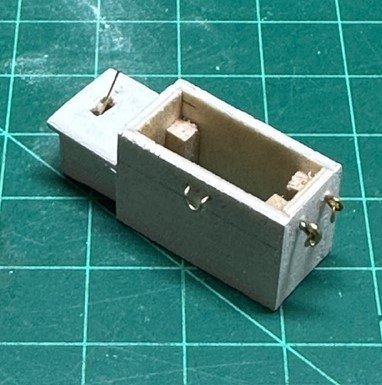
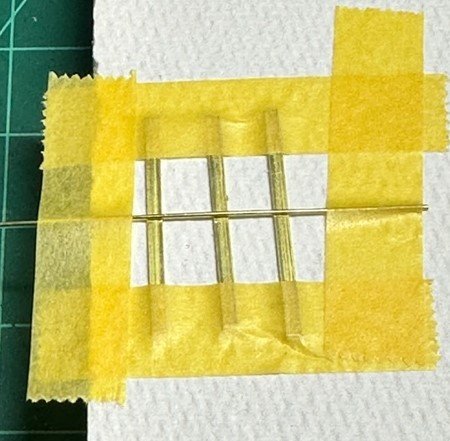
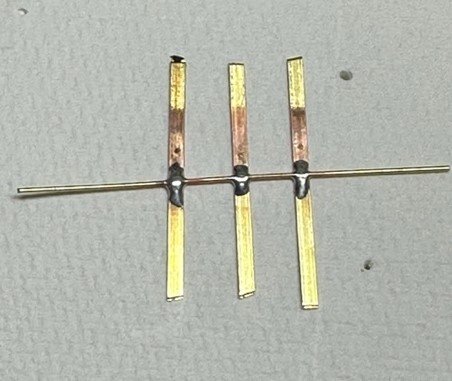
  10. Well, I keep delaying the work on finishing the rudder assembly, waiting on another tool addition to the shipyard, so... thought I would begin work on the cabin. This is certainly one of the biggest deck structures for the Bluenose, and was challenging, yet fun, to build. Started with 1/2" x 1/16" strips cut to size. Used 1/4" support in corners and beams. Probably used excessive support beams, but wanted to make the planking easier, with plenty of underneath support and gluing contact. Also, rather than using small strips for the moulding, I thought I would use a full 1/16" stock piece as the base. Also, cut pieces for the companionway and the skylight walls from 1/16" stock. For the cabin rooftop, I used the same 1/8" x 1/16" planks that I used for the decking. The planking was tapered bow to stern as needed in order to fit well. The two outside planks on the port and starboard sides were a bit wider and were cut and sanded to shape for the edge overhang. I should have used wider planks on all four sides, as a border, if I had it to do all over again. The cabin rooftop was stained with the Minwax Red Mahogany stain that I decided to use for all of the deck structures. I wanted the deck structures to be a bit darker than the cherry stain that the deck will be shaded. It may be a bit darker than I had anticipated on this larger structure, but should be good once placed on the deck with everything else. We shall see... With the base stained and glued to the rest of the cabin structure, I then placed a piece of sandpaper on the Bluenose deck and sanded the cabin structure to match the deck camber. For the compass cover, I used a spare block of wood, cut it and shaped it. A 1/16" x 3/16" strip was then wetted, steamed, shaped and wrapped around the top for the cover. For the skylight, I hemmed and hawed on how I was going to complete it, and was impressed with how others had completed their skylights in their build logs. I used 3/64" x 3/8" strips cut for each of the skylight frames. A small sheet, painted black, was then placed behind each of the frames. Using both some PVA and CA glue, I was then able to cut some 22 Ga. copper wire to form bars, and glued the wire bars to the black backing. It worked out pretty well, but I probably used a bit too much CA glue. Some cleanup, though, helped the appearance. I may still do some touchup changes on this cabin before its final placement on the deck, after seeing John Ruy's pictures of the Bluenose II on his build log. I still need to add the smoke pipe/vent, but will need to do some solder work for that. I also need to do the soldering in order to complete the pintles & gudgeons on the rudder assembly, as well, so... guess that's next on the list!
  11. Continued nice work, John! And appreciate the Bluenose II pictures! I have been working on the cabin, and now I want to make a bit of an alteration on my Bluenose after seeing your pictures!
  12. Oh wow. Actually, didn't think about that! 😄 Save me some work when I get to that point! 👍🤣🤣
  13. The Fiebings dye method that both Druxey & Greg mentioned sounded really good.... until Greg's warning about the splatters. Even if it happened in the shipyard, the Mrs would probably have me removed! <shrug> I know Chuck is simply promoting his quality product and does not mean for this to get into a MS bashing thread, but there IS a quality difference. Keep up the great work, Chuck! EDIT: Made the picture bigger so you can see the details better.
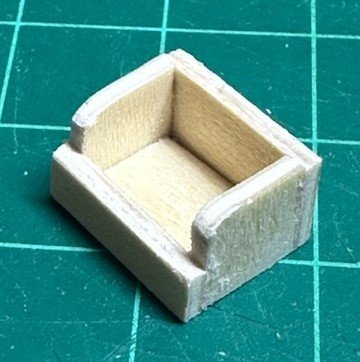
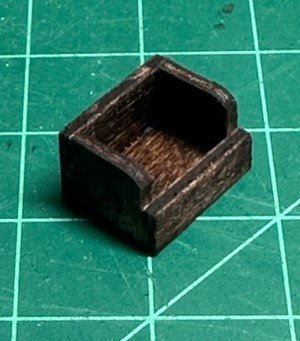
  14. Back from a HOT Florida visiting two of our granddaughters... ok, and their parents, as well... and jumping back to the shipyard to continue my Bluenose journey! Placed an order for some items needed, and while I am waiting, I decided to knock out some of the eyebolt, ringbolt and belaying pin placements around the rails and bulwarks while the deck was empty and those are easier to place. The supply of eyebolts and rings in the kit were nice, shiny brass, which I thought would look sharp around the deck, so went with the brass. The belaying pins provided, though, needed to be painted brass in order to match and look nice along the rails. I wanted to prepare and paint as many of the pins as I needed as effectively as I could, so I took a spare wood strip and drilled the necessary 1/16" holes to hold all of the belaying pins while I painted them. To match the brass eyebolts and ringbolts, I used DecoArt Extreme Sheen Vintage Brass Metallic Paint, and the process worked pretty well. I drilled the holes in the appropriate locations along the rails, and also drilled holes for the eyebolts using a pin vise with a #71 micro drill bit. Wheel Box Still waiting on that other item, so let's begin working on some of the deck structures! Seems like, in reviewing other build logs, everyone starts with the wheel box, so I will, too! I measured each of the four wall sides from the plans, and using an available 1/16" thick basswood sheet, I cut out each of the sides using an X-acto blade. Once cut, I sanded the port and starboard sides together so they matched, and started fitting all of them together so they made a nice box, and glued them using some PVA glue. I placed some spare pieces of 1/8" square rail on the inside corners to make them even more solid. For the base, I glued together a 3/8" x 3/64" strip and a 1/4" x 3/64" strip, in order to make the base slightly wider than the box width, and cut to the proper depth, again slightly longer than the depth of the box. I rounded the top edges of the completed base, then, so it appeared to mimick a cove baseboard moulding. Pretty small. but I think the effect was there! For the wheel box roof top, I glued together two (2) 3/8" x 3/64" and placed a 3/32" sq strip on each side to simulate an overhang. Once these were glued and set, I sanded each side, though, a lot in order to narrow the roof top to a nice fitting size. For the wheel box sides, I used a compass with a sharp point (same as I used to score the inside edges of the main rails when I cut them by hand) in order to create the grooves in the side panels. That worked out pretty well. Once all the pieces (the box, the roof and the base) all dry-fit properly and looked good, it was time to paint/stain. So, I needed to decide if I was going to stain or paint many of the deck structures. The plans call for using a Burnt Umber color paint, but many other modelers have been staining instead. This is, then, an appropriate time to analyze and decide what I am going to do for various parts, such as the deck floor itself, the deck structures, masts, and blocks and deadeyes. I had several stain variations on my shelf, so I tested them all on a spare piece of basswood, both with and without a pre-stain. Red Oak, Cherry, Golden Oak, Early American and Red Mahogany. My chart below may be hard to read and see the color variations clearly, but I decided to stain the deck at the appropriate time with Cherry. The deck structures, like the Wheel Box I am currently working on, will be a slightly darker color, using the Red Mahogany stain. I will use pre-stain on all of these. The masts will be stained with Cherry and the blocks and deadeyes will be dipped in a Golden Oak stain. The Burnt Umber paint is sampled on the small board under the chart. Very similar to the Red Mahogany stain, but I'll stick with the stain applications. The staining and painting progressed well, and once all pieces were completed, it was time to glue them all up! The kit-provided steering wheel was in good shape, nothing broken or bent. I dipped the Britannia casting in a bath of white distilled vinegar for about 10 minutes to clean it. After it dried, I gave it a coat of white primer, followed by the DecoArt Extreme Sheen Vintage Brass Metallic Paint on the spokes and Liquitex Basics Acrylic Mars Black paint on the circle. Once the paint dried, i drilled a hole in the front of the wheel box using the pin vise and a #55 micro drill bit, dabbed a little CA glue on the pin on the back side of the wheel, inserted, and... done. All in all, came out looking pretty decent. Had to set it on the deck to just see how it looked. But it is now going in a safe place until it is time to permanently install! Still needing to work on completing the rudder assembly with the pintles and gudgeons. Got a new tool for the shipyard, a Proxxon Micro Bench Drill Press, which I should be able to use right away with this rudder assembly. I've got a large Delta 8" drill press out on the workbench in the garage, but thought this Proxxon would be best for these small pieces. Ehhh, we will see! Also, need to decide how I want to mount this Bluenose, as I discussed in my previous update. Appreciate any advice/suggestions, and I always am thankful for the comments, criticisms, and likes. I learn so much from others! Thanks!
  15. Nice work, Ted! You are absolutely correct... a sewing machine is a demonic device! Ever since I started my Bluenose, I've been torn on whether to include full sails, furled sails, or no sails at all. Think you've convinced me, mine will probably be naked! <shrug>
  16. Eric - Great job on the decking. From a rough beginning to a nice sanded finish! I'm enjoying following your progress. And a great story regarding your canoe journeys down the Might Mo (and Amtrak and the Katy Trail)! Some thirty years ago +/-, we biked with our young children for about 10 of those Katy Trail miles (20 back and forth) just outside Kansas City. Always said we'd like to do more of the trail, but we got older! Great that you and Mrs Cathead are enjoying it all!
  17. Wow! I am one of the lucky ones! Placed my order on Thursday. And, received a shipment notice on Friday! Great product followed up with great customer service! Thanks, Chuck!
  18. Thanks, Tim! Yeah, sounds like that's happening to many of us. It's just one of the many ways Model Shipways finds to keep us... amused! Monkey Rail - Part 2 With the kit-provided monkey board laser cut piece in shambles, it was time to pull out my MicroMark plank bending iron that I purchased some 16+ years ago when I first got this Bluenose as a gift. Hope it still works!! Actually, this all worked out much easier than I had anticipated. I wetted down a couple of the 3/32" x 3/64" wood strips, used the supplied wooden curved jig that came with the iron, and gave each strip a nice curve. I pinned the strips onto a handy solder board until the wood dried and stayed pretty much in the right shape. Using the shape of my Bluenose stern curve and the provided stern monkey rail piece (that did NOT break on removal!), I cut each strip to shape. The monkey board was then glued on top of the main rail in its proper position, using PVA glue with the occasional spot of CA glue to help hold a bit faster as I worked down each side main rail. I should maybe mention that I used a small piece of scrap 3/64" wood to guide as a "spacer" from the outside edge of the main rail, marking lightly with a pencil so I could place the monkey board at that mark all the way down the main rail to the great beam. That guide worked well for me. Next, worked on placing the monkey rail on top of the monkey board. First, glued the kit-provided laser piece for the stern. Had to spread it just slightly to match my stern curve vs. what the plans provided. But, it did not break! Then the side monkey rails, placing them on top of the monkey boards so that the inside edge was even with the monkey board underneath, and the outside edge was even with the outside edge of the main rail. Sanded, filled, sanded, primed, sanded and painted. Did a bit more touch-up painting on all of the white, and... calling it good... for now. I think the next thing on the to-do list will probably be the pintles and gudgeons, as that will finish the hull construction items. I worked on prepping the rudder a week or so ago. Still need to do the scroll work and nameplates, as well. Once that is all done, from other build logs I have read, it may be time to seal the hull (or not) with some type of clear seal. I'll gather opinions on that when the time comes. Also, I have been thinking about how to mount this Bluenose, as once the deck structure construction starts, it will be difficult to do whatever I decide. One decision I am 90% sure of is regarding sails. I don't think I will be putting sails on this. I have even thought about doing some furled sails, but haven't seen too much discussion on the board about that, so not confident in tackling that project. I have seen a few displays of ships (not necessarily Bluenose) mounted on Launching Ways, as if they were under construction, or just completed and not yet launched. But, from what I understand of that, many ships are launched even before all of the masting and rigging is completed, with all of that done by the shipbuilders after the ship was in the water. Ehhh... I can't get too historically accurate, can I? Builder's prerogative?!? I do like the launching ways mounting option, however. Thoughts and opinions are, of course, appreciated, and my advance apologies if I have not explained some things accurately. But, first things first. I'm taking a week off to visit my Florida grandchildren. Priorities!!
  19. Great start, Commodore! I'd love to follow your progress on this. The Sailing Pram was a fun build for me. And great use already of the rubber bands and clips. Have plenty of both on hand! I remember using almost all my clips at times, and plenty of rubber bands! Sometimes I even used clips ON the rubber bands to make them even tighter! Ha! Carry on!
  20. A few updates on progress... albeit baby steps... Main Rail Was concerned about how I was going to lay the main rails on both sides of the ship, and account for the wider areas where the belaying pins are. Thought it was best to do this from full basswood sheets, cutting them to fit where needed. So, I procured several 8"x12"x1/16" sheets. Placing a sheet on the ship in position, I drew the outline of the hull on the underside for the curve. I decided to create these side rails in two pieces per side, having them meet just on the fore deck side of the center great beam. After marking the outside edges in this process, I cut these out using my Dewalt scroll saw, then shaped and sanded to match the hull/waist curve. Once I had the outside curve shaped, I used two compasses, one measured to the standard rail width and one measured to the wider width for the belaying pin locations, to score/mark the inside edges. The sharp points of the compass really helped give me a nice line to use as a guide for the #10 X-acto knife. Pretty slow and tedious, but seemed to work out well. My scarf joints at the stern and bow pieces weren't perfect, but worked pretty well after some sanding, filling and painting. Overall, I was satisfied with how the main rail construction came out. Before sanding/filling After sanding/filling Buffalo Rail Next up is the buffalo rail. The laser cut piece provided in the kit came out fine and, after some sanding to clear the char, it looked like it would sit atop the mail rail ok. However, when placing the side rail next to the bow piece, there was a bit of a size difference that required some more sanding and shaping. Once that was done, though, and it was primed, sanded and painted, it looked nice. Pretty straight-forward with a small adjustment, but another easy completion. Small victories! Monkey Rail Well, so much for small victories... The kit has two laser cut pieces for the monkey rail construction that are both placed at the stern. The monkey rail piece and the narrower monkey board piece that the monkey rail sits on. Both pieces are 3/32" x 3/64", but one sits wider side horizontal (monkey rail) and one sits wider side vertical (monkey board). There's probably a better way to explain this, sorry. Anyways... the monkey rail laser cut piece came out fine. However, when attempting to take the thin monkey board piece out of the laser cut sheet, it snapped into pieces. Well crap! Looks like in reading some other build logs, this happened with others, as well, so I guess I joined the club. Now I will have to recreate the curved monkey board that is at the stern. Time to pull out the plank bending iron! Uggghhh... This may have to wait a week until I return from a trip. I was THIS close to having the hull components done! Ha!
×
×
  • Create New...