
DONATION DRIVE - SUPPORT MSW - DO YOUR PART TO KEEP THIS GREAT FORUM GOING!
×
.JPG.ca33079f5815b861e67b9c2cccd37982.JPG)
Blue Ensign
-
Posts
4,566 -
Joined
-
Last visited
Content Type
Profiles
Forums
Gallery
Events
Everything posted by Blue Ensign
-
 Well done on completing this behemoth Glenn, she certainly has presence as a fully rigged model. 👍 B.E.
- 587 replies
-
- 2
-

-

-
- Indefatigable
- Vanguard Models
- (and 1 more)
-
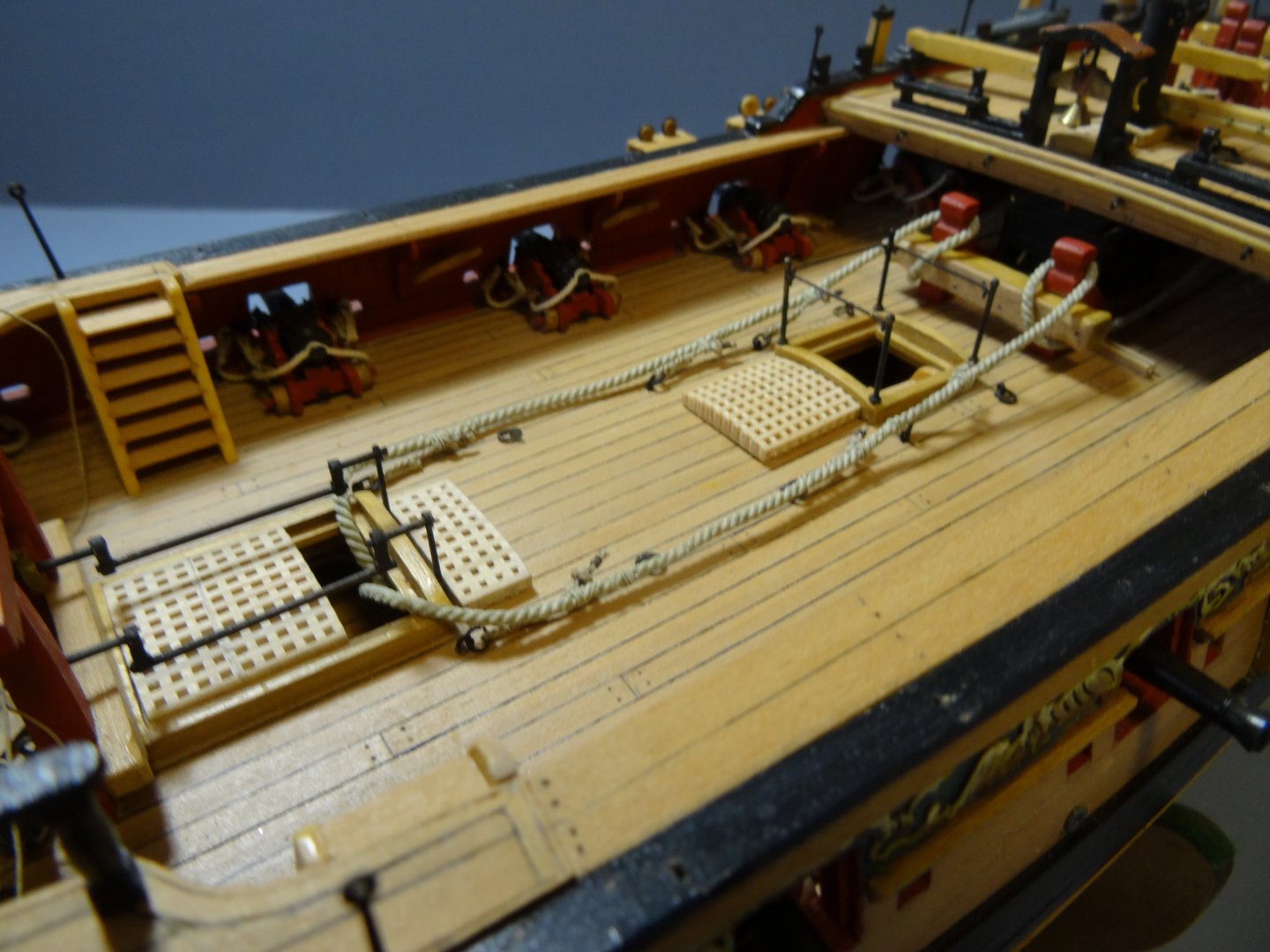
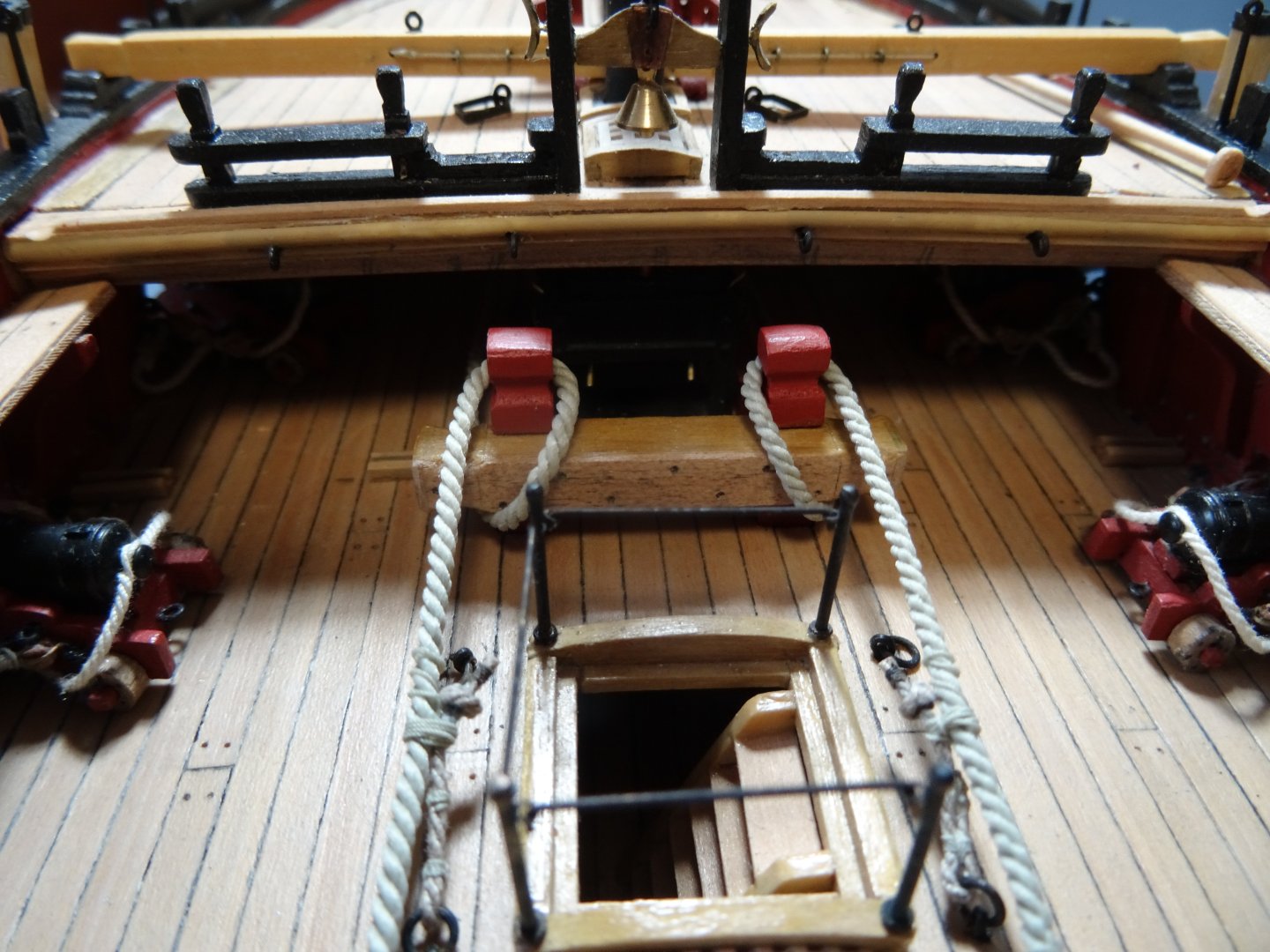
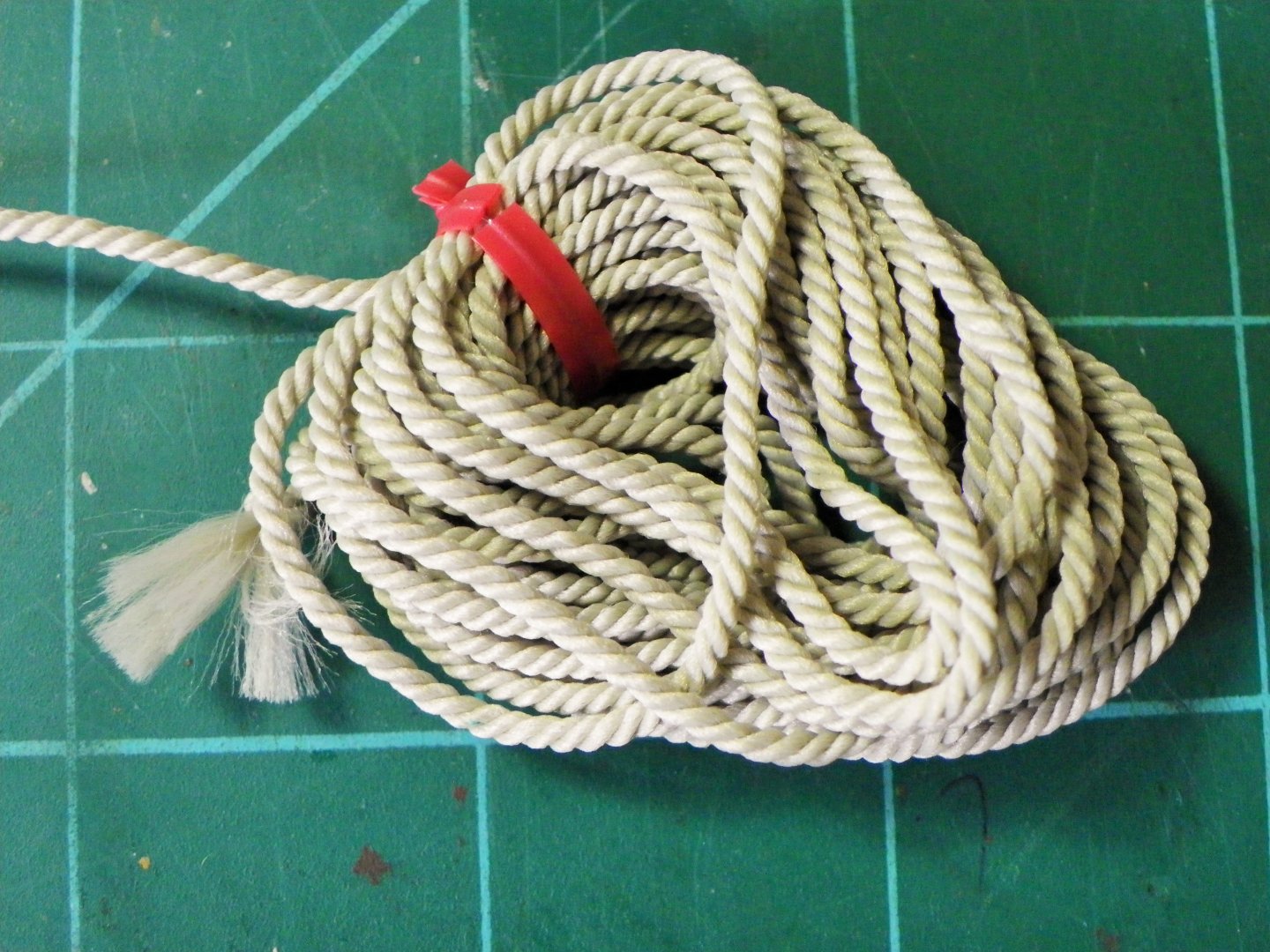
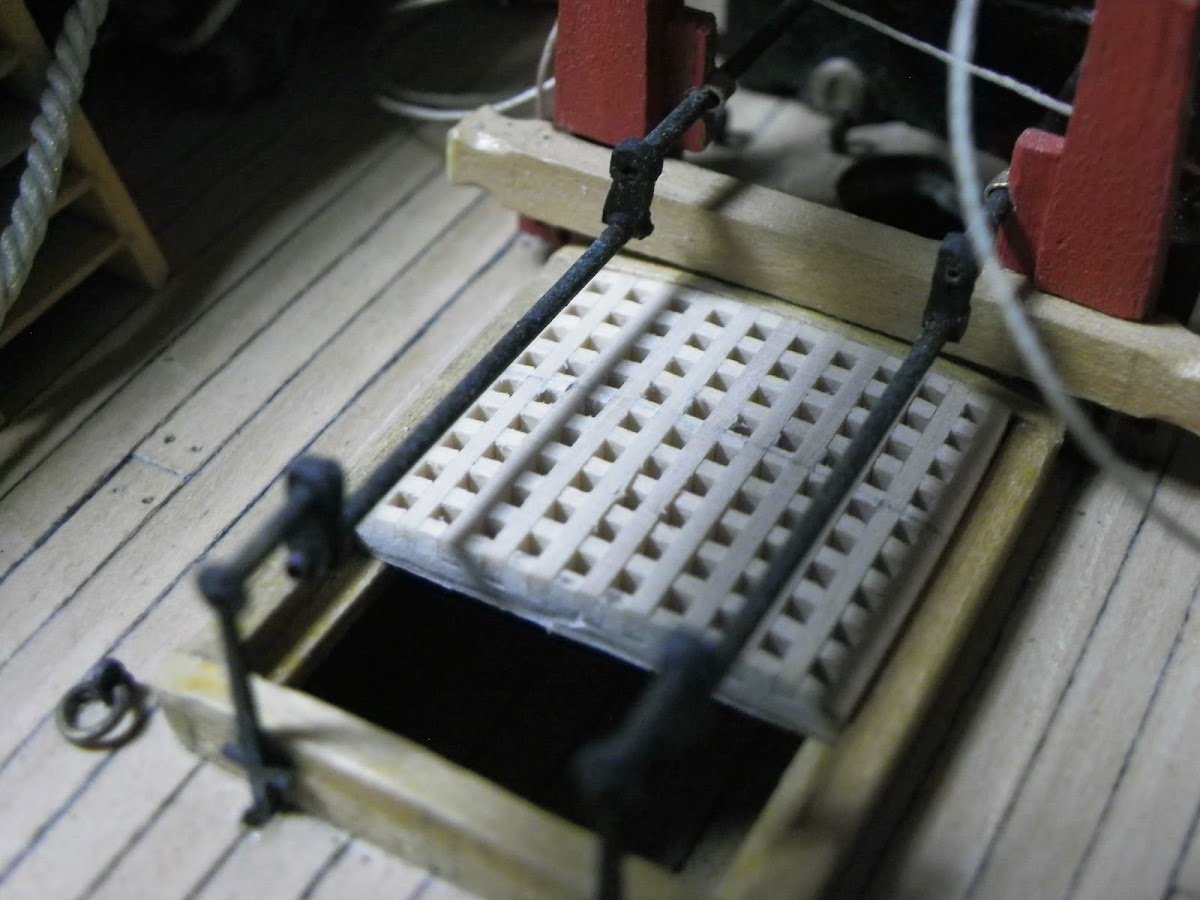
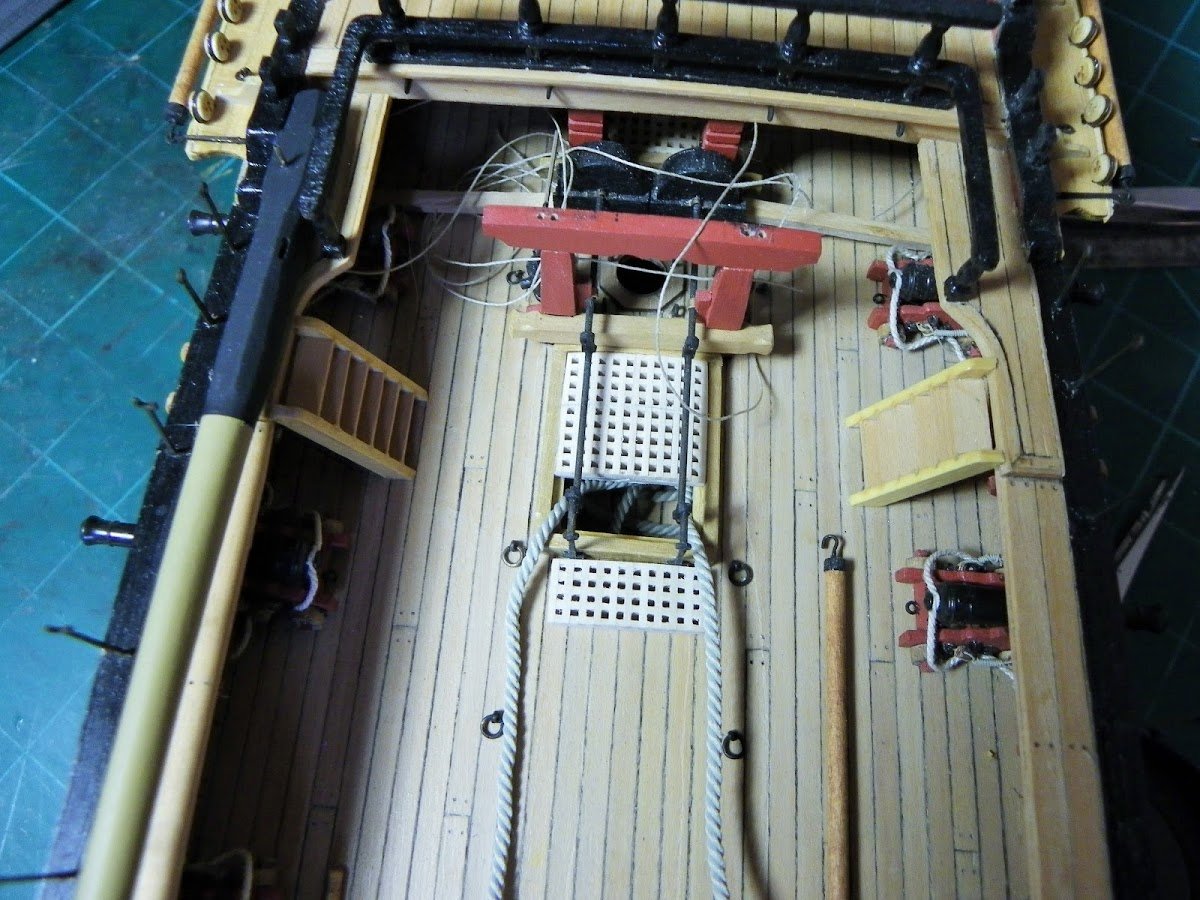
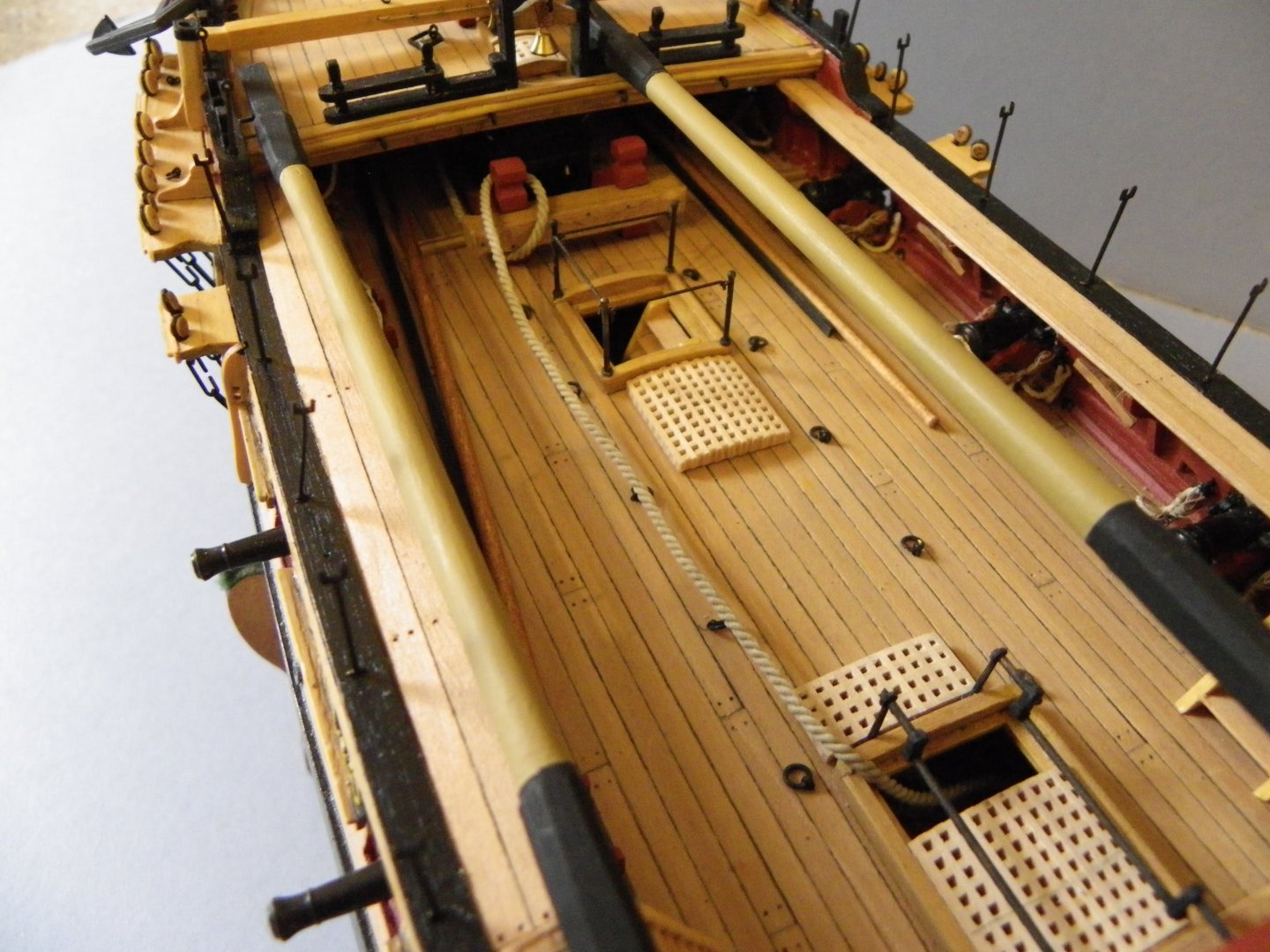
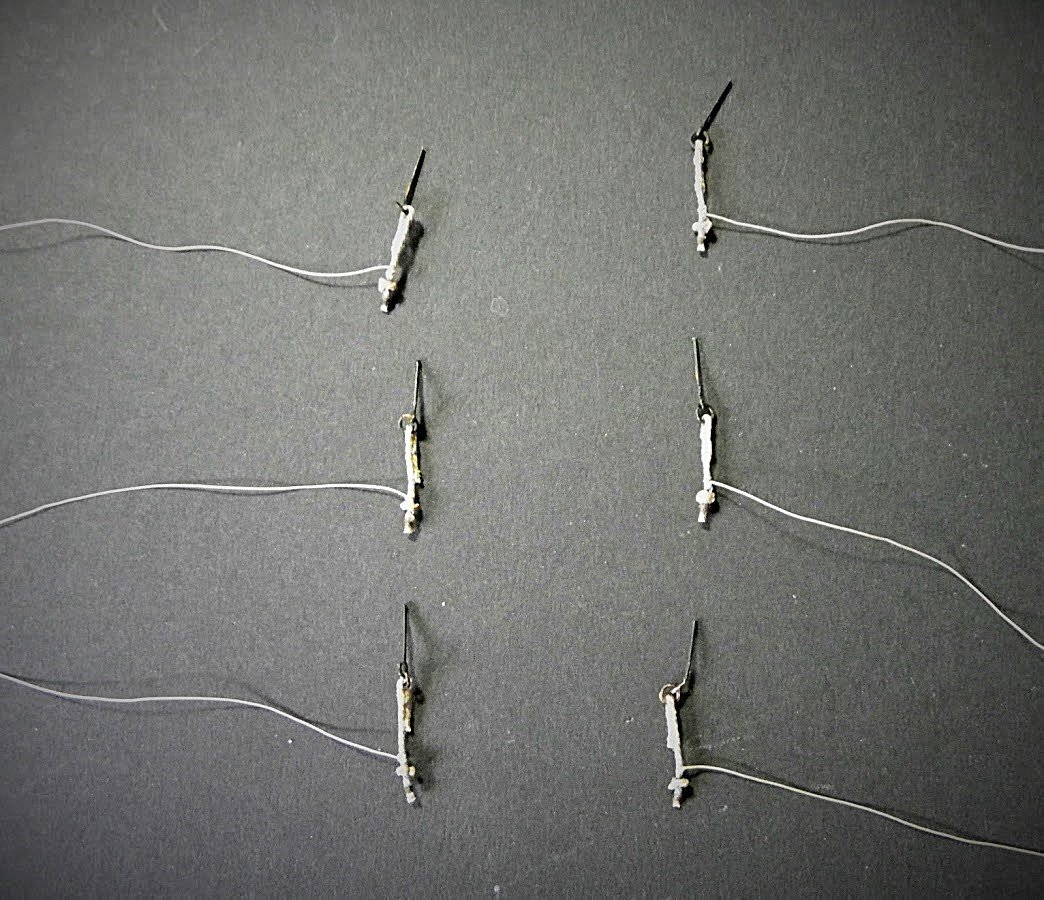
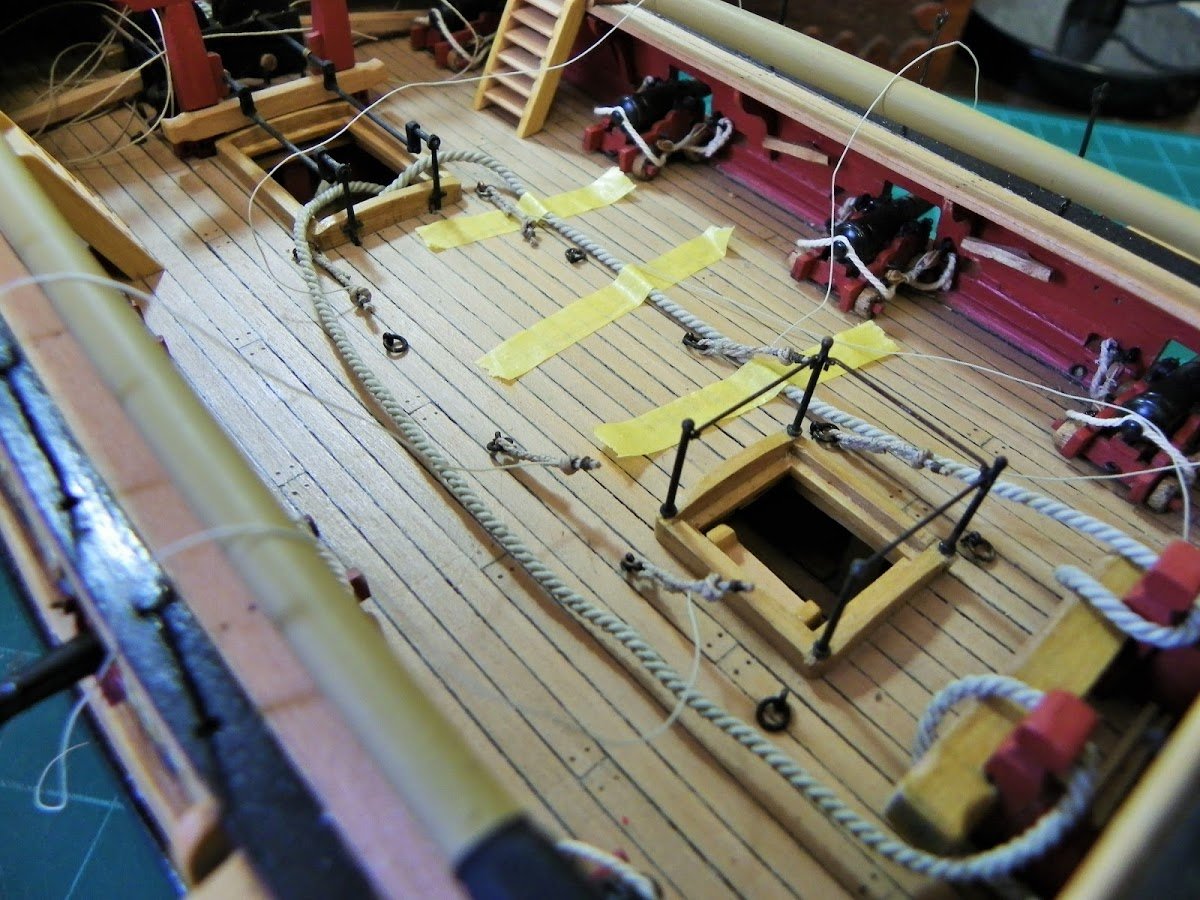
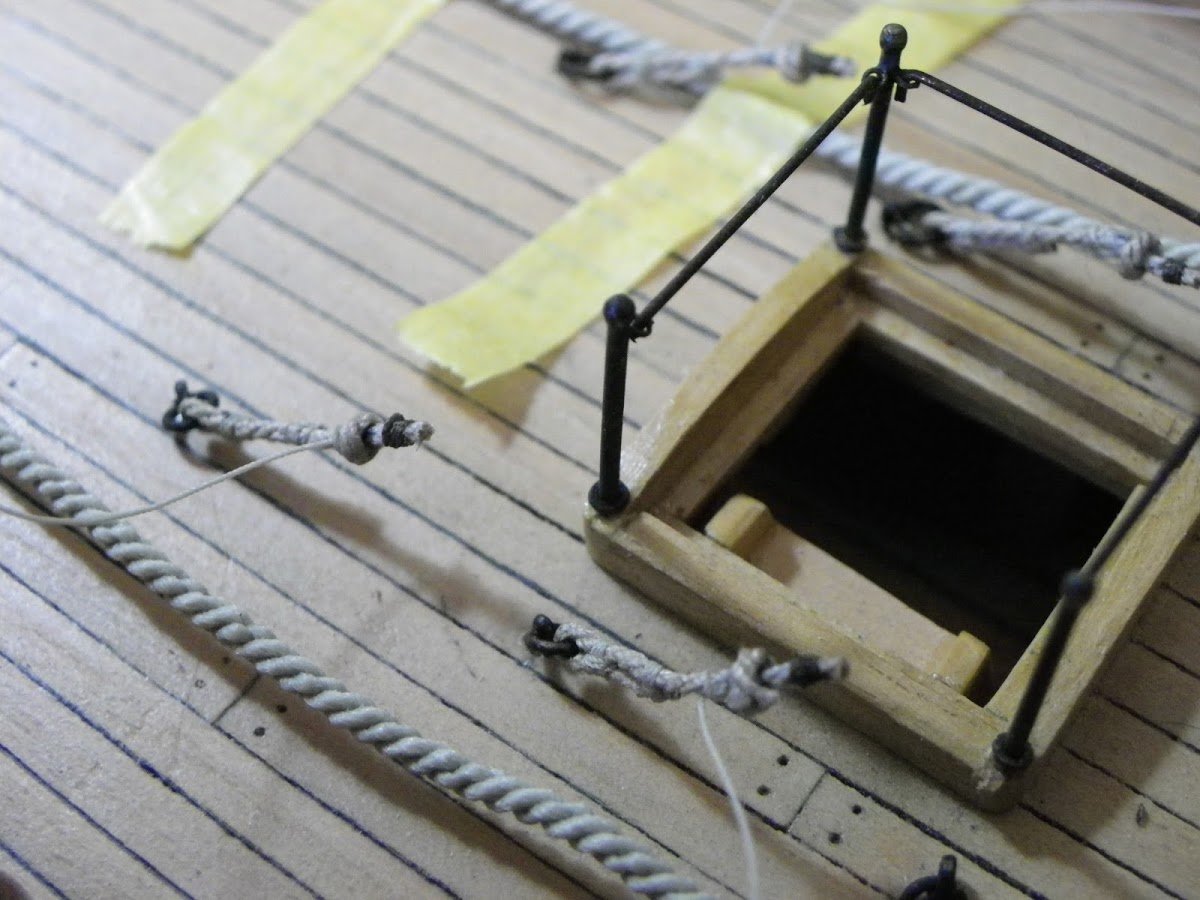
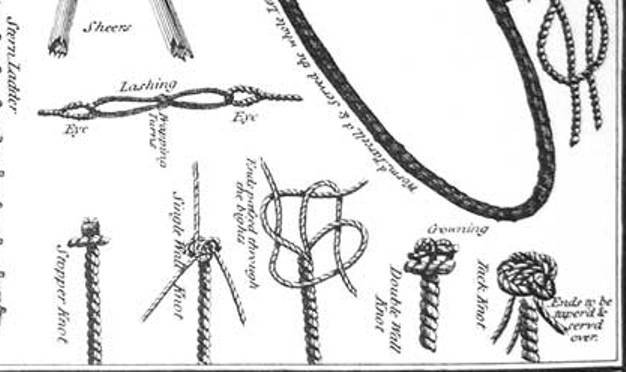
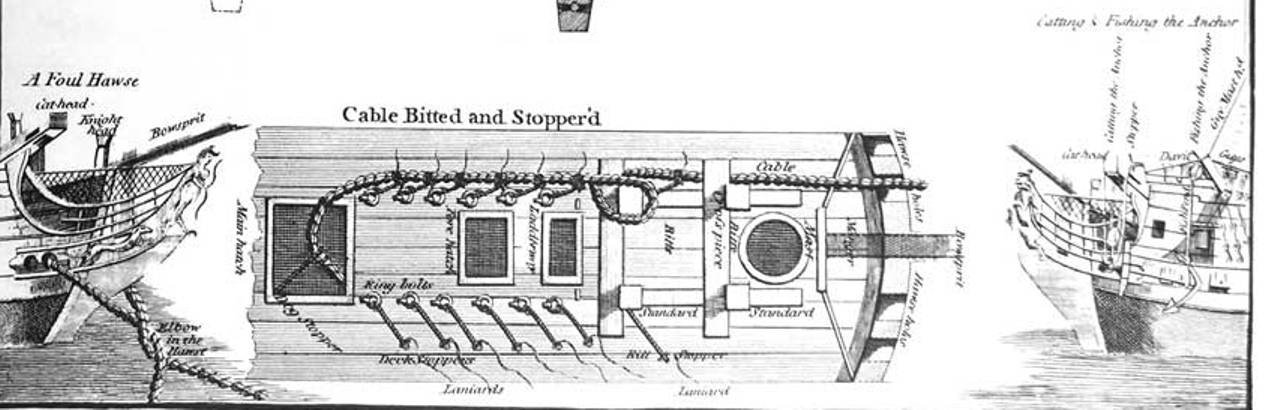
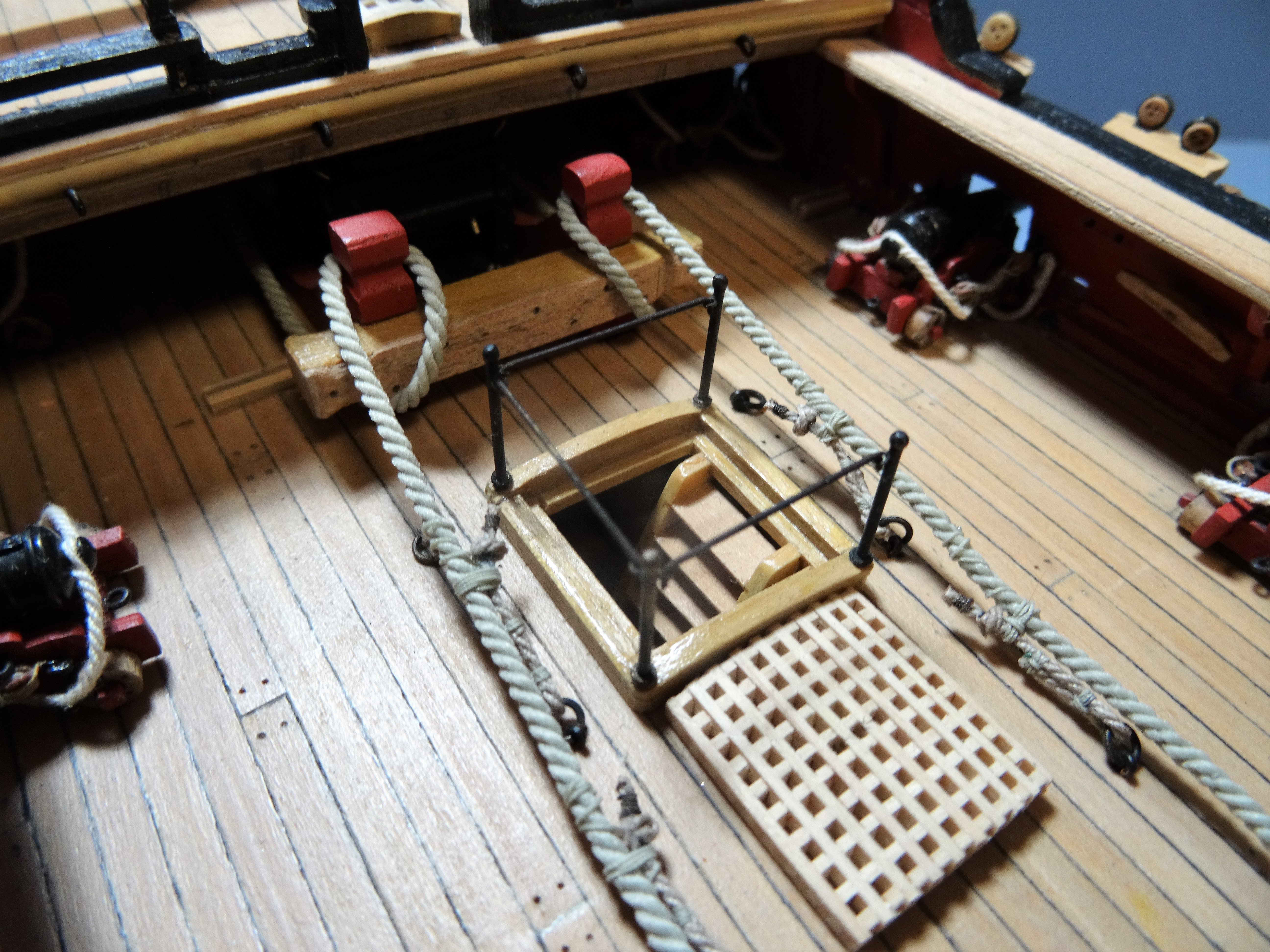
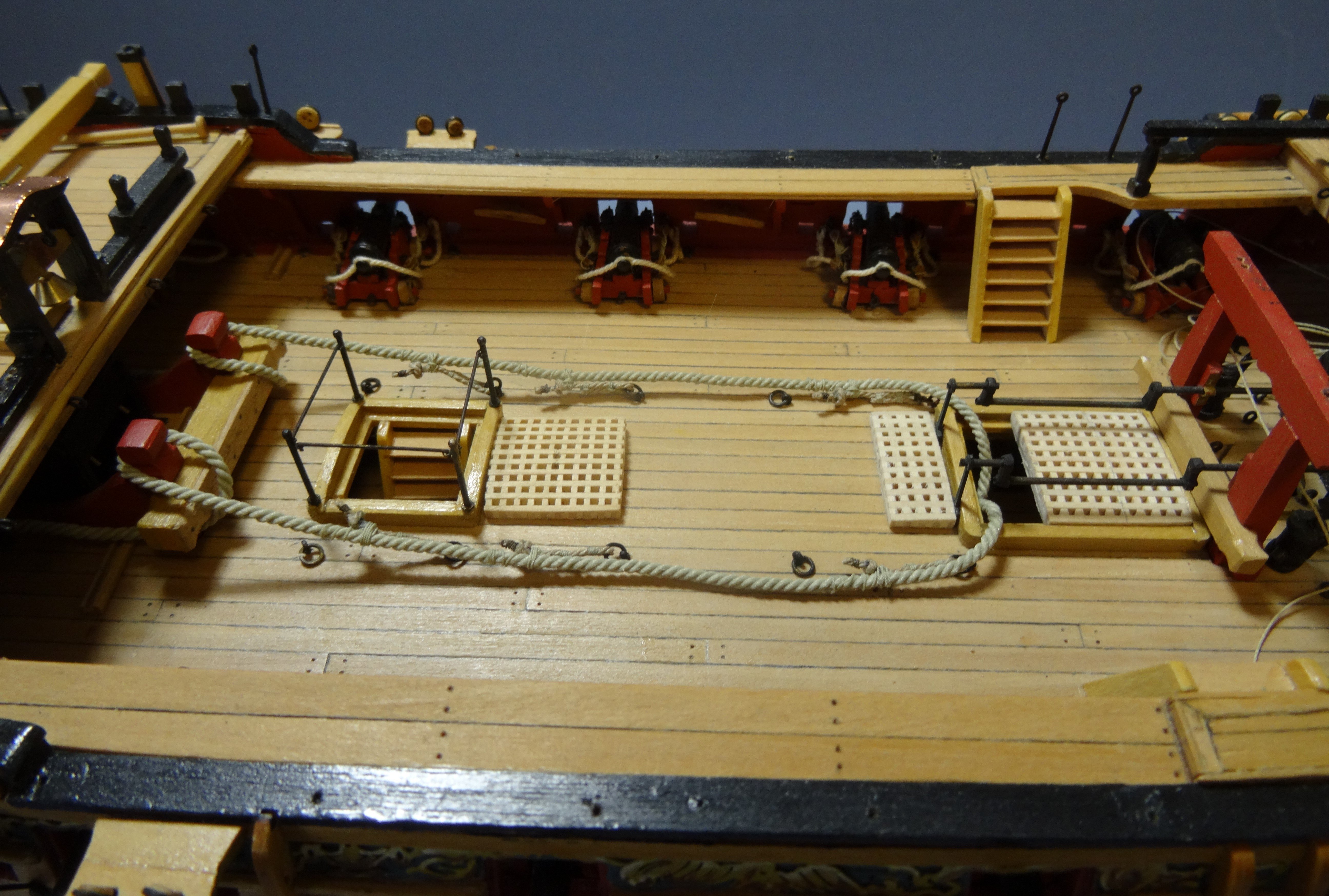
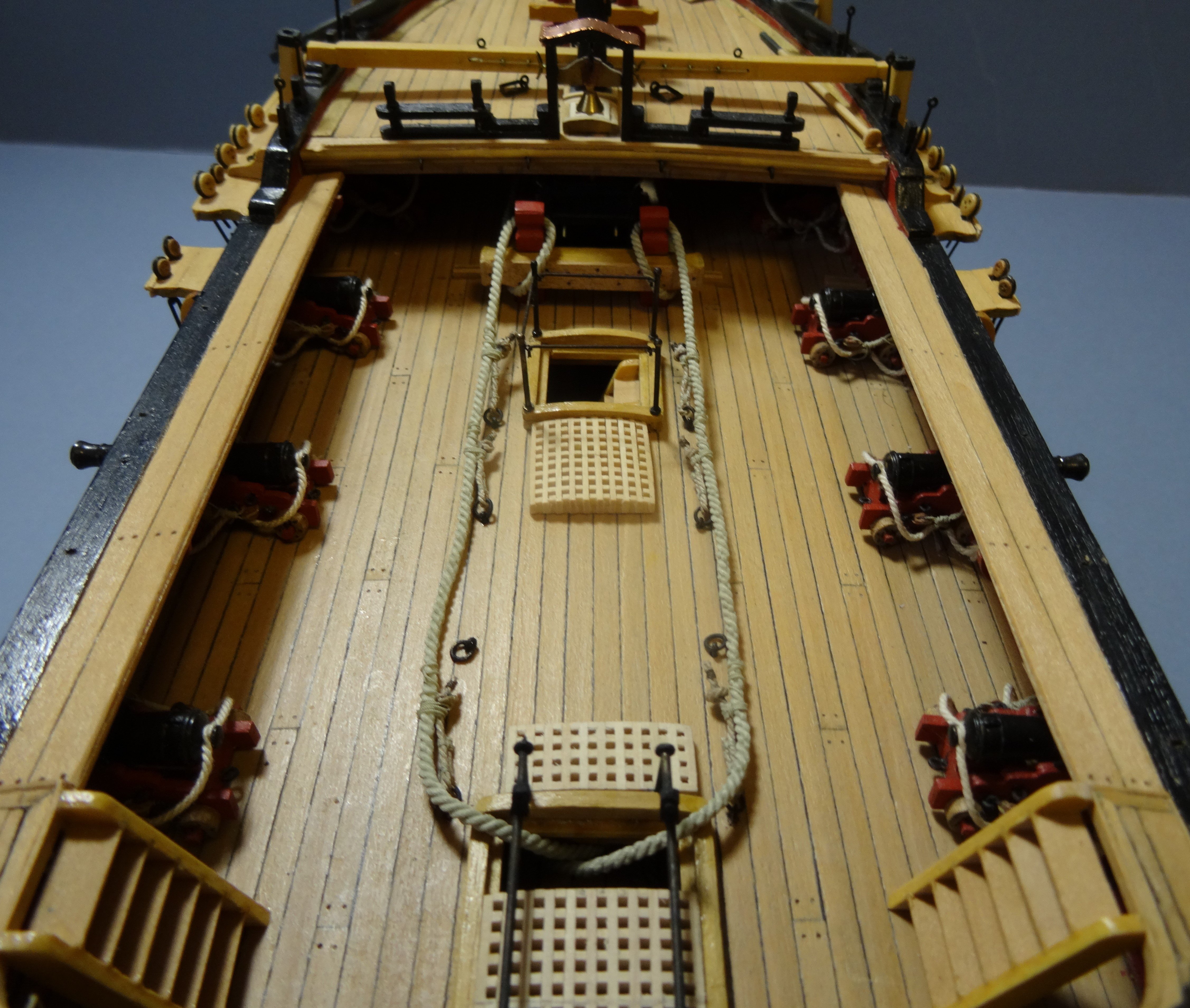
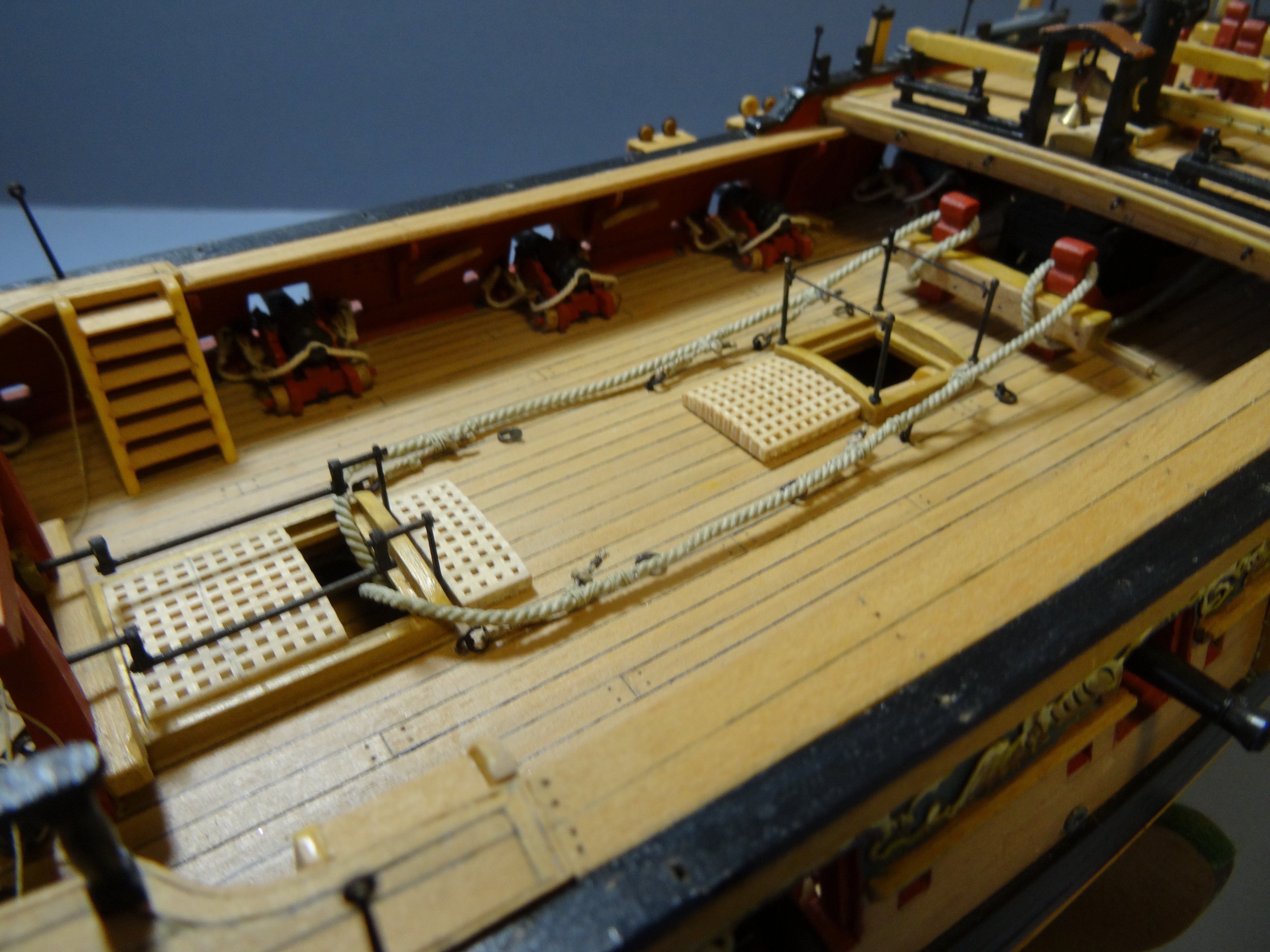
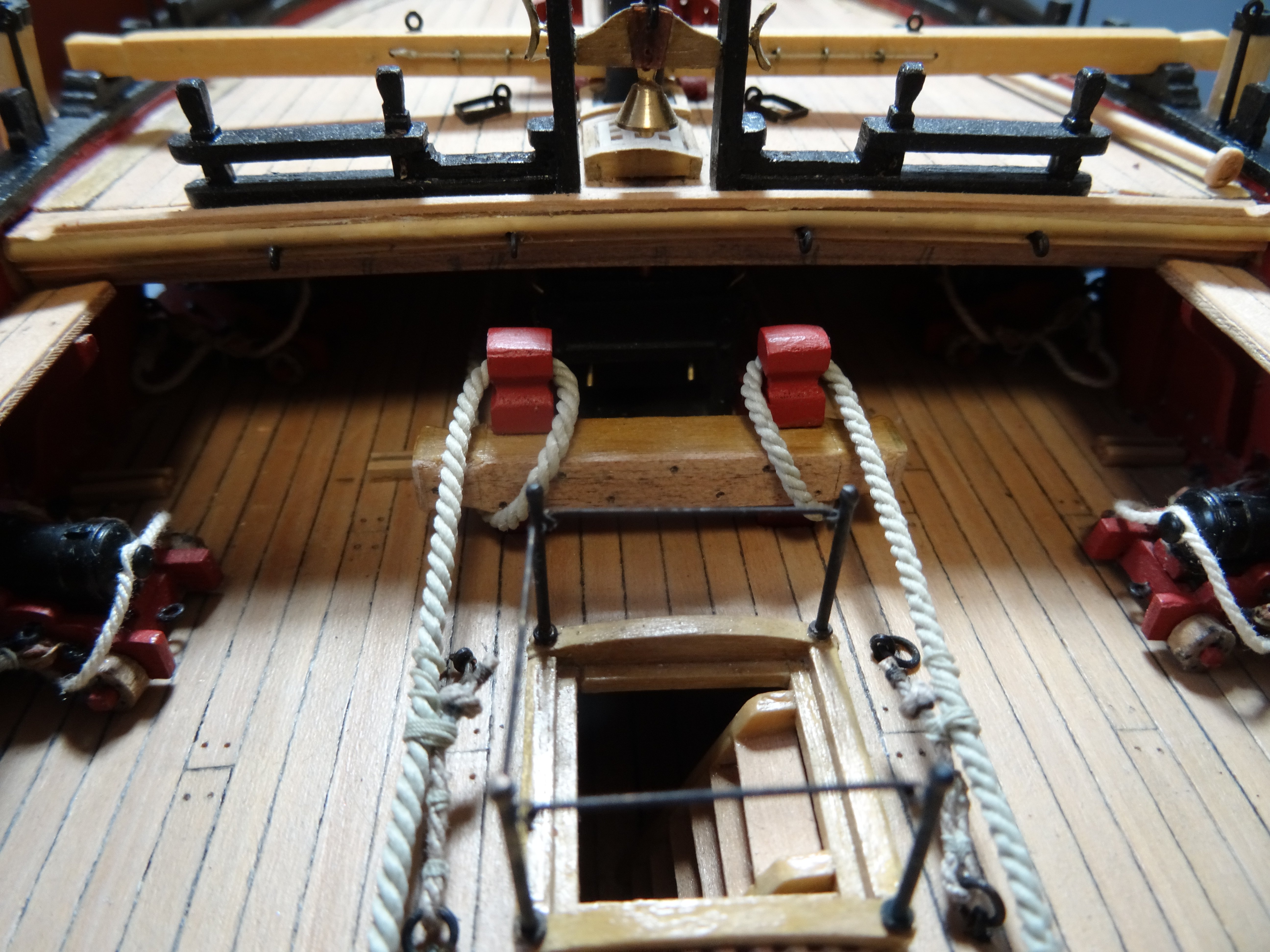
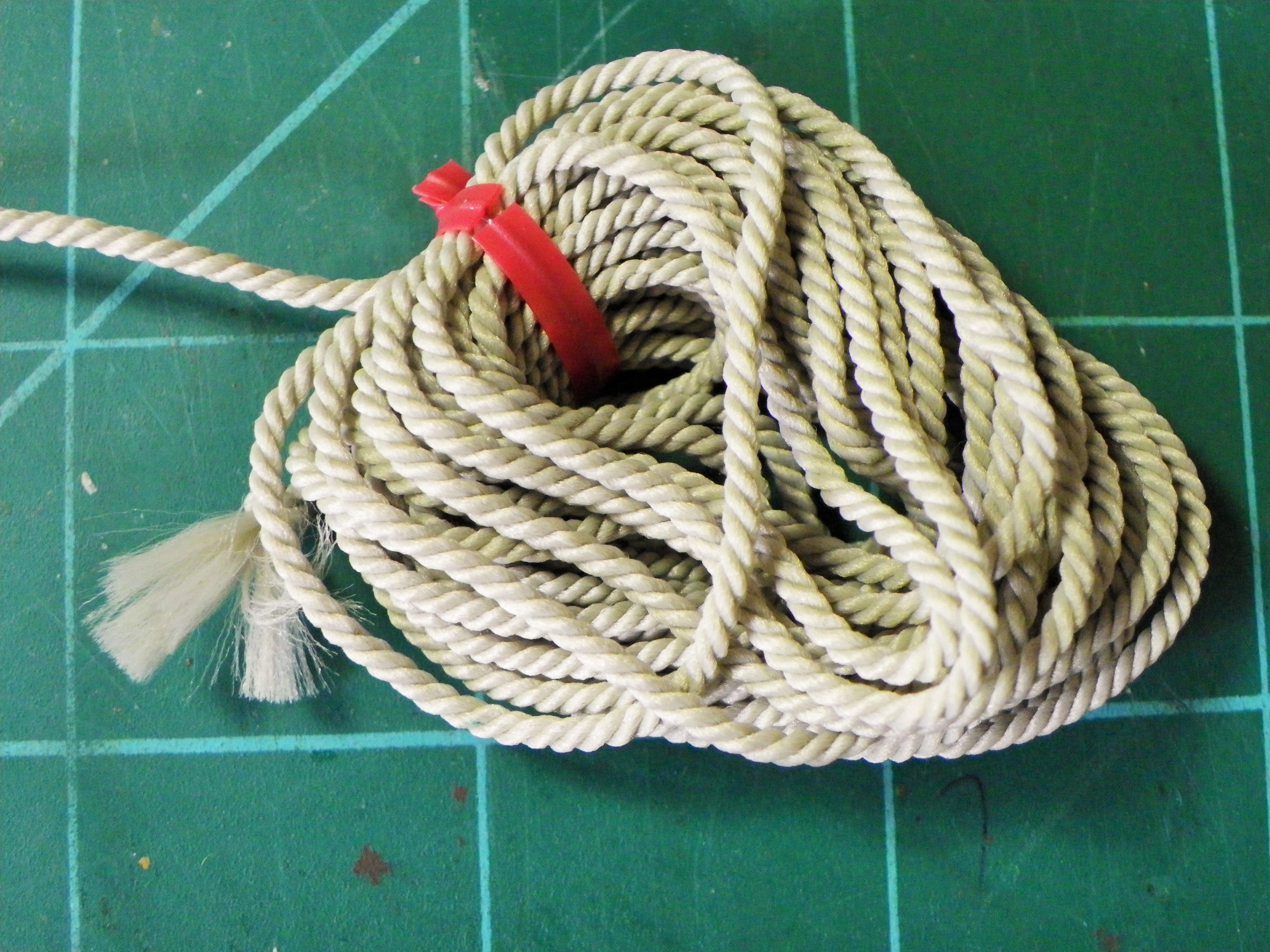
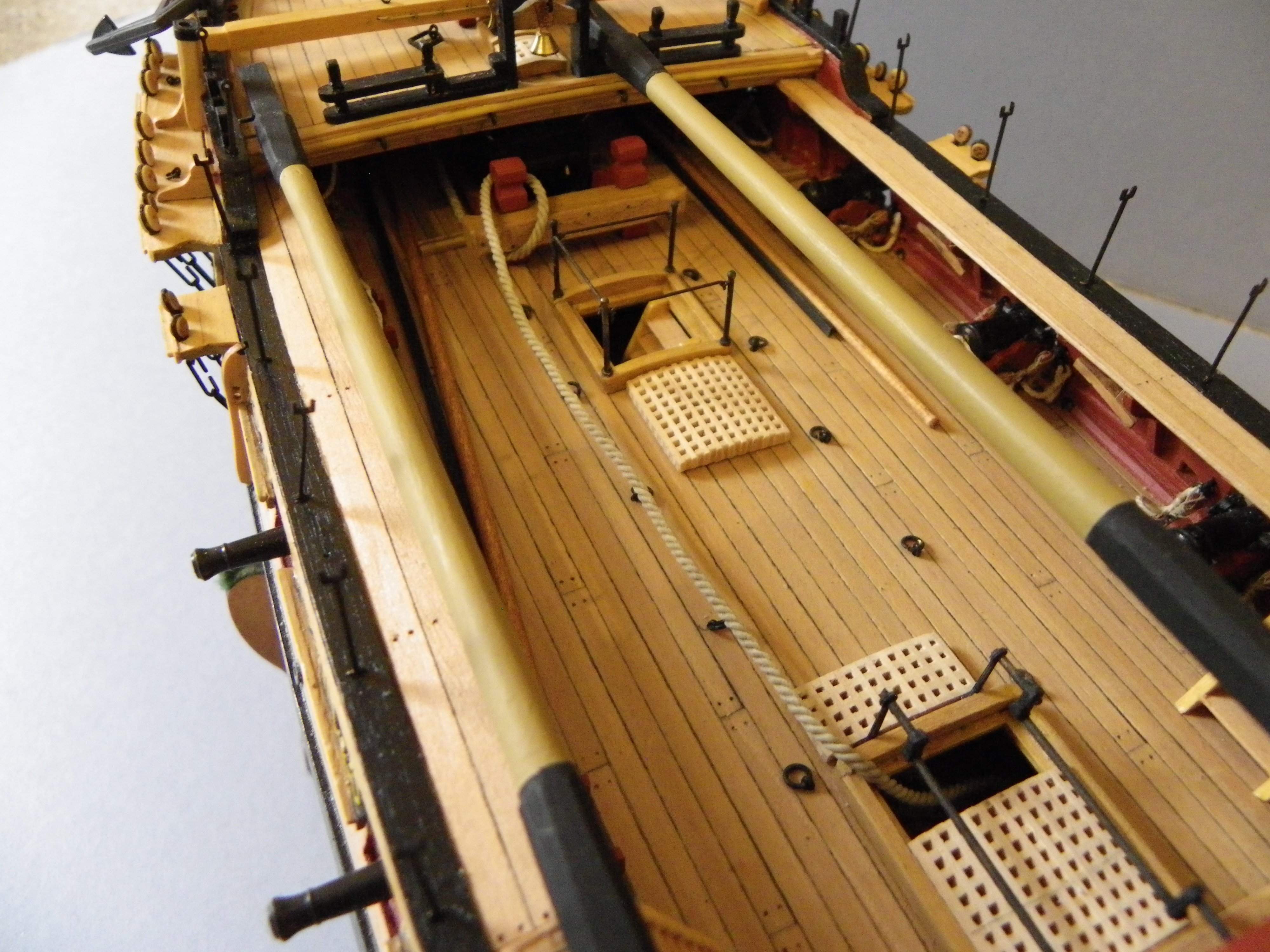
Anchor cable Rigging – Pegasus I have been contacted a couple of times recently about the rigging of the anchor cables along the deck of Pegasus. It seems I missed the inclusion of this element when I reconstituted my Pegasus log after the great crash. So, for the benefit of any who may be interested this is a summary of my approach. Anchor Cable. The given size is 13" circ which scales to 1.64mm dia. I have gone for a slightly larger dia. preferring the look of Moropes 1.75mm stuff. 1983 As a nod to authenticity this is left hand cable laid rope, as it should be. I considered how to pass entry down the Main Hatch; Was the grating removed during the cable stowage process, or were there cut outs in the hatch grating to take the cables? Something I missed from the early stages of construction tffm shows the Main hatch grating in three sections, so the forward one could be removed to allow passage of the hawser. 2010 The grating was modified to reflect this. 2091 One of the drawbacks of using non-natural Morope is the springiness of the line, which is a big disadvantage when it comes to things like anchor cables where an appearance of weightiness is desirable. To counter this I immersed the line in diluted pva, followed by stretching to take the spring out of the cable before fitting. 2019 In reality the cables would be stored in the hold but of course there is no hatch on the lower deck. When I fit the cables they will be weighted and coiled neatly out of sight on the Lower deck. If you are considering adding the anchor cables to the model, beyond simply stuffing the rope ends into the hawse holes, early consideration should be given to the Main hatch gratings. Stoppers While the Riding Bitts took the majority of the stresses on the cable of a ship at anchor, additional security was provided by use of stoppers attached to ring bolts in the deck and seized to the cable inboard of the Bitts. According to Steel these are the proportions of the stoppers. Cabled 7" ( 0.88mm ø ) Finished length of short stopper before fitting 8' 3" (39mm at scale);seizing with 1" (0.1mm ø) line. attached to cable with a 2" (0.25mm ø)lanyard There are six stopper ringbolts each side of the deck. These were made from brass rings and eye bolts clenched together and blackened. These ringbolts also doubled up for the relieving tackles of the Upper deck guns. This is what Steel has to say about stoppers.+ STOPPERS. Short ropes, used to check the cable, suspend weighty bodies, and retain the shrouds, &c. in a fixed position, after being damaged, or otherwise. ANCHOR-STOPPERS are used to suspend the anchor, when catted: BITT-STOPPERS are those stoppers used to check the cable: DECK-STOPPERS are used to retain the cable when the ship is riding at anchor: DOG-STOPPERS are used as additional securities when the ship is riding in heavy gales, or bringing up a ship with much sternway, to prevent the cable from snapping at the bitts, and to ease the deck-stoppers: WING-STOPPERS are used for the same purposes as dog-stoppers: SHROUD-STOPPERS are used to confine a shroud together, when damaged, or shot. FORE-TACK, and SHEET, STOPPERS, are for securing the tacks and sheets, till belayed. STOPPERS, DECK and BITT, are divided into ten short and two long stoppers. The two long stoppers, from a first rate ship to a sloop, are cut sixteen feet; and, when knotted, to be twelve feet six inches. The short stoppers are each cut twelve feet six inches; to be, when knotted, eight feet three inches long. One end of each stopper has a double wall-knot, and the ends led up through the middle, and whipt with spunyarn: the other end is only whipt with spunyarn. PREPARATIONS NECESSARY TO BE MADE FOR ANCHORING. On approaching an anchorage, the anchor and buoy are got clear, and a range of cable stretched along the deck suitable to the depth of water. Care should be taken, that nothing is in the way to check the cable, or stop its running out: then, at a proper distance, a turn is taken round the bits with the cable, thus: First pass the cable from the anchor underneath the cross-piece, then take up a bight of the cable abaft the bits, and throw it over the bit-head. The end of the cable is clinched round the orlop beams in the royal navy, and round the main-mast in the merchant service. It is necessary to have water near the bits to prevent its firing by the friction. Stoppers and ring ropes of all kinds should be ready for use. The stock lashing being cast off, and nothing but the anchor stopper and shank painter retaining the anchor, men are stationed to stand by them, and let go at the moment ordered. To secure the cable when out, DECK STOPPERS are thus previously prepared: they are turned into the ring bolts on the deck, round a large iron thimble, and fastened with a throat and end seizing. Each stopper has a laniard spliced round the head, under the knot, by which several turns are taken round the cable, and the end stopt. BESIDES the deck stoppers, others are used as an additional security to the cable; such are the BIT STOPPERS, &c. BIT STOPPERS. Each stopper is reeved through a hole in the standard knee, against the fore part of the riding-bits, and is turned in or spliced. It has a laniard spliced round the head, under the knot. When used, several turns are taken with the laniard round the cable, and the end stopt. It is to check the cable in bringing up the ship. Another bit stopper much approved of, is about four fathoms long, and tailed out like a nipper at one end, and knotted at the other. Let this stopper be rove through the hole in the standard knee. To pass it, let it be held aft, inside, over the cable, and under the bits, outside the cable; then worm it round the cable before the bits. Then, as the cable runs out and it is required to check the ship, haul tight the worming; and, by the cables drawing forward, it will tighten the stopper, and bend the cable so close to the bits as effectually to bring the ship up. This stopper is not likely to jamb, Therefore is extremely well calculated for bringing a ship up with ease; as, by slacking, and hauling tight the worming, the cable may be suffered to run out, or be checked at pleasure. In heaving up in a heavy sea, when, by a sudden pitch of the ship, the messenger or nippers give way, this kind of stopper will be found extremely serviceable; for, upon these occasions, this stopper may be always passed ready, and the bight triced up abaft the bits, with a rope-yarn clear of the cable. Another bit stopper, made with a large eye, that it may be thrown over the bit head, and shifted over from side to side, is also much approved of. DOG STOPPERS. One end is clenched round the main-mast, and the other end wormed in the cuntlines of the cable, and stopt in several places; then brought back with several turns over its own part, and the end stopt. It is of little service, unless it be long enough to clap on above the coamings. WING STOPPERS. One end is clenched round the orlop beams in the wings, and the other end is clapt on as the dog stopper. RING ROPES are occasionally made fast to the ring bolts in the deck and to the cable, by passing the ends through the ring of the bolt, and through the bight, then clapt on the cable with cross turns, and the ends stopt. Ring ropes may be better single than double; they are passed with less confusion of turns. To pass a single ring rope, and have it in readiness to check upon veering away the cable, take also three slack turns through the ring bolt and round the cable, one before the other, and hold up the parts fair; then take as many slack turns of worming round the cable, before the ring, and they held up fair, leaving sufficient room for the cable to pass through. When the cable is to be checked, haul tight the worming; and by the cables running out, it will readily draw the turns tight through the ring, and bind the cable so close to the ring, as to prove an excellent stopper. Ring ropes are similar to the laniards of stoppers, to check the cable when freshening the hawse, or to add security to the stoppers in a heavy sea. For the stoppers I am using Chuck's tan rigging line .035" which conveniently scales to 0.88mm ø spot on for 7" circ. cable. 2131 The first job is to attach the stopper to the deck bolt. It should be turned into the ring of the bolt using an iron thimble and finished with a throat and an end seizing. I use a needle to work the seizings of 0.1mm line. Good job I hadn't glued the ring bolts in place. At the scale involved for me at least, I don't think it viable to represent the thimble as it would be very small and thin inside the bight of the stopper line, the throat and end seizings present no difficulties. I decided to fit three stoppers each side, partly to demonstrate the purpose but mainly to secure the anchor cable and keep it taut from the Bitts to the hatch. To determine the length of the stopper I did a temporary fit against the anchor cable and marked off the length. The next real tricky problem is how to represent a Matthew Walker knot at the end of the stopper. Having looked at how you form one of these, I dismissed trying it in a nano second, there are far simpler ways of driving yourself mad. So, this is my approach: Take some of the stopper cable and soak it in diluted pva. Form a very tight ring and slice it where the two ends cross. Immediately seal the cut ends with ca. Using ca apply the ring to the stopper and use more ca to glue the two end of the knot together. This is the result. 2141 At scale I think the knot looks ok, the overall length of the stopper is only 15mm. 2140 The anchor cable is secured along the deck for fitting of the bitts. 8989 09000 Constant minor adjustment to the cable and the stopper is required as it is seized to the cable, to keep things looking reasonably taut. 8990 8992 8993 The anchor cables are coiled and secured between the frames below decks. Note they are crossed as they enter the hatch, this was an accepted practice to make handling easier, and in modelling terms it also allows a better lay of the cable. So, if you're thinking of attaching the cables to the anchor this job needs to be done at a no later stage than this to avoid access problems on the model. Note: This arrangement is stylised in the sense that the anchors are at the cathead but I'm showing the cables around the riding bitts and secured along the deck with stoppers. Securing the anchors like this would normally be when the ship is at anchor, and the stoppers are to relieve the strain on the bitts. My intention was simply to add interest to the deck details whilst showing how anchor cables were secured. B.E. 08/07/2024
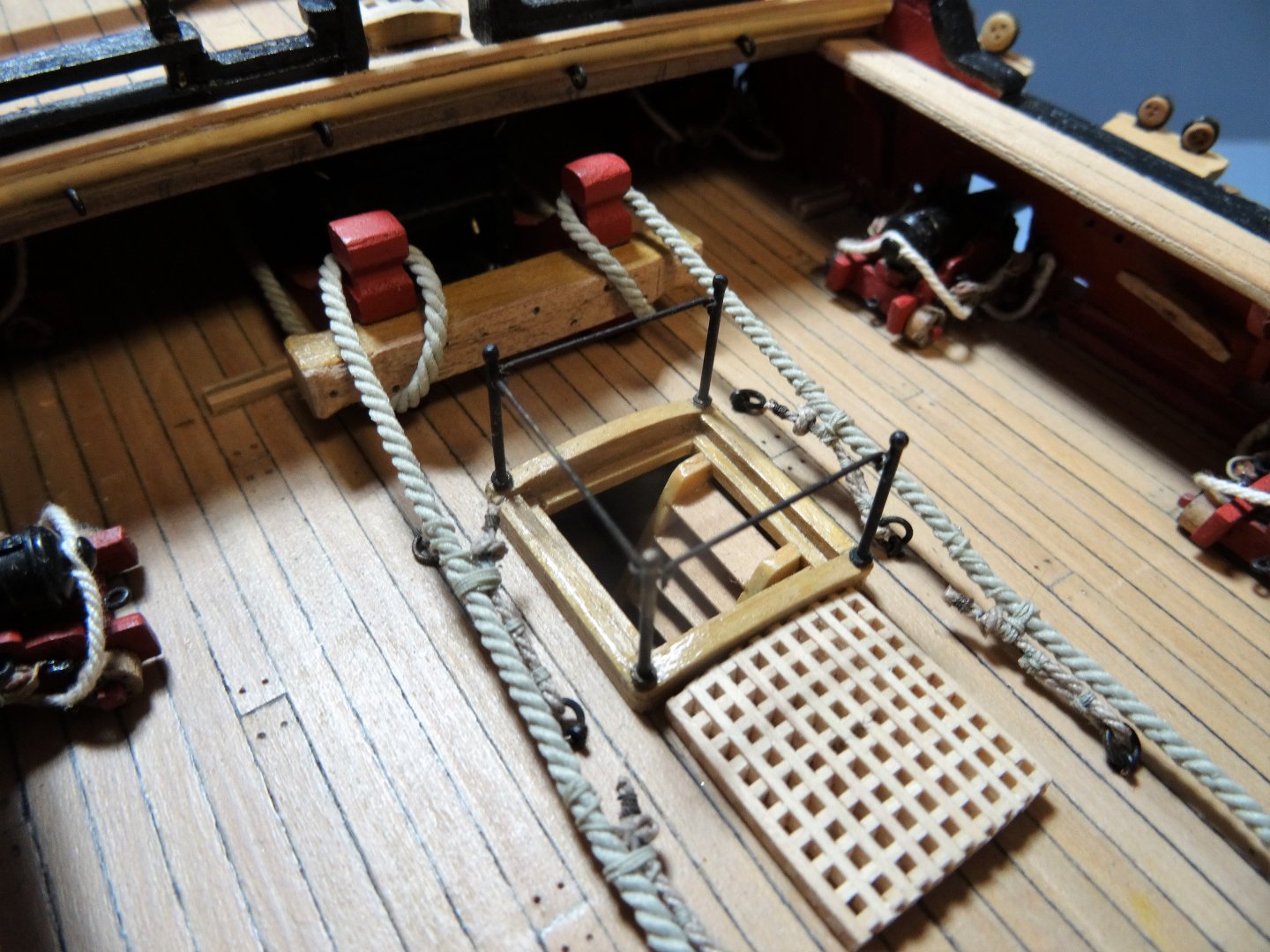
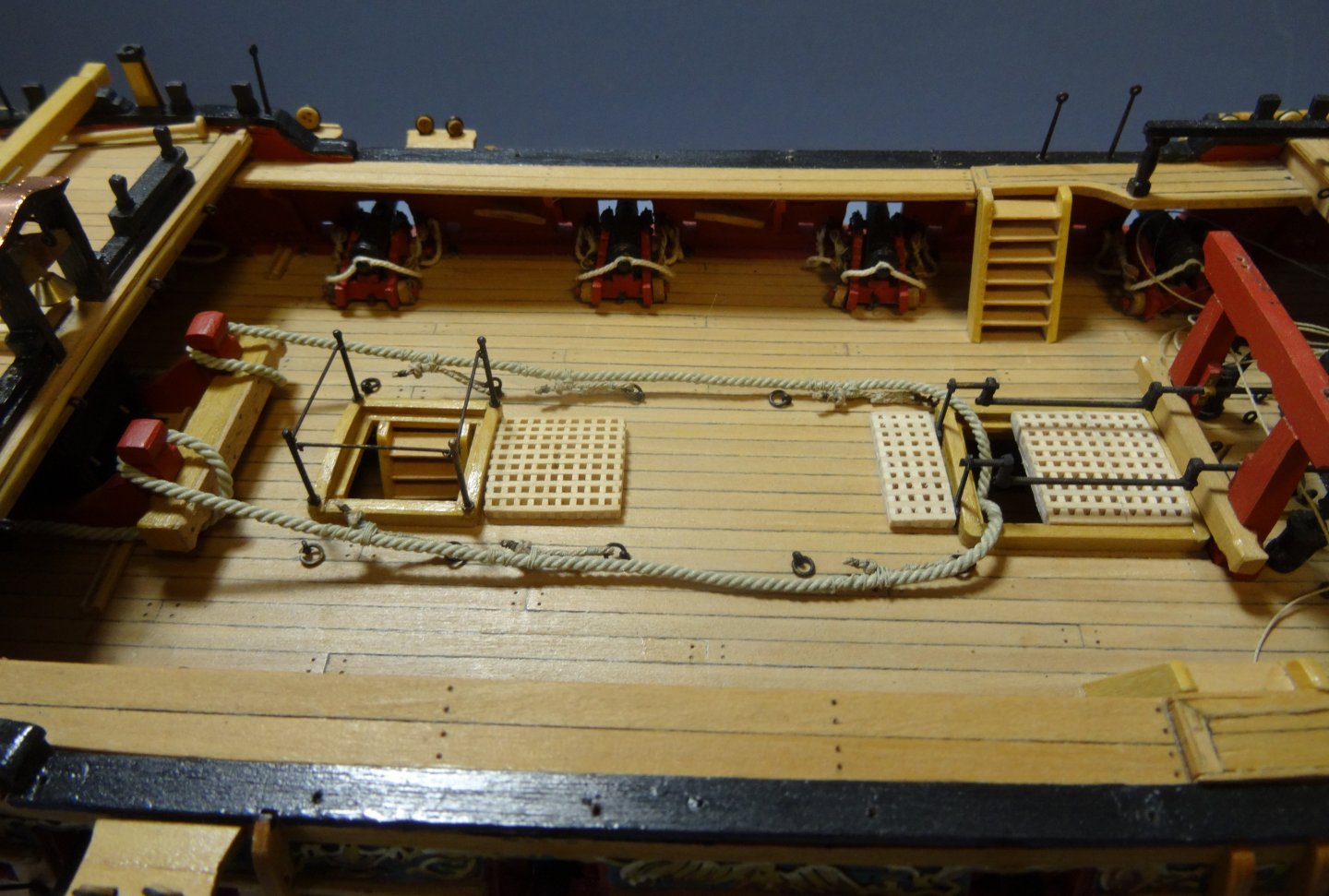
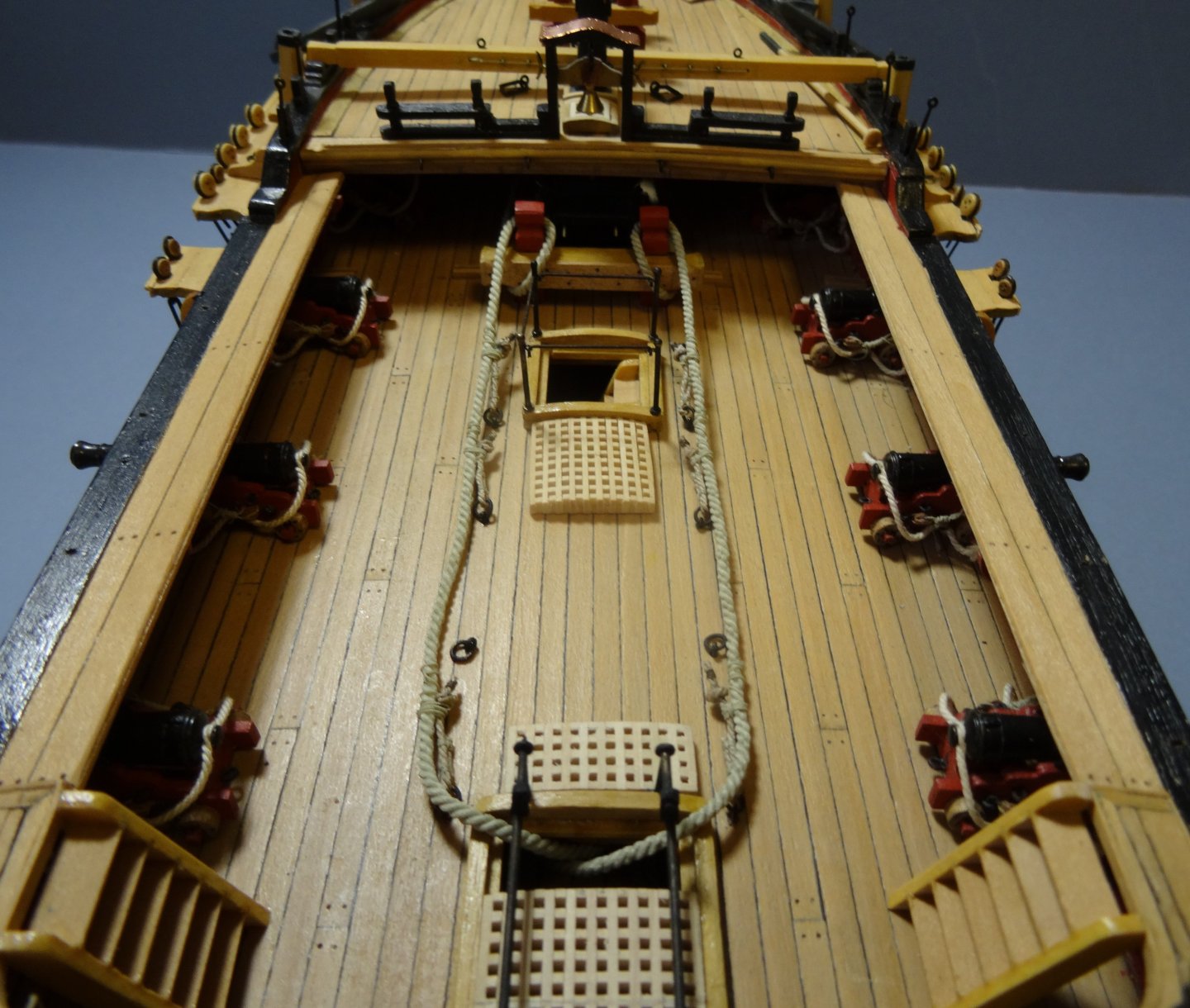
- 366 replies
-
- 11
-
-
- pegasus
- victory models
- (and 2 more)
-
A new Nelson figure has been created by Chris.
-
An interesting project. Danish sterns had a very different look to those of British ships which should clearly mask the Sphinx origin. Replacement of the Sphinx figure, not the prettiest of features, is a bonus. A bit of kit bashing is right up my Strasse, and I wish you well with your endeavours.👍 B.E.
- 125 replies
-
- 5
-
-
- Christiania
- Vanguard Models
- (and 1 more)
-
I'm in, thank you for pressing on with this project.👍 B.E.
-
Love the look of her David, very nicely done. 👏 B.E.
-
Interesting times ahead Chris, and best wishes for the fruition of your plans. B.E.
-
I think your biggest achievement is your obvious enjoyment of a first build, recognition of areas that you hope to improve, and an appetite gained to build another. Well done.👍 B. E.
- 152 replies
-
- 3
-
-
-
- Flirt
- Vanguard Models
- (and 1 more)
-
Old news Glenn, the project is back on for one last throw of the dice. 👍 I rather think your description of the figure set as small plastic toy a little unkind and dismissive of the hard work that no doubt goes into creating such items. B.E.
-
I would urge Chris to reconsider his decision and proceed with this project, it has the makings of being a unique and interesting addition to his range. I was looking forward to making a dio around the figures as I did with the cook figure at 1:48 scale, in addition to having a sitting figure to have in the Great cabin of my 1:64 scale build. There are going to be a lot of disappointed people, and I'm one of them.😞 B.E.
-
The reason I asked is because I was thinking about retro fitting to my existing 'Indy' model. B.E.
-
A big improvement Chris, the standing figure looks just like Rupert Penry-Jones. Is the sitting figure separate to the table/chair, and scaled to fit your existing furniture designs? B.E.
-
An excellent rendition of an oob build, very well done James. She surely looks impressive as a fully rigged model. B.E.
- 488 replies
-
- 7
-
-
- Indefatigable
- Vanguard Models
- (and 1 more)
-
I'm not too sure about the rear view of the standing figure, there seems to be an unnatural look to the upper body, and the coat looks odd without tail vents, as per the sitting figure. B.E.
-
What I've been waiting for, thank you Chris. Presumably there is more work to do on the figures before they go into production? B.E.
-
You've been spoiled by Vanguard kits, but at least there are plenty of bulkheads in that bow section. B.E.
- 62 replies
-
- 2
-
-
- belle poule
- OcCre
- (and 1 more)
-
It will be interesting to see if the separate bow sections allow for easier fairing given that you have the run from the already planked hull.🤔 B.E.
- 62 replies
-
- 3
-
-
- belle poule
- OcCre
- (and 1 more)
-
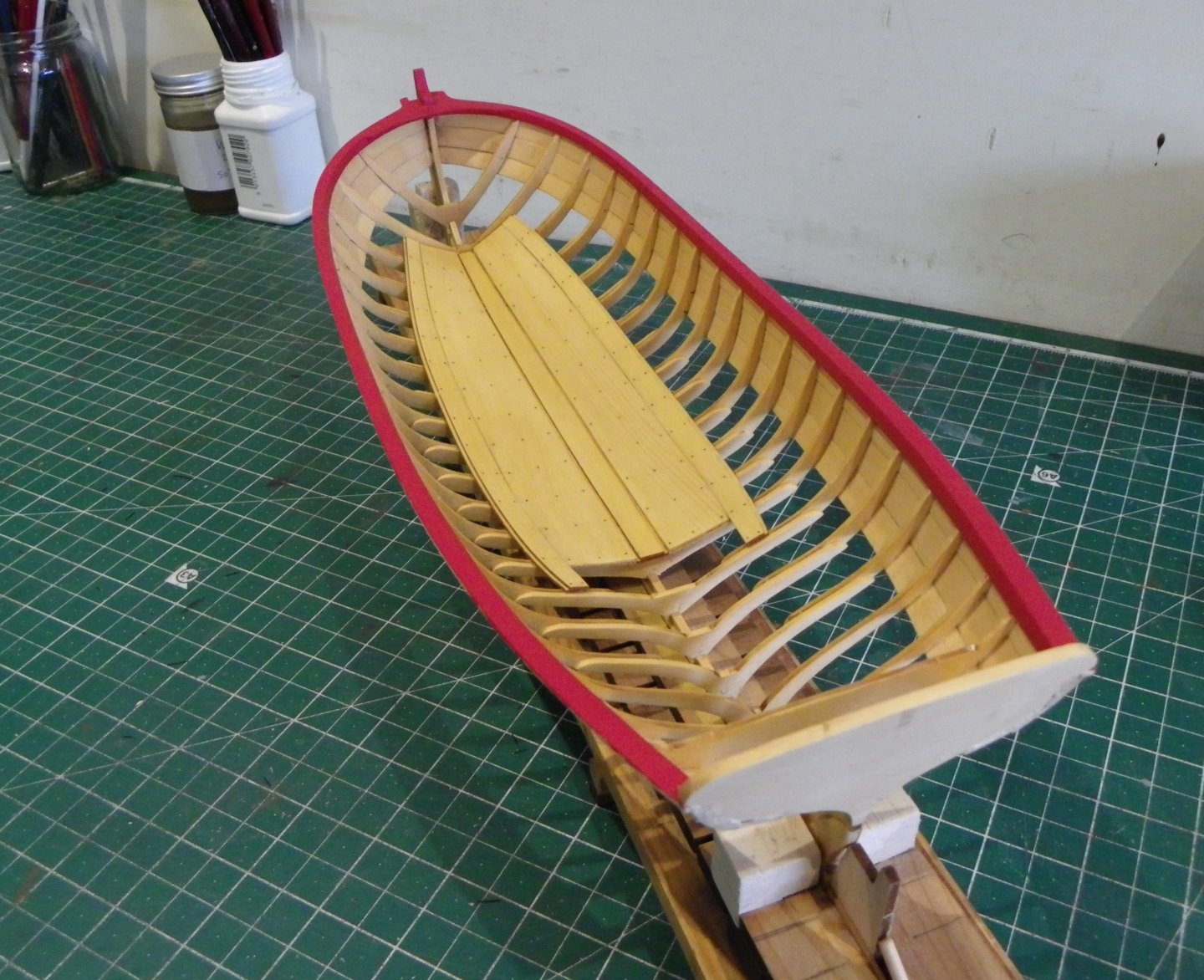
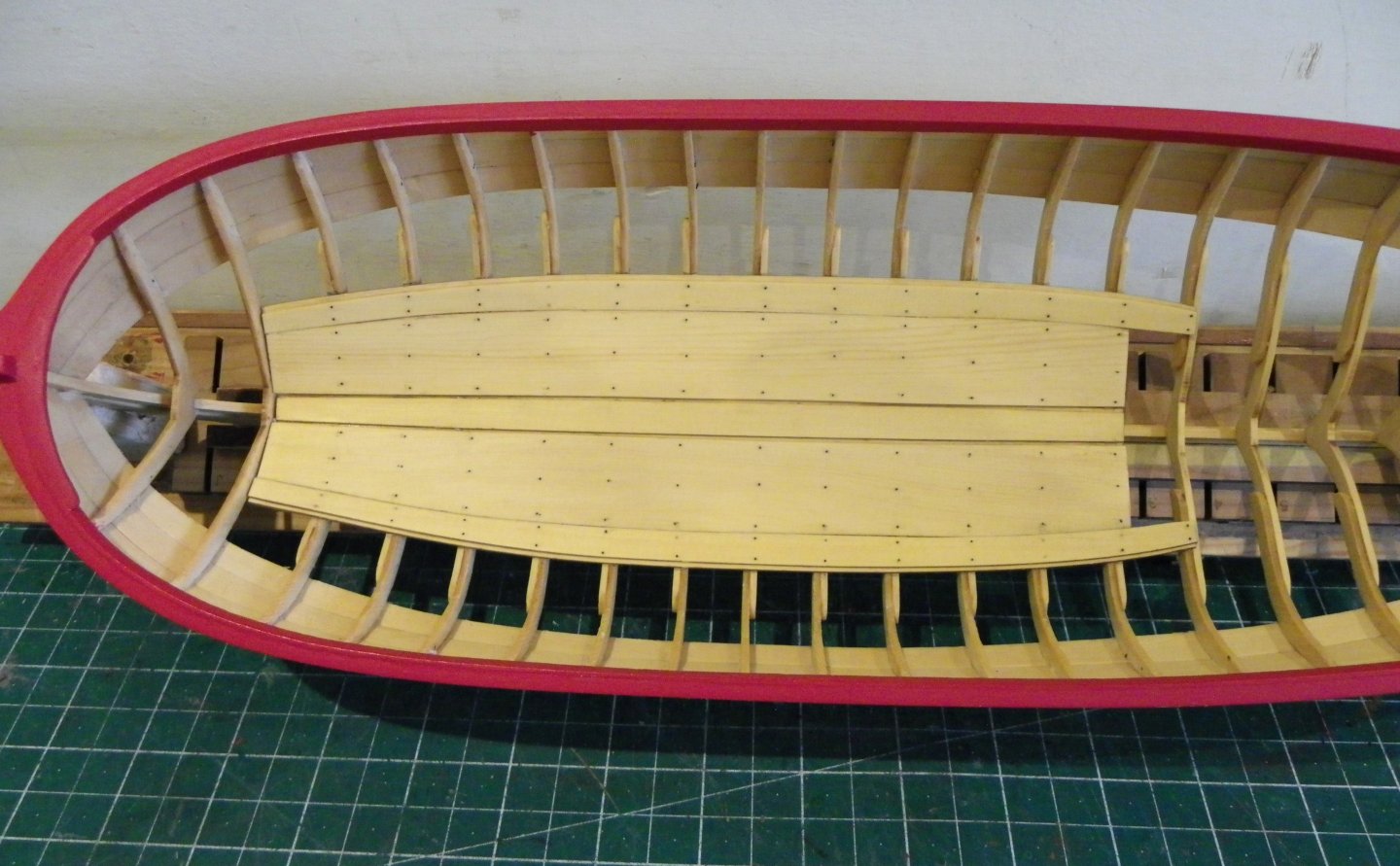
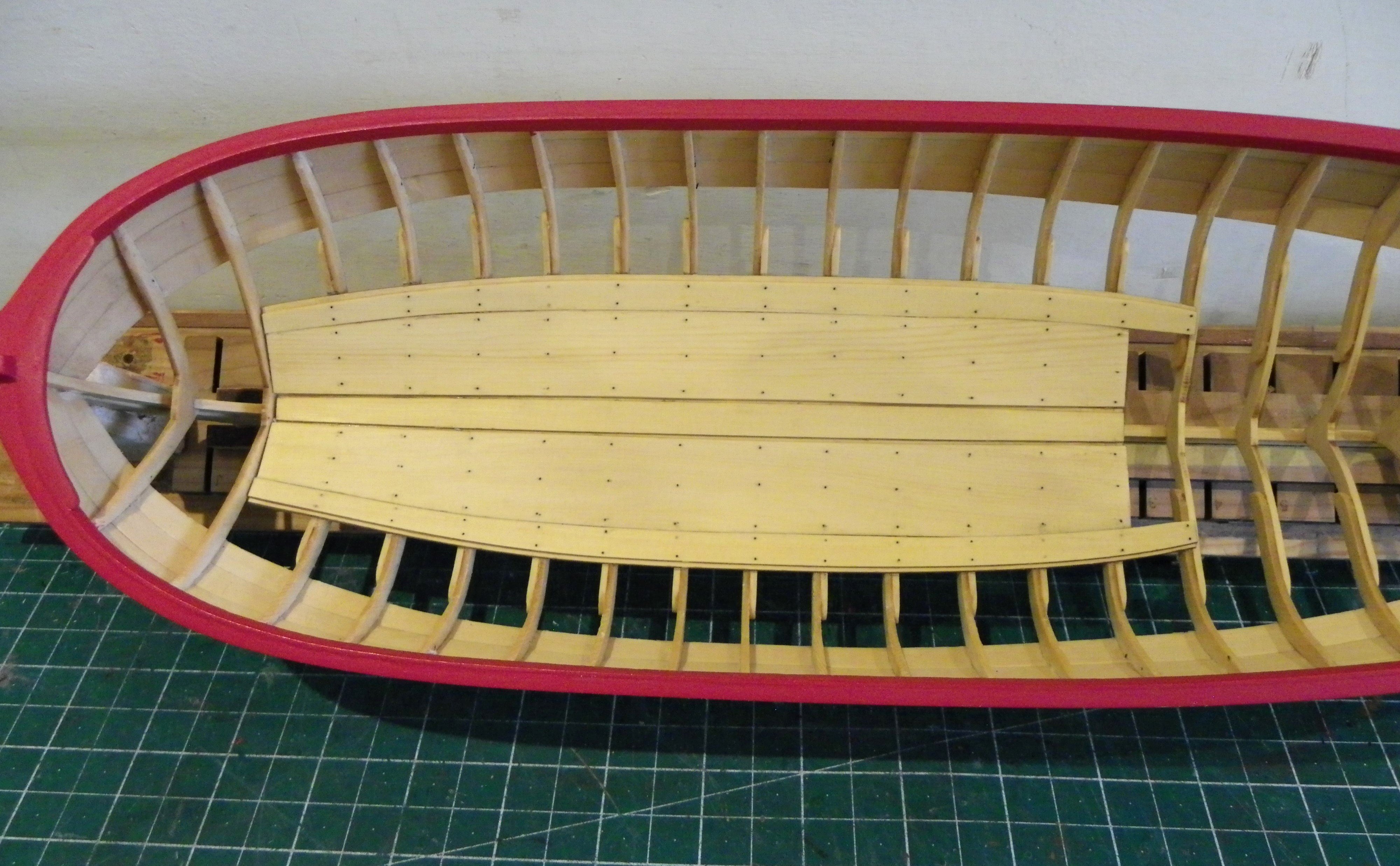
Post 23 Completing the boarding. The outer boards, one each side are a construction of two 1/32nd strips, one atop the other leaving a rabbet on the outer side. As with the wide boards I opted to glue the base layer first followed by the top layer. 0071 There was a degree of fettlin’ to get the planks tight against the broad planks, and an even rabbet along the outer side. The nail positions were marked with the top planks in situ and removed for the drilling and ‘nail’ insertion. 0076 0075 On completion a coat of w-o-p was applied. Moving onto the platforms. B.E. 05/06/2024
- 131 replies
-
- 7
-
-
- Medway Longboat
- Syren Ship Model Company
- (and 1 more)
-
Kit review Belle Poule - Occre - 1/90 - review by kevin
Blue Ensign replied to Kevin's topic in REVIEWS: Model kits
All those metal fittings look so ‘last century’ to my eye, and stub guns, takes me back to Norske Love of the 1980’s. Times have moved on…….. B.E. -
When I came back to the build I re-read Chuck's log and many others, to refresh my memory. I consider myself lucky that I have all these excellent builds, including yours Bob, to refer to. I picked up the tip of using the thinner stuff from Chuck's log, but it's not mentioned in the download instructions. I was concerned about using too much pressure on those open frames. B.E.
- 131 replies
-
- 3
-
-
- Medway Longboat
- Syren Ship Model Company
- (and 1 more)
-
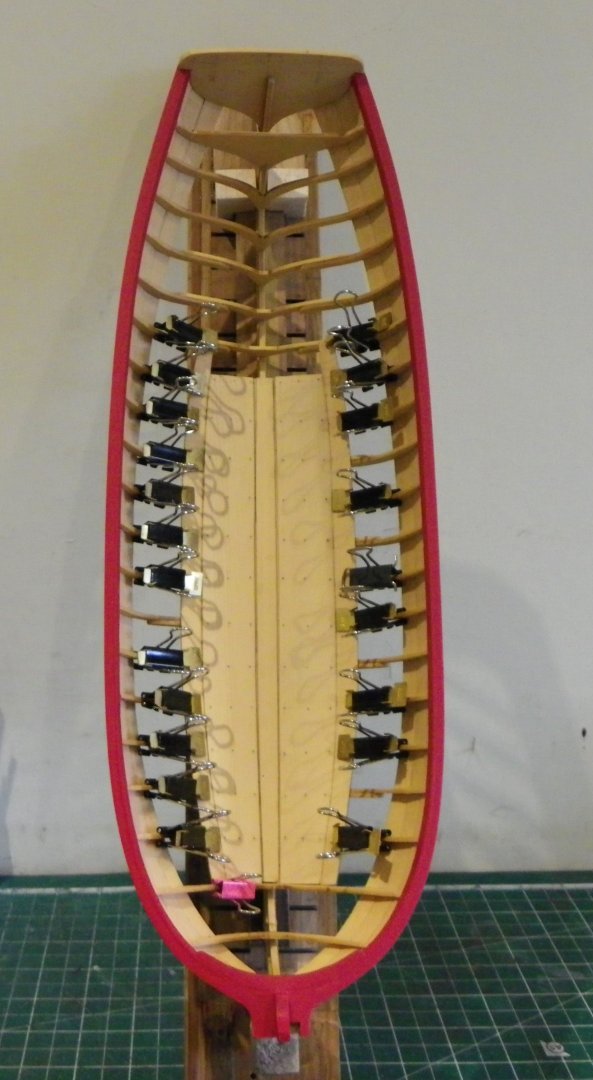
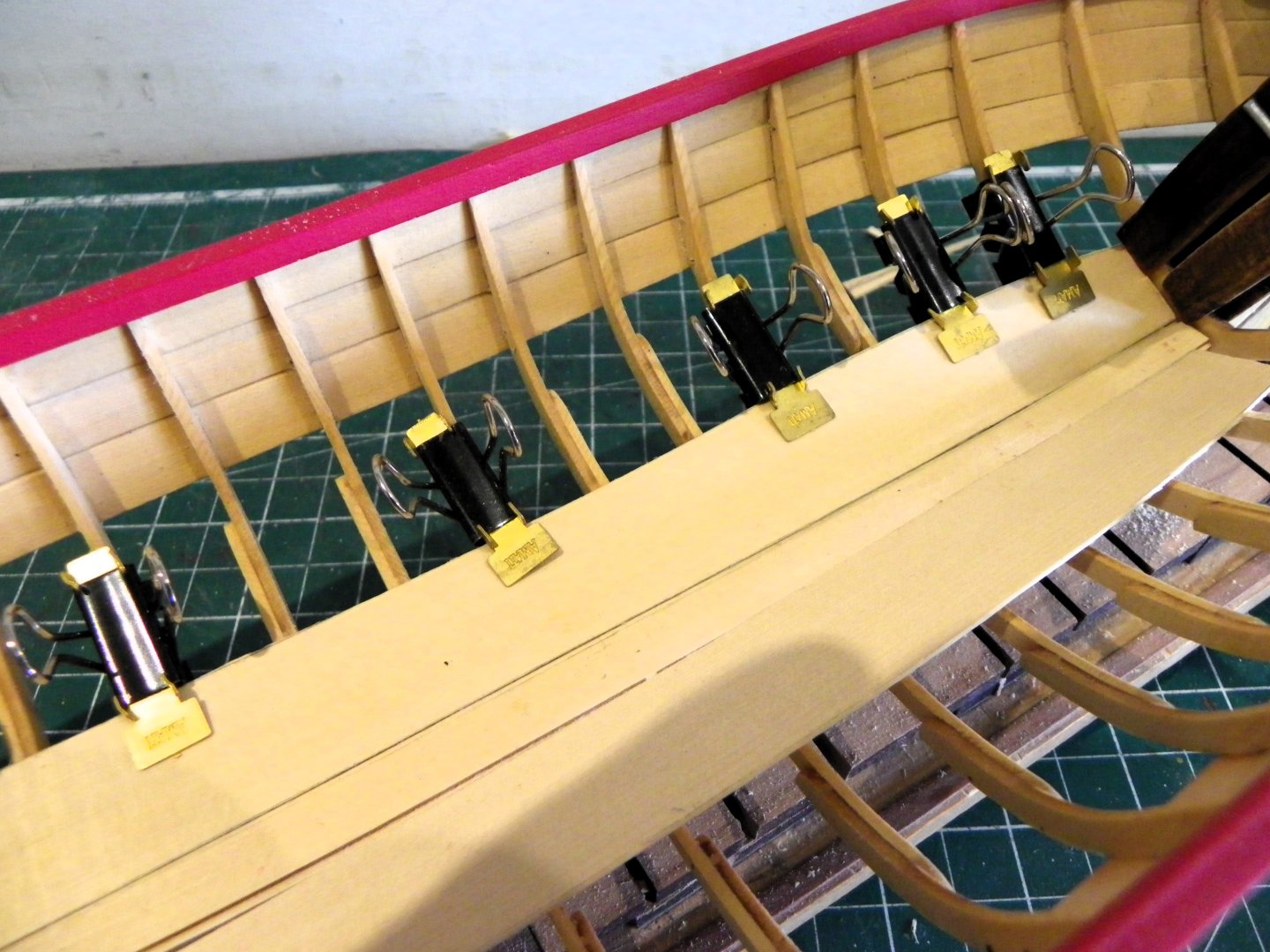
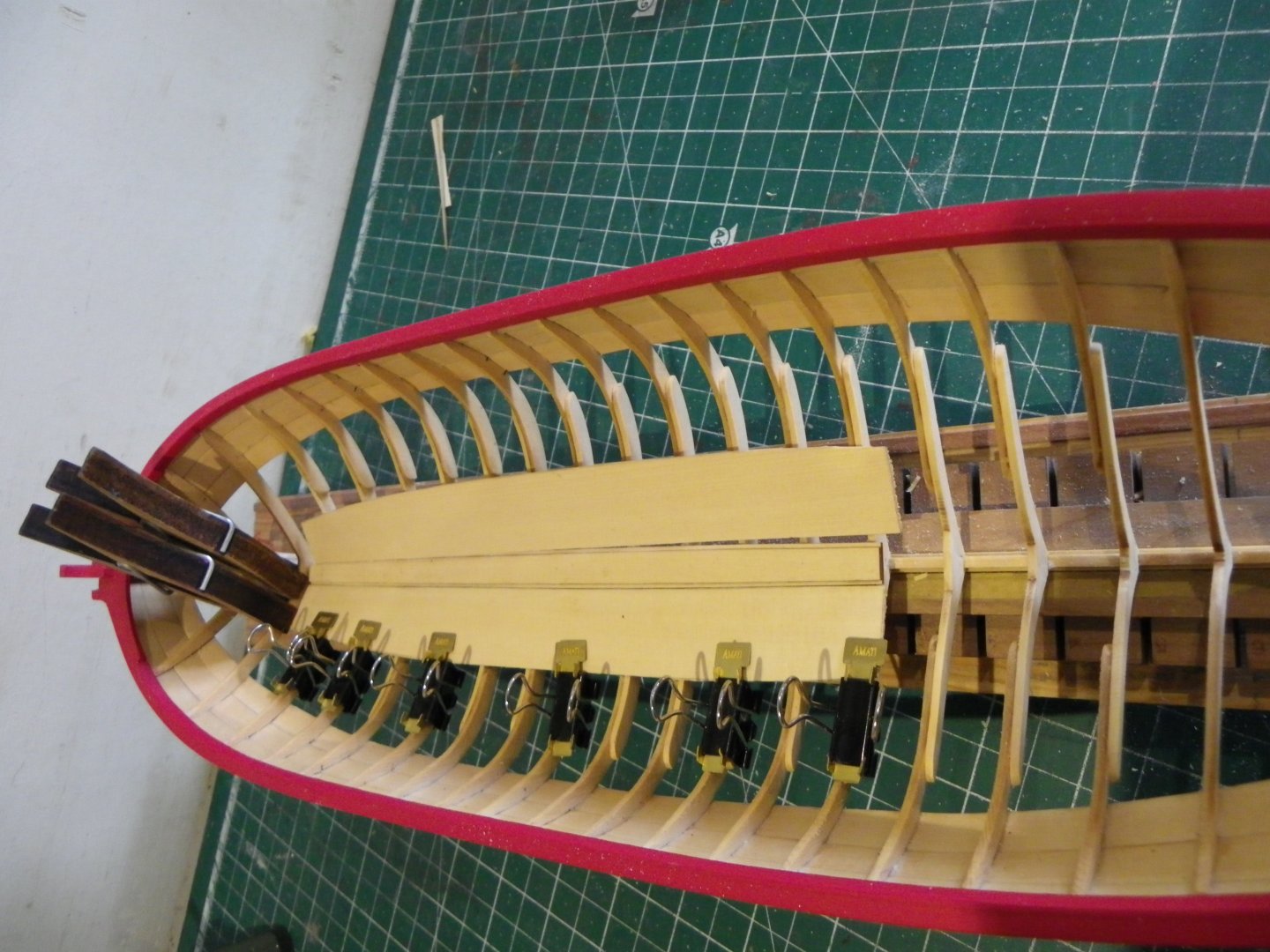
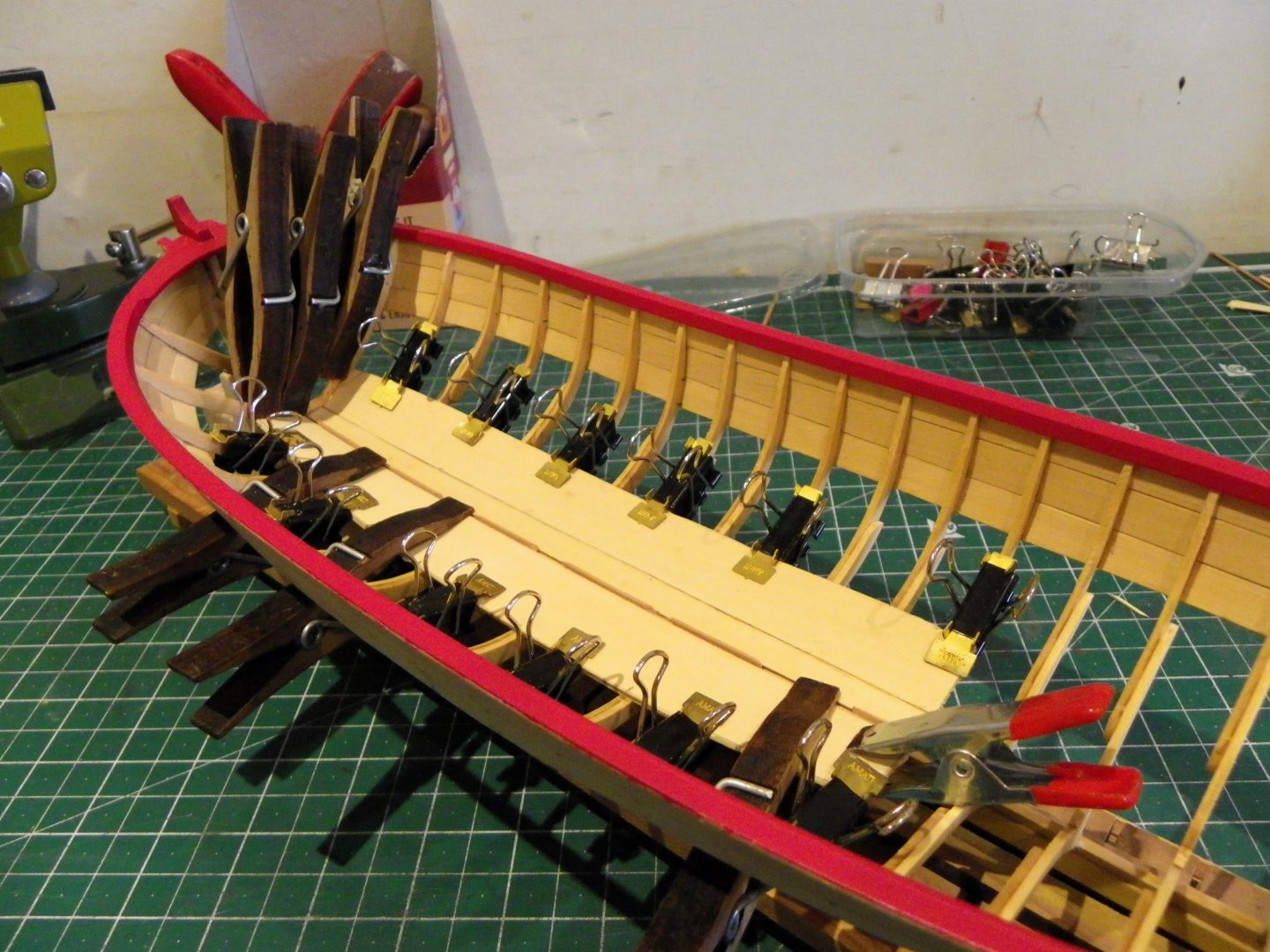
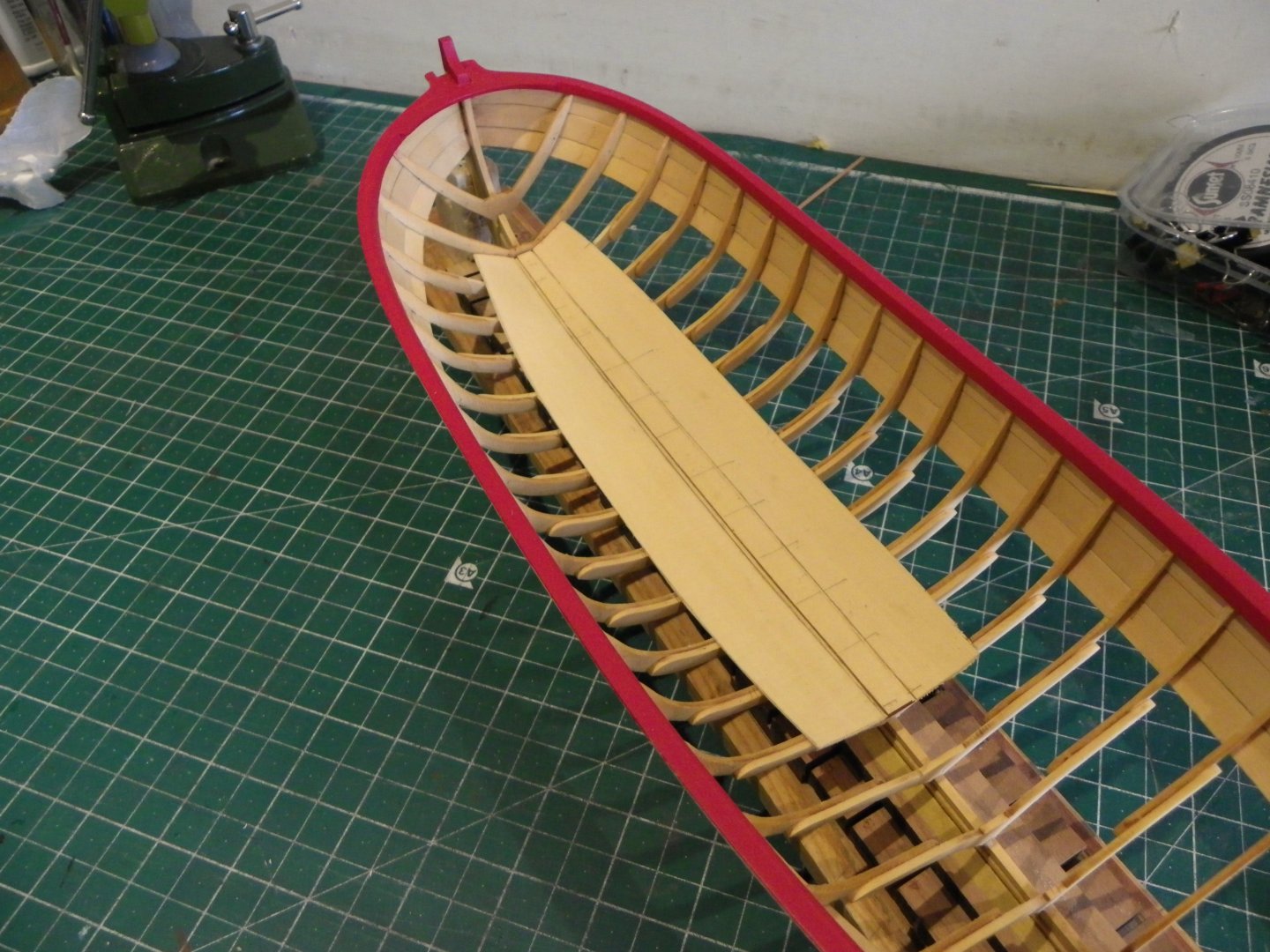
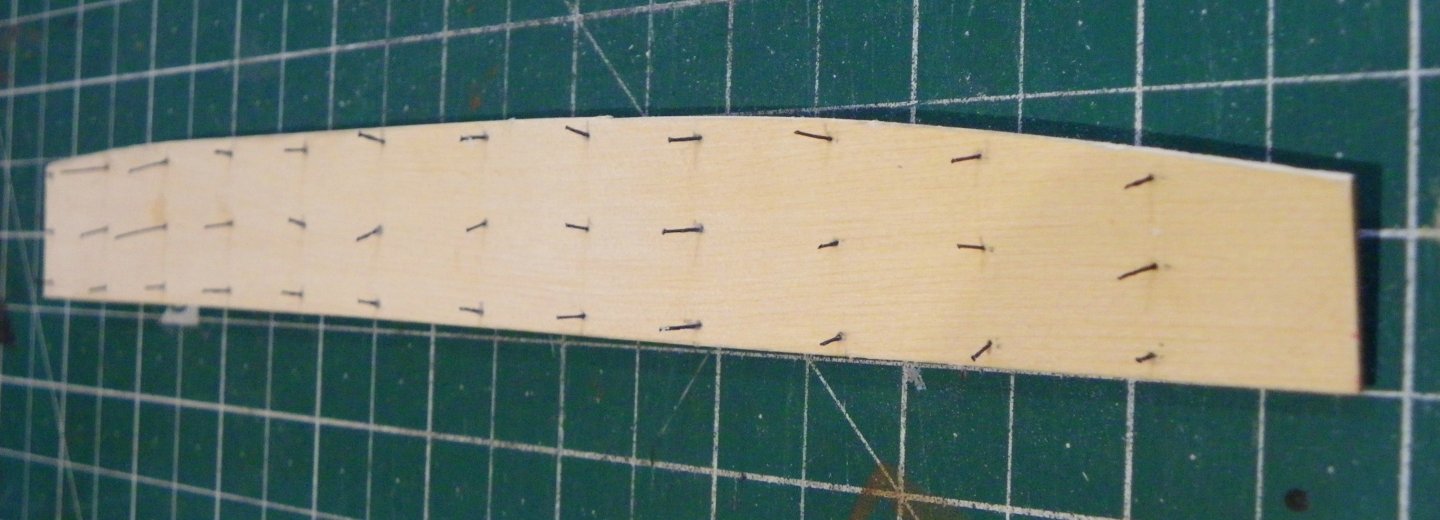
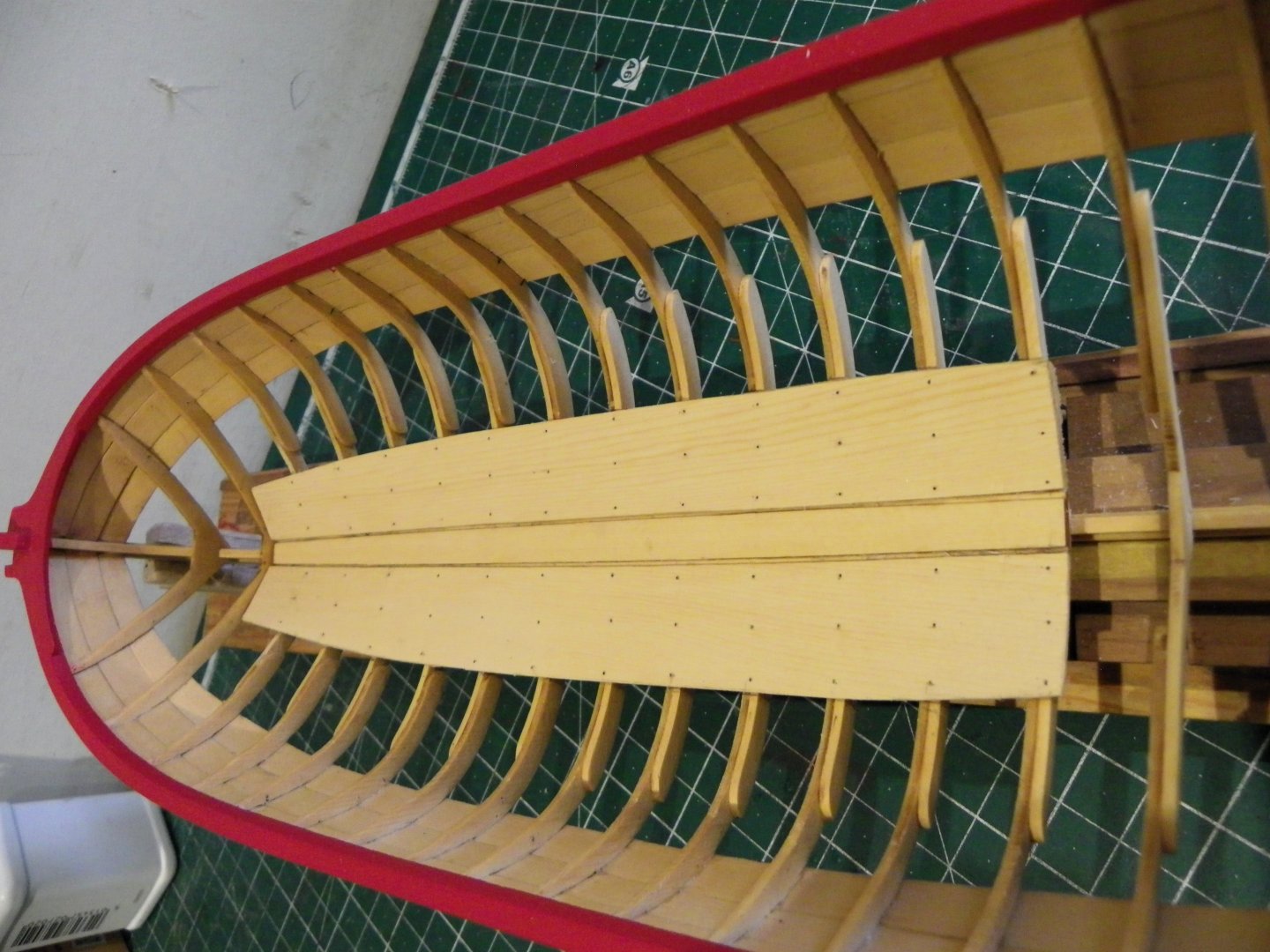
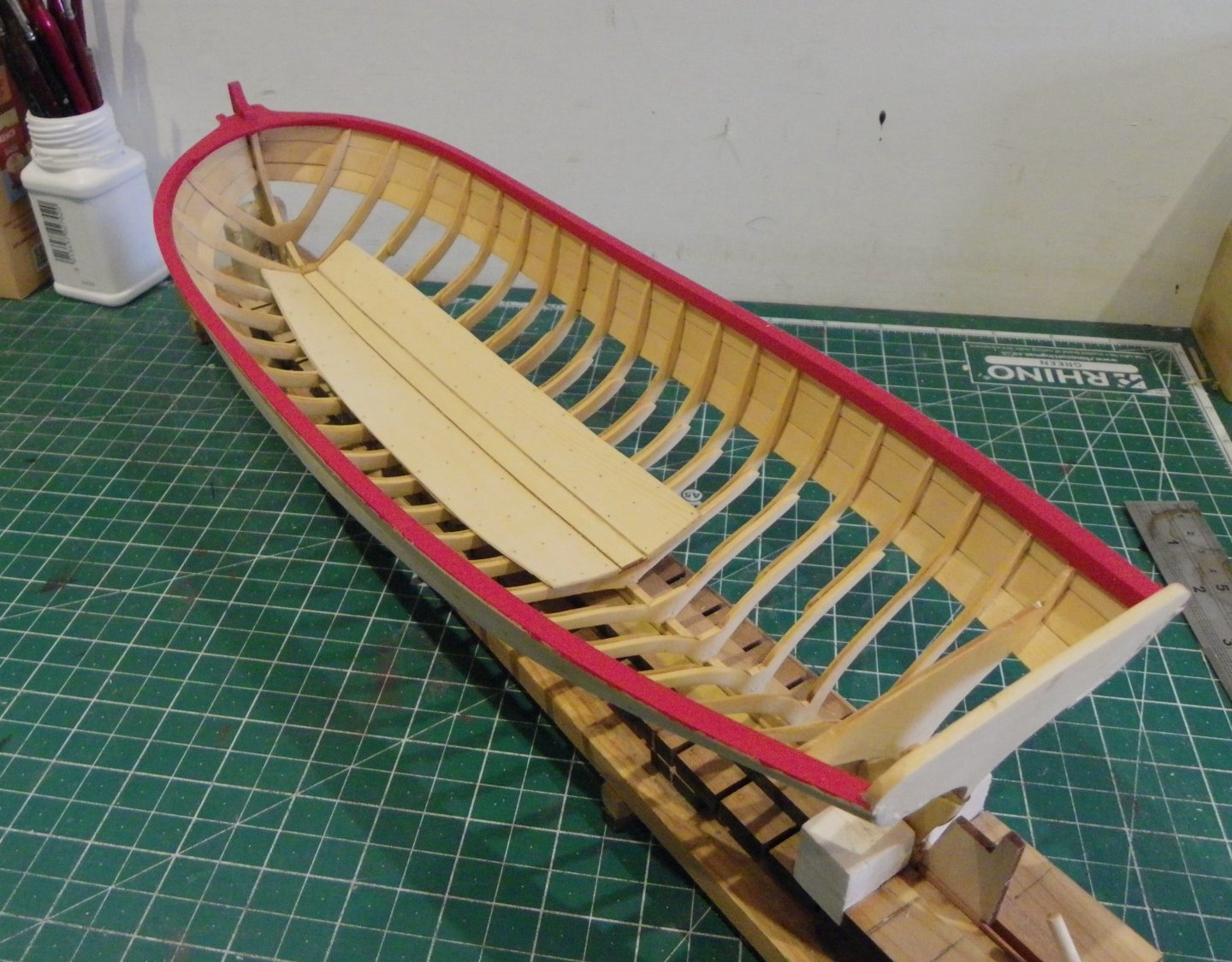
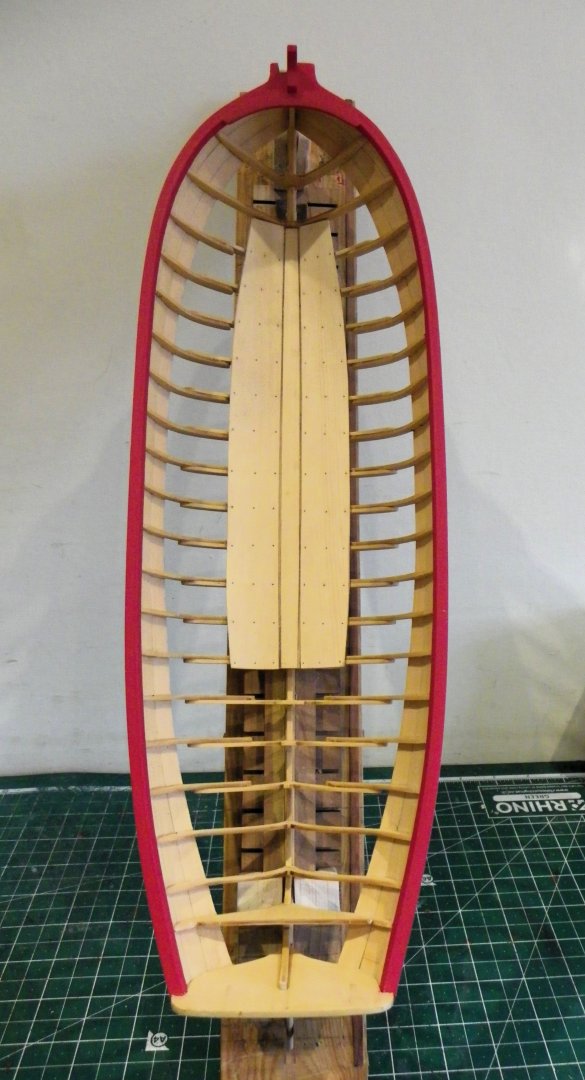
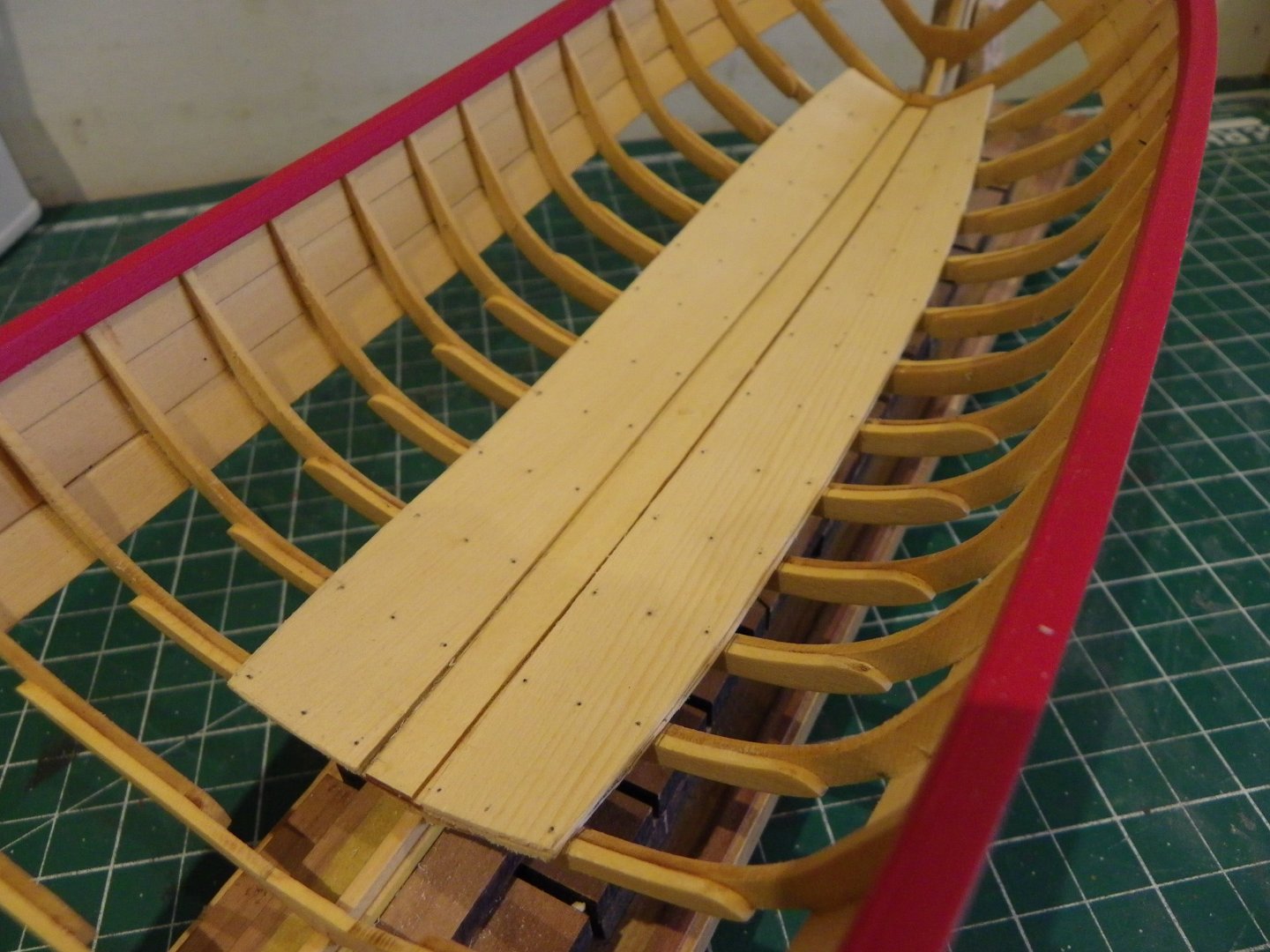
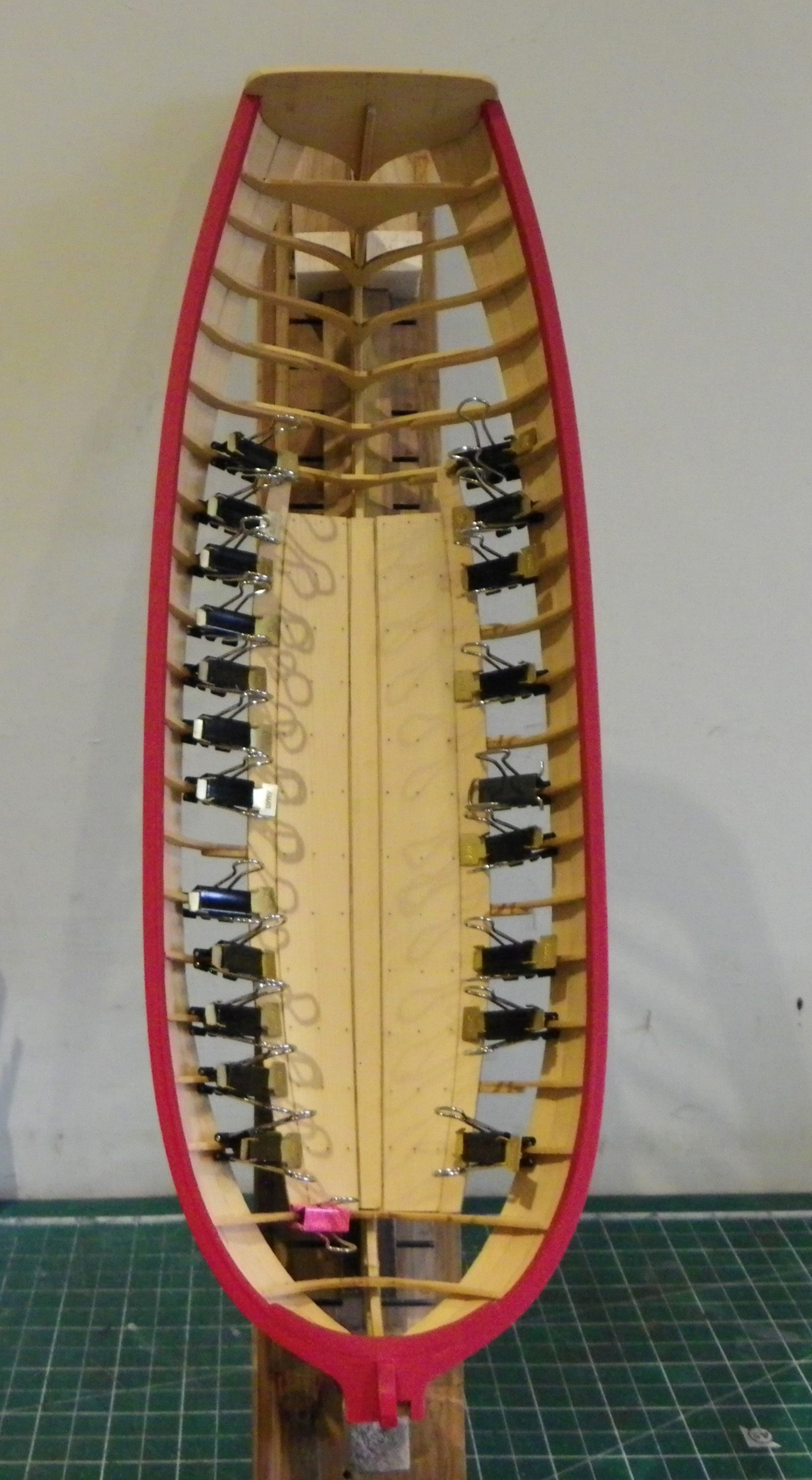
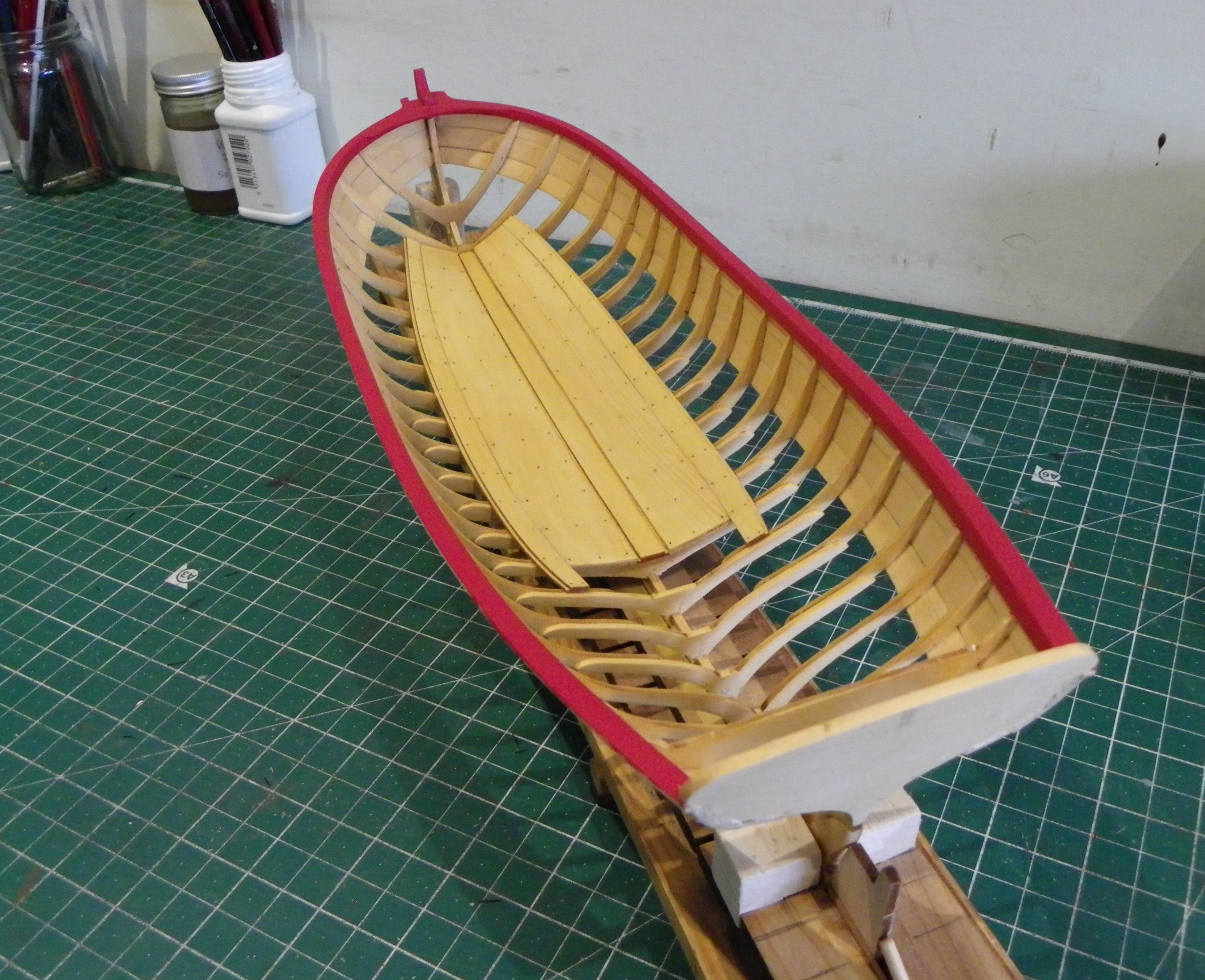
Post 22 Fitting the boards Initial fitting of the 1/16th broad plank reveals it will be a tricky part to fit. It is clear that a gentle approach will be required in getting the boards to conform to the frames as they are far more vulnerable without the support of outer planking. Chuck had suggested that the broad planks could be cut from 1/32nd sheet and glued one on top of the other in the same manner as the outer planks. These would better conform around the inner framework, and having played around with the 1/16th board I decided that the 1/32nd option was both easier and safer. Not out of the woods yet; Shaping by degrees was needed on the inner side of the broad planks to cleanly meet the central one. Additionally, I had problems with Frame ‘F’ - third from the bow, which needed additional fairing to allow the board to sit down properly. This frame was also troublesome with the central plank. 0040 0042 These Amati planking clamps are ideal for securing the boarding both for heat treatment to conform the board, and for eventually gluing. This would not be an option with a fully planked hull. It is the forward section of the boards that require some twist to conform to the forward bow frames but using 1/32nd board there is no problem. 0049 The base layers in place. 0045 Here the port side second layer strip in position for the application of the heat treatment. Spacers are used to maintain the rabbet line on the central plank. Before finally gluing into place the nail points were marked on the planking and pre drilled. I used a 0.4mm drill. Care is required to ensure that the nail lines across the board are even and square to the frames. With the board in place I drew fine pencil marks in line with the frames, and off the model I marked the nail positions and drilled. The board then needed cleaning with isopropanol to remove the traces of the pencil marks. 0054 Using 10lb fishing line the ‘nails’ are inserted, secured with pva. Dull work, but I can’t complain given that I have been spared the bulk of this task. 0055 0059 0057 0056 Onto the outer boards. B.E. 03/06/2024
- 131 replies
-
- 11
-
-
- Medway Longboat
- Syren Ship Model Company
- (and 1 more)
-
Nice progress Christian. On the subject of the Qtr deck Capstan, it actually sat on a platform called the step. This rose around 1.5mm (at scale) above the Qtr deck. The step was angled slightly to bring the capstan vertical to the spindle running between the two capstans. The expediency of bevelling the base of the capstan achieves the same effect, but does it look ok from a side on view? Regards, B.E.
-
Round-up to the head ledges and gratings👍 B.E.
-
As Alan has said above there is a design on the plans. Using a good quality paper, take a few photo copies in case you mess one up, trim to fit, spray with Artist fixative, job done. B.E.
-
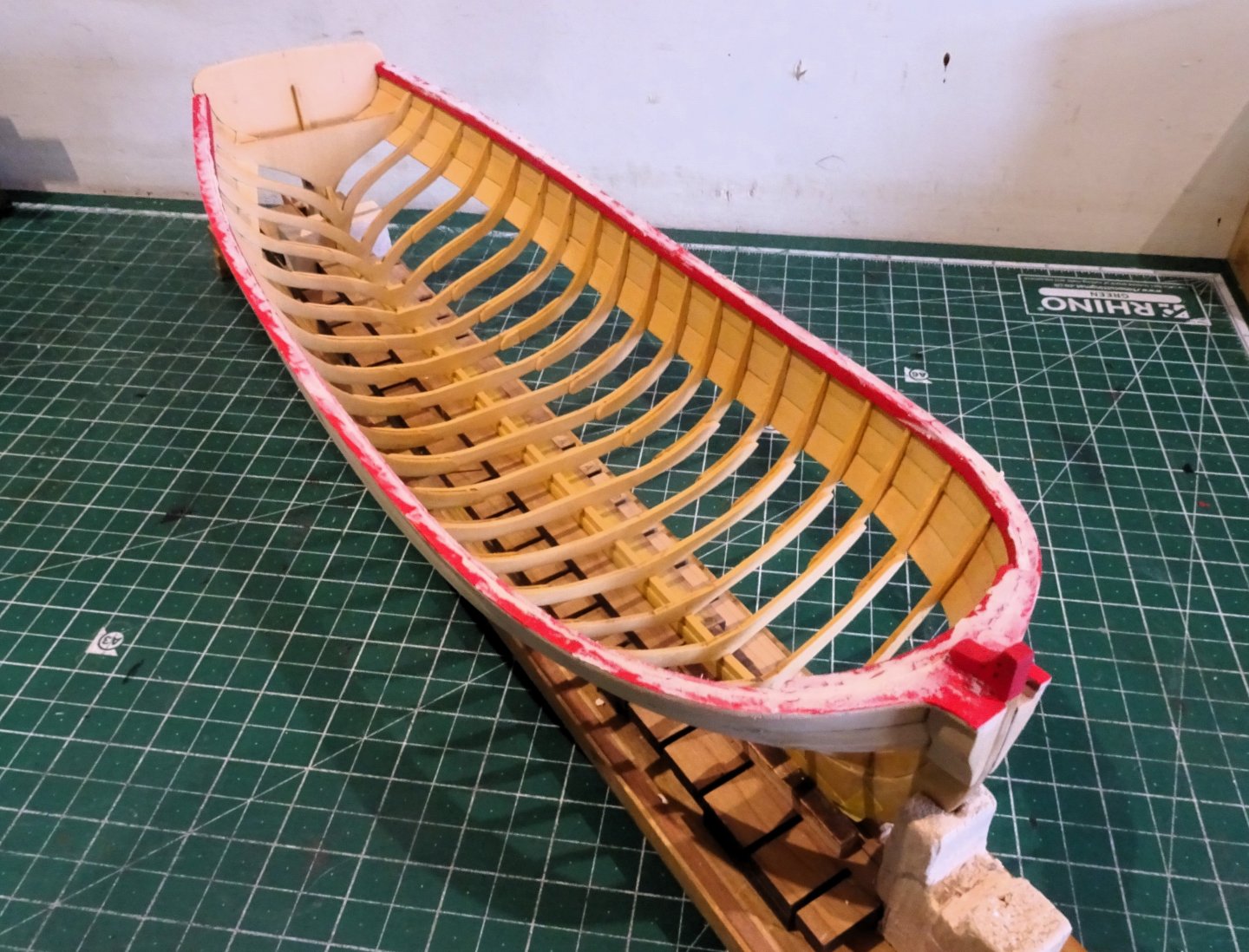
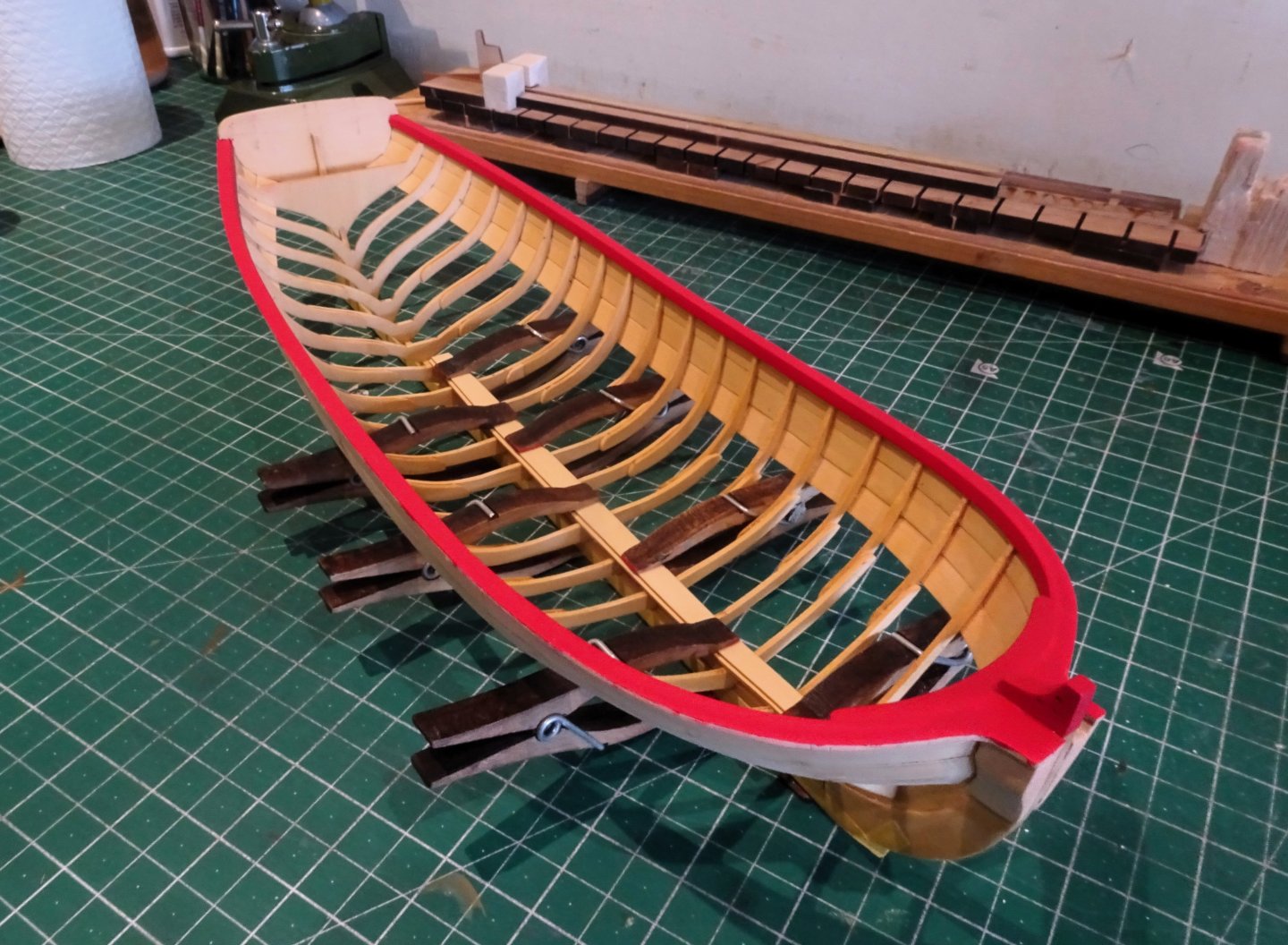
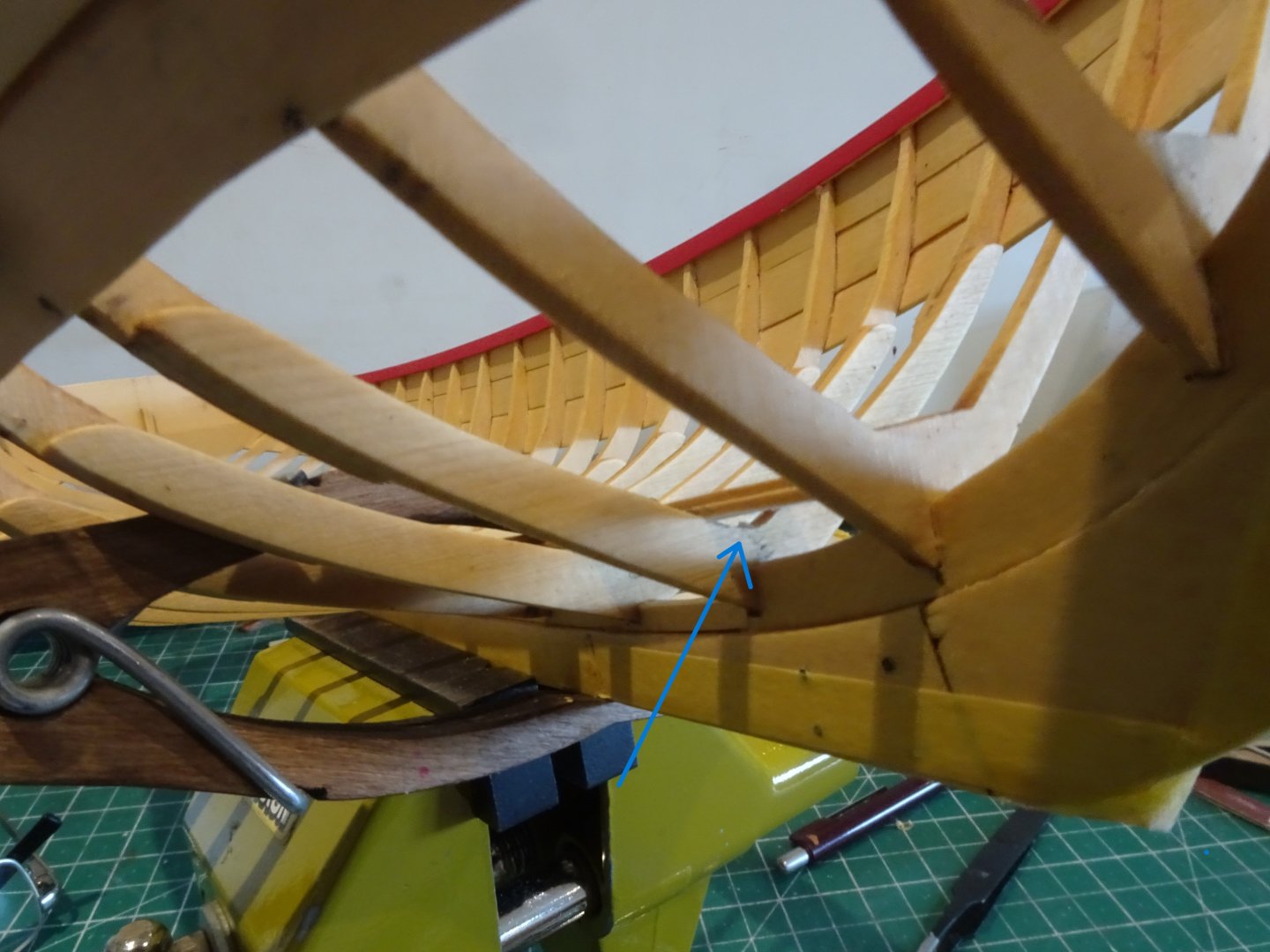
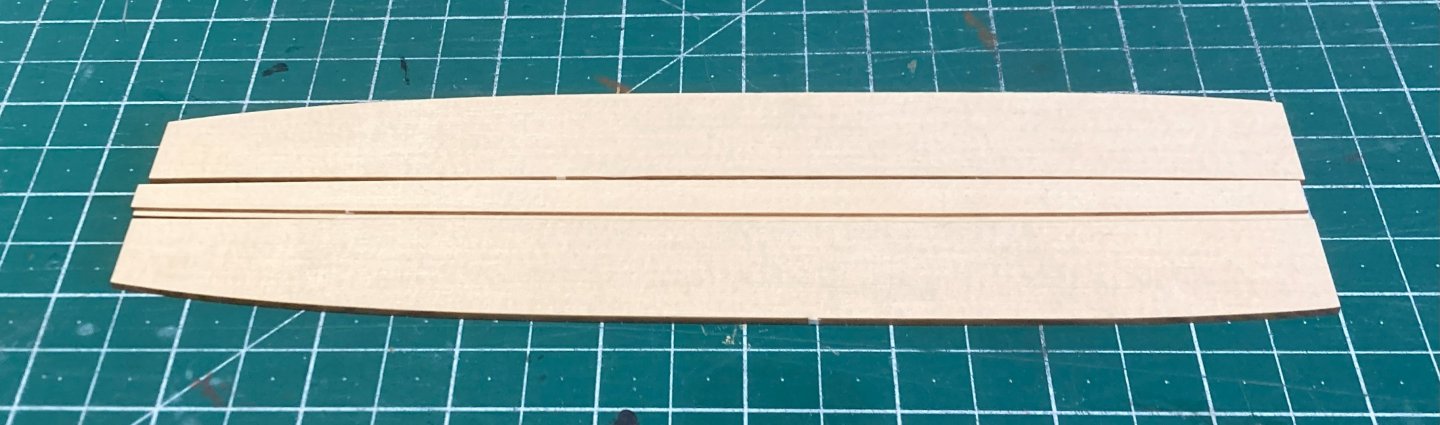
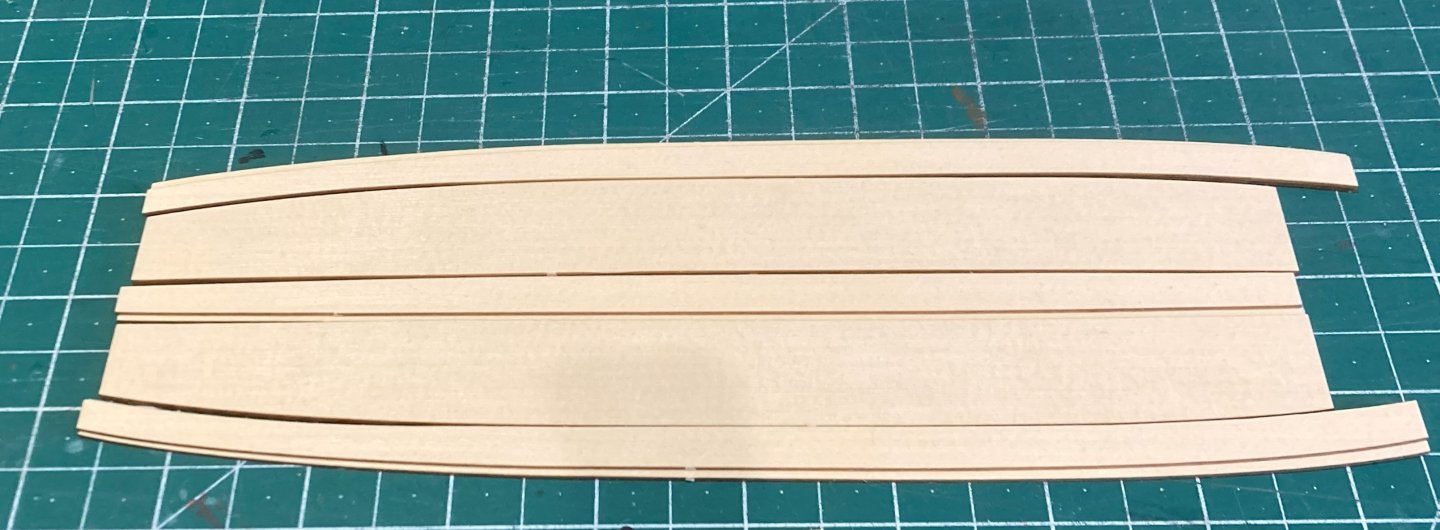
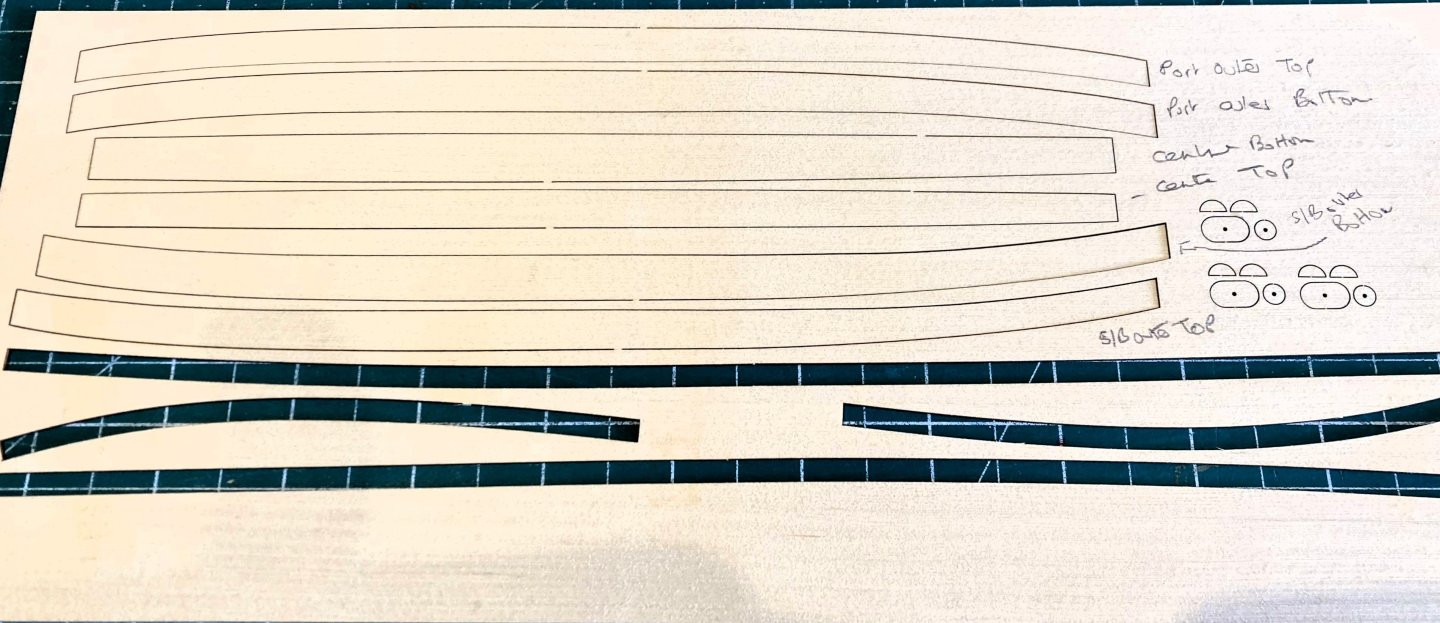
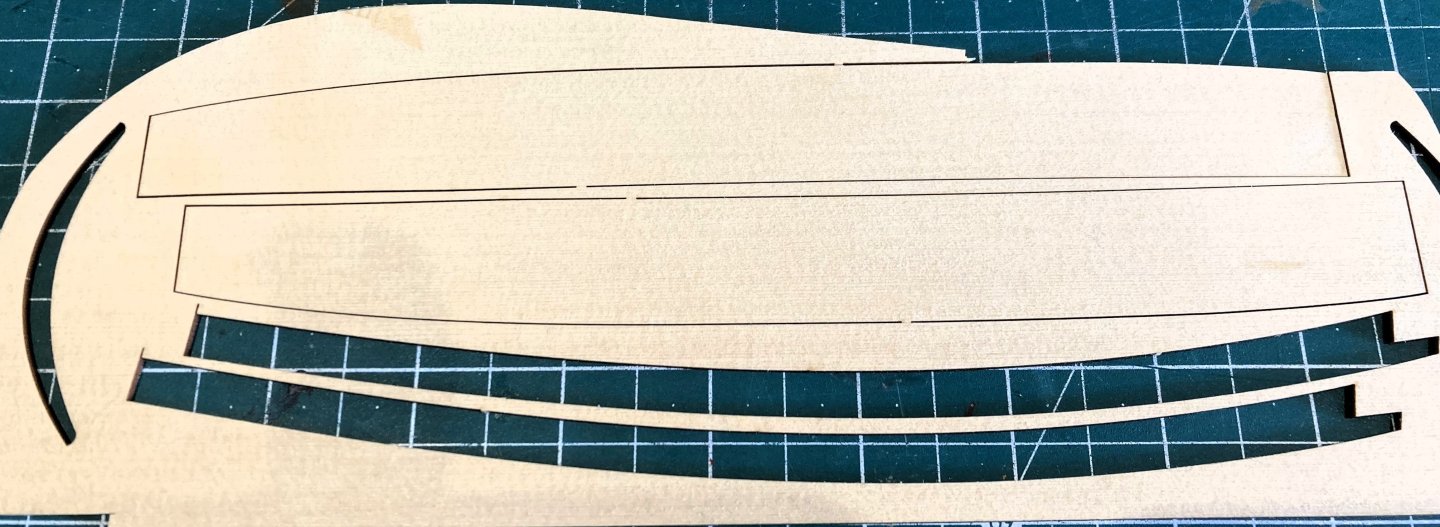
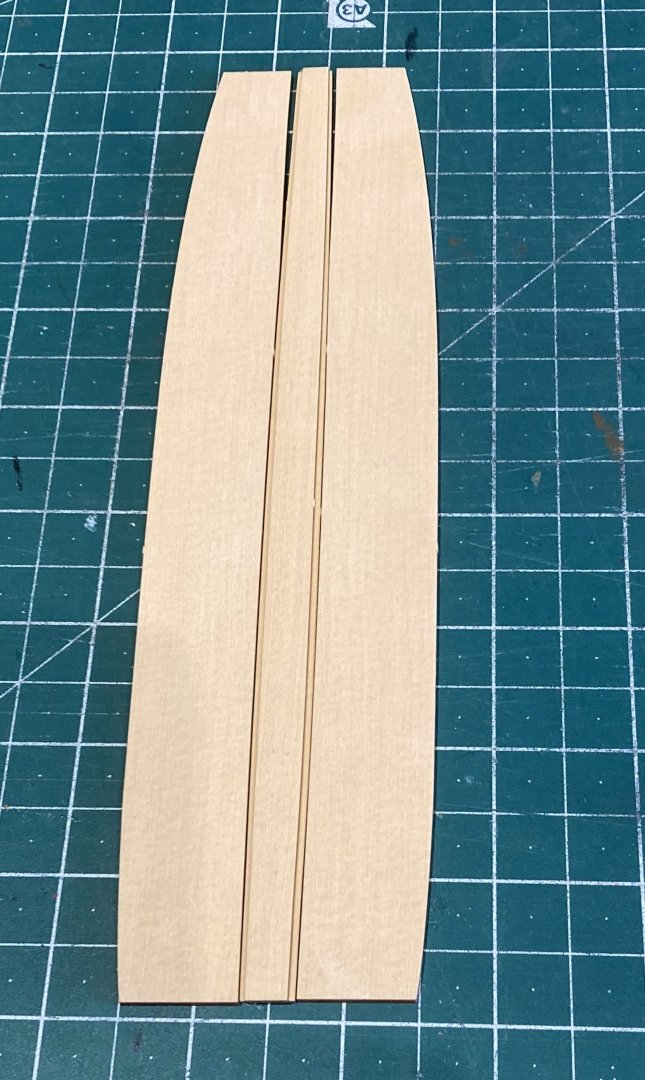
Post 21 Painting the rails There were some very fine imperfections between the capping rail and inboard sheer planking still apparent after two coats of thinned paint. 4849 I applied some fine surface filler atop the rails. Several more thinned paint coats were applied with sanding in-between initially using 400, then 1000 grit. At this point in Part three of the guide it is suggested that the decorative frieze and rail are fitted but I thought I would attend to the floorboards and platforms first. I will return to add final paint coats once the boarding is installed. Floorboarding The floorboards comprise the central board with a broad plank adjacent and a narrower plank outside. 2304a The two broad planks either side of the central plank are easy to identify on 1/16th cedar sheet. 2303a The centre plank along with the two narrower outer planks are found on sheet R. These are made up from two 1/32nd strips glued together. The top layers are slightly narrower to form a rabbet, one each side on the central plank, and one on the outer edges of the outer planks. 2307 The central plank with the two broad planks. 2305a These should meet the centre plank at all points. There is a gap at the fore end which I don’t think will accept edge bending, so the inner edges look to need shaping to allow the fore end to meet the central plank. The broad planks will also require some lateral bending to sit down on the frames. 2308a The two outer planks abut the broad planks with the rabbet on the outer edge. The central plank is fitted first which is necessary to provide a solid edge to work the broad plank fit. Trial fitting revealed a potential problem. With an open framed version the fit of the central board is perhaps slightly more critical than the fully planked version. 4855a The fit of the boards on the frames will be seen from below and as can be seen the central plank does not sit fully down on the third from bow frame due to the more acute angle of the frame. Having discussed with Chuck a small wedge was added to fill the gap. 4853 One of the advantages of open frames is that there is convenient access to clamp this part in place. B.E 29/05/2024
- 131 replies
-
- 11
-
-
- Medway Longboat
- Syren Ship Model Company
- (and 1 more)


Our Emblem ®
