


bdgiantman2
-
Posts
421 -
Joined
-
Last visited






-
 bdgiantman2 reacted to a post in a topic:
USS Cape (MSI-2) by Dr PR - 1:48 - Inshore Minesweeper
bdgiantman2 reacted to a post in a topic:
USS Cape (MSI-2) by Dr PR - 1:48 - Inshore Minesweeper
-
bdgiantman2 reacted to a post in a topic:
USS Cape (MSI-2) by Dr PR - 1:48 - Inshore Minesweeper
-
 Great blog, the Cape is coming along beautifully. I never knew about that design of storage bin for the lifejackets, and the placement on the superstructure is very surprising. At least the one good thing about that life-vest locker is that Cape only needed one having a crew of a dozen people, instead of needing to make and place 500 of those like for a modern aircraft carrier with a crew of six thousand. Brian D
 -
Canute reacted to a post in a topic:
USS Aries (PHM-5) by modeller_masa - FINISHED - HobbyBoss - 1/200 - PLASTIC - Pegasus class hydrofoil
-
Nicely built model!! First time I have seen a model of one of these hydrofoil boats that were built by Boeing in experimental dab into maritime projects for the Navy. Also first time I have seen the foils in position not for high-speed. Brian D
-
bdgiantman2 reacted to a post in a topic:
LA CREOLE/ LA GUADELOUPE by matiz - 1:48 - by Tiziano Mainardi from Boudriot plans
-
Canute reacted to a post in a topic:
USS Cape (MSI-2) by Dr PR - 1:48 - Inshore Minesweeper
-
bdgiantman2 reacted to a post in a topic:
L'Artésien 1764 by Cpt.Barbossa - 1:48 - 64-gun ship from plans by Jacques Fichant
-
bdgiantman2 reacted to a post in a topic:
Speedwell 1752 by giampieroricci - Scale 1:96 - from Antscherl & Herbert monograph
-
bdgiantman2 reacted to a post in a topic:
US Brig Oneida 1809 by rlb - The Lumberyard - 1:48 scale - POF - Lake Ontario Warship
-
What are the functions of the other vents in the stack?? Obviously the biggest vent will be for the engine exhaust, and I am figuring a vent or two for the galley. Brian D
- 483 replies
-
- 1
-
-
- minesweeper
- Cape
- (and 1 more)
-
bdgiantman2 reacted to a post in a topic:
HM Cutter Cheerful 1806 by niwotwill - Syren Ship Model Company - scale 1:48
-
bdgiantman2 reacted to a post in a topic:
USS Cape (MSI-2) by Dr PR - 1:48 - Inshore Minesweeper
-
bdgiantman2 reacted to a post in a topic:
Sloop Speedwell 1752 by Chuck - Ketch Rigged Sloop - POF - prototype build
-
bdgiantman2 reacted to a post in a topic:
HMS Winchelsea by jfhealey - fully rigged version
-
Canute reacted to a post in a topic:
USS Cape (MSI-2) by Dr PR - 1:48 - Inshore Minesweeper
-
Great progress, I like the bridge details and the upper level plans shared on here. I thought Navy mugs were supposed to be without handles?? Or was that older times?
- 483 replies
-
- 1
-
-
- minesweeper
- Cape
- (and 1 more)
-
scrubbyj427 reacted to a post in a topic:
HMS Portland 1770 by Trussben - Portland Scale Ship Co. - 1:48 - 50 gun 4th rate
-
Mr Whippy reacted to a post in a topic:
HMS Portland 1770 by Trussben - Portland Scale Ship Co. - 1:48 - 50 gun 4th rate
-
She's showing her lines and looking very nice and sleek for her size. Keep it up. Brian D
-
FrankWouts reacted to a post in a topic:
Sloop Speedwell 1752 by Chuck - Ketch Rigged Sloop - POF - prototype build
-
FrankWouts reacted to a post in a topic:
Sloop Speedwell 1752 by Chuck - Ketch Rigged Sloop - POF - prototype build
-
archjofo reacted to a post in a topic:
Brig Eagle 1814 by bdgiantman2 - 1/48
-
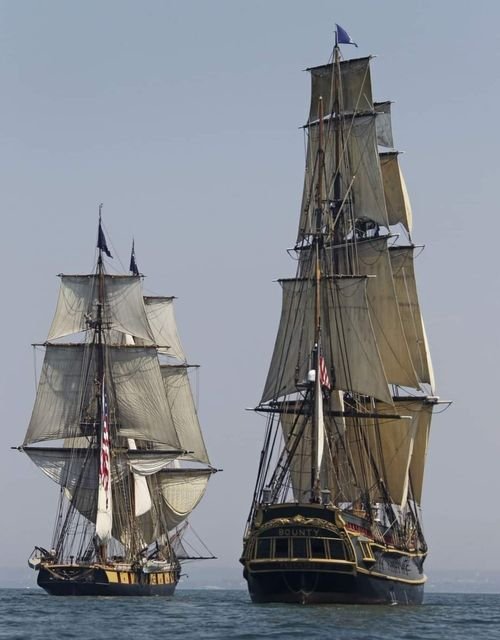
Thinking about the famous battle on Lake Champlain in September 1814 between America and the British navies, there are a lot of questions that have been running through my head. I have enclosed a picture of Brig Niagara being chased by replica of Bounty, can't tell if Bounty is still behind Niagara or alongside her. But the height out of the water is the biggest issue in question. During his extensive research, Dr. Kevin Crisman found records that Eagle had taken 39 direct hits during her battle. Most of those hits were likely along the gun deck, but probably some into the hull as well which would have to mean she was sitting higher out of the water than being shown. From the enclosed image, it would seem that Bounty would have to be tilting over to get any hits on the brig's deck. But Bounty ought to be sitting up to 3 feet lower in the water than seeing in the picture. Eagle and Niagara are both classified as shallow draft vessels, so if anyone wants to offer any insights I'd appreciate it. Brian D
-
JacquesCousteau reacted to a post in a topic:
Brig Eagle 1814 by bdgiantman2 - 1/48
-
You are correct, I stated wrong city, but still in correct state. This is what I deserve for typing out that previous post using my cellphone after having gone to bed for the day instead of being on computer and being better able to operate multiple screens. Oswego, which is where Oneida was actually built, and on the shoes of Lake Ontario. Oswego is about 38 miles north and west of Syracuse, NY and 320 miles north and west of New York City. But I am still guessing that being in New York that the Brown brothers could have been involved.
-
The Brig Oneida was built in New York City around 1809, and Brig Syren was built in Philadelphia in 1803. The Brown brothers opened their own shipyard also in New York City around 1809, on Long Island right around what we now call the Financial district. The Brown brothers had worked for some time constructing houses, then along the way got into ship building. Also this would be the same location where those gunboat remains were found under the rubble from the collapsed World Trade towers. History isn't saying anything that I can find, but I suspect that Noah and Adam Brown started ship building with the Oneida project. Armed with experience from Oneida and drawings of Syren, America got Brig Niagara and Brig Eagle.
-
Canute reacted to a post in a topic:
USS Cape (MSI-2) by Dr PR - 1:48 - Inshore Minesweeper
-
Hello everyone. I haven't forgotten about this project, despite some inconvenient changes in circumstances. I've had to temporarily shelve Brig Eagle because of change in housing situation and many of my tools had to be put in storage for a few months. However, I am still doing lots of research and making frame templates for this model to work on once housing situation improves. Lately, I've been doing additional comparisons of different ships, this time the American brigs Syren and Oneida. Syren seems more like Brig Eagle in deck layout and overall hull contours (even though Eagle is 20 ft longer than Syren and Syren was a deep water hull with additional deck like European ships HMS Blandford and Le Cygne discussed in Post 41), whereas Oneida would be more followed for rigging and was also a "shallow draft" hull design with just only berthing deck and gun deck like the Eagle was and Niagara. However, I found one article interesting about Oneida saying she was a slow performer under sail, I am guessing that she may have been top heavy for a ship her size. Will have to do more digging around work schedules. Brian D
-
Very impressive CAD drawings of the deck gear used on Cape during her Navy days. A lot of detail, going to be fun to see how the scaled equipment turns out. As for the location of the control box, my personal opinion is it looks less out of way of operations being in front the motor between those two large white wheels instead of the offset position. This is incredibly cool. Brian D
- 483 replies
-
- 2
-
-
- minesweeper
- Cape
- (and 1 more)
-
On the real ship would this support structure be the forward magazine? Looks almost the right place for such a room. Making good progress, Ben. Brian D
-
Again I find another interesting blog way too late. You guys brought up many interesting views. The iron pigs mentioned have an interesting history as you well know and document. They are poorly smelted iron often poured into molds in the ground and would get very brittle after cooling. The pigs often measured about the same dimensions as Limber boards and weighed up to 92 lbs each. On my model of Brig Eagle, she is said to have been filled with iron pieces like the ones pictured. It's not sure how much a ship like the Eagle would have carried in the form of ballast. I've seen estimates that the Brigs Eagle and Niagara may well have weighed twice as much as the current Niagara in Lake Erie despite modifications like engines. Using the mentioned calculations of the limber boards, the distance between the masts measured 42 feet enabling 14 boards each side between masts, which comes out to one and a quarter tons just for that space. Brian D:)

-
I received this kit close to the same time that you did. Haven't started constructing her yet with issues involving my Brig Eagle project, but also am wanting to attempt scratch build a similar design off the same plans. Will be following this with interest. Brian D
- 2 replies
-
- 2
-
-
- Maine Lobster Boat
- Midwest Products
- (and 1 more)
-
Nice progress on this ship model and blog, Chris!! Those frames look well made in all directions. Question - for the water channels you have, did you use a router/Dremel to cut those out or did you make those with a table saw?? Brian D
-
Once again, like usual, I am late to the party on a fascinating model and blog. Ab, you have made another beautiful model, I've never tried modeling with card personally. Seeing the ketch version of same ship would be really cool to me as those rigs were so rare and unique. My condolences with the many others here about the loss of extended family and your friend. Druxey, this is great news to hear about your co-writing this book about the Stuart yachts. I have Ab's book about the Dutch cargo yachts of that time and was wondering if there was going to come a civilian/VIP version even if there is scant information available. I have long admired ships such as Mary and the Utretch. So many similarities in deck layouts and some internal features yet so many differences as well, especially length of the hull. An old book I have printed in Dutch about one of the statenjachts being built as a scale model, this one measured 79 ft long (which was recorded as a standard size of many such vessels) whereas the diving expedition to remains of Mary estimate her to be only 52 ft long. Those designs of that era are beautifully made, too bad so much history and information was either destroyed or never recorded. I look forward to this book of yours being published.
- 77 replies
-
- 4
-
-
- Royal Yacht
- card
- (and 1 more)
Our Emblem ®
