


KeithAug
-
Posts
3,980 -
Joined
-
Last visited
Content Type
Profiles
Forums
Gallery
Events
Everything posted by KeithAug
-
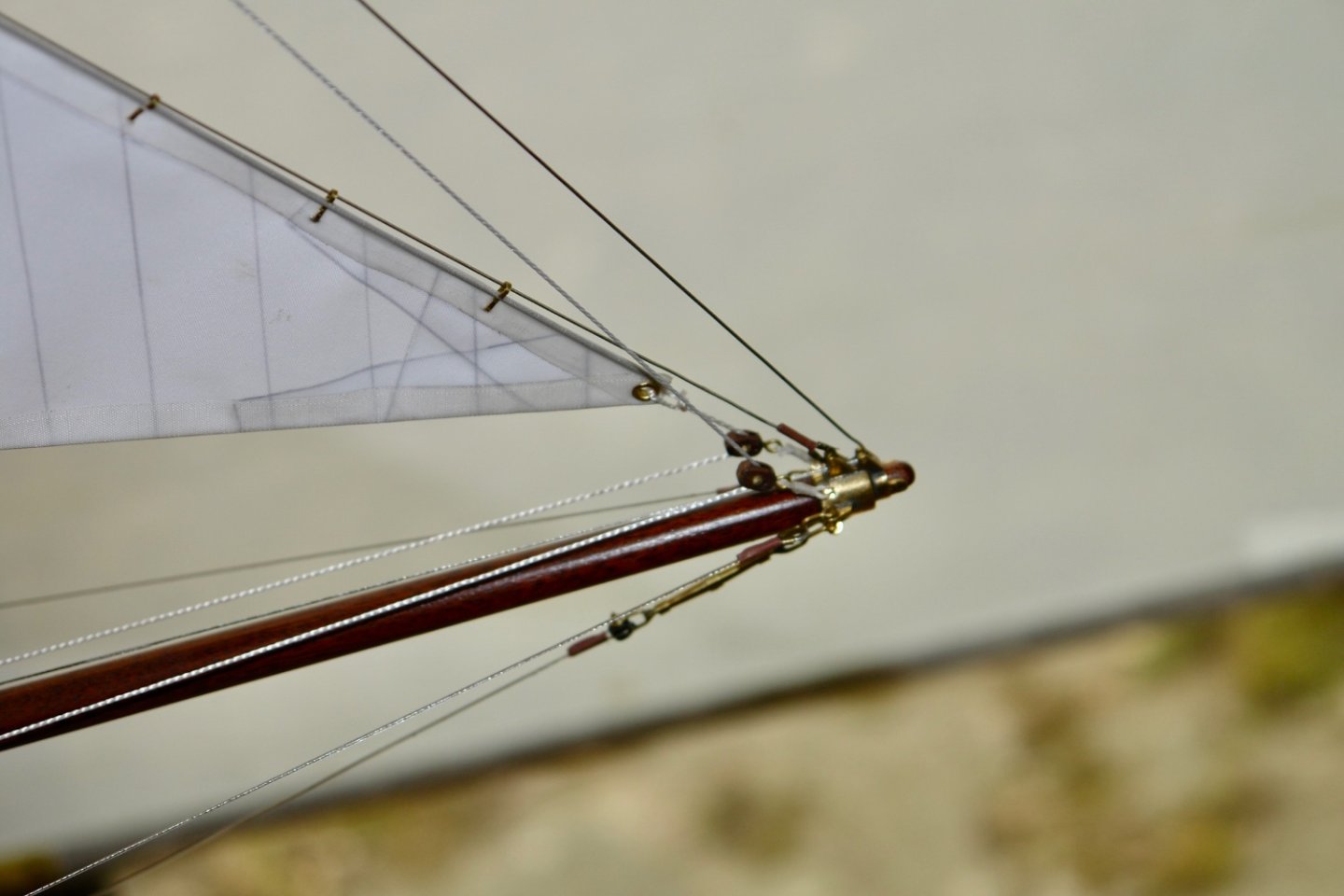
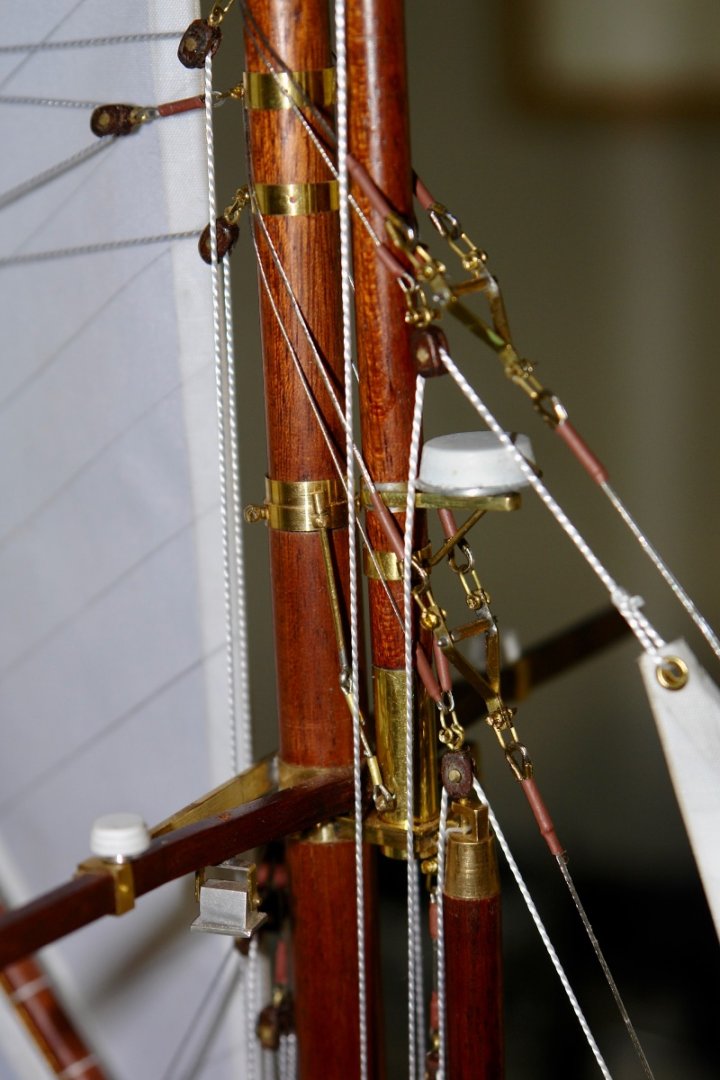
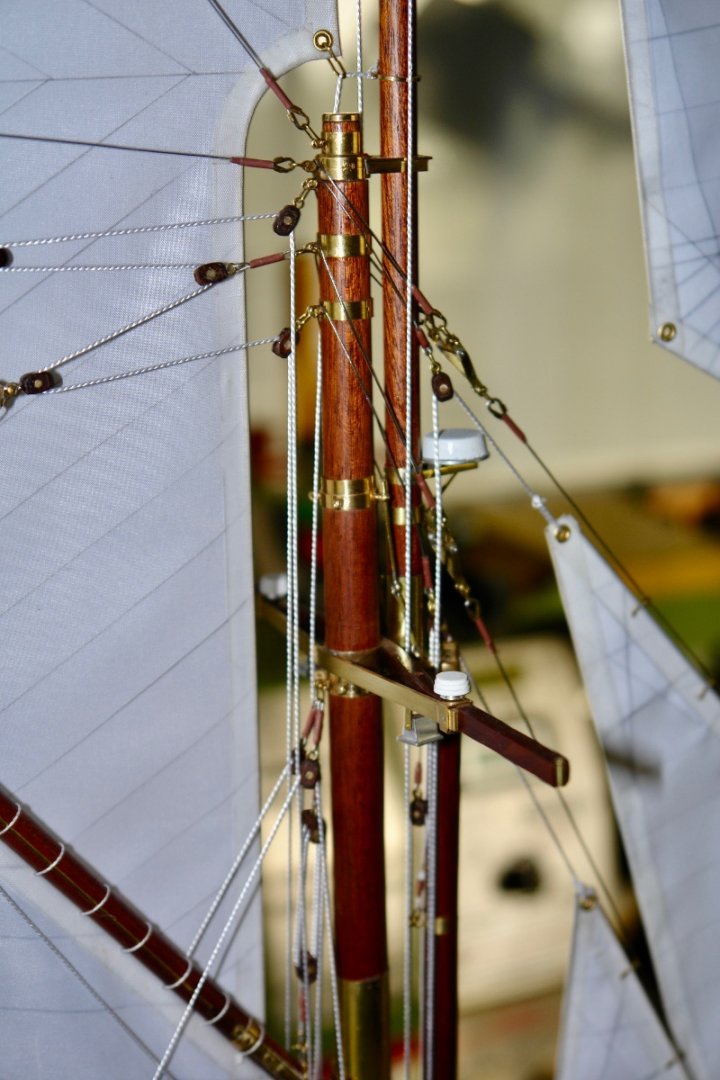
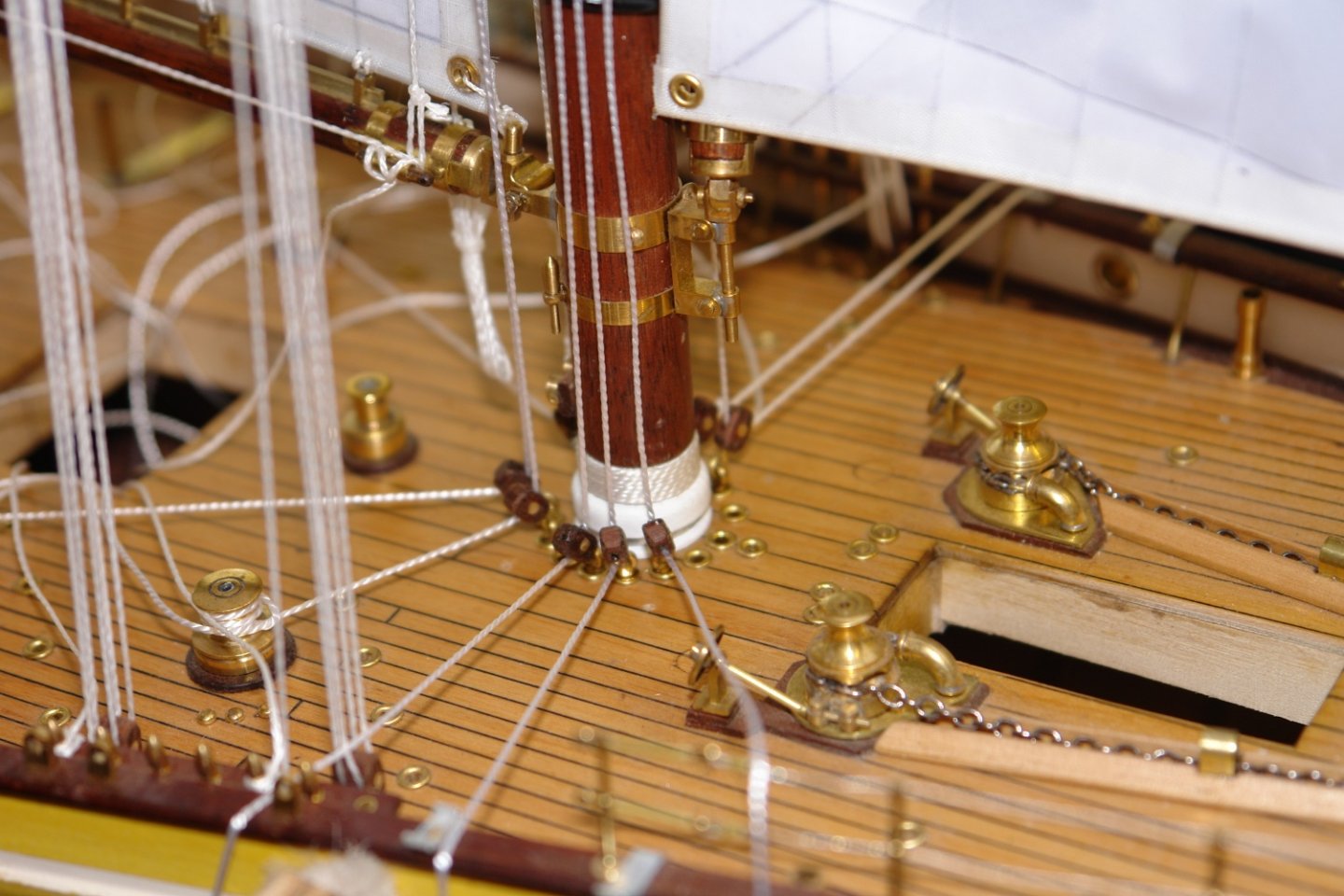
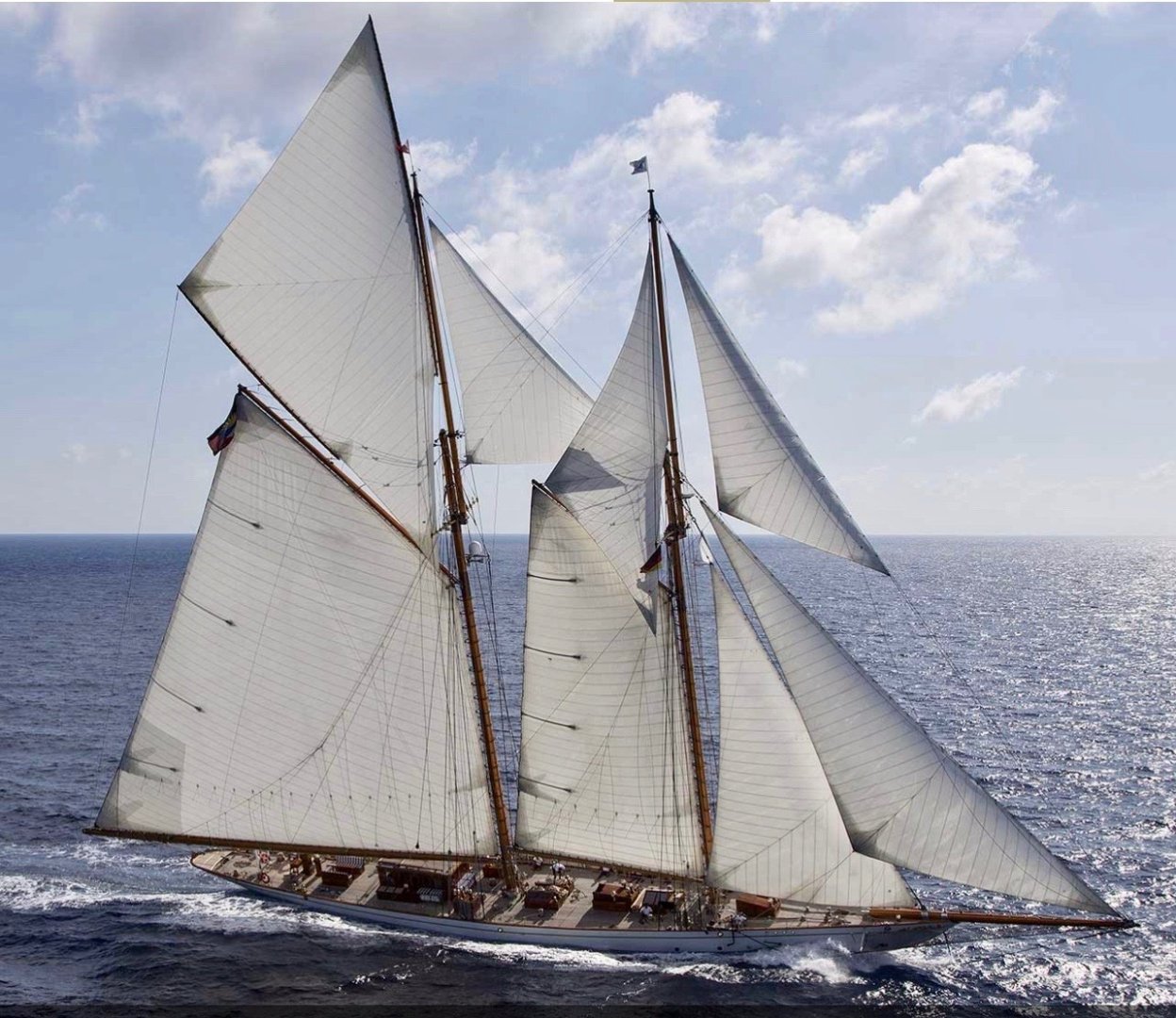
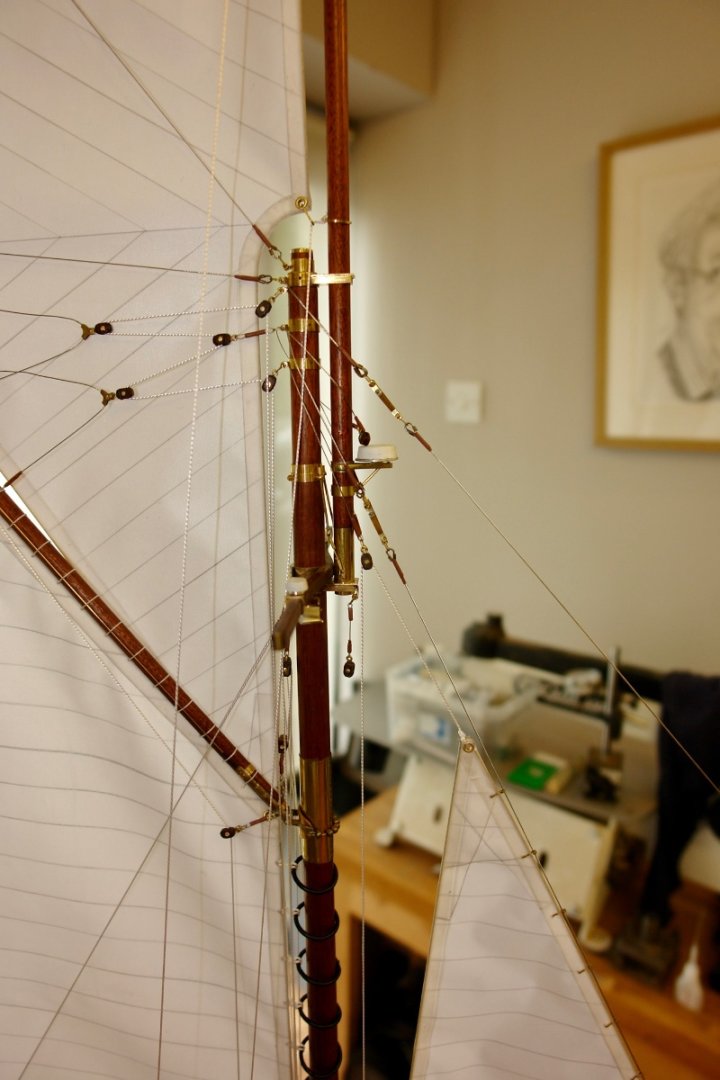
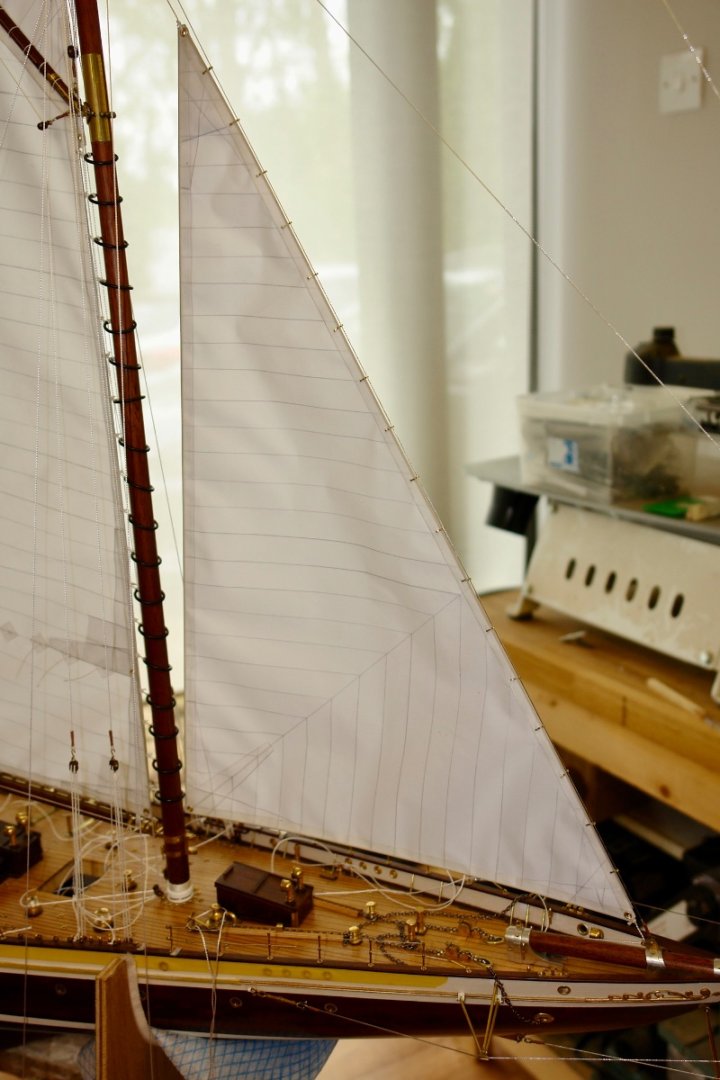
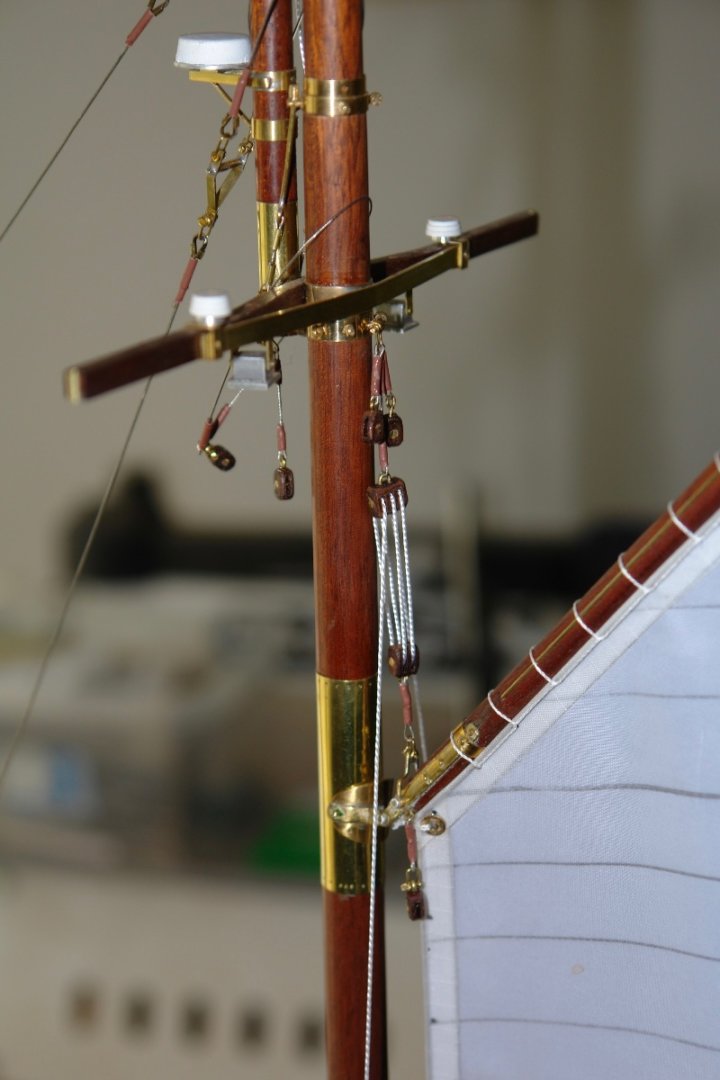
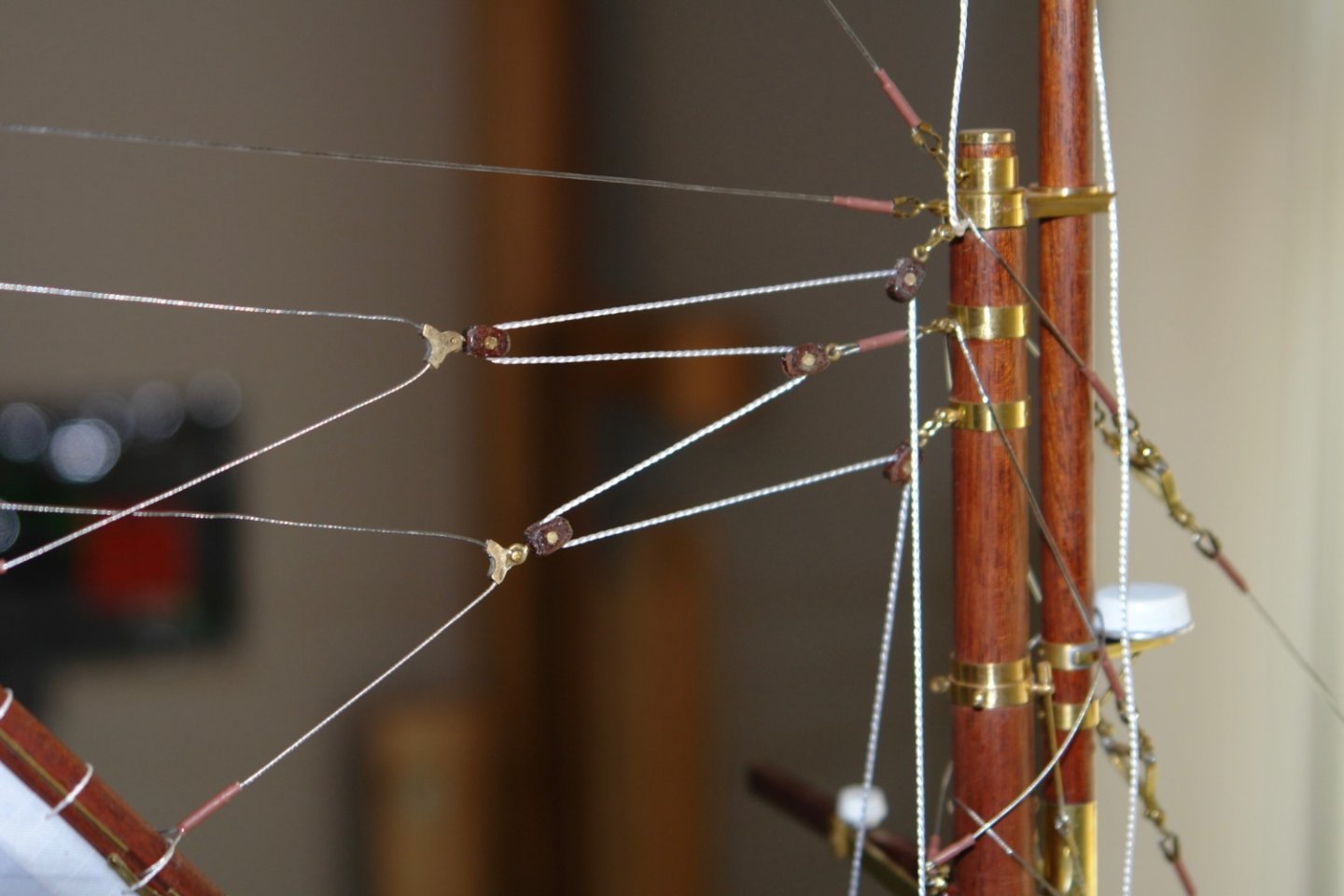
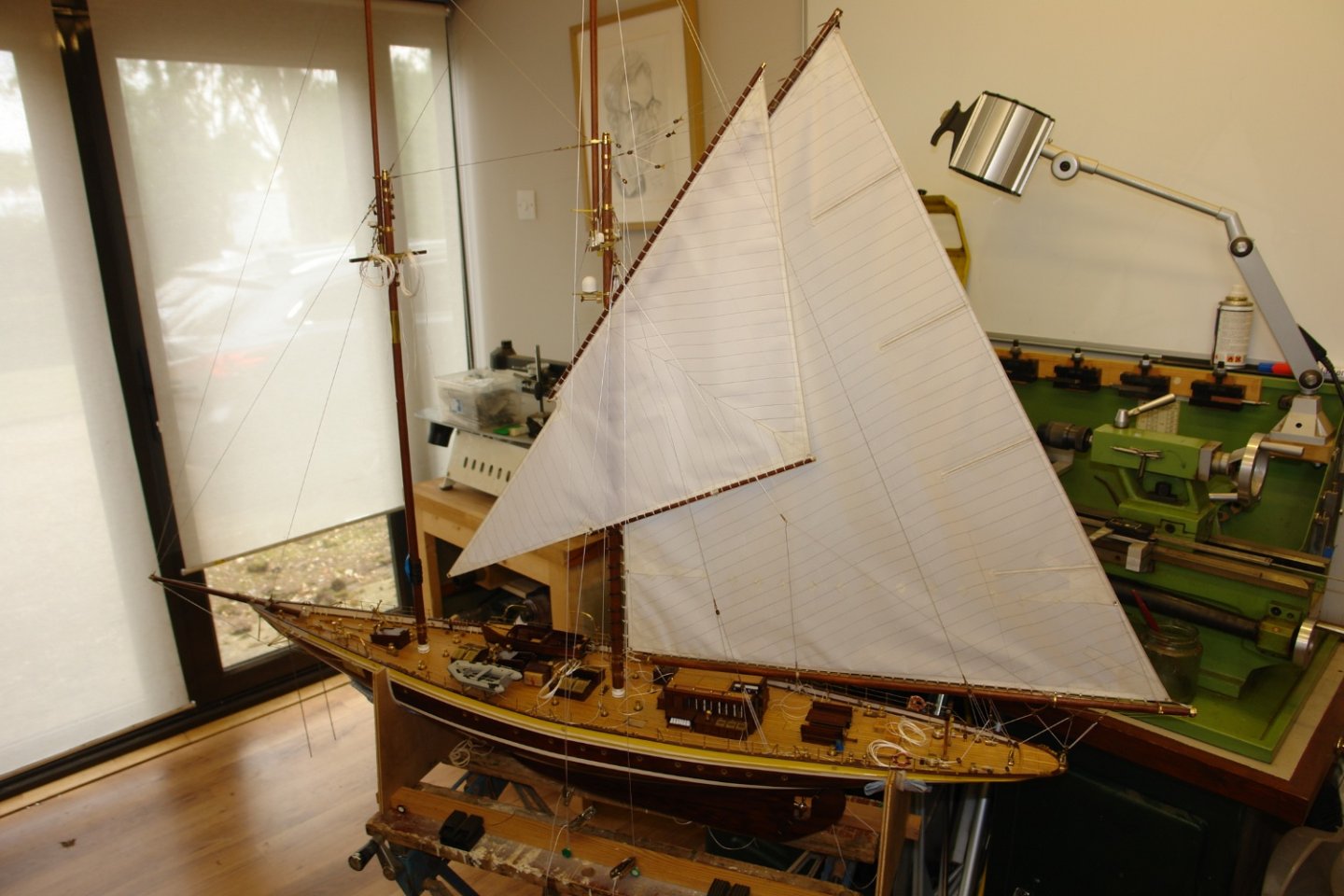
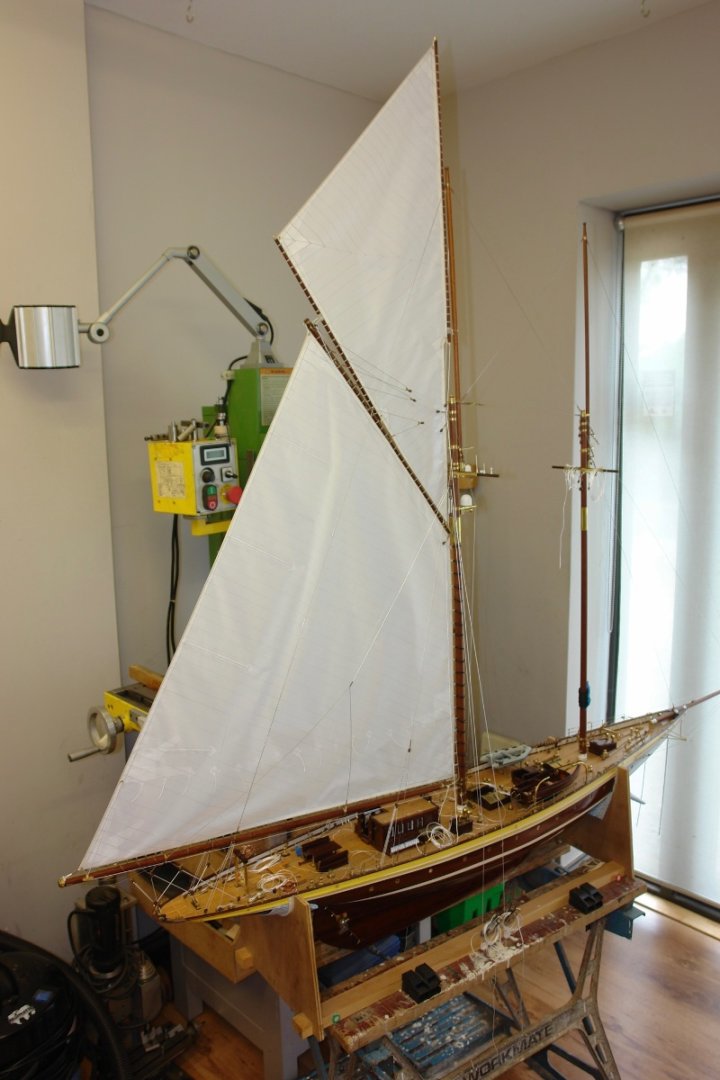
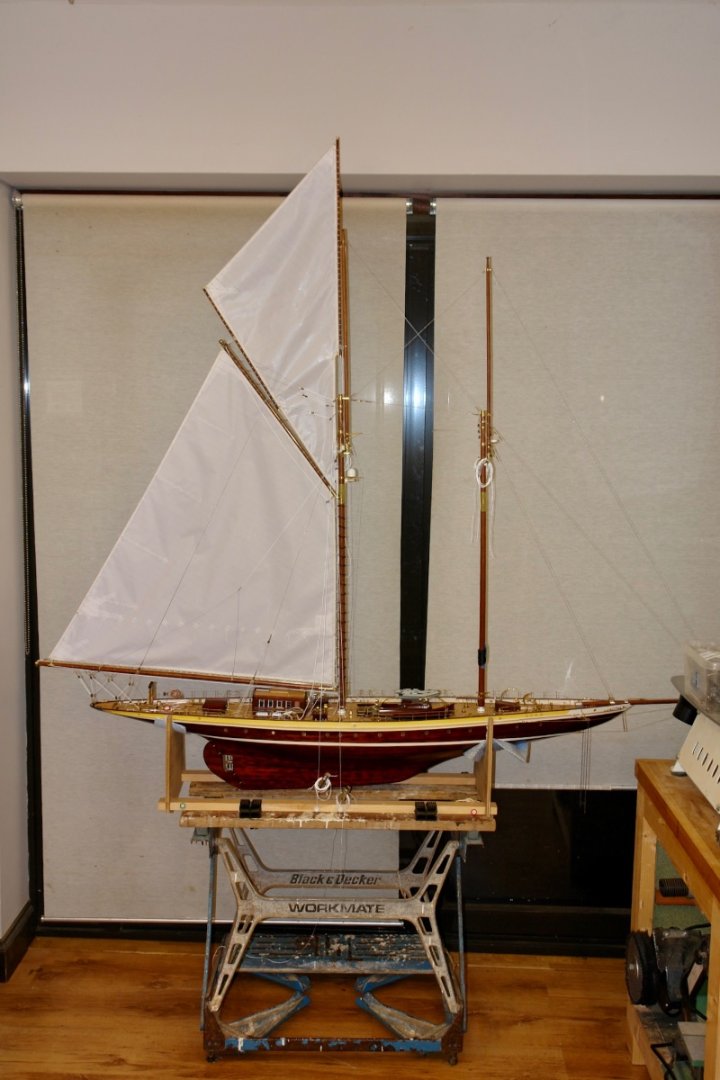
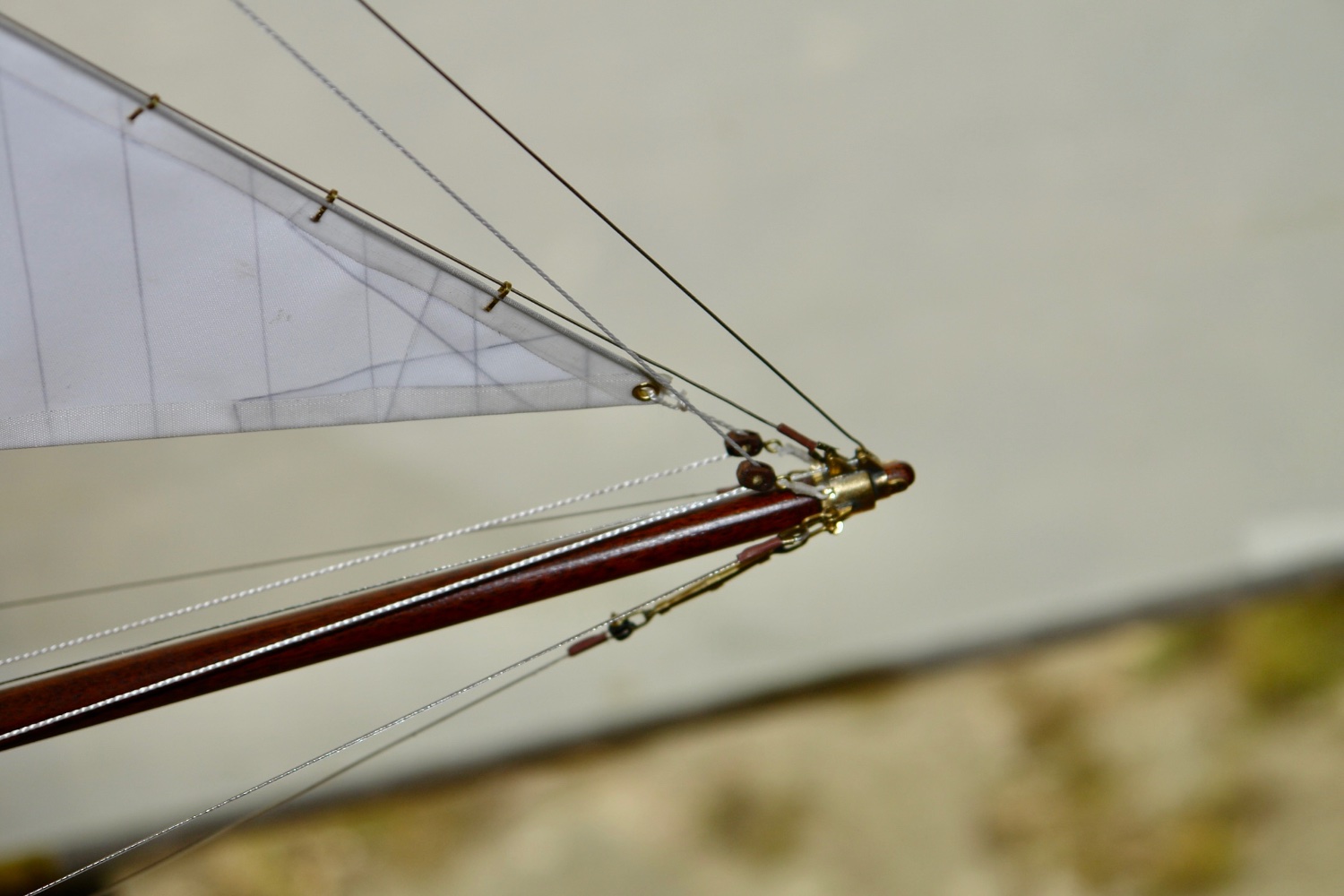
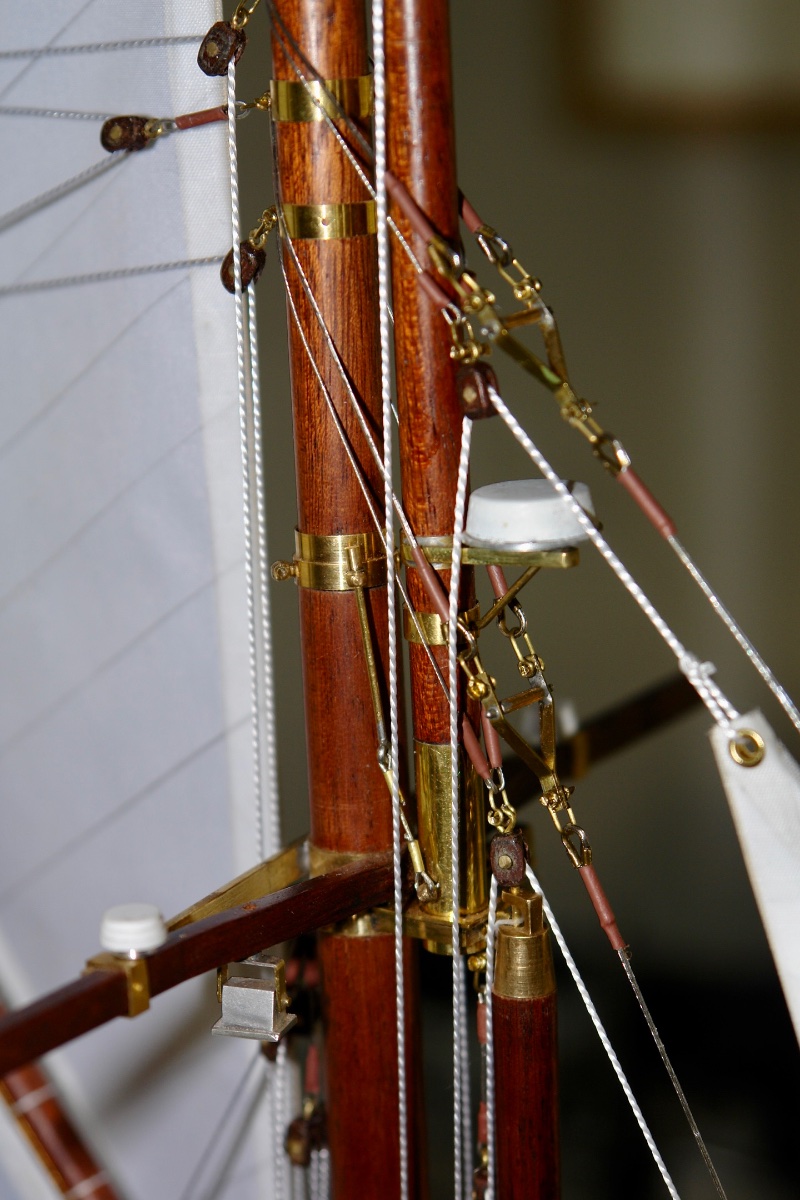
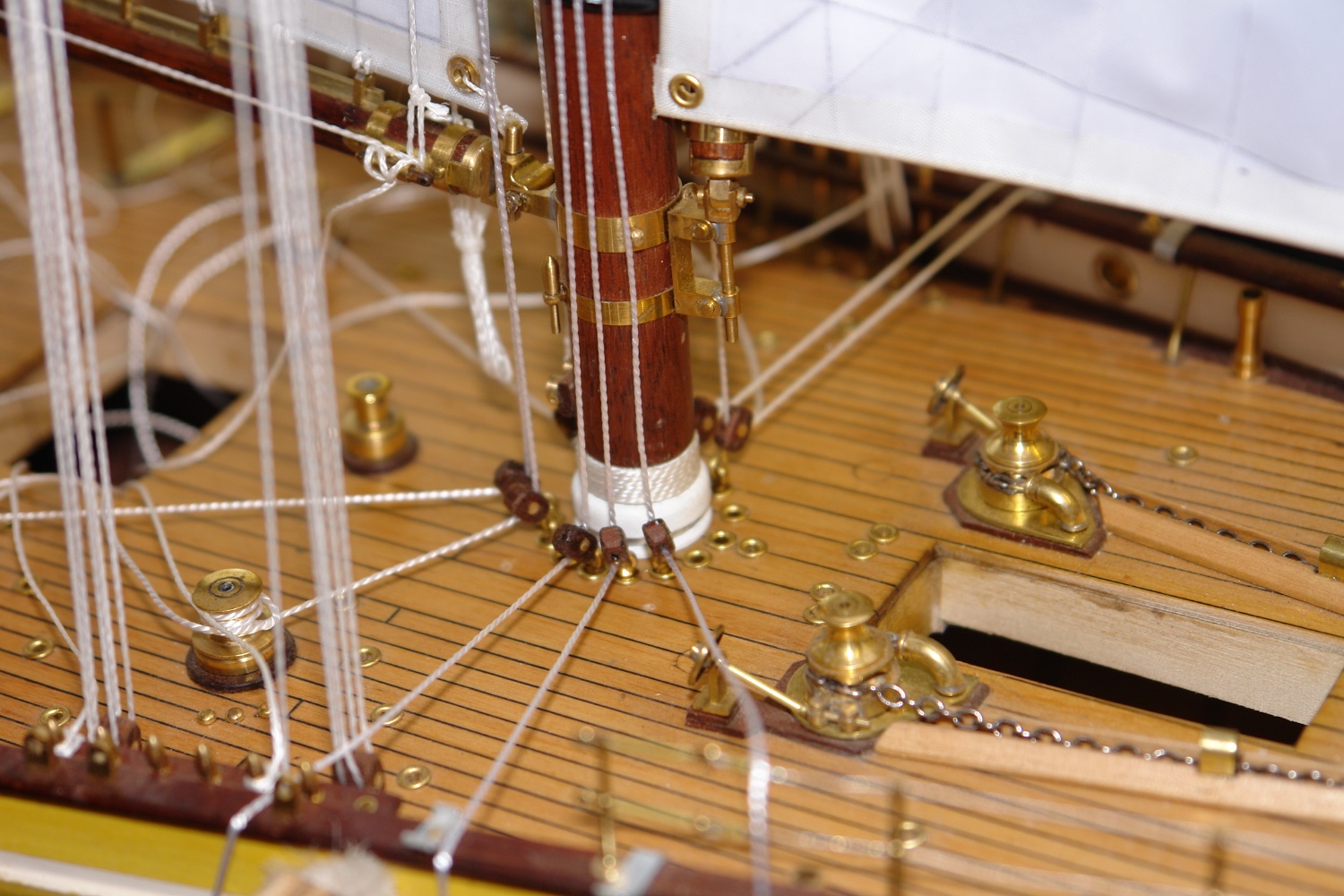
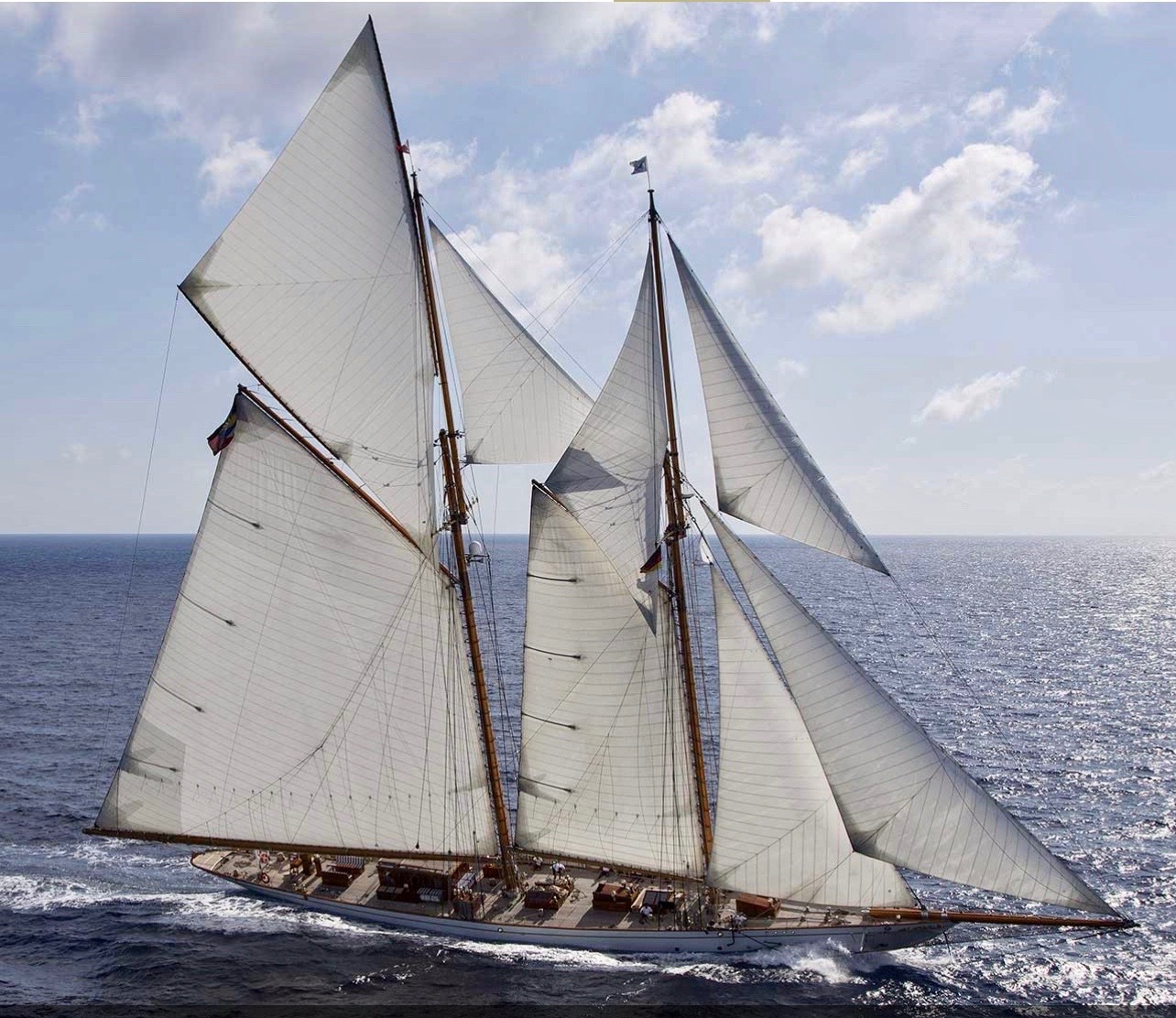
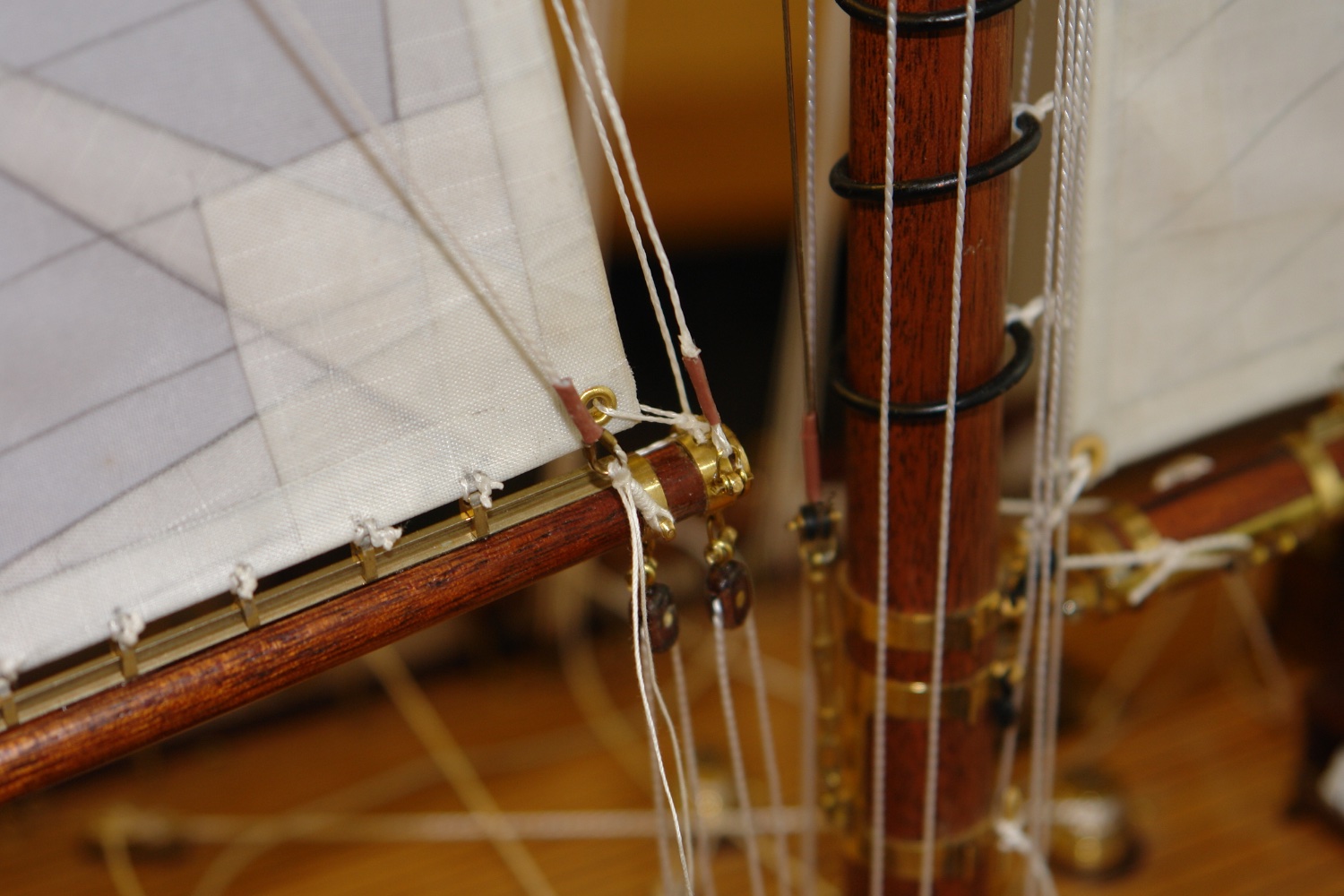
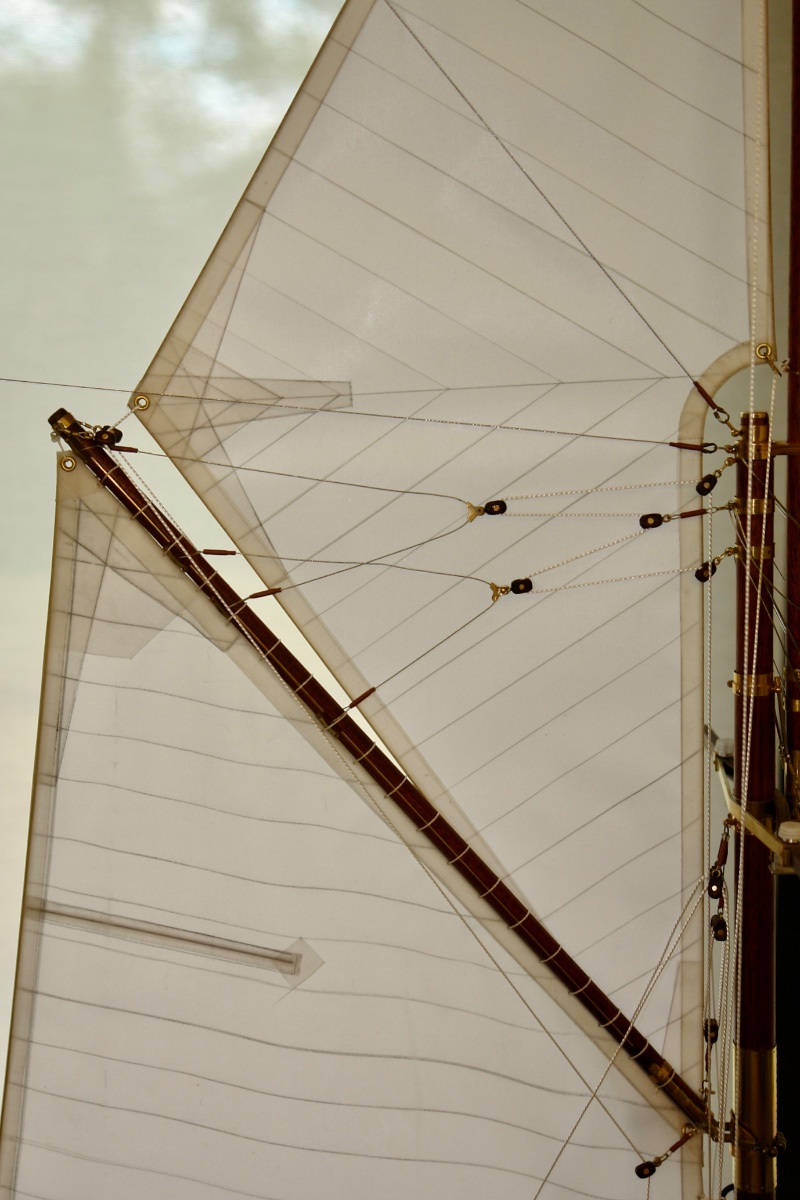
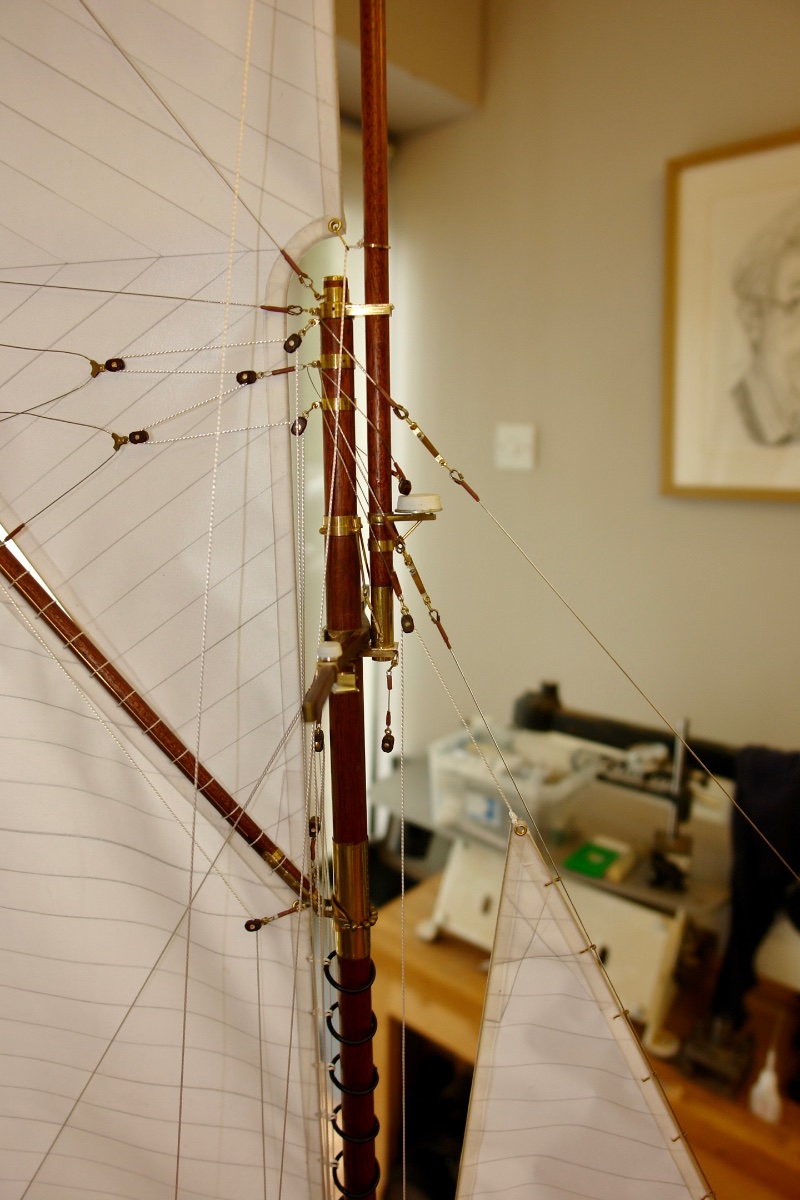
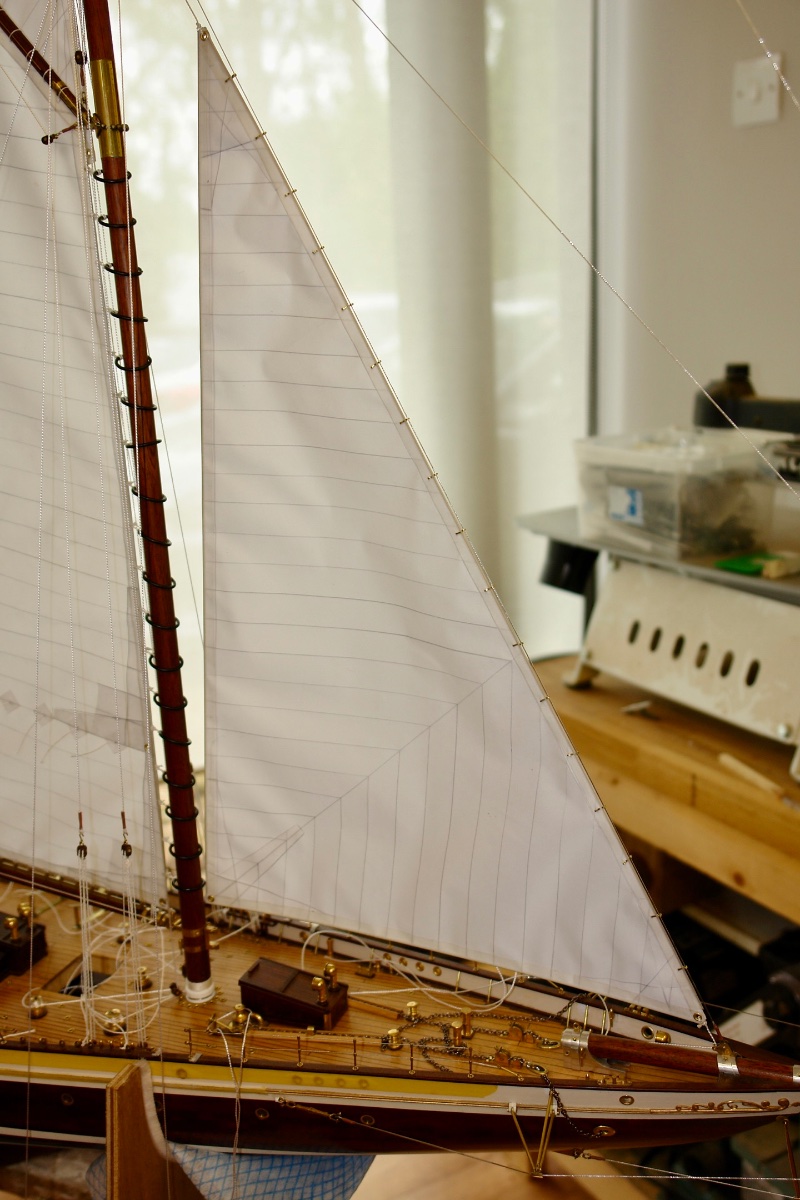
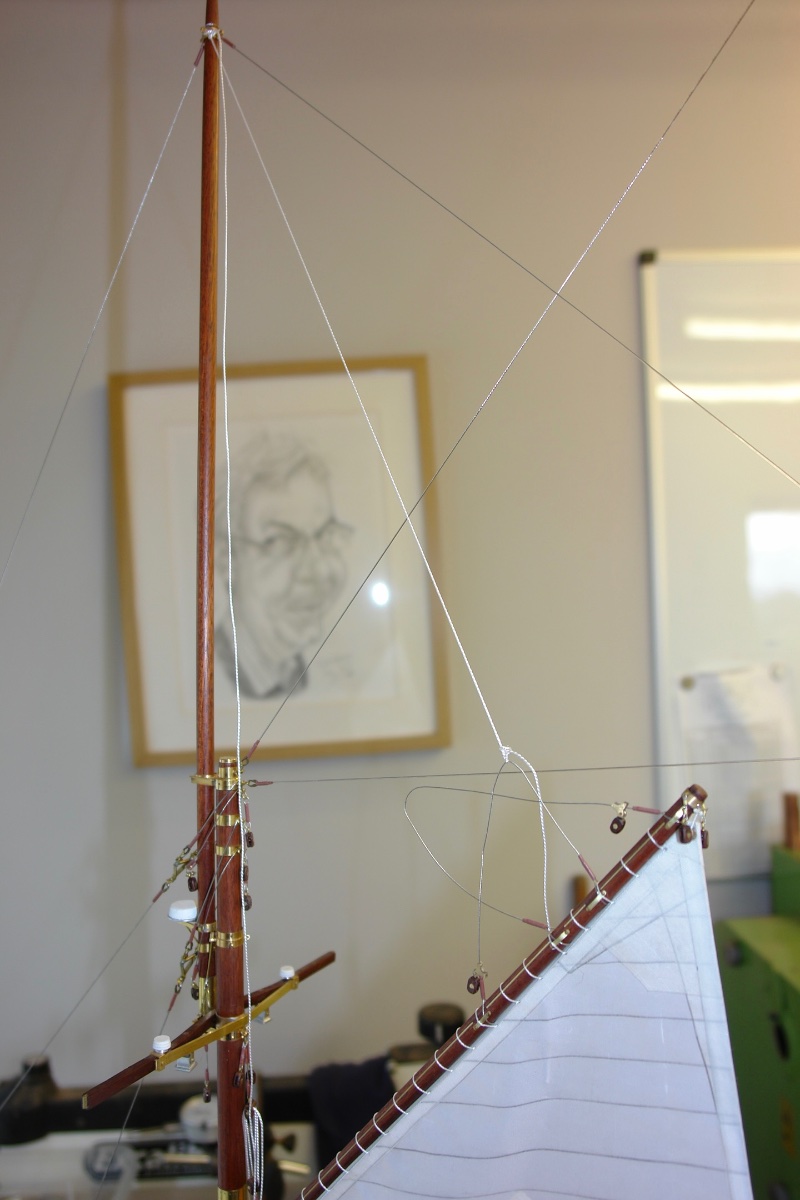
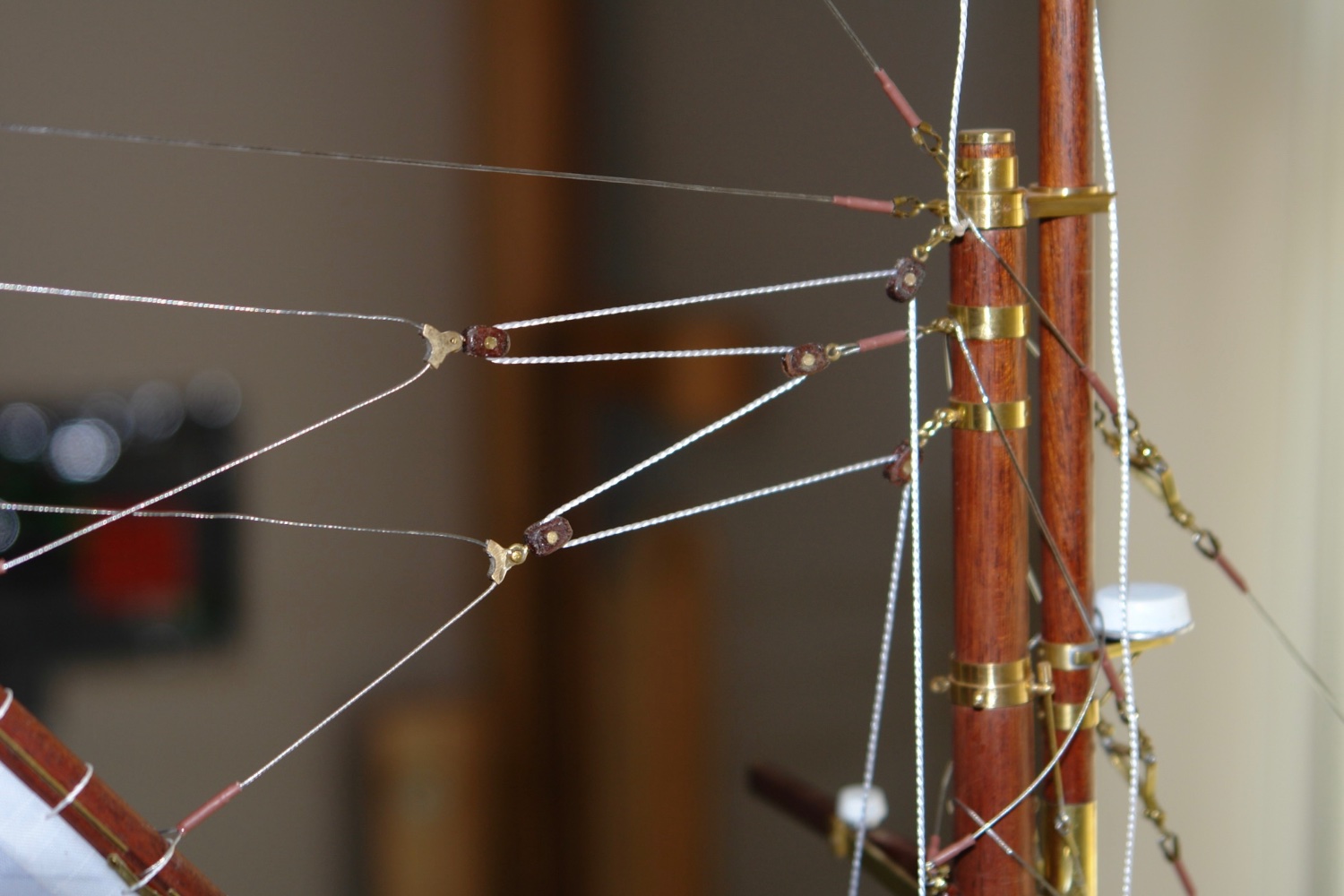
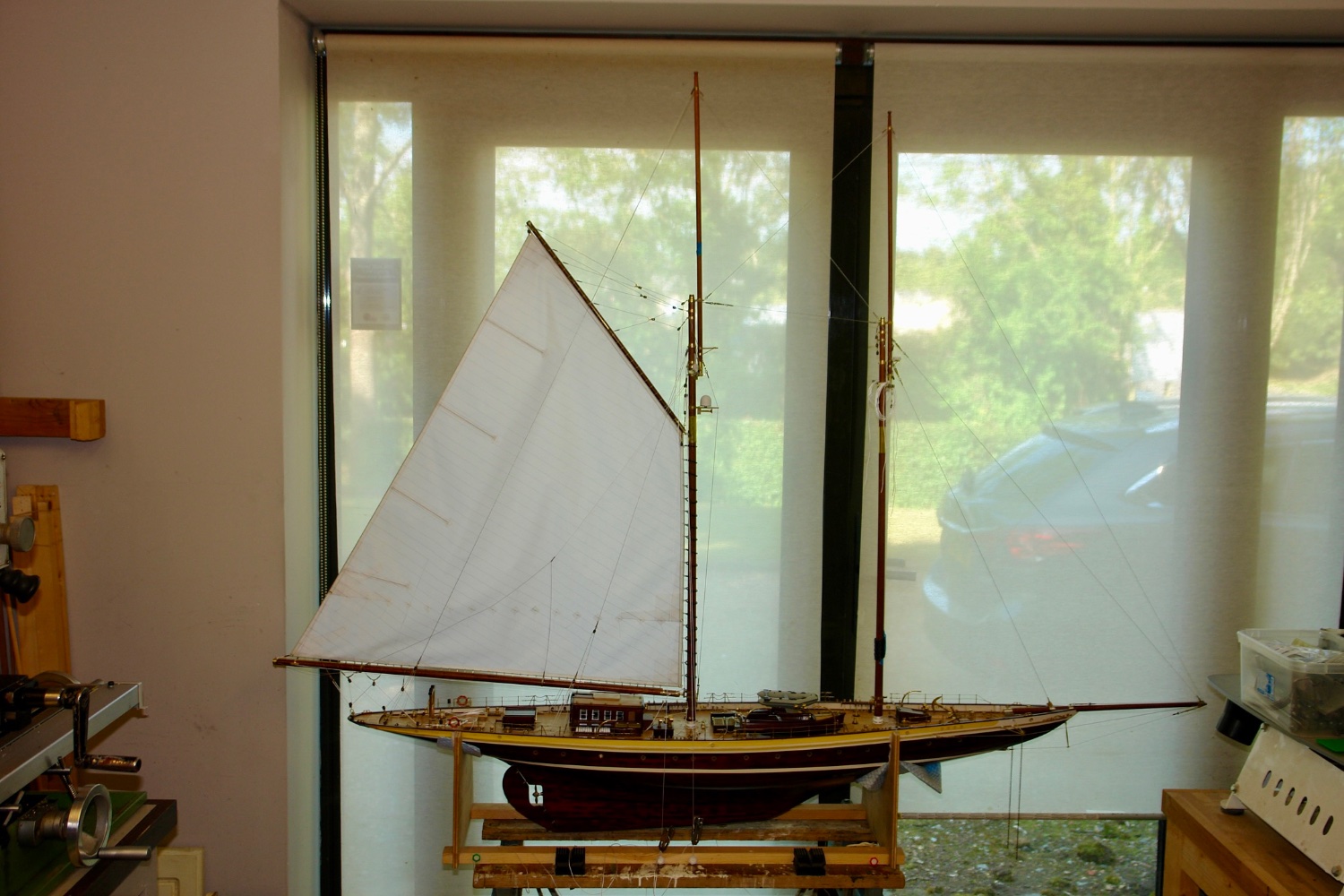
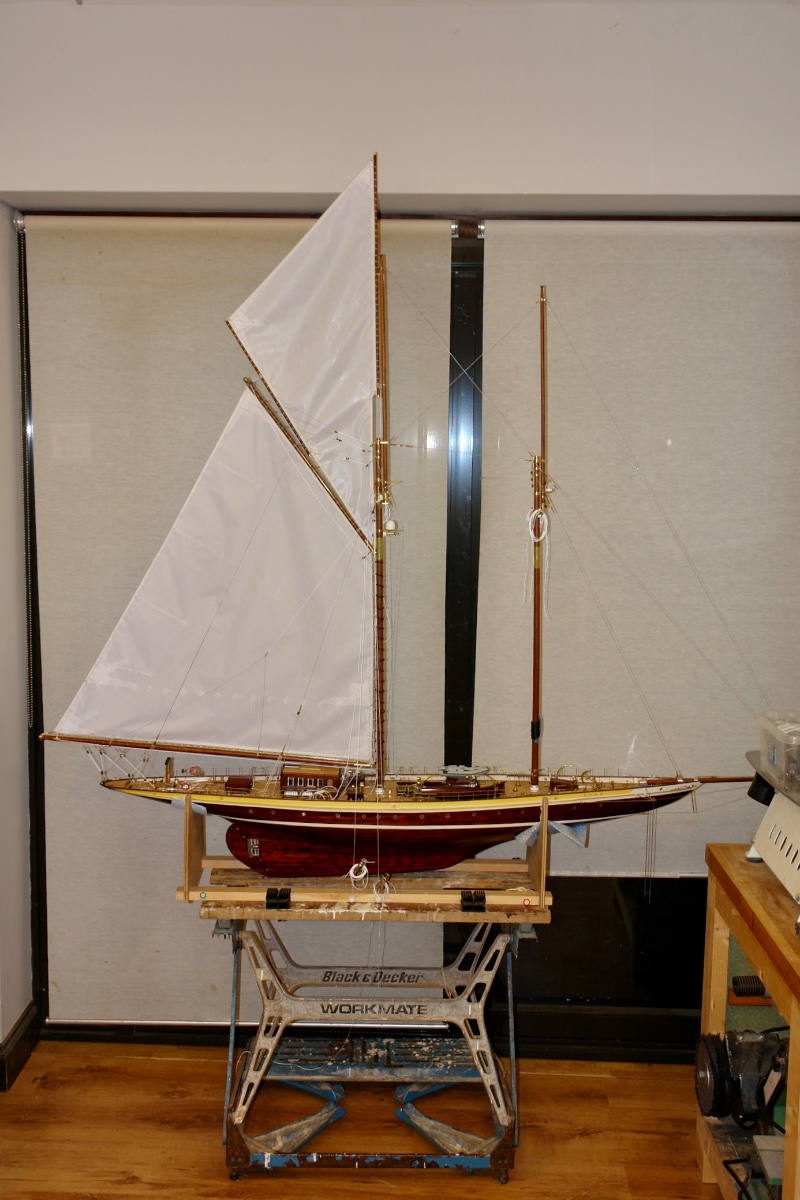
 The final part of my log catch up:- I completed and hoisted the staysail and jibs. Germania is now showing her final profile. She is also quite large. I think I am going to have some tough negotiations about the display location! A number of deck houses are missing, awaiting the tidying of the various lines. The real thing for comparison:- The following shot shows the cranse iron. The two single blocks go to the jib and flying jib tacks (flying jib out of shot). The flying jib and jib halyards:- A more general view of the rigging at the top of the fore mast. The additional blocks at the base of the fore mast have been added. I now need to rig the jib sheets and sort out the tails of the various lines.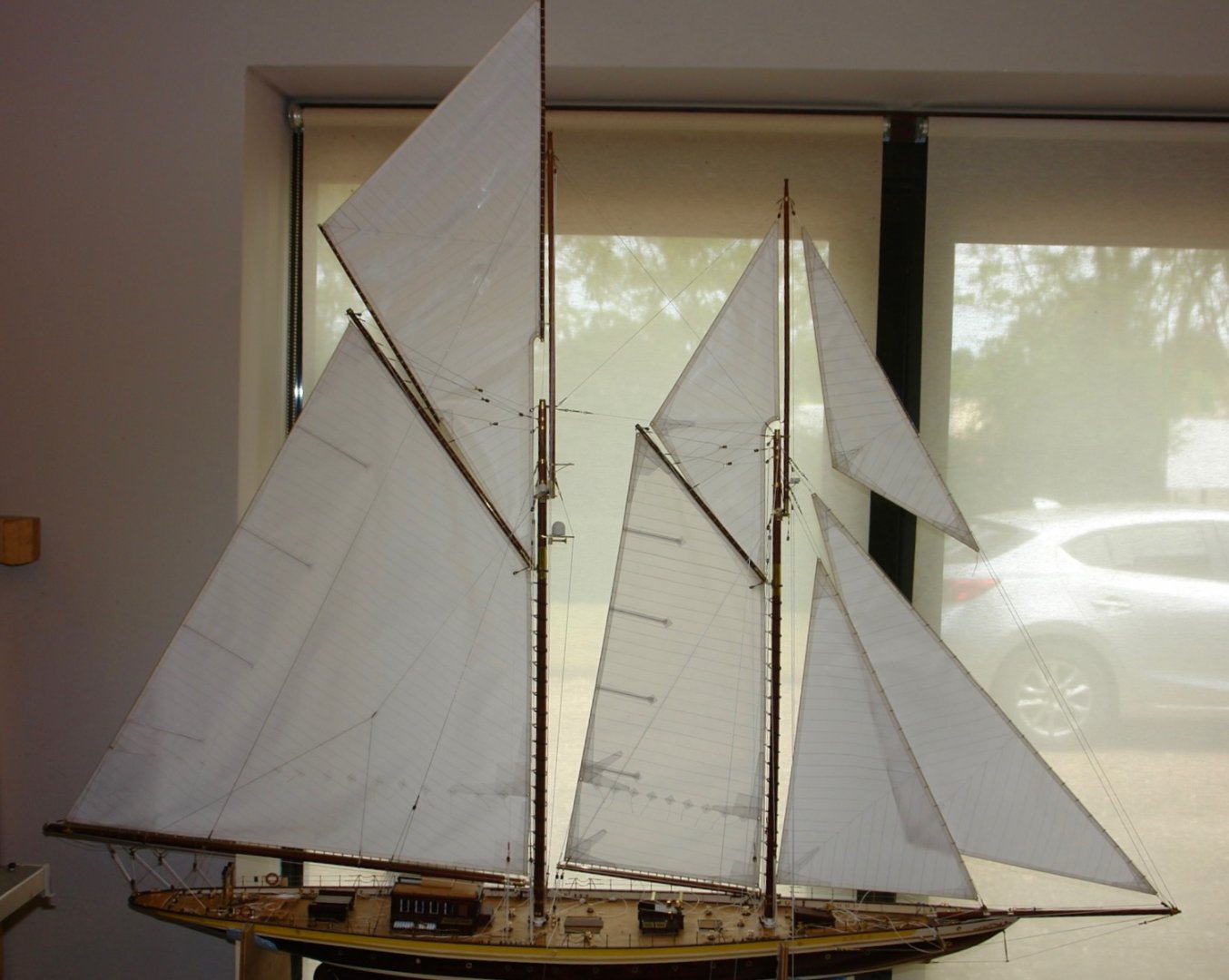
-
Very interesting description of mapping the hull lines, and a very commendable task in creating a historical record.
-
Hello Pete I have bought a number of these cheap sets but have never found them to be too accurately made. Where did you get yours from?
-
All looking very good Dan. The containers are looking particularly uniform.
-
Yes its all a bit weird isn't it. The main looks set for a close reach but the jib seems all over the place. I can't work it out.
-
Eberhard - yes that is correct. Your suggestion that ease of handling outweighs efficiency is I think pertinent.
-
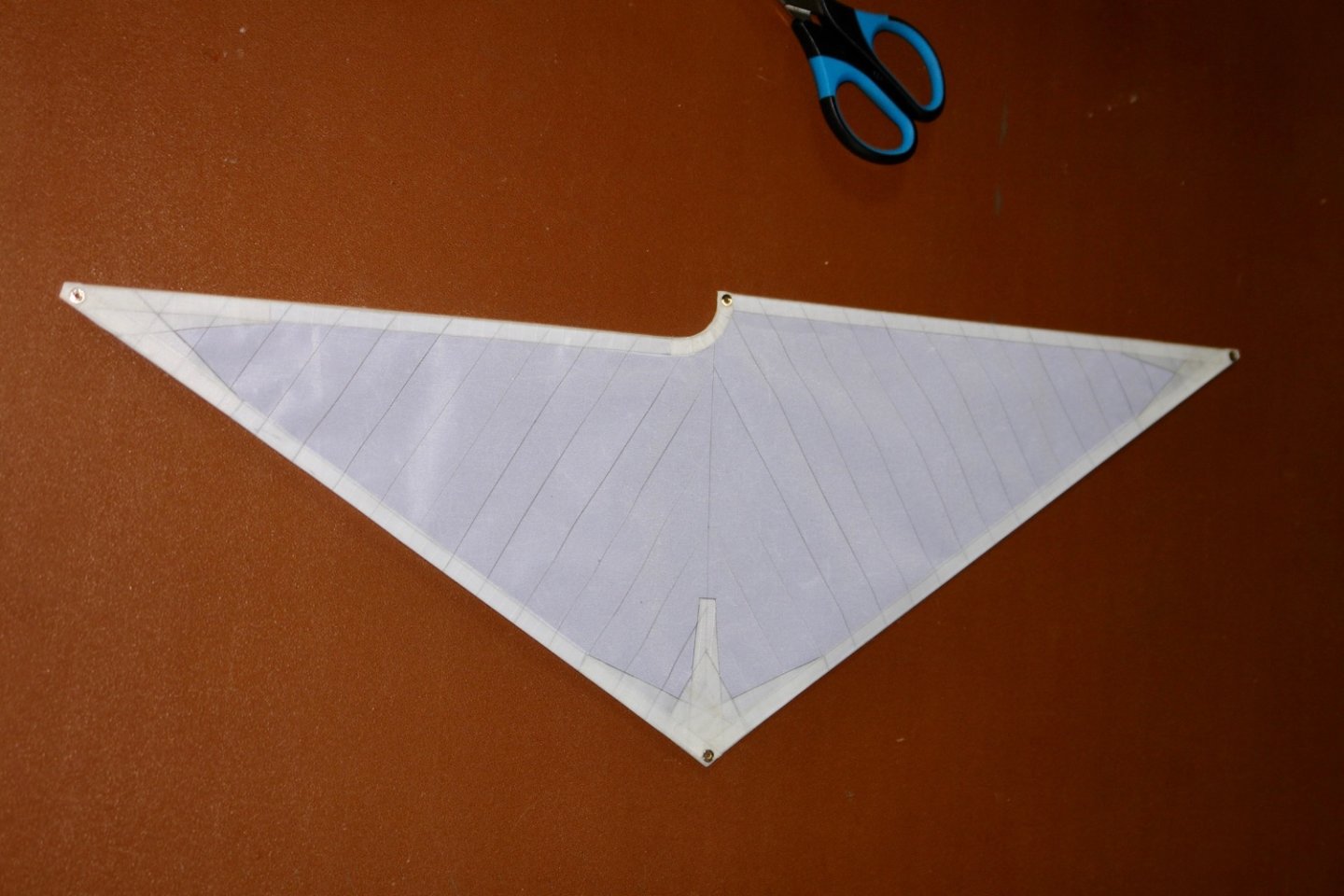
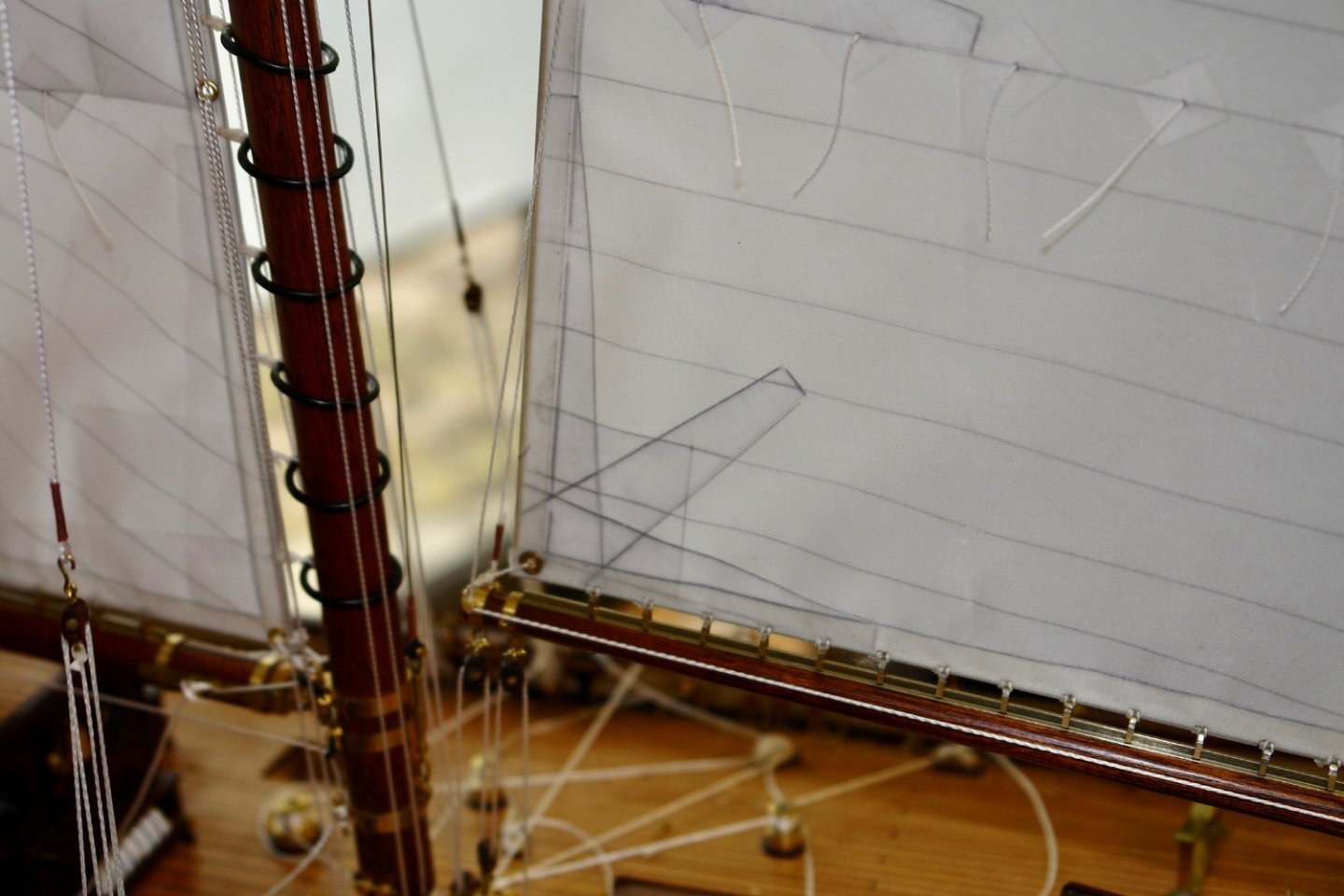
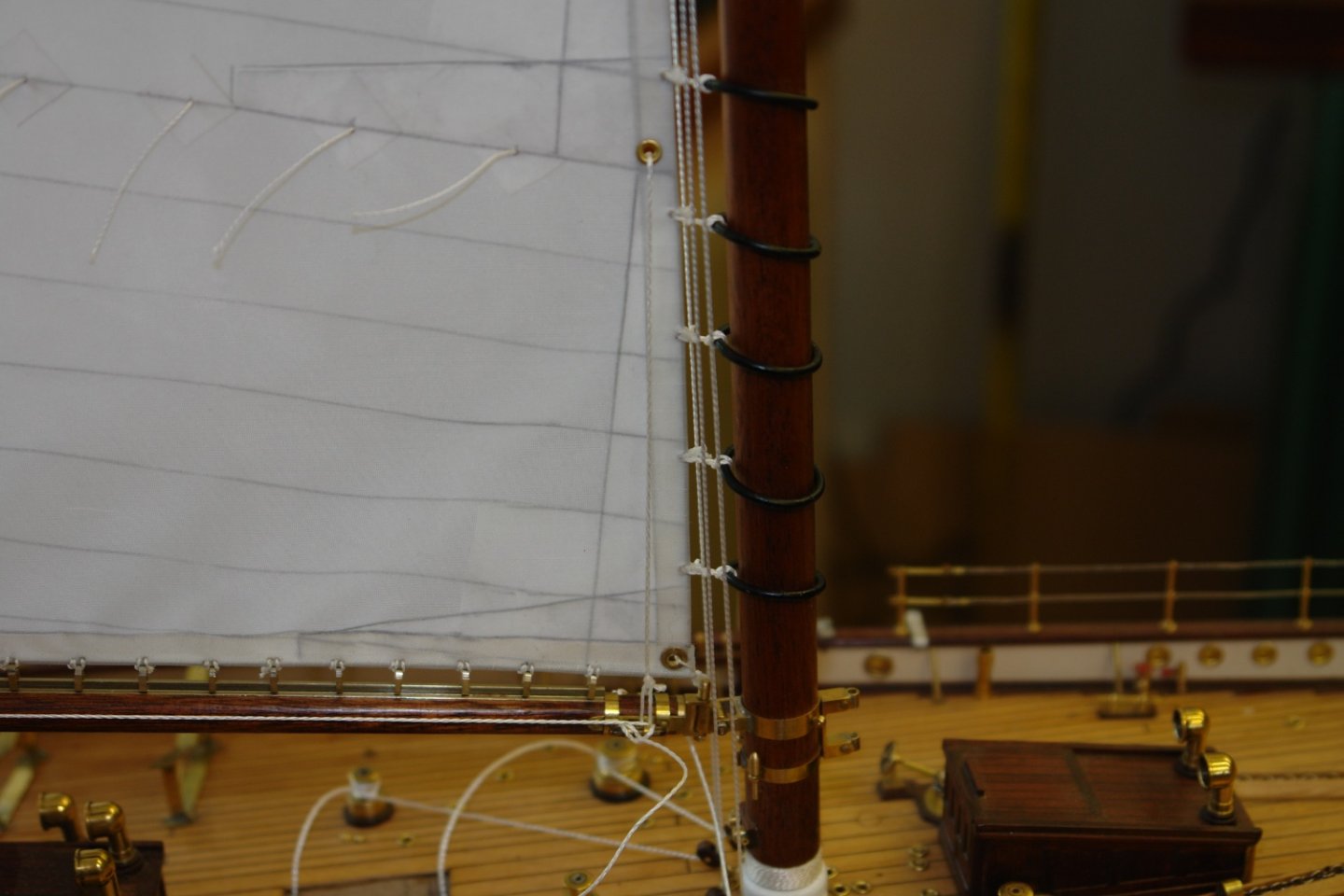
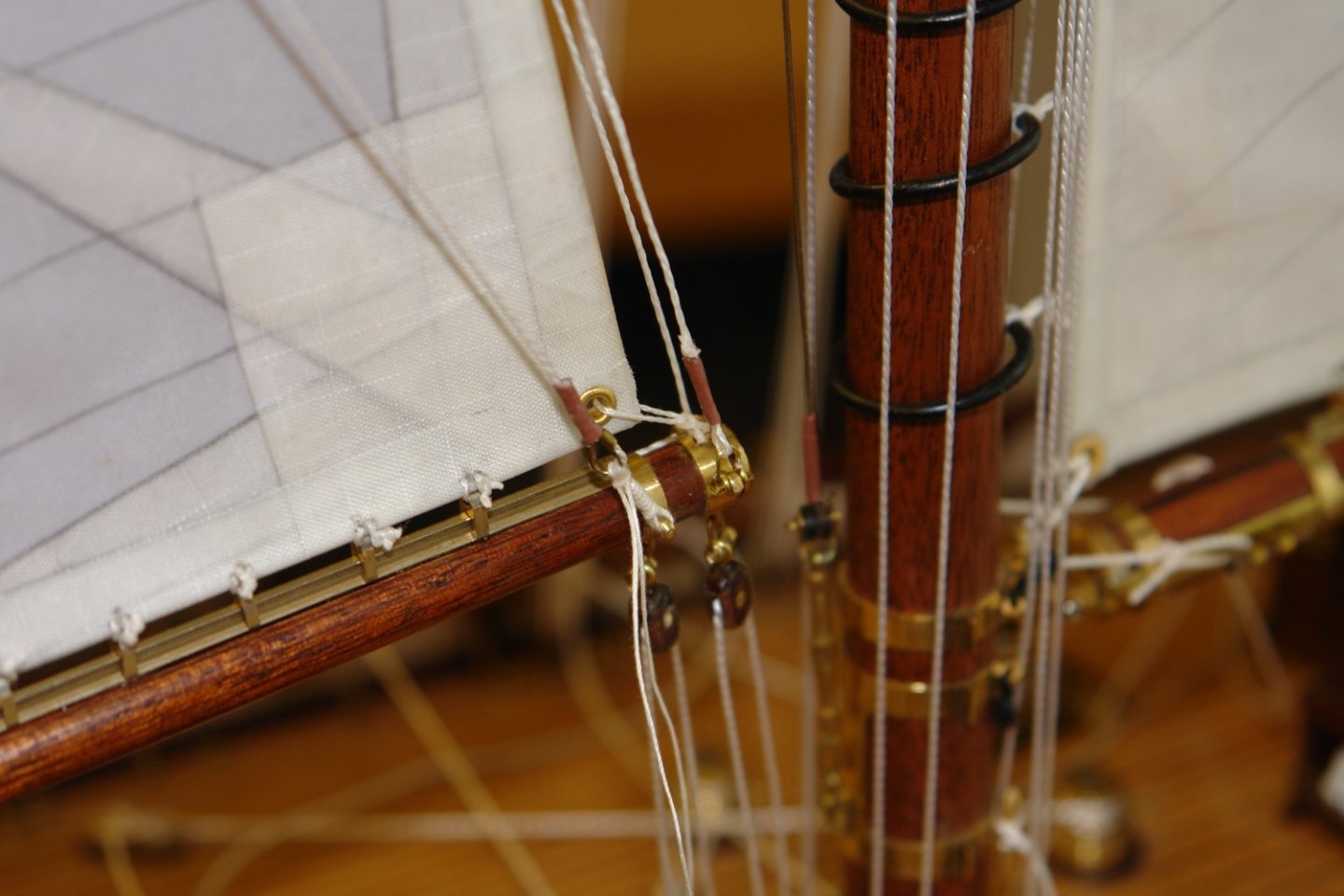
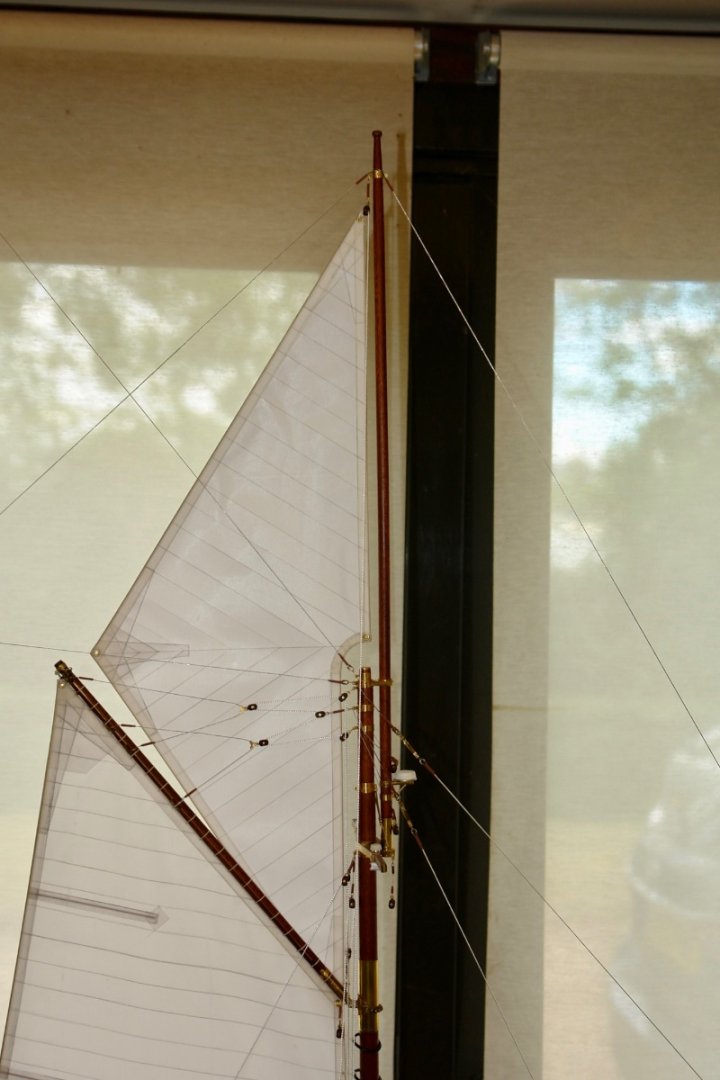
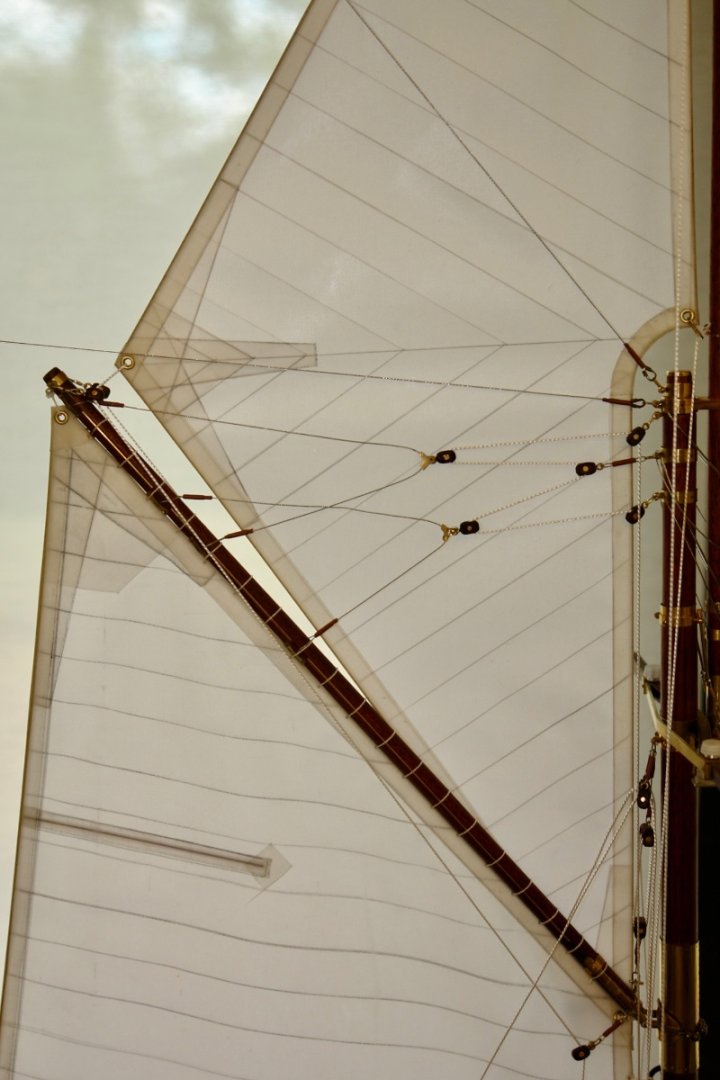
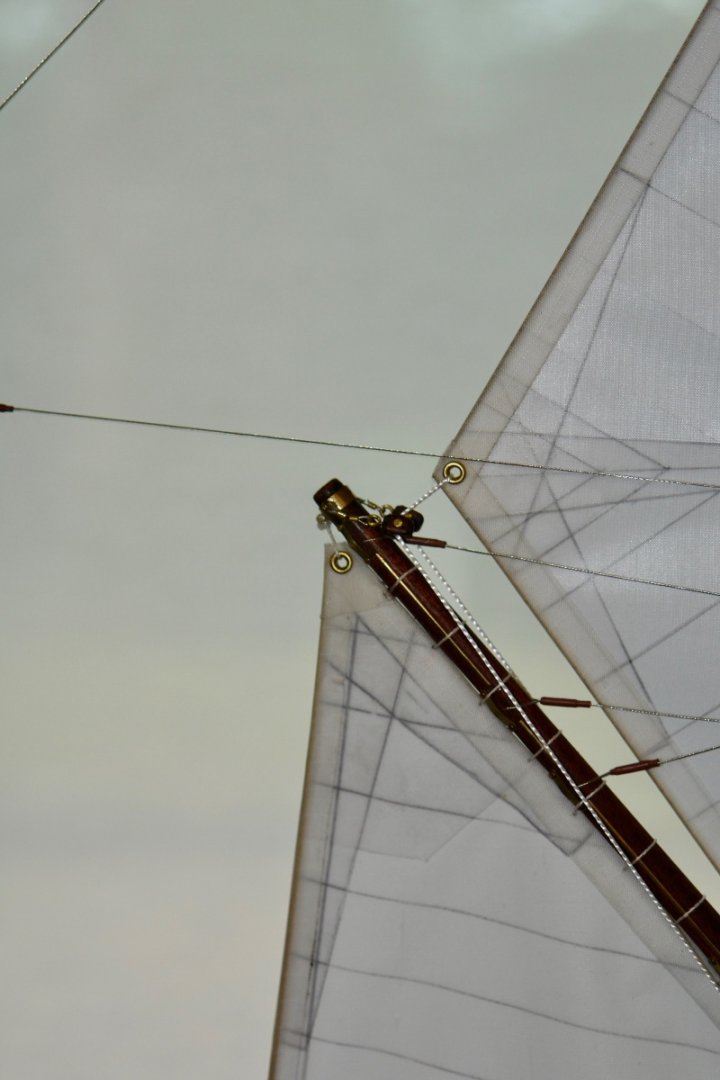
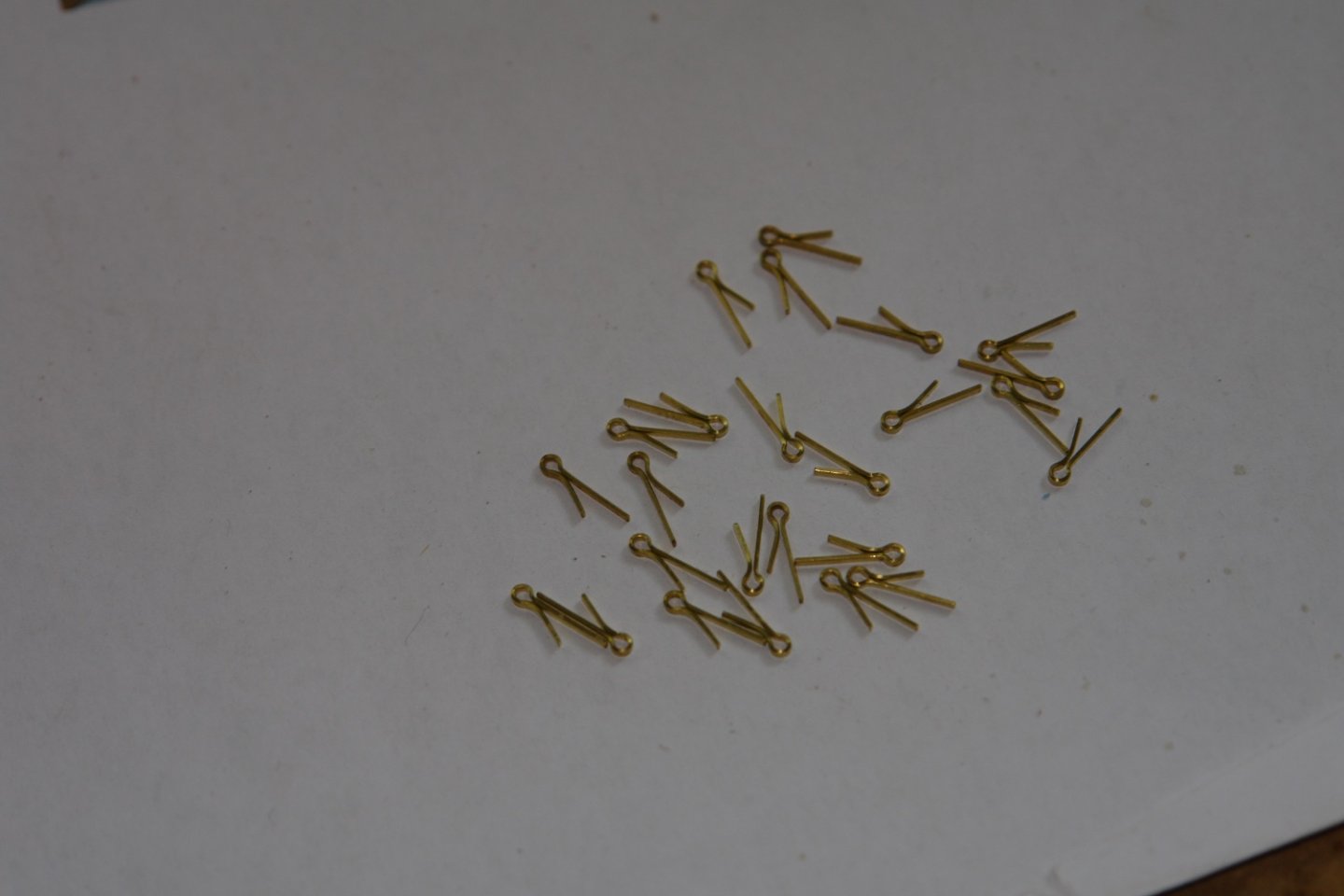
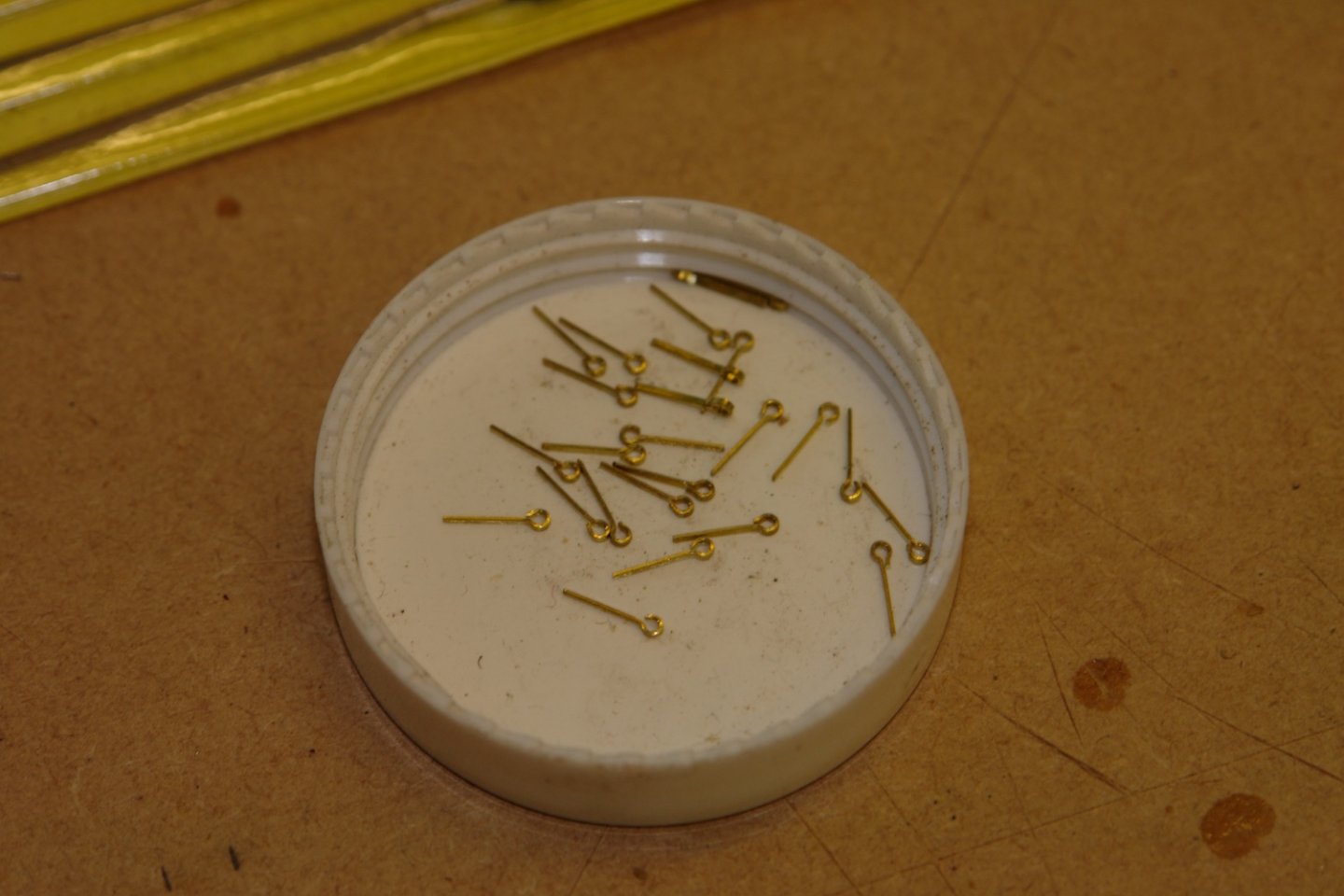
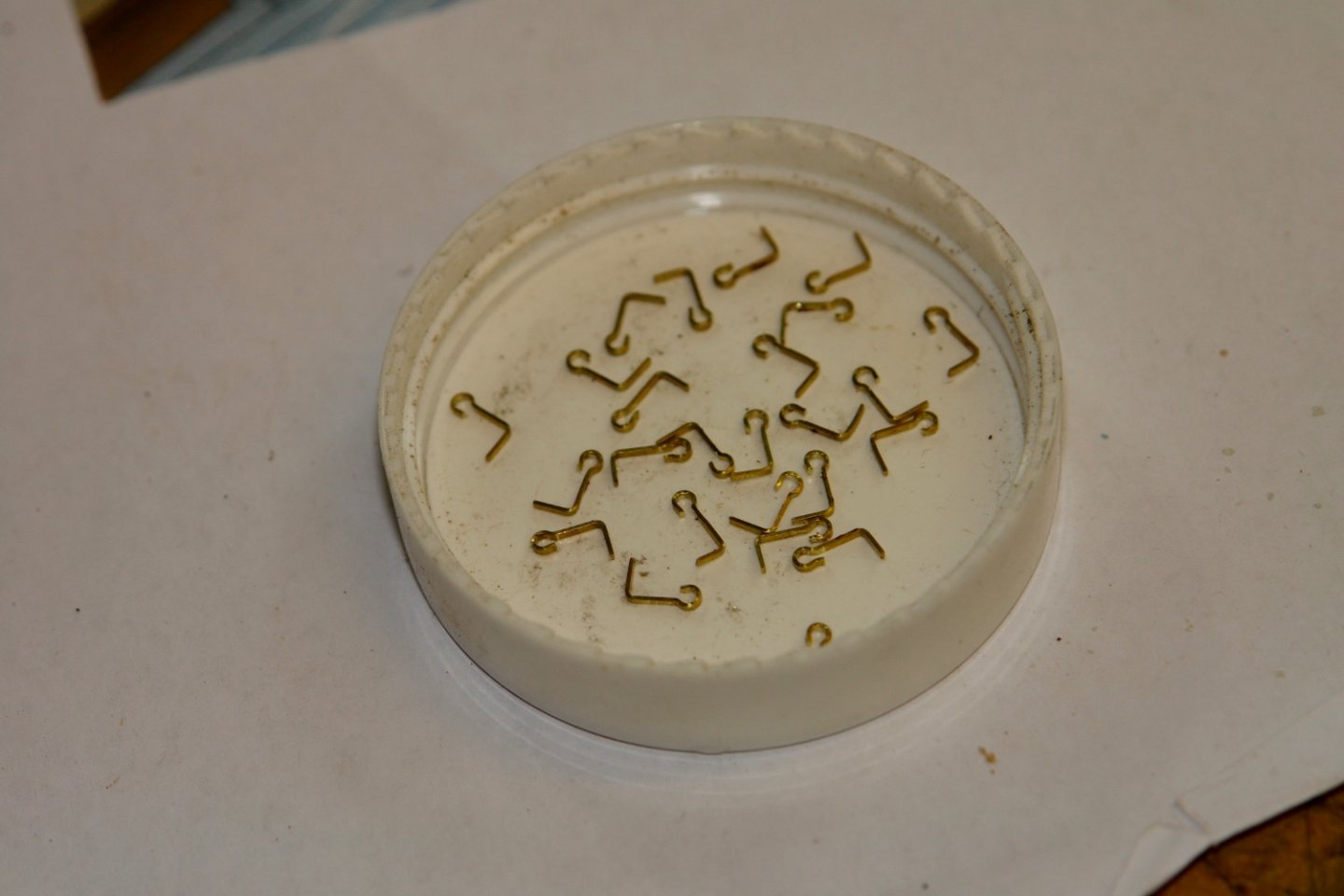
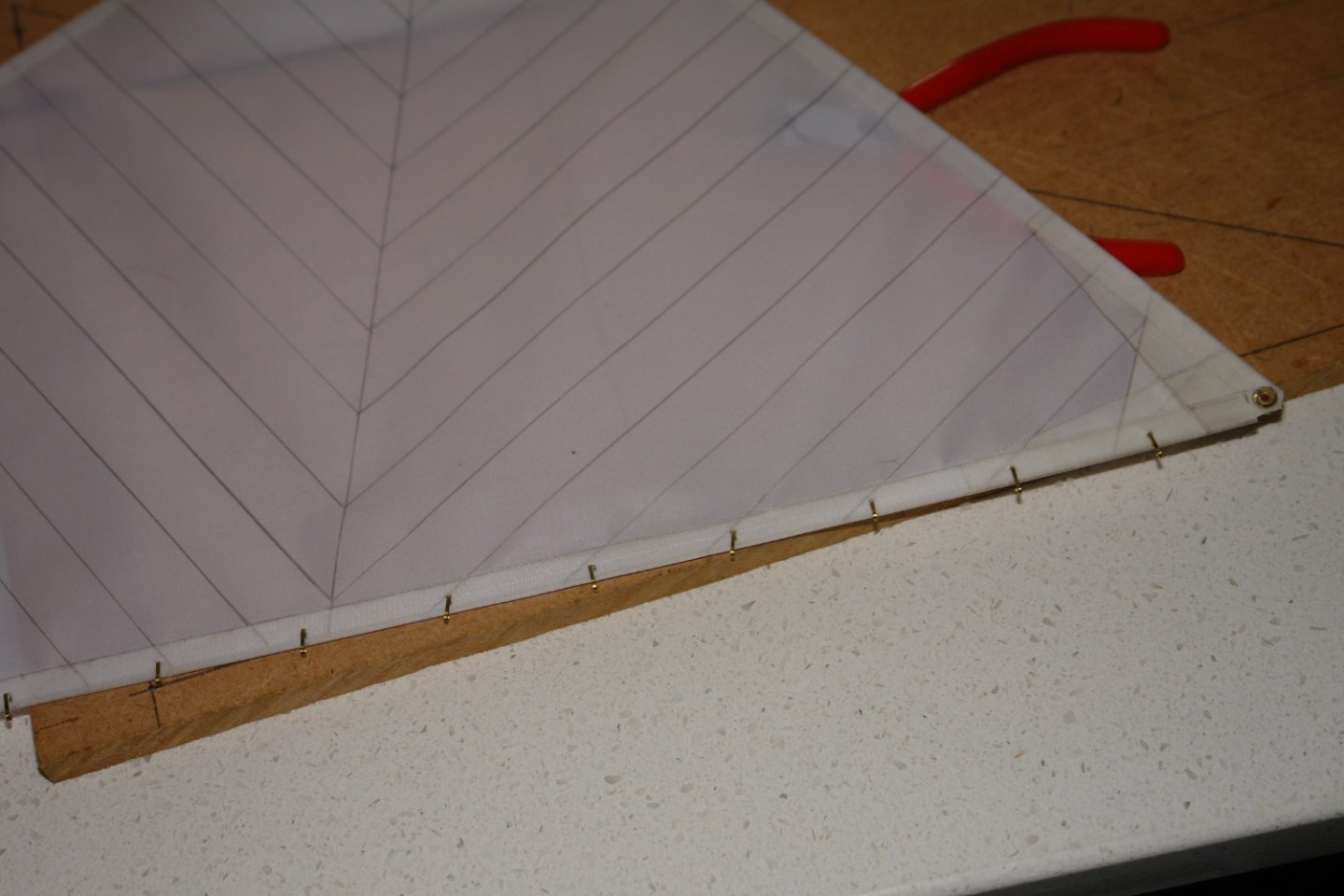
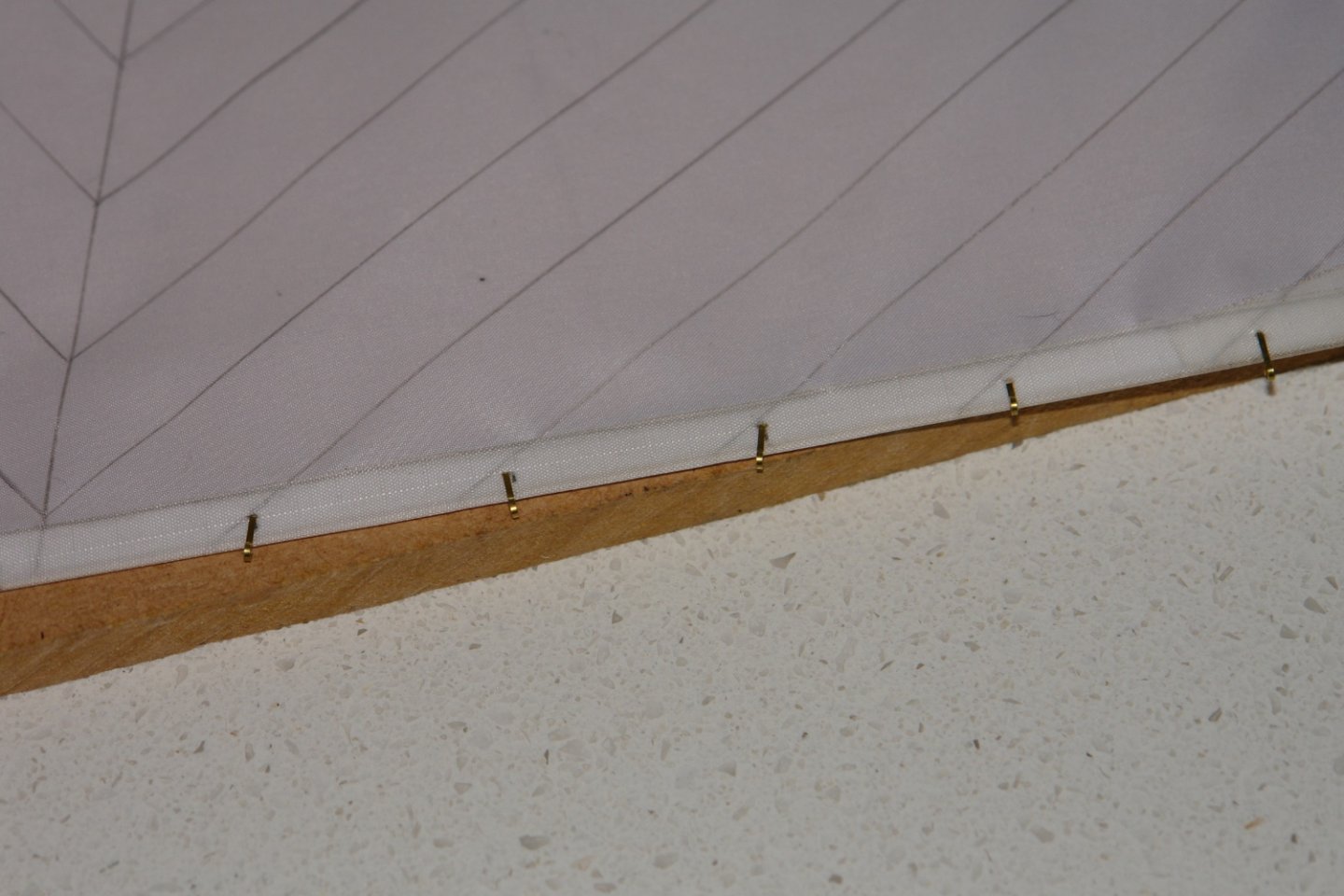
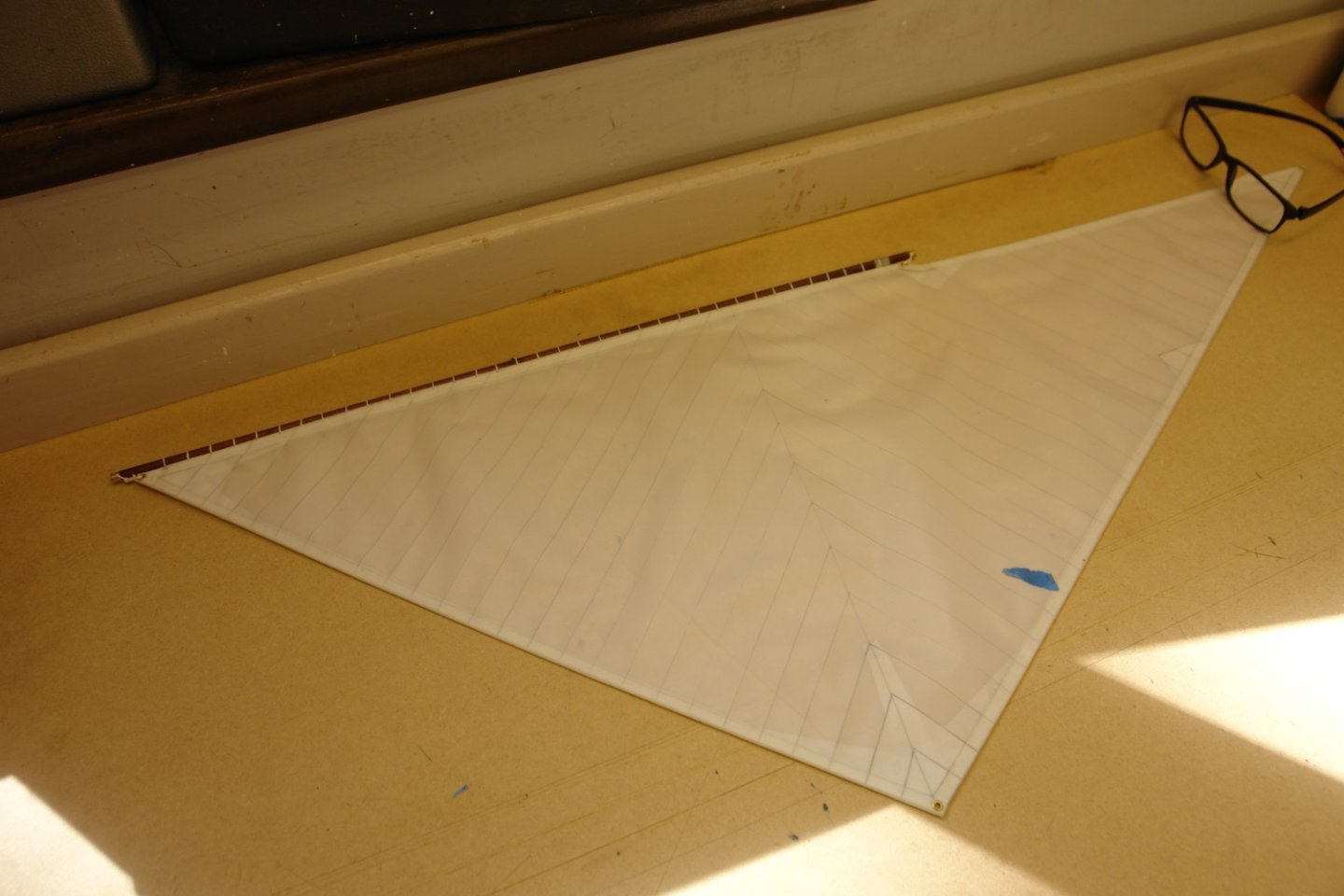
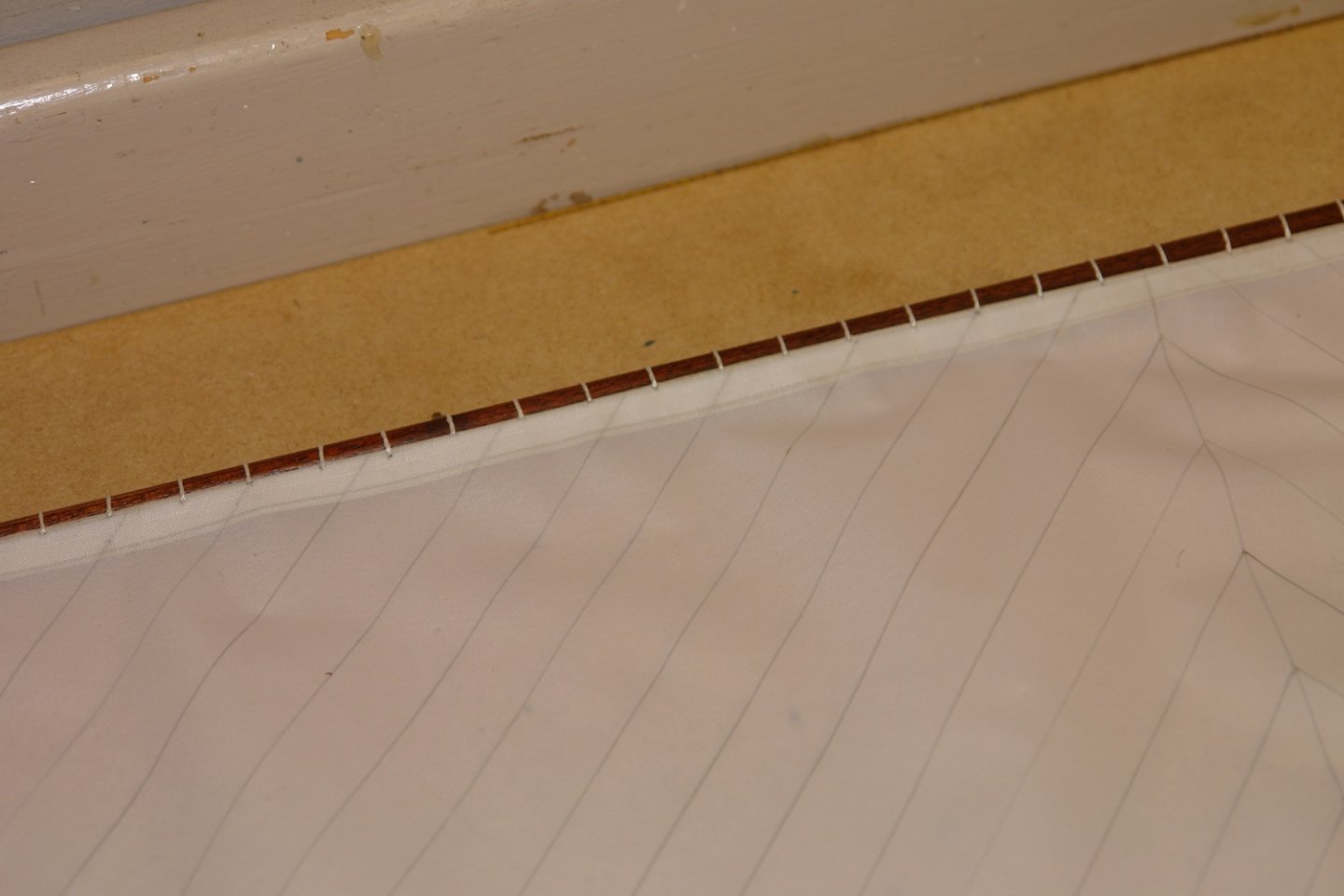
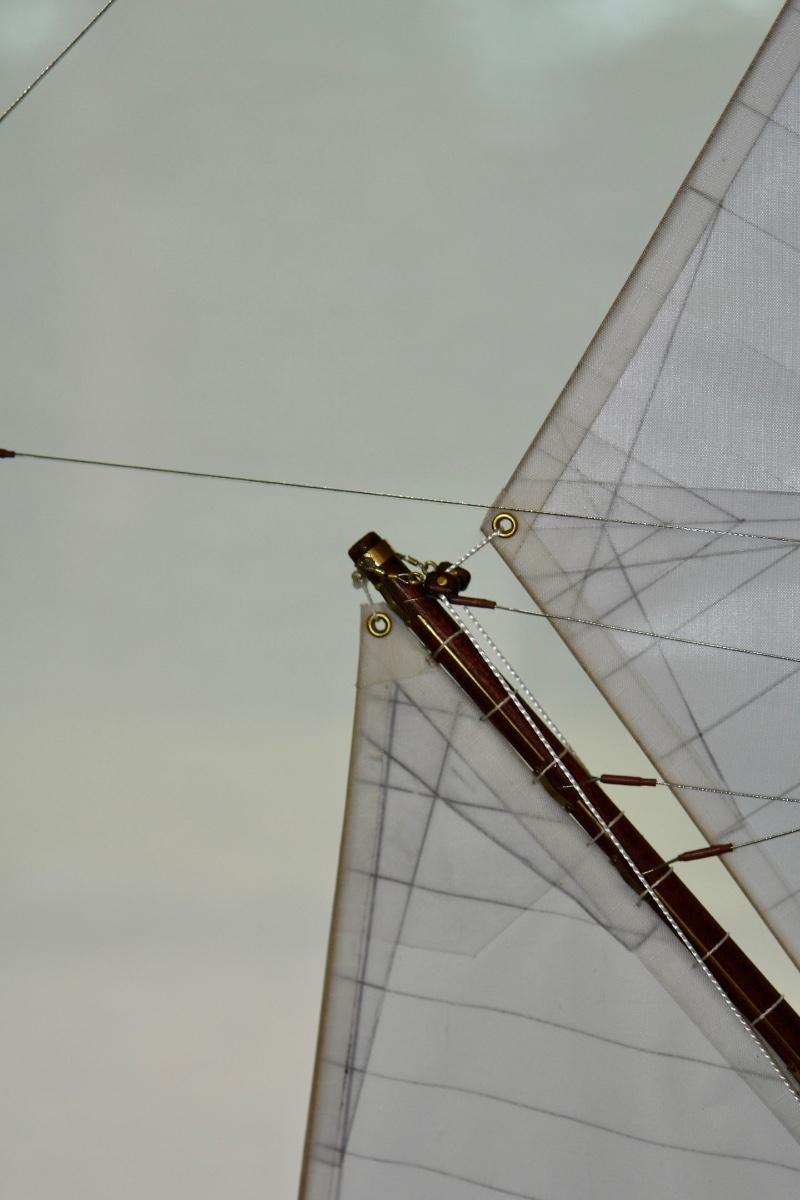
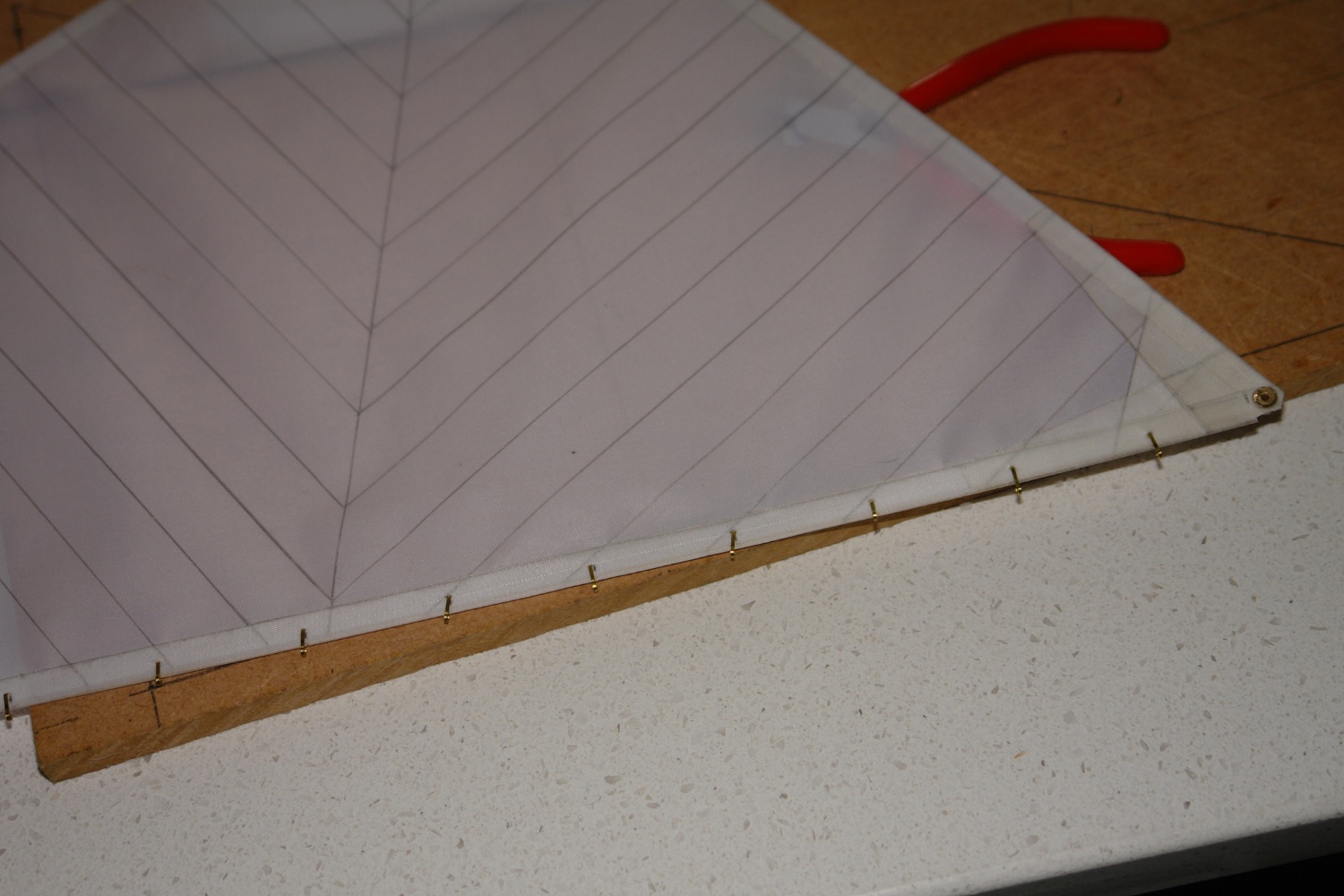
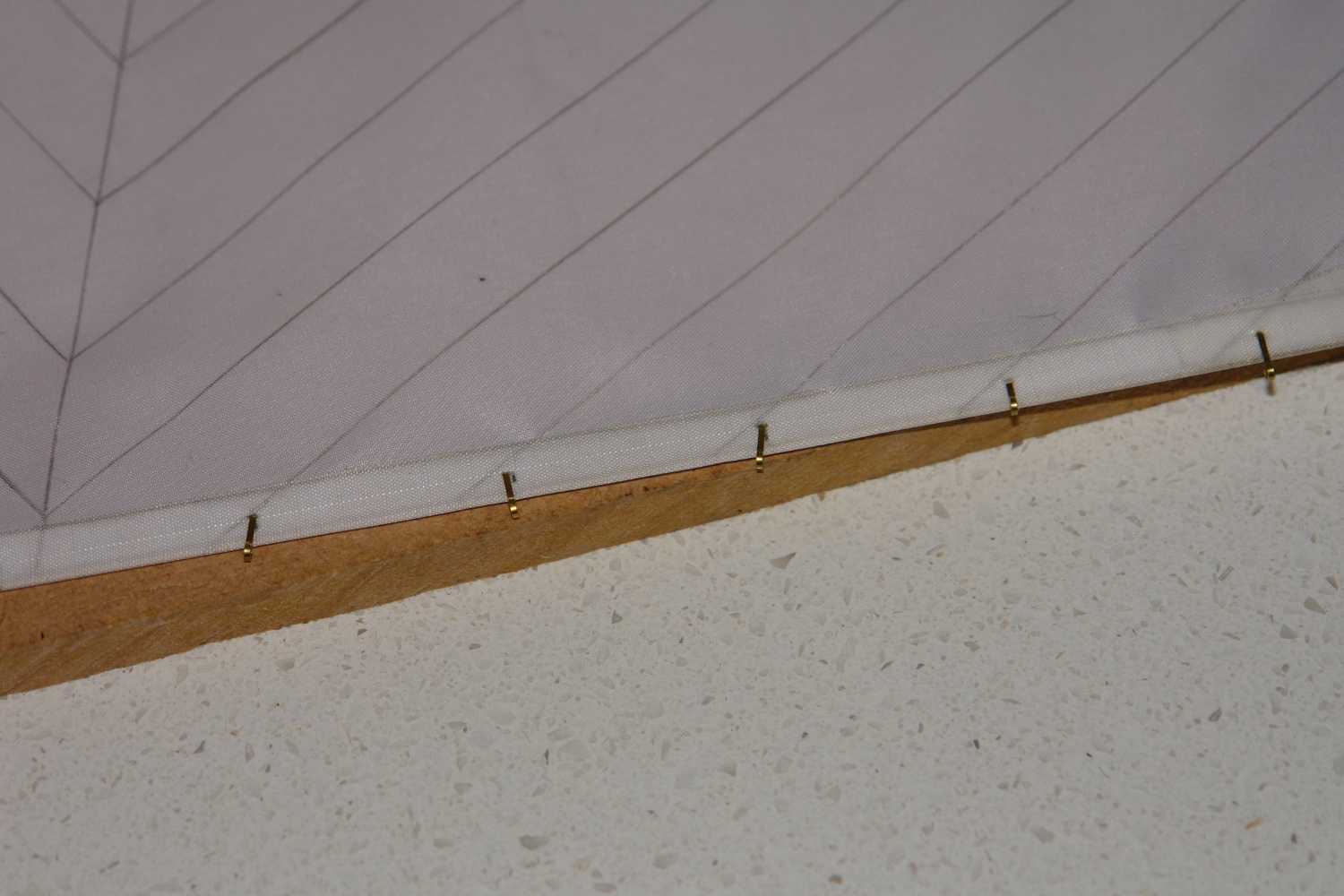
Thank you Eberhard, Pat, Brian and Michael. This is the continuation of my log catch up. The next job on the foresail was attaching the mast hoops to the sail - repeating the process used for the main mast. With the foresail mounted I could measure up and adjust the dimensions for the topsail. This done I made the topsail with wired edges and reinforcing as previously described. The process of mounting the foremast deck blocks also commenced. The reefing lines were then installed. The topping lift was then lashed to the fore boom. The fore topsail was then hoisted. The sheets for the fore topsail were then rigged. The staysail, jib and flying jib were then made. I had a think about the most practical way to make the hanks and decided my best bet was to start with small split pins. The short leg of the pins was first removed with a jewellers saw. The ring was then opened out and the long leg was bent to insert through the sail. The bent legs were then inserted and clamped shut around the luff wire. The staysail was then hoisted.
-
Hi Tony A pity she is now gone but I think I will take great pleasure in seeng you bring her back to life.
-
That sounds like a lot of work. Have you worked out how many hours it is going to take to make the lot? They are remarkably consistent for such small shackles.
-
You have my sympathy - always a time consuming and somewhat repetitive exercise. How small are they and what diameter wire did you use? I always think the key requirement is a pair of very fine round nosed pliers with beautifully aligned jaws which do not flex under pressure. I just find it is impossible to find any.
-
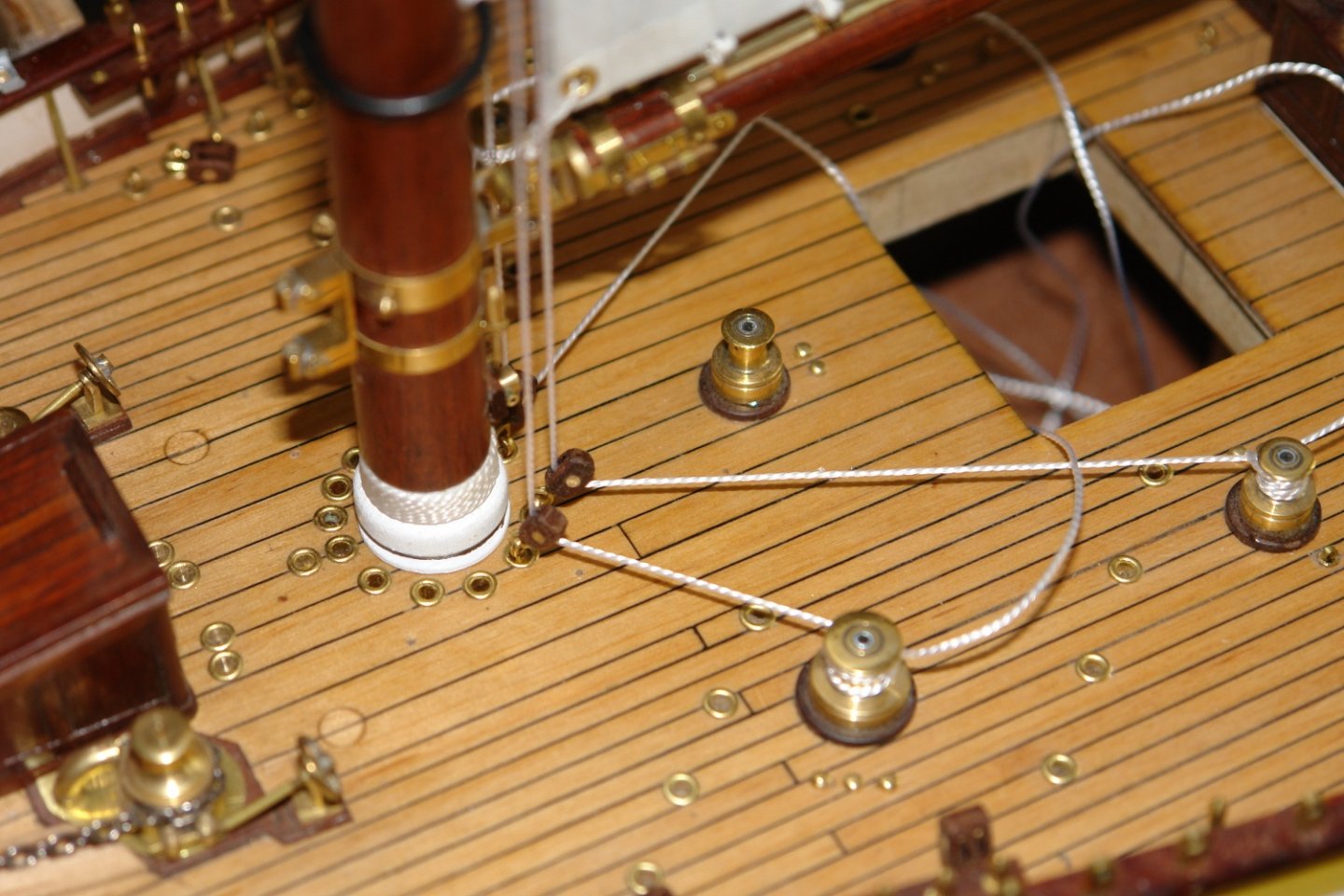
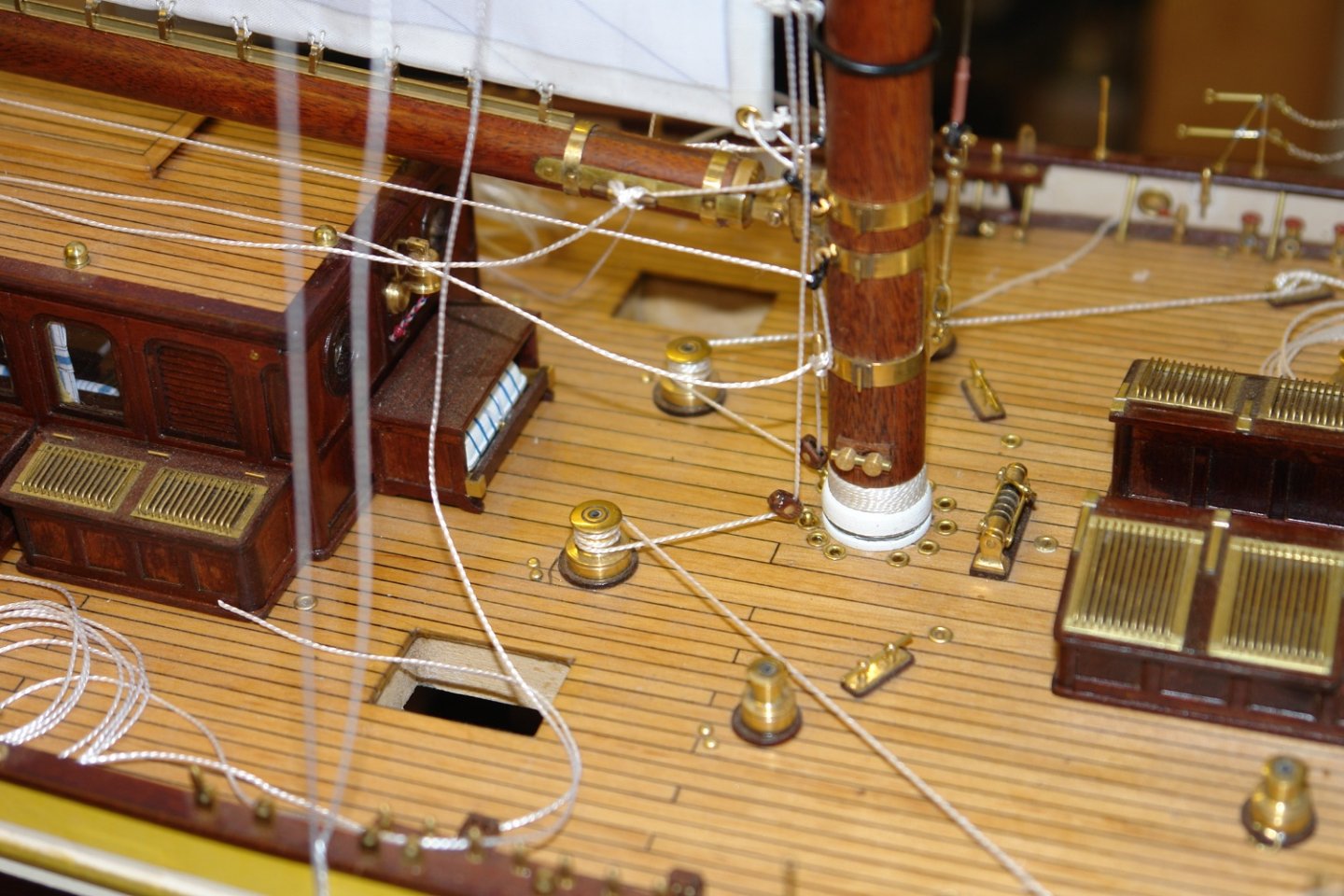
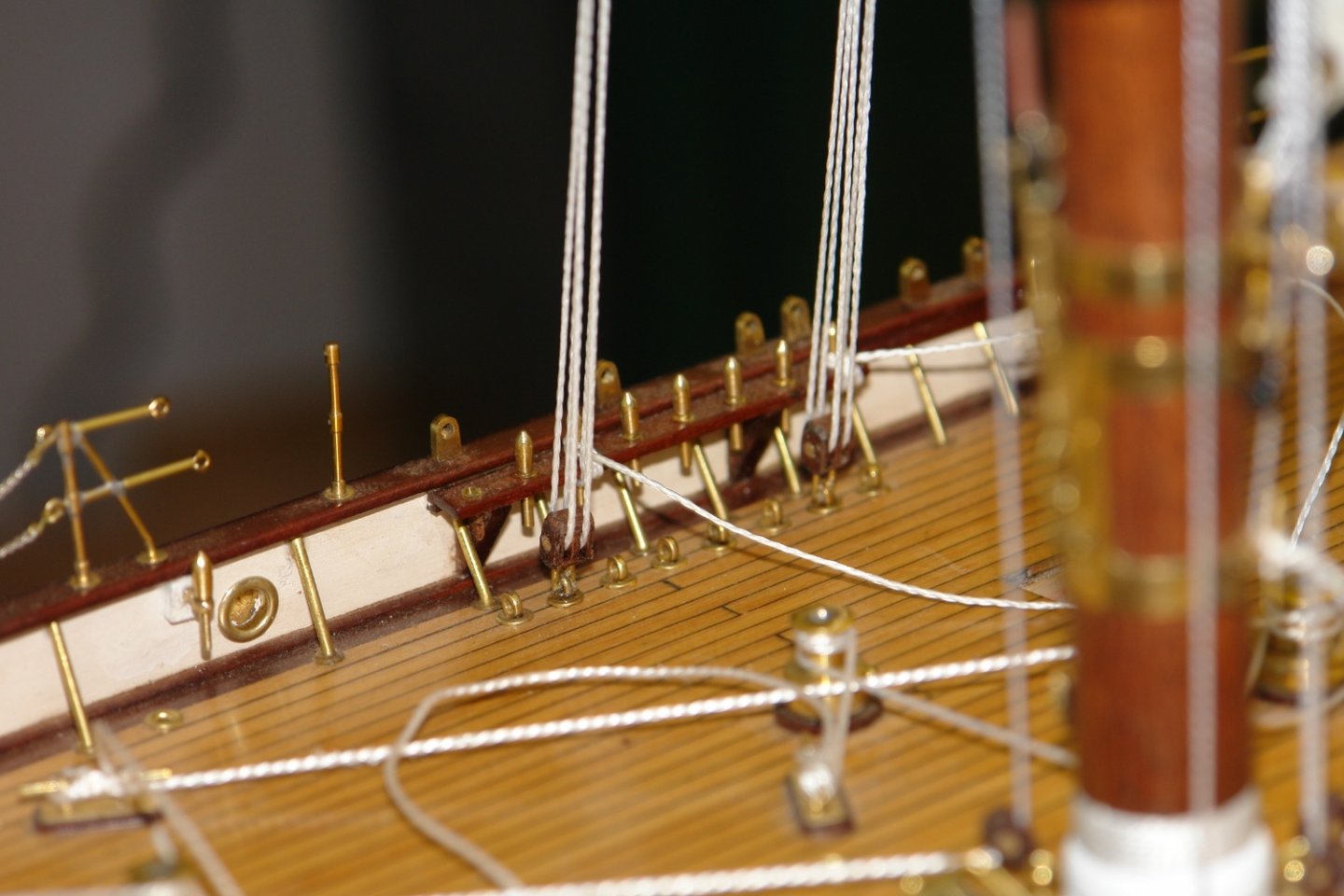
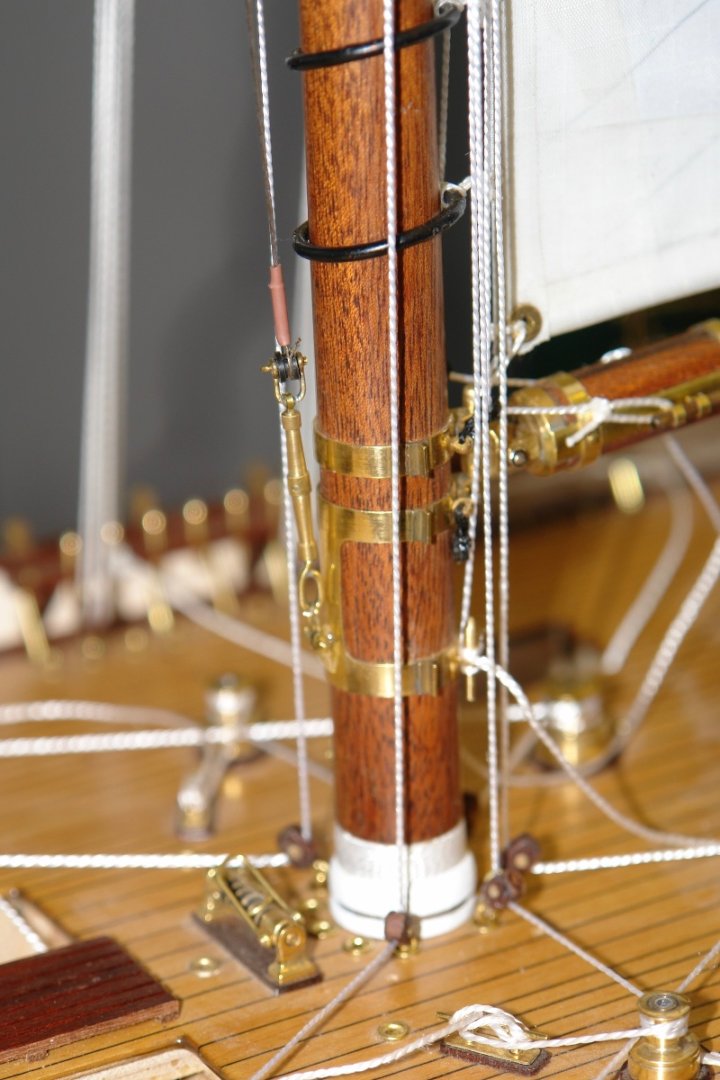
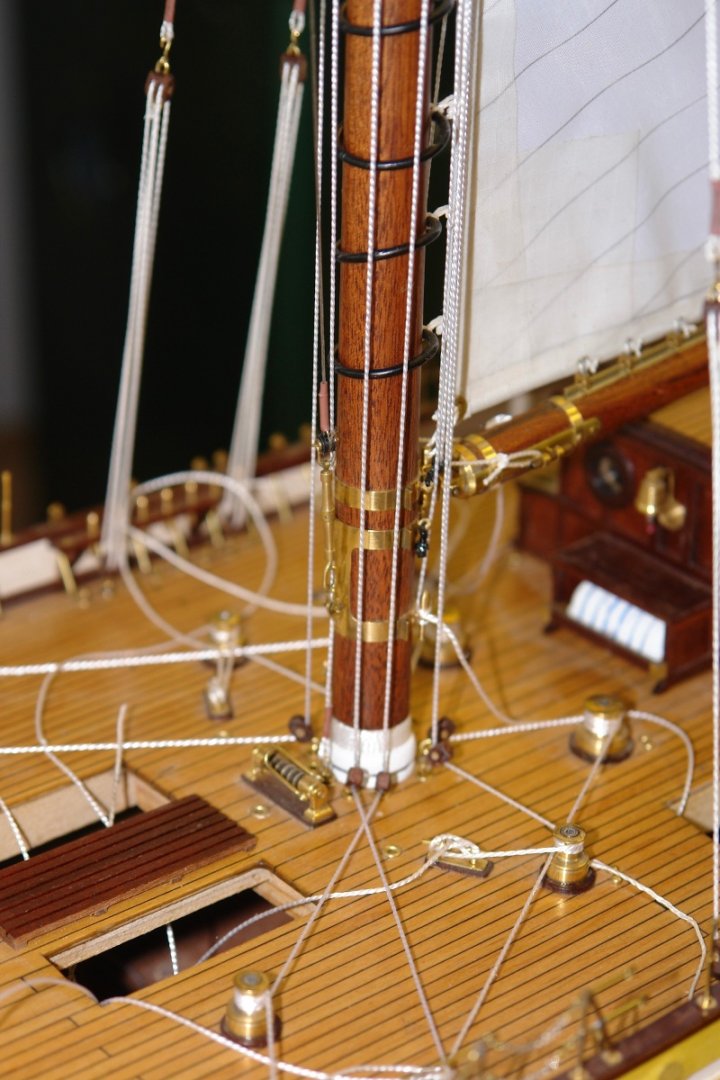
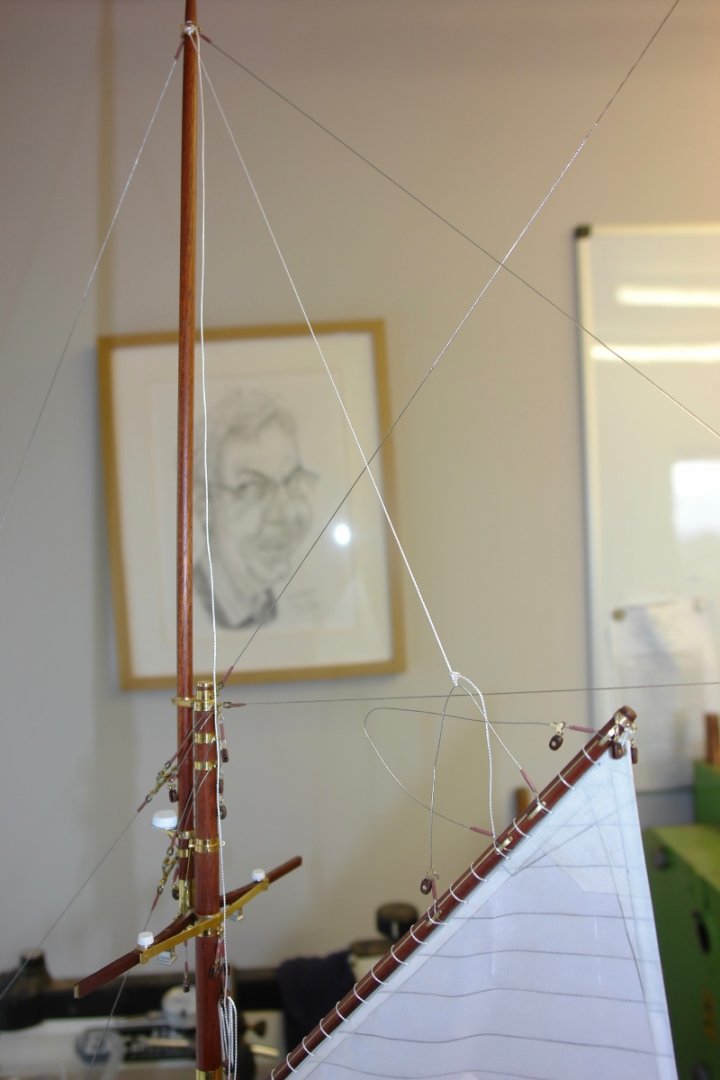
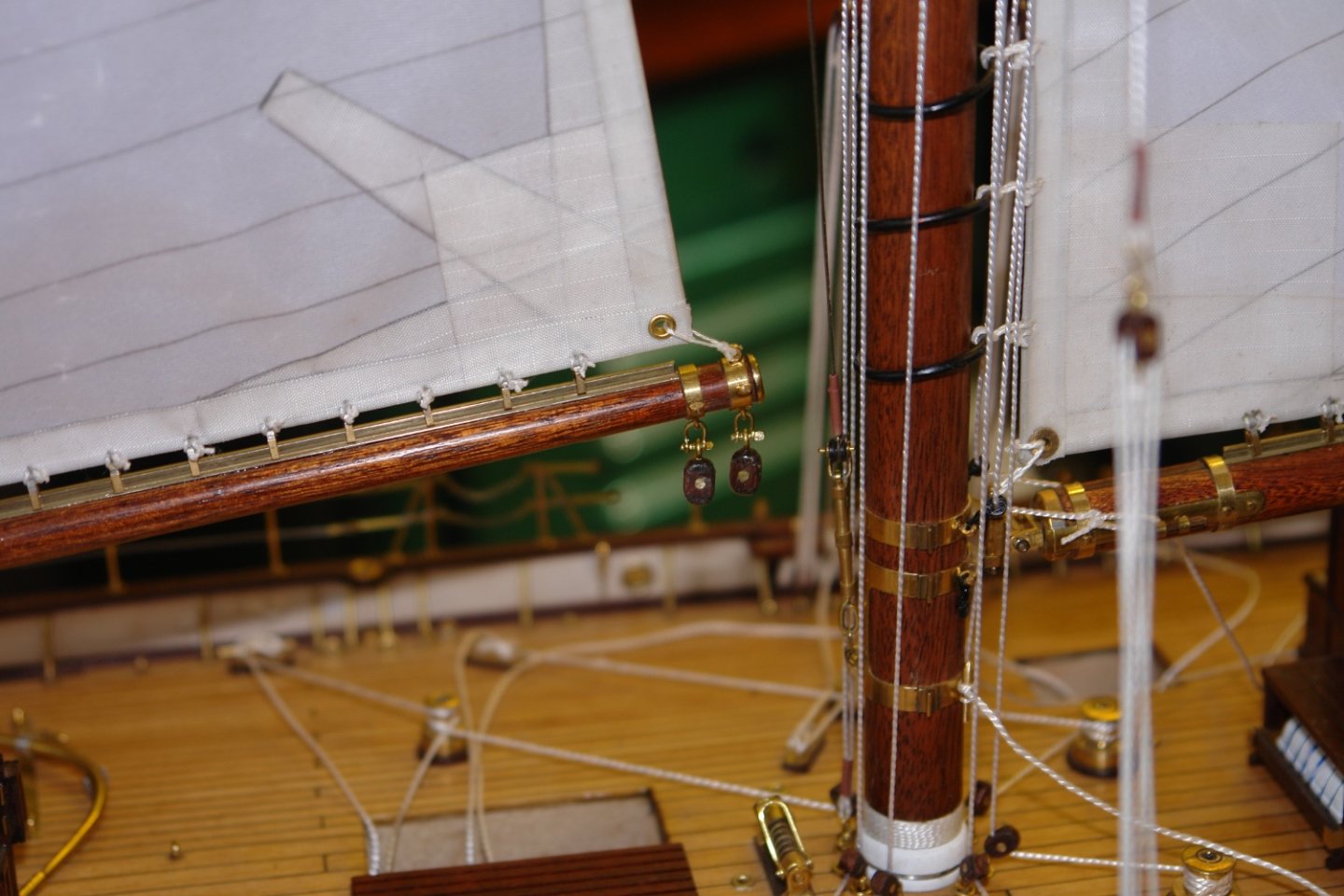
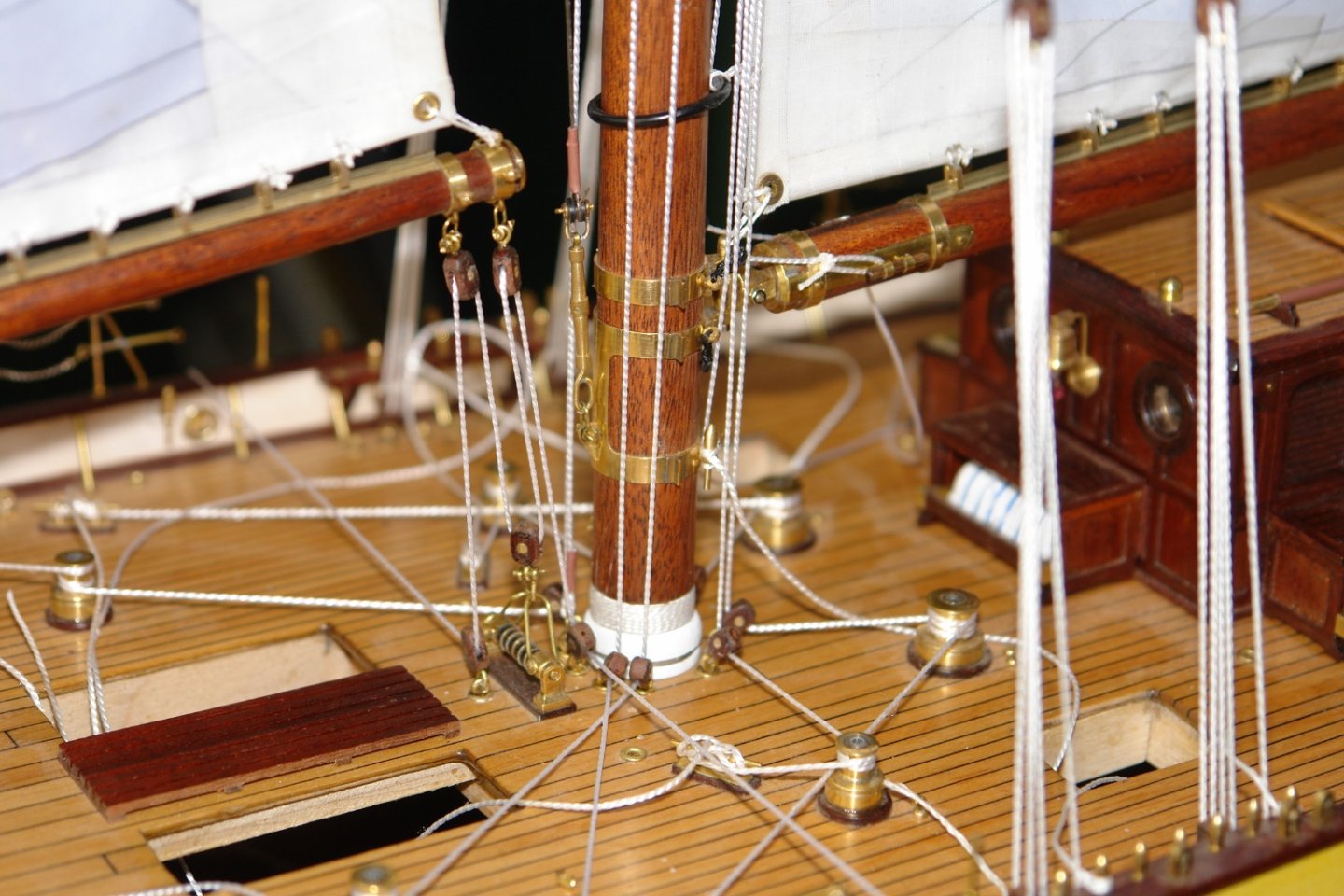
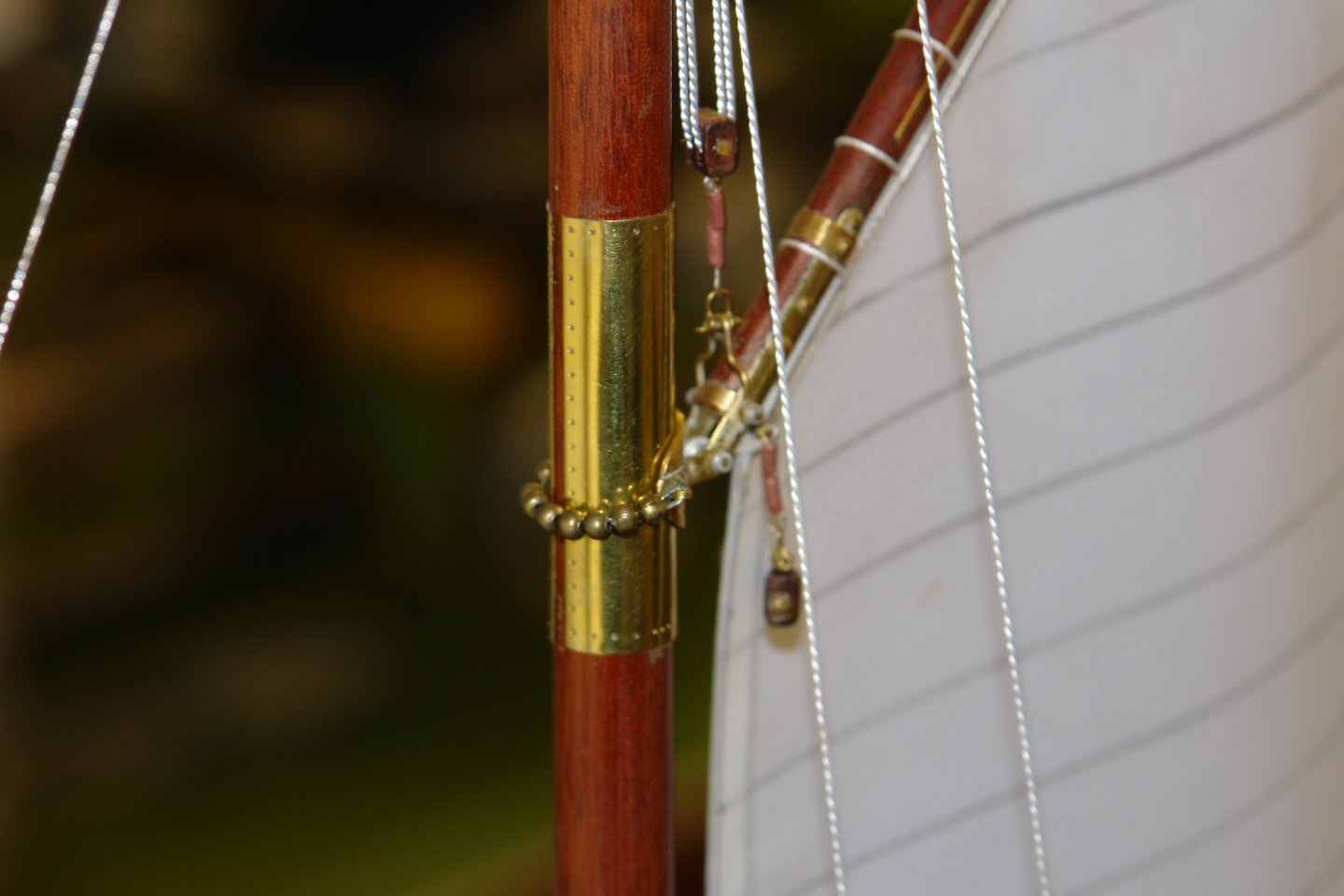
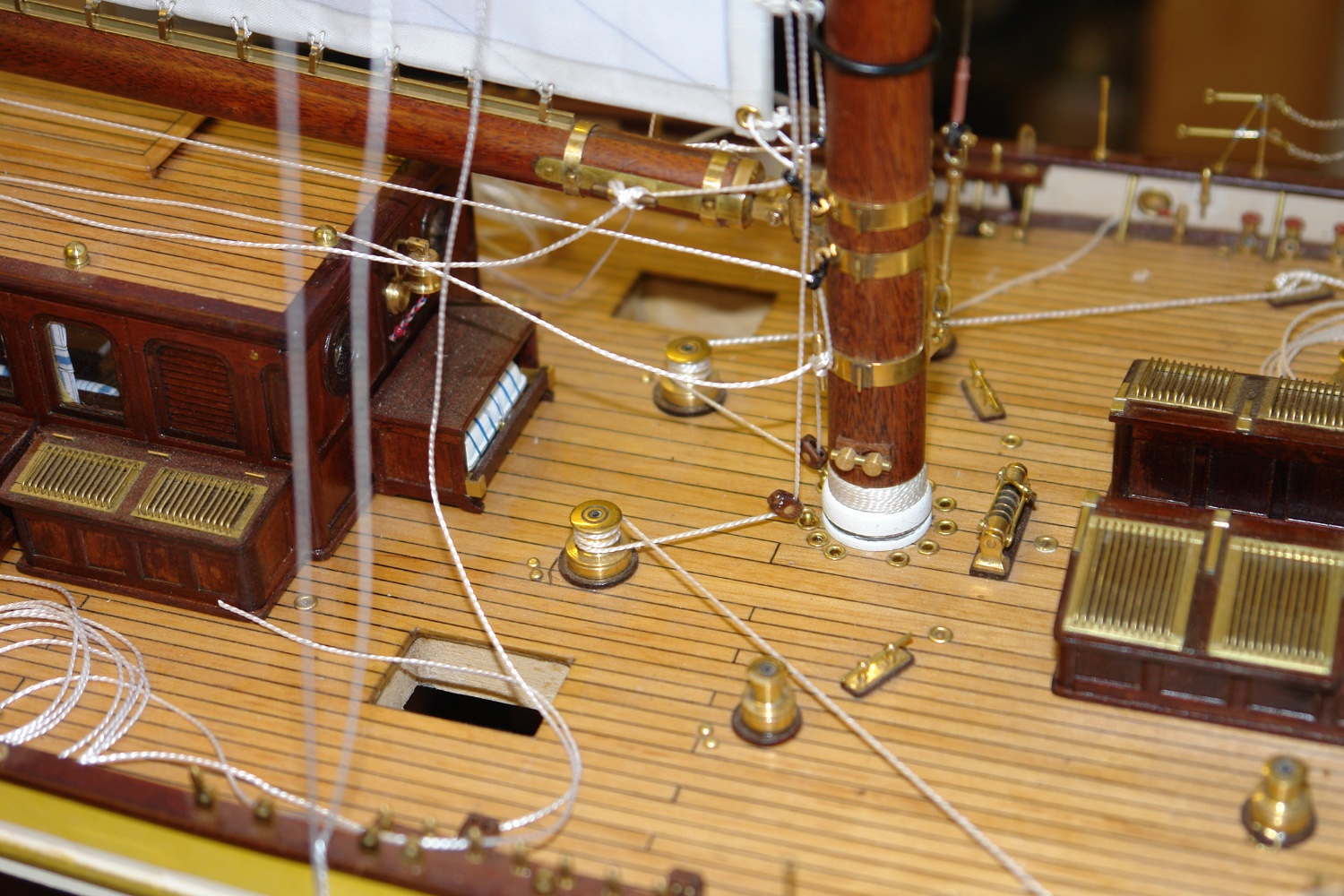
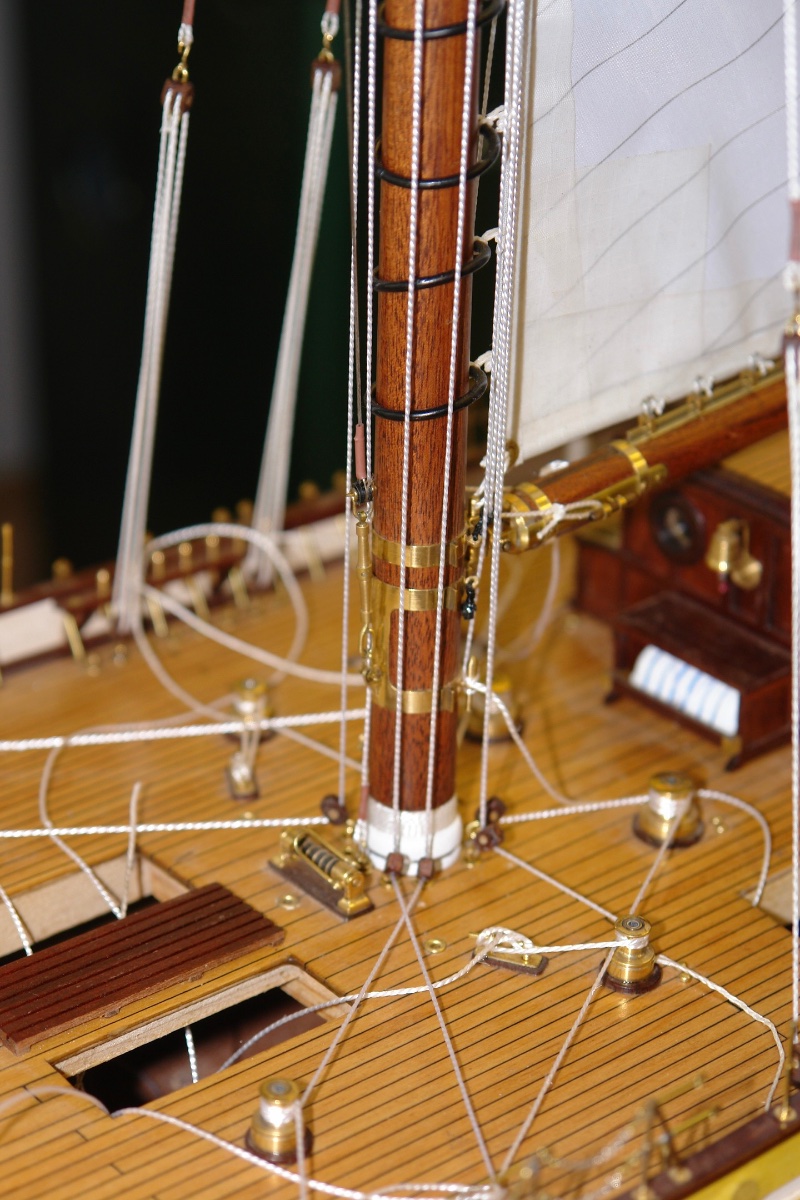
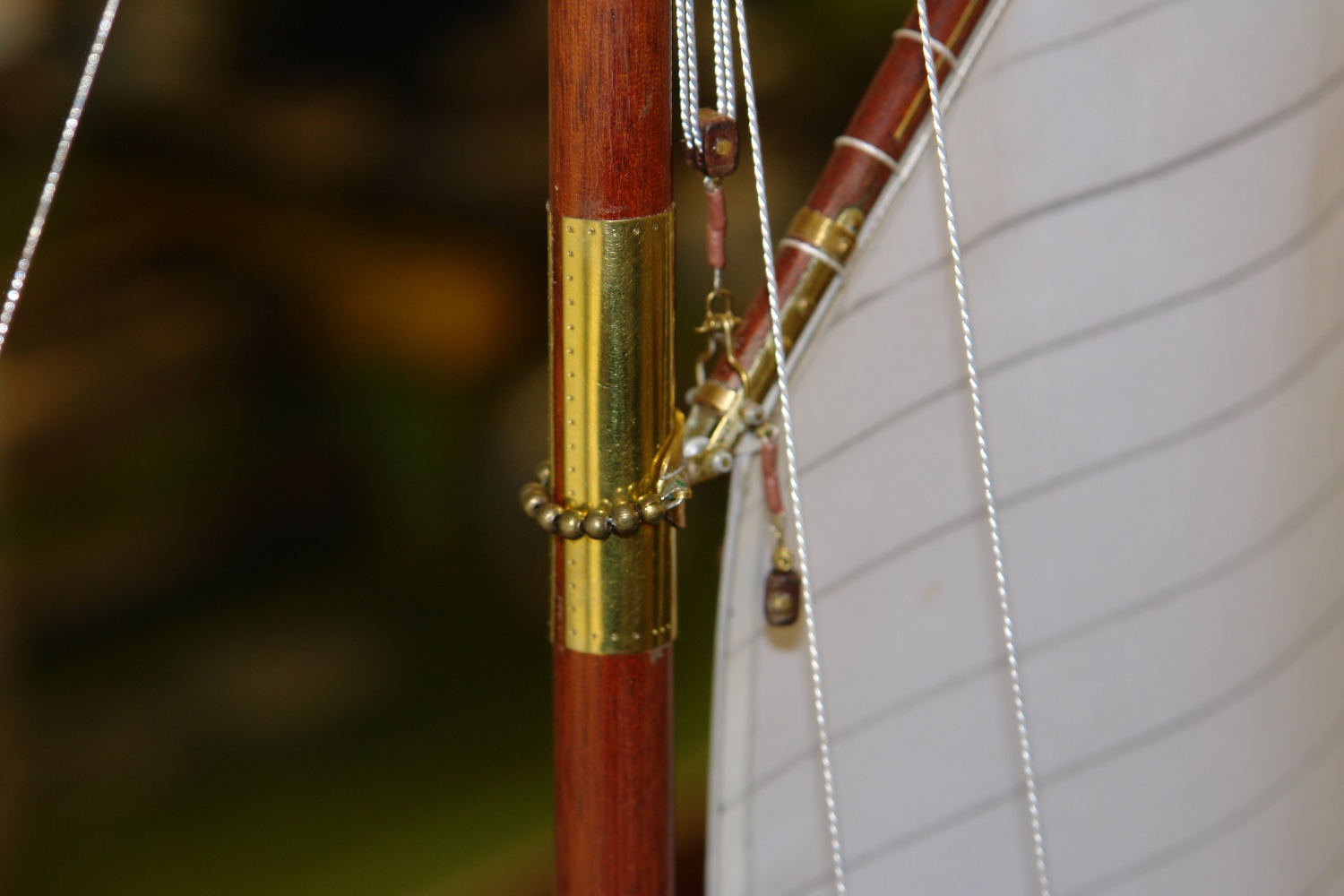
Thank you everyone for your encouraging comments. I haven't posted an update since the end of September although I have been making progress. I am away with relatives at the moment so this is an opportunity to catch up my build log. I hope to post a few updates over the next week. Here is the first. Although I had hoisted the main and main top sail I wasn't worrying too much about sorting out the halyard tails. Over the following shots you will see the deck starting to feature a rats nest of lines. Thankfully I hadn't glued the various deck structures in place so these were gradually removed to throw the tails down as an expedient. The next bit of rigging was the halyards for the main topping lifts and sheets for the top sail. These were rigged to the two pairs of twin sheaved blocks that terminate near the bulwark on either side of the main mast. As I rigged the main mast halyards I progressively installed the single blocks at the base of the mast. Which halyard went to which block was not discernable from the available information / photos so I rigged the lines in what made most sense to me and also minimised crossing and binding of the lines at higher levels. And so I progressed adding blocks. I then moved to the foremast, temporarily supporting the fore mast gaff bridles as i had done with the main gaff. I loosely rigged the throat halyard. The pair of single blocks were then attached to fore boom to take the sheets. The fore mast sheets were then rigged. I then tightened the throat halyard. The fore gaff bridles are much less complex than those of the main gaff and consequently the block and rigging arrangements are also simpler. Finally for this update the parrel beads were installed on both the main and fore masts.
-
That's a bit of a bummer Hakan, lets hope the medics have got it wrong, it seems to me they are far less accurate than the average model boat builder. Best of luck with the MRi's mate. Model building and family are the best therapy.
-
She is exceptionally beautiful Rob, a true work of art.
- 3,560 replies
-
- 1
-

-
- clipper
- hull model
- (and 2 more)
-
Beautiful little boat Eberhard. I was surprised how well your late fixes worked, it looks perfect.
-
Eberhard, I think you are being a little bit hard on yourself, The overall effect is looking very good. It will be interesting to see how easily it comes off the frames.
-
Excellent work Dan. I still don’t know how you manage to interpret those photos.
-
The anchor looks great Brian. Over here we would call the rope attached to the crown a "tripping line".
-
Cap San Diego by mikegr - 1/160
KeithAug replied to mikegr's topic in - Build logs for subjects built 1901 - Present Day
All looking very good, I do hope the covid recovery is progressing well. -
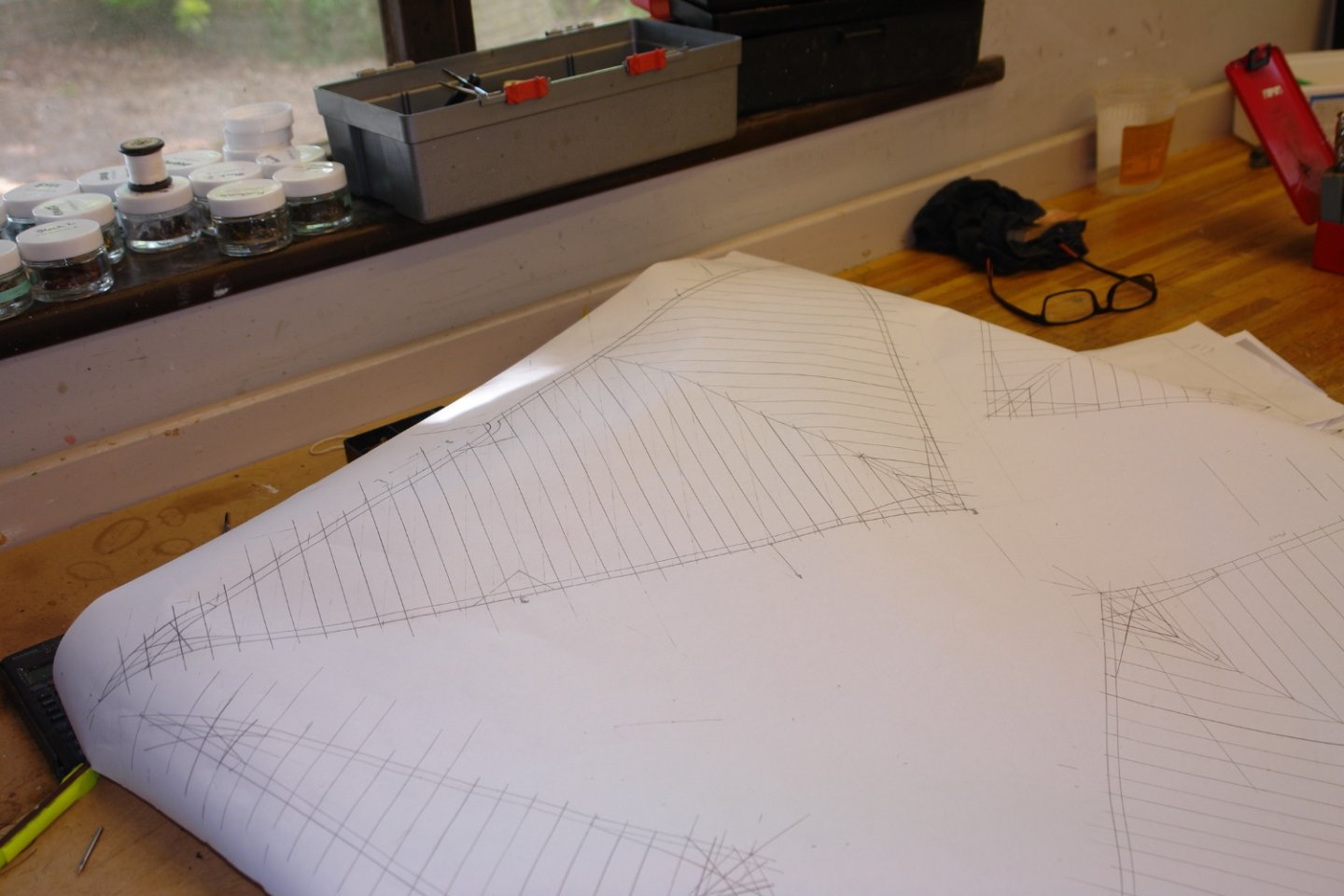
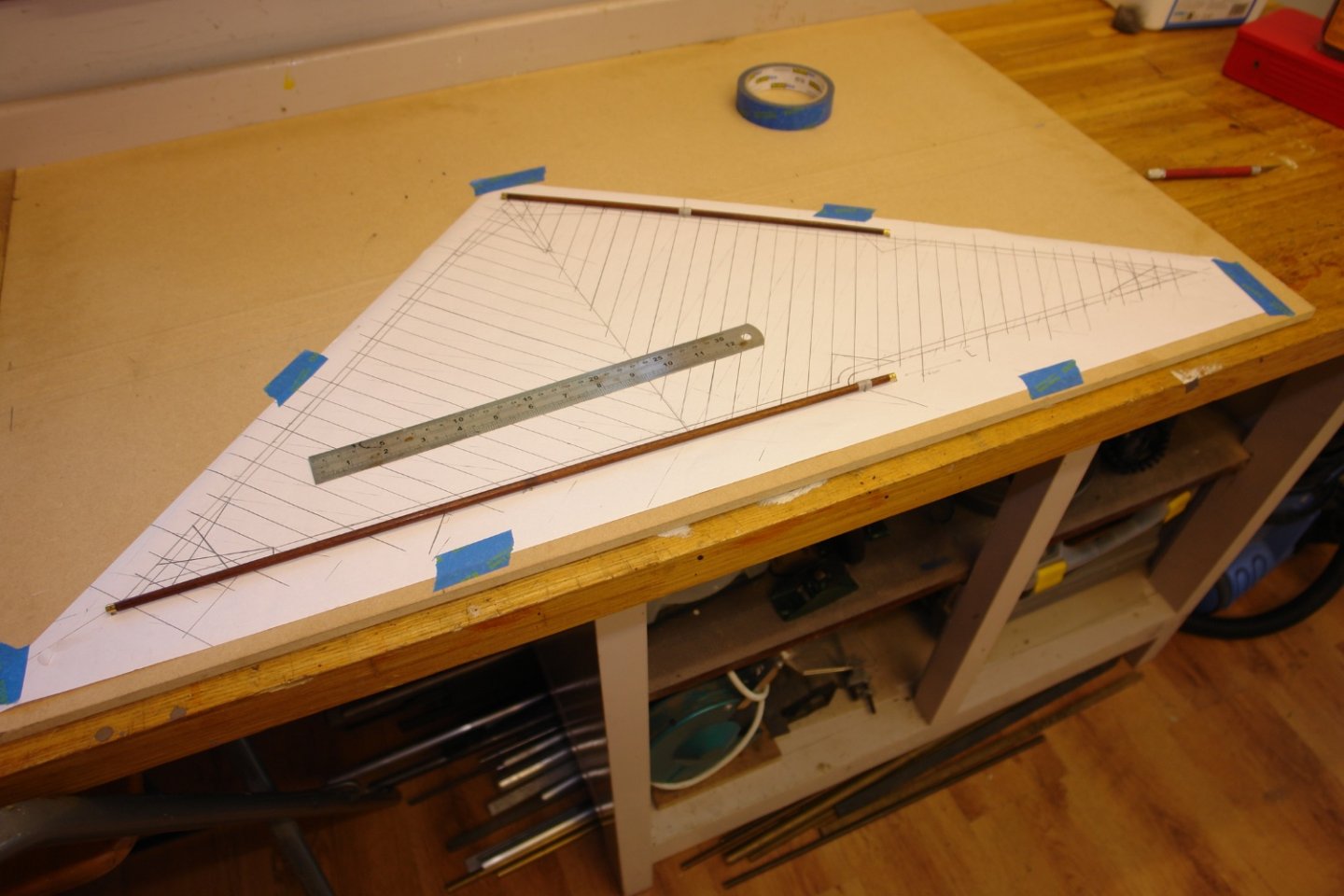
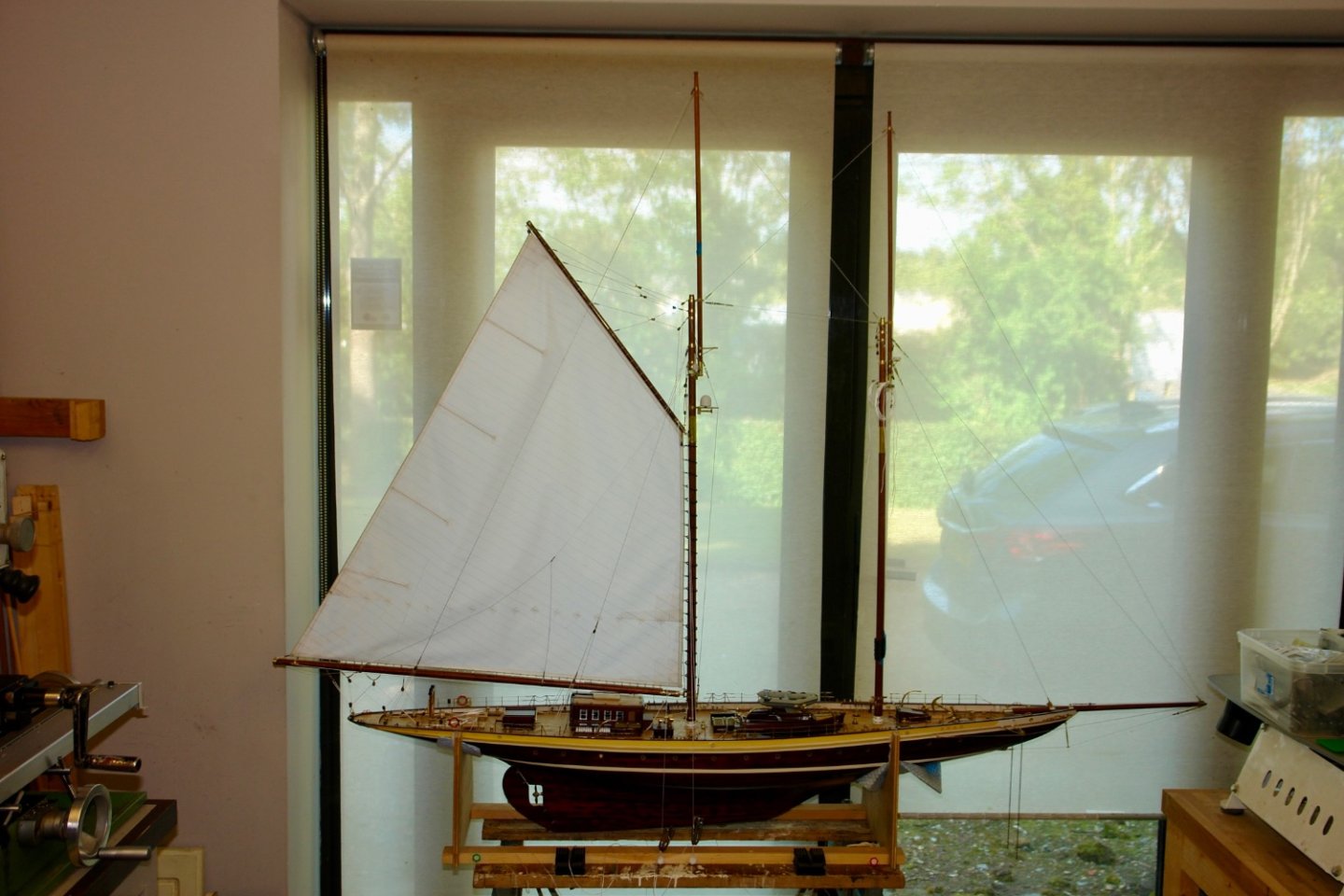
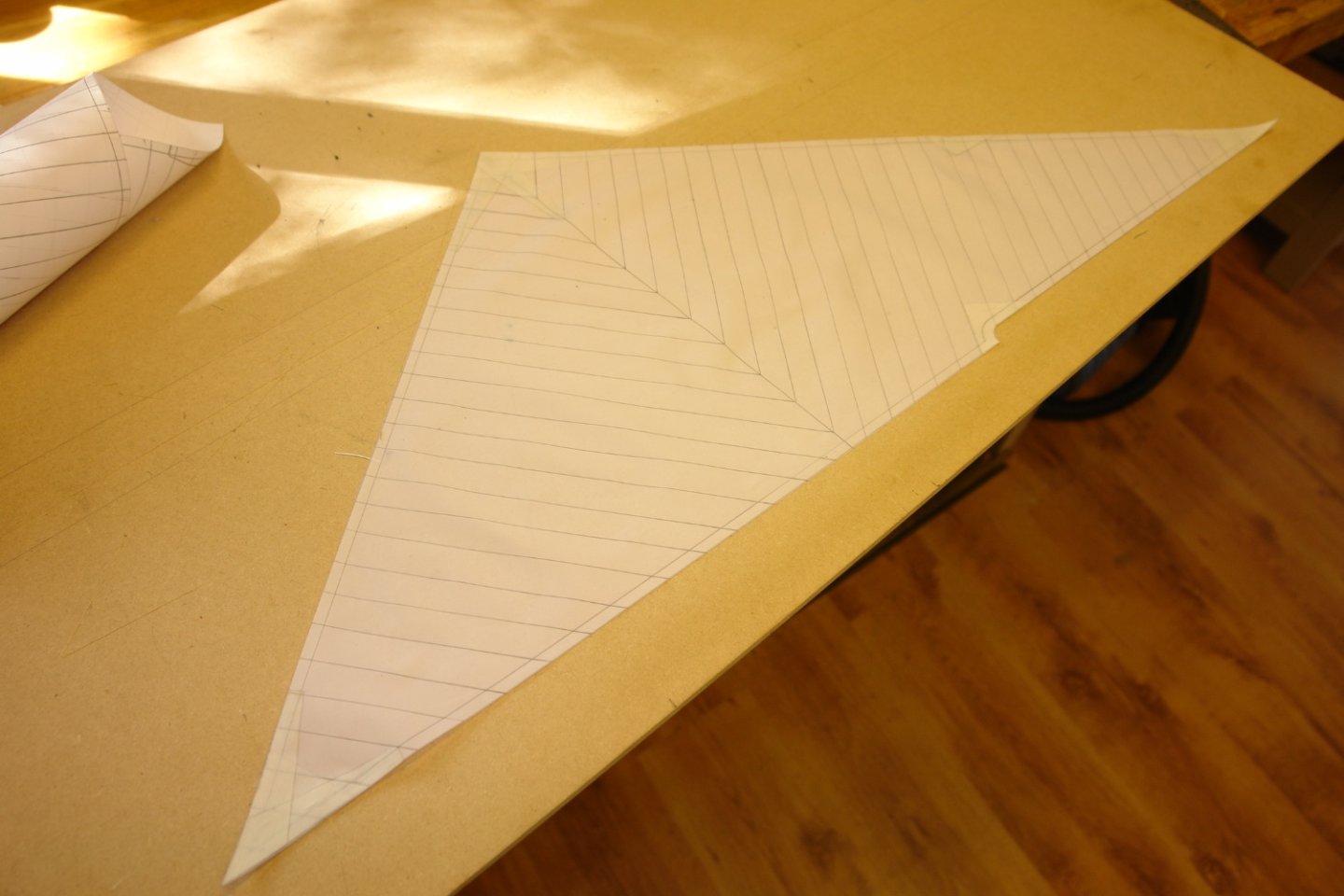
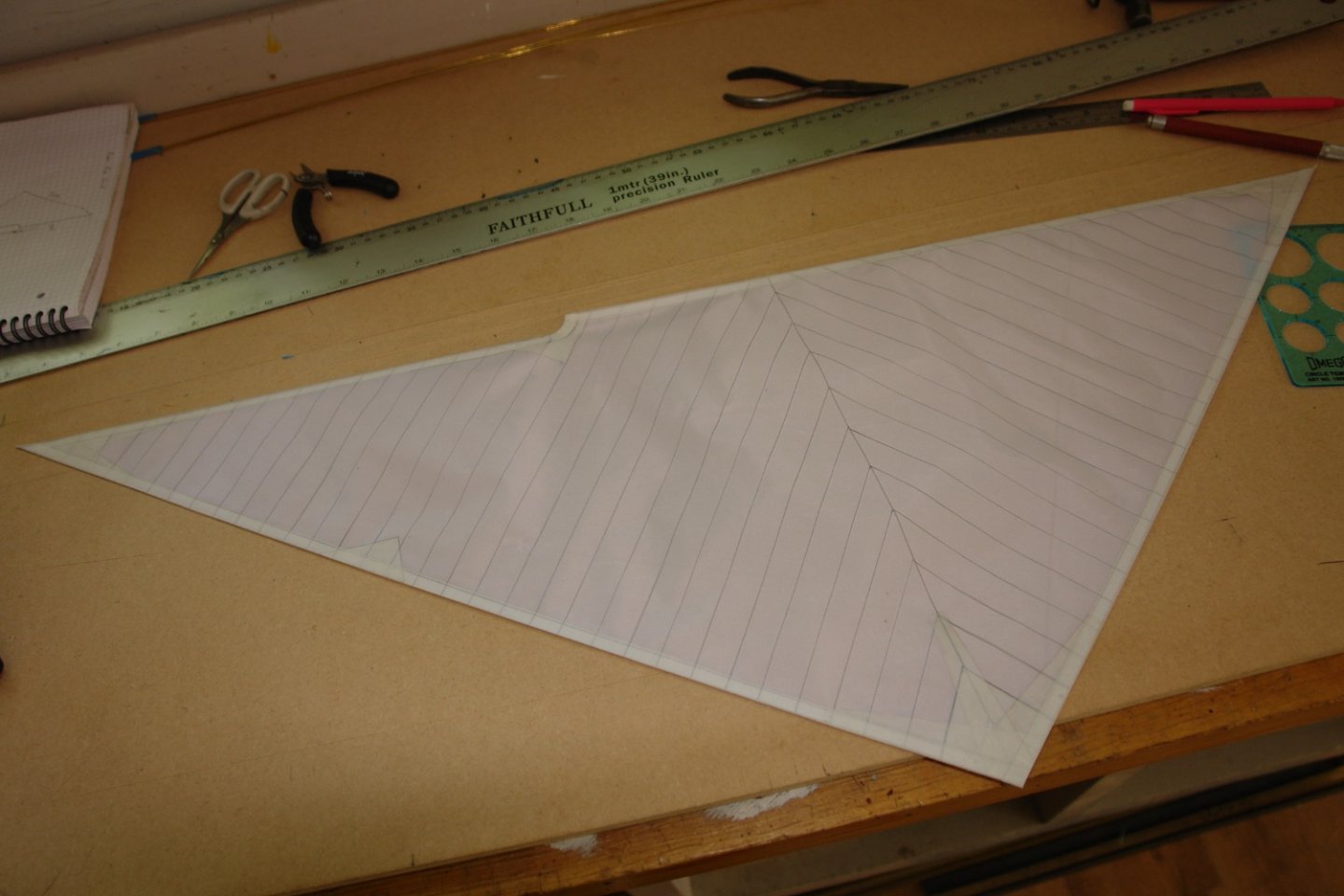
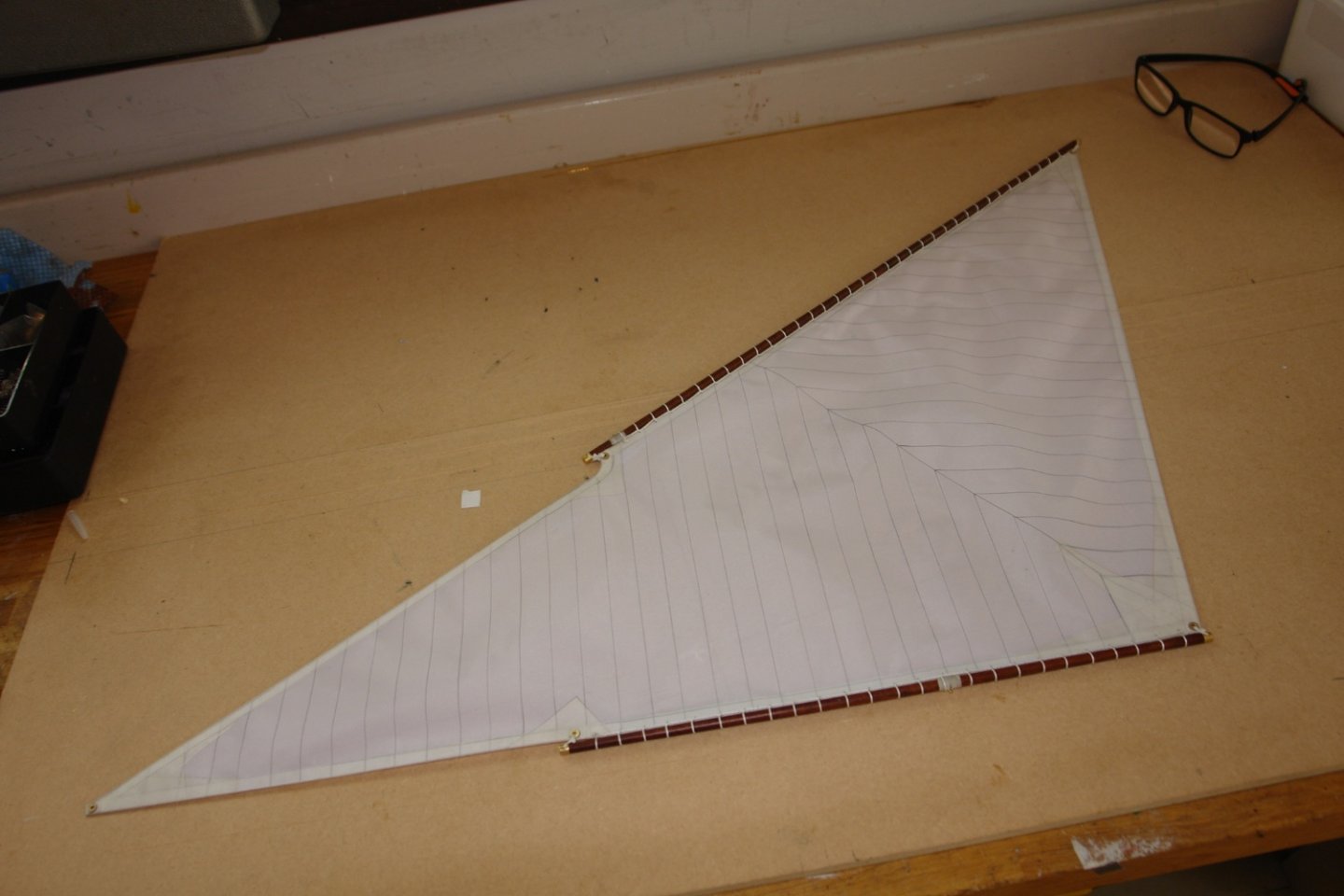
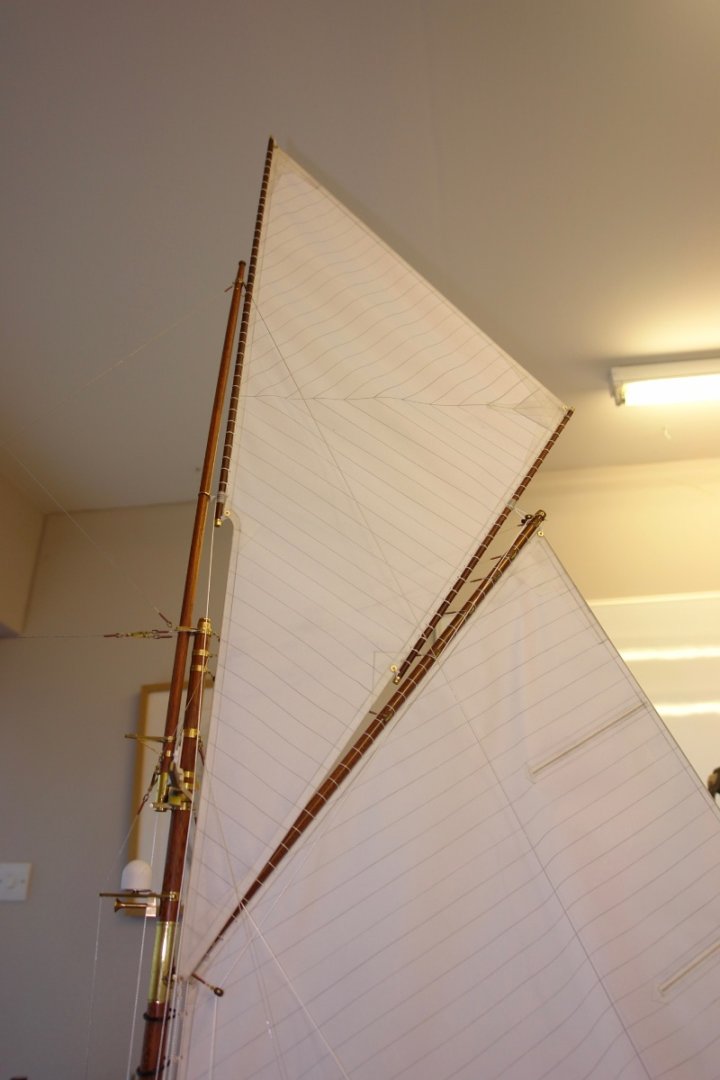
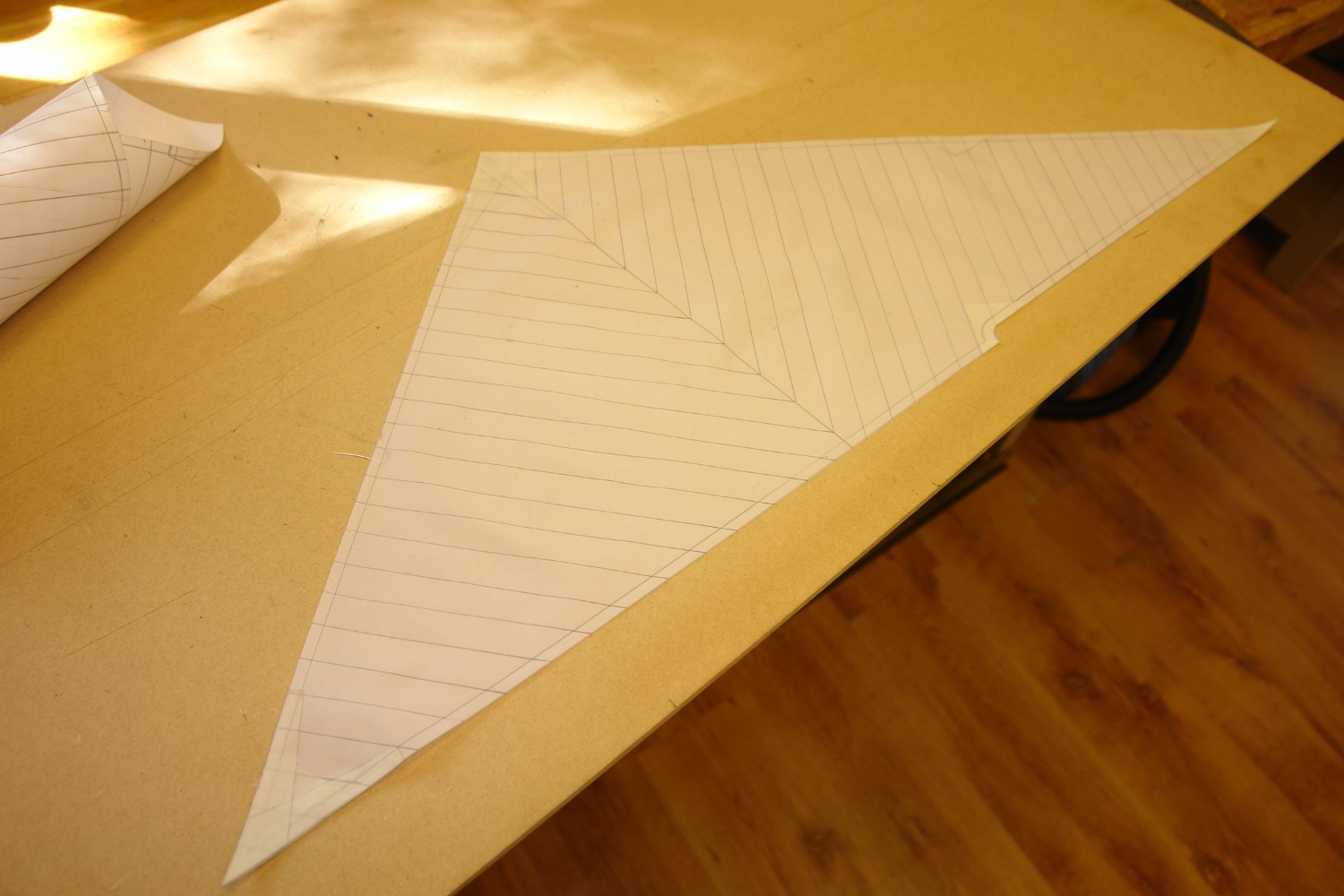
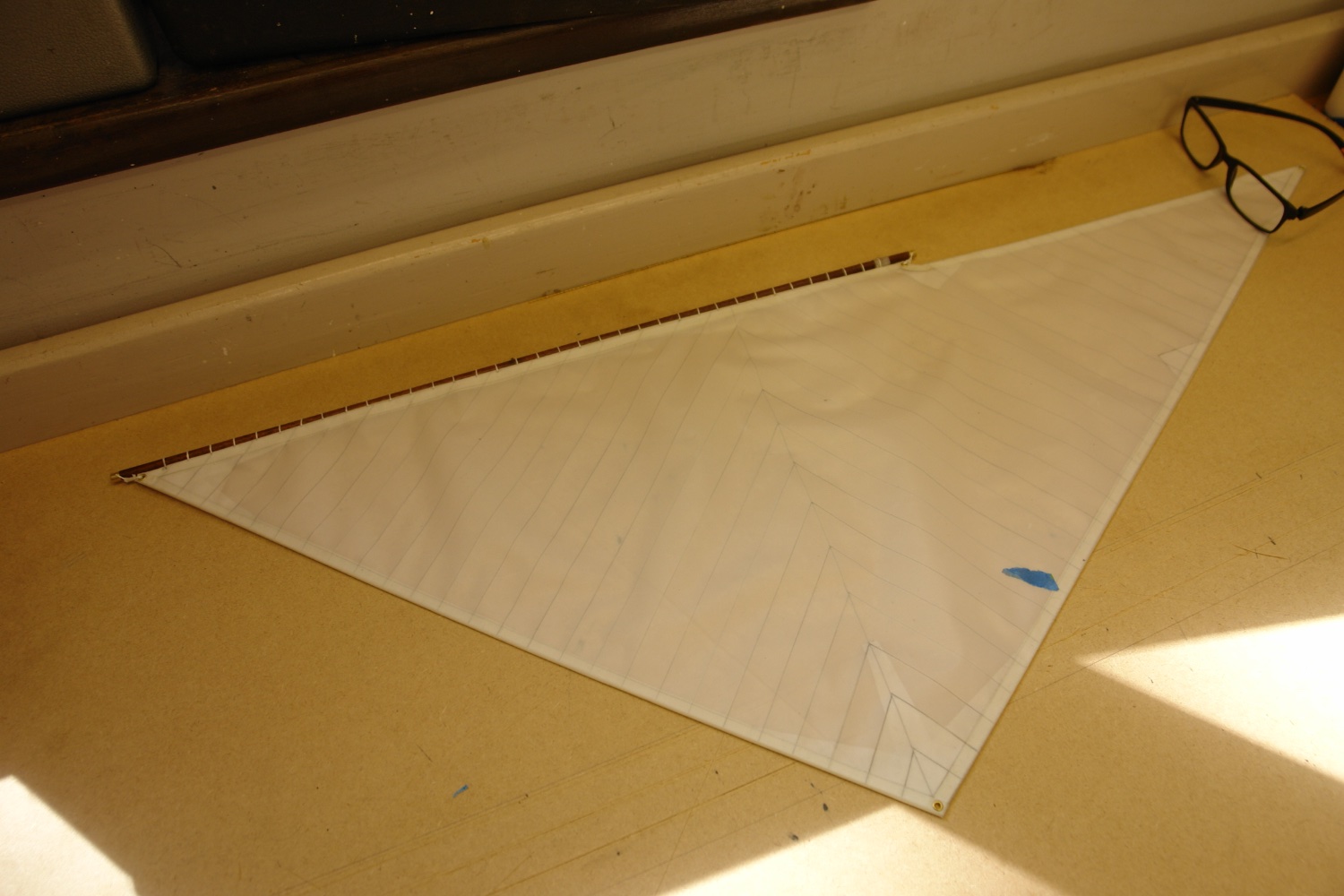
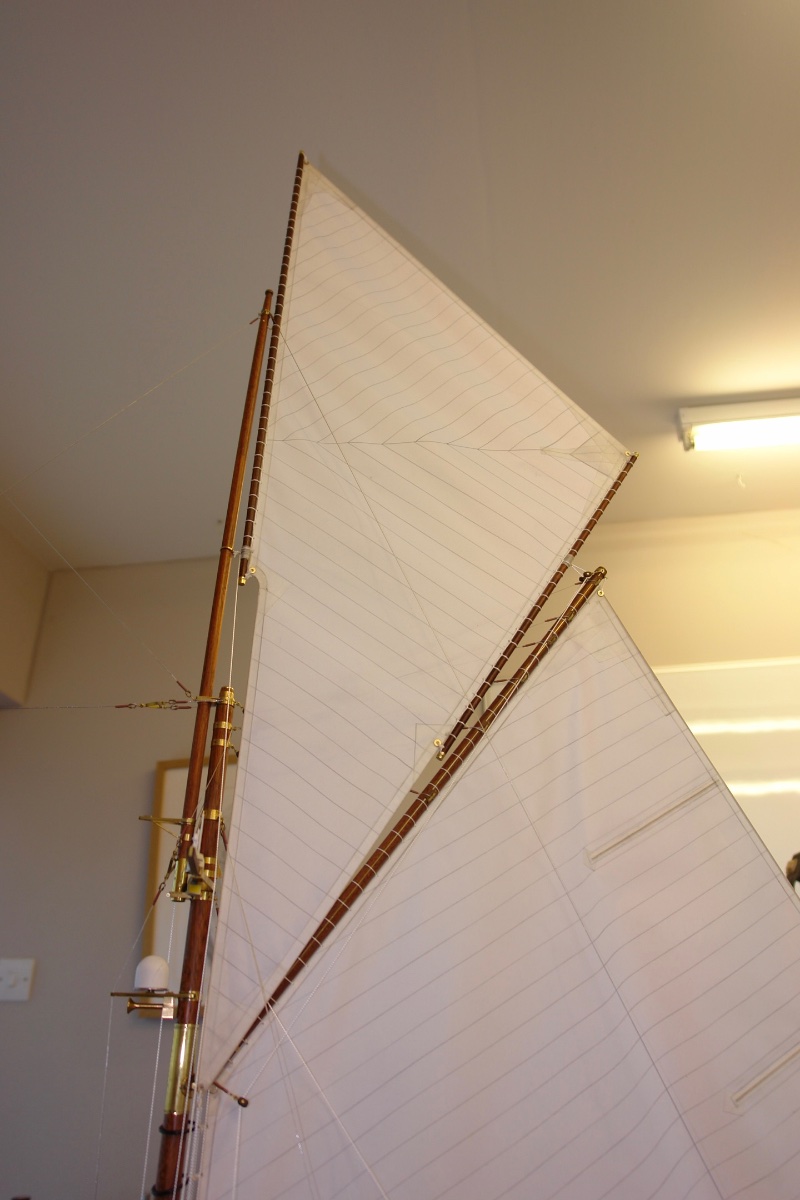
Thank you Brian, Druxey, Tom, Steve, Pat and Michael. This week Germania reached her full height with the completion of the main topsail. Having measured the space between the main mast and the gaff I adjusted the drawing of the topsail. The sail edge lengths needed to be reduced by up to half an inch to get a good fit. The topsail yard and jack yard were offered up against the sketch to check for fit. The foot rule gives and indication of size. The topsail sail material was then placed over the drawing and the shape, seams and reinforcing details were traced on in pencil. The sails cloth was then removed and the sail was cut out. Rip stop tape was then used to represent the reinforcing and the edges were wired and taped. The topsail yard was then laced on. Followed by the jack yard. The topsail yard halyard was then attached and threaded through the shave in the main top mast. Then the sail was hoisted using the halyard. It was rather satisfying to see the sail being hoisted. It must be quite a task on the real thing. I then rigged the downhaul. I couldn't resist a shot from below looking up at the sail.
-
Nils, thanks for the detailed sail making explanation ( including tips from the admiralty ). I love the refuelling shot, and it is good to see that the skipper isn’t smoking.
-
The copper clamping wire at the top of the frames seems to be working very well. I await the core removal with anticipation, good luck.
-
Michael - they have a very thin covering of what I presume to be leather. I couldn't reproduce it without it looking much too bulky so I left it out. I should add that the covering doesn't look up to the job of protecting the boom, it seems to be much too thin. On Altair the boom was plated where the wire wrapped around it, which seem to me to be a much better engineering solution.

















Our Emblem ®
