


amateur
-
Posts
3,533 -
Joined
-
Last visited
Content Type
Profiles
Forums
Gallery
Events
Everything posted by amateur
-
My favorit side launch on you tube: You can find lots more, many clickbaited by a ‘went horribly wrong’-title, but actually this is quite standard at some larger inland builders: no space to do it ‘stern first’. jan
-
I don't know whether or not MSW has a 'model of the year'-competition, bus as far as I'm concerned, this one is a very, very serious contender. What a very convincing model this has become: camo, al the dirt and rust, the sea, the depth-marks, the deck-personnel, the antennae. I can look for some time at these pics and see something new every time. Jan
- 233 replies
-
- 13
-

-

-

-
The limited edition (numbered 1-999) of last years launch is still available on their website Relaunch to get rid of the unsold stock? Jan
-
Just an observation: there is never any dust in any of your pictures. Do you have a dust control-system in your workshop, or do you start each day by meticulously picking up all specs of dust from your bench and models by hand? Jan
-
You learn something new every day. I never realized there was this 'slack' in the antennae. Looks great (as everything you show us does) Jan
-
Why don’t we see people runing around on the deck. Oh wait, its 1:700 plastic. Looks lery much like the real thing, but those little people can’t move. This is so convincing! Jan
-
Forgot Password
amateur replied to Alvb's topic in Using the MSW forum - **NO MODELING CONTENT IN THIS SUB-FORUM**
Why this aggressive reaction? James offered a solution as soon as you described the problem. You ignored his solution, and the help offered. That’s not polite behaviour…. From own experience: the forgot-password-funcyion does work. The only time it did not for me was when I changed email without changing it in my profile… Jan -
This is pure paint wizardry. Nobody will believe that this started out as a rough lifeless plastic blimp covered in red primer. Al that masking was worth the effort! Jan
-
Sanding it again helped to give the surface less of a 'plastic' look. Just to get the scale right: what is the lenght of this blimp? Is it around 10 inch, or even smaller? Jan
-
I was wondering: what will be the finish of all this: will it be painted, or will you leave (some of) the metalwork unpainted? jan
-
We have a non-ship subgroup. It is small, but perhaps theycan give you a ‘place to be’ for aircraft-builders. @realworkingsailor Andy, do you have a suggestion? Jan
-
kit review SMS Sleipner by Hamburger Modellbaubogen Verlag
amateur replied to ccoyle's topic in REVIEWS: Model kits
At https://www.die-kartonmodellbauer.de/forum/index.php?thread/14732-sms-sleipner-t97/ spotted the first log. the turtleback is a tricky part indeed. Jan -
Sure I follow. Don’t bother the speed: as soon something shows up, I read the post. Mars is turning out nicely. one question: are upu sure the tips of the ‘zalingen’ are pointing upwards? I was expecting ‘backwards’: the holes are for the iron-work of the deadeyes to pass through. Jan
-
I read in a German formum that the site-owner has died last summer. His family has shut down the business and the website that was connected to it. Jan
- 1 reply
-
- 5
-

-
Quite a lot of fiddly bits coming together. I have a question on your ‘build sequence’: in most kits the deck is glued to the hull before the remaining stuff is put on. Getting it on before is helpfull in case hull or deck (or both) are warped, and a lot of rubber bands are needed to close the gaps. Hooe your deck fits without brute force….. Jan
-
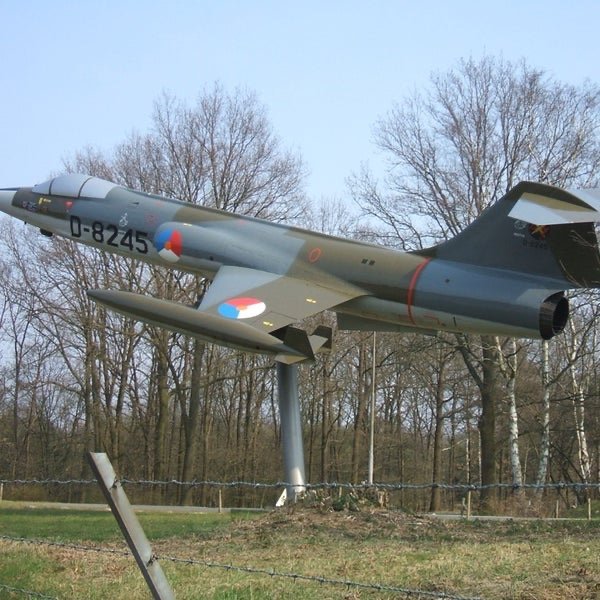
This is the scheme I remember most Although having seen this plane many times, I actually never noticed how small those wings are (my eyes probably a bit detracted by the large wingtip fueltanks) The model is coming together nicely. Jan
- 79 replies
-
- 10
-
-
-
In vase you want something different: kolderstok is about to launch a cross section of a Dutch Pinas. I have seen the prototype (in real life, not just a pic), and it’s really nice one. https://kolderstok.com/blogs/nieuws Perhaps @*Hans* can tell us when it will be released Jan
-
Please do. We will be kind (btw we always are kind). And welcome to the community of MSW! You will draw some more attention to your log (and therefore get more helpfull feedback) when you put a post in the ‘new member section’ of the forum. Jan
-
In addition to what Wefalck writes:in VN de Veldes time, the sprit was set in a sling at the foot of the mast, the sling itself was attached to the top op the mast: no need to lift the (very heavy) sprit ot of its sling: gravity helped the foot go up as the tackle on the lower end was loosened. It was not unusual to have this sling made from forged iron shackles. The lenght of the sprit varies greatly between periods, regions, shiptype, and preference of the ship-owner. I have read somewhere that the high-peaked spritsails were thought to have an advantage at certain wind-conditions. there are various books around showing these arrangements. But: far too heavy and complex for a small vessel. Jan
-
Looking for similar kits that resemble these ships
amateur replied to challenger86's topic in Wood ship model kits
There are some card-models of liners. Only the famous ones of course: titanic, olympic, mauretania, wilhelm gustlow, carpathia, nomandie. Some more, but they are outside your time-frame I guess. Beautiful ships, nice models, but by no means easy to build. (And quite an other medium compared to wood/plastic) Jan -
I could look at your work for day’s. It’s art. Stay safe Jan
-
In Germany they quite often use a material called ‘finnpappe’. Unfortunatedky, almost non-available outside that country. Cuts better than grayboard, and does not delaminate. No idea whether there is a US-variety available. (Don’t think so, even unknown here, and we are not so far from Germany ….) Jan.

Our Emblem ®
