

Hubac's Historian
-
Posts
3,308 -
Joined
-
Last visited
Content Type
Profiles
Forums
Gallery
Events
Everything posted by Hubac's Historian
-
Bow shape of Le François 1683 and La Néréïde 1722
Hubac's Historian replied to Waldemar's topic in Nautical/Naval History
I think it is, perhaps, fair to say that the Album describes a step-by-step process, and that process to some degree informs design. As for Dassie, while the illustrations are cartoonish and not to be taken too literally, there does seem to be some effort to apply mathematics toward predictable/repeatable outcomes. I will have to get my hands on a copy, at some point. -
Bow shape of Le François 1683 and La Néréïde 1722
Hubac's Historian replied to Waldemar's topic in Nautical/Naval History
I am still curious to know your point of comparison between JCL and specific contemporary lines plans. You say that the two are incompatible, but how specifically? -
Bow shape of Le François 1683 and La Néréïde 1722
Hubac's Historian replied to Waldemar's topic in Nautical/Naval History
Two sources of more immediate connection to French practice in the 1670s/80s would be Album de Colbert and Dassie’s L’Architecture Navale. I have not yet obtained a copy of the latter, but would be curious to know what, if anything, he has to say about the process of establishing the form of a hull. Have you read Dassie? -
Bow shape of Le François 1683 and La Néréïde 1722
Hubac's Historian replied to Waldemar's topic in Nautical/Naval History
Actually, just re-reading your original post. The JCL curve you are referencing is actually for the Francoise of 1683. What puzzles me is that lines plans for this period do not exist. As I understand it, hull shape was derived primarily from the placement of three frames along the keel; the main frame, a frame forward and one aft. If you have contemporary lines plans from this period, I would love to see them. -
Bow shape of Le François 1683 and La Néréïde 1722
Hubac's Historian replied to Waldemar's topic in Nautical/Naval History
Okay, all very interesting. So, when you compare JCL’s curve with other contemporaneous vessels, for which there are lines plans, do you have an example where you can show this discrepancy. Does the Jazon, for example, have a full draft of lines? Obviously, what you are drawing attention to is an important consideration as it directly impacts the interior layout and functionality of the warship. -
Great! I will look for it there.
-
Why presume that this is not of general interest to the forum? A good many of us are interested in both the how and why.
-
Sounds like a plan - Merci Marc!
-
Any word from Gerard's forum on the stern counter/lower stern balcony?
-
Sweet progress, Greg! I can't argue with you about Syren's rope. I had considered making rope, and I will do so on a future project, but I think I will buy Chuck's rope on this go-around. Anyway, fine line is nothing without tremendous skill, and you are doing a fabulous job.
-
Don’t sell the machines. Our projects help maintain a sense of purpose, in our lives, which can still be quite long after retirement. I have seen a number of guys (tradesmen) retire in the past decade, and really struggle to fill their days with anything meaningful or inspiring.
- 2,699 replies
-
- 7
-

-

-
- heller
- soleil royal
- (and 9 more)
-
You are quite welcome, Vic. The inspiration runs both ways, my friend!
- 2,699 replies
-
- 5
-
-
- heller
- soleil royal
- (and 9 more)
-
It’s all good, but September always a tornado of activity, even if you aren’t moving house. It always takes mr a best or two to re-acclimate to the school year.
-
Thanks, Bill. Painting is in the cut-in stage. Will finish this week. Packing underway. School starting, sports too. Birthday parties on the horizon. Who was it that said “life is just one Goddamned thing after another?!”
-
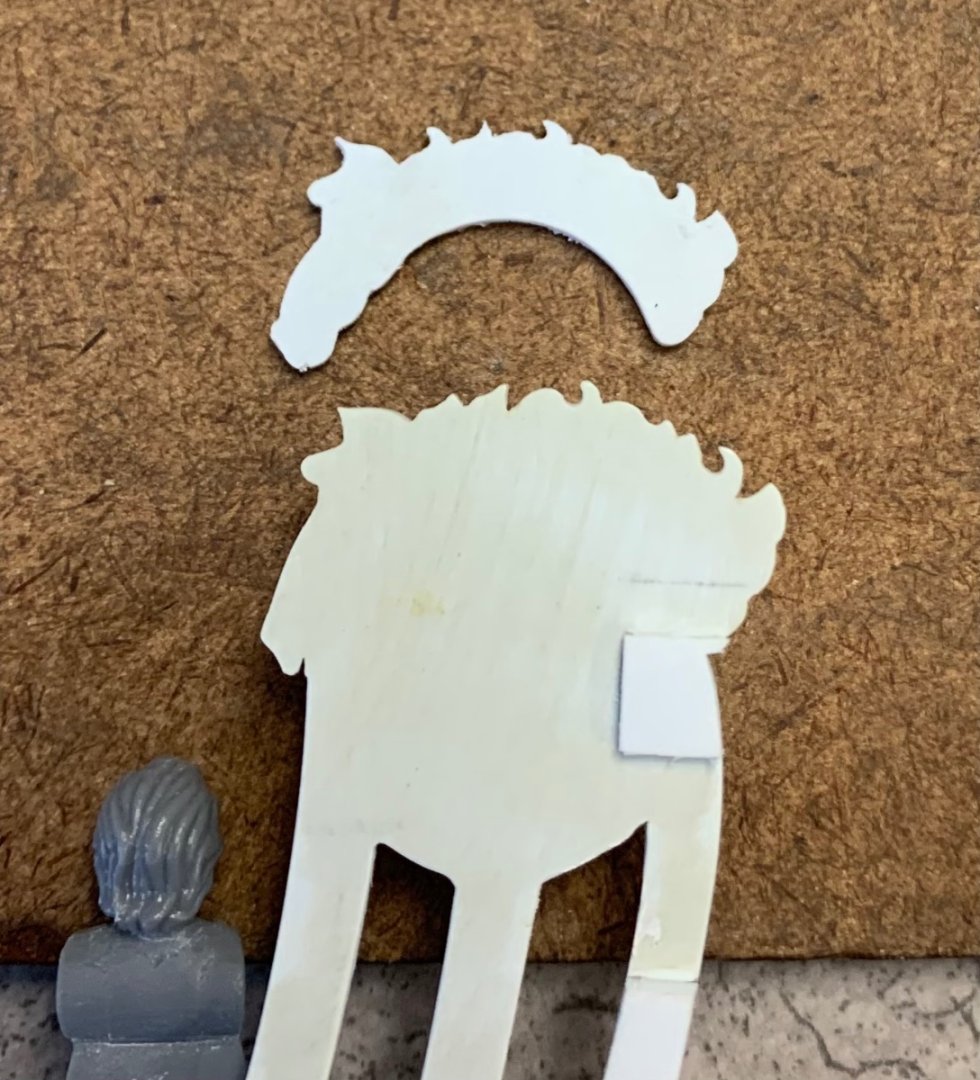
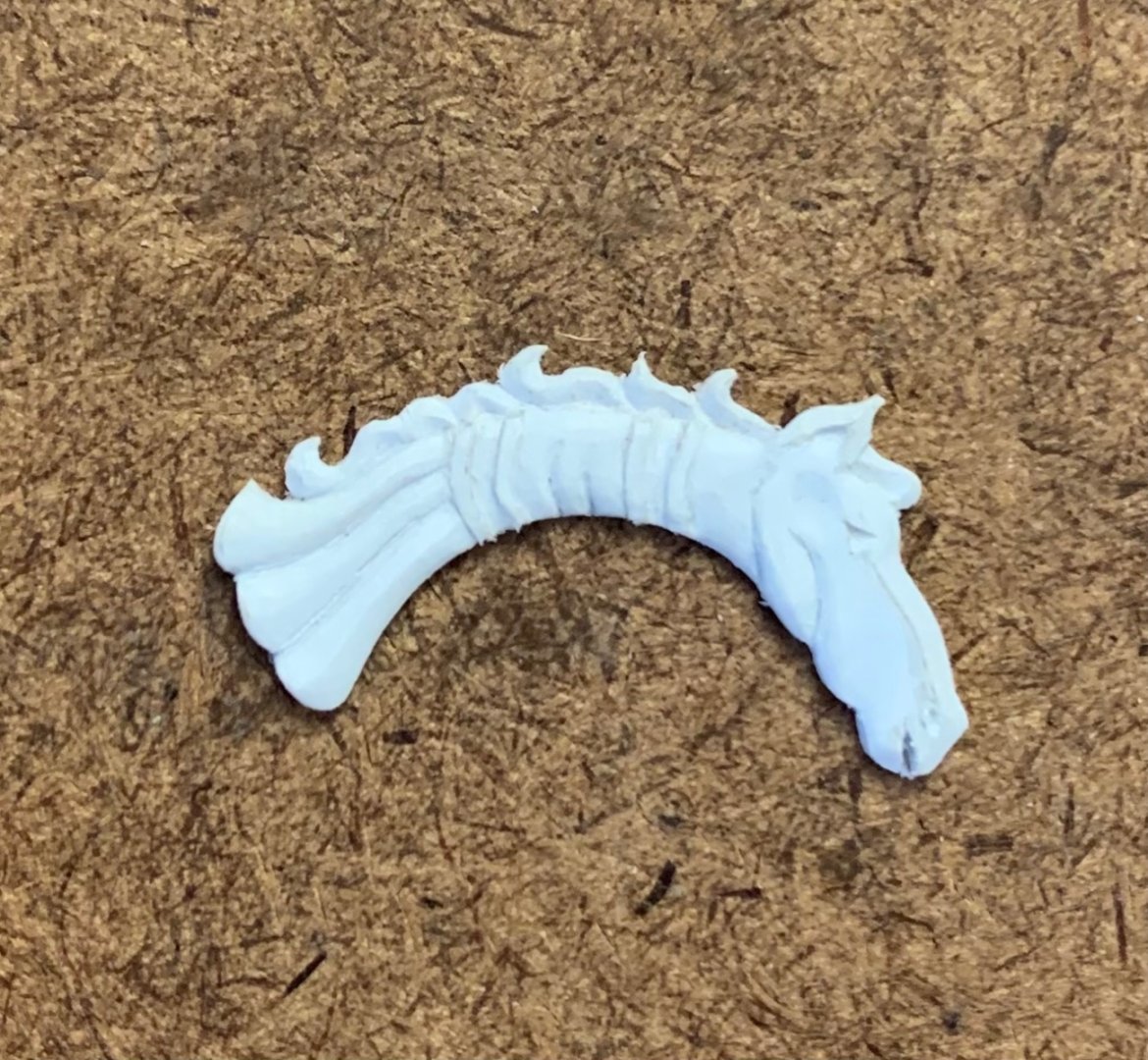
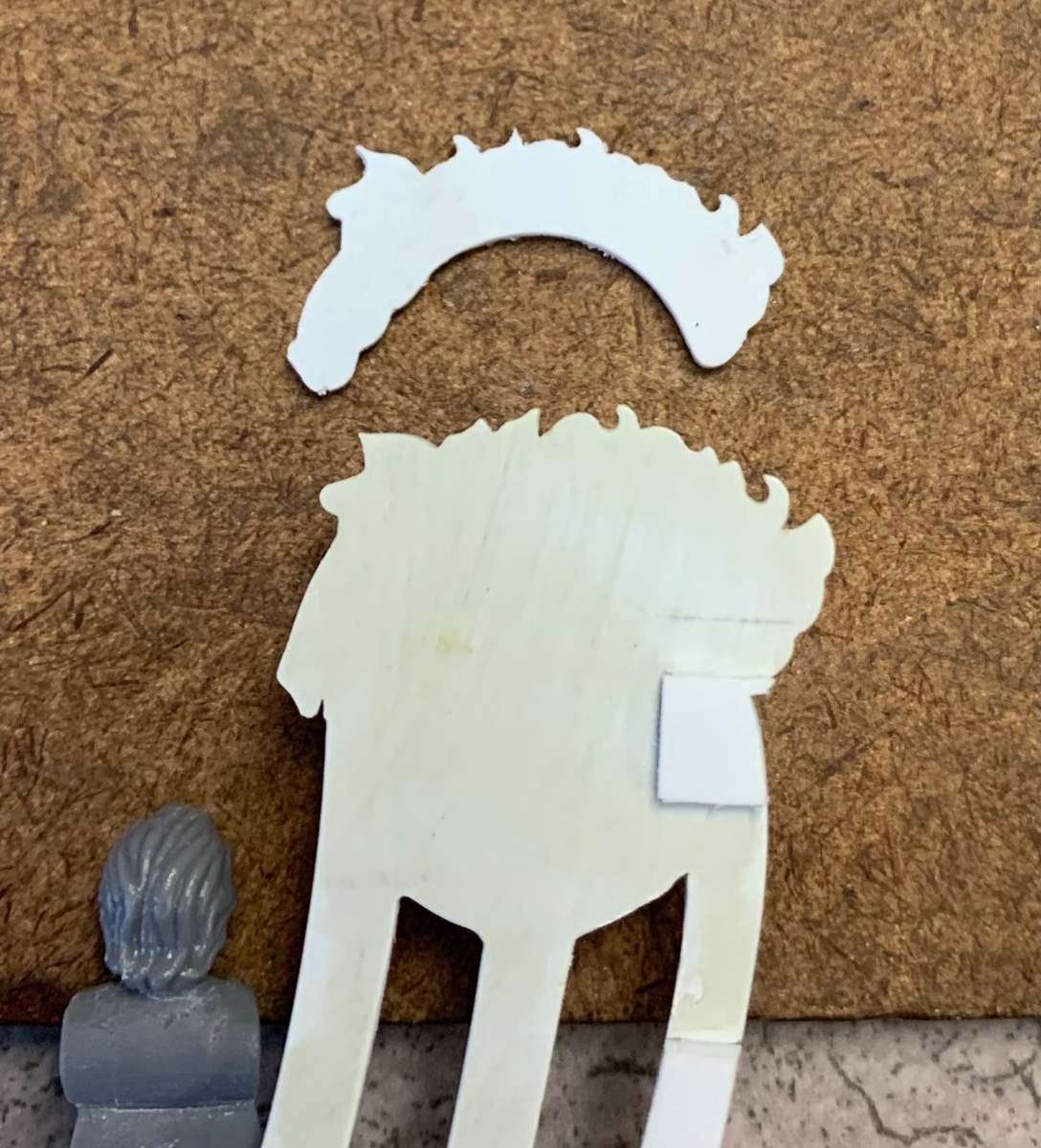
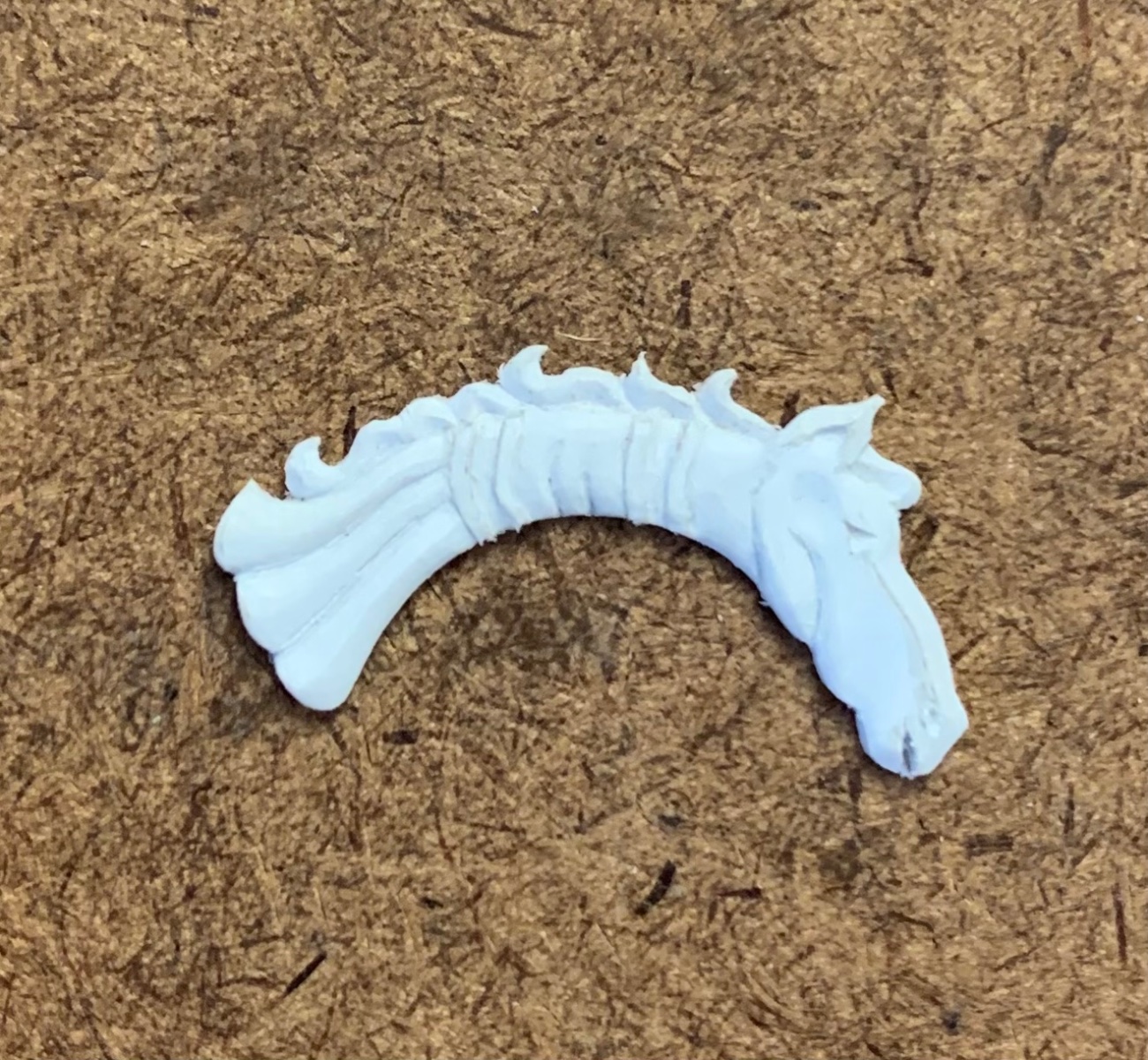
Well, this came out well: It only took a couple weeks of intermittent effort. Time to glue it to the starboard headrails: OH 😐🙁. Oh, well, I guess I’ll have to re-do that one. Silly mistake; sure it’s the starboard headrail, but I actually needed the port horse print for the inside carving. Not a big deal, though.
- 2,699 replies
-
- 16
-
-

-
- heller
- soleil royal
- (and 9 more)
-
The whole construction is filled with such elegant sweeping lines, and your craftsmanship is truly first-rate. This is a beautiful model!
-
Ratlines look tremendous, Bill! Your sense of Victory must be building as you near the finish line. Regarding whether to add furled sails, my sense is that it would be quite difficult to do with the yards already rigged and attached.
-
I follow John’s build with great interest.
-
Well, Bill - the thing about the Heller SR is that it was an attempt to bring a famous museum model into peoples’ homes in it’s completed form (the Tanneron model is famously incomplete), at a reasonable price. In my opinion, Heller did an admirable job of filling in the blanks. As long as you are primarily concerned with making an attractive model, then building straight out of the box will be more than enough. NOW - HAHA!! The fit.. of.. parts.. There will likely be some degree of warp in your lower hull, but this should clamp out fairly easily. The real bear in this kit is fitting the upper bulwarks. The first time I built this model, I did not do nearly as good a job of fitting them, and instead I had a heavy 1/32” of filler all along the outside seam, and even more filler along the inside seam. It was fine. The model is still perfectly intact and living at my buddy’s house. This time, I really took care to seat the glue lip into its rabbet on the lower hull so that I would have maximum bond. This process taught me the meaning of the word fettling. Not satisfied with that, I added styrene glue tabs across the joint, in places where they would not be seen. Not even satisfied with that, I realized I could add styrene spirketting over the joint in the waist, where it would be seen. This killed two birds with one stone; it added a correct construction detail, while concealing the heavy 1/6” gap you will be left with along the entire lower edge of the rabbet. It won’t matter how carefully you fettle the bulwarks home, you will still be left with this ugly gap. Oh, and the other irritating thing about this kit is that the depth of the rabbet, inboard/outboard, varies tremendously along it’s length. In order to establish a good bond across the joint with my spirketting, I found it necessary to sand this rabbet to a more or less consistent depth. The next big bugaboo is that the whole head assembly is likely to be fairly warped and ill-fitting. My advice here, as with anywhere on this kit, is to go slowly; dry-fit everything to the hull multiple times so that you fully understand what’s hanging you up, before you begin removing material. Lastly, the quarter galleries are unlikely to conform neatly to the tumblehome of the hull. If you do as many have, to remove the raised relief panels, thus opening up the galleries, you should have an easier time fitting them to the hull because the QGs should be less rigid. I recommend doing this, anyway, as it significantly lightens the appearance of the stern structure, and historically it is more consistent with actual practice in the 1670s. I have an early pressing of the kit from the 70’s and the plastic is of a very high quality - even to this day. I’m not sure whether newer pressings are of the same quality. Now, despite all that I have said, here, don’t be discouraged. It is an amazing challenge to put this kit together well, and very rewarding when you do. Just take your time and it will come out well.
-
As far as space goes, the new apartment is marginally bigger. My modeling life will continue as before. The move was primarily about having a better neighborhood for my kids to enjoy the rest of their childhoods. This is a much more family-oriented community. I will tell you that this apartment paint job is not my finest work; 80+ years of paint build-up make for some pretty gnarly door and window casings. Nevertheless, sometimes it’s just about pushing through and good enough is good enough. We got almost the entire apartment rolled out over the weekend. Very tired!
- 2,699 replies
-
- 6
-
-
- heller
- soleil royal
- (and 9 more)
-
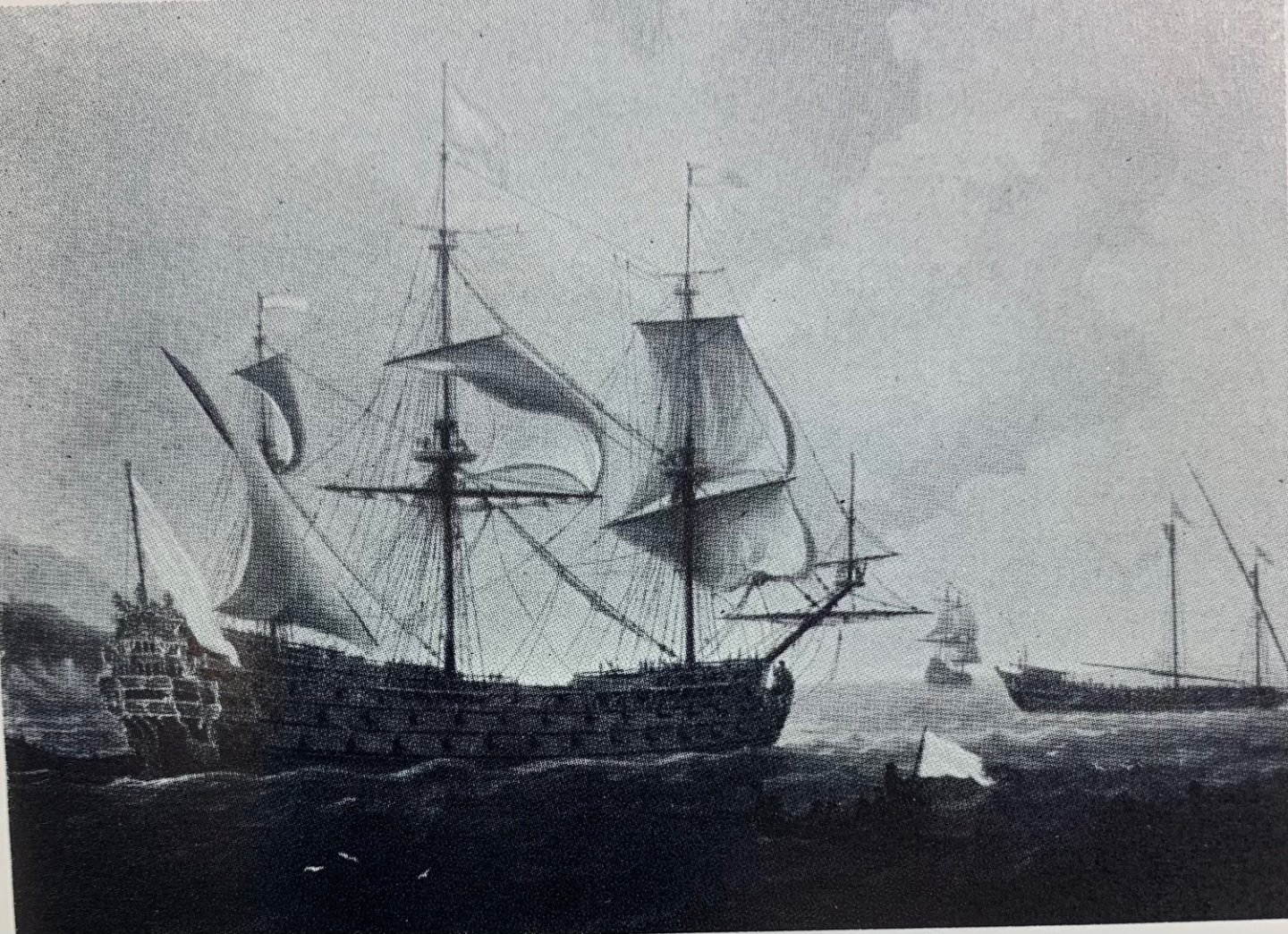
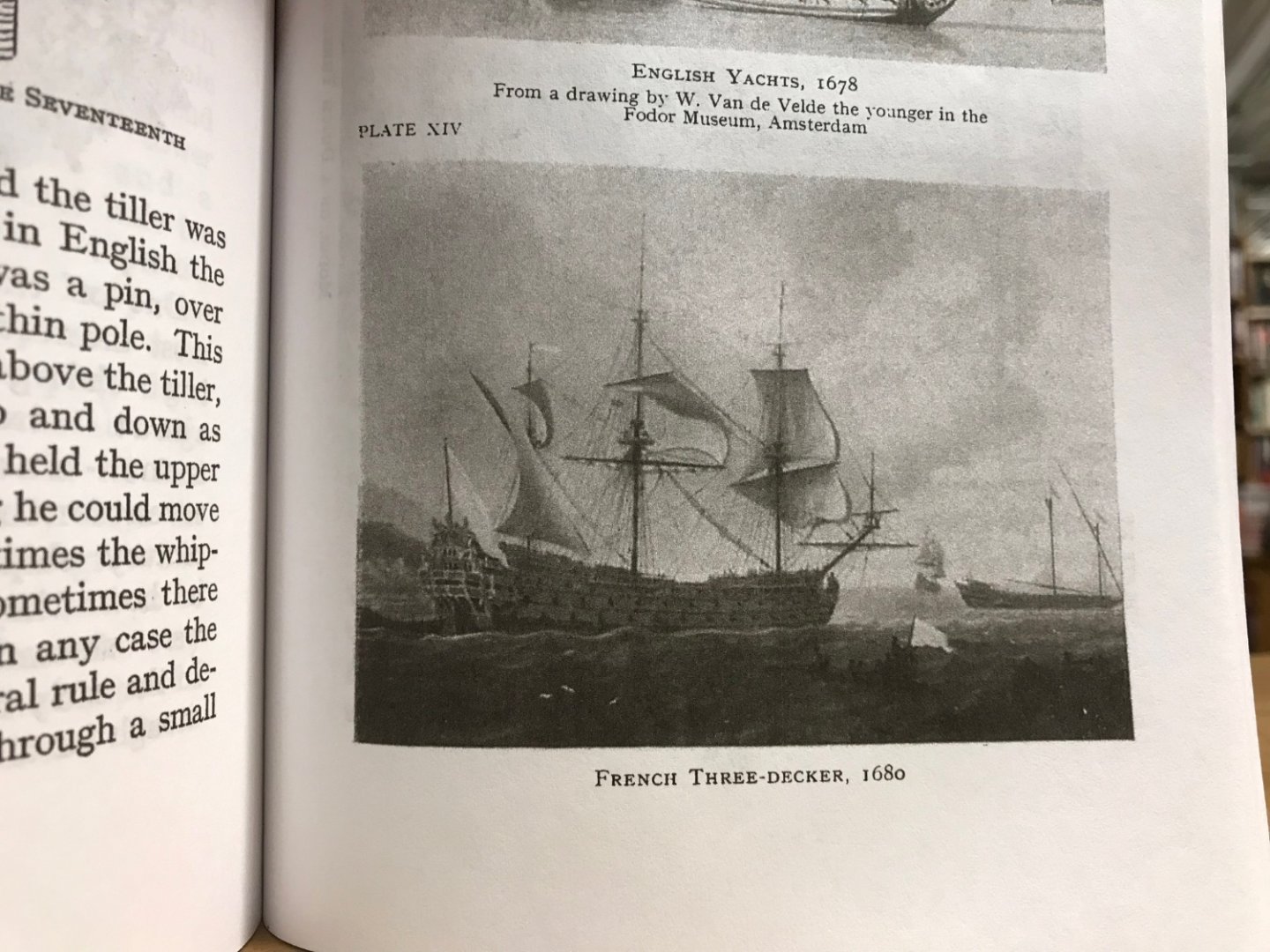
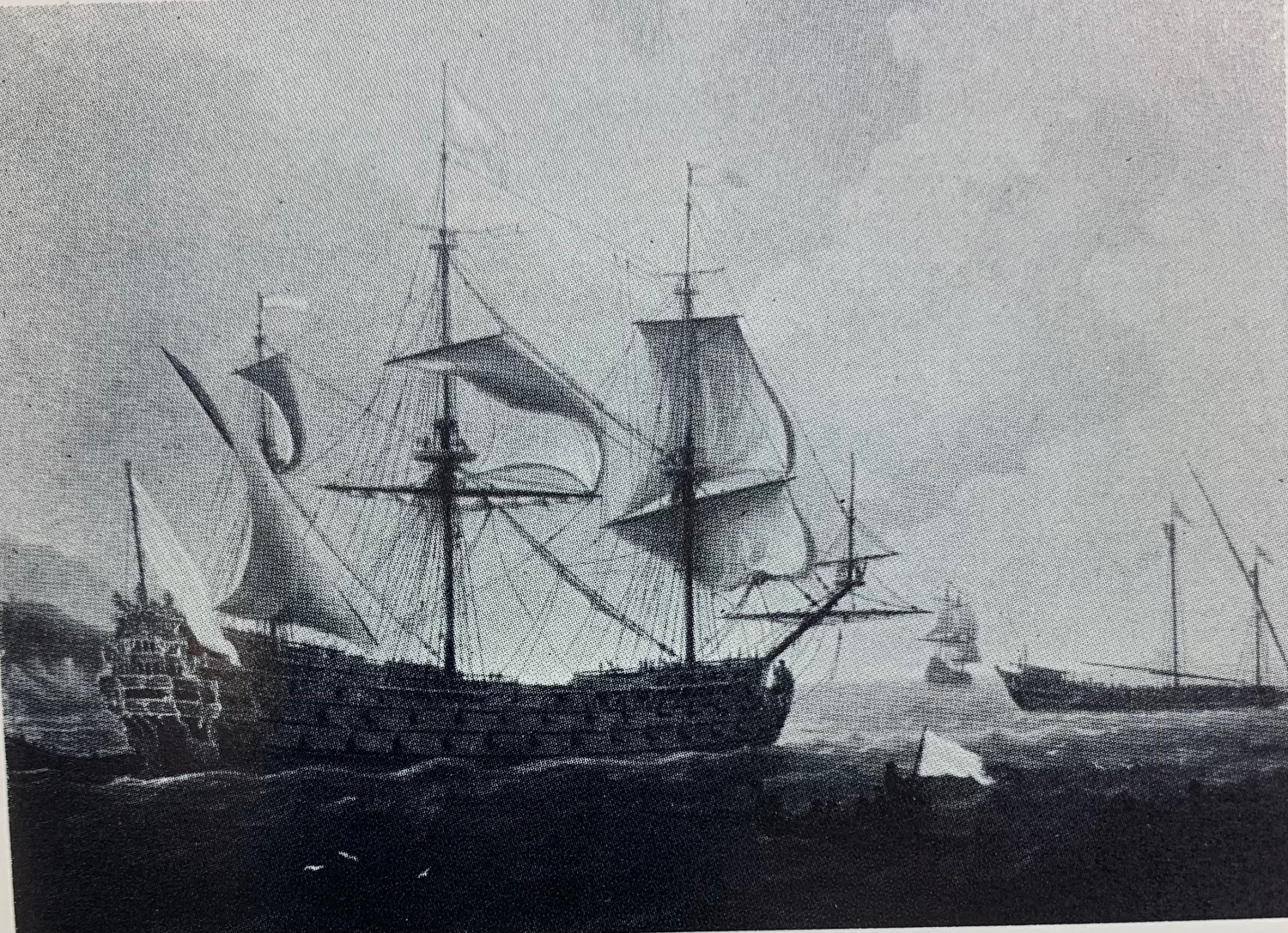
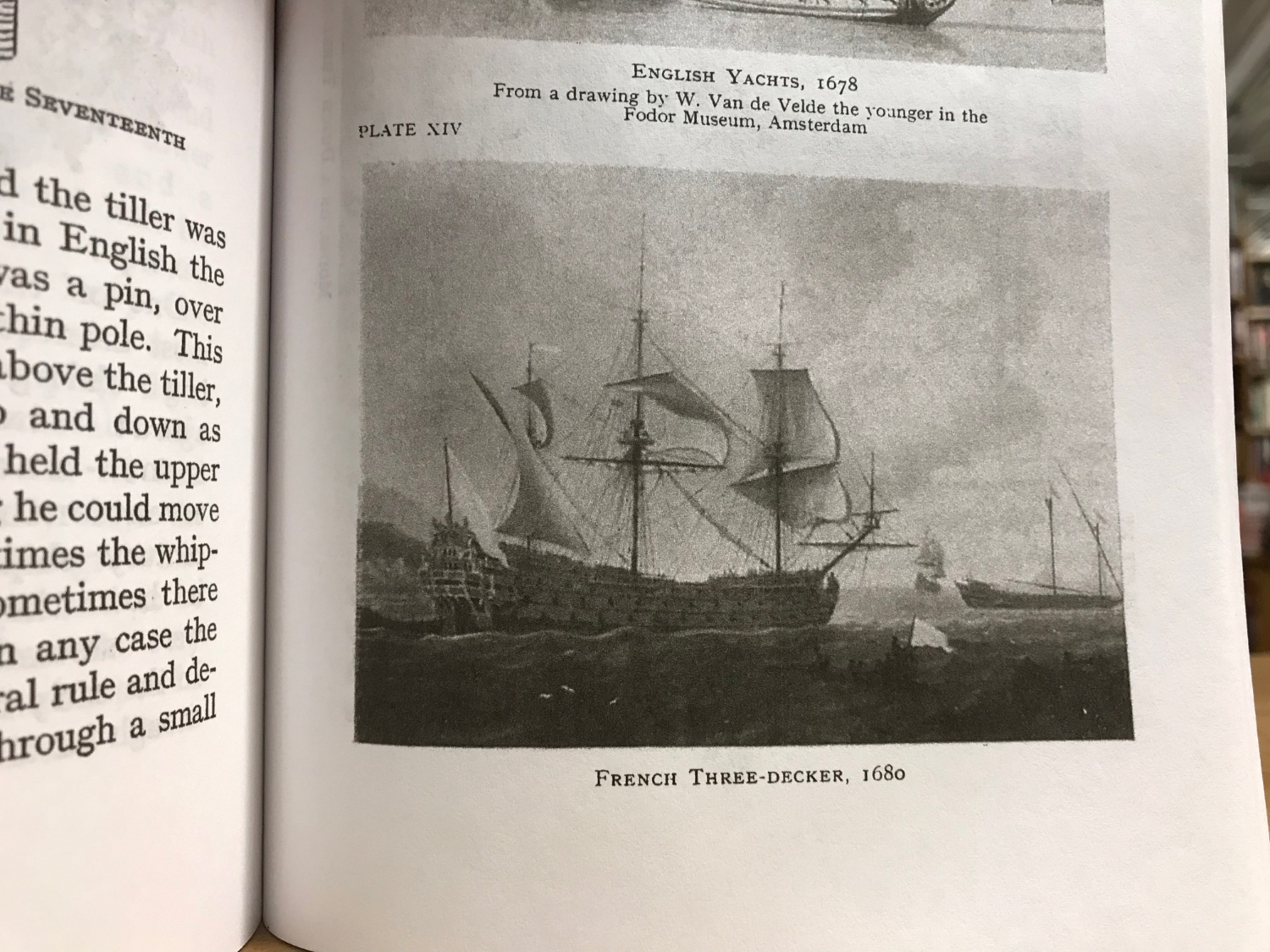
Bill, I’d have to check the label for the brand, but the walnut ink is something I picked up at a local art supply store. Yesterday, I took a brief break from painting the apartment to stop by the STRAND. There I found an earlier (1963) hardbound edition of the R.C. and Romola Anderson book: Inside, there was a slightly cleaner print of the Gilded Ghost portrait: As compared with the more recent paperback edition, where I first saw the portrait: The image is still fairly inscrutable, but hopefully someday I will find the painting. Apart from carving the starboard headrail horse medallion, not much is happening on the model, and I’m afraid there won’t be until October. Until then, be well and thank you for looking-in. Best, Marc

- 2,699 replies
-
- 7
-
-
- heller
- soleil royal
- (and 9 more)
-
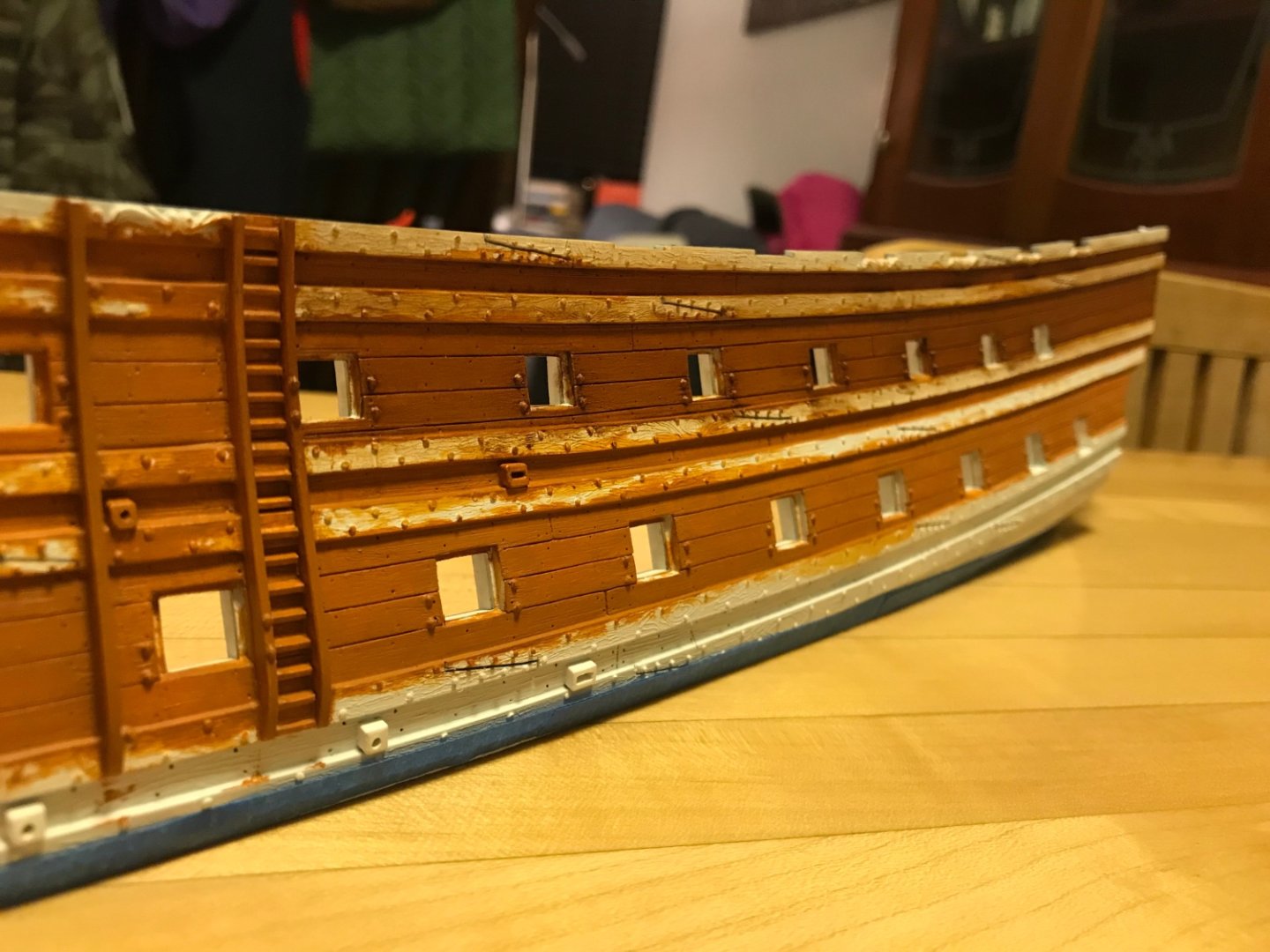
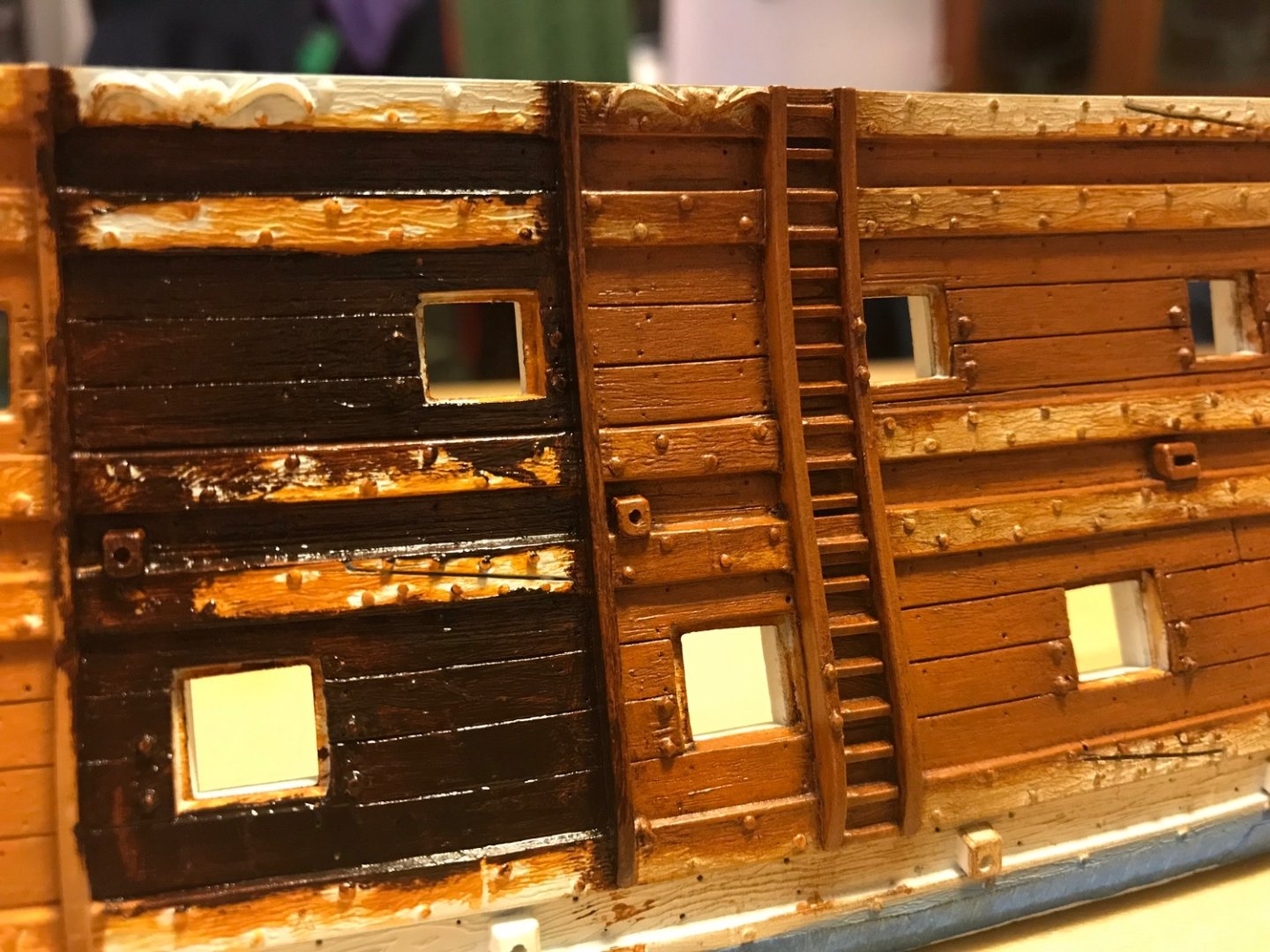
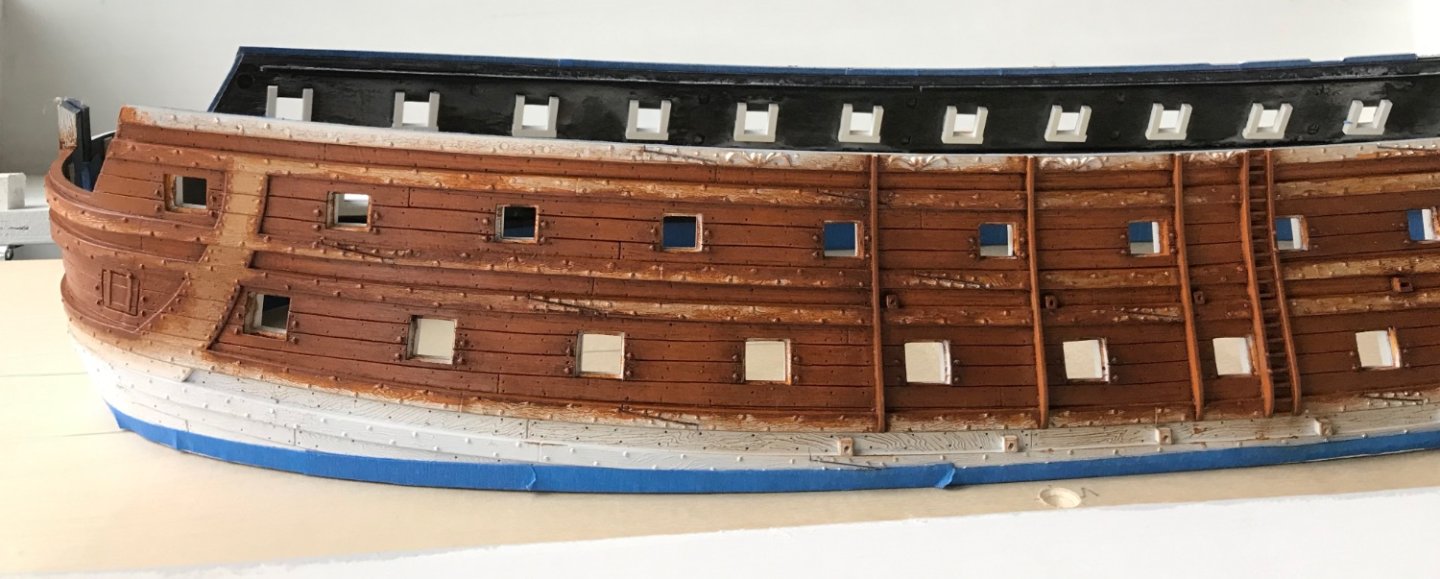
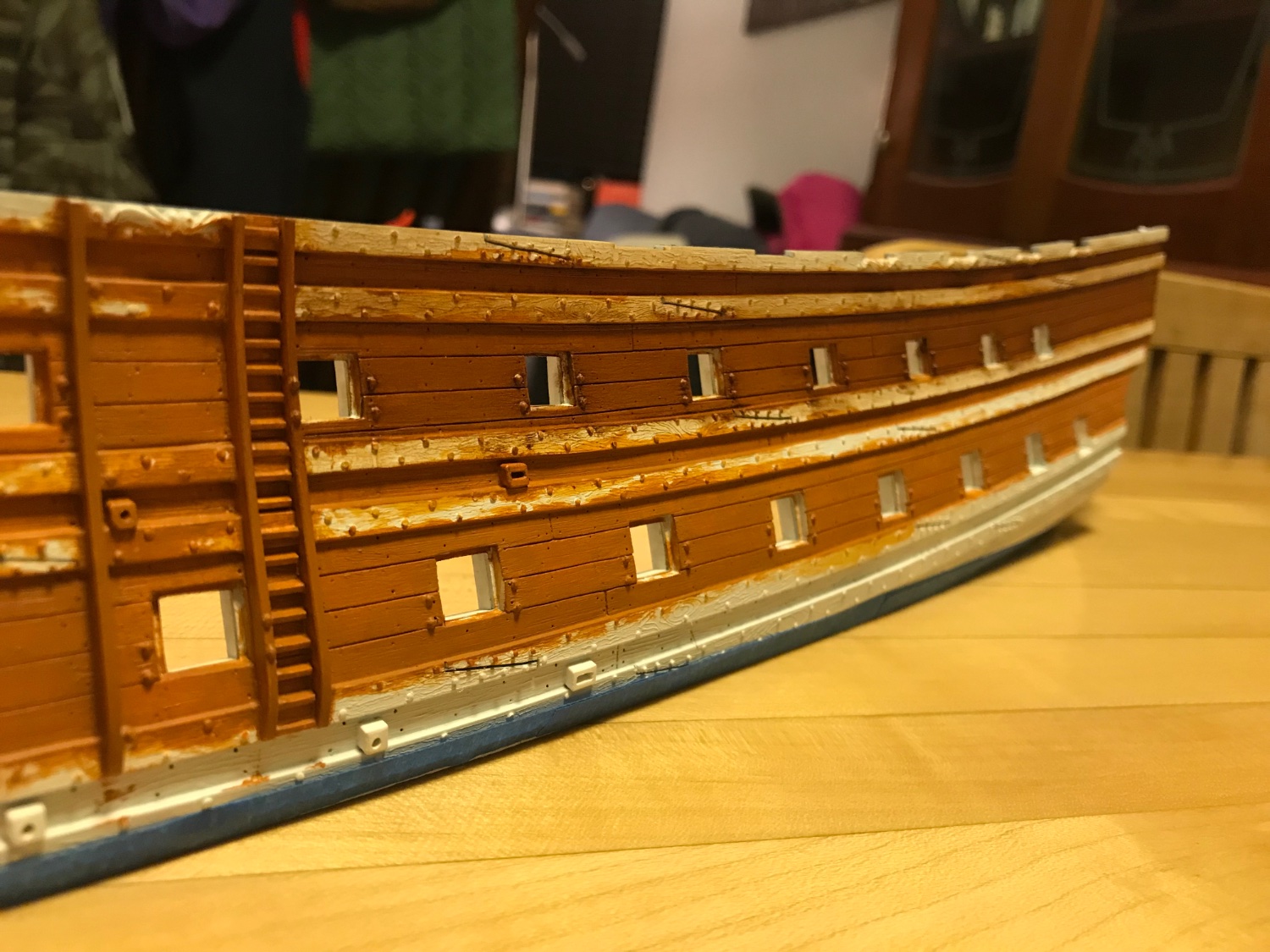
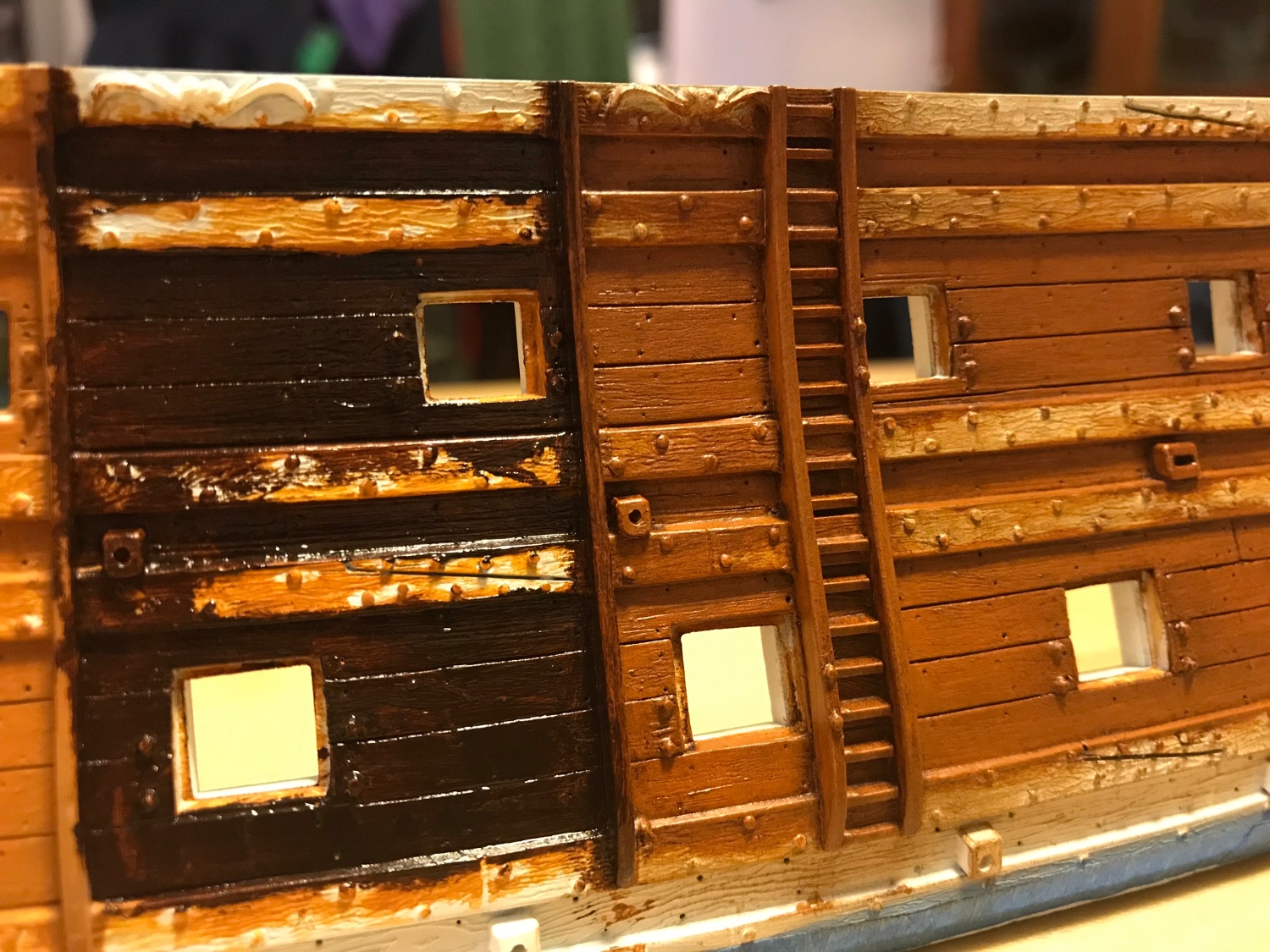
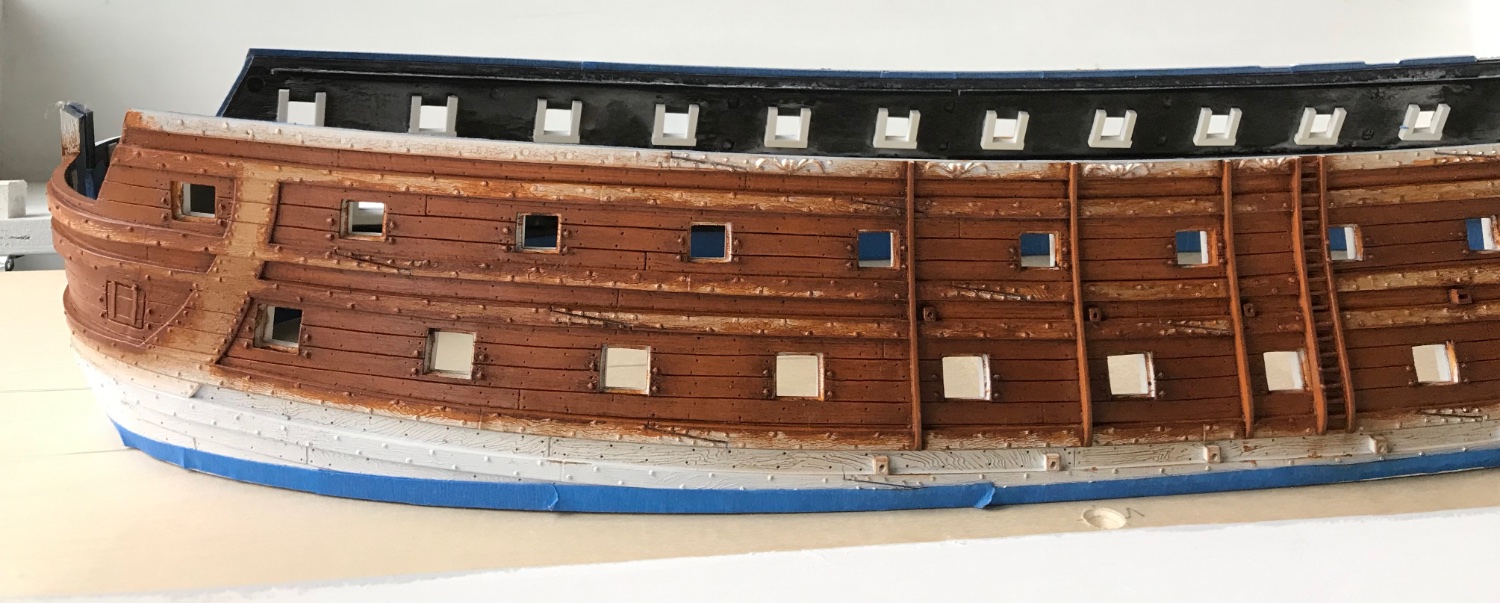
I think what Kevin is suggesting is a very good idea - to mock up some samples, so that you can play around with different mediums, and get comfortable with what they can do. I did a lot of paint samples in the early stages, and that is where I acquired most of my knowledge about this kind of distress painting. I can’t speak for the inks that Kevin has been using for his CS, but the walnut ink I’ve been using is extremely forgiving. I apply it dilute, but strong, and simply cut it back with a wet brush until I like the way that it dries. This is tricky to get just enough shading, but over time I’ve gotten the hang of it. I continue to tweak the ink, with each new level of the stern, and will do so until it all gets sealed under a final coat of Matte clear. As Kevin says, artists’ oils are amazing for creating depth and texture, and they are extremely forgiving. I use them for my natural wood effects, and really like how the decking came out. Van Dyke Brown (Windsor and Newton) gave my ventre-de-biche (raw sienna) painted sides (above the black boot topping) a pleasing patina. You just lay it on thick and heavy and then wipe it back until you are happy. I wrap q-tips in t-shirt scraps, so that I can get pretty far into recesses, but not all the way. After wiping, I use a coarse chip brush (natural bristle) to even-out the effect. I learned all of this from Herbert Thomesan of Artitec Modelbeau, in the Netherlands. A lot of the Dutch builders use this technique and it is astonishingly easy, forgiving and produces excellent results on the first try. My one piece of advice would be to do both hull halves at the same time. I did one, and then the other after a period of time, only to realize that the second half was significantly darker. The paint had cured by the time I really saw this in good light, so I had to wash the first half a second time to match. On my model, the finished effect is darker than I would like, and most people mistake the effect for natural wood, but it is really supposed to represent a painted surface on the actual ship. This doesn’t bother me, though. I learned something. Mostly, I learn from all of you. Three projects stand out, in my mind, for their absolute fidelity to nuance and detail. In no particular order, they are: Michael, aka SafeMaster’s Reale: Gary, aka FriedClams’s Stonington Dragger: And Kirrill, aka Kirrill4’s Spanish Galleon: At some point in the future, Kirrill will dive into his own Heller SR, and I’m really excited to see what he will do with it. I have some idea of what I am doing with my particular subset of paints, but these gentlemen bring a very broad range of technique and knowledge of correct details and realism to bear on their projects. Another master of painting technique, and scratch-building is Rex Stewart. I don’t think he maintains a presence on MSW, but he can easily be found on-line. Of course there are numerous other Uber talented builders and painters (Dafi, Blue Ensign, Moraine to name just a few more - I could go on, but the list would get very long), but the above really stand out for the breadth of techniques that they apply to each project.
- 2,699 replies
-
- 13
-
-

-
- heller
- soleil royal
- (and 9 more)
-
Excellent, Bill. This one book will hold you in good stead for correct 17th C. practice. The illustrations are pretty basic, but it can all be navigated with a little determination.
- 2,699 replies
-
- 4
-
-
- heller
- soleil royal
- (and 9 more)

Our Emblem ®
