

Hubac's Historian
-
Posts
3,311 -
Joined
-
Last visited
Content Type
Profiles
Forums
Gallery
Events
Everything posted by Hubac's Historian
-
 In scales this small, it has been suggested to me to seize your lanyards directly to a single eyelet secured to the lid - rather than an additional ring attached to your lid eyelet. On my project, I will display the lids in a somewhat unrealistic way - as pulled up against the wales - because I want the lid ornaments to be fully visible. In this way, I only need to represent the single, interior, closing lanyard.
 -
CriCri, when you get to glueing everything together, will you also glue-in filling blocks between the bulkheads?
-
It’s easy to appreciate, here, how beefy the French ships were.
-
Congratulations, Marc!! Leos rule! What is your Daughter’s name?
- 208 replies
-
- 4
-

-
- le soleil royal
- 104 guns
- (and 2 more)
-
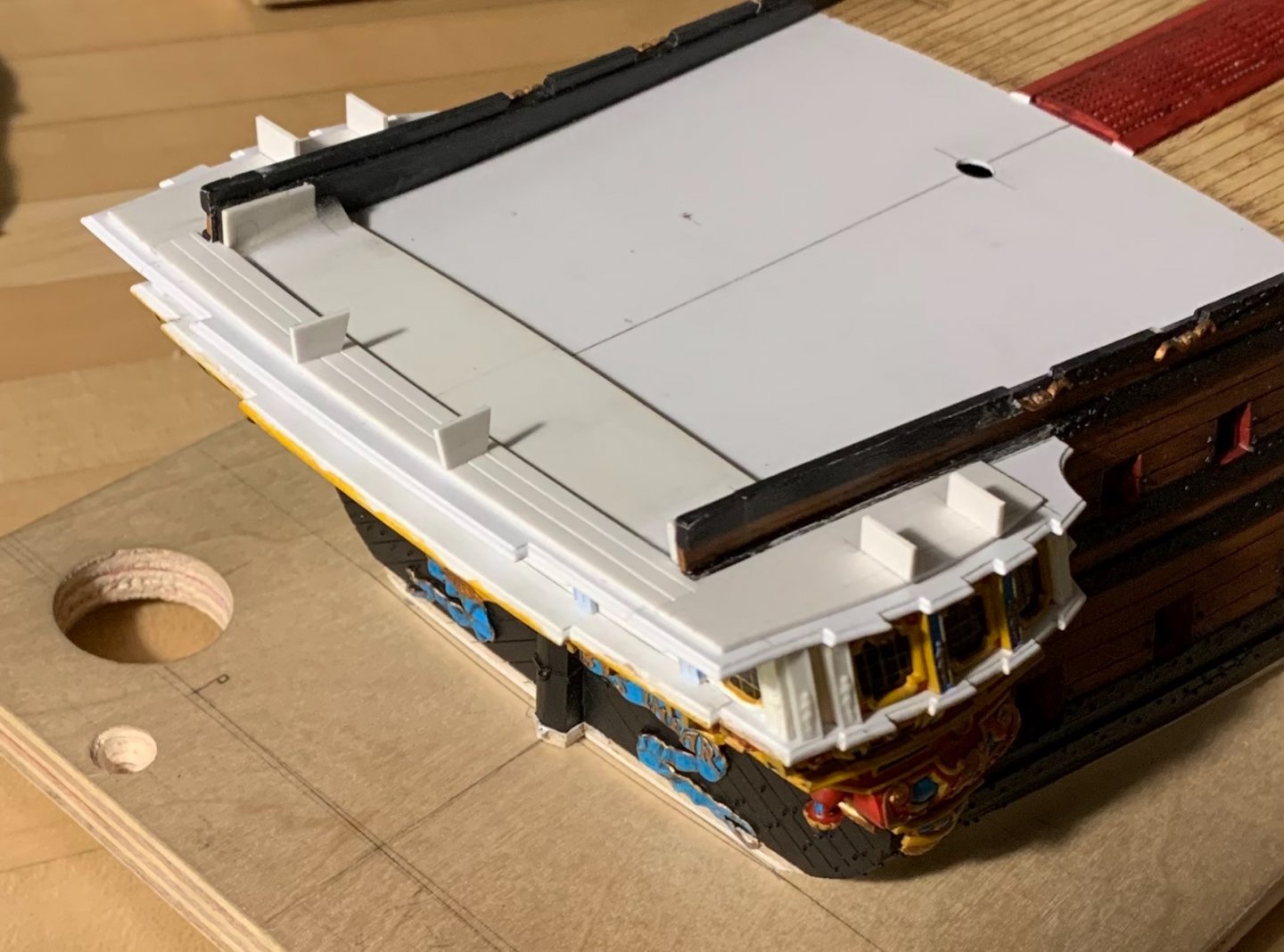
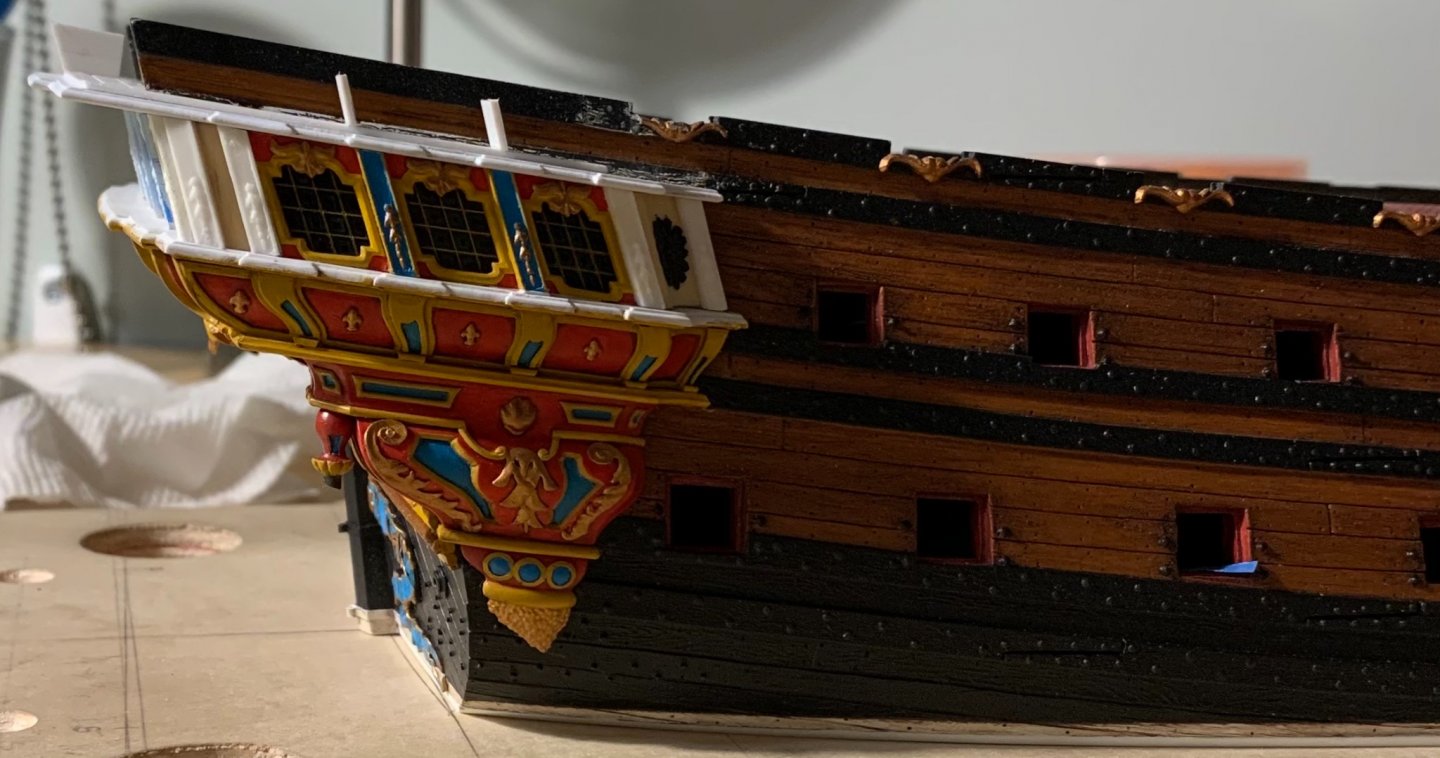
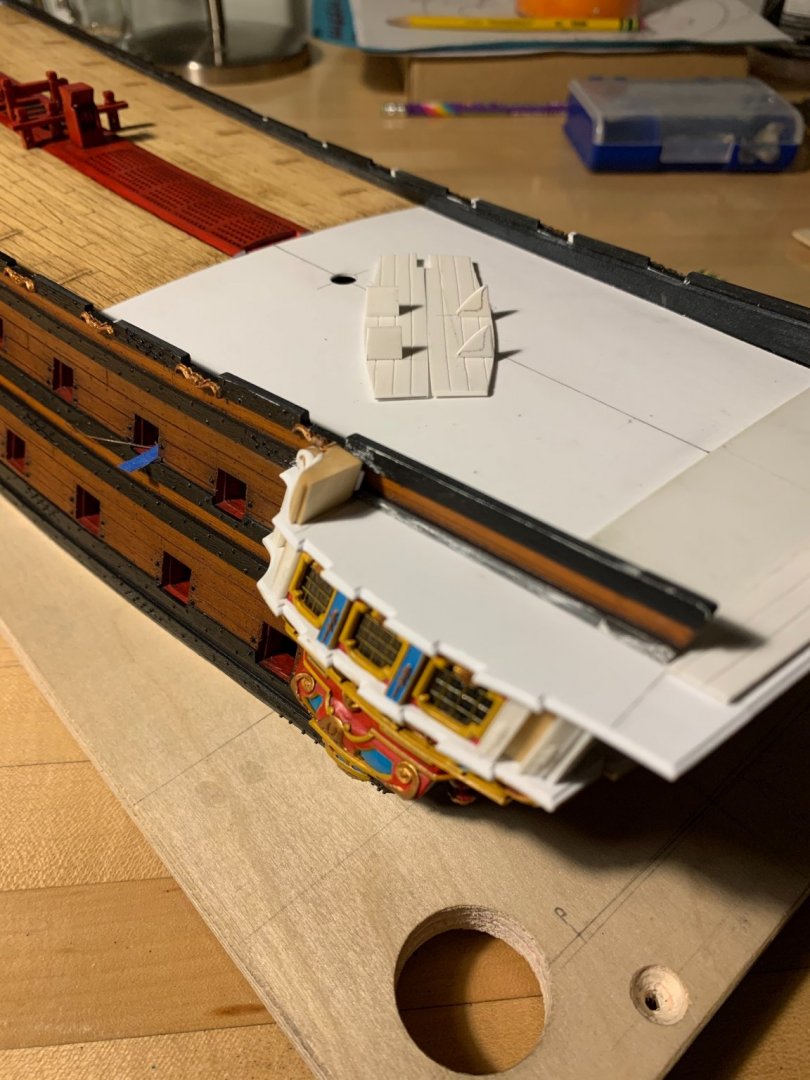
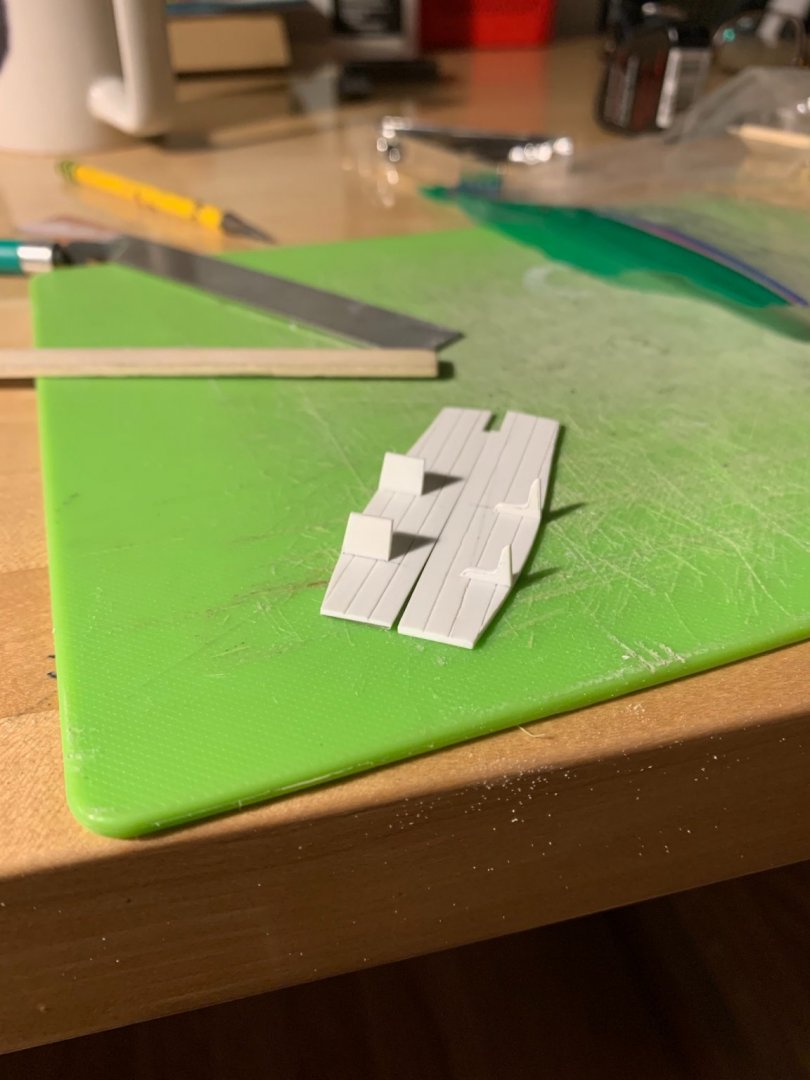
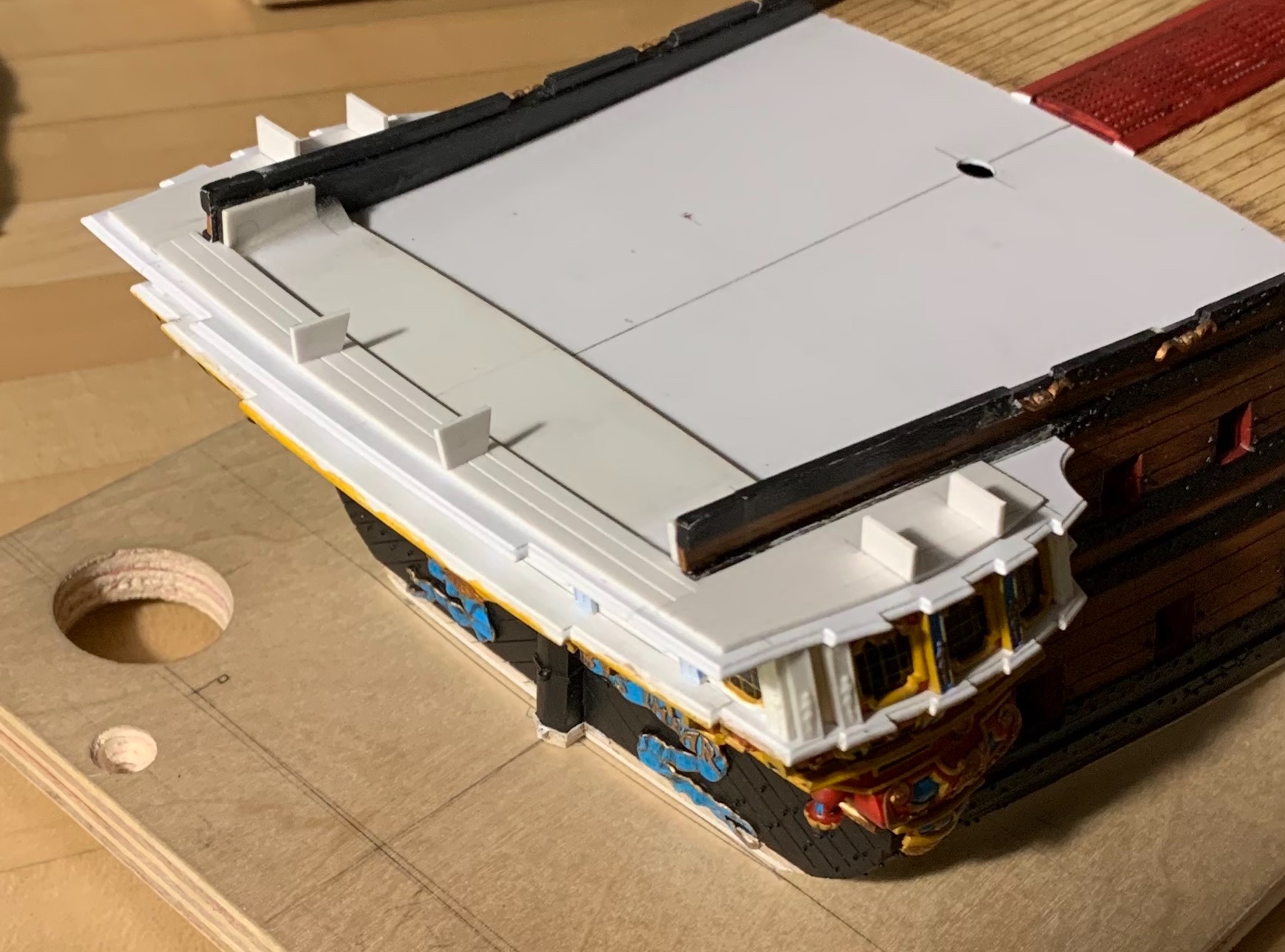
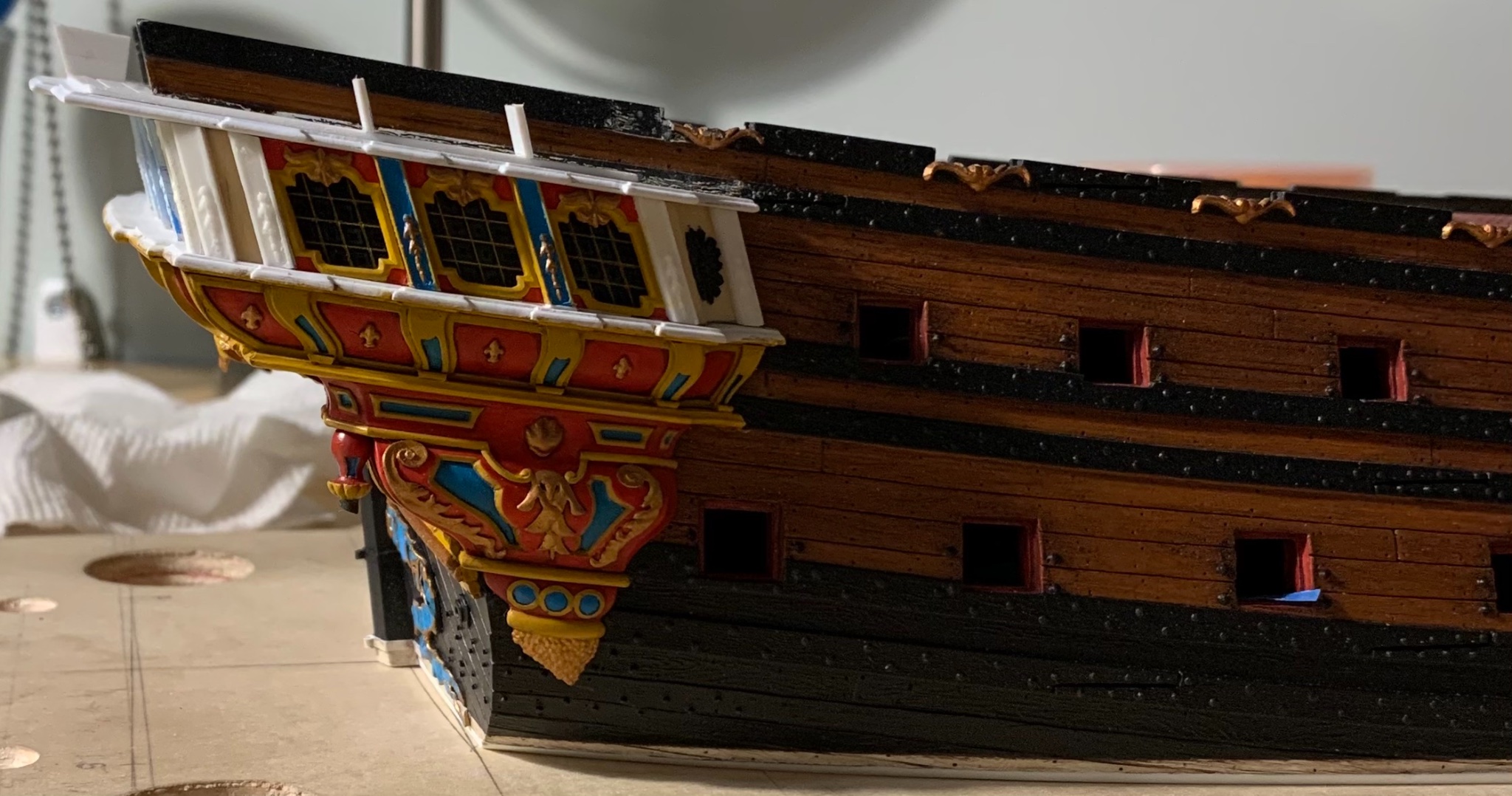
Thank you all for your kind compliments and for continuing to support the project. I know I spend a lot of time on the minutia, but that is where I find the greatest satisfaction and continued investment in the project. It is gratifying that such a good number of you enjoy that level of detail. I may only be guessing a lot of the time, EJ, but I try and do things that make practical sense. One such example is interior support for the quarter gallery rail. Although, I do not see specific reference to this in Lemineur’s monograph for the SP - or anywhere else, for that matter - it only seems sensible that such a light construction would have additional support. So, that is what I have endeavored to do: A wooden ship is full of knees, buttressing and distributing loads. The channels have knees. The deck railings have knees. The stern and quarter galleries are particularly vulnerable to rough and battering seas, so I think this makes sense. There is the added advantage, of course, of having additional glue surface for the railing upright, and these supports will help the part conform to the gentle contour of the gallery. I received my BSI de-bonder. The bottle says that the product mars most plastics; perhaps not acetate, though. I will experiment. I will also soon be painting again, so that I can install all of these walk parts. All the best, Marc
- 2,699 replies
-
- 13
-
-
- heller
- soleil royal
- (and 9 more)
-
Very well said and informative, concerning the alteration of hull shape by moving the smaller bends forward or aft.
-
I think they are called bottles because the early baroque silhouette of French quarter galleries were reminiscent of elaborately shaped perfume bottles. The term stuck, through the ages of sail, even as the style of QGs became increasingly austere. Given their function, however, it seems unlikely that they smelled like perfume.
-
I wasn’t sure how you were going to approach this, but I am really impressed that you are tackling an authentic planking job. Your progress looks really great. Yeah, I’d say your process is working!
-
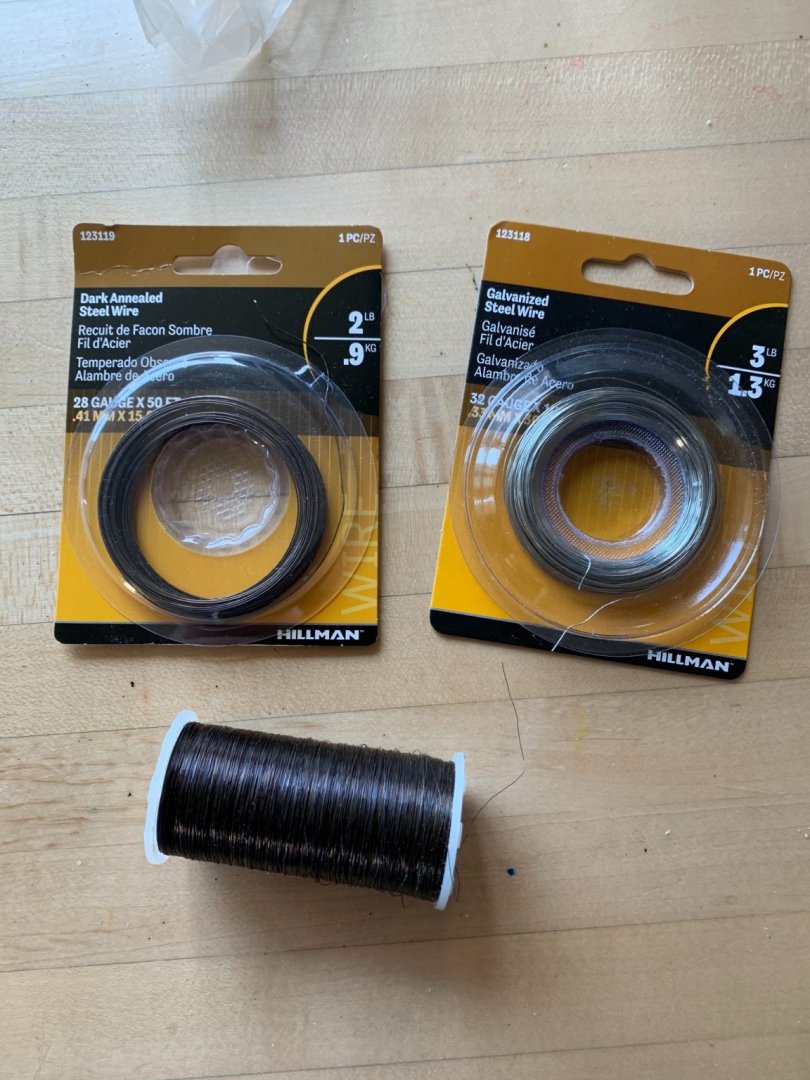
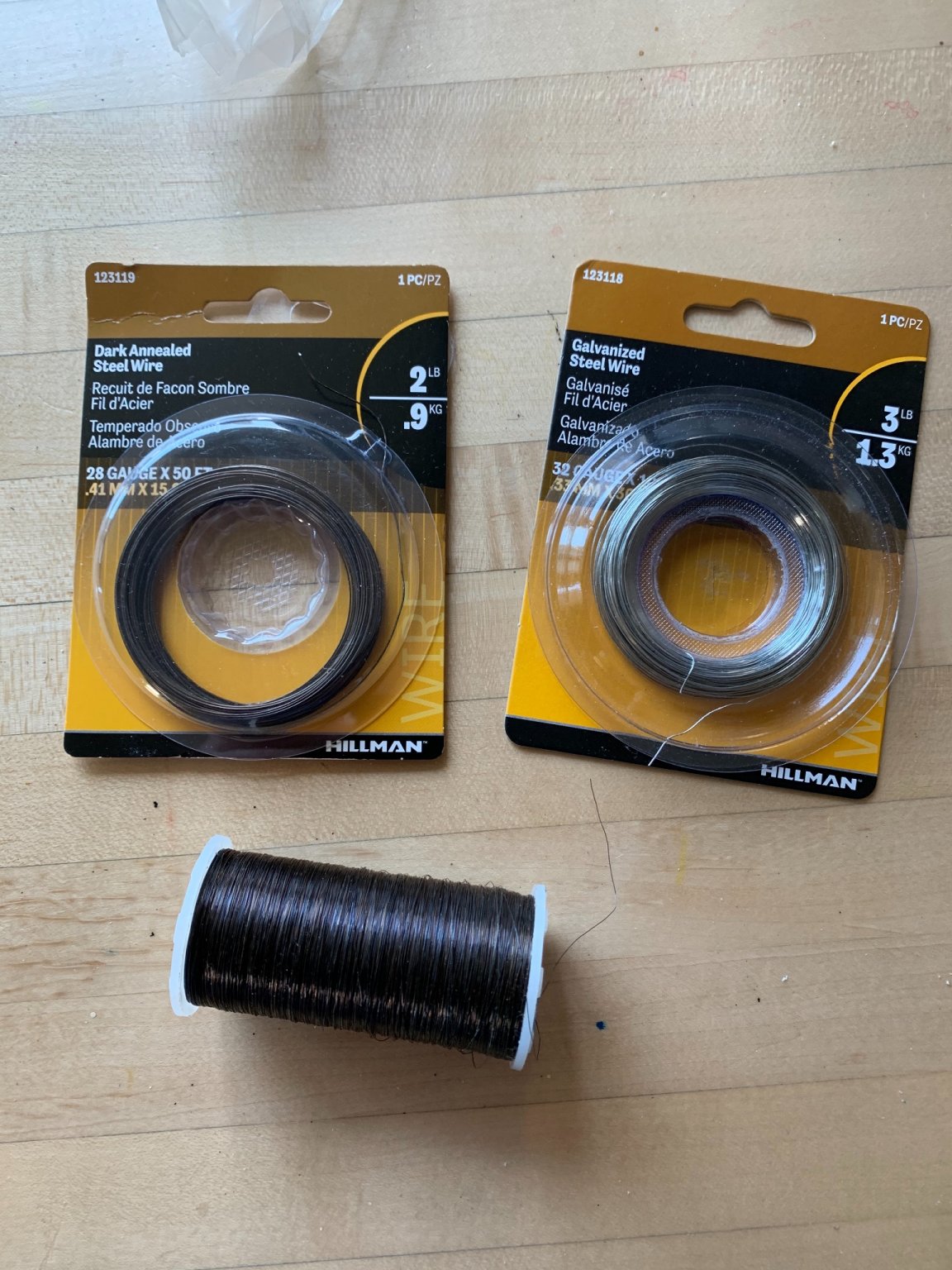
I have a few different gauges of wire. A long time ago, I acquired a spool of super fine wire - the gauge of which, I am no longer certain. In craft stores, I have purchased 28 gauge (upper left) and 32 gauge (upper right). I think for my SR project, I can get away with 32 gauge wire for making eyebolts for my gun carriages in 1:96. I haven’t gotten around to experimenting with that yet. Online, I found 36 gauge: https://www.amazon.com/Stainless-Steel-316L-Gauge-Wire/dp/B07CJTCPLX/ref=mp_s_a_1_6?dchild=1&keywords=fine+gauge+annealed+wire&qid=1616346846&sr=8-6 I would say 36 gauge is a good starting point, and if you can find something even finer, then I would do so.
-
If you decide to add rings and rig the guns, keep in mind that the ringbolts would be very fine, at this scale. Using wire of too heavy a gauge will look clunky. Most craft stores carry an array of annealed wire; the finer, the better.
-
Chapman, thank you for that super clear image of the Grand Monarque’s bow. I see your point about the relative scantling of timber that the gammoning passes through, in these early First Marine vessels. Twenty years later, though, the head structure of French ships had changed significantly, and the cutwater was significantly more “meaty” in the area of the gammoning. There was a transition from the beakhead style (more characteristically Dutch) to this later style, which is more like the English head structure - excepting the headrails, themselves, which are characteristically French.
-
For reasons I point out in prior posts, doing so creates unnecessary weak points in the structure. These ships were massive, with tremendous dynamic forces working against them all the time; the gammoning really needs to be secured by the heavy timbering of the cutwater. Anyone, of course, is free to do as they wish. However, if they want to represent authentic reality, then there are some rules of construction that shouldn’t be violated for the sake of aesthetics.
-
I agree. I recently spent too many hours to count, carving a lovely trailboard for my model. It is annoying that it will be partially covered, but the necessity of this can’t reasonably be avoided, IMO.
-
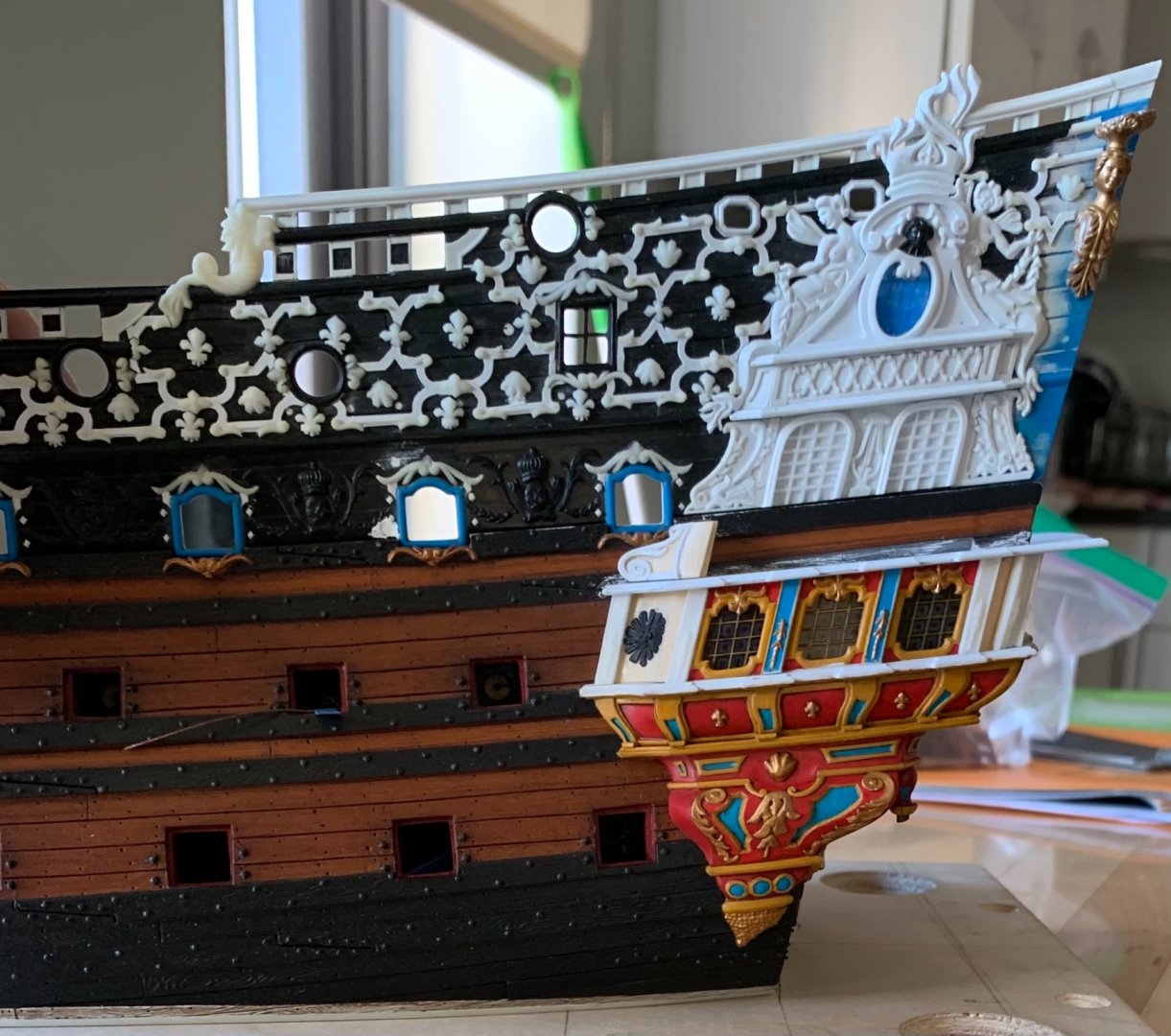
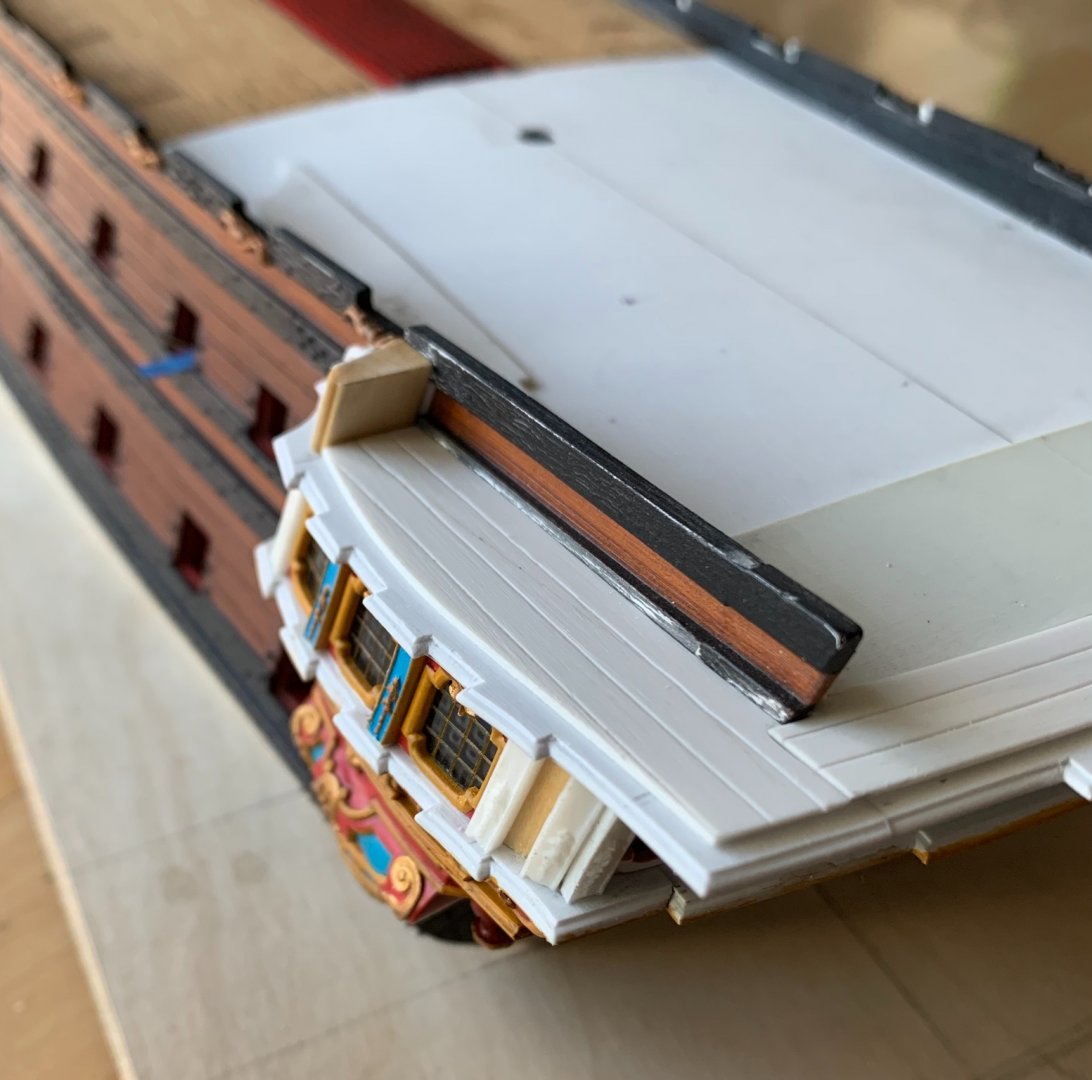
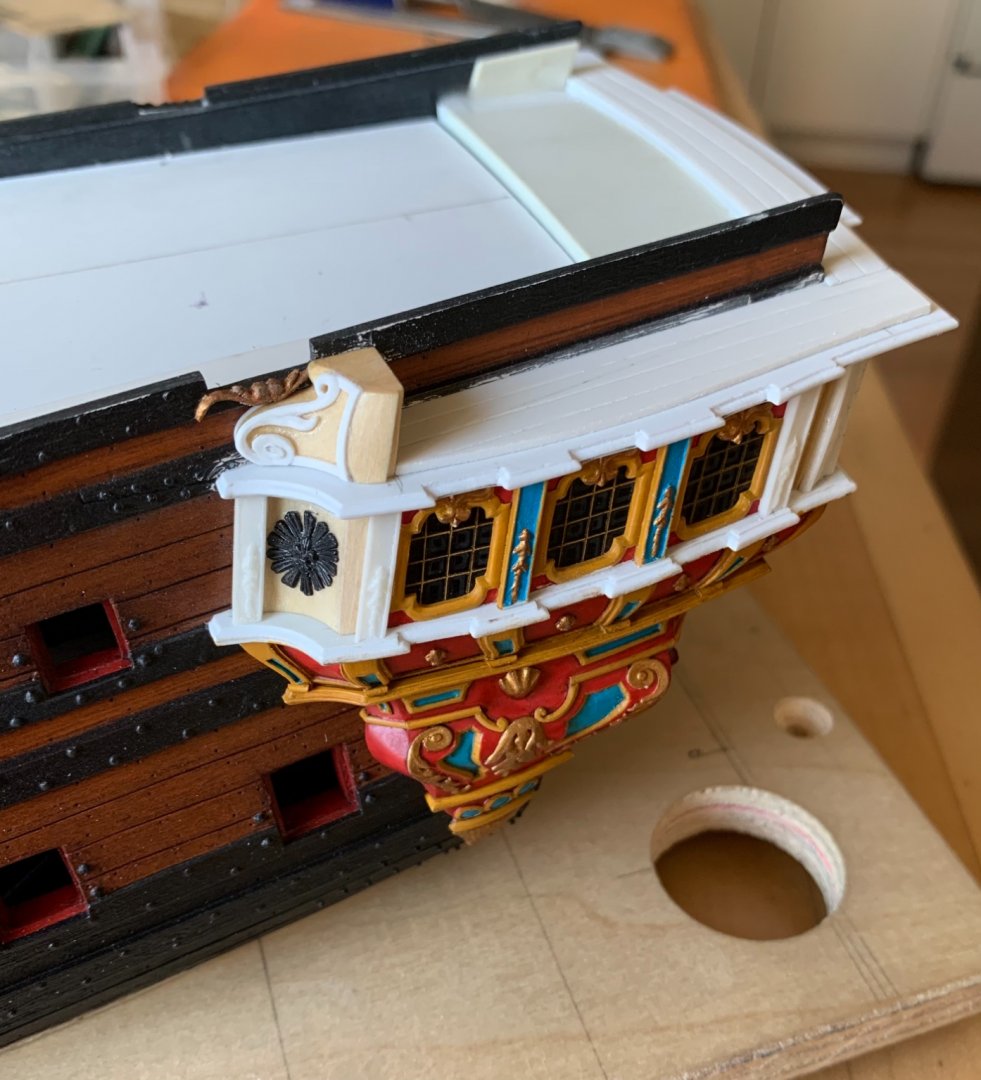
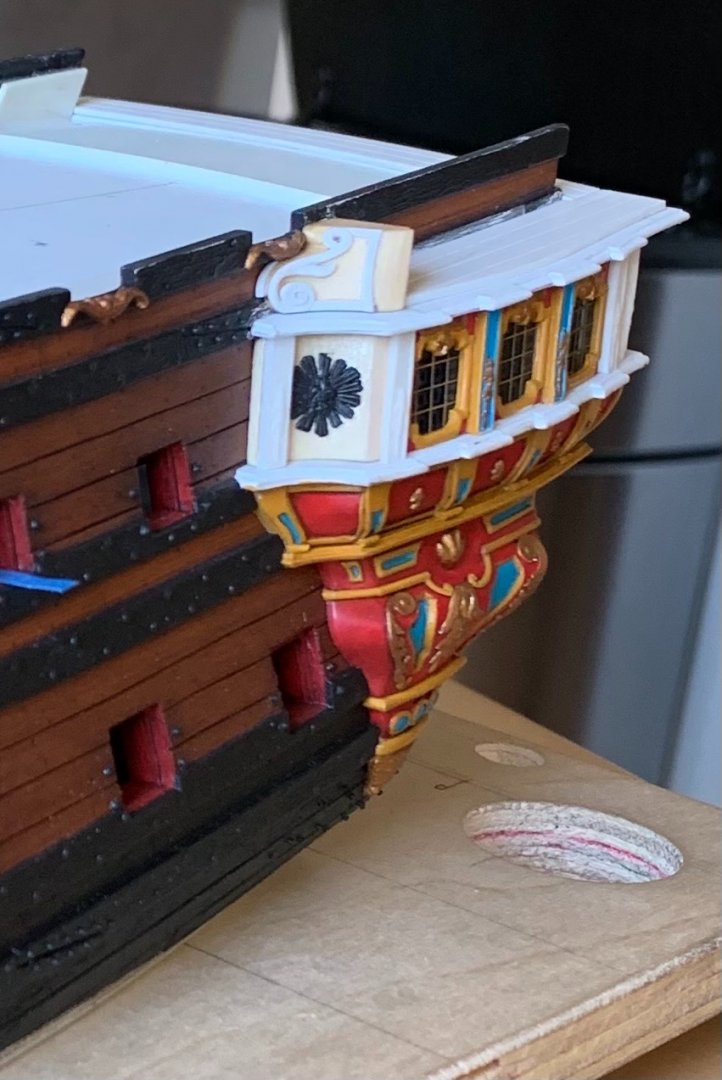
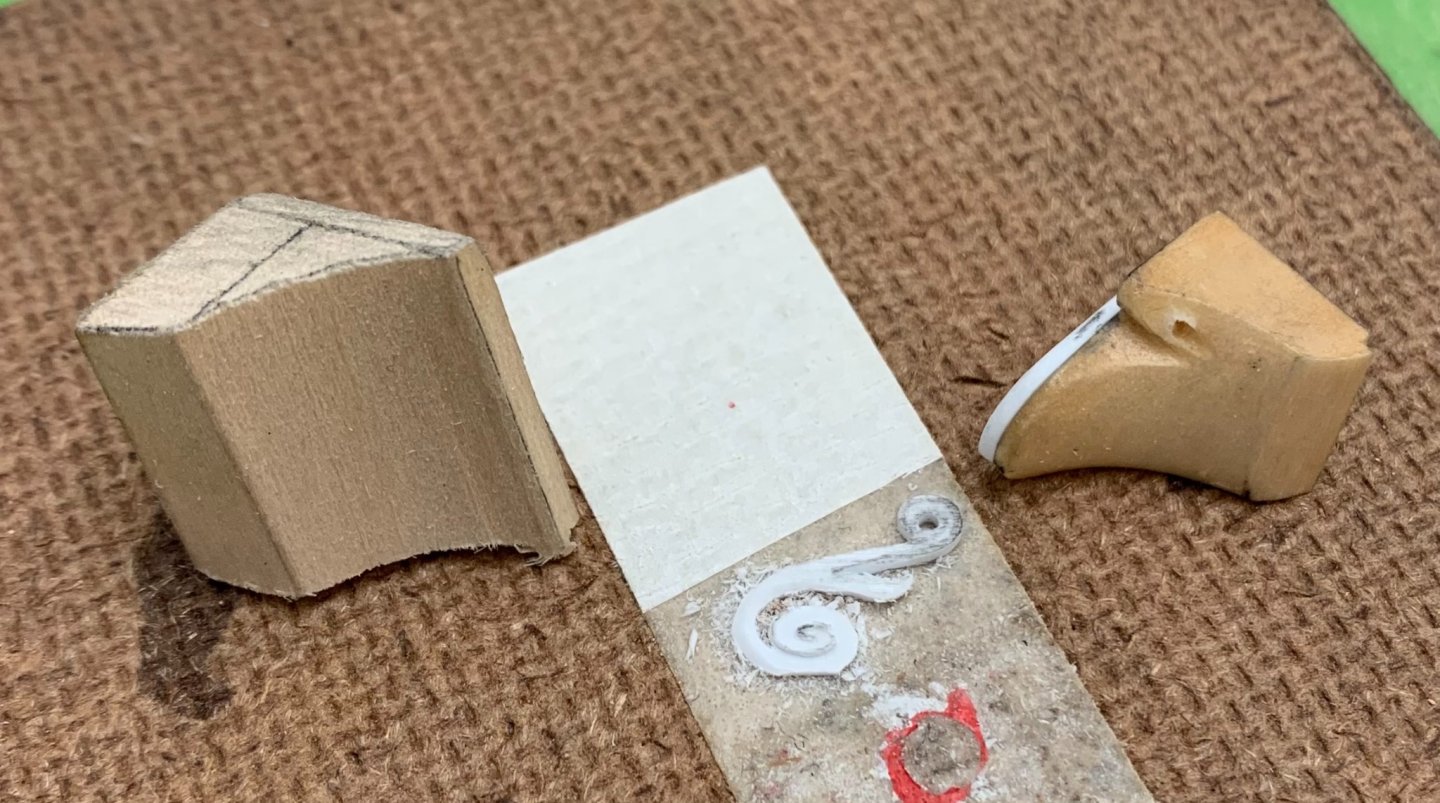
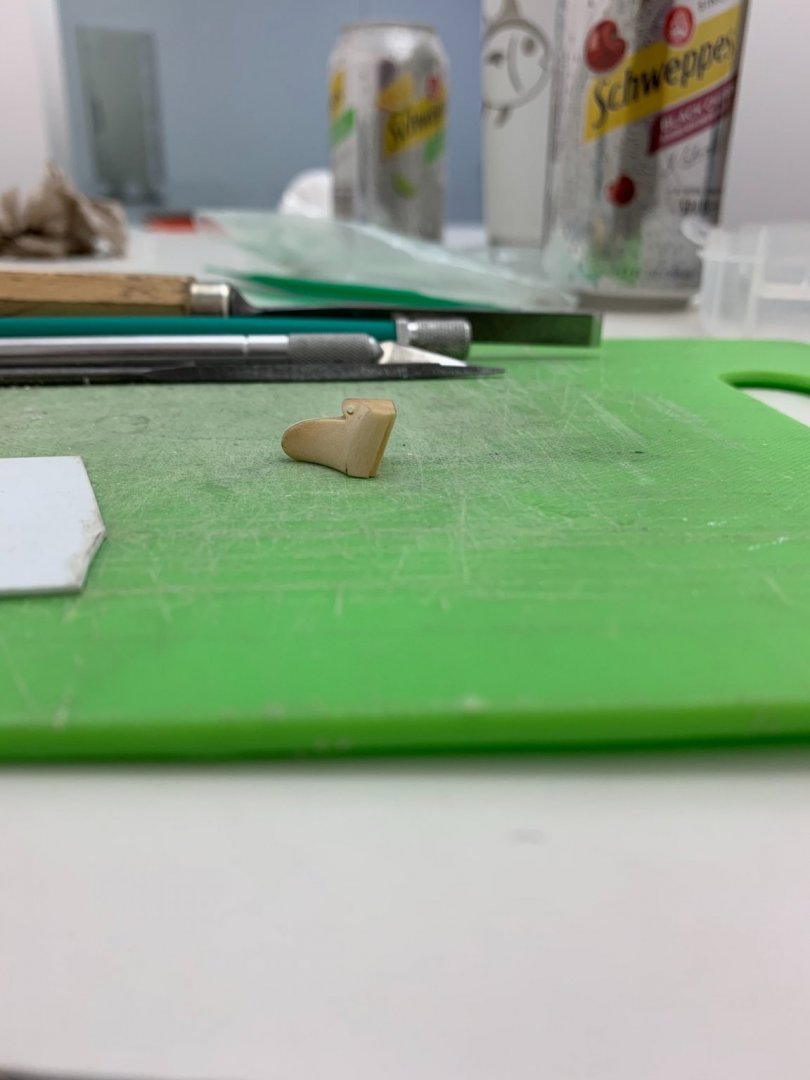
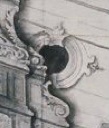
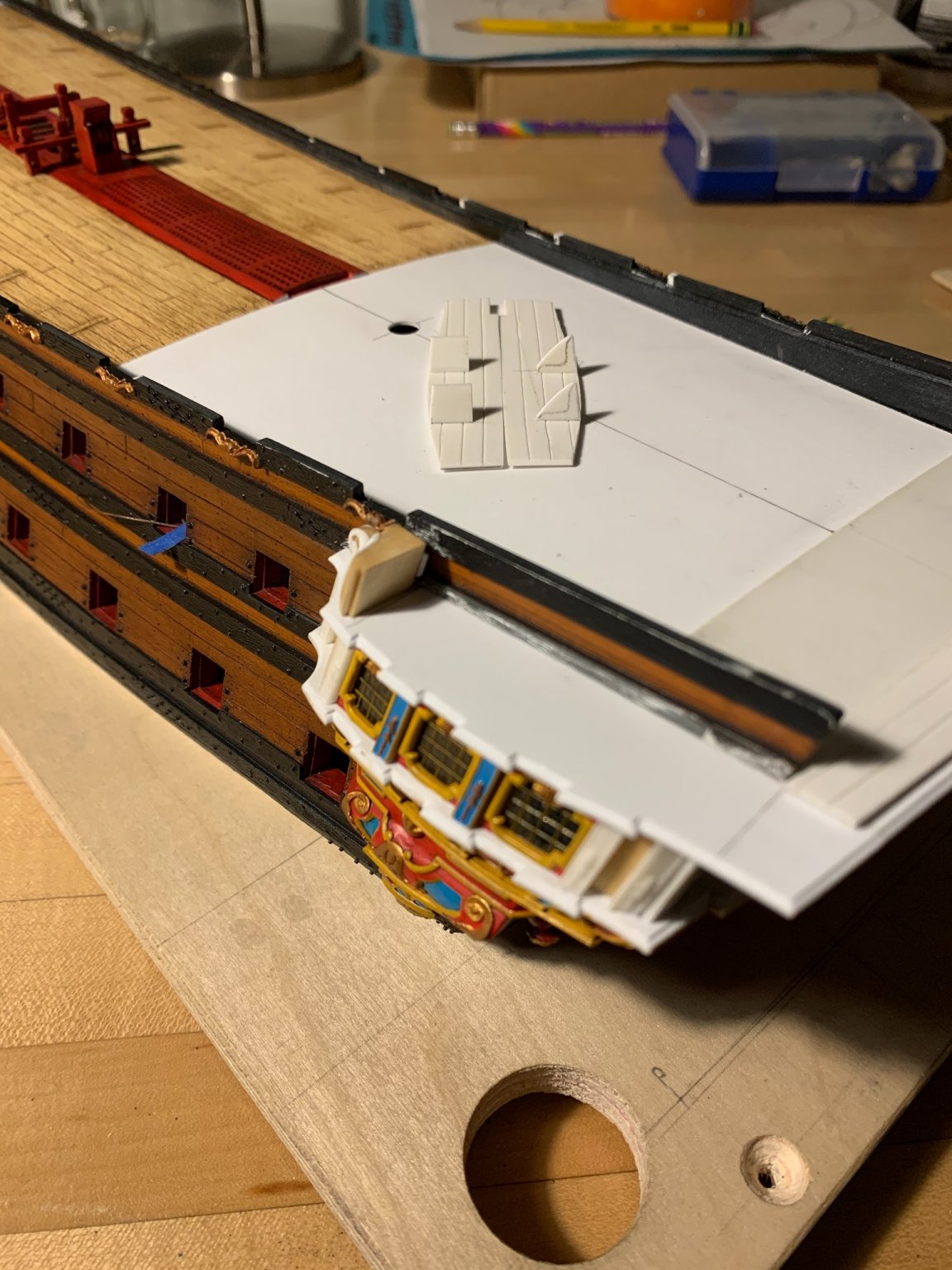
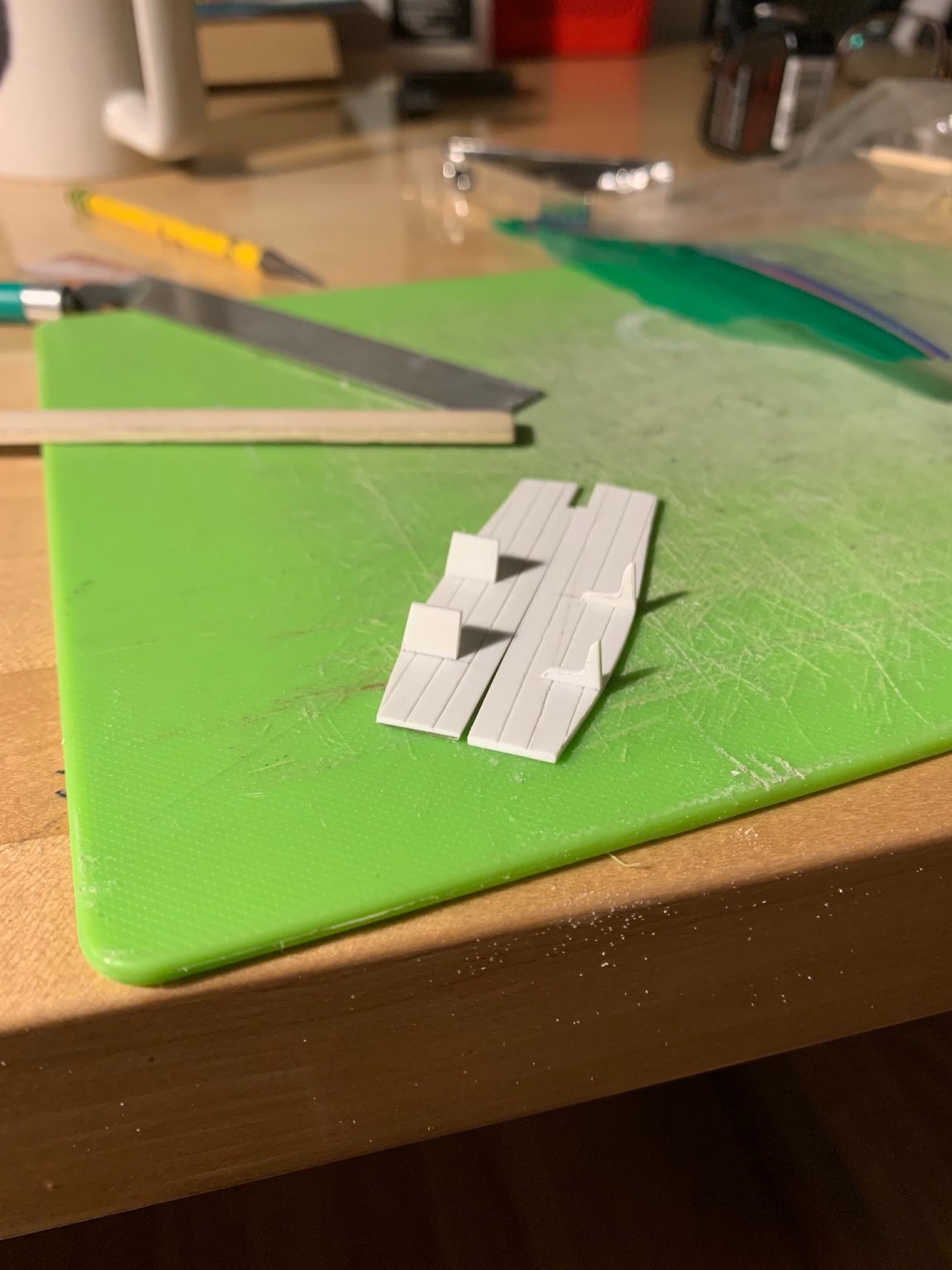
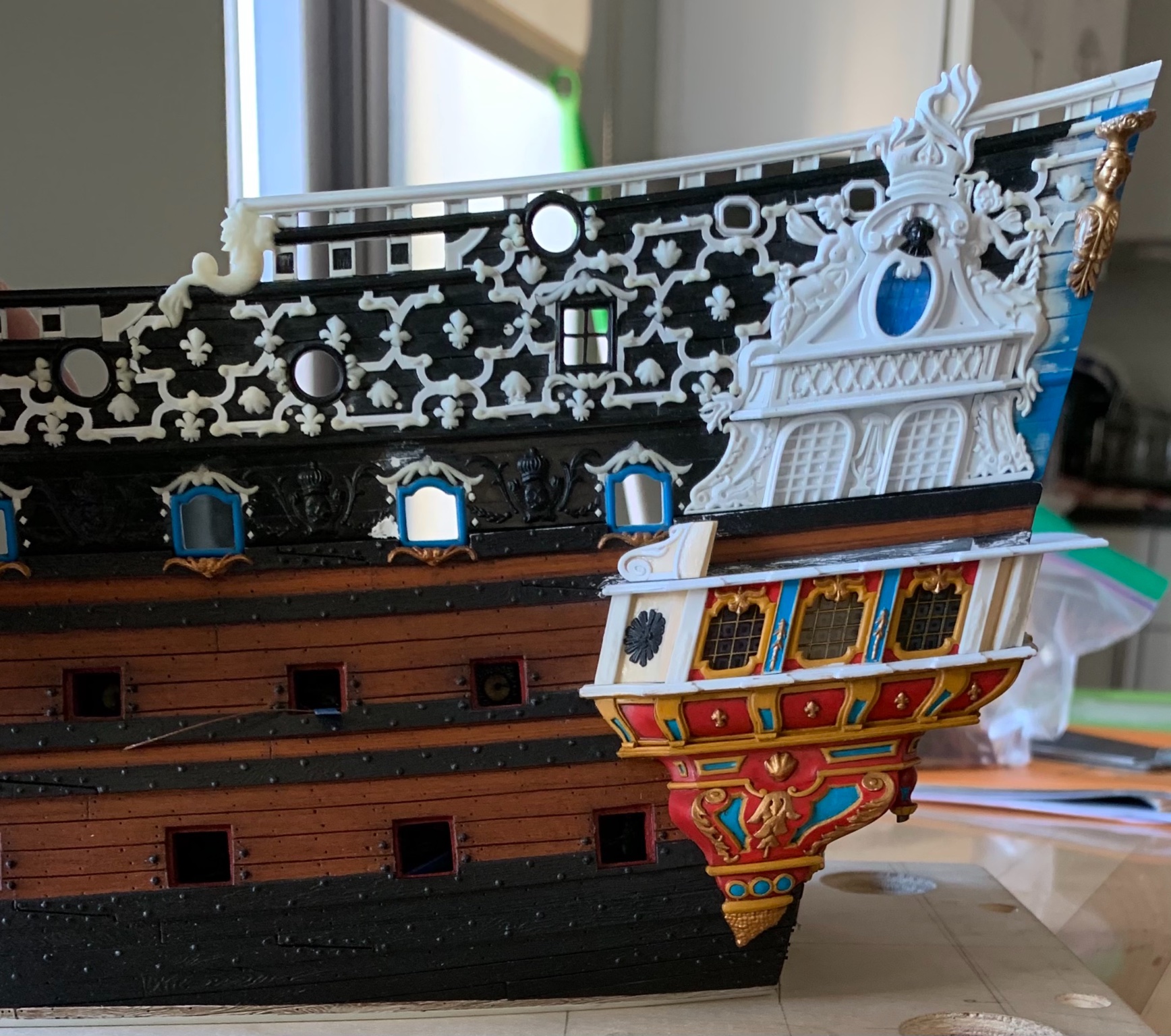
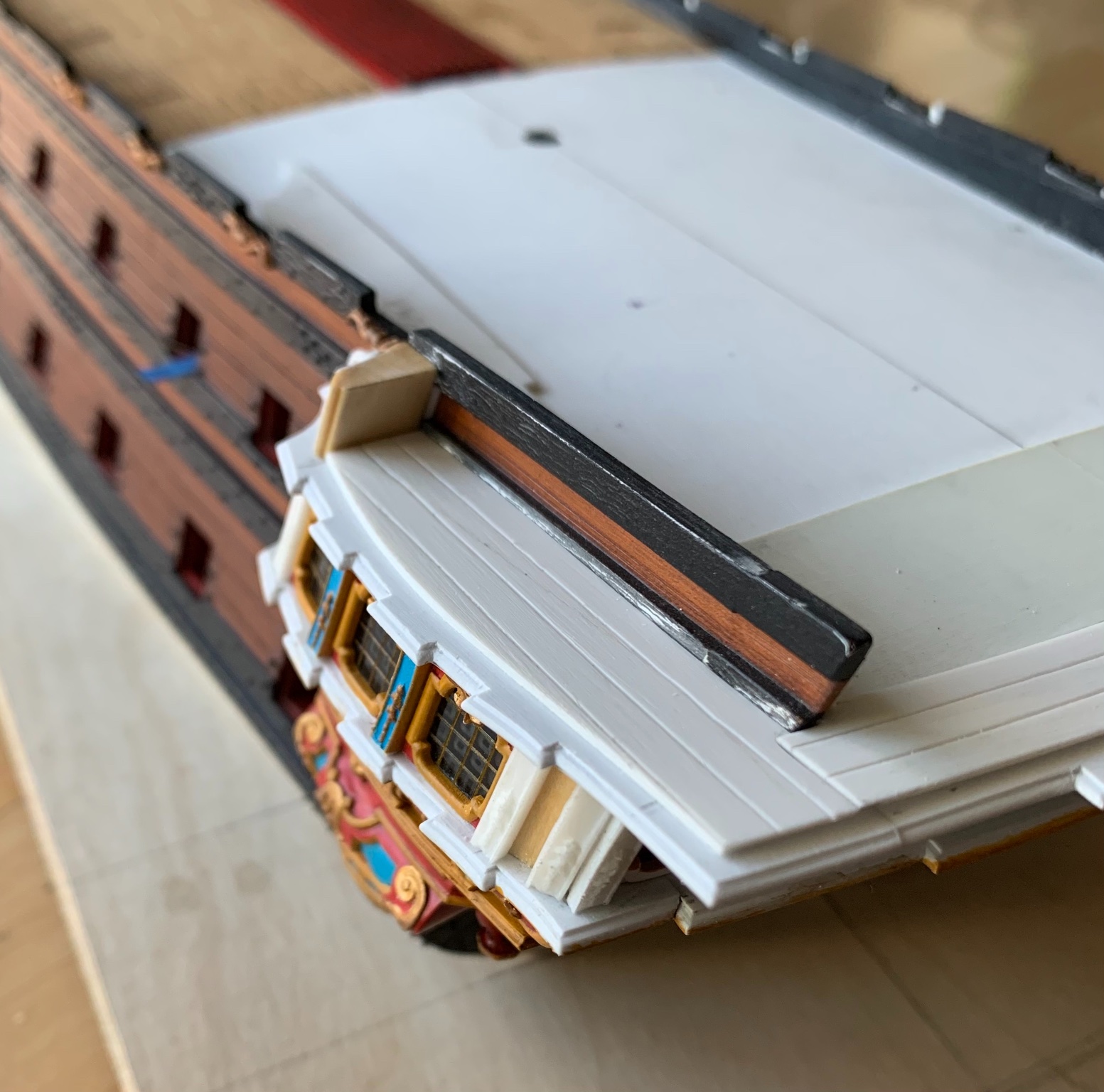
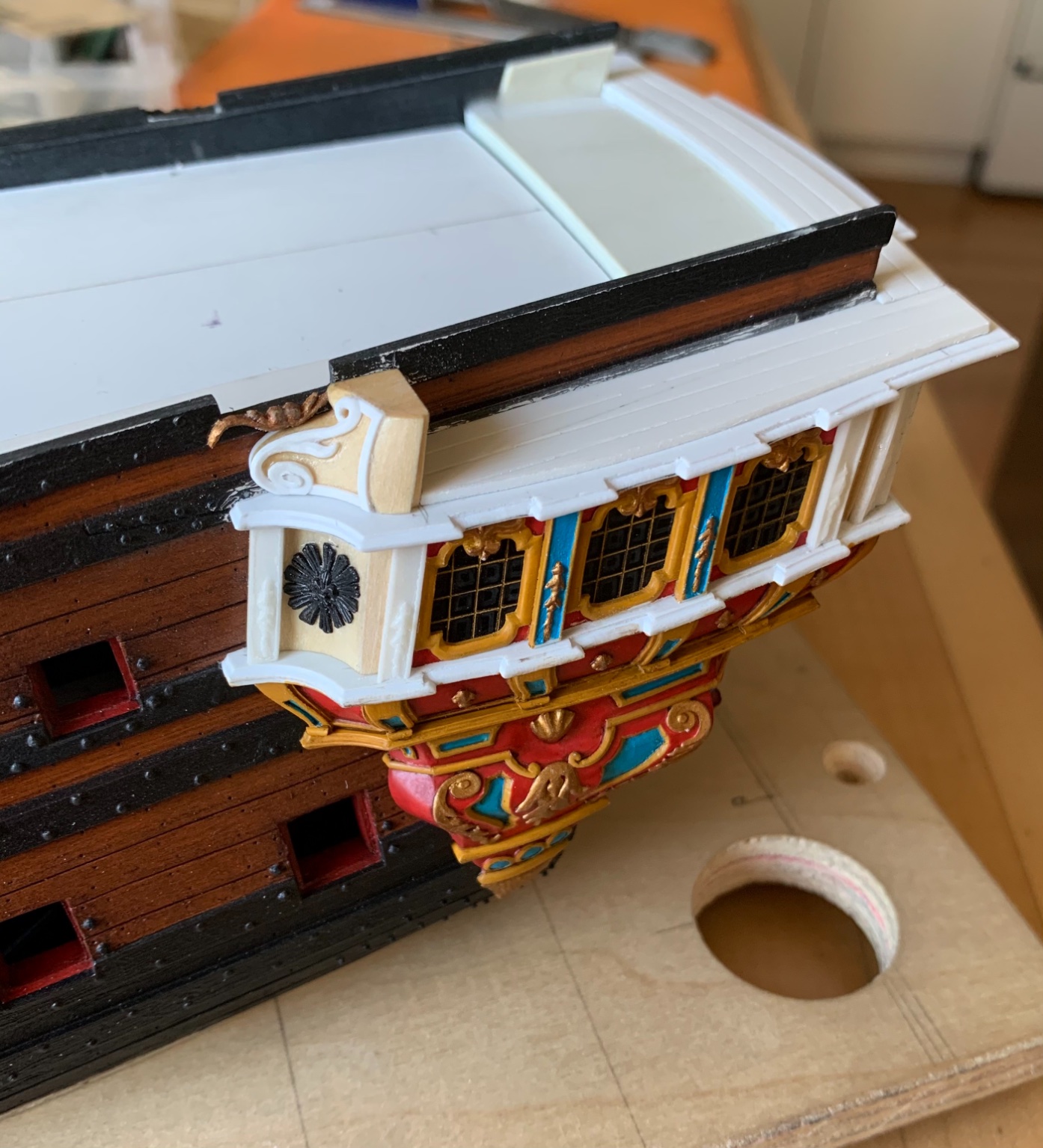
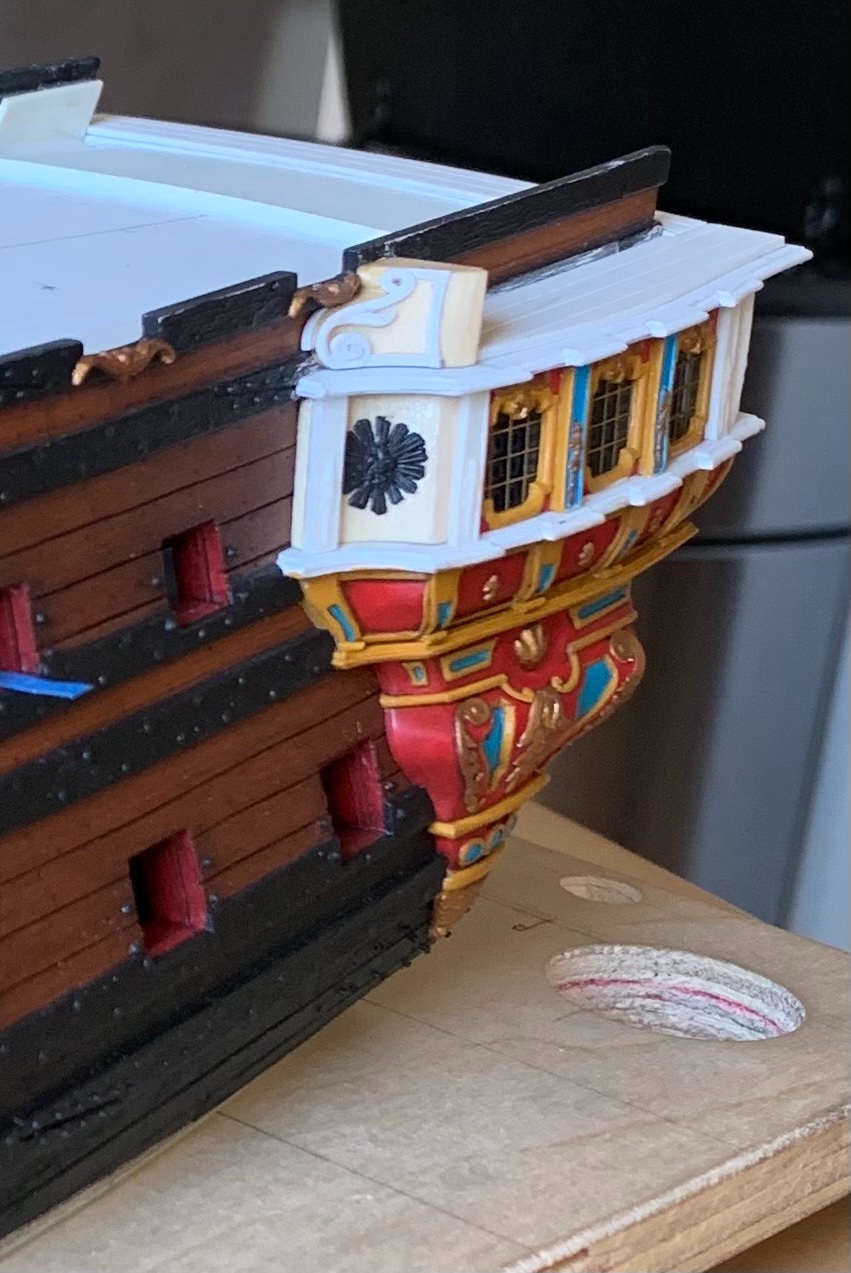
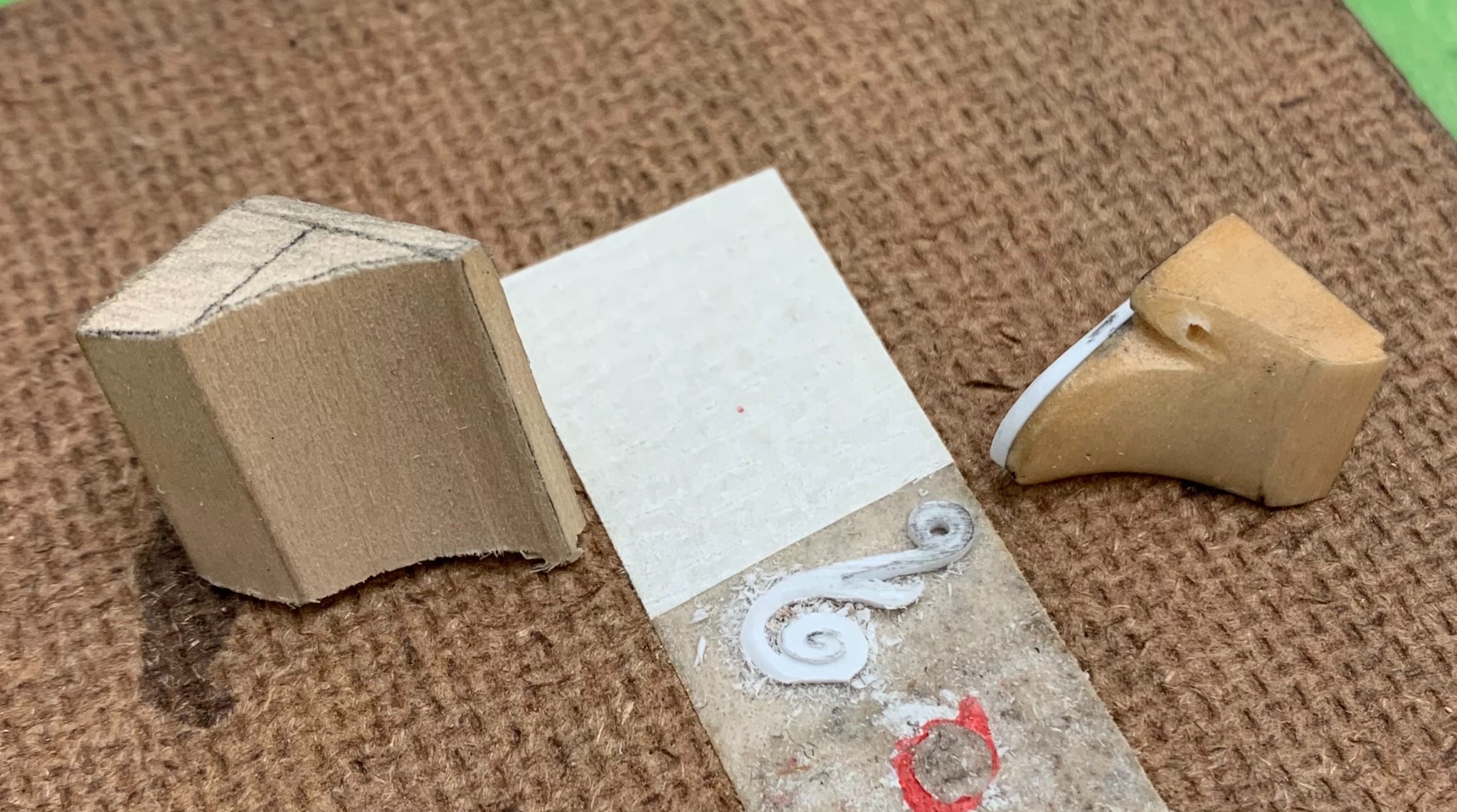
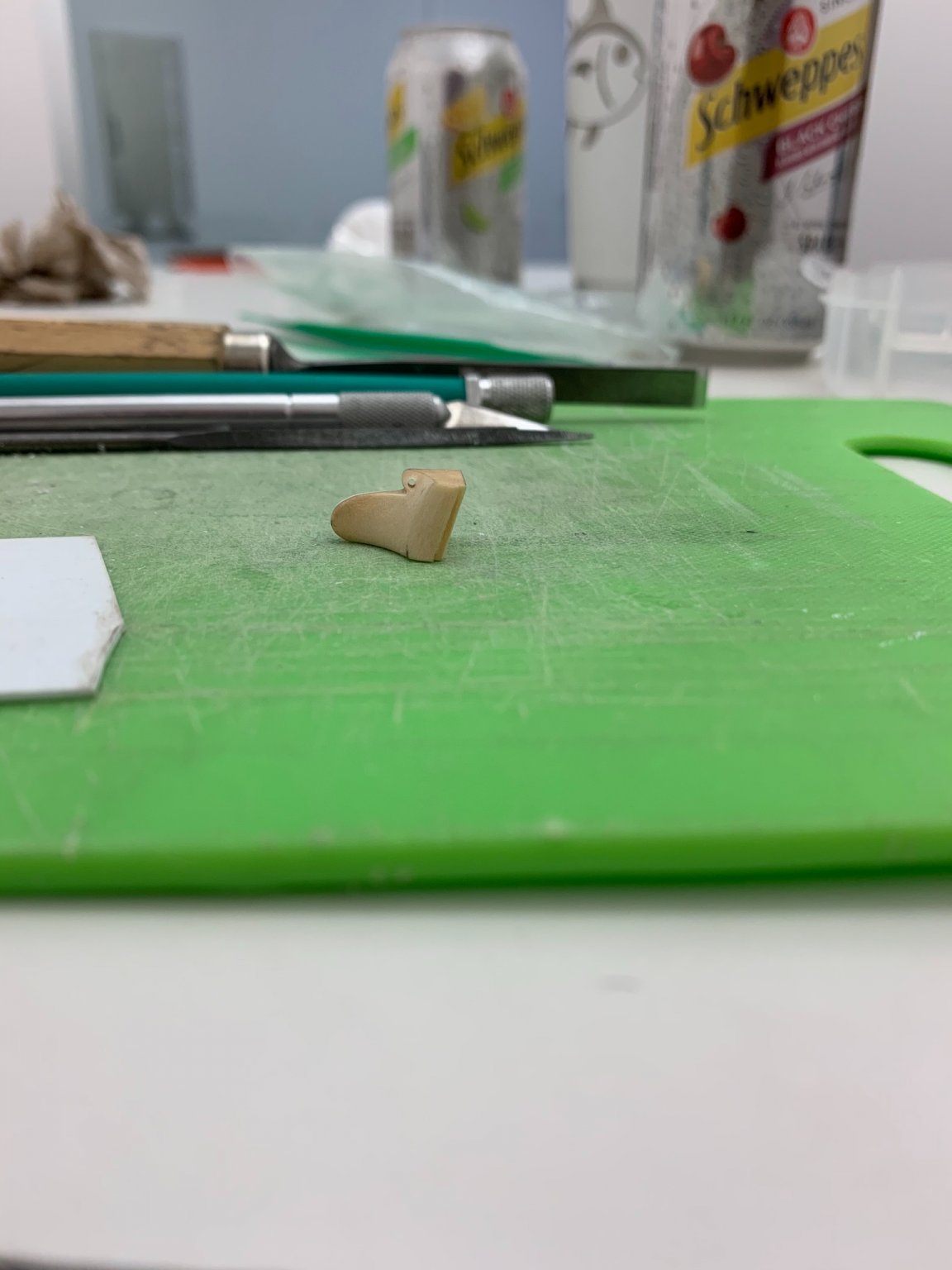
Nice to hear from you Vic! I’m glad you are still here 😀 I’ve been slowly working through the problems of this one, small, critical piece. I’ve reached the transition from the lower hull to the upper bulwarks. The railing of the open walk is that transition line, and the forward terminus of that railing has some tricky navigation to plot, in order to avoid interference with the aft-most main deck gun. Here is the problematic rendering by Berain: What I drew, in my revision drawing, doesn’t exactly match the reality of my build, and so, it became necessary to design on the fly. This turned out to be one of the more complicated parts to work out its shape; it has to extend far enough aft to clear the gunport, but still fay forward into the hull with something of a sweeping arc, so that the cap rail doesn’t return to the hull at an awkward right angle, while also not encroaching on the port opening. Here is the basic shape that I arrived at, complete with compound angles: The material for this part is the off-cut of the return just below. This was handy because the compound angle was already approximately sawn, and it only took a little sanding to fair the surfaces: It occurred to me that I would be better served to not try and let this part into the wales. Instead, I faired a styrene filler that keys-in between the wales. The awkward bit is the weird triangular flat that you see just aft of the forward rounding. I was highly skeptical about how this would resolve, on the model, but I knew that there had to be a smooth continuous surface, on which to mount the carving. In the end, the carving draws your eye, and the remainder of the lower port enhancement partially overshadows this weird triangle: Ultimately, I will probably blacken the interspace between the hull and the carving, in a little bit of theater carpentry, aka Trompe Loiel. A brief montage that shows how all the parts fit together: The gap between the block and the upper bulwarks will be filled by the caprail. Next, I will complete the starboard side block, and then I can begin designing the railing upright, itself. After I make the starboard block, though, It may make more sense to focus on editing the Four Seasons figures, so that I can mask their mounting places and bring the paint fully up to the gallery level. I am reminded of SJSoane, right now, and the order of operations problems that he is currently dealing with on his magnificent Bellona. I will say that I am really happy that I resisted the temptation to mount the beakhead bulkhead, way back when. If I had done so, I would have had tremendous difficulty painting as I go. Thanks for the likes, your comments and for stopping by!
- 2,699 replies
-
- 20
-
-
- heller
- soleil royal
- (and 9 more)
-
Kirill - when there is a lack of any clear evidence pointing you in the right direction, I like to think about what makes the most practical sense; given the rudder’s importance to the ship, it makes sense that it would be secured from both sides for added insurance. It is another curious thing that - despite the super detailed drawings of the Elder VDV - he never seemed to draw the rudder pendants. And the ships are always depicted in the heat of action, or the immediate aftermath when the pendants would surely have been in place. Shoutout to Arsenio Hall: things that make you go “HMMMM”!
- 228 replies
-
- 2
-
-
- spanish galleon
- lee
- (and 1 more)
-
For what it’s worth, though, the mizzen mast of square riggers, right up to the mid 18-hundreds, carried a lateen sail, and the mast was rigged for shrouds and ratlines. Mind you - I’m not disagreeing with you. It’s just a curious thing.
- 222 replies
-
- 1
-
-
- reale de france
- heller
- (and 1 more)
-
This model you are showing seems like a reasonable compromise.
- 222 replies
-
- 1
-
-
- reale de france
- heller
- (and 1 more)
-
I see your point Kirill, but I think the ability to get up the mast would still be important in certain sail handling situations, or Jerry-rig repairs.
- 222 replies
-
- 1
-
-
- reale de france
- heller
- (and 1 more)
-
One point of curiosity about this model, and this type of ship, in general; every Reale model I’ve looked at has shrouds, but no ratlines. Even the prototype in the Musee de la Marine is without ratlines. Why is that?
- 222 replies
-
- 1
-
-
- reale de france
- heller
- (and 1 more)
-
Ah, okay - I see now. Thank you.
Our Emblem ®
