

SJSoane
-
Posts
1,655 -
Joined
-
Last visited
Content Type
Profiles
Forums
Gallery
Events
Everything posted by SJSoane
-
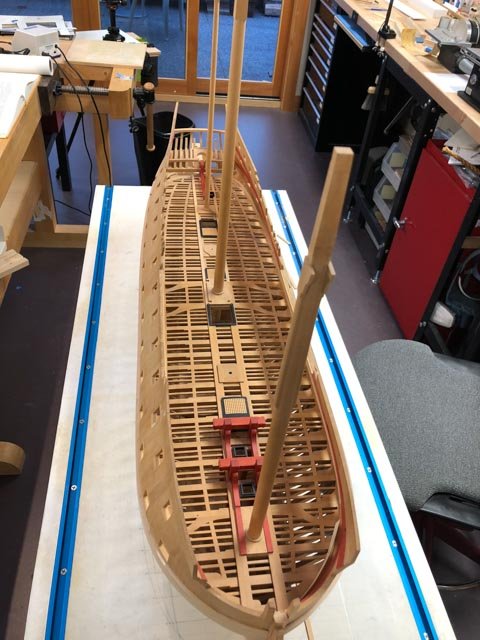
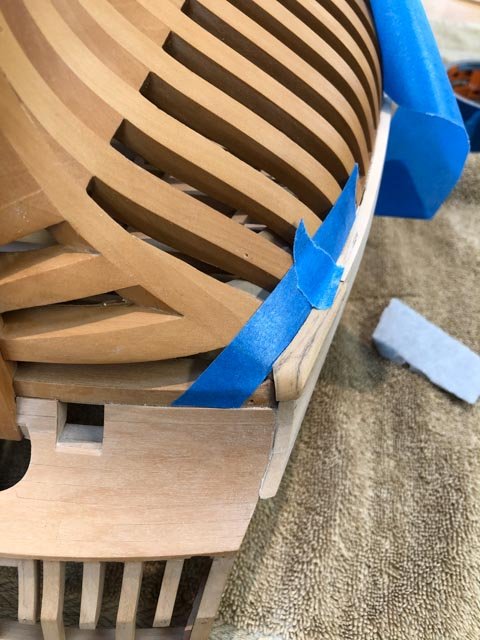
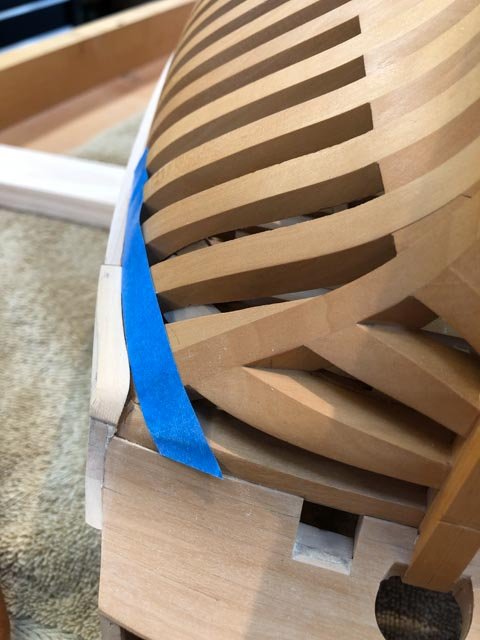
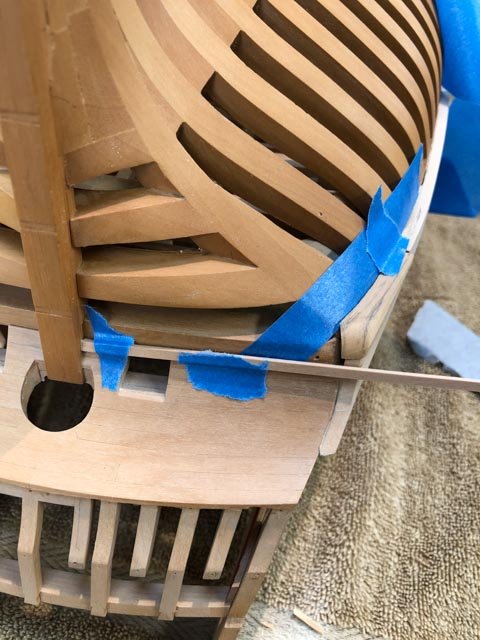
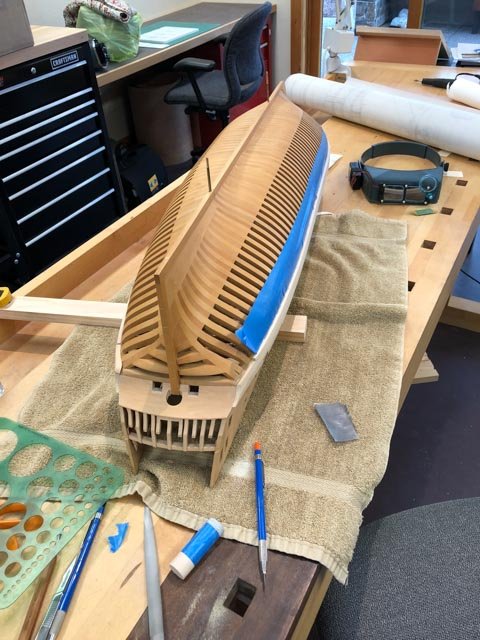
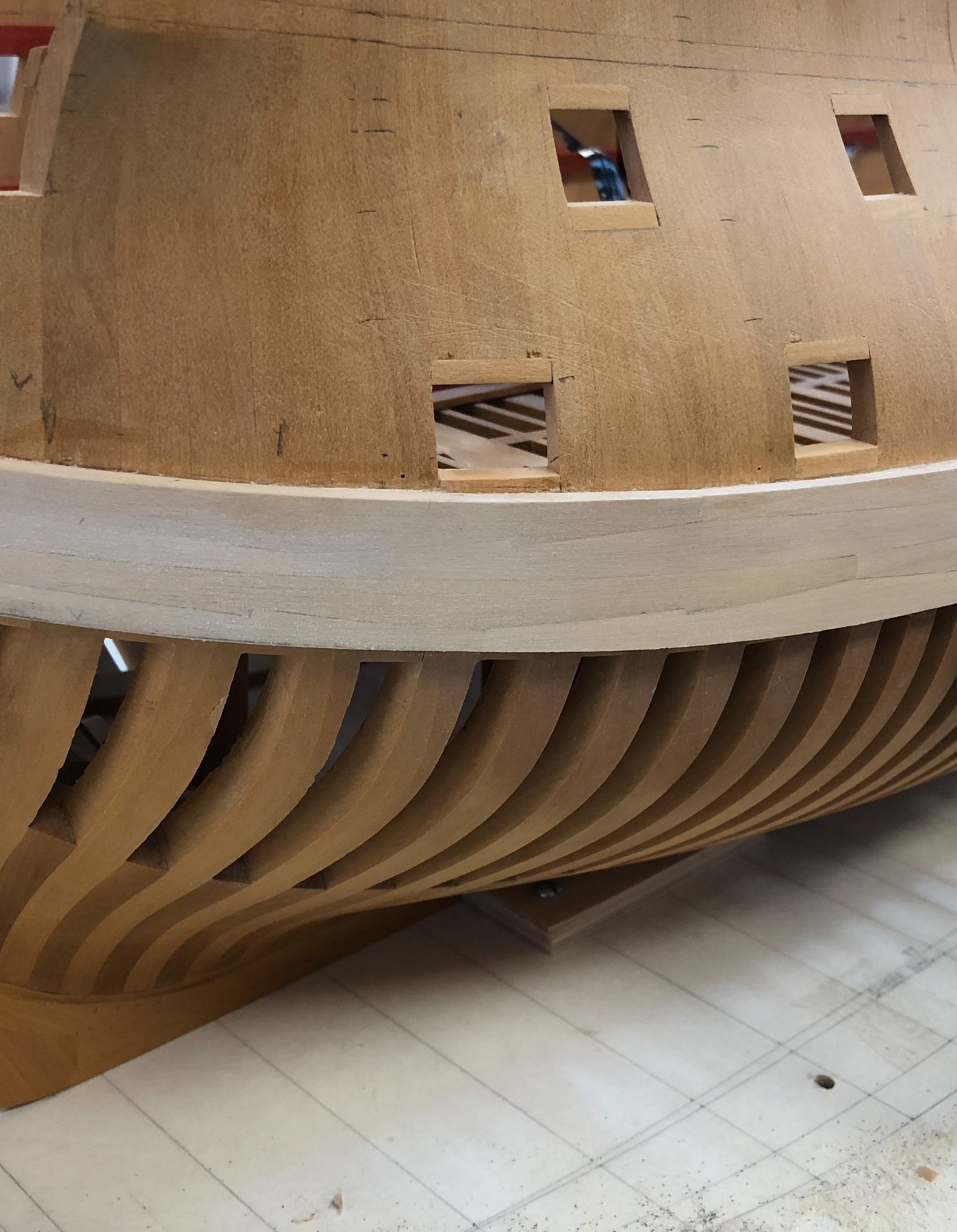
 Hi Greg, thanks, that was exceptionally informative. I also looked at the previous video starting the cannon, at https://www.youtube.com/watch?v=ZuxYcbxPuiI&t=2s I hope to get to cannon again soon, after finishing up a few more hull parts. The last photos show more of the center decking and fixtures installed, and the masts in again to ensure alignment of the mizzen partners. Nice to have those hatches and partners finally glued down after all these years. The photos with blue tape show the upside down carved pieces, the last planks of the wales. These show two versions of how the wale might curve up to meet the hull at this very awkward and difficult to visualize corner. The one with the tape on the left has the lower edge of the wale smoothly curving into the hull, leaving an awkwardly sharp triangular corner to be filled by planking. The one with the tape on the right has the lower edge of the wale hitting the hull a little more perpendicularly, which I think would be a more realistic landing for housing the planking at this piont. I can't find anything contrary to this, and it seems a more logical way to house the end of the triangular plank in this area. Mark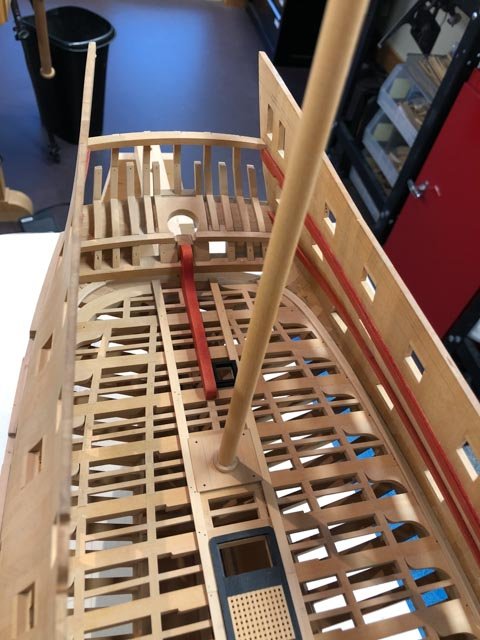
-
Thanks, everyone, perhaps I will try casting one more time before turning to turning... Allen, can you tell me a little more about your one piece casting method? Specifically: 1. what rubber mould brand did you use? I used Micro-Mark 1-to-1/ Rapid RTV Silicone, and it was surprisingly fragile. You can see how it broke out in the mould I showed earlier. Did you find something more durable? 2. Did you provide any vents for gasses, or is it not needed with such a simple form? 3. When you pour the metal, do you leave the rubber mould in its forming box so it doesn't distort? 4. Do you use the Micro Mark lead free pewter? Thanks in advance for your help! Mark
-
Hi Michael, I was just looking at your trains on your thread! Very impressive. I will look into Cerrobend. After putting the casting efforts away for a couple of years, I am starting to think that the metal I used was not the best. Mark
-
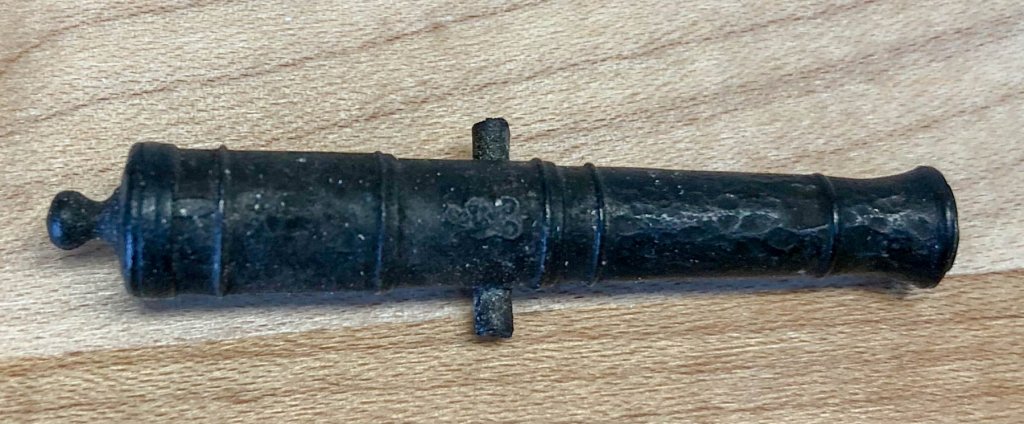
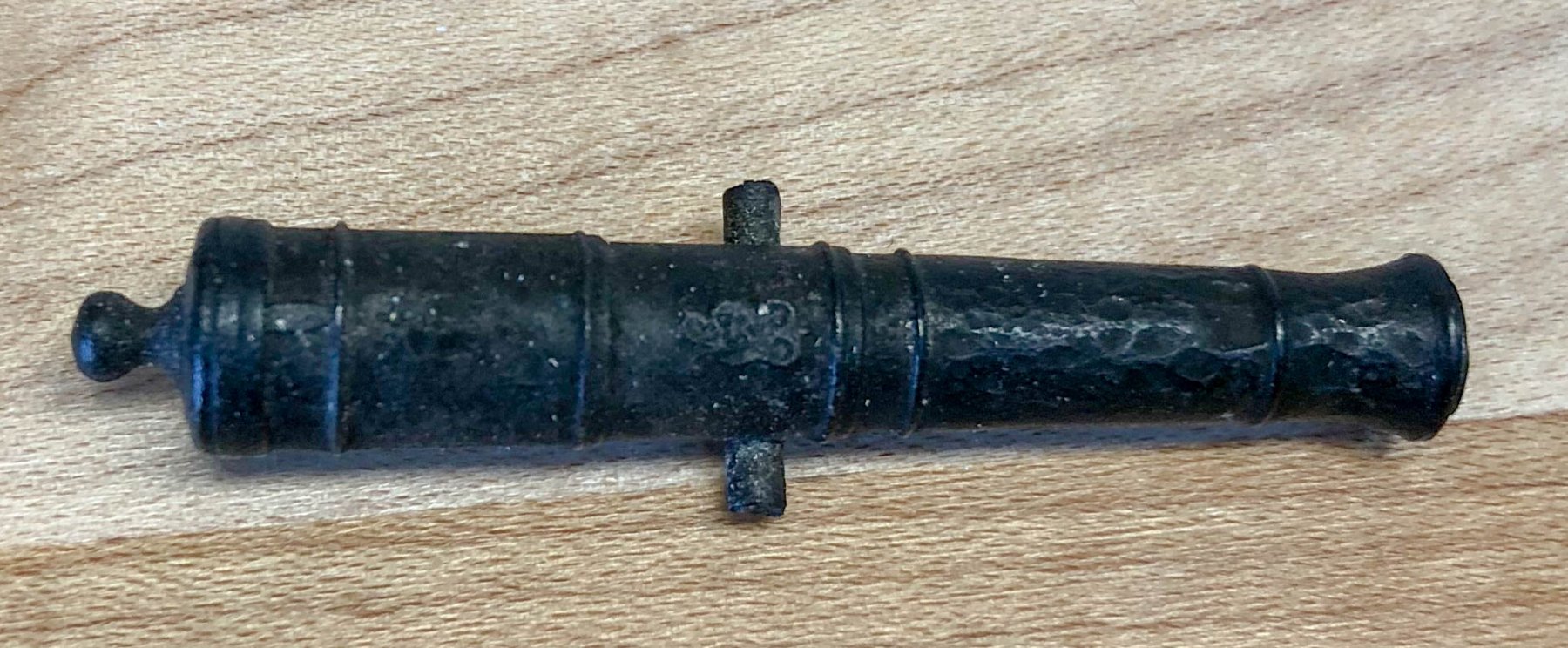
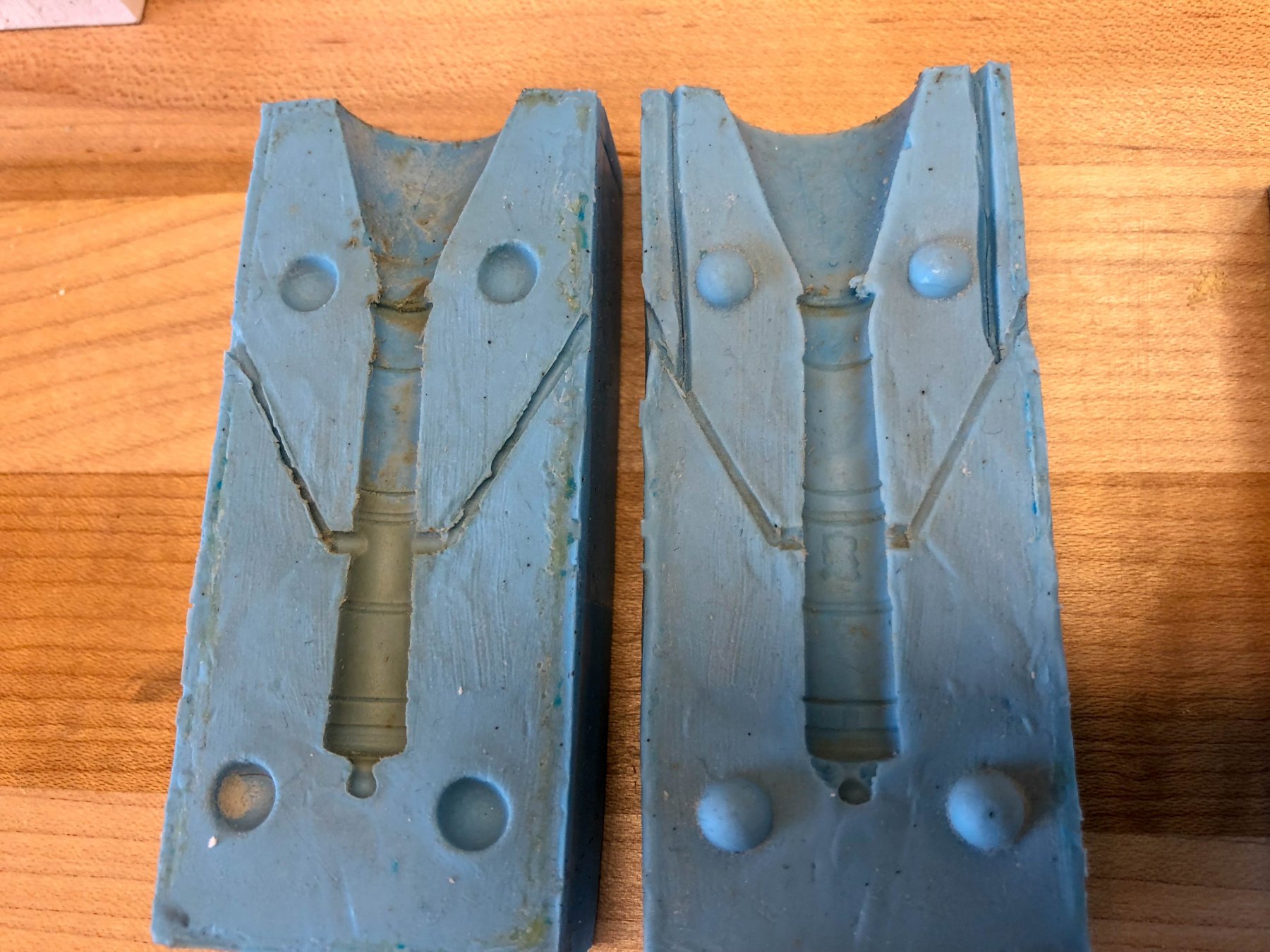
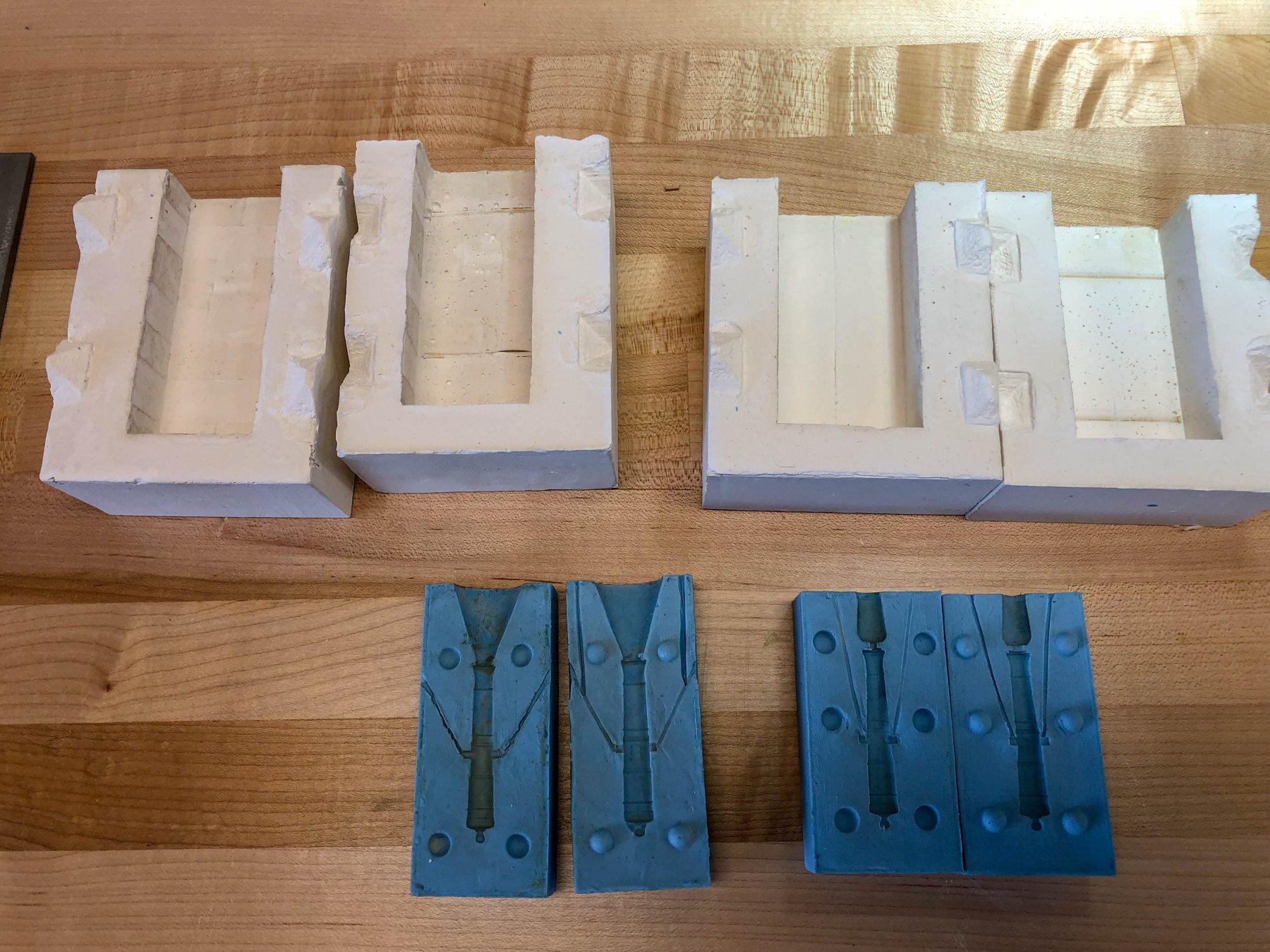
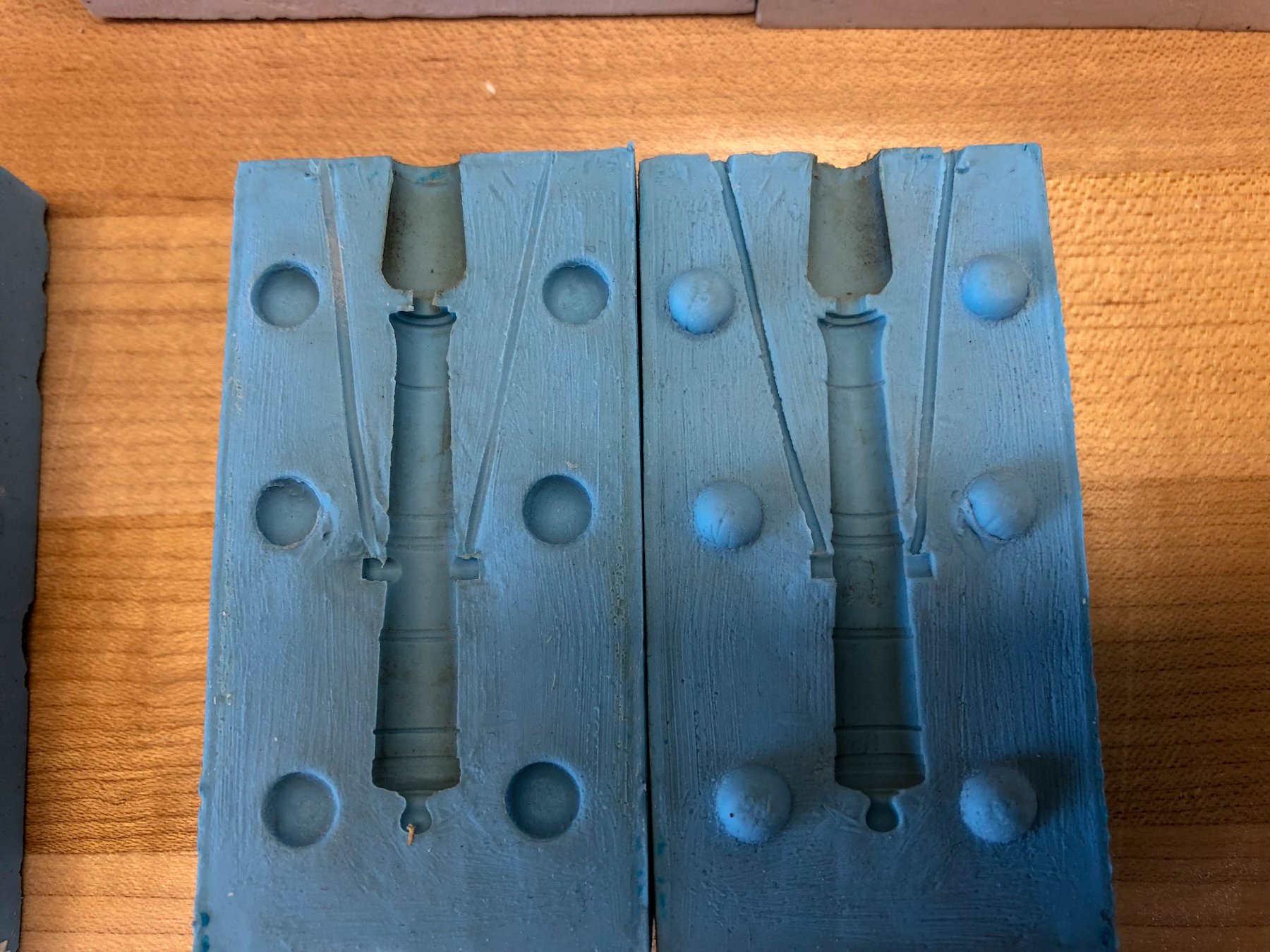
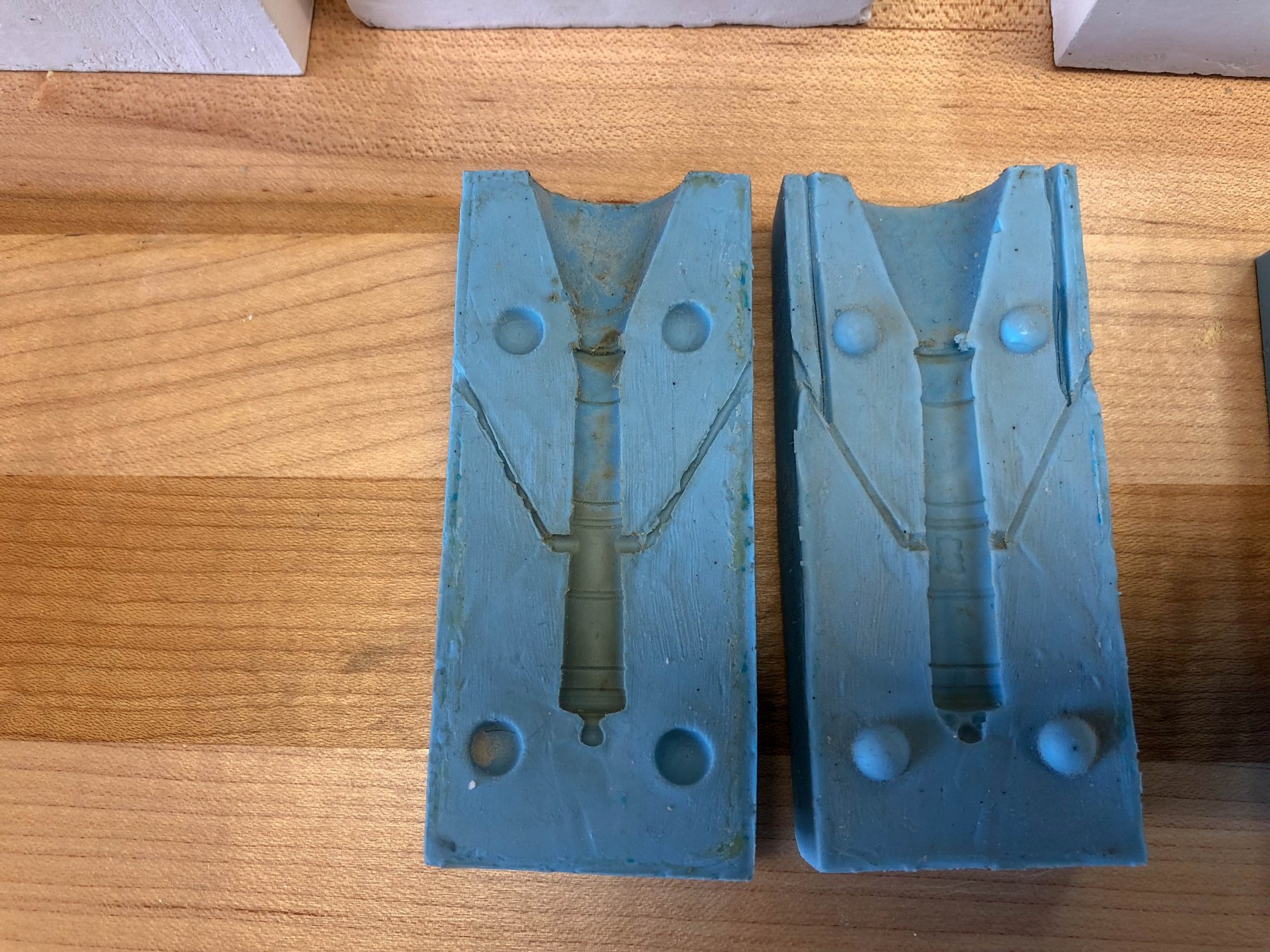
Interesting that Michael and druxey at almost the same time wondered afresh about casting as the better way to go. In the spirit of full disclosure, and at the risk of high embarrassment showing my modeling failures, here are higher resolution photos of my casting failures, so you can see all its glorious detail. I tried two moulds, the first has a funnel shaped pouring spout, as in David Antscherl's Fully Framed Model casting section. The second time, I tried a waisted-in pouring funnel like shown in an 18th century drawing on casting a barrel. I think this latter idea was a mistake, because you can see the metal was cooling before it fully filled the mould, as seen in the blackened cast barrel. Notice also the discolored mould (with the funnel top). I used pewter purchased at a jewelry supply in Denver, and it seemed to have a lot of dross in it. It was not kind to the mould. I put these away well over 2 years ago, and I see that the rubber moulds have already begun to break down in a few places (like at the button at the rear of the barrel). If I chose to cast again, I think I would return to the Antscherl shaped funnel, increase the sizes of the vents, and try even more carefully to get a clean cut of the clay up to the master before pouring the first half of the rubber mould. I think I would also try the pewter from Micro-Mark, which seems to be tailored to model casting. Any thoughts? Mark
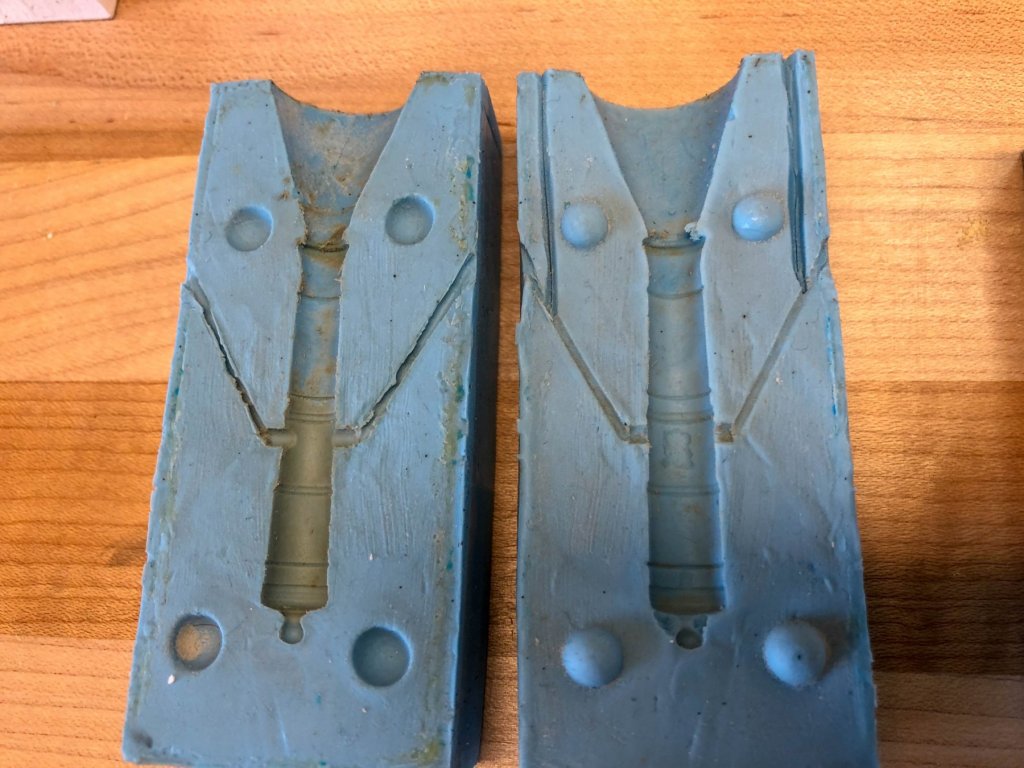
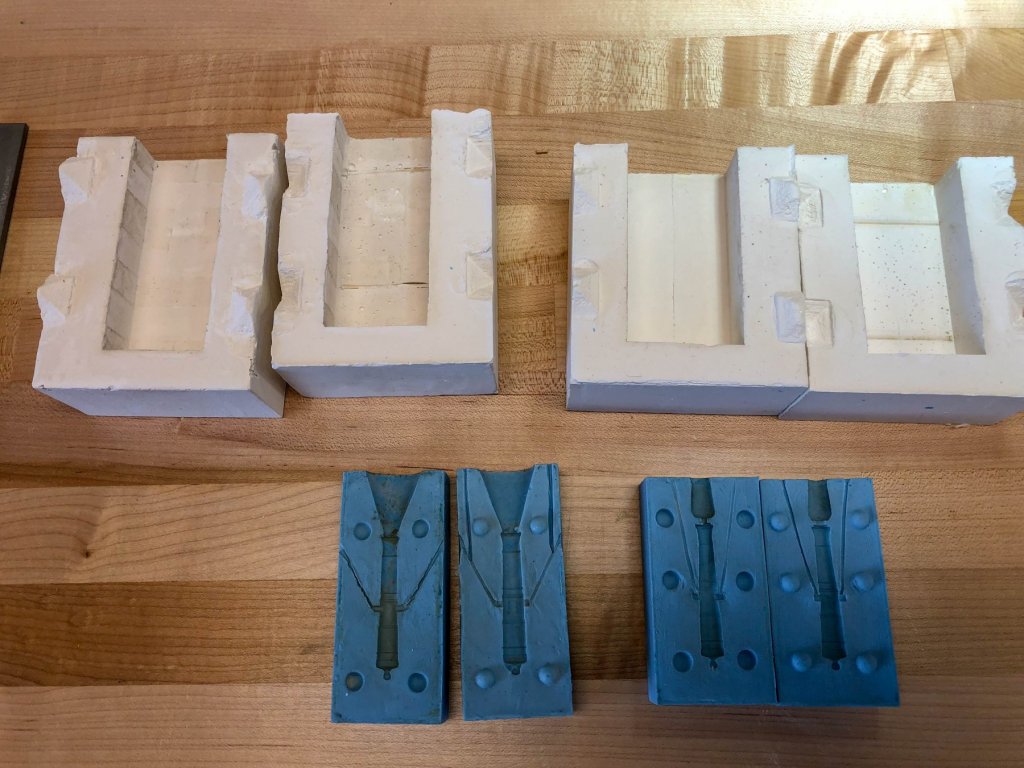
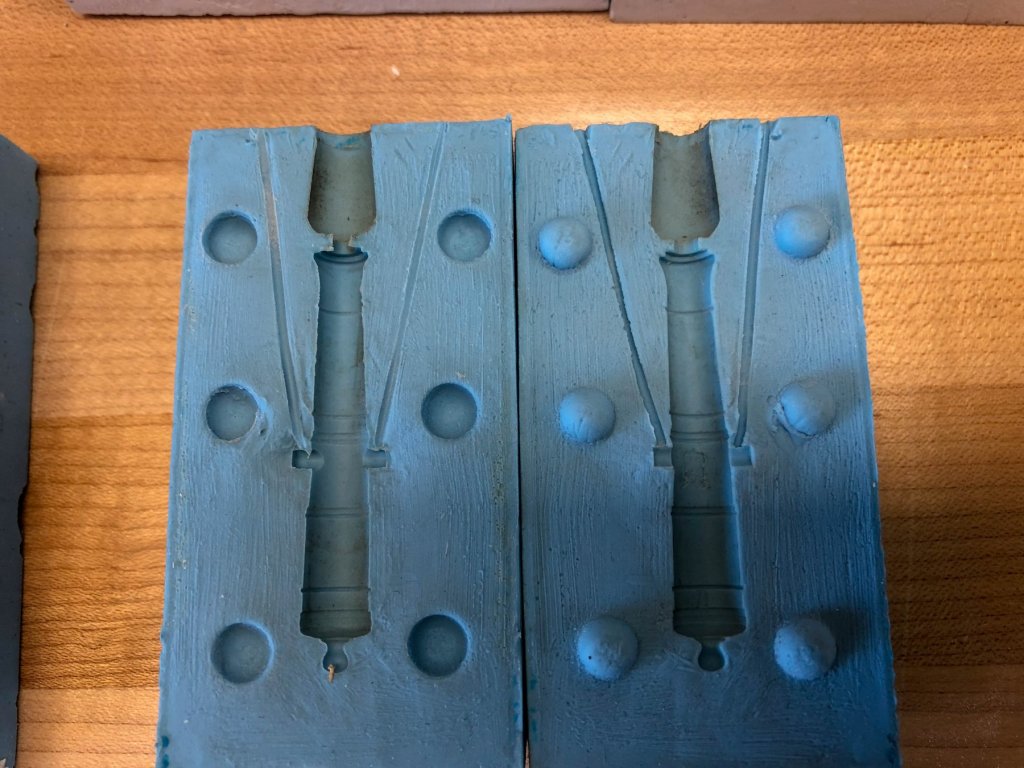
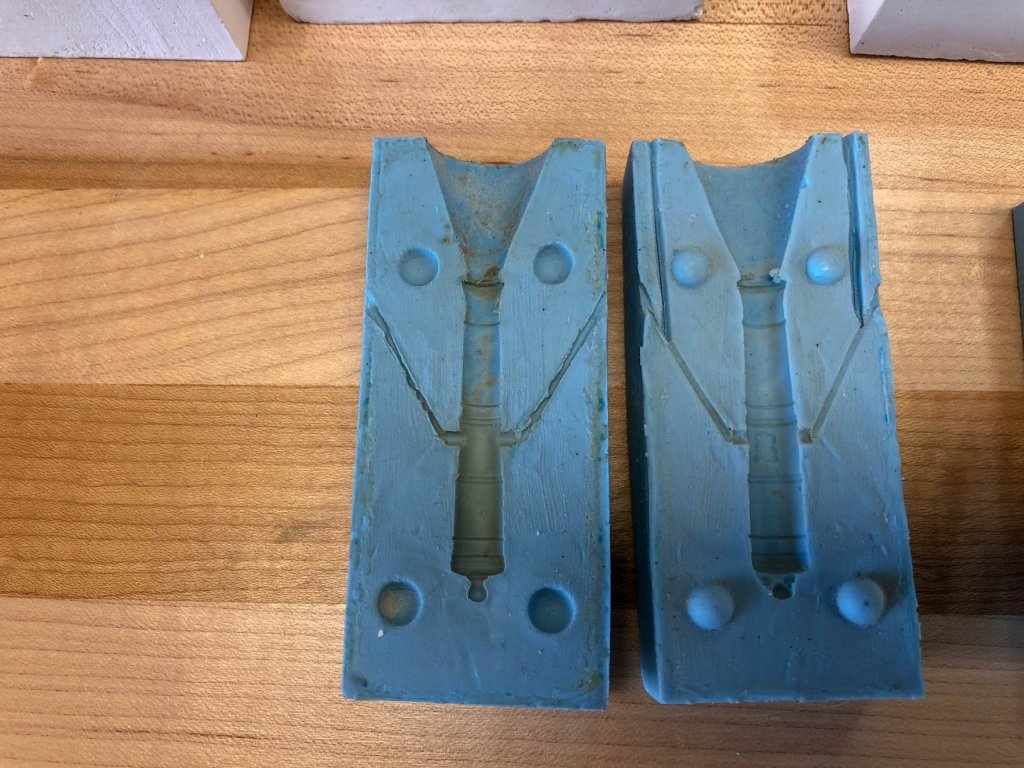
-
Hi Ed, I read your Victory post on making the barrels. Very informative. How did you cut the cutters for the muzzle and pommel? I have blanks for the Sherline lathe, but I have never tried shaping one. Do I have to heat and quench? Your Victory project is very impressive indeed, by the way. I am humbled by the number of ships you have built, all at the very highest standards. Mark
-
druxey, those are gorgeous cannon! what is the finish, might I ask? I may go back to casting if my duplicating efforts do not work out. But my first efforts at casting left an annoying seam down the length, and also an incomplete pour at the top. The incomplete pour might be solved by building a larger top funnel giving greater weight to the pour. But as best as I tried to smooth the clay up to the master, some of the rubber mould material still found enough imperfections at the junction of the clay and the master to produce a seam in the final product. Still more skills for me to learn with casting!
-
Thanks, Hubac's Historian, those are very kind words. Interesting to hear about the quality of the Royal James. It is curiously reassuring to see that the 18th century model masters were not perfect, because I keep trying to reach what I thought was their level of perfection. In that regard, I really enjoyed reading Rob Napier's Legacy of a Shop Model about the HMS Princess Royal model of 1773. He discovered all sorts of mistakes and re-makes in that model, which did let me drop my expectations a little. If those model makers worked at my speed, they would have completed one model in their lifetimes. Probably not a good business plan! Mark
-
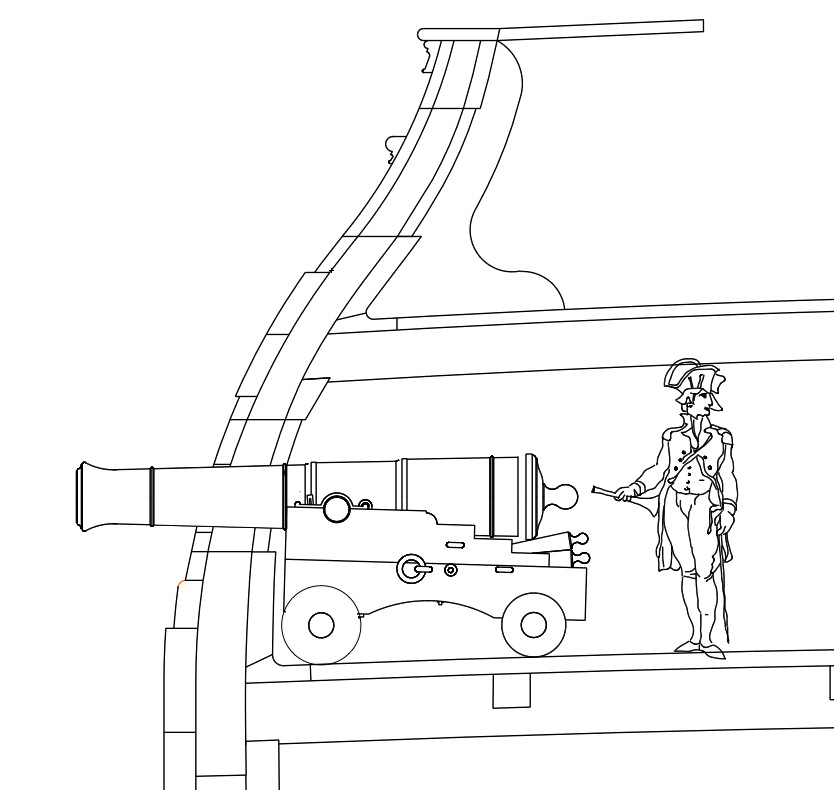
Hi Gaetan, so you use different cutters for different parts of the barrel. Are you using a duplicator, or cutting and then regularly checking length and diameter against a template? Mark, here is the corrected section drawing. Does that look more accurate? I also adjusted the black strake in this drawing, to reflect the conversation earlier in this thread.
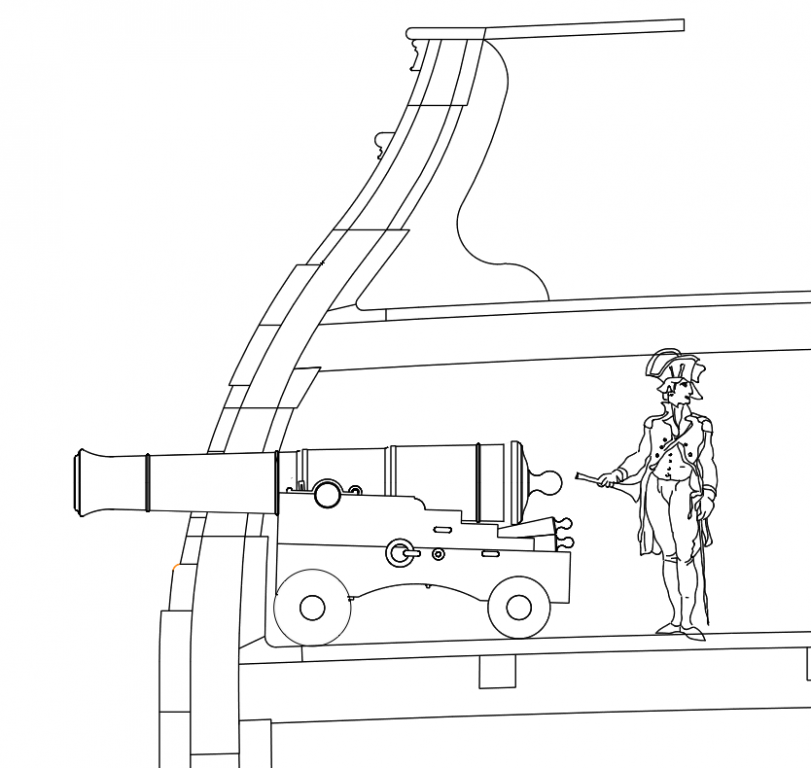
-
Thanks, Greg for the affirmation of my decision to install planking below the guns. It seems really obvious at this point, I don't know why I was resisting the idea for so long. And Michael and Jack, I hope an endoscope never finds its way inside the Bellona; too many unsightly details to reveal to the world! The photos I keep for when the deck is no longer visible may have a little photoshopping to do... Mark, thank you for catching that mistake. It is my drawing, and I am not sure where I picked up the curved spirketting; maybe just in my head. All of my sources show it as you describe. I will correct it. No wood cut yet. Thanks, Alex, for more detail on your duplicator. I looked again at the 32# gun I had turned as the master for my previous casting efforts. It looks way better than the casting efforts, so I am resolved to see if I can turn these in multiples with a duplicator as you have shown. My biggest challenge turning this master is that when I used a sharp pointed cutter to get into the sides of the mouldings, it left a ragged finish on the longer smooth surfaces. I had to clean up with a file. The secret looks to be a thin cutter with a small flat face. With the last but one plank installed and waiting to dry, I turned my attention to the next steps on the gundeck. I am installing the first strakes on either side of the fittings down the center, before tackling the planking under the guns.
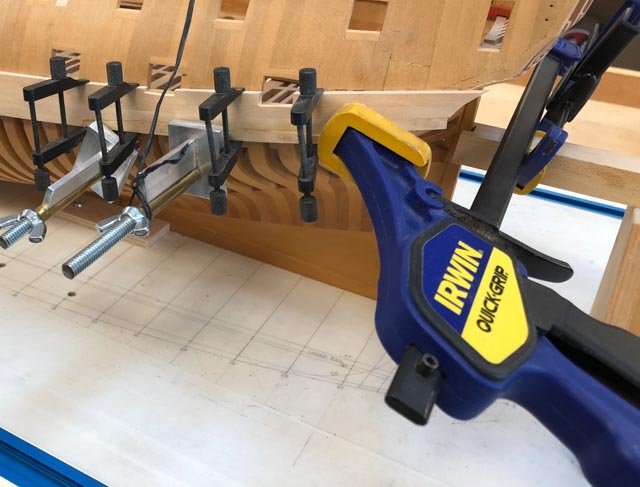
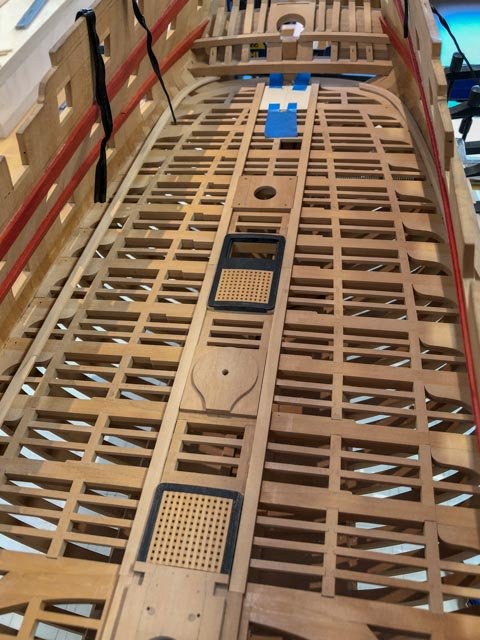
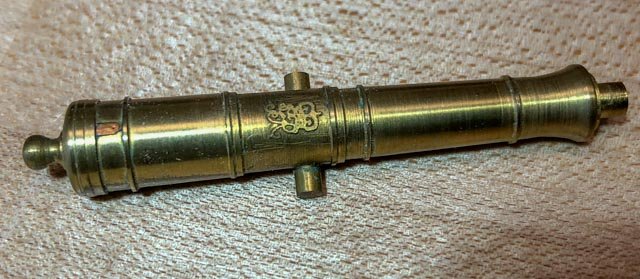
-
Thanks Alex, I will try grinding down a cutting tool like yours, and have a go with the duplicator. I may have additional questions once I get started! druxey, you really got me thinking about the deck. In the middle of the night, I suddenly wondered why many years ago I had rejected the idea of decking under the guns. I think at the time I wanted to show off all of the deck framing. But once I realized this will all be covered up with subsequent decks, I thought why not just build 5 strakes of decking under the guns and be done with it. I will have photos of the original framing to remind me what it looked like, and a solid deck is going to be a much better anchoring point for the guns. I do worry about them shifting around over the years to come, when it will be exceedingly difficult to get in and re-fix one in place if it comes adrift. The first photo shows what it might look like, with the correct thickness of planks. The second photo shows that I have one plank left in the wales, before the carved one at the very aft end. This one also has a nasty bend, and I have had to fay a spacer on the end as I did on the starboard side. Should be done tomorrow!
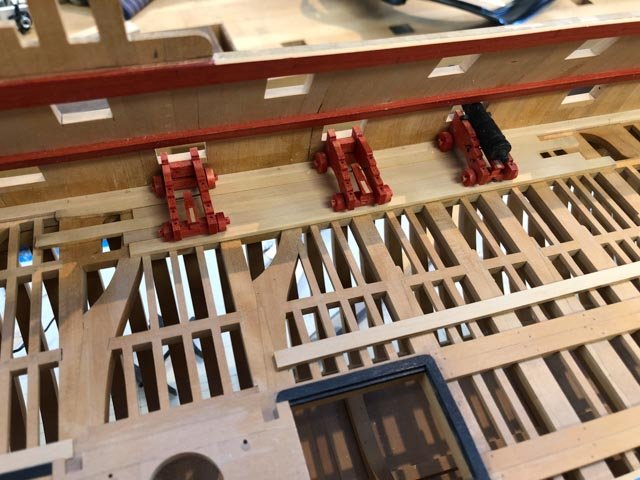
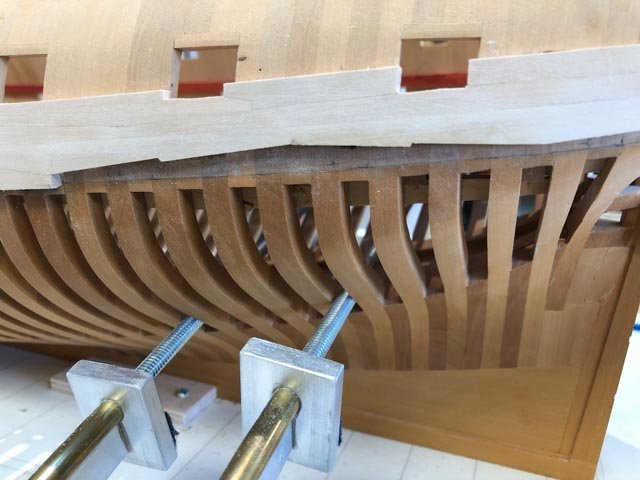
-
druxey, I have pondered putting little dabs of wood planking under each truck, but it seemed it would be confusing. Acrylic is an interesting idea. Do you know of any examples where someone has tried this? Would it be a little rectangle under the entire carriage, or separate pieces under each truck? I imagine I could drill down through the trucks into the acrylic for pins. The deck is 4" at 3/16" scale, so only a 1/16" actual. Hi Alex, thanks for the welcome back. It has been a long time! I was just looking at your Sphynx build, admiring your gun barrels. My efforts at casting metal guns have not been satisfactory, and I was thinking about turning them like you did. Can you show me the shape of the cutting bit you used with your duplicator, to allow cutting close up to each side of a ring, but still having a smooth surface in the rest of the barrel? Mark
-
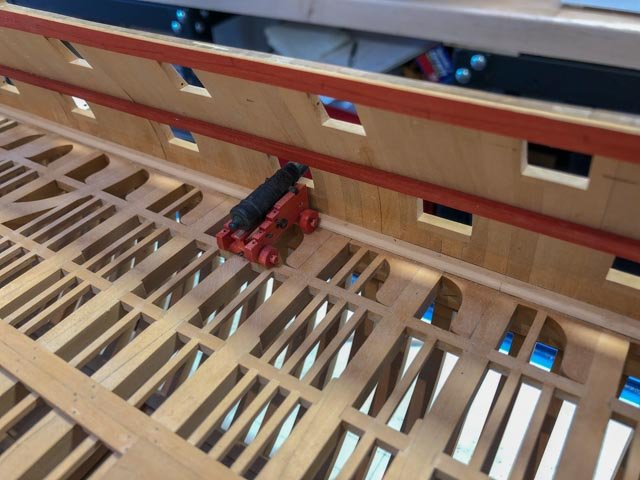
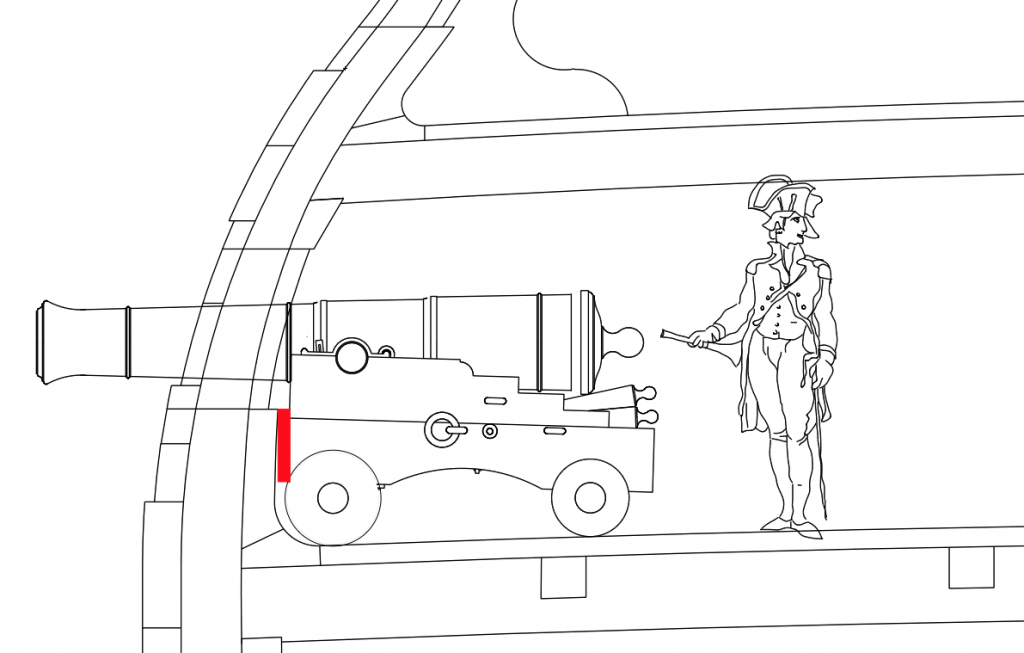
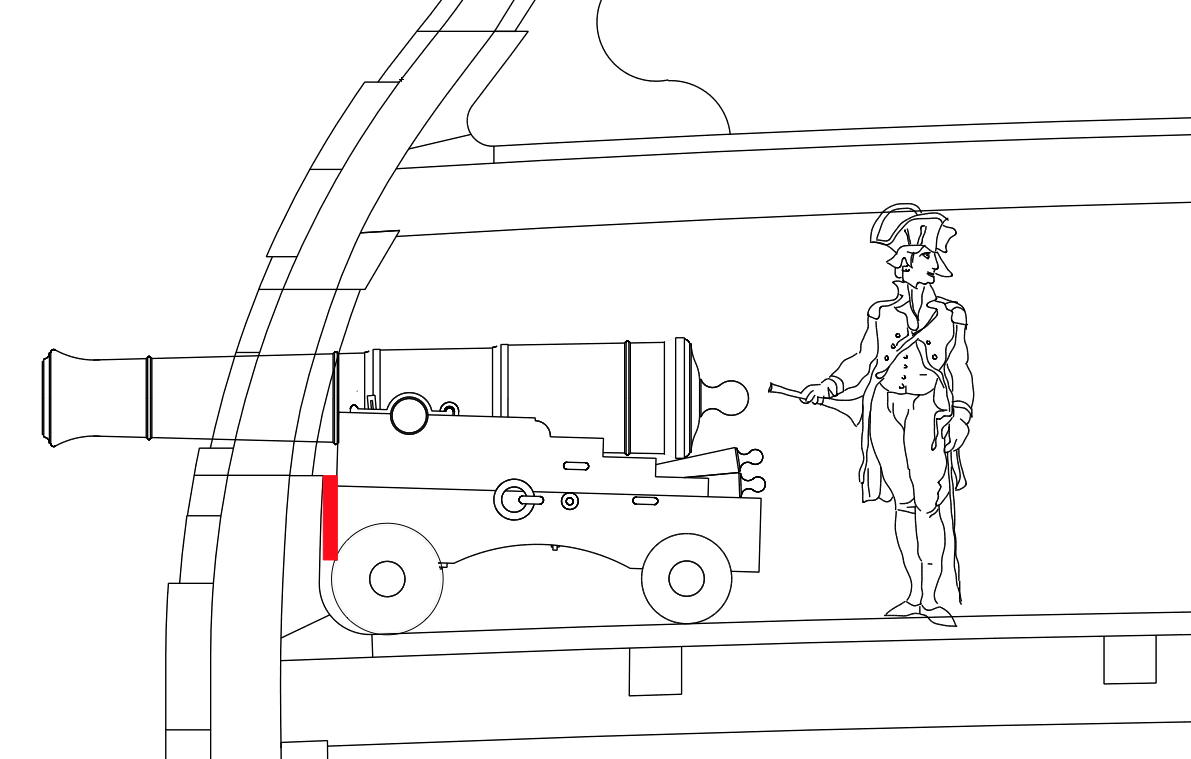
I wonder if the Nautical Research Guild would do a line of neckties for modeling...👔 Pretty sure I would not wear one, but you never know. I am three strakes away from the end. The last ones will require some bending and shaping, so will slow down my progress a little. While waiting for glue to dry, I started thinking ahead to some next steps. At some point, I need to install the guns on the gundeck. I have not figured out a way to pin them in place, since I will not have decking under them. Perhaps a spacer connecting to the spirketting, as shown in the red rectangle in the drawing below? Mark
-
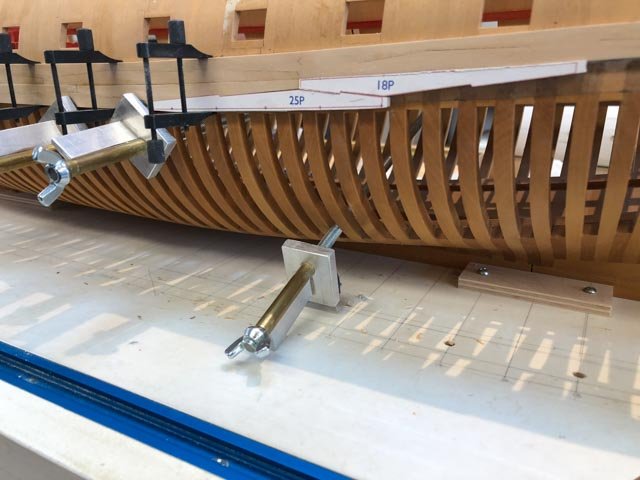
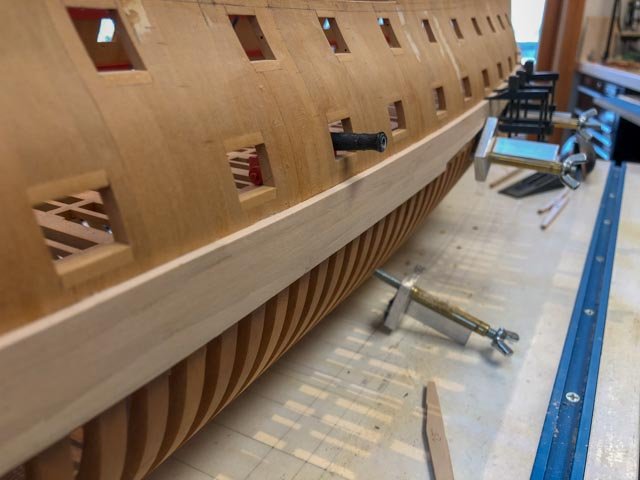
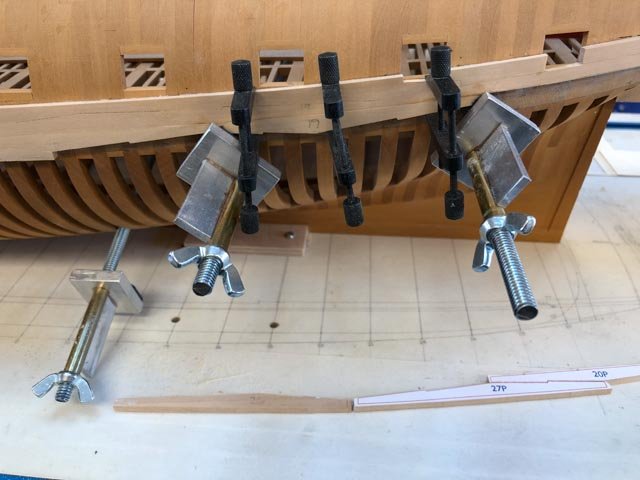
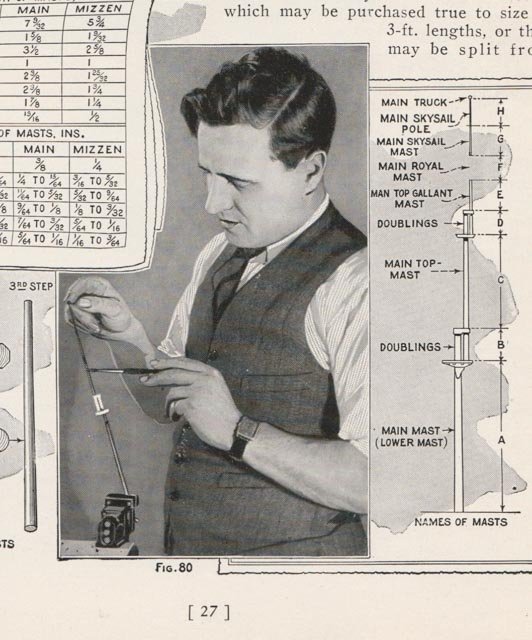
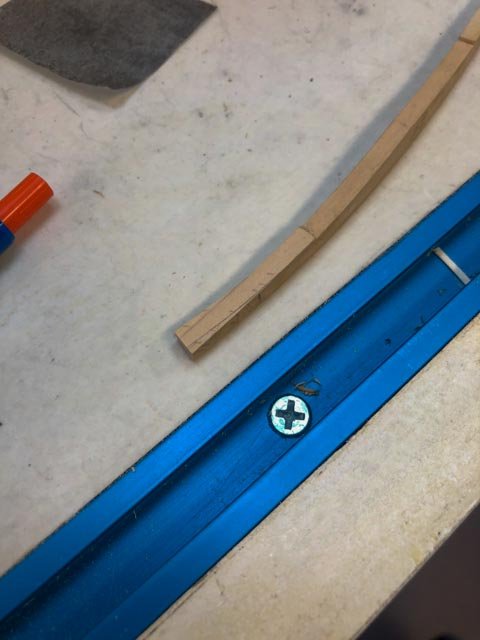
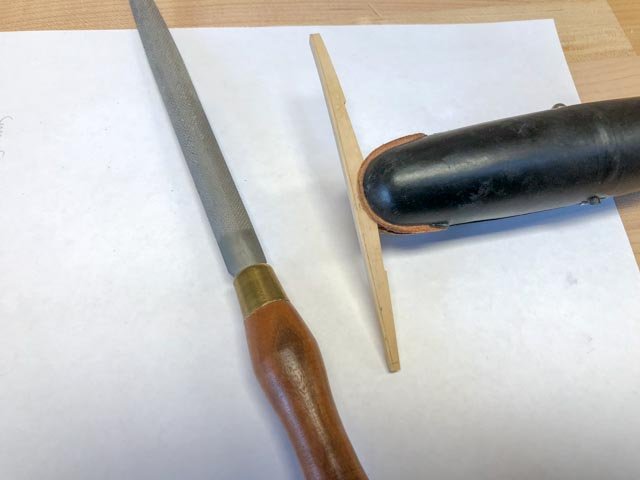
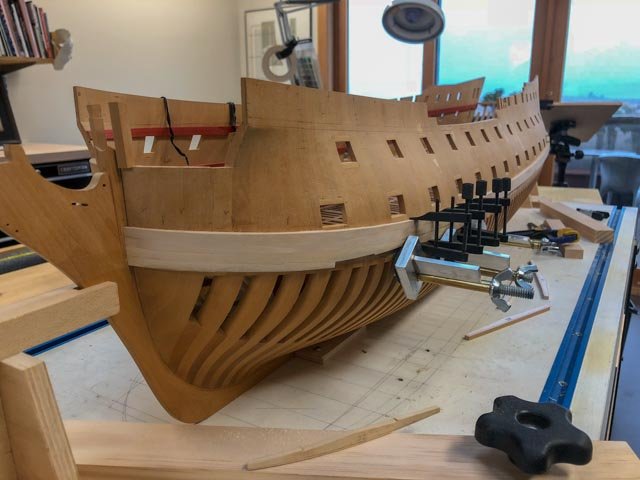
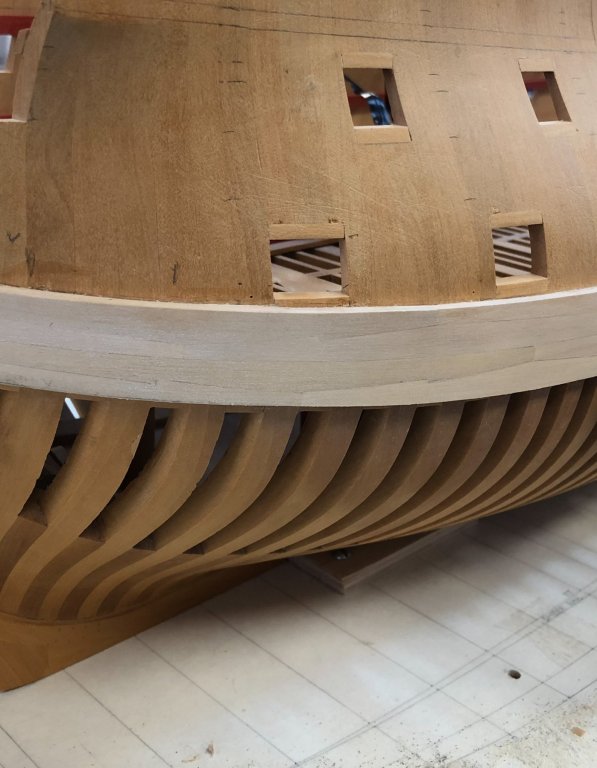
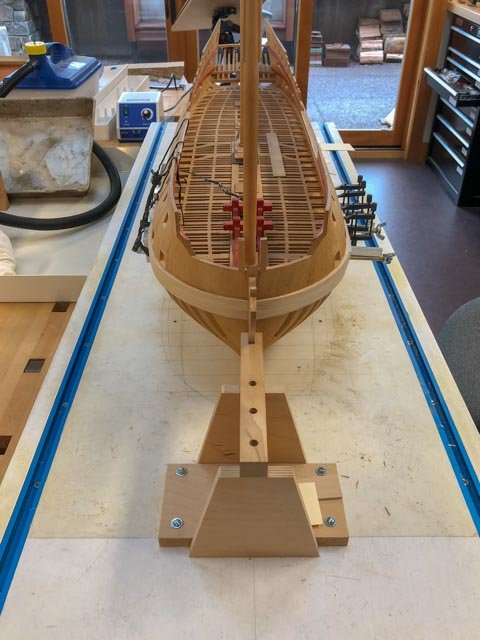
Hi Gaetan, I have wondered about building at your 1:24 scale, since I highly admire your work. But I would have no room in the house for the final project! I was just given a booklet, entitled "Building a Model of the Flying Cloud, by James Tate, 1929. It has a lot of interesting information, and also images of how modelers apparently used to dress, with tie and waistcoat. At least the waistcoat keeps the tie from wrapping around your lathe! I am proceeding with finishing the wales. Pretty straightforward after lots of practice so far on this little project. Here are a few unusual items of note: In the third photo, I am showing a strake that still had too much springback after clamping to the hull overnight, I avoided forcing the piece into place by faying a small spacer onto the inner face to match the curve of the hull, and after it was attached, I faired the outer face to match the rest. The first photo shows a jeweler's clamp I bought many, many years ago, and never used. But I have acquired a case of tendonitis, which makes it painful to hold small pieces for sanding. This clamp eases the pain. Should have used this years ago. The final photos show progress, including a closeup of the hooked joints. Mark
-
Hi Michael, I am just catching up on your log after some time away. I am very impressed by your willingness to rework things until they meet your very high standards. A lesson for us all. A quick question regarding the rail on the boom. Were you using the sanding block on a rail previously roughed out on the mill, or was that a new rail shaped entirely with a sanding block? If so, how did you index the slots? Great work! Mark
-
Hi Ed, Just catching up after being away for some time. The detail and craftsmanship continues to amaze. One does not realize just how many specialized parts and pieces there are, until seeing your closeups. All the more astonishing how all of this evolved over time, and became more complex, in the latter years of the sailing ships. Fewer crew, more complexity in the machine. Mark
- 3,618 replies
-
- 3
-

-
- young america
- clipper
- (and 1 more)
-
Hi Alan, It is fascinating to see your figurehead evolve. To my mind, that is the most daunting part of the entire build. I will watch with great interest! Mark
-
Beautiful work, Doris. I apologize if I missed it earlier in your post, but are you making negative moulds into which you press the clay? If so, are you carving those from wood? Mark
- 1,035 replies
-
- 5
-
-
- royal katherine
- ship of the line
- (and 1 more)
-
Just catching up. It looks lovely, Gaetan. Exquisite craftsmanship, as usual. Mark
-
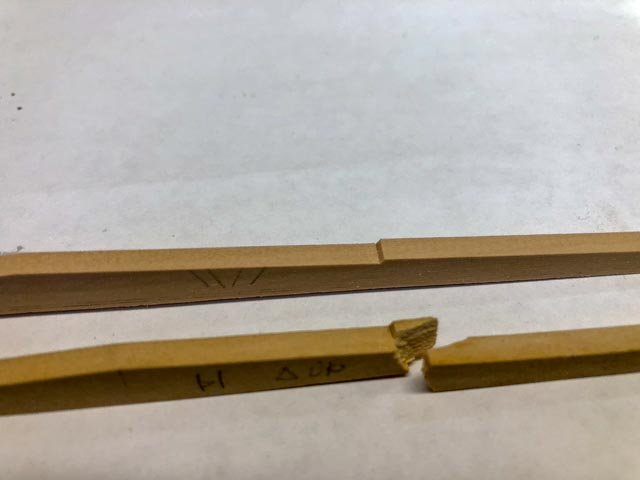
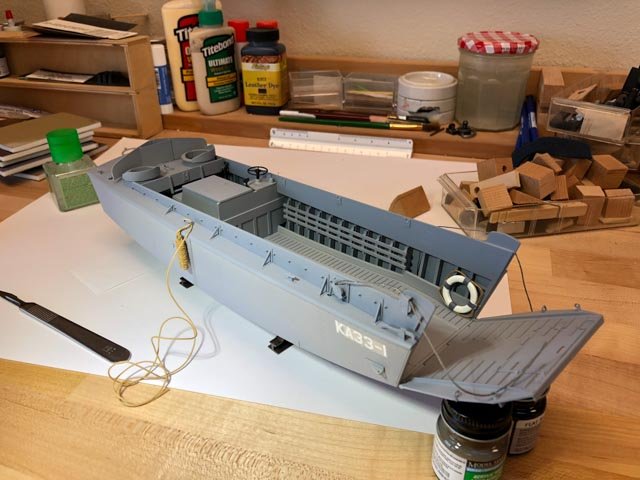
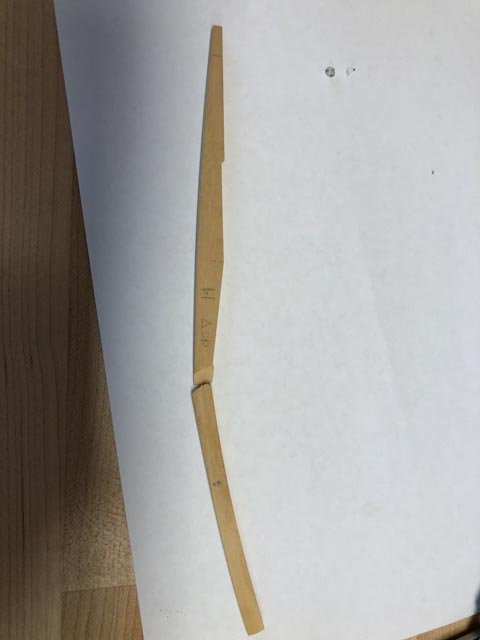
Greg, Grant and druxey, thanks for the comments about clamping. I don't know why I could not come up with such a simple idea the first time around. It seemed obvious after getting away from the problem for six months. Mark, I did not think to photograph the LCVP build, probably should have. It was a nice break to have the parts already made, just needing assembly and painting. Hubac's Historian, I looked at the split more closely after your comment, and as you can see below, it did not split along the grain which is running mostly parallel to the piece. It split on a diagonal across the grain, which perhaps makes sense because I understand a failure in bending wood will always result from the fibers in tension on the outside of the curve letting go. Some steaming techniques at full scale have a compression strap on the outside to prevent this. Also, I notice that it broke at the point of the hooked scarph shoulder (see unbroken one beside it). I vaguely remember an architectural structures class that said failures will tend to occur at the points of discontinuity in the material, and this seems to confirm it. I may have this wrong, if any engineers want to correct me. I also noticed that this particular piece is the longest in the wales, at 37' by 6" by 1'-9" at its widest. Can you imagine how they hoisted the real thing out of a steaming box and clamped it onto the hull before the plasticity disappeared? Working at scale continues to make me appreciate the complexity and craftsmanship of the real things. Druxey and Alan, thanks for the comments about my father. He was only 21 at the time, and three quarters of a century later he could still recall vivid details of his service in the LCVPs, some prompted by looking at the model! Mark
-
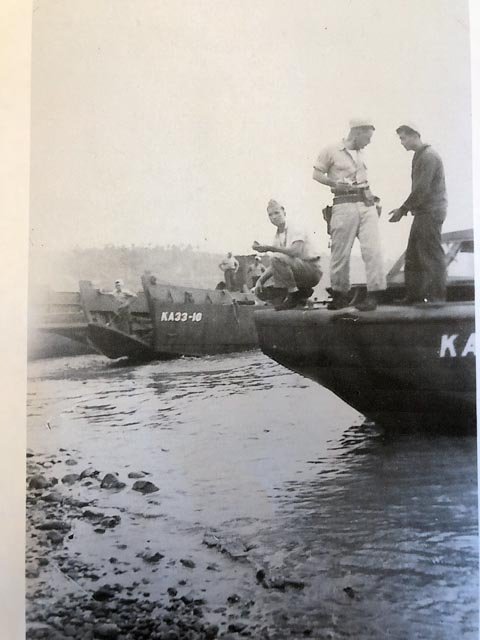
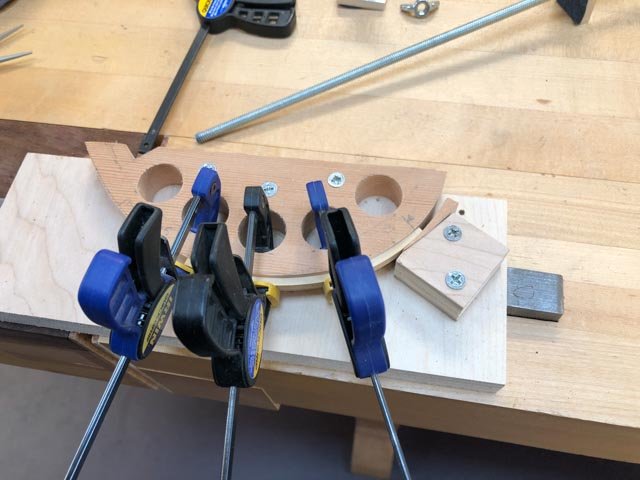
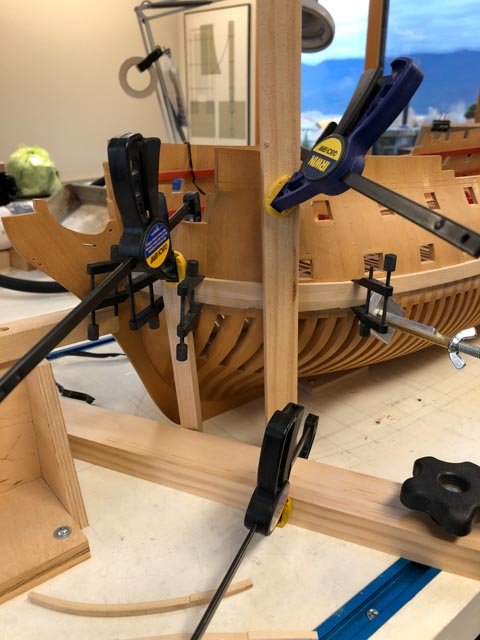
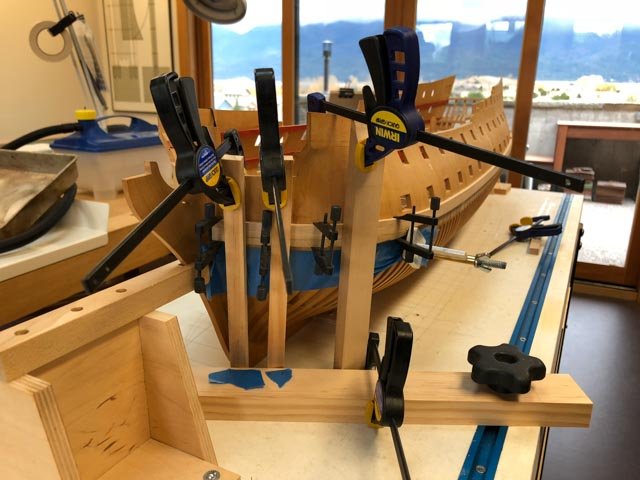
Hi everyone, It has been a long time since the last post. We had 11 groups of friends and family come to visit us in our retirement this spring and summer, and however nice it was to see them all, it sure killed any momentum I had going on the Bellona. No work at all this summer. I also took some time away from the Bellona to build a plastic model of an LCVP (Landing Craft Vehicle Personnel) for my father's 95th birthday. He is seen with the sidearm in the first photo, with an LCVP in the background. Back to the Bellona, I picked up where I left off, finishing the lower two strakes of the port wale. Too clever for my own good, I steamed the foremost two strakes together, thinking I could clamp them into the fixture at the same time. I pulled the long one out, and then discovered the shorter one had slid back in the steamer. By the time I fished it out, the first one had cooled to the point that when I tightened up the clamps on the fixture, I heard a loud crack. Missed my window of plasticity in the steamed wood, and had to make the two strakes all over. One always learns from mistakes; now I know how long that window is... I did finally figure out how to clamp these lower strakes, which had given me so much trouble on the starboard side because I could not get a fore-aft clamp to them (the gundeck behind is in the way of a clamp). This time, I fastened a batten across the building board, and used this to restrain the feet of several vertical boards. When the tops were clamped against the hull, their middles pulled the wales snug against the hull. I hope to make more progress this fall, now the snows are threatening. Best wishes, Mark

-
Hi Alan, thank you so much for following up on the rigging warrant. £420 for the 6 pages exceeds my retirement discretionary income, so I will have to wait until a hopefully cheaper digital copy comes out in the next year or so. I have a way to go before rigging seriously comes into my project, so the timing might work out OK. Do you know how I would find out if and when it is digitized? druxey, that is fascinating to see, thank you. I had read about girdling (mostly in Patrick O'Brian books), but this is the first I have seen what that looks like. Presumably, this simply increases the girth of the hull, providing more lateral stability and less roll. It doesn't seem like a few inches would do much, but multiplied by the length, that is probably a lot of additional bouyancy at midships. I wish I understood more about the science of hull shapes. Mark
-
Hi Mike, I look forward to hearing how things change for you at the larger scale. More opportunity for details, etc. Mark
- 607 replies
-
- 5
-
-
- winchelsea
- Syren Ship Model Company
- (and 1 more)
-
Hello Amalio, Can you tell me the scale of your ship model? Mark
-
Thanks, druxey. By the way, do I see a thickened plank under the Resolution's wale that does not extend all the way to the aft end of the wale? And does the wale thin down at the point the lower plank terminates? I have never seen that before, if am seeing it correctly. Mark
Our Emblem ®
