
Jump to content
HOLIDAY DONATION DRIVE - SUPPORT MSW - DO YOUR PART TO KEEP THIS GREAT FORUM GOING! ×

ccoyle

Moderators
  • Posts

    10,373
  • Joined

  • Last visited

Everything posted by ccoyle

  1. No clue. At their age, they have little value as actual projects -- kit design has advanced far beyond what these kits can offer. They may have some collector value. One suggestion is to browse listings at eBay for similar items and see what they have been going for.
  2. Welcome aboard! When you say "vintage" kit, how vintage are you talking about? Various iterations of that kit have been on the market for decades, and the art of kit designing has advanced considerably during that interval.
  3. Mine did, too. For anyone following, if that little strip in the back is damaged beyond repair, it's not a great loss. The two fuselage sections can still be glued together, and the bulkhead that ends up there can be covered with a strip of scrap card and painted to match. PS -- I added a link to your build in my signature so interested parties can easily toggle between our builds.
  4. Either canopy glue or medium CA, depending on how much stress will be applied to the finished part. I haven't been picky about the brand, as long as it's matte clear acrylic. Cheers!
  5. Are you thinking about starting a brick-and-mortar business or internet/mail order? Hobby shops in general have had a tough go of things in recent years, and ship building is a pretty niche hobby (I can't speak to the popularity of 'hobby woodworking in general').
  6. Just remember how fun and relaxing this hobby is supposed to be!
  7. On to the wings. The kit provides two sets of spars, one for the complete wheel wells option and the other for w/o wheel wells. For parts that will only be partially visible on the finished model, like #108, I use only the visible portion of the printed part. The English directions are a bit cryptic. The upper part of the wheel well doesn't fit the interior framing exactly, so I tinted the surrounding areas of the wing skin that might show around the edges of the well. Note that I have added joiner strips to the trailing edge -- these aren't included in the kit. The interior framing is a little wobbly. I suggest putting as much of it together as you can before gluing. (EDIT: There's actually a rod, part #59, that fits inside the framing and will help align things as well.) The leading edge piece is the key to getting everything aligned properly. Notice that no spacers are provided around the wheel well. Test fit the framing inside the folded wing until you get the wheel well positioned properly, then mark the inboard edge of the framing -- it doesn't sit flush with the wing sheathing. Once you're satisfied with the location of the interior framing, you can tack it to the topside skin. Once the glue has set, you can glue down the bottom skin, but don't try to do it all at once. Do the inboard stringer and wheel well surround in one go, then zip up the trailing edge separately. After that you can add the wingtip piece and close up the wingtip. That's one wing down and one to go!
  8. Time to install the canopy! But wait -- don't forget to add the gun sight first! Then you can install the canopy!
  9. Time to frame the canopy. A couple of tips may be helpful. First of all, I usually do not attempt to glue an entire frame piece in one shot -- it's messy, and the glue I use (Evergreen canopy glue) doesn't give a lot of working time. Normally I tack one part of the piece in place and then do the remainder as several small sub-steps. Second, do everything you can to make sure the first piece is aligned on the canopy correctly -- it acts as a kind of keystone for the remaining bits, and if it is off-kilter, then what follows will be off as well I opted to start with the front panel, because its location on the molded canopy is fairly obvious. For the next piece, you can see how I tacked the top section, making sure to align the tic marks on both pieces. BTW, on the aft portion of this piece there are two stub pieces of framing. The closed canopy should fit inside these pieces, but I didn't discover that fact until after I had already glued them down. That made it necessary to trim the next piece slightly to accommodate the stubs. Make sure you allow plenty of time for the glue to set. If the glue is still white instead of clear, as seen here, you're not ready to move forward. And here's all the framing attached. Let the glue cure well -- some flexing will occur when the canopy is freed from its sheet, and improperly cured bonds may pop loose as a result. That's it for now!
  10. This is actually a rather generous description of the instructions -- the translation is very obviously not the work of a native speaker. I'm happy to see this one under way. Best of luck!
  11. Armament installed, plus shell case ejector ports. Nothing special to watch out for here -- just fiddly parts. Use something like styrene rod to help roll the gun shrouds. The kit includes paper barrels, but it's wise to substitute styrene rod for these, too. Also, pay attention to the orientation of the ejector ports. I glued one on backwards and didn't notice it until the following day. 😑 Moving to prepping parts for the canopy. If you chose not to add the cockpit interior, then you'd use the opaque windscreen parts provided in the kit. I'm using a molded canopy, so the framing parts will need to be cut out and edge colored. Start by cutting out the interior portions of these parts. Don't cut the parts all the way out just yet. Leaving them like this makes coloring the interior edges easier. The backsides of the frames will be visible, so they need to be painted. I made no effort to match the cockpit interior gray -- I just used the closest AK color in my set. The main thing is that the backs are not white. Now we can cut the parts all the way out and color the exterior edges. In the next installment: Framing the canopy! 😬
  12. BTW, I just received an order from Widget Supply. The owner is retiring and selling off his inventory at deep discounts, limited to stock on hand. I was able to snag a whole bunch of goodies: knife blades, sanding disks & drums, drill bits, Dremel bits, mandrels, needle files -- even zip ties. You should check them out!
  13. Yes, I missed the finish of this one, too! Great-looking result, Greg!
  14. I believe this isn't the kit that was referenced. Amati did indeed produce a kit of Prince way back in the day, but if I recall correctly, they were having Chris Watton work on an updated 1/64 scale version. Just another of the Amati projects that never saw the light of day.
  15. A Tale of Woe . . . Before adding the vertical stabilizer to the fuselage, I first added a strip of scrap card to fit inside the stabilizer -- recall that the stabilizer's framing doesn't sit on the fuselage. This gives some more gluing area. After this, the stabilizer was added. And here's where I ran into some problems. Sometimes the little parts of a model can cause the most trouble. On the MiG-15 and its derivatives, there is a small projection of the fuselage that juts out past the exhaust outlet and forms the base of the vertical stabilizer. Here's the parts for that bit: At first I thought the little joiner strips were supposed to go from this structure to the insides of the stabilizer. I also thought it was weird, if that was the case, to not glue the joiners to the stabilizer first. So I went ahead and did that. Whoops!! I later determined that the joiners were supposed to mate the aft structure to the stabilizer fillets, i.e., they go on the outside of the stabilizer! Since I had already glued the kit parts to the wrong area, I had to make new joiners from scratch. I also needed to trim the cone-like tail structure to get it to fit in the gap between the exhaust outlet and stabilizer. Then I added the fillets -- or rather fillet, singular, since the two sides are all of one piece. The finished assembly is not particularly tidy. And here's where we are now. Until next time!
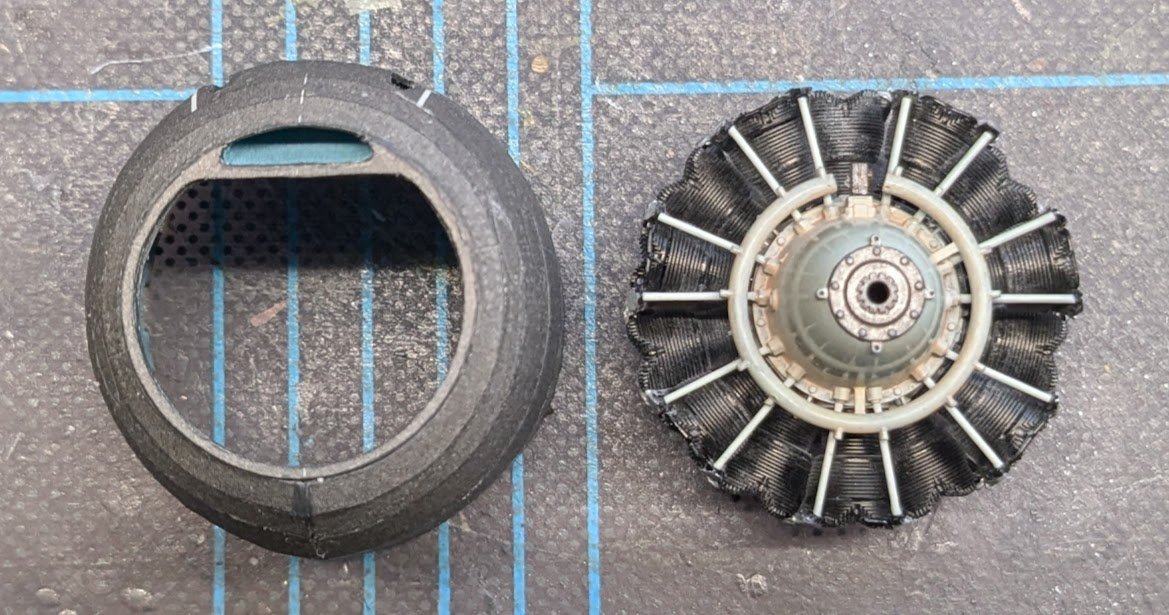
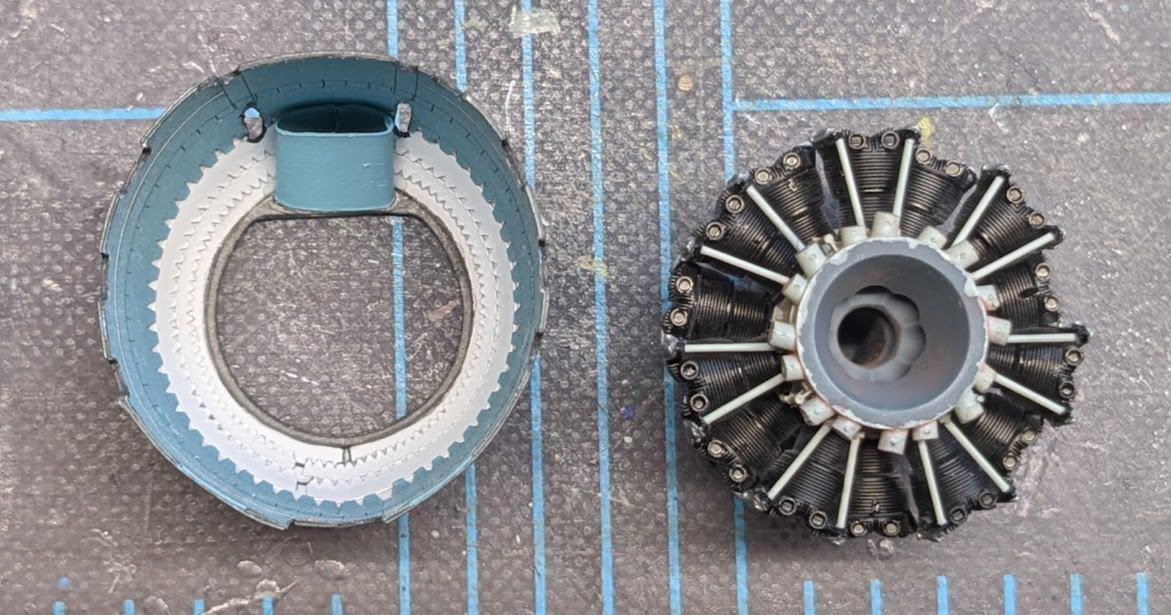
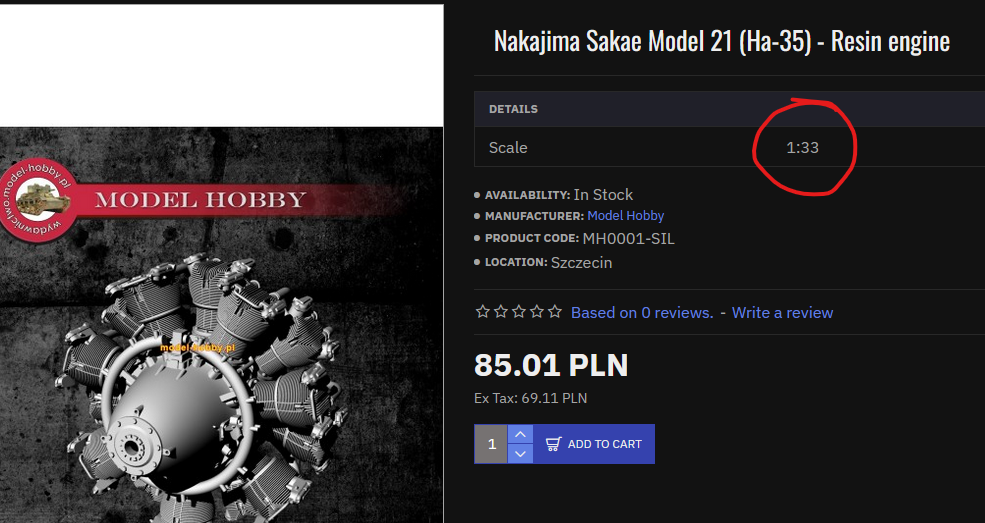
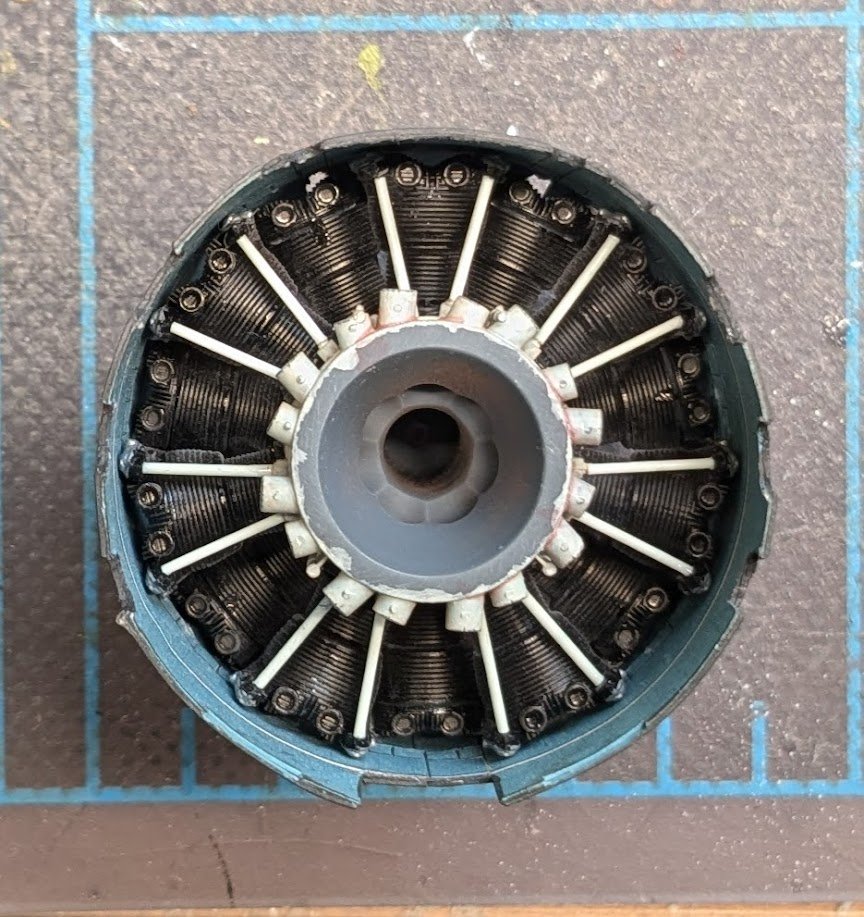
  16. I'm using some 3D-printed parts from Model -Hobby for my Halinski A6M5a build (link in signature).
  17. AFAIK, this kit has been out of production for a long time, so finding kit-specific instructions for it will be challenging. 1960s kit technology also leaves a lot to be desired. All in all, I think this kit is likely to produce only frustration for a beginning modeler, despite being a freebie. As was stated in the previous post, there are far better options for beginners these days.
  18. Continuing on with the vertical stabilizer. After prepping the skin and folding it (don't make a hard crease -- it should be slightly rounded at the leading edge), one side of the frame was glued in, then the remaining side was glued down separately, making sure to align the slots for the horizontal stabilizers. There's a couple of things to look out for. First, for whatever reason, the lowermost frame is supposed to be 0.2 - 0.5mm shy of the edge of the skin. In fact, none of the framing is flush with any edge, which makes positioning the frame a judgment call. Second, there is a dart to cut out near the top of the stabilizer. Frankly, I'm not 100% convinced the dart was necessary for the design, but it's there, so it needed to be removed. The resulting seam is supposed to lie along the uppermost framing piece, but for the life of me I couldn't get the framing and skin aligned in that fashion. This negatively impacted shaping the skin somewhat, and coupled with the fact that I didn't bevel the upper frame enough (it needs beveling, which isn't mentioned in the instructions), the resulting seam is not the best work I have ever done. That's it for now!
×
×
  • Create New...