


amateur
-
Posts
3,535 -
Joined
-
Last visited
Content Type
Profiles
Forums
Gallery
Events
Everything posted by amateur
-
Paviljoensjacht 1733 | Blender
amateur replied to Robska's topic in CAD and 3D Modelling/Drafting Plans with Software
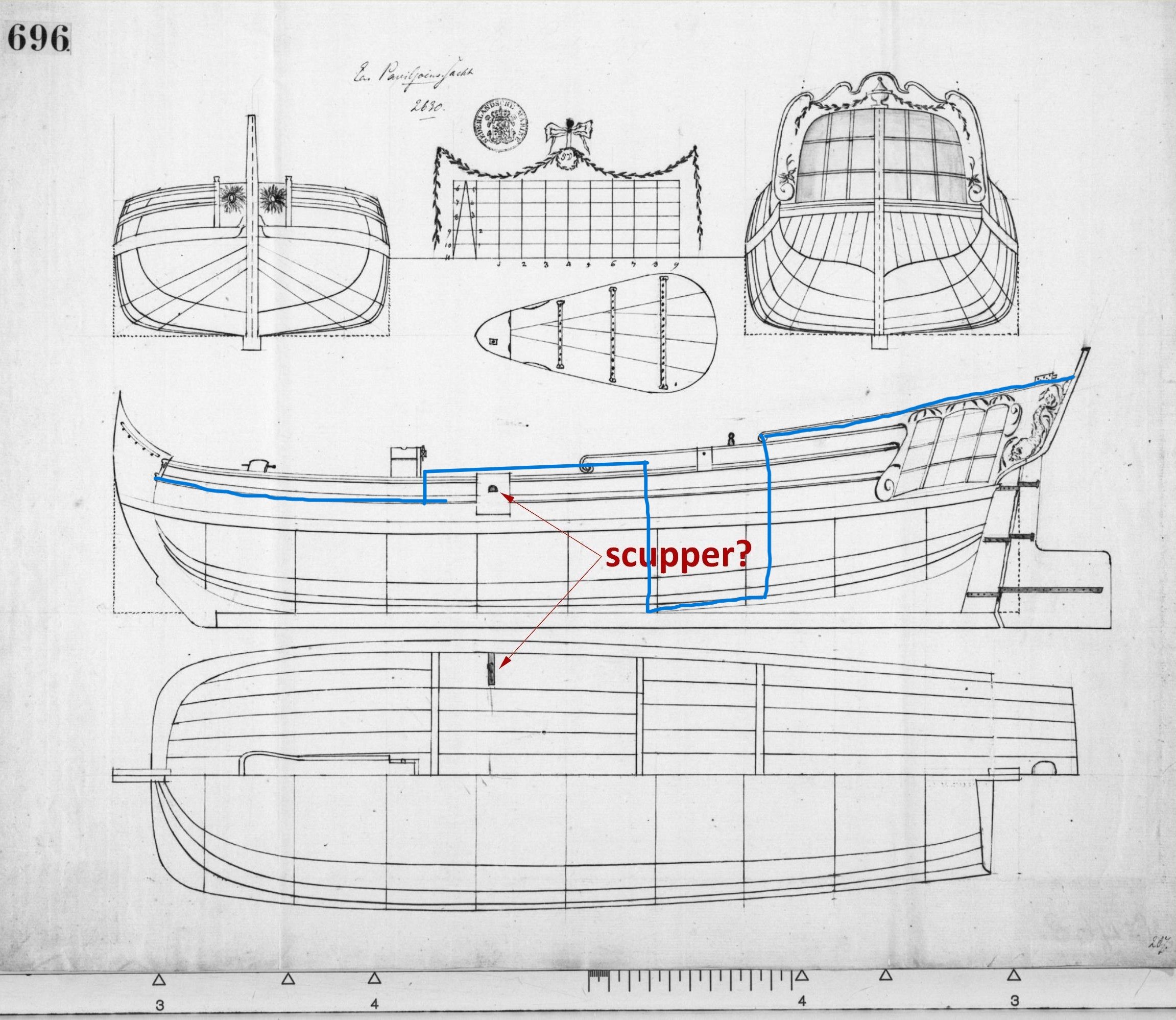
In reply to @Lieste. In larger ships the deck is at the level of the wale, but in smaller yachts and inland vessels there is hardly any bulwark around the foredeck. Hence the level of my blue line. The point were the leaboards are attached is quite often a rather heavy doubling, so there need not be a relation to the decklevel (but it can be) As said before the drawing leaves some space for interpretation. and with respect to size, the overall length of the hull is somewere around 40ft, wich is around 11 meters. The Statenjacht Utrecht measures 24 meters lenght at the waterline, which is around 85ft. This yacht is a small vessel, comparable in size to the smaller wooden yachts that are still around and have almost no bulwark, except around the cockpit. (Boeierjacht Sperwer, Enkhuizen) Jan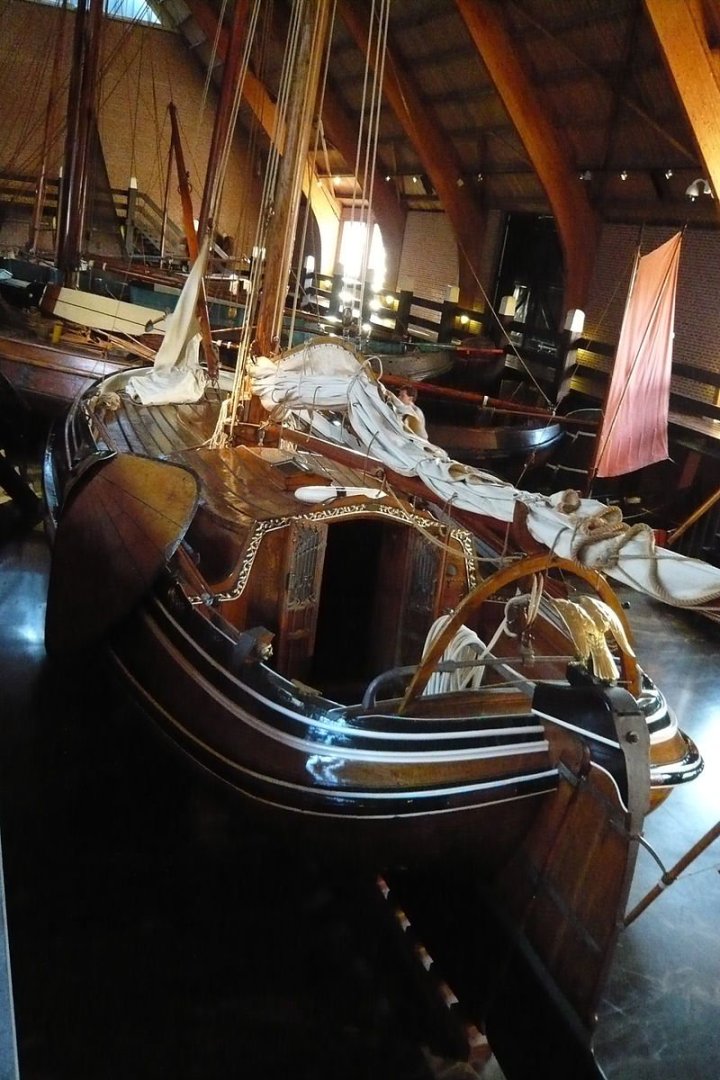
-
Paviljoensjacht 1733 | Blender
amateur replied to Robska's topic in CAD and 3D Modelling/Drafting Plans with Software
Need not be: deck planks are non-structual parts, the sode of the ship is. All ships I know of have some pretty sturdy frames at the location where the leenoards are attached. Only if there is a deckbeam at the ondicated location the connection is stronger. Althoug I very much doubt whether such a heavy connection is really necessary. Jan -
Paviljoensjacht 1733 | Blender
amateur replied to Robska's topic in CAD and 3D Modelling/Drafting Plans with Software
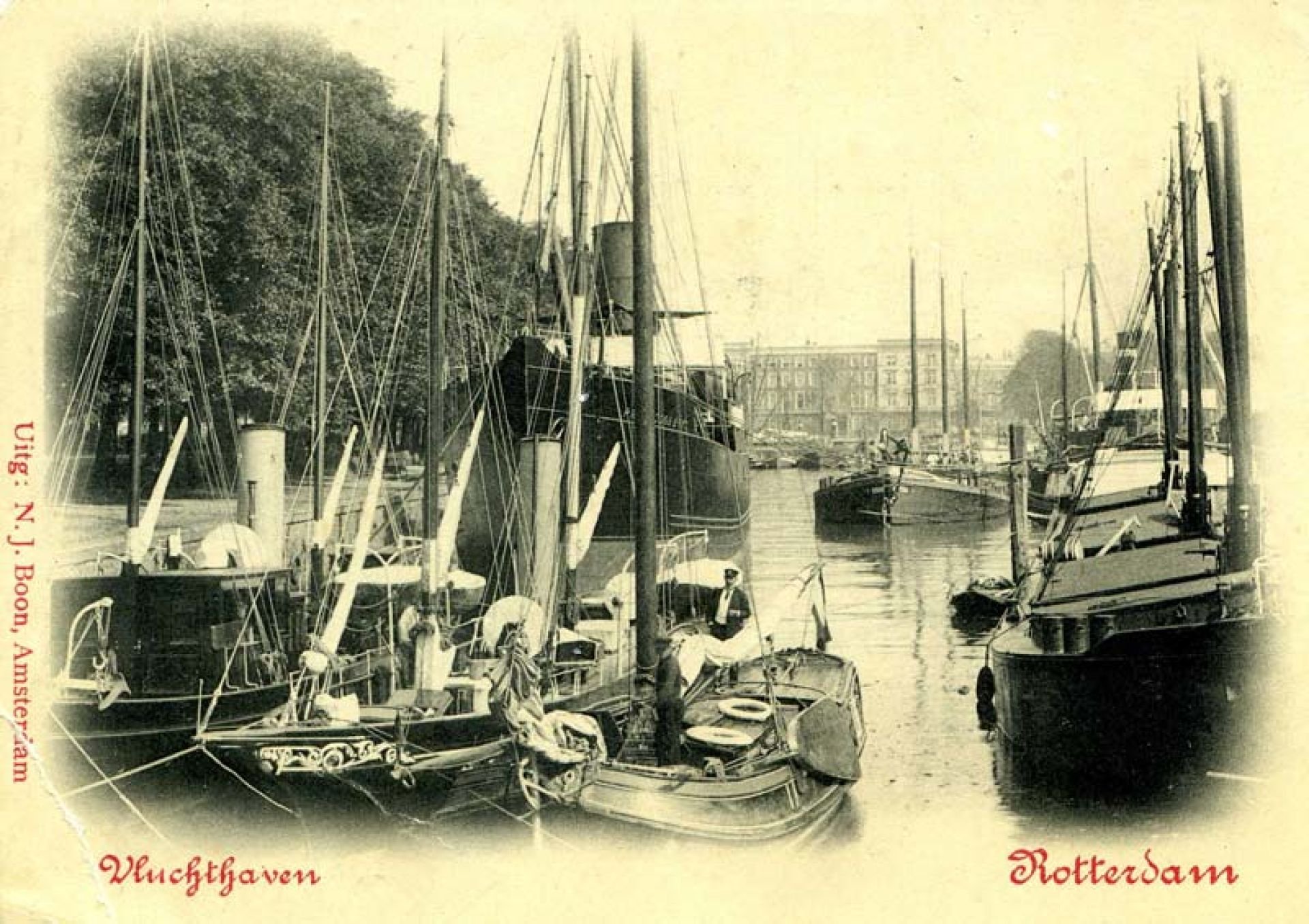
PIcture from around 1900, so the small sailingship in the middle is a bit newer than in your drawing, but it matches your drawing almost perfectly: flat deck up front, and above the aft cabin, helm on top of the roof of the cabin, to the cockpit in front of it, and a second cabin just aft the mast, with some space between the sides of the roof and the railing.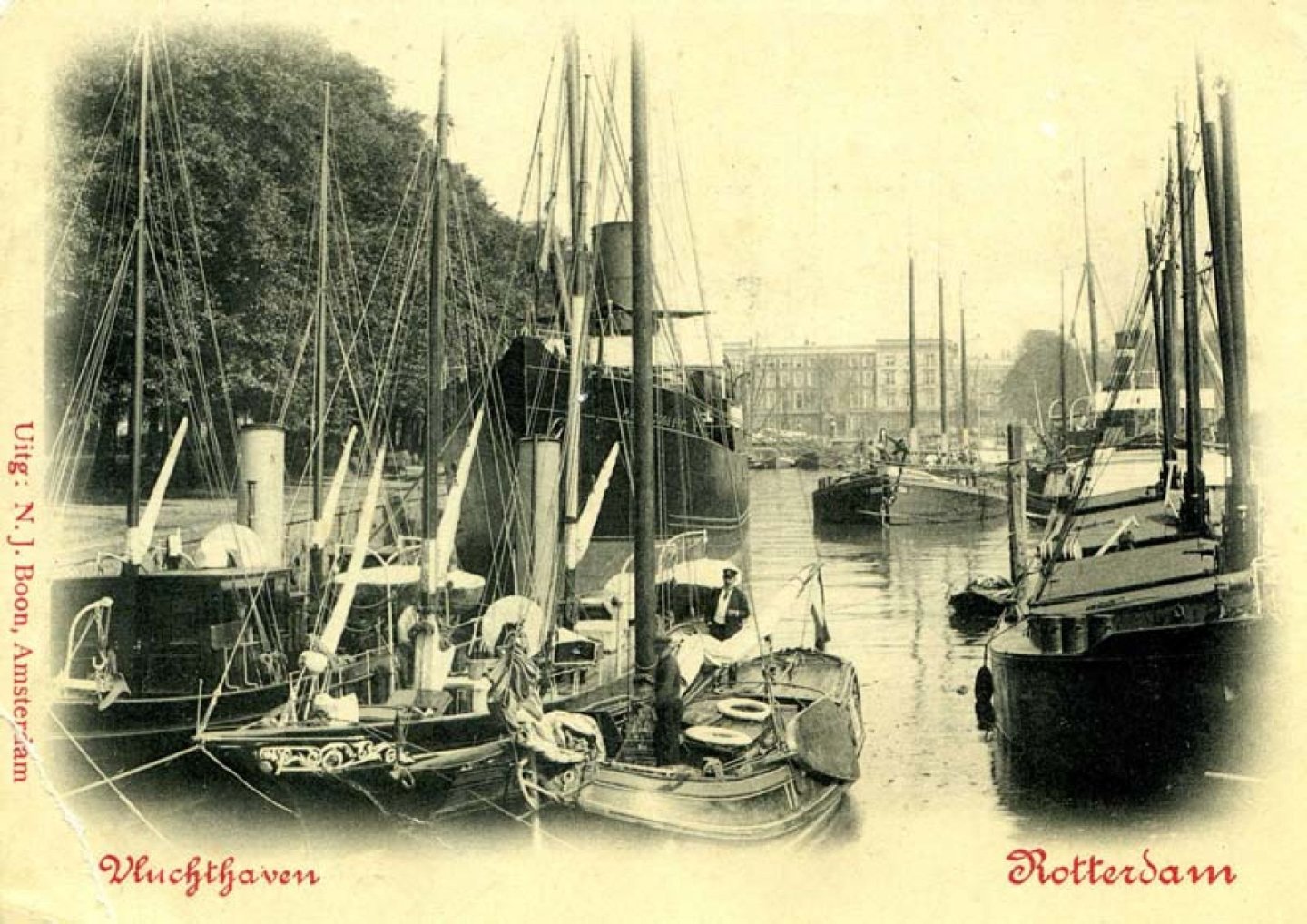
-
Paviljoensjacht 1733 | Blender
amateur replied to Robska's topic in CAD and 3D Modelling/Drafting Plans with Software
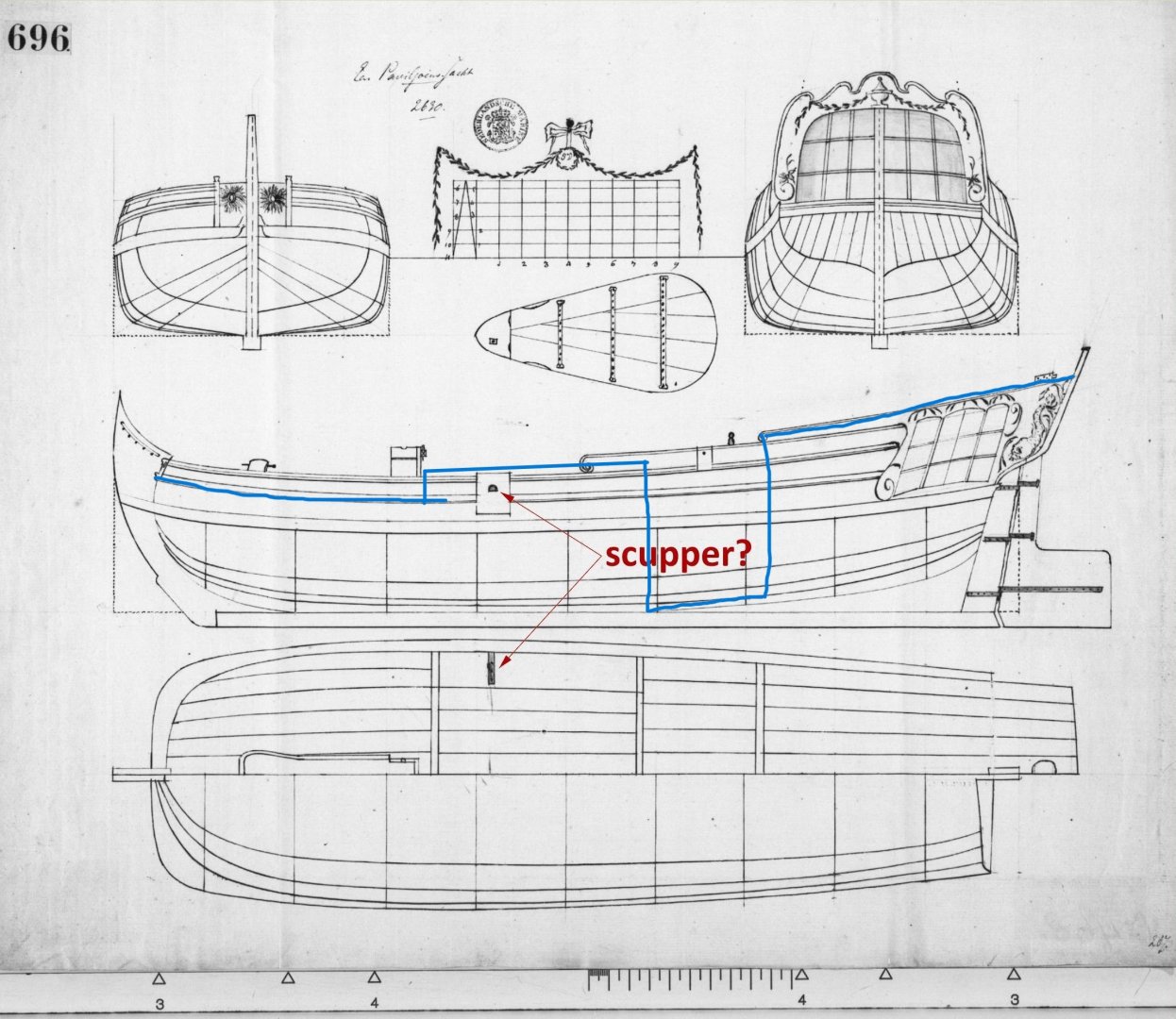
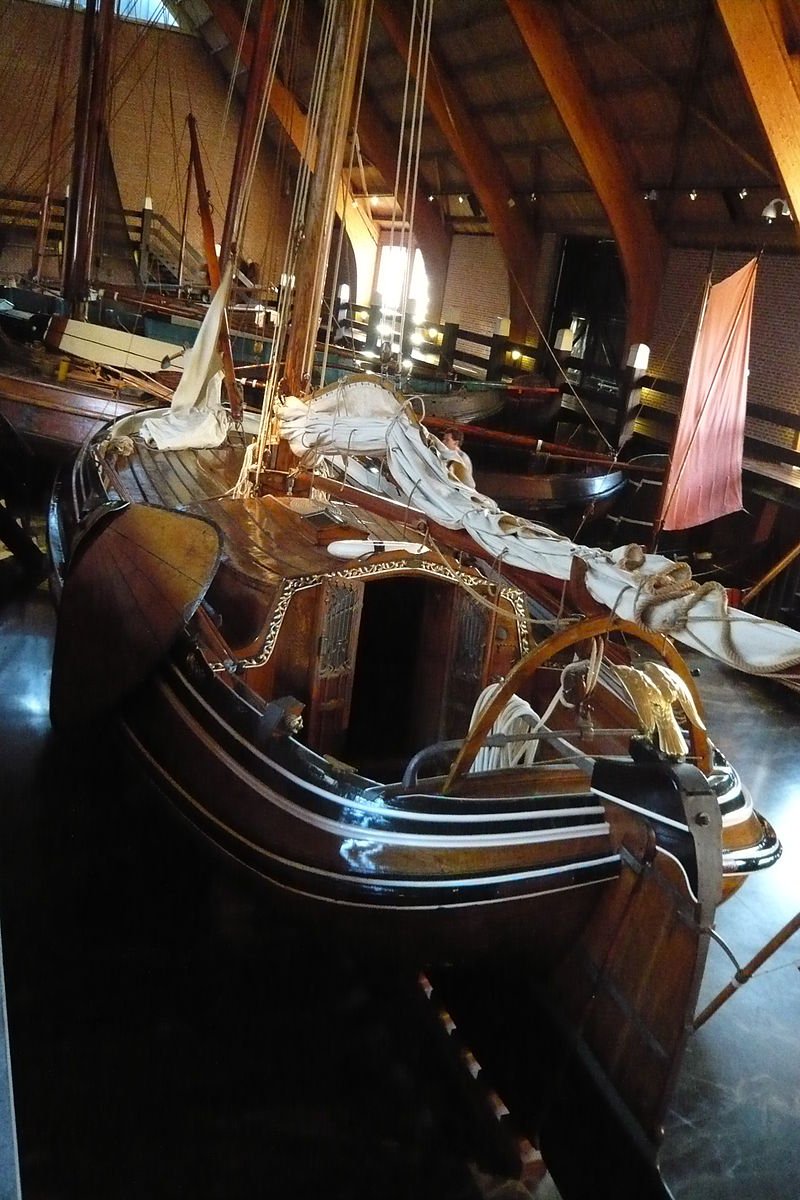
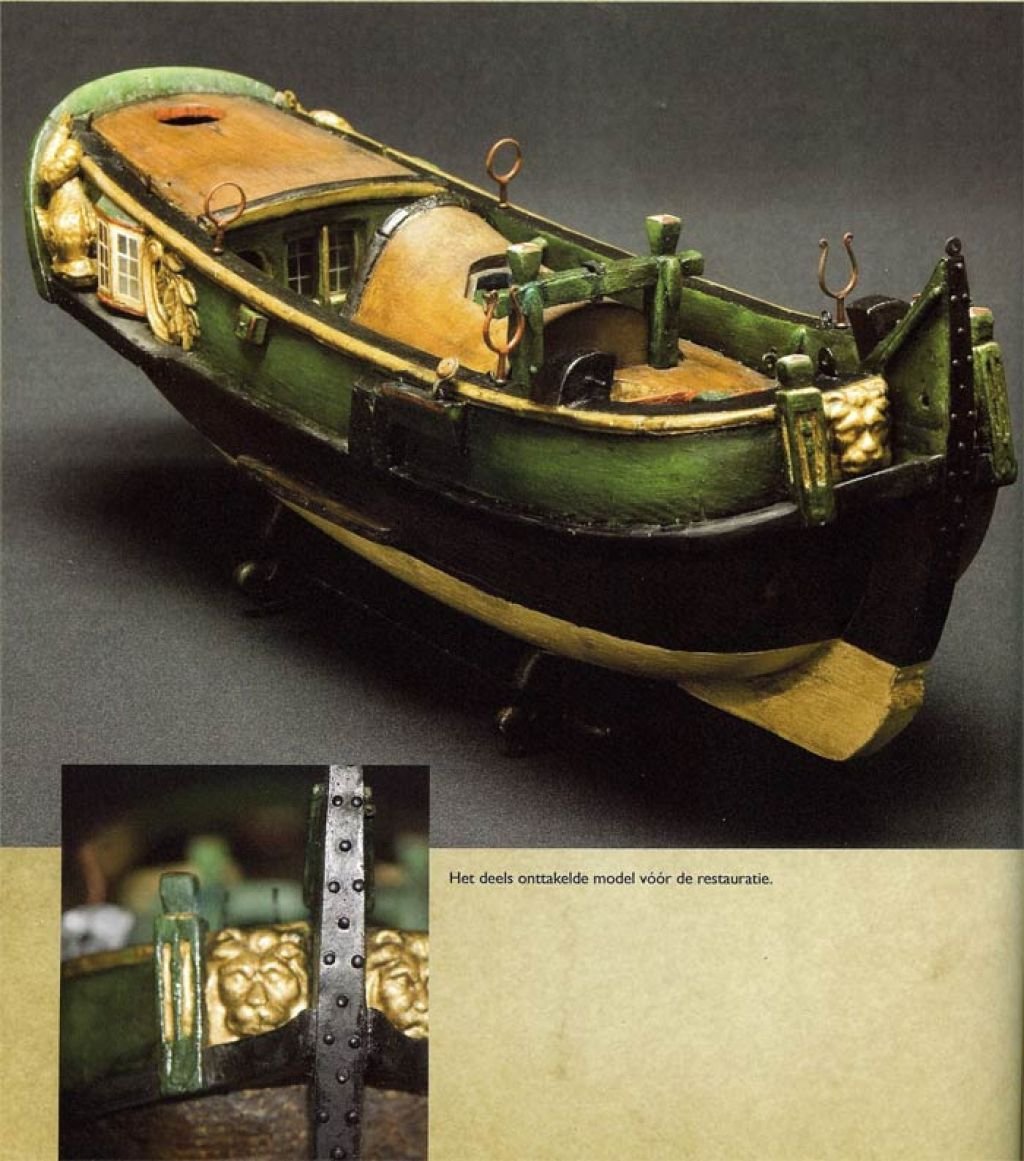
It is definitely the connection point of the leeboard. What is uncelar is where the front of the cabin is: probably where waldemar indicates. That detremines the level of the deck in that section. The level of the front deck is also clear: more or less at the level of the small wale. The interesting part is the in between: There is a model of a 'Spiegeljacht' restored by Cor Emke, that shows a second cabin aft of the main-mast, with a roof-top aroudn the level of the railing, with a rather deep cockpit between the forward and the aft cabin. (Picture from Scheepshistorie, Vol11).. Taking that as point of reference, it might be as follows: Again, that leaeves room for interpretation: were is the helm, how deep is the cockpit between both cabins, and: does the roof of the forward cockpit run up to the sides, or is tehre some way of 'deck' around the cabin, as is the case in the model? Jan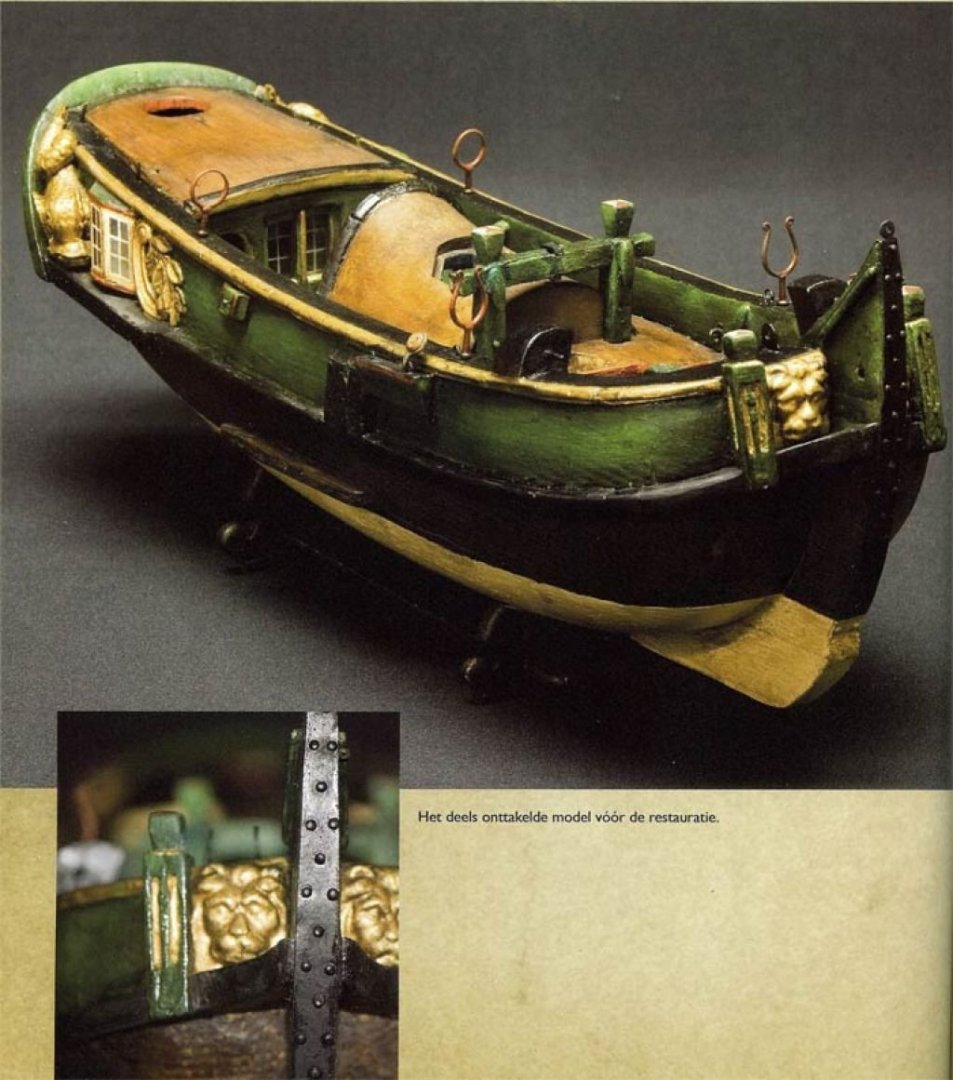
-
Paviljoensjacht 1733 | Blender
amateur replied to Robska's topic in CAD and 3D Modelling/Drafting Plans with Software
The scale measure is the normal way of giving the scale in these kind of drawings: the vertical lines are at feet distance. The triangle divides the feet into inches: reading from bottom to top, and from right to left: the horizontal distance between the vertical and the diagonal is 1 inch, at the second horizontal it is 2 inch. As there are 11 duimen in a voet, the top row is only half as high as the other rows, and gisves both 5 duim (right leg of the triangle), and 6 duim (left leg of the triangle). the first horizontal gives 10 duim (distance between vertical and diagonaal). Plank thickness did vary a bit, regarding size of the ship, demands of the owner, availability of the wood, and position of the wood in the hull (Bottom planks typically thicker than side-boards, outside planking thicker than inside etc. Hard to give exact measures without a building contract. I would say, somewhere between 1.5 and 2 duim, but I can be way off. And that is were it touches the question on inside or outside planking of the station-lines: adding 2 duim to the outside profile, does not fit nicely at all positions of your drawing. ON the other hand, leaving them out, doesn't fit either. Deck levels: I really don't know: your guess is at good as mine..... There are various configurations within these type of ships, so, without a longitudinal cross section ,or a builders contract, you can't really tell..... Jan -
Paviljoensjacht 1733 | Blender
amateur replied to Robska's topic in CAD and 3D Modelling/Drafting Plans with Software
Drawings exist ahowingboth outsideand inside. My guess is that here inside planks is used (the station-lines show whales and decorative parts without thickness. Also:station lines are shown at the top of the keel. N the other hand: no rabbet is shown. Problem is: these ‘condensed drawings’ are meant to give a reasonable impression of theshipto be build. Details - also including precise measurements - depend on the wood and quality of the builders. measurement I guess Amsterdamse voet, 28.4 cm, divided into 11 duim. regional variations did exist, but are relatively small, so I wouldn’t care too much. Relative dimensions tend to be more importsnt than absolute measurements. Jan -
Paviljoensjacht 1733 | Blender
amateur replied to Robska's topic in CAD and 3D Modelling/Drafting Plans with Software
This statenjacht is considetably larger than your paviljoenjacht. But the rig on all those jacht-types are more or less the same, although most pictures I know show the paviljoenjacht with a ‘tjalk’-like rig: large mainsail wth a boom often extrnding outboard, and a curved gaff, no square sails. More interesting the question: where are the deck-levels in the drawing? Jan -
Thresher & stable engine by RGL - FINISHED - Plus Model - 1/35
amateur replied to RGL's topic in Non-ship/categorised builds
nice machinery. You can almost hear the Buldog Dio would be nice, but you need quite a few people, and perhaps one additional piece of machinery: a baling press. At least in the Netherlands, once the diesel entered the scene, quite often the baling press was part of the show: quite a lot of pics in the internet show those setups: a tractor, a baling press, and a thresher. Parked somewhere at the border of a field, a flat horse drawn cart bringing in the grain, and lots of people moving, and feeding the machines. Looks very rustic, guess the farmers are glad that there is a machine doing the heave work nowadays. Jan -
It’s a very long shot: Walter actually is on the membrtlist: he made one pist, on the day he registered. (April 2020) https://modelshipworld.com/profile/35985-walter-zimmerman/ you may try to PM him, perhaps he notices the email alert for the PM……. Jan
-
Intro to Card Models Part VIII: Building V108 - Miscellaneous Bits
amateur replied to ccoyle's topic in Card and Paper Models
Nice model! Perhaps I should finish my v108 (still not made the masts) . Jan -
Lower dead-eyes were fitted (depending country/period), by chain, shackles, iron straps. distance between deadeyes: a measure often found is 2.5 times the diameter of the deadeyes between them. Don’t know whether that is based on any historical source, but it looks ‘pleasing to the eye’. and with respect to ratlines: as said: the thinner the better. Ratlines are by far the thinnest rope on a ship. Jan
-
Help identifying anything about this ship?
amateur replied to tula's topic in Nautical/Naval History
Yes, but on the spanish flag, the red stripes are only half of the width of the yellow band. Here it is painted in three equally wide bands…. Identufying the ship is completely impossible, unless it is a ship that has something to do with the main object of the painting (not uncommon in the Dutch paintings of merchants and commanders: all (or some of) their ships are present in the background) Jan -
Aber nur ganz wenig Luft nach oben I like the side by side. Perhaps you see possible improvements, I see a very good model that captures the originalboth in looks and feel. (and I will miss the progress updates…..) Jan
-
Sail sheet: attached to the lower block of the tackle. Left overvRope coiled on deck, or attached to the nearest side. As far as I know both for main and jib. Does your rigging also has the so-called ‘dirk’: a rope running from the mast top to the end of the boom? Jan
- 40 replies
-
- 1
-

-
- Speeljacht
- Card
- (and 3 more)
-
Van der Velde was not sketchy on details. So when he draws something, there was somehing. I know of things misding from his drawings, butnot of ‘making up’. A boathook or pole is the most likely. Often those are stoeed on the shrouds, but these ships dont have those. Given length and the fact that you should have them on hand, outboard stowage is logical. Jan
- 40 replies
-
- 1
-
-
- Speeljacht
- Card
- (and 3 more)
-
Nice figurine. Not wat ‘he’ did back then. The war he was fighting was one of the more devastating wars in Europe: some parts of Germany lost 50% of their population. Either by direct impact of the war, or as a result of the famine and diseases that were an indirect result of the war. Jan
-
Ho Chuck, Early 2018 you were also working on a couple of ship models. (a cross section and a model of a Dutch boeier). Business took you elsewhere, or are those still somewhere in your list of ‘things to do’? Jan
-
Depends on the scale: real world is clive hitch, and spliced eyes on the last shroud, At large scales this can be done, but at smaller scales a half hitch, or even no hith at all (ratline through the shrould using a needle) can be visually better. (Because clove hitches can be rather bulky as at smaller scales ratlines are almost always over scale) Jan
-
By using an iron bolt. It is still used in ships like the Dutch ‘botter’. Google the words ‘botter’ ‘zwaard’ (the dutch word for leeboard), and some pics shoul show up. a piece of wood attached to the outer bulwarks, to get it level with the wale. And a bolt through the head of the leeboard. Sometimes through the frames, sometimes a heavier reinforcement on the inside of the bulwark. And there is some tackle (or sometimes a single rope) to lower the leeboard into the water. Jan
- 40 replies
-
- 3
-

-
-
- Speeljacht
- Card
- (and 3 more)
-
Looking good from here! A small base is the safe option. Putting it sailing in a diorama is great, but you have to get the water, the waves and the sails exactly right, otherwise it spoils the effect. (And a sailing vessel need people on board…) Jan
- 40 replies
-
- 2
-
-
- Speeljacht
- Card
- (and 3 more)
-
What do you use for paint? You have a nice colour, but also a convincing gloss/no-gloss difference. Looking very good. Jan
- 40 replies
-
- 3
-
-
-
- Speeljacht
- Card
- (and 3 more)
-
I never saw a painting of a small vessel painted white up to the barkhout. It is either no white paint or painted up to the waterline. Jan
- 40 replies
-
- 2
-
-
- Speeljacht
- Card
- (and 3 more)
-
You are not fair to the woodcarver. This is very clearly two lions carrying the Asterdam- coat-of-arms, againdt a gilded background. Would have been clearer when the painter didn’t cover it up with lots of red paint I’m aleays impressed with these very small card models. Did you use the drawing as a template for the sides? Jan
- 40 replies
-
- 4
-
-
- Speeljacht
- Card
- (and 3 more)
-
Sibajak is one of my favorites. But all those early thirties ships of the Rotterdamsche Lloyd are nice ships. You made a nice little model of it. Jan
- 8 replies
-
- 1
-
-
- passenger liner
- bottle
- (and 2 more)

Our Emblem ®
