
HOLIDAY DONATION DRIVE - SUPPORT MSW - DO YOUR PART TO KEEP THIS GREAT FORUM GOING! (Only 20 donations so far - C'mon guys!)
×


Pirate adam
-
Posts
240 -
Joined
-
Last visited
Content Type
Profiles
Forums
Gallery
Events
Everything posted by Pirate adam
-
The myrtle wood looks very nice. That should make for a really sharp looking model. Adam
-
This is what I am going for in the end.
-
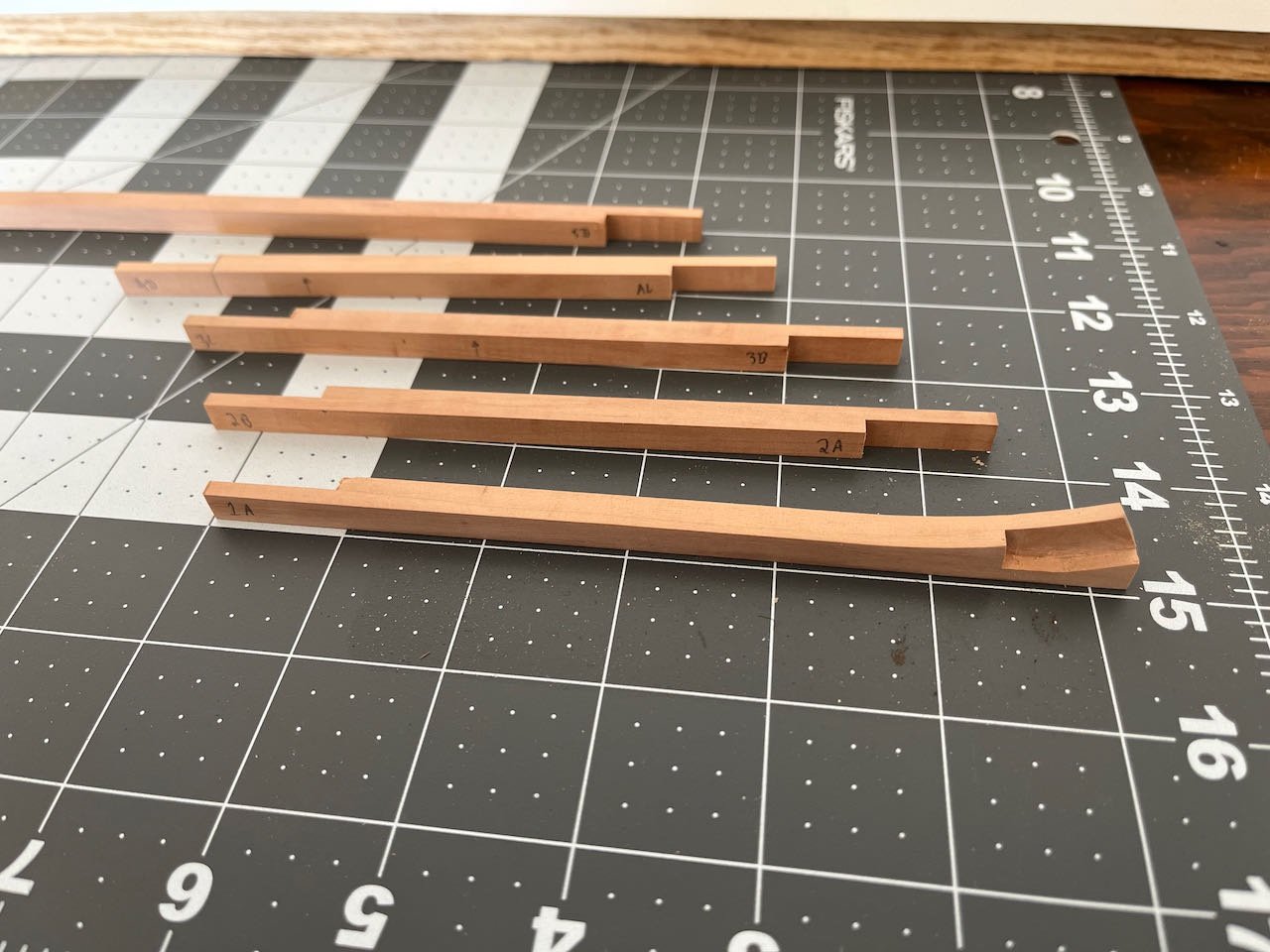
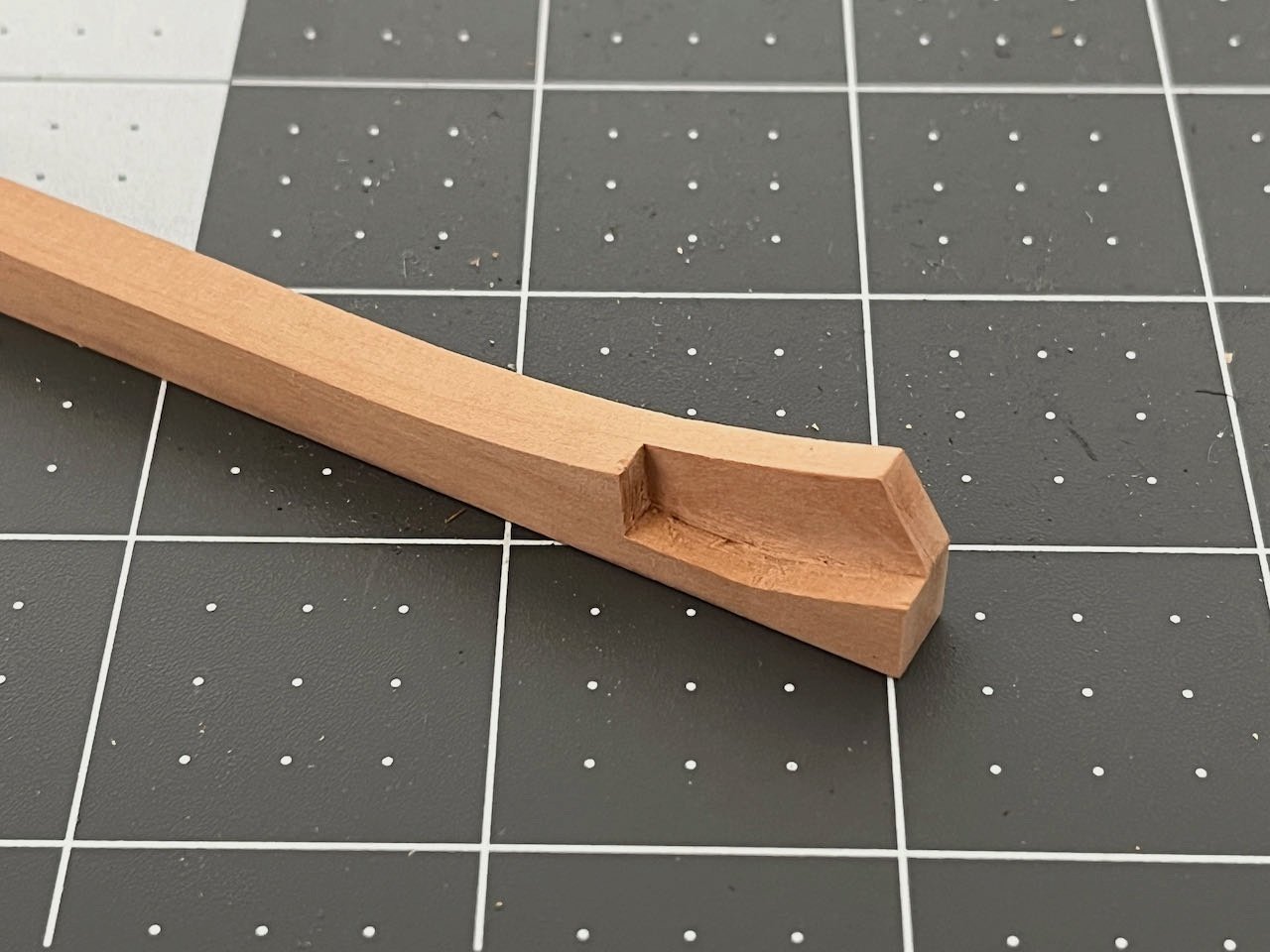
I've managed to cut the scarphs for the keel as well as the section with the boxing joint. It only took me 3 tries to make the section with the boxing joint without messing something up Plenty of good size pieces for the scrap box.
-
That figurehead is looking really good. Interesting choice of olive wood. I'm a little bit surprised we don't see more use of that on the site, as I have seen some amazing carvings in olive wood. Adam
-
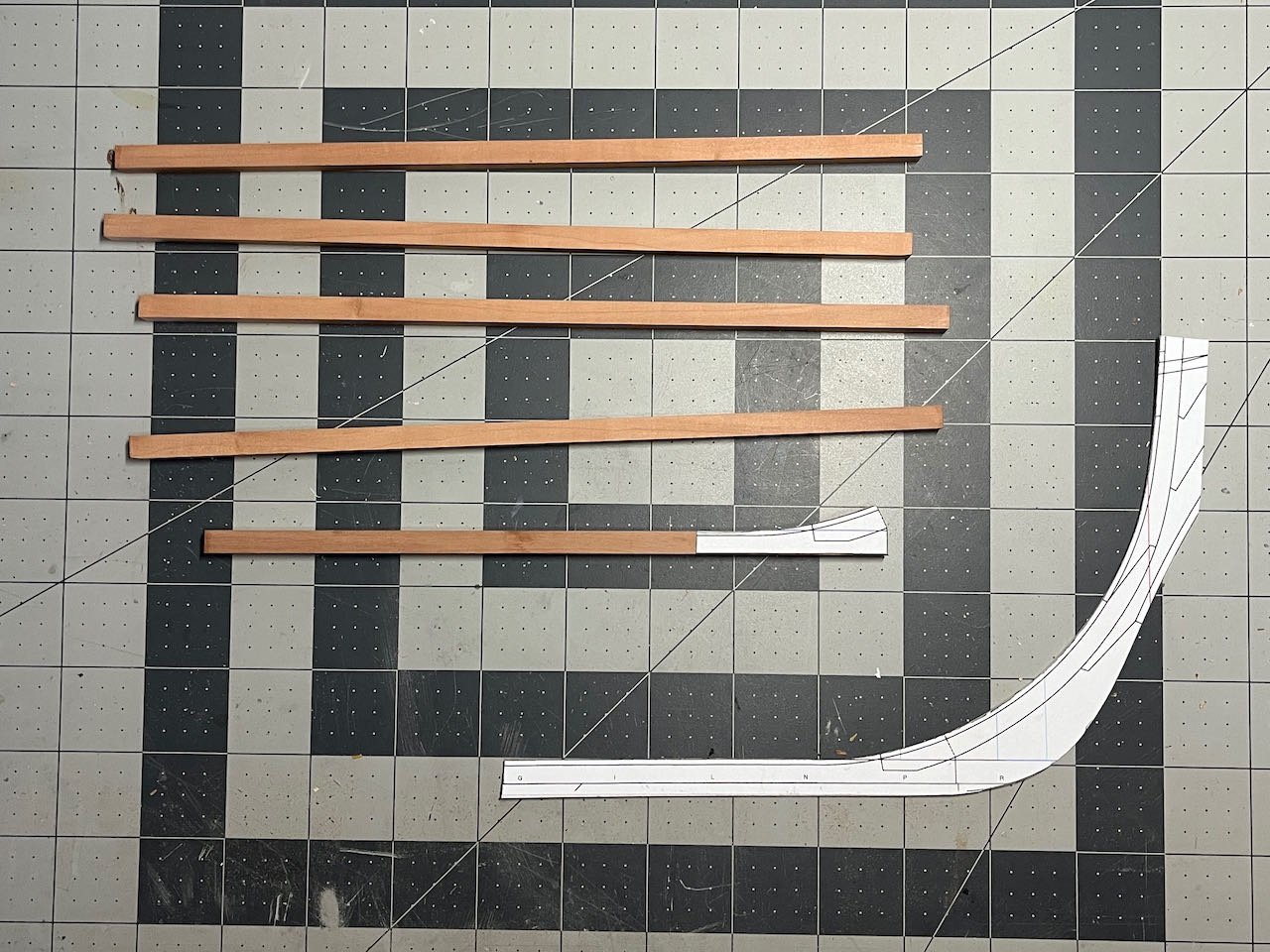
The fun begins. My references indicate the keel should be built up in 5 segments 13" square. I am using swiss pear for the keel and frames. My plan is to cut the scarphs for the keel on the mill and cut the boxing joint with chisels. We'll see how that goes . I glued a copy of the stem to a piece of plastic to use as a template for shaping both the boxing joint and the stem later.
-
I really like the idea of having a few figures and leaving them brown or grey. It reminds me of a lot of history displays in museums etc. Adam
-
I have started working on a building board following the description in Ed Tosti's Naiad book. I used a similar, smaller board for by galley Washington. I still need to build the gantry and accessory parts for holding the keel, aligning frames, etc.
-
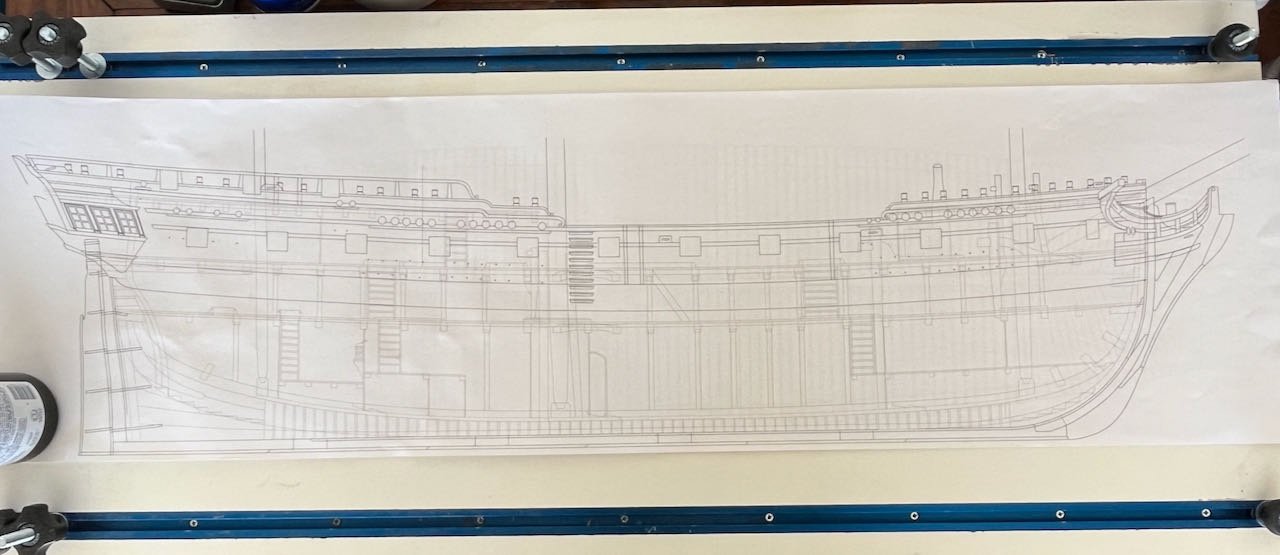
I have collected a number of references for building this ship. I started with a printed copy of the lines plans from the National Maritime Museum. I have also made a lot of use of "The Elements and Practice of Naval Architecture 1812" which is available as an electronic download from Google books. I have also taken a lot of dimensions from "Scantlings of Royal Navy Ships 1719-1805" by Allan Yedlinsky. That book contains information from "The Shipbuilders Repository" of 1788. Both "The Elements and Practice of Naval Architecture" and "The Shipbuilders Repository" are believed to have used the Porcupine class in the tables of scantlings for 24 gun ships. I have found the dimensions from "The Shipbuilders Repository" seem to more closely match the dimensions from the Admiralty Draught in many cases vs. dimensions from "The Elements and Practice of Naval Architecture." I also have the "Anatomy of the Ship The 24-Gun Frigate Pandora" book by John McKay and Ron Coleman. This book is a treasure trove of information for a very similar ship. I have finished all the basic drawings that I need to get started building, but still have work to go to have a "full set" of working drawings. I have little concern that it will be easy enough to keep ahead of construction with the drawing development. I am far enough along that I have confidence that I can start building without any regrettable mistakes to have to deal with later.
-
After completing my Washington Galley, I am ready to start a new project. I will start on the HMS Crocodile of 1781. The Crocodile was a 24 gun Porcupine class post ship. It is a sister ship of the famous HMS Pandora of 1779. It was a ship of no particular significance and was wrecked off Prawle Point, England in 1784. I chose the Crocodile for several reasons. Firstly, I was looking to do a small frigate that would be a "reasonable size" at 1:48 scale. Secondly, I wanted to do a ship that I have never seen anyone build before. Thirdly, I really like the look of the ship in the drawings that are available from the NMM. I purchased the plans of the ship from the National Maritime Museum. The plans include the figurehead and stern carvings. I am blown away by the beauty of the original drafting and that the plans are still in good shape after over 240 years. I have been working for several months drafting working drawings in TurboCad. I am hoping to finish the model over the next 8+ years. I would like to thank a number of people before I even get started. I followed Wayne Kempson's article Drafting Ship Plans in CAD from the NRG homepage almost from start to finish to draft the lines plans for Crocodile. I also have worn out the drafting section of Ed Tosti's Naiad book and David Antscherl's Fully Framed Model series. I do not think it would have been possible for me to draft a set of plans for a fully framed model without all of their work. Allan Yedlinsky's book Scantlings of Royal Navy Ships 1719-1805 has also been immensely helpful. Finally thank you to all the members of MSW going back to the original MSW for all the inspiration and for answering questions over the years. I don't think I would ever have even dreamed of starting a model of this complexity without seeing all the great work done by so many amazing modelers over the years. Adam
-
I agree with scrubby427. The warm colors of the model combined with the painting is an amazing look. The metalwork for the pumps is great. It really reminds me of some of the old museum models. Adam
-
Ken, I've been watching this log from the beginning. It turned out great. Very cool little ship. Adam
-
Happy to see you back at it Mark!
-
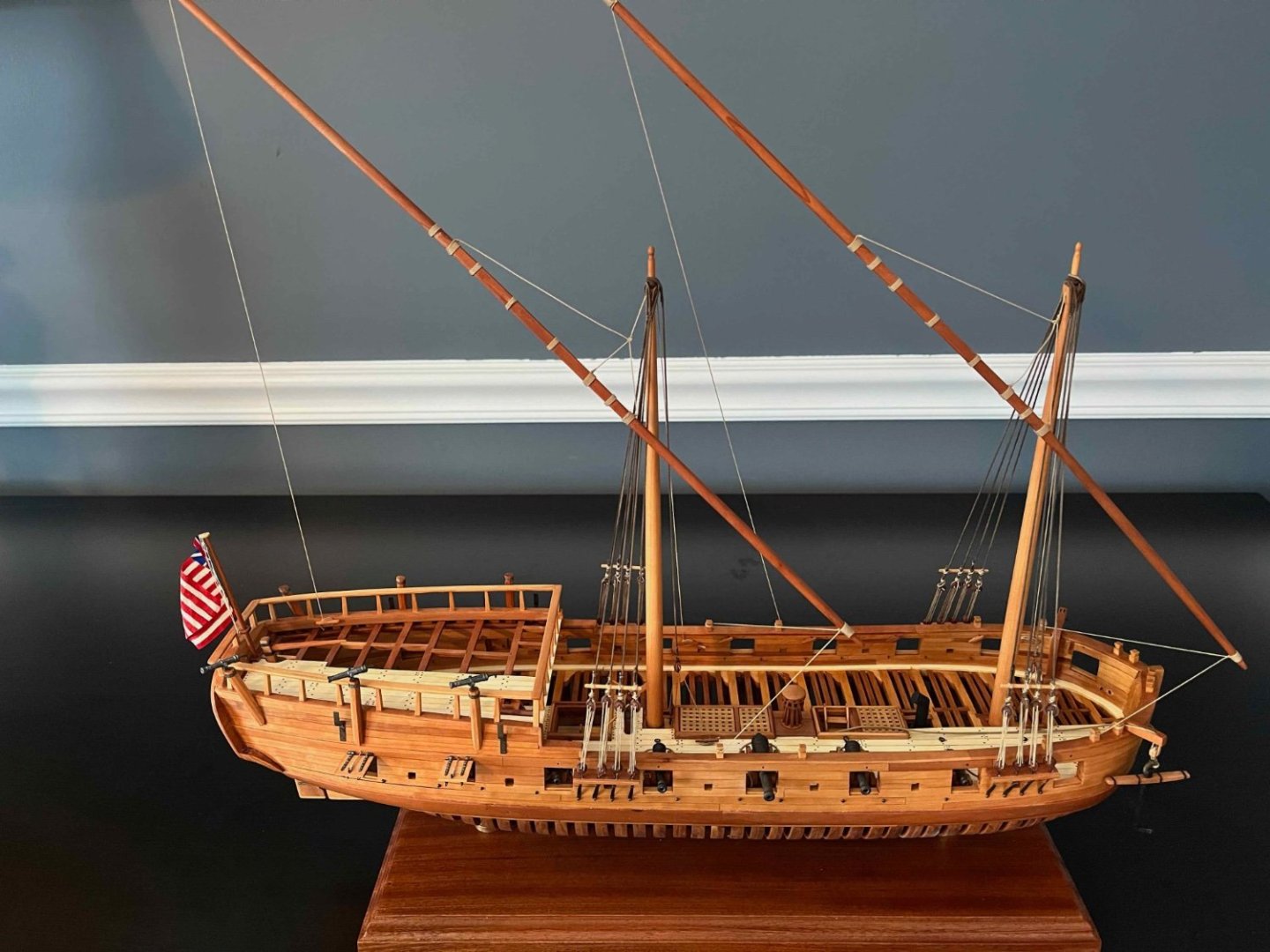
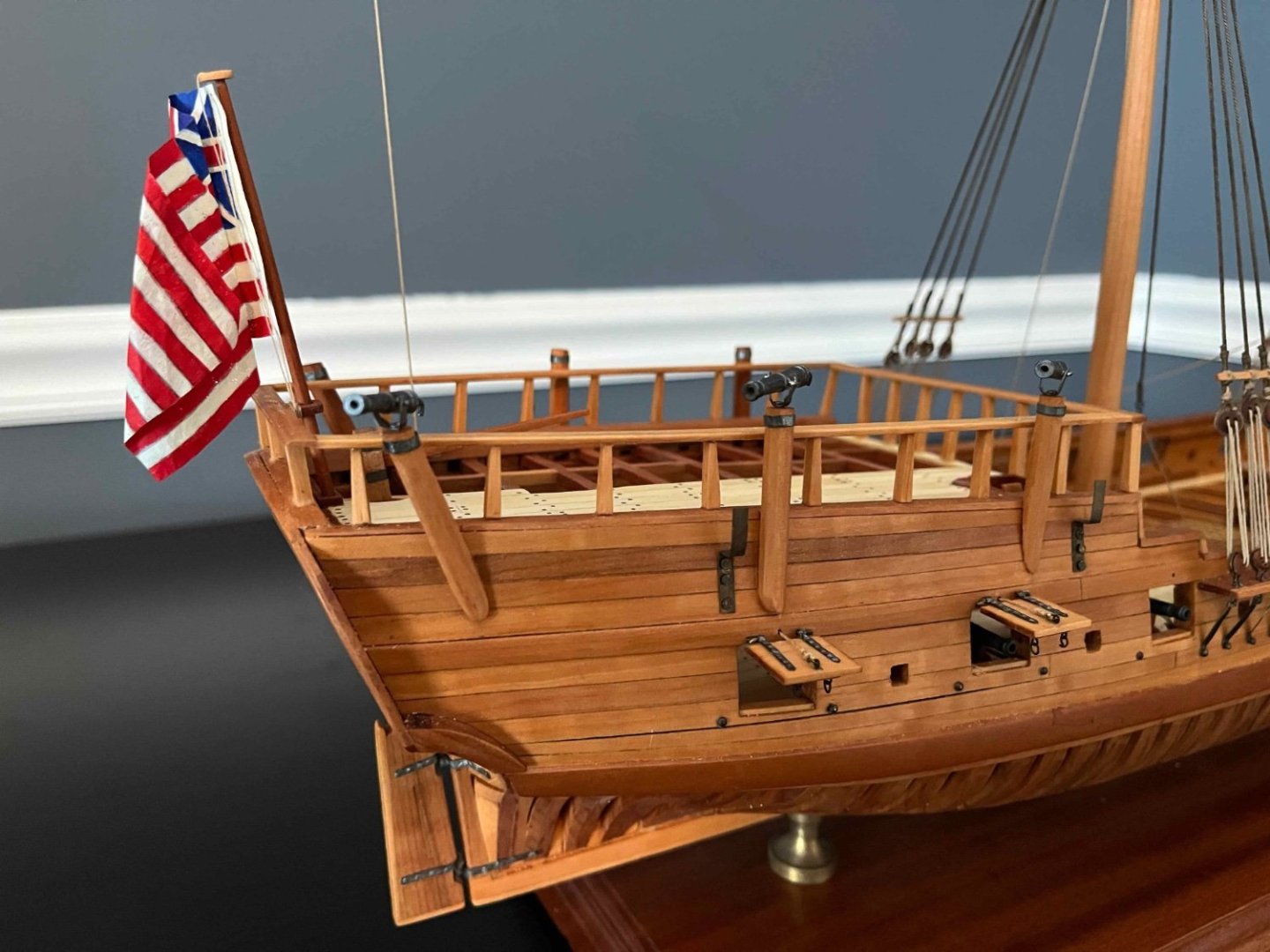
The split in the planking below the gun ports in the stern view opened up during the dry weather related to our recent arctic blast. Fingers crossed that it closes back up when the weather warms up. I need to take this into account for my next build, because I normally work in the garage where it is cooler and RH is higher. I brought it inside the house to work on the rigging at pretty much the most inopportune time from a climate perspective.
-
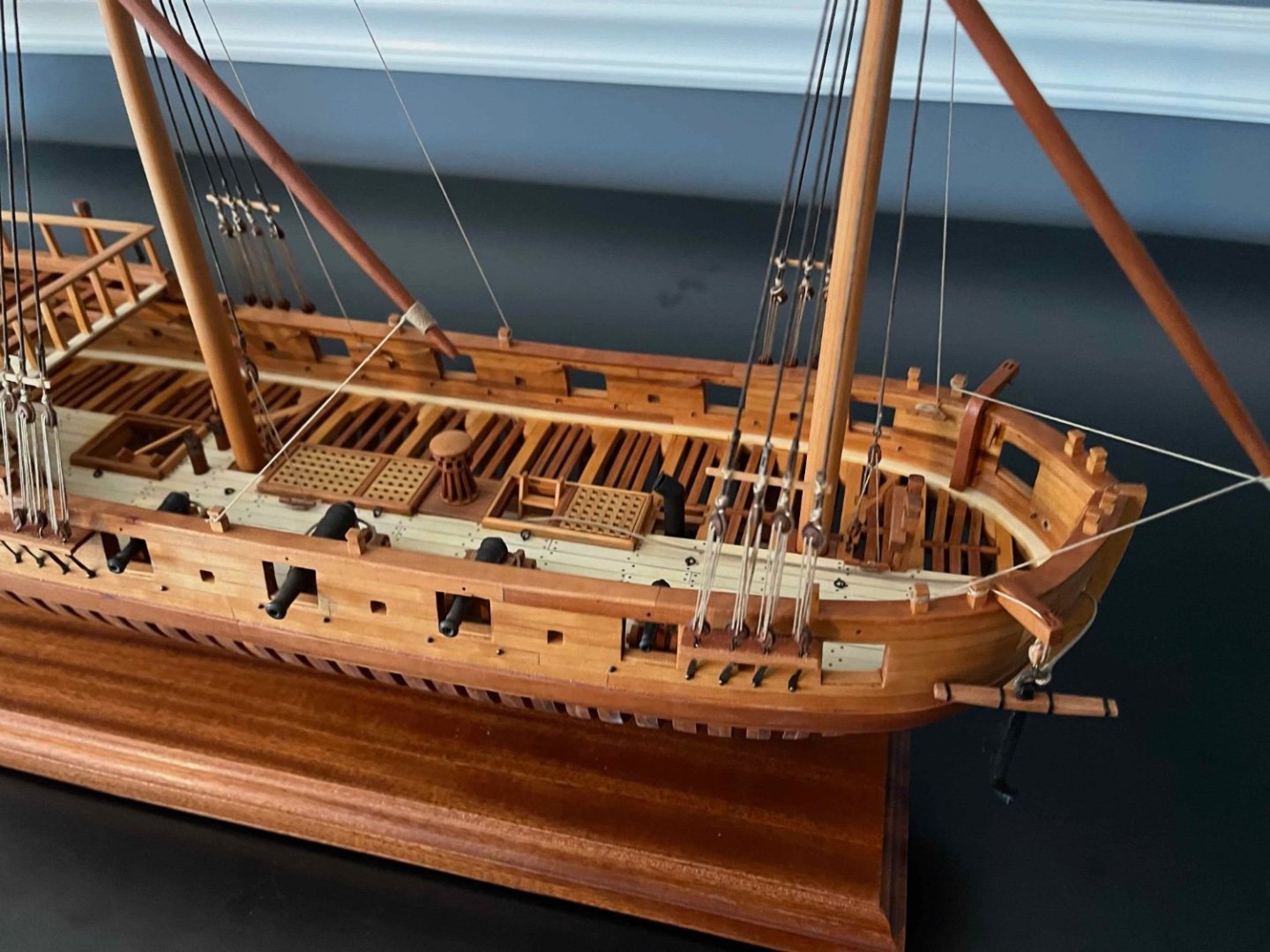
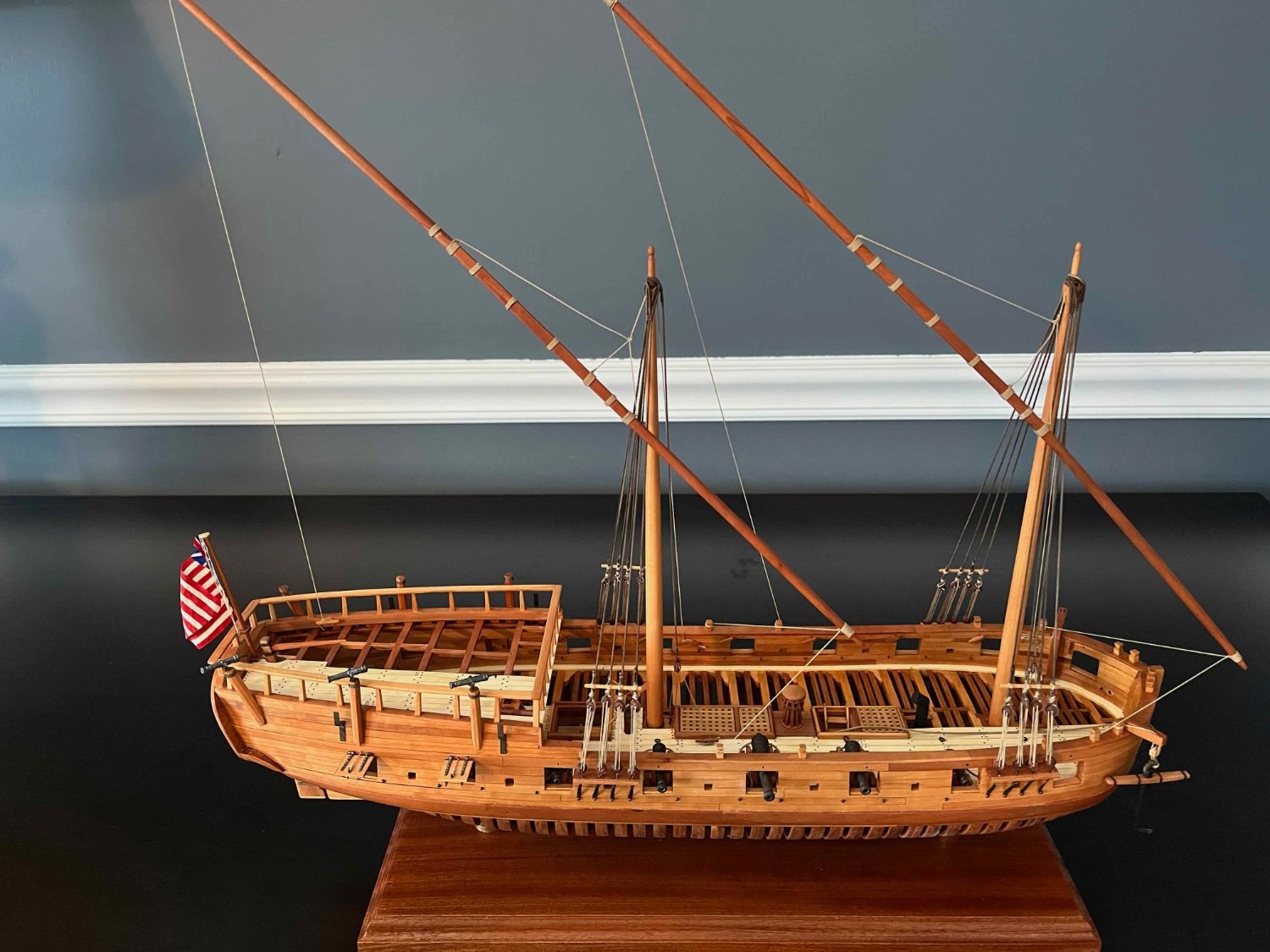
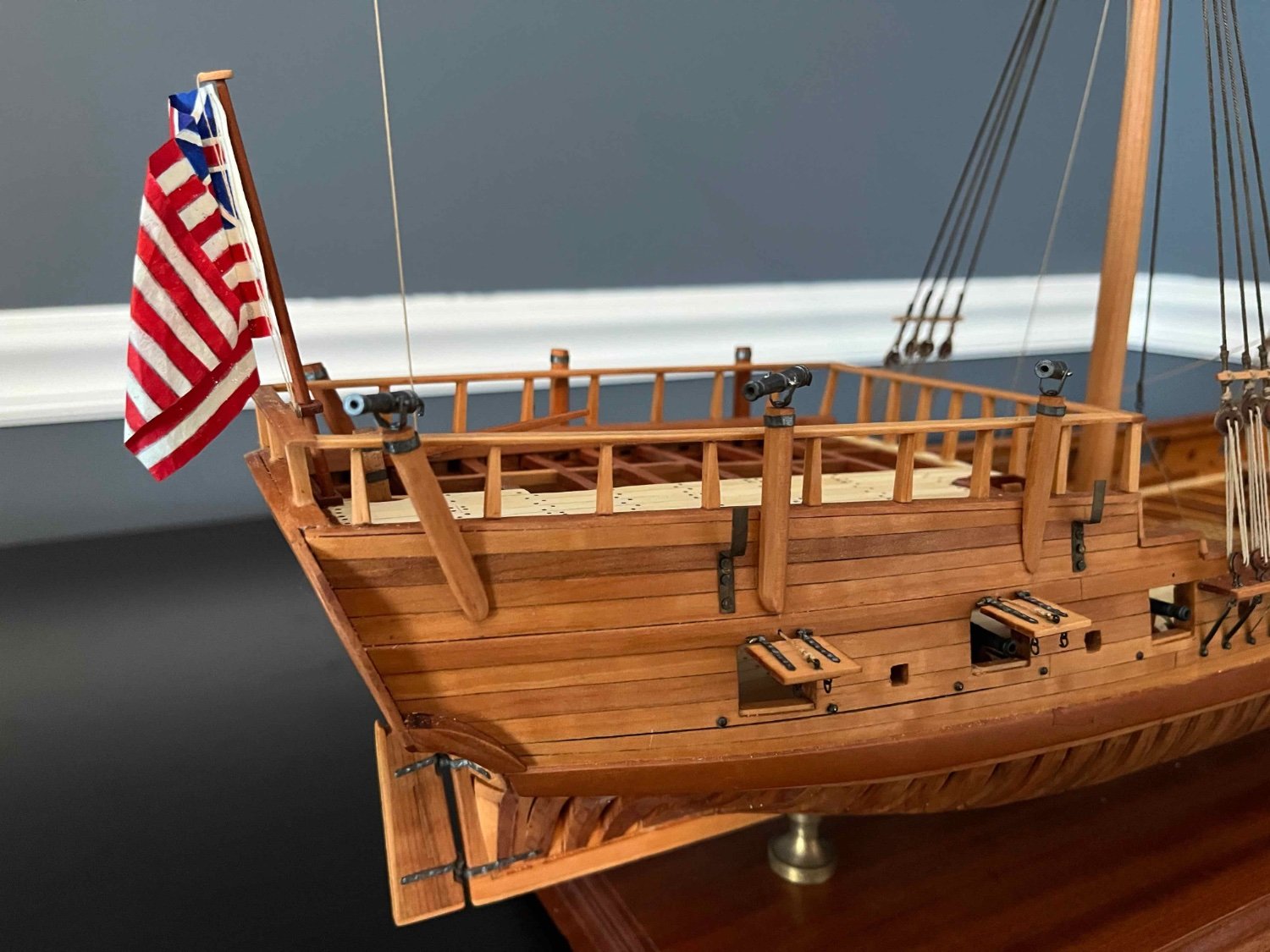
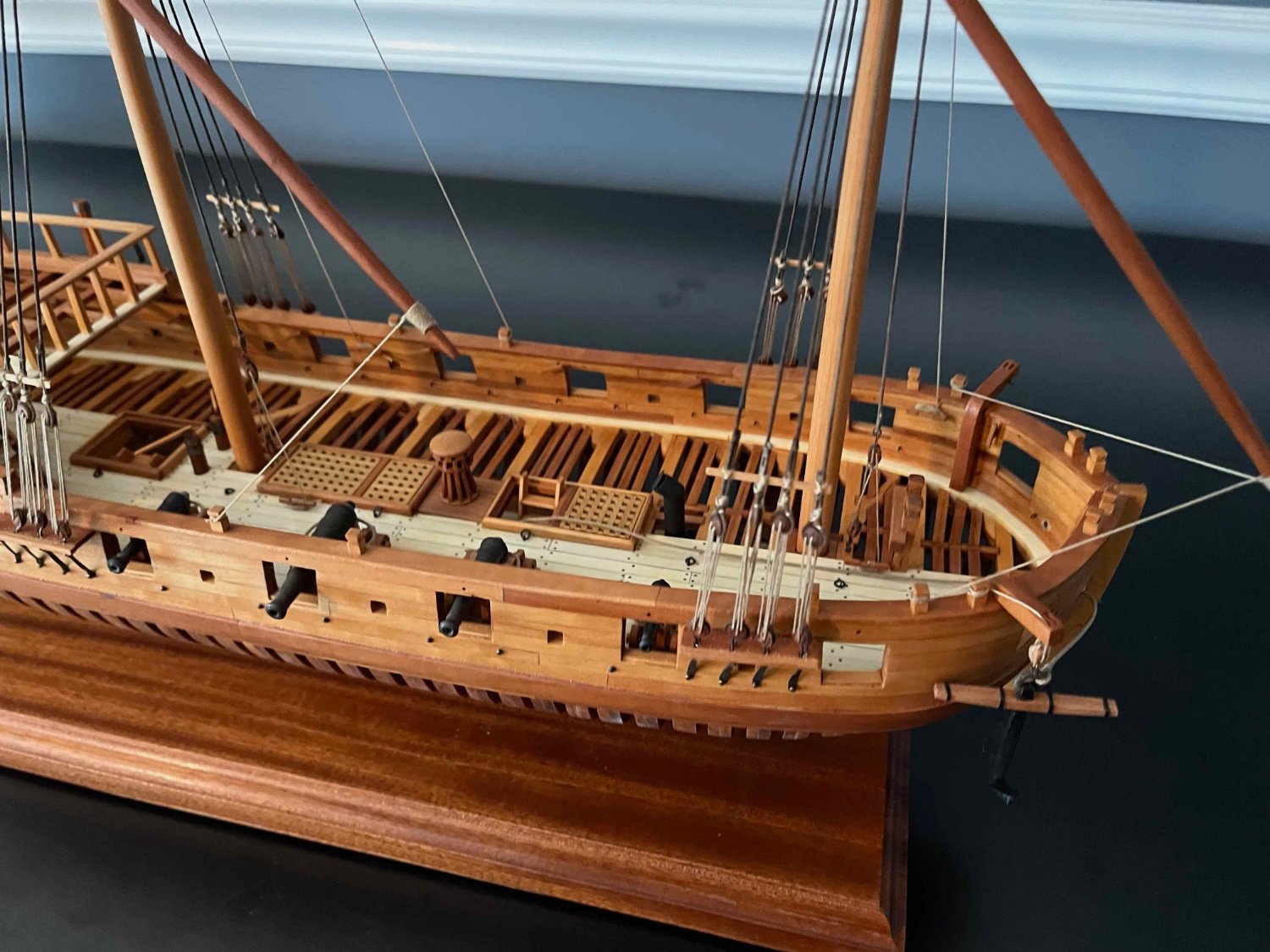
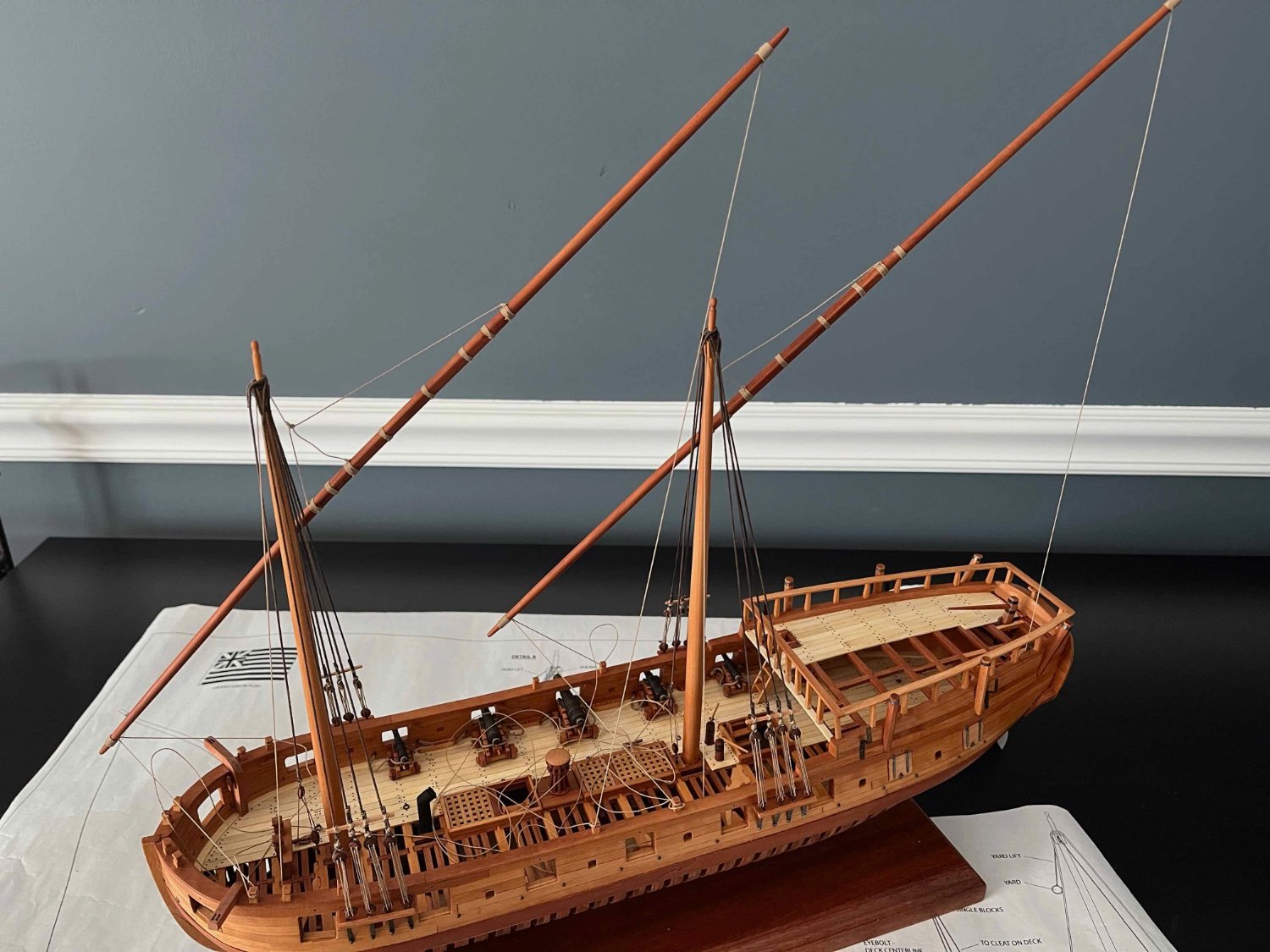
Almost done! I am still working on the sweeps to put in their racks. Then I will figure out the case situation. Adam
-
Richard, This is what I would try. Wait for the varnish to be fully cured. Then give the hull a light sanding with around 600 grit (or maybe slightly coarser) sand paper. Then mask and spray the areas you want white with Tamiya or Mr Hobby primer (they have a white primer). You should be able to paint with just about any paint you want with the primer on and dried. Adam
-
I really like the look of the window glass. Adam
-
Bill, Stick with it. It will turn out great. The finished galley is a cool little ship. Adam
-
Ken, I used the Gutermann thread recommended by Chuck. I haven't had much trouble with gluing with white glue, but it does darken the color a bit. I have used a drop of CA in a couple spots that I really wanted to make sure stayed glued. Next time I am going to be more careful with the heating and stretching step to make sure I don't end up with lines that want to twist when stretched. I had some issues with that on the shrouds. Adam
-
All rope was made using the Syren rope rocket. I used the same color rope for the standing rigging, but airbrushed it brown and immediately wiped with a rag. I'm really happy with how that turned out, and I'm planning a rope making day to gear up for future builds. Adam
-
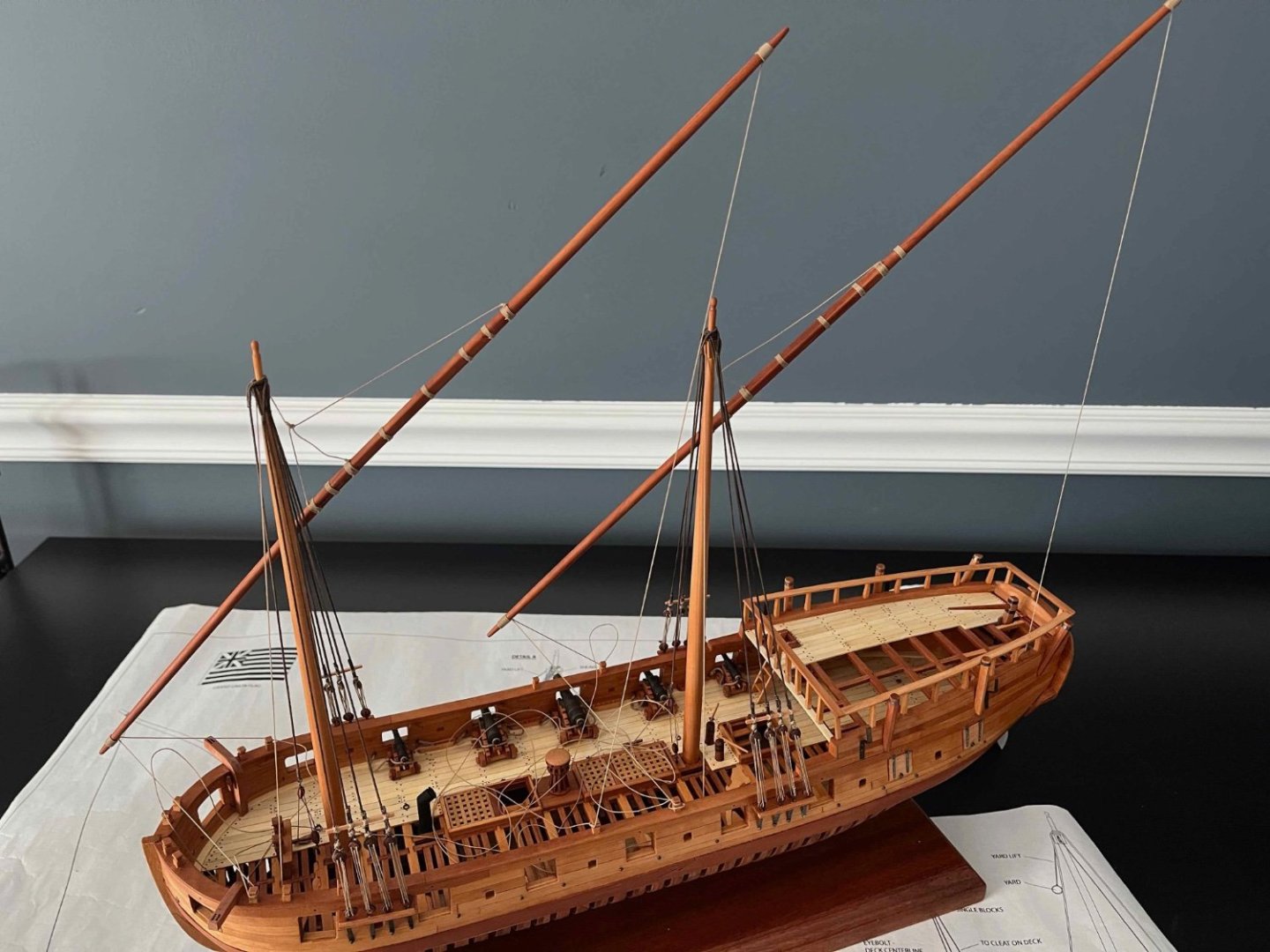
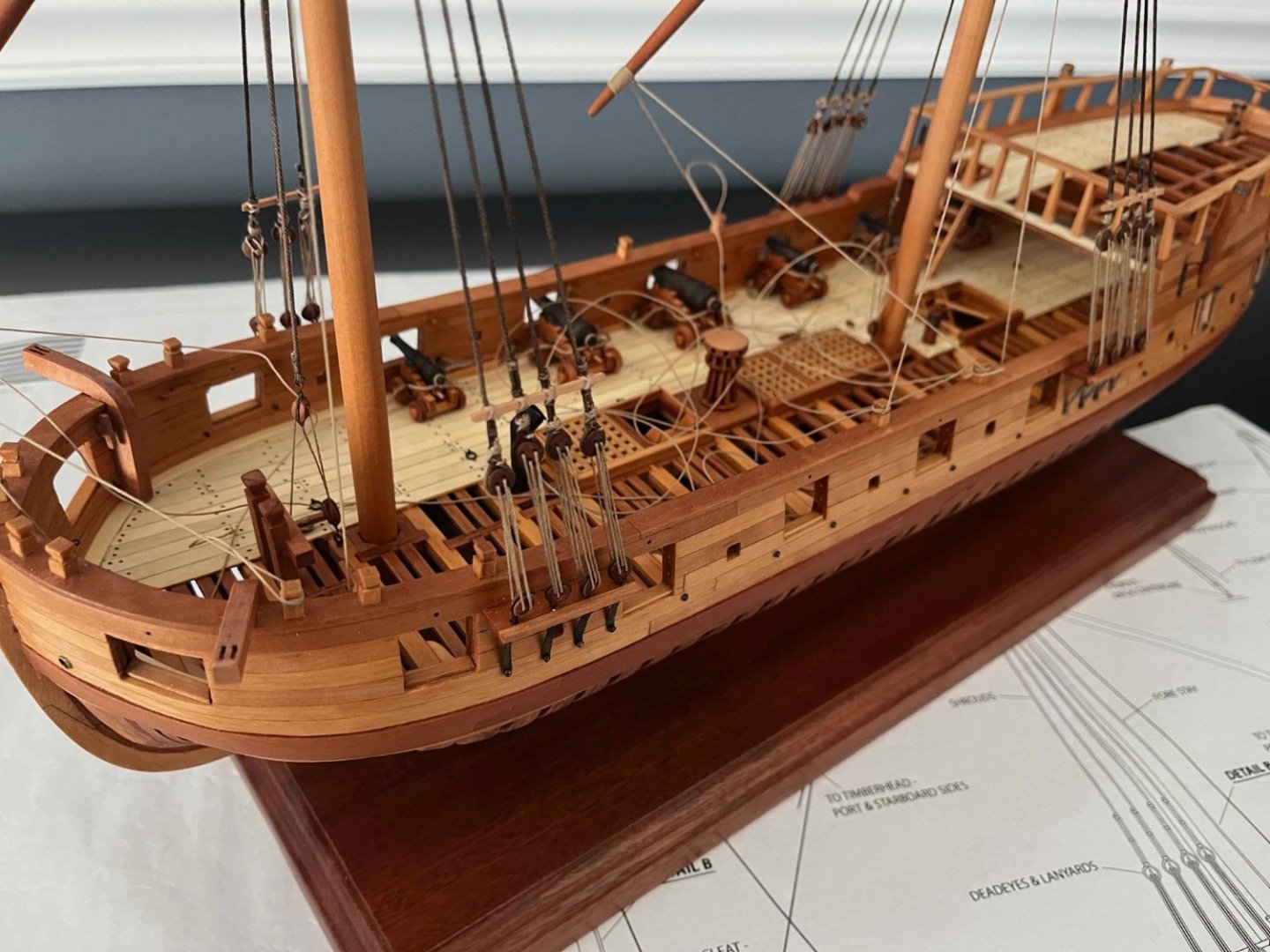
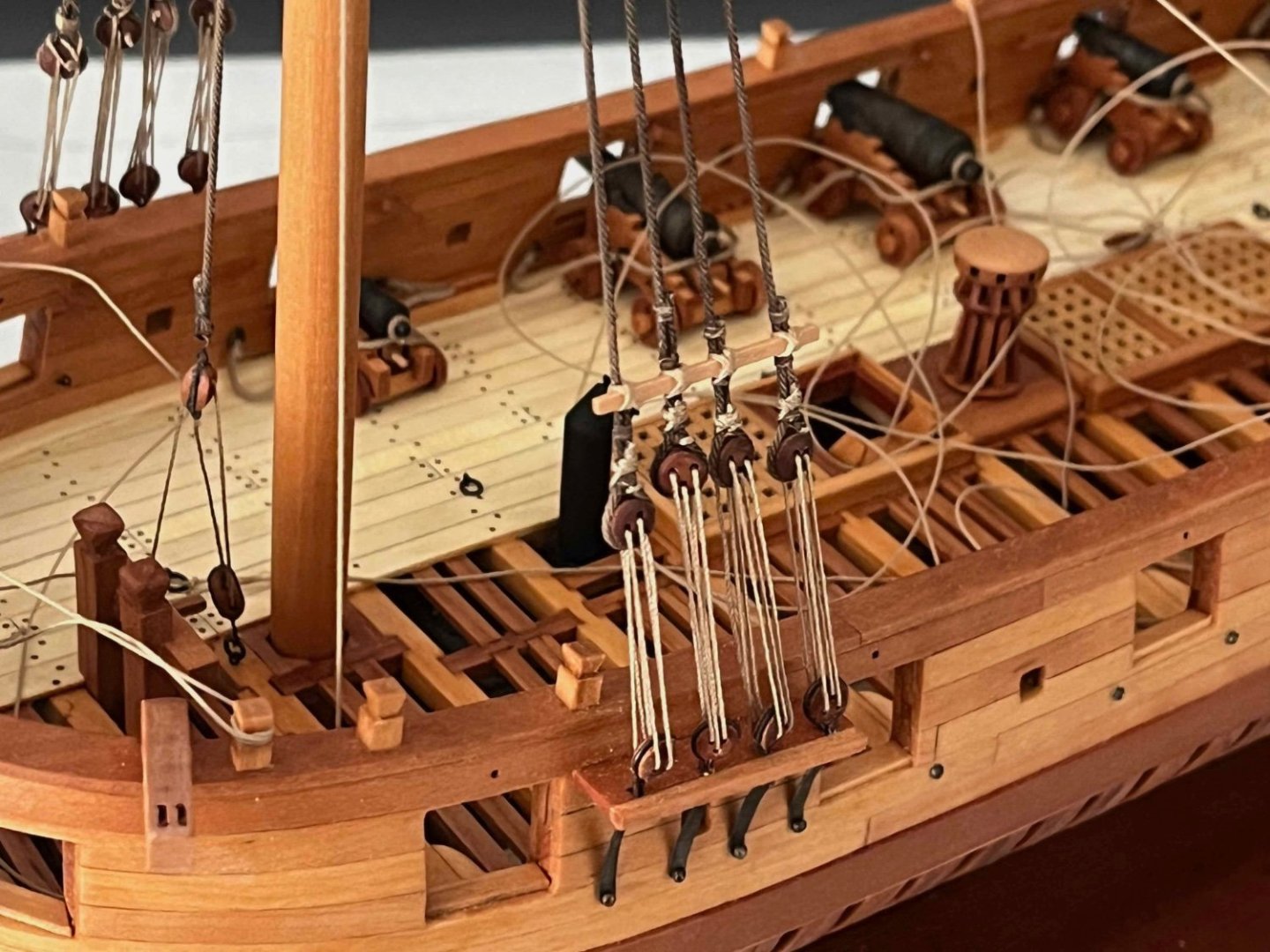
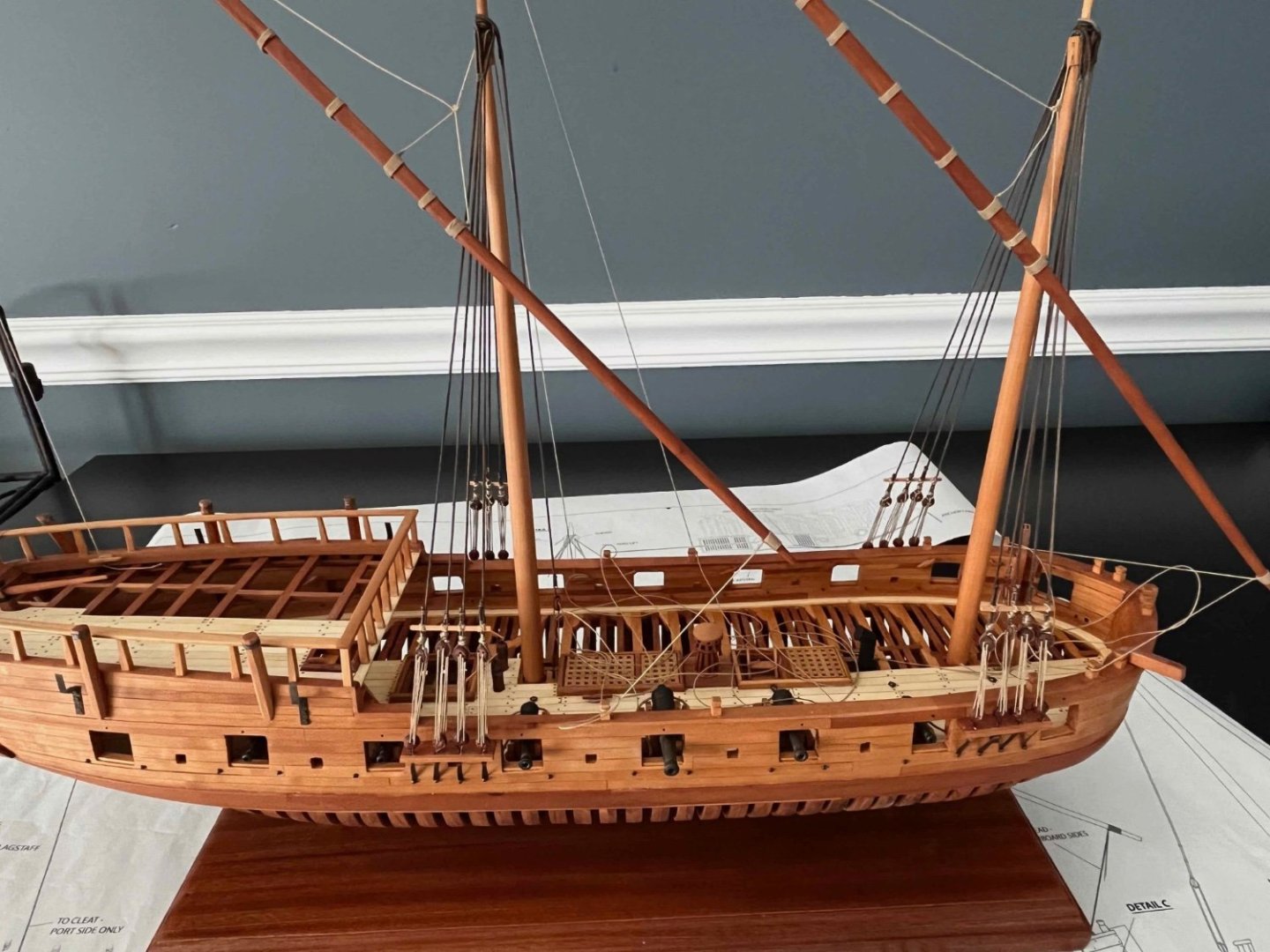
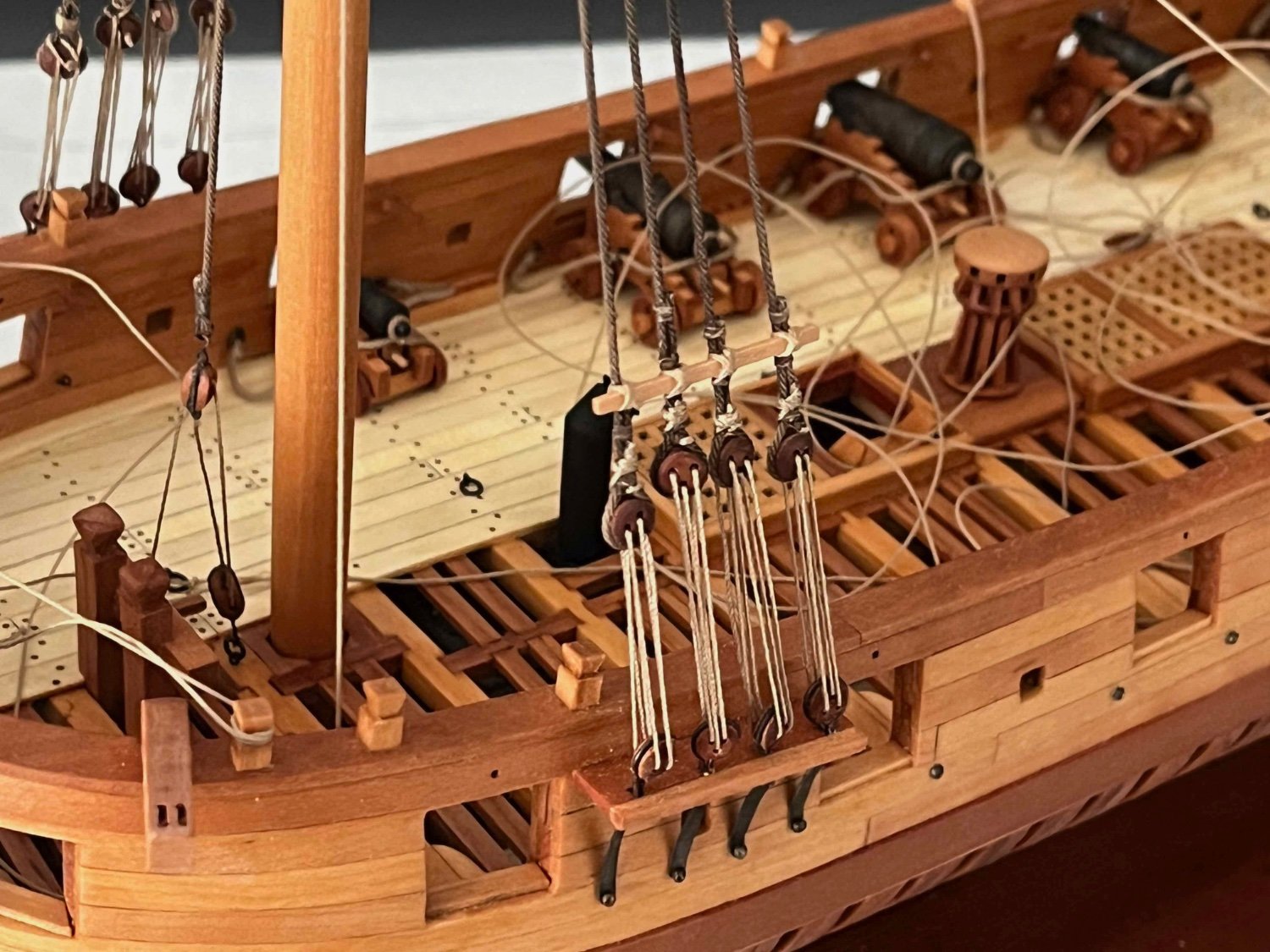
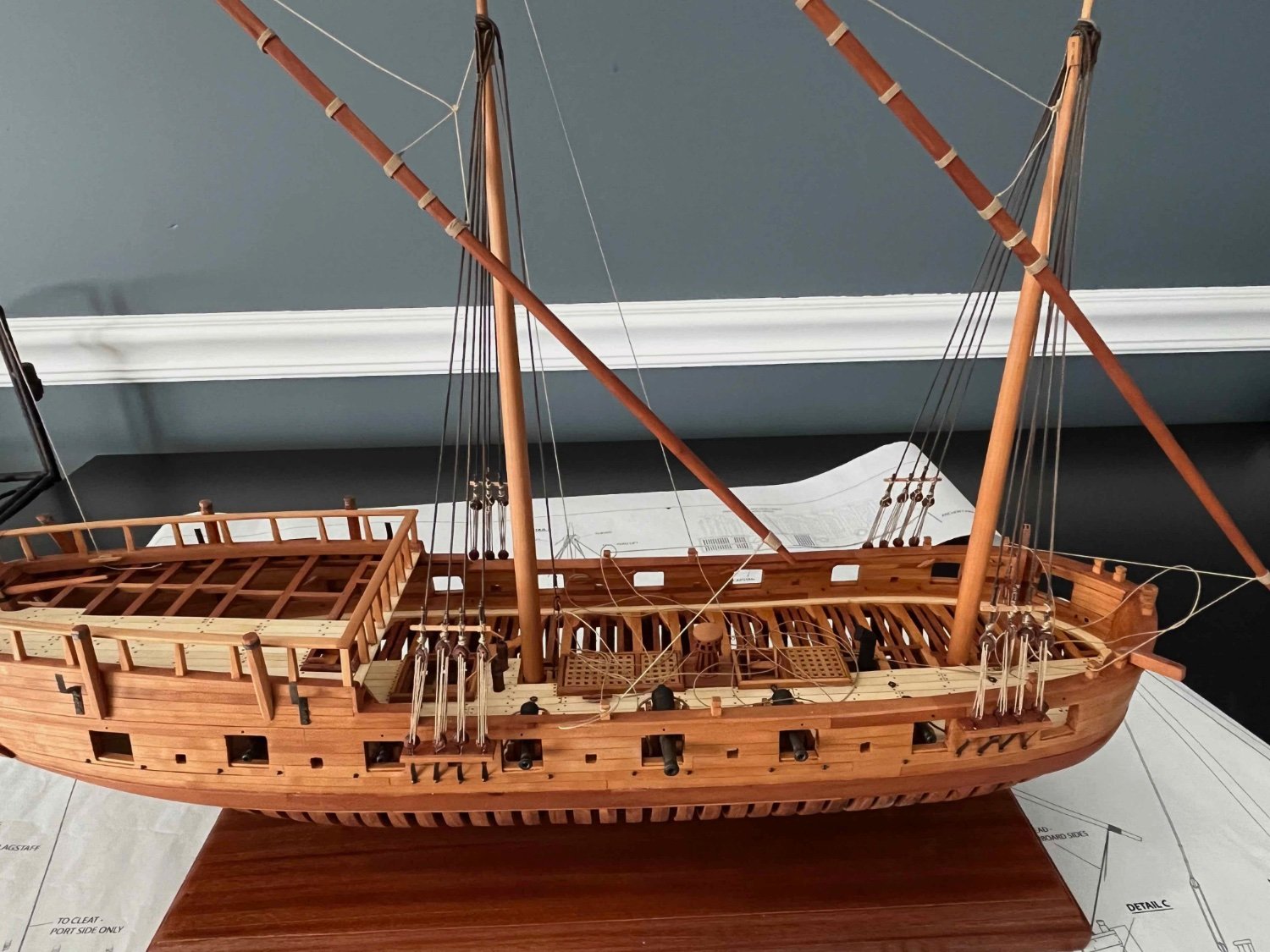
Closing in on wrapping up the galley. I am underway with the rigging. Nothing is glued yet, so lots of loose ends of rope. I had a lot of mental debate about mounting the yards inside or outside of the shrouds. I ended up going with the instructions and mounting outside the shrouds. I'll admit I'm not sure I see how this would work in practice, but not sure how it would work the other way either. Next I will move on to making the anchor and the swivel gun mounts.
-
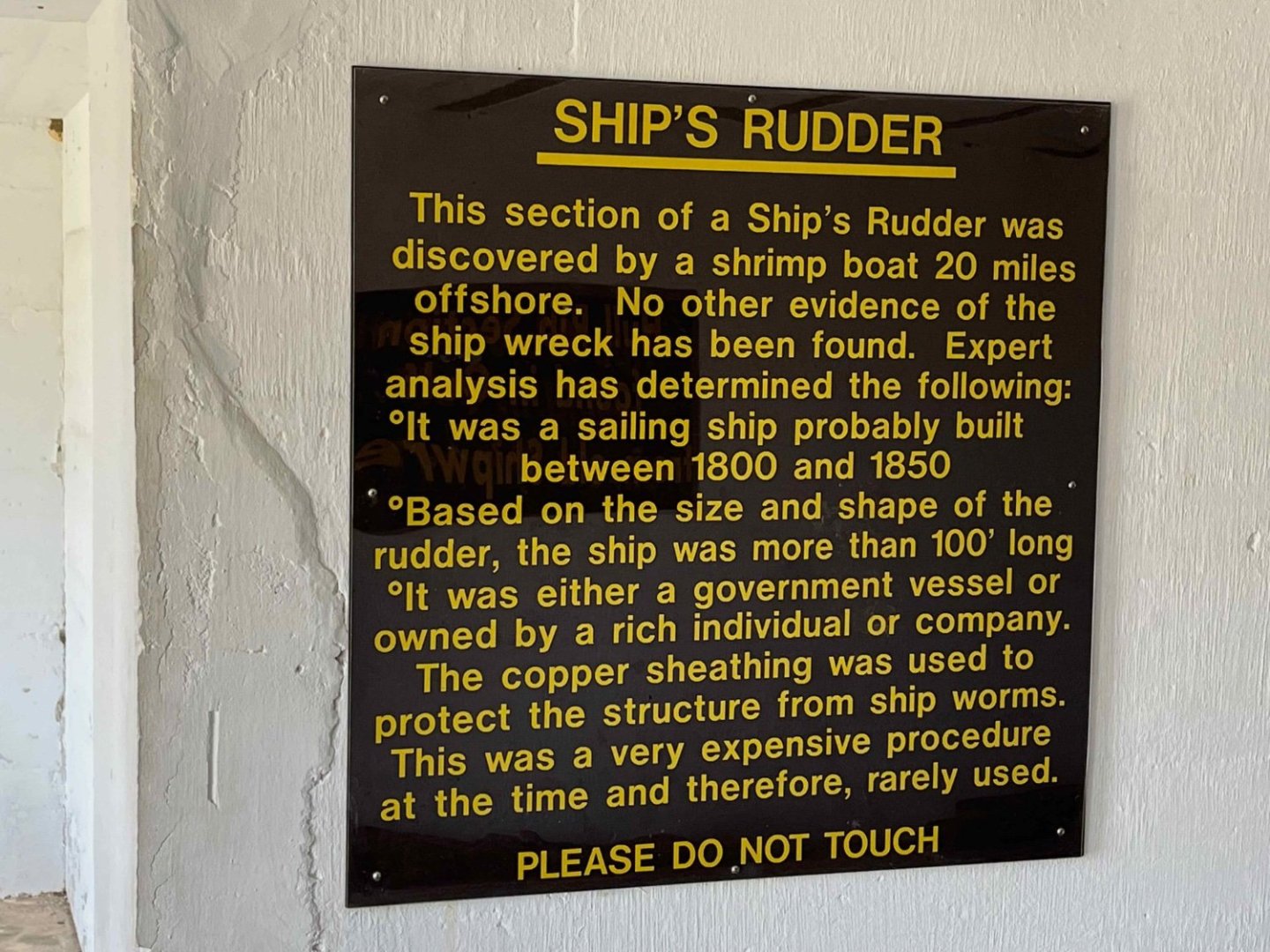
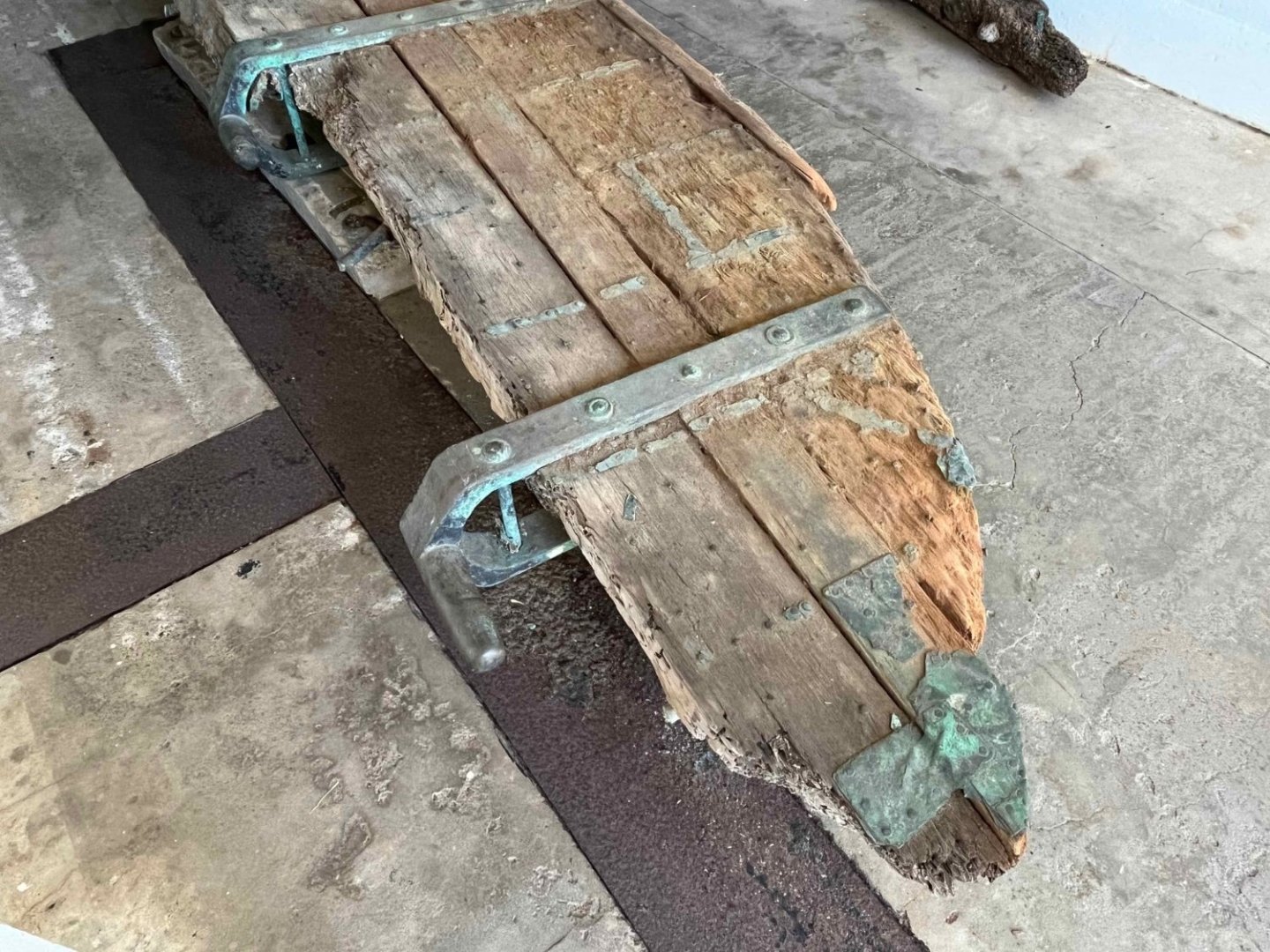
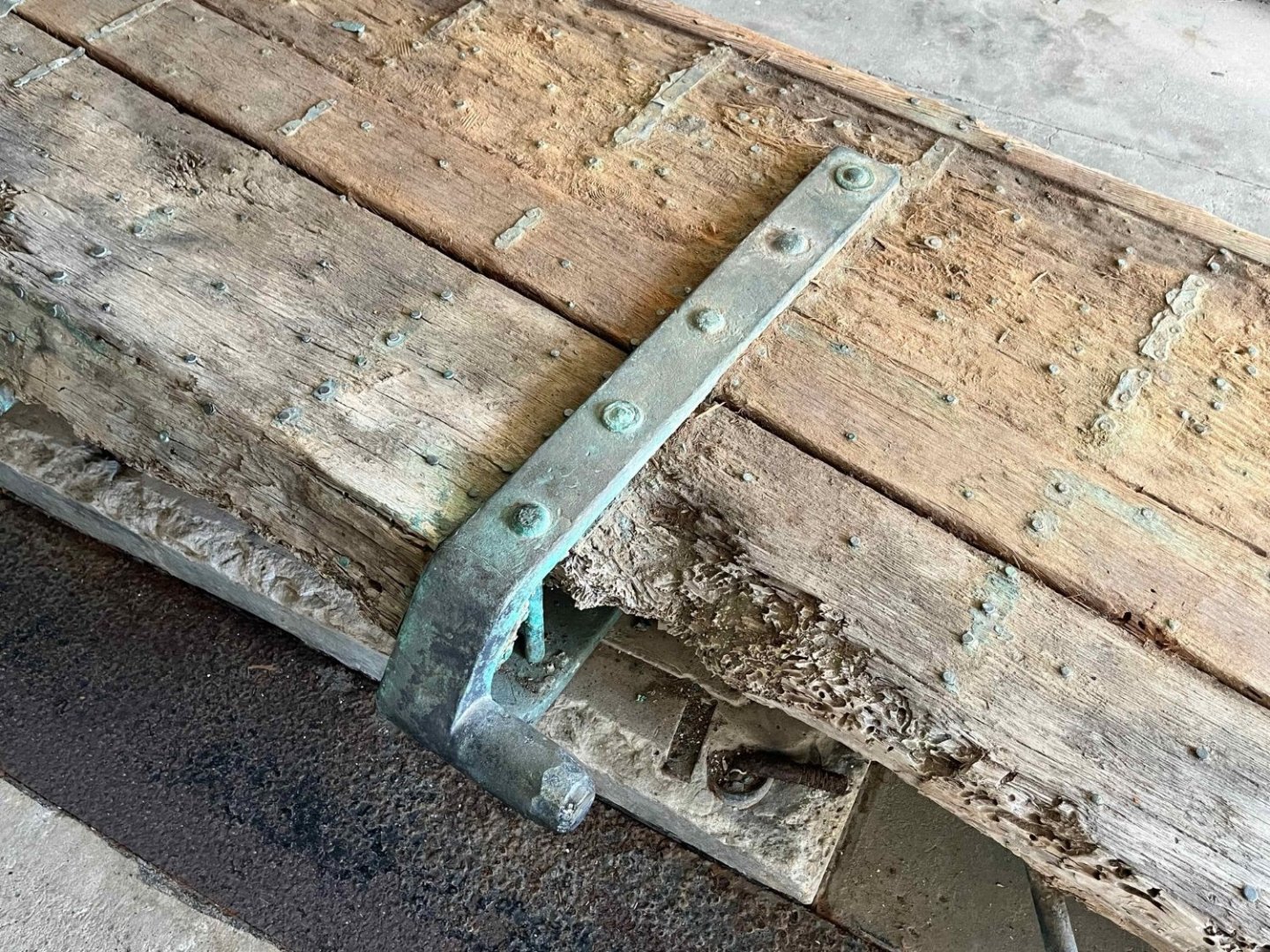
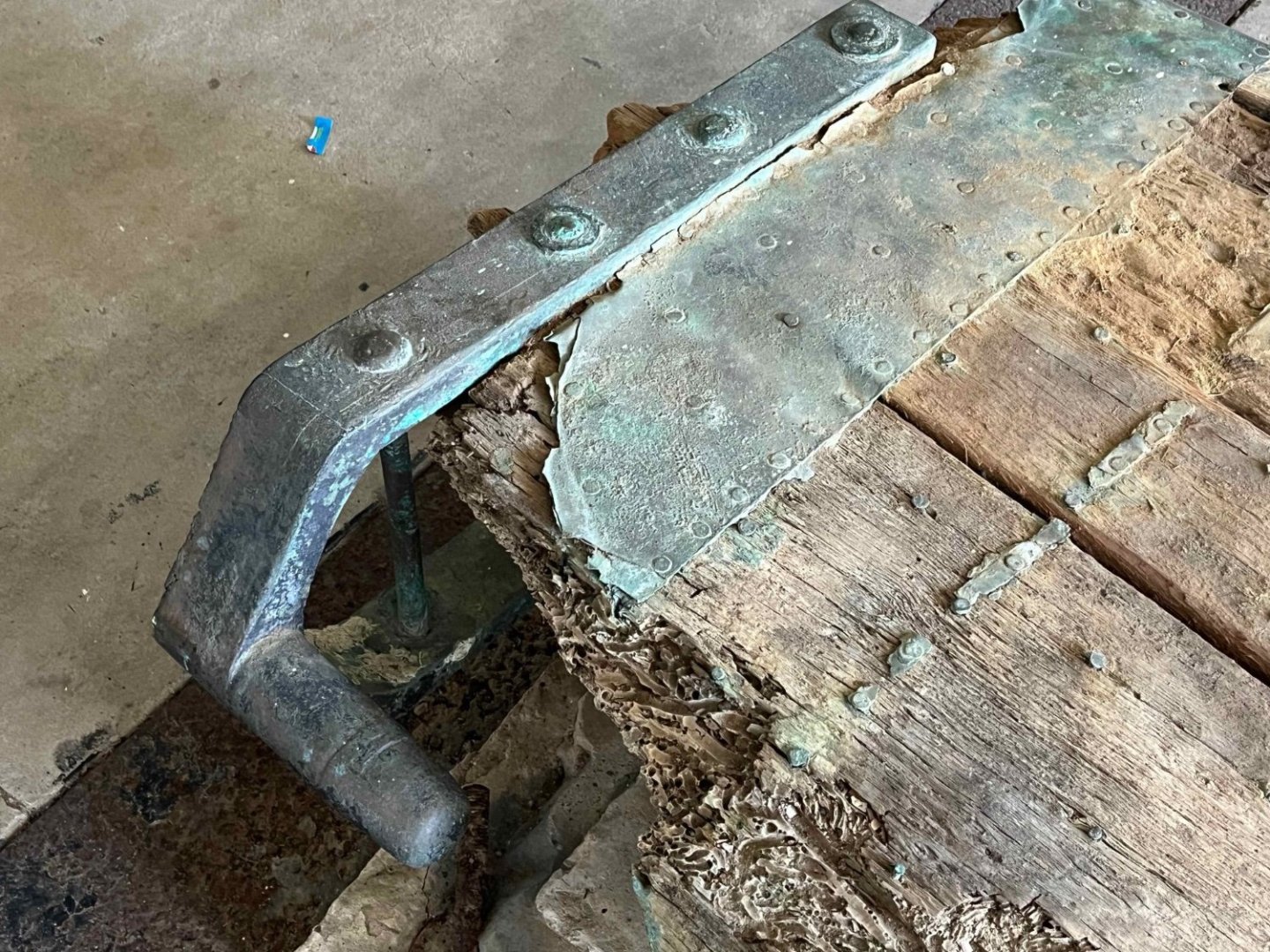
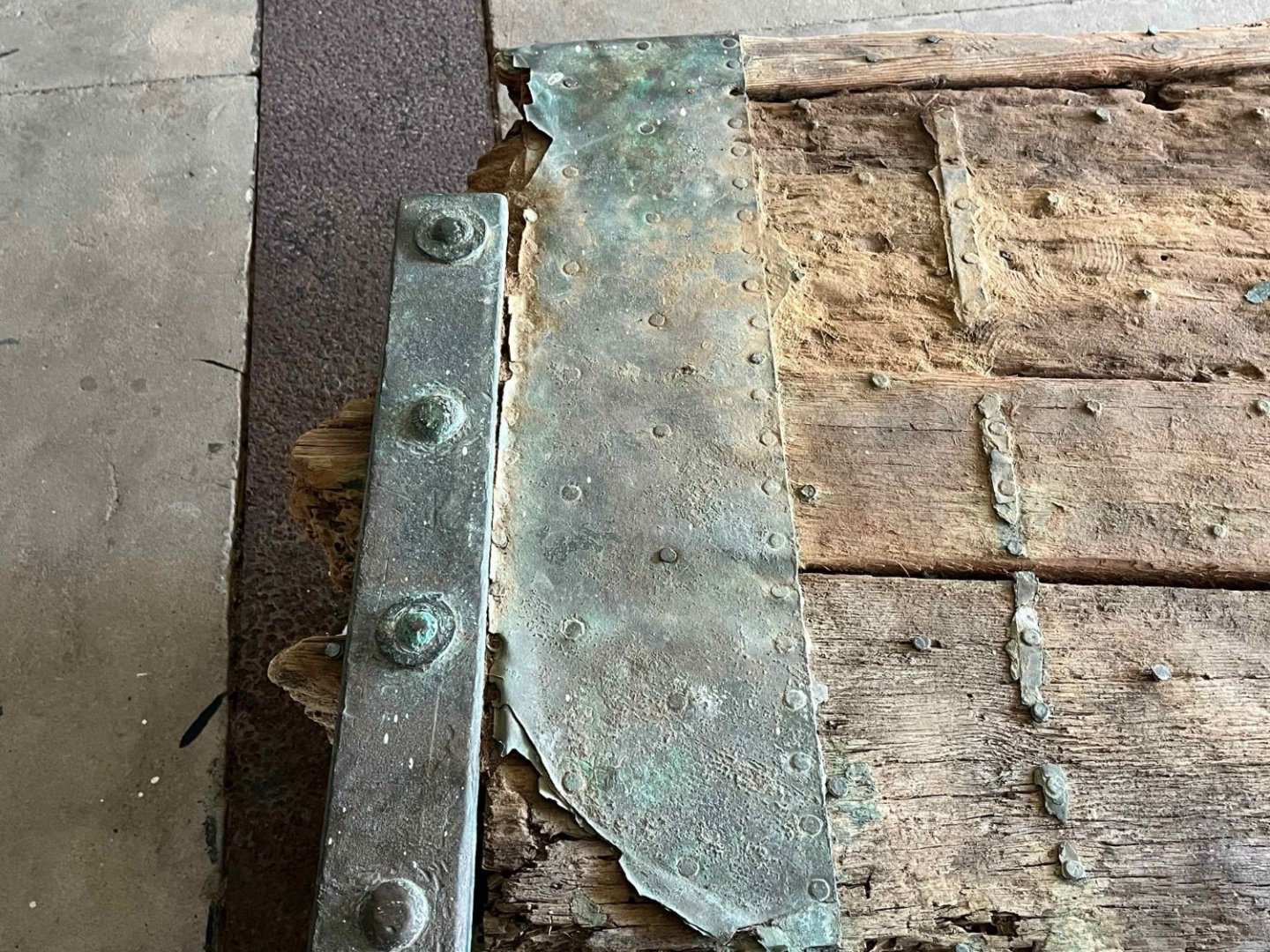
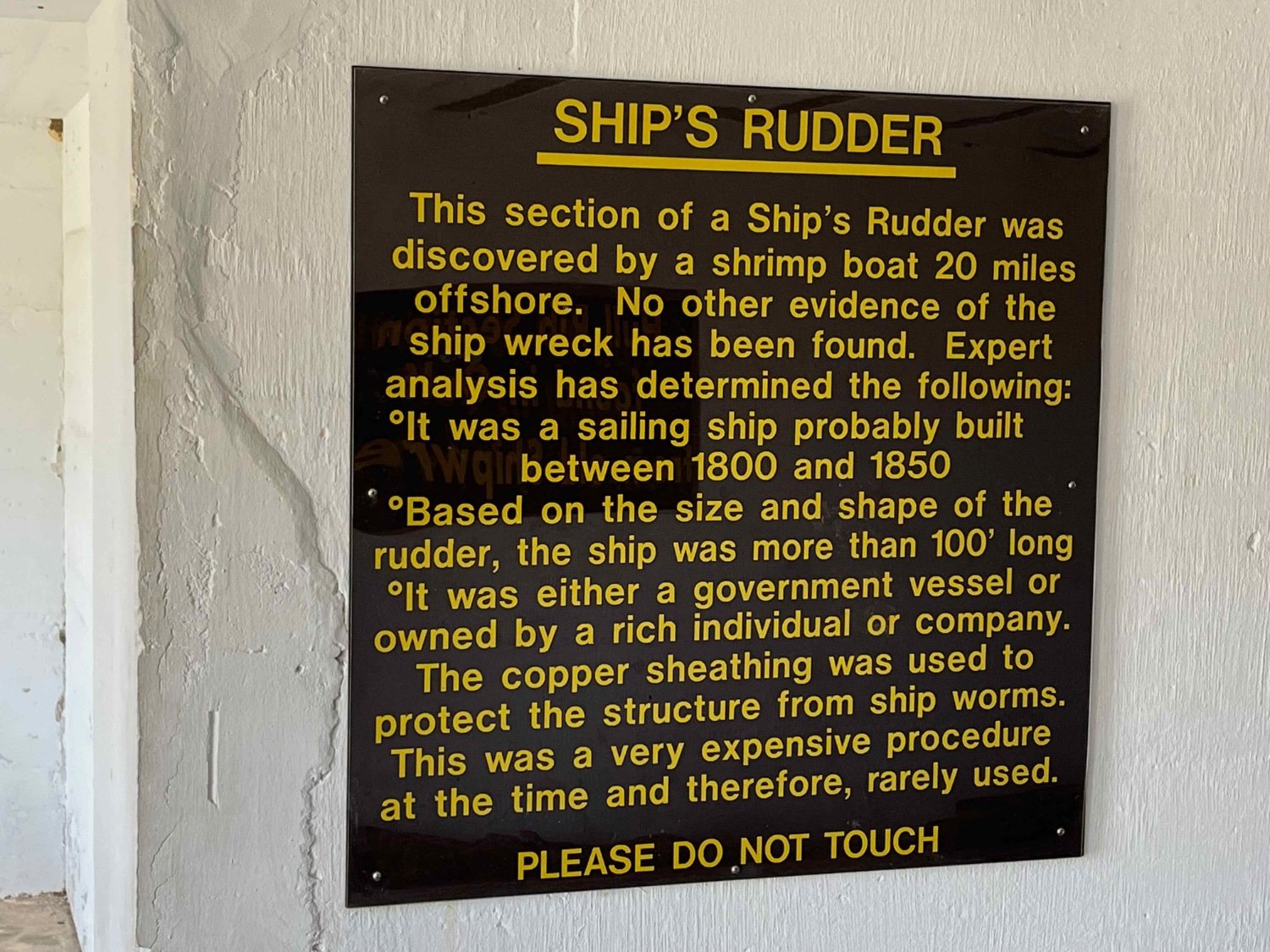
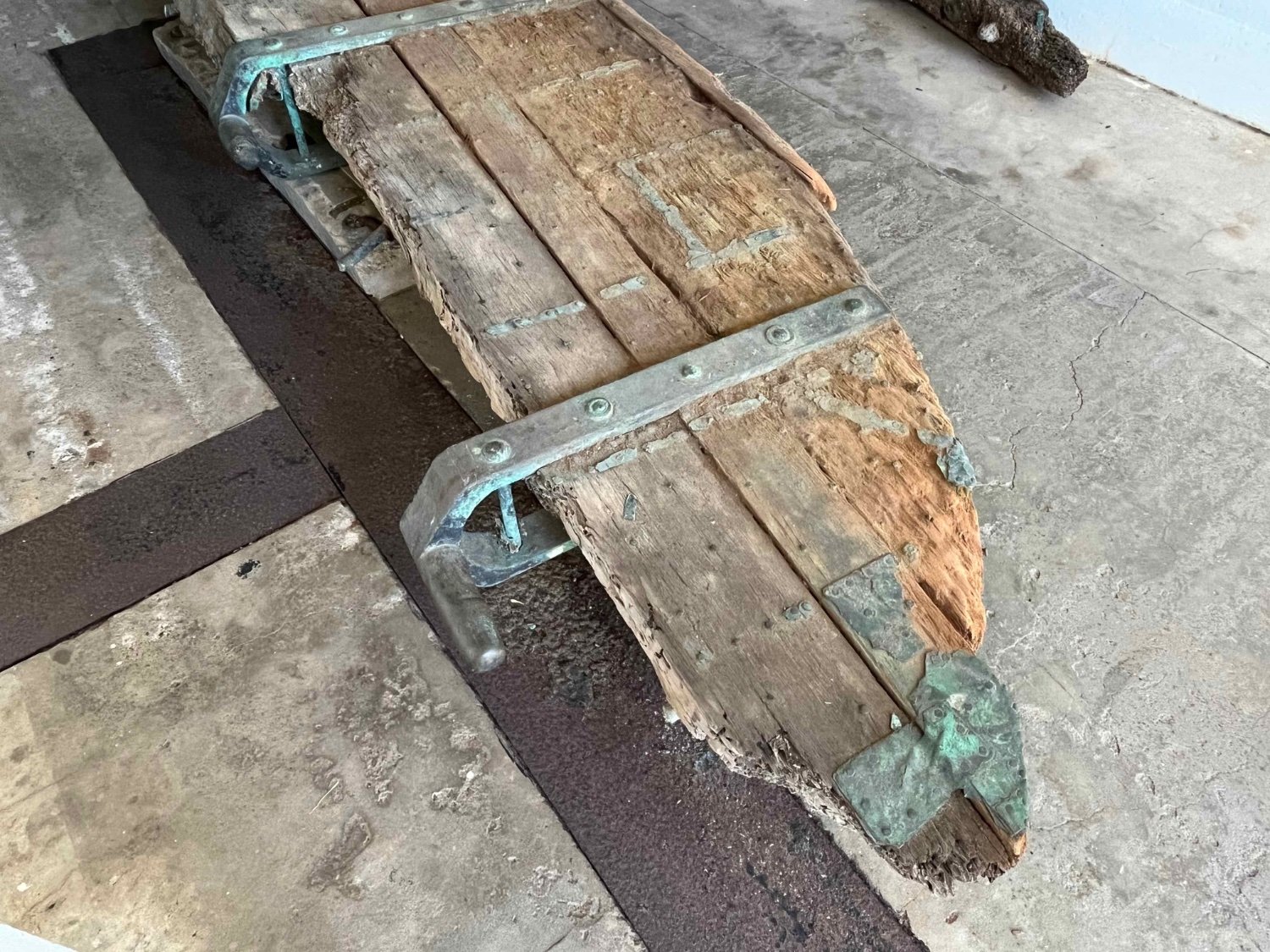
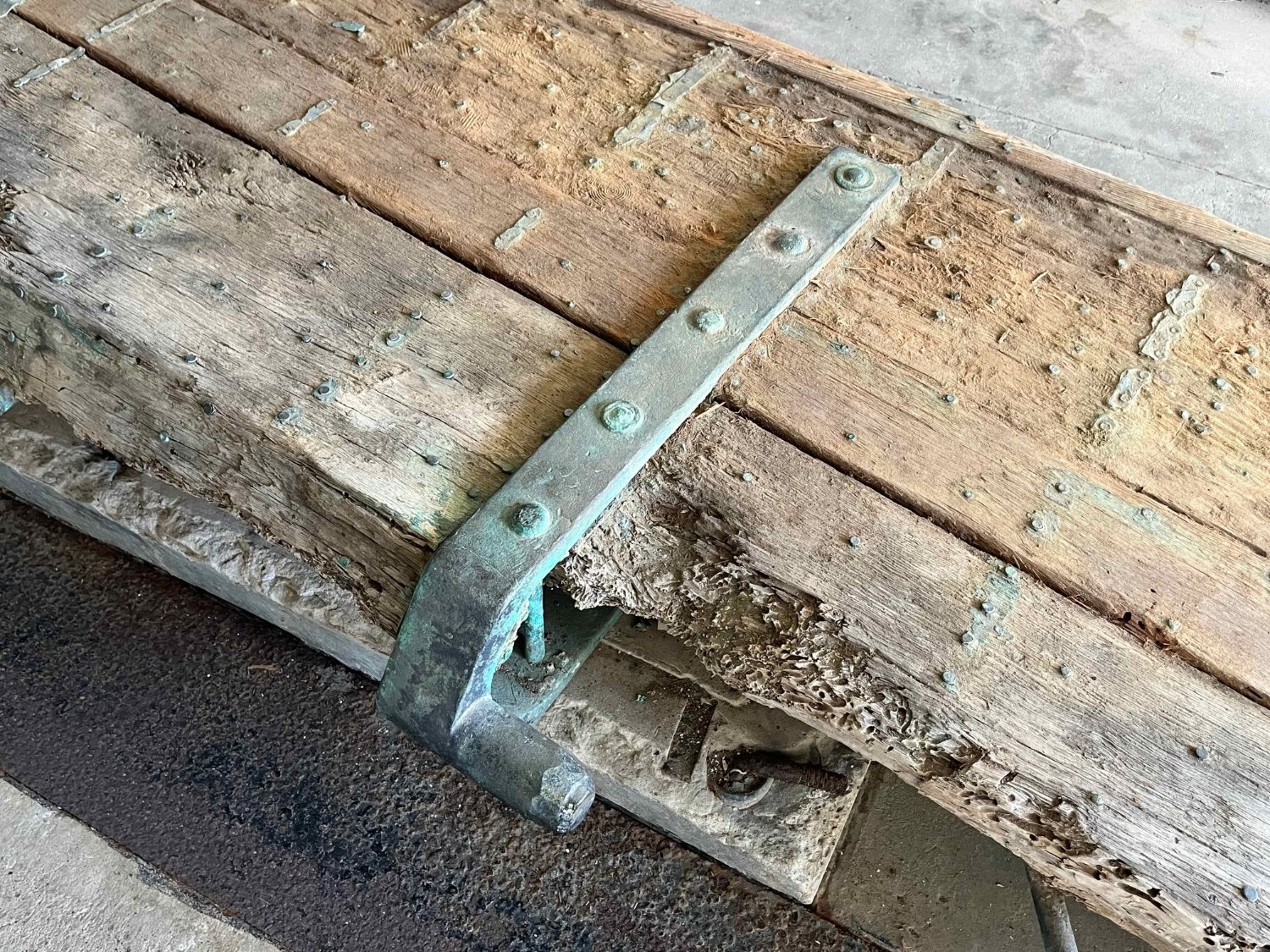
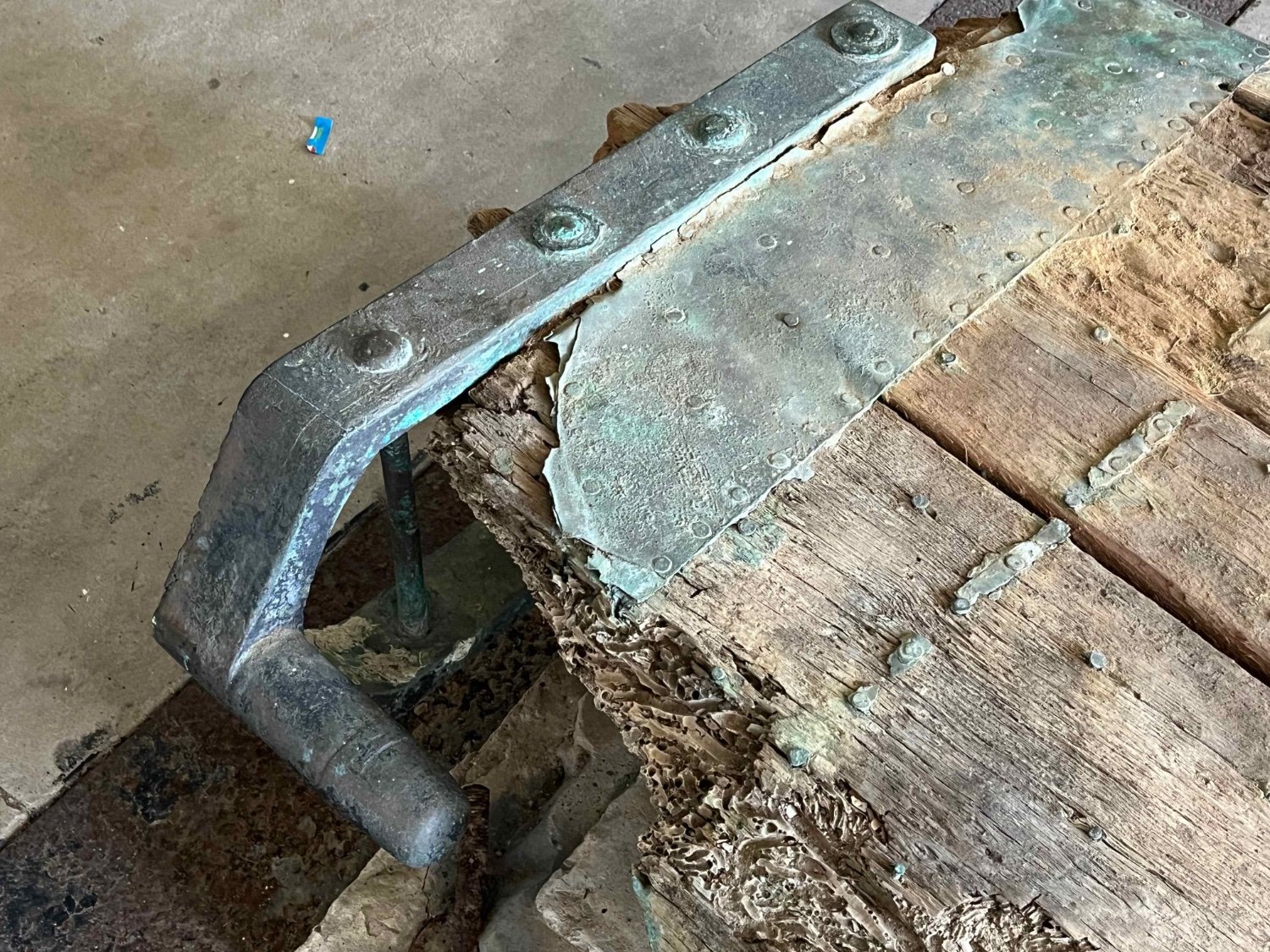
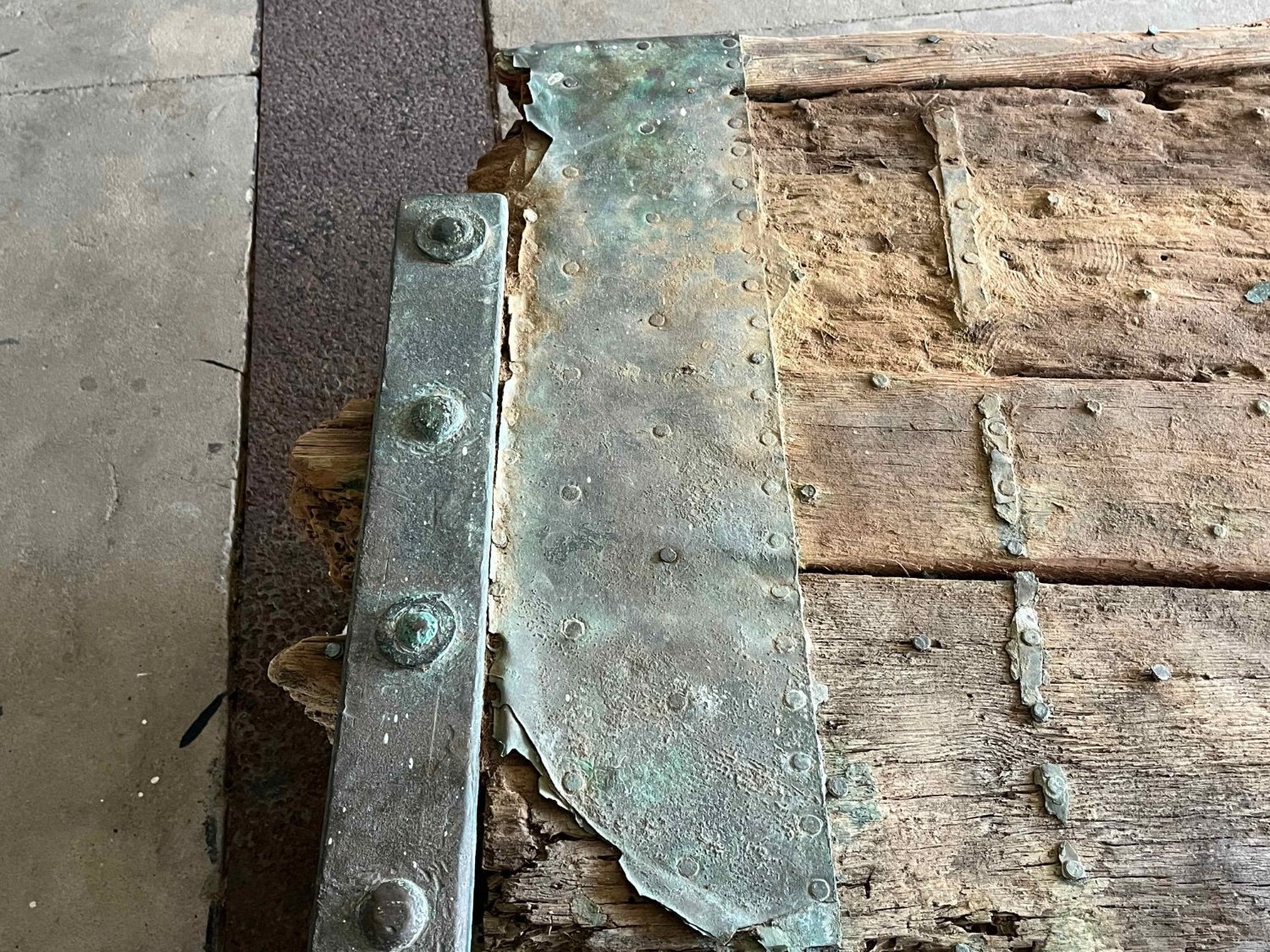
I recently had the opportunity to visit Ft. Gaines on Mobile Bay. One of the displays was an old ship's rudder recovered from the bay. It is kind of a cool example of rudder metalwork as well as coppering. Adam
-
- 15
-

-

-
That's a cool little project. Thank you for sharing!
-
Allan, I am not an expert in this area, but I have encountered the same line on my Crocodile draft. I have interpreted it as the top of the moulding that is even with the bottom of the midship rail. Once the moulding diverges from the rail at the waist it continues aft to the quarter galleries and forward to a point above the stem. I'm not sure if that moulding is called the "drift rail?" Adam
-
Apple wood also looks really nice if you can find it. Adam
-
This is great. I think one of the coolest aspects of this hobby is the number of skills you can try to master along the way. I haven't gotten to the carvings phase, but it definitely will allow you to take your already beautiful model to the next level. Adam


Our Emblem ®
