


Canute
-
Posts
6,407 -
Joined
-
Last visited
Content Type
Profiles
Forums
Gallery
Events
Everything posted by Canute
-
 Looks good, Sea Hoss. Little boat howitzer turned out nicely.
- 33 replies
-
- 1
-

-
- picket boat
- model shipways
- (and 1 more)
-
Love the old 30's aircraft. Out of the doped canvas and into some sheet metal.
-
Model Railway Cars by Canute - 1/87 - HO Scale Rolling Stock
Canute replied to Canute's topic in Completed non-ship models
I have. Do you have a scale in mind? I'm primarily in HO. -
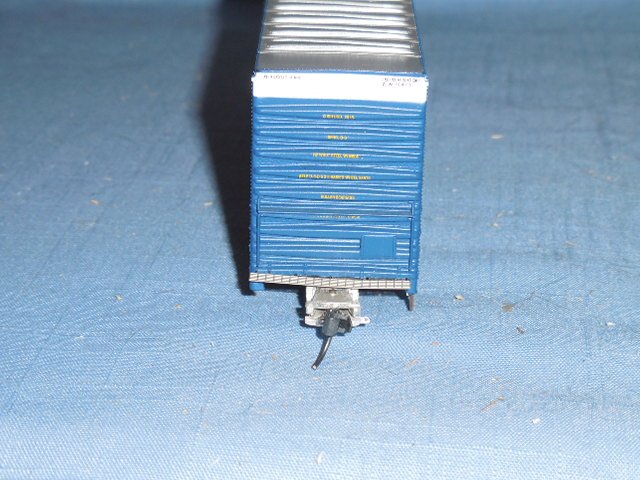
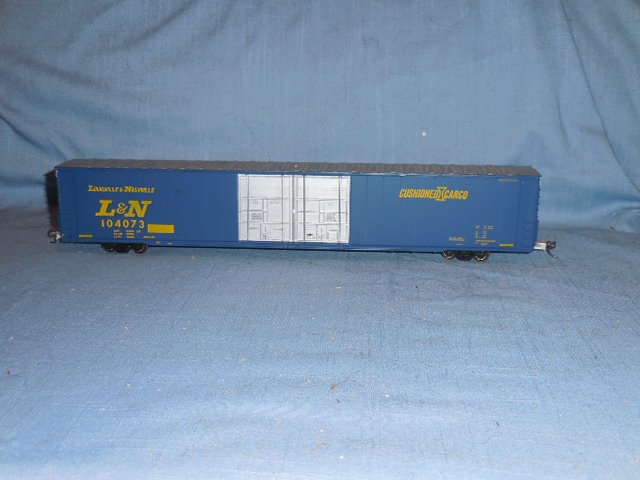
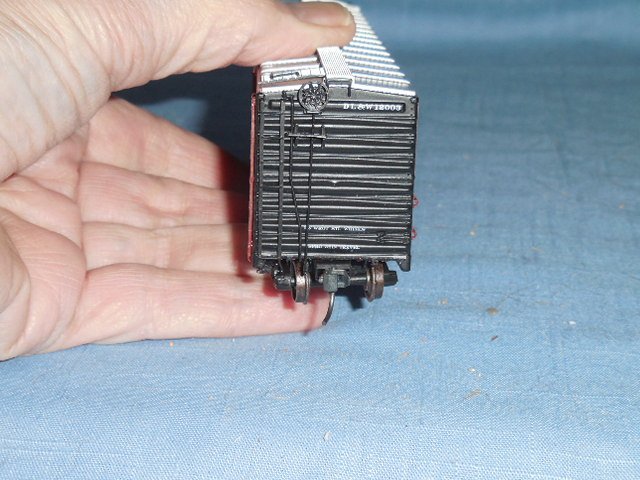
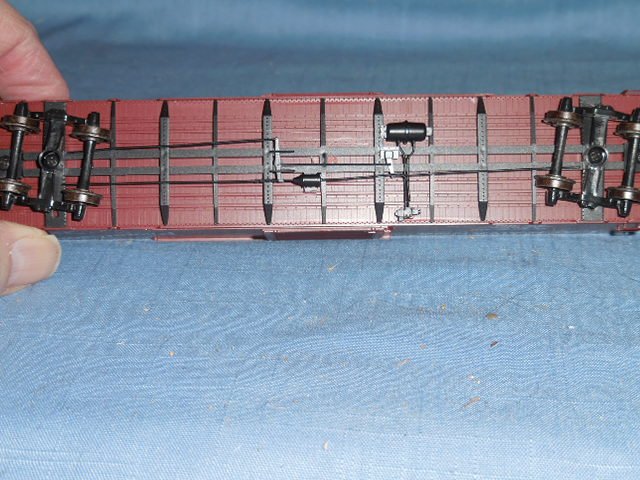
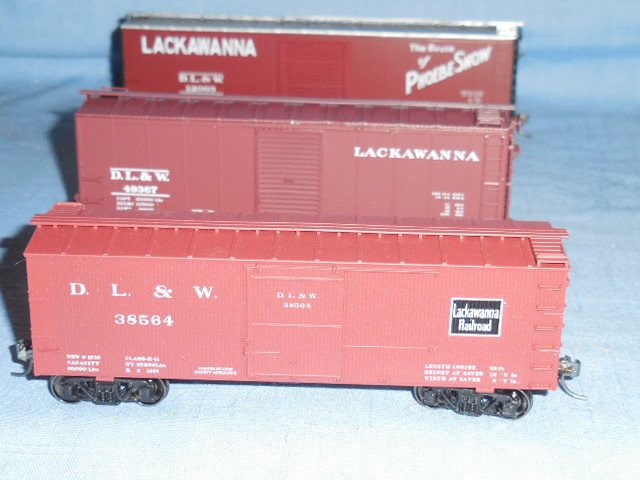
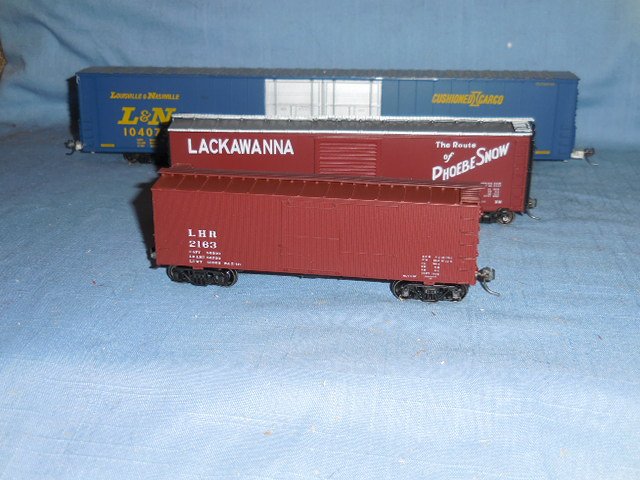
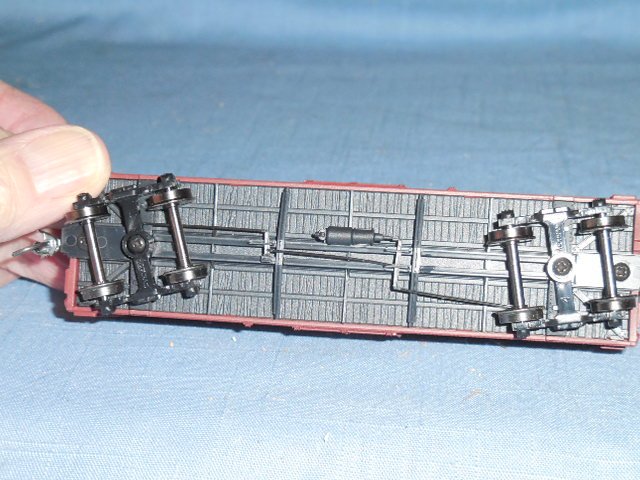
OK, here comes some rolling stock I've been fiddling with since Thanksgiving. All are HO scale (1/87). Blue car in the back is a scale 86' car with extended coupler pockets. It's a little over a foot long. Middle car is a scale 50'. Front one is 36'. Blue car is late 60s, middle car mid 50s and the little one is pre-WWI. Braced the insides and added the coupler boxes on the body. Original coupler mount was a swing arm off the truck (wheel-set at each end). Car needs a huge radius to run. I built it more as a kit-bashing exercise. Added the silvery brake platform down low on the end. It's stainless photo etch and a bear to cut with a hobby knife. I use a Xuron cutter. A few more things to add like air lines and paint here. Same railroad, different paint schemes over the years. Front car is WWI era, middle is around WWII. Back car is post WWII. This is the level of detail in many kits today, although this was built up from many pieces/parts. Careful gluing here. Nowadays, model companies have the Chinese build up the cars and sell them ready to run. Where's the fun in that? This is the brake pipes and rods on the underframe. The cylinder towards the top is an air reservoir, the little collection of box like objects underneath that reservoir is the master valve and the small cylinder on the left with a cone pointing left is the actual brake cylinder. It actuates the rodding to set and release the brakes on the trucks. Simpler early brake equipment. Manufacturers would have you gluing all of this stuff together, but I choose to screw the coupler boxes and truck kingpins, in case they need replacing. (You never know when a car will take a fall off benchwork over a meter off the floor. The resulting crash could dekit the whole car or do significant damage to it) Mostly 2-56 screws, a few 1-72 or 0-80, like on the big auto box. I tap the holes to keep things square, but some of the plastic parts can be done with self tapping screws. The metal details, like the coupler boxes on the 86' car, are pewter, so you have to tap those holes. Same for any zamac or pot metal parts. These and the other cars I've done up are all in need of paint and weathering. And I have a couple of more intense kit bashes, requiring cutting up bodies and under-frames. One hopper and a handful of refrigerator cars.
- 16 replies
-
- 20
-
-
The first 6 frigates were built to protect US trade in the Med. The rest of the fledgling Navy was primarily coastal craft. Jefferson had a heck of a time convincing Congress to spend the money. Old fears of standing military forces primarily. But the desire for increasing trade finally over rode the nay sayers.
-
Phantom Henry J Gasser by jct - FINISHED - 1/24 scale - PLASTIC
Canute replied to jct's topic in Non-ship/categorised builds
One of the hangars at Lakehurst was used to train the deck handlers for carrier ops. Back in the 50s, traveling down to the Jersey Shore, we'd see blimps floating in and out of the naval air station. -
I remember building the Monogram Dauntless way back when. It, along with a lot of other planes, went ? after I went into the AF. Yours looks very good, Jack.
-
Model Monkey has announced 3d printed cannon and carronades for the Connie. http://members.boardhost.com/Warship/msg/1553205153.html and https://www.model-monkey.com/constitution-96 They've also done up 1/100 HMS Victory cannon and other parts: http://members.boardhost.com/Warship/msg/1553174290.html and https://www.model-monkey.com/victory-100 I'm not connected with Model Monkey, just reporting on some items near and dear to our members.
-
Denis, make sure all 4 wheels in each truck touch the workbench/track evenly. These multipart trucks can be finicky to make square. Good for display models, but tough to operate if one wheel is up in the air. The tender body and headlight look very good. The reflector in the headlight turned out well. Are you lighting it? If so, remember these were kerosene lamps, so they should have an old time yellow orange glow. Just a thought. Do you know anybody with a garden railroad? These garden layouts can be a multitude of scales, from 1/32 to 1/16, but all use the same gauge track. Try and get some pictures of the General on a garden railroad. Hopefully the kit gauge will work with the garden railway gauge. The distance between their rails should be 1.772 inches or 45 mm. That's also the distance from inside one wheel flange to the inside of the opposite flange.
-
Phantom Henry J Gasser by jct - FINISHED - 1/24 scale - PLASTIC
Canute replied to jct's topic in Non-ship/categorised builds
Yeah, the model airplane guys dip their canopies into that stuff and they come out nice and clear. -
Take a look at this model railroad car/parts site. There is a .010 wire next to the photoetched eyebolts for comparison: http://www.yarmouthmodelworks.com/index.php/ModelDetailParts/Miscellaneous Eyebolts with and without collars, about halfway down the page.
-
Glad you got your dilemma cleared up, OC. I've used the toothpaste to clean up watch glass in the past. Our "family" always manages to come up with workable solutions. They're the best.👍
-
Mark, I'm in, also. Looks like a pretty barky.
-
Phantom Henry J Gasser by jct - FINISHED - 1/24 scale - PLASTIC
Canute replied to jct's topic in Non-ship/categorised builds
Put the Pledge/Future/Kleer on first, then decal. You want a smoooth surface for the decals. -
If you're gonna poke holes in thin sheet wood, put some tape behind/over the openings to prevent tear out. And a dab of sanding sealer, too. Yep, you're all hot to trot to get going on this little jewel, but....that basswood will soak up paint. And paint both sides or it'll look like the pleats on an accordion, if you use acrylics. Yeah, I did a similar thing. I have a model railroad stock car I started, but I have to regroup on the build, since it got a tad warped. So used to Floquil and Scalecoat, (solvent based paints) and forgot the basics.
-
Sounds about right for me too. Although it's model railroad stuff. Would anyone be interested? Don't want to hijack Craig's thread.
-
That would be me with the horn in my ear. 😁
-
Jet noise, shooting, rock and roll and who knows what else. My hearing is OK up to midrange , then does a nose dive at high freqs. I now use rechargeable hearing aids. Although in a crowded noisy area, they aren't much help. Ears are omni directional. Cupping my ears helps, but now I look like the old geezer with the tin horn in his ear.
-
Eric, my sincere condolences on your loss. It's good to have a support group at times like this.
- 599 replies
-
- 7
-
-
- sidewheeler
- arabia
- (and 4 more)
-
Nice job with the paint scheme. Your indoor pix look like the 2nd live shot and your outdoor one looks like the first Slater pic. Slick.
-
Like the previous lads said, Mark. Whatever you need to do and wherever that leads, we can wait. I get what you're saying.
-
Coming along nicely, Denis. Running gear looks appropriately spindly. The engineer and fireman took a lot of pride in the appearance of their loco. Lots of brass and polish. Had to keep after any unsightly soot buildup. The tender underframe would be pretty grungy, as you'd expect. And the bottom of the engine, between the wheels. Floquil even made a Grimy Black color, kind of a charcoal grey with brown tinges. Hope the cold goes away soon and you feel better.
Our Emblem ®
