
Jim Lad
-
Posts
9,590 -
Joined
-
Last visited
Content Type
Profiles
Forums
Gallery
Events
Everything posted by Jim Lad
-

Help with question regarding HMS Victory at Trafalgar
Jim Lad replied to AllanP's topic in Nautical/Naval History
Thanks for putting us straight, Pete. Hope the forum continues to go well. John -
Michael, I think that in future I'll just send all of my metal work over to Canada for you to do! John
-
Jud, Hang off one anchor, break the cable, get a line attached to the cable outside the hawse pipe, pass the end of the cable around the other until it's clear, heave the cable back into the pipe and re-connect the cable, heave up both anchors. (I think I've remembered it correctly). John
-
Yes, Andy, I've done it once in a lagoon on a flat calm day - how on earth he did it in those sea conditions, I've no idea! John
-
If I remember correctly, the 'Sea Confidence' had both anchors down and swung the wrong way as the wind strengthened, giving her a foul hawse, which is why she ended up so close to the beach. Only those who have been to sea on deck will probably realise the feat of seamanship by the mate in being able to clear a foul hawse under those sea conditions - with the added fun of knowing that your ship was drifting ashore and wouldshortly be making a twin for the 'Pasha Bulker' if you don't get it done by yesterday at the latest. John
-
Russ - I'll be leaving the deadwood stepped. A frame butts against the forward end of each step. Jeff - Thanks for the support. John
-
Help with question regarding HMS Victory at Trafalgar
Jim Lad replied to AllanP's topic in Nautical/Naval History
If their registration process is that silly, why bother joining? John -
Thanks for the photos showing the overall view, Ilhan. John
-
That framing's coming along very nicely, Ed. John
- 3,618 replies
-
- 1
-

-
- young america
- clipper
- (and 1 more)
-
Piet, We all end up with a few 'fuzzies' before the final coat. Looking great! John
-
Michael, I some of those pictures the pilot cutter looks almost as big as the other one! John
-
Crikey, Piet, she sure carried a lot of gear on deck! John
-
The Rhine and Danube sounds nice, Gil. I don't remember seeing the invitation to join you. John
-
Thank you, Grant, Brian, Bob and Mike. Mike - unfortunately, Sydney is still a city - and only the mega rich actually live right on the harbour! John
-
Just sometimes, the force is with us! John
-
Crossjack yard - generally did not carry a sail?
Jim Lad replied to Landlubber Mike's topic in Masting, rigging and sails
Yes, Mike, the main yard would only carry the halliard and (possibly) braces. John -
It's about time that deck planking was started, Danny! Looks really good, mate! John
-
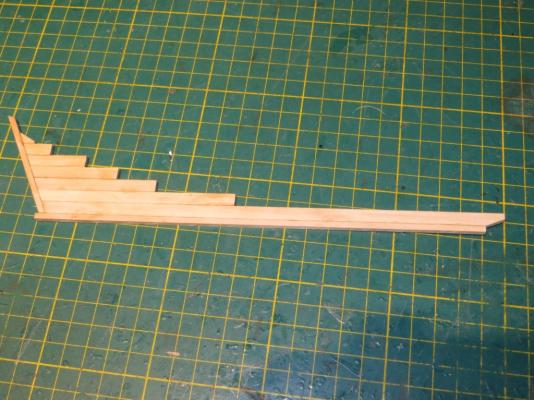
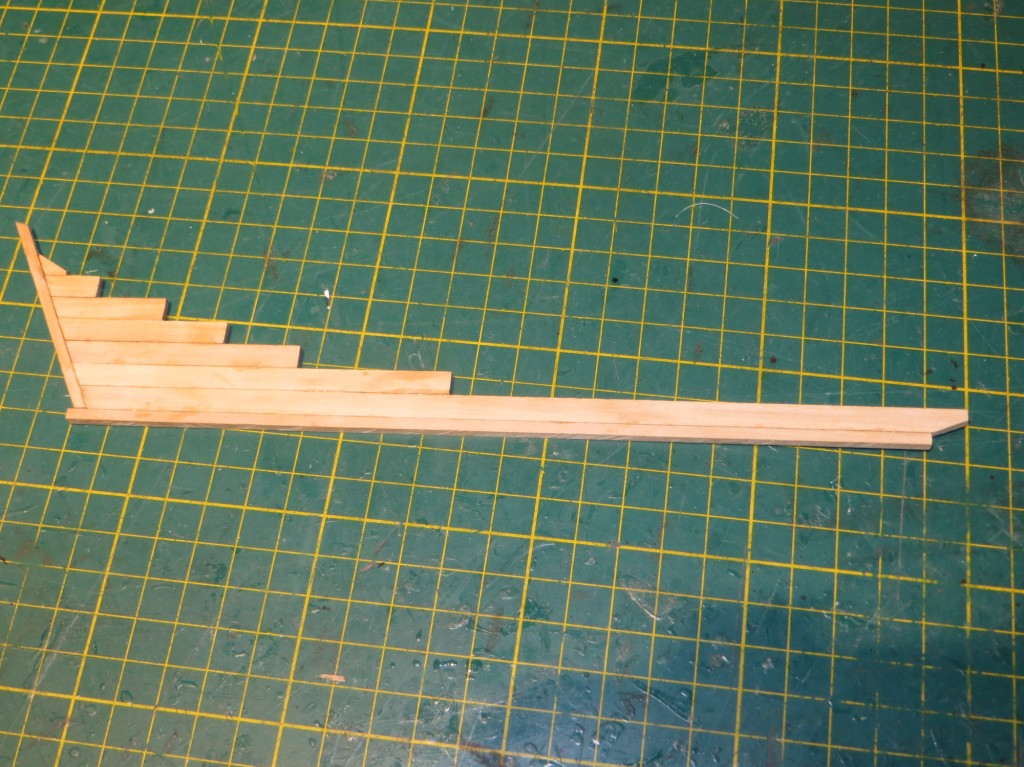
Well, a little sawdust has actually been produced. The 'backbone' of the 'Pritt' is about halfway there. It looks a bit odd at the moment with only the after end done and no stem, but I forgot to take my stock of wider timber to the museum with me so I had nothing to use to cut the curved pieces for the forward end - next time. Here's the keel, sternpost and skeg/after deadwood, anyway. John
- 745 replies
-
- 15
-
-
- francis pritt
- mission ship
- (and 1 more)
-
For those members whose Australian language skills might be a bit weak, and esky is a portable cooler! By the way, Steve, Orange isn't exactly right on the beach. Where do you plan on sailing that monster? John
-
Crossjack yard - generally did not carry a sail?
Jim Lad replied to Landlubber Mike's topic in Masting, rigging and sails
Mike, The best way to think of a yard set flying is to think of it as just a stick across the top of the sail to hold it out. That sail would be furled by simply letting go the halliards and dropping the whole lot down on deck. When the sail wasn't set there'd be no evidence of it ever having been there (apart from a sheave for the halliard. John -
Looking for info on look out rings (Moved by moderator)
Jim Lad replied to Joel's topic in Masting, rigging and sails
Hello, Joel. I see this is your first post, so a warm welcome to MSW. Why not go over to the 'New to the Hobby, or MSW' forum and introduce yourself to the crew? The photo below is a detail from a photo of the half scale whale ship 'Lagoda' at the New Bedford Whaling Museum. It might help you to get an idea of the size of the hoops. John -
Looks really good, mate! That picture in the instruction book is just rubbish. John
- 803 replies
-
- 2
-
-
- colonial cutter
- modellers shipyard
- (and 1 more)
-
Stupid mouse - I think ultramarine is much tastier than cobalt! Your thimbles on the bobstay look a little over-scale in the photo. At 1:96 you could try rigging to a splice with out the thimble and it would probably look fine - might be worth an experiment, anyway. John
-
Very nice start on the wheelhouse, Bob. Sorry I can't help you with the colour. John
Our Emblem ®