


Jim Lad
-
Posts
9,560 -
Joined
-
Last visited
Content Type
Profiles
Forums
Gallery
Events
Everything posted by Jim Lad
-
 Just catching up again, Piet. Looking good, mate! john
 -
Capstan bars or handspikes would seem the most logical, Clare. Perhaps one of our members has some definite knowledge. John
-
She really is coming together nicely, Bob. Just how dark is the dark grey? Is it worth doing a card mock up of part of the ship and trying both colours on it to see how they go? John
-
Kimberley, Crochet hooks can be very handy for snatching lines out of tight places - I have a couple in the draw for use on rigging. John
-
Shot Locker
Jim Lad replied to AntonyUK's topic in Discussion for a Ship's Deck Furniture, Guns, boats and other Fittings
Antony, Sorry for the late reply, but here's a photo of the shot locker on the preserved frigate Trincomalee. John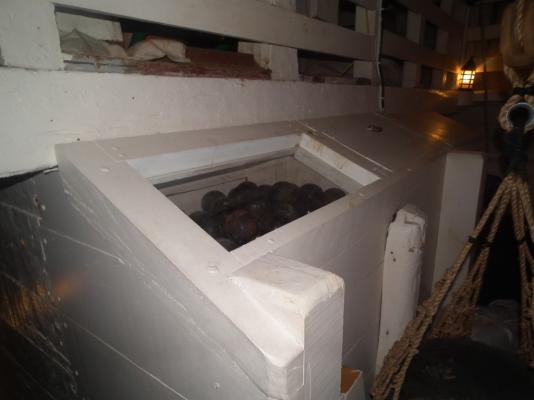
-
Very neatly done deck, Alexandru. John
-
Bit of a squeeze in there, Danny - but it worked! John
-
Hmmmm, that's funny - I thought you were working on a trawler! I like that stain colour, mate. John
-
Nice to see an update, Clare - and a very nice start to the paddlewheels. John
-
A planked deck will look nice on top of the deckhouse, Popeye. John
-
Looks like a really interesting build, Mark. You could probably make her into a Liberty, but I think the American Scout is a much nicer looking ship. John
-
Thanks a lot, Glen! John
-
Nice work on the boat, Mobbsie. According to May's 'The boats of men of War', the length of your oars as at 1876 would be 14 feet - probably not a lot of difference at the time of your build. John
- 1,279 replies
-
- 1
-

-
- agamemnon
- caldercraft
- (and 1 more)
-
Interesting and simple capstan design, Alexandru. John
-
I don't think those bottle screws are too big, Piet, but an overall shot of the model will show it better. Looks good, by the way! John
-
Eventually, you're going to run out of further improvements to make to the hull! John
-
I don't rig sails on my models, but there are three methods that I've seen, depending on the scale of your model and the amount of work you want to do. 1. Stitch scale seams into the sails 2. Run a straight row of stitches down the sails at intervals to represent the seams 3. Draw the seams on lightly in pencil. Remember that English canvas came in bolts 24 inches wide, so your seams should be about 22 scale inches apart. John
-
Grant - maybe I should get the nine year old in to finish her Andy - you're probably right. I've been having so much fun rigging I don't want to stop! John
-
Shackles for anchor chain cables were in use in merchant ships by the 1830's, but I'm not sure when they were introduced into normal rigging practice. If they were in use by the 1850's (is that the right period for your ship), then a standard 'D' shackle would be used - if shackles weren't in general use in rigging by then, then the sheet and clew line would simply be tied together. John
-
She's coming along very nicely, Bob! John
-
Piet, It seems you just get a section almost finished when you think of a way to improve it! I love the way you're going about this and making it the best possible model you can. John
-
Thanks, gents! I'm just annoyed with myself for doing something I keep telling others not to do - trying to rush it!!! John
Our Emblem ®
