HOLIDAY DONATION DRIVE - SUPPORT MSW - DO YOUR PART TO KEEP THIS GREAT FORUM GOING! (78 donations so far out of 49,000 members - C'mon guys!)
×


yvesvidal
-
Posts
3,607 -
Joined
-
Last visited
Content Type
Profiles
Forums
Gallery
Events
Everything posted by yvesvidal
-

Suzuki GSX 1100 S Mad to the max by kpnuts 1/6 Tamiya
yvesvidal replied to kpnuts's topic in Non-ship/categorised builds
I love it, it feels like tinkering with a real bike. Yves -
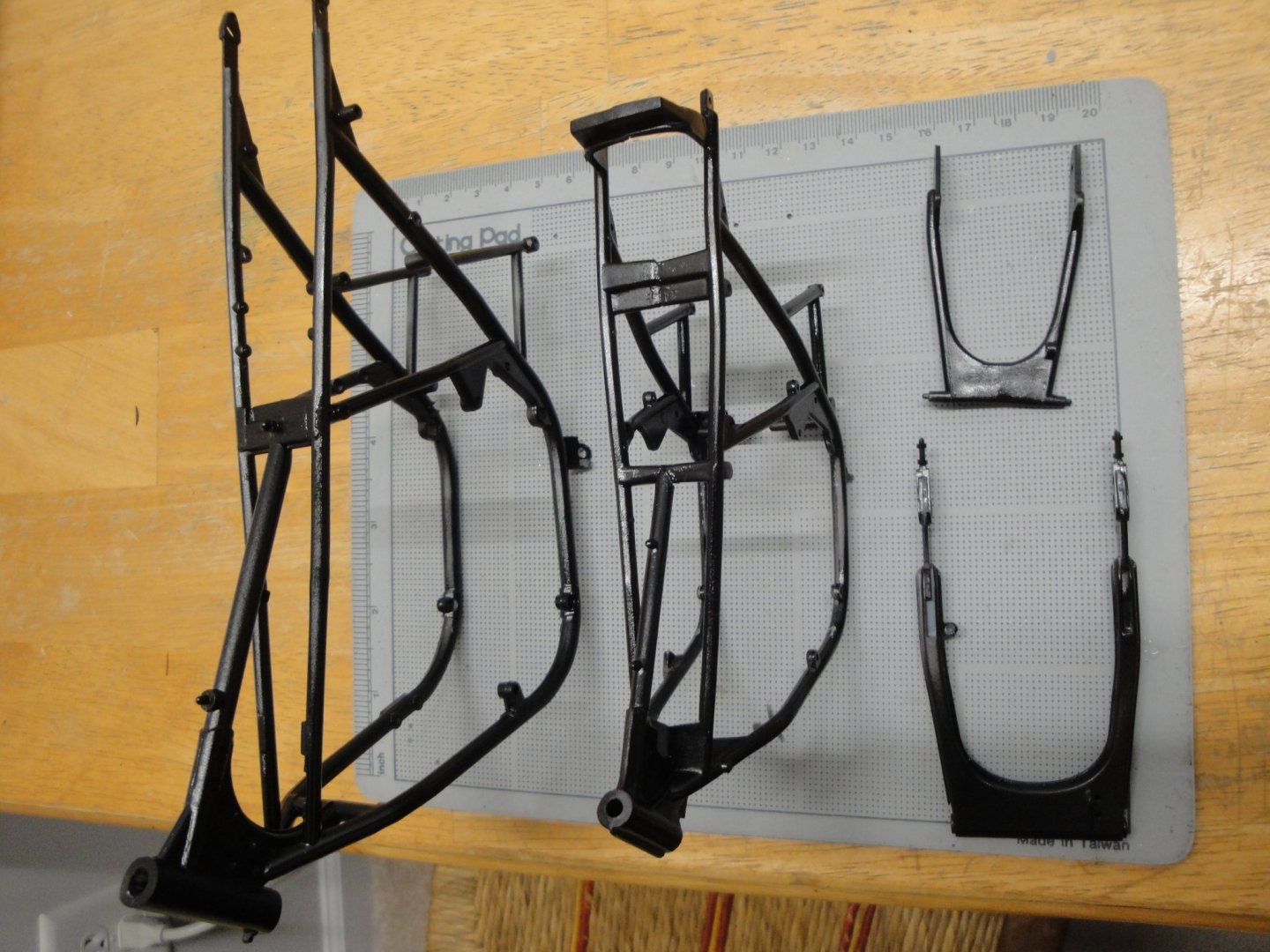
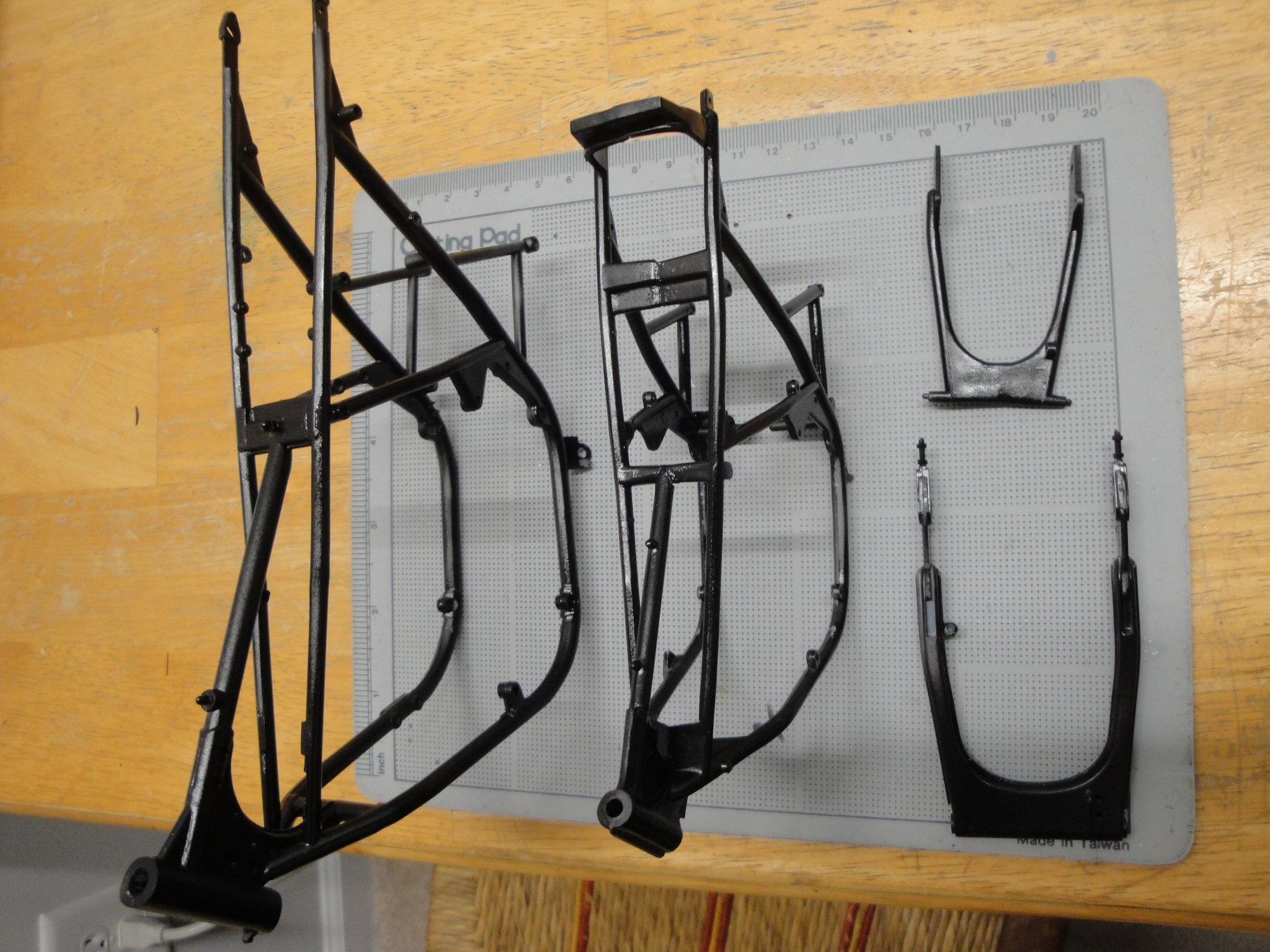
Frames have been painted with Tamiya Black X-1: Yves
-
1/35 Fletcher class destroyer - Mark 12 5"/38 caliber gun
yvesvidal replied to modeller_masa's topic in Plastic model kits
Mike, In my dream, the models I saw were still acceptable in size (6-8 feet long), probably 1/96 or 1/72 made of plastic. Yes, I am aware of that giant museum model which was recreated in the Yamato Museum. Yves -
Very nice progress. Beautiful planking and elegant hull. Yves
-
Suzuki GSX 1100 S Mad to the max by kpnuts 1/6 Tamiya
yvesvidal replied to kpnuts's topic in Non-ship/categorised builds
No need to go to a Mad Max movie around here..... You see plenty of these modifications in the street 🙂 They tend to appeal to a certain fringe of the population.....I won't say anything more. Yves -
Suzuki GSX 1100 S kpnuts 1/6 tamiya
yvesvidal replied to kpnuts's topic in Non-ship/categorised builds
So realistic KPnuts. I love the treatment that you did to the seat. Nice touch with the British license plate, too 😉 Yves -
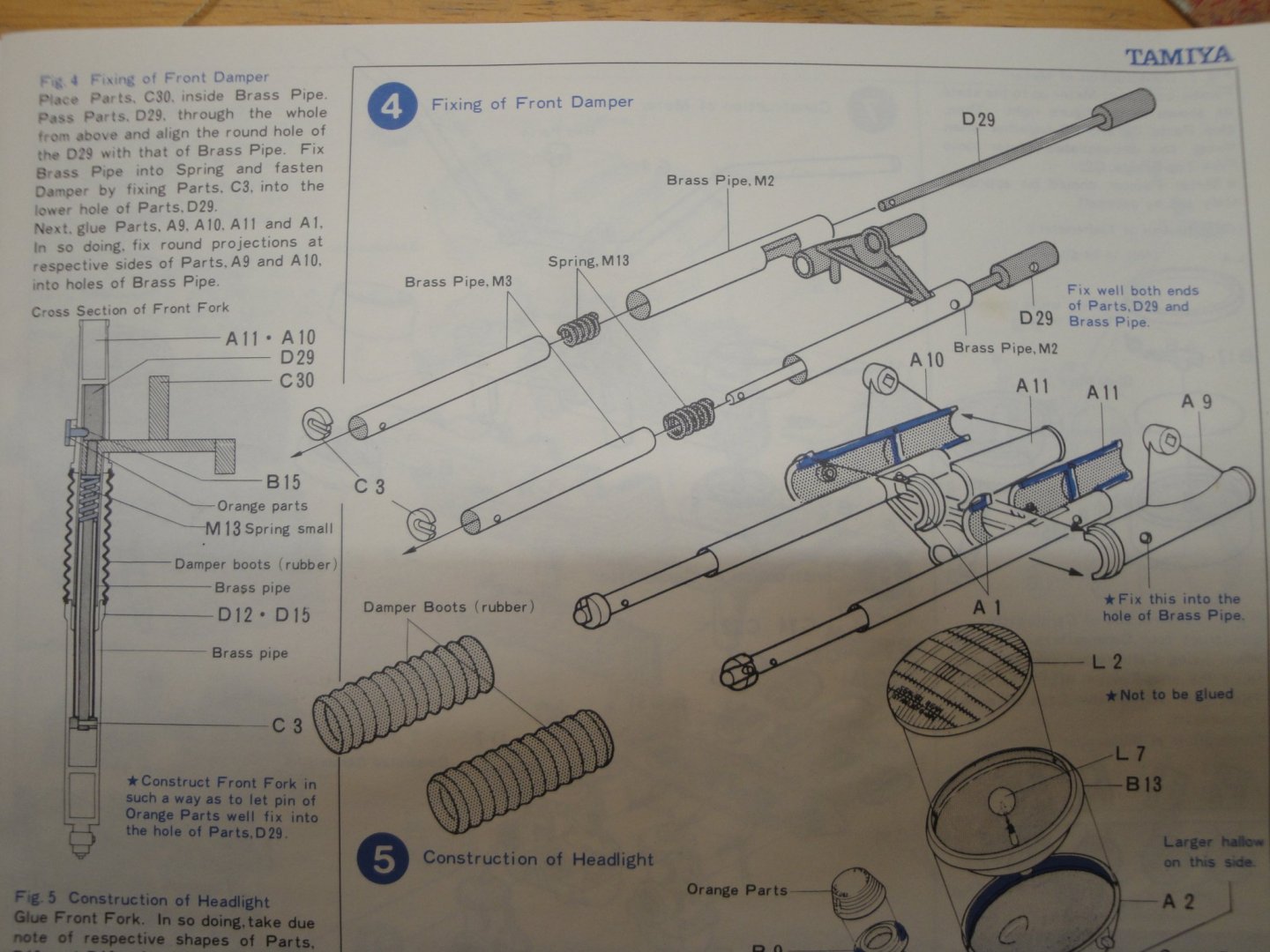
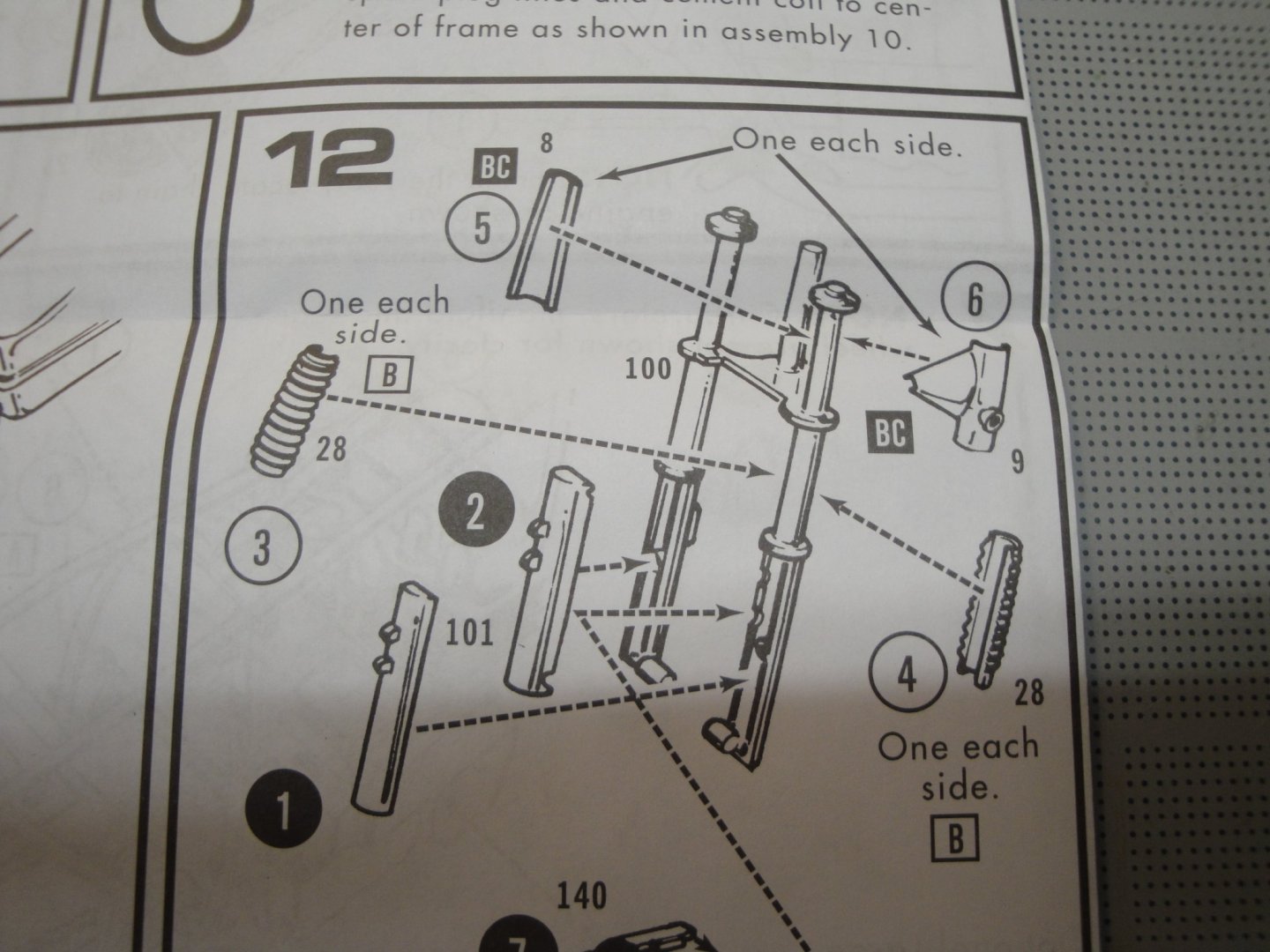
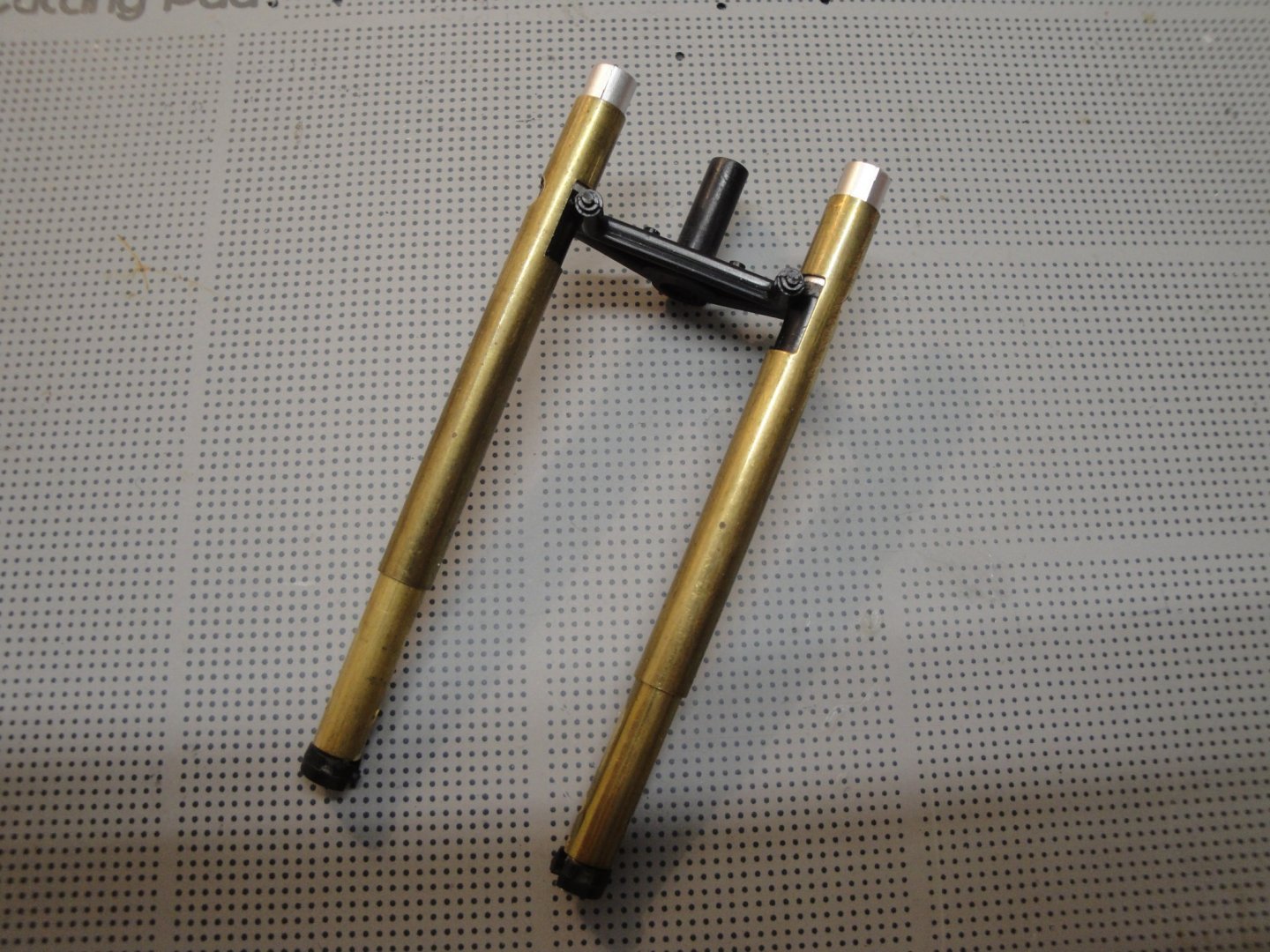
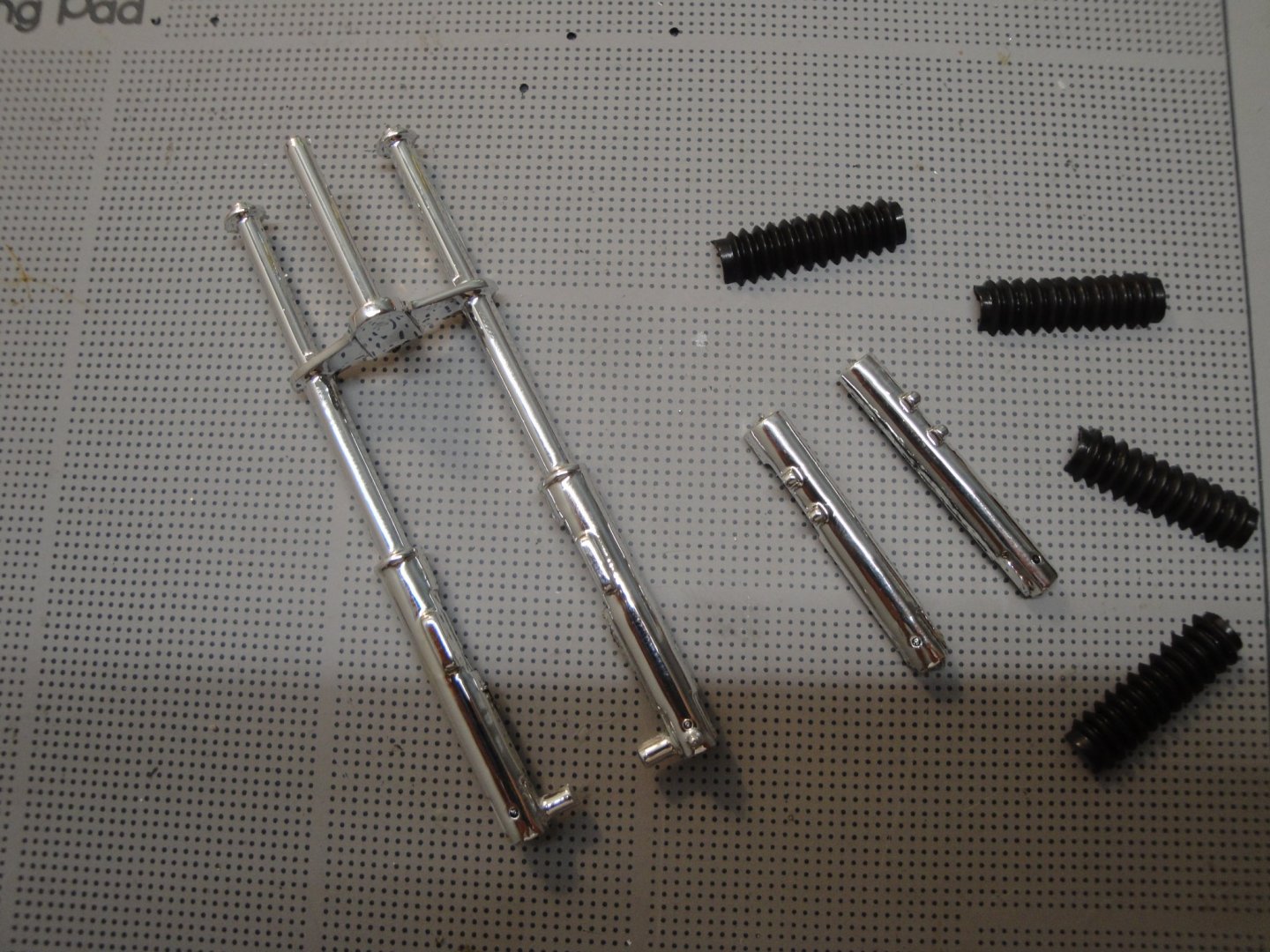
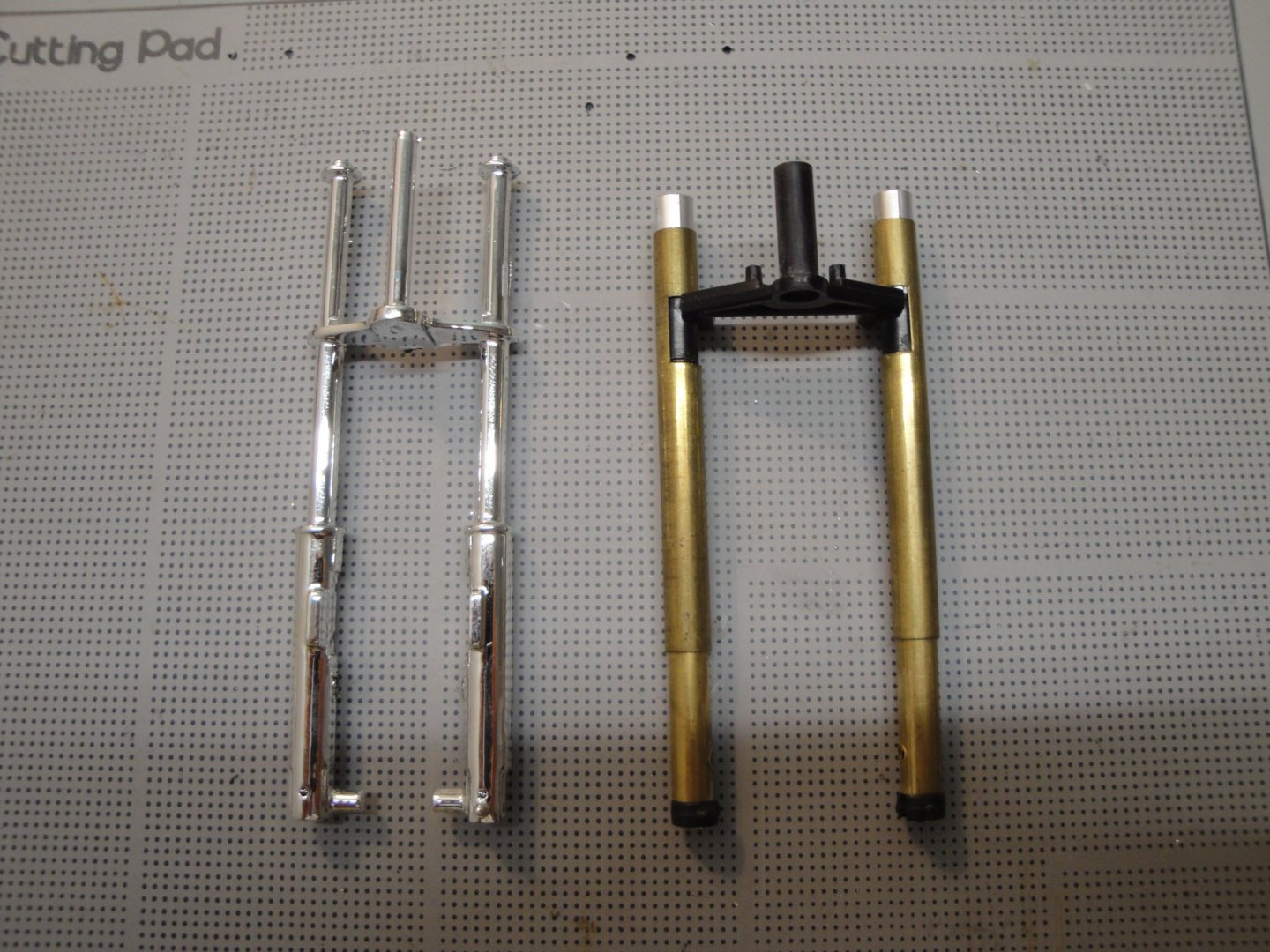
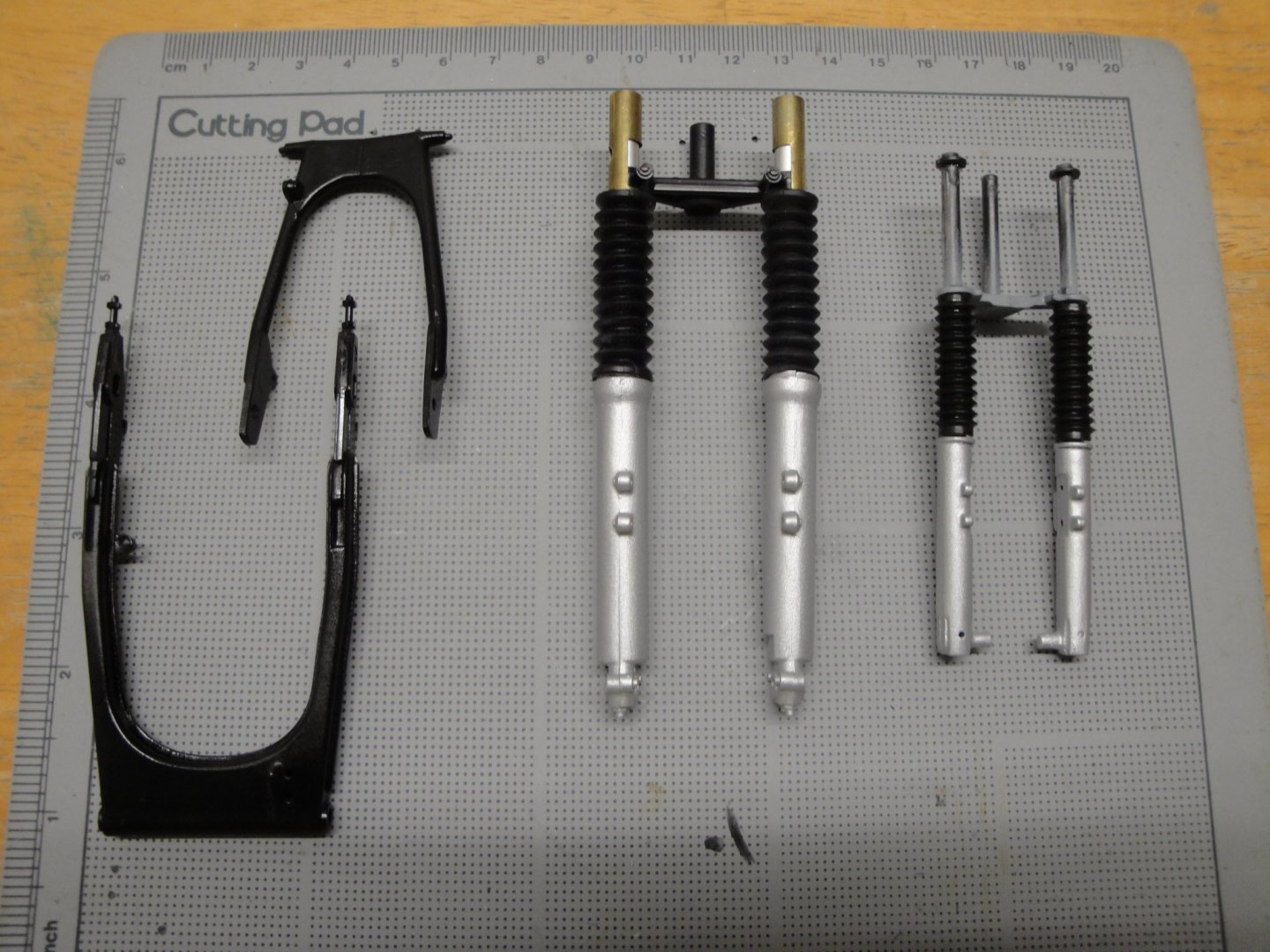
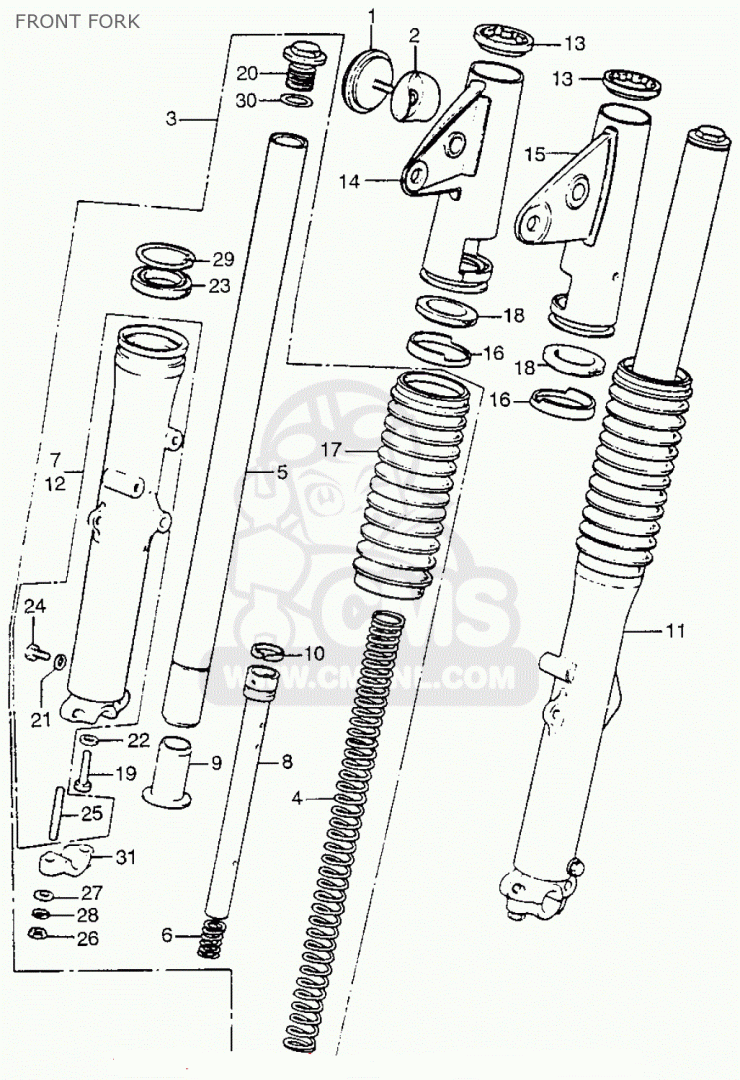
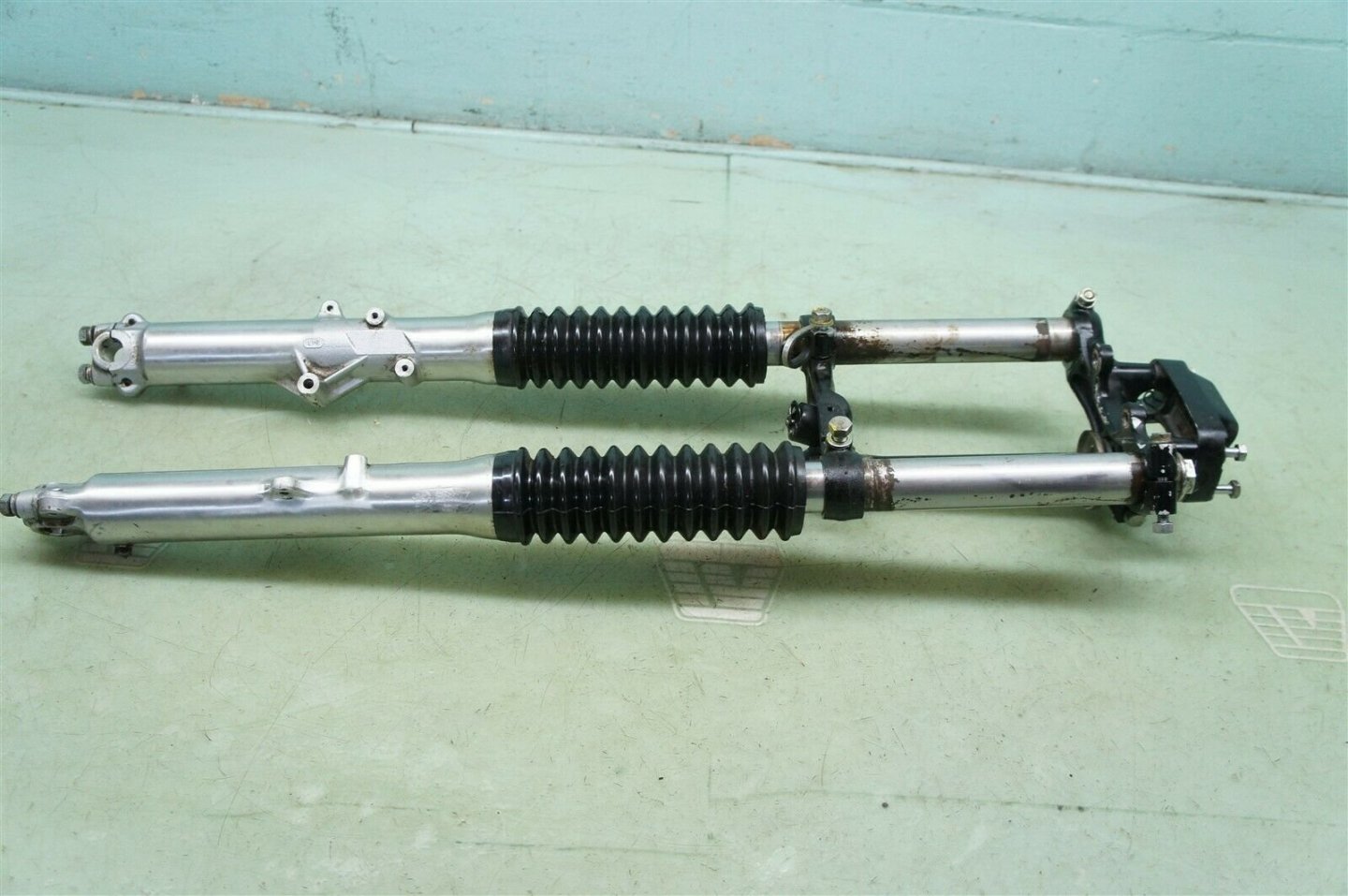
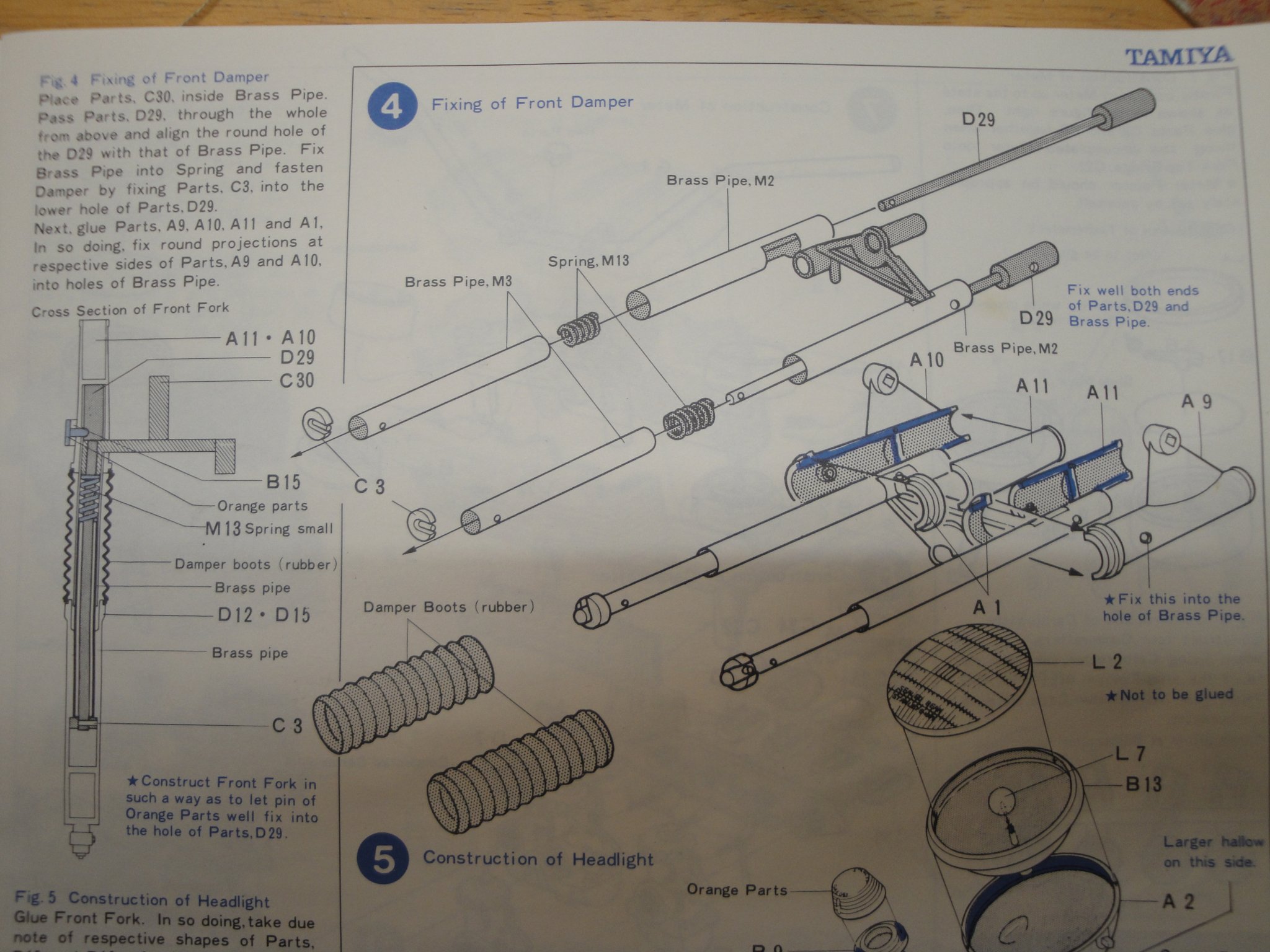
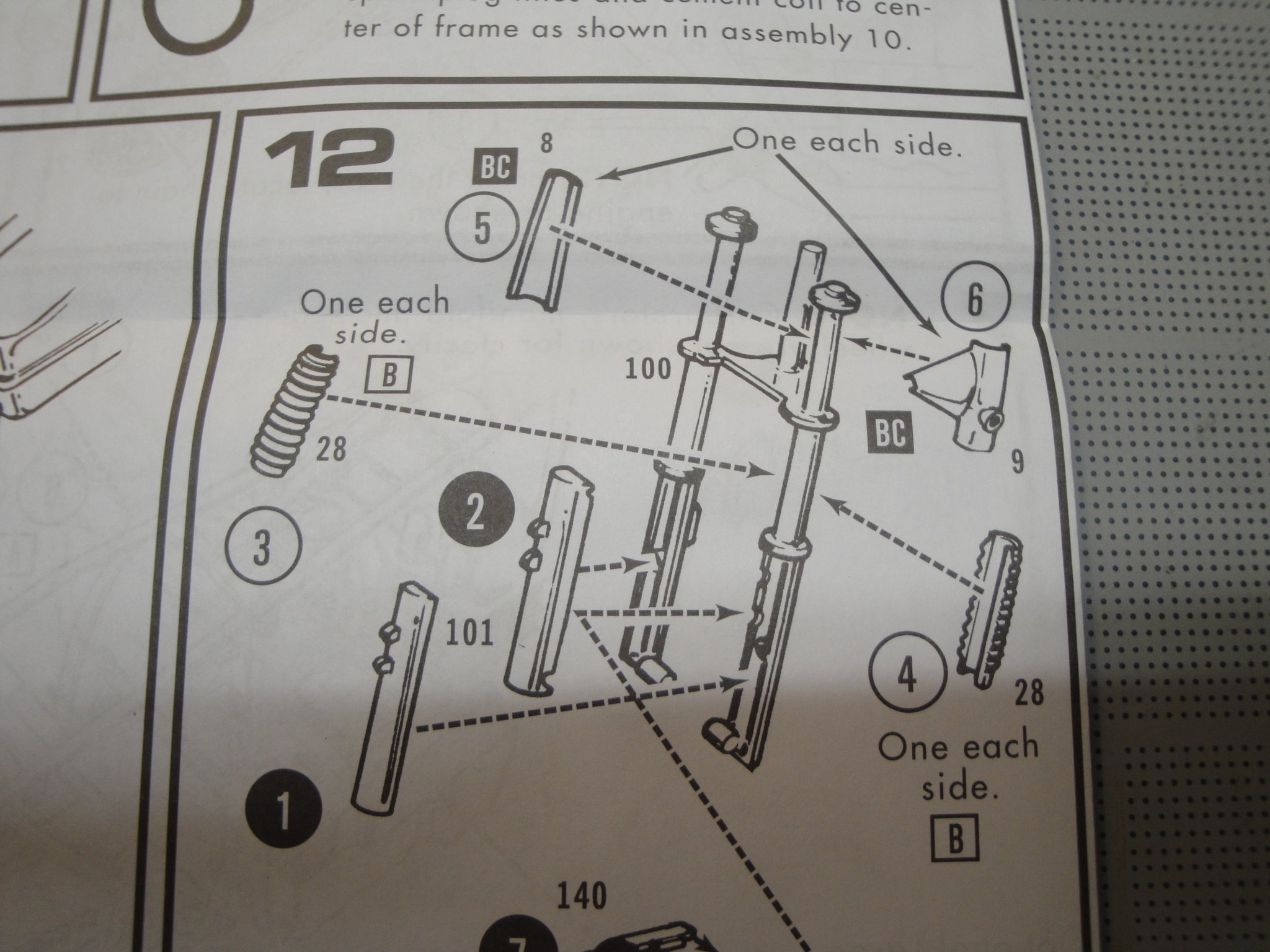
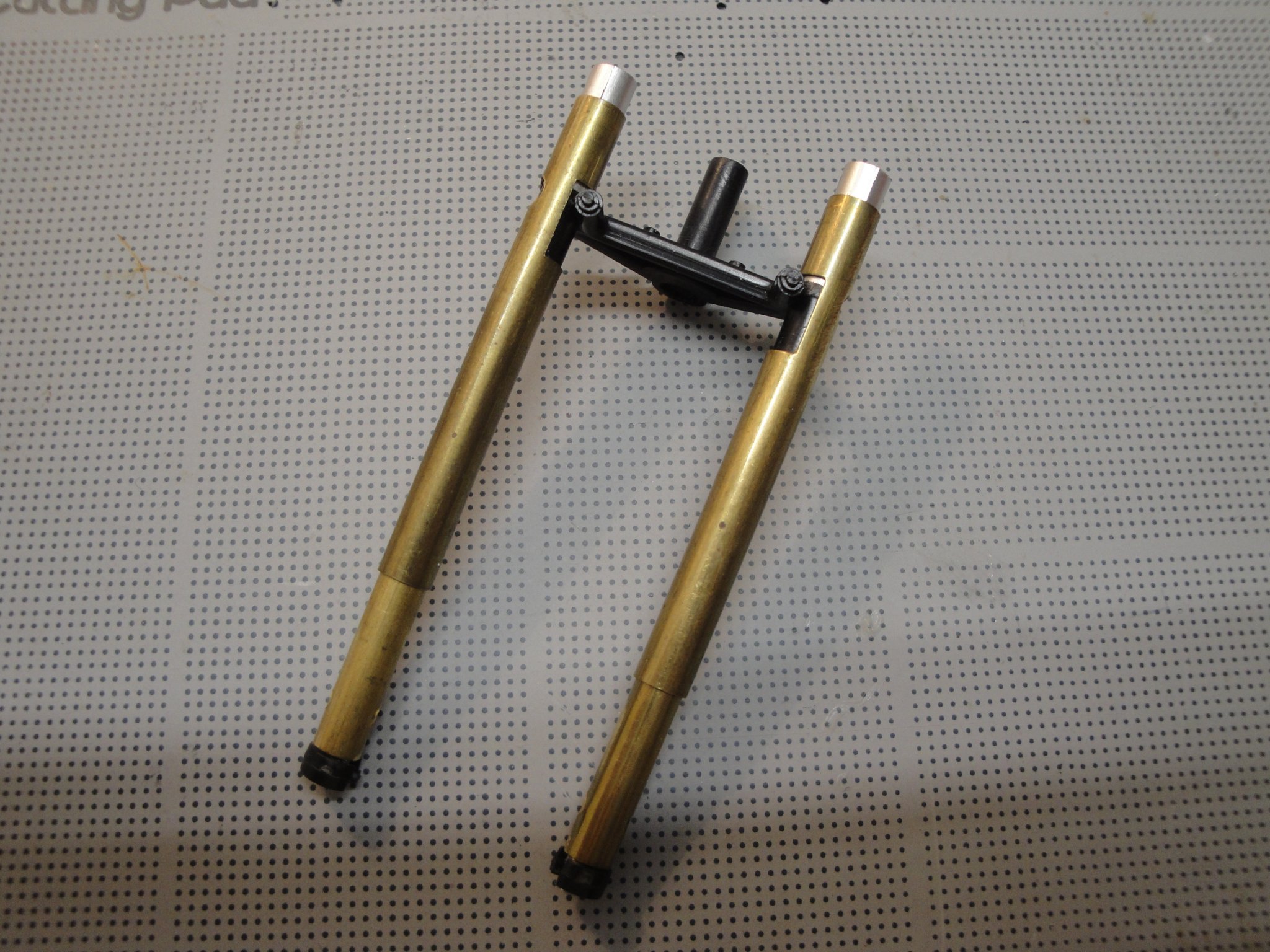
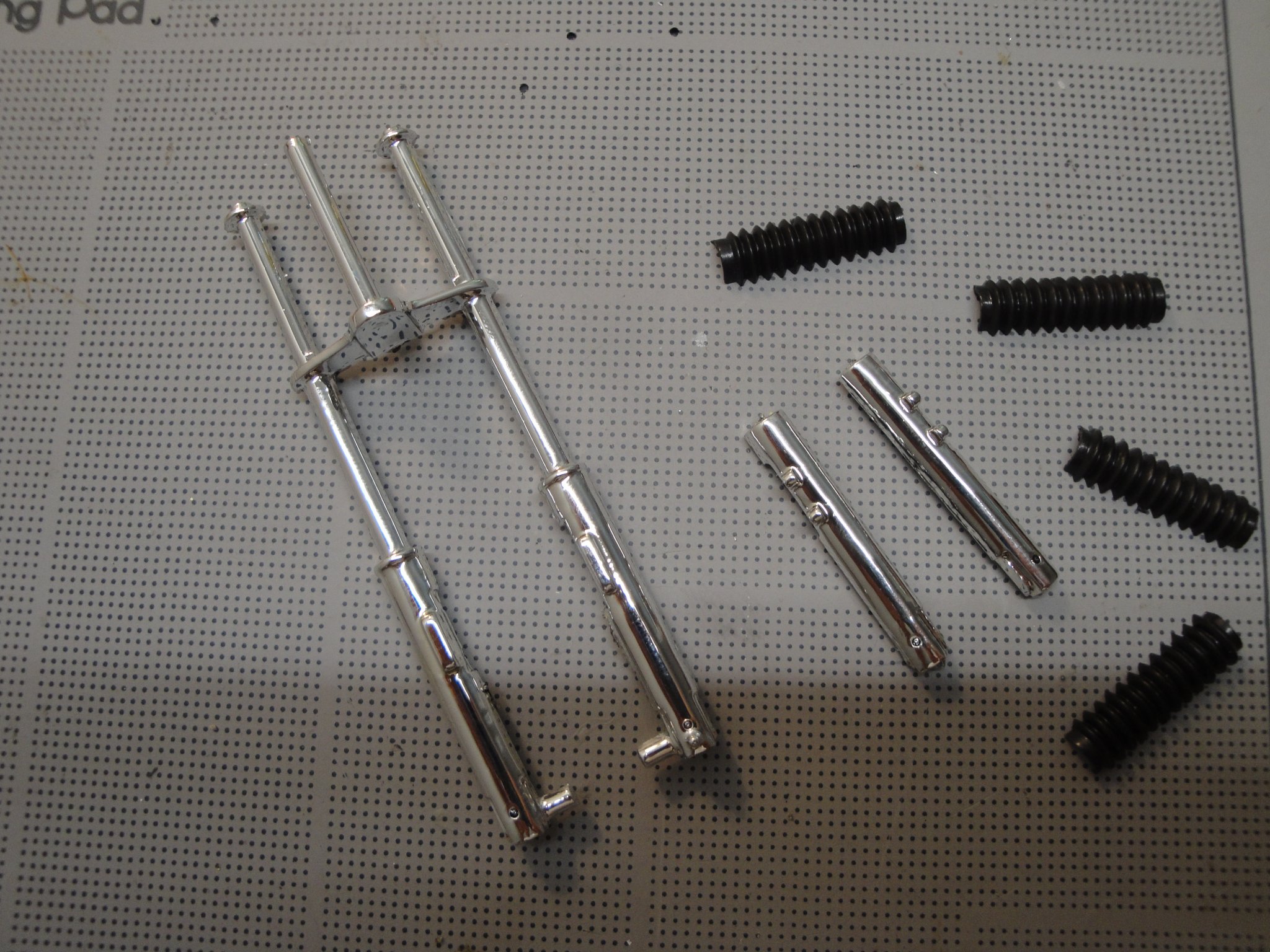
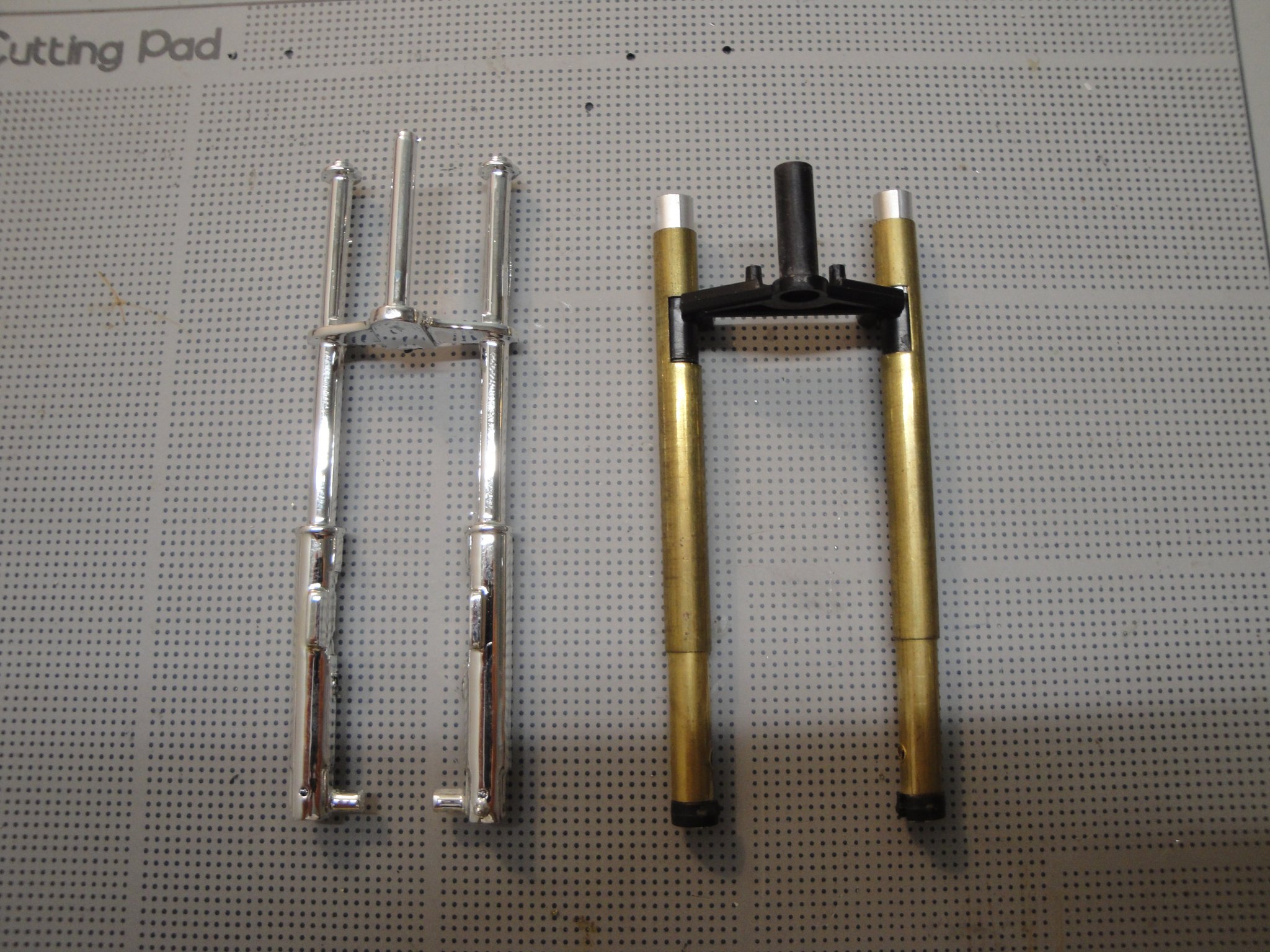
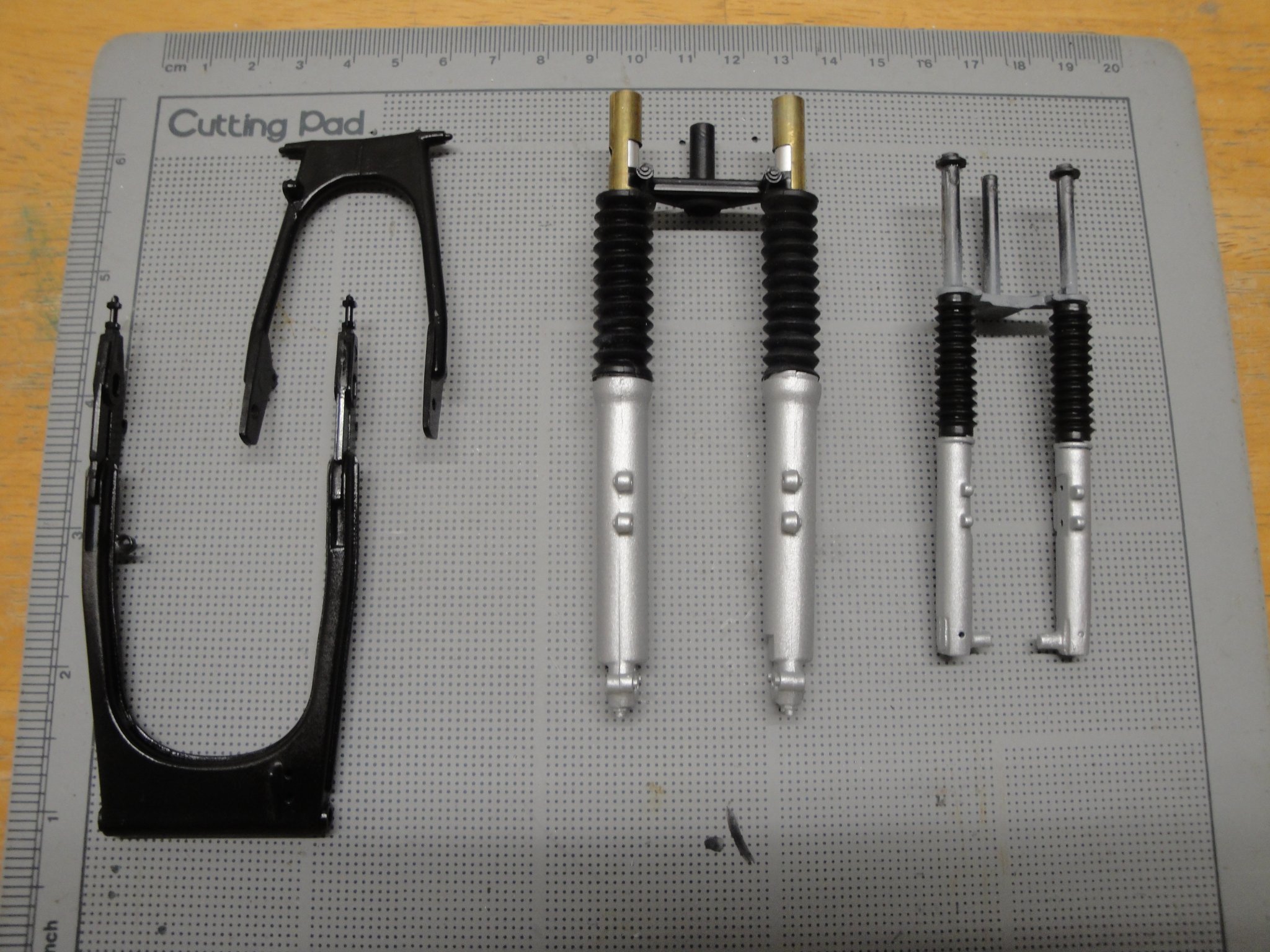
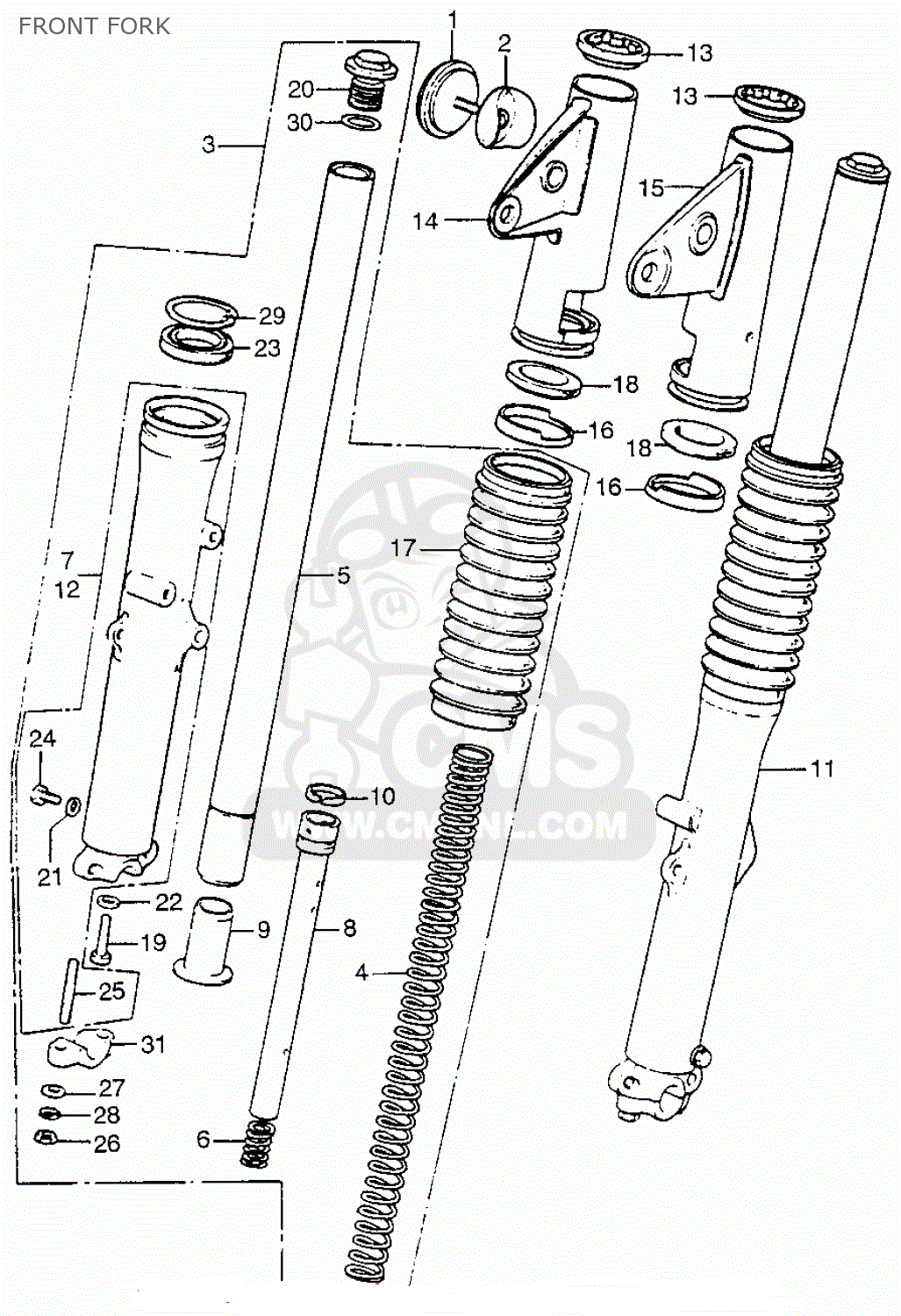
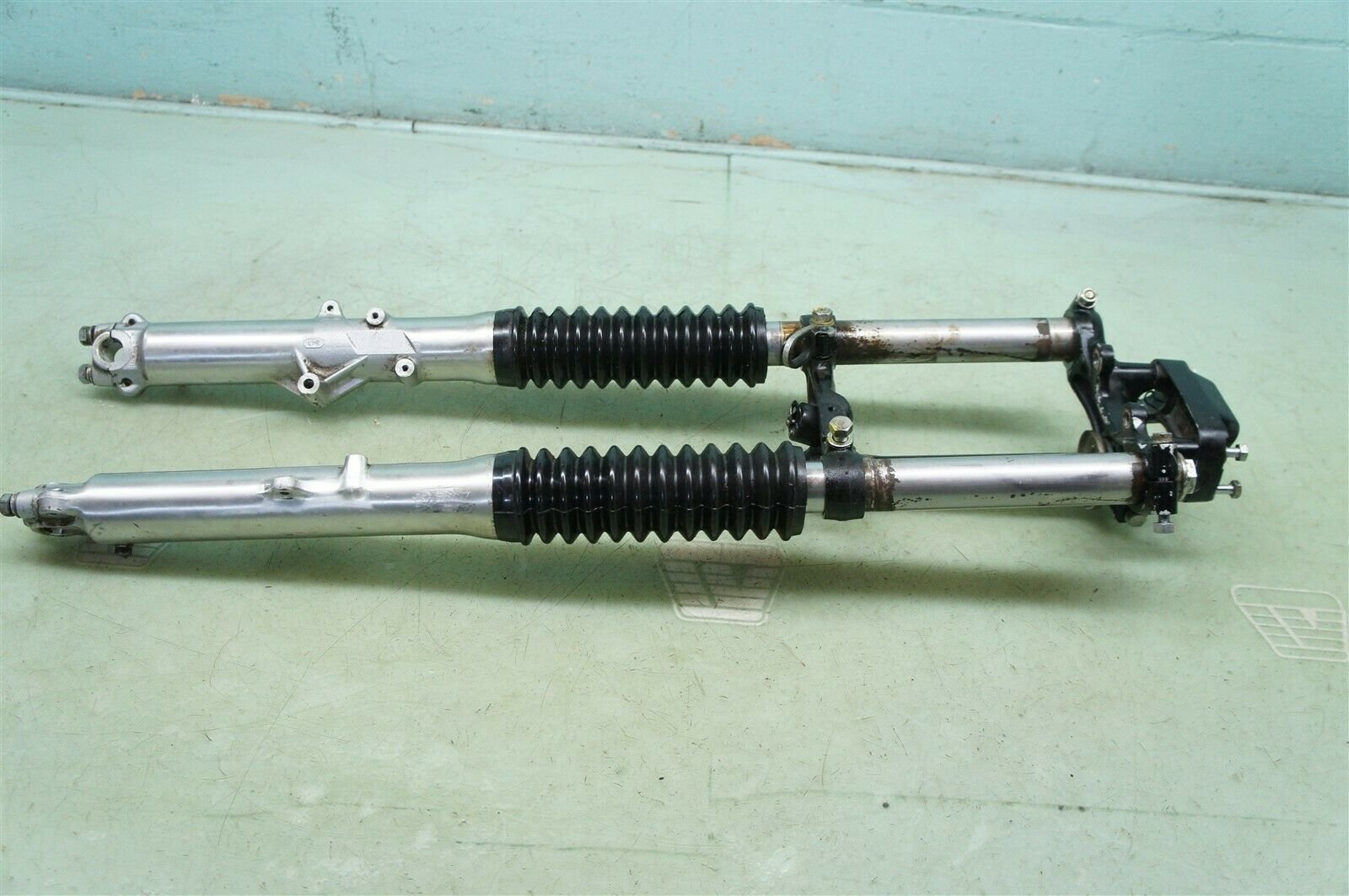
Moving along to the front fork. Tamiya fork presents some kind of suspension, whereas MPC is solid. The instructions: Working suspension for Tamiya, a lot more simplistic for MPC: Tamiya uses a nice brass tubes arrangement and two springs to offer about 5-6 mm of travelling: MPC did cast the fork with Chrome plating, which needs to be removed, as there is no chrome on the fork of a CB750: All the parts are soaked in that Super Clean degreaser suggested by CDW and Egilman, and after 6 hours, the parts are turned to their original black molding. Other parts only took a few minutes, after setting them in my warmed ultrasound cleaner..... Somehow, the plating on the fork sprue seems to be very thick. Sizes and complexity comparison: Finally, forks have been glued, sanded, painted with Tamiya flat aluminum: To complete this part of the assembly, here is the Honda Manual page on the fork and a picture of a real Honda CB750 fork: You can see how the Tamiya rendering of that part is so exquisite. Yves
-
1/35 Fletcher class destroyer - Mark 12 5"/38 caliber gun
yvesvidal replied to modeller_masa's topic in Plastic model kits
Well, even though it may be massive, please keep us in the loop when the full Fletcher in 1/35 is made available, or when you have additional pictures. I am going to relate a couple of things that may seem crazy to certain people: I have had a few dreams (spread over many years) where I am being taken in Asia and shown incredible models of ships. Most of them are really large and I always come back with the impression that South East Asian people are very creative, industrial and how much I wish their astral/dream models could be real. Some of the ships I see are just incredible and are way beyond what Trumpeter offers in their 1/200 or 1/48 ship series. I am hoping that the prototypes I see in my dreams will come out on the market one day. Producing the Fletcher in the scale of 1/35 would be fantastic, too. In some of my dreams, I have seen enormous Yamato models among others....... so there is hope. Yves -
Superb planking for such a tiny hull. Congrats. Yves
-
Is this going to be a no-picture build thread? Just discussions? Yves
- 195 replies
-
- 4
-

-
- lady eleanor
- vanguard models
- (and 1 more)
-
KPNuts, I will be following with interest the building of that very rare and ultra expensive kit. Yves
-
Great start PJ. I love all the research you did on that legendary vessel, in your first post. Also, Artesania Latina kit is in the scale of 1/65 which is the standard scale for a lot of period ships, if you ever decide to build a small collection of them. I will be following with a lot of interest. Yves
-
This is a beauty EG. Yves
-
This workbench looks like a High-Tech laboratory. Yves
-
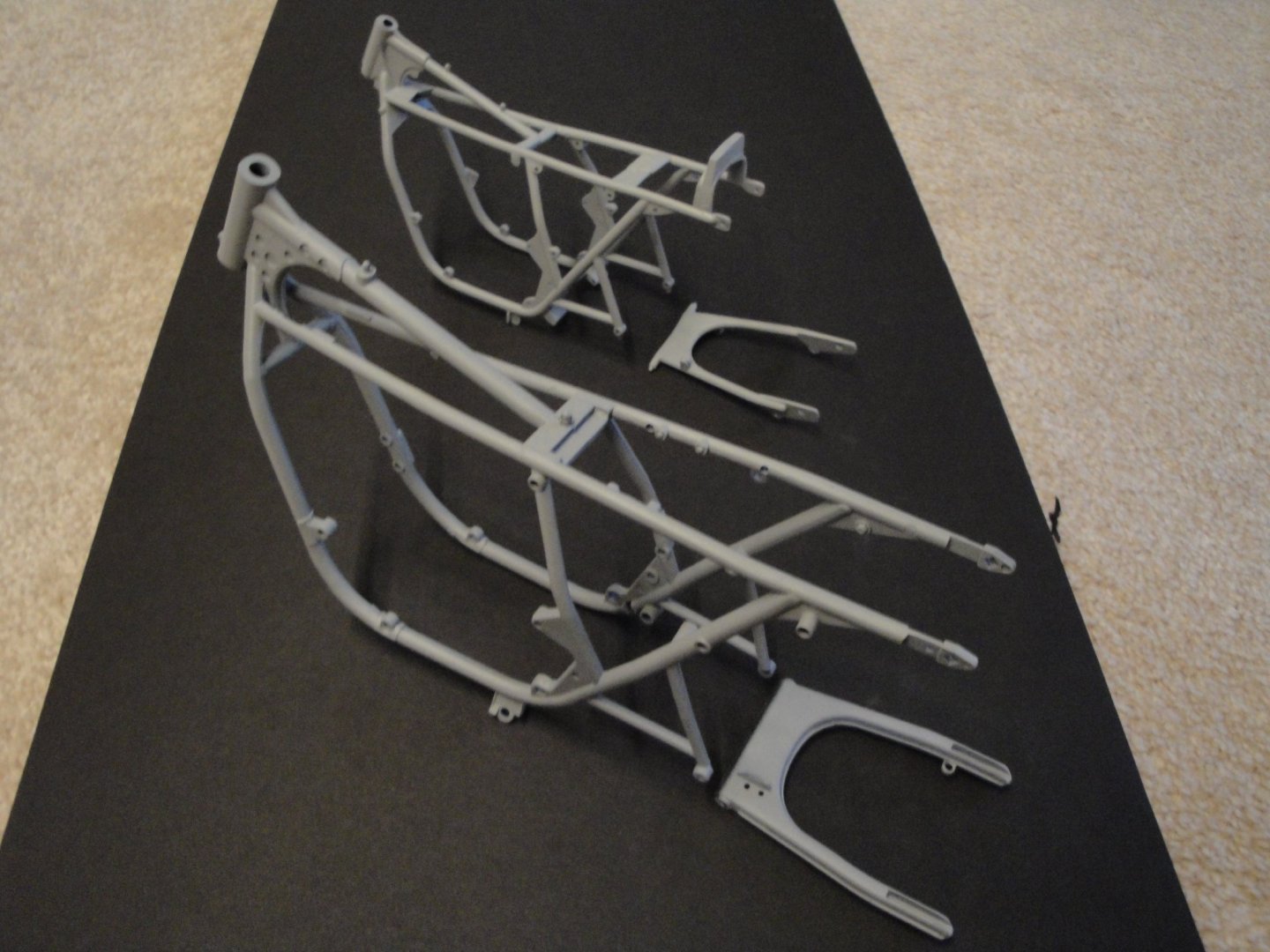
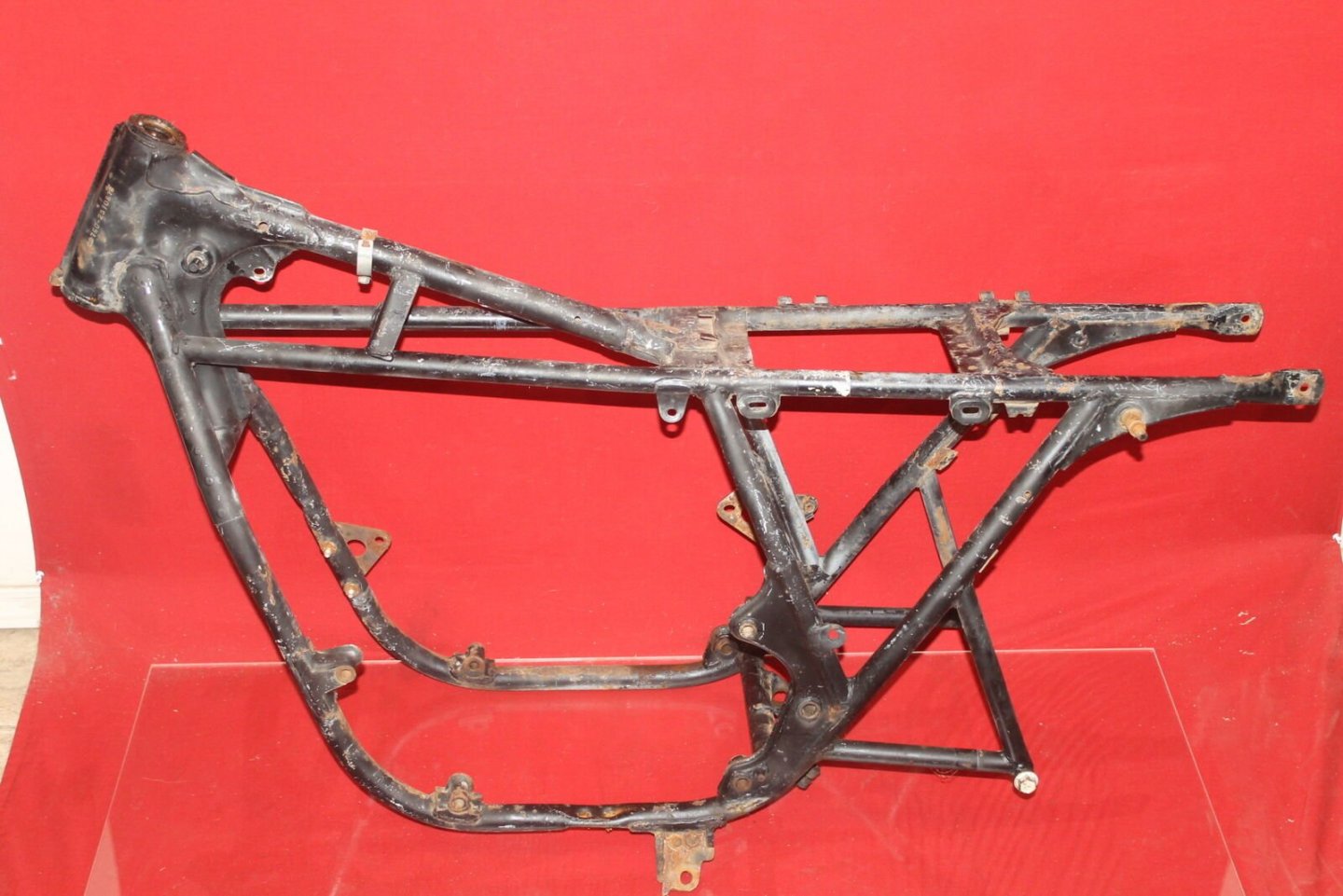
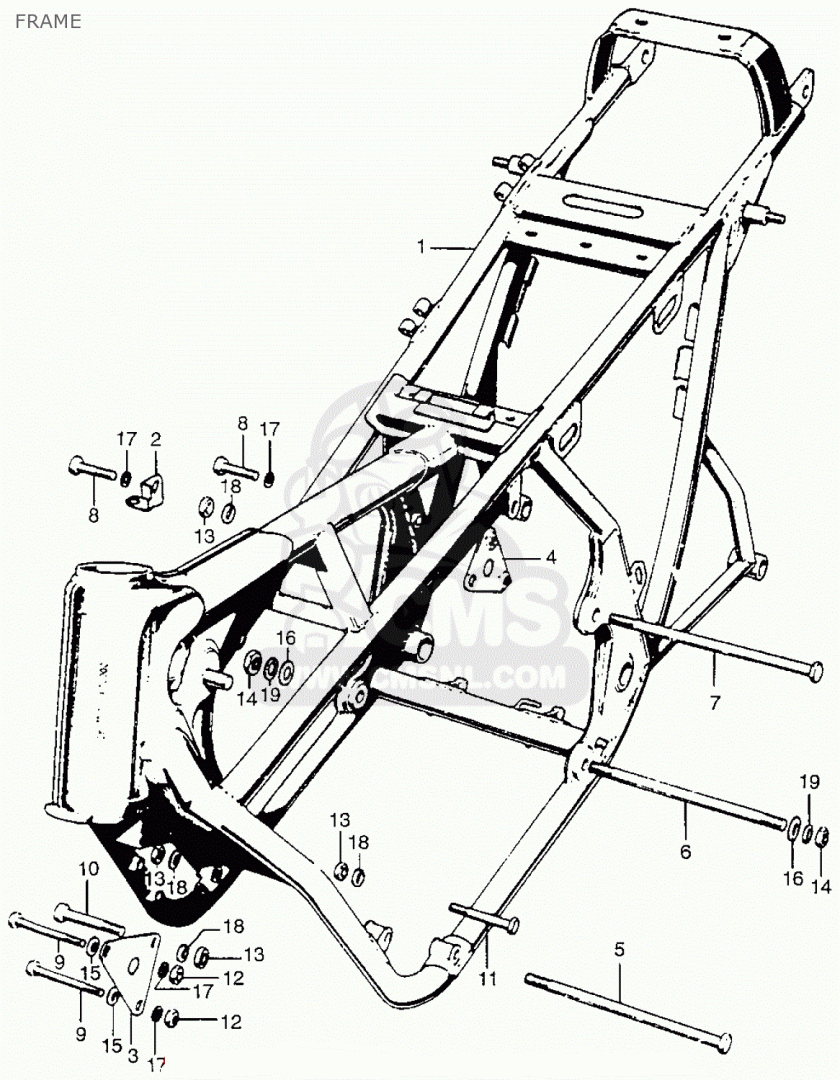
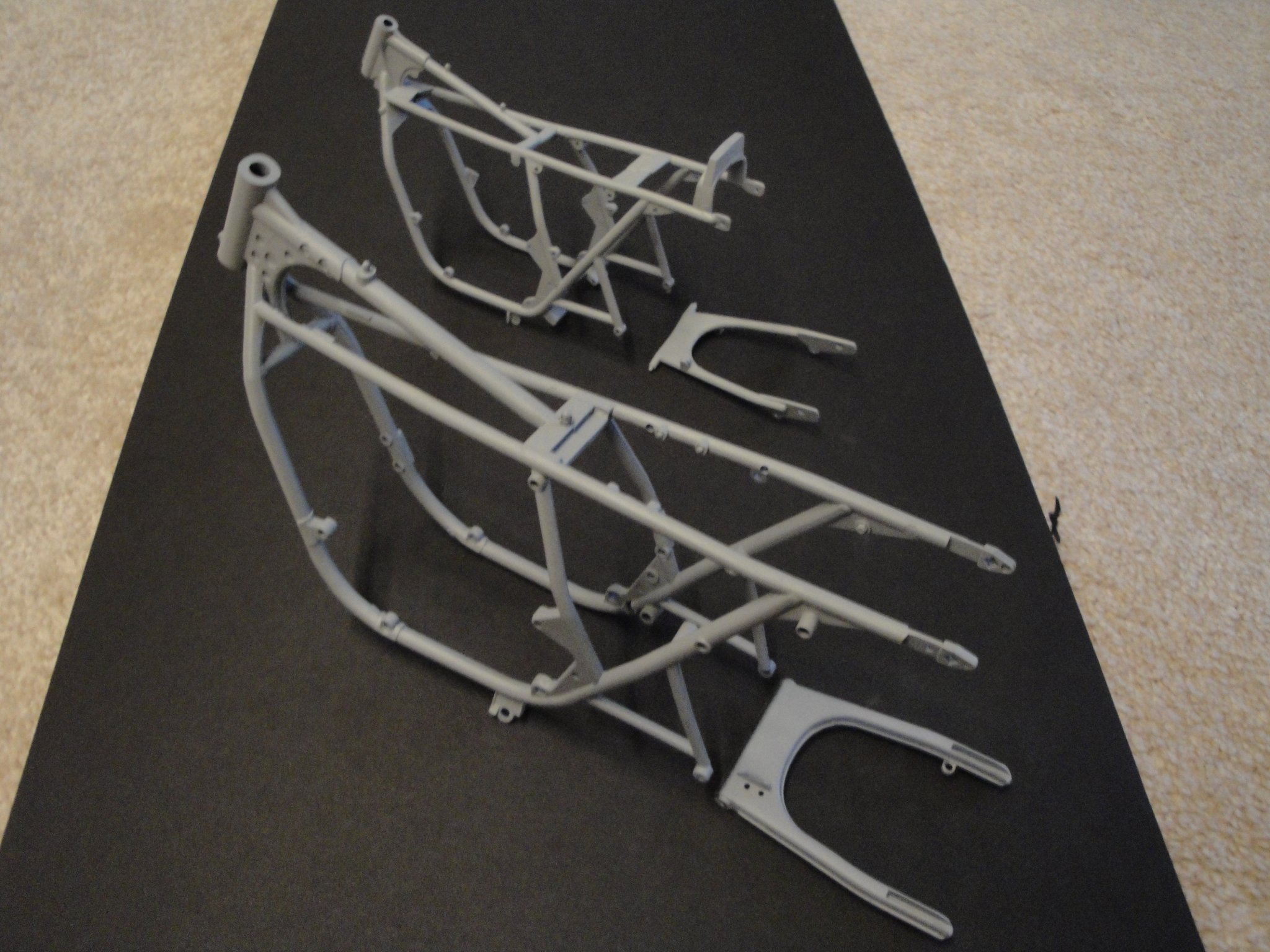
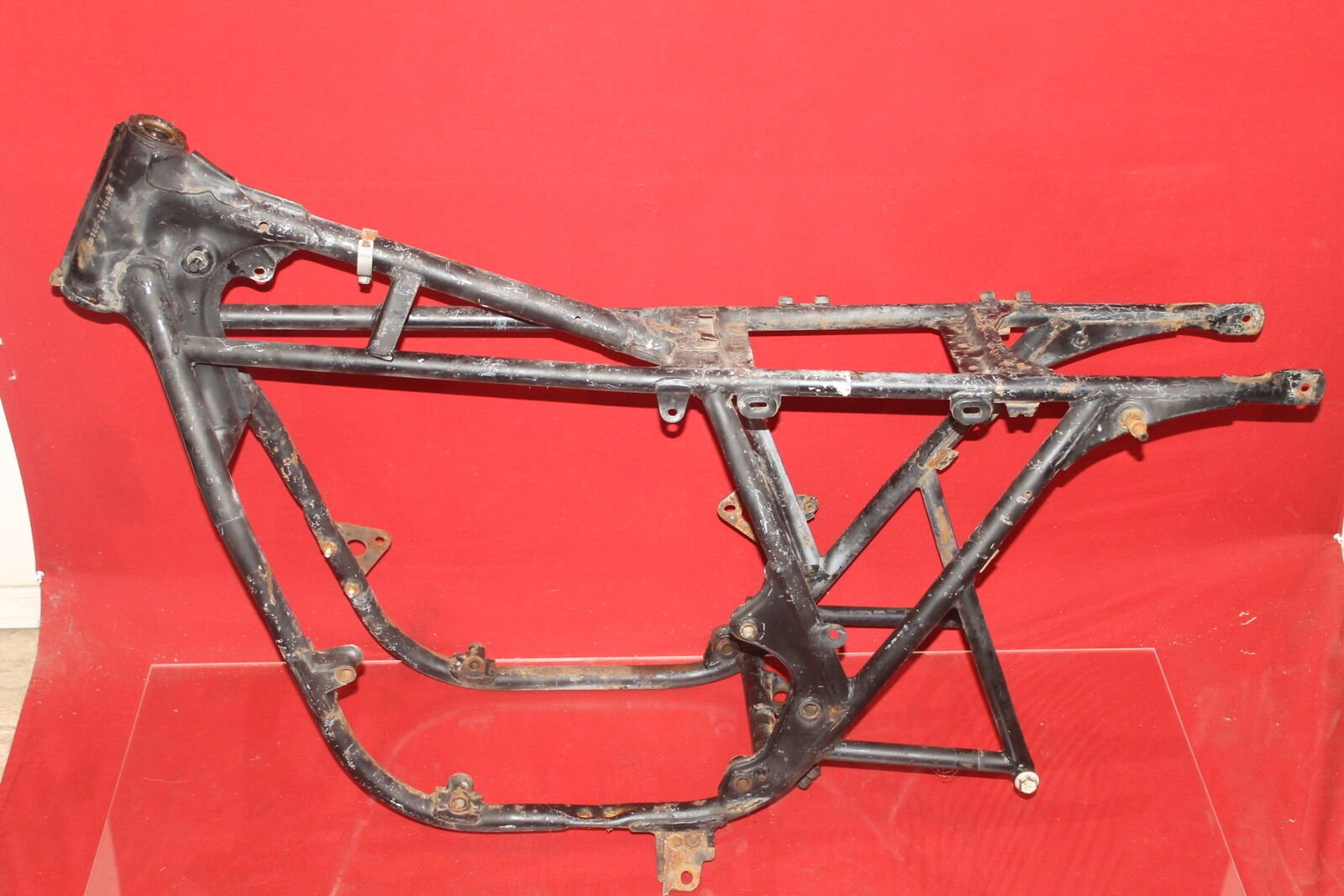
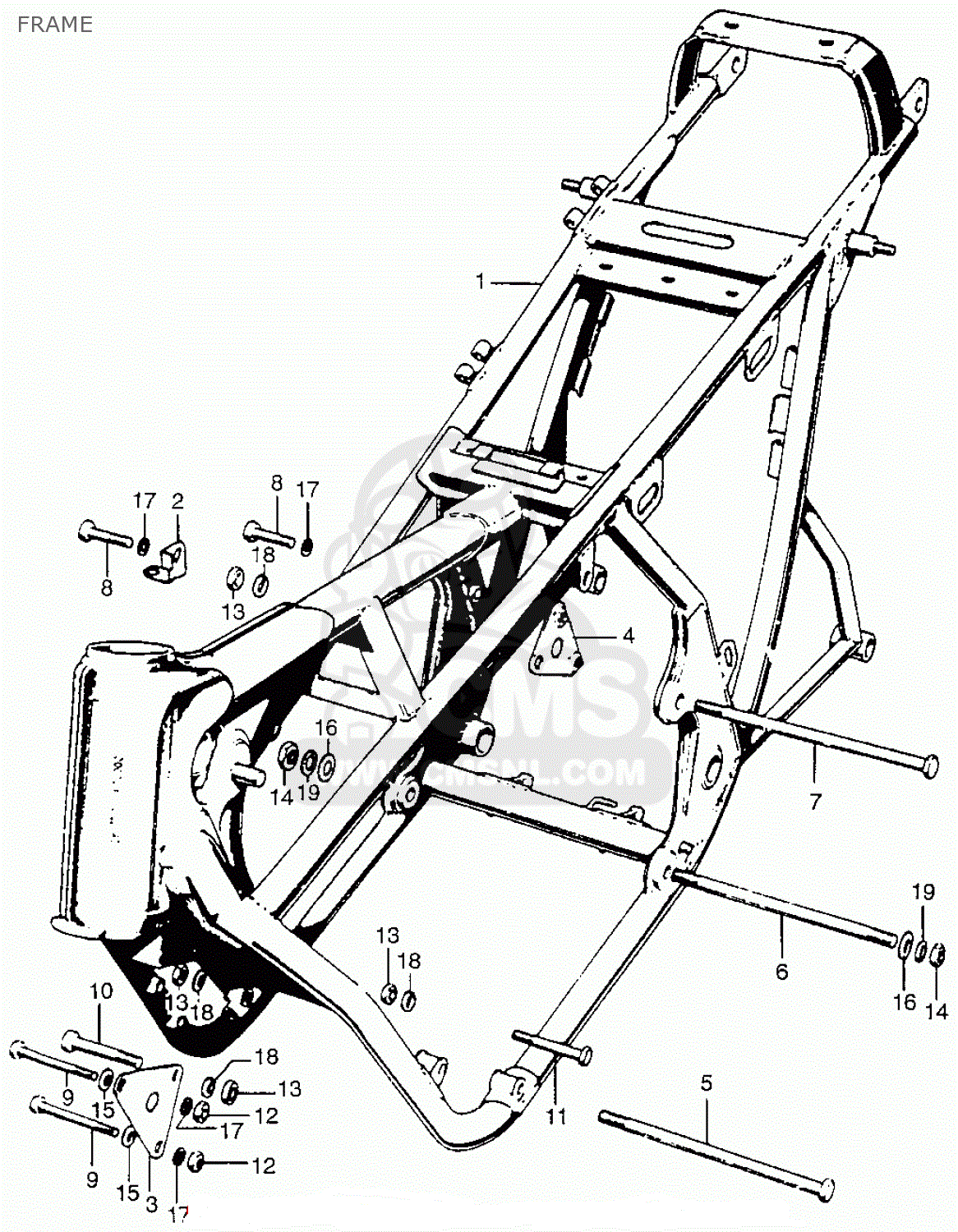
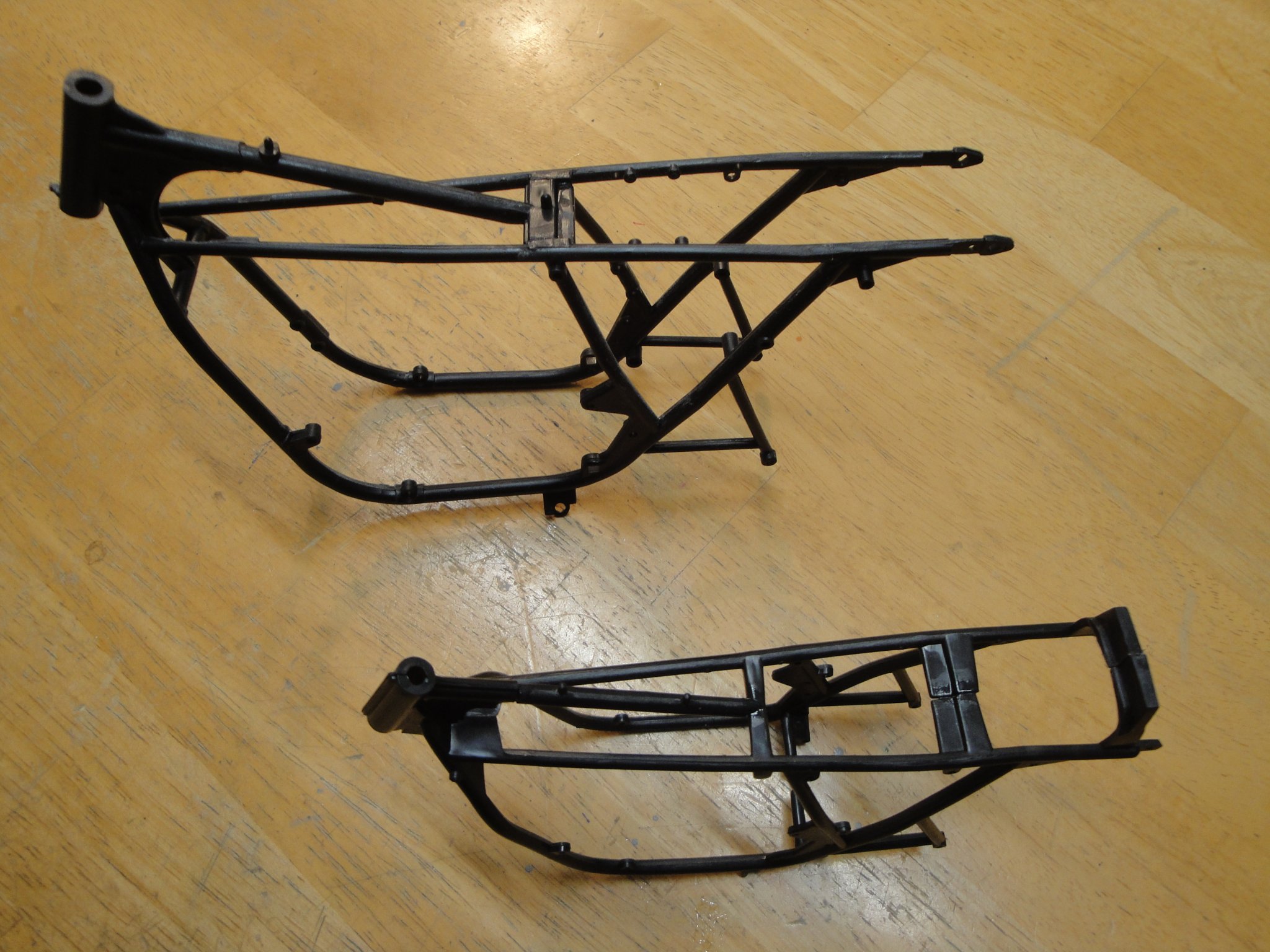
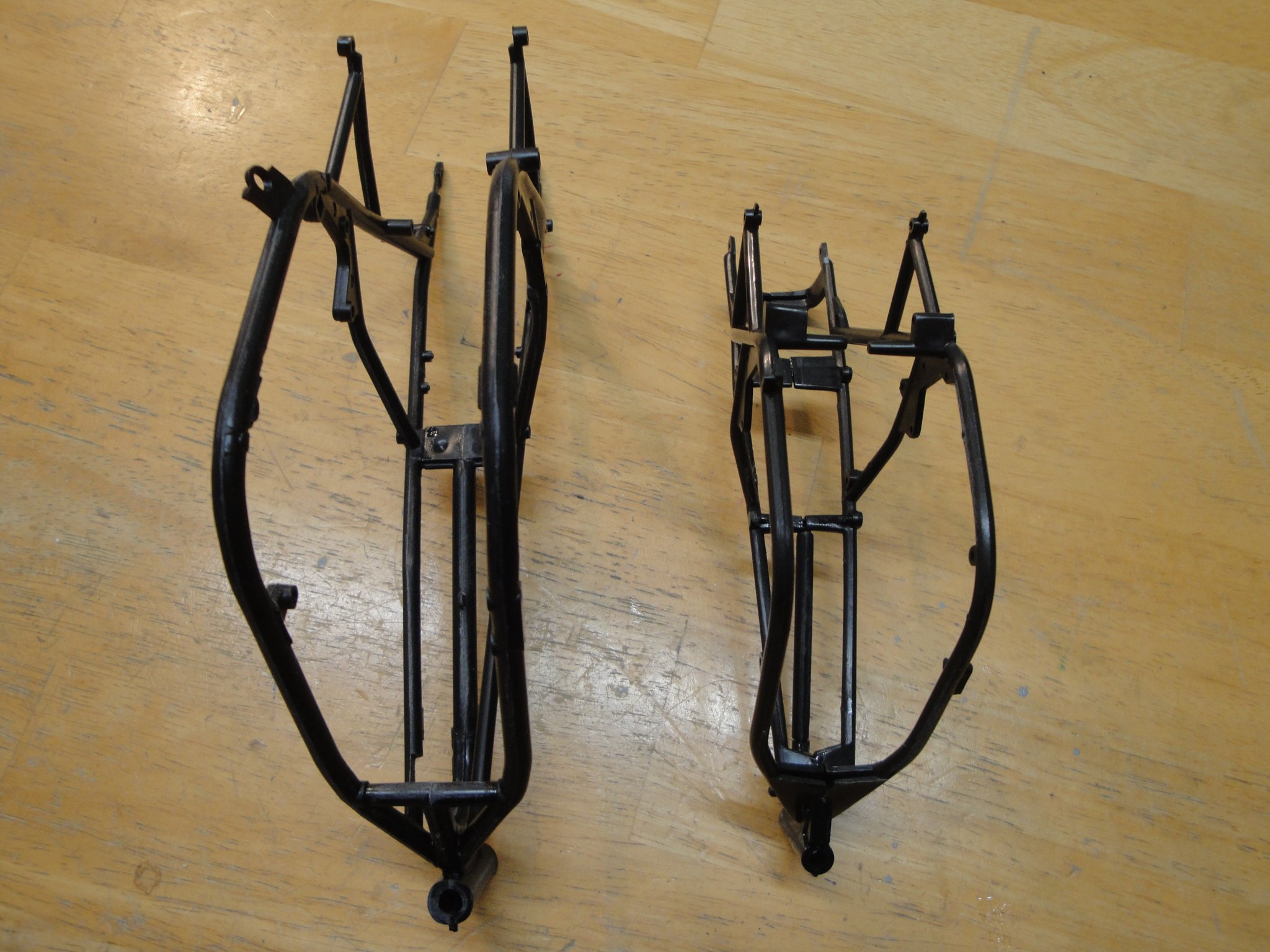
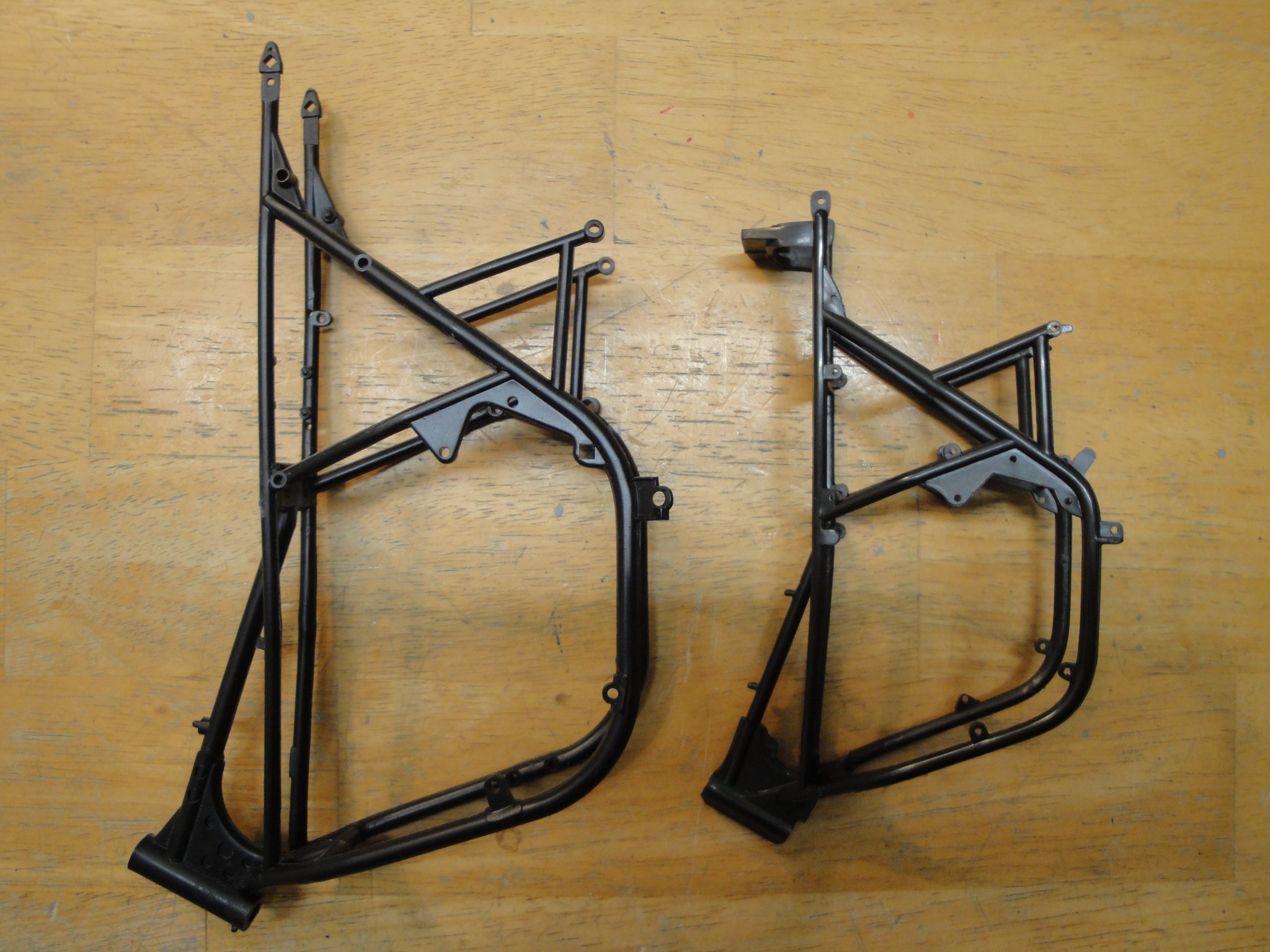
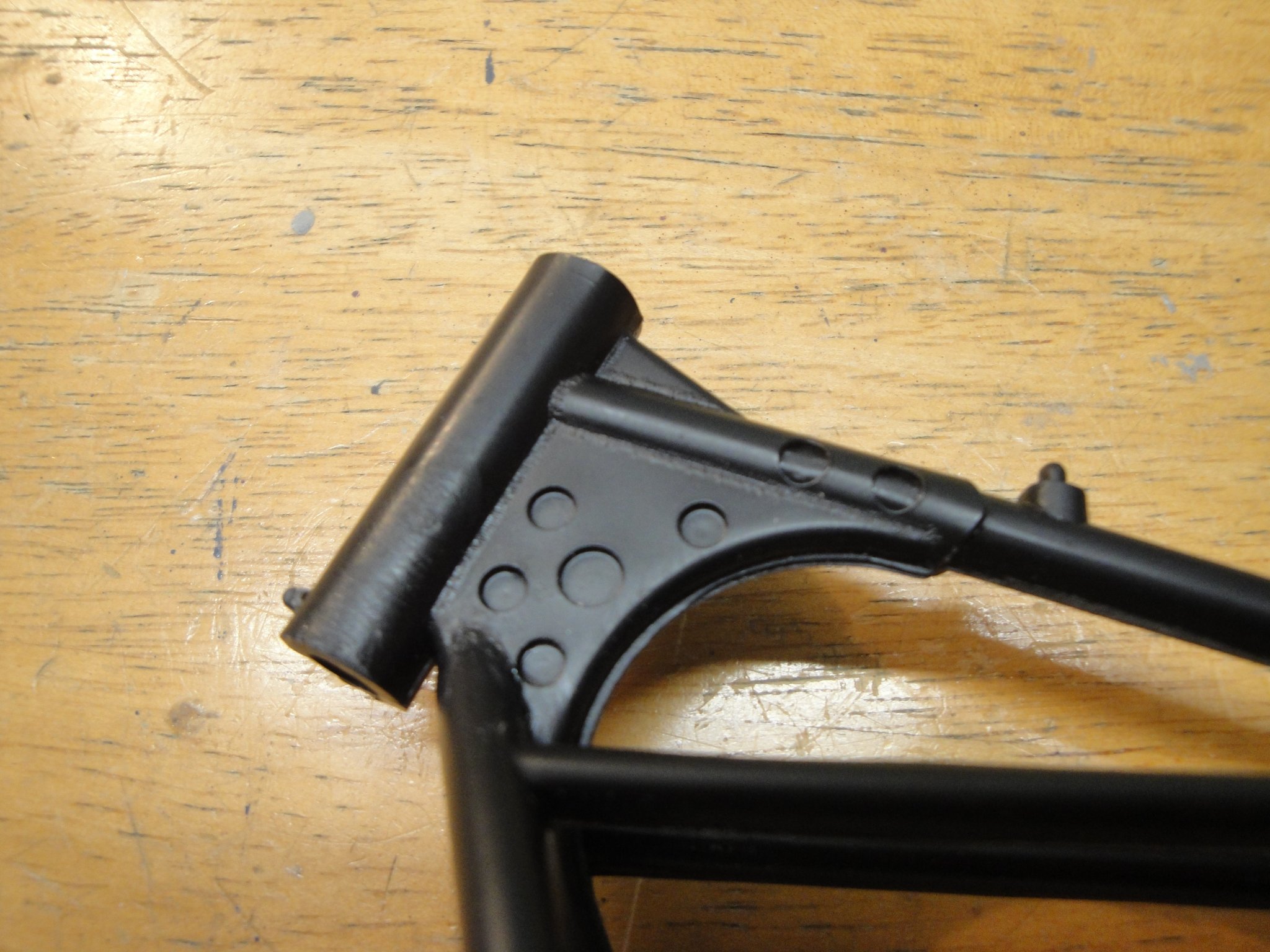
Both frames have been puttied (to a certain extent) and tubes filed to make them look like round steel tubes. Finally, everything is primed in light gray, with automotive primer. Below is a picture of the real frame from a HONDA CB750 1974. The picture is from a famous Auction site, someone selling a complete frame: The main thing that jumps to your attention are the two re-enforcement bars located under the fuel tank. These are missing from both kits. However, they do exist on the HELLER kit (see previous post). Below is the frame, from the HONDA spare parts manual. Most likely, this is a newer frame, possibly found on the latest CB750 Four models (1974 and newer). On the MPC kit, it is not possible to add them as the underside shell of the fuel cell, matches very closely the tubular upper spine of the frame. On the Tamiya kit, it could be done as the fuel cell matches the real tank and allows for these bars to be installed. However, I think that if Tamiya did not depict them, it is because they have modeled the 1969-70 early model of the CB750, which probably did not have these two bars. I suspect these bars were added later on, to increase the stiffness of the frame and the road handling. My understanding is that the Tamiya kit depicts the early CB750, as is proven by the ignition system of the kit. The MPC kit having been issued in 1971, may also have taken the same approach. Simple regret on the Tamiya kit: I wish they had stamped the CB750 Serial number on the collar of the front fork. It is something that could be done by hand and would be visible, once the model is completed. Yves
-
The copper edges bring that touch of antique, that goes so well with the craft. Well done. Lovely collection by the way..... Yves
-
Excellent choice of a legendary boat, on a kit most definitely a member of the endangered species models. Yves
-
What a beautiful model. Eric Tabarly is probably smiling with gratitude and joy, looking at your gorgeous model, from the other side. Yves
- 70 replies
-
- 3
-
-
- pen duick
- artesania latina
- (and 1 more)
-
Tiny kit but very detailed. Master Korabel is a true artist and his kits are top notch. Thank you for sharing your build with us. Yves
-
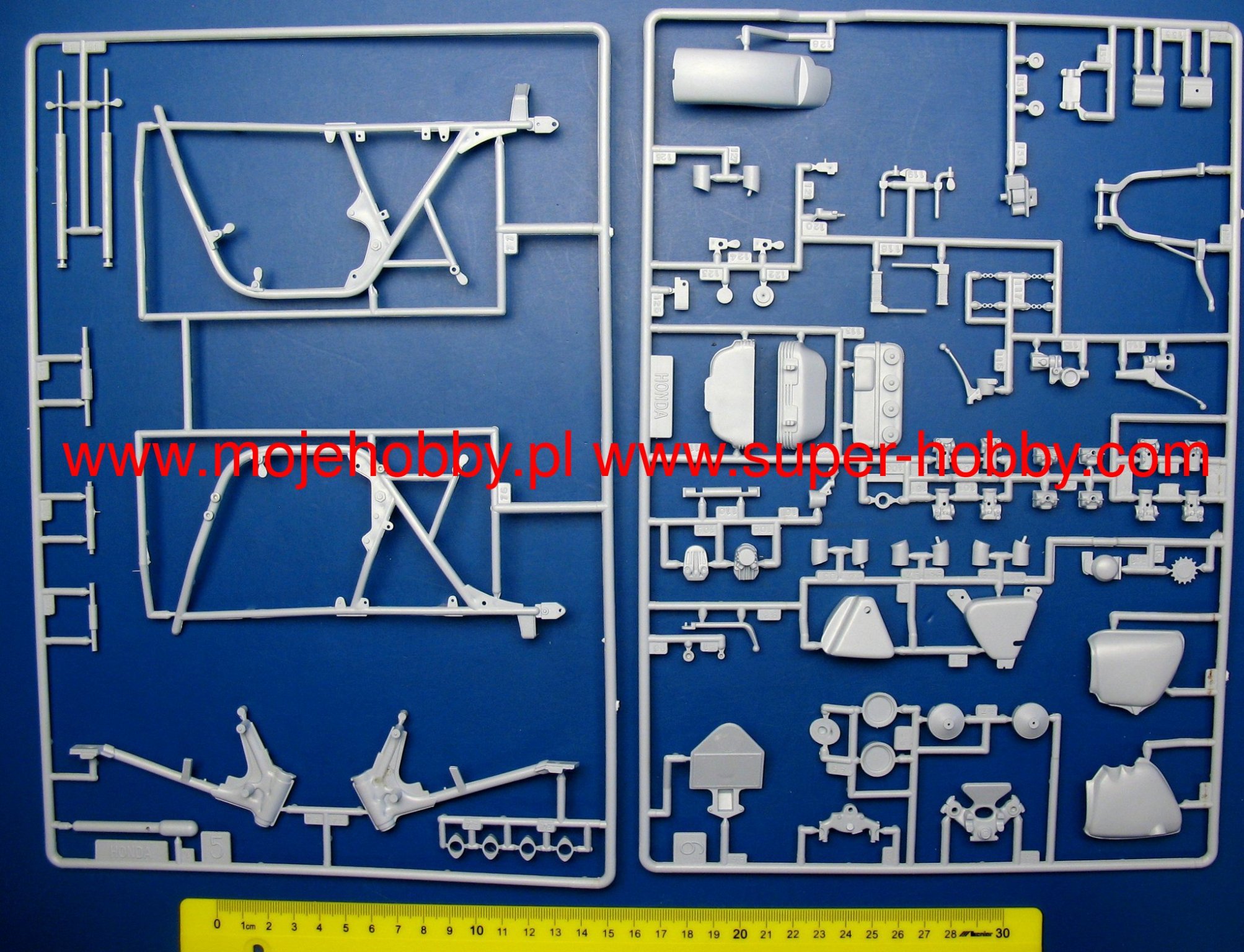
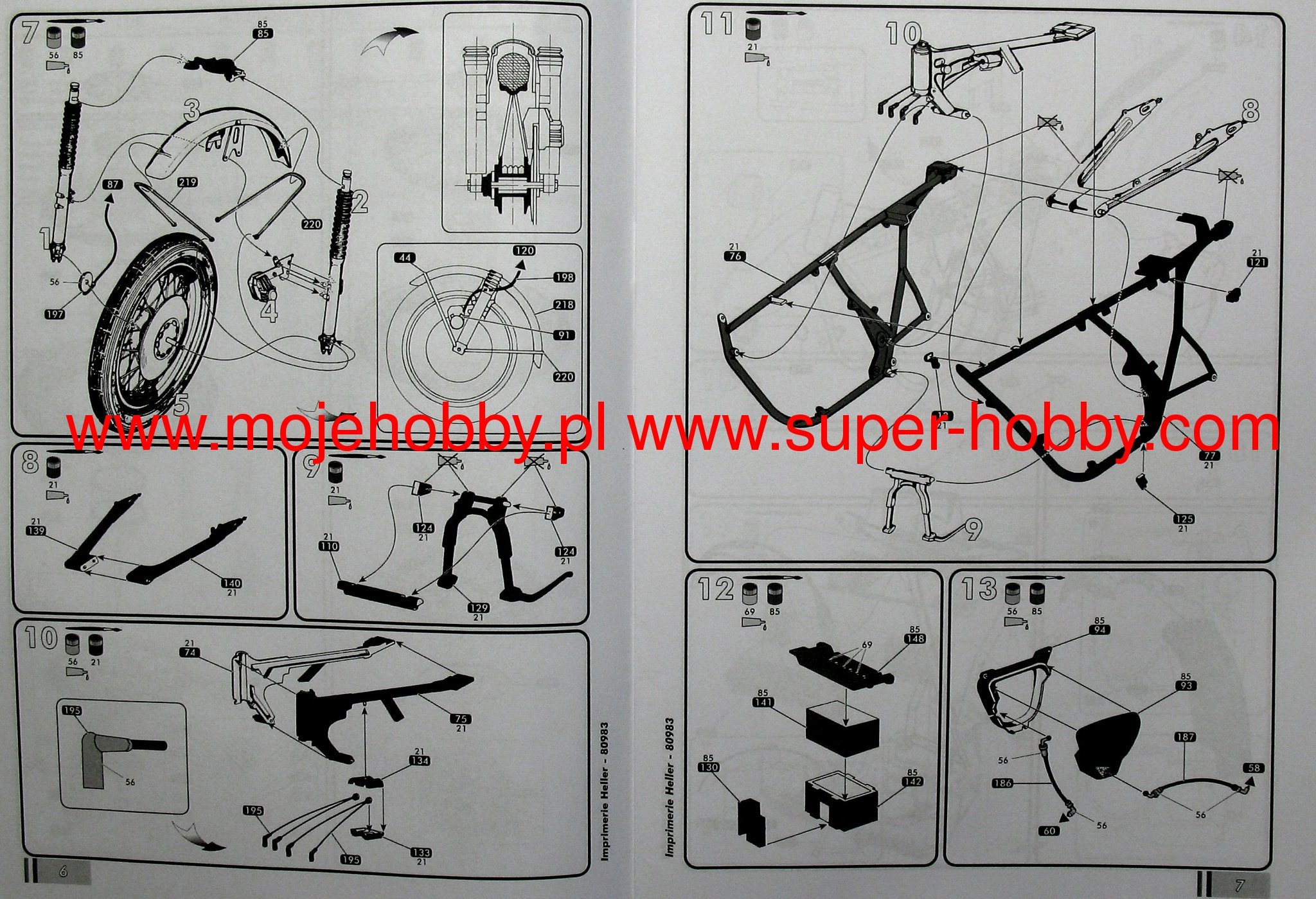
Scalemates is completely wrong on this one. Below are two pictures taken from the Super-Hobby site, depicting the Heller kit. You can see that the Heller kit is built like the Tamiya kit, whereas the MPC takes a lot of liberties with the accuracy. Just compare the Heller sprues with the previous pictures I posted before. I still believe the Heller kit is vastly superior: Yves
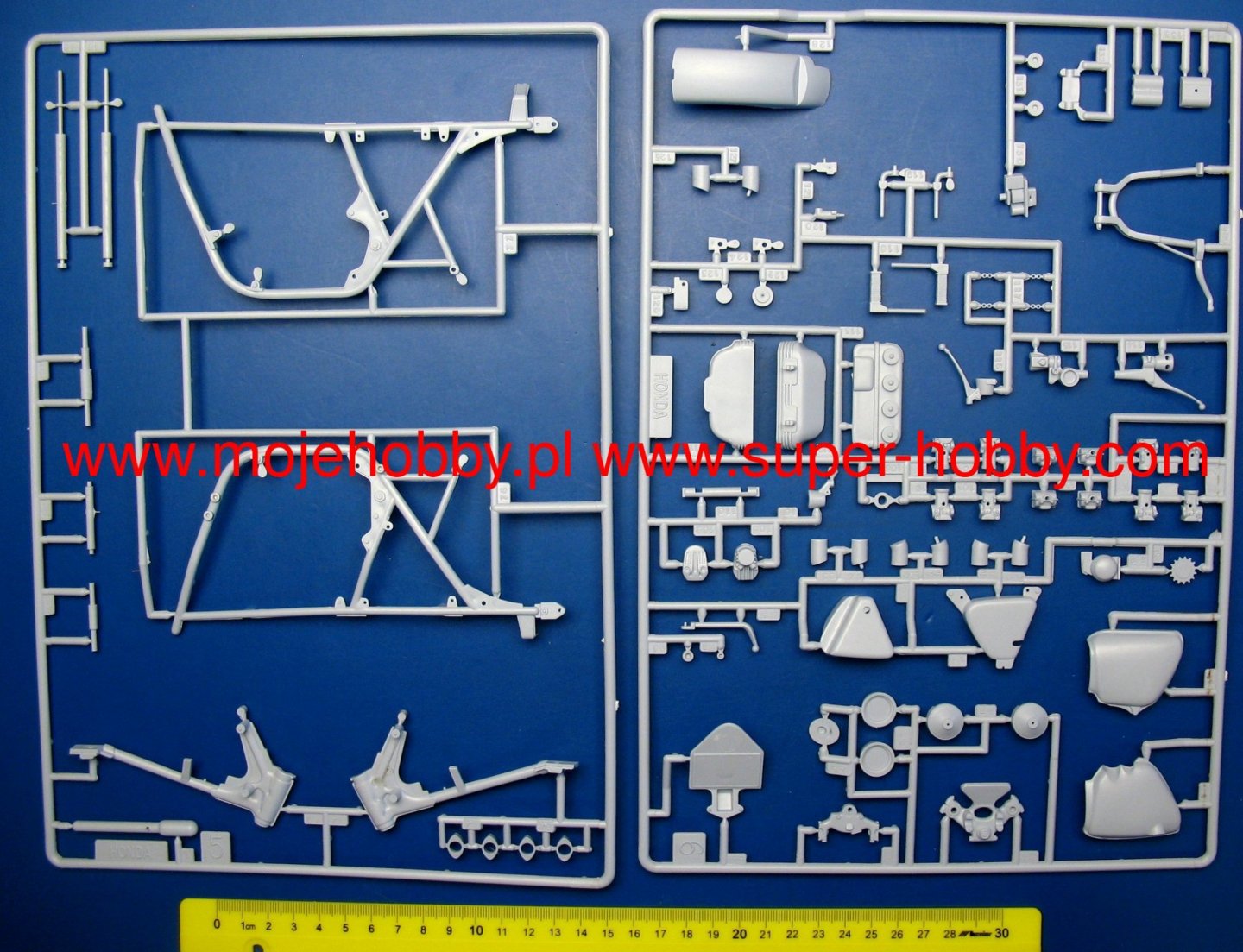
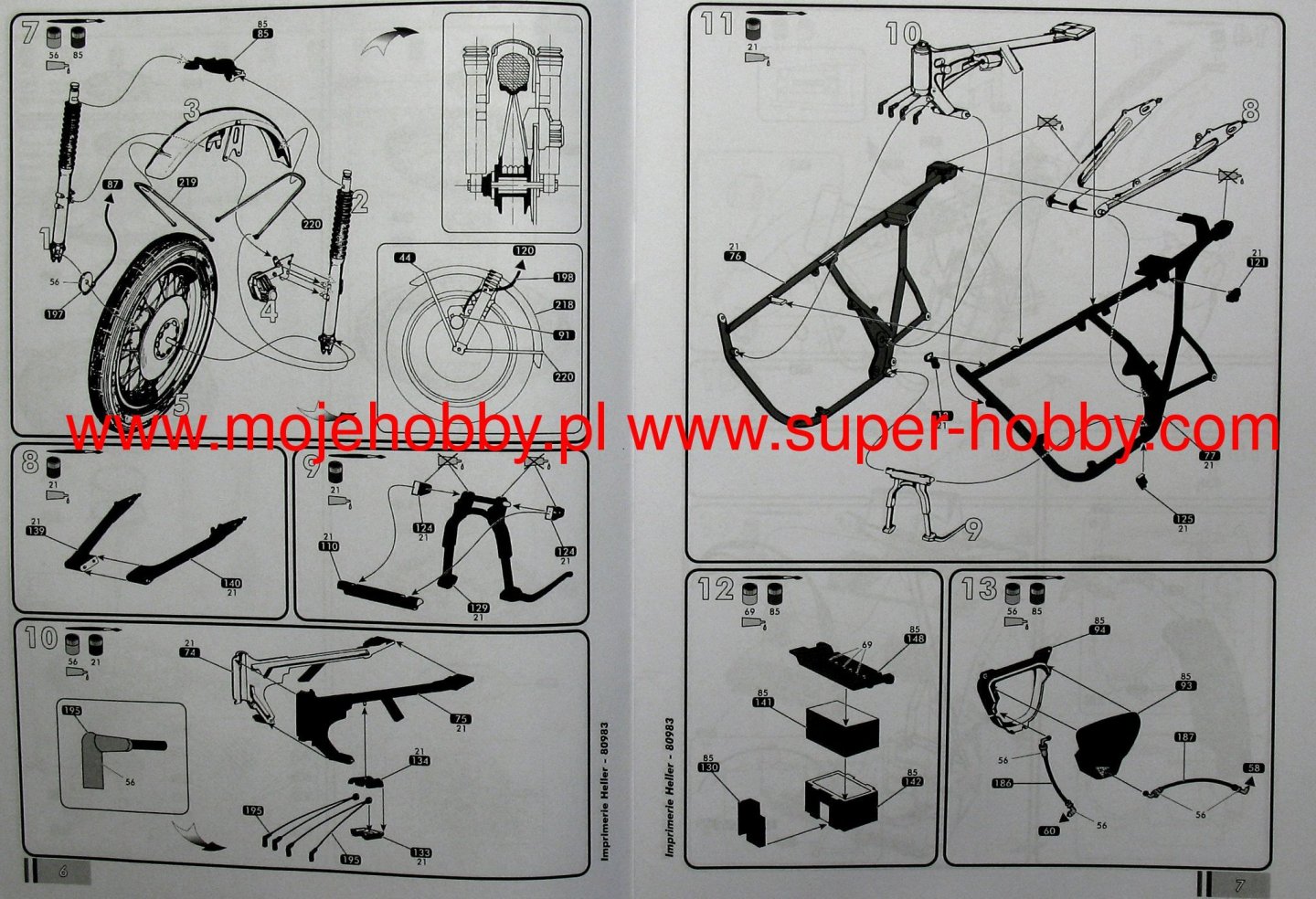
-
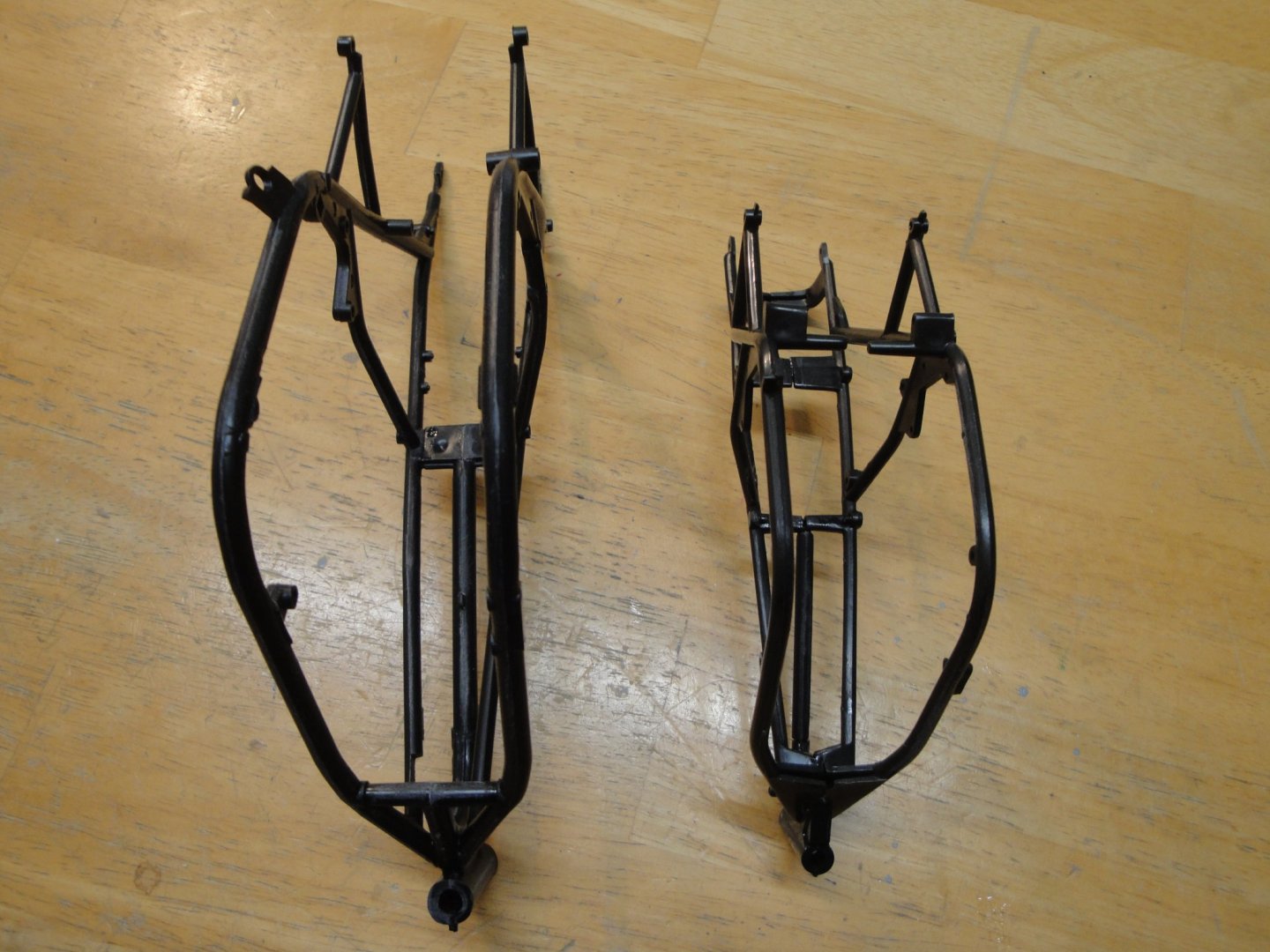
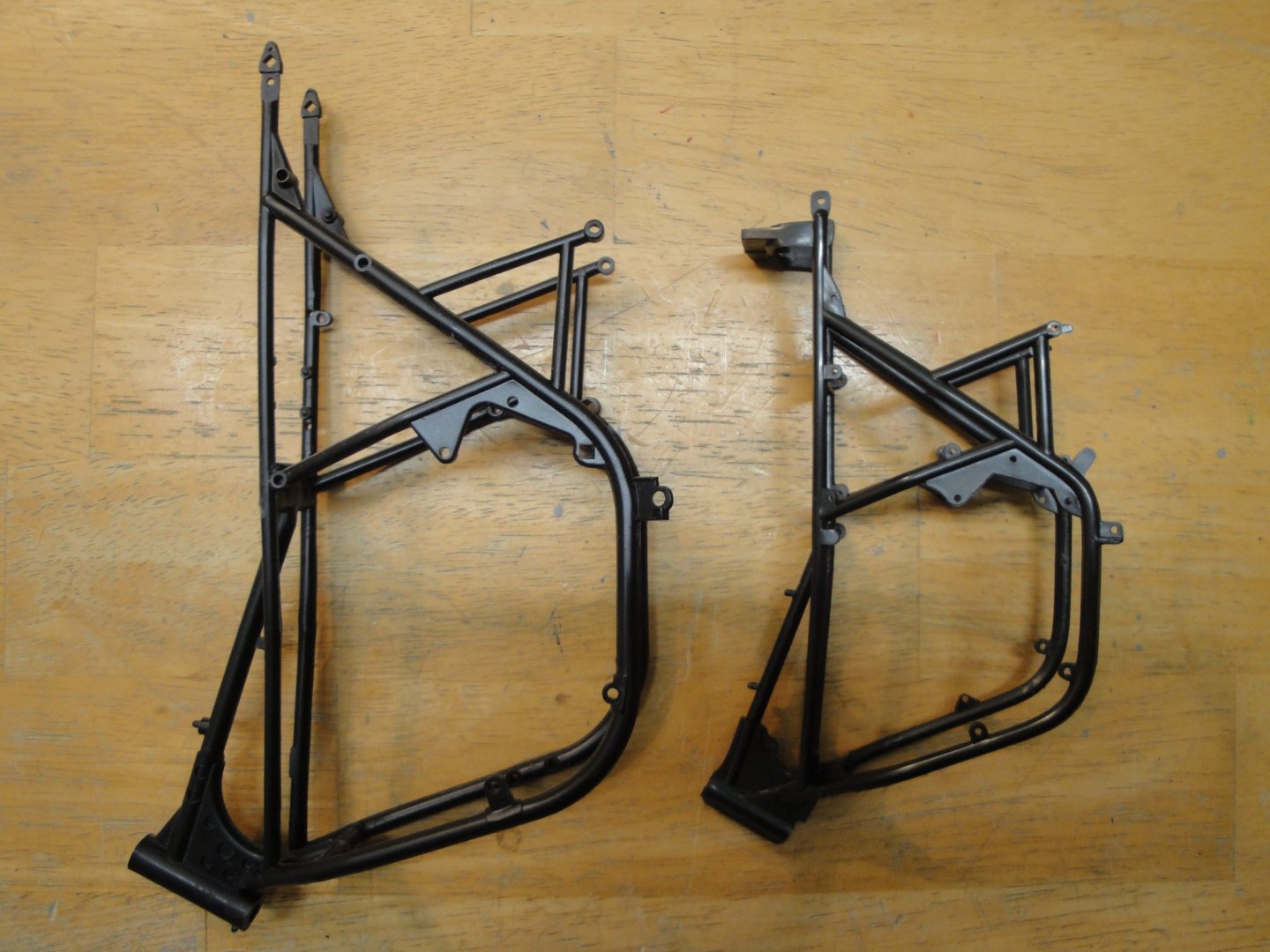
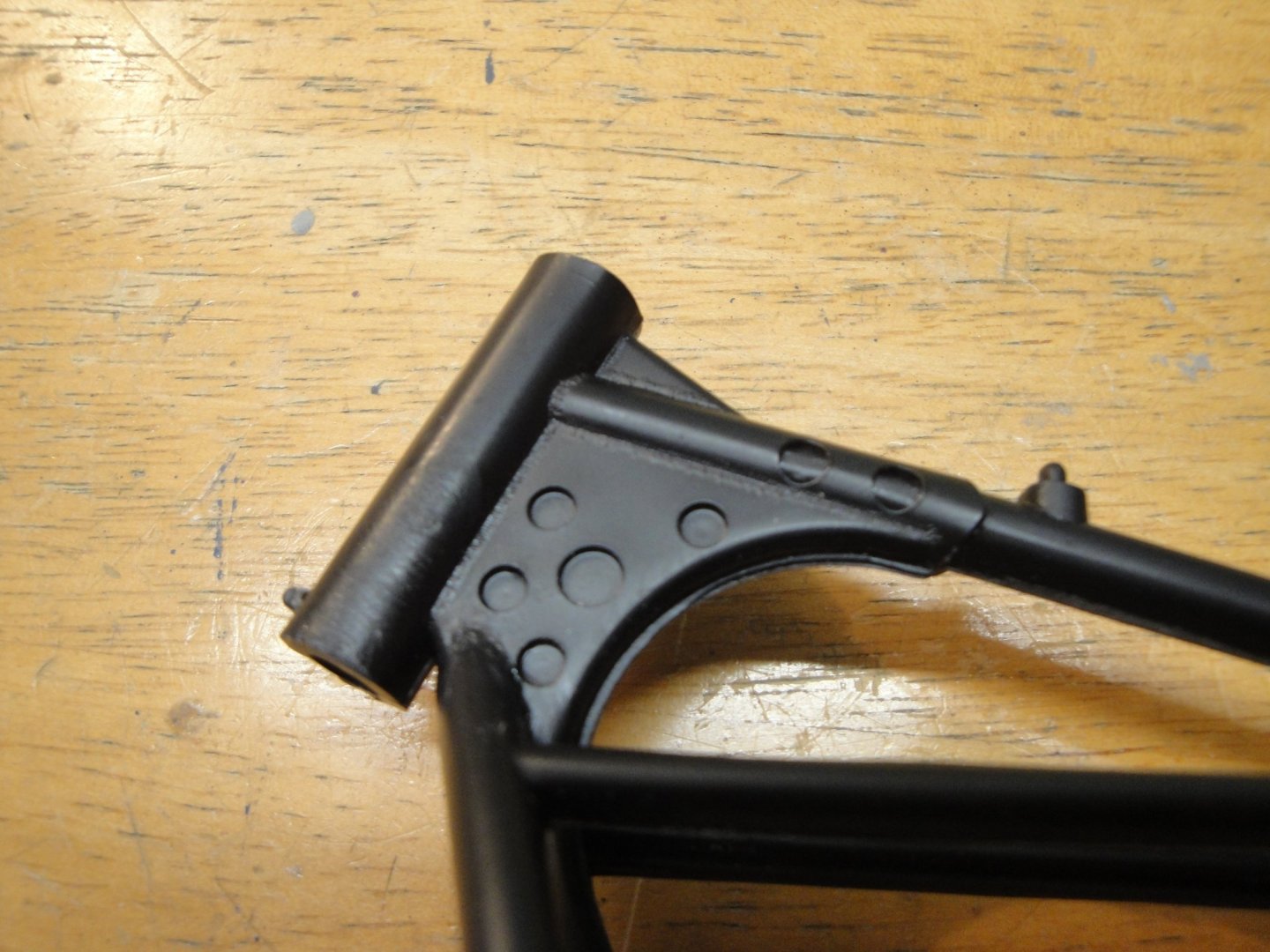
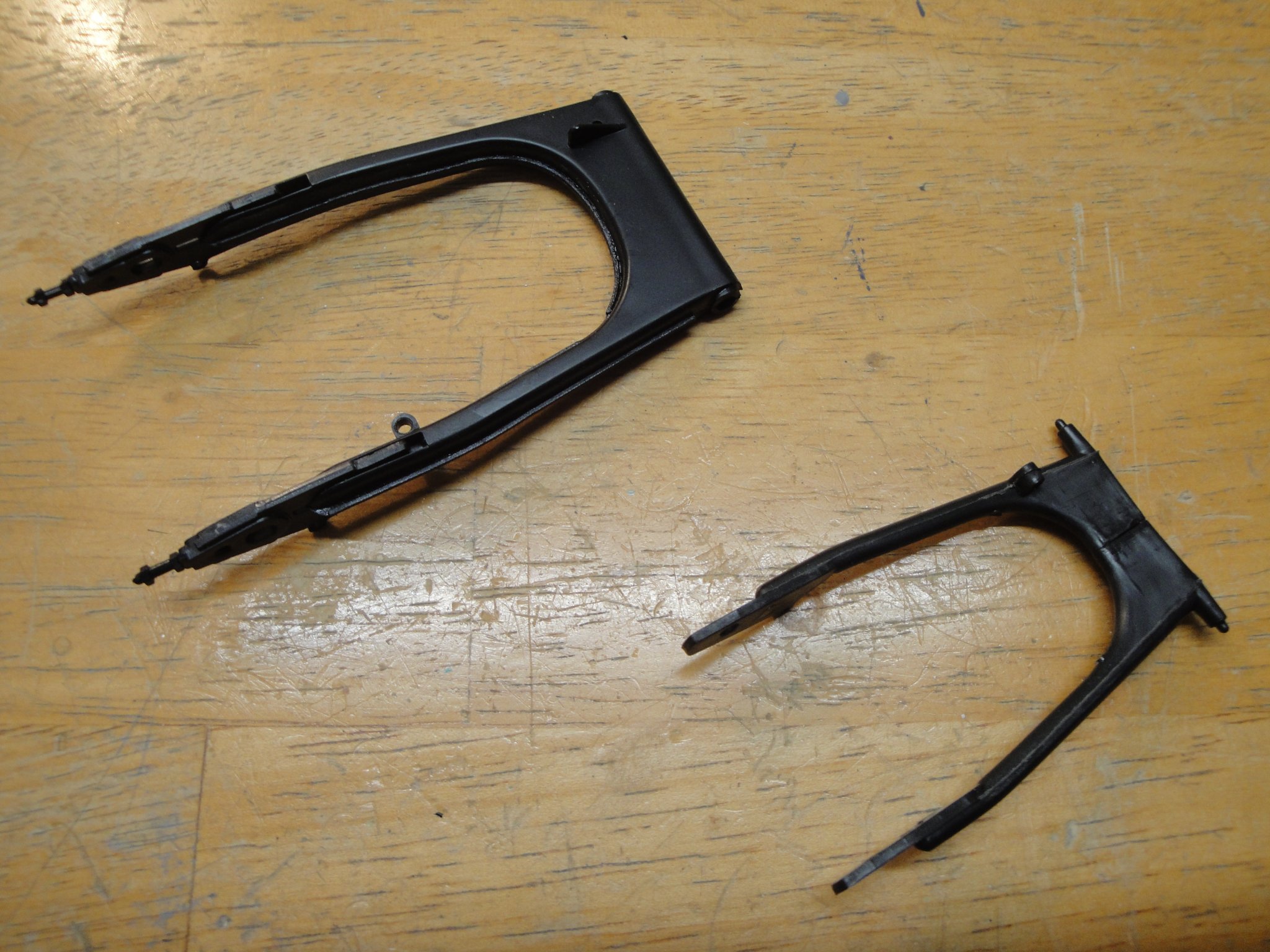
Let's move to the chassis of both bikes. Here again, Tamiya presents a fabulous chassis with a great assembly, similar to the real one. We are just missing the soldering rods and the torch. MPC on the other hand is really simplified, even for a 1/8 scale model. You can tell that the kit is old, was never re-tooled and as far as I can remember, the HELLER kit was more detailed and close to reality. First the rear arm: exquisite of details on the Tamiya model, with adjustable wheel holders and soldering lips. MPC, on the other hand, ultra simplified and vaguely correct. The main frame: There is a lot of work to finish up the frames with putty and fine sanding to make these tubes round. Not so bad on the Tamiya, but the MPC will require some TLC. Fortunately, I have that new Acrylic Putty (Vallejo) recommended by CDW. It is going to come handy, here. On the Tamiya kit, everything is replicated with exquisite details: look at these solder marks..... It is just amazing for a kit created in 1971. Yves
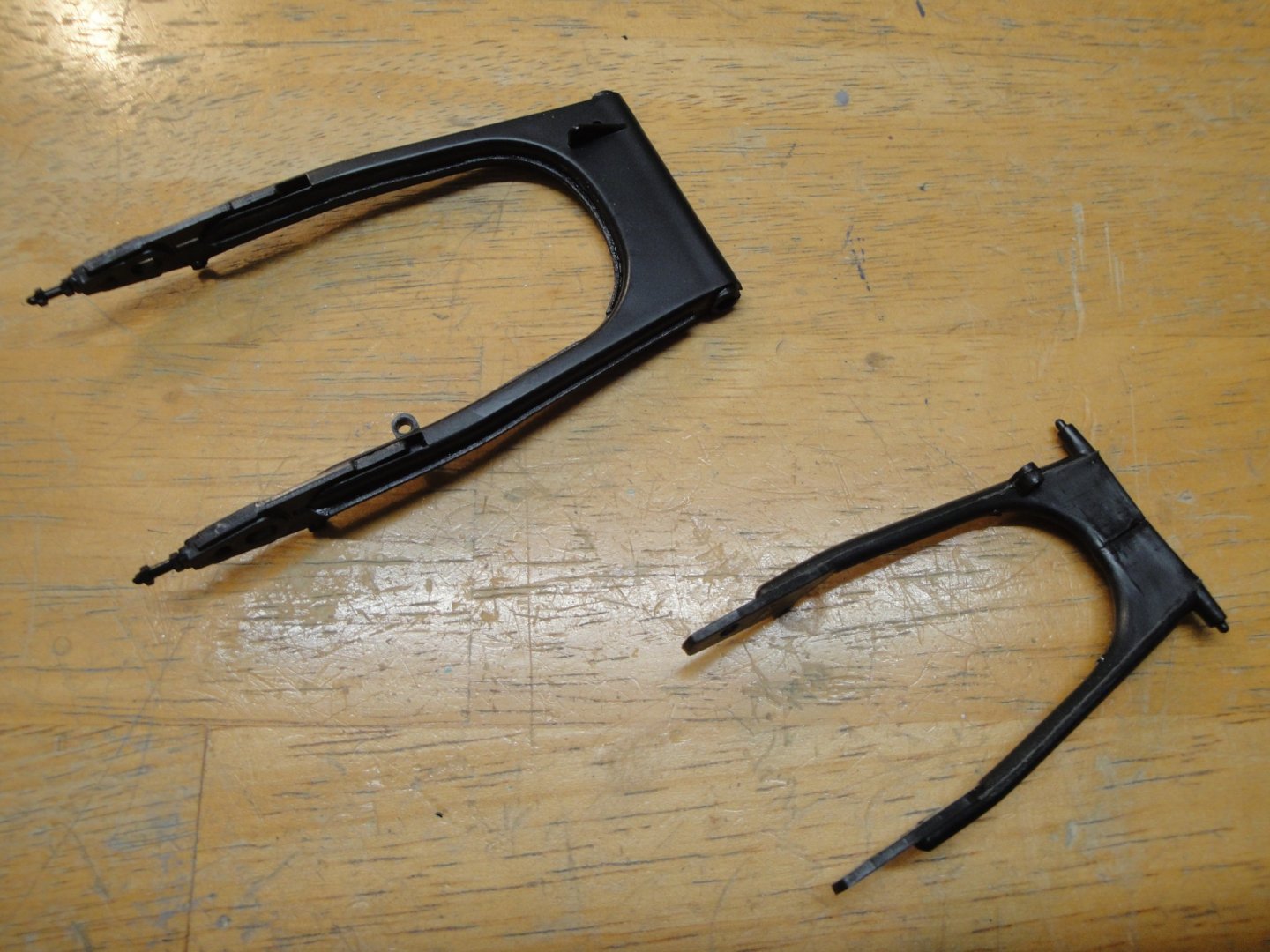
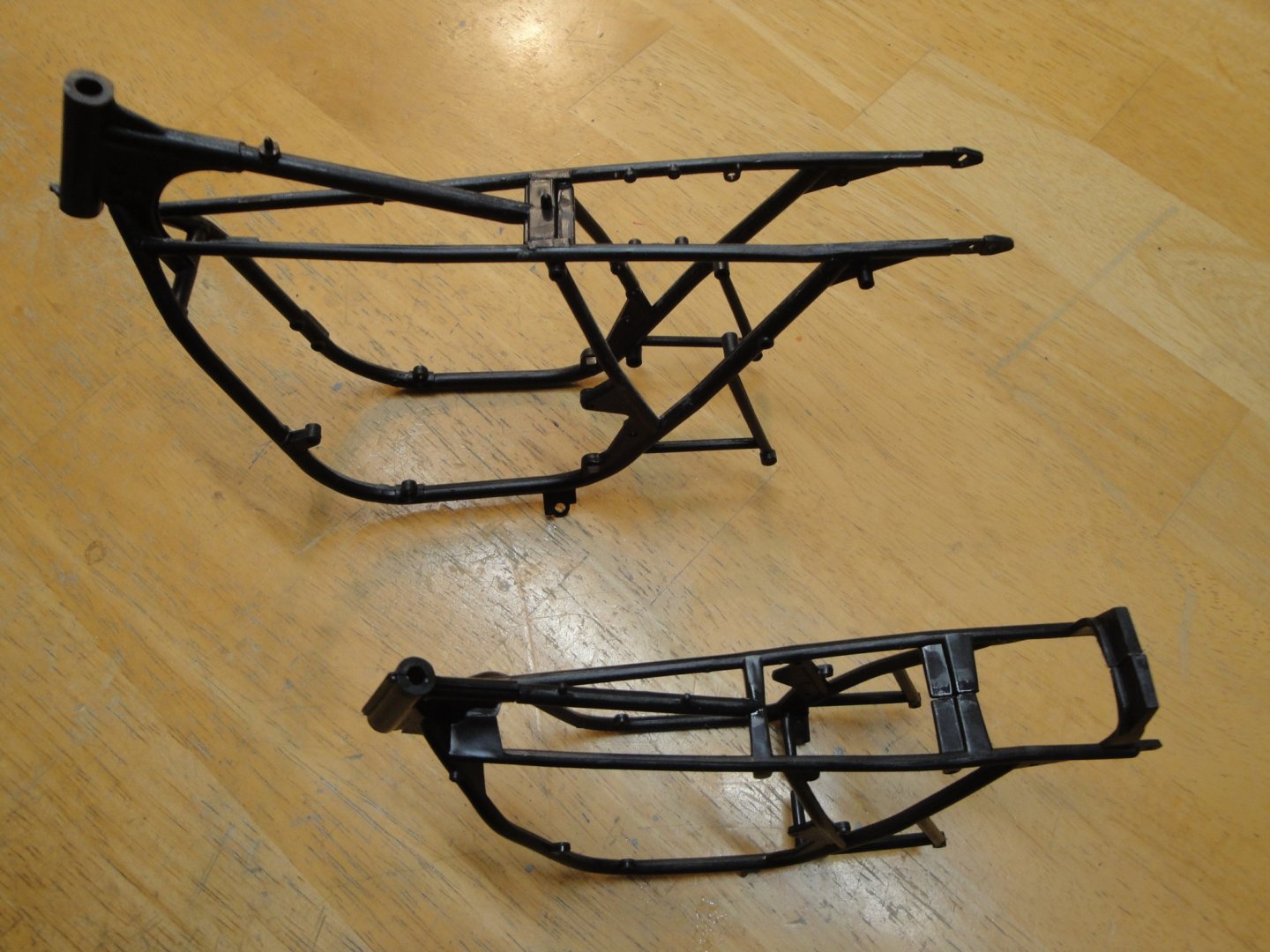
- 48 replies
-
- 10
-
-
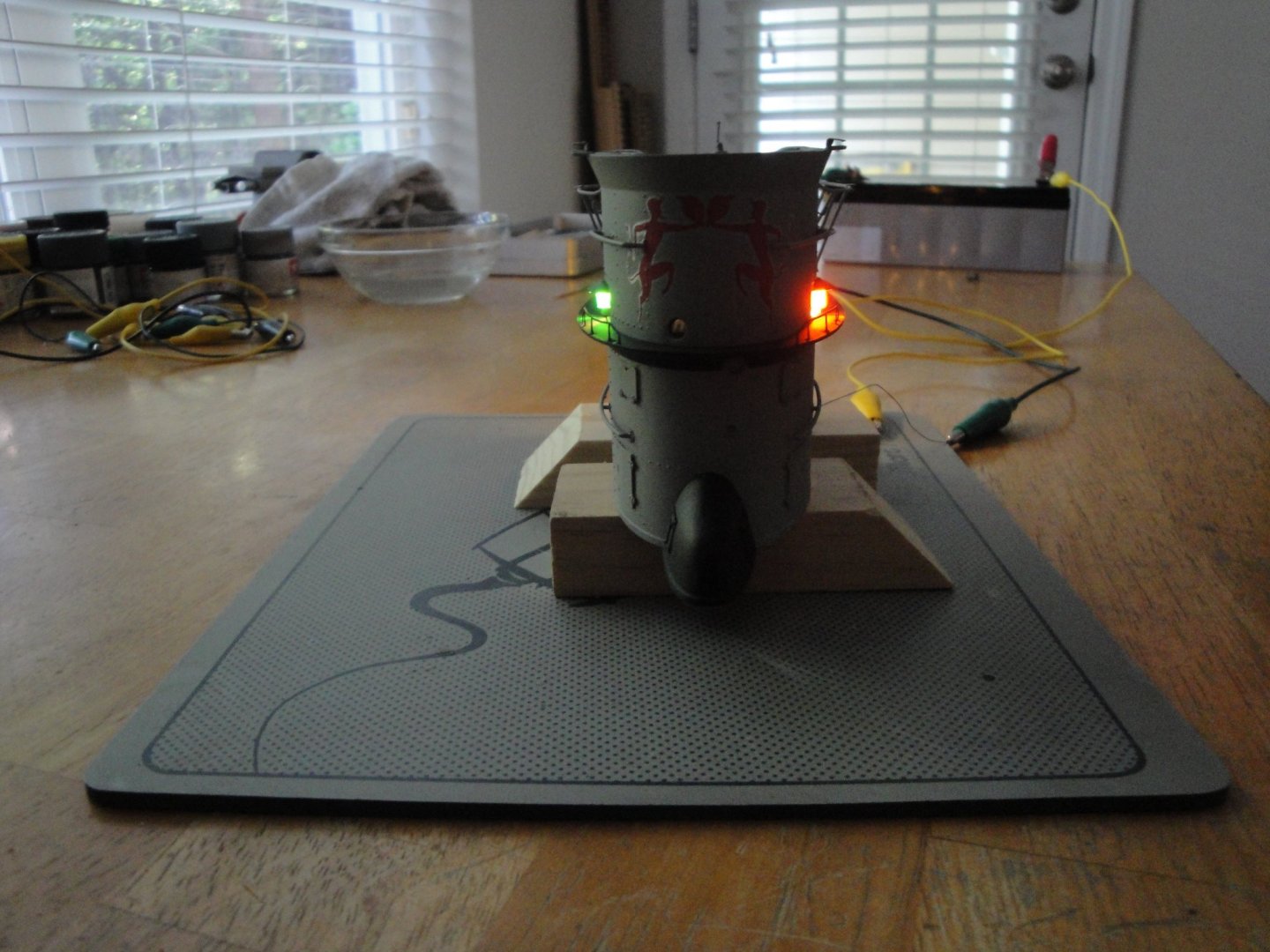
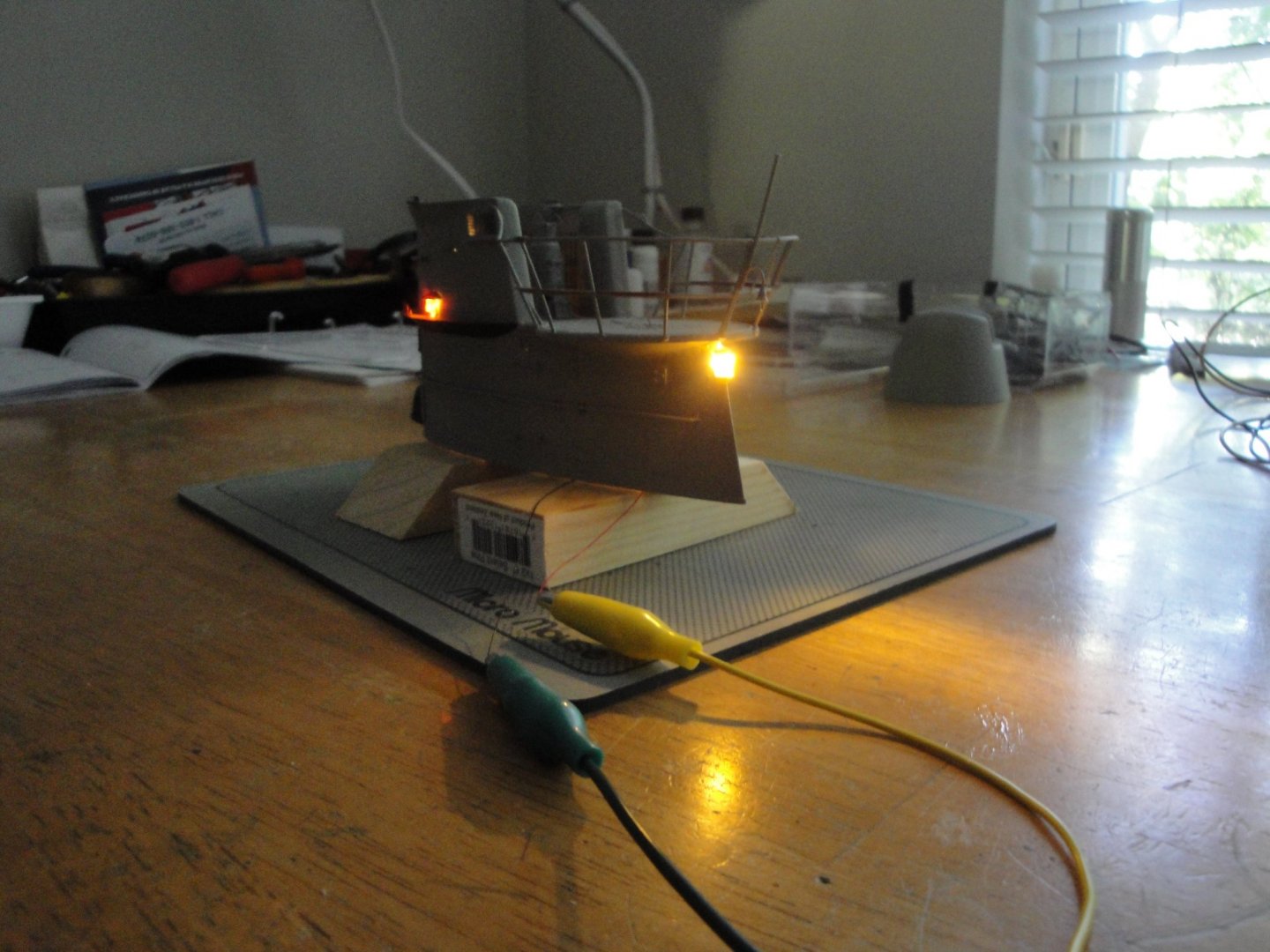
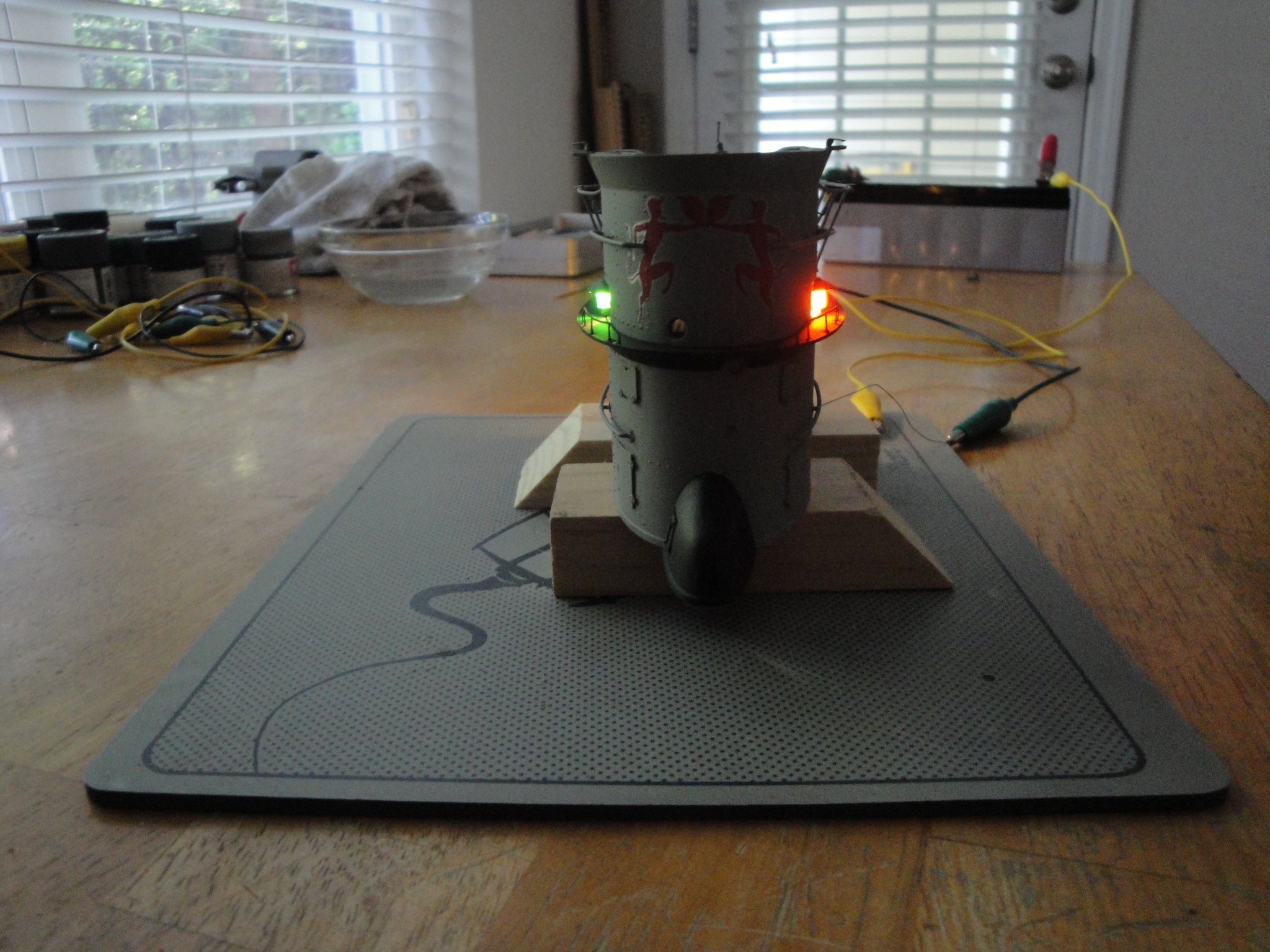
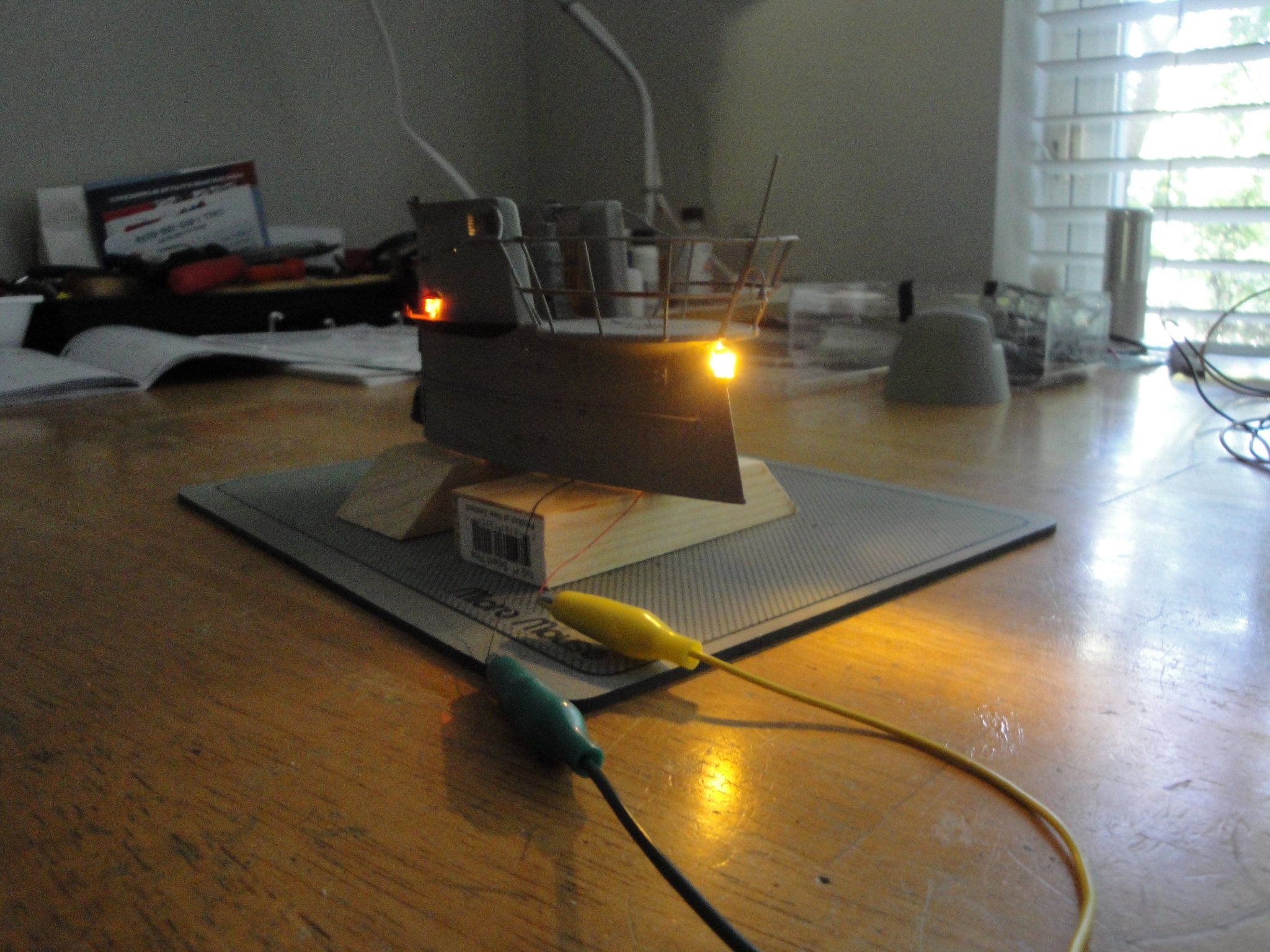
A quick update on the conning tower. I just finished cutting and filing three pieces of clear cylinders, from the transparent sprue. They are then painted clear green, clear red and clear yellow, using Tamiya paints. Let's verify that it works electrically: Intensity of the lights will be adjusted when the conning tower is glued to the hull. Yves
- 760 replies
-
- 22
-
-
I love it. SO realistic. The flooring is gorgeous, with all these different hues of wood. Yves
-
KPNuts, your model looks so realistic... I am tempted to jump on it and ride it, like there is no tomorrow. Thank you for regaling us with such beautiful master piece. Yves
Our Emblem ®